

BLOG
Stories, articles, and updates from the Ranch community.
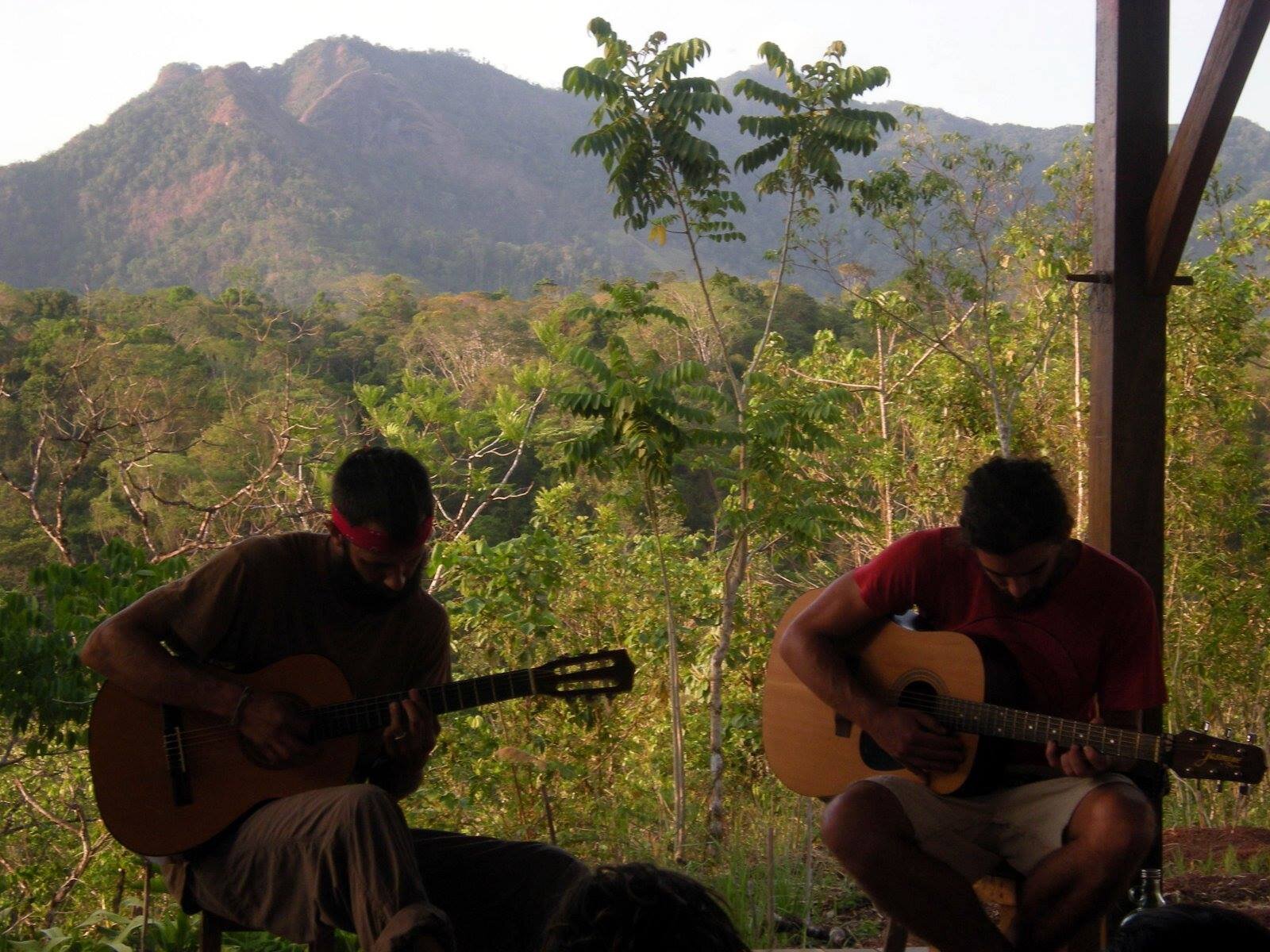
Teaching Yourself to Play an Instrument with no Internet
By 2021 apprenticeAdriaan Van Duuren Storms
This blog article is about my experience of teaching myself to play songs on my bass guitar in rural Costa Rica with no acces to online help and with no knowledge of any musical theory.
My main goal for practicing the bass is to have a hobby that I like and can improve on while having lots of fun exploring new songs and styles. Back in Belgium where I lived, I had a small band with some friends of mine. We mainly enjoyed playing together and creating good vibration for ourselves. You might ask yourself why I picked the bass guitar instead of a different instrument. Well, when I was younger and my dad was younger, he used to play bass guitar in his studio and listen to a lot of good music. When my father decided to put an end to his bass hobby I took some of his electric instruments and his amplifier over to start learning myself. While I was very interested in learning the bass guitar, I had decided to take an apprenticeship in permaculture here in rural Mastatal. By making this decision I had made it very dificult to continue my hobby due to the lack of internet at Rancho Mastatal. Since I could not bring my amplifier with me to support my electric bass, I needed to find an acoustic bass guitar. After a few clicks on the world wide web I found a company that made semi acoustic bass guitars perfect to take with you on a plane.
Not long after I had bought the instrument.
I arrived at the Ranch in Mastatal with my acoustic bass and a few tabs of songs that I would like to learn before I return to Belgium. I had downloaded the same songs on my ipad so that I could listen to them while playing. When I started to practice my acoustic bass, it was like learning an entirely new instrument with limited support. Once I had learned one song by listening to it and playing along with the help of my tabs, I would continue with the next one. Now this might sound very simple to you when you read this, but believe me when I say that you will have moments where you will want to spend days on end playing your instrument and days when you won't even want to think of playing. This, together with a lot of work and not so much time during the day to practice, makes the process of course much harder. Eventually you will start to get the hang of it and feel a boost in your learning.
Now here I am, halfway through the appranticeship and I cannot wait to play all these new songs that I have learned with my friends back in Belgium. I am still learning new songs that I have brought with me and hope I will learn a lot more before I actually go back. I would recommend learning songs that you like to listen to, to keep your interest high and maximize your learning curve.
One of my big dreams is to be able to perform some songs with a band for an audience.
I hope my experience can be helpful to you.
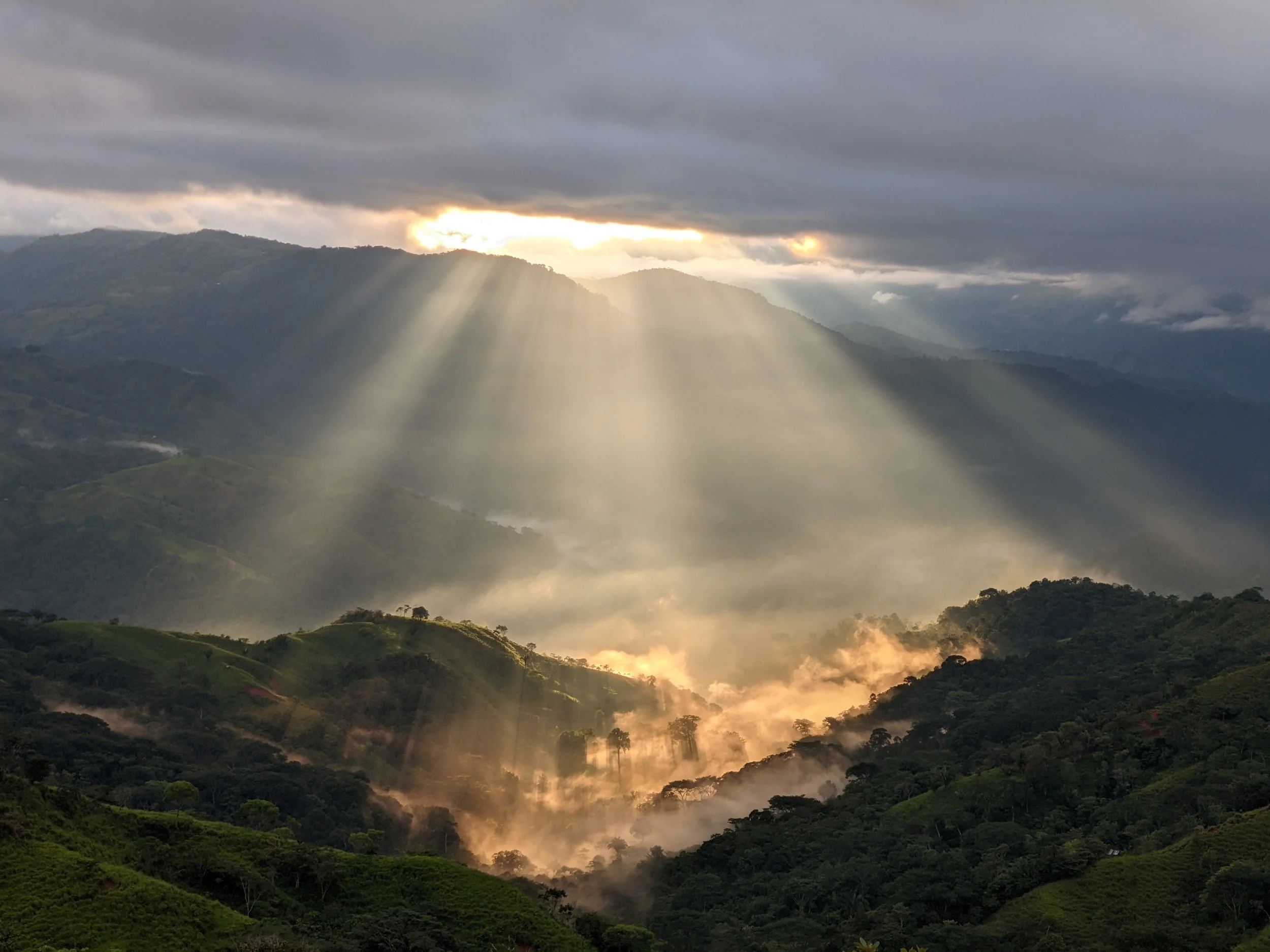
A Collection of Songs from a Wandering Misfit
If one just stops for a moment, some of the myriad interwoven patterns of the natural world begin to make themselves known, and new ideas can start unfolding.
By apprentice Leo Dib
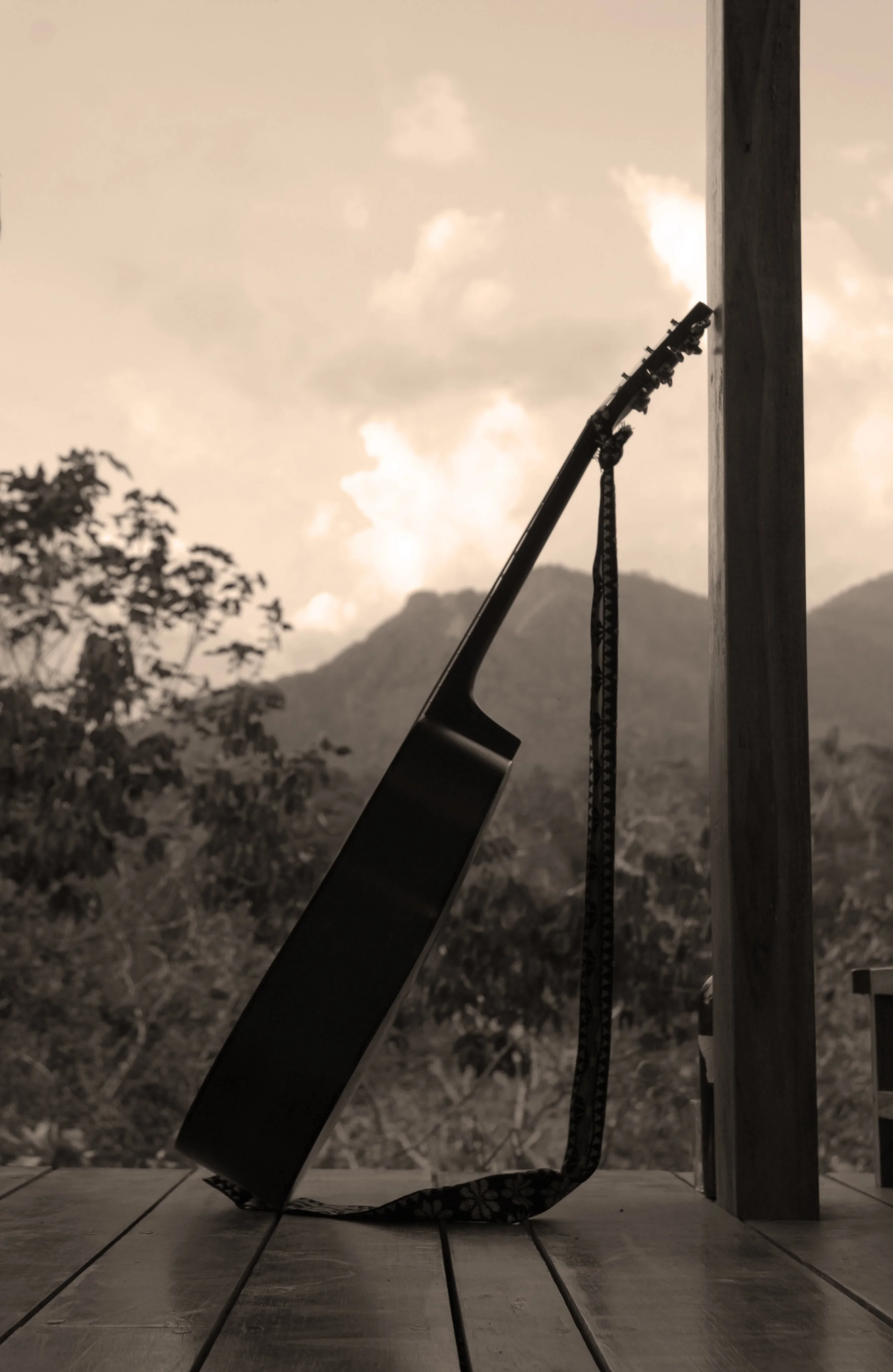
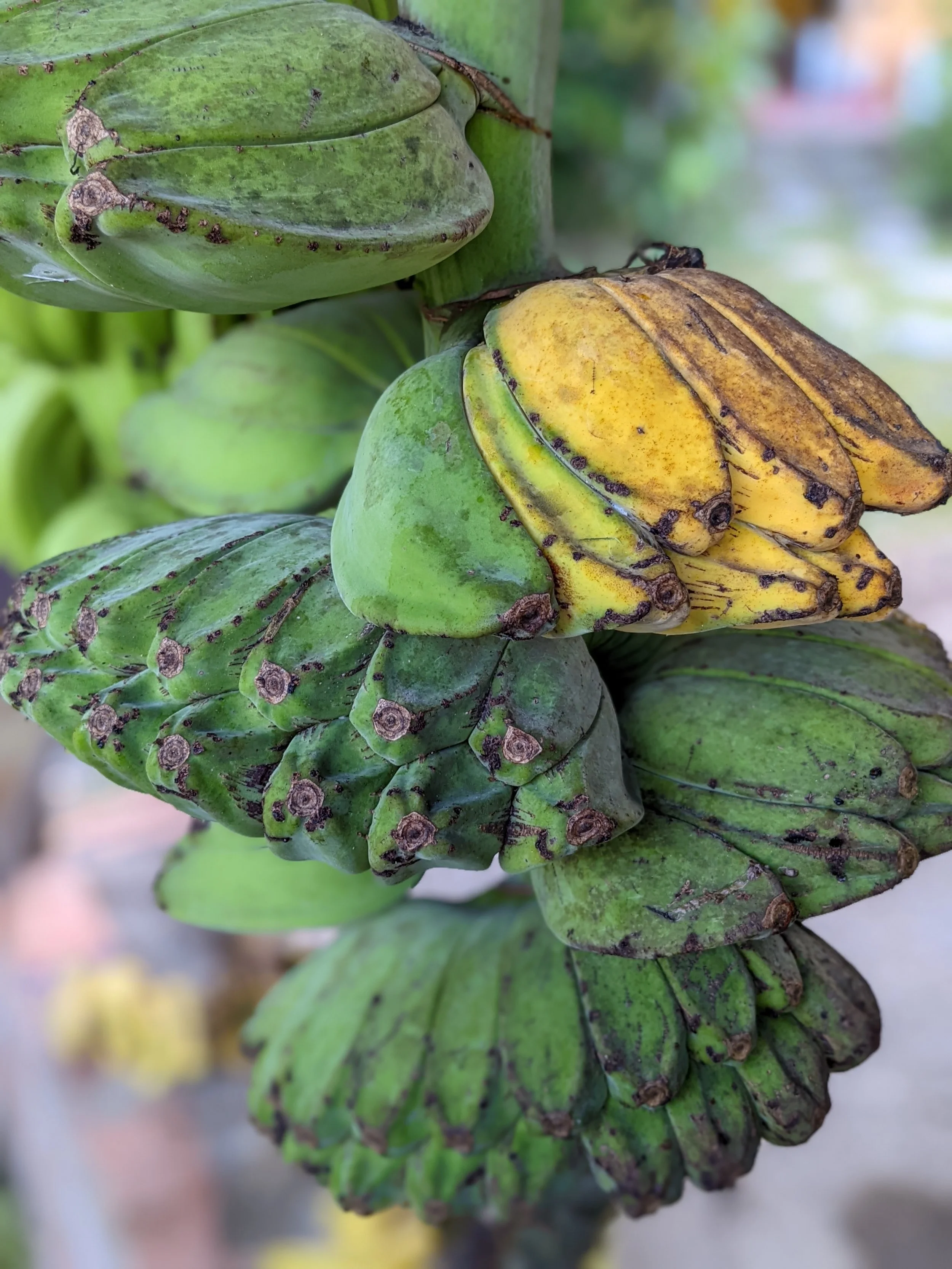
I sit here in rural Costa Rica, in a regenerative living educational center with all my basic needs met, surrounded by beauty and harvesting fresh fruit from the abundant agroforestry spaces that we get to reap the sweet nectar from.
Thanks to the many hands that have had a hand in bringing this place to life—after having been scarred by the products of Costa Rica's bovine and agro-industry—we now have a haven for wildlife and all manner of plant species, as well as an educational center for those seeking to develop more skills pertaining to the regeneration of the biosphere through permaculture, homesteading, natural building, agroforestry, and, importantly, interpersonal dynamics and all the joys and tests that are inherent to them.
If one just stops for a moment, some of the myriad interwoven patterns of the natural world begin to make themselves known, and new ideas can start unfolding.
It's interesting to see the different perspectives we each bring to the fold.
Over the past couple of weeks, I've been tasked with writing a blog pertaining to a subject that I hold dear or simply feel drawn to explore.
The interesting thing is, though I would describe myself as a curious person, for some reason, nothing I've written about seems to have stuck as meaningful or been able to translate an inkling of my experience—except perhaps the songs I've been working on.
It's interesting how my mind has been affected by being here, but the way it makes itself known maybe isn't very straightforward as of now.
So what I have is somewhat unorthodox, perhaps ill-suited to the task at hand, but also honest.
Every place has its music, and this place has inspired me to write these three songs, which I am sharing here.
Perhaps someone, someday, will find their own melodies to move these words.
And if not, I will have deeply enjoyed them during my time here.
Thanks to the living beings and elements that have moved me to put pen to paper and put voice to song.
The Fruit
Verse
There's a fruit, over in the tree
I outstretch my hand, reach out and grab it
Now the fear's gonna bring me down, down, down
Chorus
Calling to the river man,
Can you see where I stand
Out on that reach,
Where the ocean meets the sand?
And in the night I lie in wait,
For the dawn to sing her song,
To sing along,
To sing a song at dawn.
Verse
Memories of the fall,
I don't even know this place.
Live to see another day,
Now the sun is on the way.
And the shadows on the wall,
Let the light down in the cave.
Midnight on the horizon,
There's a fire in the cave.
I see a change is on the way,
I can see it clear as day.
I think we got our signals crossed,
Got a little lost, but that's okay.
Chorus
Calling to the river man,
Can you see where I stand
Out on that reach,
Where the ocean meets the sand?
And in the night I lie in wait,
For the dawn to sing her song,
To sing along,
To sing a song at dawn.
The River
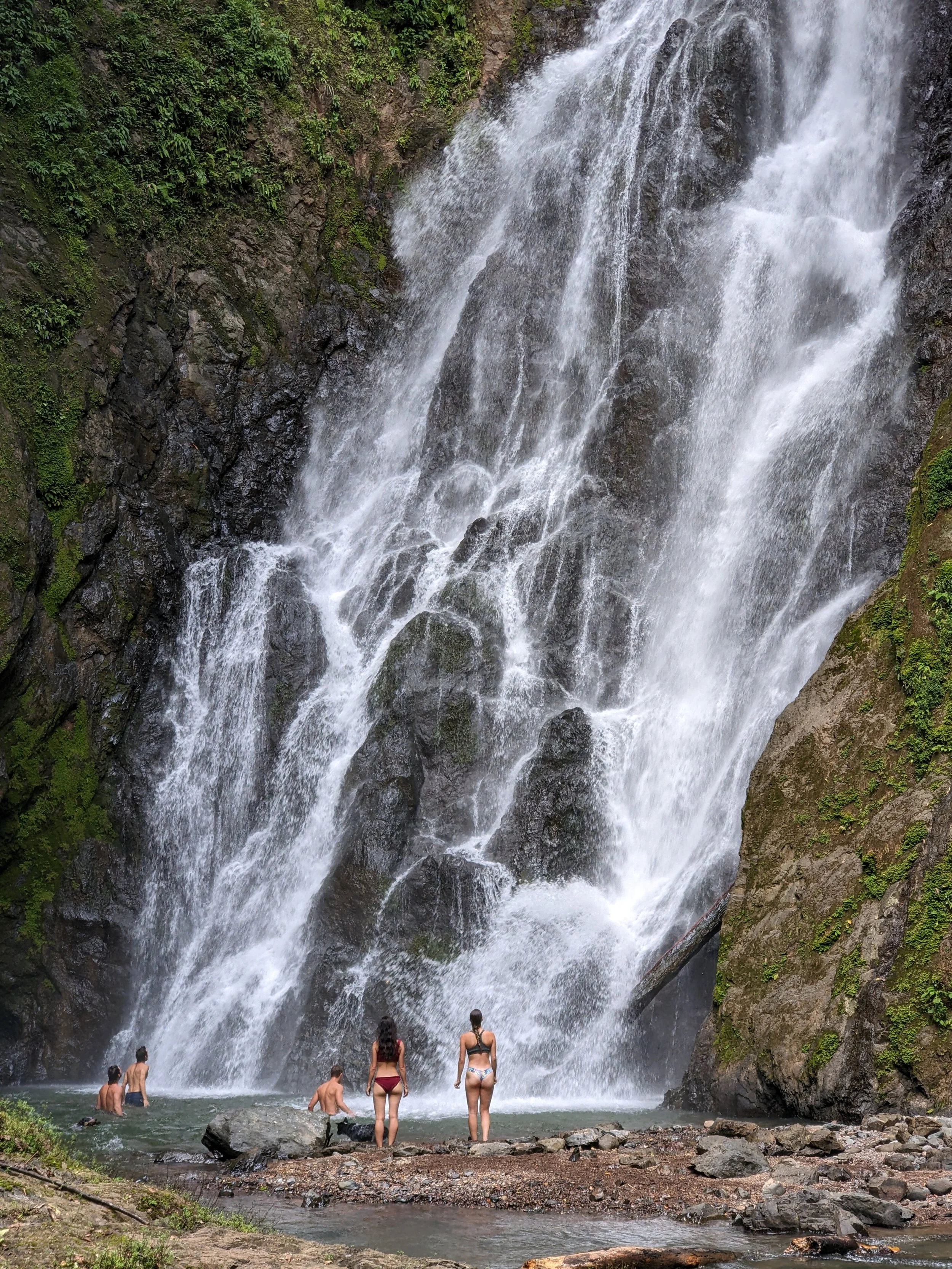
Verse 1
Down in the river I see you,
Come when you call my name.
Smile when I see your wings grow,
Nothing's gonna be the same.
Verse 2
Why did the bird come see you?
What do you think he said?
Something 'bout the changing seasons,
Nothing ever stays the same.
Chorus
Broken, you see, but the song is sung.
Tired, you know, my time has come.
There's fire in the dream and the wave has come.
World on the move, the old one's done.
World on the move, the new one's come.
Verse 3
Don't you ever stop to wonder,
Where do the waters go?
Something 'bout the breath down yonder,
Nothing ever stays the same.
Verse 4
I heard of a world of thunder,
A world that grows deep below.
How does the sun shine down there?
Nothing really seems the same.
Chorus
Broken, you see, but the song is sung.
Tired, you know, my time has come.
There's fire in the dream and the wave has come.
World on the move, the old one's done.
World on the move, the new one's come.
Verse 5
Why did the bird come see you?
What do you think he said?
Something 'bout the changing seasons,
Nothing ever stays the same.
Out Beyond the Sun
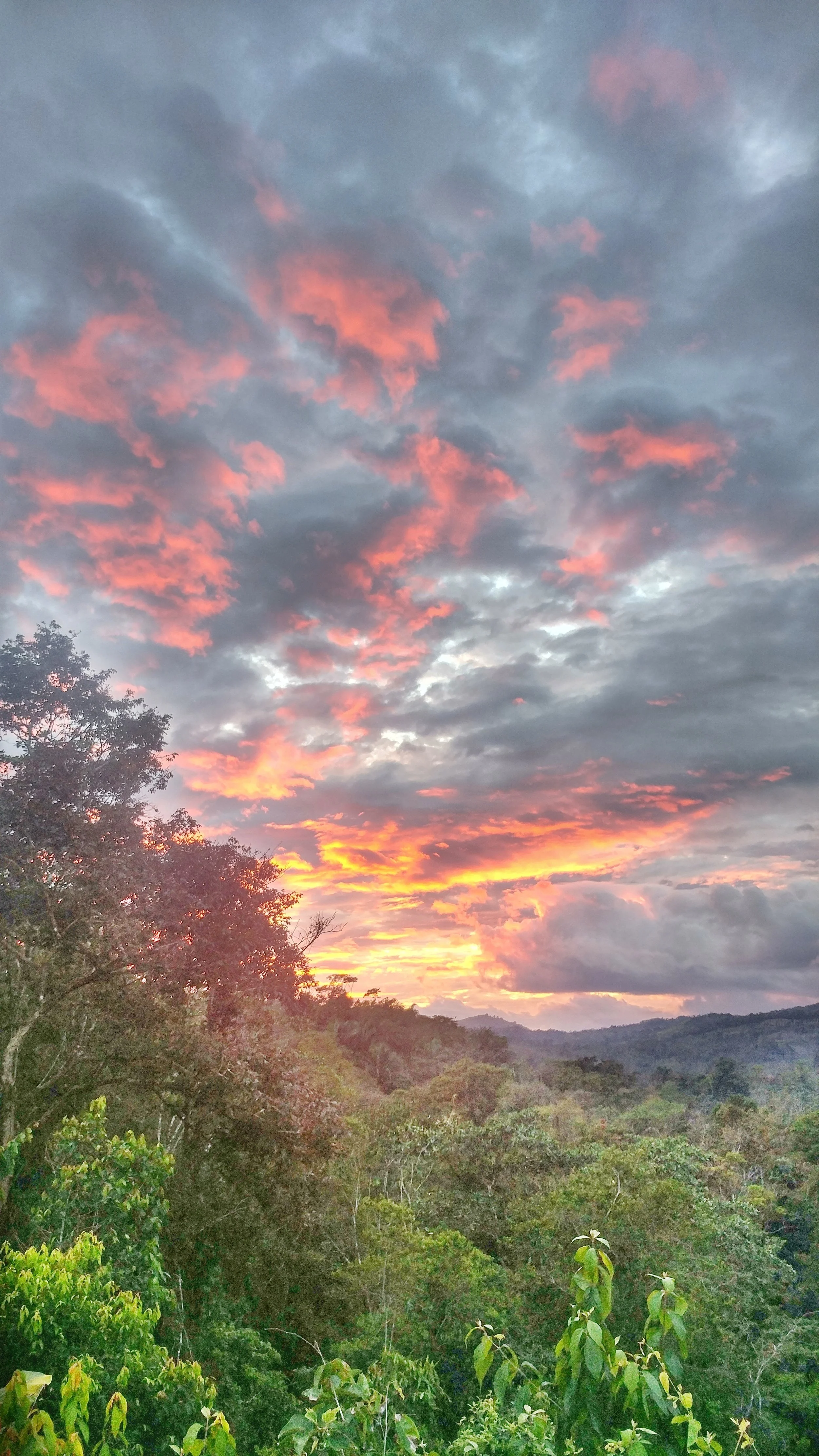
Verse 1
Oh, darlin', you called,
Said you needed love,
And I said, "Go take a walk."
Probably should've listened.
Probably should've shut my mouth.
Chorus 1
Down by the water where the creek runs heavy,
Down in the meadow where the creek runs low.
Verse 2
Wish I could write you a song,
Wish I had a golden tongue.
But my words, they came out wrong.
Forgive me, I'm just riffing.
Thought I could make you strong.
Chorus 1
Down by the water where the creek runs heavy,
Down in the meadow where the creek runs low.
Chorus 2
Thank you for your time,
Please come again.
Let me walk out on the trail.
I'll find you in the space out beyond the sun.
Let me walk alone.
Let me walk alone.
Let me walk alone just for a while.
Find me when the call for home has come.
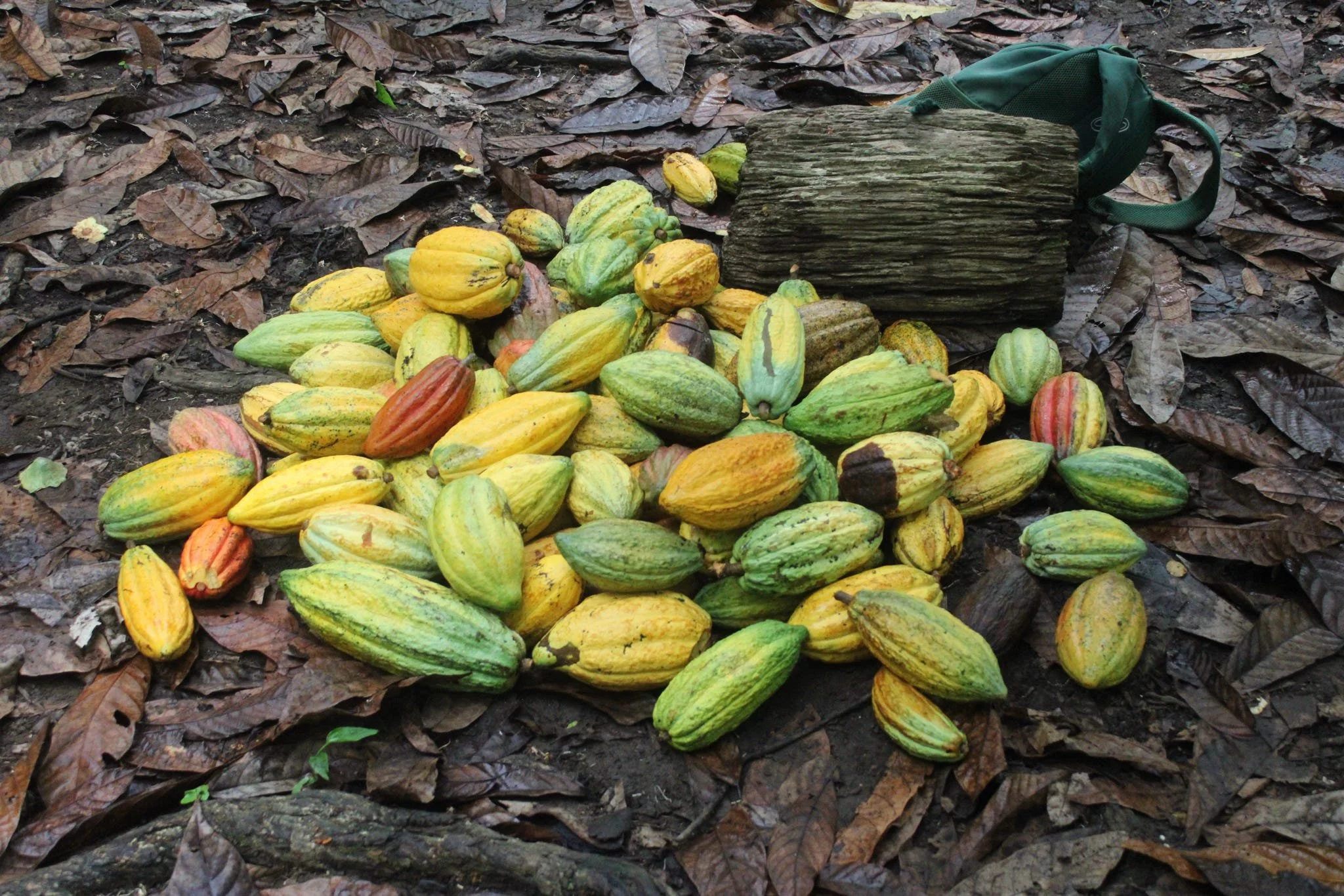
Cacao as the Catalyst
The more I released my need to know exactly where I was going, the more life seemed willing to show me. Not all at once. Just enough for the next step.
By apprentice Maria Quas
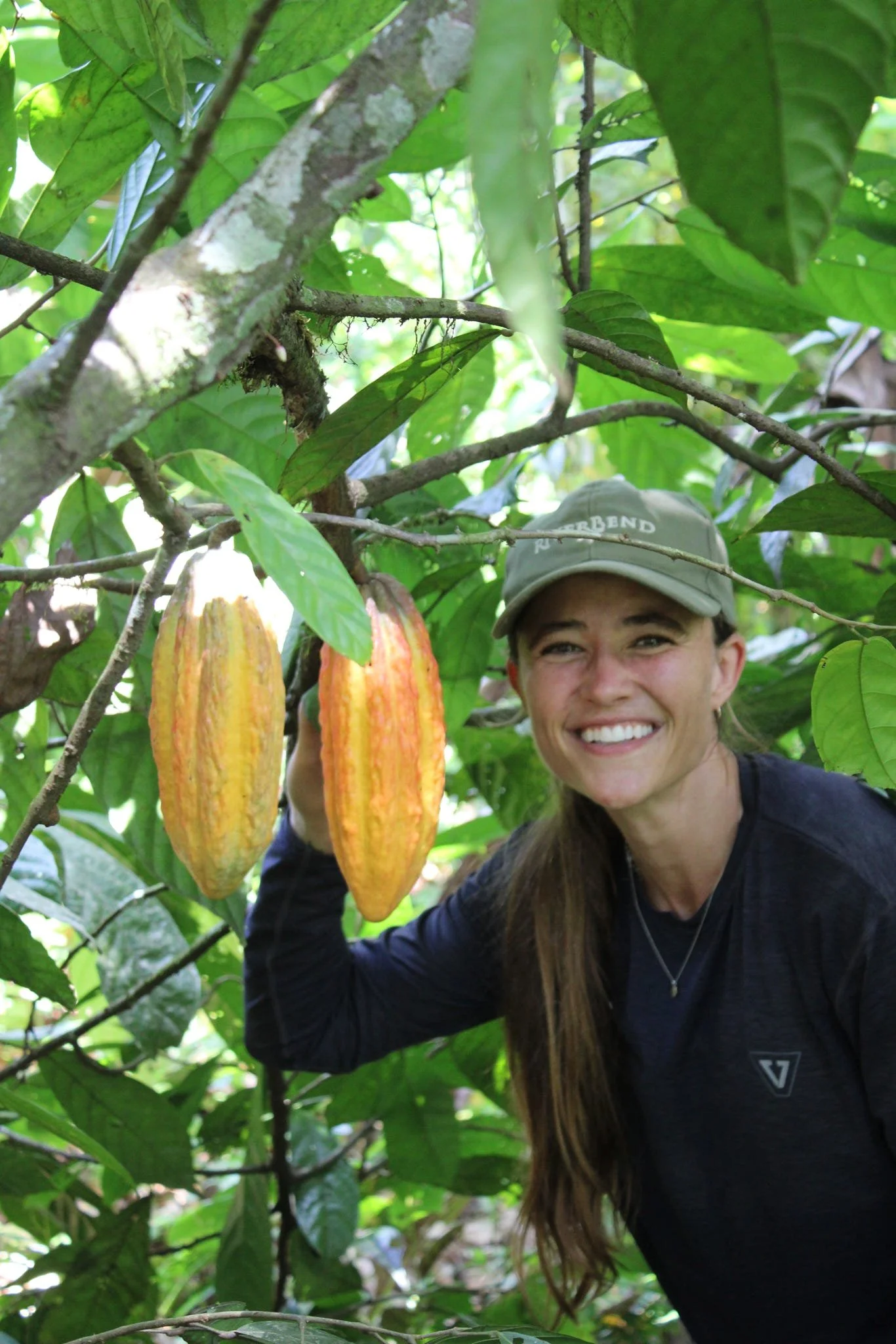
There is a strange phenomenon that happens when you begin following something you genuinely love.
At first, it feels insignificant. A passing curiosity. A book you happen to read. A conversation you almost didn't have. A path you decide to walk for no particular reason.
Then something begins to shift.
The world that once felt random starts revealing patterns.
Teachers appear. Doors open. Conversations arrive at precisely the moment they are needed. What once seemed like coincidence begins to feel more like participation in an intelligence larger than your own.
Taoist philosophy speaks of this as living in accordance with the Way—not forcing life forward, but learning to move with it. There is an old saying often attributed to Zen: when the student is ready, the teacher appears.
For most of my life, I understood that idea intellectually.
This year, living at Rancho Mastatal, I began experiencing it.
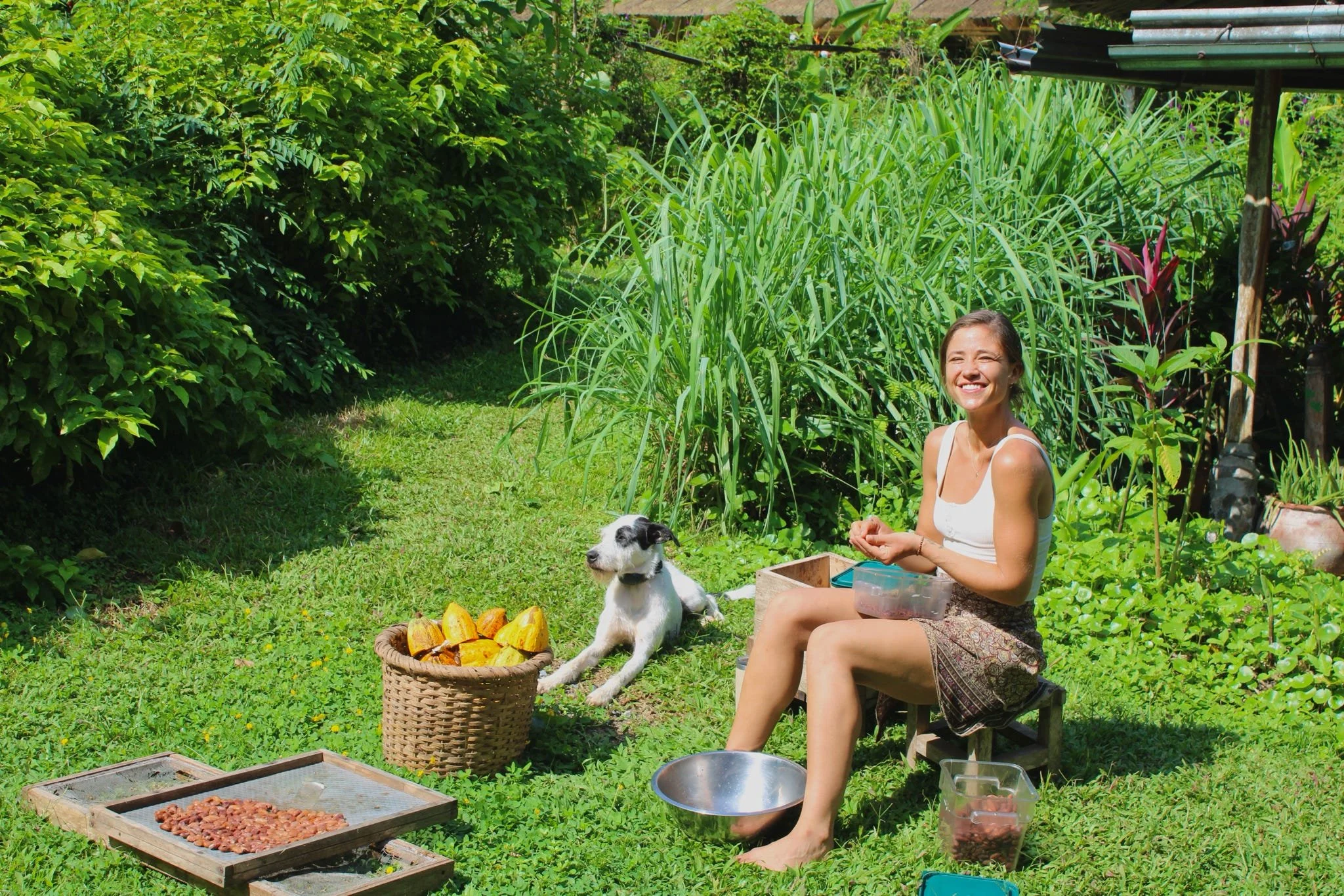
And strangely enough, cacao became the teacher.
Following the Thread
When I first arrived in Costa Rica, I thought growth would come through plans. Through goals. Through carefully constructing a path toward whatever came next.
Instead, the opposite happened.
The more I released my need to know exactly where I was going, the more life seemed willing to show me. Not all at once. Just enough for the next step.
The first lesson arrived beside a river I had crossed countless times before.
After reading about cacao's origins in Mesoamerica, I found myself walking a familiar path toward the waterfall. Along the riverbanks where cacao once thrived naturally, something caught my eye.
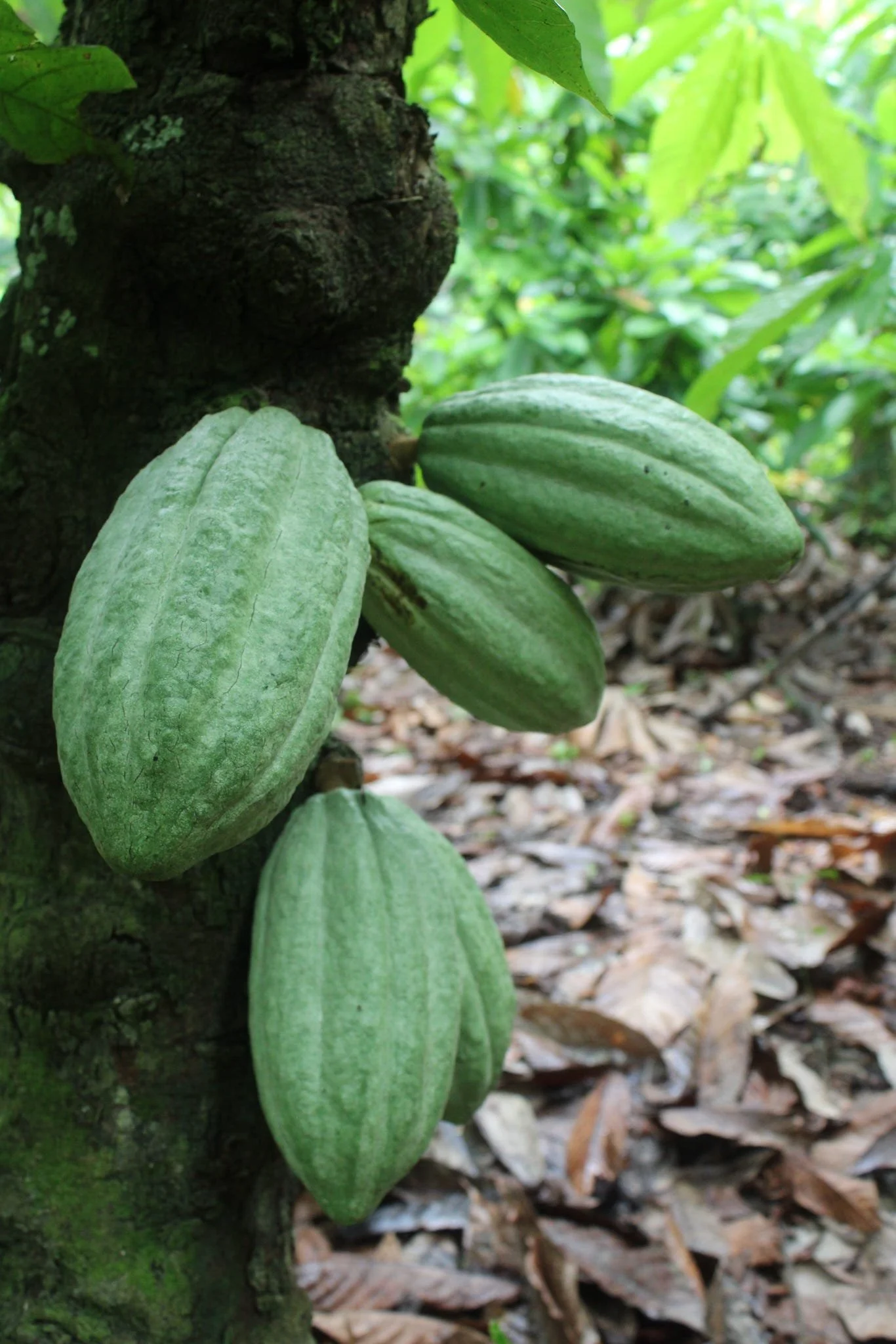
There they were.
Cacao trees.
Mint-green pods emerging directly from their trunks.
I stopped.
How many times had I walked this exact route? How many times had these trees been standing here, visible and unnoticed?
The trees had not appeared.
My attention had.
And once seen, they became impossible to ignore.
It felt less like discovering something new and more like remembering something that had been waiting for me all along.
Perhaps this is how all learning happens. The teacher is not absent. The student simply isn't ready to see.
After that day, cacao began appearing everywhere.
From Information to Wisdom
I started planting seeds in the nursery, reading about cultivation, and asking questions.
Then Victor arrived.
A cacao farmer. A chocolate maker. A living bridge between knowledge and experience.
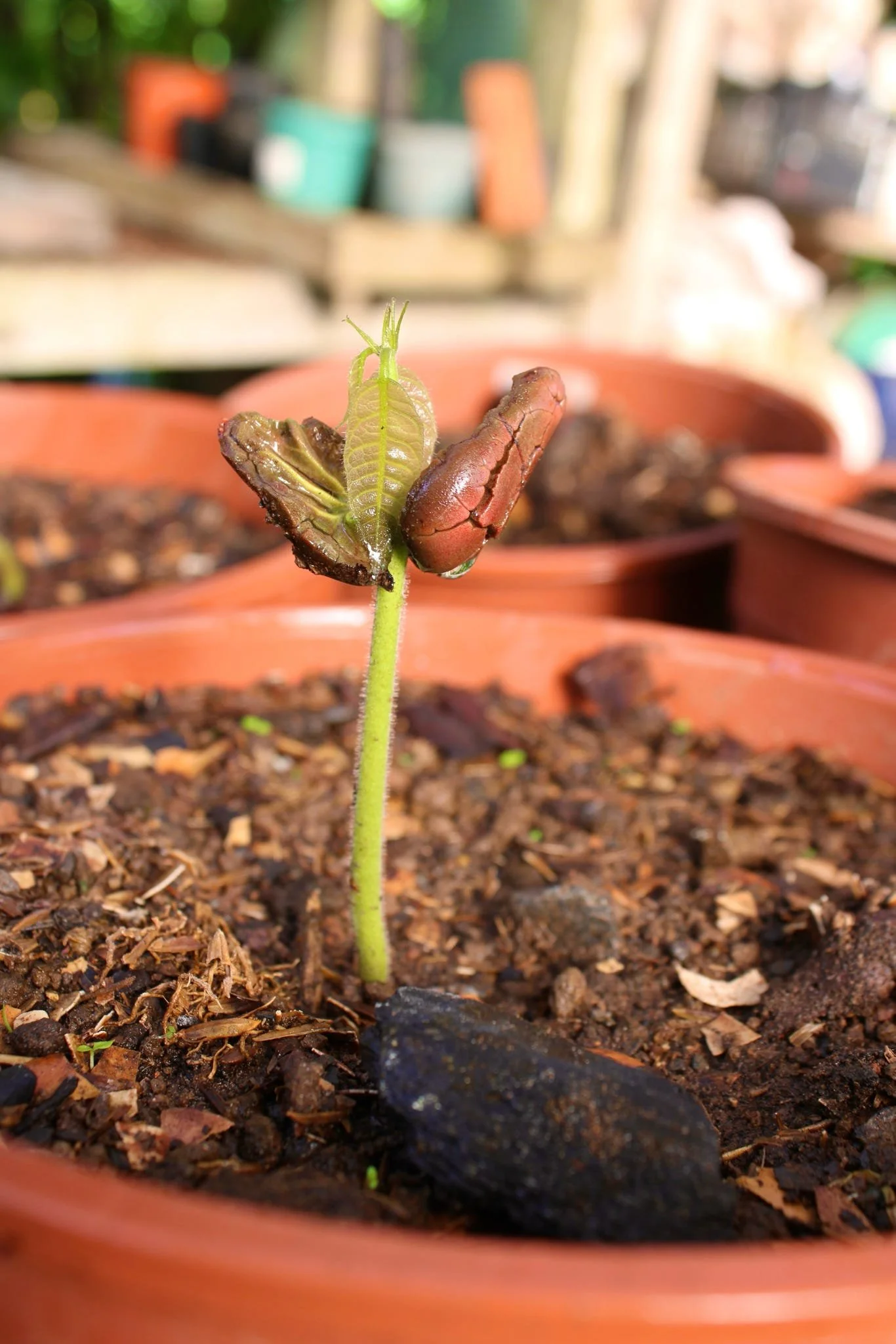
I had spent hours searching online, collecting information, and trying to understand cacao through articles and videos.
Victor showed me the difference between information and wisdom.
Information can tell you what to do.
Wisdom shows you how to see.
The internet can explain how to plant a cacao tree. A farmer can teach you how to listen to one.
Before leaving, Victor invited me to visit his farm.
Another door opened.
Not because I was searching for doors.
Because I was already walking in their direction.
And that is what has fascinated me most.
The opportunities themselves are not extraordinary. What feels extraordinary is the timing.
Cacao as Lineage
Shortly after Victor left, two brothers from the Maleku tribe arrived at Rancho Mastatal—the very community Victor had been speaking about.
Again, cacao was at the center.
But now it appeared not as agriculture, but as lineage. As culture. As memory carried through generations.
One afternoon, they noticed me working with cacao fruit and shared a marmalade recipe made from a part of the pod I had been throwing away.
A piece of fruit I saw as waste contained value within their tradition.
The lesson felt larger than cacao.
How much of life do we discard simply because we do not yet understand its purpose?
The more I followed this thread, the more connections emerged.
Not because I was forcing them.
Because I was paying attention.

Learning to Flow
Taoism teaches that water does not struggle to find its path.
It flows.
It adapts.
It moves around obstacles rather than through them.
And somehow, despite its softness, it shapes entire landscapes.
I am beginning to suspect that life works the same way.
Many of us spend years trying to manufacture a future. Building profiles. Networking strategically. Searching endlessly for opportunities.
I know I did.
Yet some of the most meaningful experiences of my life have arrived through a completely different mechanism:
Presence. Participation. Curiosity.
Not chasing the next thing, but becoming fully engaged with the thing directly in front of me.
The result feels less like achievement and more like alignment.
As if life begins responding when you stop trying to negotiate with it.

My First Cacao Harvest
My first cacao harvest deepened that understanding.
At four in the morning, I woke with the excitement of a child on Christmas Day.
An hour later, I stood before a wide river, preparing to cross on a hand-built zip line while Jorge, the owner of the farm, rode a horse through the current below.
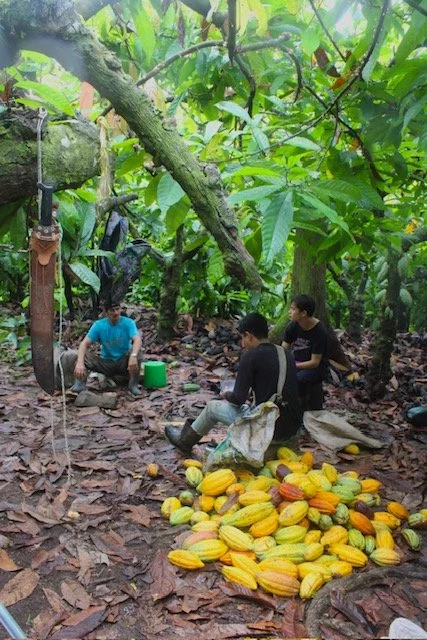
The absurdity of the moment made me laugh.
This was not part of any plan I had ever created for myself.
Yet somehow, it felt exactly where I was supposed to be.
The harvest itself was humbling.
Everyone moved with rhythm and purpose while I struggled to understand the language, the flow, and the choreography of the work.
I felt slow.
Clumsy.
Out of place.
And yet those moments often contain the greatest gifts.
The unknown rarely feels graceful.
Growth is not the absence of discomfort.
Growth is learning to trust yourself inside it.
The Transformation of Chocolate
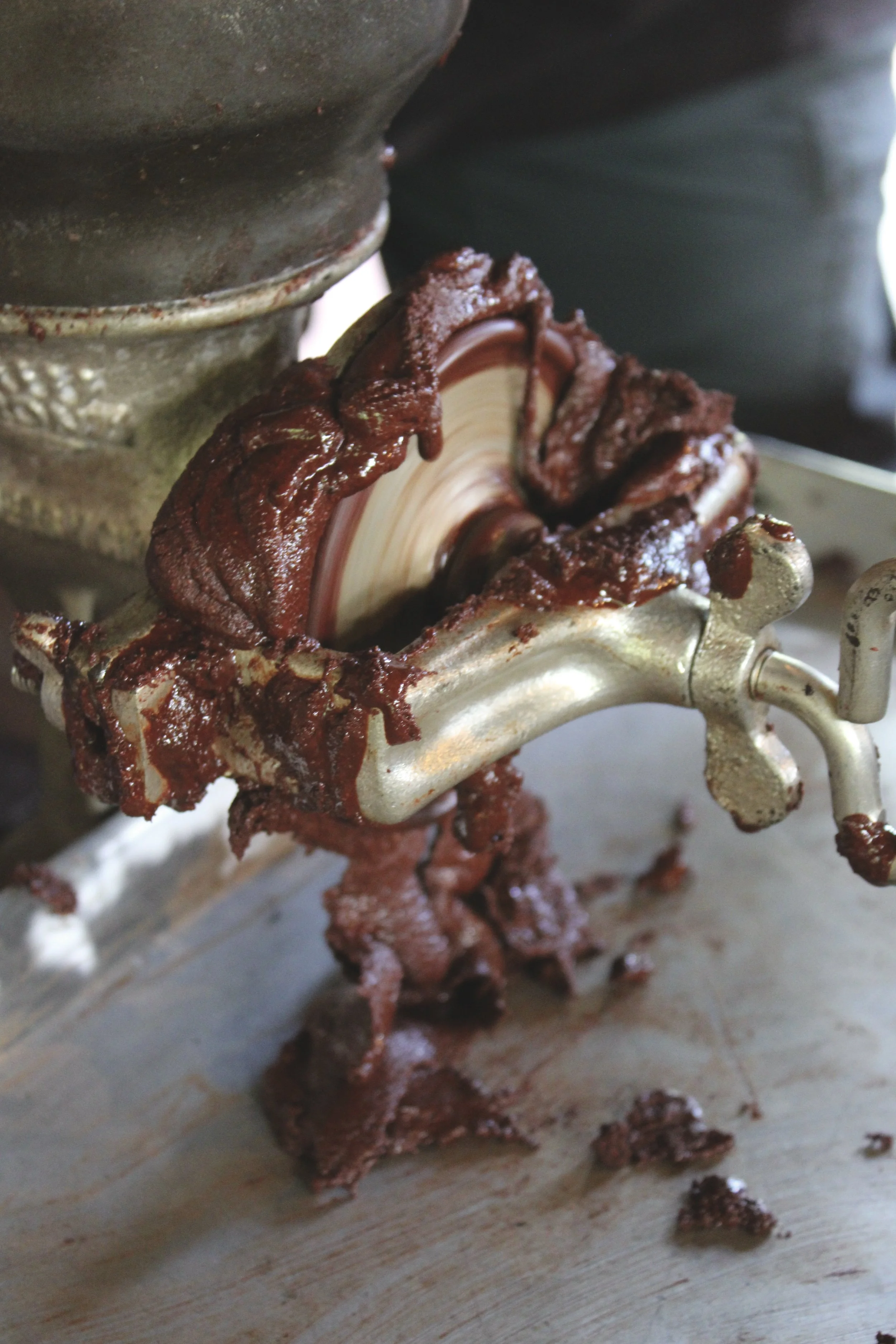
Chocolate itself seems to embody this lesson.
What eventually becomes something rich, complex, and deeply nourishing begins as something raw and unfamiliar.
The seed must ferment.
Dry.
Roast.
Transform.
Time does not happen to the process.
Time is the process.
Perhaps people are not so different.
We are always becoming. Always fermenting experiences into understanding. Always moving through stages that make little sense until viewed in retrospect.
The Real Lesson
Looking back now, I realize cacao was never the real subject.
The real subject was trust.
Trust that the next step exists even when I cannot see it.
Trust that curiosity is sometimes a more reliable compass than certainty.
Trust that the path unfolds through participation rather than prediction.
I still know very little.
But that no longer feels like a problem to solve.
It feels like an invitation.
The path does not appear all at once.
It never has.
It reveals itself in proportion to our willingness to walk.
And so I keep walking.
Not toward an outcome.
Not toward an answer.
Simply toward whatever feels most alive.
Read more
Check out these past blogs about cacao and other local foods we are enjoying here:
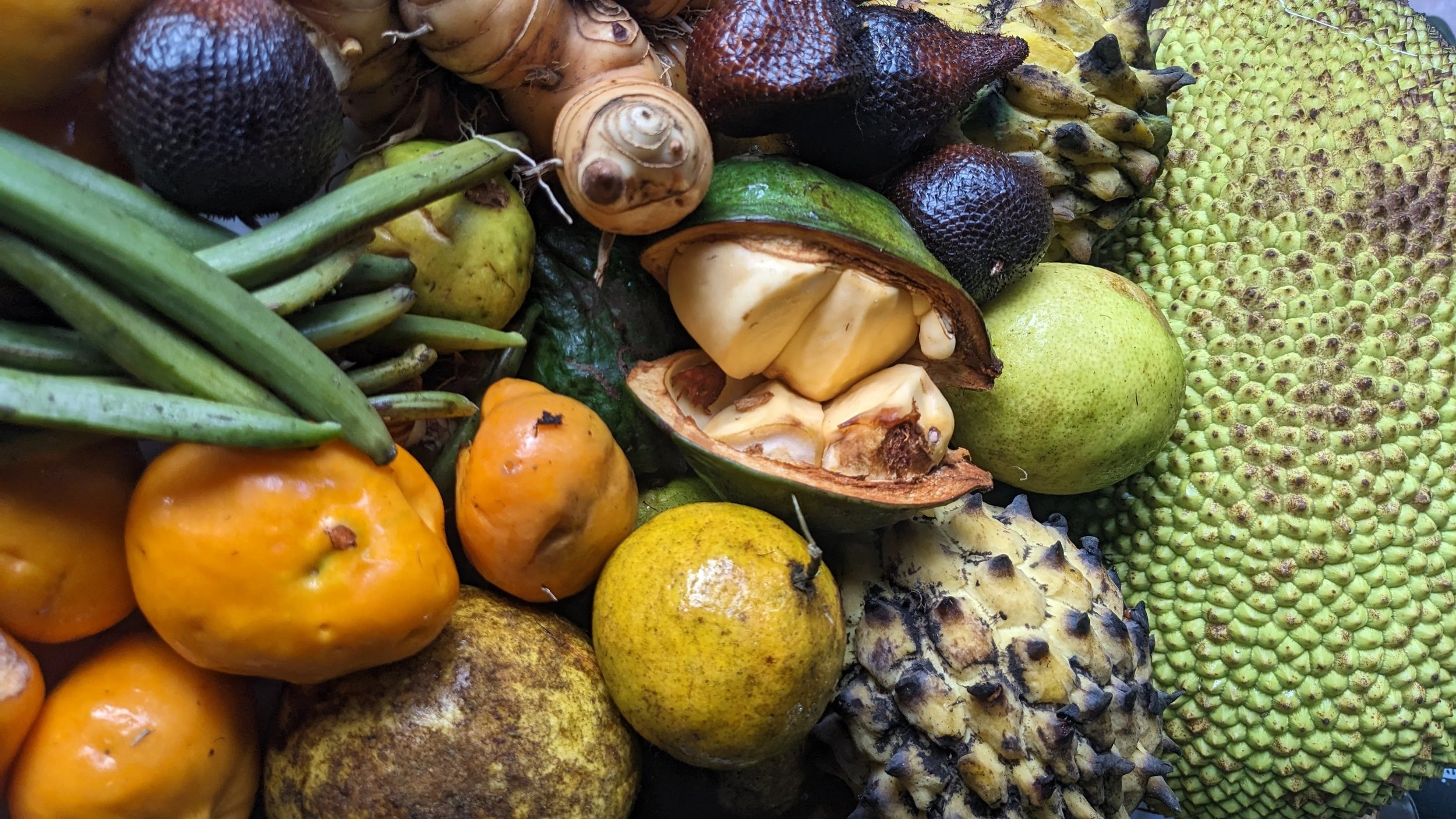
Why Are My Homemade Jams So Runny? A Look into the World of Pectin!
Do I need more sugar? More acidic fruit? How do I get more pectin? What even is pectin? This blog will answer all your questions—and more—to help you obtain some beefier jams.
By Kyler Kradle — Apprentice 2026
Based on - On Food and Cooking: The Science and Lore of the Kitchen by Harold McGee
For the past few weeks, I've been trying my hand at making homemade Costa Rican jams here at Rancho Mastatal.
During one of our food processing classes, jam was thrown into the mix. We made two huge batches with tons of ingredients at high heat on a rocket stove for hours on end. The jam turned out well. We used it for fruit roll-ups, and it went nicely with sourdough.
However, our consistency and canning methods must have been a tad bit off in the end. Some jars had different thicknesses, odd smells and tastes, and, honestly, we had an overabundance of jam.
A couple of weeks later, we had some extra Victoriana fruit from our harvest day. I used this to make another jam. Alongside the Victoriana, I used a whole pineapple and papaya. This was tossed into a blender with sugar to create a liquid. The liquid was then cooked thoroughly, and more sugar was added little by little until the sugar percentage was up to about 50–55%.
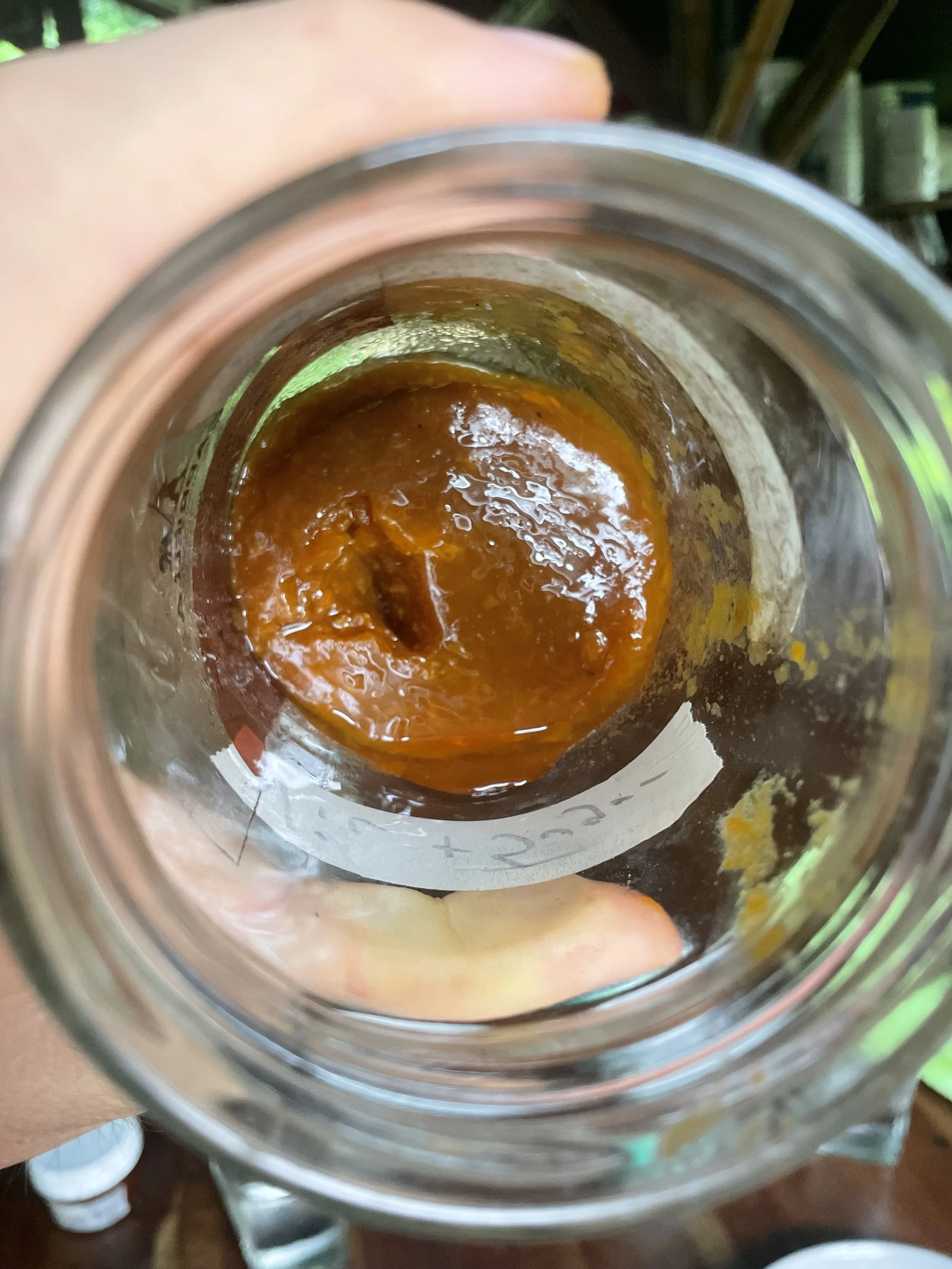
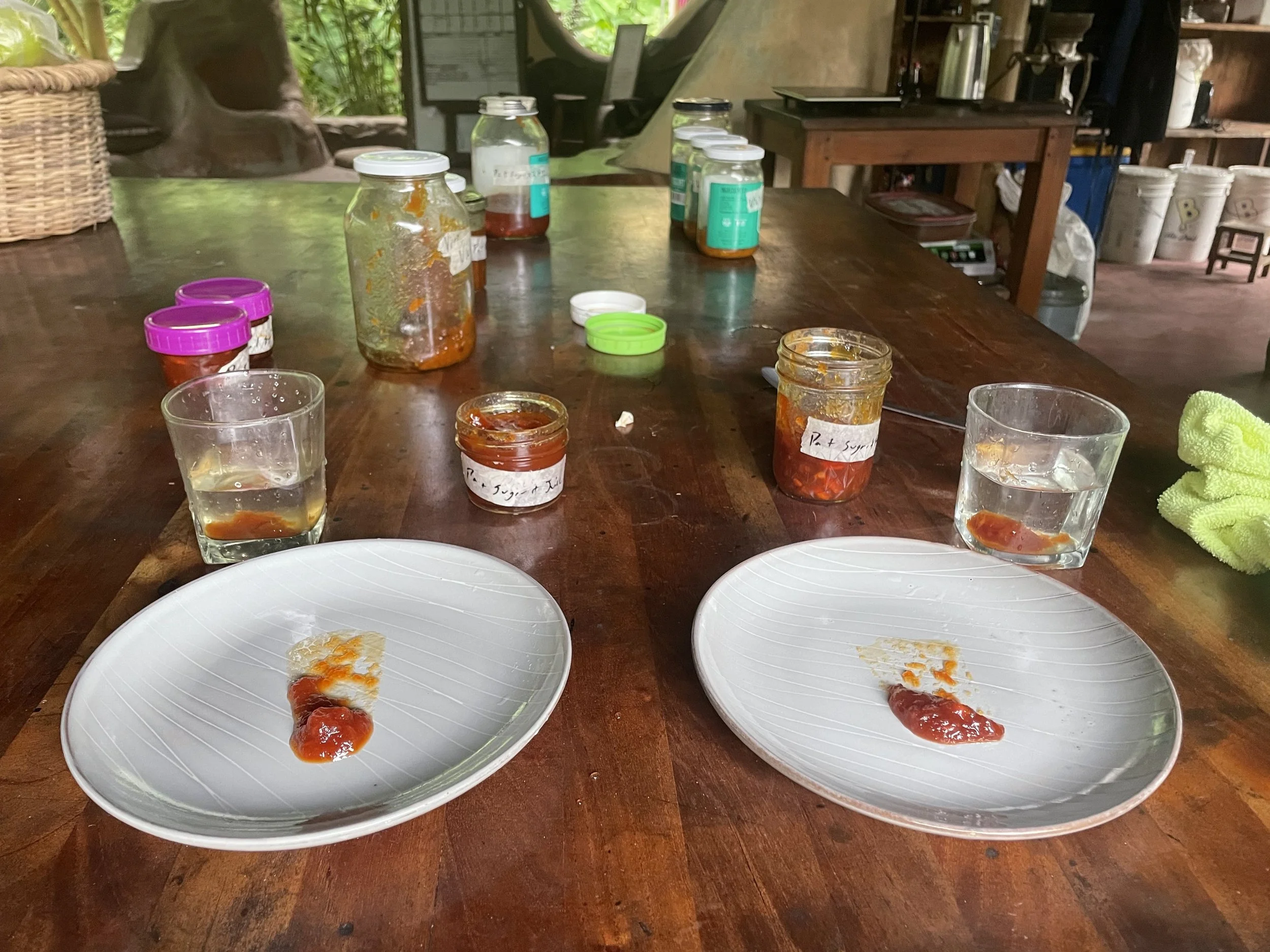
The mixture was very sweet, had what seemed like a good consistency, and passed the plate-tilt test. The plate test involves putting a little spoonful of jam on a plate and tilting it to see its consistency.
However, after letting the mixture set, it was quite liquidy and more like a sauce.
On another occasion, I made a jam for a cheesecake using Victoriana and Arasá fruit. Again, this also turned out runny, even with the more acidic fruit, which I thought had higher pectin.
So the question is…
Why Are My Jams Runny?
Do I need more sugar? More acidic fruit? How do I get more pectin? What even is pectin?
This blog will answer all your questions—and more—to help you obtain some beefier jams.
What Is Pectin?
Speaking of beef, let's think of meat for a second.
Say you cook chicken, put it in the fridge, and take it back out again. The juice turns into this gelatin-like substance around the chicken, binding the liquid together.
Historically, this is where the ideal consistency for jam came from: a mixture between solid and liquid that is bouncy and joyful.
Pectin is the creator of this consistency, but how does it do it?
The best way to think about pectin is like an adobe brick wall. The cells are the bricks, the pectin is the mortar, and the wall itself is the cell wall.
Pectin is the natural substance that holds the cells together, creating a cell wall. When a fruit is firm and underripe, the pectin is strong and long, holding the cells together.
On the other hand, when a fruit ripens, the pectin gets weakened by enzymes.
For those wondering, like I was, enzymes are proteins that help conduct chemical reactions made by living things. Basically, they're a tool that helps complete a job faster—like cutting paper with scissors instead of your hands. The enzyme is the scissors.
When cooking fruit, the wall breaks and the cells open, changing their current structure. Imagine shaving away an adobe brick wall to make a curve. Those shavings still have the same ingredients, but they're just in a different form.
That's the pectin getting dissolved into the fruit juice.
With this crumbly substance, you can't just form another wall again, just like pectin can't simply turn back into a gel. The pectin chains have been diluted in water and now hold a negative charge that makes them repel each other instead of bonding.
They need some help and other ingredients to find each other again.
Similar to rebuilding an adobe wall, the cook—the builder—can use several different methods to help bring pectin back to its gel form.
Four Ways to Help Pectin Form a Gel
1. Lots of Sugar
Sugar molecules attract water molecules to themselves.
This helps reduce the amount of water available in the mixture.
2. Boiling
Boiling pulls water away from the pectin, exposing the pectin chains to each other again.
Sugar increases the boiling point.
Boiling evaporates water, bringing pectin chains closer together while also creating an overall higher concentration in the mixture.
3. Increased Acidity
Acid neutralizes the negative repelling charge that the pectin mixture is currently holding.
The wandering pectin molecules are then able to bond together to form a gel.
4. Supplemental Pectin
Pectin can be bought commercially or found in other fruits.
It can be added directly to a mixture to replace broken-down pectin molecules and help bring the gel form back to life.
Note: Overuse of heat and acid can shorten pectin chains, causing the jam to become liquidy.
Ideal Conditions for Making Jam
The usual challenge of preserve-making is trying to set the mixture at a proper boiling point for a specific amount of time while meeting the correct sugar percentage and creating an overall ideal concentration.
Other problems can occur because of the quality and amount of pectin or acid.
Here are the ideal conditions for creating a proper concentration:
pH: 2.8–3.5, roughly equal to orange juice
Acid: 0.05% by weight
Pectin concentration: 0.5–1.0%
Sugar concentration: 60–65° Brix
If you happen to do what I do and make liquidy jam, there are a couple of troubleshooting solutions you can try.
Liquid or concentrated pectin can be commercially purchased. Another trick is using the zest or peel of acidic fruits soaked in the jam.
Other options include cream of tartar, lemon juice, and a quick reboiling.
I would also recommend doing a quick search for the fruits you want to use and checking their pectin levels.
A Basic Understanding of How to Make Fruit Preserves
1. Cook the Fruit to Extract Its Pectin
Make cooking as brief and gentle as possible.
Prolonged cooking damages pectin.
2. Add Sugar
Rapidly bring the mixture to a boil to remove water and concentrate the other ingredients.
Continue boiling until the mixture reaches 217–221°F (103–105°C).
This indicates that the sugar level has reached approximately 65%, or you can use a refractometer to measure the sugar percentage.
Cook best at a gentle simmer and in a wide pot with a large surface area for evaporation.
3. Add Supplemental Pectin if Needed
Store-bought pectin packets, citrus peel, or green apple stock are common options.
These can be added directly or placed in cheesecloth and soaked in the mixture.
4. Add Supplemental Acid if Needed
Add acid later in the process to avoid completely breaking down the pectin chains.
Too much acid can cause fluid to weep from an overly firm gel.
5. Test the Jam
Readiness can be tested using the plate, spoon, or water test to see if the mixture gels.
6. Pour into Sterilized Jars
The mixture sets as it cools below 180°F / 80°C, but it sets most rapidly around 86°F / 30°C.
The mixture can continue to become firmer over the course of several days or weeks.
Jam Experiment!
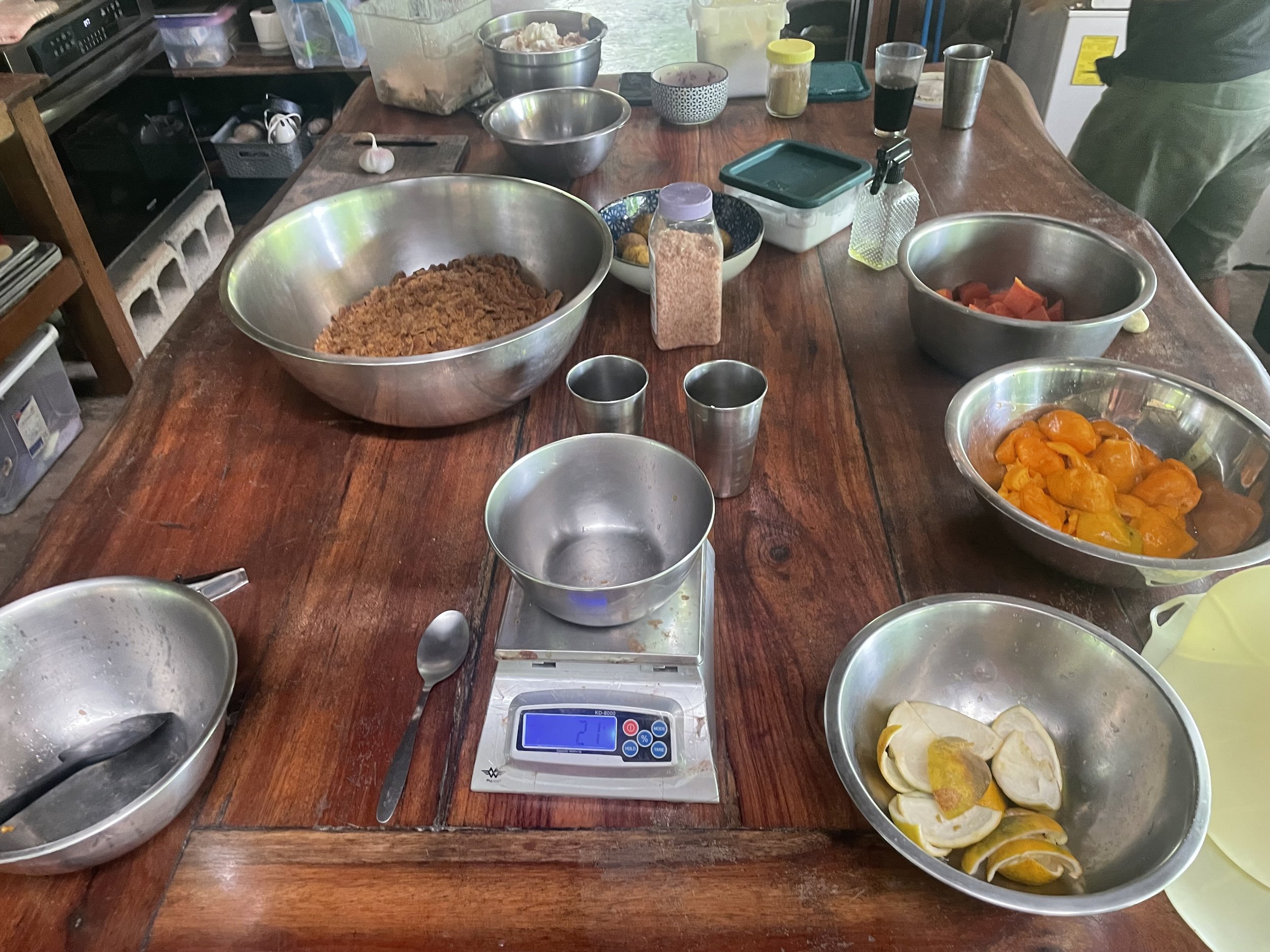
So, I decided to do a little experiment to test out some variables in my jam.
Realizing that pectin is the key ingredient for achieving the perfect consistency, I revolved my experiment around it.
Here's how I broke it down using what I had at the ranch.
I took two fruits, Victoriana, which is high in pectin, and papaya, which is low in pectin, as my subjects.
Sugar is needed for every jam, so that stayed constant for each sample. My fruit weight was 150 g to 100 g of sugar, which gave me a sugar percentage of about 65%.
Basically, I was measuring two-thirds of the fruit weight in sugar.
My pectin variables consisted of orange peels and lime juice.
My controls were:
Cooking time: 10 minutes
Cooking temperature: 100°C on the induction stove
Boiling time: 5 minutes
Pot size
Here's another look for easier comparison.
High-Pectin Fruit
1. Victoriana, 150 g + sugar, 100 g
2. Victoriana, 150 g + sugar, 100 g + 32 g lemon juice
3. Victoriana, 150 g + sugar, 100 g + half an orange peel in cheesecloth
4. Victoriana, 150 g + sugar, 100 g + 32 g lemon juice + half an orange peel in cheesecloth
Low-Pectin Fruit
5. Papaya, 150 g + sugar, 100 g
6. Papaya, 150 g + sugar, 100 g + 32 g lemon juice
7. Papaya, 150 g + sugar, 100 g + half an orange peel in cheesecloth
8. Papaya + sugar + 32 g lemon juice + half an orange peel in cheesecloth
High- and Low-Pectin Fruit
9. Victoriana, 150 g + papaya, 150 g + sugar, 200 g
10. Victoriana, 150 g + papaya, 150 g + sugar, 200 g + 32 g lemon juice + half an orange peel
To compare my results, I used a plate test and water test over a setting time of 48 hours.
I also tried to compare taste to the best of my ability, although taste is obviously subjective.
Overall, I thought the best consistency was going to be the Victoriana with the orange peel because citrus peels are supposedly high in pectin, along with the high-pectin fruit.
Experiment Conducted!
Things That Went Wrong
Lime juice measurements were inconsistent.
I messed up my ratio for lime juice and added way too much compared to the whole mixture.
When mixing in the peel, I think the cheesecloth might have soaked up some of the lime juice and liquid, which, in this case, was probably good because I had added too much.
I used orange peels.
I think I can just toss these straight into the mixture next time.
With such a small batch, I'm not sure if they even totally soaked in.
Was I boiling for too long?
It felt like I might have been over-boiling the mixture because of the liquidness of the majority of my jams.
When compared to my experimental sugar-level test jam, it was so thick I could hold it upside down and it wouldn't fall out.
Results
High-Pectin Fruit
1. You can see the spoon mark—it's so thick! Great consistency, with a small amount of liquid pushed to the top. It left small, clumpy gel trails that were very visible and moved as a solid mass. On the plate test, it stayed completely as one unit. In the water test, there was no fuzz coming off. The taste was sour and delicious.
2. One mass on the top layer, but it dwindled into the same mass deeper into the jar. It was also liquidy on top, with a big snail trail, but still gel-like. It stayed as one mass in the water but left some fuzz in the water. The taste was acidic.
3. Very thick, with little to no gel trail on the plate test. Great consistency and no liquid on top. It stayed as one mass in the water test with no fuzz coming off. The taste was very similar to #1.
4. Good consistency, but with a little more movement. It left barely a mark on the plate test. It stayed as one mass in the water test but was still a little hairy. Solid taste, but kind of sour.
Low-Pectin Fruit
5. Solid structure, with little to no skid on the plate test. It all moved as a solid mass. It stayed as one mass in the water test. The taste was somewhat bland.
6. Biggest snail trail yet. It was still moving as a solid mass but was definitely the most liquidy so far. It stayed as one mass but slightly broke apart in the water. The taste was too acidic from the lime and hurt my teeth.
7. Solid structure. It left a light snail trail on the plate test and moved as a solid mass. It stayed as one mass in the water test. The taste was again somewhat bland.
8. Good consistency. It left behind small gel clumps but still moved as a solid mass. It stayed as one mass in the water test. The taste was relatively better than #5.
High- and Low-Pectin Fruit
9. More on the liquid side. There were clumpy gel spots on the plate test, but it stayed as one mass in the water test. The overall taste was solid.
10. More of a solid-mass consistency on the top, but it dwindled down. It left a noticeable snail trail on the plate test, like small gel bubbles. It stayed as one mass in the water test. The taste was too much like lime.
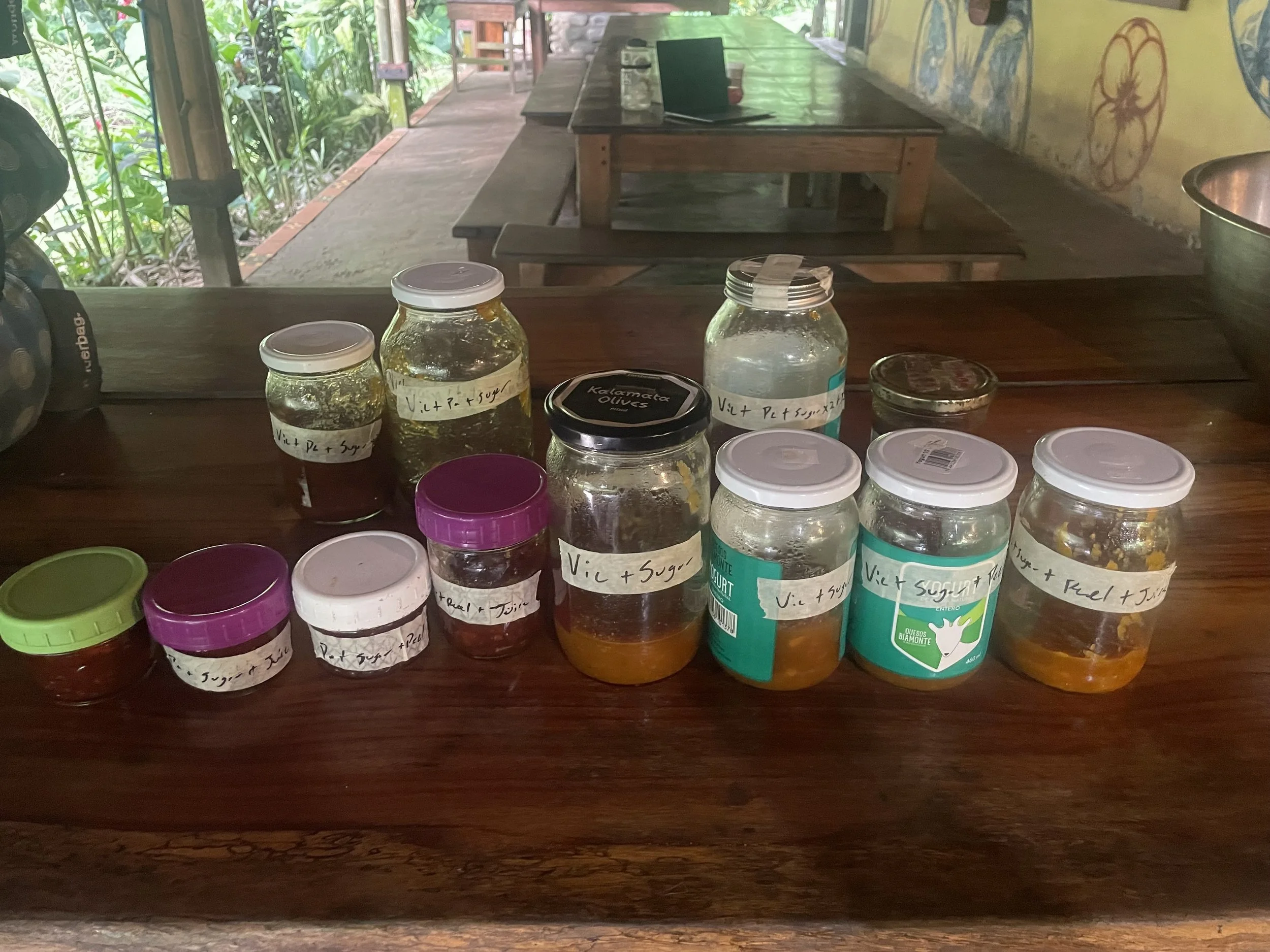
Observations
First things first: all the jams turned out great and had a solid consistency overall. I would consider none of them to be liquidy or sauce-like.
So, I obtained pectin, and the experiment was a success!
However, they were all so similar that it was kind of hard to differentiate between them. I'm not sure which one even had the best consistency.
I think the plate and water tests are supposed to be done while cooking the jam to check its consistency, but I suppose they still worked here.
I also saw what McGee was talking about with the weeping fluid caused by too much acidic juice. The acid-sample mixtures had a great mass-like consistency, but liquid was sitting on the top and edges.
I definitely added too much lime, and it really wasn't necessary. It also gave the jam a bad taste and hurt my teeth—it was so acidic!
The peel in the cheesecloth worked somewhat, but next time I'm just going to throw the peel directly into the mixture and pull it out afterward, or just leave it out altogether.
Flavor is also something to consider. These jams had the good consistency I wanted, but the flavor wasn't all that great. Combining fruits or choosing better-tasting fruits with less acidity may change the consistency while producing a better taste.
Now the question is: How can I obtain better-tasting jams with solid consistency?
What's Next?
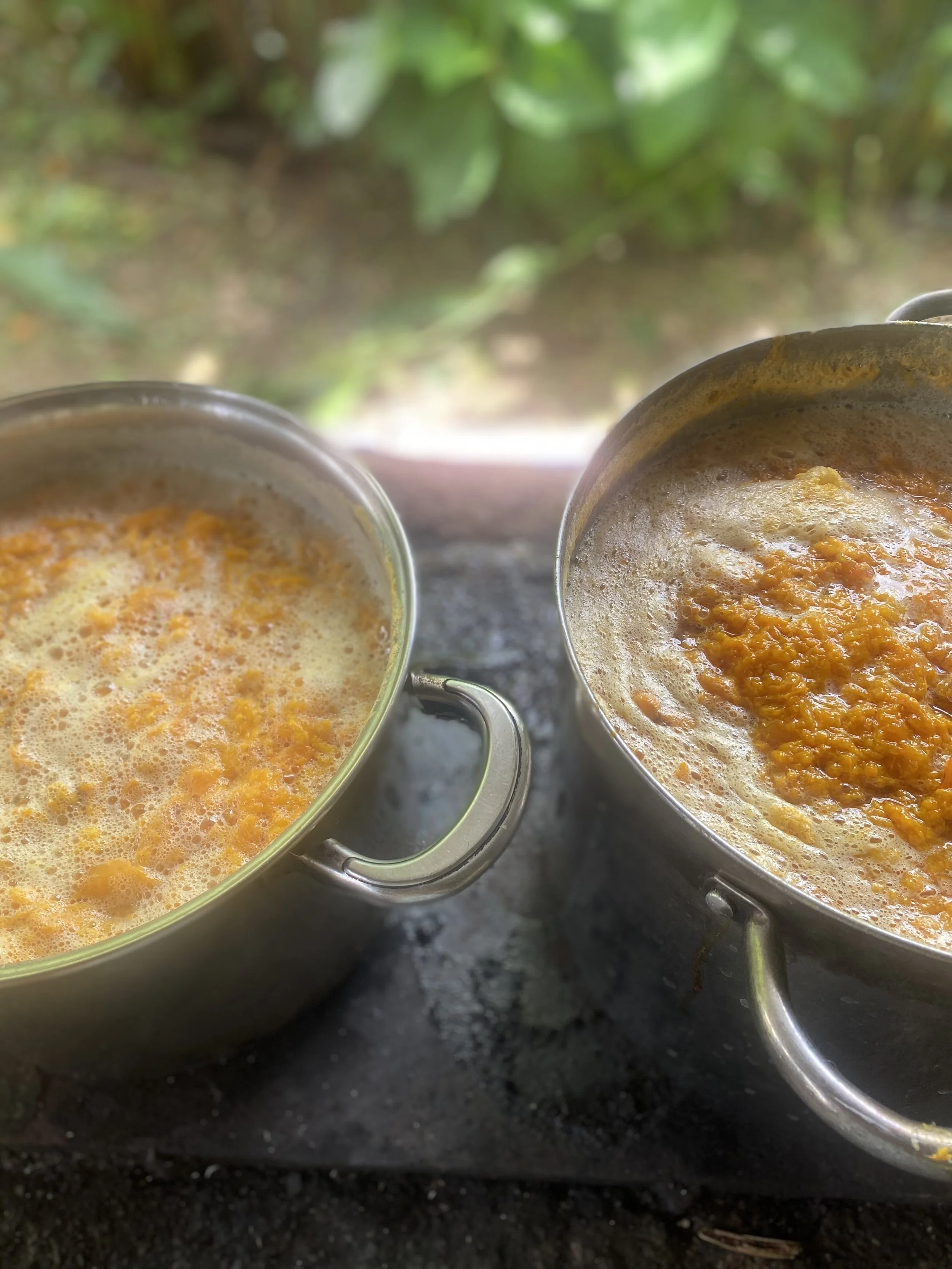
I think sugar percentage and boiling time are other variables to consider when looking at consistency.
When comparing low- and high-pectin fruits with a sugar percentage of 65%, they looked relatively the same.
Also, looking back at my previous jams, I cooked and boiled them for an intense amount of time, which I believe was shortening my pectin levels.
Compared to this experiment, where I only boiled the jams for five minutes, I obtained a great consistency.
Next time I play with jam, I want to experiment with boiling time and sugar percentage.
Time to redesign and prepare another jam sesh!
Tune back in for more jam updates and recipes to come!
Read More
Check out these other blogs related to food processing:
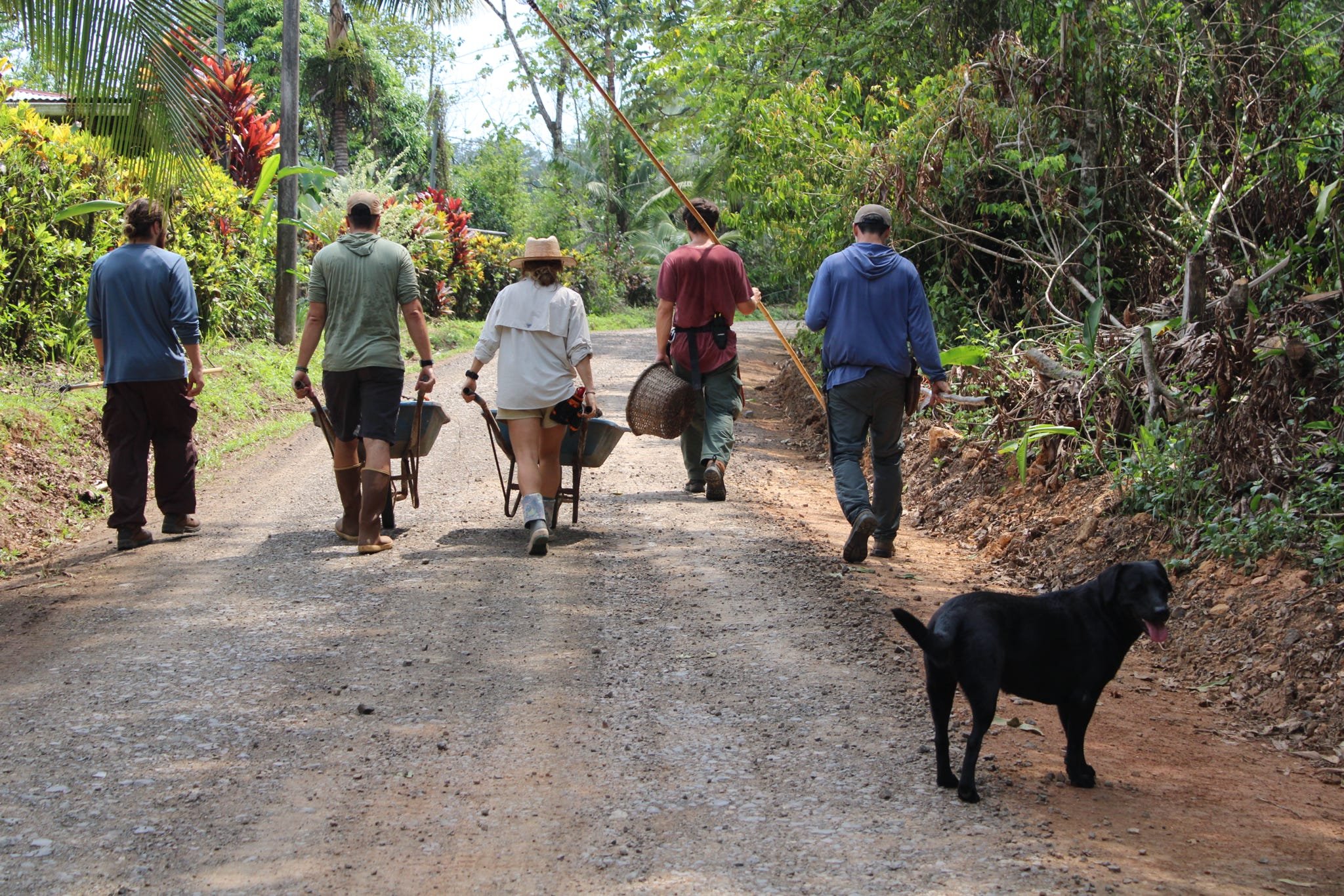
On The Practical Meditation Of Sharpening Tools
Taking time to care for our tools facilitates relationships with them that change the quality of our work.
By Hope Kelley - Apprentice 2026
Taking time to care for our tools facilitates relationships with them that change the quality of our work
In the first several months of my apprenticeship at Rancho Mastatal, I did not sharpen my machete once. Anyone who works with blades — or tools of any kind, for that matter — may be appalled to read this. We’ve all heard the old adage that “a sharp blade is a safe blade,” but still I put off the routine maintenance task week over week in my early months here — doubtful, I suppose, of my ability to properly carry it out.
Us apprentices had received a brief sharpening tutorial toward the beginning of our time here, and were expected to notice when our blades needed sharpening and attend to that need accordingly. As with many things at the Ranch, students are expected to implement and practice the skills we learn here without prodding or reminding. I knew machete care fell into this category of My Responsibility, yet I continued to procrastinate doing it. So, there came a day out in the agroforestry spaces — where we prune, chop and drop, and any number of other tasks with our machetes — where I could no longer ignore the fact that I was working with a dull blade.
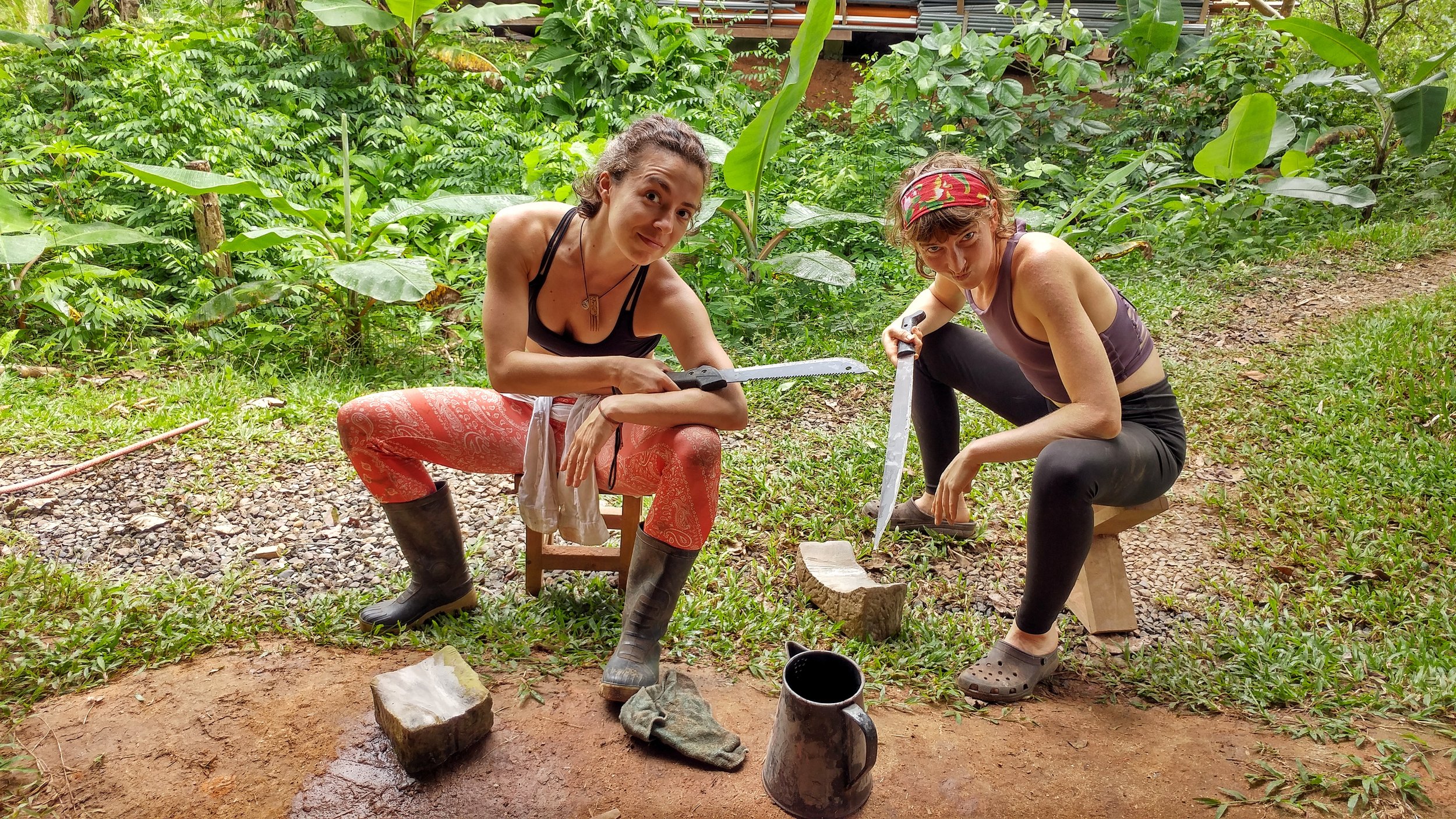
On this same day, as our afternoon work session came to a close, a fellow apprentice announced that he’d be busting out the sharpening stones that afternoon to tend to his machete and that any of us were welcome to join. I jumped at the opportunity for some accountability, and what ensued surprised me on several fronts.
Firstly, I found the process of sharpening the machete to be deeply enjoyable. It was, in fact, a meditation of sorts. Before beginning, I set up an intentional workstation at a table of appropriate height so I did not have to stoop or stand on tip toe to work at a proper angle. I laid out the stone with a damp rag underneath to keep it from slipping, as well as a bowl of water and another rag to wet the stone as I went along.
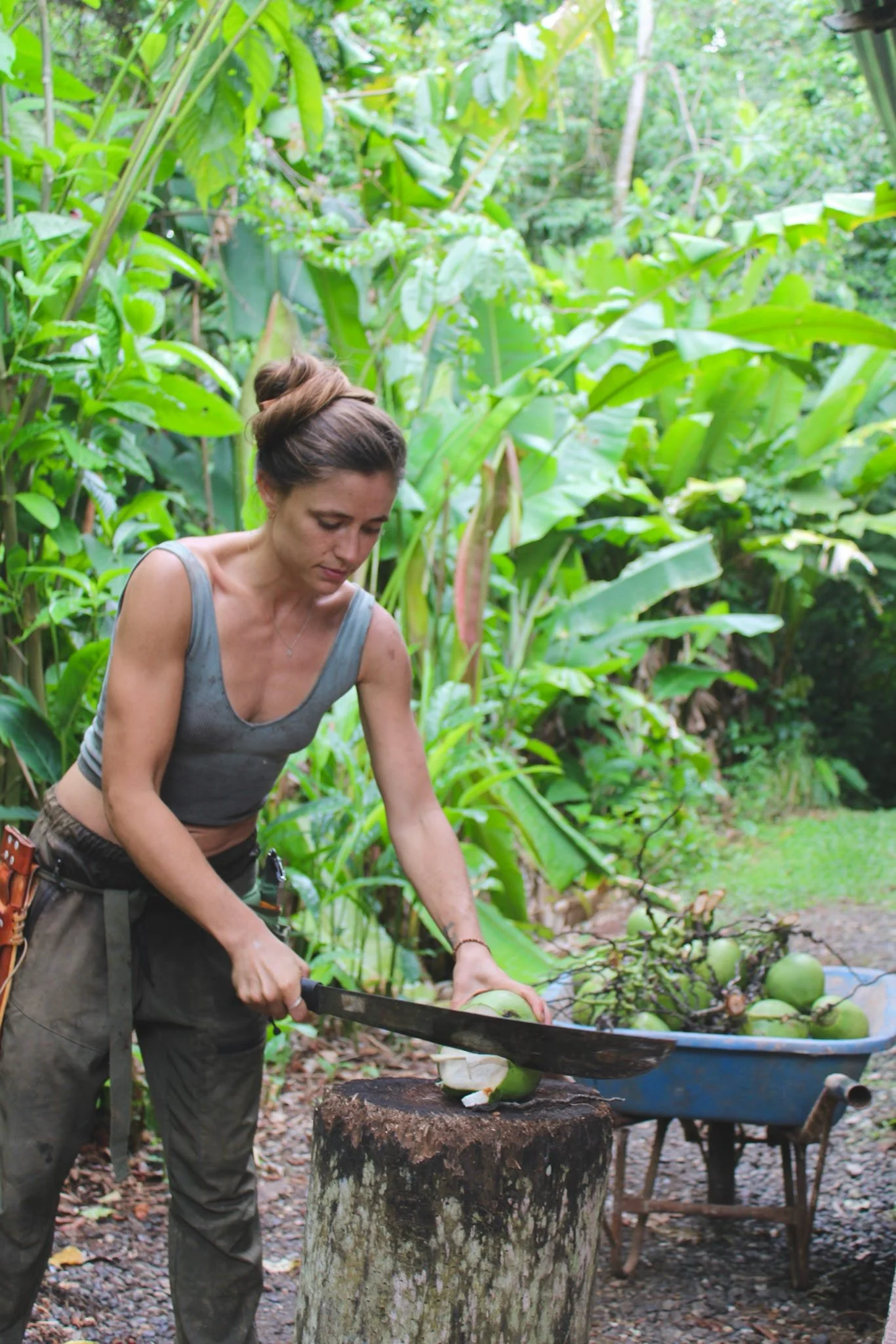
Additionally, as a preparation method for an inexperienced blade-sharpener, I needed to inspect my blade before putting it to stone. I took note of the angle of the blade on each face, the curve of the tip, the width and the shape. It was the most amount of time I’d spent looking at my tool since it was first placed in my hands during our orientation months earlier. After inspecting it, I began running the blade over the stone, moving it against the grain, holding it at an angle so the stone would, with its rough face, polish the blade to a shine.
Perhaps by virtue of being new to the task, I found my mind unable to wander as soon as I touched steel to stone. I had to keep reminding myself which direction I was meant to move the blade in and how much pressure I should be applying. Thus, I found my mind to be singularly-focused and my breathing to be steady. With each inspection, the blade looked brighter as my hands worked in unison with the stone to pare back the dulled steel.
The second thing that surprised me happened the following day when I returned to the agroforestry spaces to clear pathways lined with a clumping grass species called Mambasa, which grows quickly but does not spread and serves as reliable biomass to adorn the feet of our fruit trees. From the moment I commenced slashing the grass with my machete blade, I felt the transformation that had taken place in my tool. I moved through the rows efficiently and with a certain level of enjoyment — a sharp blade may be a safe blade, but I would argue that it’s also a satisfying blade. Before sharpening, I had thought of my machete as a means to an end. Now, I saw it as an ally in my work, one that could improve both the quality of my work and my own enjoyment of it. All this is to say that until I began intentionally caring for my tool, I did not have a relationship with it, and ultimately did not enjoy working with it nearly as much I came to discover I could.
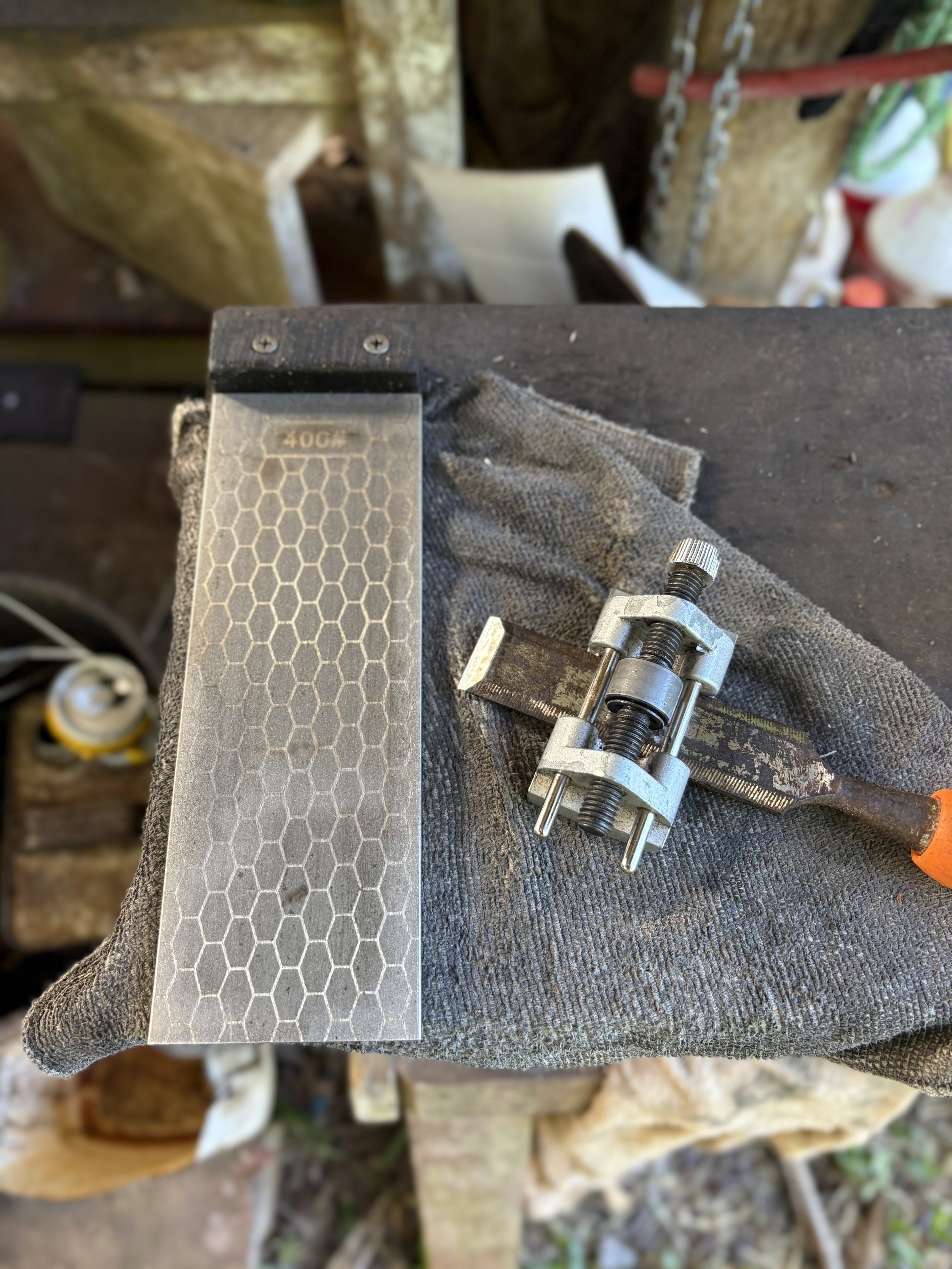
When we care for our tools — putting our time, attention, and energy into them — we inevitably create a relationship with them. I’ve experienced this phenomenon when washing my paintbrushes or putting a fresh coat of wax on my surfboard, but am only now beginning to experience it with tools here, too. Before beginning the work of carving joinery for furniture-making in the Ranch woodshop, for example, I’ve come to enjoy the ritual of sharpening the blade of my chisel before getting to work. It feels like having a wordless conversation with the tool, one that reintroduces us to each other before we set off on a journey toward creating something new. During the chiseling work itself, I feel differently toward the tool after our maintenance session than I would have if I’d jumped right in with an unsharpened (and ungreeted) blade. It’s not just that the tool is sharper and thus easier to work with, but rather that the tool has become a being that I have a connection to, that I am in partnership with toward the completion of a common goal. This makes me work with more intention, with more respect for the tool and ultimately for the medium we are manipulating — be it lumber or Mambasa grass. It also allows me to enjoy the process more, to fixate less on the product and more on the journey toward it, to be more open to learnings and revelations along the way as I practice a number of new crafts throughout my apprenticeship.
As I write this, it is a Sunday afternoon in Mastatal and I am sitting at my desk. My machete is leaning against the wall beside me in its leather sheath, waiting with a steely patience for the tasks it will facilitate throughout the work week ahead. Undoubtedly, our collaboration in the coming days (and weeks and months) will be enhanced and strengthened by some time together at the sharpening stone, a moment to connect and prepare, a small and very practical prayer.
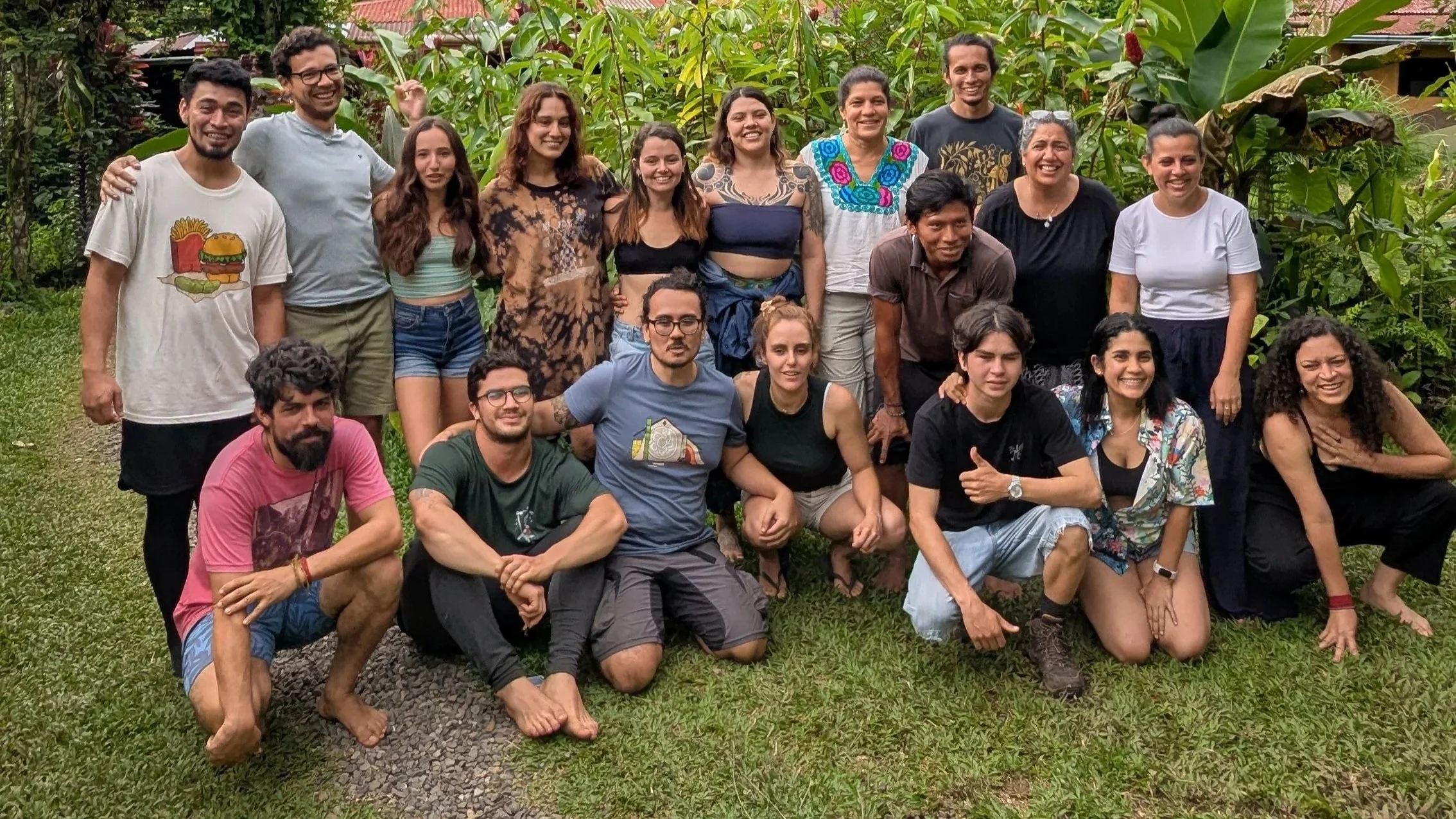
Patrones del Alma: Zona Ser o Ser
Cuando me acerqué a la permacultura, mi intención inicial fue nutrir mi formación en diseño arquitectónico con algo más aterrizado, más conectado con la tierra, los cultivos, el agua, el clima. Quería comprender mejor los ritmos naturales para intervenir el territorio de una manera más coherente y responsable.
Katia Lopezconde, Estudiante 2025
“El tiempo es patrones y el mundo una secuencia de eventos dentro de un patrón”. -Amanda Calvo
Cuando me acerqué a la permacultura, mi intención inicial fue nutrir mi formación en diseño arquitectónico con algo más aterrizado, más conectado con la tierra, los cultivos, el agua, el clima. Quería comprender mejor los ritmos naturales para intervenir el territorio de una manera más coherente y responsable.
Con el tiempo, y al experimentarla desde adentro, comprendí que esos ritmos no se manifiestan solo en el entorno. Los patrones más profundos de nuestra relación con la naturaleza habitan en el “yo”: en el paisaje interior, donde se tejen nuestras emociones, pensamientos y formas de habitar nuestro mundo.
Así como la naturaleza se organiza en patrones -ramificaciones, ondas, espirales, redes-, nosotros también repetimos formas: de pensar, de sentir, de reaccionar, de vincularnos. Nuestro crecimiento no es lineal: es una secuencia de patrones. ¿Qué pasa cuando miramos hacia dentro con los mismos ojos con los que observamos un bosque? ¿Qué formas repetimos y estas hacia dónde nos están llevando?
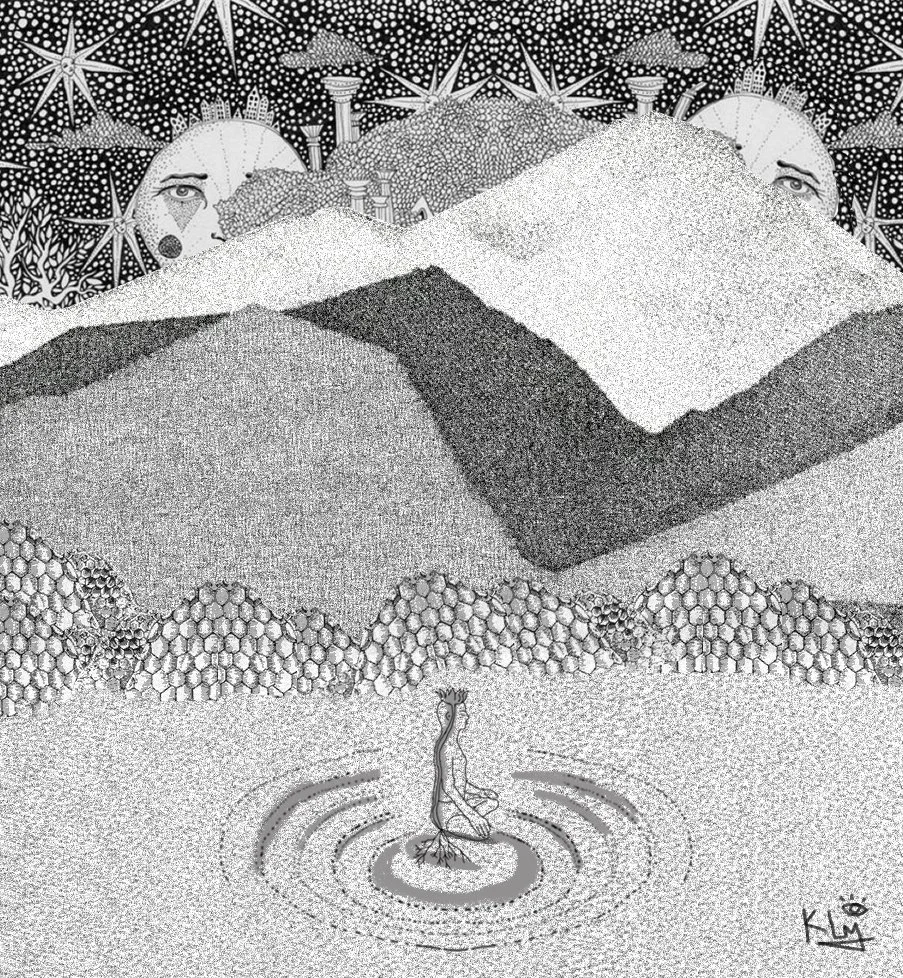
En permacultura se habla de la Zona 00 como el espacio más cercano: la casa, el centro de operaciones. Pero también puede entenderse como el centro que nos mueve y donde habita lo que le da sentido a nuestras vidas. Es desde ahí que se irradian nuestras decisiones, nuestras relaciones y los paisajes que vamos diseñando en nuestro entorno. Ahí nace la posibilidad real de transformación: el punto de partida para construir hábitos más conscientes, sustentables y en coherencia con el amor por la tierra y sus habitantes.
La naturaleza, entonces, no solo nos muestra formas visibles, sino también claves para comprender procesos internos. Observar sus patrones es una forma de leer el lenguaje con el que la vida se organiza. Si todo está tejido con ritmos, estructuras y flujos, ¿qué tanto esos mismos diseños también habitan en nuestra manera de sentir y de ser?
A continuación, exploro algunos de estos patrones, no como formas externas, sino como metáforas vivas de nuestro mundo interior. Porque en la Zona 00 del ser, esos mismos patrones nos ofrecen caminos de autoconocimiento.

RAMIFICACIÓN
En los sistemas naturales, la ramificación permite que la energía se distribuya de forma eficiente: el agua llega a cada hoja, los nutrientes alcanzan cada célula, el oxígeno recorre hasta el último rincón. En el plano personal, ese mismo patrón aparece en la forma en que nuestra conciencia se extiende hacia diferentes partes de nosotros mismos.
Cada emoción, cada recuerdo, cada experiencia presente activa nuevas conexiones: pensamientos que derivan en sensaciones, sensaciones que despiertan memorias profundas, intuiciones que abren posibilidades, información almacenada que toma nuevo significado. Observar este patrón con detenimiento es una invitación a dejar de pensar en la vida interior como un sistema de elecciones aisladas y empezar a verla como una red de conexiones que, si se integran con honestidad, nos pueden guiar hacia una vida más coherente con nuestro mayor bien.
La ramificación también nos revela que lo que parece independiente muchas veces comparte un origen común. Un árbol que comienza a secarse en sus hojas no necesariamente tiene el problema en la copa; puede tratarse de una raíz dañada o de un desequilibrio en el suelo. Del mismo modo, un dolor físico puede estar vinculado a una emoción no expresada, y un patrón repetitivo en nuestras relaciones puede tener raíces más profundas, incluso invisibles a simple vista.
Este patrón nos recuerda que siempre hay un tronco base del cual emergen los distintos caminos. En el ámbito profesional, ese tronco representa el conocimiento que hemos cultivado, la experiencia que nos sostiene, los aprendizajes que han dado forma a nuestra práctica. Con el tiempo, ese saber se expande: vamos adquiriendo nuevas herramientas, vivencias y aprendizajes que se ramifican en direcciones diversas, ampliando nuestro panorama y afinando nuestra mirada
Esta expansión no solo nos da más opciones, también nos ayuda a ubicar con mayor claridad cuáles son nuestras fortalezas, nuestros dones particulares, aquello que nos hace únicos dentro de la red más amplia en la que participamos. Ramificarse es crecer sin perder el origen, es expandirse con sentido.
ONDAS
Las ondas son movimiento, transmisión, eco. En la naturaleza, una onda no se queda dónde empieza: viaja, resuena, transforma y se extiende. En nuestra energía interior ocurre algo similar. Cada pensamiento que sostenemos, cada palabra que decimos, cada emoción que no nombramos o que expresamos, genera una vibración que se extiende más allá del momento en que ocurre.
A menudo no somos conscientes de esas ondas internas que generamos día con día. Una tensión no resuelta puede dejar un eco que se filtra en nuestras relaciones, en nuestros estados de ánimo, en la forma en que trabajamos o creamos. Una emoción reprimida, un lenguaje mal empleado o una reacción impulsiva puede distorsionar nuestra percepción del mundo, de los vínculos y de los procesos que habitamos.
Pero también sucede lo contrario: una intención clara, una mirada amorosa, un gesto honesto o la fuerza del trabajo en equipo pueden multiplicar su efecto, tocando espacios mucho más profundos de lo que alcanzamos a ver.
Desde la Zona 00, estas ondas surgen del centro mismo del ser: de nuestros hábitos, nuestras elecciones, nuestras formas de estar. Una vida más alineada con los principios de la permacultura, más consciente, más presente, más cuidadosa, no transforma solo a quien la vive. También genera un campo de influencia sutil que alcanza a quienes la rodean. Las personas observan, absorben, imitan. Las ondas de coherencia se convierten en ejemplo silencioso, en semilla viva.
Comprender este patrón como parte de nuestro sistema interno es reconocer que no somos seres aislados. Que nuestras acciones y nuestros procesos internos tienen forma, impacto y dirección. Y que, como quien afina un instrumento, podemos ajustar nuestra vibración interna para contribuir, de manera silenciosa pero poderosa, a un mundo más armónico.
ESPIRALES
La naturaleza nos recuerda que el crecimiento no siempre avanza en línea recta. Muchas de sus formas, desde un caracol hasta una galaxia, desde una semilla en brote hasta el movimiento de un huracán, siguen un patrón de espiral.
En nuestros procesos mentales ocurre lo mismo. El crecimiento personal, emocional y espiritual rara vez es lineal. A menudo volvemos a lugares que creíamos superados: viejas heridas, dudas recurrentes, patrones que se repiten. Pero si el movimiento es espiralado, no estamos en el mismo punto.
Aunque desde arriba parezca que giramos en círculos, basta cambiar de perspectiva —como mirar un alzado en lugar de una planta— para darnos cuenta de que en realidad hemos ascendido. Volver no significa retroceder, sino estar en otro nivel de comprensión, con más herramientas, experiencia e, idealmente, mayor conciencia.
Mientras más giramos hacia dentro, más cerca estamos del centro; y al mismo tiempo, más alto podemos mirar. Creo que, en el camino de la permacultura, esta forma de crecer es esencial, que el aprendizaje no se quede solo en la superficie o en lo intelectual, sino que transite dentro de nosotros, en nuestras capas internas, nuestra esencia, nuestro modo de sentir y actuar y desde ahí nos impulse a un crecimiento verdadero, a “elevarnos” en un sentido más profundo y auténtico.
Revisitar ciertas emociones, encontrar nuevamente una resistencia, repetir una lección desde otra etapa de la vida, no es señal de estancamiento. Forma parte del proceso, de ensayo y error, y de lo cíclica que puede llegar a ser la vida.
Cada vuelta es distinta, cada repetición fortalece, y cada regreso nos brinda la oportunidad de actuar diferente, llevándonos siempre a un lugar diferente al anterior. La espiral nos recuerda que el camino hacia el crecimiento es a la vez regreso y avance, profundidad y elevación.
REDES
Nada esta desconectado. El micelio funciona como un sistema de comunicación y soporte que une raíces a grandes distancias; las telarañas forman entramados que capturan y sostienen; nuestras comunidades humanas, junto con los sistemas de reciclaje y manejo de residuos, crean redes que impactan y transforman nuestro entorno. De igual manera, nuestras relaciones, pensamientos y emociones tejen redes invisibles que nos conectan y sostienen.
Este patrón de redes nos habla de una interdependencia profunda: somos nodos dentro de sistemas mayores, donde cada vínculo influye y sostiene a otro. Las redes sostienen todo el sistema que habitamos, brindándonos la libertad y las oportunidades para avanzar y explorar nuevos caminos. Mientras los ciclos siguen su curso, podemos confiar en los procesos y en nuestra comunidad aliada para sostenernos y crecer.
En permacultura, el patrón de redes es considerado uno de los más importantes, pues representa la base de la interconexión que sostiene la vida y la salud del sistema. Entender y fortalecer estas conexiones es fundamental para crear sistemas resilientes, integrales y capaces de adaptarse y regenerarse.
Hacer red en equipo es fundamental. No podemos ser todólogos; por eso, unir fuerzas y conocimientos es clave. Nos apoyamos en otras disciplinas, en las habilidades y dones de cada persona, y en el conocimiento base que cada quien aporta para fusionarlo todo y crear un sistema sólido, integral y capaz. Reconocer y honrar estas conexiones es esencial tanto para el crecimiento personal como para la práctica de la permacultura, donde el bienestar del todo depende del cuidado mutuo. Al fortalecer nuestras redes, no solo cuidamos de nosotros mismos, sino que también contribuimos a la resiliencia y salud de todo el sistema al que pertenecemos.
Habitar nuestra Zona 00 con mayor conciencia, apertura y responsabilidad implica tener el valor de reconocer nuestros propios patrones y hacer ajustes en nuestro sistema interno. Este es uno de los mayores retos del ser humano. La verdadera madurez, quizás, comienza cuando asumimos la responsabilidad total de lo que habita ahí: emociones, hábitos, expectativas y creencias.
Implica dejar de esperar que el cambio venga desde afuera -de la familia, las autoridades, las parejas o cualquier otra influencia externa- y empezar a entender que la transformación real nace desde dentro.
Al reconocer que formamos parte de redes vivas, que nuestras decisiones se ramifican y que el camino se despliega en espirales ascendentes, podemos abrazar con humildad y confianza el proceso de transformación. Así, desde nuestro centro, sembramos el cambio que queremos ver y dejar, cuidándonos a nosotros mismos, a nuestras comunidades y a la tierra que nos sostiene.
¿Con qué he de irme?
¿Nada dejaré en pos de mí sobre la tierra?
¿Cómo ha de actuar mi corazón?
¿Acaso en vano venimos a vivir,
a brotar sobre la tierra?
Dejemos al menos flores
Dejemos al menos cantos.
– Nezahualcóyotl

La Transformadora Experiencia de la Certificación en Permacultura en Rancho Mastatal
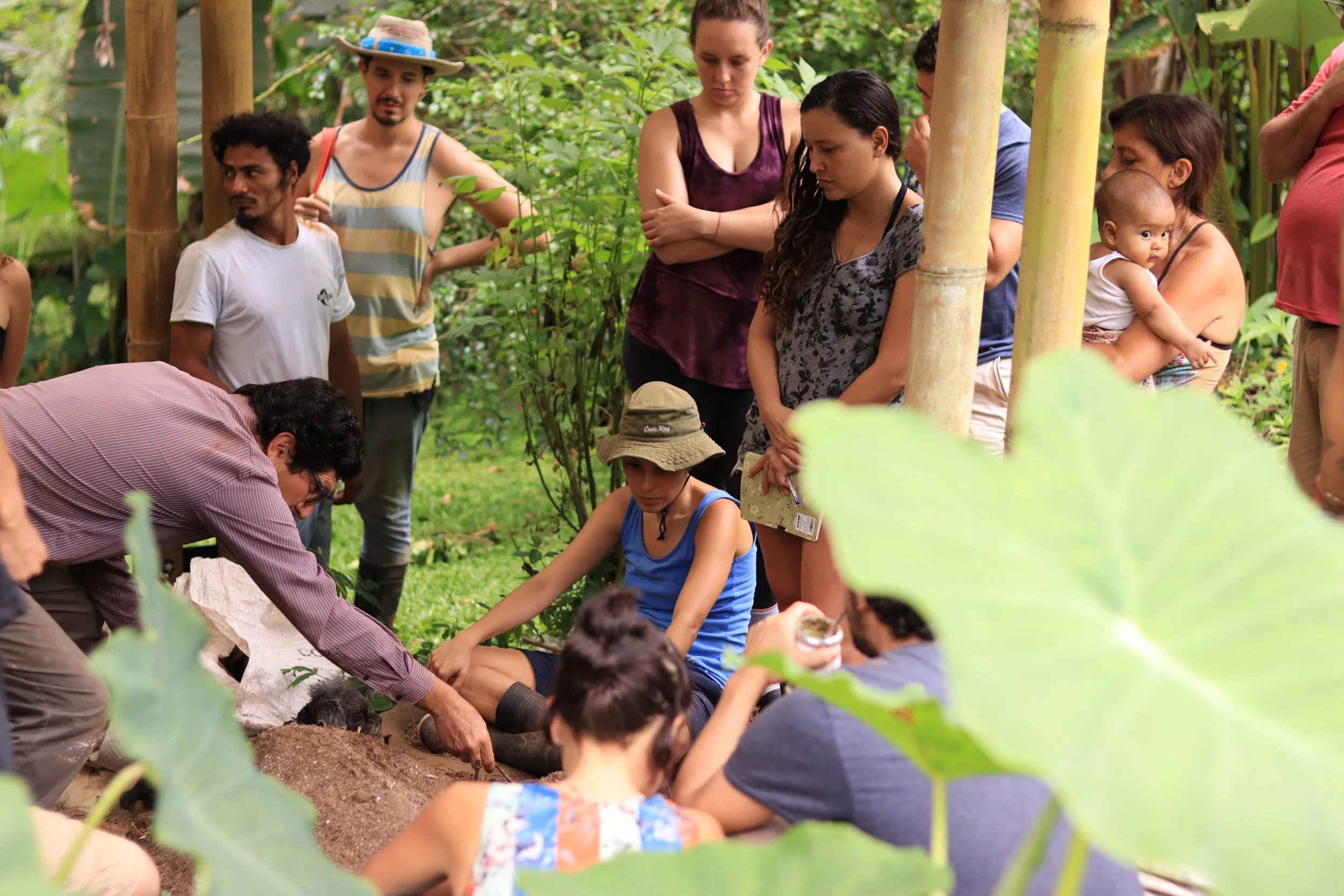
La Certificación en Diseño de Permacultura realizada en Rancho Mastatal (PDC en Español) no es solo el resultado de un programa de 88 horas de clases técnico-prácticas, ¡es mucho más que eso!
Escrita por una estudiante
La Certificación en Diseño de Permacultura realizada en Rancho Mastatal (PDC en Español) no es solo el resultado de un programa de 88 horas de clases técnico-prácticas, ¡es mucho más que eso! Es el resultado de 14 días sumergidos en una experiencia 100% inmersiva de permacultura, donde cada participante tendrá que abrirse a poner en pausa todas sus rutinas habituales y aceptar los principios de permacultura implementados por Rancho Mastatal.


Conexión con la Cultura Local
Fuimos 18 participantes, de los cuales la mayoría eran locales y solo 3 viajamos desde otros países para vivir la experiencia. Pude haberlo hecho en inglés y haber conocido a muchas personas de distintas partes del mundo, pero al ser en español, esta experiencia me permitió conectar con la cultura de Costa Rica desde múltiples esferas. Como tenemos un clima similar en República Dominicana, solo al ingresar al proyecto pude ver claramente oportunidades de mejora, ya que tenemos un montón de especies parecidas.
Desconexión y Crecimiento Personal
Para quienes venimos de la vida caótica de la ciudad, esta experiencia se asemeja a un retiro espiritual, no porque el Rancho promueva nuevas creencias, sino porque invita a desconectarnos de lo habitual: sin internet, sin señal telefónica y con horarios de comida muy especiales.
Las simples normas, como quitarse siempre los zapatos al entrar a las instalaciones y que cada quien debe fregar sus platos, nos hacen entender desde el principio que una sana convivencia puede lograrse cuando, a pesar de tantas libertades, se dejan claras las reglas. Y, ante cualquier duda, solo basta con releer los principios de la permacultura para encontrar nuestras propias respuestas dentro de este esquema.
Particularmente, me resultó un choque tener que usar baños secos, ya que solo había conocido el método de las “letrinas” y los juzgaba como poco funcionales y poco higiénicos. Sin embargo, el vivir la experiencia y entender en clase cómo hacerlos y qué métodos implementar me hizo no solo replantearme por qué no tengo uno en mi proyecto, sino… cómo fui capaz de juzgar previamente este sistema. Y así pasaron cientos de cosas por mi mente en esos días.
Al principio, la desconexión me causó ansiedad. Cada vez que pensaba en conectarme a internet, sentía un nudo en el estómago por no tener el control de lo habitual ante las responsabilidades que dejamos en casa.
Solidaridad y Respeto en la Comunidad
Rancho Mastatal es un claro ejemplo de cómo la solidaridad y el respeto pueden hacer crecer una comunidad. Qué orgullo conocer de cerca cómo Tim y Robin podrían ganar más dinero añadiendo servicios como internet o el lavado de ropa; sin embargo, el proyecto ha optado por apoyar a una vecina que se sostiene económicamente en gran parte gracias a que todos los que llegamos al Rancho necesitamos pagarle por sus servicios. Y no solo a ella: están el bar de enfrente, el Proyecto de Marlon, el Proyecto de La Iguana Chocolate y muchos más que dan fe de que este proyecto no es una fachada, ¡es REAL!
Reflexión sobre lo Esencial en Nuestras Vidas
Es casi imposible estar dentro de esta experiencia y no preguntarnos qué es realmente esencial en nuestras vidas, frente a todas las cosas que hemos permitido normalizar sin pensar en el gran impacto negativo que le hacemos a nuestra amada naturaleza y a nuestro propio entorno social.
Una de las revelaciones más importantes que tuve fue con una de las meriendas. Una tarde, moría de hambre y aparentemente se habían olvidado de colocar la merienda, y todos asumieron que simplemente no habría nada. Mi intensidad me llevó a preguntar si es que no había, y fue entonces cuando, con mucho amor, nos sirvieron una bandeja hermosa con unos trozos de fruta perfectos. Cuando me dijeron que era guanábana, me fricé y, de forma automática, pensé: “No me gusta la guanábana”… Sin embargo, sentí el compromiso de probarla. Fue entonces cuando me detuve a cuestionarme: “¿En qué momento decidí que no me gustaba?”. Mi niña interior me respondió, recordando que en casa había una planta de guanábana cuya fruta era blanda y babosa, muy diferente a lo que tenía frente a mí en ese momento, que era una fruta con una estructura completamente distinta a la que describía mi recuerdo. Y fue cuando me dije: “¡Dios mío! ¿A cuántas cosas me he negado por prejuicios arrastrados durante años?”. ¡Amé la guanábana! Y a partir de ese momento, activé mi radar para hacer las paces con un montón de cosas que he rechazado, diciendo “no” cuando quizás la respuesta debería haber sido “sí.”
Prácticas Significativas en la Comunidad
Durante el curso, realizamos dos prácticas muy significativas que nos permitieron dejar nuestra huella en la comunidad. La primera consistió en trabajar en la finca de Marlon, un miembro de la comunidad, donde, entre todos, creamos una zanja que él realmente necesitaba. En este ejercicio, aplicamos todo lo que habíamos aprendido en el aula, poniendo en práctica los principios de permacultura en un contexto real. La segunda fue nuestro proyecto final, donde tuvimos la oportunidad de aportar con todo nuestro conocimiento a una pareja que recién comenzaba a dar forma a su proyecto en Mastatal y que aún no tenía claro su rumbo. Le pusimos el alma a nuestras propuestas, esforzándonos al máximo para ayudarles a definir el diseño de su proyecto y aportar claridad en su camino. Nos movía la emoción de dejar una huella positiva en esta hermosa comunidad, y cada tarea fue un paso más en ese proceso de aprendizaje y contribución.


Reflexiones Finales y Conclusión
Mi proyecto es La Finca de los Recuerdos en República Dominicana. Llegué a este curso sin entender bien lo que significaba la permacultura, pero con la clara certeza de que me llevaría mucho aprendizaje para mejorar las prácticas agroforestales en mi proyecto. Sin embargo, terminé el curso con el alma en paz, repleta de gratitud, nuevos sueños y un montón de nuevos amigos.
Estar en esta experiencia me puso en contacto con venas sensibles. Me hizo abrazar a mis padres por todo lo que hicieron en mi niñez para mantener lo que hoy es la finca de los recuerdos. En el alma le pedí perdón a mi niña interior. Ella siempre andaba descalza, sin preocupación por la ropa ni por peinarse, y fue la Maia adolescente la que la forzó a cambiar sus patrones nativos, dejar de pelear por defenderlos y la que la domesticó solo para poder sobrevivir en los estándares sociales que entendía como correctos. Entré a Rancho Mastatal un poco escéptica por tener que andar descalza, y fue en ese momento cuando comencé a cuestionarme esos patrones tan marcados que había asumido en mi vida, los cuales me habían separado de lo natural. Hoy entiendo el porqué de tantas decisiones que tomó mi padre en la finca y que por situaciones ajenas a su voluntad no me pudo transmitir. Rancho Mastatal fue para mí ese canal para poder conectar con todo lo que mi padre no pudo contarme sobre cada una de sus decisiones en nuestras 5 hectáreas.
La Certificación en Permacultura en Rancho Mastatal no solo te brinda conocimiento técnico, sino que transforma tu visión de la vida y la naturaleza. Me asombró ver cómo, a pesar de tanta carga de clases y el agotamiento, ¡nunca quisimos perdernos ni un minuto de cada una! Esto demuestra que el formato de las clases definitivamente funciona. Si buscas una experiencia que conecte lo intelectual con lo emocional, te invito a unirte a esta extraordinaria aventura. ¡No dejes pasar la oportunidad de sumergirte en una experiencia única que cambiará tu vida!


Universal Language: Stories as an Apprentice at Rancho Mastatal
There is something I like to call universal language — a way of connecting that goes beyond words, grammar rules, or Google Translate. It’s the kind of language that lives in gestures, in shared experiences, in energy.
By 2025 apprentice Aquino
It’s been three months now since I started living as an apprentice at Rancho Mastatal, a remote sustainability education center tucked away in the jungle of Costa Rica.
I was born and raised in Belgium, so Dutch (or Flemish) is my mother tongue. I speak English as a second language — good enough to get around, but still feeling limited sometimes, especially after calling home or when my girlfriend came to visit and we naturally fell back into Dutch. It reminded me how words in your native language can feel like a warm blanket — comfortable, familiar, effortless.
But here at the Ranch, I’ve started to feel at home in a different way. My fellow apprentices and the core team are becoming like family. Walking through the tiny center of Mastatal, I now recognize familiar faces. I’m starting to joke around with the local Tico crew — despite my far-from-fluent Spanish.
And that’s where I realized: language is not just about words.
“There is something I like to call universal language — a way of connecting that goes beyond words, grammar rules, or Google Translate. It’s the kind of language that lives in gestures, in shared experiences, in energy.”

Love — My Favorite Universal Language
It all starts with love. Or at least, with kindness and an open heart.
The other day we wrote a little birthday card for Lorena, one of Rancho’s beloved cooks. Even though my Spanish vocabulary is still embarrassingly limited, a handwritten card or a genuine smile crosses all language barriers. Small gestures like that create a safe and open space where people feel seen. And where connection can start to grow — even without a shared language.

Sports — The Great Icebreaker
And then, of course, there’s football. In Mastatal (like in the rest of Costa Rica... and let’s be honest, the rest of the world), football is the universal language.
Playing a game at the local field is probably the best way to connect with the local youth. No need for complicated sentences — just pass the ball, make a good run, celebrate a goal. That’s enough to make your first Tico friends.
Personally, ultimate frisbee was another icebreaker for me here at the Ranch. Throwing a disc around with the core team during my first weeks felt way easier than small talk in broken Spanish or shy English. And later on, during workshops, playing a game or two was often my favorite way to connect with visitors — without draining my social battery (I’m speaking for myself here).
Stacking Functions — The Ping Pong Table
Speaking of games — let me tell you about our ping pong table.
In permaculture, there’s a principle called stacking functions. It basically means: if you design a system (or an object), make sure it serves more than one purpose. Think of a chicken — it lays eggs, eats food scraps, provides fertilizer, and keeps your compost aerated. Multi-functional genius.
Well, our ping pong table in the Foodsmithy is a beautiful example of that principle.
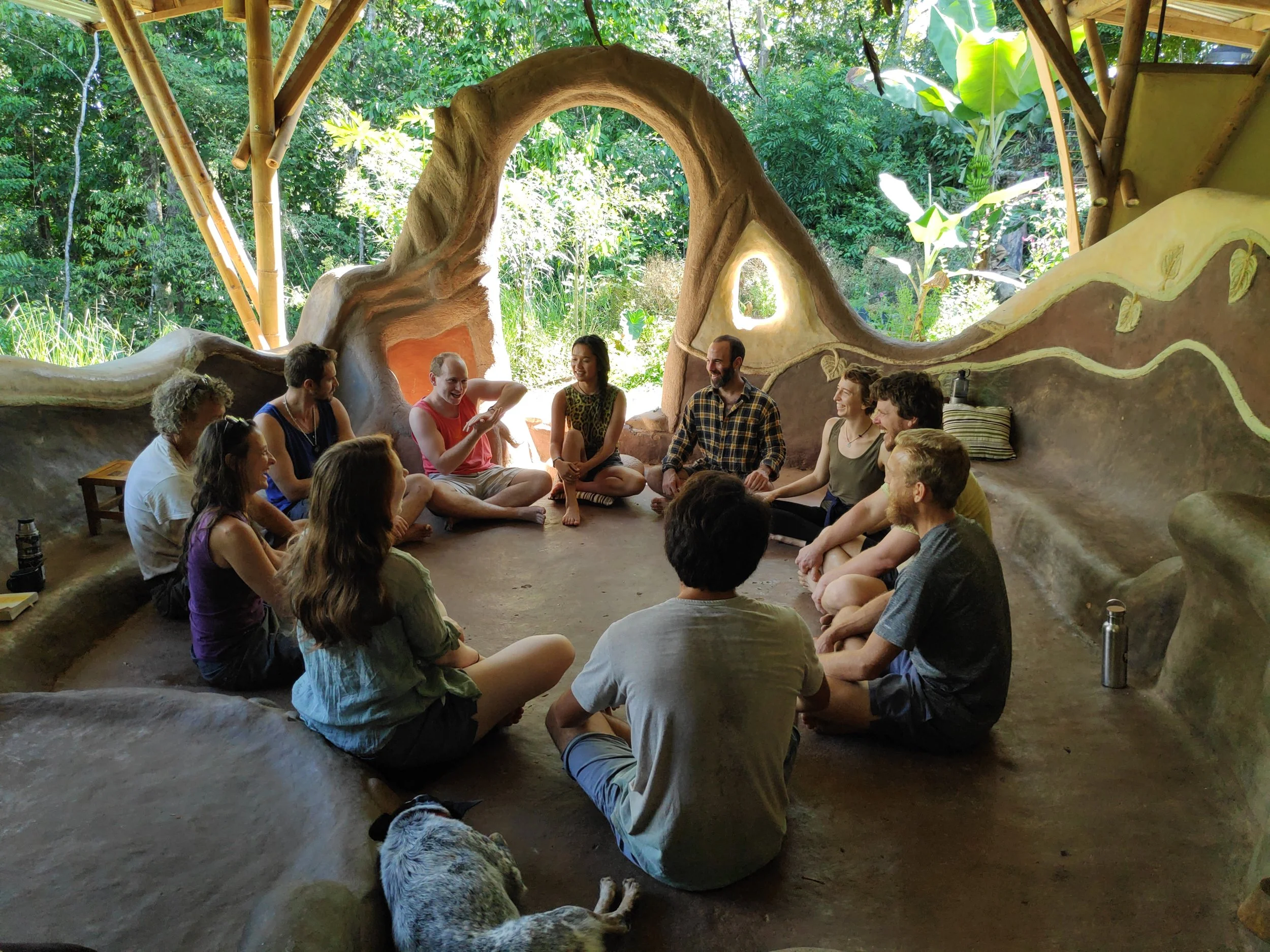
By day, it’s a working surface for preparing food. But remove the cutting boards and veggies, and suddenly it becomes a place for play, laughter, and a healthy dose of competition. It’s a space where strangers become teammates (or rivals), where jokes are exchanged without needing words, where connection happens through movement and fun.
That’s stacking functions. It’s not just a table. It’s a kitchen counter, a game arena, a meeting place, a (universal) language lesson, and sometimes even a little therapy session.

Food — Connection on a Plate
Cooking together is another universal language I’ve come to appreciate deeply here.
My girlfriend Mari visited me at the Ranch for a while. As an outsider entering a tight-knit community, it wasn’t always easy for her to integrate. But the kitchen — a place where she finds confidence — that’s where she found her way in.
Peeling and shredding yuca together. Making gnocchi from scratch. Laughing, observing and interacting over attempts. Sitting down at a shared table to enjoy the fruits of your labor. Food has this magical way of creating connection — without needing many words.
In fact, on weekends we have kitchen shifts with the Tico team, which is basically the perfect Spanish classroom. What better way to learn a language than while chopping onions and asking for "más sal o no?”
So What Is Universal Language?
For me, universal language is about the human ways we connect — beyond cultural differences or spoken words. It’s about finding shared joy, shared struggles, and shared passions.
Some examples?
* Music — Feeling the same rhythm, dancing to the same beat.
* Body Language — A smile, a handshake, eye contact.
* Art & Symbols — Recognizing shared patterns and stories in creative expression.
* Mathematics & Science — The logic of numbers, true everywhere.
* Spirituality — The language of inner worlds and shared rituals.
* Food — Chopping, cooking, tasting, sharing.
And probably many more.
What they all have in common is this: behind every language lives a culture. And within every culture, there are patterns of connection waiting to be found. Universal language is the exercise of finding those patterns — and tying them together with joy, curiosity, and presence.



Final Thoughts
It makes me wonder sometimes: in a utopian future where everyone speaks the same language (like the constructed language Esperanto once dreamed of), would we lose this beautiful exercise of connecting beyond words?
Maybe. Maybe not.
Because even then, there will always be a smile, a game of football, and a table to share food around. And as long as there’s diversity in culture, there will be universal language.


The First Rammed Earth Wall At Rancho Mastatal
Rammed earth is an ancient method of constriction used by civilisations such as the Assyrians, Babylonians and Persians over 10,000 years ago. Essentially, Rammed Earth is a mix of soil, sand and water mechanically compacted into a high density framework, which is the stripped and allowed to cure.
By Thea, Apprentice 2025
During the recent natural building workshop, Rancho Mastatal saw the beginnings of the first rammed earth wall on the property. Together with Benito, Nic and Ali, the apprentice team had the satisfying job of completing the wall. It is situated in the new Pilón construction and stands as another example of natural building and more specifically, the uniqueness of rammed earth.
So what exactly is Rammed Earth Construction?
Good question. Rammed earth is an ancient method of construction used by civilizations such as the Assyrians, Babylonians and Persians over 10,000 years ago. Essentially, rammed earth is a mix of soil, sand and water mechanically compacted into a high density framework, which is then stripped and allowed to cure. Simple right?
Rammed earth is a simple yet highly effective building method known for its affordability, durability, and efficiency. This technique mimics the natural formation of sedimentary rock—over time, as the structure settles under its own weight, it becomes increasingly compressed and therefore stronger. This would explain why structures such as The Great Wall of China and Berber Tribesmen settlements in the Atlas Mountains are still standing today.
Traditionally, this method uses sandy soils in arid or moderate climates such as Morocco and Australia because it has great natural thermal regulating properties, offers termite-free lodging, can be quick and sustainable; providing materials are taken from nearby land, or the site itself. However this wall does tend to erode and deteriorate when faced with wetter climates and seismic regions; and does require extra insulation in temperate regions. To increase durability, stabilizers such as Portland cement or lime are commonly added, as well as rebar to increase stability in earth-quake prone areas; but this does come with the cost of higher processing and more embodied energy.
Recipe for our Rammed Earth Wall
When testing mixes for the Ranch’s earthen wall, the team experimented with ramming raw earth (soil, sand and water) as well as stabilized earth (with added lime) to test durability and sturdiness. The raw earth mixture didn’t pass the test due to the clayey composition of the soil here at the ranch- soil with a high volume of clay is highly absorbent, which causes shrinkage and cracking in your walls. The lime provides structure and stability when added into the mix and after successful testing of the stabilised earth; the final mix was devised as a 2:4 ratio of sand to soil, hydrated with 20% lime. This worked well for the ranch, but it is always crucial to do your own tests due to different soil types, choice of aggregate, and what your are asking of your wall.
how to make the wall
framework and tools
Decide where you want to situate your wall. As previously mentioned, rammed earth does not fair too well with consistent water; so using it for a shower wall probably isn’t a good idea. In our case, the wall was to act as a sturdy and aesthetic privacy barrier for the compost toilets. What will your wall be sitting on? In this case, the earthen wall was to sit on a foundation of concrete blocks which also determined the width and length go the wall.
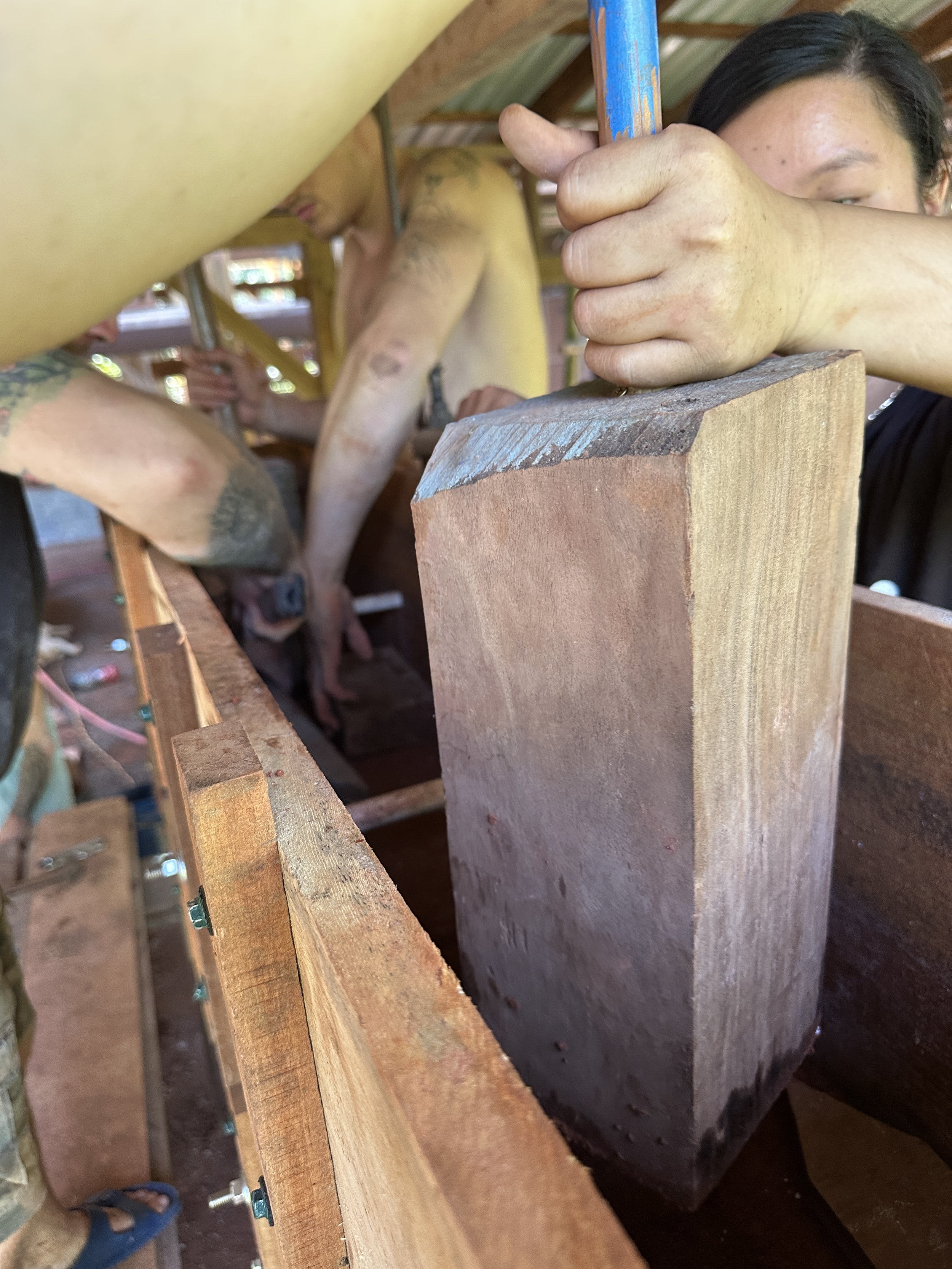
The first step is to gather or make the tamper (tool for compression) ensuring it is not too large for your framework but heavy enough to tamp down the earth. It is also crucial to build the framework itself which will determine the width and length of the wall. The framework must also be easy to dismantle to allow for removal and re-construction. Having several identical frameworks could be a nice alternative to this process, however, since this was a small-scale wall, we worked with two forms which could be removed and leapfrogged up the wall. It is important to consider how to make the frame as sturdy as possible. It has to withstand the force and vibrations from the tamping as well as the compression of the earth. For instance, the framework we used had two large screw attachments in the end quarters (covered by thin PVC pipe to ensure for easy removal) that could be tightened from both sides. Furthermore, foreseeing that the corners of the wall are the most likely places for erosion and damage to occur (ie, getting knocked and touched), they have been flattened off to create an elongated octagonal shape.

Making the Mix
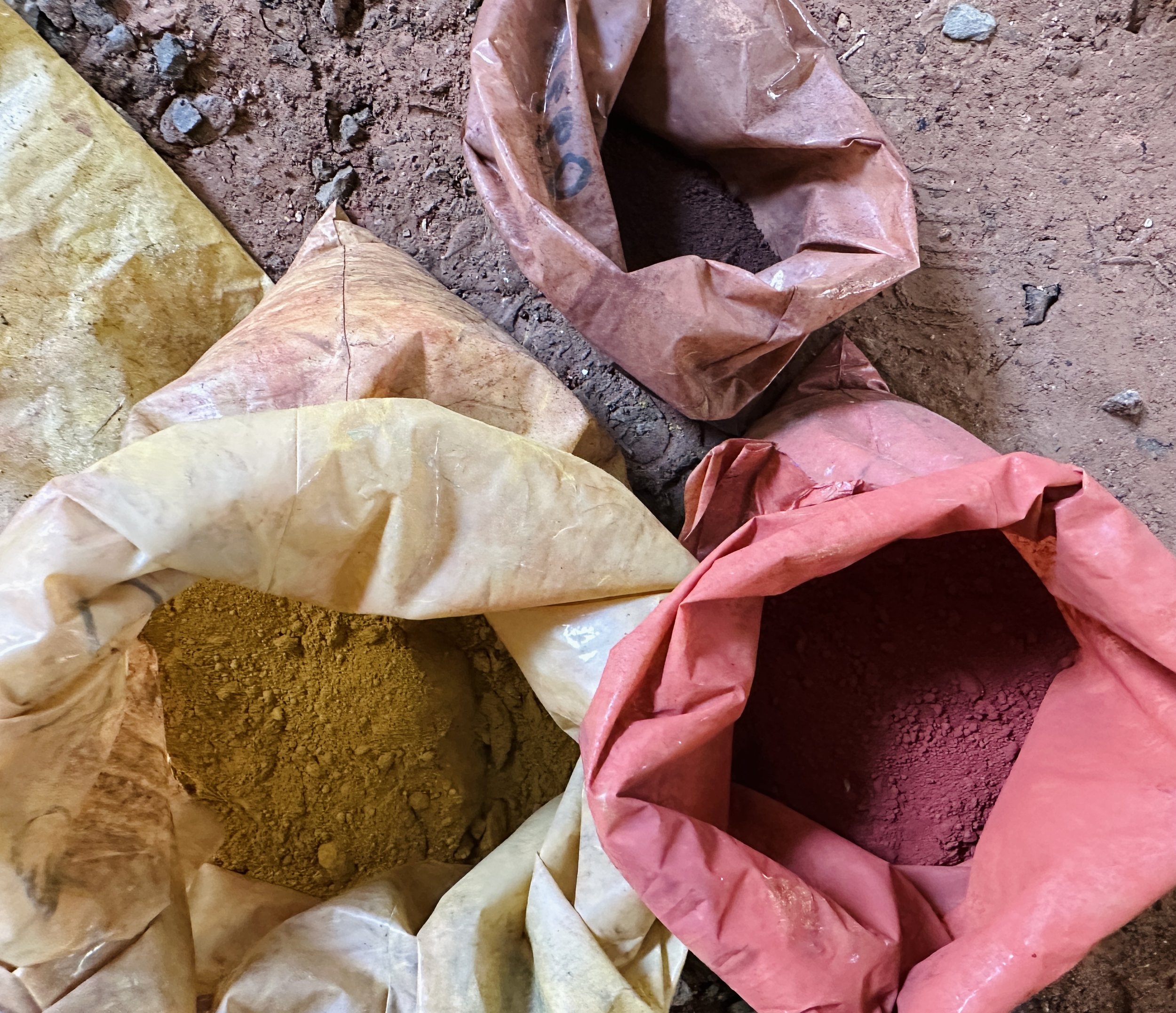
So, now we have the framework and tools ready, we need to make our mix. For this, we followed our ratios and mixed with a drill in large barrels; gradually adding water until the mixture would hold together when compressed, but not too sticky that it would be pulled off the wall with the framework. We colored half of our mix in order to create a multi-toned, wave-like effect, and left the rest as a ‘base’ coat to layer in-between as well as in the middle of the wall (where the colour won’t be visible). This is the creative part of the process, and we repeated this step with various colors and tones depending on what section of the wall we were working on.

The Human Powered tamping Method

Being diligent to tamp everything well, including the edges and corners
Gather a driver, rubber mallet, several clamps, some thin pieces of wood, some creativity and some patience and hey presto you are ready to build.
Once the first framework has been set in the correct place and secured or held firmly down, it can be filled. The first section of wall will determine the trajectory of the rest of the wall, so placement is crucial. The next step is to layer the earth mixture and firmly but carefully tamp down; paying special attention to the edges. If you would like to add color, it is a good idea to cover the sides only, and fill in the middle with base mix in order to save on pigment. If you have access to different colored soils, you can just use the tone of the soil to create these color striations. When tamping near the long cross-sectional screws, we would take thin pieces of wood and a rubber mallet to compress areas that would be missed by the larger tamp.

Sealing the top of the wall
When the layers are nearing the top of the framework, the next nerve-wracking step is to carefully unscrew the lower framework and leapfrog it on top of the next. Clamp down, reset the screws and continue to layer and tamp. If the frames are not clamped together, you may find some mixture makes it into the gaps in-between; creating a fine line. Not a necessarily a problem- it can add to the aesthetic of the wall. Furthermore, the type of framework used will leave holes in the cross section of the wall. Again, these can add to the look, or be filled in afterwards with some mix. As the wall grows, so must the builders. We created a platform to stand on in order to tamp the upper layers with ease.
To seal and waterproof the top of the wall, we poured a colored concrete mix as the final layer before removing the last framework.
Now it is crucial to stand back and admire your wall, paying special attention to its unique pattern and beauty.


How sustainable is this rammed earth wall?
It is too soon to say what the longevity of this new construction will be. It has not yet ensured the hundreds of visitors it will see over the coming years. Will it withstand minor tremors? Will the decision to add lime and seal with concrete help it to fair in the humid jungle climate? Will it withstand the many hands that will touch with admiration? Only time will tell.
Because this was such a small wall in the overall building, and in an area with little consequences, we had the luxury of experimenting with this technique to see how well it holds up, for our knowledge and others that want to learn about natural building.
In the mean time, I hope you find some inspiration from this post and happy building!
Want to Learn More?
Check out one of our annual natural building classes to get theory and practice in earthen construction and plasters.
check out these past blogs

Yuca(n) Do It All - Processing Yuca in Rural Costa Rica
At Rancho Mastatal, yuca is a staple in the kitchen and our bellies. You can find it in at least one of our meals nearly every day in one form or another.
By 2025 apprentice Maivy Xuân Nguyễn
At Rancho Mastatal, yuca is a staple in the kitchen and our bellies. You can find it in at least one of our meals nearly every day in one form or another. Yuca is also commonly known as cassava root or tapioca (in its powdered form). So, if you’ve ever had boba–a Taiwanese milk tea drink with chewy black pearls, or tapioca pudding, you’ve had yuca!

My affinity towards yuca grew rapidly during the past two weeks when we experienced a boon in our yuca supply! I already love yuca, having grown up on boba drinks which had taken its foothold in the San Francisco Bay Area while I was a child. It has since only grown in popularity. Tapioca starch is also a key ingredient in my favorite Vietnamese dish: bánh bột lọc. It’s one of the first dishes that my mom taught me how to make and I intend to find some time to make a Rancho Mastatal version in the future. Look out for upcoming blog posts—perhaps they will have some yummy recipes.
But, my appreciation of it has grown tenfold and beyond after having worked with it on so many levels.
We have planted, harvested, processed, cooked and eaten yuca. Each step has its own set of steps and we’ll get to those in future posts. For now, I’ll talk about processing and preparing yuca for cooking. Yuca must be cooked before we consume it because it does contain some toxins, especially in its skin, that will need to burn off. Plus, it is a hard and starchy root that would be difficult to enjoy raw.
The edible parts of yuca are their tuber roots and also their new baby leaves. There are actually some varieties of yuca where only the baby leaves are eaten because the rest of the plant contains too many toxins. Luckily, we have the sweet kind with delicious roots!
Processing
If you get your yuca from a store, it will have likely gotten a parafin wax treatment. This is to prevent oxidation of the tuber which happens quickly. You’ll want to wash and scrub that off first.
We got ours straight from the ground so our first step was to wash and scrub off the dirt.
Then, cut the tuber into sections.
Make a cut along the tuber and using a paring knife, spoon or your fingers, separate not just the papery skin, but also the thicker white skin from the tuber. The layer of white skin contains cyanide, so you'll want to be sure to get it all off. Sometimes the skin comes off easily with just some maneuvering and other times it is stubborn and you may just need to cut through it.


Once you have the peeled root, give it another rinse and process it further as you'd like. We chunked it and shredded it so it could be cooked for our brunch time fried yuca or hash. The raw yuca will last about a week in the fridge. I will turn black as it oxidizes so try to keep it in airtight containers.
We also made yuca flour by dehydrating the shredded yuca and then blitzing it in a blender or food processor.


To make yuca starch, soak your shredded yuca in water overnight. Then strain and squeeze out the solids and keep the water. The starches will have been released into the water. Let the starch settle to the bottom and then pour off the water once it’s separated. You’ll end up with some wet starch. You can then dehydrate the starch and break it up into powder.
If kept dry and airtight, yuca flour can last for up to a year.
Now you’ve got a few ways to process yuca!


Planting

During one of our earlier work parties in the agricultural systems, we remade two zone 1 garden beds and planted some yuca, among many other plants and veggies.
The method through which we planted the yuca was through cuttings.
Yuca tubers take about 8-12 months to mature. So the ones we planted then are not the ones that we harvested or processed these past weeks. The boom came from outside of the Rancho and from the wider community of Mastatal.
Harvesting
A neighboring farmer, Don Jaime, had been forced off a piece of land that he's been farming for the past 20+ years.
The first week, the apprentice crew just came to pick up the sacks of yuca that Don Jaime had harvested that day, the four sacks totaled to 103 kilos.
It wasn't until the next week, when we came to help harvest more of the yuca from that land, that we got to see the full extent of his work.


Want to Learn More?
Join us for one of our yearly Permaculture Design Courses to get theory and practice in growing your own food.

Disconnecting to Reconnect: The Effects of Not Having Constant Internet Access
The physical separation of internet access from our daily living and work spaces significantly shifts the way we engage with technology.
By 2025 apprentice Brendan
One of the most profound lessons I’ve learned from living at Rancho Mastatal as an apprentice is just how out of balance my relationship with technology has been. I can only speak from my own experience, but this realization seems to be a common theme among those who spend time at the ranch. The physical separation of internet access from our daily living and work spaces significantly shifts the way we engage with technology.

Technology and Internet Access in Modern SocietY
In almost every modern city or suburb, 24/7 internet access isn’t just available, but it’s expected. It’s seen as a basic necessity, woven into nearly every part of daily life. To be fair, constant connection is essential for many people, especially for work, safety, and communication. It’s also an incredible tool when used intentionally, but I believe there’s a lot to be gained by taking a step back and re-evaluating our relationship with it.
Technology and Internet in MastataL
In the small town of Mastatal, Costa Rica, the fastest connection you’ll find without a Starlink setup is 3G and that is spotty all across town. On the ranch, there is pretty much no service anywhere on the property. The only place with reliable high-speed internet is the local Internet café, powered by Starlink.
At first, this felt like a major adjustment, but now I see it as a privilege. The extra effort it takes to get online has completely reshaped how I use the internet. Instead of mindlessly reaching for my phone, I have to be intentional and ask myself “Why am I going online? What do I actually need to do?” That mental shift has reframed the internet from something that constantly pulls at my attention, back to a powerful tool when used consciously.
The Effects on People and Community
This disconnection from constant access has a deeply positive impact on how people interact. In communal spaces, it’s incredibly rare and refreshing to see people gather without anyone distracted by their phones. Conversations flow more freely and everyone feels more present. It creates a sense of connection that feels increasingly rare in our world.
I feel incredibly grateful to have experienced and contributed to a space like this. It reminds me how much we benefit from environments that foster real, undistracted human connection. I think creating and protecting spaces like this is something we could all benefit from.


How to Build with Wattle and Daub in Timber Frame Construction: A Natural Building Method for the Tropics
If you’re building in the tropics, it’s essential to choose methods and materials that can stand up to humidity, heat, heavy rain, and pests—without sacrificing sustainability or beauty.
By 2025 apprentice Aaron Wilson
If you’re building in the tropics, it’s essential to choose methods and materials that can stand up to humidity, heat, heavy rain, and pests—without sacrificing sustainability or beauty. That’s why here at Rancho Mastatal, we rely on natural building techniques like wattle and daub combined with timber frame construction to create structures that are both resilient and aesthetic.
This traditional method, used for centuries by many different cultures throughout the world and in tropical and subtropical regions, is incredibly well-suited to the environment. The timber frame provides a strong, long-lasting skeleton made from locally sourced lumber, while wattle and daub infill offer not only privacy and protection but also cheap, efficient, breathable earth-based walls that help regulate temperature and moisture inside the building that modern conventional building methods fall short on.
This article will walk you through how to build with wattle and daub in a timber frame structure, step by step—from frame design and wall weaving to daub mixing and natural finishes. Whether you're planning a homestead, an eco-retreat, or just want to explore hands-on natural building methods, this guide will give you the practical foundation you need to get started.
Now, let’s get building.

Designing the Timber Frame Structure
Designing a resilient timber frame structure is the foundation of a successful natural building project. In the tropics, durability and ventilation are key. At Rancho Mastatal, we typically use dense, rot-resistant hardwoods sourced locally, such as Pilon, for their natural resilience to moisture, termites, and fungal decay. A post-and-beam layout works especially well, offering open spans and flexibility for interior walls made with wattle and daub. We elevate the structure using reinforced concrete stem wall for its resistance to earthquakes and provides good access around the entire house to spot termite activity before it becomes a structural problem. When sketching out your frame, be sure to plan for large roof overhangs (Dutch gable roof) to protect earthen walls from driving rain and include ample openings for cross-ventilation to support passive cooling. A well-thought-out timber frame doesn’t just support your building—it sets the tone for how the entire structure will perform in the tropical environment.
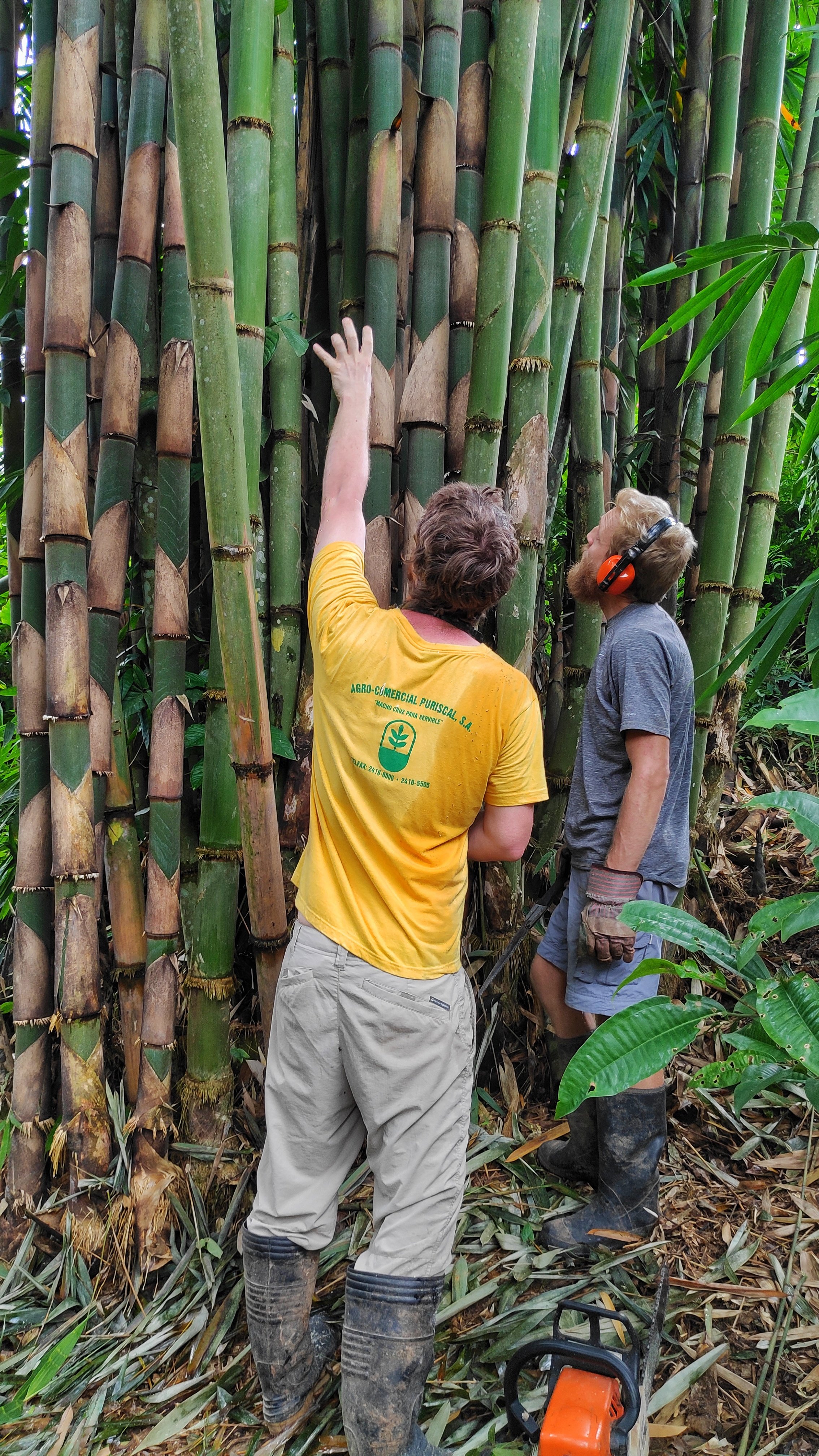
Preparing The Wattle Framework
Wattle refers to the lattice work that creates the rigidity and structure for our daub (earth mix). We use bamboo as this lattice, because we grow it, but wattle can be made from any natural local material (wood, reeds, branches, etc.)
If you are using bamboo, your next step is to prepare the bamboo lattice (wattle). We harvest our bamboo from clumps growing on and around the Ranch. This typically takes a group of people in one of our all-hands-on deck work parties to process a bunch of bamboo at once and get it treated before installing it into the walls. The process involves a group cutting down bamboo branches and cutting them to a predetermined length. Then another group will take some machetes and wooden mallets to split the bamboo pieces into smaller strips, about 1 inch wide or so, not too wide and not too narrow so that they can be attached to the timber framing.


The bamboo strips will then be soaked in a solution of borax and boric acid to treat it for protection from insects and fungal decay, especially in environments like the tropics. After soaking the bamboo needs to be left out to dry for some time, 1 to 2 weeks or so. This method is great because it is non-toxic to humans and animals and doesn’t alter the color of the surface significantly. Once the bamboo is ready it can either be stapled to the timber framing or woven together to form a lattice, we opt for the staple method for the sake of time and ease.

Mixing the Daub
Daub refers to our earthen mix, which contains various ratios of clay, sand, and fiber. If you haven’t done any soil and mix tests yet, now is a perfect time to do so, now that your wattle is ready. During our training we made several different examples of mixes with different ratios of clay, sand, and straw to see how each one performed once it had dried, even though our instructors Ali and Nic already know the optimal mix, this an essential exercise to do on your project to get the right mix for your specific site. At Rancho Mastatal we are using a 1-part soil (ours is clay rich), 1-part sand, and 1- part straw for the daub mix, or simply 1:1:1. This gives a good balance of glue from the clay, compressive strength and cracking reduction from the use of sand, and tensile strength from the fiber, which is straw.
We start by laying out a tarp as close to the area we are going to daub as we can to minimize carrying buckets of mix around. We then pour the sand on the tarp first creating a crater in the middle to put the wet clay in to avoid it from just spreading out all over the place. This is where the fun begins as you need to be ready to get a bit muddy! Stomp, stomp, stomp then burrito is the strategy. The burrito part is probably the most import step in ensuring the materials get incorporated evenly and are not just sticking to the tarp. This simply involves flipping the mix over by pulling one end of the tarp over to the other in the rolling fashion, then stomping on the rolled material again and beginning to add in the straw each time as well as spraying the mix with water as needed to help get the right consistency, not dry but not too soupy. When it looks well mixed you can grab some and feel how it interacts in your hand, checking for stickiness and firmness. When this is done go ahead and put the mix into buckets and bring them to your wall for daubing.


Applying the Daub to the Wattle
Here at the Ranch, we like to get our hands dirty so we will partner up and each person will scoop up a handful of daub and begin weaving it into the lattice. It’s important to make sure that each side gets their mix in-between and through the horizontal strips rather than just laying it on flat, otherwise your mix may fall off the wall. As you start to fill up the wall with earth mix you can check the thickness with a screed which is set to the desired depth of your wall from the face of the timber. We opt for slightly thinner walls (3-4”), this thickness allows us to cover our electrics and plumbing, uses the minimal amount of mix, and accentuates the timber frame nicely. If you put on too much mix you simply use the screed to scrape off the extra and mix it in elsewhere, if your mix is too thin you will notice a gap between the wall and the screed. The goal here is an evenly flat wall at the right depth. You do want to leave your wall with some key on it, this key will ensure your next plaster adheres better.


That pretty much wraps it up for this article. The next step will be applying a level coat clay or lime-based plaster before the final finish coat. We will not cover this in this article but there are other’s that cover this here. Also consider joining the Ranch for one of their yearly natural building workshops, to get practice in all these techniques.
Final Thoughts and Learn More
By combining wattle and daub with timber frame construction, you can create a durable, sustainable, and climate-appropriate structure that blends seamlessly with the environment. For a deeper dive into Natural Building at Rancho Mastatal, check out our full blog page.
Interested in learning more? Join a natural building workshop at Rancho Mastatal to experience this technique firsthand!

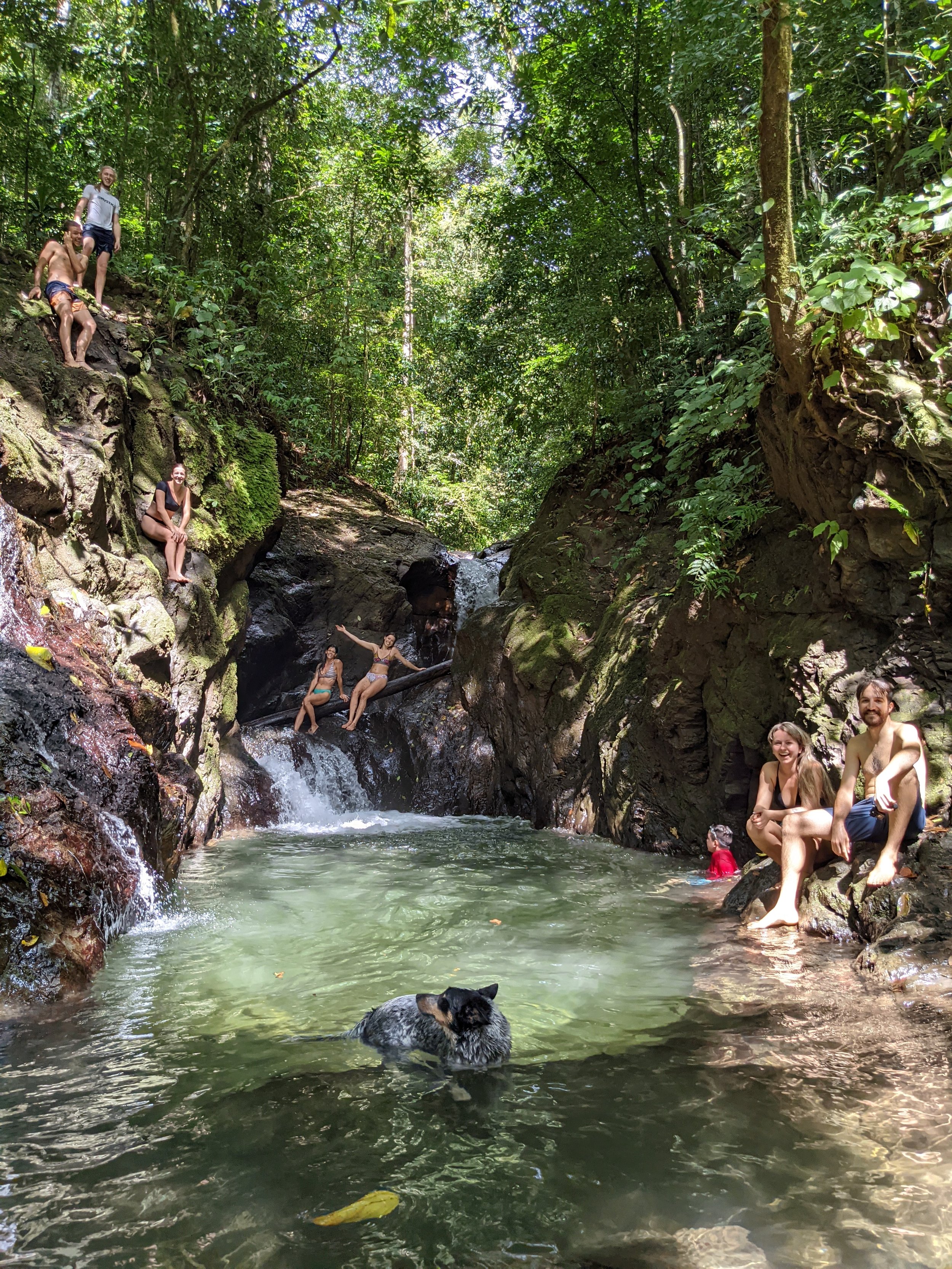
Permaculture Entrepreneurship: Navigating the Path from Student to Professional
After completing a Permaculture Design Course (PDC), natural building workshop, or any other educational opportunities at a place like Rancho Mastatal, many students find themselves wondering how to turn their newfound knowledge and passion into a career. This transition from student to professional is a common challenge in the permaculture world.
By Jason Thomas
The voice behind the podcast Regeneration Nation Costa Rica
After completing a Permaculture Design Course (PDC), natural building workshop, or any other educational opportunities at a place like Rancho Mastatal, many students find themselves wondering how to turn their newfound knowledge and passion into a career. This transition from student to professional is a common challenge in the permaculture world.
It’s not surprising, considering that most standard education programs don’t teach entrepreneurship, and new students of the trade often feel like they lack sufficient experience to charge for their services.

Common Challenges Faced by Permaculture and Alternative Solutions Students
I’ve interviewed dozens of permaculture professionals and students wishing to make their mark, and I’ve found some common hurdles that seem to hold people back.
Some of those obstacles include:
Lack of business education and experience
Little understanding of how to monetize their skills
Imposter syndrome
Limited support network
Balancing ideals with practicality
Many potential clients don’t know what permaculture or these sustainable solutions are, and many regenerative entrepreneurs don’t understand how their ideal clients are thinking about their needs from their perspective.
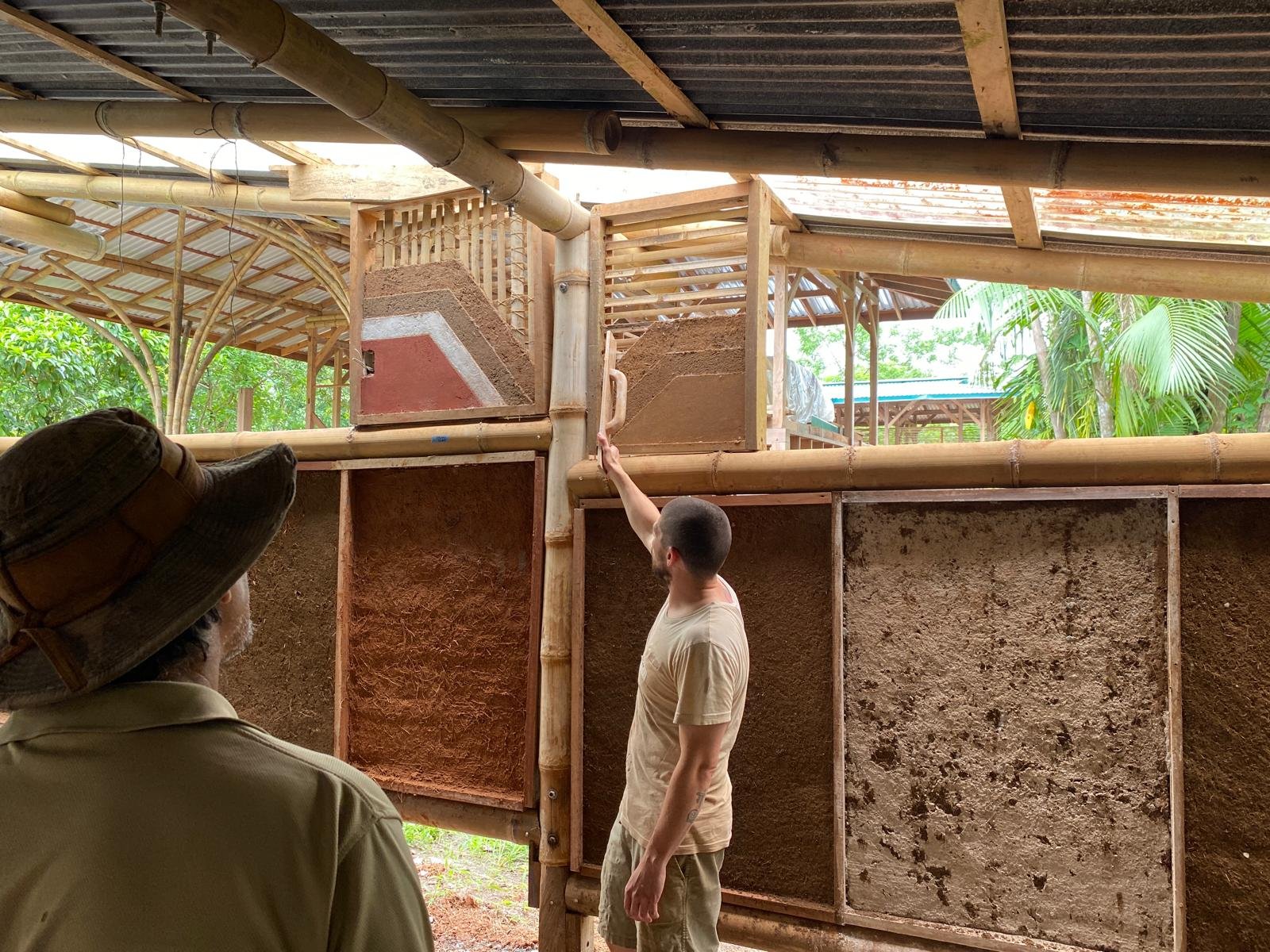
Insight Tool: Identify Your Hurdles
Take a moment to reflect on your own journey. What are some challenges you're currently facing in turning your ideas into a profession? Write them down and consider how they align with or differ from the common challenges mentioned above.
The Gap Between Passion and Profession:
This gap isn't unique to permaculture. Many individuals who care about helping humanity turn its trajectory around face a similar divide between academic knowledge and professional application.
In permaculture, this gap is often widened by the holistic, systems-thinking approach that doesn't always align neatly with traditional business models but does exceedingly well when harnessing traditional tactics, repurposed in a holistic system approach.
Tim O’Hara from Rancho Mastatal shared with me in one of our conversations that he felt like they were chasing their tails for several years as they tried to figure out how to make it all work. It’s a similar story for many people who embark on a project like this.
… but that’s not the only way to go about it.

In today’s age, it’s easier than ever to learn from wisdom keepers like this and model from the solutions they’ve arrived to through their mistakes. It IS NOT a wheel worth recreating. We have work to do and the faster we can get our services out to the world, the better off we’re all going to be.
The trick is not to do it so fast that you skip the foundational steps of contemplative design.
So, from a design perspective, let’s look at some solutions we can embrace to bridge this gap between passion and professional application.
Key Business Skills Needed to Bridge the GaP
Business planning:
Overcome your unclear direction and orientation to business by looking at your business idea as if it were pasture land that you are about to implement into a multi-yielding homestead.
Taking the time to design your enterprise will earn you an intimate relationship with the path ahead and the confidence to walk it.

Marketing and communication:
Conveying the value of permaculture and other sustainable solutions to potential clients can be tricky because they lack the vocabulary and point of reference for what it means, let alone how or why it provides any unique benefits to them.
In marketing and communication, describe the benefits from the prospect’s point of view.
Financial management:
Understanding budgeting, pricing, and sustainable revenue streams may not sound sexy as you’re getting started, but careful documentation will come in handy when you revisit the feedback loop and want to understand what worked well, what didn’t, and how to do it better next time.
Finances are only one part of the puzzle, but trying to skip it will leave you hanging with gaps in your picture.
Legal and administrative skills:
Navigating regulations, contracts, and business structures is another aspect that many new entrepreneurs would prefer to skip.
However, if you want to practice your trade as anything more than a hobby, you might as well start with the end in mind and get some of those things squared away as soon as they are relevant.
Networking and collaboration:
Building a supportive community and finding complementary partners is the practice that will serve all others. We are a culture of people that want to help each other. We need each other! Reach out to other regenerative activators in your area and get to know them.
I even teach people to create a database of these projects and their owners. This could prove to be your business’s most valuable asset.

Insight Tool: Skill Assessment
On a scale of 1-5 (1 being novice, 5 being expert), rate yourself on each of the key business skills mentioned. Which areas do you feel strongest in? Which areas need the most improvement?
Essential Skills and Mindsets to Adapt as a Regenerative Entrepreneur:
As you embark on your journey as an entrepreneur and business operator, you’ll want to cultivate a set of skills and mindsets that support your personal growth and business development.
The following attributes, to the degree they’re cultivated, will help you navigate challenges, recognize and embrace aligned opportunities, and cultivate the confidence to see them through. Let's explore some skills and mindsets worth developing:
Holistic Systems Thinking:
Apply the holistic approach of permaculture to your business. Understand how different aspects of your business interact and support each other. Find common problems people face in your area that have insufficient solutions and find the place where those meet your passions and skill set.
… or desired skill set.
Remember, you’re a student who likes to learn new things. Nothing can hold you back!

Insight Tool: Map Your Business Ecosystem
Sketch a simple mind map, outline, or diagram of your current or planned business idea. Include key elements such as your services, target audience, resources, and potential partners. Draw arrows to show how these elements interact and support each other.
Adaptability to Change:
Be prepared to adjust your strategies as you learn and grow. As Tim has mentioned to me, even they, after all these years, continue to develop and refine policies as they learn and grow. Their documents are regularly being edited and revised by new people with fresh perspectives.
It’s a regular, intentionally planned practice.
Patience and Persistence:
Building a successful business takes time. Rancho Mastatal, like most projects of this nature, didn’t have a huge budget to just set up shop and run massive retreats. Instead, they took a slow, iterative approach, using the resources they had on hand, which included the support of their neighbors, and slowly, persistently, grew as resources and wisdom allowed.
Creating a phase-planned design for your new enterprise to spread your ambitions out over the next 3-5 years is a great way to resist distracting impulses and stay on track.

Lifelong Learning:
Never stop learning. Stay open to new ideas and keep developing your skills. This is the habit that keeps on giving. However, don’t just study information focused on your trade.
Round out your education so that you can understand the macro patterns of the human condition, market patterns, and personal development, as well as the micro details of your business operations.
Community Integration:
Understand the importance of community integration. Of all the community projects and education centers I’ve researched around Costa Rica, Rancho Mastatal is one of the shining examples of community integration and worth modeling at any opportunity.
Community integration is an extremely important part of our work. It helps us to integrate in a way that allows us to be accepted by those we wish to influence and serve.
Insight Tool: Community Asset Mapping
List 5-10 local business owners, organizations, or other leaders in your community that could potentially support or collaborate with your efforts. How might you engage with each of them?
Innovative Problem-Solving:
Use holistic thinking to find innovative solutions to your business challenges. Permaculture teaches us that each problem holds a gem of solution just waiting to be discovered. By carefully researching and analyzing your options and approach, you can see these pitfalls before they ever become a problem and design ways to ensure they never will be.
By staying vigilant in your process to find ways you can stack functions in your solutions, your experience operating your business will improve.

Clear & Effective Communication:
Develop the ability to explain what you do and its benefits to a wide range of audiences. While it's always advised to start any product or service creation with a specific client avatar profile in mind to help target your messaging, we’re not just here to get customers. We want to affect change in the world, and that requires speaking other people’s languages.
The best way to do that is to talk to more people about the problems you provide solutions for, but not with an intention to pitch your services. Instead, talk to them with a sense of curiosity and care.
Get to know them and pay attention to the words they use in describing their challenges and perceived options. If you take the time to do this in a systematic way, you’ll develop the vocabulary and sensibility to make the impact you’re hoping for.
How the Permaculture Business Design Course Helps Bridge These Gaps:
The Permaculture Business Design Course is designed to bridge the gap between a passion for making regenerative practices what you do for a living and the business skills needed to make that happen.
It applies the permaculture methodology and principles to design your business like you would a multi-yielding food system or a physical structure made from carefully calculated materials and procedures.
Why would we celebrate those practices on the land and houses, but not our business?
It’s impressive how often we stumble into a business idea, throwing offers out there hoping it will land with someone as we describe OUR favorite features of the service, rather than the benefits THEY want to receive. Business development is too common a reactionary process of figuring out as you go, which is exhilarating in moments, but not an effective way to get off the ground flying.

In this course, you’ll:
Expand your perspective on how to solve common challenges people are actually experiencing so you can find the unique niche that’s perfect for you.
Gain clarity around your unique vision and how it meets the needs of your region to purposefully design a financially regenerative enterprise that people can relate to.
Enhance your professional skill set through training videos, insight tools, worksheets, and other guided exercises.
Proceed through the lessons at your own pace to develop your offer, invisible infrastructure, marketing strategies, and operational procedures through slow and small solutions.
It’s a start-to-finish roadmap for the motivated permaculture entrepreneur, from ideation to implementation.
Insight Tool: Your Next Steps
Based on what you've learned in this post, what are three specific actions you can take in the next month to move closer to your goal of becoming a permaculture professional?
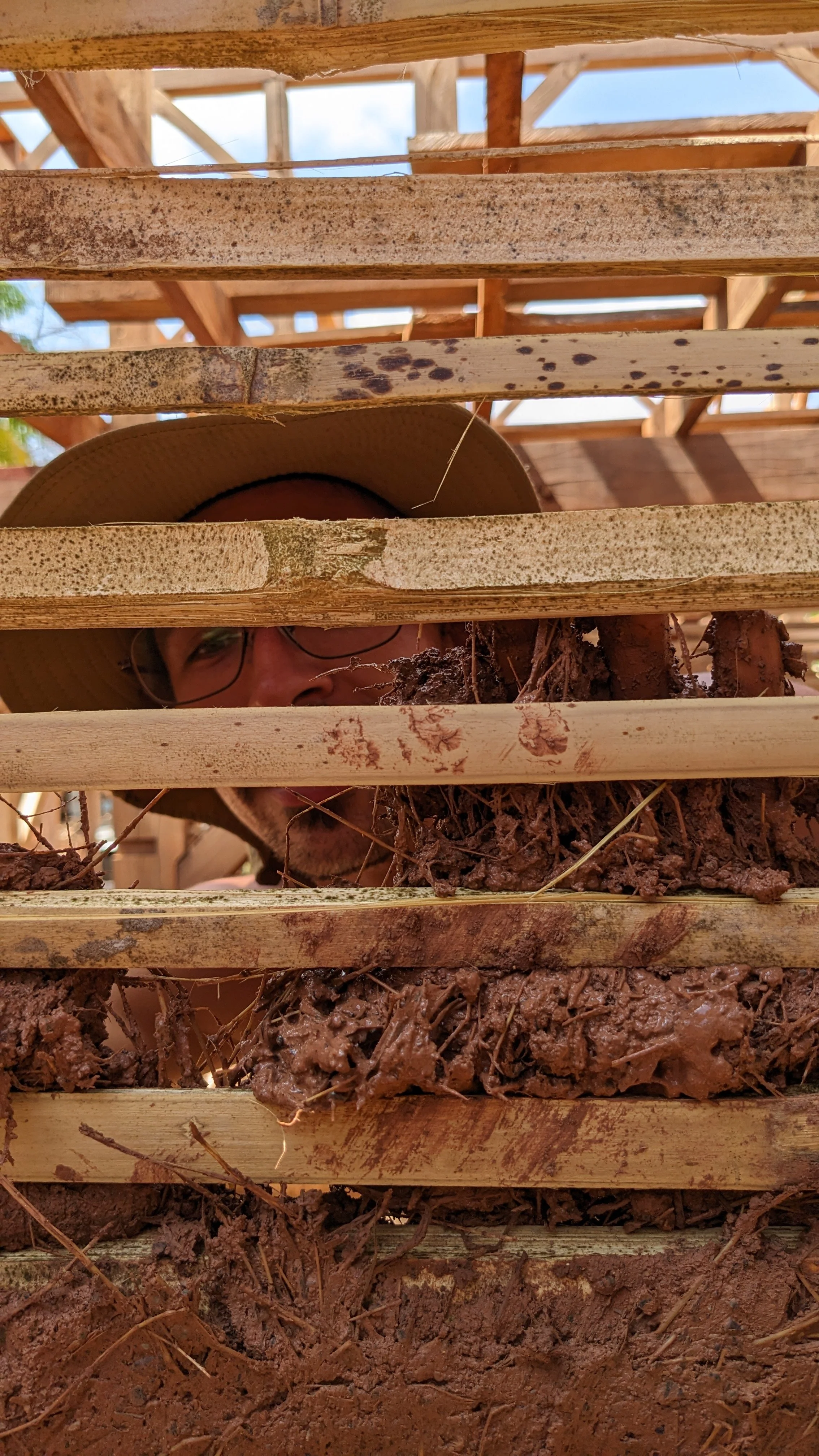
A Little More About Rancho Mastatal's Journey from Vision to Successful Enterprise:
I’ve had the pleasure of hearing Rancho Mastatal's story through my various interviews with Tim and the fortunate opportunity I’ve had to visit on the Ecovillage Tours that we now operate annually.
Each interaction with Tim, Robin, and their team has demonstrated:
Consistency in their intention to integrate and serve with the local community
Persistence in finding solutions when change happens
Adaptability through intentional experimentation
And ongoing education and refinement of their practices.
In an interview we did for the Permaculture Professionals Interview series, Tim shared that, early on, they didn't focus enough on compensating and taking care of the people that were making it possible. And that is unfortunately common amidst foreigners who buy land are happy to take advantage of the poverty wages many rural farm-hands are willing to work for.
Many of us have that wake-up call at some point, and for them it led to significant changes in their approach.
They implemented changes like:
Formalizing their business structure
Creating clear agreements and expectations
Developing a core team with defined roles
Implementing financial tools for better decision-making
Tim shared that developing more of a structure has helped them feel much more stable and resilient.
Rancho Mastatal's evolution is one of my favorite examples of combining permaculture principles with sound business practices. They've grown from a couple running a farm to an education center offering diverse courses, an apprenticeship program, and strong community integration directly affecting who knows how many hundreds of people each year, and thousands through the lives touched by those who’ve passed through their doors.
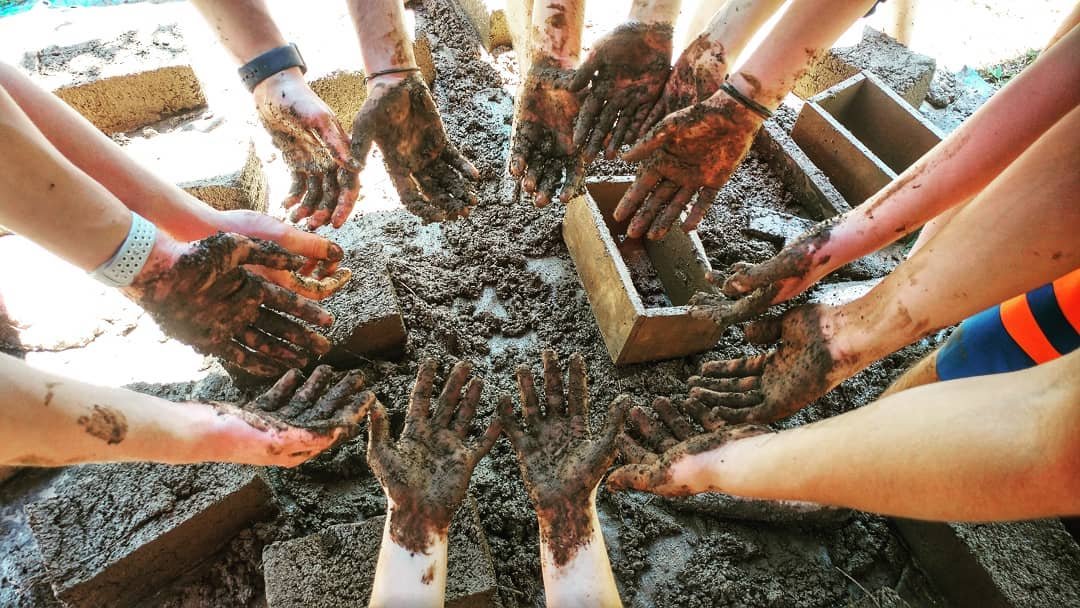
In the guest presentation Tim provided for the Community Living Agreements Training, he emphasized the value that clear documentation has brought to their project.
He explained that creating documents outlining standards for:
Sharing communal space
Participation expectations for members and guests
And common operating procedures
They have a library of best practices they can use to inform guests, train staff, and keep their intentions on track over time.
(Image) PBDC Landscape 1.jpg
Are you ready to start to design?
The Permaculture Business Design Course offers the knowledge, tools, and support needed to navigate the journey from permaculture student to professional. It provides practical skills to design a business that's as regenerative and abundant as the ecosystems we aim to protect and regenerate through our work.
Enroll in the course to start designing a business in a way that will earn you experience, confidence, and clear enough vision to motivate people to your cause.
If you like the idea of designing and developing your regenerative enterprise in the company of other dedicated entrepreneurs, I offer a seasonal group program for permaculture-minded professionals looking for support and accountability as they navigate the path ahead. It’s application only and an interview is required to ensure we have a committed group of aligned individuals in the cohort.

Let’s do it together!
To learn more, visit the Permaculture Professionals Program and fill out the application. I’d love to meet you and hear about your ambitions to cultivate a regenerative livelihood.
Remember, as in permaculture design, the key to a successful business is thoughtful planning, diverse strategies, and regular visits to the feedback loop.
However, accountability, coaching, and peer support are powerful amendments worth investing in.
May your dreams to serve through right action flourish!

Jason Thomas is the voice behind the podcast Regeneration Nation Costa Rica, designer and guide for Ecovillage Tours CR, mastermind facilitator for the Community Founders Circle and the Permaculture Professionals Program, and creator of the Permaculture Business Design Course.
With over 20 years practicing both permaculture and entrepreneurship, he bridges these two worlds to empower our next agents of change.
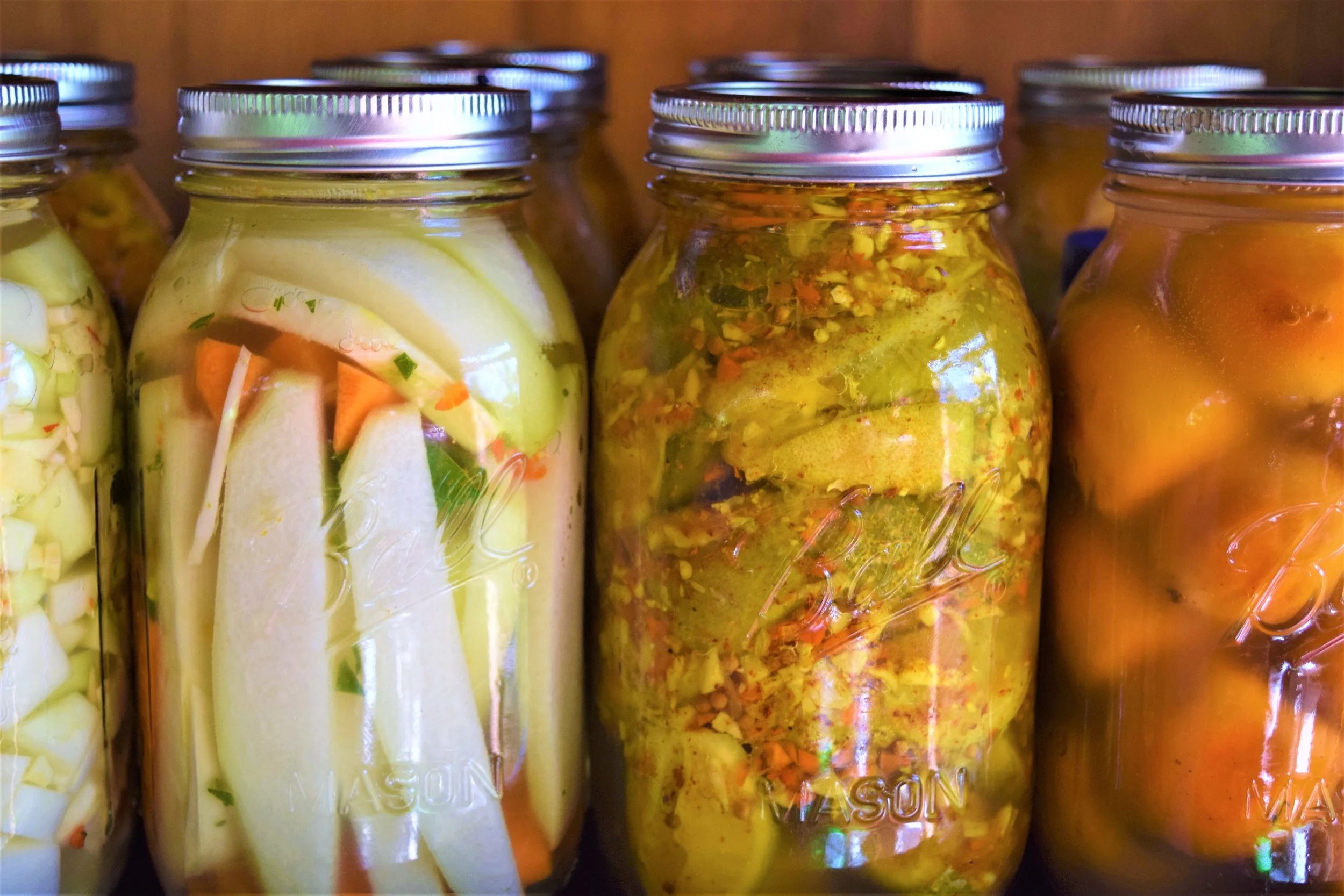
Los beneficios y los tipos de fermentación
La Fermentación es un proceso catabólico de oxidación incompleta, por el cual ocurre una transformación de los alimentos.
Escrito por el aprendiz 2024, Felipe
La Fermentación es un proceso catabólico de oxidación incompleta, por el cual ocurre una transformación de los alimentos. Esta transformación la realizan ciertos tipos de microrganismos que metabolizan estos compuestos de manera natural para su propia sobrevivencia. Este proceso se lleva a cabo a traves de la reacción bioquímica de la descomposición de moléculas de azúcar como: sacarosa, maltosa, fructuosa, entre otros, en compuestos mas simples obteniendo como resultado; energía, etanol, lactato, gas hidrógeno, enzimas, productos alimenticios fermentados, modificadores del sabor y productos farmacéuticos. Los principales productos de fermentación son ácidos orgánicos, alcohol etílico y dióxido de carbono.
Algunos de los productos finales obtenidos muy codiciados son: kimchi, chucrut, pan de masa madre, salsa de soya, vino, cerveza, Kefir, queso, salami, yogur entre otros.


La historia de la fermentación data de mas de 10,000 años A.C, donde los humanos utilizaron la fermentación para preservar los alimentos y en otras civilizaciones usaban las bebidas fermentadas para sus rituales y ceremonias. Este proceso se extrajo de la observación de la naturaleza, en donde los alimentos se trasformaban de manera natural y adquirían nuevas propiedades.
La fermentación posee un gran numero de beneficios para los seres humanos entre los cuales destaca:
Conservación de alimentos sin necesidad de químicos, al fermentar los alimentos, se crea un ambiente hostil para los microrganismos patógenos, ya sea un ambiente ácido producido por las bacterias, o un ambiente con presencia de alcohol de las levaduras.
Favorece las defensas de la mucosa intestinal, los probióticos (microrganismos beneficiosos para la salud) ayudan a fortalecer el sistema inmune, para prevenir las infecciones.
Restaura y conserva la flora intestinal, los probióticos proveen una colonia diversa y saludable a los intestinos, además de combatir y reducir el efecto de los pesticidas y sustancias químicas y tóxicas para el organismo.
Ayuda a la digestion y mejora la biodisponibilidad de nutrientes, de esta manera se incrementa la digestion de los alimentos y la absorción de nutrientes, ya que proporciona capacidades esenciales para la fermentación de nutrientes no digeribles como las fibras dietéticas. Ocurre una transformación de las largas cadenas e moléculas de los alimentos en compuestos mas simples de digerir. Rompe y degrada gran parte de las toxinas de las plantas y anti-nutrientes que dañan la salud.
Desarrollo de sabores y texturas únicos en los alimentos, esta es una característica única de este proceso ya que los microrganismo encargados del proceso producen compuestos aromáticos y ácidos orgánicos, pasando de sabores simples y planos a sabores complejos, deliciosos para los sentidos.

Existen dos formas de llevar a cabo una fermentación, fermentación espontanea o la fermentación inoculada. La primera se refiere a una fermentación con microrganismos que se encuentran en el habitat y podemos extraer, o ya sea fermentando algún material orgánico del lugar para utilizarlo como el catalizador o el cultivo primal de microrganismos a utilizar. La segunda corresponde al proceso que se ejecuta a traves de microrganismos que se obtienen comprándolos en tiendas de cultivos, que son controlados en laboratorios, donde han ido seleccionando y recreando ciertas especies mas resistentes o que tienen un objetivo en particular.
Dependiendo de la sustancia química formada en el proceso de fermentación se pueden clasificar en distintos tipos. Los siguientes son algunos de los tipos de fermentación que se practican en el Rancho:

Fermentación Alcohólica
Este proceso de fermentación está liderado por levaduras que consumen glucosa y la transforman en etanol y dióxido de carbono. Este es un proceso anaeróbico, es decir, sin presencia de oxígeno. Existe una regla general de 2:1 de azúcar a grados alcohólicos. Es decir, si partimos con una concentración de azúcar del 20% en nuestra solución (agua + glucosa (frutas, azúcar, panela, etc 20%)), obtendremos un vino de alrededor 10% de alcohol, es decir el porcentaje de alcohol es la mitad de la concentración de azucares en la solución. Tiempo de fermentación va depender de muchos factores, pero al menos un tiempo de entre 2 a 4 semanas.
Para llevar a cabo este proceso se deben tener las siguientes consideraciones:
Sanitizar los implementos y los ingredientes
Romper en estructuras pequeñas los ingredientes a utilizar
Las levaduras no pueden vivir en ambientes con un porcentaje de alcohol mayor a 14%, por lo tanto se debe partir con una solución que no exceda 28% de glucosa
La temperatura en la cual las levaduras están cómodas es de 18 a 25 celcius
PH no puede estar menos de 4
Algunos de los productos que el rancho crea a partir de este tipo de fermentación son:
Vinos de muchas de las frutas que se extraen de los sistemas agroforestales, algunos de estos ejemplos son: carambola, pitanga, canela, pitaya, piña etc.
Cerveza de jengibre

Fermentación Acido Láctica
Este proceso de fermentación es liderado por la bacterias láctica, que al igual del proceso anterior consumen la glucosa presentes en los alimentos y los convierten en ácidos lácticos. Este es un proceso anaeróbico y los beneficios de estos ácidos es la conservación de los alimentos ya que impide el crecimiento de patógenos y provee condiciones propicias para la aparición de los probióticos.
Algunos de los ejemplos de fermentación de este tipo que se practican en el Rancho,:
El kimchi de papaya verde, el cual se agrega la papaya y otras especies (ajo, jengibre, etc) bien trituradas, se pesa todo el conjunto y se calcula el 2% de ese peso, que sera la cantidad de sal que se debe poner los ingredientes, para estimular la salida del liquido al exterior de los ingredientes generando un caldo de cultivo ideal para que las bacterias se reproduzcan. Finalmente, después de agregar la sal, se estruja y se deja en un recipiente, percatándose que todo este sumergido en liquido exprimido de los vegetales. Dependiendo de diferentes factores el tiempo de fermentación varía, acá en el Rancho 0-es de una semana.

Fermentación Acido Acética
Este tipo de fermentación se lleva a cabo a partir de la bacteria acetobacter, la cual se desarrolla en un medio aérobico, la cual se alimenta de etanol, que es un tipo de alcohol que se genera en la fermentación alcohólica, convirtiéndolo en ácido acético, la sustancia característica del vinagre. Es el proceso de oxidación del etanol. Aca en el rancho la manera de producir vinagre, es mediante la exposición al ambiente de los vinos/productos de la fermentación alcohólica, y se añade la madre de vinagre que se ha generado en fermentaciones anteriores para acelerar el proceso. Finalmente se cubren con un paño para que no se infecten con otros insectos. El tiempo de fermentación varía de 1 a 3 meses.

Fermentación Simbiosis de Levaduras y Bacterias (SCOBY)
Es un tipo de fermentación donde participan un conjunto levaduras y bacterias que trabajan y coexisten en simbiosis. Acá los microrganismos transforman la glucosa en ácidos orgánicos, etanol y dióxido de carbono. Es un proceso aeróbico y anaeróbico a la vez.
Uno de los ejemplos del rancho en este tipo de fermentación es:
Kefir de agua, se utilizan una taza de granos de SCOBY y se agregan en una solución de 3 galones de agua y 3 tapa dulces, se dejan fermentar anaeróbicamente por 48 horas y están listos para ser embotellados y arreglados con jugos frutales locales. Se dejan por 5 horas en segunda fermentación y se ponen a refrigerar para bajar la actividad y er consumidos por los miembros y visitantes del rancho.


Invisible Structures
Just as strong buildings require a solid foundation to build upon, successful dynamics are also supported by invisible structures, or mutual understanding of needs, roles and beliefs.
By 2024 apprentice Yalan
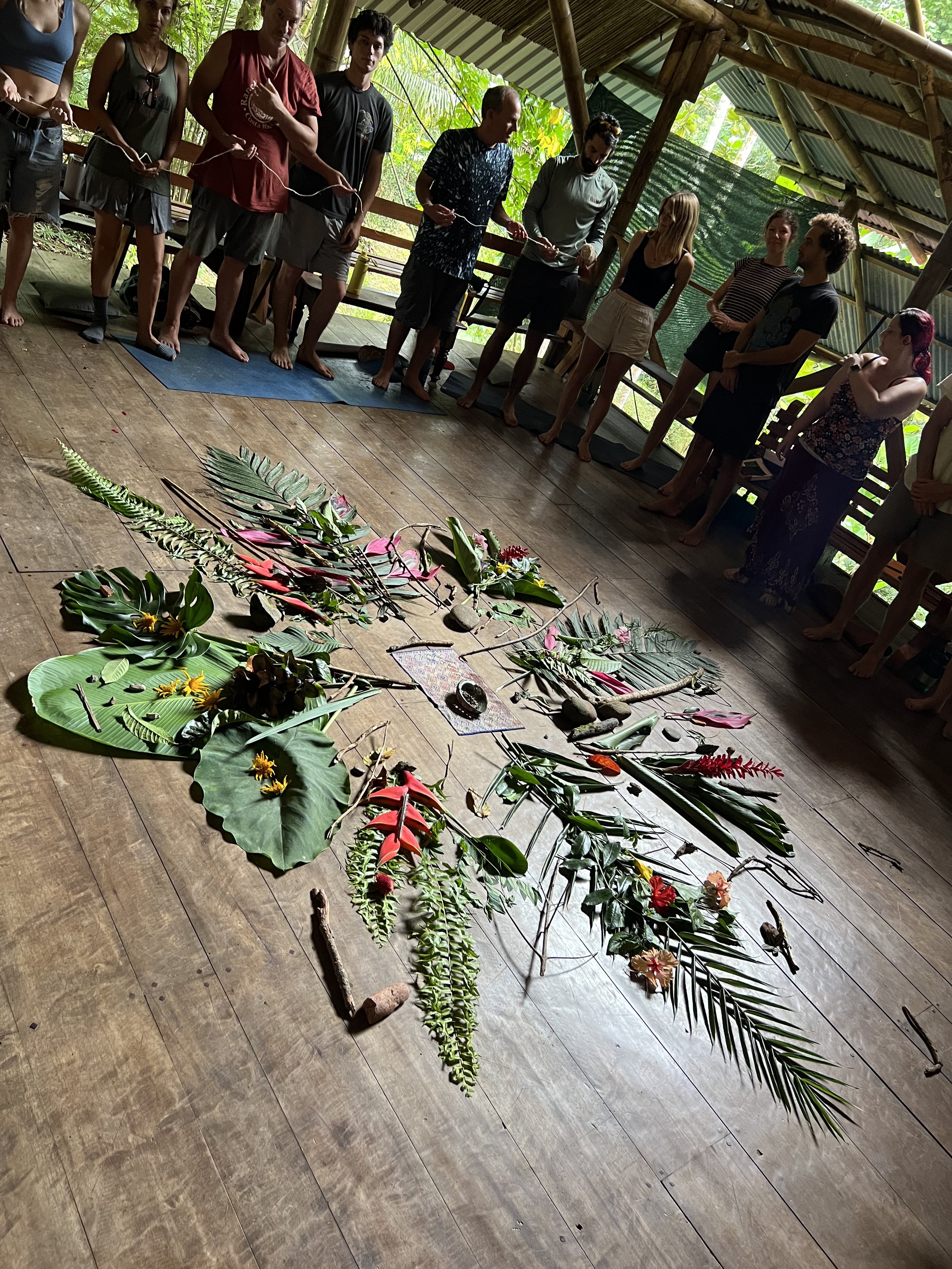
For every building to unfold, a detailed plan must be laid. A build for housing people, is not something we make up along the way. Just as strong buildings require a solid foundation to build upon, successful dynamics are also supported by invisible structures, or mutual understanding of needs, roles and beliefs. Invisible structures are the foundation to any successful team, community, or entity. Without invisible structures, these dynamics can fall into a downward spiral of misunderstandings, expectations and disappointment, as well as miscommunication and misplaced intentions. By being consistent in meetings, transparency, and inclusion, invisible structures have been attributed to the longevity of the Ranch.
Many a time, invisible structures can be assumed or implied. Our needs, roles, and beliefs can be some what difficult to share. Having consistent meetings can give us the space to discuss what we each find important. Life can get busy and the idea of committing to consistent communion whether its daily, weekly, or monthly can feel daunting, especially when its with more than one person.
Setting at least ten minutes aside to reorient and connect with those in your immediate environment not only helps organize the day ahead, but can shift your perspective and even values. For example, everyday at the ranch, the possibility of playing sports is discussed. Now, it’s not everyday that sports are played, however everyday is open for people to get in some cardio as well as participate in team building. If meetings are not established to discuss agenda, needs, etc. any dynamic can lose balance. I recall a community I was a part of where there was a lead who would ramble about what he wanted to see each person contribute individually. Instead of seating us together to express expectations collectively, he would pull us each aside to comment on what he saw our contribution being. This created confusion about our roles amongst each other and our purpose there. Expectations and needs on both sides weren’t expressed clearly, nor did they have the space to be expressed. For a community meeting to be successful, needs and values, are expressed and equally received from all parties.
For meetings to be successful, one needs a sense of safety and vulnerability
With these conditions comes transparency, allowing ourselves to be seen and communicating our “internal weather report” allows for others in the community to take initiative. Responding appropriately to a need or role that needs fulfilling. However when being transparent, a level of delegation and discernment must be present to successfully have that need met. Problems are not solved by acting as if they are not there, or by going on about business as usual. Problems are solved by engaging, by observing and interacting with the problem until a solution is met. Again, meetings exist to generate a platform for transparency to exist. We must cultivate space to allow for things to become apparent. For example, if a role is placed on you or there is an expectation you cannot meet, you can suck it up and do your duty, or you can be vulnerable and say, “This does not work with me, are there any other places my energy would be useful?” We want to help one another, we want to play a role in the relieving of each other’s pain. We cannot do this if light is not shed on their struggles. If we cannot share our faults and struggles, we take on more than we can handle and resentment can develop. Allowing ourselves to be transparent with our faults and struggles gives rise to generosity and altruistic action. Once being vulnerable is established as safe, we can then bring people into our lives to be in sync with our rhythm.

From here we move from transparency to inclusion
Not just being open with our lives but actively involving others in our daily experience. By including others into our lives, we learn to delegate the weight we carry. There’s an expression, “many hands make light work.” I recall an open mic I hosted back in Los Angeles. I was transparent in my struggle setting up for the evening, huffing and puffing as I set up lights. Though I felt under pressure, many hands were available to assist me. I was not taking time to assess what was needed of me, so I could not delegate. By not including others in my tasks for the evening, I was suffocating under my own pressure. Needless to say it was a successful evening, however I could have relieved myself of struggle by involving others. My mind could have had more space to enjoy the evening rather than being hyper focused in providing a pleasant experience. While there is a pride to be experienced on the other side of accomplishing a task all on your own, there is a potential in connecting with others that is void when doing so. Expressing oneself as, “I could use ______ right now” or “I am in need of _______ at the moment” or “If you have a moment could you ______?” Are all examples of letting people into our lives. For the sake of connection and relieving our own pressure, let us open up to those in our immediate environment, and include them in our daily experience.
All in all living in community isn’t for everyone, it takes open hearts and open minds to communicate as fluidly as what is needed to live amongst peers. There are infinite ways to live in community and meetings, transparency, and inclusion are just a few examples of what’s needed to build solid invisible structures.
Learn More
Want to learn more about social permaculture, community living, and systems to create a healthy communal environment? Join us for our yearly Permaculture Design Course, where we will experience all this together in a two week, life-changing experience.
Check out these related blogs
Social Permaculture: The Secrets to a Successful Community
Foundations for Success: 10 Considerations to Create a Healthy Project
Enriching Community Soil: 5 Simple Strategies That Support Sustainable Relationships
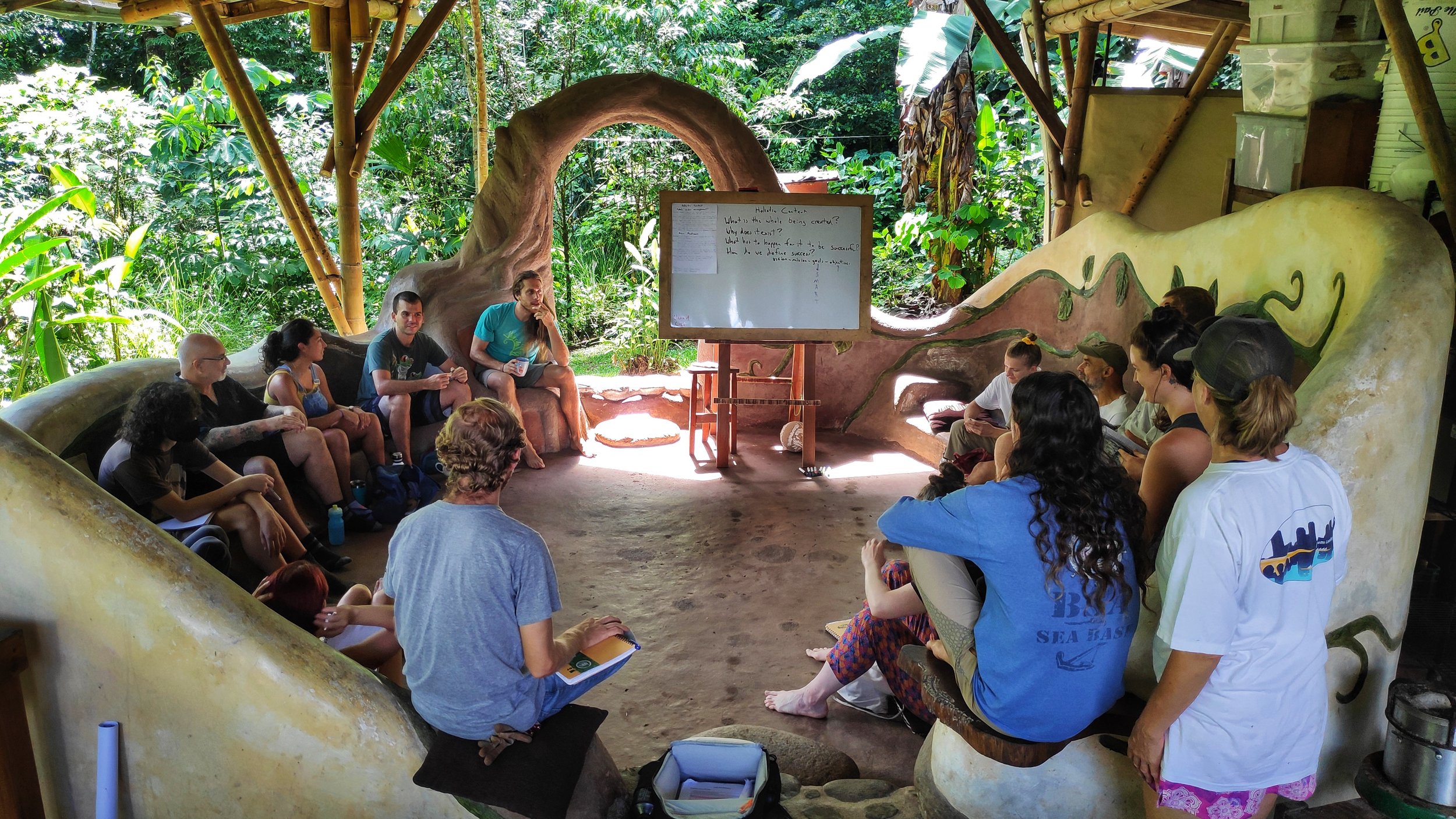

Team Sports as a Bridge Between Expats and Local Community
I am watching something pretty remarkable taking place almost every day here in Mastatal, Costa Rica, and that is the magic of team sports.
Written by 2024 apprentice Brooklyn
In my personal experience with international travel, I have time and time again come across the phenomenon of “Expat” communities separated both geographically and relationally from “Native” or “Natural Citizen” communities. We travel and migrate, often with the intention of immersing ourselves in a new culture, but remain “outsiders” “foreigners” etc. It can be challenging to integrate ourselves into our new homes and communities; to make friends, to really feel like a part of our new home. This is true even if we are collaborating with the locals in our work. This begs the question, how do we build real relationships with our new neighbors, colleagues, community?
I may not have a complete answer to this question yet, but I am watching something pretty remarkable taking place almost every day here in Mastatal, Costa Rica, and that is the magic of team sports.
In general, there are many benefits to participating in Team Sports – everything from morale, team building and physical fitness to self-esteem and mental health gains – but for the sake of this article, I will be looking at some of the benefits specific to blended native / expat communities.

Creating Common Ground
At first glance, we may not think we have a lot in common with the members of our new community, and/or maybe they feel that way about us. We come from different places, have totally different backgrounds and life experiences, maybe different religious and spiritual beliefs, different skillsets, different hobbies, likely different first languages- it can be challenging to know where to start in building relationships. The Campo here in Mastatal, from what I have seen so far, feels like the common thread that invites everyone together; puts us all on an even playing field, so to speak. It not only brings everyone to a central location, but also gives us something in common. Something to get excited about, to bond over.
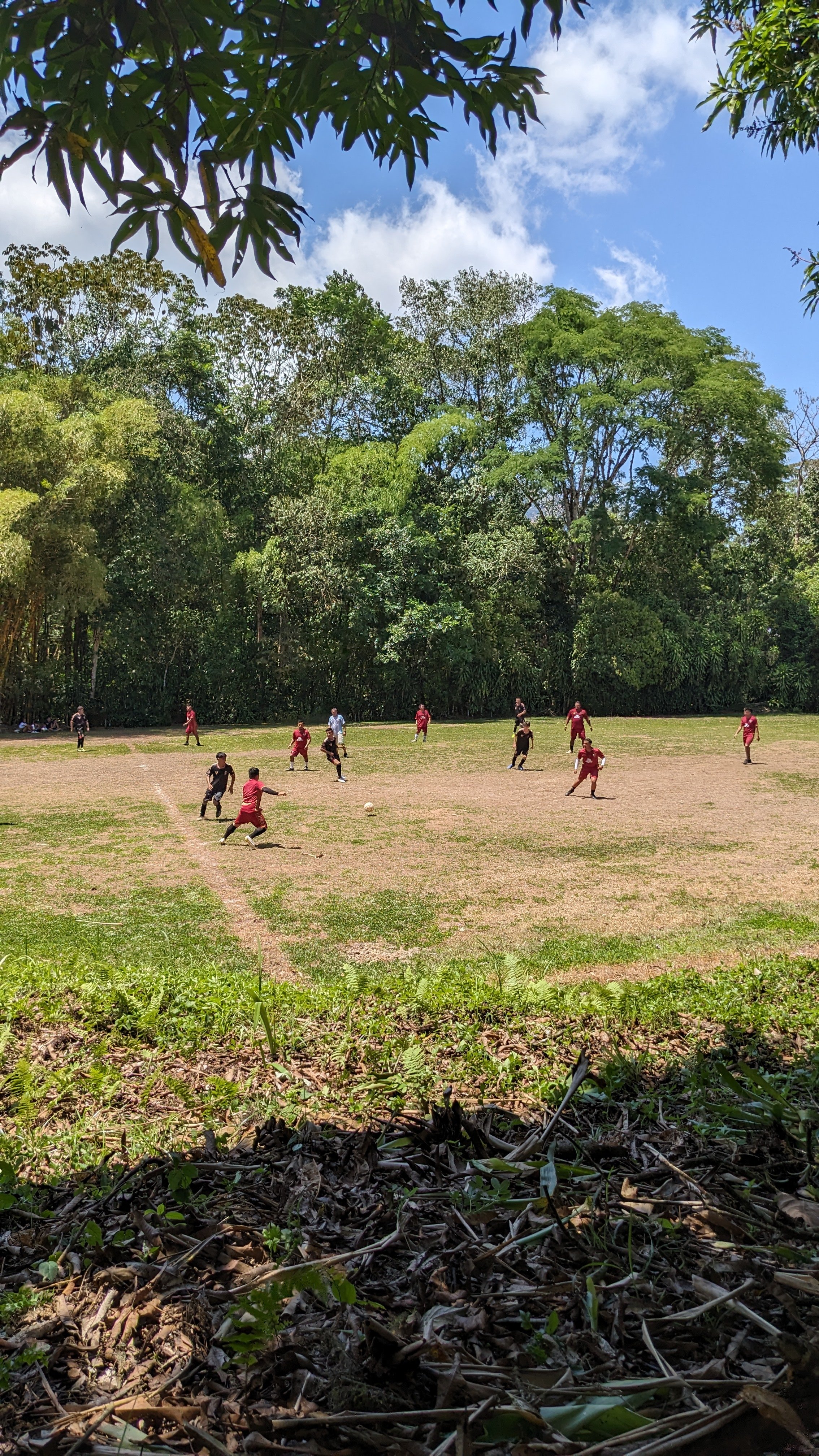
Teamwork / Comradery
There are 3 main sports we play here: Volleyball, Ultimate Frisbee, and Soccer. There is a near-fixed schedule that repeats weekly (Monday, Wednesday, Friday – Ultimate Frisbee; Tuesday, Thursday, Saturday – Volleyball; Sundays are left open for whatever people are interested in playing, with some sort of pick-up soccer happening most days). Sports are scheduled for 4 pm every day, which around here means everyone shows up around 4:20-4:30 and we play until around 5:45-6 pm. No matter which day or which sport you join, everyone is invited and whoever shows up is split into teams as evenly as possible. You may or may not already know the members of your new team. They may be locals, longtime residents, new residents, long term guests or students, passers-through, you name it; it doesn’t matter. You are now working together to take your team to victory (in a friendly competition kind of spirit, of course). We get hyped together, we cheer each other on, we score, we drop passes, we win, we lose, we do it all as a team and it is an incredibly fast way to connect and bond with new friends.
**one caveat – that note about the friendly competitive spirit is CRUCIAL to this being a bonding experience. Egos and taking the game too seriously need to be left off the field. We try HARD around here, but there is no arguing over technicalities, or anything for that matter. Remember, we’re doing this for fun!**
Moves Relationships Beyond Work-Life
Speaking specifically of what I witness here at El Rancho Mastatal, participation in team sports makes a huge impact on working relationships. The Core Team at the ranch has cooperative working relationships with many locals. At this moment, we have a large structure being built on the property and it is a collective effort of our natural building team with local builders. The sheer size and scope of the project is grounds for accumulating tension. However, multiple times per week, everyone involved in the project makes their way to the field, runs hard, plays hard, laughs together, and lets off steam in a healthy way; and it shows in team morale and how well everyone continues to work together and stay on track.

Overcoming Language Barriers
We have a wide range of English / Spanish skill levels in this community. Spanish-only, Spanish / English, English only and every level in between. In sports here, you may be on a team with someone you aren’t able to have a proper conversation with, but you’re still able to work together toward a common goal, laugh together at mistakes and mishaps, and have a great time. It’s a starting point to making real connections.
Encouraging Intergenerational Bonds
Something I really felt was lacking in the communities I was familiar with back in the states is the connection between generations. There has been a loss of the passing down of wisdom and just generally spending time with people of different age groups. Here on el campo, there may be players who are 14 (occasionally even younger) and players in their 60s in the same game. Every age, gender, skill level, etc. is welcomed and encouraged to join. Everyone gets to play to the best of their ability and have an awesome experience.
Last Thoughts
I have written this article very much from a “new eyes” perspective. I am both new to Mastatal and pretty new to team sports in general. I didn’t even plan on getting involved in team sports before I came here. However, from what I can see, team sports are a powerful force here in this community. Joining in on the games has quickly become one of the aspects of living here that I value the most and has made me feel so much more connected to everyone around me.

The Art of Simplicity
If we intend to design a culture where the permaculture ethic "fair share" is embodied - where the needs of all beings are met- it is necessary to learn to live simply, taking only what we need and distributing the surplus fairly- the abundance that nature so graciously lavishes upon us.
By 2024 apprentice Julia Holer
If we intend to design a culture where the permaculture ethic "fair share" is embodied - where the needs of all beings are met- it is necessary to learn to live simply, taking only what we need and distributing the surplus fairly- the abundance that nature so graciously lavishes upon us. We have to (re)learn and practice the art of simplicity -a way of life many of us seem to have forgotten.
Living simply is living lightly on this earth. The complexity of modern life is weighing us down - in the material realm as well as the mental realm. Human made materials have already outweighed the earth's natural biomass.
We tend to look at people who do subsistence farming as "backwards," but considering the world's state isn't it more "backwards" to go to the gym and work out on exercise bikes while using fossil fuels to go grocery shopping? Modern life has created a lot of complexities - physically and mentally. Too much or too little of anything creates complexity. For example drinking water. If you drink too little your body dries up - If you drink too much you are bloated. Burn Out - Working yourself to the brink of exhaustion instead of having a balance between moving, challenging and nourishing yourself - is a symptom of the complexity of modern life. So is our consumerist culture - accumulating more and more stuff, distractions and stimuli of all sorts lead to polluted minds, stagnant creativity and a lack of focus and awareness.
Countermovement like the minimalist trend, pick up on the complexities modern living has created and embrace a simpler, decluttered lifestyle, following the quote by William Morris:

“Have nothing in your house
that you do not know to be useful
or believe to be beautiful.”
Learning to live with fewer and simpler things, fewer expenses brings us greater freedom and makes us less vulnerable to social and economic crisis. We worry less about loss and spend less time protecting what we have. Simple living is less exploitative and also requires less effort to maintain.
When we live in complexity our needs (energy, material goods...) increase and we live at the expense of others. The simpler our lives the more possible it becomes to contribute in proportion to what we use.
A handmade life
If you want to invite more simplicity into your life - learn and practice a craft - any craft (knitting, carving, drawing, weaving, cooking,...) where you have to use both head and hands. Crafting things with your hands brings you into a space of inner calmness and gives you confidence in your ability to create, expanding your creative potential as well as your wellbeing and contributes to the enrichment of the design and quality of the things surrounding us - which in consequence simplifies our lives - we own less things, but the things we have, we truly appreciate. There is a few things more satisfying than using items you have made yourself.
Living in intentional community
Living in intentional community can simplify our lives greatly - sharing tasks, tools, cooking and cleaning shifts, spaces and ideas is a beautiful way to consume less and live life in a more meaningful way. In a community where creativity is fostered the focus shifts from having things to making them, as a result they become a source of great satisfaction and pleasure.
Designing simplicity
Design in its essence is the analysis of a problem and seeking the best solution - in order to create more efficiency, solutions have to be simple (and slow). Using locally available materials reduces transport distances and carbon emissions. Using the output of one element of our system for another element’s input is diminishing the need for outside inputs, thus simplifiying the system as a whole. Appropriate technology needs to be fitted to human needs as well as the needs of our ecosystems. Thoughtful and conscious choices that might not seem like the "as little as possible" option at first but save energy, time or labor (power tools, using cement for certain structures, using washing machines,...) might also contribute to more simplicity if used with intention. Permaculture Design looks at all these factors - designing systems that simplify our lives while not creating more complexity for other (eco)systems.
Inner simplicity
Inner noise and turmoil is one of the symptoms of modern societies and can manifest in the form of stress, burn-out and mental illnesses. The times we spend in silence, meditation, prayer, contemplation or other spiritual/mindful practices helps us to remove inner clutter.
There lies immeasurable worth in treating our bodies and spirits as temples and gardens- entering barefoot and in quietness, watering and caring for them, tending them to grow, being diligent in discerning what we allow to enter in or let linger in these sacred spaces.
The clearing of inner spaces helps us to interact with the outside word in more simple and gracious ways - we are growing in our ability to communicate clearly, precisely and to the point - discerning when to be silent and practice active listening.


Coming here to Rancho Mastatal for the apprenticeship was the much needed fulfillment of a deep longing for more simplicity in my life. Complex life in the city required a lot of effort to stay energetically balanced and grounded. Being emmersed in nature, eating well, doing physical work, being surrounded and inspired by kindred spirits has simplified and at the same time enriched my life in so many ways.
Every day I feel more grounded, content and grateful for a simple, intentional and balanced life - which of course doesn't just happen randomly - at Rancho Mastatal you can find the well designed and continuously adjusted workspaces, living areas and agricultural spaces - as well as the beautiful weavings of invisible structures - community building through meetings, check-ins, team-sports and so much more that keeps this place working well, and simplifying while at the same time enhancing all of our lives here.
In the process of thinking about the art of simplicity the following questions came up that I want to share with you as a prompt to invite more simplicity into your own life:

How do I use my energy?
Am I aware of my needs?
What's the simplest solution you can think of to meet your needs?
Where can I do with less?
Where do I have too much clutter in my life -inside and outside?
Are the things I own useful or do they bring me joy?
How can I invite more simplicity and efficiency into my life - without creating complexity for others?
Contemplating simplicity and taking appropriate steps, designing your life with intention is contributing to the betterment of our world as a whole - ending with the words of Elizabeth Seton:
“Live simply - so that others may simply live.”

Finding Home in Permaculture
There is a word I once heard called Solistalgia. It’s meaning is similar to nostalgia, but it is for a place you are already in. It is feeling lost and missing even when you are “home.”
By 2024 apprentice Allura
“Stand Still. The trees ahead and bushes beside you are not lost. Wherever you are is called Here, and you must treat it as a powerful stranger, must ask permission to know it and be known. The forest breathes. Listen. It answers, I have made this place around you. If you leave it you may come back again, saying Here. No two trees are the same to Raven. No two branches are the same to Wren. If what a tree or a bush does is lost on you, you are surely lost. Stand still. The forest knows where you are. You must let it find you.” - David Wagoner
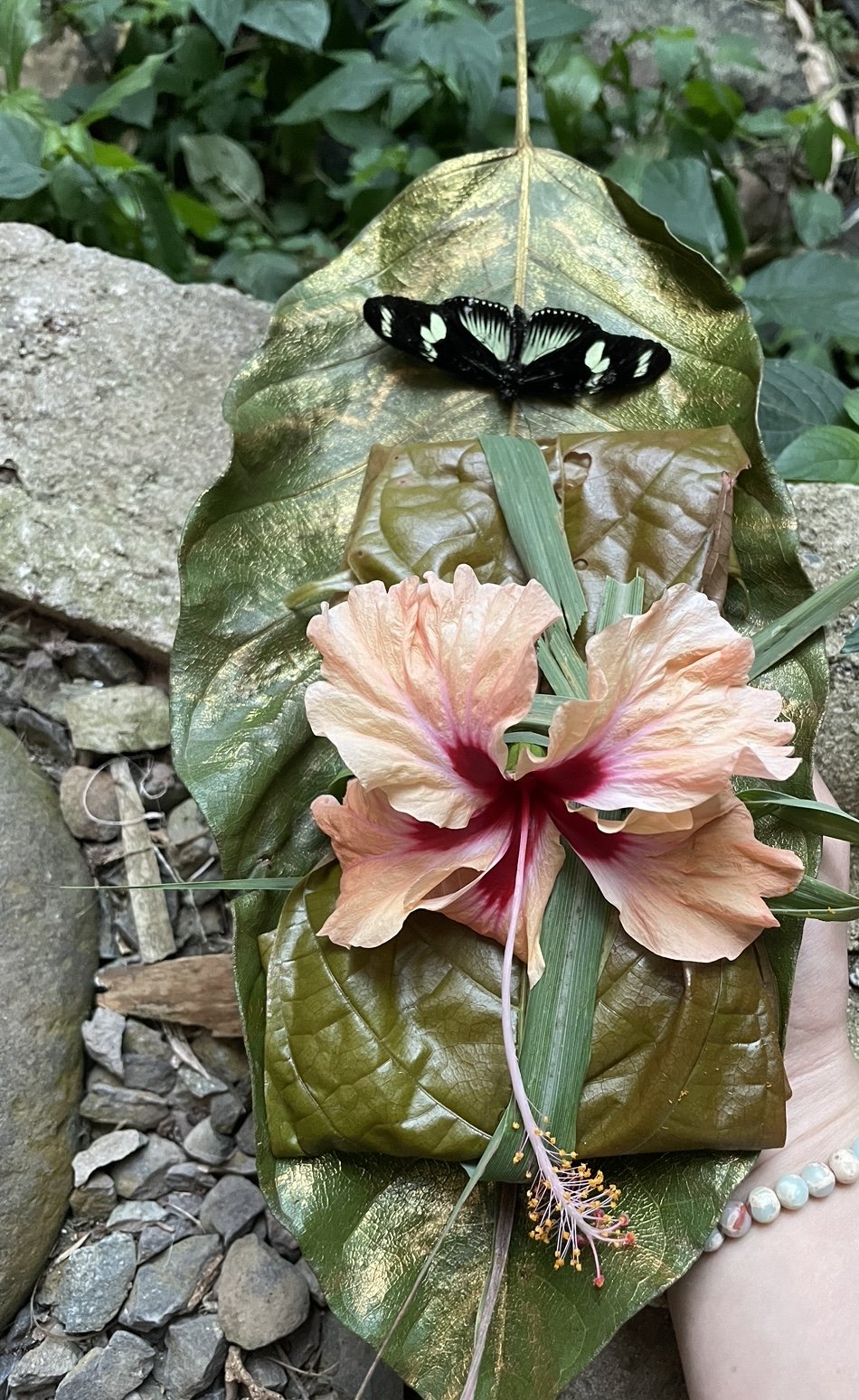
There is a word I once heard called Solistalgia. It’s meaning is similar to nostalgia, but it is for a place you are already in. It is feeling lost and missing even when you are “home.” It was brought up at a discussion I attended by an indigenous elder, so too was the quote above, recited with strength and invitation. She said it is a collective occurrence, “for the forest to be lost on us”. For us to be disconnected from the land in which we dwell, for nowhere to feel quite like home and to be searching for it everywhere. To remain in a state of longing. But then a sense of gladness washed over her form, and she spoke again with an antidote: ‘let the forest find you. let the plants identify you instead of you trying to identify them. That is how we come home’ This wisdom is an upside down concept for many of us when we’ve been taught that we are the only observers when “alone” within the trees. Yet I also think it is quite simple and innate, to remember the awareness that surrounds us. It is a practice of receptivity and reconnection, one that seems so natural within children. Simply opening ourselves up to pay attention to the wonders and mystery of life as adults may at first seem like an intangible act but I truly believe it is just a practice of nurturing and reawakening one of our many organs of perception. One of my greatest guides to relearning these perceptions has been through the study of Permaculture, a culture that merges ancient wisdom and new through a system of principles and designs, bringing humans back into harmony with the earth. And it is the first principle, to Observe and Interact, that grounds me with roots deep and unwavering into my sense of ‘Here’ wherever my feet kiss the ground.
When we are children, it is instinctual to observe the mystery and wonder of life through interacting with nature. When we are small and physically closer to the earth it's as if we can hear her better and we naturally want to play, explore and relish in the awe of it all. I believe Observing and Interacting is the first principle to practice in permaculture because it drops us into the beginner's mind reminding us that we need to return to this way of observation and truly learn how to be with the land before anything else. This seems simple but it takes time. This principle goes against the reading or looking up of information on the internet with motivations of speeding up the process. David Holmgren, co-founder of Permaculture, says in his book “Although I recognize the value of formal education and training and communications media, they are also part of the problem preventing us from a more direct connection with, and experience of, the natural world through observation and experience.” Relearning how to be present and open is a fundamental prerequisite to reigniting our connection to the earth in order to work with her again. It is as if only the soft whisper in the trees can sing us a song to enchant us with her magic- ‘do you remember how to be with me?’ she asks. When coming to the first principle of permaculture, we must take the time to get to know our unique ways of observing and interacting with the earth.

So I am learning how to join the dance of being one with the heartbeat of the earth again, a rhythm that I realize I knew quite well when I was young. Some ways I choose to interact with the land is by falling to my knees in her beauty, before the silent mountains or at dawn in the long grass that holds the morning dew. Falling in love with Earth, I consider an interaction too, with the sounds of the jungle’s midnight symphony lulling me into my dreams, or with the seedling in the nursery that sprouts strongly towards the long time sun. Sometimes I do interact with reading, about the plants or out loud to them. I merge my sense of play and devotion by encircling trees with offerings. Sometimes that is by clearing the space around them and surrounding their trunk in leaves and compost for nourishing support. Other times it is an altar of flowers and dark chocolate in honor of their beating spirit. I dare my quiet and shaky voice to talk with the plants too, asking questions and for guidance or by offering words of my own love. I am learning that I am interacting when I am in the forest and being, just being or singing, laughing or crying, dancing or resting, and loving. These are the ways I know to Interact. And I observe with my breath in reverent stillness of my mind. Sitting with a plant and breathing in, gratitude for their life and the air they feed me, I breathe out- this exhalation is for them. I believe these ways of observing and interacting with the land relays a message to the earth that I am ‘Here’, that I am listening and I am paying attention. I think it is not about what we do when we “Observe and Interact” but the intention behind it that forms a language of patience, appreciation and awe with the earth. The ways in which we each do this are unique to each person but in essence I think it is all within the same song. I hope this song can be heard, but in truth, I don’t know if I can prove to you that it is. I decide to carry on and do it anyway because after all, this is a process of being found rather than of finding.

“By observation we usually mean using our eyes, but this reflects how visually dominated modern people are, raised in a literate and now graphical world. All of our senses have great potential to provide valuable information.” David Holmgren
I believe it is possible to reconnect to the wonder and mystery of life by opening our senses to observe and interact, as the first principle of permaculture suggests. And when we can learn/remember how to connect with the wondrous earth that holds us, maybe within our sense of longing we can feel her longing for us too. Longing for us to remember that she is home and our ‘Here’ no matter where we wander off to in this wild world. How can we feel her closeness? There have been studies that show us the mycelium mat under the soil, which acts as the sentient mind of the forest connecting all trees, is able to sense when someone walks inside. It is becoming common academic knowledge that individual trees have the ability to hear, feel, see, recognize rhythm, store memory and the ability to communicate what they know amongst other trees. We already know the earth is identifying us. The unraveling knowledge becoming apparent is pure magic and can provide some reassurance to this process. But must we read it to believe it? Or can we simply join the dance and awaken our perception to believe and know it deep in our bones. ‘Stand still, the forest knows where you are.’ It has certainly found me.
“Thus the thinking and design revolution, of which permaculture is a part, only makes sense when it reconnects us to the wonder and mystery of life” David Holmgren


Los Suelos y Su Importancia para la Existencia de la Vida
El suelo es una delgada capa de minerales, agua, gases, y material orgánico, la cual se encuentra activa biológicamente y debiese cubrir la mayoría de la superficie de la tierra.
Escrito por el aprendiz 2024, Felipe
El suelo es una delgada capa de minerales, agua, gases, y material orgánico, la cual se encuentra activa biológicamente y debiese cubrir la mayoría de la superficie de la tierra. Acá se desarrollan una serie de interacciones, entre los múltiples elementos que habitan los suelos se encuentran: plantas, minerales, hongos, bacterias, filamentos, algas, pequeños animales desde protozoos a lombrices, insectos mamíferos, etc.
El suelo es un sistema biológicamente activo que otorga una serie de servicios ecosistémicos claves para el mantenimiento de la biosfera (la parte de la tierra donde existe la vida), así como para la regulación del clima. Es la base del sistema alimentario del ser humano: 95% de los alimentos provienen de los suelos, es la base de la agricultura y es el medio donde crecen casi todas las plantas productoras de alimentos. Es uno de los ecosistemas más importantes para asegurar la existencia de la vida en el planeta. Aproximadamente un cuarto de las especies del planeta que se encuentran registradas necesita de los suelos para existir. Es extremadamente vital mantener la biodiversidad subterránea, para que los suelos estén saludables, en simbiosis y siendo el hábitat de diferentes especies, logrando un ecosistema equilibrado y balanceado para el buen funcionamiento de la cadena alimentaria del planeta.

Algunos de los beneficios que los suelos otorgan al medio ambiente son los siguientes:
Producción de biomasa que sirve de alimento para muchas especies
Dotación de energía a muchos seres vivos
Filtra, regula y transforma la materia que absorbe
Es el hábitat de innumerables especies
Fijación de Dióxido de carbono
Tiene un importante rol en la regulación del clima
Protección del recurso hídrico en las capas subterráneas
La formación de 1 cm de capa de suelo, puede tomar entre cien a miles de años. Este proceso llamado meteorización, consiste en la descomposición de distintas rocas madres y minerales que conforman una macroestructura, disolviéndose en partículas más pequeñas y originando nuevos minerales a través de la erosión que ocasiona el aire y el agua a través del paso del tiempo. El periodo de formación de los suelos depende de: tipo de roca madre, clima, la vegetación, topografía y el tiempo.
Según la OMS, 40% de los suelos del planeta hoy se encuentran degradados. En África, solo un 8% de los suelos es adecuado para su uso en la agricultura. Hoy en día, existe una gran amenaza para la seguridad alimentaria de los seres humanos, debido a la perdida de los suelos. La principal causa de esta amenaza, es el ser humano a través de la contaminación. La mayoría de los contaminantes provienen de desechos urbanos no tratados y actividades humanas como: las prácticas agrícolas insostenibles, la industria, la minería, deposición de contaminantes atmosféricos, entre otros. Ejemplos de estos contaminantes son: derrames de hidrocarburos, residuos urbanos, medicamentos, antibióticos, desinfectantes, pesticidas y fertilizantes, metales pesados como el plomo, cadmio, el mercurio, como también los plásticos y microfibras que afectan negativamente a los suelos. Otros factores importantes en la desertificación y perdida de los suelos son los monocultivos y la sobre expansión urbana. Esto tiene como consecuencia la pérdida definitiva de suelos productivos. El problema de la degradación de los suelos puede traer consecuencias graves como: sequias, guerras por recursos hídricos, pobreza, hambruna, marginación, emigración obligada, disminución de recursos esenciales, etc.


Algunas de las iniciativas que se pueden emplear para proteger los suelos son:
Aumentar la materia orgánica en los suelos, con mayor cubierta vegetal, vegetación, lechos orgánicos y compost
Usar la vegetación para proteger los suelos del viento y la salinidad
Practicar una labranza mínima (que reduzca las emisiones CO2) y retener los residuos de los cultivos
Implementar pastoreo rotacional
Usar fertilizantes orgánicos y evitar los químicos
Tener 100% cobertura vegetal durante todo el año
Permitir el crecimiento de la biodiversidad por encima y por debajo del suelo
Apoyar y proteger la simbiosis microbiana del suelo, incluido los hongos
Reducir los combustibles fósiles
Usar los residuos orgánicos que generamos para nutrir los suelos
Algunas de las estrategias que se aplican en Rancho Mastatal para el manejo de los suelos arcillosos de la zona, los cuales tienden a ser pobres en material orgánico y bajos en nutrientes disponibles, consiste en la nutrición de los suelos a través de compost para elevar el nivel de materia orgánica.


En el rancho se manejan distintos tipos de procesamiento de compost:
Compost pasivo con el material orgánico de cocina en composteras verticales, formando niveles de residuos de cocina, cubiertos con hojas secas. La estructura de las composteras es en base de alambres, para incrementar la aireación, ayudando a la descomposición del material orgánico en estructuras más simples que servirán de alimento para las plantas del Rancho
Compost en pila con estiércol de animales, de granjas aledañas de la zona, mezclados con aserrín para balancear la proporción C:N, el cual se voltea cada semana y se humedece para no perder el nitrógeno de la mezcla
Lombricultura, en donde se alimentan las lombrices con los residuos del biodigestor. El biodigestor se alimenta con estiércol de animales de la zona para producir metano, el cual se utiliza como fuente de energía en la cocina. De esta forma, se tiene como resultado, el humus que producen las lombrices que van directamente a enriquecer el suelo de las plantas del vivero y gas para cocinar los alimentos del Rancho.
A partir del compost generado, se procede a ejecutar la fórmula de la santa trinidad de los suelos, la cual se forma a través de adicionar estos tres componentes ricos en nutrientes, que serán los encargados de devolverle el equilibrio a los suelos, alimentándolos de manera adecuado y sustentable.
Materia Organica + Micorganismos de Montaña + Biocarbon = Suelo Dorado
Materia orgánica: el componente del compost descrito anteriormente
Microrganismo de Montaña: esta enmienda natural se genera a partir de la recolección de hojas y material orgánico de los bosques de la zona que contienen un alto nivel de microrganismos, hongos y bacterias altamente activos, para desarrollar los procesos biológicos que tanto los suelos necesitan. Estos residuos se depositan en un contenedor mezclado con agua y melaza para alimentar los microrganismos en un proceso anaeróbico, con el objetivo de multiplicarlos y reproducirlos. Muy parecido a como si se fuera a hacer una infusión de té. Después de dos semanas se tiene un fertilizante natural lleno de vida que los suelos y las plantas estarán muy felices de recibir. Lea más sobre esto aquí.
Biocarbón: este componente se obtiene a través de la combustión incompleta de madera, donde se realiza una fogata y llegando a cierto punto de combustión se reduce la cantidad de oxígeno para permitir una estructura amplia y porosa. Para este proceso se utilizan los residuos de las maderas que se usan para los diferentes proyectos de la comunidad.
Otra estrategia que se aplica en el Rancho, es cubrir con mantillos los suelos y las especies deseadas, como árboles frutales, con el objetivo de retener la humedad en los suelos, incrementar la biomasa, para dar un hábitat propicio para la acumulación de microrganismos y hongos que benefician la absorción de nutrientes para el buen desarrollo del sistema radicular de las plantas. Para el proceso de elaboración de los mantillos y mejorar la calidad de los suelos se siembran distintas plantas de soporte, autóctonas de la zona y de rápido crecimiento, con el objetivo de proporcionar: biomasa (vetiver), fijación de nitrógeno (calliandra) , ornamentación (monstera) y diferentes nutrientes a los suelos, a través de las plantas que actúan como acumuladores dinámicos (girasol mexicano).
A través de la aplicación de las estrategias descritas anteriormente, se mejoran los suelos en Rancho Mastatal, contribuyendo con la restauración y la reparación de los suelos que tanto se necesita, devolviéndole la vida a este ecosistema tan dañado e ignorado por los seres humanos.


The Importance of Attention to Intention
In a world vying for attention in all directions and in oh so many ways, the importance of directing yours towards intention remains ever important but seemingly less inherent.
By 2024 apprentice Rabbit
In a world vying for attention in all directions and in oh so many ways, the importance of directing yours towards intention remains ever important but seemingly less inherent. Around us, there are currents that flow and paths to walk at all times. Currents as the energetic rivers created by individuals or groups, and paths as the trails we can walk towards our goals with our intentions. Taking a current forward, a flow, carries an air of submission while walking a path could be viewed as more self driven but both ways of moving forward are possible to be executed without any personal intention. It is also entirely possible to carry on in these ways chock-full of intention and the social aspects of permaculture taught here at the ranch have helped me to develop more lucidly a framework for moving forward in this manner.


The hypothetical person living as an island without relationships of any influence while still taking part in the world might find that they are able to remain in their own direction as a natural unfolding without much thought of intention - congratulations! The less hypothetical person who finds themselves more intricately involved with family, friends, partners, neighbors, community members, might find their direction in life altered from time to time by taking a dip in the flow of those that surround. One can live this way, flowing with the currents of folks and relations, and hark! experience a beautiful life! If this way of living is your intention I do believe when you reach that river’s delta on your way to Big Blue you might just be able to kick back in your innertube (compostable of course) close those weary eyes underneath your sweet foldable gracious sunnies and breath out a grateful last breath with a smile. On the other hand, if you reach the mouth of the river you fell in to by chance and without a thought as you pass by that old worn sign reading: “So long, and thanks for your intention!” and you mutter under your breath, “Intention?” the sight of the quickly approaching and assimilating hungry blue maw might make you lose those expensive foldable sunnies as you clamor to use the oars of your birthright, frantically doggy paddling your way back upstream.

Taking a step back from oceanic metaphors, I’d like to speak from personal experience. Arriving at the ranch and being still slightly new to the extroverted side of myself I stepped in to a pattern of being, subconscious as it is, or was. One would hope that in agreeing to take part in a year long apprenticeship four thousand miles from whence I came that I boarded that plane with intention. One would be pleased to hear that their hopes were not in vain. But upon joining a new group of strangers with curious dynamics and flows all their own I quickly became a thriving social lepidoptera, fluttering about, at times even frantically, sustained by the sweet nectar of long conversations and personal connection. A sustenance needed because I was not feeding myself in other equally important ways. Late nights formulate in to sleep deprivation, constant socializing leads to a neglected relationship with my internal self, at times even with my partner, and on a more material level; I don’t get jack done!
Praise the day we walked down to Robin’s porch and began a class labeled as Social Permaculture in which, on that day, we would find ourselves identifying our vision and core values.
If this lovely brain is remembering correctly, our first task was to envision an ideal self after this year long apprenticeship was through and to catalogue said vision in our notebooks. Then, with a list of some three hundred odd values encompassing a spectrum more specific and articulate than I could have hoped to pull out of the aforementioned noggin, we were to pick the ones we deemed important to us with the idea that we would also be refining them to a list of ten and ordering them in a cascade of importance. Once completed we were to re-visit our vision with the new outline of our values and see how they matched up. Was our vision displaying proudly the badges of our values as it walked off the ranch? These two processes alone were a breath of fresh (if somewhat sharp) air. Taking the time to look within to create an honest image of where I would like to be helped me to realize that I might be floating on a foreign river. However! Being that this class took place so early in the game, I was still able to see my desired path on the shore. But how do I get back to land? My solutions were discovered in the next step. Creating goals. Long term, short term, personal wellness, and learning goals. Who would have thought! A little structure for the self from the honest and thoughtful self and you’ve got yourself a dinghy with an outboard! The long term goals better defining what the vision consists of, and the contemporary personal wellness and learning goals being activities to create the future that is holding the desired vision and long term goals in its gentle hands.
With these goals as structures in place in my life I moved forward into the following weeks with a renewed sense of purpose in being here and a stronger sense of self. I had been living with the idea of intention but only sometimes employing it. While I am no perfect one, and am still prone to the occasional off day, I find myself refining and redefining my goals but keeping in the grace of my structures is allowing me to better ponder and act in and on my own desired intentions. I don’t know what every step of the path looks like, but as I move forward using these tools I swear I can see what looks like my vision illuminating and growing more opaque with each passing day, somewhere not far ahead.
See you not too soon Big Blue, I’ll be holding on to my sweet sunnies thank you very much.


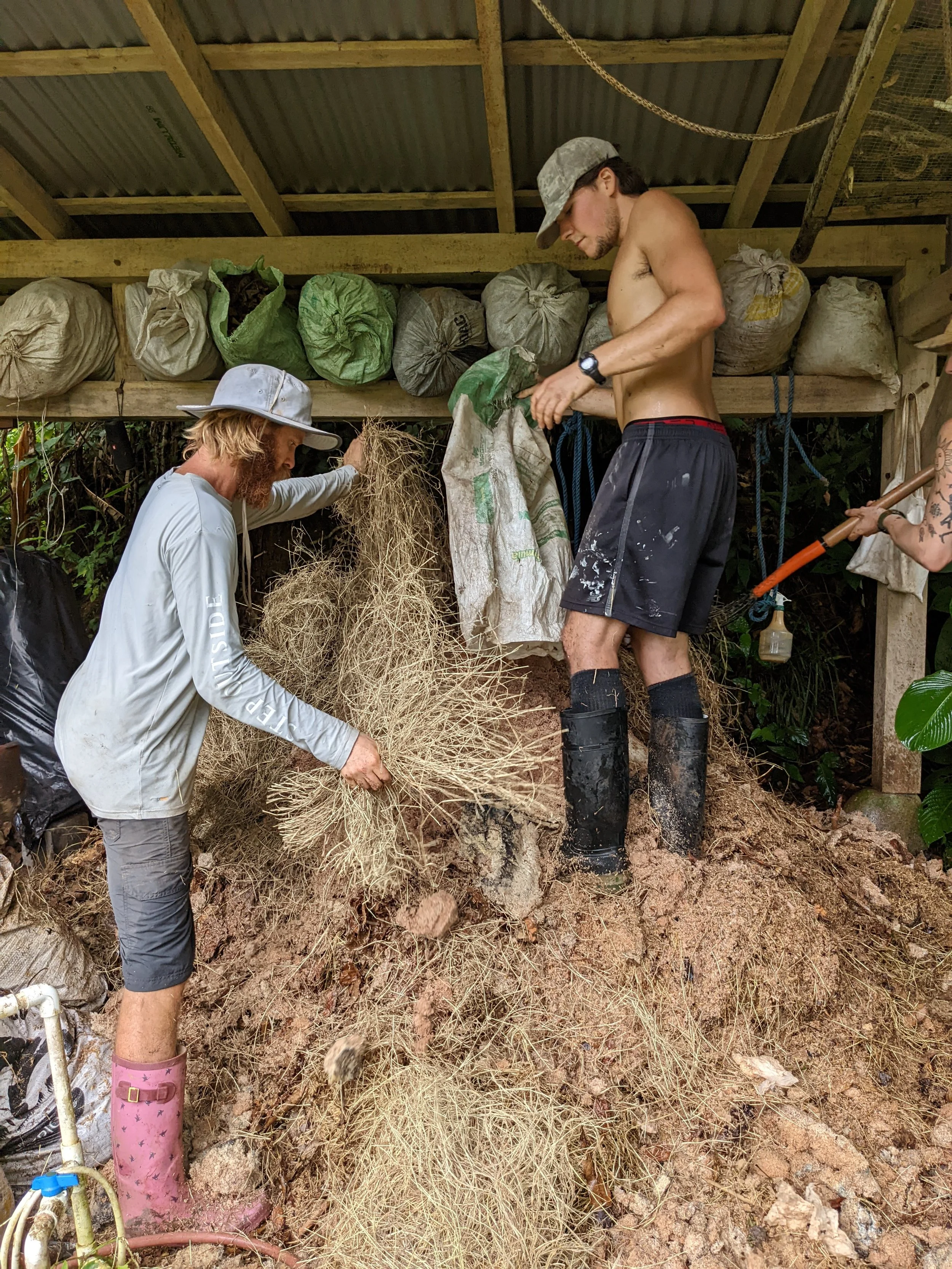
Categories
Topics
- Agriculture 6
- Agroforestry 21
- Animals 2
- Apprenticeship 19
- Appropriate Technology 6
- Backpacking 1
- Bananas 1
- Basic Pantry 4
- Biochar 1
- Books 3
- Build Your Own Home 1
- Central America 5
- Chiles 1
- Cinnamon 1
- Clay Carving 1
- Climate 2
- Climate Change 1
- Cob oven 1
- Communication 5
- Community 24
- Compost 2
- Composting Toilets 2
- Condiments 1
- Conservation 2
- Cooking 4
- Costa Rica 18
- Design 10
- Earthen Construction 10
- Eat Local 2
- Ecohome 1
- Education 9
- Environment 3
- Ethics 4
- Farm to Table 12
- Fasting 1
- Fermentation 14
- Food 22
- Food Choices 8
- Food Forest 8
- Food Processing 15
- Food Systems 12
- Gap Year 1
- Gardening 5
- Ginger Beer 1
- Harvest 2
- Health 12
- Healthy living 5
- Homemade 2
- Homestead 8
- Internet 2