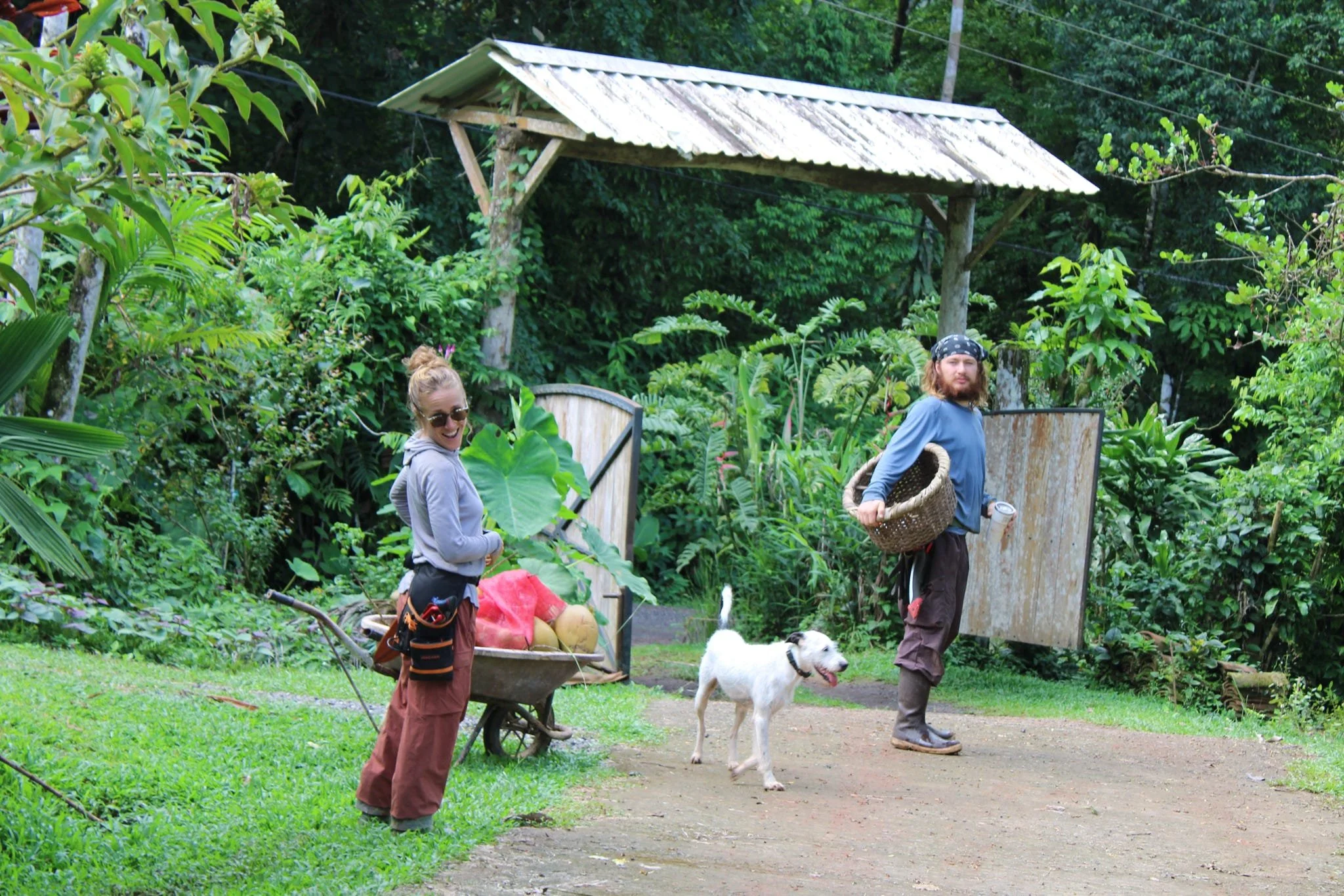
On The Practical Meditation Of Sharpening Tools
By Hope Kelley - Apprentice 2026
Taking time to care for our tools facilitates relationships with them that change the quality of our work
In the first several months of my apprenticeship at Rancho Mastatal, I did not sharpen my machete once. Anyone who works with blades — or tools of any kind, for that matter — may be appalled to read this. We’ve all heard the old adage that “a sharp blade is a safe blade,” but still I put off the routine maintenance task week over week in my early months here — doubtful, I suppose, of my ability to properly carry it out.
Us apprentices had received a brief sharpening tutorial toward the beginning of our time here, and were expected to notice when our blades needed sharpening and attend to that need accordingly. As with many things at the Ranch, students are expected to implement and practice the skills we learn here without prodding or reminding. I knew machete care fell into this category of My Responsibility, yet I continued to procrastinate doing it. So, there came a day out in the agroforestry spaces — where we prune, chop and drop, and any number of other tasks with our machetes — where I could no longer ignore the fact that I was working with a dull blade.
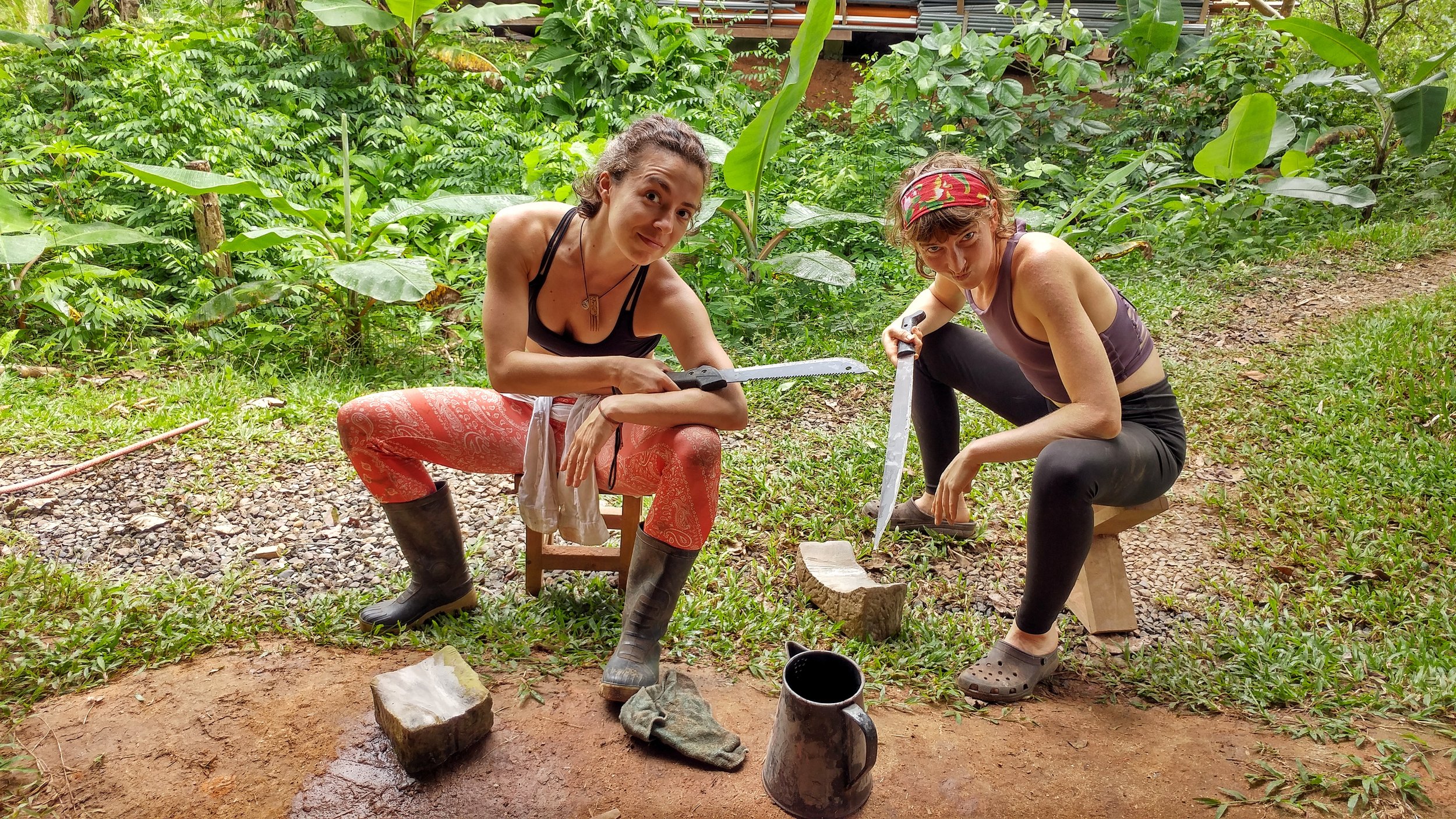
On this same day, as our afternoon work session came to a close, a fellow apprentice announced that he’d be busting out the sharpening stones that afternoon to tend to his machete and that any of us were welcome to join. I jumped at the opportunity for some accountability, and what ensued surprised me on several fronts.
Firstly, I found the process of sharpening the machete to be deeply enjoyable. It was, in fact, a meditation of sorts. Before beginning, I set up an intentional workstation at a table of appropriate height so I did not have to stoop or stand on tip toe to work at a proper angle. I laid out the stone with a damp rag underneath to keep it from slipping, as well as a bowl of water and another rag to wet the stone as I went along.
Additionally, as a preparation method for an inexperienced blade-sharpener, I needed to inspect my blade before putting it to stone. I took note of the angle of the blade on each face, the curve of the tip, the width and the shape. It was the most amount of time I’d spent looking at my tool since it was first placed in my hands during our orientation months earlier. After inspecting it, I began running the blade over the stone, moving it against the grain, holding it at an angle so the stone would, with its rough face, polish the blade to a shine.
Perhaps by virtue of being new to the task, I found my mind unable to wander as soon as I touched steel to stone. I had to keep reminding myself which direction I was meant to move the blade in and how much pressure I should be applying. Thus, I found my mind to be singularly-focused and my breathing to be steady. With each inspection, the blade looked brighter as my hands worked in unison with the stone to pare back the dulled steel.
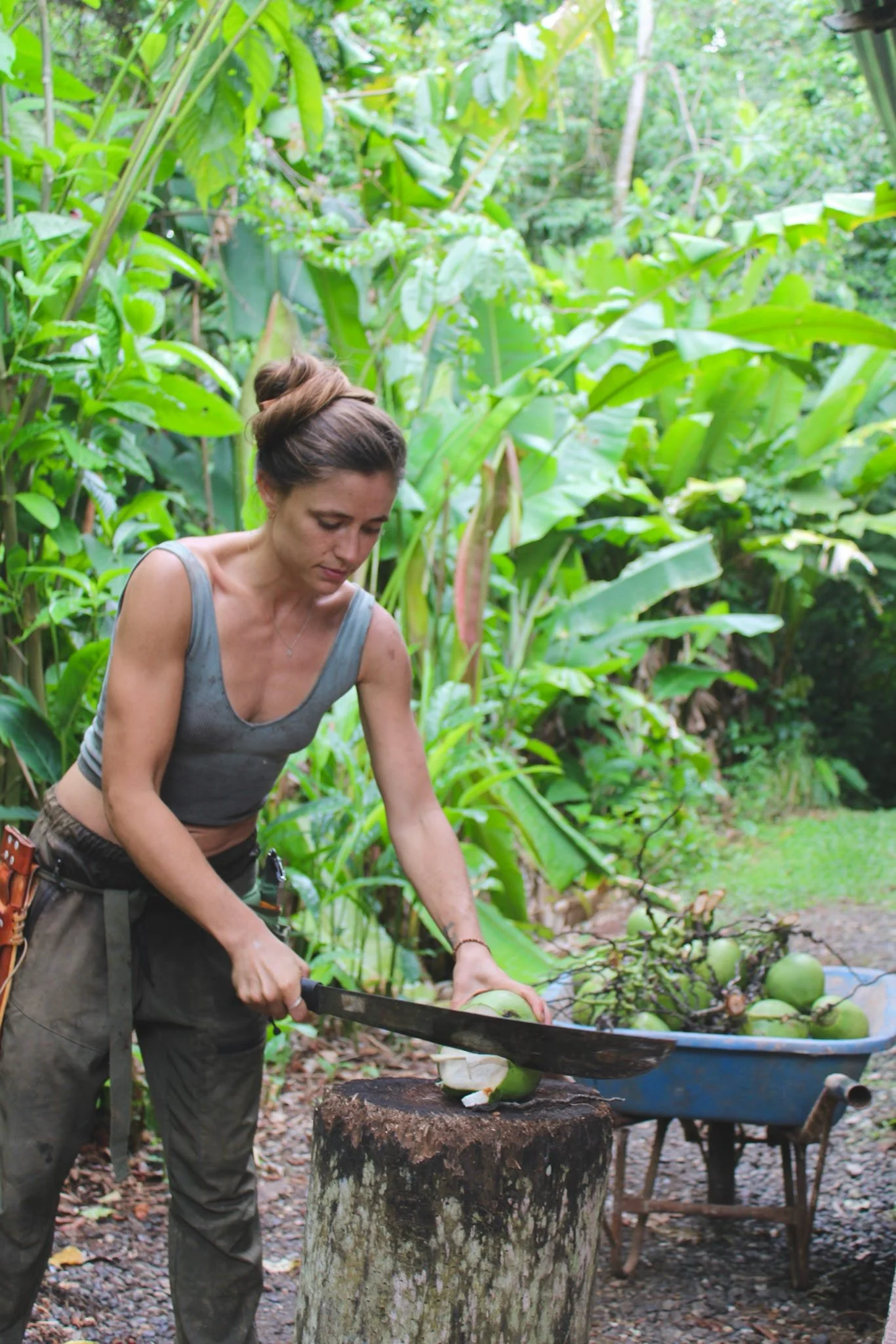
The second thing that surprised me happened the following day when I returned to the agroforestry spaces to clear pathways lined with a clumping grass species called Mambasa, which grows quickly but does not spread and serves as reliable biomass to adorn the feet of our fruit trees. From the moment I commenced slashing the grass with my machete blade, I felt the transformation that had taken place in my tool. I moved through the rows efficiently and with a certain level of enjoyment — a sharp blade may be a safe blade, but I would argue that it’s also a satisfying blade. Before sharpening, I had thought of my machete as a means to an end. Now, I saw it as an ally in my work, one that could improve both the quality of my work and my own enjoyment of it. All this is to say that until I began intentionally caring for my tool, I did not have a relationship with it, and ultimately did not enjoy working with it nearly as much I came to discover I could.
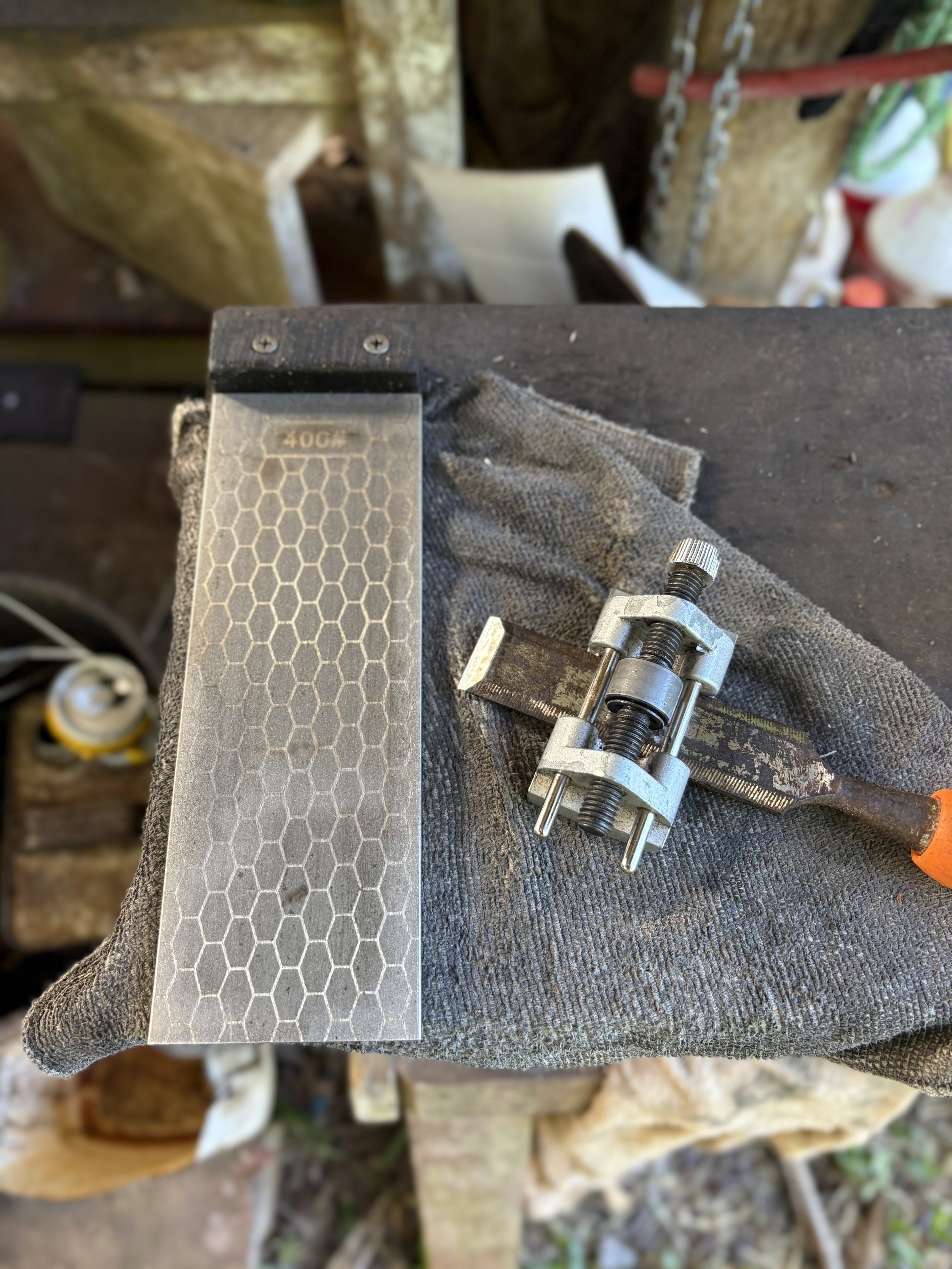
When we care for our tools — putting our time, attention, and energy into them — we inevitably create a relationship with them. I’ve experienced this phenomenon when washing my paintbrushes or putting a fresh coat of wax on my surfboard, but am only now beginning to experience it with tools here, too. Before beginning the work of carving joinery for furniture-making in the Ranch woodshop, for example, I’ve come to enjoy the ritual of sharpening the blade of my chisel before getting to work. It feels like having a wordless conversation with the tool, one that reintroduces us to each other before we set off on a journey toward creating something new. During the chiseling work itself, I feel differently toward the tool after our maintenance session than I would have if I’d jumped right in with an unsharpened (and ungreeted) blade. It’s not just that the tool is sharper and thus easier to work with, but rather that the tool has become a being that I have a connection to, that I am in partnership with toward the completion of a common goal. This makes me work with more intention, with more respect for the tool and ultimately for the medium we are manipulating — be it lumber or Mambasa grass. It also allows me to enjoy the process more, to fixate less on the product and more on the journey toward it, to be more open to learnings and revelations along the way as I practice a number of new crafts throughout my apprenticeship.
As I write this, it is a Sunday afternoon in Mastatal and I am sitting at my desk. My machete is leaning against the wall beside me in its leather sheath, waiting with a steely patience for the tasks it will facilitate throughout the work week ahead. Undoubtedly, our collaboration in the coming days (and weeks and months) will be enhanced and strengthened by some time together at the sharpening stone, a moment to connect and prepare, a small and very practical prayer.