
BLOG
Stories, articles, and updates from the Ranch community.
Communication Breakdown: Strategies to Avoid Unhealthy Communal Relationships
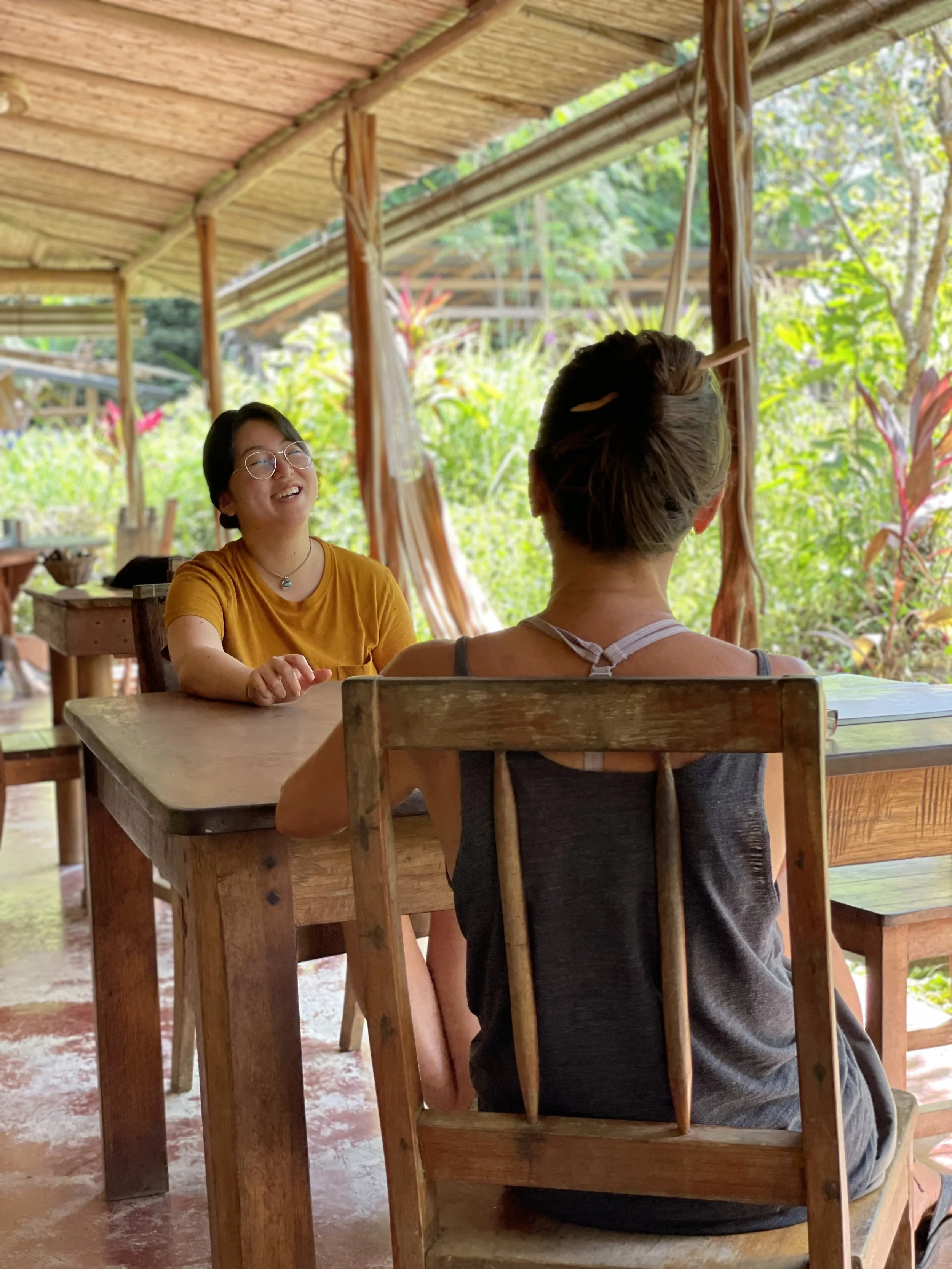
Here at the Ranch we are usually 13 people living and working together in community. Healthy communication is something we actively practice. Conflicts, disagreements and misunderstandings inevitably arise in our setting. How do we navigate these sometimes treacherous waters so that everyone's needs are met?
By Core Team Member Robin Nunes
”Communication breakdown
It's always the same
I'm having a nervous breakdown
Drive me insane!”
- Led Zeppelin

Have you ever felt the frenzied energy conveyed in this classic chorus sung by Led Zeppelin?
Here at the Ranch we are 13 people living and working together in community. Healthy communication is something we actively practice. Conflicts, disagreements and misunderstandings inevitably arise in our setting. How we navigate these sometimes treacherous waters so that everyone's needs are met is critical to the success of our project.
Three of the most important tools that we use here are the “community cultural agreement,” community check-ins and non-violent communication, or NVC. These are a few of the components that we include in a domain of our project called "invisible structures," or the parts of our business that specifically address healthy relationships. Just as your machete is an essential tool in keeping your orchard spaces tidy, and your shovel indispensable for building your buildings, these invisible structures are implements that we use to strive for a happy and thriving community.
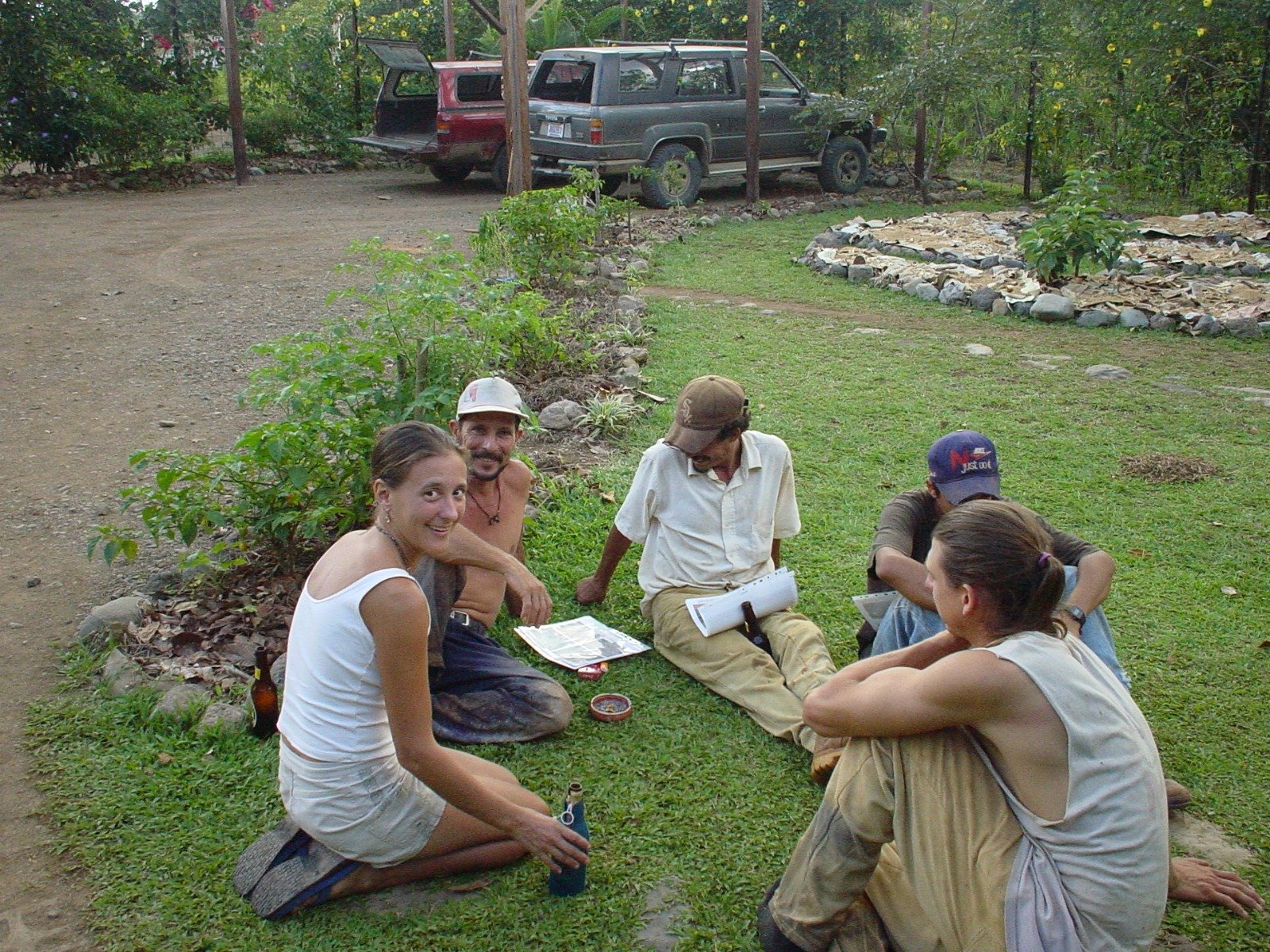
Communication forms the foundation for all of our relationships. The quality of those relationships define the flavor of our lives. And these tools give us the best chance to have “sweetness” in our lives. When our new group of apprentices arrive each year, one of the first activities that we engage in with them is co-creating agreements on how we want to communicate with each other. One of the most important of those agreements is making sure that we address and resolve negative emotions or interactions involving individuals or the community, and recognizing the detrimental impact they have if left unresolved. This agreement assures that when communication breakdown happens, we have agreed to address it openly instead of avoiding it or going insane!
Another agreement that we make is approaching conversations or conflicts with an intent to understand and connect, not judge or convince. This helps us to set the tone of the conversation. When our approach is rooted in curiosity and care, we are able to empathize with the other and see the process as one of growth and learning for all involved.

One of the challenges of upholding these agreements is making sure they are put into practice. Our habitual patterns of dealing with conflict are strong and we have to consciously choose to use these tools. When, inevitably, one of us forgets or doesn't uphold one of our agreements, we can gently "call in" (instead of the more aggressive "call out") the person into a conversation to acknowledge that the agreement was broken and have a conversation to understand what happened. All of this takes a commitment to the process and involves growth, learning and connections.
The second of the social permaculture tools that we use is one that creates the space for deeper connections and a safe place to be vulnerable. This is our weekly community check-in. This is a scheduled, once-a-week meeting to check in with each other to see how we are all doing physically, emotionally, and spiritually. We found that when we don't have this weekly meeting the cohesiveness and functioning of our group deteriorates.
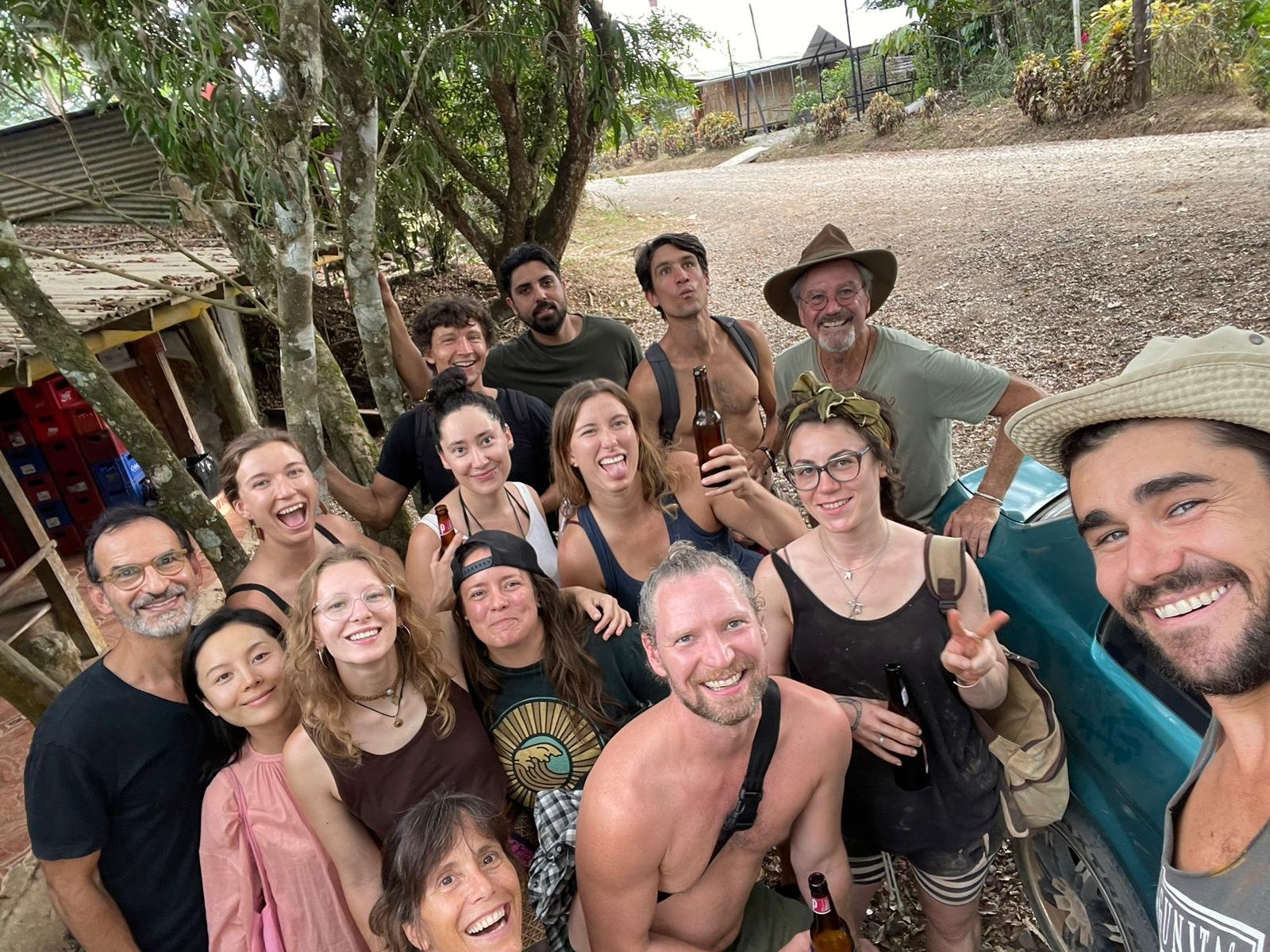
How we view conflict is extremely important as it frames our approach and dictates the tone of the hardest conversations. Our goal is to view conflict as an opportunity for personal growth and connection.
The last tool that I want to highlight that helps us achieve our goals of healthy communication is NVC, or non-violent communication, based on the work of Marshall Rosenberg. This framework is founded on the sanskrit word ahimsa, meaning non-injury. It is an ethical principle of not causing harm to other living things. It embodies reverence, compassion and empathy. When we use this pattern or framework we are embodying and using the ethics we strive to uphold. We all make the agreement to commit to working through conflict with NVC as our guide. This is like learning a new language and we have to practice it to become fluent.
So, although we really dig Led Zeppelin’s song, we are striving to minimize those communication breakdowns. When they inevitably occur, we now, after 23 years of trial, error and redesign, have come up with some very useful tools to help us all on this lifelong journey of learning and growth.
If you would like to experience and learn more about these invisible structures, come join us for one of our Permaculture Design Courses (PDC), our year long apprenticeship, or our two month internship.
Further reading:
Nonviolent Communication by Marshall Rosenburg
Say What You Mean by Oren Jay Sofer
The Four Agreements by Don Miguel Ruiz
People & Permaculture by Looby MacNamara


Healing in Community
I’ve come to understand that although we all start from different places in life with a diversity of opportunities, we tend to have common pitfalls which lead us towards ill health and/or expression of pain.
By 2023 apprentice Grant Munro
“The art of healing comes from nature, not the physician. Therefore the physician should start from nature, with an open mind.”
Paracelsus
The health and wellness industry has taken on massive growth over the last ten years – probably in part due to the introduction and wide spread use of social media and unrestricted access to the internet. No longer do people have to rely on the chance discovery and passing around of old copies of The Alchemist, The Celestine Prophecy or The Prophet to name but a few. Nowadays it´s easy to scroll the page on our personal screens and come across cherry picked quotes, soundbites and memes and it’s clear to see from their popularity that people are yearning to be heard, felt and understood.
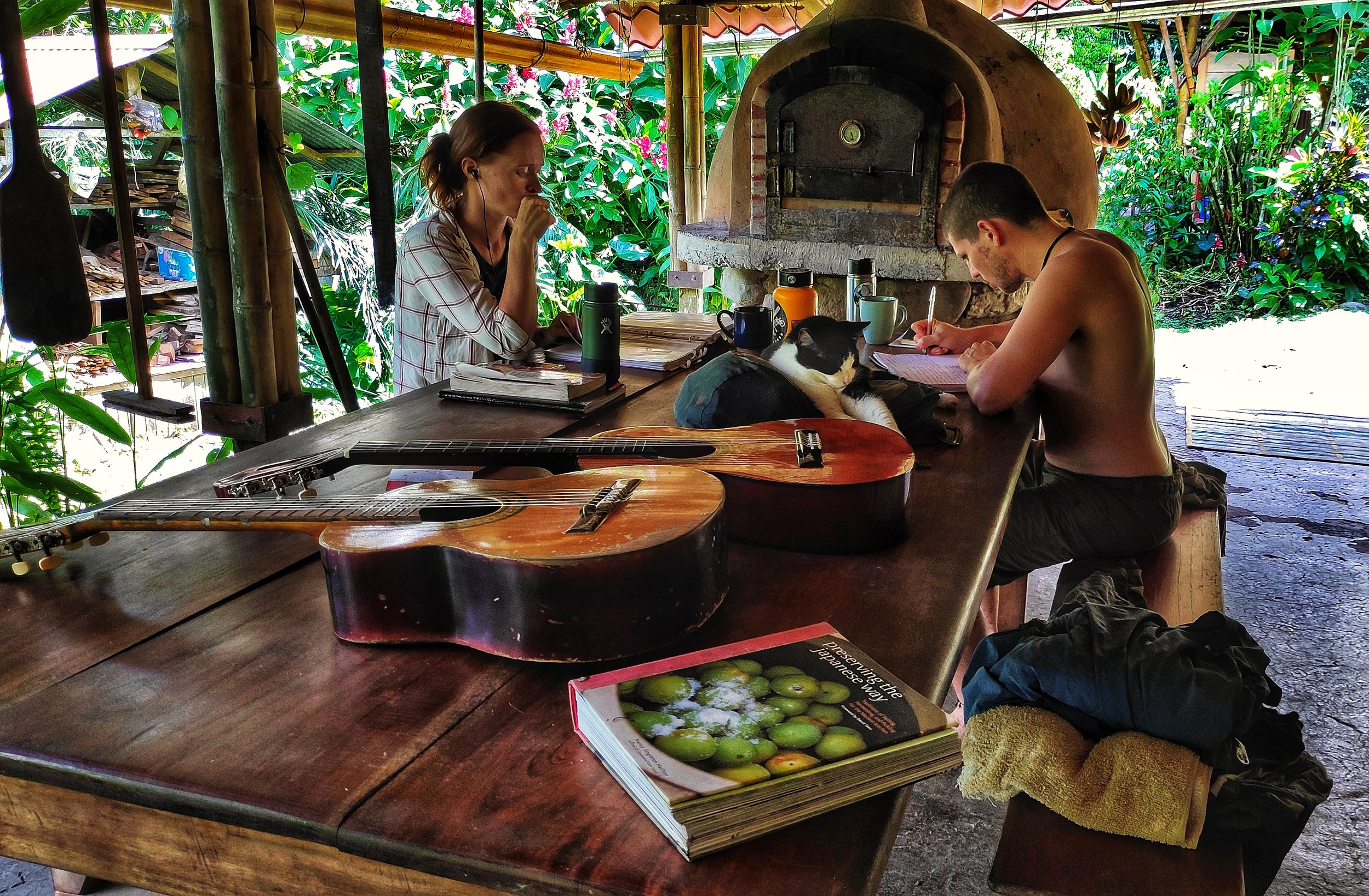
What leads us to pain
I’ve dedicated the last 14 years of life to learning to try to understand and coach others on how we can grow towards the expression of greater physical, emotional, mental and spiritual health. From working with thousands of people I’ve come to understand that although we all start from different places in life with a diversity of opportunities, we tend to have common pitfalls which lead us towards ill health and/or expression of pain.
On the whole, we tend not to move enough as humans were initially intended to, we have a habit of disconnecting from and avoiding our feeling bodies, we engage in repeated unhelpful thinking habits (such as catastrophizing, making assumptions and taking things personally), and we have had our connection to something greater than ourselves eroded over time – be that nature, a higher spiritual power or community.
A chink in the fullest expression in any of these four areas has an effect on the others to greater or lesser degrees. The acknowledgement of all aspects are essential to growth and restoring the adaptability to all life throws at us.
Using Permaculture Principles to Heal Social Issues
Permaculture’s design and problem-solving framework - at it’s core holding there are a set of twelve principles and four ethics – that can be utilized to address issues of almost any nature. It´s easy to see how principles such as observe and interact, apply self-regulation and accept feedback, integrate rather than segregate, and use value and diversity can be used to come up with solutions to some of the social issues we have in our relating circles and wider society.
When we look to the four ethics we could argue that the success in implementing earth care and fair share don’t really stand a chance until we reclaim our connection to all aspects of self, the people around us and understand what it is to be human . Until we reach this, we can’t accomplish the change that is being called for to create a healthy society and a healthy earth as a group of individuals.

Community Living and the importance of communication
As far back as the ancient Greeks (and undoubtedly further) we have understood that a strong connection to our community is essential for human health. Like many others of my generation, I don’t feel I have ever really experienced what it means to live as part of a community - so arriving in the jungle five months ago for the year long apprenticeship was an opportunity to truly lean in to the practices I felt I had been cultivating over the last seven years for my own healing/growth journey.
It’s been an, at times, a wild ride of ups and downs internally, and the number one practical thing I feel I’ve taken from it is: it’s important to have that difficult conversation in a timely manner. Feelings through miscommunications and misunderstandings can fester and be felt as an undertone by many in the group and can lead to what feels like fragmented energy. The stress of it can slowly eat us up and create a filter which can colour our whole experience. When something arises, ask clarifying questions, lead with what you are feeling but without blaming the other person. Perhaps describe what you are feeling in your body without naming an emotion can be helpful, too. Listen to the other person and accept responsibility for your part (there’s generally always a part we’ve played!). Sometimes it’s helpful to come back to a conversation a day or two later. Have compassion – we all have our own filters, biases and past experiences we are often living on autopilot from.
It has been well established now in the scientific literature that the brain doesn’t greatly differ in its response to an actual threat and a perceived threat – such as a repeating thought or judgement. Just thinking about a stressful event causes a discharge in stress hormones which our systems are not evolutionarily adapted to deal with for extended periods of time. Just as our physical body can bleed out from a thousand tiny cuts, we can look at these things that we are not facing as tiny cuts in our energy systems. Chronic overactivation of our stress response is implicated in almost all chronic disease.
It still blows my mind to this day how the impact of committing to practices of self-regulation can have a ripple effect throughout a community. When working in London we were measuring how after a relatively short period of time chiropractic was objectively helping people regulate their nervous systems more effectively than at the beginning of care. Subjectively, these clients would routinely mention how their relationships to their kids, spouses, friends, work and recreational acquaintances would improve.
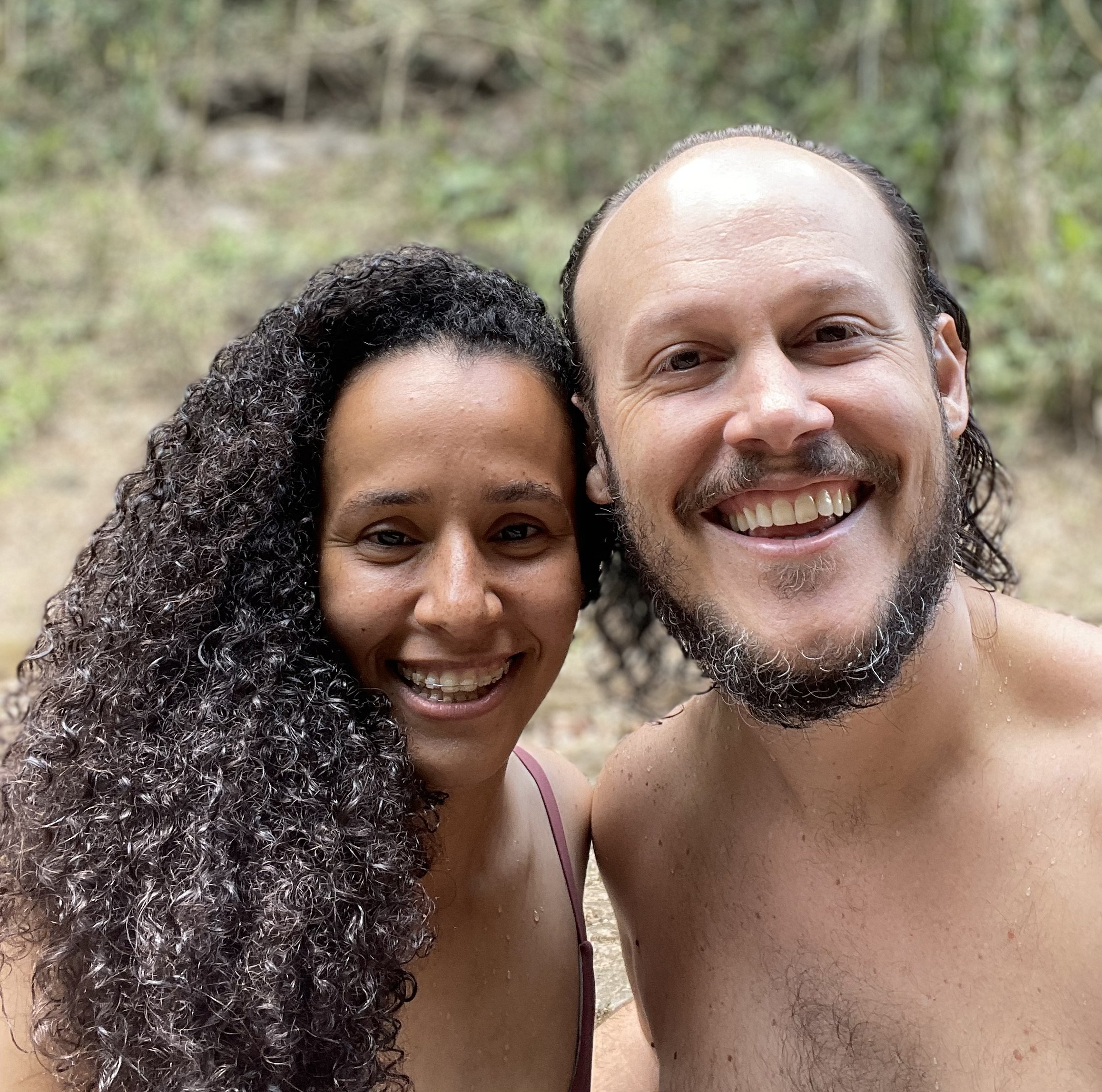
Similarly, I’ve noticed at the Ranch that from one conversation between two people the whole group feels like it relaxes – not to mention the perception of my whole personal experience can flip 180 degrees in a matter of minutes. In reality, the conversations are very rarely as terrible as we build them up to be once we initiate them. That conversation may only be with one person, but the pent up energy can be liberated in you both, to ripple through time and space, in ways in which we may not be able to yet fully comprehend.
“We never know how far reaching something we think say or do today will affect the lives of millions tomorrow.”
B.J Palmer

Check Out these past blogs about community living
Enriching Community Soil: 5 Simple Strategies That Support Sustainable Relationships
Foundations for Success: 10 Considerations to Create a Healthy Project
Learn More
Learn more about community living and social permaculture in our annual Permaculture Design Course.

Enriching Community Soil: 5 Simple Strategies That Support Sustainable Relationships
"Sustainable community must be based on sustainable relationships- relationships that give more than they take- that nourish, enliven & inspire us."
By Brittany Bares, Intern 2020
"Sustainable community must be based on sustainable relationships- relationships that give more than they take- that nourish, enliven & inspire us." Larry Kaplowitz, in "Creating a Life Together: Practical Tools to Grow Ecovillages and Intentional Communities".

Taking time to enjoy each others company and make new connections
At the beginning of August, four interns, myself included, arrived at Rancho Mastatal, bubbling with anticipation and wonder. What would we be learning? Who were the people living here? What was the overall "vibe”? With a background in social work, I arrived particularly curious about how this unique group of people related to one another, as well what invisible structures were in place, if any, that supported sustainable relationships.
With a few weeks of experience at the Ranch, I have observed several simple strategies that support sustainable relationships and are both: 1) being taught and 2) being practiced in real time by community members.
The following 5 strategies are a few of the ways Rancho Mastatal supports sustainable relationships and practice social permaculture. Following each simple strategy is a recommendation for how you too can create sustainable relationships within any community you are a part of, be it family, work or any other group.

Community activities to create trust and bonding
1. Share Responsibilities
What The Ranch Does
The community members of the Ranch share daily responsibilities, called “community contribution skills”, ranging from the daily care of the Biodigestor to making the water kefir drinks. Every month, community members rotate from one skill to the next. As well, community members share the responsibility of daily cooking and cleaning by rotating through a weekly schedule.
What You Can Do
In any group you are a part of, begin by creating a list of daily/weekly tasks that, however mundane, contribute to the order, operation & cleanliness of the shared space. Make agreements on how the tasks are to be completed and then, write the expectations, as well as who is responsible for what, in a place that is visible to all members. Assign each person a task and rotate through the tasks on a weekly or monthly basis.
How does this enrich community soil?
Sharing responsibilities saves individual time, while contributing to the community in a way that is beneficial for all. As well, it increases the ownership and value each community member has for the shared space and resources they use.
2. Check-Ins

We hold all our communal meetings in this circular, earthen space called the Ceiba Lounge
What The Ranch Does
Ranch members meet for a brief meeting everyday to review the daily schedule. Once per week, the core-team, apprentices and interns meet in seperate groups to discuss a variety of topics, ranging from personal challenges to project planning. Then, once per week, all community members meet in a "community check-in", where members have the opportunity to share highs and lows, discuss "square items'' and set intentions.
What You Can Do
Similar practices can be implemented at home or in the office. If you choose to implement community check-ins, have specific boundaries that will create a safe and meaningful space for people to share honestly and openly. These boundaries may include: 1) No obligation to share- a member can “pass” 2) No one can interrupt the speaker, respond directly or give any advice 3) Set a time limit for each share (usually 5-10 minutes max). *the intent of each check-in should guide the boundaries of the meeting.
How does this enrich community soil?
Check-ins help to keep everyone organized and up-to-date on information. They also help to reduce conflict among members because when folks have a safe space to share their values and feelings, potential conflict can be mitigated. Check-ins are a space to share openly and vulnerably, as well as a space to practice active listening and empathy. This, in turn, can create authentic connection and compassionate understanding, which are essential ingredients for sustainable relationships.
3. Play Together

Communal yoga sessions
What The Ranch Does
The days at the Ranch can be long and labor intensive. The Ranch does a beautiful job of balancing long work days with several opportunities to play! Whether it is volleyball, frisbee, playing music, salsa dance nights, storytelling, movie nights, yoga classes or card games, community members at the Ranch love to play!
What You Can Do
At home, implement a game night or schedule family hikes or bike rides. At work, organize a volleyball or softball league or something more simple, like trivia night or board-game lunches.
How does this enrich community soil?
Life can become serious quickly. With work, daily responsibilities, and other duties, it is easy to get trapped in the daily grind. When we actively participate in play, we make space for joy and fun. If you get stuck in " I don't know what to play", simply remember how you used to have fun as a child and do that!
4. Offer Daily Gratitude
What The Ranch Does
Every night, before eating dinner, community members take a few moments to offer gratitude for specific people or events that happened during the day. The expressions of gratitude range from thanking someone for teaching a lesson to thanking the Earth for the abundance of food provided.
What You Can Do
Whether at home or at work, you can implement the same practice by simply providing space before a shared meal to express any daily gratitudes. Another way would be to have a gratitude jar, where anyone can write down what they are grateful for, place it in the jar and then, at a specific time during the day or week, read the gratitudes aloud as a community.
How does this enrich community soil?
Actively giving gratitude helps us shift our mind from the things that have gone wrong or the challenges we have had, to the things that went right, while acknowledging the many things we all have to be grateful for. A simple shift in thinking can have a profound effect on our well being, while enlivening our relationships.
5. Frameworks for Communication & Conflict Management
What The Ranch Does
Whenever working or living with other humans, there is bound to be conflict. Here at the Ranch, members are provided basic training in conflict resolution and effective communication frameworks. Specifically, they practice compassionate communication methods as outlined in NonViolent Communication by Marshall Rosenberg.
What You Can Do
READ NONVIOLENT COMMUNICATION! It will change your life and how you have relationships with others. The framework for communicating and resolving conflict are simple, pragmatic and have been found to be effective by millions of people, in various types of organizations and settings.
How does this enrich community soil?
How we communicate, i.e. the words we use and how we say them, greatly impact our relationships. Many of us were never taught how to communicate to connect or how to resolve conflict in a meaningful way. If there is only one thing you can do to create more sustainable relationships, learn how to compassionately communicate, as outlined in the book Nonviolent Communication by Marshall Rosenberg.

The more sustainable our relationships are, the more purpose and meaning each individual will be able to experience. Healthy communities inspire growth and offer a sense of belonging to its members. They are safe places to learn, explore, inquire and connect to our truest selves. If you are looking for ways to enrich the soil of your own community, be it at home or work, keep it simple with these 5 strategies: share responsibilities, check-in, communicate compassionately, say thanks and PLAY!
Learn More
Want to experience communal living and put these social permaculture skills into practice? Consider applying for either our 2 month internship or year long apprenticeship.

Permaculture Education: Virtual Reality and Keeping it Real
Nearly a decade ago I moved to where I live now-- a tiny, isolated, town in rural Latin America. Its charms include lush towers of tropical rain forest, rainbows of succulent fruits, and a nightly chorus of a thousand frogs. A single disheveled bus leaves in the morning and returns at night, except on Sundays, or when the road washes out. The place is home to farmers, families, and a spattering of eclectic foreigners. The town's namesake, the Mastate, is a tree that bears a thick white sap which people sometimes drink in coffee, like milk.
By Laura Killingbeck
This article was first published in the Permaculture Design Magazine.
Nearly a decade ago I moved to where I live now-- a tiny, isolated, town in rural Latin America. Its charms include lush towers of tropical rain forest, rainbows of succulent fruits, and a nightly chorus of a thousand frogs. A single disheveled bus leaves in the morning and returns at night, except on Sundays, or when the road washes out. The place is home to farmers, families, and a spattering of eclectic foreigners. The town's namesake, the Mastate, is a tree that bears a thick white sap which people sometimes drink in coffee, like milk.

Our house at Rancho Mastatal. My partner Scott Gallant and I designed the yard to grow food, medicine, and market crops. (Photo Credit Laura Killingbeck; Mastatal, Costa Rica)
I live in a two-room cabin made of wood, earth, and bamboo, and teach food and fermentation classes at a sustainability education center. Each morning I commute six minutes to work—by foot, of course--on a trail through the orchard. I do not have WiFi. And until very recently, I did not have a cell phone, a car, or grid electricity either. My life has been, and largely still is, made up entirely of the world that reaches me directly.
Despite the rural nature of my home and work, I am constantly surrounded by a transitioning cast of characters—short and long term residents of the community, students and instructors from around the world, and international guests and groups. I frequently share breakfast, lunch, and dinner, with 40 or more people. So my isolation really is a relative one: I have constant contact with many people face to face, and very little with anyone more than a quarter mile away.

Rancho Mastatal students and apprentices come from around the world to learn about engaging deeply with place. (Photo Credit Laura Killingbeck; Mastatal, Costa Rica; Instructors from left to right: Bill Steen, Athena Steen, Benito Steen)
Not all of my time is spent here. For part of the year I live on another beautiful and secluded farm in Massachusetts, where I also have no car, no cell phone, and limited internet. Here I also live in community, sharing most meals with at least a half dozen folks, and enjoy a social circle that radiates about five miles, to neighboring farms, the park, and a local brewery.
It is a simple and curious life. Most of the time I am literally surrounded by people, yet I have almost no access to anyone that is not directly in front of me. For most of my life, my participation in an online identity has been “virtually” blank.
This relative isolation has shaped my relationship with the world around me. Until very recently I never looked at something—a beautiful sunset, a fallen leaf, a friend--and thought to take a picture. I did not have a cell phone to take a selfie, or text someone, or make a Facebook post. It was just me, and us, and the moment I was a part of. With no truncated or modified story about what I was doing or why, I had the freedom to choose it and experience it, completely and wholly, of my own accord. In many ways, this “isolation” felt like the ultimate integrity.

Round the Bend Farm Center for Restorative Community in Dartmouth, Massachusetts. (Photo Credit Laura Killingbeck)
But the way people communicate, share, and socialize continues to evolve. A big part of how we understand ourselves and others is sculpted from the stories we tell about our lives. These stories begin from our own perspective, which is then shaped and shifted by the responses of others. How we understand ourselves and our lives is personal, and also social. And as more and more people are “virtually” social, my “virtual” isolation has felt more, well, isolating.
Social media, blogging, Facebook, Instagram, the internet in general, are all “virtual realities” of human engagement. The pictures we post, the hashtags we link to, the words or emoticons we use, form a web of “virtual” identity and relationships. Increasingly, we supplement or even replace our direct experience with other people and the world with the indirect experience mediated by this technology. And increasingly, we shift the way we actually live our real lives, or the stories we tell about our real lives, to accommodate the beast of social media.
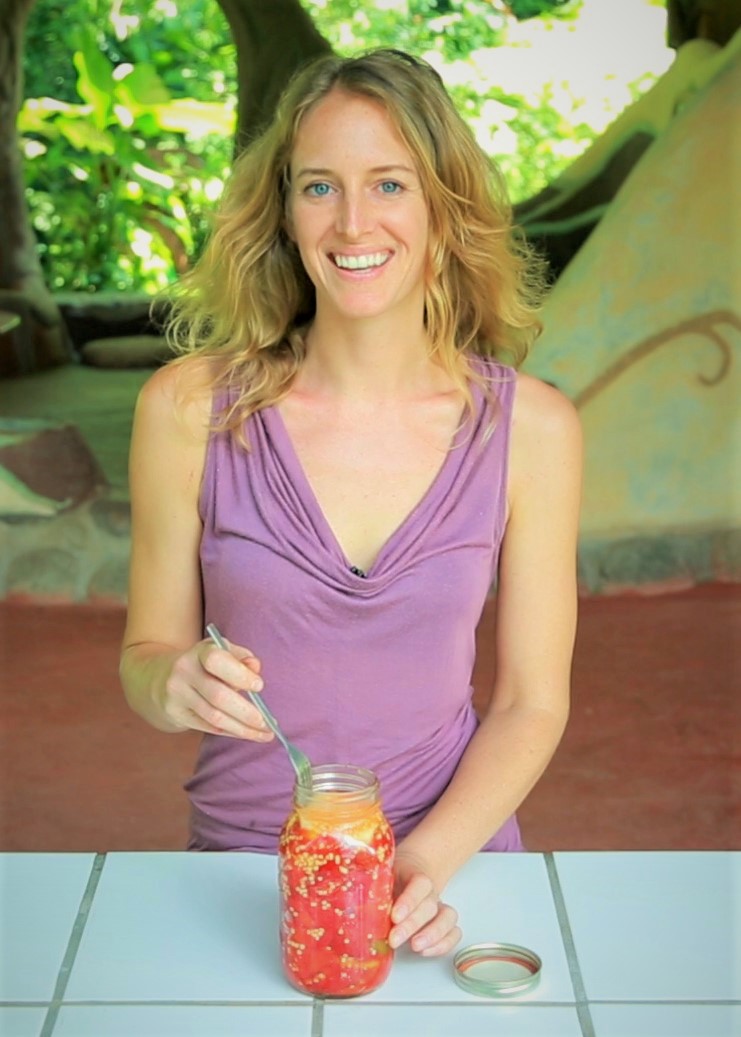
Filming the online Fermentation Tutorial. (Photo Credit Spenser Gabin; Mastatal, Costa Rica, of Laura Killingbeck)
Over the years I have seen thousands of people pass through my tiny corner of the world, seeking education, rejuvenation, inspiration. I have watched dozens of instructors across many disciplines—agroforestry, permaculture design, natural building, renewable energy, health and nutrition—repeat over and over again the same mantra—that we must learn how to engage with the world around us to create truly sustainable homes, livelihoods, and communities rooted in place. We have to actually feel the clay to know if its suitable for making clay plaster; to watch the tree to know when its time to prune; to taste the pickles to see if they're fully fermented. We need to focus our energy on the vivid, tangible relationships between the objects of our immediate surroundings. Every aspect of applied permaculture and sustainable design on some level revolves around this single spark of observation and engagement with real reality.
Just as there is an irony to my constant contact with streams of people in a tiny, rural setting, there is an irony that permaculture educators must increasingly tell the story of their direct experience with the world around them via the interface of the internet. We now use social media, online videos, and blogs to teach permaculture theory and skills, and connect with others doing the same. This makes sense--we need to be able to tell the stories of our lives and work in a way that people can access. Our great challenge in this is to translate our real reality into virtual reality, while keeping our lives really real, and keeping our students really involved.

I use Instagram to share simple recipes and special moments about real life. These are two varieties of jackfruit from the farm. (Photo Credit Laura Killingbeck; Mastatal, Costa Rica)
For most of my life I resisted getting a smart phone because I wanted to fully connect with the people and place around me; I finally got one for the same reason. This year I bought my first smart phone and got connected to the web. I entered online participation by starting an Instagram account and filming an online fermentation tutorial (Fermenting in Warm Climates, to be released in November, 2017). The purpose of the tutorial is to enable people to understand the broad theory and methods behind fermentation, in a way they can adapt to the specific foods from the place where they live. As devoted as I am to place-based experiential education, there was a constant irony to filming something designed to be accessible to a global market. But this is exactly the challenge of permaculture education in all its iterations—using a globalized perspective of broad methods to hone in on specific relationships with particular places. For this reason, the tutorial demonstrates patterns and methodologies for fermenting vegetables, dairy, fruits, etc, and provides instruction about how people can adapt these to their own local foods. The “best” fermentation recipes are not the same for everyone, everywhere. The best recipes are intrinsically tied to the fresh foods and cultures (both human and microbial!) of the specific places where people live. By creating an online tutorial I hope to be able to reach more people who find this information useful, while simultaneously leading them to engage directly with their own local foods.

Scott Gallant maps a landscape with a phone app. (Photo Credit Laura Killingbeck; Mastatal, Costa Rica; of Scott Gallant)
Online education, social media, and all other outlets of virtual reality that teach us about permaculture design and applied skills should always draw us to engage more in real reality. Real reality is dynamic, unstandardized, unhomogenized. Information on the internet often defaults to the least common denominator of most common products or ideas. In the case of fermentation, recipes often default to the most widely accessible ingredients, microbial cultures, or plant varieties from mass markets. This funnels more and more people into understanding fermentation and food from a peculiarly standardized perspective. But local food is dynamic, and microbes don't care about business as usual. Filming the online tutorial made me realize how important it is that we hold our ground and address a global audience with a clear emphasis on the dynamic nature of real reality, even if it doesn't fit the current most popular algorithm, hashtag, or SEO. When we go virtual, we need to keep it real.

Quiet moments are important arenas for self reflection. (Photo Credit Laura Killingbeck; Mastatal, Costa Rica)
There is something valuable about crafting our lives without anyone looking. About feeling, and appreciating, a moment without anyone knowing. About making decisions because they represent the core of who we are, nothing more and nothing less. I sometimes fear that the constant contact of social media draws us farther away from this core. I see people poking away at their phones when they could be experiencing a spectacular moment in real life. Or maybe not a spectacular moment—maybe just the mundane. But even these moments, rote, predictable, commonplace, are arenas for our minds to wander, probe, filter. We can find strange things in these moments. Simple or complicated truths. The moments when there is nothing to think about and nothing to do are some of the greatest resources we have for self reflection. To lose these to online shopping, Facebook scrolling, or texting would be devastating.

I learned a lot about tropical starch fermentation online. (Photo Credit Laura Killingbeck; Mastatal, Costa Rica)
But there is also something both valuable and necessary about sharing our lives with others, listening to a wider range of voices, and participating in global conversations. Even in Mastatal, my tiny green town, there is no real escape or seclusion. Here we see changes in climate that affect our crops; changes in tourism that affect our economies; changes in policies that affect our land and homes. You can escape from many things, but not from everything, happening all at once, sweeping you with it.
As a millennial just entering the periphery of online participation, I realize I am on the far end of a spectrum for how I balance my real life with my virtual one. But my position on the sideline has given me the advantage of a unique perspective about how to manage this balance. Most days I turn my phone on twice—once in the morning to check emails and make an Instagram post, and once in the afternoon to follow up on questions or comments. The bulk of the day is internet free, but I am still able to connect virtually to lots of people. I understand that this limited access is not possible or desirable for everyone. Lots of people do amazing and positive work via the internet, which I value to no end. What does apply to all of us though, is the understanding that we often have more power than we think to design a balanced relationship with the internet, and as permaculture educators and practitioners, we can use this to our advantage. We can leverage the global access the internet provides, to funnel people towards local engagement, without losing our real selves in the process.
When I gave my partner Scott the first draft of this article to edit, he read it and said “This is great, Sweetie, but I think this conversation already happened...twenty years ago!”
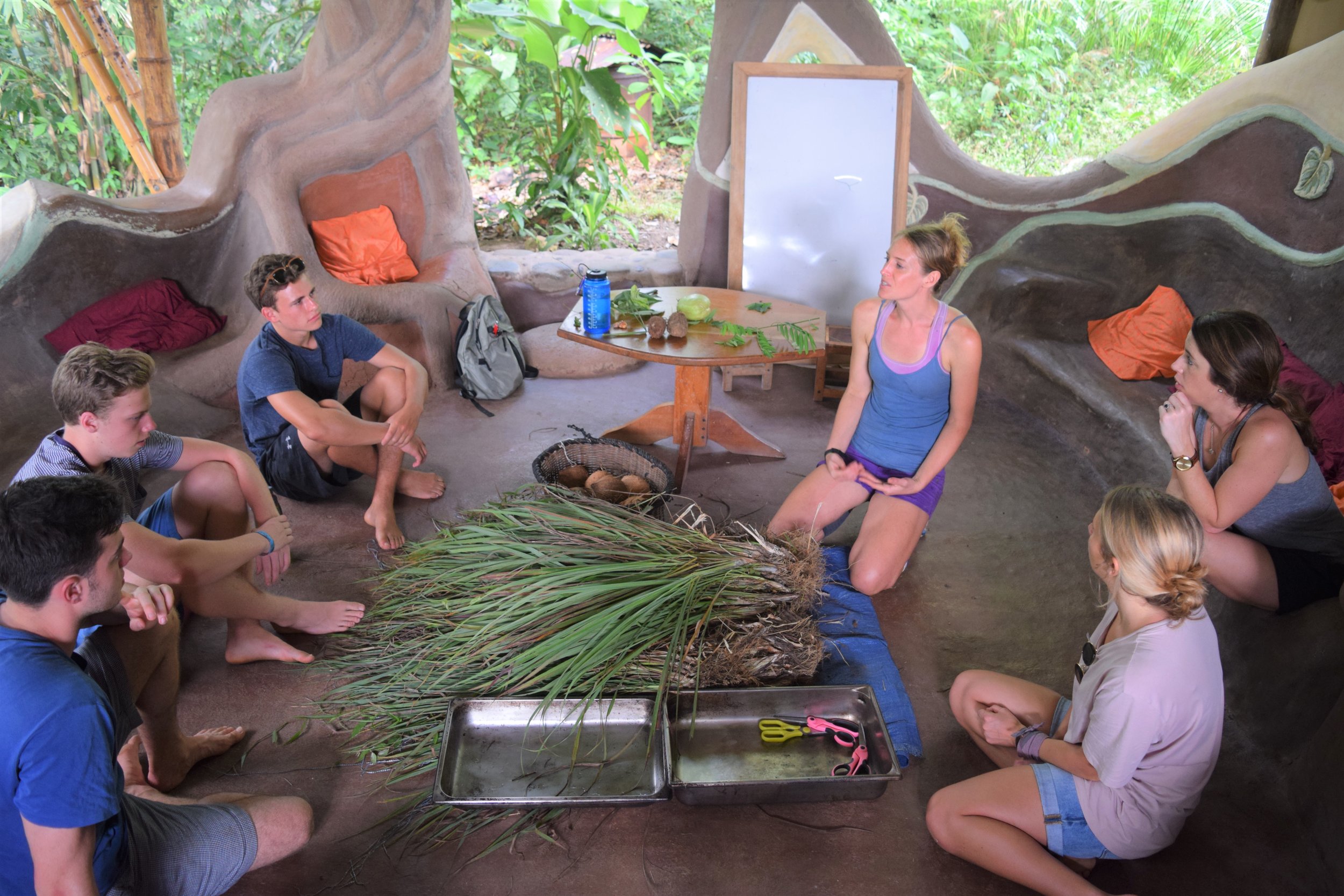
Students learn about herbal medicine by making it. (Photo Credit Scott Gallant; Mastatal, Costa Rica; of Laura Killingbeck and students)
I thought, “Dang.”
But then I realized that the longevity of this conversation is part of the point here. As time passes, our relationship with technology becomes habit. The fast growth and evolution of the internet means we continually need to navigate our interaction with it. As permaculture designers and educators, I think we need to embrace technology in its myriad forms to regenerate a positive human ecology with the earth. I also hope virtual reality will always remain a compliment to, rather than a replacement for, direct engagement with our real and living world. I think we need to pay attention to this as much now as we ever have, and I hope we do.
Bio: Laura Killingbeck has been working with Rancho Mastatal Sustainability Education Center in Costa Rica since 2009. She oversees the development and management of the Ranch's food education programs, and creates systems and strategies for utilizing whole foods on both a community and home scale. Follow her on Instagram @laurakillingbeck
Looking for opportunities to expand your horizons?
Join Rancho Mastatal for one of our upcoming 2018 workshops. Learn more here.
ViVerde is a developing educational eco-lodge and permaculture farm on a 15-acre property right outside of colonial Granada, Nicaragua. They are now recruiting for two work-trade positions, one to do fine woodworking and the other to coordinate the community kitchen and farm to table systems. Go to http://www.viverde-nica.com/recruiting-work-traders for more information.

Life with Limited Communications: How We Thrive with Crappy Internet
I’m unable to answer all of the emails that I receive into my inbox everyday. Even though I do receive my fair share of electronic correspondence, my inability to reply to all messages is not likely a result of the inordinate amount of inquiries that I receive compared to many of you out there. The reason is that I live in a place with shitty Internet.

I’m unable to answer all of the emails that I receive into my inbox everyday. Even though I do receive my fair share of electronic correspondence, my inability to reply to all messages is not likely a result of the inordinate amount of inquiries that I receive compared to many of you out there. The reason is that I live in a place with shitty Internet.
I have a 2-hour window each morning before most people in town are awake to get into my account and open and answer my emails. After that, people begin to chew up the ever so precious limited bandwidth that serves our community. In my head I envision people in town rolling out of bed to take a peak at their Facebook accounts or watch a video on Youtube before school or work while I struggle to open a reservation request that might result in a booking and some income for the Ranch. Our painfully slow Internet means that I can generally check emails only once a day. If I didn’t respond to an email this morning, it will simply have to wait until tomorrow.

To add to my current communication challenges, I don’t have a cell phone, much less a smart phone. The pressure seems to mount each day to get one. Given my administrative obligations as the director of Rancho Mastatal, all of this results in a daily confrontation that I strive to find balance with continuously. For those of you with poor Internet connections, which may only be a small minority of you reading this, what do you do when you simply can’t open an email that you know you should read and respond to as soon as possible? How do you react when you can’t attach a simple Excel spreadsheet to your email to send to a prospective client? In an age when businesses increasingly rely on the Internet for their survival, how has the Ranch been able to make ends meet for 15 years, the first 8 without even a phone in our town, in a world that today demands email responses in minutes or hours, not days or weeks?
Honestly, I don’t have a great answer or fully know. It’s an interesting dissertation topic for a future graduate student that loves our community. I think mostly it’s been a life-or-death (for the business, not us as humans) need. Somehow, we’ve been able to organize our work and lives to make it work, in spite of the poor odds in Vegas. We’ve persisted and persevered while the communications here have slowly improved. We’ve been forced to depend on our amazing library (with real books) for research and traditional means to build friendships, trust and a dedicated following that have kept us alive and mostly well.
Every 3 weeks, for almost a decade, I drove 2 hours to find a reasonably fast Internet connection. I also relied on a terribly annoying auto response message that asked those emailing to me to please be patient when waiting for a reply. Many of you probably remember (and still receive a watered down version of) the message that states that I’ll get back to you sometime within the next century. This is mainly how I assuaged and bought time with those interested in our project and “stayed on top” of bookings and guest visits early on in our evolution.

In the earliest days, I would wait in line at the public phone in San Miguel, 4 kilometers from Mastatal, to make bookings for our educational groups. If I had to make more than one call, I would have to get back in line to make the second. A third. Back in line. You catch my drift. This little exercise might take me half a day. Setting up homestays for our high school groups would take multiple days. It now takes me an hour by phone.
The current reality, fortunately, is that I’ll probably be able to respond to an email that you send to me within a week, and if it’s high priority, even sooner. But that doesn’t mean it’s always easy. While most of you enjoy life with high-speed wifi and 4g service, we struggle with a 3g network that’s reminiscent of my first email experience with AOL and dial up just out of the Peace Corps in the mid-90s. I haven’t come that far in the past 20 years, but I’ve come somewhere, and all this said, there’s great relief and many benefits in not owning a cell phone and being tied to the Internet 24/7. I am currently avoiding total dependence on modernity’s electronic leashes (or nooses) but also appreciate and recognize the great benefits that the Internet brings to me, my family, and our business. Without it we would struggle even more than we presently do to make financial ends meet and stay in touch with our families. My weekly drive to the highest point in the region to check phone messages has evolved to a predawn wakeup and email session in my cozy cob home, and I’ll take the latter any day of the week.

Visitors to the Ranch almost universally, eventually feel relief when they spend many days, weeks or months with us and are unable to stay uber connected to their digital lives back home. The Internet and cell phones are yet other additions to a continuous string of technologies that we have to learn to find a happy medium with and balance. Like so many of life’s conveniences, too much has proven over and over to destroy our mental and physical health in the long-run, and just like coffee, hooch and phone access, a little can and should go a long way.
NEWS AND NOTES
We have a number of life changing workshops coming up.
Please share around if you know anyone who is ready for a trip to beautiful Costa Rica, a swim in the waterfalls, nourished with homemade meals, and challenged with an intensive educational experience.
Abrazos,
The Ranch Crew
Categories
Topics
- Agriculture 6
- Agroforestry 21
- Animals 2
- Apprenticeship 19
- Appropriate Technology 6
- Backpacking 1
- Bananas 1
- Basic Pantry 4
- Biochar 1
- Books 3
- Build Your Own Home 1
- Central America 5
- Chiles 1
- Cinnamon 1
- Clay Carving 1
- Climate 2
- Climate Change 1
- Cob oven 1
- Communication 5
- Community 24
- Compost 2
- Composting Toilets 2
- Condiments 1
- Conservation 2
- Cooking 4
- Costa Rica 18
- Design 10
- Earthen Construction 10
- Eat Local 2
- Ecohome 1
- Education 9
- Environment 3
- Ethics 4
- Farm to Table 12
- Fasting 1
- Fermentation 14
- Food 22
- Food Choices 8
- Food Forest 8
- Food Processing 15
- Food Systems 12
- Gap Year 1
- Gardening 5
- Ginger Beer 1
- Harvest 2
- Health 12
- Healthy living 5
- Homemade 2
- Homestead 8
- Internet 2