

BLOG
Stories, articles, and updates from the Ranch community.

Foundations for Success: 10 Considerations to Create a Healthy Project
After more than 20 years, we have been able to identify some trends that have led to our survival as a business and a community. The following advice is appropriate, and perhaps some of it even necessary, if you expect to live successfully in a communal work and living environment doing land-based work.
By Core Team Member Tim O’Hara
After more than 20 years, we have been able to identify some trends that have led to our survival as a business and a community. The following advice is appropriate, and perhaps some of it even necessary, if you expect to live successfully in a communal work and living environment doing land-based work.

Students in our annual Permaculture Design Course
Communal Continuity
It’s imperative to assemble a group of individuals that you can depend on, year after year. If the only people that are visiting your project are there for shorter or medium length stays, you will never feel as if you have a community to lean on during the harder stretches of running a project of this nature. Create realistic and concise agreements with one another and develop incentives that make everyone feel well taken care of.

Privacy
We learned the hard way that having your own private space is critical for long-term happiness. We decided to focus on building before planting in our early years. That has meant that our agroforestry spaces are a bit behind where you’d expect after 20 years of working in those spaces. But without privacy, it’s impossible to keep people around who are doing the important work in the orchards and other spaces. Create private spaces for everyone, with a focus on creating lovely, comfortable, healthy homes for your core team.
Collective Decision Making
Micromanaging is a recipe for burnout. Don’t fall into the trap. Develop trust with your partners and allow each leader to make decisions in their realm up to a certain value. Big decisions, that affect everyone, should be discussed by your entire team, but small decisions, like whether to buy 5 or 10 avocado trees, should be left to those managing the orchard spaces.
Balance and Rest
It’s imperative to figure this out before burning out. Burnout can be permanent, leading to the abandonment of your passions. Build into your day-to-day lives the time to run, breathe, nap, walk, draw, meditate and think. The work will never be done, so don’t try to do it all each day. It will be there waiting for you in the morning after a great night’s rest.

A Solid, Well-Taken Care of & Committed Core Team
We’ve got an amazing core team. But it took us longer than it should have to realize the importance of building a strong team at the center of our project. If we expect community members to stay committed, they need to have their needs met. And everyone has a unique set of needs. Create a compensation agreement that makes everyone feel valued.

Community Connection
Be an active member in your town. Demonstrate, over and over again, that your project exists to benefit everyone in your community, especially those most in need. Join your local woman’s group, offer free yoga classes once a week, develop a kids soccer camp, or create a language exchange.
Fair Share
Share what you have. It’s your easiest path to acceptance though far from the easiest practice to bring to fruition. It has taken a lot of time, energy and sacrifice to create Rancho Mastatal, and sometimes our knee-jerk reaction to “spreading the wealth” is instead to move to protect what we’ve created in the interest of stability and to prepare for future unforeseen issues. But true stability comes with sharing.

Communal Meals
This may be the hardest bit of advice to embrace for some. Sharing a meal takes more social energy, but weighed against the time you save on cleaning and cooking, it’s worth it. Communal meals encourage group debate, laughter, learning and the development of a strong social fabric. Humans have tended towards eating in front of screens or on the run. These trends lead to poor eating habits and encourage humans to disconnect from one another. To eat well today means a monumental and coordinated effort growing, processing and cooking food. Celebrate this activity each and every day and you will be rewarded in ways unexpected.
Make Time to Dream
We “talk shop” a lot around here. We love what we do and enjoy talking about what we’ve created and how we can improve it. It’s important for us to create spaces that allow for dreaming and scheming. Having the space to “zoom out” and move for a time away from the day-to-day allows for creative brainstorming that can lead to breakthroughs and new ideas that might otherwise never come to the surface. Dare to dream, and dream to create your ideal version of life.

Don’t Get in Over Your Head
This is much easier said than done. When you commit to a land based project, your to-do list immediately seems endless. There’s never enough time in the day to do everything that you need. Start small and work towards simple solutions whenever possible. Build and perfect one system at a time, as much as you can do that. Don’t add chickens, goats and fish in the same year but rather add one species and then see how that changes your life before adding another. We made the mistake of throwing too much at the wall early on in our development and when not everything stuck, it felt overwhelming picking up the pieces of many systems simultaneously.
We try to share our failures and successes frequently so that others can get to where we did in less time and with less effort. Please don’t hesitate to contact us with questions, comments, or suggestions and all the best in your journeys.
Check Out These Past Blogs About Permaculture and Community
How to Run a Permaculture Internship
Enriching Community Soil: 5 Simple Strategies That Support Sustainable Relationships

Unexpected Aspects of Permacultural Communal Living
A grand year is made up of many aspects, mundane and beautiful. Things expected and shocking are sure to come. It is most of what I (we!) can do to approach it with grace, and let come what may.
By 2023 apprentice
Community living has been a positive experience for me so far. I have felt its benefits in my opportunities for quiet time away, knowing daily tasks can still be completed while individuals have time for rest. I have felt its benefits during our largest social nights, when incredible food, conversation, games, music, and travellers can all be found under the same roof. During times in between, I am discovering new benefits all the time; some are to be expected when living around others, and others come out of the blue! Let's look.

My fellow apprentices getting ready to learn about plastering!
To be clear, life as an apprentice at Rancho Mastatal is my first experience in community living beyond living in a private home within a neighborhood, or in an apartment with a few others. The former has not felt like existence as a true community to me - I led a private life among others who did the same. We interacted in a friendly manner, but beyond my childhood friendships I rarely felt a deep involvement in my neighbors' lives. The latter was more communal: shared facilities, responsibilities of cleaning and organization, and public space meant a deeper level of involvement in my roommates' lives. Being introduced to a preexisting community as a new contributing member was a shock, but thus far has been a positive one.

The Hankey House, where the apprentices live, viewed from the Goat Barn
One of the first aspects of community living that I had to adapt to was a new standard of privacy: The seven of us share a toilet and two showers. The Hankey House houses five apprentices with hardly a single solid wall in the building, and most public spaces in the Ranch are wide open to the jungle air and to passing observers. In fact, our group's level of privacy is apparently less than that of previous apprentice groups: a massive cluster of bamboo and surrounding vegetation between our two livings spaces was felled at the end of 2022, providing a very clear line of sight between the main area of the Hankey House and the porch of the Goat Barn. My partner and I occupy the Barn while the five others each have space in the Hankey -- if any of the seven of us spend time in our respective "living rooms," we are clearly visible to each other. In addition, some unfortunate hedge maintanance next to the Barn has left the bathroom and showers almost entirely visible from our porch (it seemed best not to show this in photographic form...) -- thus, we find opportunities to respect each others' privacy frequently!

Viewed from the top floor of the Hankey, the Goat Barn (left) and showers and bathroom (right). Also note the bright green bush in the bottom-center, which is what remains of the felled bamboo cluster from last year!
It would be easy to critique this living situation - its drawbacks can be detrimental if the users of the facilities are made uncomfortable. However, we are here for the year! We are seven new people in a permacultural education facility that hosts dozens at a time. We have been welcomed with open arms by the team here, fed and housed and accomodated for: how could we complain in a space of such blessings? We avert our gaze from showering neighbors, and chuckle together later. Changing clothes on your porch is a risk, but one with no lasting consequences. If a mutually friendly space can be created, the lack of immediate privacy can be much more of a goof than a discomfort.

The inside of the Hankey House! There are five bedrooms total, and you can *kind of* see two from here. A very beautiful communal space, built with as many aspects of permaculture as possible in mind!
Another aspect of a permacultural lifestyle which I hadn't a clear idea of was the allottment of our daily tasks; of course, coming in we all knew that there would be a plethora of work to go around for those living on a Ranch. I suppose what I didn't have a clear idea of was how organized it would be, and so apparently evenly distributed. The apprentices are allotted "Community Contribution skills," or CC skills, and are designed to switch every six weeks. We focus on these every morning, aiming to have finished our daily tasks by 7:15, granting us a little spare time before our first work party of the day. With this system seven individual tasks, each with its own dynamic system and set of moving parts, are completed every day in a short amount of time -- if one person or a duo were made to do all of these, it would take all morning or longer! The efficiency of this system speaks a lot to the amount of time the Ranch has had to design and refine it. A constant process of design, analysis, and redesign is integral to the permacultural approach to life! Just by the nature of the design and implementation process, it wouldn't be a shock to see this system change within the course of this year, even with the time it has had beforehand to establish itself.

The methane bio-digester, where manure is converted to rich compost and cooking gas

A pathway surrounded by greens used in our salads every day!
To be true we have only been here a short amount of time -- much more time than we have yet spent still awaits us. It is an exciting prospect. Many people will come and go, and here we will be! Helping each other out when we can, switching chores, trading shifts in the kitchen. A grand year is made up of many aspects, mundane and beautiful. Things expected and shocking are sure to come. It is most of what I (we!) can do to approach it with grace, and let come what may. The same can be said for all folk; you don't have to be living on a Ranch to let the principles of a collaborative community enrich you. Enjoy yourself! Help your neighbor plant, or rake, or daydream! Community binds us, and the pieces of it which you don't expect may very well become the most dear to you.

Beautiful space in between facilities used by the community every day. The building pictured is the Food Smithy, where harvested goods go for processing and loads of fermentation occurs. Behind me is a permaculture-design herb and veggie garden.
Read these past blogs about community living
How to Run a Permaculture Internship
Living Without Walls- A Year of Jungle Community Living
Enriching Community Soil: 5 Simple Strategies That Support Sustainable Relationships
Permaculture Design & The Importance of Recreation and Team-Oriented Thinking
Once you begin to think about it, the way we spend our “free time” will define the sustainability of the entire system.
By 2022 Apprentice AJ Nolan

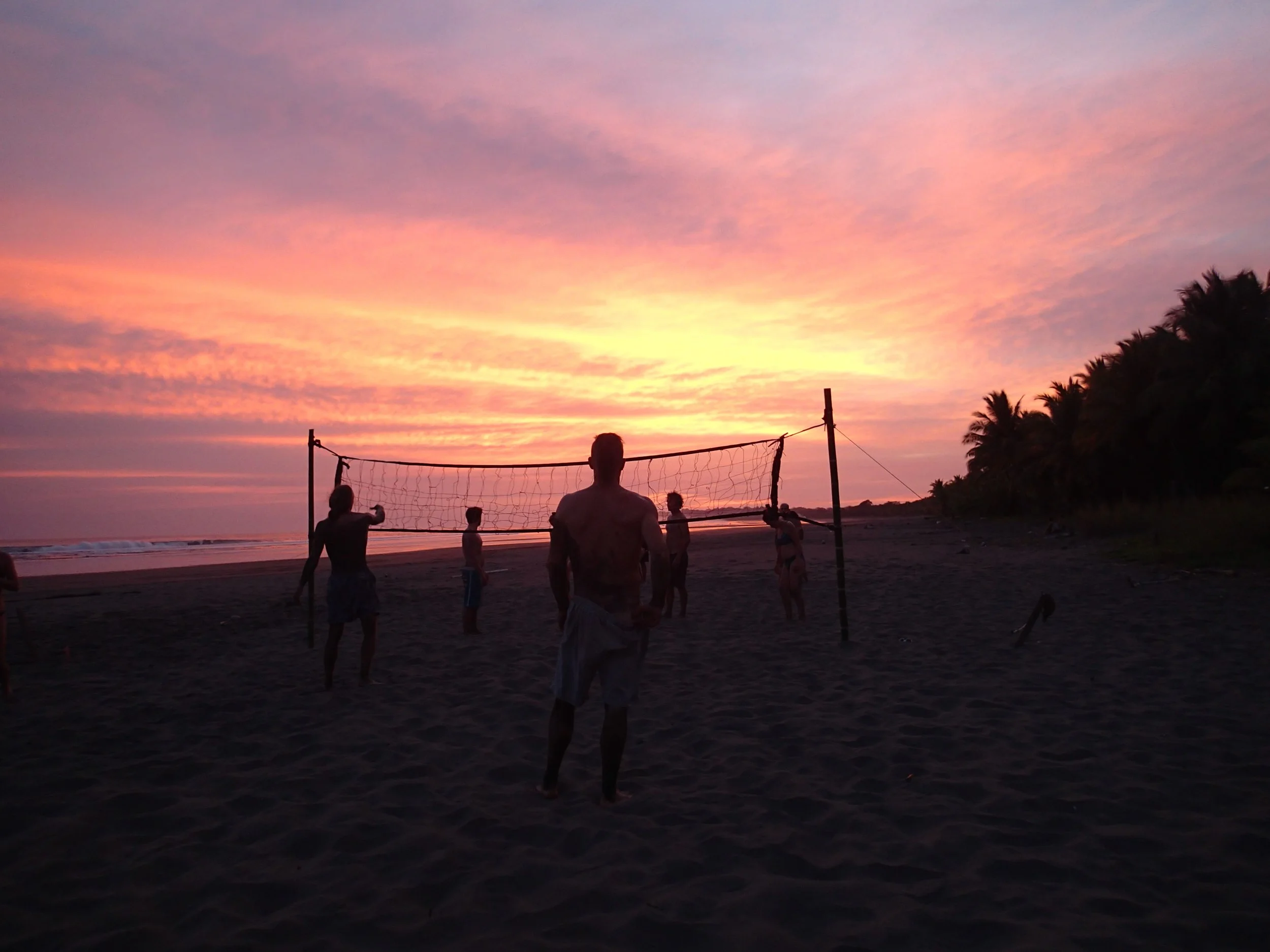
Playing volleyball down at the local field. All ages welcome!
Permaculture thinking moves us towards finding solutions that can serve multiple functions. This can be known as stacking functions with the goal to develop more “free time”. Simply put and maybe more traditionally put, “killing two birds with one stone”. How you spend that free time is something that really gets very little attention in the permaculture community and one that I am particularly interested in. Once you begin to think about it, the way we spend our “free time” will define the sustainability of the entire system. If we choose to pack in more projects and more tasks, in the short term we may benefit from our added productivity, but is this sustainable in the long term? In this article I am going to talk about how we design our lives using permaculture based thinking to create sustainable patterns for not just our farm but for our lives. Bill Mollinson once asked, “How can we maximize hammock time?”. Whilst I agree with the sentiment, I prefer to run around in my free time!
We aim to create balance between the needs of the farm (which has endless lists of projects that could be done) and the needs of us as individuals to relax, recreate, unwind and decompress. The benefit of playing team sports together helps build team morale, a sense of togetherness and comradery that is vitally important to the fluid functioning of our community.
Think back to your childhood days. What were you spending most of your time doing? If you said playing video games, I can’t relate, but if you responded with getting dirty and running around outside, I recommend you keep reading.
The first day I arrived at the Ranch for my year-long apprenticeship, everyone was involved in a heated game of volleyball. I joined in and after brief introductions, I shared the field with myriad new faces, and we worked together toward a common goal for the next hour. I couldn’t have asked for a better initiation into Ranch life than that first volleyball game.
As a child, playing outside is instinctive and it’s how we begin to understand the physics of the natural world. In school there are scheduled times to play outside. Where I’m from, it’s called recess. When I was growing up, we were given three different times throughout the day to release our pent-up energy and run rampant through the school yard. As I got older and school years passed, the allotted recess time slowly disappeared and was replaced with longer class times.

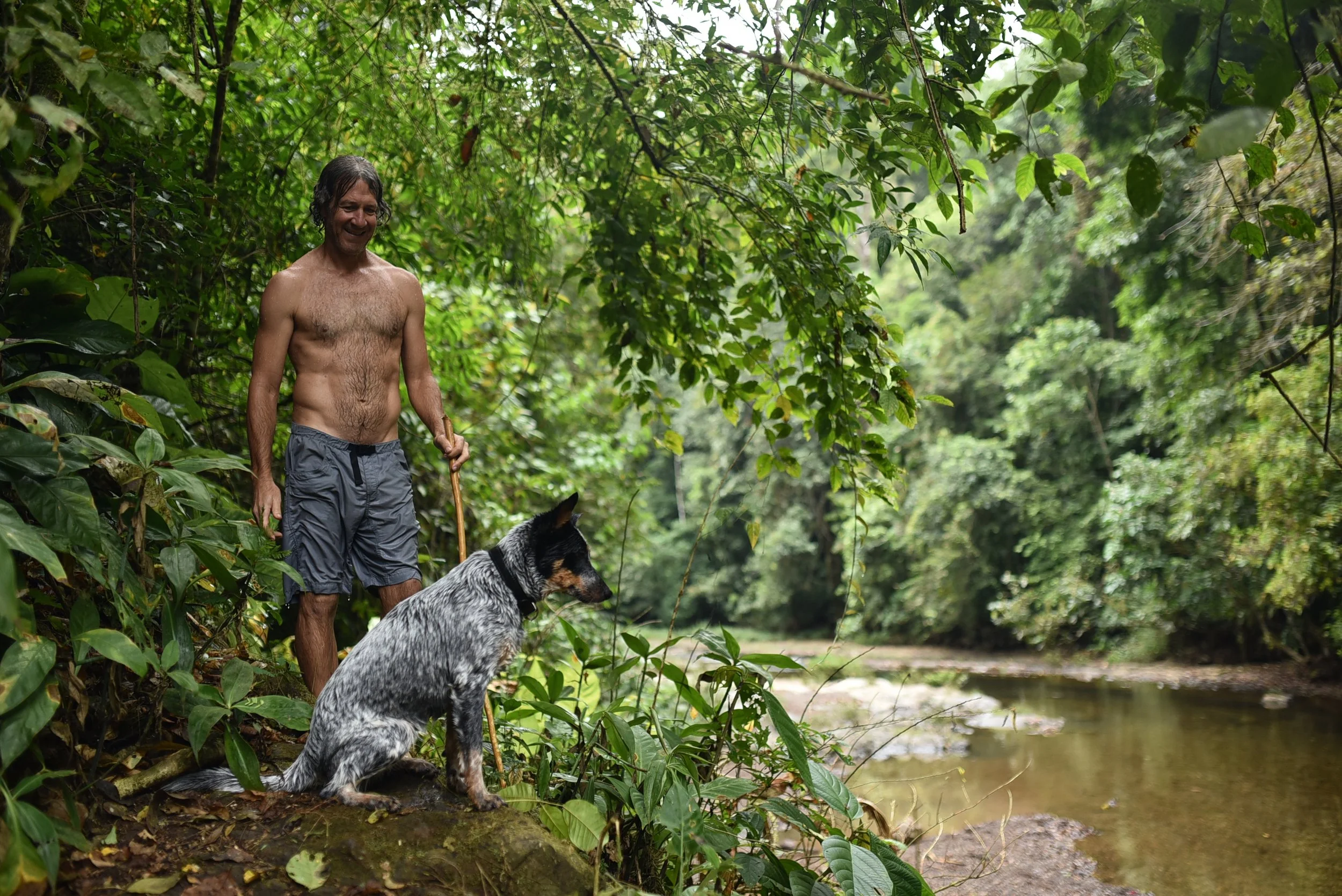
Many community members take daily trips to our waterfall
Recreation is an important aspect of life that we begin to lose as we age. It’s the hardest part of life to hold onto because it’s no longer allotted for us. Western society has deemed it unimportant and prioritizes work and time spent at a desk. Here at the Ranch, we have designed in ample opportunities to recreate. Pitching in to clean up brunch, taking a trip to the waterfall, practicing yoga, and reading a good book are all forms of recreation. We have scheduled in plenty of downtime and we have made a conscious decision to start the work day early in order to end our work day earlier to allow more time for afternoon team recreation. The inspiration for this blog post comes from what I like to call 16:00 Mass (a.k.a sports time).
Here at the Ranch we schedule our free time. That’s how serious we are about it. We are currently in the dry season, so the “cancha” (sports field) gets a lot of use by the Mastatal community this time of year. Every town in Costa Rica is given a church, an elementary school, a community center, and a sports field. Our main forms of team recreation are frisbee and volleyball. Every day I trot down to the field at 15:50, tired from a full workday at the Ranch. I’ve got a frisbee, volleyball, and a bunch of bright orange cones in my hand. As I step out onto the field, I look at everyone’s tired eyes and I smile because I know that it’s all about to change. We split up into teams and the game begins. I begin to move into my body and out of my head. Before I’m aware of my actions, I stop to catch my breath and realize how much energy I have. I sweat not only from running around but from the intensity of the game. Coupled with teamwork, this form of exercise alters my thought pattern and I find myself in a state of euphoria and limitless energy. For the next hour I’m on Cloud 9 and I don’t want the excitement to end. When the game does end, my bare feet thank me for stopping and I find myself in high spirits with an overwhelming feeling of accomplishment and grit. Everyone is talking of food now and my stomach rumbles in anticipation for a Ranch dinner.
I’ve always placed great importance on exercise in my life, but I mainly participated in individual sports like swimming or tennis. Working in teams at the Ranch is paramount to our success here and it’s no different on the field. Playing a team sport changes my mood and puts me in a flow state. No longer am I thinking of the past or the future. I am right there on the field in the present moment. If my mind strays away, my teammates are sure to let me know. I can no longer only think of myself - I must take other people’s needs and wants into account. Playing a team sport necessitates quick thinking and sound decision making. These qualities allow for a dynamic community and encourages the development of well-rounded individuals. Whenever I’m having an off day, I feel a sense of balance and grounding after running around on the field with my peers.
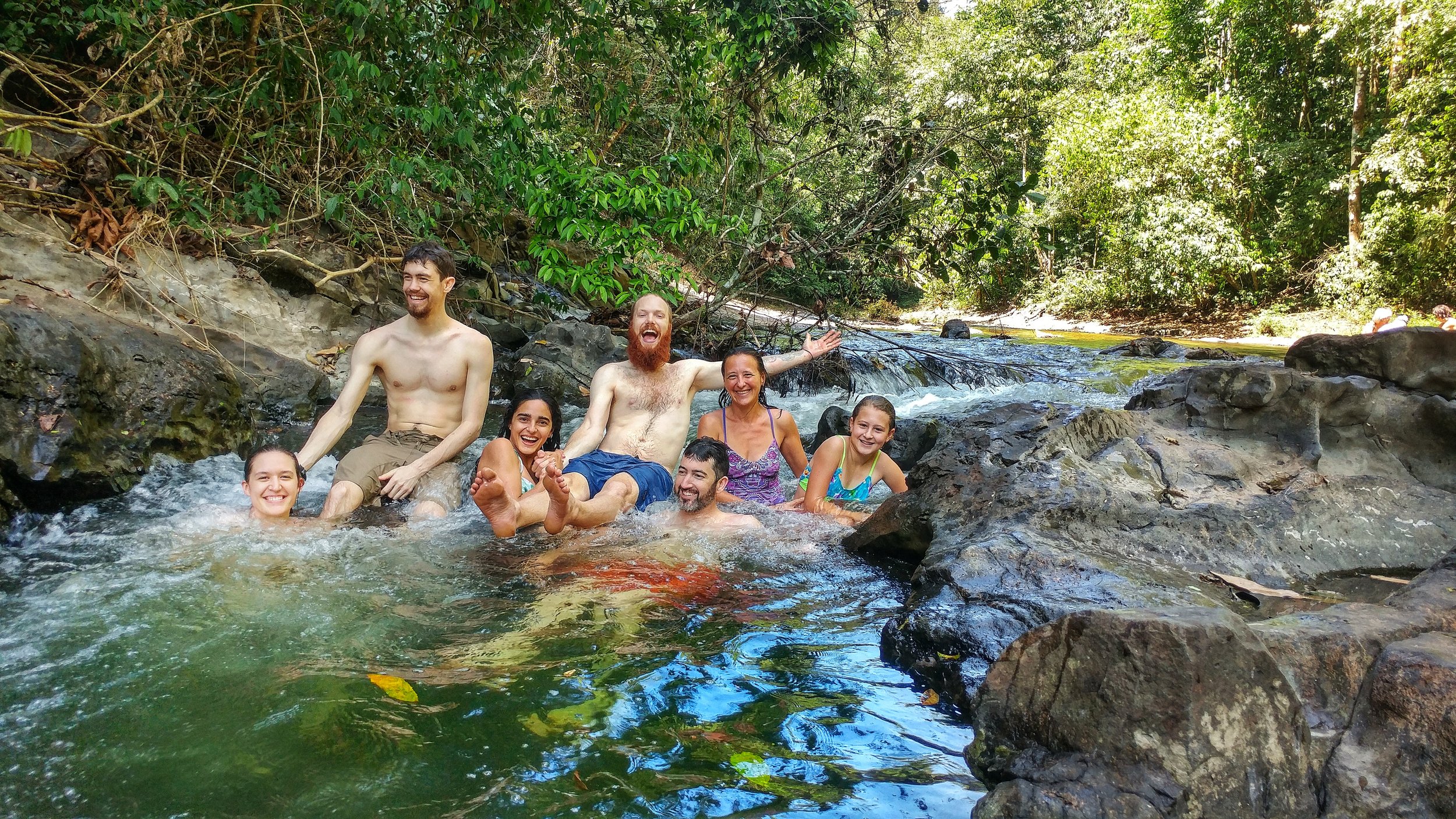
Enjoying the refreshing swims in the river
I am extremely lucky to be living in a community that prioritizes recreation and down-time. The world would be a much happier place if a higher value was placed on these activities. It’s a privilege to have free-time and I encourage others to do the same. Play outside with your kids, join a local soccer league, take a yoga class, or pick up that book you’ve been wanting to read forever. Whatever your preferred form of recreation is, it will dramatically alter your mental state and contribute to your happiness and overall well-being.
One thing that has been learnt over the years at the Ranch though, is that recreation time must be planned in. If we leave it to chance it becomes difficult for us to find space for it with all the other tasks and activities going on. Although Permaculture Design tends to focus on the design of your land based project, food forest or garden systems, I think it is also very important to place a large emphasis on planning our social lives, activities and recreation times. Collectively we have found that just like planning a garden and selecting the best place to plant your favourite perennial salad crop, it is vitally important to plan your daily activities and make sure to plan in recreation time.
How you choose to spend your recreation time is up to you but if you need me, I’ll be down at the “cancha”.
Other Community and Permaculture Related Blogs
How to Run a Permaculture Internship
Enriching Community Soil: 5 Simple Strategies that Support Sustainable Relationships

View of the sports field and La Cangreja National Park
Anti-Inflammatory Herbs – Medicinal Plants
I firmly believe that we can begin to reduce the effects of this inflammation by utilizing the mosaic of plant medicines revered by our ancestors.
By 2022 apprentice Connor Gilmartin
“Watching gardeners label their plants, I vow with all beings to practice the old horticulture, and let the plants identify me” Robert Aitken
This article seeks to bring attention to two plants that possess anti-inflammatory properties, commonly grown in Mastatal, Costa Rica. My goal is to discuss their medicinal properties and suggest simple preparation methods to maximize their efficacy. The plants I will go on to discuss have been shown to bolster your immune system’s response to inflammatory antigens that one is exposed to in urban environments.
Inflammation is a complex physiological and pathological process. It is typically an adaptive response caused by harmful stimuli and conditions to keep the body in homeostasis. When inflammation persists for a long time, “it becomes chronic and can contribute to a variety of chronic diseases, such as obesity, diabetes, arthritis, pancreatitis, cardiovascular, neurodegenerative, metabolic diseases, and some types of cancer” (Peng, et al, 2021). While some diseases are not preventable, many are. We exist in a physiologically, emotionally, and spiritually inflamed world. I firmly believe that we can begin to reduce the effects of this inflammation by utilizing the mosaic of plant medicines revered by our ancestors.
The two plant species I will provide a brief overview of are as follows:
Turmeric (Curcuma longa)
- (Polyphenol, curcumin, anti-inflammation)
Pau d’arco (Tabebuia rosea)
- (Immune stimulant, anti-tumor properties, anti-parasitic)
There are a handful of books that are frequently referenced by Rancho Mastatal’s core team. One of these books is Ed Bernhardt’s, “Medicinal Plants of Costa Rica”. If you live in Costa Rica, and you know what’s best for you, you’ll get a copy – and a backup copy – of this amazing, easy to read book.

Freshly harvested turmeric
Bernhardt introduces turmeric as, “An herbaceous perennial plant of the ginger family with a bright orange rhizome”. It is prolific around Rancho Mastatal – walking along the paths of the Ranch will lead you to encounter turmeric everywhere. Turmeric has a long history of being used for both food and medicine. It has been the primary anti-inflammatory herb of ayurvedic medicine for over 6,000 years. Its principle chemical component, curcumin, has anti-cancer effects and is useful for arthritis through its potent antioxidant action. Capsules of dried, ground turmeric powder have been used to relieve stomach problems, liver and gallbladder diseases, arthritis, colds and flus. In Phyllis Balch’s text, “Prescription for Herbal Healing”, she notes, “… Laboratory studies have confirmed that curcumin has anti-inflammatory and anti-arthritic activity… It has been shown to be effective in reducing pain in patients with osteoarthritis… When used at the equivalent of 200mg of curcumin per day, patients with osteoarthritis were able to use 63% less NSAID medications and still obtain relief from pain”. Turmeric is a gorgeous plant with such massive potential. Pulling its fiery orange rhizomes out of the soft jungle soil is a beautiful experience that I consider a privilege.
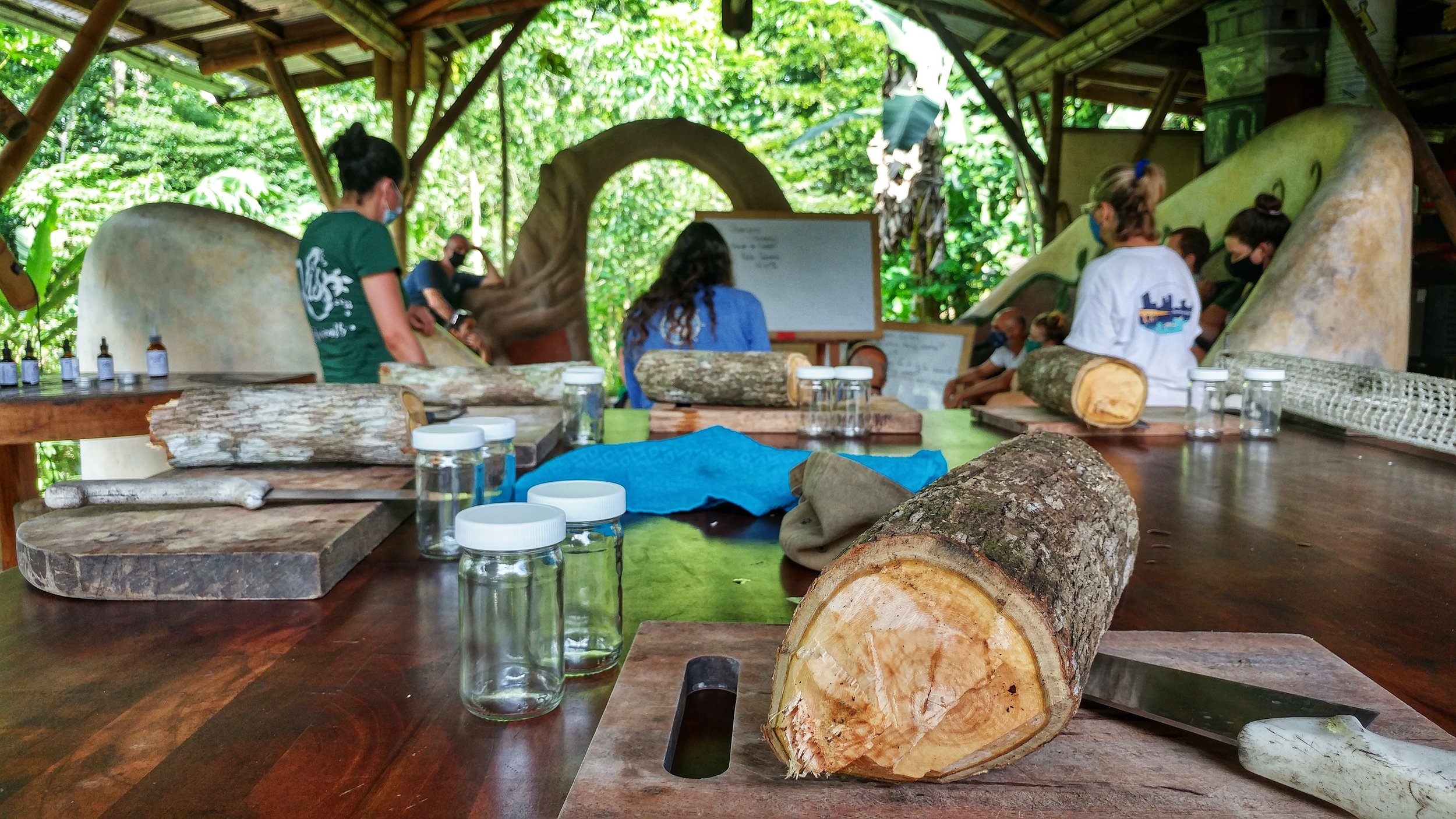
The branch of a pau d’arco tree ready to be made into a tincture
Another prolific plant species found around Mastatal is the pink trumpet tree – locally referred to as roble de sabana or pau d’arco. During the transition months of March and May, this tree puts on a dazzling display of soft, silken pink flowers that provide a striking contrast against the bright blue skies. When talking botany with elders and herbalists in the community of Mastatal, pau d’arco is never forgotten. It is revered as highly medicinal across Meso and South America. Ed Bernhart writes, “for centuries, people in the neotropics have used the inner bark of pau d’arco to make powerful botanical medicine that restores the immune system”. It has been cited traditionally to treat anemia, arthritis, asthma, bronchitis, boils, cancer, colitis, colds, coughs, diabetes, dysentery, eczema, fevers, liver infections, leukemia, parasites and wounds. There has been a great deal of research on the medicinal properties of the cambium layer of Tabebuia rosea. Researchers have demonstrated that eighteen of the bark’s many organic compounds have medicinal properties. Some of these organic compounds include quinines; compounds that help cleanse the human body of parasites and harmful protozoa. Another well-documented compound contained in the bark of the pau d’arco is lapachol – an organic alcohol that is responsible for the bark’s anti-cancer and tumor-reducing properties. Ed Bernhardt recommends reading, “Pau d’Arco: Immune Power from the Rainforest” by Kenneth Jones to learn more about the complex organic chemistry of the tree’s medicinal compounds. Pau d’Arco’s cambium layer can be prepared as a tea, or as a tincture. Mature branches must be used in the preparation of this medicine. I recommend further reading about the specifics of pau d’arco preparation as it does require some processing prior to drying the bark for tea, or making the tincture.

A student in our PDC with her homemade tincture
Both of these plants can be dried, powdered, and taken as a supplement in capsule form. Their medicinal properties can also be utilized when prepared in a concentrated tea. In my opinion, the most powerful of all preparations is to utilize ethanoyl as a solvent to extract their alcohol-soluble compounds. This concentrated, plant-based liquid is commonly referred to as a tincture. The precursor to distilled ethyl alcohol could be an herbal wine prepared at-home. You can read about how to prepare a simple, tea, sugar and yeast wine (hooch), at this article, written by an apprentice from 2017.
Realizing that plants can serve as medicine fosters a deeper appreciation of our natural environment and increases one’s sense of place. Looking into a forest and seeing it as a nutrient-rich, sentient ecosystem is something that our not-so-distant ancestors did out of necessity. I believe that if more folks started listening to what our plant teachers had to say, we’d live in a healthier, more reverent, less-inflamed world. As Terence McKenna once said, “Avoid gurus, follow plants”.
Check out these past related blogs
Also join us for our yearly Plants as Medicine Workshop
Learn More
Join us for one of our educational workshops. Learn more here.

The Magical Benefits of Fasting
Fasting is one of the strongest cleansing and healing natural methods existing. It has been used since ancient times in many cultures and religions either as a medicine or for spiritual reasons.
By Nico, Apprentice 2020
Looking for alternatives
Human behaviors are very hard to change. Especially in today’s world where everything goes so fast, our brains have to deal with hundreds and thousands of pieces of information each day. Overwhelmed by the capitalists’ ideals of growth, money and defining ourselves through our productivity, when do we really take the time to take a step back and reconsider what it is we truly want to engage in? But some things are changing. Each day, people all around the globe feel that wrongness and fight against it through learning, teaching and developing alternatives for sustainable housing, transportation, education and the food industry.

What’s wrong with our diet?
A couple of years ago I dedicated myself to finding alternative solutions that could help me build a lifestyle in harmony with my values. But where to start? Out of the many challenges we will have to face in the upcoming decades, the food system is one the most important. It is also the one where we, as individuals, can have the biggest impact through small changes is our everyday choices. We all know that those fast food chain restaurants surrounding us in the city are bad for our health, that the greenhouse gas emissions generated by the meat industry is nowhere near sustainable, that we should be paying more attention to the origin and process of how our food is made. The public’s’ hunger for nutritional information is more present than ever, diet books are perennial best-sellers, almost every popular magazine features nutrition advice, newspapers, radio programs and TV constantly discuss diet and health. But once again, there are so many sources, so many programs, so much contradictory advice, what should we be listening to? I believe that if we truly want to change the way we eat, we should start by listening to the one and only true expert of our health: our body.
Why fasting?

Jackfruit harvest
My goal was not to lose weight, nor to go vegan. I didn’t want to be on a diet restricting myself from certain foods. I wanted to redefine my relation to food so that I could start enjoying it more at each meal, and start feeling the benefits of eating healthy food on my everyday energy. I wanted to understand why my body feels so tired after some meals but not others, even though it seems like I’ve been eating the same quantity. I wanted to truly enjoy each delicious meal without just stuffing myself with twice the amount of food my body needed. That’s when I came across fasting (we will be talking here about long term fasting on water only, not about intermittent fasting which is a whole other process). The studies about its many health benefits from helping with allergies, skin diseases, cancer, how it helps with setting you in a special meditation mind-set, and the challenge it represented, immediately got my curiosity. I have always thought I couldn’t go more than a day without eating, yet so many people were able to spend weeks, sometimes months just surviving on water, so I decided to take the challenge and prove myself wrong.
As I am neither an expert on fasting, nor nutrition or health, I will not talk about the medical science behind fasting but more about my personal experience and what it has brought me. If you are considering a fast I do however recommend you to read as much expert’s advice about the process, how to start it, end it (the most important parts about fasting are before you start and after you break the fast), what the dangers are, and precautions to take. I do not recommend that you start your first fast if you are alone for it can be a very dangerous process if not properly prepared.
So what is fasting?
There are many kind of fasts but the original and purest one is when you stop eating any kind of food and only drink water for a certain amount of time, usually longer than 3 days. Fasting is one of the strongest cleansing and healing natural methods existing. It has been used since ancient times in many cultures and religions either as a medicine or for spiritual reasons.
What happens during a fast?
The first three days of fasting are mentally challenging. Because we have been so used to eating three times a day, at very specific hours, our brain will send signals through hormones telling your body, “hey dude, we usually have food coming in around this time, what’s happening?” You have to understand that this does not mean you are in danger and start seeing those signs and hunger as a signal, not as pain. Keep yourself busy, go for walks in your favorite place, do yoga, exercises (on the first day of fasting you still have a lot of energy from the remaining food in your digestive track so you should be able to still enjoy intense activities).
On the second day things start to slow down, you feel your energy level going down and hunger is present. I find that this is a nice opportunity to be a little by yourself, doing small activities you enjoy where time flies like drawing, reading, walking in the woods, etc.
The third day is the trickiest one, because you will reach the real fast. After three days that the body doesn’t receive nutrients from the outside, it moves to a kind of emergency mode and starts to digest all kinds of proteins from unnecessary cells, excess proteins from overeating, germs and bacteria. The body knows exactly where all the garbage is stored and start eliminating it. It enters a serious deep cleansing. During the fast, the body uses all the energy that is normally used for digestion and assimilation (which represent a great amount of energy, especially if you eat the average American diet) to clean and repair the tissues, and many organs have the chance to rest and recuperate. Make sure you have this day for yourself and rest, watch some movies, listen to relaxing music. This phase varies a lot in time and effects depending on each individual, but from my experience after three fasts I find that the better I prepare my fast (by gradually stopping all processed food before I start fasting), the easier this phase is. The first time I fasted I was so prepared and excited that I didn’t even feel any of the downside effects people talk about except just wanting to be on my own. In ancient times people didn’t need to prepare so much for fasting because they didn’t have the poisons of the 21st century, so they could go bravely into long fasts. With today’s food system, and depending on your diet and health, it is really important not to shock your body too hard by preparing adequately for your fast. You can find a lot of information and programs on the internet, but the most important thing is that you do it at a rate which correspond to you, by always paying attention to your body. I also find that whenever I start having small headaches and unpleasant sensations on the first three days, being a bit active helps, “Movement creates energy.” You’ve done the hardest part, all the rewards and benefits are yet to come, don’t stop there!
After those three days (sometimes it can take 2 days before reaching the “ketosis”), things get interesting: you don’t feel hunger anymore, your energy level goes up, and you truly enter the “fast trance” I like. I find it is important to start a fast with some ideas about what you want to dedicate the fast towards. It could be researching more about nutrition, focusing on your body and how you feel, thinking about things you want to accomplish in the future, etc. It’s important to live your fast with some ideas about what you want to be thinking about but not setting yourself goals or objectives, since the fast is challenging and you never know what you will come across during the process. Keep an open mind, be focused on what your body is telling you and what it is asking for and enjoy the time you have dedicated to yourself. Don’t be afraid to change your initial plans according to the situation, fasting is all about yourself and how you feel, it might feel a bit selfish to cancel plans you have made with your friends, but I think it is important you realise that before starting the fast. Tell those around you about your plan to fast and that you might cancel last minute. It is better for you, better for your fast and also better for your friends since nobody wants to be around someone that doesn’t truly feel like being there in the first place. This doesn’t mean you shouldn’t do anything social during the fast. After 6 days of fasting I was going to parties and dinner without any problem, but pay attention to what you feel like doing, not what is expected of you.
Breaking the fast
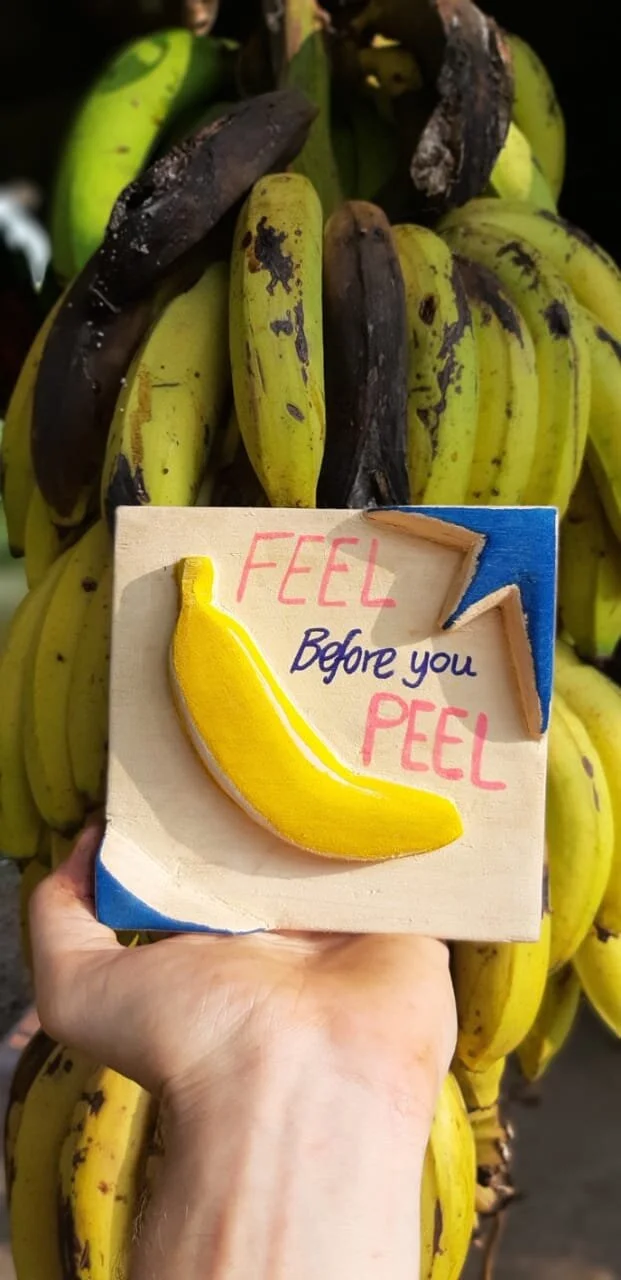
After several days without consuming any food, it is essential to break the fast wisely. Your body will not handle it if the first thing you eat is a huge hamburger with fries and mayonnaise, I guarantee you’ll be sick. Plus, you’ve gone through all the process of cleansing your body, do you really want to start off a fresh start by putting some unnaturally heavily processed food in your system? You want to start with something very light and easy to digest but flavourful, some fruit you truly enjoy. Take the time to choose it wisely, smell it and feel it, and start eating it only when you feel that you are ready. I find that during the fast my smell sense is way more developed than usual, and when you start eating, each bite will feel like heaven. Eat only one fruit and pay attention to the amazing taste, feel it going down your throat and sense all your digestive organs starting to work again after so long. They will truly thank you for the first rest you have given them in years, maybe decades, and your whole body is not craving food: it is craving good food. Think about all those delicious natural fruits and vegetables and all the amazing nutrients they will bring to your body. Enjoy each food like it’s the first time you had it, for me it truly tastes like that.
What fasting brought me
Fasting helped me redefine my relationship towards food. It helped me realize most of the time we don’t eat because we need it but by automatism. Sometime we are not even hungry, or we think we are hungry but we don’t truly need to eat, we just eat because it is the common thing to do. Our brain tricks us into thinking we want something while everything about our health tells us something is wrong with that. Like Paul Nison said: “Listen to your own body sense. If you listen to common sense, you will end up like common people in today’s world.”
Fasting also helped me enjoy more the food I eat. It helped me rediscover flavors I stopped tasting because I couldn’t see the beauty behind it anymore. Enjoying food is not about what your taste buds are receiving, but about how you are receiving those flavors and how you pay attention to them. It’s all about the setting. The best meal you’ll ever have will probably not be the most sophisticated or expensive one, but the one you took time to enjoy because you were with people you liked, in a place you like, like your grandmother’s homemade casserole, or the first time your dad took you out for ice cream. Like Anthony Bourdain says in his book, a cook’s tour “Nothing illustrates them more than the Last Meal Game.” You’re getting the electric chair tomorrow morning. […] You’ve got one meal left. What are you having for dinner? When playing this game with chefs – and we’re talking good chefs here – the answers are invariably simple ones.” Imagine you could rediscover the sensations you had the first time you took a bite out of your first pizza, your first ice cream, or the first apple pie you ever ate.
Fasting also brought me a lot of unexpected things not related to eating. It helped me push my limits and increase my willpower. It taught me that whatever people think is good or bad for you, the only true way to find out is to experience by yourself. It reaffirmed the idea that we shouldn’t be doing things blindly because it is the “normal” thing to do, because we have been doing it for a long time or because of social convention, but we should put everything in perspective and ask ourselves why is it that we do this. Only when we understand fully why we do something can we change it, improve it, or just decide that this is the way we want to go, and then human behaviour becomes easy to change.
People sometimes ask me how did I stop eating meat so easily after so many years as a meat lover? Not eating meat was not the hard part, just as spending 7 days without eating is not the hard part for me. The hard part was putting everything I have learned until here in perspective, unlearn what I thought was true and questioning the fundamentals about nutrition. It might be a hard and tiring process, but only from there can we start building on new foundations, towards a lifestyle in harmony with our values.

Apprentices doing yoga in the Hankey House
Categories
Topics
- Agriculture 6
- Agroforestry 21
- Animals 2
- Apprenticeship 19
- Appropriate Technology 6
- Backpacking 1
- Bananas 1
- Basic Pantry 4
- Biochar 1
- Books 3
- Build Your Own Home 1
- Central America 5
- Chiles 1
- Cinnamon 1
- Clay Carving 1
- Climate 2
- Climate Change 1
- Cob oven 1
- Communication 5
- Community 24
- Compost 2
- Composting Toilets 2
- Condiments 1
- Conservation 2
- Cooking 4
- Costa Rica 18
- Design 10
- Earthen Construction 10
- Eat Local 2
- Ecohome 1
- Education 9
- Environment 3
- Ethics 4
- Farm to Table 12
- Fasting 1
- Fermentation 14
- Food 22
- Food Choices 8
- Food Forest 8
- Food Processing 15
- Food Systems 12
- Gap Year 1
- Gardening 5
- Ginger Beer 1
- Harvest 2
- Health 12
- Healthy living 5
- Homemade 2
- Homestead 8
- Internet 2