

BLOG
Stories, articles, and updates from the Ranch community.

Just KIS Me: A Neighboring Project focused on Plants and Indigenous Culture
About eight years ago, Kealy and Ivannia were talking about how they wanted to continue to be strong, badass women. They wanted to support one another and thrive, and step outside the stereotypical woman’s role that is often seen in the Mastatal community. Kealy was once again visiting for a few months from the States and was leaving in a few days so plans needed to happen soon!
Just KIS Me: A Neighboring Project focused on Plants and Indigenous Culture
By Kealy Rudersdorf
About eight years ago, Kealy and Ivannia were talking about how they wanted to continue to be strong, badass women. They wanted to support one another and thrive, and step outside the stereotypical woman’s role that is often seen in the Mastatal community. Kealy was once again visiting for a few months from the States and was leaving in a few days so plans needed to happen soon!
The previous year, they had decided to go to the river at night to catch shrimp together--the snakes and darkness under the new moon never scared them off. This year, they were going to bushwhack to the top of La Cangreja National Park mountain. If you have gone in recent years, this was before the path was maintained and the hike was truly an adventure in the jungle. They needed a guide, as neither had ever been. Ivannia suggested her cousin, Solin, who was incredible with the machete and always full of jokes. It was bound to be a great day!
That day marked the very beginning of KIS Botanicals, as Solin described different uses of a variety of plants and Solin and Ivannia shared stories about how their family used the different plants they found along the trail. It was an immemorable day, filled with laughter, love, and the sharing of stories - the same energy we strive to bring with us into KIS Botanicals today!

What is KIS Botanicals?
KIS Botanicals is a growing herbal business, up the road from the well-known Rancho Mastatal. We are focused on the preservation of plant knowledge and culture in the Mastatal/Zapaton region of Costa Rica. As Solin and Ivannia say, our ancestors have a beautiful interwoven history with plants from the rainforest; our goal is to awaken and share this history.
In our project, we make a series of plant-based, herbal products (to heal the skin, aide in sleep…), using recipes we learned from our grandparents and community members. We also provide educational programs for locals and tourists through medicine making workshops, medicinal plant tours, and food-as-medicine classes.

PRODUCTS
Our artisanal products are inspired by tried-and-true recipes. All of our plants are hand-harvested and our products are handmade – by us! We have access to nearly 100 different medicinal plants that Solin farms sustainably, using traditional agriculture and permaculture techniques.
We currently have 8 artisanal herbal products that we absolutely love! These include a skin healing salve, a muscle and bruise salve, a sleep aide tincture, a tincture for colds and flus, a cough tincture, a bug repellent, an immune booster tincture, and a bug bite relief roll-on. There are many more products in the works, for example an aphrodisiac spray, an anti-fungal spray, stomach calming tincture, energy clearing spray, anti-anxiety tincture, etc. With so many plants to choose from, it’s hard to know where to start! As our apothecary grows, we will continue to add to our line of products.

When we start to make a new product, first, Solin and Ivannia remember plant uses they’ve witnessed throughout their lives. In addition, we frequently talk to community elders or remember conversations from years past. With these memories and conversations, we make a list of plants. We spend time trialing recipes and researching to make sure our products are stellar. The stories and memories are shared on the back of our products, so you too can share in the story!
Currently, we are selling our products at our wonderful friends and neighboring projects: Rancho Mastatal, Villas Mastatal, La Iguana Chocolate and La Choza del Mundo.

EDUCATIONAL PROGRAMS
We are excited to offer a variety of educational programs. Come, partake in our programs - we can’t wait to learn with you! Here are our current and future offerings:
A Cultural and Medicinal Plant Walking Tour: Come walk leisurely with us while we share with you our local history and culture. We will bring artifacts and stories from our grandparents' lives and describe the uses of many of our medicinal plants. We will provide a tasty and traditional treat or drink!

Medicine Making Workshop: Together, we will enjoy a short leisurely walk to explore medicinal plants. We will share with you an ancestral recipe (or two!). Tradition will be combined with modern herbal techniques. You will leave with an herbal product, made by you!
Food is Medicine – A Traditional Cooking Class: Come to a cooking class, using traditional techniques and foods. Over a wood burning stove, we will share a traditional recipe (or two!), laughs and stories.

In the future, we plan to offer an intensive two-week long course on cultural and medicinal plants. We will offer the opportunity to learn from us and other community members, as well as play and experiment with our farm of medicinal tropical plants. Your teachers will be primary-source voices!
Once we are properly on our feet, we plan to provide classes to the local schools. We will teach students about how their/our ancestors used plants to cook, to clean, and to heal. Students will learn new and old techniques with hands-on lessons and tutorials. We hope that they take these lessons back home with them and share their enthusiasm with their parents and grandparents, calling forth memories and providing inspiration. We are SO excited about providing this service to our community.

Who is KIS Botanicals?
The original KIS Botanical team consists of three people: Ivannia, Solin and Kealy. Ivannia and Solin are cousins and lifelong members of the Mastatal / Zapaton community and grew up learning about the medicinal plants in the area. Ivannia is a wiz in the kitchen. She is the one responsible for processing the plants, making the products, and giving thanks to the plants as we compost them. Solin has been working with plants his entire life, being handed a machete as a 2-year-old. The depth of his plant knowledge, understanding of nature, and love of plants is key to KIS’s success. Kealy has been visiting the Mastatal / Zapaton area for over 11 years, and Solin and Kealy are now married with a baby. Her role in KIS is to research plants, formulate recipes, share her knowledge of making shelf stable herbal products, translate our programs into English, promote KIS with marketing, and give the plants extra love.

Why we started KIS Botanicals?
From the words of Ivannia and Solin: We started KIS because we saw our generation and the following generations pull away from plants and the environment. We witnessed the high schoolers obsessed with their new cell phones and motorcycles, littering the street with their chip wrappers and soda bottles. Our community was changing dramatically. Starting in the late 1980s, houses received electricity, running water, and phones, but also within that same generation, the community received access to the internet, cell phones arrived, and all of a sudden there was almost a motorbike or car per person in town. In most of the United States and Europe, these changes happened over several generations.
We have witnessed a huge disconnect from our ancestors and the understanding of how they lived in harmony with the rainforest. This younger generation has mostly left the area for other opportunities after high school, leaving the community void of a generation. With KIS Botanicals, we hope to show that our ancestor’s way of life continues to have value. We aim to re-awaken our ancestral plant knowledge in the younger generations with our products and educational programs within local schools. We also want to be an example of how to be a successful, locally owned business, making our local economy stronger and more diverse.

How to help us??
We have come a long way from 3 friends bushwhacking to the top of the La Congreja mountain to making KIS Botanicals a reality. To be successful in preserving and sharing our ancestral knowledge, we need your help!! This is what would be most helpful to us:
When you visit Costa Rica, come to the town of Mastatal to buy our products and learn with us by signing up for one of our educational programs.
Help us spread the word. Tell your friends and family about us. If they plan to visit Costa Rica, encourage them to take a workshop or tour with us and check out our products.
DONATE! Keep your eyes peeled. Shortly we will be fund raising to build a Ministry of Health approved processing kitchen. We would greatly appreciate your assistance in reaching this goal!!
Send us love and positive energy.
Like us on Facebook and follow us on Instagram @KISBotanicals
We can be contacted at KISBotanicals@gmail.com.
Thanks for your support! We hope to see you soon.
With love,
Ivannia, Solin and Kealy

Improving Soils in the Humid Tropics of Costa Rica
In permaculture and agroforestry circles it’s common to hear the idea that we’re not growing plants so much as we’re cultivating rich, healthy soils in which plants will do their own growing.
By Anthony, Apprentice 2020
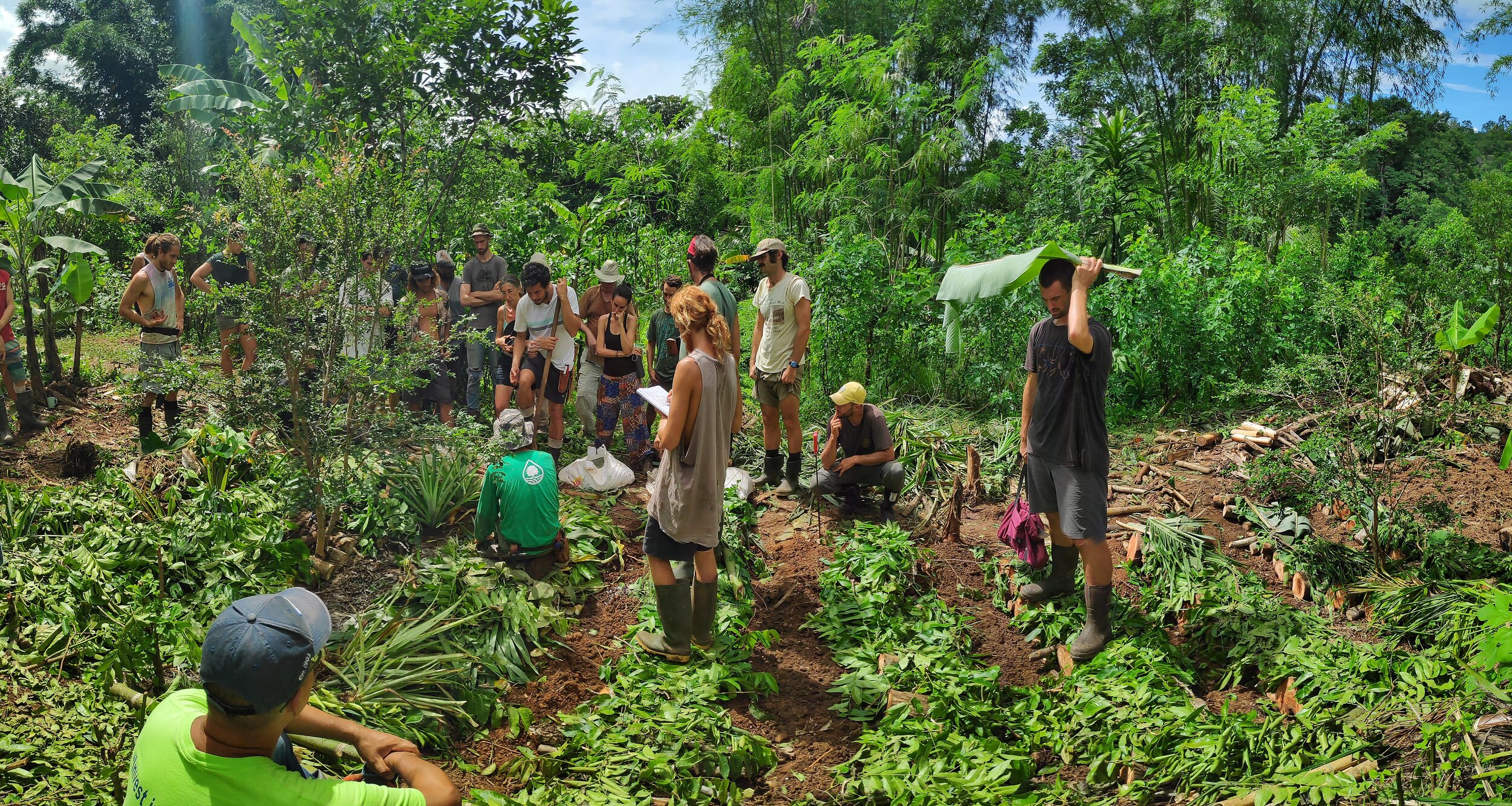
Syntropic farming workshop at Rancho Mastatal
In permaculture and agroforestry circles it’s common to hear the idea that we’re not growing plants so much as we’re cultivating rich, healthy soils in which plants will do their own growing. Yet, to this end changing the make-up of soils seems like a daunting job. So how can we go about the task of improving our soils in a simple and efficient way that corresponds with permaculture principles?
The challenge of Tropical Soils
Soils in humid Tropical America are generally found to be eroded and leached. In this region’s ecosystems, about 85% of nutrients are held in plants and animals, so the soils themselves are infertile. Only terraces, floodplains, and new volcanoes keep some soil fertility replenished if land is cultivated (Mollison, 2004). This yields soils that are high in clay content, poor in nutrient content, and often quite acidic. As we say here at the Rancho Mastatal, a permaculture farm in Costa Rica, it’s soil that’s great for natural building, yet not ideal for growing an abundance of food.
The goal with soils like ours is to improve soil texture, increase mineral and nutrient content, reduce soil acidity, enrich microbial life, and increase the quantity of organic matter held in the soil.
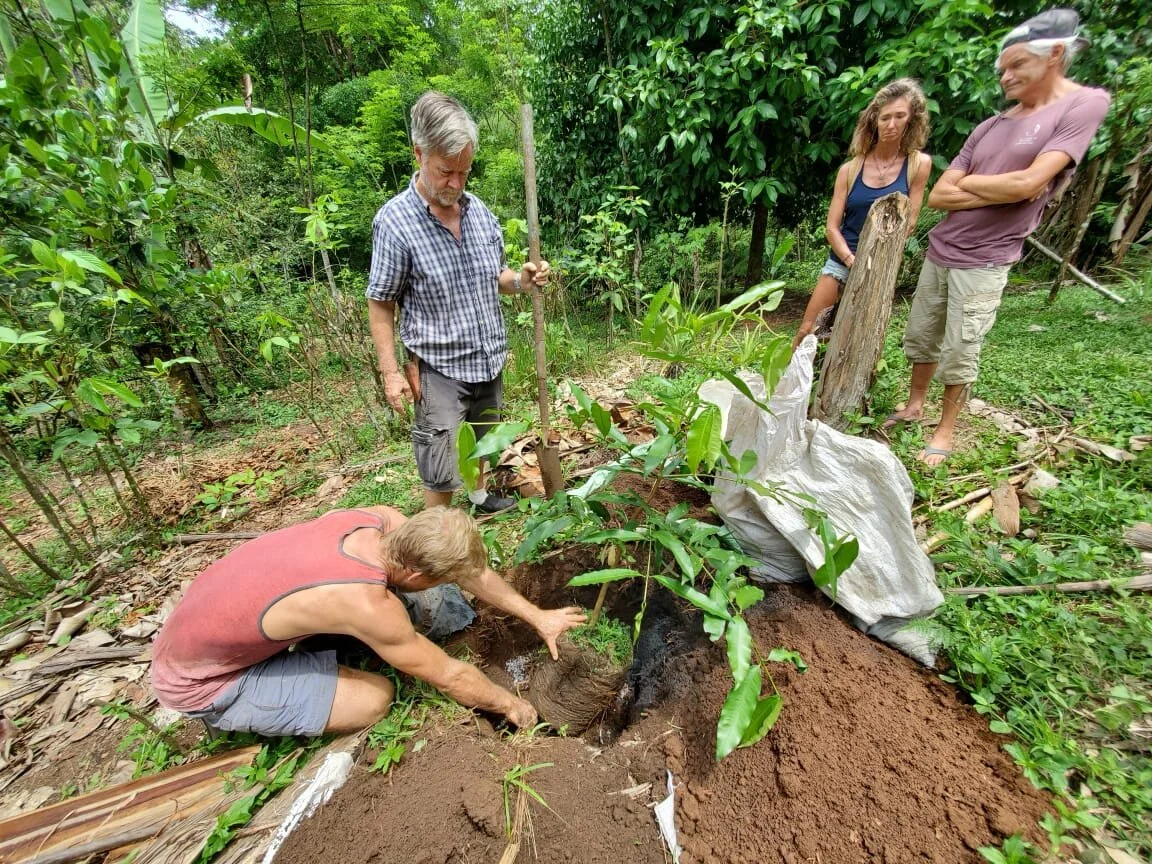
Planting a fruit tree during our annual Agroforestry Skills Workshop
Permaculture & Agroforestry based strategies
In a recent agroforestry workshop held at the Rancho Mastatal here in Costa Rica, a class that worked through concepts of a multi-strata, diverse style of permaculture, the holy trinity of soil amendments for the humid tropics was revealed. The three pillars of improving cultivated soils are
Biomass
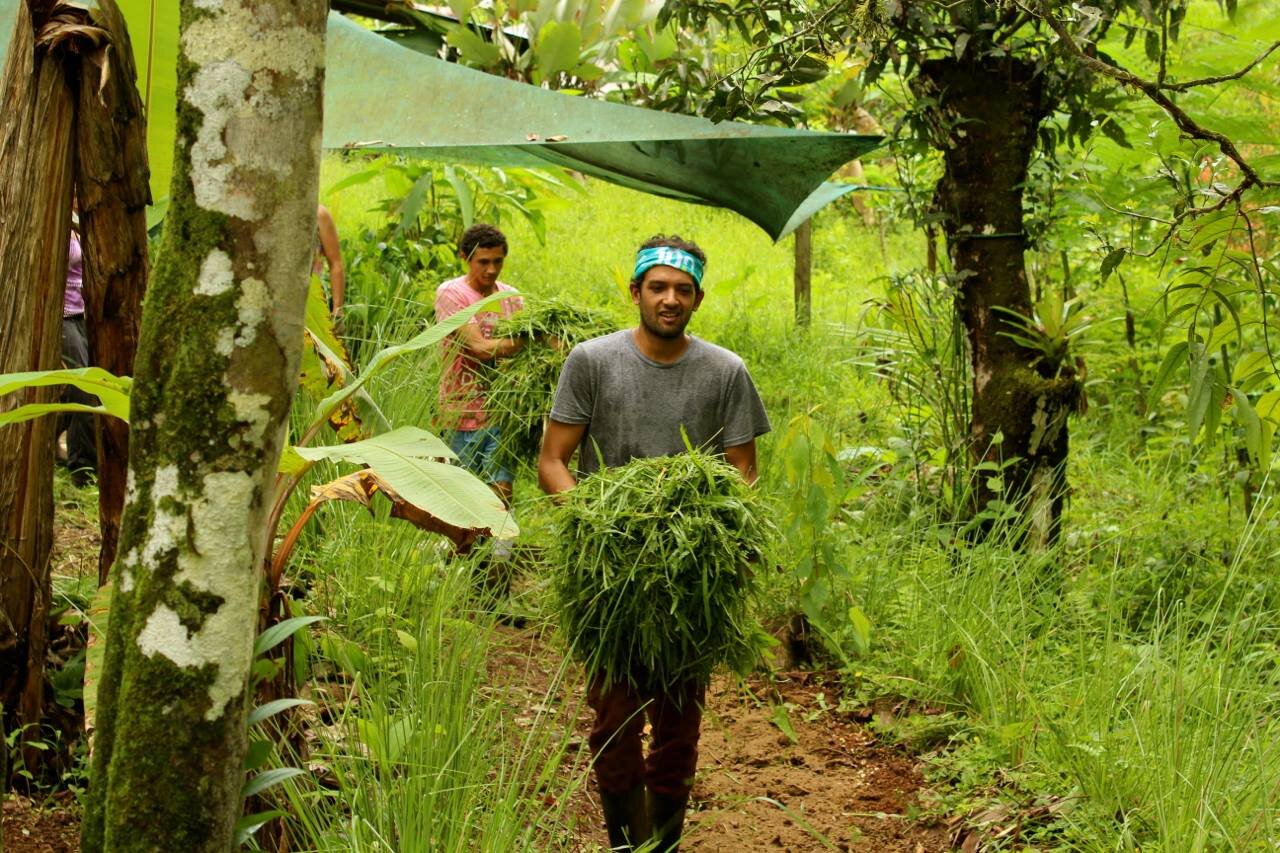
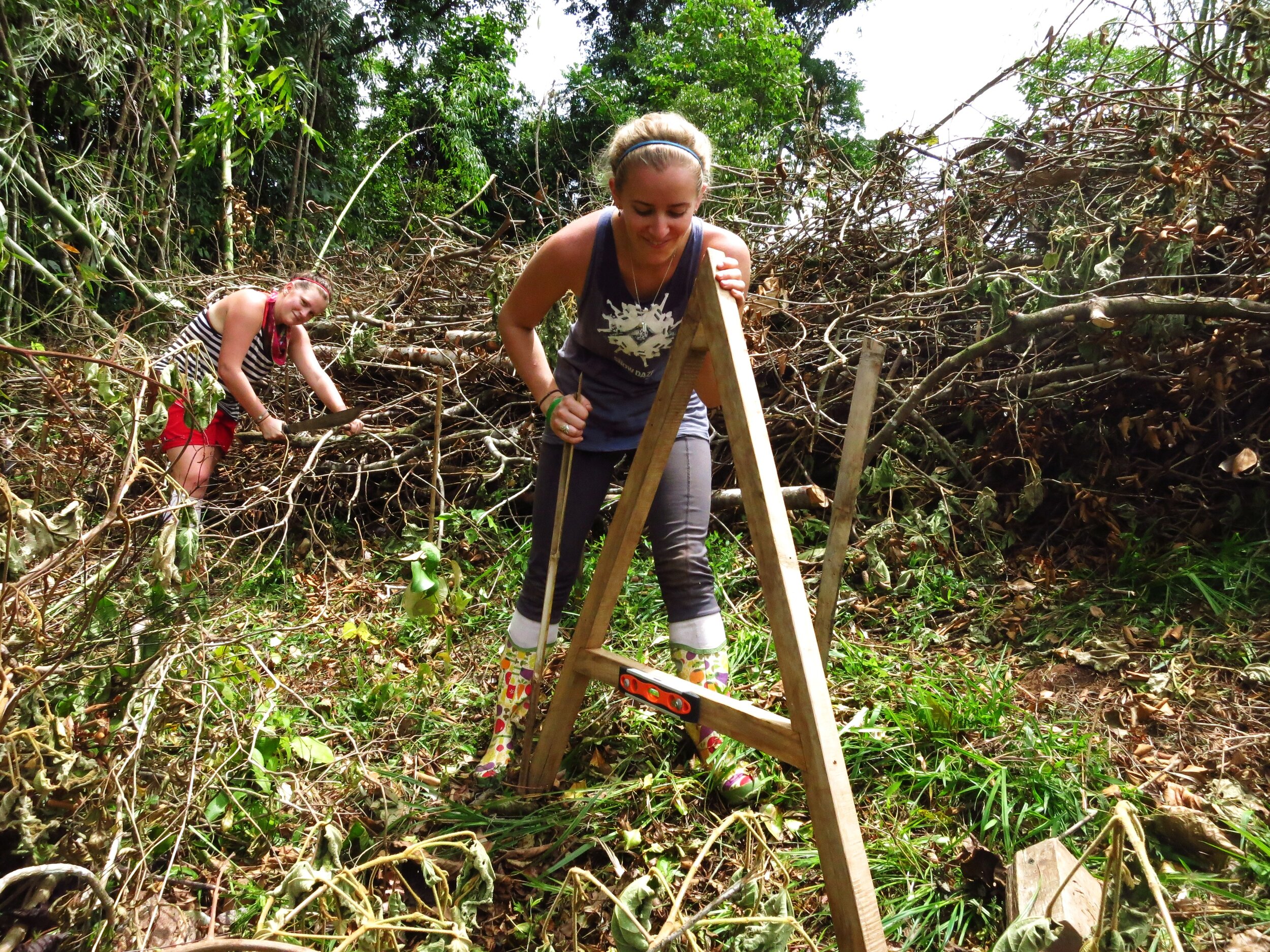
The strategy of biomass organized on contour (lines running perpendicular to the direction of the cultivated slope) is the most visible method used here at Rancho Mastatal to improve the soil’s structure and nutritional/mineral content, our ‘organic’ way of applying fertilizer. In the humid tropics, biomass tends to be available in great quantity, and can be used to build up the mentioned contours. Over time these will build to form terraces that greatly reduce soil loss related to erosion and leaching.
Mountain Microorganisms
Mountain microorganisms is a world of its own. Through the fermentation of leaf litter from nearby forests, we cultivate microorganisms which are then applied to our soils, the foliage of our plants, and our compost. We are reproducing healthy bacteria and yeast that, when used in our permaculture systems, will in turn help our plants absorb more nutritional benefit from our soils. To read in more depth about how to make Mountain Microorganisms read this article.
Biochar
Biochar will then provide a long-lasting refuge for these beneficial microorganisms. This is due to its incredibly high surface area within its structure. This special form of charcoal is extremely slow to break down and both directly provides nutrients and minerals to our soils as well as creating a positive feedback loop of topsoil production.
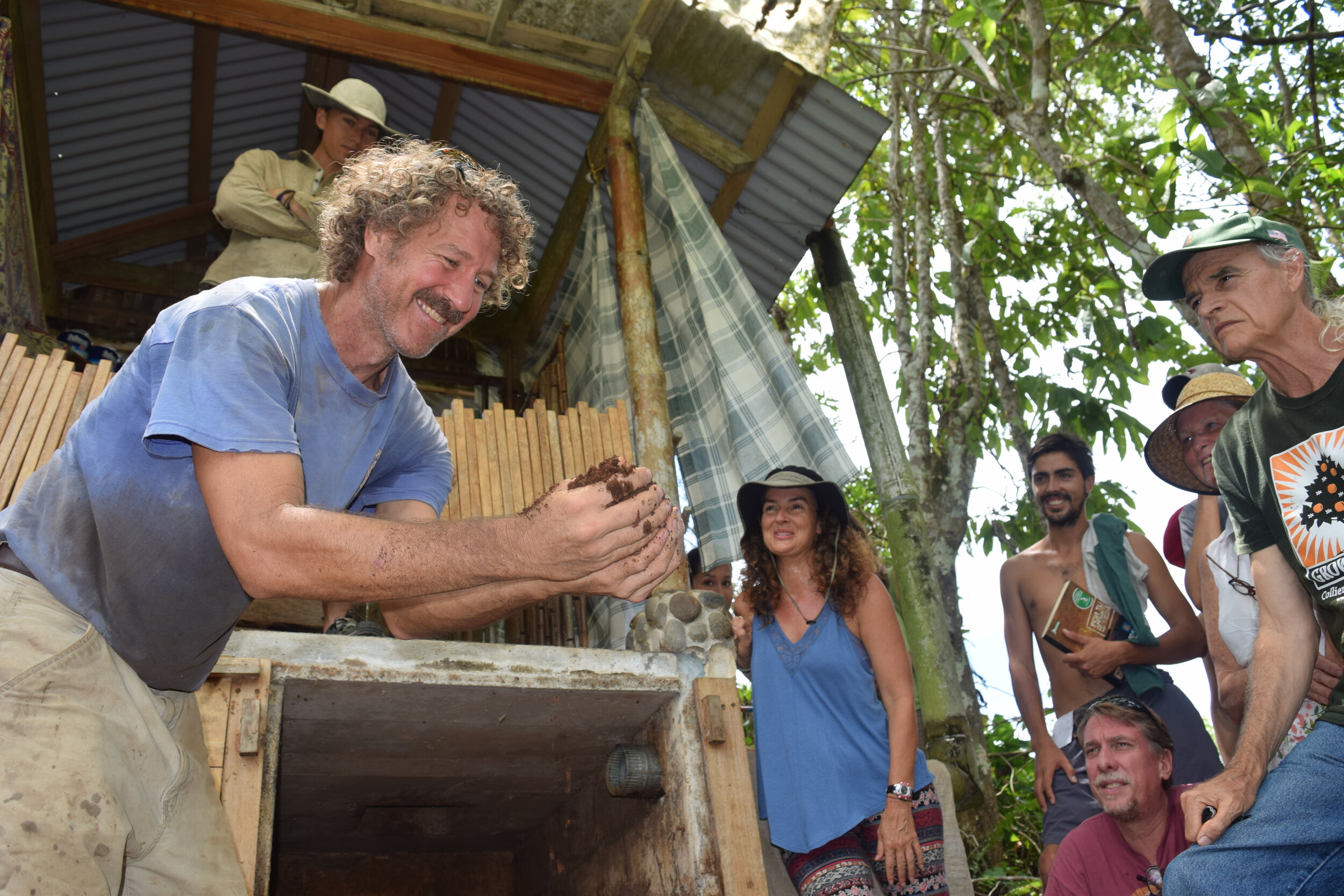
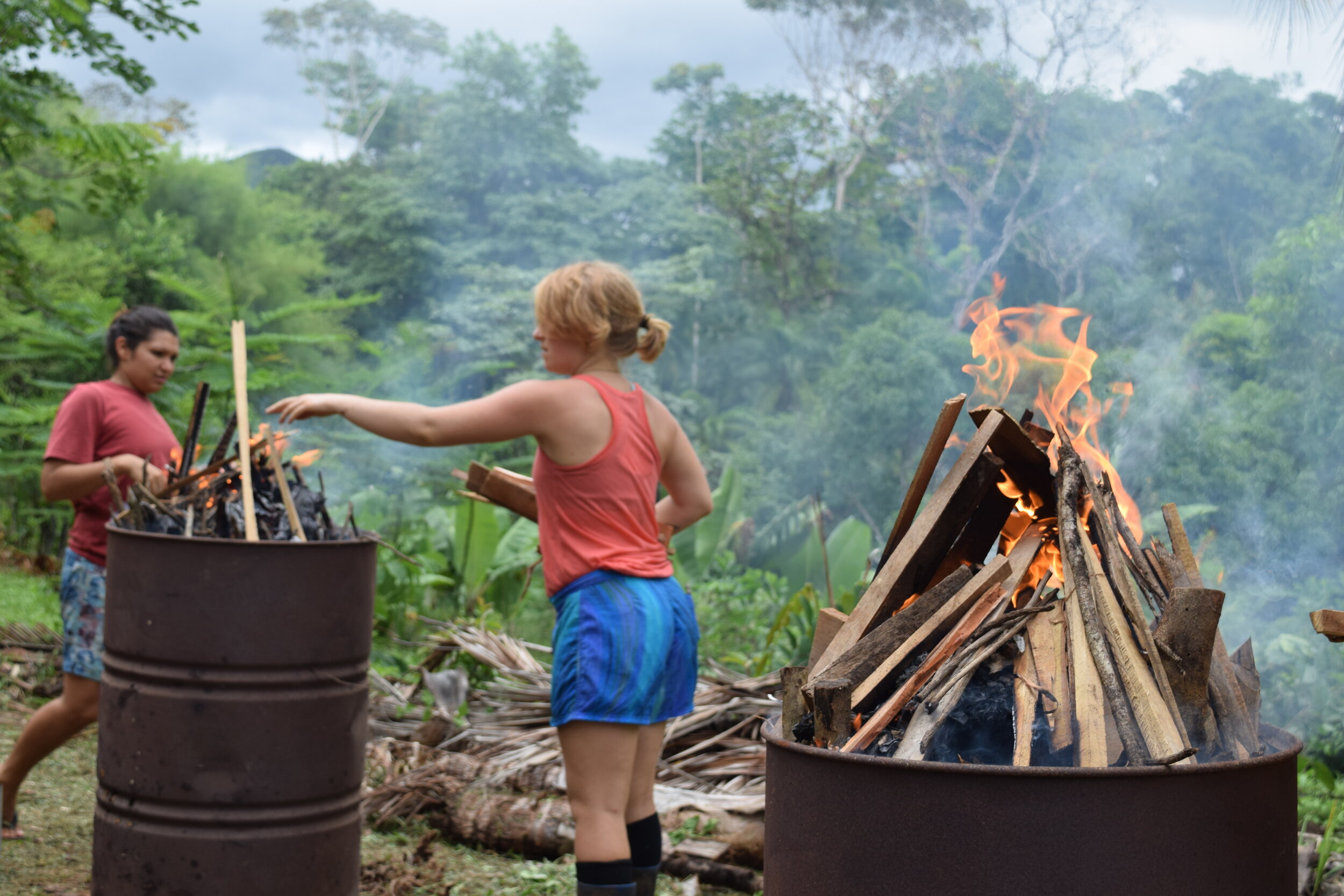
Many ways to develop tropical soils
There are other solid permaculture concepts for improving soils in the humid tropics that should be mentioned here. To deal with highly acidic soils, adding lime at regular temporal intervals is a useful strategy. We tend to avoid planting annuals while opting for perennials, by which we disturb the soil less and reduce potential erosion. Read our article about which perennial greens do well in the tropics here. Over time these plants will help build humus and topsoil. There are plenty of pro tips from the world of permaculture that you’ll find helpful, like adding shredded cane and bamboo species as a mulch for silica and calcium enrichment. This will in turn help to raise pH levels (lower acidity) of soils and reduce leaching and erosion. We add Humanure and effluent from our Biodigestors, this helps build our soil and use commonly wasted products to grow food!
Want to Learn More?
If you’re interested in agricultural concepts such as improving soils, make sure to check out Rancho Mastatal’s workshops, including:
Past Blogs on Soil and Permaculture in the Tropics
We have a lot of past blogs on this topic. Here are a few to read:
Applied Permaculture Principles

Our apprentices doing some chop and drop in the orchards

The Wonders of Vanilla
Vanilla is the second most expensive spice in the world. Being sold between $600-1200 per kilo, that is more expensive than silver!
What makes it so precious?
by Diana D, 2019 Apprentice
Vanilla is the second most expensive spice in the world. Being sold for between $600-1200 per kilo, that is more expensive than silver!
What makes it so precious?
Vanilla comes from the largest family of flowering plants, the orchids, as well it is the only orchid that produces pods. Every stage of vanilla bean production needs to be completed by hand, making it one of the world's most labor intensive crops.
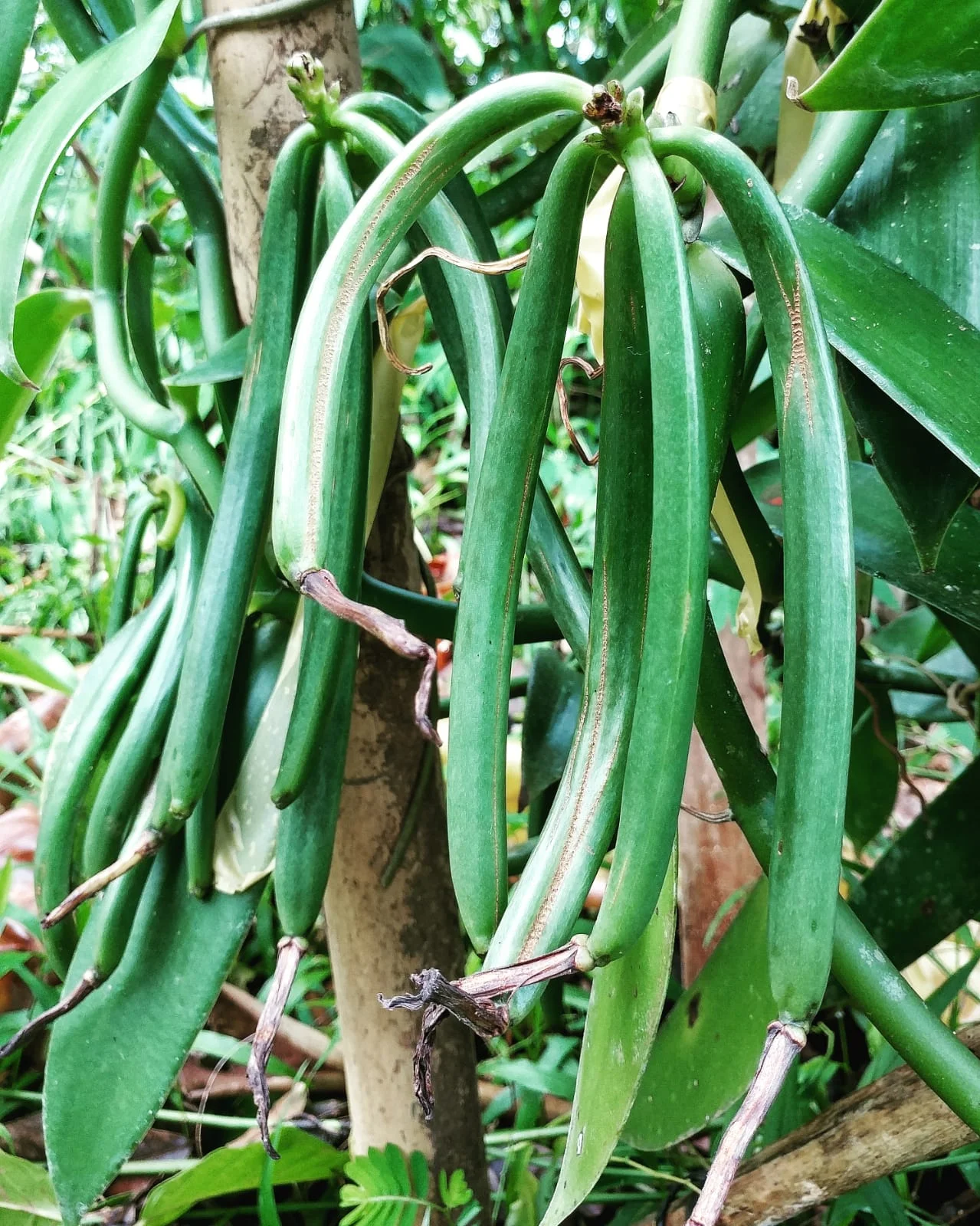
This orchid originated in Mexico, it's cultivation is being practiced from Mexico to India . Being producers and exporters to the world market these countries each produce up to 200 tons of vanilla annually. Madagascar is by far the largest producer of vanilla, accounting for over 80% of global production. Although the value of vanilla is very high this has had some unfortunate repercussions for vanilla farmers as crime and theft of their valuable product has increased. This has led to instability in the lives of the farmers. Natural disasters have also affected them deeply, wiping out entire crop yields for the year. With such a delicate and refined production system It could take up to 7 years to regenerate the vanilla and return to the same levels of production. As with any single crop production system, it is a high risk strategy to rely on one crop for all of your income. There is a growing awareness of these issue for vanilla farmers and some new more sustainable and resilient techniques are being adapted.

To learn more interesting facts about vanilla, its history, creating a sustainable way to grow vanilla and support the farmers read this great article. This article was written by the first company to have an integrated, sustainable, vanilla supply that began transforming the Malagasy vanilla business in 2006.
My interest in vanilla arose when I started to take care of it and pollinate it as part of my morning experiential learning tasks at Rancho Mastatal. The production of vanilla is a fascinating delicate and attentive process that if done successfully is extremely rewarding. I am able to experience the growth of the vanilla plant, the pollination of it's flowers , and after many stages of fermentation, curing and extraction we are able to enjoy the amazing product of this magnificent plant.
During my year long apprenticeship here in Costa Rica, I am able to immerse myself into the plant kingdom as well as learn the essential skills for self sufficient homesteading. I also get to apply and practice other skills such as carpentry and natural building which will allow me to lead a more sustainable lifestyle .
Vanilla is only one of the many fascinating things I have learned about here. I warmly invite you to come visit us in Rancho Mastatal in the rainforest of Costa Rica. There is so much to learn about how we can improve our lives within our communities and in harmony with nature. How we can all provide our own food and support our community with their projects.
What I have learnt from the vanilla plant is that I would love to grow it on my own land, it's prices are rising so why don't we grow it for ourselves? Let's take little steps to self sufficiency by growing our own food as much as possible and by supporting the companies that treat the farmers well.

Leon (2017 Apprentice) drying vanilla
I hope we keep growing vanilla and benefit from the heavenly smelling pods in our delicious deserts.
On that note I'm off to prepare a vanilla cocoa wine!
P.S This article contains the basic hooch recipe, check it out if you want to learn how to make delicious homemade hooch :)
Blessings,
Diana D
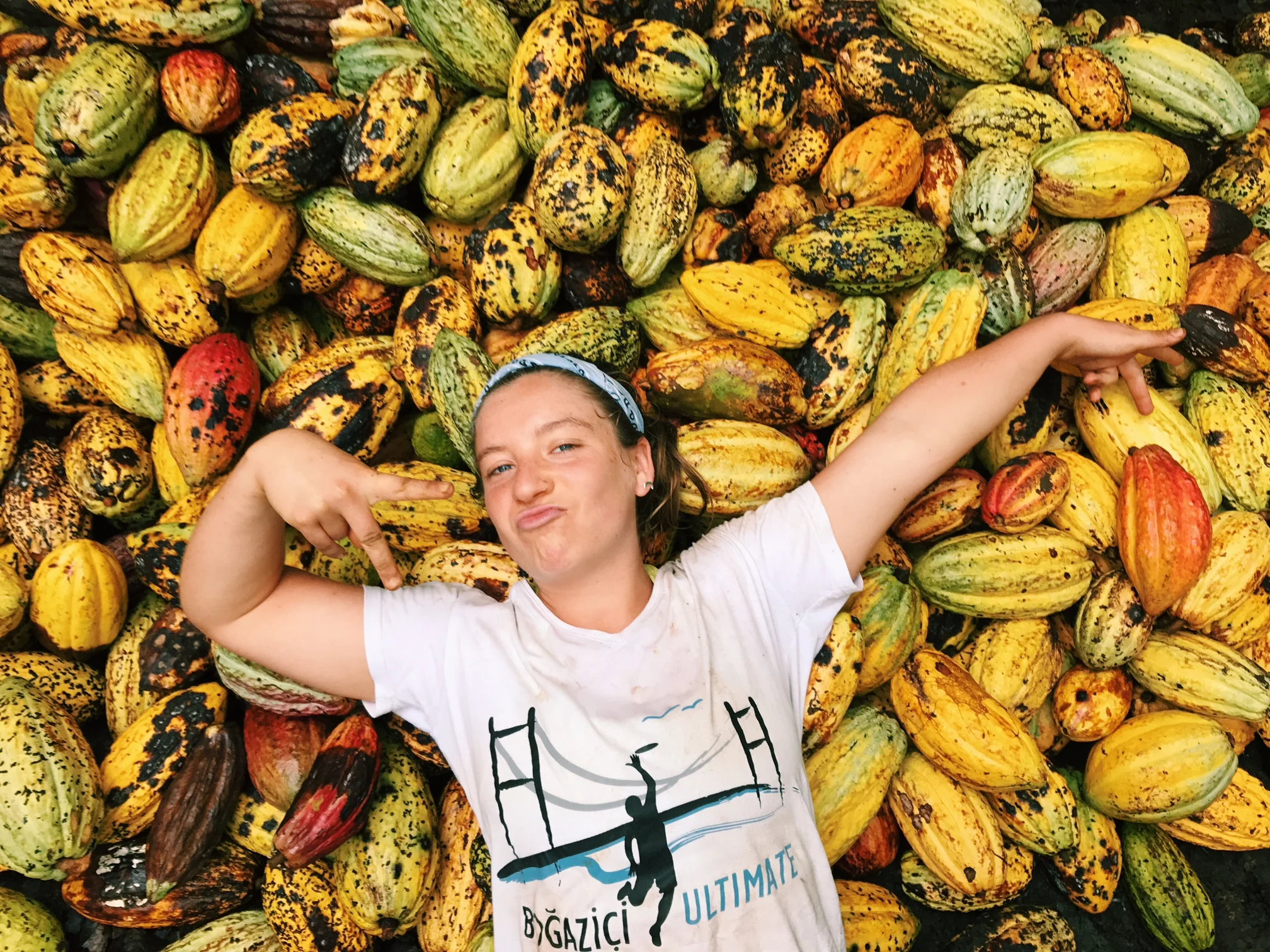
From Tree to Bar: How to Process Raw Cacao
Living in the tropics I found myself surrounded by cocoa trees, which was something you’d dream about as a kid. “Chocolate trees” But like so many things we’re used to consuming we don’t have the knowledge of how to process a raw material into something we can use, within the society we live convenience has removed us from the source. A simple act of making something gives us a connection to our environment.
by PJ Barton, Apprentice 2019
Living in the tropics I found myself surrounded by cacao trees, which was something you’d dream about as a kid. “Chocolate trees” But like so many things we’re used to consuming we don’t have the knowledge of how to process a raw material into something we can use, within the society we live convenience has removed us from the source. A simple act of making something gives us a connection to our environment. Walking through a supermarket we are surrounded by products readily available with a seemingly endless supply leading to a mass consumerism in our present society. This unsustainable consumption stems from our lack of involvement in the food we consume. So let us connect through raw cacao.
Throughout history so many cultures have cultivated cacao. From Mesoamerrica through to Europe. Its a world wide sweet enjoyed by millions, like most things the origin was much different to the present. Dating back 1400 BC chocolate was fermented into alcohol. It was a common commodity throughout Mesoamerica and the seeds were thought of as a gift from Quelzaledol, the goddess of wisdom. It was actually used as a currency.

Processing raw cacao pods into beans is easy, tasty and fun!!
Processing
After harvesting the seeds which should be a yellow or bronzed color you crack open the pods to reveal a white flesh seed with a brown centre. The fruit itself is commonly eaten in Indonesia and reminds me of a mangosteen.
Scrap the seeds out leaving them to ferment. Place in a bowl and leave with a lid to keep off flies. We used banana leaves. To help the fermentation, yeast can be added we put kombucha to inoculate the ferment. During this process maintain temperatures of around 40 degrees and gradually increasing to 50 degrees. It’s not dependent on this I’ve made cacao before by just leaving it alone but by monitoring the temperature you’re going to create an optimal environment from the enzymatic reaction breaking the acidity of the bean.

After the beans have fermented for 4 – 5 days spread the beans out in the sun to dry the beans. This can also be done using a low heat in the oven but let’s harvest the energy of the sun which will enrich the bean. This can take a few days. The outer shell will be easy to break and the raw cacao is ready to use as desired.
Alternatively you can then roast the nut in a wok or in the oven paying close attention not to burn the seeds. It will start to crackle and a fill the air with an intoxicating aroma of chocolate. Leave to cool and break off outer shell. These roasted chocolate beans can be used how ever you desire.

Chocolate doesn’t grow on trees but if we understand the process it suddenly feels like it. Using ingredients from there raw form makes us more conscience intertwining us with the food we are consuming leading to a sustainable outlook towards life.
In Mastatal we are fortunate to not only grow our own cacao but also live next to a family run buisness, The Iguana Chocolate. Why not come and stay with us as a guest and do a tour at the local chocolate farm!

Using Mountain Microorganism to Create Organic Fertilizer
The need to cultivate a “living soil” that is full of microbes is something I hear frequently in the organic farming and permaculture world. As an apprentice at Rancho Mastatal this year, I have the unique opportunity to look further into the universe of these small and unseen allies. A way into this world was through the Ranch’s process of making organic fertilizer, one that harvests and inoculates the soil with Mountain Microorganisms (MM). This is similar to compost tea, where we create a fermented fertilizer with microorganisms such as manure.
By 2019 RM Apprentice Amy Dodds
The need to cultivate a “living soil” that is full of microbes is something I hear frequently in the organic farming and permaculture world. As an apprentice at Rancho Mastatal this year, I have the unique opportunity to look further into the universe of these small and unseen allies. A way into this world was through the Ranch’s process of making organic fertilizer, one that harvests and inoculates the soil with Mountain Microorganisms (MM). This is similar to compost tea, where we create a fermented fertilizer with microorganisms such as manure. MM differs from this by using forest soil and duff layer to create a fertilizer. You can create MM fertilizer anywhere in the world so long as there are forests in your area that has a healthy amount micro life!
In just the second week of our apprenticeship, the Ranch hosted guests from Ecogrecia, another local farm and research centre who are using MM. We were were privileged to get a demonstration of how we can cultivate our own indigenous microorganisms. I will detail this below so you can create your own MM fertilizer but first here’s a bit on the science.
There are many diverse living organisms that improve the soil ecosystem, these include invisible bacteria and fungi and visible worms and insects. A few of the benefits of fostering this micro-community include: aeration of the soil, making nutrients available, fix nitrogen and prevent pathogens. With this in mind we want to cultivate soil in our orchards that is full of microbial life.

Agro-forestry systems at Rancho Mastatal
Our main farming practice at the ranch is agro-forestry. This is essentially using trees with other crops to create an ecosystem that mimics the tropical rain forest environment of Costa Rica. Most forests need a fungal dominated ecology, while still needing bacterial organisms, for optimal soil. The “fungal to bacterial biomass ratio” needs to be 10 parts fungi to 1 part bacteria. Especially important is the mycorrhizal fungi that live closely with tree roots to allow the plant to take up nutrients and water. Therefore we want to harvest a fungal dominated fertilizer. In the past Rancho Mastatal has used manure fertilizers which work well for gardens and vegetables but are less tailored for forest soils, due to their high bacterial rate. This is where Mountain Microorganisms come in!
Mountain microorganisms was originally a Japanese practice that take forest leafs and soil from native forest within the land you are growing in to create an anaerobic ferment (without oxygen). I see this is as beautifully symbiotic as we are inoculating the soil with indigenous microbes from the local environment. We essentially take the mother culture which contains the diversity and variability perfectly suited for your local forest.
Mountain microorganism fertilizer is a better process for our agro-forestry systems, than say compost tea made from manure, due to the high fungal microbes available in our mother culture. Rancho Mastatal has been using the MM process consistently for 3-4 years and noticed improved conditions in their food forest.
One of the first steps in this process, which we did with our apprentice team and the crew from Ecogrecia, is going into the forest and gathering the local microorganisms to create our current solid fermentation. Around the large well established trees, we harvested leaves and sticks that are crumbly and breaking down. They have the delicious white mycorrhizal growth on them. Under the leaves we collect the soil that contains the visible fungi.
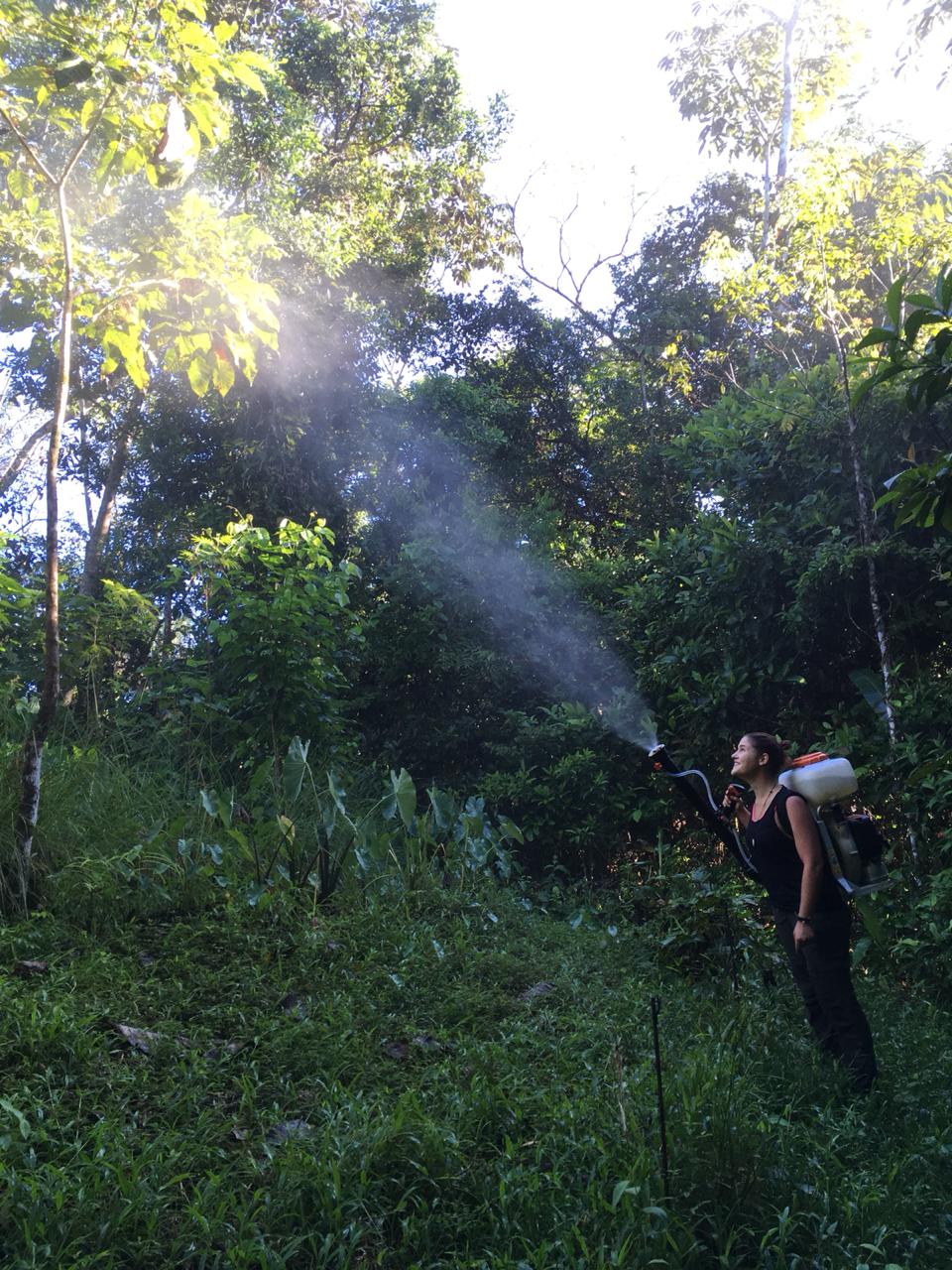
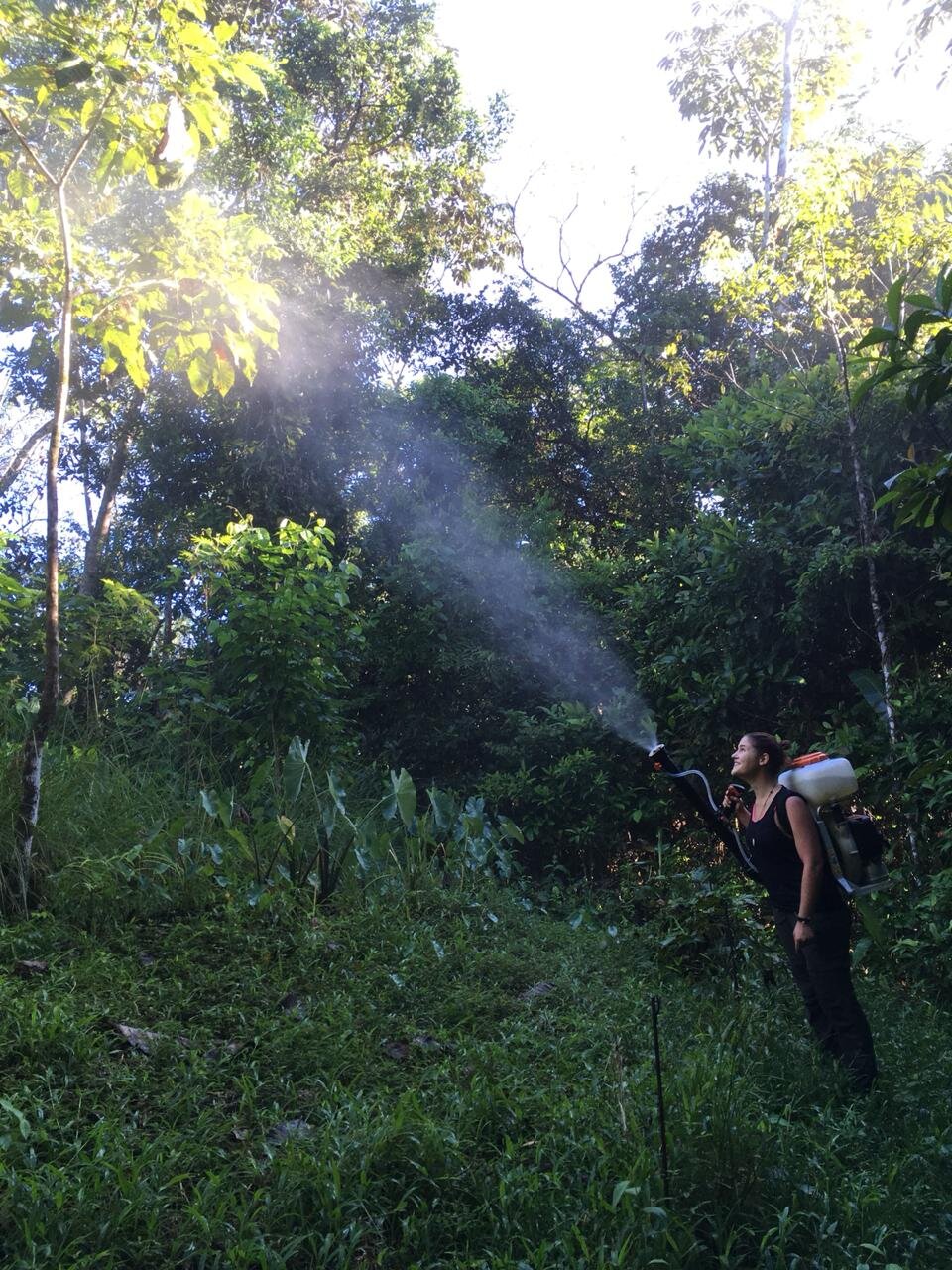
Spraying the orchards with an organic fertilizer
From this we can create a solid fermented product and then a foliar spray that will inoculate our soil with the microbiology that we need to improve our soil life. Once it is in foliar spray form we take our backpack sprayer once a week to our orchard trees. Below are the recipes for creating your own microorganisms:
Mountain Microorganism Recipe
MM Solid
3 sacks of Microorganisms
- This is the duff layer of brown leaves and sticks that contain the mycorrhiza
2 sacks of semolina
- This acts as the protein, other flour work such as yucca or green banana
1 gallon of molasses
- This is the sugar that provides the microorganisms with energy
- Alternatives include fruit or cane juice
1 gallon of water to dilute molasses
3kg of rock dust phosphate
55 gallon plastic drum to store (never metal)
Mix a layer of the duff with the semolina on a tarpaulin with your hands. Sprinkle the molasses and water over this as you are mixing layers of the duff and semolina.
Shovel the mix into your drum, while you have a friend stamp inside to compress and release any air (as this is an anaerobic ferment). Seal well and store for at least one month in the shade.
This lasts 3-4 years :)

mixing the the recipe above
MM Foliar Spray
5 kg MM Solid
1 gallon of molasses
55 gallon plastic drum filled with water
Add the molasses to the water. Use a screen sack to hang the MM into the liquid. Seal and let it sit for 5 days.
Use within 3 weeks.
When applying as a foliar spray, you can dilute with water. Make sure there is at least 10% MM liquid to be effective.
Inoculating the soil with micro-life is only one step in this process. Fungi thrive in high carbon environments so mulch, mulch, mulch! Watering and composting still need to be continued, especially in the tropical dry season.
Happy foresting and fermenting!
If you are interested in Permaculture and Agroforestry check out some of our upcoming workshops!
References:
Jeff Lowenfels & Wayne Lewis Teaming with Microbes: A Organic Gardener’s Guide to the Soil Food Web (2010)
Craig R. Elevitch & Kim M. Wilkinson The Overstory Book: Cultivating Connections with Trees (2001)
Phil Nauta Building Soils Naturally: Innovative Methods for Organic Gardeners (2012)
Scott Gallant Making Microbes: Fungal vs Bacterial Soil Life
https://permaculturenews.org/2016/11/14/making-microbes-fungal-vs-bacterial-soil-life/

Flexitarianism: Living and Sharing Solutions to Climate Change
DISCLAIMER: These are my thoughts and experiences on what can be a deeply cultural, charged and personal topic: diet. There is a lot we don’t know, especially when it comes to what a sustainable diet is. For one, most studies have been centred in high-income Western countries (Jones et al., 2016); it’s also still largely unclear exactly what a “healthy diet” should consist of, nevertheless what a truly sustainable society would look like. Integrating all of these concepts is an enormous challenge.
by Matthew Livingston
Matt is currently one of the Ranch's year-long apprentices.

DISCLAIMER: These are my thoughts and experiences on what can be a deeply cultural, charged and personal topic: diet. There is a lot we don’t know, especially when it comes to what a sustainable diet is. For one, most studies have been centred in high-income Western countries (Jones et al., 2016); it’s also still largely unclear exactly what a “healthy diet” should consist of, nevertheless what a truly sustainable society would look like. Integrating all of these concepts is an enormous challenge.
“Defining what represents a macro-nutritionally balanced diet remains an open question and a high priority in nutrition research.” (Song et al., 2016)
Before coming to the Ranch, I had been vegetarian for about a year and a half, predominantly for environmental reasons. Currently, I would probably classify as a “flexitarian” or “ethical omnivore”, as are most of the denizens here, with the majority of the diet being plant-based. Ideally ~95% of our calories would come from plants, due to extensive research on the health, longevity and environmental benefits of eating a predominantly plant-based diet (1, 2, 3). A 95:5 plant to meat ratio is manifest in all of the Blue Zones (4), examples being Okinawa & Sardinia, where people live the longest and most healthful lives in the world. Allow me to explain how I came to this decision and why I’m sticking with it for now…
My original swap to vegetarianism was influenced by my desire to live “more sustainably”, and healthily, as it is for many people now. I saw the documentary film “Cowspiracy” (bear with me) and this initiated my research into food and agriculture, which carried over into my environmental sustainability degree. It was also enough to shift one of my fundamental behavioural patterns – my diet. It was a little tough going at first, but I soon found that I didn’t miss eating meat much at all. I felt a bit better about myself, “knowing” that I wasn’t contributing as much to global warming, as my research indicated that changing one’s diet can be one of the most impactful ways of reducing your carbon footprint (Aleksandrowicz et al., 2016)…

Fast forward to May 2017, when I travelled to Ridgedale Permaculture farm in Sweden for my Permaculture Design Course with Richard Perkins. Richard is a proud meat-eater, being particularly fond of freshly line-caught fish, properly cured bacon & sausages, and a nice, juicy steak from locally reared, regeneratively farmed livestock, as viewers of his Youtube channel will know. He was keen to point out that there are in fact “no ecosystems on this planet that exist without animals driving the nutrient cycling” (Perkins, 2016). Ecosystems depend on the cycling of nutrients (and minerals) in order to function, and these nutrients can be accumulated, dispersed and concentrated by animals in such a way as to benefit the whole.
One beautiful example of this is the salmon of British Columbia, that feed the bears, eagles, forests and pretty much everything else that lives there with nitrogen and other accumulated minerals from the ocean when they return to their spawning grounds. Another was the Great Plains of North America, where tens of millions of bison roamed. These prairie lands were extraordinarily diverse habitats for a multitude of co-evolved flora & fauna, micro and macroscopic. Now they have predominantly been turned into endless fields of corn, wheat and soybeans, using fossil-fuel powered machinery and chemicals to maximise profit whilst depleting soil of not only its nutrients, contributing to erosion and nitrogen runoff, but its life too.
Regenerative Agriculture aims to work differently. The challenge is to maintain healthy yields and livelihoods whilst simultaneously enriching soil, biodiversity and ecosystems and improving the system’s ability to regenerate itself. Through various mechanisms, we can actually draw down carbon from the atmosphere and store it in soils and vegetation. What’s more, animals can help achieve this goal. Grazing animals such as bison co-evolved with grasses (which are extremely efficient sunlight accumulators, astronomically more so than our photovoltaic panels), such that massive herds would graze through perennial grasses whilst defecating and trampling the remnants down to create a mulch that left the soil covered, before moving on. The grasses would get a natural fertiliser boost but wouldn’t be eaten down completely, which meant that they could grow back and not have to deplete their soil nutrient reserves. Over time, this kind of rotational grazing, especially when well-managed, can build significant amounts of soil. At Ridgedale, they have employed it, along with other techniques such as Keyline Design, to build over 6 inches of soil in just four seasons. There is even a project called Pleistocene Park in northern Siberia that hopes to repopulate the Mammoth Steppe, which historically supported one of the largest densities of herbivores in history and could function as a massive carbon sink. Surely we need animals as a part of our (agri)culture, then?

Well, you might point out that ruminant animals like cows and sheep that we are now cultivating in extremely large numbers produce methane as a part of their digestion, a greenhouse gas with ~30 times more “global warming potential” than CO2. Greenhouse gas accountancy is a complex topic and there is still significant debate as to whether the sequestered carbon pays off the methane produced during the lifecycle of the animal (see Garnett et al., 2017 & P.P.S.); that said, it’s also possible that the earth historically supported much larger numbers of herbivores, many of which were likely driven extinct by humans thus contributing to ecosystem disruption, as discussed in Sapiens and elsewhere (7, 8).
Another common argument is that eating animals is calorically inefficient when we could eat what we feed them. I would say this is a partially valid point in that animals, especially cattle, often need more land and water to produce than their plant-based counterparts, but it’s less valid when discussing purely grass-fed animals whose rumens are evolutionarily designed to digest grass, which most of us humans obviously don’t do very well; this suggests that if you want to obtain food from a parcel of land that wants to be grassland, you could force it to be not grassland, or you could manage and eat animals that are designed to live in and perpetuate that ecosystem. The Sustainable Food Trust goes so far as to say “the only sustainable way to obtain food from grassland is to graze it with ruminants”, which does sound a bit extreme especially considering that rabbits and geese are just two examples of non-ruminants that can be grass-fed. Livestock especially are getting a lot of bad rap due to the significant environmental damages of deforestation for pasture (an example of forcing an ecosystem to be something it doesn’t want to be) and their methane and nitrous oxide emissions (Steinfield, 2006; Stoll-Kleemann, 2015; many others).

Whilst not negligible, I’m concerned that many of the livestock systems under scrutiny aren’t representative of best-practice regenerative methods and that there is definitely the problem of reducing a living creature to the efficiency metric of its greenhouse gas emissions per kg of meat without considering all of its other beneficial functions and services; this metric has led people to the conclusion that “landless systems” or feedlots are better for the environment (Garnett et al., 2017), despite animal welfare being known to be abysmal and where wastes are concentrated and rarely dealt with properly. These factors go against the principles of regenerative agriculture and thus wouldn’t be allowed to continue; yes, grass-fed cows and other ruminants require more land, but we could limit the amount of land devoted to raising them and thereby reduce the total stock and consumption. In this manner, by allowing animals and ecosystems to express their true functions and behaviours according to the co-evolutionary properties of the animals and their environments, it might be possible for humans to yield ethically sound animal-derived food that positively contributes to the whole-earth system.
There are also a few points I would like to discuss with regards to plant-based (especially vegan) diets. Vegetables and whole grains, which form the staples of most healthful plant-based diets, as well as fruits and nuts, obviously take some amount of energy to produce, thus we need to consider where this energy or fertility comes from. We also need to consider where the dietary fat, protein and vitamin B12 will come from (amongst other nutrients/minerals) when meat is abstained from completely; I believe it is possible to meet your protein needs on a plant-based diet (Ranganathan et al., 2016), but doing so in the dead of winter in a temperature climate in a sustainable manner might be more difficult (are the Inuits an unsustainable people?)

Even the “most sustainable”farming methods I am aware of (which may or may not be organic certified) acknowledge that the inputs to grow food ultimately have to come from biological nitrogen fixation, conversion via animals, or inorganic elements (chemicals). For example, compost is vital to almost all organic, traditional and regenerative farms, and often incorporates animal manure, which adds additional nitrogen and biology to the soil and ultimately to the plants. The only exceptions I can think of to this would be Jean-Pain compost (which uses only wood chips and water) and Masanobu Fukuoka style rice and winter wheat cultivation, where the straw from the previous crop was left on the field as mulch and nutrients. Even the ancient and incredibly successful Meso-american Chinampas systems, as well as the rice cultivating nations of China, South Korea and Japan, have utilised ferti-irrigation techniques comprised predominantly of the wastes of fish as nutrients. Thus, since no sustainable farming methods can use inorganic chemicals derived from fossil fuels, most consumers that eat a purely plant-based diet are still deriving their nutrients from (the functioning and inclusion of) animals… Perhaps the question then becomes can, should and how would we integrate animals into our farming systems without eating them?
I’m still considering the implications of these questions and my position on the frequency and type of my animal consumption. We’ve had four “Pig Parties” in the four months I’ve been here at the Ranch, and chicken about once a week on average, all of which was reared and slaughtered locally in Mastatal. This corresponds pretty well to a 95:5 plant:meat ratio (see P.P.P.S.). For the first of the two pigs I visited the farm where it lived, died and bore witness to how it was processed; for the second we had an intro on how to properly butcher a pig. I think this is a crucial missing link for the majority of meat consumers and we need to continue building awareness of the realities of industrial slaughterhouses. Both of the animals I visited lived outdoors in tropical home gardens, feeding on bananas and other food scraps, although I’ve now been told it’s likely they were fed some concentrated feed. Pigs will eat just about anything, including chickens – they are probably the ultimate organic material recycling animal. Feeding farm animals to other farm animals is illegal in many parts of the world, but we need to always be searching for ways to turn “waste” into food, and pigs are one effective way of doing so. They in turn provide manure to feed back into the ecosystem and, when the time is right, are themselves converted into protein, fat and flavour for dozens of people for multiple meals. They can also provide piglets so that the system can continue, perhaps indefinitely. Without pigs in this system, you would have to replace the dietary protein and fat, which in our climate would likely come from more annual beans and palm oil from cleared forest land, as well as find another method of recycling the food scraps (vermi-compost is great, but doesn’t provide food in return).

Based on this discussion, I would like to present my initial take on a scale to classify diets based on their ability to be sustained, from best to worst:
Local regenerative
Local organic certified
Non-local regenerative
Non-local organic certified (many vegetarians/vegans in cities)
Local conventional
Non-local conventional (most consumers)
Where locality is on a scale from hyper-local (within 5km), to local (within 50km), to regional (within 250km), to non-local (further than 250km). Another important variable that goes hand-in-hand with locality is seasonality. Thus a checklist for regenerative dietary choices might be something like:
Is it local? (as the crow flies to place of origin): <=5km — <=50km — <=250km — >250km — Don’t know
Does it come from your garden, your nearest farmer, your nearest market, or another country?
Is it in season?: Yes — No — Don’t know
Are you regularly eating avocado, chocolate or coffee in winter in a temperate climate? What can you eat and drink locally and seasonally to replace imported goods you habitually desire?
Are you consuming fermented foods and beverages? The Japanese have one of the strongest food cultures (called Washoku 和食) and longest lived people in the world, and 5/6 of their staple food ingredients are fermented foods. Fermentation is not only extremely beneficial for your health, but ties in beautifully with preserving the abundance of the harvest.
Was it produced regeneratively?
Did it build soil and/or sequester carbon?: Yes — No — Don’t know
Did its production support local farmer(s)/community? Yes — No — Don’t know
Did it use no chemicals and no or very little fossil-fuel powered machinery in its production? Yes — No — Don’t know

It is my guess that many consumers would tick No or Don’t Know for every field, whilst falling into the worst category (non-local conventional). We need to shift first from ignorance to awareness before we can shift to understanding and action – behavioural change is flipping hard! All I can say right now is the link between diet and planetary health is crucial in navigating our transition towards a sustainable prosperity.
Let me be clear: plant-based diets are absolutely a big part of the solution, and there are many cases (including the average Western diet) where meat consumption should be reduced, but nevertheless animals aren’t the enemy. Vegans, vegetarians and ethical omnivores have a common enemy, and that is industrial agriculture (especially feedlots, which are completely awful). Meat in moderation, i.e. Meat Mondays as opposed to Meatless Mondays, may be a way forward for many people, rather than jumping straight to 100% plant-based diets based on quinoa and avocados shipped in from someplace slightly more exotic. I think this better follows the Transition Ethic that Rob Hopkins thoroughly emphasises via the Transition Network, by meeting people where they’re at – there is an irrepressible demand for meat due to complex sociocultural factors that will take time to shift away from, but if we can make ethical compromises that simultaneously shift mindsets, we will be well on our way to a more symbiotic relationship between humans and Nature.

May The Triforce (Plants, Animals and Fungi!) Be With You!
P.S. Follow the debate here, and here.
P.P.S. For the adventurous you can read my Regenerative Agriculture Brief and explore the references there too!
P.P.P.S. Three meals a day with chicken for 52 meals and pork for 12 meals in a year = (365*3-(52+12))/(365*3)*100 = 94.2%.
References, a.k.a. some of the things I’ve read:
Badgley, C. et al., 2017. Organic agriculture and the global food supply.
Davis, K.F. et al., 2016. Meeting future food demand with current agricultural resources.
Garnett, T. et al., 2017. Grazed and Confused? Ruminating on cattle, grazing systems, methane, nitrous oxide, the soil carbon sequestration question – and what it all means for greenhouse gas emissions. FCRN, University of Oxford.
Jones et al., 2016. A Systematic Review of the Measurement of Sustainable Diets.
Perkins, R., 2016. Making Small Farms Work: A Pragmatic Whole Systems Approach to Profitable Regenerative Agriculture.
Ranganathan, J. et al., 2016. Shifting Diets for a Sustainable Future. World Resources Institute.
Smith, P.S. et al., 2014. AR5, WG3, Ch 11, Agriculture, Forestry and Other Land Use (AFOLU). Ar5, Wg3, pp.811–922.
Steinfield, H.G., 2006. Livestock’s role in climate change and air pollution. Livestock’s Long Shadow. Environmental Issues and Options, pp.79–123. Available at: http://www.fao.org/docrep/010/a0701e/a0701e00.HTM.
Stoll-Kleemann, S. & O’Riordan, T., 2015. The Sustainability Challenges of Our Meat and Dairy Diets.
Weber, C.L. & Matthews, H.S., 2008. Food-miles and the relative climate impacts of food choices in the United States. Environmental Science and Technology, 42(10), pp.3508–3513.
West el al., 2015. Leverage points for improving global
food security and the environment.


Making Microbes: Fungal vs Bacterial Soil Life
Organic gardeners and farmers understand the need to cultivate and protect soil microorganism life. The strategies to do this involve mulching, composting, and avoiding soil disturbance as much as possible. We know that these strategies, in addition to many others, encourage a healthy soil-food-web.

Organic gardeners and farmers understand the need to cultivate and protect soil microorganism life. The strategies to do this involve mulching, composting, and avoiding soil disturbance as much as possible. We know that these strategies, in addition to many others, encourage a healthy soil-food-web.
The soil-food-web is the interconnected matrix of invisible (fungi, bacteria, protozoa, nematodes) and visible (earthworms, beetles, arthropods) creatures that have a whole host of functions which create a healthy ecosystem for plant growth. They aerate the soil, decompose organic matter, make nutrients available, prevent nutrient leaching, break down toxins, protect plants from pathogens, fix nitrogen and so forth.
What we can take away from this bit of knowledge is that we want these organisms operating on our garden or farm. The best way to do this is by creating the habitat and food they need in order to thrive. This seems simple, but it quickly becomes complicated when we explore the details.
Each of these organisms does better with different food sources and each of them change their environment in different ways. In addition each species of plant we are growing thrives in different soil environments; apples and arugula have evolved very differently and the more we can support their evolutionary requirements the healthier the plants will be.
That becomes our starting point; where we ask:
What type of soil environment do our crops desire?
How can we then encourage the specific type of microorganisms to create that environment?
Fungal-Bacterial Ratio
Here at the Ranch we are growing tree crops, which as I've written in this blog before, thrive in an environment that mimics the forest ecology surrounding our orchards. One measure we can use to understand this ecology is the fungal to bacteria biomass ratio (F/B).
This is a measure of the portions of the microbial biomass, ie. all the living organisms in the soil, that is fungal vs that which is bacterial. The F/B ratio is primarily used to study the impact of human land disturbance on the soil-food-web. It can therefore also be used to determine what individual plants desire. For example annual grains and vegetables like a ratio of 0:3 to 1:1 and orchard trees thrive in 10:1 to 50:1 soils
Depending on the types of crops we are growing, again in our case tree crops, we may want to alter the dominance of fungi or bacteria in our soil. These microorganism, particularly fungi, are quite sensitive to changes in land usage, therefore we need to understand how different techniques affect this ratio and why we want the ratio to be high or low in the first place.
Ecosystem Mimicry
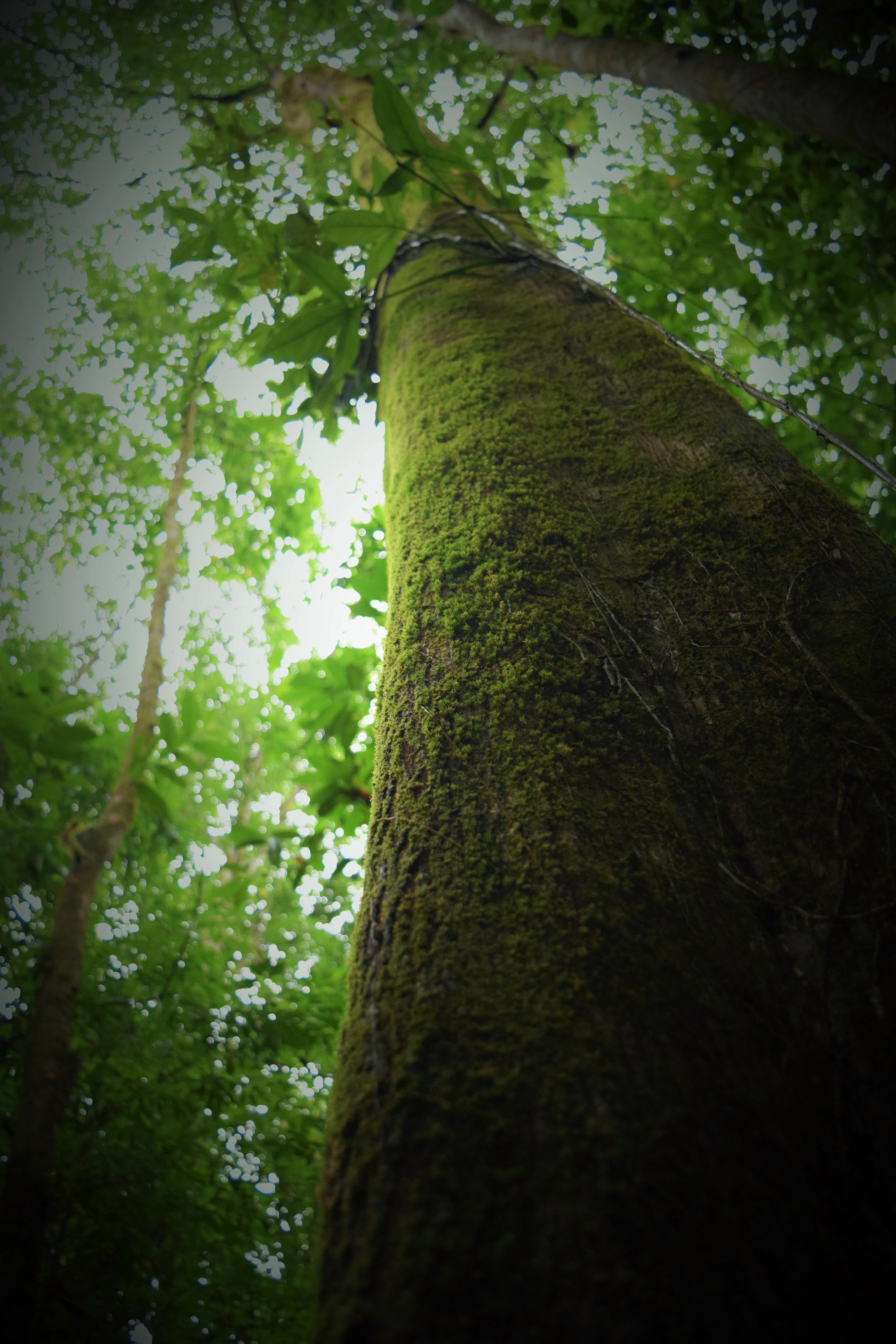
Forest soils have a higher fungi to bacteria ratio. Looking at quantities of each, as measured in a teaspoon of soil, we find that bacteria remain steady in quantities through the spectrum from agricultural soils to prairie soils to forest soils. In one teaspoon of soil there are 100 million to 1 billion individuals. Fungi, measured in yards of hyphae, though increase significantly along this spectrum. In agricultural soils they are measured in several of yards, while in deciduous forest soils hundreds of yards are found, and in coniferous forest this actually increases to miles.
Fungi love high carbon materials, think cellulose and lignin which are the primary building blocks of tree leaves and wood. Most bacteria struggle to break this down. Bacteria instead thrive with high nitrogen food sources, think manure, incorporated cover crops, etc.
We can gather from this how different gardening and farming techniques affect this ratio. Fox example mulching with wood chips encourages fungi, tillage kills fungi and encourages bacteria, and incorporating organic material into different soil horizons shifts the ratio toward bacteria.
Mineralization/Immoblization Balance
This makes it apparent as well that fungi and bacteria have different roles in the soil-food-web. Fungi are better are taking in and retaining nutrients as part of the mineralization/immobilization process. This is the process where microbes consume nutrients, thereby immobilizing them in their bodies and preventing nutrient leaching.
As they live their lives, producing waste and eventually being consumed further up the food chain, these nutrients re-enter the soil-food-web in a form that is soluble to plants. This is called mineralization. Fungi and bacteria are immensely important to different stages of this process and are each most effective depending on what they are being feed.
Knowledge to Practice
In our orchards we want to cultivate an F/B ratio between 10:1 and 50:1. There are many ways for us to work toward this goal, the simplest being understanding the ecology of fungi and providing the necessary shelter and food source. We do this by consistently mulching our trees with woody materials.

We can get more specific in the process by cultivating our own indigenous microorganisms from the forest and inoculating them directly into our orchards. This practice is called Mountain Microorganism (MM). We have been applying MM to our orchards consistently over the past year in order to shift our F/B ratio higher and gain the benefits, such as pathogen control, that these microorganisms provide to the native forests.
Next steps for us in this process is to use our microscope to analyze the biological content of our soil. With the proper training and experience we expect to be able to determine rough F/B ratios in both our soils and the MM we are applying as a foliar drench. We will be sure to let you know what we find.
For anyone interested in making their own microbes, below is the recipe we use. If you would like to learn more about this process you should consider joining us for our upcoming Permaculture Design Certification course in April/May of 2017.
Mountain Microorganisms Recipe
Phase 1: MM Solid

Ingredients
3 sacks microorganisms (duff layer of primary forest)
2 sacks semolina, yuca flour, or green banana flour
1 gallon molasses, cane juice, or fruit juice
1 gallon water
Instructions
Spread a layer of duff on a top and cover with a layer of semolina. Mix well with hands. Dilute the molasses with the water and sprinkle on top as you continue to mix. If you grab a fistful of the mixture it should be lightly damp and fall apart easily after you squeeze it.
Next, have someone stand in a 55 gallon plastic drum (never metal), while you shovel the material inside. As you shovel, the person stamps the mixture down with their feet to compress it and remove any air pockets. Seal the barrel and leave at least one month, stored in the shade.
The mixture should be good for three years. When ready, it should have a strong smell of lactic acid.
Phase 2: Liquid MM

Ingredients
5 kilos MM Solid
1 gallon molasses
55 gallon plastic drum filled with water
Instructions
Mix the molasses into the water. Put the MM into a screen sack and let hang in the water. Seal the drum and let sit 4 days.
Between day 4 and 15 this can be used as a foliar spray (between 10 and 100% ratio to water). After 15 days use the MM as a soil drench and after three weeks the product should be fully used up.
Once you have used the MM Liquid, you can make one more batch with the same sack of microbes. Just add 1 gallon molasses and refill the drum with water.
References
Lowenfels, Jeff, and Wayne Lewis. Teaming with Microbes: The Organic Gardener's Guide to the Soil Food Web. Portland, Or.: Timber, 2010. Print.
"Soil Health." Soil Health. N.p., n.d. Web. 15 Oct. 2016. <http://www.soilhealth.com/>.
News from around the Permaculture Community
Matt Duffy, from our 2015 PDC, wants to capture your story with his new film company No Mad Films. Duffy is an incredible story teller who we hope can come back to the Ranch, bring his cameras and capture our life in action.
Our collection of cast iron kitchen skillets and dutch ovens is extensive. A good cast iron skillet is by far the most basic but essential kitchen item for our team. Over the years we have learned a trick or two about their maintenance. This article, from Permies.com, sums up nicely how to use and clean cast iron.
The many Ranch friends at Round the Bend Farm, located in southeast Massachusetts are hosting a series of Fermentation Workshops with our very our Core Team member Laura Killingbeck. These come highly recommended for anyone in the area.
Abrazos
The Ranch Crew

Tips for Working with Tropical Soils
Soil, the ever fascinating topic to any garden guru or green thumb. Here at the Ranch it's all about topsoil, which is basically non-existent. The little soil that is present has a high clay content making it particularly susceptible to compaction. It is also highly acidic. The combination of the two means that without any additives it would be challenging to grow anything at all. So we've devised a number of methods to build up the topsoil, break up the clay and raise the pH throughout our orchard and garden spaces. These methods can be used anywhere in the world to improve your soil.
Lydia is one of our 2016 Apprentices in Sustainable Living. She has studied Horticulture and has a Bachelor of Environments (Landscape Architecture) from the University of Melbourne in Australia. She is super keen on plants and the fundamental relationship between plants and soil. Healthy soil is the key to healthy plants. This post is about soil in the tropics, including some of the challenges that exist and how these challenges are managed at Rancho Mastatal.

Sacha Inchi before a heavy mulch application.
Soil, the ever fascinating topic to any garden guru or green thumb. Here at the Ranch it's all about topsoil, which is basically non-existent. The little soil that is present has a high clay content making it particularly susceptible to compaction. It is also highly acidic. The combination of the two means that without any additives it would be challenging to grow anything at all. So we've devised a number of methods to build up the topsoil, break up the clay and raise the pH throughout our orchard and garden spaces. These methods can be used anywhere in the world to improve your soil.
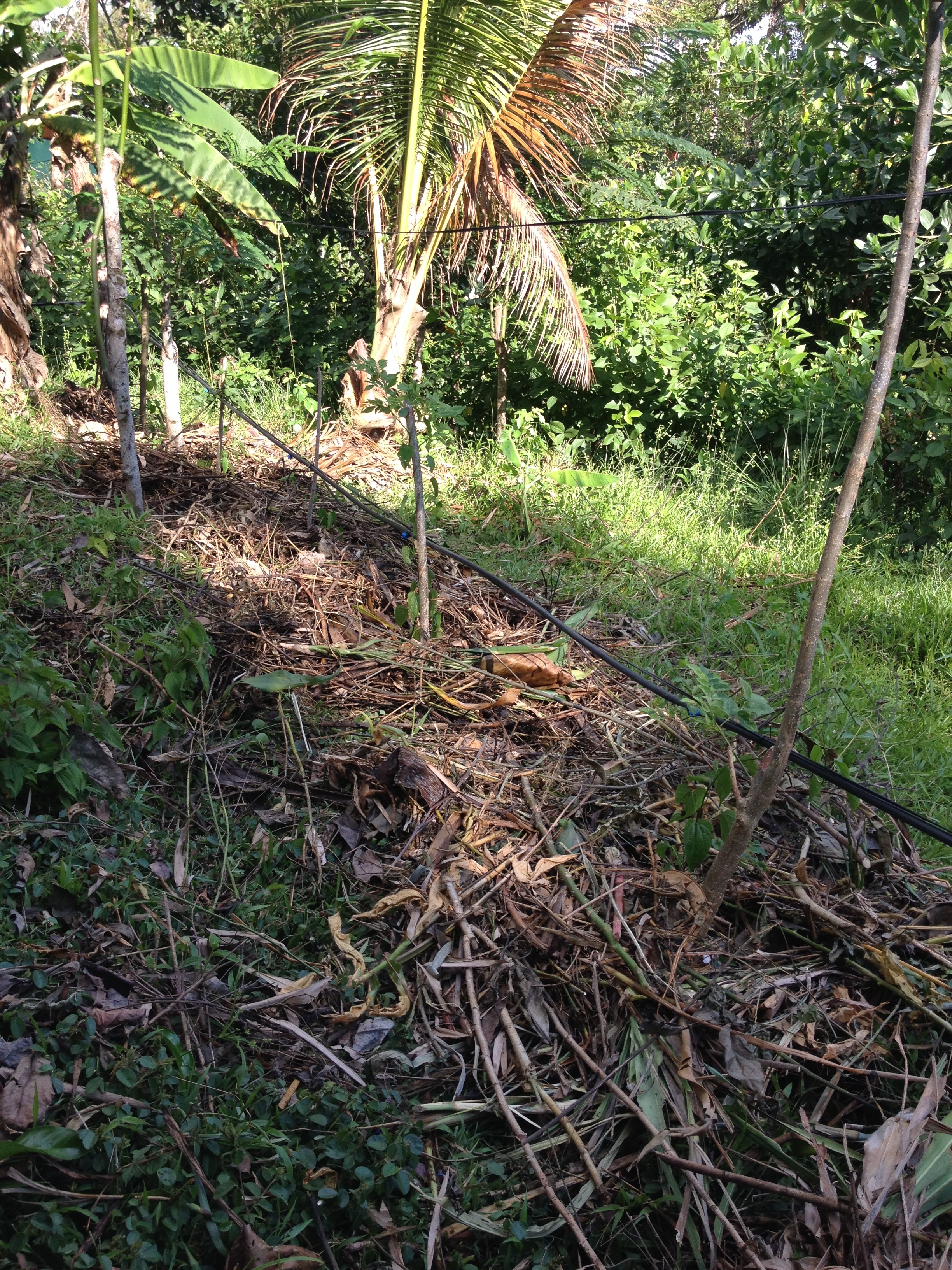
The same plants as above after a healthy mulch cover.
First and foremost, topsoil! How do we do it? The majority of nutrients in the jungle ecosystem are stored in plants. When nutrients become available plants are quick to soak them up because there is stiff competition when living in such close proximity to your neighbors. This means that plant biomass is an incredibly rich and abundant source of nutrients. Plant biomass refers to all plant material, living and dead including leaves, trunks and branches. The main way we utilize this biomass is what Scott refers to as "doughnut" mulching, basically forming circular doughnuts of plant material around the base of our fruit and nut trees. This mimics nature by following the 'top-down' approach that allows microorganisms to move the material down. It is important to note that mulch should never touch the trunk of your trees because this will cause rot. A 5 inch radius between trunk and mulch is a good aim.
Another method used in zone 1 to improve soil quality is to bury pieces of wood under the soil in our garden beds. The wood acts like a sponge, retaining water throughout the dry season and, reducing compactness in the wet season by aerating the soil. It also provides habitat for microorganisms, crucial for plant health and growth. Our garden beds are mulched regularly with dead leaves collected from the forest floor to retain moisture in the soil, reduce weed growth and add nutrients. This is known as Hugulkulture.
Now, onto soil pH, the next big topic around soil in the tropics. There are 6 cooking methods used at the Ranch, 3 of which rely on wood, the rocket stove, the biochar stove and the pizza oven (read here for more about our alternative cook stoves). With 3 meals per day, 6 days a week being pumped out of our kitchen, you can imagine how much charcoal and ash we produce. Instead of simply disposing of this alkaline-rich bi-product we add it to our soil.
Charcoal is a carbon-rich soil additive, that adds alkalinity to the soil, raising the pH. It has a high surface area on a microscopic level which means it is capable of storing water and nutrients in the soil, making it a valuable additive in both the dry season when water is required and the wet season when nutrients are required. The addition of charcoal also aerates the soil and breaks up the clay. It is essential to note that when adding charcoal to soil it must be soaked in a nitrogen solution first, such as compost/ worm tea. This will ensure it doesn't lock up precious nutrients from the soil. Ash is similar to charcoal but much finer. It also adds alkalinity to the soil, raising the pH. Limestone is another soil additive used to raise the pH and up the alkalinity. We spread lime around the base of our fruit and nut trees, vines and shrubs.
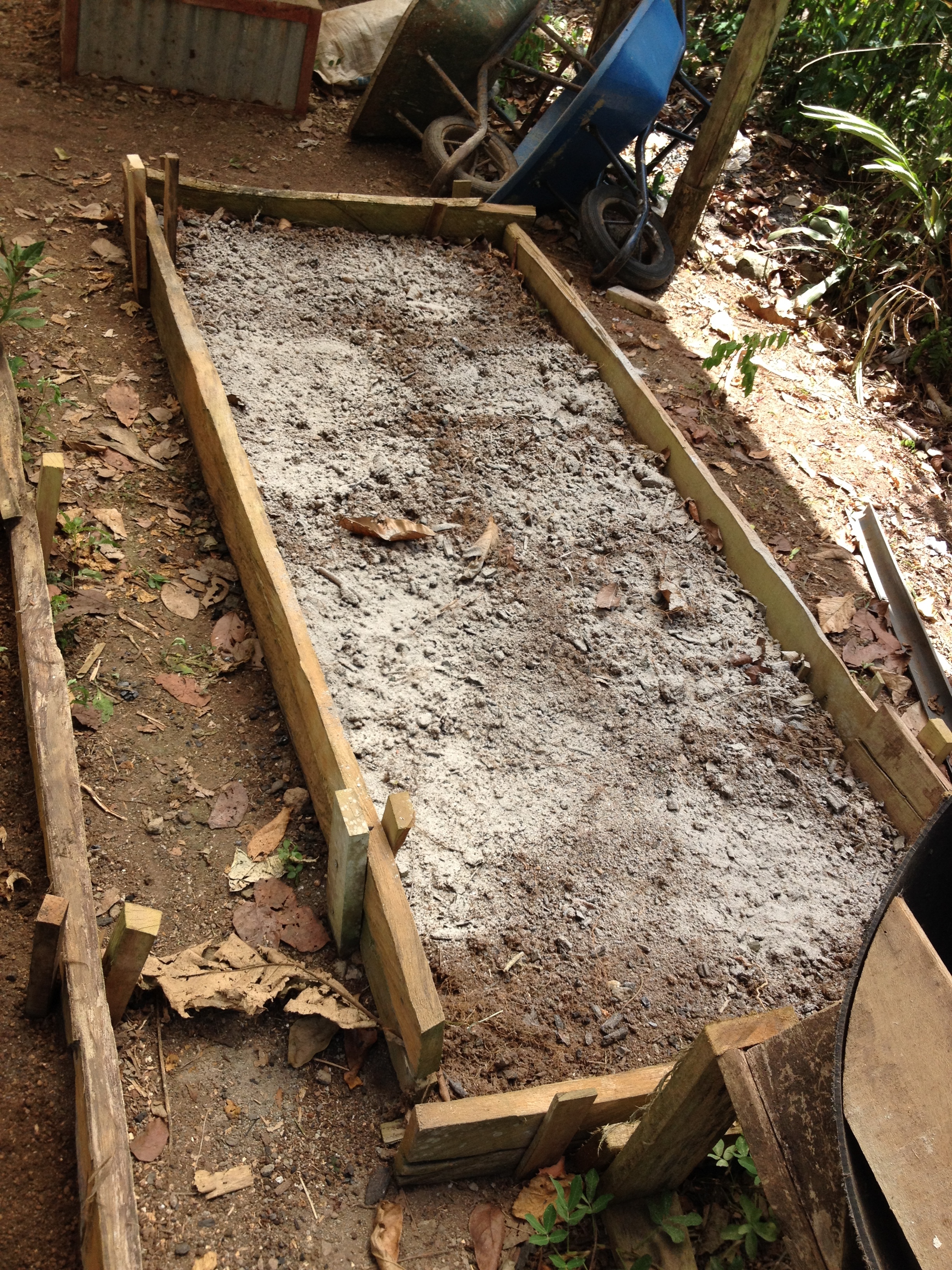
Lime applied to a raised garden bed.
Nitrogen is one of the most important soil nutrients and in order to produce good crops, nitrogen is essential. What better way to introduce nitrogen into the soil than with nitrogen fixing plants. These plants produce "cake & cookies" i.e. sugars in the soil that attract nitrogen fixing bacteria. These bacteria are capable of using these sugars to convert nitrogen gas in the soil into a plant soluble form, accessible to the surrounding plants. Believe it or not, plants control this process depending on how much nitrogen they feel they need.T he more sugars the plants produce, the more sugars the bacteria consume, converting this sugar into nitrogen for the plants. It's an incredible natural process! The nitrogen fixers most extensively used here are Acacia mangium, Shizolobium paryhybum, and Madero Negro, all of which are trees. We also use peanut grass, a spreading ground cover. Most plants in the Leguminosae family can be used as nitrogen fixing plants.
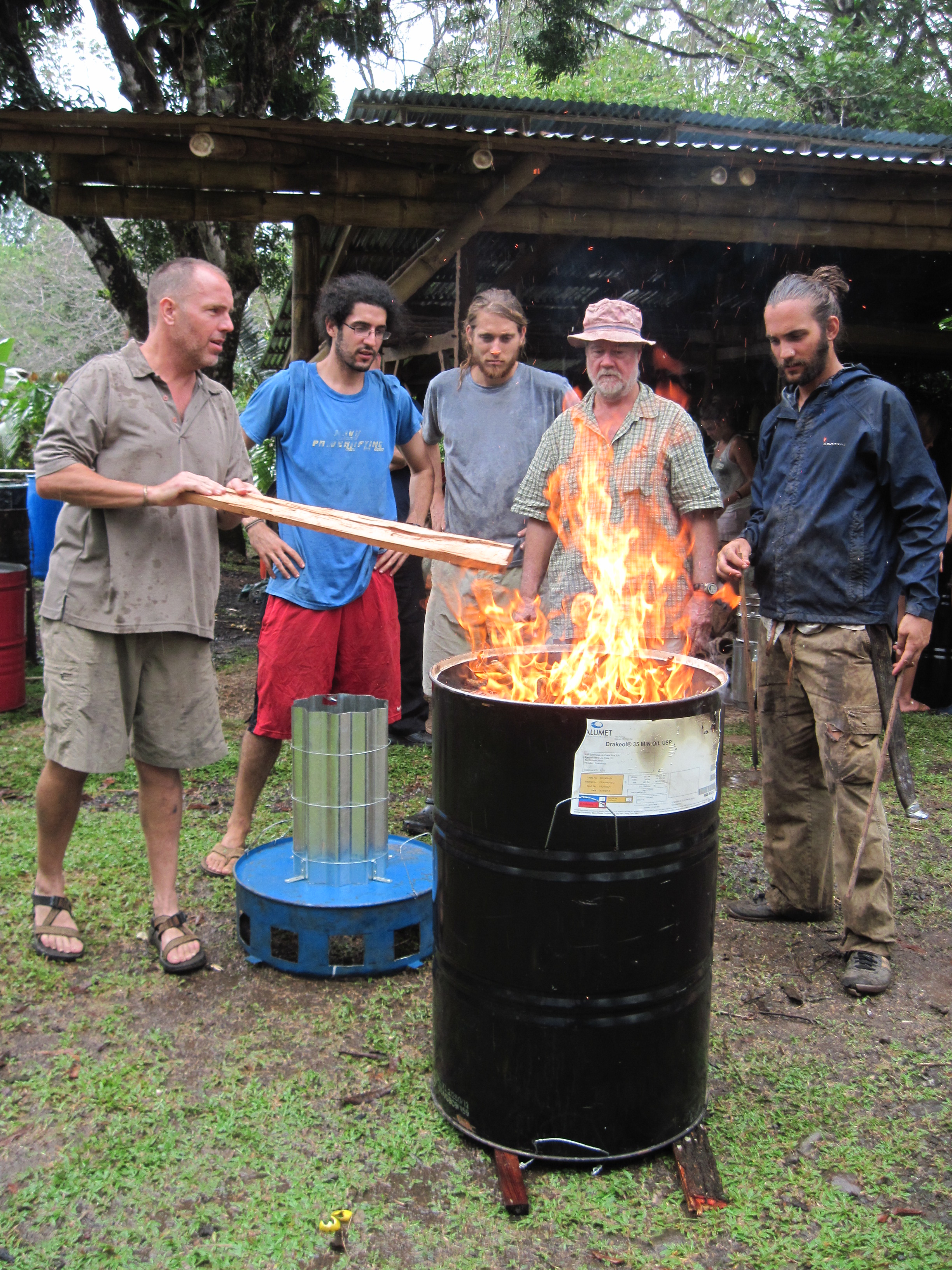
Making Biochar with a TLUD System.
Potting soil is another essential part of our plant operation here. The recipes used for potting soil change depending on what's available and required. One of the recipes we use is 2 parts forest soil plus 2 parts worm farm compost plus 1 part sifted builders sand. We collect the forest soil from the forest floor where a build up of plant material is prevalent e.g. a puddle, low point or valley. This is where nutrients gather because soil and small plant material is deposited (read here how we cultivate mountain microorganisms). The worm farm compost is a bi-product from our bio-digester system. This waste treatment system converts cow manure into methane gas, while leaving the fibrous material behind for the worm farm. The key to a great potting soil is to balance soil pH and ensue there is a rich source of matured compost where microorganisms thrive.
So there you have it, the challenges and of course the fun of soil in the tropics! Creating and enhancing topsoil, balancing soil pH, in this case raising it, balancing the clay content of your soil and making nutrient rich potting soil. I hope you can take some of these tips away and enrich your soil wherever you are. Here's to happy soil and abundant plants.
NEWS AND NOTES
We have a number of life changing workshops coming up.
We rely on all of the amazing ambassadors to our project to spread the word; if you know of anyone who needs a get-life-into-gear experience, send them to one of our classes!
Abrazos,
The Ranch Crew
Categories
Topics
- Agriculture 6
- Agroforestry 21
- Animals 2
- Apprenticeship 19
- Appropriate Technology 6
- Backpacking 1
- Bananas 1
- Basic Pantry 4
- Biochar 1
- Books 3
- Build Your Own Home 1
- Central America 5
- Chiles 1
- Cinnamon 1
- Clay Carving 1
- Climate 2
- Climate Change 1
- Cob oven 1
- Communication 5
- Community 24
- Compost 2
- Composting Toilets 2
- Condiments 1
- Conservation 2
- Cooking 4
- Costa Rica 18
- Design 10
- Earthen Construction 10
- Eat Local 2
- Ecohome 1
- Education 9
- Environment 3
- Ethics 4
- Farm to Table 12
- Fasting 1
- Fermentation 14
- Food 22
- Food Choices 8
- Food Forest 8
- Food Processing 15
- Food Systems 12
- Gap Year 1
- Gardening 5
- Ginger Beer 1
- Harvest 2
- Health 12
- Healthy living 5
- Homemade 2
- Homestead 8
- Internet 2