

BLOG
Stories, articles, and updates from the Ranch community.

Tropical Brewing
The craft brewing movement has migrated to Central America and the Caribbean. A growing number of small scale artisanal producers are building on the American Craft Brewing tradition by incorporating local spices and fruits into traditionally brewed ales. To distinguish themselves, from their temperate counterparts, they are adding a tropical flare and creating innovative flavor combinations
by Connor Harron
The craft brewing movement has migrated to Central America and the Caribbean. A growing number of small scale artisanal producers are building on the American Craft Brewing tradition by incorporating local spices and fruits into traditionally brewed ales. To distinguish themselves, from their temperate counterparts, they are adding a tropical flare and creating innovative flavor combinations. For example Domingo7’s Maracuyá Pale Ale (that’s Spanish for Passionfruit) in Costa Rica, Ocean Lab’s B.O.B. - Blood Orange Blonde in Puerto Rico and Lu Bru’s Maiz Azul (Blue Corn) Ale in Mexico all demonstrate how local producers are beginning to incorporate regional ingredients into local craft beer movements. This is surely a positive development and one that leads us to consider other ways we might be able to further highlight local and seasonal ingredients into craft beers.

These efforts will help to make brewing both more sustainable and position craft brewing as a vehicle for more thoroughly exploring terroir, which describes the potential for fermentation to be used as a method of expressing the unique environmental conditions of the places in which our ferments are produced. By using exclusively local ingredients as well as wild captured yeasts, we have the power to capture the unique flavors of seasons and regional differences that allow for near infinite variation and creativity to explore new combinations of flavors that are rooted in cultural tradition while simultaneously pushing the frontier of artesian brewing. As much as I love finding good craft beer in places like Mexico and Costa Rica, I constantly find myself asking if it really makes sense to be brewing beer with imported German Barley and Hops from the Pacific Northwest United States when there are such a plethora of sugar sources and bittering herbs available locally in nearly every corner of the globe. Could we instead develop beers using a hybridized process and create products that are truly local while still maintaining the key characteristics that make beer, beer?
Speaking of, have you ever asked yourself what it is that really makes a beer? It turns out, the answer really depends on who you ask and where you live. In the most general terms, beers are fermented from carbohydrate rich starches (typically grains such as barley) that first need to be enzymatically converted into simple sugars and extracted into a liquid malt before the substrate can be fermented to produce appreciable levels of alcohol. Wines and Ciders on the other hand, are fermented from fruits and simple sugars that can be fermented into alcohol with limited or no processing. In the case of beers, bittering herbs such as hops are commonly added to provide antimicrobial properties, improve shelf stability and add complex flavors to ferments. In the United States, it turns out that hops are not required in the production of beer and that there are many malt substitutes that are allowed in the production of beer, including “rice, grain of any kind, bran, glucose, sugar, and molasses (TTB Ruling, 2008).” This definition is actually quite liberating, and creates the opportunity to experiment with non-traditional malts and bittering herbs in ways that will promote creativity and improve the sustainability of the craft brewing market globally. This flexibility in malt production will be especially important given that recent climate models suggest that the regional distribution of barley production will become increasing restricted over the next 20 years (Nature, 2018).

In Costa Rica, we have been experimenting and finding repeated success using a wide range of local ingredients including banana, corn, rice, cacao beans, coffee and local cane sugar for producing malts. Corn and bananas, for example, both have long cultural traditions of being used in the creation of local beers. In Eastern Africa, Bananas have long been used to create malt for the production of banana beer (Urwaga or Mubisi as it is locally known). Bananas make for an interesting malt base because they fall into a relatively unique category of fruits that when ripe are rich in both simple sugars and complex carbohydrates that can be easily fermented into a strongly alcoholic brew while maintaining a mouthfeel that is remarkably similar to beer brewed from barley. When the ripe bananas are boiled for several hours, the sugars begin to caramelize, transforming the flavor of the malt into a sweet, neutral flavored base that remarkably, tastes very little of banana, making it an ideal substrate for mixing with bitter herbs or other local products such as coffee and chocolate that can be fermented into either an Ale or Stout like brew.

Conversely, in many parts of South America, but perhaps most notably in Peru, Maize has been used for centuries to produce a corn beer called Chicha. Unlike barley, which when sprouted produces a large concentration of Amylase Enzymes (the key types of enzymes needed to convert complex carbohydrates into fermentable sugars), to make a corn beer, these enzymes need to come from another source. The indigenous peoples of South America developed an ingenious solution to this challenge when they discovered that chewing the cooked corn would transform the starchy, carbohydrate rich grain into a sweet masa that could then be re-boiled in water and strained to create a fermentable Wort made purely from Maize. Although many foreigners cringe when they first learn about the process, for the Inca’s, it was a powerful community building practice that would bring people together to sit around the fire, alternating between sharing stories and laughter while chewing the cooked corn and then depositing all of the masa into a large pot. Although they almost assuredly could not have fully comprehended the transformations that were taking place, their solution was so ingenious because human saliva is packed full of the enzymes needed to break down the carbohydrates in corn into fermentable sugars. I experimented with the traditional process a couple years ago, and I have to admit it was a powerful community building process that for me, took the idea of collective fermentation to a whole other level. Talk about terroir!
The problem with the traditional process is that it is incredibly labor intensive. If you are lucky, like me, you might be able to convince your friends to help you chew a few pounds of corn once or twice for the novelty of the experience, but you are likely to be hard pressed to find a consistent source of labor to chew through the many pounds of corn you will need to produce even a few gallons of Peruvian style Chicha. Fortunately, today we have access to many sources of amylase besides our saliva. As it turns out, ripe bananas (and in particular, ripe banana peels), contain a very high concentration of the same amylase enzymes needed to convert the starches in Maize into fermentable sugars. If you think about it, this actually makes a lot of sense. Unripened green bananas and plantains are a very starchy staple food crop that is used culinarily in a similar fashion to potatoes. As the skin yellows and the banana ripens however, the banana naturally transforms those carbohydrates into simple sugars that make dessert bananas so pleasant to eat directly out of hand.
Due to the high concentration of amylase enzymes present in ripe banana peels, they can be dehydrated and pulverized into an enzyme rich powder that can be mixed with ground maize and water and then mashed similarly to a barley based beer between 140-160 F for 2-24 hours (depending on the ratio of corn to powdered banana peels used) before being strained and boiled to make a fermentable wort. You’ll need to taste the Mash or use iodine strips to determine when the conversion has been completed. There are actually lots of fruits and vegetables that are rich in amylase enzymes. Sweet potato, for example, has such a high concentration of these enzymes that its peel is often used in the commercial production of Amylase.
Alternatively, instead of using the enzymes present in another product, it is also possible to ferment grains with certain types of molds that consume starches and in turn naturally produce the enzymes needed to convert the grains of carbohydrates into fermentable sugars. In Japan for example, Aspergillus Oryzae (or Koji as it is better known), is a humble yet miraculous mold that has been grown on rice for millennia in order to sweeten the rice and make Sake. It is also the key ingredient for making naturally brewed Soy Sauce or fermenting Miso due to the rich diversity of enzymes Koji produces that not only sweeten carbohydrate rich foods, but also break down proteins into amino acids that are the basis for savory foods and the flavor of umami. Due to these impressive properties, koji has now made it’s way out of Japan is slowly become increasingly familiar around the globe. This is assuredly a wonderful thing, because it has now been well established that Koji can be grown on a variety of substrates and virtually any grain, including rice, barley and corn, making it an ideal candidate for assisting in the brewing process anywhere on Earth.

To further explore local flavors and novel combinations, while boiling our worts we have been experimenting with using a variety of local bittering herbs and teas to add complex flavors to our beers, including ginger, turmeric, lemongrass, vanilla and many others. During either primary or secondary fermentations, we use nylon mesh bags weighed down with boiled volcanic rocks to infuse fresh fruit from the farm such as Pineapple, Soursop, Starfruit, or freshly roasted Cacao Nibs, just to name a few examples. Finally, by fermenting our beers with mixed cultures, wild captured yeasts and/or locally adapted strains, we have been able to produce ales with several layers of harmonious flavors, which provide depth and complexity that is only possible to achieve with mixed culture fermentation.
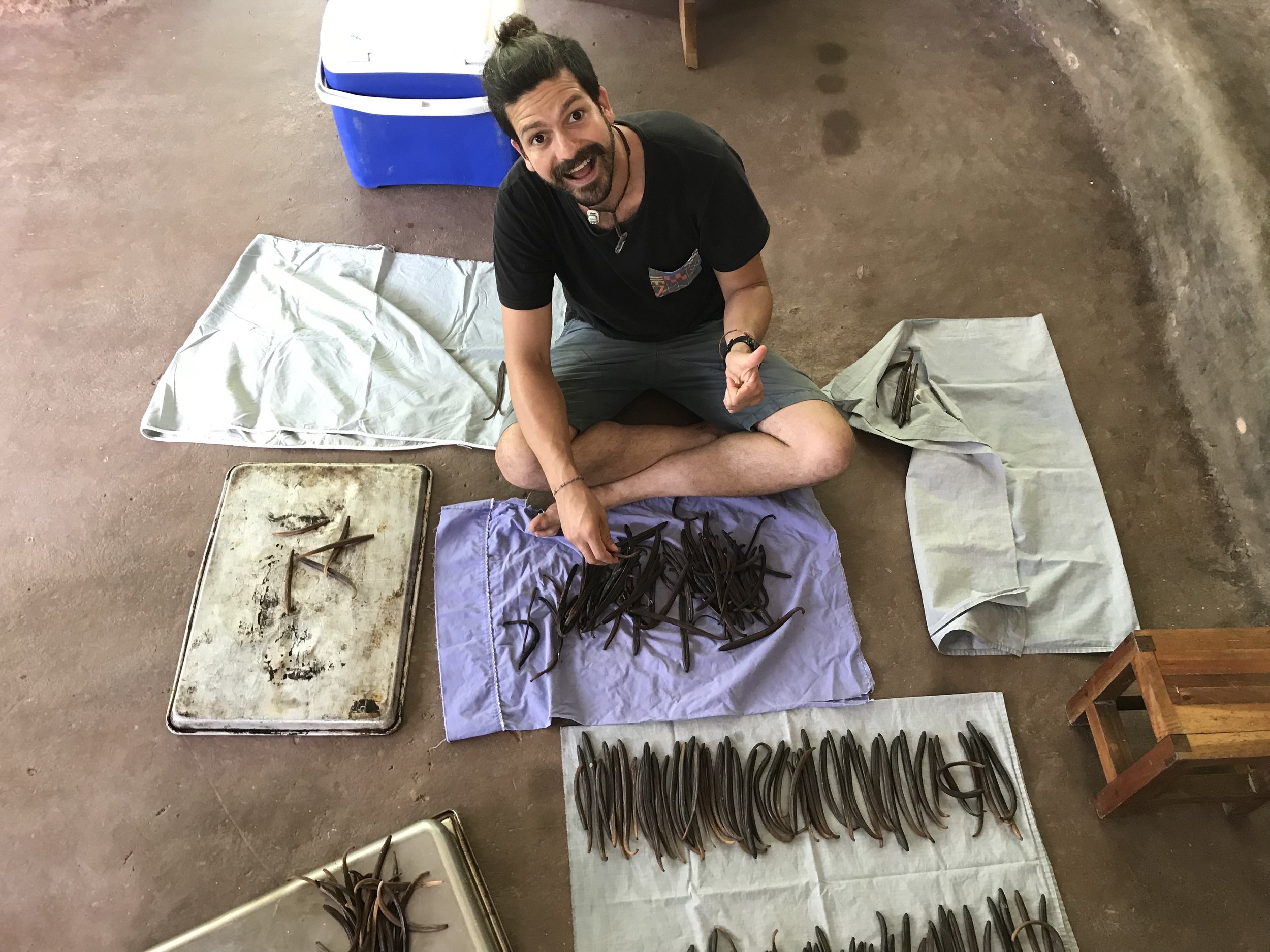
I would not have believed what a powerful role yeast and bacteria play in the creation of complex beers and wines when I first started brewing over a decade ago. Now however, I have learned first hand just what a difference the cultures we use can make. The experience of trialing yeast captured off of different fruits and flowers has led me to encounter flavors I never would have dreamed possible. Some have certainly been on the far side of the funky extreme, including cultures that produce the dreaded odor of sweaty feet or burnt rubber. This however, is exactly the reason for small scale trials rather than placing our faith in large scale spontaneous fermentation. Once you discover the joy of fermenting a simple malt of dissolved sugar or Dry Malt Extract with wild yeast and tasting apples, pears, or other citrus fruits magically appear in the finished product, I believe that like me, you will never want to use a commercialized yeast strain on it’s own again.
I believe that by drawing from the richness of our cultural traditions around the world, we have the potential to greatly expand the breadth of our palates and to more intimately link our brews to the time and place in which they were crafted. The craft brewing revolution is still in its infancy and if I am to have a part of to play in it’s development, then Ginger Hibiscus Sake Hybrids, Banana Coffee Stouts, and Mayan Chocolate Ales will be just the tip of the iceberg.

If you would like our simple Hooch recipe, read our blog article with step by step instructions. If you want to learn more about the wild world of fermentation consider joining us for our year long apprenticeship where apprentices go deep into advanced fermentation techniques.
Hugulkultur in the Tropics
Hugelkultur means hill or mound in German combined with culture. It has been practiced in Europe for hundreds of years. Hugelkultur is a simple agricultural practice that doesn’t take much to set up and provides numerous benefits.
by Ben Behrend, 2019 Apprentice
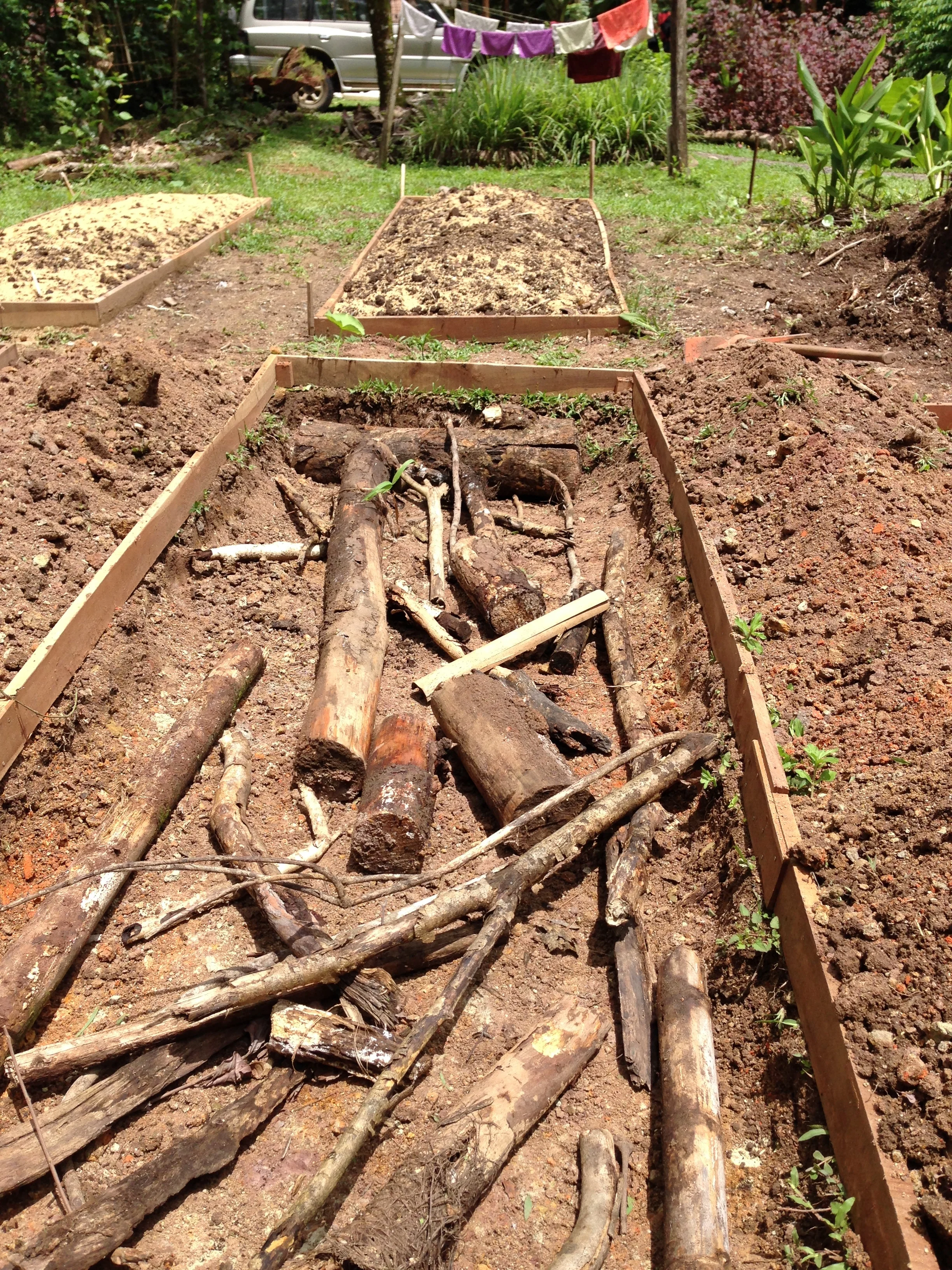
Hugelkultur means “hill” or “mound” in German combined with “culture”. It has been practiced in Europe for hundreds of years. Hugelkultur is a simple agricultural practice that doesn’t take much to set up and provides numerous benefits. As the wood decomposes it creates air pockets; it releases nutrients slowly and also absorbs and retains water. This retention of water is important during drier periods or places like the desert or the dry season in the tropics.
This year at Rancho Mastatal, it has been hot and dry, causing strain on many of our plants. Immediately surrounding our main gathering area/kitchen is zone 1 which would be a great place to experiment with hugelkultur. Not much has been written on Hugelkultur in the tropics. Several groups of apprentices have trialed using woody material underneath garden beds. Whilst it is difficult to say with certainty that due to the hugelkultur practices yields have increased, it is safe to say that yields have increased and i would summarize that this due to many factors one of which is the use of hugelkultur. I feel inspired to continue experimenting myself and see how it works first hand. Below are instructions that you can follow to make your own hugelkultur.

· Dig a foot or two of the top soil and put that aside.
· Pile in decomposing tree limbs the more “rotten” the better, biggest on bottom and working up with smaller. Some people use burned logs, or add ash for extra potassium. Not all woods are created equally when it comes to hugelkultur
o It is not good to use Cedar for example as it takes longer to decomposes due to its natural pesticides/ herbicides/anti-fungal/anti-microbial properties. Black locust won’t break down fast and is very toxic. Based on this i would guess that Spanish Cedar and any hardwood used as fence posts may not be suitable in the tropics either eg Guachipelin, Madero Negro etc…
o Woods that work best: Alders, apple, aspen, birch, cottonwood, maple, oak, poplar, willow in temperate climates. For the tropics i would guess that any wood refered to as “semi-duro” would work i.e. any medium strength hardwood eg. Roble, most fruit tree woods etc…
o Layer the sod on top of this
· Layer sheet mulch an example
o 5 inches well aged compost
o 4 inches manure
o 8-12 inches of hay, straw, dead decomposing leaves, seaweed
o 1 inch of newspaper/cardboard
o Soil amendments (blood meal, bone meal, manure)
Letting the mound “rest” for several months, or even 1-2 years before planting is sometimes recommended. Beds are built up in a mound that can be up to waist height, any desired a length, and a narrow width (one source recommended three feet width). The recommended angle of the mound is 60-85 degrees by some sources, creating a triangle. Others, make a less steep slope that is also documented to work well. Over time as the wood decomposes it creates a sponge like bed underneath. This holds the moisture and produces lots of nutrients and fungal friends.

Toby Hemenway mentions in “Gaia’s Garden”, you can start potatoes a month early in this kind of bed. “Some naturalists theorize that roots and fungal mycelia may translocate water from these woody caches to plants and fungi many feet away.” (Gaia’s Garden, pg. 70). Wood locking up nitrogen has been a concern by some yet Hemenway feels wood decomposes so slowly that very little nitrogen is tied up by microbes gnawing at logs.
Over the first year, your hugels may sink as much as a foot depending on the climate. This is a natural settling of the pile, as the mound breaks down and decomposes. If you want to “rebuild’ hugels at the beginning of each year you can add more compost, otherwise you will produce excellent humus by the time your hugel levels out. Hugelkultur offers an attractive way to build top soil and retain water during the dry season.
We will keep you updated with our progress, in the mean time let us know what you are trying to do at home or have done with hugelkultur!
Interested in having the opportunity to learn whilst doing? Why not apply for our year long apprenticeship. Can’t dedicate the time to our year long apprenticeship, why not join us for our shorter internship?

Gardening and Permaculture practices at the Ranch
Here at the Ranch the year long apprentices have various roles and functions that support the Ranch community. By taking on responsibilities and managing certain areas we the chance to learn and experience those areas on a deeper level . Part of the educational model created by the ranch team is a monthly rotation of these so called life skills. Each apprentice transitions their life skill to the next apprentice, passing on all of the relevant information to their colleague in order to complete the various tasks associated with each life skill.
by Diana Dagash
2019 Apprentice

our front gardens
Here at the Ranch the year long apprentices have various roles and functions that support the Ranch community. By taking on responsibilities and managing certain areas we the chance to learn and experience those areas on a deeper level . Part of the educational model created by the ranch team is a monthly rotation of these so called life skills. Each apprentice transitions their life skill to the next apprentice, passing on all of the relevant information to their colleague in order to complete the various tasks associated with each life skill.
One of the life skills is currently called the Garden Gnome. I would like to share some of my experience and reflections from doing this task every morning for a month. The garden gnome is in charge of maintaining the front gardens. This is referred to as our zone 1 garden using permaculture lingo. It is the area that is in closest in proximity to the most frequently used space- the main house. In the Zone 1 gardens we grow herbs, annual and perennial crops such as mustard greens, katuk, Haitian basket vine, hibiscus, cucumbers, squash, yard long beans,wing beans, radishes, sweet potato, moringa, basil, oregano, mint, parsley and curry leaf and other amazing tropical goodies which we use in our kitchen everyday. Having these crops growing in close proximity to where we spend most of our time allows us to easily provide the daily maintenance of this space such as watering, harvesting and weeding.
In Rancho Mastatal we approach gardening through a permaculture lens. By mimicking the patterns in nature we are able to create micro climates in which our crops thrive. We create systems that have many functions and support other systems in their functions, allowing them to thrive in harmony with nature. We apply a range of those practices at the ranch and we continue learning and experimenting with new possibilities.
Given that we live in the tropics we have two opposite seasons, about half the year its is dry and the other half rainy. Although the dry season has its own challenges I can only speak from my own experience taking care of the garden in the rainy season, for instance i believe that in the rainy season there is a lot of weeding whereas in the dry season there is a lot of watering!
As the rains increase in volume and frequency it is a time when everything begins to grow rapidly. The jungle fills up with even more green vegetation, popping out of every space available. It rains consistently every afternoon , sometimes all day and night. The soil is saturated . It is a happy time for ALL living things to thrive, including some of the more challenging species like mold, fungus and insects. Some of our crops were over taken by fungus or eaten by insects, others became over saturated with water as they were lacking sun and/or air flow. As with every challenge, i found an opportunity to research and experiment with natural recipes for pest and fungus control.
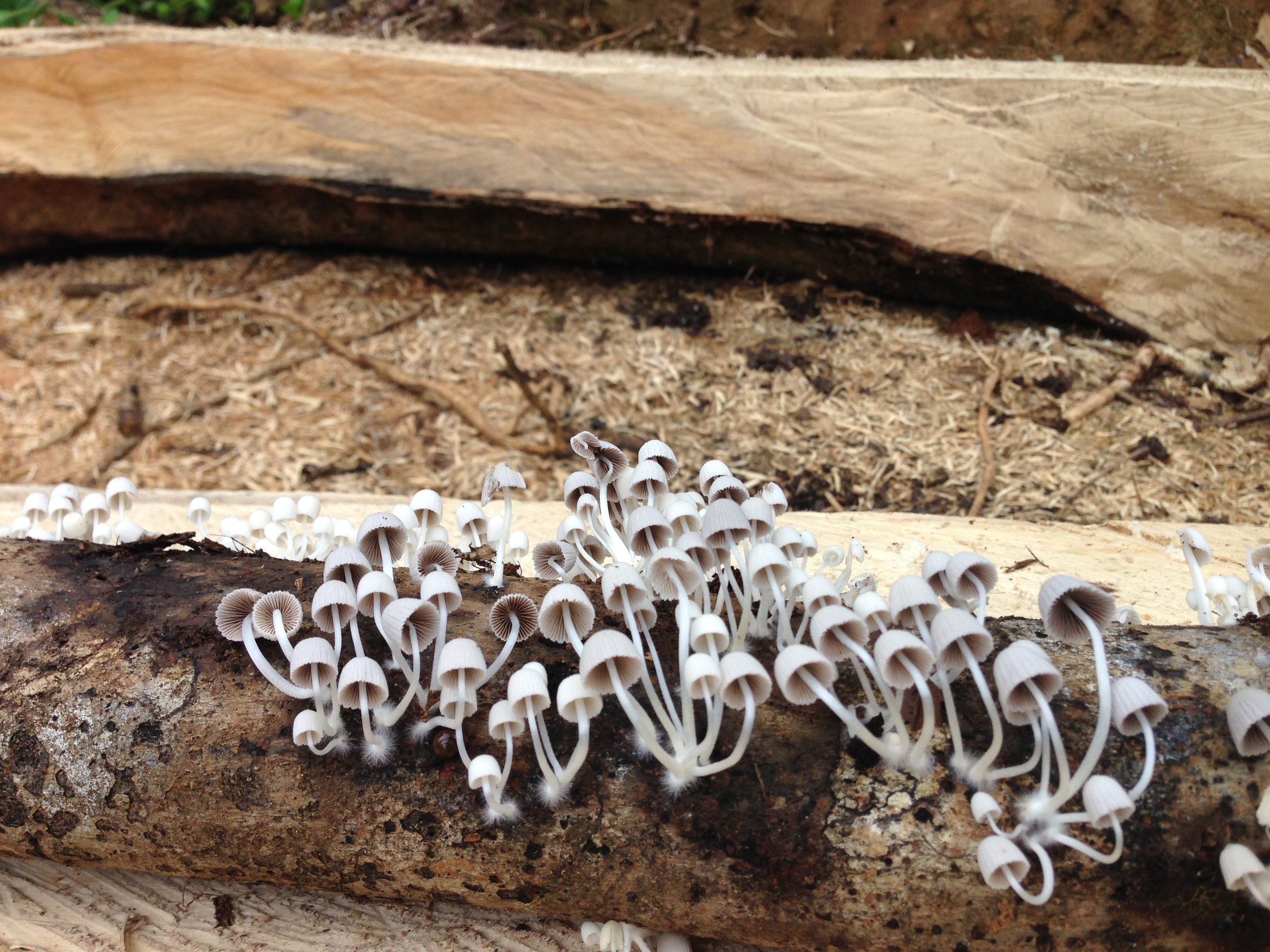
with the onset of the rains, mushrooms started popping up everywhere
My days started early in the mornings with a walk through the garden, observing the plants and checking the soil moisture levels. As I walked I noticed plants that seem to be struggling and tried to identify what might be affecting them. This is then communicated with the garden manager so we could discuss further ideas and solutions. We researched potential natural insecticides and fungicides that could help solve these issues.
Here is some of what we have learned and the practices we apply here at the ranch.
We are surrounded by amazing medicinal plants growing all around us, thriving under the jungle canopy or occupying disturbed pockets. These plants contain medicinal properties that can benefit humans as well as plants.

For example turmeric contains anti-inflammatory and antibacterial properties beneficial to humans and when planted among the roots of a tree, benefits the tree with those same properties This is referred to as companion planting. By planting diverse species next to each other they are able to support, protect and ultimately benefit one another. This can be as simple as providing shade or wind protection. Not only can companion planting by a useful tool in our belt to fight against disease and pest pressure but we can also use the properties of some local herbs. Here are some examples of what we have been doing.
Jackass bitter - the most bitter herb known, contains antifungal and antiparasitic properties. Spraying this tea onto diseased plants can repel insects and prevent fungal issues.
Inter cropping aromatic herbs like oregano, lemon grass and basil with certain food crops can confuse and repel insects with their scent and prevent disease with their antimicrobial and antifungal properties.
Using the shade of the cucumber trellis to help shade and shelter more delicate herbs underneath them.
Using peanut grass as a living mulch to crowd out weeds and provide nitrogen to the soil underneath some of our taller perennial crops such as Katuk and Cranberry hibiscus.
Planting Marigolds everywhere to reduce nematode populations, there is controversy about the effectiveness of this though.
Working in the front gardens has also made me reflect on the ideas of closed loop systems. As i am partially responsible for management of the kitchen compost. I really like the idea that there is no such thing as waste. Everything can be transformed into something useful. All of our food scraps are composted creating a finished compost that can then be added back to the soil to enrich it, closing the loop.

Another big part of the practices we apply when it comes to the food forests is observation of the environment and meeting the land's needs by mimicking patterns in nature. Thanks to all the researches and life long practices in the agro forestry and gardening world, a network of knowledge has been created for us to share our experience and knowledge. We are continuously learning and working towards improvement of our systems.
With each piece of land we carry the responsibility for the history, present and future of it. It is up to us to create a relationship with our land, to observe it's needs and potentials.To be stewards of the land and assist it to become a healthy ecosystem in which we can humbly live and feed ourselves.
This experience, of being an apprentice at Rancho Mastatal, has opened my eyes to a new world of possibilities, inspiring ideas, regenerative solutions, discovering new ways to live lighter on the planet and in harmony with nature .
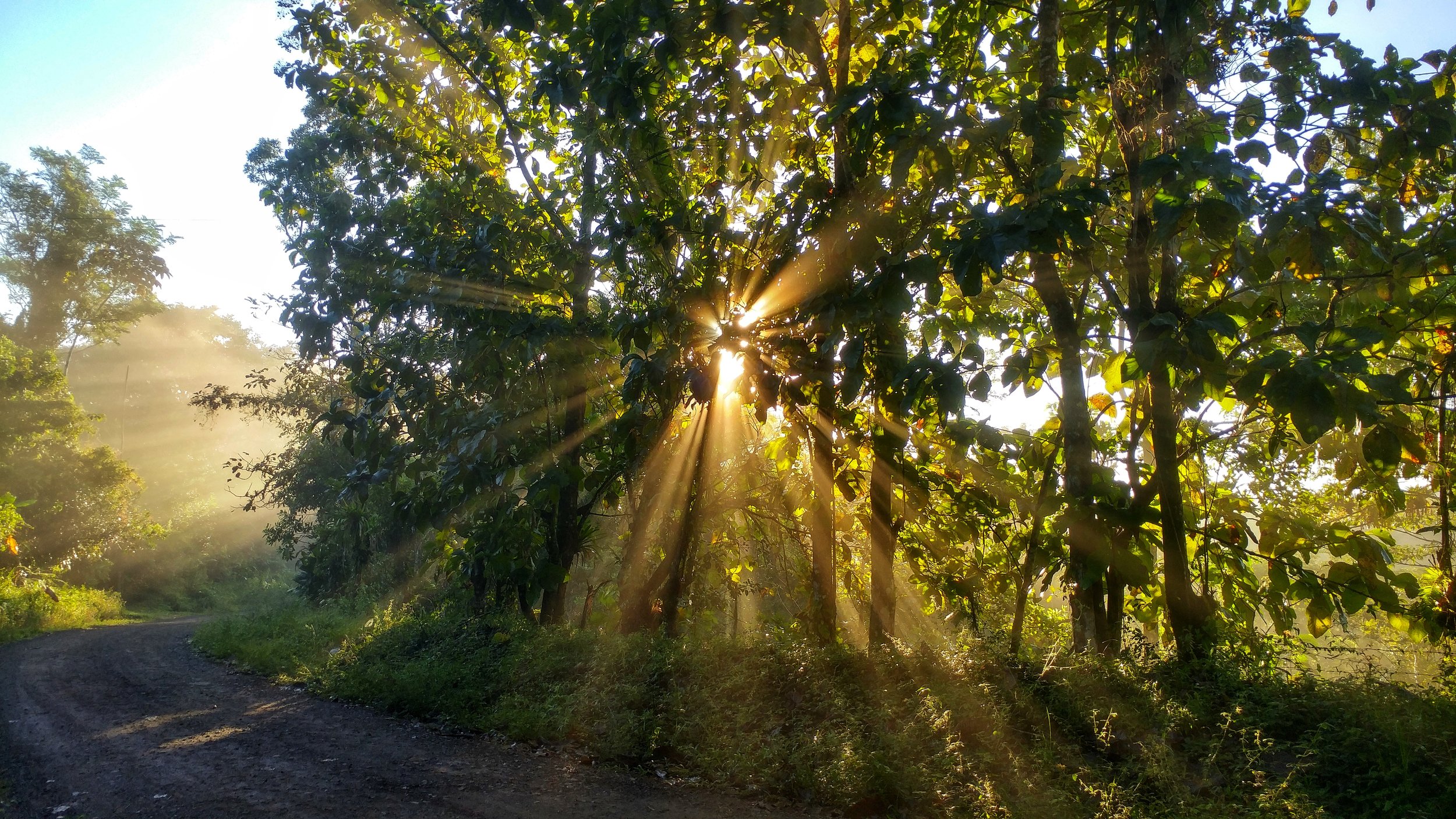
I am inspired by the movement towards an ecological , sustainable lifestyle and feel grateful to be a part of a project that focuses on sustainability, permanent culture and agriculture.
I invite you to share your experience and discoveries with growing food in the lowland tropics.
What interesting practices have you learn about recently?
Which annual crops did well for you in the tropical rainy season of Costa Rica?
What kind of companion planting worked well for you?
Would love to hear from you!
Blessings,
Diana D.
For more information about Permaculture consider joining us for our Permaculture Design Certification. For info about being an apprentice please go to the apprentice page. Here you will find in depth descriptions of what life is like in Mastatal.

Vegetables & Greens that Thrive in the Tropical Rainy Season
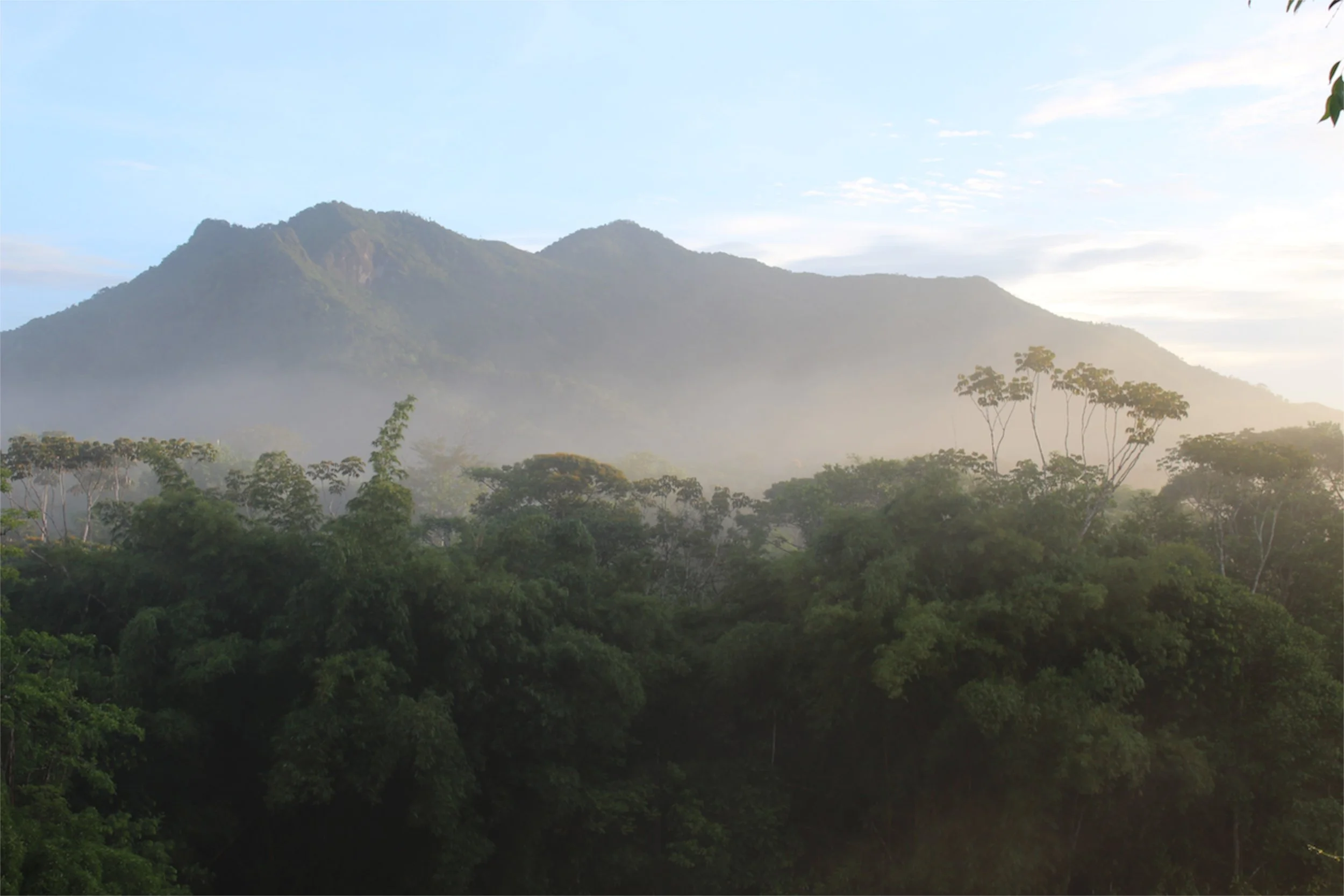
When the rainy season arrived, it started with a sense of relief - dry season went on longer than expected and our trees and plants were scorching in the heat. For myself the cooler air was welcome comfort, and the rains a reminder of home and getting cozy. Mornings were beautiful with the sight of the sun rising through the dewy mist.
By Amy Dodds,
2019 Apprentice
When the rainy season arrived, it started with a sense of relief - dry season went on longer than expected and our trees and plants were scorching in the heat. For myself the cooler air was welcome comfort, and the rains a reminder of home and getting cozy. Mornings were beautiful with the sight of the sun rising through the dewy mist.
But very soon our zone one vegetable gardens with our recently planted greens began to suffer - the sheer force of the rains and the humidity brought fungal and mildew issues. Faced with the reality that our beans and delicate greens were going to die out, I thought about the potential of using cover crops, such as sweet potato, for the rest of the year. But this did not seem to fit in my idea of what permaculture asks us to do: observe and interact with the environment we are situated in and use that to our advantage. With this in mind, we at Rancho Mastatal have been planting crops that thrive both in the intense heat and thumping rain. Below are some of the most popular vegetables that we are growing in the Ranch that are suitable for the rainy season:
Cucumber:
Cucumbers have been abundant in our garden this season with us pumping out quick pickles nearly every day. Not bad for a community feeding 30-40 people daily! Thankfully, cucumbers like warm, humid weather. We grew ours by seed on a trellis to allow for more air flow and for the fruit to stay above ground.

Okra:
Described as among the most heat-tolerant vegetable species in the world. It is planted for its seed pods which can be cooked, pickled, eaten raw, or included in salads. It does become mucilaginous so do consider this if you're sensitive to the slime.
Kang Kong spinach:
This leaf green is native to southeast Asian and is delicious stir-fried with soy sauce and garlic. It is a semi aquatic plant, a creeper that grows in or near the water on moist soils, so it is ideal for our climate.

Hibiscuses:
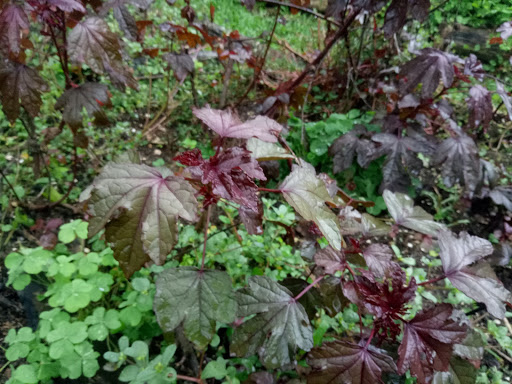
Both Green and Cranberry Hibiscus are delicious perennials that thrive in the warm and wet. They self seed easily during dry season so when the rains come you have a whole bunch of babies to keep your salad zesty and fresh. The leaves do contain oxalic acid so cannot be consumed in large, consistent quantities.
Chaya:
Also known as tree spinach this is an excellent perennial green native to Mexico. It's leaves are edible once cooked, like spinach. It's easy to propagate by cutting and loves the heavy rain.

Malabar spinach:
Malabar spinach is another heat and moisture-loving spinach-like green. The succulent leaves can be eaten both raw and cooked. We have only a few plants so we are trying to improve the population. We use a trellis to support its tendency to vine.
Winged bean:
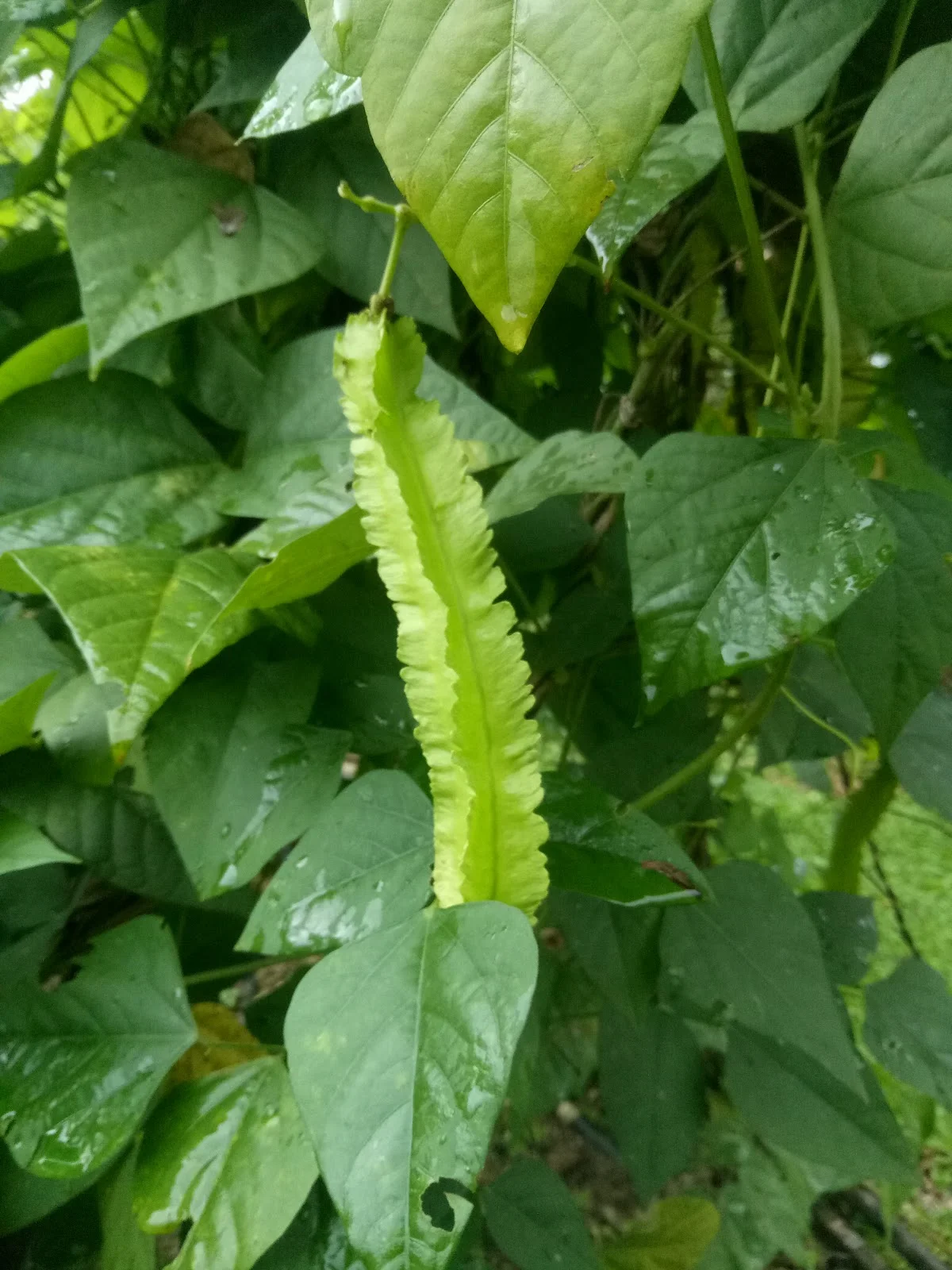
Also known as Goa bean and princess beans, these are sweet protein packed vegetables that do well in heat and humidity. They can fix their own nitrogen when the bacterium Rhizobium is in the soil. They are best harvested young and tender, and great raw in a salad.
Other more delicate greens we are growing in our nursery as they don't require as much water, such as Arugula, mustard greens and Asian cabbages.
By having our covered nursery space we are able to grow things under cover that otherwise would not do so well outside, we are also experimenting with making some movable covered spaces for out outdoor garden beds….. we will update you with progress so make sure to Like and Follow us on Facebook & Instagram
Going Home: The Long Road Leaving Mastatal
The journey starts with a 5am wake up; just as the sunlight is starting to spread through the jungle. I take a couple deep breaths as I admire the beautiful place that I am in.I take a last look around, heave my heavy backpack on, and head down to make a cup of coffee before embarking on what will be a 36+ hour adventure back "home." I have done this journey multiple times now, from California to Costa Rica and back and forth, and each time presents new challenges and exhausting travel times.
The journey starts with a 5am wake up; just as the sunlight is starting to spread through the jungle. I take a couple deep breaths as I admire the beautiful place that I am in.I take a last look around, heave my heavy backpack on, and head down to make a cup of coffee before embarking on what will be a 36+ hour adventure back "home." I have done this journey multiple times now, from California to Costa Rica and back and forth, and each time presents new challenges and exhausting travel times.

Every time I go from one place to the other I am overwhelmed with culture shock, but the shock is always greater in my trips back to the States. While leaving the small, tranquil, jungle town of Mastatal and landing in the big, bustling, concrete jungle of Los Angeles I am caught off guard by what is happening in the “real world.”
Fortunately, I do not and have never had to live in a city, especially not one as large as Los Angeles. I grew up in the small mountain town of Bishop, CA; population 4,000. For college I moved to what I considered the city of Durango, CO; population 20,000. Then I moved to Mastatal; population 100. You could say I don’t have much city or masses-of-people experience, and this probably factors into my feelings of shock when I leave the Ranch and get dropped into one of the biggest cities in the world.
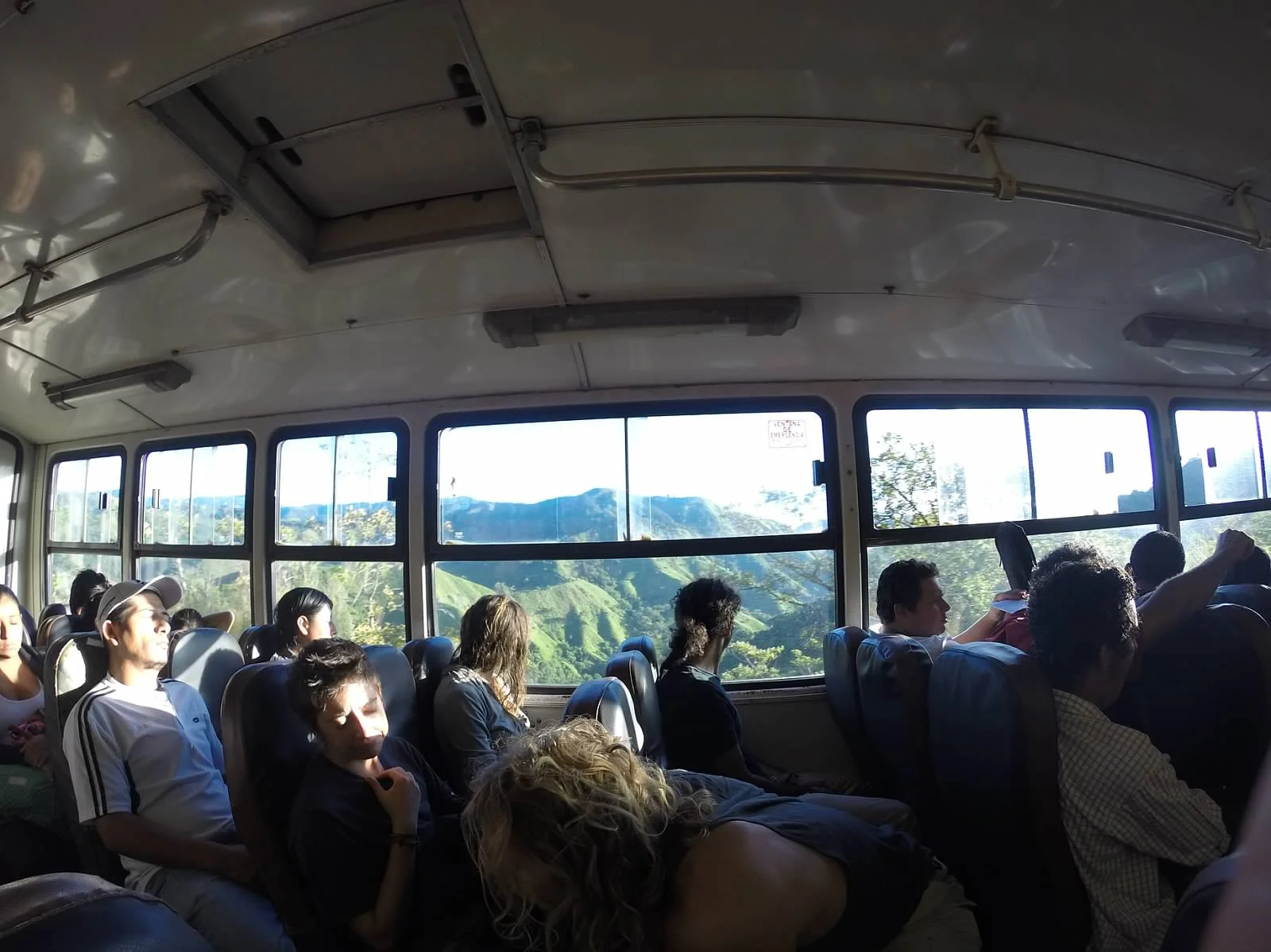
After I chug down a delicious cup of local coffee, something I know I won’t enjoy again till I return, I head out to wait for the only bus out of town. The bus arrives and I awkwardly manage to load my bag on, which always seems to be a feat when traveling. So it begins; the first of many hours sitting, waiting, and fidgeting. If any of you have traveled to the Ranch you may feel the same way, but I think the bus ride is much easier on the way out then the way in. Better as the first leg of your journey than the last,.still with a fresh traveling bum.
I enjoy the ride through the jungle, on windy, bumpy, dirt roads, admiring the unique beauty of this place. We arrive in Puriscal and I head straight to get some chicharones. These yummy hunks of meat, an avocado, and bread have become my go to traveling food to fuel me through. I take my time because my flight doesn’t leave for hours and I would rather wander around the streets then wait in the airport.Still there aren’t many exciting activities to keep me in Puriscal so I load onto the next bus to San Jose.
The whole trip gradually eases me into civilization, each stop with an increasing population. The bus stops in the middle of San Jose, I get off onto the busy streets. I have done this journey many times but I have never had to find the next bus station to the airport by myself, so this will be the interesting part. As anxiety starts to come up with the increase of people and hustle, and every other person in a car is yelling “taxi, taxi!” I inhale, exhale, tighten my backpack straps, and start walking in the direction I think is to the next bus station.
After multiple blocks I start to think I may have missed a turn.I spot a group of police officers chatting on the corner and shyly approach to ask for directions. They all jump eagerly on the opportunity to practice their English on this lost, white girl.
I make it to the airport. The Costa Rican airport is so small that everything moves smoothly.This is where I will wait for eight hours before my plane leaves. I find a nice private corner, lay out my yoga mat and start stretching. I’m the wandering, hippy, dirty, traveler that doesn’t mind making herself comfortable and if that means doing some odd yoga moves in the airport then so be it.

On my flight to LAX I sit next to a Costa Rican man that is moving to Alaska to be with his family. I wish him good luck and warn that he better buy a coat! I arrive in LAX, wait in the two hour immigration line, get on the airport shuttle to the opposite side of the airport, find my next gate, find another private corner, and lay out my yoga mat in hopes to get some sleep. By this time it is at least midnight and there is hardly anyone in the airport.
It turns out not many people sleep in the airport; except for those too cheap to get a room. With the lack of body heat the airport feels like a walk in freezer, and this is not just because I am use to the heat of the tropics. I thought I brought enough warm clothes to bare the cold airports, but I can barely feel my toes so I try wrapping myself in my yoga mat. At this point I do look like a homeless person camping in the airport. The late hours of the night are also the time that all the construction and cleaning gets done in the airport, so between the jackhammers, vacuums, and freezing temperatures I don’t get much rest.
The early morning hours come, people slowly start trickling back into the airport. I continue to wait for my flight to Mammoth, the town an hour away from my home where I will get picked up by my parents. I have had this flight canceled on me multiple times due to not enough passengers, so I worry until I'm on the flight, if it will take off or not. If this flight doesn’t run that means one of my parents will need to drive the five hours to LAX to pick me up. That for lack of a better word, sucks. Finally, the time has arrived for the last leg of my trip; I board the Mammoth flight, an hour long beautiful trip over the Sierra Nevada Mountains. I land. My dad is there to pick me up and we drive home. It has been at least 35 hours now since I left Mastatal; I am exhausted.
I am in a totally different place now. It always amazes me how one day you can be living in the tropics and the next you are in the high desert mountains. I went from a landscape of complete green, to one of different shades of browns and speckles of green. On the drive home my dad comments “it’s been raining a lot, things are looking really green here.” Ha! I think, a lot of rain, really green, you should see the jungle.
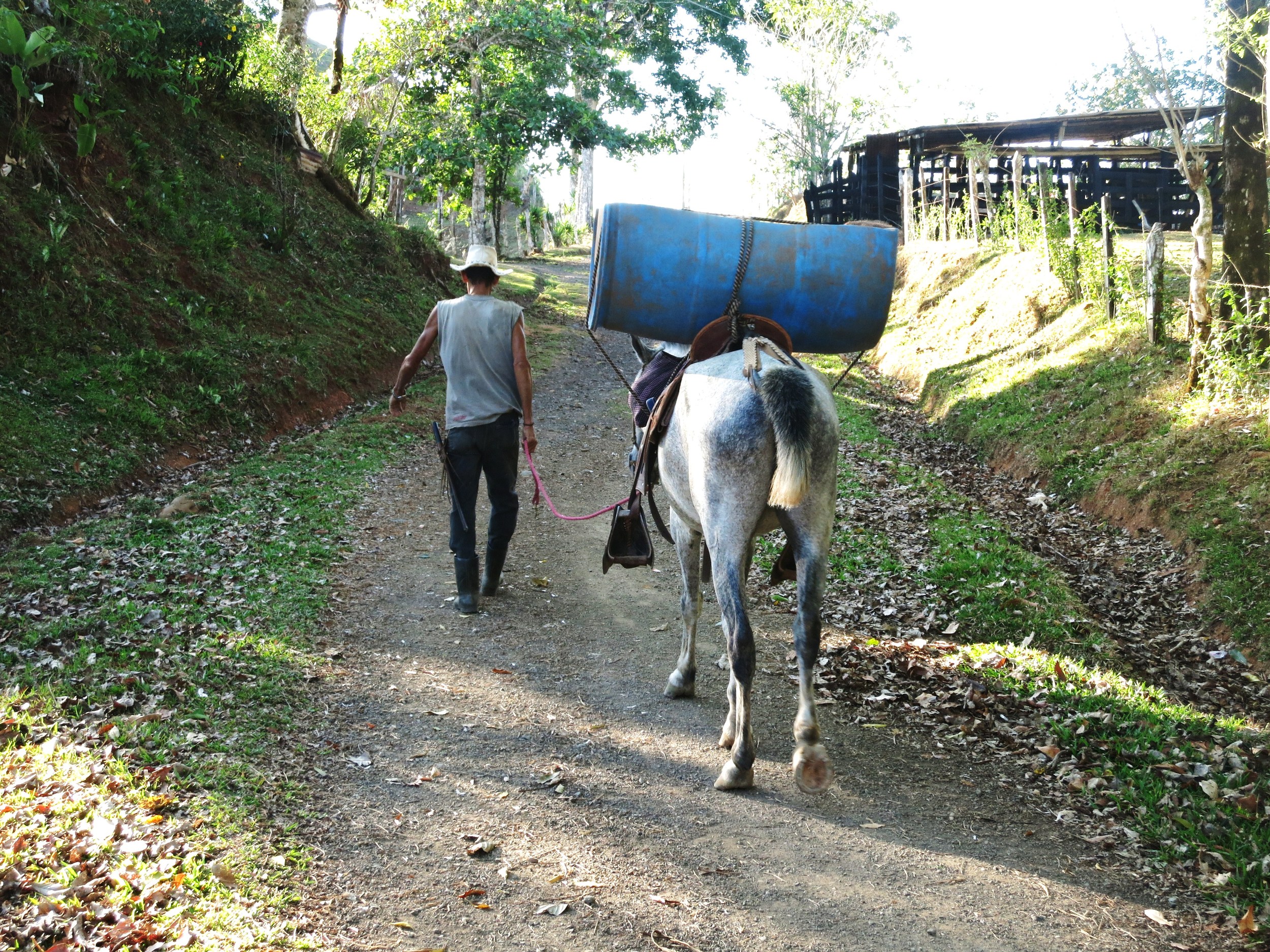
Usually my transition back into life in the States is cushioned by the comfort of being in Bishop, a town so small you almost know everyone. But unknowingly, I arrive back home during memorial day weekend. Which in Bishop is when the town holds its annual Mule Days event, a well known event that attracts 20,000+ people and their 20,000+ mules. All flooding into Bishop for a week of mule fun! It is as ridiculous as it sounds. Not having been to Mule Days in many years, a long time friend and I decide why not? So we put on the good ol’ blue jeans, cowboy boots, and plaid shirts and go down to watch the rodeo! I feel like I have walked into a costume party, what happened to the raggedy t-shirts, sweaty shorts, and old crocs of the jungle? I ain’t in Mastatal no more!
NEWS AND NOTES
Did you know the Ranch is on Instagram? Follow us here!
Have you ever wanted to build your own home? Just bought a piece of land in Costa Rica and want to create a jungle paradise? Well in 2017 we have the classes you need to re-skill and build your place in this world.
Abrazos
The Ranch Crew
Categories
Topics
- Agriculture 6
- Agroforestry 21
- Animals 2
- Apprenticeship 19
- Appropriate Technology 6
- Backpacking 1
- Bananas 1
- Basic Pantry 4
- Biochar 1
- Books 3
- Build Your Own Home 1
- Central America 5
- Chiles 1
- Cinnamon 1
- Clay Carving 1
- Climate 2
- Climate Change 1
- Cob oven 1
- Communication 5
- Community 24
- Compost 2
- Composting Toilets 2
- Condiments 1
- Conservation 2
- Cooking 4
- Costa Rica 18
- Design 10
- Earthen Construction 10
- Eat Local 2
- Ecohome 1
- Education 9
- Environment 3
- Ethics 4
- Farm to Table 12
- Fasting 1
- Fermentation 14
- Food 22
- Food Choices 8
- Food Forest 8
- Food Processing 15
- Food Systems 12
- Gap Year 1
- Gardening 5
- Ginger Beer 1
- Harvest 2
- Health 12
- Healthy living 5
- Homemade 2
- Homestead 8
- Internet 2