

BLOG
Stories, articles, and updates from the Ranch community.
Permaculture Entrepreneurship: Navigating the Path from Student to Professional
After completing a Permaculture Design Course (PDC), natural building workshop, or any other educational opportunities at a place like Rancho Mastatal, many students find themselves wondering how to turn their newfound knowledge and passion into a career. This transition from student to professional is a common challenge in the permaculture world.
By Jason Thomas
The voice behind the podcast Regeneration Nation Costa Rica
After completing a Permaculture Design Course (PDC), natural building workshop, or any other educational opportunities at a place like Rancho Mastatal, many students find themselves wondering how to turn their newfound knowledge and passion into a career. This transition from student to professional is a common challenge in the permaculture world.
It’s not surprising, considering that most standard education programs don’t teach entrepreneurship, and new students of the trade often feel like they lack sufficient experience to charge for their services.

Common Challenges Faced by Permaculture and Alternative Solutions Students
I’ve interviewed dozens of permaculture professionals and students wishing to make their mark, and I’ve found some common hurdles that seem to hold people back.
Some of those obstacles include:
Lack of business education and experience
Little understanding of how to monetize their skills
Imposter syndrome
Limited support network
Balancing ideals with practicality
Many potential clients don’t know what permaculture or these sustainable solutions are, and many regenerative entrepreneurs don’t understand how their ideal clients are thinking about their needs from their perspective.
Insight Tool: Identify Your Hurdles
Take a moment to reflect on your own journey. What are some challenges you're currently facing in turning your ideas into a profession? Write them down and consider how they align with or differ from the common challenges mentioned above.
The Gap Between Passion and Profession:
This gap isn't unique to permaculture. Many individuals who care about helping humanity turn its trajectory around face a similar divide between academic knowledge and professional application.
In permaculture, this gap is often widened by the holistic, systems-thinking approach that doesn't always align neatly with traditional business models but does exceedingly well when harnessing traditional tactics, repurposed in a holistic system approach.
Tim O’Hara from Rancho Mastatal shared with me in one of our conversations that he felt like they were chasing their tails for several years as they tried to figure out how to make it all work. It’s a similar story for many people who embark on a project like this.
… but that’s not the only way to go about it.

In today’s age, it’s easier than ever to learn from wisdom keepers like this and model from the solutions they’ve arrived to through their mistakes. It IS NOT a wheel worth recreating. We have work to do and the faster we can get our services out to the world, the better off we’re all going to be.
The trick is not to do it so fast that you skip the foundational steps of contemplative design.
So, from a design perspective, let’s look at some solutions we can embrace to bridge this gap between passion and professional application.
Key Business Skills Needed to Bridge the GaP
Business planning:
Overcome your unclear direction and orientation to business by looking at your business idea as if it were pasture land that you are about to implement into a multi-yielding homestead.
Taking the time to design your enterprise will earn you an intimate relationship with the path ahead and the confidence to walk it.

Marketing and communication:
Conveying the value of permaculture and other sustainable solutions to potential clients can be tricky because they lack the vocabulary and point of reference for what it means, let alone how or why it provides any unique benefits to them.
In marketing and communication, describe the benefits from the prospect’s point of view.
Financial management:
Understanding budgeting, pricing, and sustainable revenue streams may not sound sexy as you’re getting started, but careful documentation will come in handy when you revisit the feedback loop and want to understand what worked well, what didn’t, and how to do it better next time.
Finances are only one part of the puzzle, but trying to skip it will leave you hanging with gaps in your picture.
Legal and administrative skills:
Navigating regulations, contracts, and business structures is another aspect that many new entrepreneurs would prefer to skip.
However, if you want to practice your trade as anything more than a hobby, you might as well start with the end in mind and get some of those things squared away as soon as they are relevant.
Networking and collaboration:
Building a supportive community and finding complementary partners is the practice that will serve all others. We are a culture of people that want to help each other. We need each other! Reach out to other regenerative activators in your area and get to know them.
I even teach people to create a database of these projects and their owners. This could prove to be your business’s most valuable asset.

Insight Tool: Skill Assessment
On a scale of 1-5 (1 being novice, 5 being expert), rate yourself on each of the key business skills mentioned. Which areas do you feel strongest in? Which areas need the most improvement?
Essential Skills and Mindsets to Adapt as a Regenerative Entrepreneur:
As you embark on your journey as an entrepreneur and business operator, you’ll want to cultivate a set of skills and mindsets that support your personal growth and business development.
The following attributes, to the degree they’re cultivated, will help you navigate challenges, recognize and embrace aligned opportunities, and cultivate the confidence to see them through. Let's explore some skills and mindsets worth developing:
Holistic Systems Thinking:
Apply the holistic approach of permaculture to your business. Understand how different aspects of your business interact and support each other. Find common problems people face in your area that have insufficient solutions and find the place where those meet your passions and skill set.
… or desired skill set.
Remember, you’re a student who likes to learn new things. Nothing can hold you back!

Insight Tool: Map Your Business Ecosystem
Sketch a simple mind map, outline, or diagram of your current or planned business idea. Include key elements such as your services, target audience, resources, and potential partners. Draw arrows to show how these elements interact and support each other.
Adaptability to Change:
Be prepared to adjust your strategies as you learn and grow. As Tim has mentioned to me, even they, after all these years, continue to develop and refine policies as they learn and grow. Their documents are regularly being edited and revised by new people with fresh perspectives.
It’s a regular, intentionally planned practice.
Patience and Persistence:
Building a successful business takes time. Rancho Mastatal, like most projects of this nature, didn’t have a huge budget to just set up shop and run massive retreats. Instead, they took a slow, iterative approach, using the resources they had on hand, which included the support of their neighbors, and slowly, persistently, grew as resources and wisdom allowed.
Creating a phase-planned design for your new enterprise to spread your ambitions out over the next 3-5 years is a great way to resist distracting impulses and stay on track.

Lifelong Learning:
Never stop learning. Stay open to new ideas and keep developing your skills. This is the habit that keeps on giving. However, don’t just study information focused on your trade.
Round out your education so that you can understand the macro patterns of the human condition, market patterns, and personal development, as well as the micro details of your business operations.
Community Integration:
Understand the importance of community integration. Of all the community projects and education centers I’ve researched around Costa Rica, Rancho Mastatal is one of the shining examples of community integration and worth modeling at any opportunity.
Community integration is an extremely important part of our work. It helps us to integrate in a way that allows us to be accepted by those we wish to influence and serve.
Insight Tool: Community Asset Mapping
List 5-10 local business owners, organizations, or other leaders in your community that could potentially support or collaborate with your efforts. How might you engage with each of them?
Innovative Problem-Solving:
Use holistic thinking to find innovative solutions to your business challenges. Permaculture teaches us that each problem holds a gem of solution just waiting to be discovered. By carefully researching and analyzing your options and approach, you can see these pitfalls before they ever become a problem and design ways to ensure they never will be.
By staying vigilant in your process to find ways you can stack functions in your solutions, your experience operating your business will improve.

Clear & Effective Communication:
Develop the ability to explain what you do and its benefits to a wide range of audiences. While it's always advised to start any product or service creation with a specific client avatar profile in mind to help target your messaging, we’re not just here to get customers. We want to affect change in the world, and that requires speaking other people’s languages.
The best way to do that is to talk to more people about the problems you provide solutions for, but not with an intention to pitch your services. Instead, talk to them with a sense of curiosity and care.
Get to know them and pay attention to the words they use in describing their challenges and perceived options. If you take the time to do this in a systematic way, you’ll develop the vocabulary and sensibility to make the impact you’re hoping for.
How the Permaculture Business Design Course Helps Bridge These Gaps:
The Permaculture Business Design Course is designed to bridge the gap between a passion for making regenerative practices what you do for a living and the business skills needed to make that happen.
It applies the permaculture methodology and principles to design your business like you would a multi-yielding food system or a physical structure made from carefully calculated materials and procedures.
Why would we celebrate those practices on the land and houses, but not our business?
It’s impressive how often we stumble into a business idea, throwing offers out there hoping it will land with someone as we describe OUR favorite features of the service, rather than the benefits THEY want to receive. Business development is too common a reactionary process of figuring out as you go, which is exhilarating in moments, but not an effective way to get off the ground flying.

In this course, you’ll:
Expand your perspective on how to solve common challenges people are actually experiencing so you can find the unique niche that’s perfect for you.
Gain clarity around your unique vision and how it meets the needs of your region to purposefully design a financially regenerative enterprise that people can relate to.
Enhance your professional skill set through training videos, insight tools, worksheets, and other guided exercises.
Proceed through the lessons at your own pace to develop your offer, invisible infrastructure, marketing strategies, and operational procedures through slow and small solutions.
It’s a start-to-finish roadmap for the motivated permaculture entrepreneur, from ideation to implementation.
Insight Tool: Your Next Steps
Based on what you've learned in this post, what are three specific actions you can take in the next month to move closer to your goal of becoming a permaculture professional?
A Little More About Rancho Mastatal's Journey from Vision to Successful Enterprise:
I’ve had the pleasure of hearing Rancho Mastatal's story through my various interviews with Tim and the fortunate opportunity I’ve had to visit on the Ecovillage Tours that we now operate annually.
Each interaction with Tim, Robin, and their team has demonstrated:
Consistency in their intention to integrate and serve with the local community
Persistence in finding solutions when change happens
Adaptability through intentional experimentation
And ongoing education and refinement of their practices.
In an interview we did for the Permaculture Professionals Interview series, Tim shared that, early on, they didn't focus enough on compensating and taking care of the people that were making it possible. And that is unfortunately common amidst foreigners who buy land are happy to take advantage of the poverty wages many rural farm-hands are willing to work for.
Many of us have that wake-up call at some point, and for them it led to significant changes in their approach.
They implemented changes like:
Formalizing their business structure
Creating clear agreements and expectations
Developing a core team with defined roles
Implementing financial tools for better decision-making
Tim shared that developing more of a structure has helped them feel much more stable and resilient.
Rancho Mastatal's evolution is one of my favorite examples of combining permaculture principles with sound business practices. They've grown from a couple running a farm to an education center offering diverse courses, an apprenticeship program, and strong community integration directly affecting who knows how many hundreds of people each year, and thousands through the lives touched by those who’ve passed through their doors.
In the guest presentation Tim provided for the Community Living Agreements Training, he emphasized the value that clear documentation has brought to their project.
He explained that creating documents outlining standards for:
Sharing communal space
Participation expectations for members and guests
And common operating procedures
They have a library of best practices they can use to inform guests, train staff, and keep their intentions on track over time.
(Image) PBDC Landscape 1.jpg
Are you ready to start to design?
The Permaculture Business Design Course offers the knowledge, tools, and support needed to navigate the journey from permaculture student to professional. It provides practical skills to design a business that's as regenerative and abundant as the ecosystems we aim to protect and regenerate through our work.
Enroll in the course to start designing a business in a way that will earn you experience, confidence, and clear enough vision to motivate people to your cause.
If you like the idea of designing and developing your regenerative enterprise in the company of other dedicated entrepreneurs, I offer a seasonal group program for permaculture-minded professionals looking for support and accountability as they navigate the path ahead. It’s application only and an interview is required to ensure we have a committed group of aligned individuals in the cohort.

Let’s do it together!
To learn more, visit the Permaculture Professionals Program and fill out the application. I’d love to meet you and hear about your ambitions to cultivate a regenerative livelihood.
Remember, as in permaculture design, the key to a successful business is thoughtful planning, diverse strategies, and regular visits to the feedback loop.
However, accountability, coaching, and peer support are powerful amendments worth investing in.
May your dreams to serve through right action flourish!
Jason Thomas is the voice behind the podcast Regeneration Nation Costa Rica, designer and guide for Ecovillage Tours CR, mastermind facilitator for the Community Founders Circle and the Permaculture Professionals Program, and creator of the Permaculture Business Design Course.
With over 20 years practicing both permaculture and entrepreneurship, he bridges these two worlds to empower our next agents of change.

Invisible Structures
Just as strong buildings require a solid foundation to build upon, successful dynamics are also supported by invisible structures, or mutual understanding of needs, roles and beliefs.
By 2024 apprentice Yalan
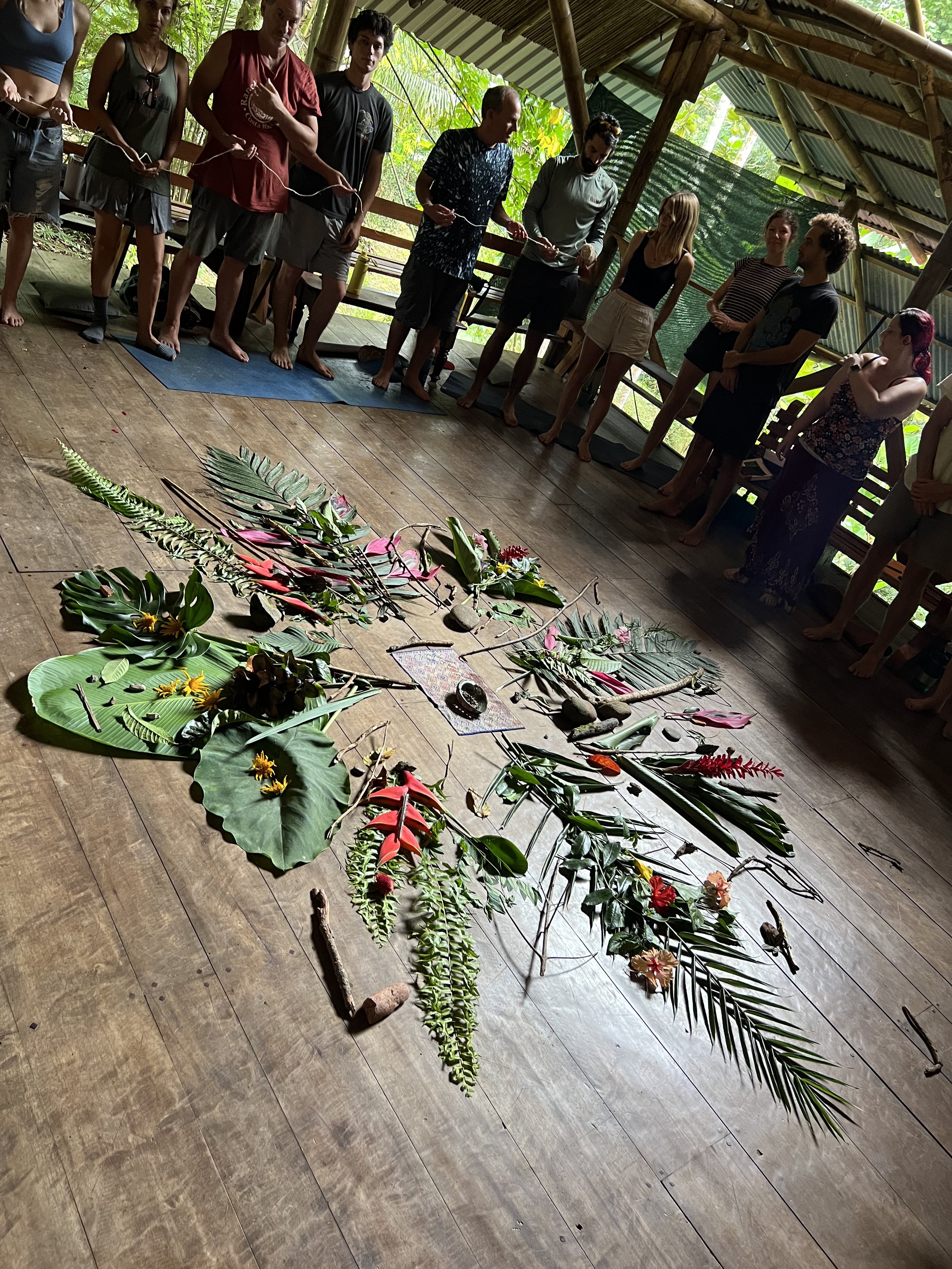
For every building to unfold, a detailed plan must be laid. A build for housing people, is not something we make up along the way. Just as strong buildings require a solid foundation to build upon, successful dynamics are also supported by invisible structures, or mutual understanding of needs, roles and beliefs. Invisible structures are the foundation to any successful team, community, or entity. Without invisible structures, these dynamics can fall into a downward spiral of misunderstandings, expectations and disappointment, as well as miscommunication and misplaced intentions. By being consistent in meetings, transparency, and inclusion, invisible structures have been attributed to the longevity of the Ranch.
Many a time, invisible structures can be assumed or implied. Our needs, roles, and beliefs can be some what difficult to share. Having consistent meetings can give us the space to discuss what we each find important. Life can get busy and the idea of committing to consistent communion whether its daily, weekly, or monthly can feel daunting, especially when its with more than one person.
Setting at least ten minutes aside to reorient and connect with those in your immediate environment not only helps organize the day ahead, but can shift your perspective and even values. For example, everyday at the ranch, the possibility of playing sports is discussed. Now, it’s not everyday that sports are played, however everyday is open for people to get in some cardio as well as participate in team building. If meetings are not established to discuss agenda, needs, etc. any dynamic can lose balance. I recall a community I was a part of where there was a lead who would ramble about what he wanted to see each person contribute individually. Instead of seating us together to express expectations collectively, he would pull us each aside to comment on what he saw our contribution being. This created confusion about our roles amongst each other and our purpose there. Expectations and needs on both sides weren’t expressed clearly, nor did they have the space to be expressed. For a community meeting to be successful, needs and values, are expressed and equally received from all parties.
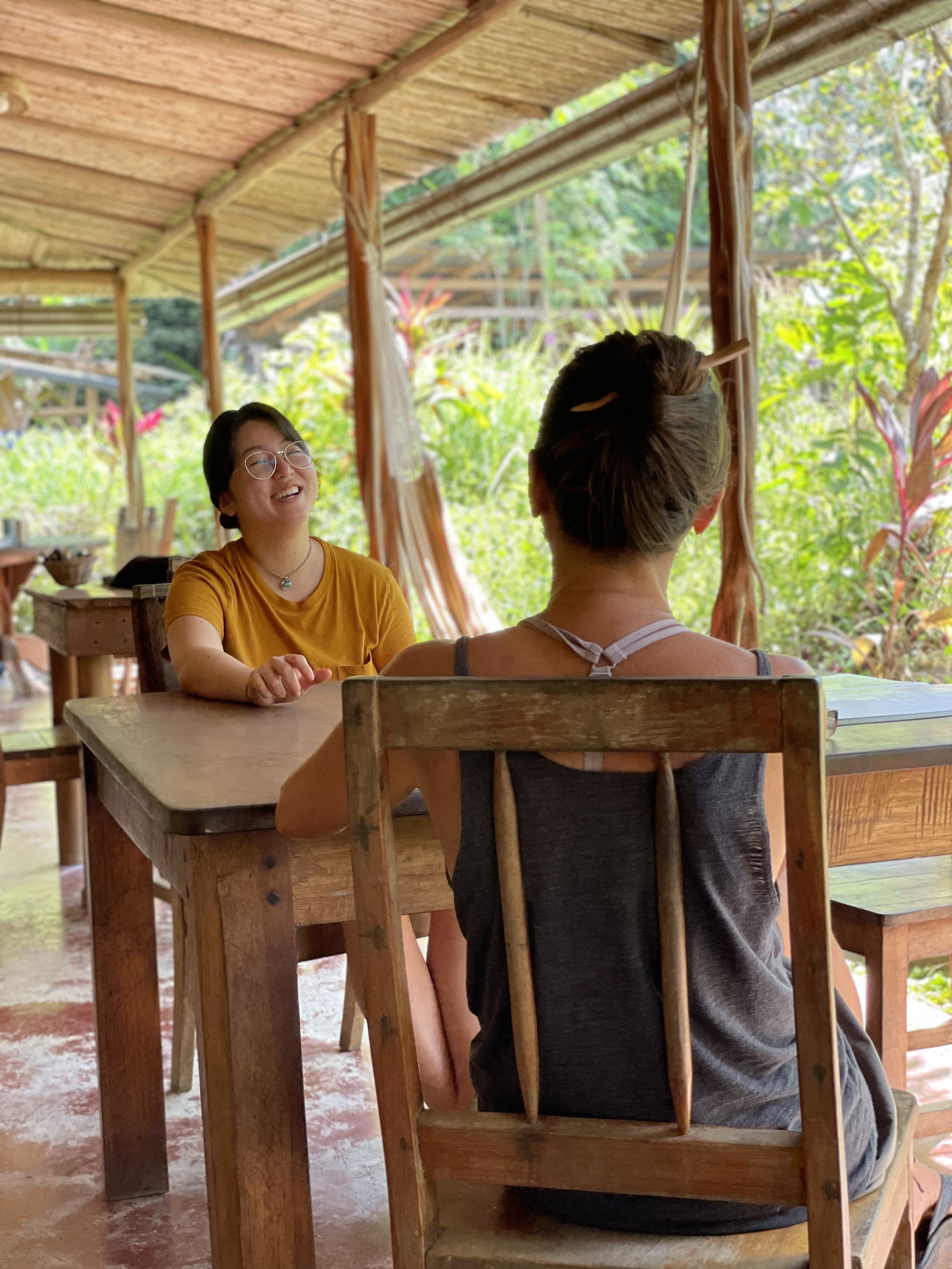
For meetings to be successful, one needs a sense of safety and vulnerability
With these conditions comes transparency, allowing ourselves to be seen and communicating our “internal weather report” allows for others in the community to take initiative. Responding appropriately to a need or role that needs fulfilling. However when being transparent, a level of delegation and discernment must be present to successfully have that need met. Problems are not solved by acting as if they are not there, or by going on about business as usual. Problems are solved by engaging, by observing and interacting with the problem until a solution is met. Again, meetings exist to generate a platform for transparency to exist. We must cultivate space to allow for things to become apparent. For example, if a role is placed on you or there is an expectation you cannot meet, you can suck it up and do your duty, or you can be vulnerable and say, “This does not work with me, are there any other places my energy would be useful?” We want to help one another, we want to play a role in the relieving of each other’s pain. We cannot do this if light is not shed on their struggles. If we cannot share our faults and struggles, we take on more than we can handle and resentment can develop. Allowing ourselves to be transparent with our faults and struggles gives rise to generosity and altruistic action. Once being vulnerable is established as safe, we can then bring people into our lives to be in sync with our rhythm.

From here we move from transparency to inclusion
Not just being open with our lives but actively involving others in our daily experience. By including others into our lives, we learn to delegate the weight we carry. There’s an expression, “many hands make light work.” I recall an open mic I hosted back in Los Angeles. I was transparent in my struggle setting up for the evening, huffing and puffing as I set up lights. Though I felt under pressure, many hands were available to assist me. I was not taking time to assess what was needed of me, so I could not delegate. By not including others in my tasks for the evening, I was suffocating under my own pressure. Needless to say it was a successful evening, however I could have relieved myself of struggle by involving others. My mind could have had more space to enjoy the evening rather than being hyper focused in providing a pleasant experience. While there is a pride to be experienced on the other side of accomplishing a task all on your own, there is a potential in connecting with others that is void when doing so. Expressing oneself as, “I could use ______ right now” or “I am in need of _______ at the moment” or “If you have a moment could you ______?” Are all examples of letting people into our lives. For the sake of connection and relieving our own pressure, let us open up to those in our immediate environment, and include them in our daily experience.
All in all living in community isn’t for everyone, it takes open hearts and open minds to communicate as fluidly as what is needed to live amongst peers. There are infinite ways to live in community and meetings, transparency, and inclusion are just a few examples of what’s needed to build solid invisible structures.
Learn More
Want to learn more about social permaculture, community living, and systems to create a healthy communal environment? Join us for our yearly Permaculture Design Course, where we will experience all this together in a two week, life-changing experience.
Check out these related blogs
Social Permaculture: The Secrets to a Successful Community
Foundations for Success: 10 Considerations to Create a Healthy Project
Enriching Community Soil: 5 Simple Strategies That Support Sustainable Relationships
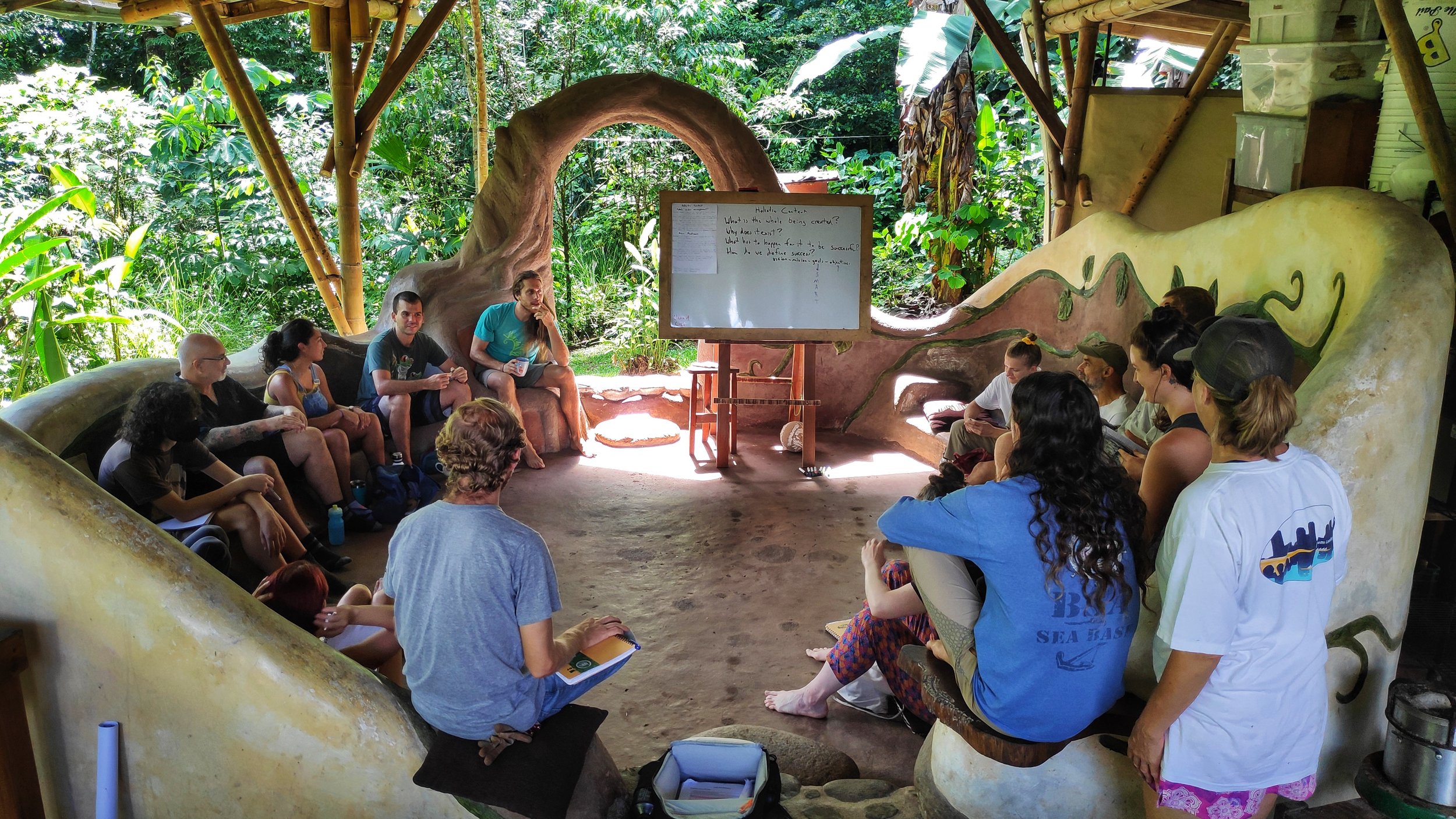
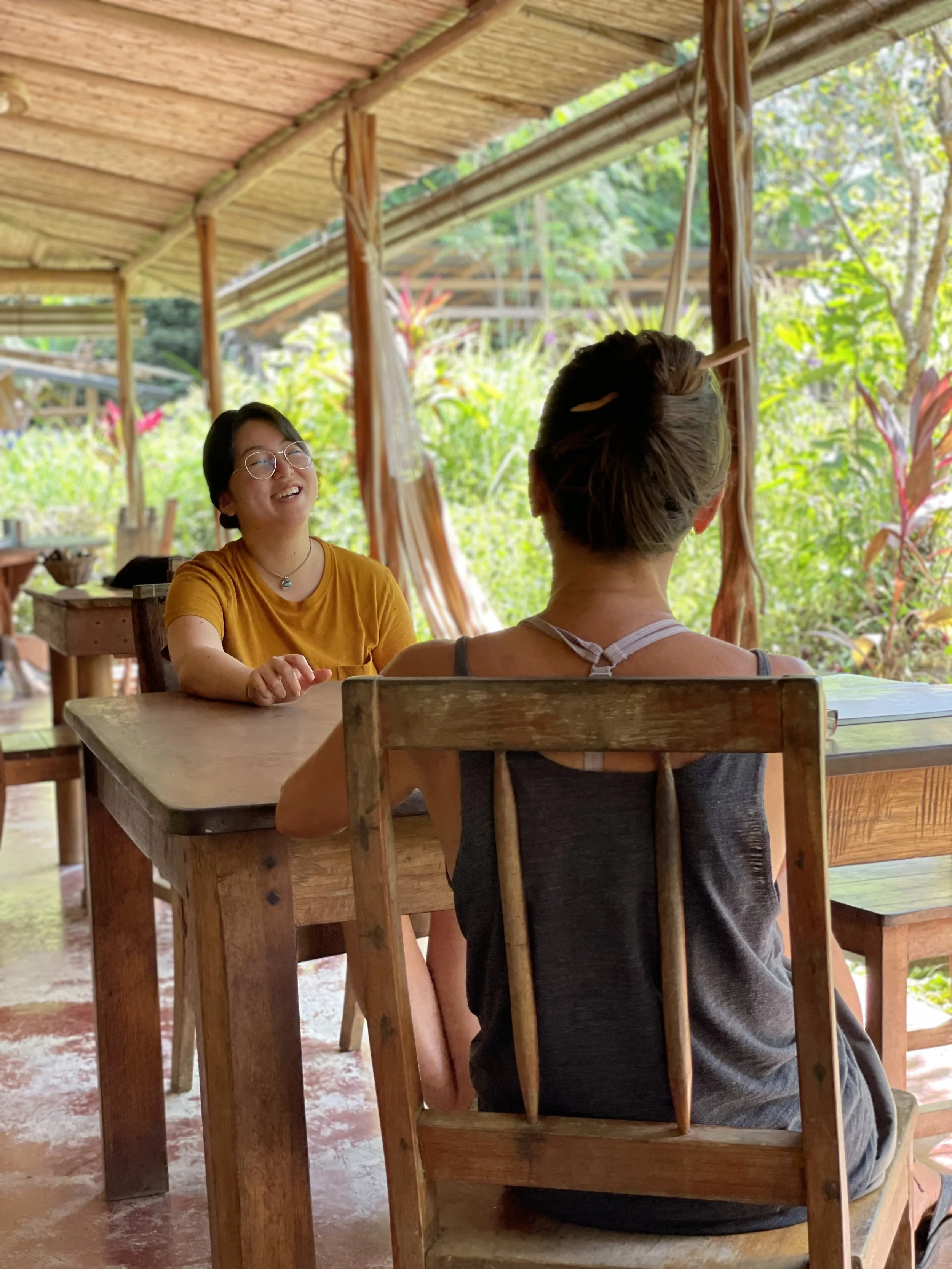
Communication Breakdown: Strategies to Avoid Unhealthy Communal Relationships
Here at the Ranch we are usually 13 people living and working together in community. Healthy communication is something we actively practice. Conflicts, disagreements and misunderstandings inevitably arise in our setting. How do we navigate these sometimes treacherous waters so that everyone's needs are met?
By Core Team Member Robin Nunes
”Communication breakdown
It's always the same
I'm having a nervous breakdown
Drive me insane!”
- Led Zeppelin

Have you ever felt the frenzied energy conveyed in this classic chorus sung by Led Zeppelin?
Here at the Ranch we are 13 people living and working together in community. Healthy communication is something we actively practice. Conflicts, disagreements and misunderstandings inevitably arise in our setting. How we navigate these sometimes treacherous waters so that everyone's needs are met is critical to the success of our project.
Three of the most important tools that we use here are the “community cultural agreement,” community check-ins and non-violent communication, or NVC. These are a few of the components that we include in a domain of our project called "invisible structures," or the parts of our business that specifically address healthy relationships. Just as your machete is an essential tool in keeping your orchard spaces tidy, and your shovel indispensable for building your buildings, these invisible structures are implements that we use to strive for a happy and thriving community.
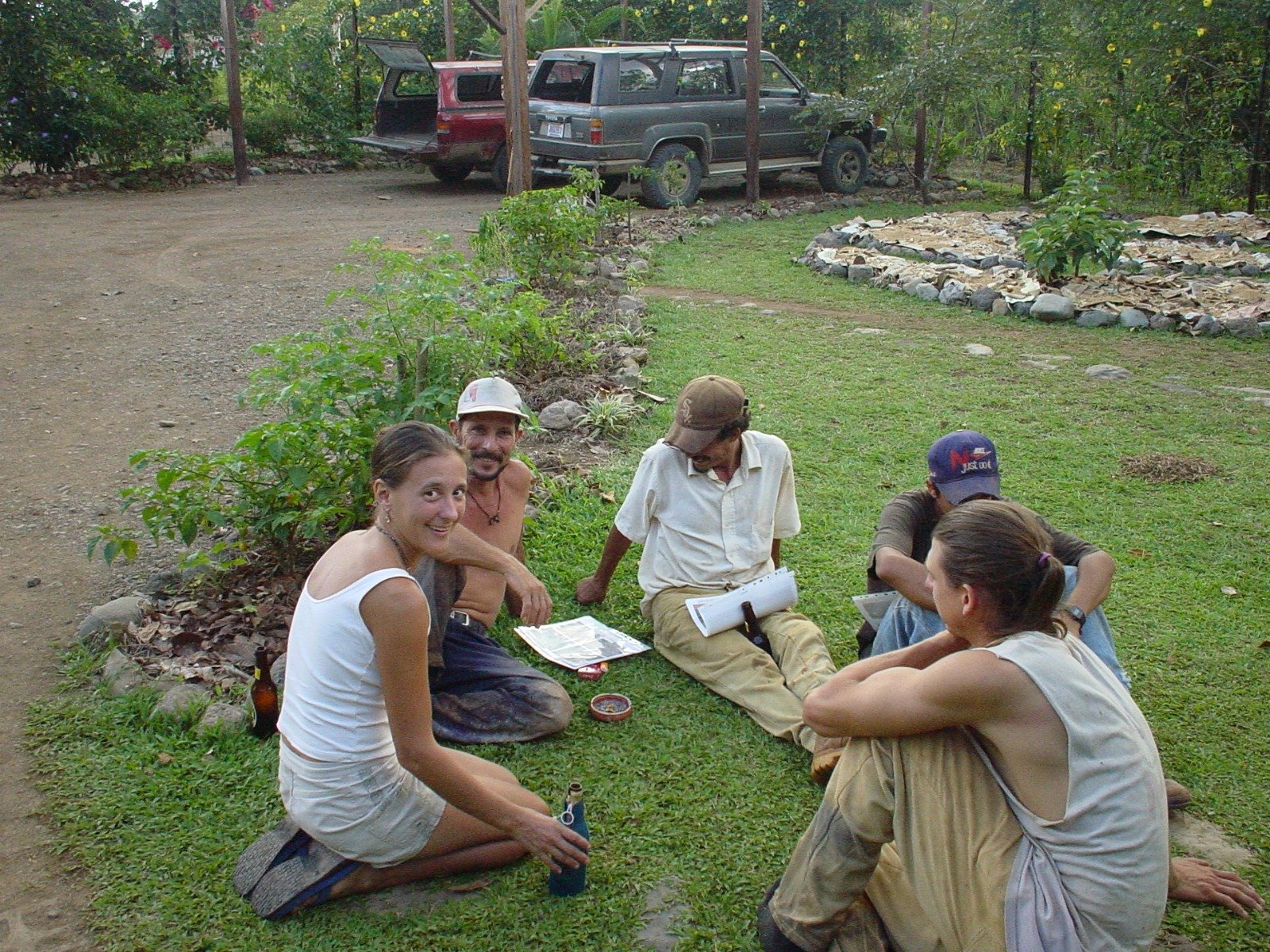
Communication forms the foundation for all of our relationships. The quality of those relationships define the flavor of our lives. And these tools give us the best chance to have “sweetness” in our lives. When our new group of apprentices arrive each year, one of the first activities that we engage in with them is co-creating agreements on how we want to communicate with each other. One of the most important of those agreements is making sure that we address and resolve negative emotions or interactions involving individuals or the community, and recognizing the detrimental impact they have if left unresolved. This agreement assures that when communication breakdown happens, we have agreed to address it openly instead of avoiding it or going insane!
Another agreement that we make is approaching conversations or conflicts with an intent to understand and connect, not judge or convince. This helps us to set the tone of the conversation. When our approach is rooted in curiosity and care, we are able to empathize with the other and see the process as one of growth and learning for all involved.

One of the challenges of upholding these agreements is making sure they are put into practice. Our habitual patterns of dealing with conflict are strong and we have to consciously choose to use these tools. When, inevitably, one of us forgets or doesn't uphold one of our agreements, we can gently "call in" (instead of the more aggressive "call out") the person into a conversation to acknowledge that the agreement was broken and have a conversation to understand what happened. All of this takes a commitment to the process and involves growth, learning and connections.
The second of the social permaculture tools that we use is one that creates the space for deeper connections and a safe place to be vulnerable. This is our weekly community check-in. This is a scheduled, once-a-week meeting to check in with each other to see how we are all doing physically, emotionally, and spiritually. We found that when we don't have this weekly meeting the cohesiveness and functioning of our group deteriorates.
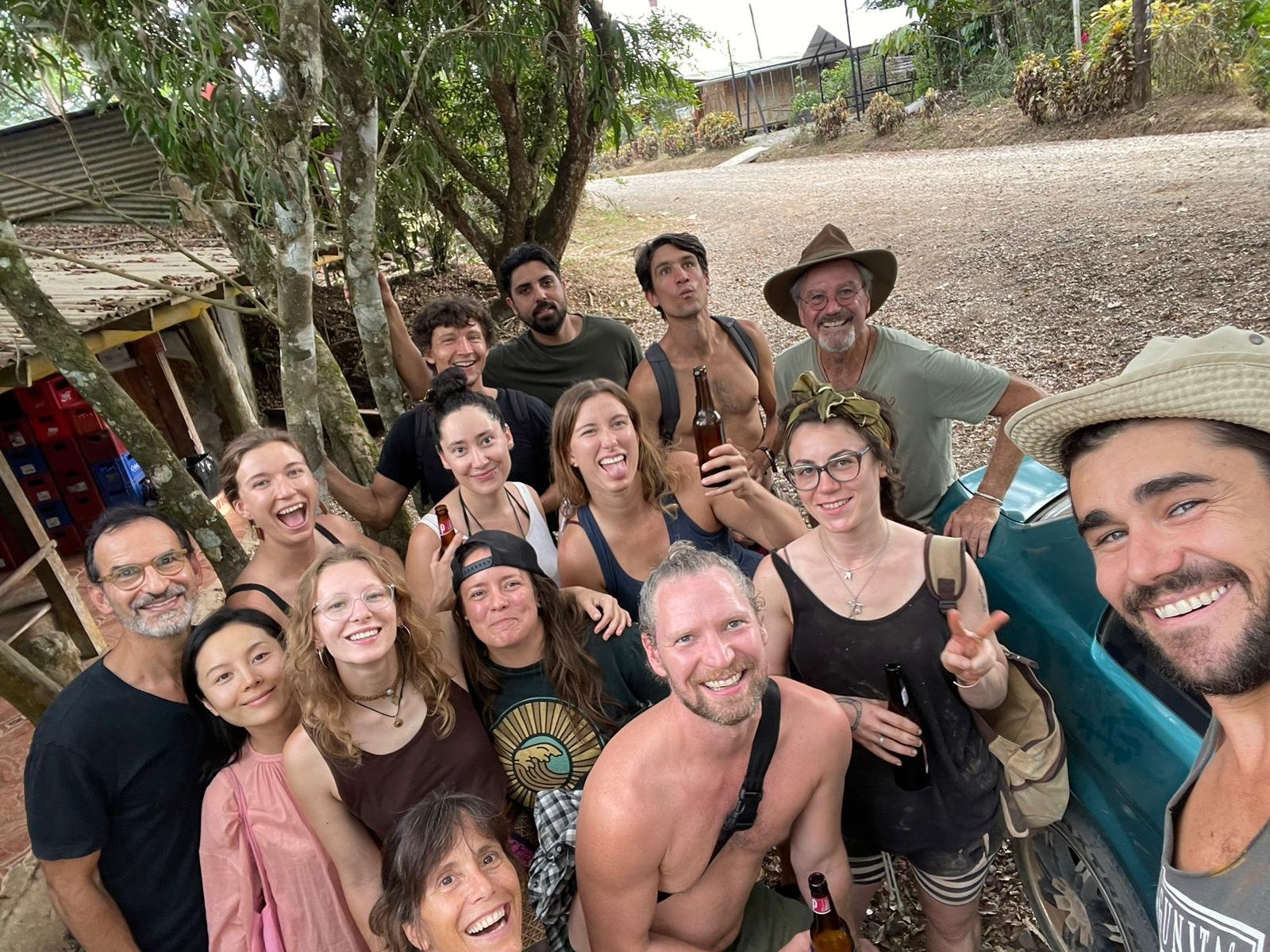
How we view conflict is extremely important as it frames our approach and dictates the tone of the hardest conversations. Our goal is to view conflict as an opportunity for personal growth and connection.
The last tool that I want to highlight that helps us achieve our goals of healthy communication is NVC, or non-violent communication, based on the work of Marshall Rosenberg. This framework is founded on the sanskrit word ahimsa, meaning non-injury. It is an ethical principle of not causing harm to other living things. It embodies reverence, compassion and empathy. When we use this pattern or framework we are embodying and using the ethics we strive to uphold. We all make the agreement to commit to working through conflict with NVC as our guide. This is like learning a new language and we have to practice it to become fluent.
So, although we really dig Led Zeppelin’s song, we are striving to minimize those communication breakdowns. When they inevitably occur, we now, after 23 years of trial, error and redesign, have come up with some very useful tools to help us all on this lifelong journey of learning and growth.
If you would like to experience and learn more about these invisible structures, come join us for one of our Permaculture Design Courses (PDC), our year long apprenticeship, or our two month internship.
Further reading:
Nonviolent Communication by Marshall Rosenburg
Say What You Mean by Oren Jay Sofer
The Four Agreements by Don Miguel Ruiz
People & Permaculture by Looby MacNamara


Social Permaculture: The Secret to a Successful Community
The people part of our work is arguably the trickiest. Even though it takes experience, know-how and intelligence to design and install orchards, build buildings, and manage water, I’d say that they all pale in comparison to the work that’s required to create a holistic and healthy human environment in which to live.
By Core Team Member Tim O’Hara
The people part of our work is arguably the trickiest. Even though it takes experience, know-how and intelligence to design and install orchards, design and build infrastructure, and manage water, I’d say that they all pale in comparison to the work that’s required to create a holistic and healthy human environment in which to live.

The aspects of our work that fall into this category can be referred to as “Social Permaculture.” How do we organize ourselves? Make decisions? Compensate ourselves? Resolve conflict? Balance work and play? Handle mental health concerns when they arise? Take care of people adequately when they’re sick? Raise a child in the same space where we work? Interact with the local population in a way that’s authentic, caring and positive?

The structures that we’ve attempted to put into place that address these questions and their subsequent success are critical to the prosperity of this place and the people that work, live and visit here.
We’ve spent a significant amount of energy in recent years developing systems that allow us to better respond to the issues that inevitably arise within our human ecosystem. It’s a work in progress, and it requires a lot of patience and perseverance when building a community from the bottom up.
The crux of this complex piece of our lives sits firmly in the art of creating clear agreements and transparent expectations. In the incipient years of our community and project, in what was perhaps a demonstration of “anti-capitalism”, we foolishly eschewed good documentation, written accords, and good financial planning. This led to what could have, and perhaps should have, been the demise of our idealistic notions of a sustainable and well-meaning business.
Through first-hand experience, insistence from team members, and at times shear desperation, we began to slowly put the pieces into place to shore up the systems that helped to create a fair, fun, equitable and economically successful workplace. The exercise was at times painful, tedious and uninspiring. And it took years, and continues to challenge our community through to today. It is always a work in progress, and is constantly informed by who is living and working at the Ranch.
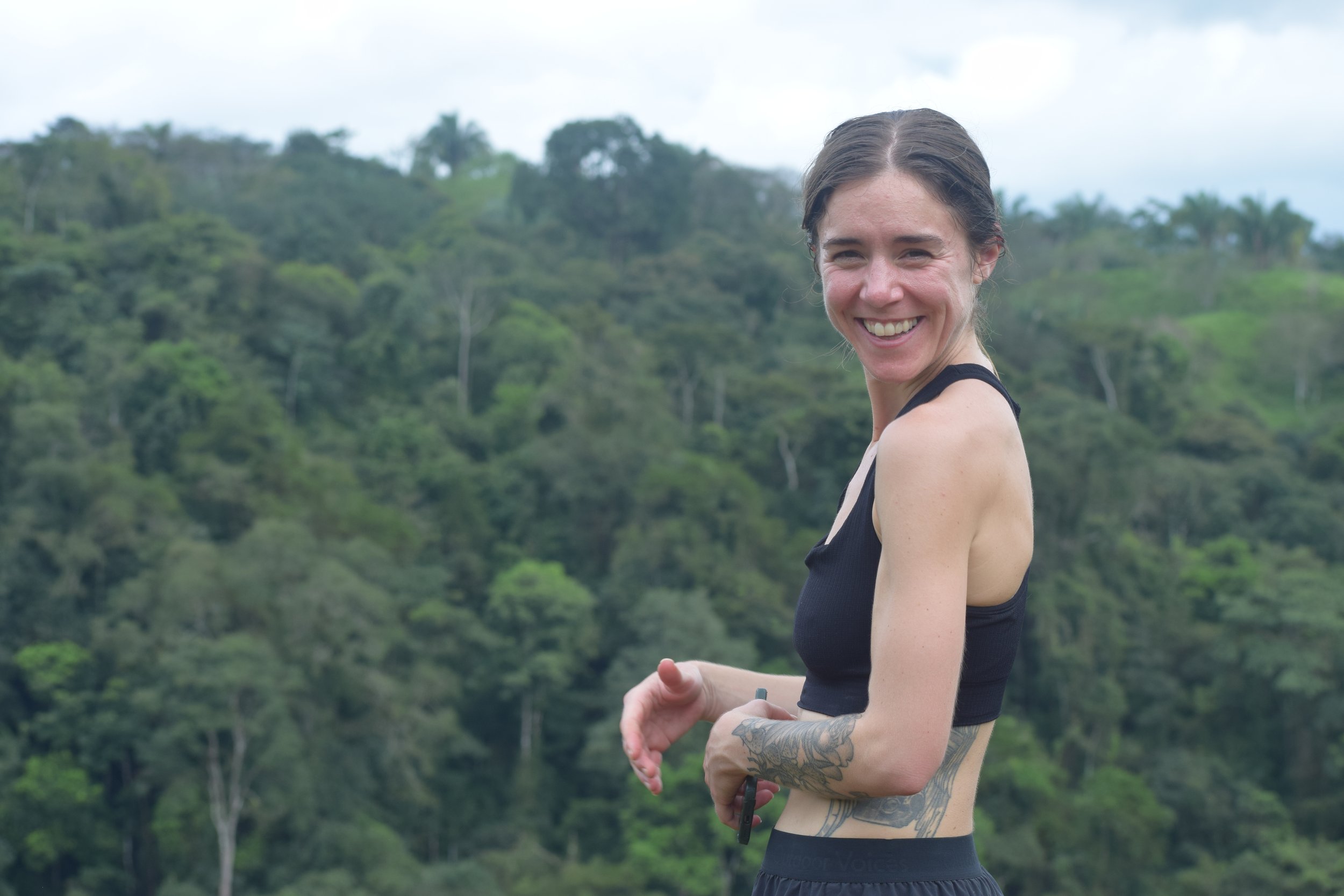
We are open to sharing both our triumphs and failures with those interested in learning from us. We have 23 years of them under our belt now, and we aspire to match that number again in the future. If we succeed, it will be a result of taking care of the people that take care of this place. There could be nothing more important than fairly treating the people that are impacted by your project, and that’s not something we’ve always done well, nor is it simply achieved just by saying that it’s important. It takes practice, education, trial and error and compassion, and along the way egos can be bruised and friendships disfigured. But it’s worth the hard work, and is a critical piece of any project or community to keep at its core, if it expects to get through and beyond the honeymoon phase.


Healing in Community
I’ve come to understand that although we all start from different places in life with a diversity of opportunities, we tend to have common pitfalls which lead us towards ill health and/or expression of pain.
By 2023 apprentice Grant Munro
“The art of healing comes from nature, not the physician. Therefore the physician should start from nature, with an open mind.”
Paracelsus
The health and wellness industry has taken on massive growth over the last ten years – probably in part due to the introduction and wide spread use of social media and unrestricted access to the internet. No longer do people have to rely on the chance discovery and passing around of old copies of The Alchemist, The Celestine Prophecy or The Prophet to name but a few. Nowadays it´s easy to scroll the page on our personal screens and come across cherry picked quotes, soundbites and memes and it’s clear to see from their popularity that people are yearning to be heard, felt and understood.
What leads us to pain
I’ve dedicated the last 14 years of life to learning to try to understand and coach others on how we can grow towards the expression of greater physical, emotional, mental and spiritual health. From working with thousands of people I’ve come to understand that although we all start from different places in life with a diversity of opportunities, we tend to have common pitfalls which lead us towards ill health and/or expression of pain.
On the whole, we tend not to move enough as humans were initially intended to, we have a habit of disconnecting from and avoiding our feeling bodies, we engage in repeated unhelpful thinking habits (such as catastrophizing, making assumptions and taking things personally), and we have had our connection to something greater than ourselves eroded over time – be that nature, a higher spiritual power or community.
A chink in the fullest expression in any of these four areas has an effect on the others to greater or lesser degrees. The acknowledgement of all aspects are essential to growth and restoring the adaptability to all life throws at us.
Using Permaculture Principles to Heal Social Issues
Permaculture’s design and problem-solving framework - at it’s core holding there are a set of twelve principles and four ethics – that can be utilized to address issues of almost any nature. It´s easy to see how principles such as observe and interact, apply self-regulation and accept feedback, integrate rather than segregate, and use value and diversity can be used to come up with solutions to some of the social issues we have in our relating circles and wider society.
When we look to the four ethics we could argue that the success in implementing earth care and fair share don’t really stand a chance until we reclaim our connection to all aspects of self, the people around us and understand what it is to be human . Until we reach this, we can’t accomplish the change that is being called for to create a healthy society and a healthy earth as a group of individuals.

Community Living and the importance of communication
As far back as the ancient Greeks (and undoubtedly further) we have understood that a strong connection to our community is essential for human health. Like many others of my generation, I don’t feel I have ever really experienced what it means to live as part of a community - so arriving in the jungle five months ago for the year long apprenticeship was an opportunity to truly lean in to the practices I felt I had been cultivating over the last seven years for my own healing/growth journey.
It’s been an, at times, a wild ride of ups and downs internally, and the number one practical thing I feel I’ve taken from it is: it’s important to have that difficult conversation in a timely manner. Feelings through miscommunications and misunderstandings can fester and be felt as an undertone by many in the group and can lead to what feels like fragmented energy. The stress of it can slowly eat us up and create a filter which can colour our whole experience. When something arises, ask clarifying questions, lead with what you are feeling but without blaming the other person. Perhaps describe what you are feeling in your body without naming an emotion can be helpful, too. Listen to the other person and accept responsibility for your part (there’s generally always a part we’ve played!). Sometimes it’s helpful to come back to a conversation a day or two later. Have compassion – we all have our own filters, biases and past experiences we are often living on autopilot from.
It has been well established now in the scientific literature that the brain doesn’t greatly differ in its response to an actual threat and a perceived threat – such as a repeating thought or judgement. Just thinking about a stressful event causes a discharge in stress hormones which our systems are not evolutionarily adapted to deal with for extended periods of time. Just as our physical body can bleed out from a thousand tiny cuts, we can look at these things that we are not facing as tiny cuts in our energy systems. Chronic overactivation of our stress response is implicated in almost all chronic disease.
It still blows my mind to this day how the impact of committing to practices of self-regulation can have a ripple effect throughout a community. When working in London we were measuring how after a relatively short period of time chiropractic was objectively helping people regulate their nervous systems more effectively than at the beginning of care. Subjectively, these clients would routinely mention how their relationships to their kids, spouses, friends, work and recreational acquaintances would improve.
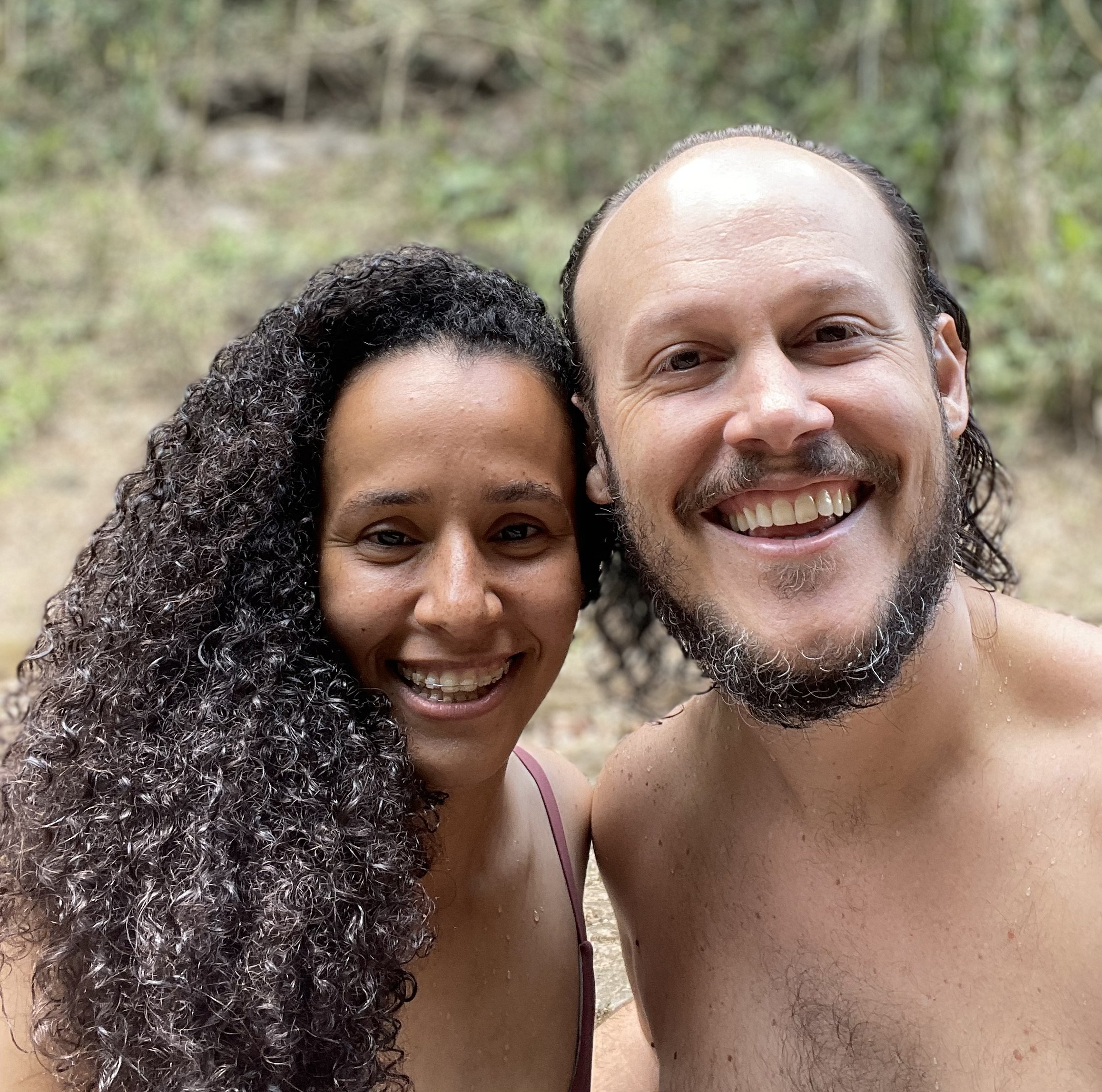
Similarly, I’ve noticed at the Ranch that from one conversation between two people the whole group feels like it relaxes – not to mention the perception of my whole personal experience can flip 180 degrees in a matter of minutes. In reality, the conversations are very rarely as terrible as we build them up to be once we initiate them. That conversation may only be with one person, but the pent up energy can be liberated in you both, to ripple through time and space, in ways in which we may not be able to yet fully comprehend.
“We never know how far reaching something we think say or do today will affect the lives of millions tomorrow.”
B.J Palmer

Check Out these past blogs about community living
Enriching Community Soil: 5 Simple Strategies That Support Sustainable Relationships
Foundations for Success: 10 Considerations to Create a Healthy Project
Learn More
Learn more about community living and social permaculture in our annual Permaculture Design Course.
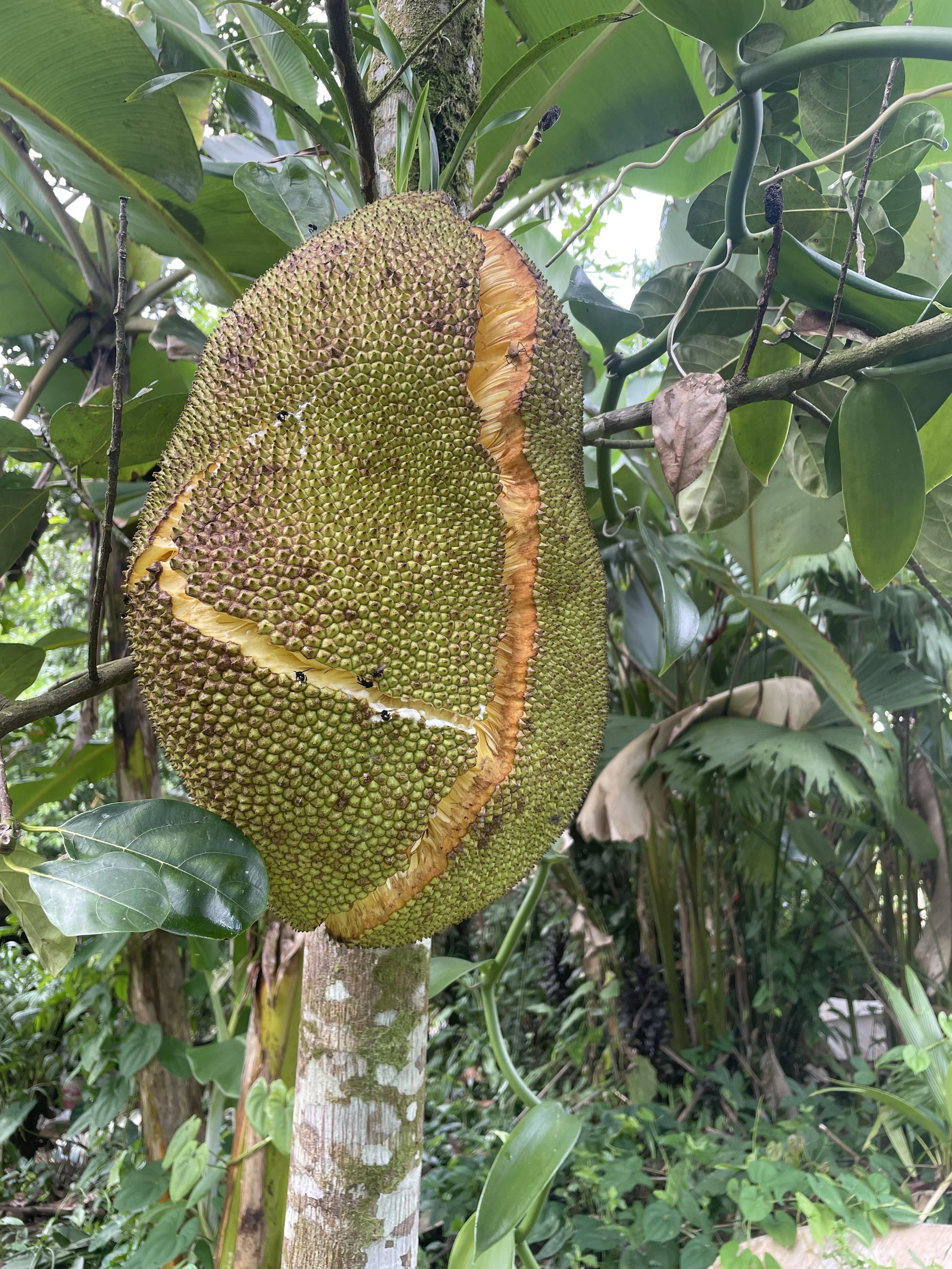
The Fear of Splitting Open, and no, I’m not talking About Jackfruit
The most transformational aspect of this experience, hands down, is the intensity of self-reflection and personal growth that is a natural biproduct of our new social living conditions.
By 2023 apprentice Elya Justina Mech
Living in community as an apprentice at Rancho Mastatal has stirred many changes within me, perhaps more so than the hotter climate, the ever present bugs and stinging things, the new work which challenges my body and mind. The most transformational aspect of this experience, hands down, is the intensity of self-reflection and personal growth that is a natural biproduct of our new social living conditions.

Who am I?
I thought I knew who I was before coming here, having been through many seasons of inner work and change, of death and rebirth. And of course one does not ‘arrive’, finding themselves in a place where the work is complete and the Self ceases to evolve. But there is a unique, accelerating factor of community that hastens this process and perhaps probes a little deeper than ‘regular life’.
Who am I in community?
In the earlier days of my arrival, I was surprised at how my personality took to hiding behind short, congenial answers, shy mouthfuls of food, and letting someone else do the talking. I was afraid to be vulnerable with my new group of apprentices and the core team, let alone the groups of guests who were arriving and departing every week or two and visitors who may join us for just a few days. I had considered myself to be outgoing, silly, confident and eager to speak of matters of the heart. Where did I go?
I recently read a passage of a book that said our personalities develop out of our survival of childhood – we are who we are to continue to receive love and affection. So perhaps unconsciously aware, I was craving such acceptance by my new group of friends/fellow students/housemates/teachers/mentors, and yet was afraid.
What parts of myself am I willing to share? What parts of myself am I willing to be rejected? Or misunderstood? Which of my shadows are being exposed against my attempts to conceal them, the bad habits I know I need to work on, the ones I’d rather not have to face right now? And who am I becoming, in this environment of everything new, who is this new me?

One aspect that has been particularly contrasted for me was the sharing of my artwork and poetry. Before coming to the Ranch, it was my usual habit to share these expressions of myself online or within an already established artist community. I have sold paintings at street markets, posted poetry online, and shared photos of projects I’ve been working on. Sharing bits of yourself to ‘’the whole world’’ although somewhat anonymously, hidden behind a profile is quite different to sitting in the presence of another while you open a part of your soul, vulnerable to their opinion whether spoken or simply felt. I had been meaning to attend an open mic night back home to read some of my writing aloud but I never worked up the courage and continued to find excuses not to get on stage.
But here at the Ranch, I felt a new opportunity stir within me, to be brave enough to share some of my poems that were closest to my heart. Firstly, at our evening Hankey hangouts by fairy lights (‘’The Hankey’’ is one of the natural buildings here which houses up to five of the apprentices at a time), and later at our dinnertime circles at the main house.

Thank you for letting me be brave in this community
I was further inspired by a solo traveller who was kind enough to gift me with a pocket sized watercolour set after our conversations regarding art and writing. I had packed my brushes and a pad of paper but neglected to bring along a vital set of paints. I have enjoyed many afternoons either in my ‘’Annex’’ bedroom (an extension of the Hankey that seems to float among the trees), down at the river or perched in the old honey bee shed among the jackfruit trees and bamboo. Thank you sweet friend.
I’m also grateful for the kind guest and new friend who spent time harvesting fruit with me several afternoons, speaking of our philosophies of life and talking about poetry, favourite books and humble living. I was encouraged to continue working on my books and art and it reaffirmed my desire to live as close to the creative process and Source of creation as possible, that being my true joy.

Thank you for letting me be me in this community
Another new interpersonal experience for me has been learning how to have a bad day around others. No longer being able to retreat fully from the world when I’m feeling out of sorts, I am discovering how to be myself and not put on a mask which is easy to do in conventional living. When someone here asks you how you’re doing, you don’t get away with a simple ‘’fine’’ or ‘’good’’ ;)
Conversely, I have also been learning how to let others have a bad day as well, offering concern and a listening ear but giving space, the understanding when perhaps they are short-tempered with you and being available later for smoothing things over if egos were bruised.

Thank you for letting me be imperfect in this community
At this point, after nearly five months of jungle community living, I’m forgetting what ‘normal’ is, what endless concrete feels like to look at, why billboards exist. The thought of eating dinner alone seems preposterous and I have grown quite used to living with no walls and only a curtain to provide me most of my privacy. (A hummingbird just flew into my bedroom as I write this, so, you can understand the trade-off). I’m still learning how to show up as my best self, allowing the lessons coming my way to be integrated gracefully.
So what profound conclusion can I leave you with? Just one that is not my own and has been said time and time again. Despite the truth in this song I’ve been listening to lately
‘’perhaps the fear of splitting open, showing some parts of yourself that you don’t even really want to –‘’
Be yourself. Bravely, your imperfect self and see what new things unfold.


Foundations for Success: 10 Considerations to Create a Healthy Project
After more than 20 years, we have been able to identify some trends that have led to our survival as a business and a community. The following advice is appropriate, and perhaps some of it even necessary, if you expect to live successfully in a communal work and living environment doing land-based work.
By Core Team Member Tim O’Hara
After more than 20 years, we have been able to identify some trends that have led to our survival as a business and a community. The following advice is appropriate, and perhaps some of it even necessary, if you expect to live successfully in a communal work and living environment doing land-based work.

Students in our annual Permaculture Design Course
Communal Continuity
It’s imperative to assemble a group of individuals that you can depend on, year after year. If the only people that are visiting your project are there for shorter or medium length stays, you will never feel as if you have a community to lean on during the harder stretches of running a project of this nature. Create realistic and concise agreements with one another and develop incentives that make everyone feel well taken care of.

Privacy
We learned the hard way that having your own private space is critical for long-term happiness. We decided to focus on building before planting in our early years. That has meant that our agroforestry spaces are a bit behind where you’d expect after 20 years of working in those spaces. But without privacy, it’s impossible to keep people around who are doing the important work in the orchards and other spaces. Create private spaces for everyone, with a focus on creating lovely, comfortable, healthy homes for your core team.
Collective Decision Making
Micromanaging is a recipe for burnout. Don’t fall into the trap. Develop trust with your partners and allow each leader to make decisions in their realm up to a certain value. Big decisions, that affect everyone, should be discussed by your entire team, but small decisions, like whether to buy 5 or 10 avocado trees, should be left to those managing the orchard spaces.
Balance and Rest
It’s imperative to figure this out before burning out. Burnout can be permanent, leading to the abandonment of your passions. Build into your day-to-day lives the time to run, breathe, nap, walk, draw, meditate and think. The work will never be done, so don’t try to do it all each day. It will be there waiting for you in the morning after a great night’s rest.

A Solid, Well-Taken Care of & Committed Core Team
We’ve got an amazing core team. But it took us longer than it should have to realize the importance of building a strong team at the center of our project. If we expect community members to stay committed, they need to have their needs met. And everyone has a unique set of needs. Create a compensation agreement that makes everyone feel valued.

Community Connection
Be an active member in your town. Demonstrate, over and over again, that your project exists to benefit everyone in your community, especially those most in need. Join your local woman’s group, offer free yoga classes once a week, develop a kids soccer camp, or create a language exchange.
Fair Share
Share what you have. It’s your easiest path to acceptance though far from the easiest practice to bring to fruition. It has taken a lot of time, energy and sacrifice to create Rancho Mastatal, and sometimes our knee-jerk reaction to “spreading the wealth” is instead to move to protect what we’ve created in the interest of stability and to prepare for future unforeseen issues. But true stability comes with sharing.

Communal Meals
This may be the hardest bit of advice to embrace for some. Sharing a meal takes more social energy, but weighed against the time you save on cleaning and cooking, it’s worth it. Communal meals encourage group debate, laughter, learning and the development of a strong social fabric. Humans have tended towards eating in front of screens or on the run. These trends lead to poor eating habits and encourage humans to disconnect from one another. To eat well today means a monumental and coordinated effort growing, processing and cooking food. Celebrate this activity each and every day and you will be rewarded in ways unexpected.
Make Time to Dream
We “talk shop” a lot around here. We love what we do and enjoy talking about what we’ve created and how we can improve it. It’s important for us to create spaces that allow for dreaming and scheming. Having the space to “zoom out” and move for a time away from the day-to-day allows for creative brainstorming that can lead to breakthroughs and new ideas that might otherwise never come to the surface. Dare to dream, and dream to create your ideal version of life.

Don’t Get in Over Your Head
This is much easier said than done. When you commit to a land based project, your to-do list immediately seems endless. There’s never enough time in the day to do everything that you need. Start small and work towards simple solutions whenever possible. Build and perfect one system at a time, as much as you can do that. Don’t add chickens, goats and fish in the same year but rather add one species and then see how that changes your life before adding another. We made the mistake of throwing too much at the wall early on in our development and when not everything stuck, it felt overwhelming picking up the pieces of many systems simultaneously.
We try to share our failures and successes frequently so that others can get to where we did in less time and with less effort. Please don’t hesitate to contact us with questions, comments, or suggestions and all the best in your journeys.
Check Out These Past Blogs About Permaculture and Community
How to Run a Permaculture Internship
Enriching Community Soil: 5 Simple Strategies That Support Sustainable Relationships

Why Rootedness Matters
Rootedness can create compassion and understanding for the place where we are, know, and love. I have seen the benefits firsthand from some of amazing people that were born in Mastatal and continue to call this place home. They anchor the business and environmental communities here.
By Core Team Member Tim O’Hara
Costa Rica is a popular destination for North American and European families looking to resettle in a place where life appears more promising. These desires may come from the need to escape a bad situation or a wish to find a better life. It’s a phenomenon that dates back thousands of years. We are a species that suffers from what I refer to as the “grass is greener syndrome”. We commonly dream of finding our Shangri-La somewhere different from where we were raised.
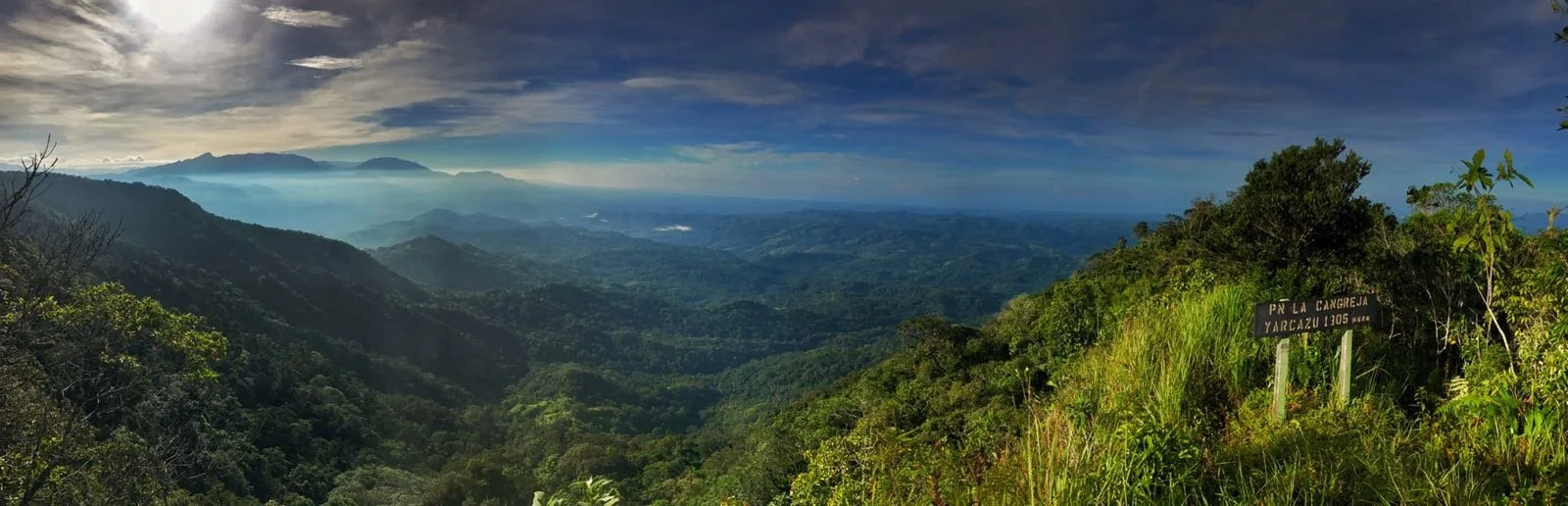
I grew up developing relatively deep roots in my hometown in upstate New York. But as a result of societal pressures, I moved away for college and never went back to my hometown to live full-time. These non-provincial experiences have been fruitful, transformational, and important to me to develop a more well-rounded view of the world. They also helped to nurture a tolerance and understanding for how others live. Nevertheless, they pushed against the societal benefits of growing deeper roots in the towns where we are born. With so many people uprooted, due to climate catastrophe, war, persecution, the desire to see the world or economic pressures, I fear that like a plant ripped up from the ground, this type of restless movement can result in community erosion, family disintegration, and a loss of geographical literacy. There are always tradeoffs, but I think that we should, when appropriate and possible, put more effort into encouraging humans to stay closer to home to do the good work that’s needed in every community around the world. Wealth continues to congregate in the “best” cities, leaving small towns and rural areas bereft of intellectual and physical stamina. I say this having left my home 30 years ago, so admittedly my perspective might come across as “curious.”
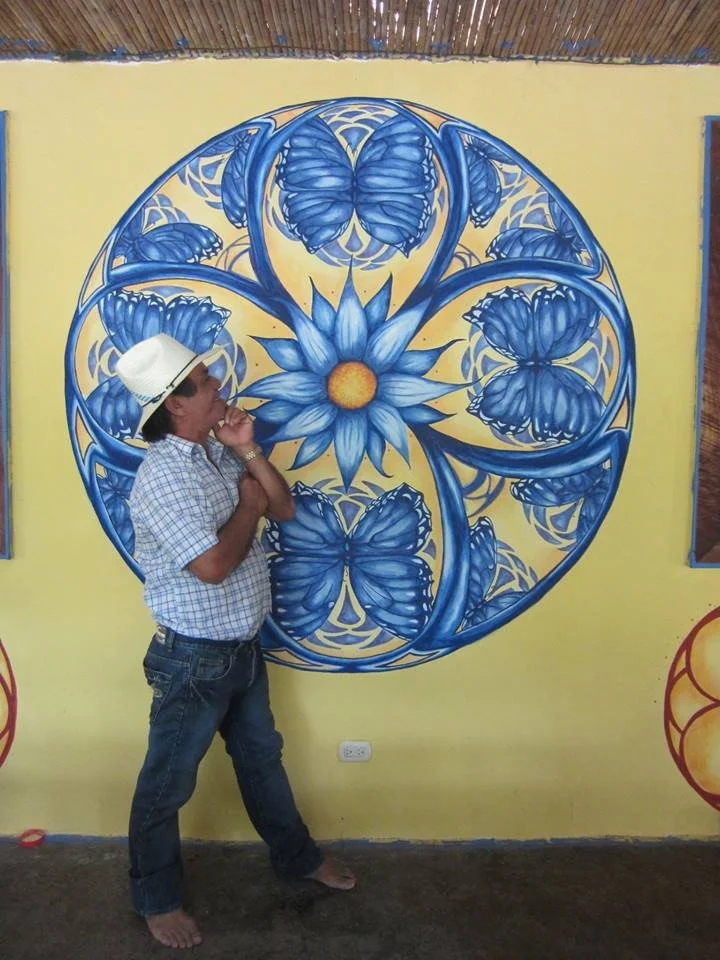
Robin and I started this business in 2000. We moved to rural Costa Rica in 2001 and in 2008 started a family with the arrival of our daughter Sole. Mastatal has been a challenging and amazing place to run an enterprise and raise a little girl. Sole has had what many people would consider a non-traditional upbringing. She grew up without diapers, went to an elementary school with 1 teacher and 10 students, and goes to a high school with 25. She plays unorganized soccer just about everyday and hikes to a nearby waterfall multiple days a week where she jumps off cliffs and catches freshwater shrimp and crabs. She watches out for snakes on her nightly trips home to an earthen house overlooking La Cangreja and has had to survive her early teenage years with horrible internet. She cooks for our entire community and is by far the best baker in town. We are so thankful for the environment that she has spent her first 15 years in, though it has been far from perfect.
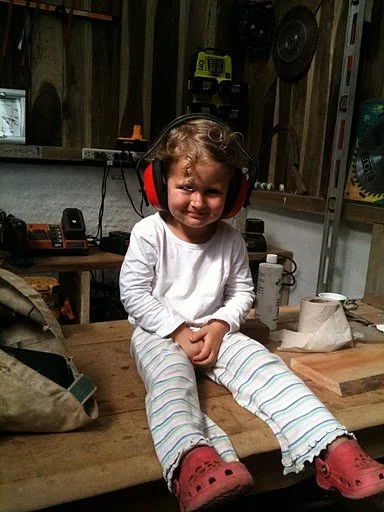
Upon our arrival to Mastatal, we were definitive outsiders who had moved from afar into a small, quiet, depopulating village without much happening. There were no phones, terrible road access, and no formal businesses. Our first years here required a lot of energy to begin developing relationships and friendships with the people of our adopted village. It was some of the hardest but most rewarding work that we did and continue to do. To feel at home anywhere requires a certain level of acceptance and connection, and this only comes with intention, compassion, understanding, sharing, and an acceptance of vulnerability. And it usually takes time. It was not an easy or fast path for us, but one that gradually crept into our lives quietly. It led to the rootedness that community strength is built on, and a vested interest in the future of what has become our home.
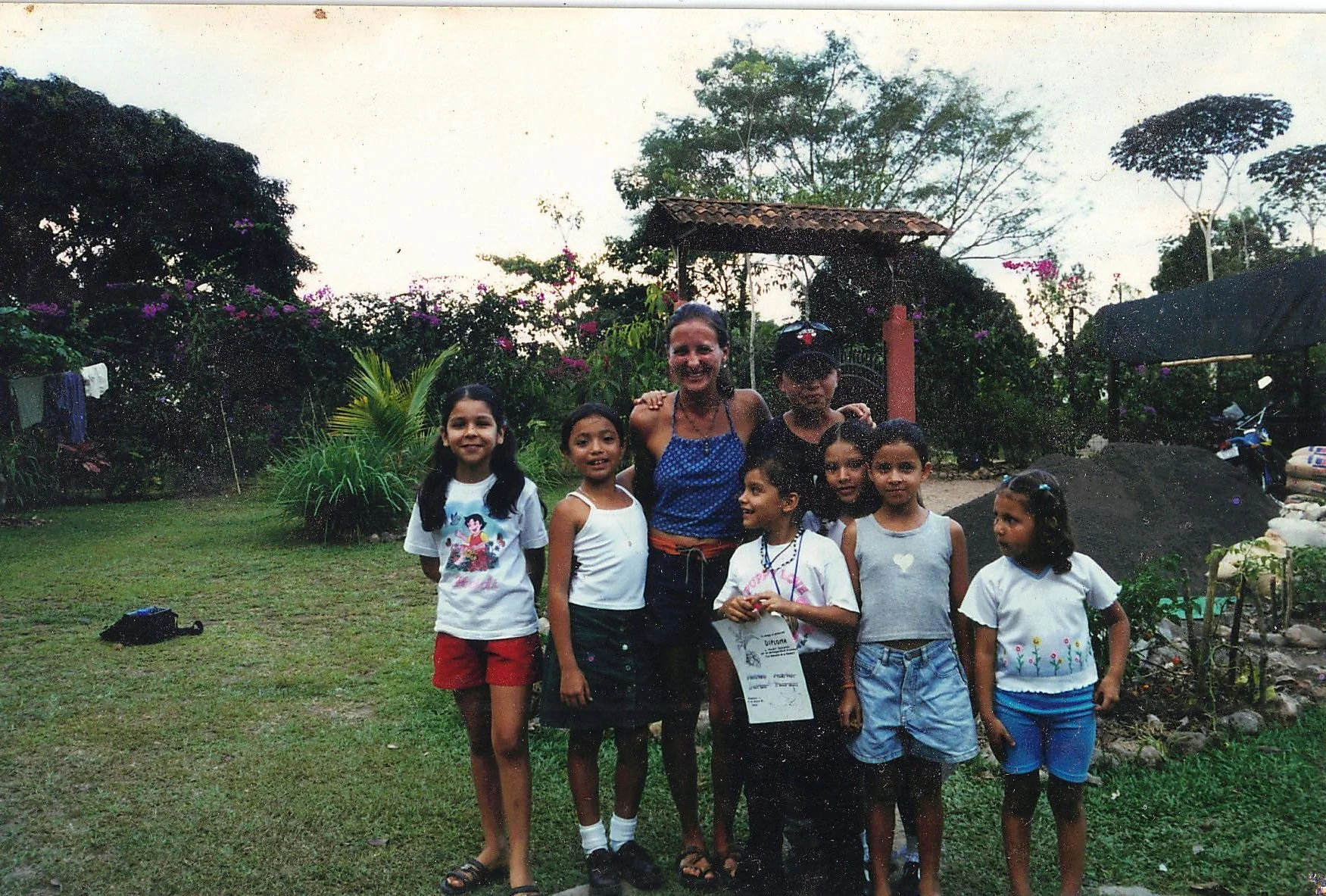
This lifestyle choice has come with its sacrifices. For me the largest of these has been 2 precious decades geographically distant from the people that I hold nearest and dearest to my heart. It has not been a minor loss. We have missed important family gatherings, weddings, births, deaths and precious time with kin. Our lives are full of compromises, and this choice, although it has brought great joy and happiness, has a sad component that is part of being a human living on this earth at this time. We have to pick our battles, and being able to go through a well-thought out decision making process when contemplating a move like we did is important. I would suggest not running for the hills with each passing doom and gloom story that you hear about on the news. Our problems at home are oftentimes universal, and the battles should sometimes be fought at home, where we can garner the most support, and perhaps have the greatest positive impact. This might seem strange advice from a transplant who has carved out a nice life abroad, but I think that rootedness is an important consideration for many people striving to attain meaning and happiness in their lives.

Rootedness can create compassion and understanding for the place where we are, know, and love. I have seen the benefits firsthand from some of amazing people that were born in Mastatal and continue to call this place home. They anchor the business and environmental communities here. They are smart, savvy, entrepreneurial, caring and vested. They are raising their families here, inheriting their family farms, planting food, and against all odds bringing about the revitalization of a small rural community. They are selling organic chocolate, offering amazing natural history and birding tours, preserving forests, planting trees, and running our local government. And after 22 years I do finally feel rooted here, but it took time, energy and resources that I could’ve also dedicated to the town that gave me so much as a youth, and I think that’s worth looking into a bit deeper for everyone contemplating where to call home.

Unexpected Aspects of Permacultural Communal Living
A grand year is made up of many aspects, mundane and beautiful. Things expected and shocking are sure to come. It is most of what I (we!) can do to approach it with grace, and let come what may.
By 2023 apprentice
Community living has been a positive experience for me so far. I have felt its benefits in my opportunities for quiet time away, knowing daily tasks can still be completed while individuals have time for rest. I have felt its benefits during our largest social nights, when incredible food, conversation, games, music, and travellers can all be found under the same roof. During times in between, I am discovering new benefits all the time; some are to be expected when living around others, and others come out of the blue! Let's look.

My fellow apprentices getting ready to learn about plastering!
To be clear, life as an apprentice at Rancho Mastatal is my first experience in community living beyond living in a private home within a neighborhood, or in an apartment with a few others. The former has not felt like existence as a true community to me - I led a private life among others who did the same. We interacted in a friendly manner, but beyond my childhood friendships I rarely felt a deep involvement in my neighbors' lives. The latter was more communal: shared facilities, responsibilities of cleaning and organization, and public space meant a deeper level of involvement in my roommates' lives. Being introduced to a preexisting community as a new contributing member was a shock, but thus far has been a positive one.

The Hankey House, where the apprentices live, viewed from the Goat Barn
One of the first aspects of community living that I had to adapt to was a new standard of privacy: The seven of us share a toilet and two showers. The Hankey House houses five apprentices with hardly a single solid wall in the building, and most public spaces in the Ranch are wide open to the jungle air and to passing observers. In fact, our group's level of privacy is apparently less than that of previous apprentice groups: a massive cluster of bamboo and surrounding vegetation between our two livings spaces was felled at the end of 2022, providing a very clear line of sight between the main area of the Hankey House and the porch of the Goat Barn. My partner and I occupy the Barn while the five others each have space in the Hankey -- if any of the seven of us spend time in our respective "living rooms," we are clearly visible to each other. In addition, some unfortunate hedge maintanance next to the Barn has left the bathroom and showers almost entirely visible from our porch (it seemed best not to show this in photographic form...) -- thus, we find opportunities to respect each others' privacy frequently!

Viewed from the top floor of the Hankey, the Goat Barn (left) and showers and bathroom (right). Also note the bright green bush in the bottom-center, which is what remains of the felled bamboo cluster from last year!
It would be easy to critique this living situation - its drawbacks can be detrimental if the users of the facilities are made uncomfortable. However, we are here for the year! We are seven new people in a permacultural education facility that hosts dozens at a time. We have been welcomed with open arms by the team here, fed and housed and accomodated for: how could we complain in a space of such blessings? We avert our gaze from showering neighbors, and chuckle together later. Changing clothes on your porch is a risk, but one with no lasting consequences. If a mutually friendly space can be created, the lack of immediate privacy can be much more of a goof than a discomfort.

The inside of the Hankey House! There are five bedrooms total, and you can *kind of* see two from here. A very beautiful communal space, built with as many aspects of permaculture as possible in mind!
Another aspect of a permacultural lifestyle which I hadn't a clear idea of was the allottment of our daily tasks; of course, coming in we all knew that there would be a plethora of work to go around for those living on a Ranch. I suppose what I didn't have a clear idea of was how organized it would be, and so apparently evenly distributed. The apprentices are allotted "Community Contribution skills," or CC skills, and are designed to switch every six weeks. We focus on these every morning, aiming to have finished our daily tasks by 7:15, granting us a little spare time before our first work party of the day. With this system seven individual tasks, each with its own dynamic system and set of moving parts, are completed every day in a short amount of time -- if one person or a duo were made to do all of these, it would take all morning or longer! The efficiency of this system speaks a lot to the amount of time the Ranch has had to design and refine it. A constant process of design, analysis, and redesign is integral to the permacultural approach to life! Just by the nature of the design and implementation process, it wouldn't be a shock to see this system change within the course of this year, even with the time it has had beforehand to establish itself.

The methane bio-digester, where manure is converted to rich compost and cooking gas

A pathway surrounded by greens used in our salads every day!
To be true we have only been here a short amount of time -- much more time than we have yet spent still awaits us. It is an exciting prospect. Many people will come and go, and here we will be! Helping each other out when we can, switching chores, trading shifts in the kitchen. A grand year is made up of many aspects, mundane and beautiful. Things expected and shocking are sure to come. It is most of what I (we!) can do to approach it with grace, and let come what may. The same can be said for all folk; you don't have to be living on a Ranch to let the principles of a collaborative community enrich you. Enjoy yourself! Help your neighbor plant, or rake, or daydream! Community binds us, and the pieces of it which you don't expect may very well become the most dear to you.

Beautiful space in between facilities used by the community every day. The building pictured is the Food Smithy, where harvested goods go for processing and loads of fermentation occurs. Behind me is a permaculture-design herb and veggie garden.
Read these past blogs about community living
How to Run a Permaculture Internship
Living Without Walls- A Year of Jungle Community Living
Enriching Community Soil: 5 Simple Strategies That Support Sustainable Relationships

Book Recommendations and Reviews #3
Due to the unique circumstances of the past two plus years, I never seemed to find the time to write what I hoped would be a yearly blog on the books that I read. The two times that I’ve done this in the past we were stateside visiting family, with a bit more time to dedicate to catching up on what seems to be an ever growing list of “books to read”.
by Tim O’Hara
Due to the unique circumstances of the past two plus years, I never seemed to find the time to write what I hoped would be a yearly blog on the books that I read. The two times that I’ve done this in the past we were stateside visiting family, with a bit more time to dedicate to catching up on what seems to be an ever growing list of “books to read”. With travel plans all over the board since COVID became a common part of life, we were only able to make 2 much quicker than normal trips back to see our loved ones in the US. Nevertheless, I’ve been able to squeeze in some solid educational, inspirational and informative reads that I’d like to quickly review for those of you out there that appreciate personal reading suggestions. I’ll try to include as many of the books that I’ve read since the last time I shared my recommendations though I may miss a few as it’s been a while. I’ll also do my best to list them in the order that I read them though my memory doesn’t always serve me as well as it used to. As always, I love to receive other people’s recommendations and in fact a few on those on the below list came from some of you that responded to my last blog reviewing books. Without further ado, here we go. Enjoy.
All the King’s Men by Robert Penn Warren
I randomly picked this classic off of the Ranch’s library shelf one day looking for a good read. I don’t often choose fiction these days but this book, written as fictional history, really resonated as I flipped through the pages and got lured in by the in-depth character development and story of corruption, dirty politics, and the reality of how decisions are sometimes made by those in power. The book is set in the southeastern US in the 1930s. I was saddened by how little much has seemed to change on the political front this past century.
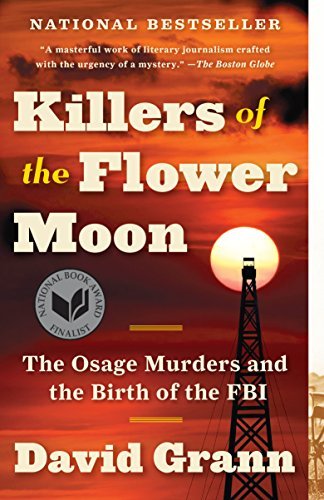
Killer of the Flower Moon: The Osage Murders and the Birth of the FBI by David Grann
Holy shit. I wish I was surprised by the story laid out by author David Grann. This book was recommended to me by our neighbor Jim Veeder. It’s an unbelievable story of pillage, theft and the rising up of J. Edgar Hoover and the Federal Bureau of Investigation. Add another chapter to the story of sinister imperialism and Manifest Destiny that left destruction, thievery, and murder in its wake. The book was gripping. I burned through it in a few days and found myself at the end ashamed to descend from the race and gender that has done so much damage to this planet and its people. Highly recommended.
The Warmth of Other Suns: The Epic Story of America's Great Migration by Isabel Wilkerson
This book about the “Great Migration” of African Americans from the Southeastern US north and west follows the lives of 3 unrelated people that moved to New York, Los Angeles and Chicago respectively.
This is a good overview of the plight of black Americans in the early and mid-1900s as they continued to work against the repressive forces set in motion by slavery and subsequently Jim Crow. I also plan on reading Wilkerson’s more recent book entitled Caste.
Rising: Dispatches from the New American Shore by Elizabeth Rush
What will happen as our coastal cities go underwater? What will happen as our estuaries become part of the sea? How will we mitigate the ensuing disasters of climate chaos as sea levels rise and begin to swallow up areas inhabited by millions of people? We are in for a rude awakening and Elizabeth Rush does a nice job of laying out our despondent future in a way that I found accessible and even at times enjoyable. The book was written fairly recently and is a good selection to bring yourself up to speed on recent developments in the climate disaster conversation.
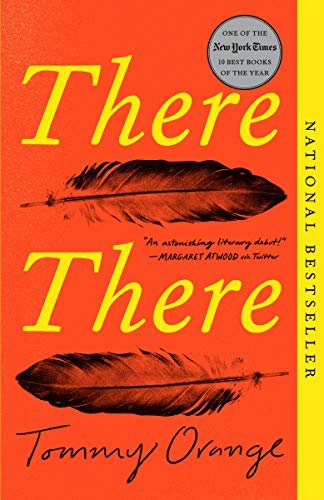
There There by Tommy Orange
This read takes a look at indigenous populations in urban settings as it individually follows the lives of a number of indigenous people who are connected in some way and who all come together in the same space in Oakland at the end of this compelling, sad but important and absorbing book. If you read Overstory, it’s similarly laid out by following and highlighting the lives of the characters and then creatively weaving them together before a final crescendo that leaves you reeling a bit. I blew through this page-turner and would highly recommend it to anyone interested in the human project. This is one the first books that I’ve read about American Indians that focuses on the urban story, where most American Indians live today, and their challenges as it relates to life in the city.
Call of the Reed Warbler: A New Agriculture – A New Earth by Charles Massy
This book was also recommended to me by Jim Veeder, our neighbor who lives up over the mountain in a small community named Tufares. Jim’s an avid reader that shares my reading preferences and this book really fit the bill with its many examples of regenerative food systems on the continent of Australia. Inspirational for readers concerned about how humans can responsibly provide for themselves in the future.
October 1964 by David Halberstam
I needed a break from the serious reads and settled on an account of the 1964 World Series between the St. Louis Cardinals and the New York Yankees. It was an enjoyable recount of the season leading up to what was one of the most exciting World Series up until that point in history. I especially enjoyed the read due to the fact that many of the players highlighted in the book were still playing when I started watching baseball in the early 70s.
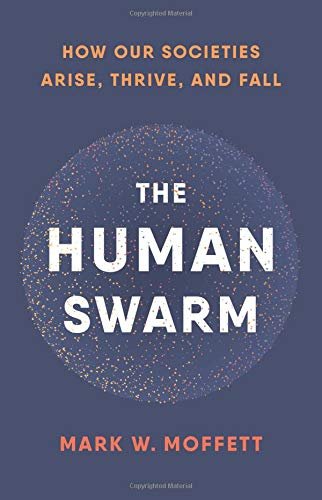
The Human Swarm: How Our Societies Arise, Thrive, and Fall by Mark W. Moffett
This book impacted me more than any book I’ve read in a long time. Moffett, a biologist who for much of his career focused on ants, makes a leap into the world of apes as he uncovers why we do what we do. Fascinating, eye-opening, riveting and refreshing. It answered so many questions about human nature that I have been carrying around with me for a long time. Highly recommended for readers interested in human evolution and behavior.
Catching Fire: How Cooking Made Us Human by Richard W. Wrangham
I blasted through this easy-to-read book that postulates that we are who we are today due to as much as anything else our coevolution with fire. The author suggests that we essentially cannot be healthy beings without the act cooking. I found it to be a captivating book full of new ideas (for me) that seemed almost commonsensical and plausible looking back. Fire, more than any human “discovery”, influenced who our species is today. Dedicated raw food enthusiasts will likely push back on much of the content in this excellent read.
How to be an Anti-Racist by Ibram X. Kendi
It took me a few chapters to warm up to this New York Time’s bestseller. I learned a lot from Kendi’s messages and enjoyed the way that he wove his personal story into the bigger message of how to carry ourselves in an ever complex world of stereotypes, racism, sexism, homophobia, classicism and a white supremicist patriarchy. I’d say an important addition for anyone interested in working to navigate today’s entangled social landscape.
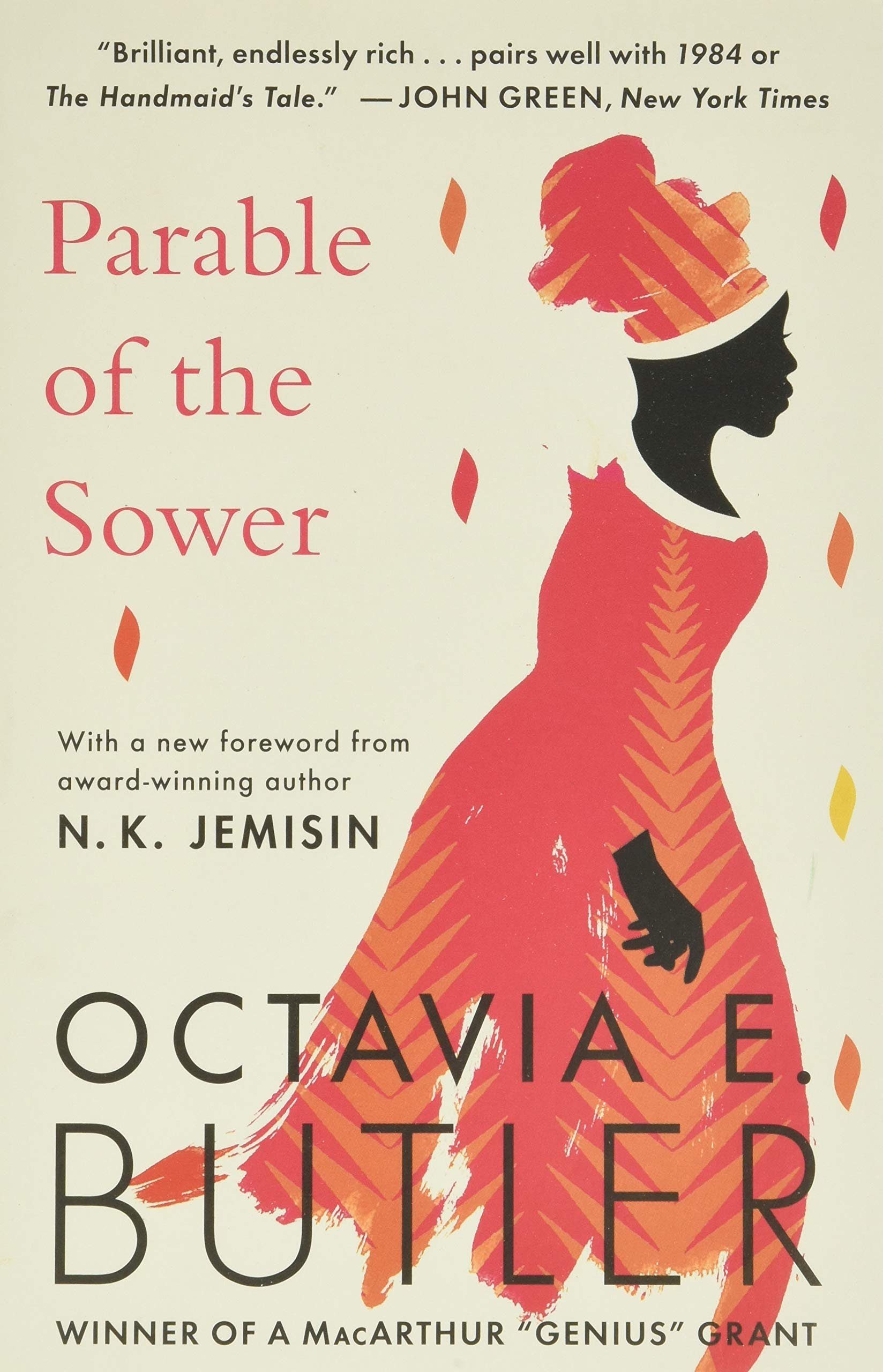
Parable of the Sower by Octavia E. Butler
This title was recommended to me twice on the same day by different people and so I decided that I had to give it a whirl. I found out afterwards that this book has been popular on a number of reading circuits based in part by the accuracy of it’s prophetic message. The book was written in the early 1990s and set in the mid-2020s and depicts an apocalyptic setting in California that features death, danger and dystopia in a way that makes the story totally believable given the current state of the world. Octavia Butler seems to continue to get increasingly popular since her recent death. This black award winning author who died in 2006 is known as a sci-fi writer and has enjoyed a large following for many years. This book has a sequel entitled Parable of the Talents.
The Red Deal: Indigenous Action to Save Our Earth by The Red Nation
This book outlines a bold sociopolitical message to reconcile past atrocities done to the indigenous people of North America. I’d say that everyone would benefit in some way from this book. It provides a roadmap for reparations to American Indians and in turn a roadmap to return to civility in American and human society. I greatly resonate with the content in this book.
A Flag for Sunrise by Robert Stone
One of only 3 fiction books on this list, I again randomly picked this up in the Ranch library and quickly got engrossed in this historically accurate book about imperial destruction, revolution, greed and power in Central America.
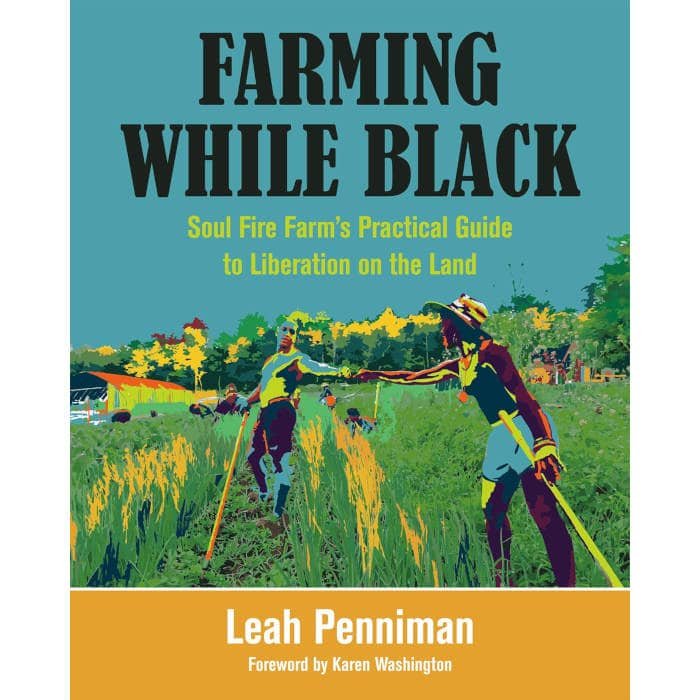
Farming While Black: Soul Fire Farm's Practical Guide to Liberation on the Land by Leah Penniman
We had the opportunity many years ago while visiting Robin’s mom outside of Albany, NY to visit Soul Fire Farm near Troy, NY not far from where Robin grew up and where the author and her partner Jonah started an impactful project that focuses on food security and farming with a focus on the underserved black community in the capitol district area of NY. The book is wonderfully written, clear and powerful and outlines a path for both black and white people to work towards a future of land justice.
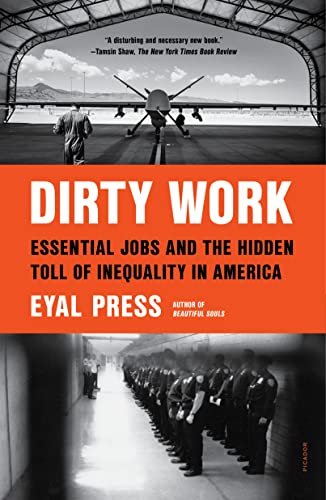
Dirty Work: Essential Jobs and the Hidden Toll of Inequality in America by Eyal Press
I’ll start by sharing one of the final passages in this book that struck me, “When people gather to hear veterans talk about moral transgressions they had committed in the course of fighting America’s wars, the most effective way to help them overcome moral injury is to communize it, Jonathan Shay argued in Achilles in Vietnam. When those not doing the fighting can deliver a message to them and to all of the “dirty workers” that they deserved to hear. “We sent you into harm’s way. We put you into situations where atrocities were possible. We share responsibility with you: for all that you have seen; for that you have done; for all that you failed to do.”. This book should be read by all Americans and highlights the “dirty work” that helps to drive our economy, put food on our table, and keep us safe. This heart-wrenching book looks at the modern underclass and their struggles to get by by doing the least desirable work in our economy and its impact on their psyche and society at large. Essential reading.
America: The Farewell Tour by Chris Hedges
I’ve really liked Chris Hedges’ journalism over the years. He seems to have had the sustained courage to speak to power. I blew through this book. Sad, compelling, motivating, and provocative. Hedges delves deep into the addictions of opioids, gambling, sadism, and hate and how they are being fed by a failed corporate state. If you haven’t given Chris a shot, this would be a good dip into his decades long investigative journalism career.

The Heartbeat of Wounded Knee: Native America from 1890 to the Present by David Treuer
As you may remember I enjoy reading about Native American history. The first part of this book quickly recaps the history of Native Americans in North America up until the massacre at Wounded Knee in 1890 and then delves deep into American Indian policy post-Wounded Knee with a focus on the miraculous survival of Indians in the United States and the amazing stories of resilience that continue to define this segment of the population. The book ends on a high note by highlighting all of the incredible work being done on reservations and in urban centers. American Indians are beginning to thrive and create an example of what our nation can become in the face of climate disaster and out-of-control capitalism that’s pushing our species to the brink of extinction. It’s a somewhat thick read but a worthwhile one for those interested in issues that revolve around indigenous culture.
Building Community Food Webs by Ken Meter
A good, quick read for anyone looking to go a bit deeper into building local economies that revolve around food. Ken Meter argues why local food movements matter and why we should support those growing food in our regions.

Inflamed: Deep Medicine and the Anatomy of Injustice by Rupa Marya and Raj Patel
A great book for those interested in making the connections between physical deterioration and the deterioration of our economy and democracy. Chronic stress makes us sick in ways that we have not understood until recently. And low-income people of color experience the highest levels of chronic stress. This has led to generational sickness and a decreasing life expectancy in many demographics. Yet another call for equitable policies that lead to a brighter future for all. Thanks to former apprentice Abby Cmiel for this wonderful gift!
Bitter Grounds by Sandra Benitez
A wonderful read and the last fiction selection on the list. This book follows 3 generations of poor El Salvadoran women in the middle half of the 1900s who’s lives are intimately connected with an elite El Salvadoran family. Beautifully written. Sad, eye-opening, page-turning.
One Day of Life by Manlio Argueta
This book, also set in El Salvador in the 1970s, follows a family through the struggles of civil war and is told through the eyes of the poor rural women who lead tragic lives in this war-torn country. The sad and all too often told story of US government involvement leading to the installation of corrupt powerful figures who lead their countries with iron fists that have caused much of the strife that has led to mass migration to the US from this region of the world. A tragic, well told and easy read for those interested in the politics and strife of Central America.
Happy reading to you all. I’m always looking for book recommendations so let me know if there’s anything in your library that you think that I would enjoy and/or learn from. We just got an influx of a few hundred new books so more to come from me next year. Let me know if you have any questions in the meantime.
Abrazos,
Tim
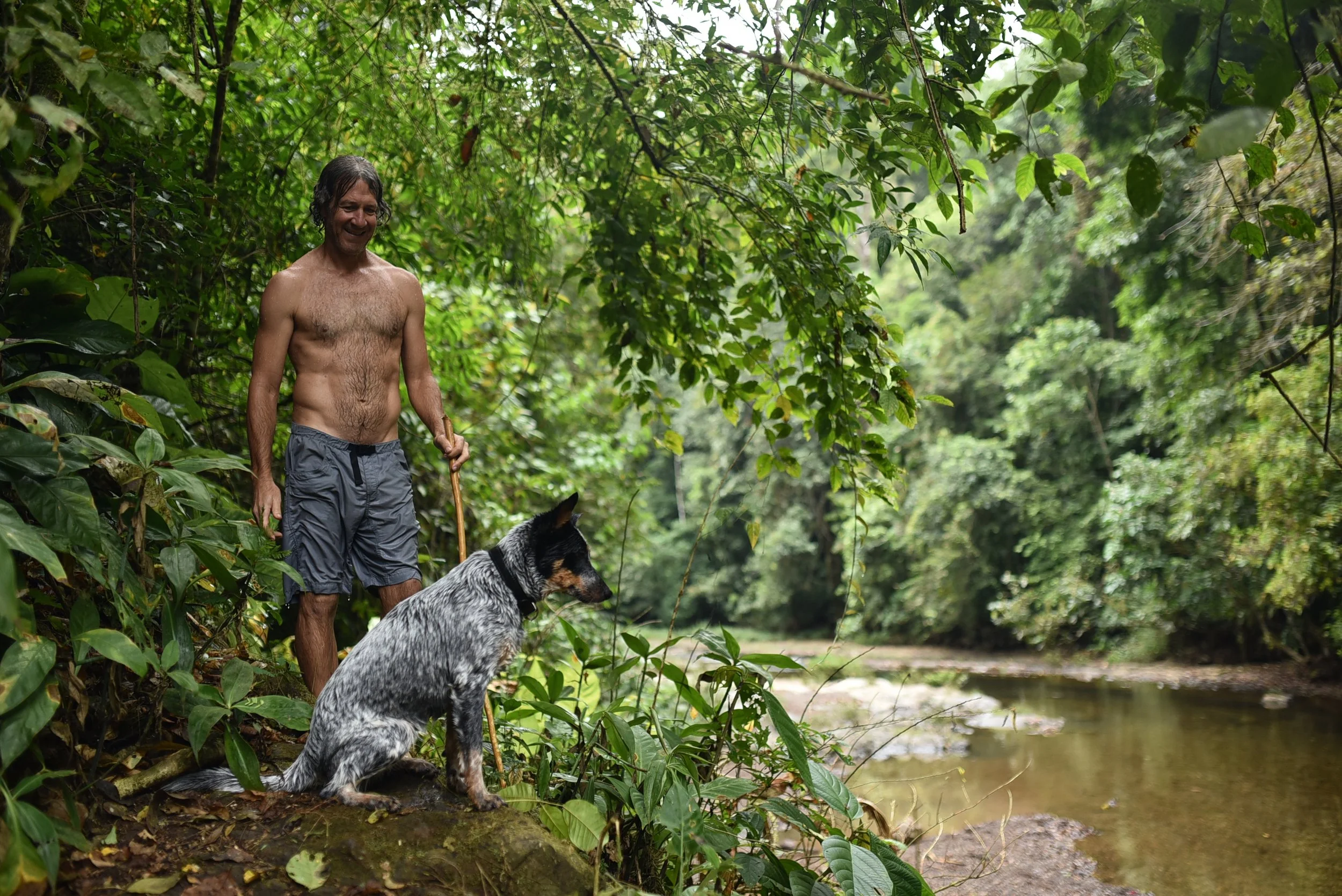
Permaculture Design & The Importance of Recreation and Team-Oriented Thinking
Once you begin to think about it, the way we spend our “free time” will define the sustainability of the entire system.
By 2022 Apprentice AJ Nolan

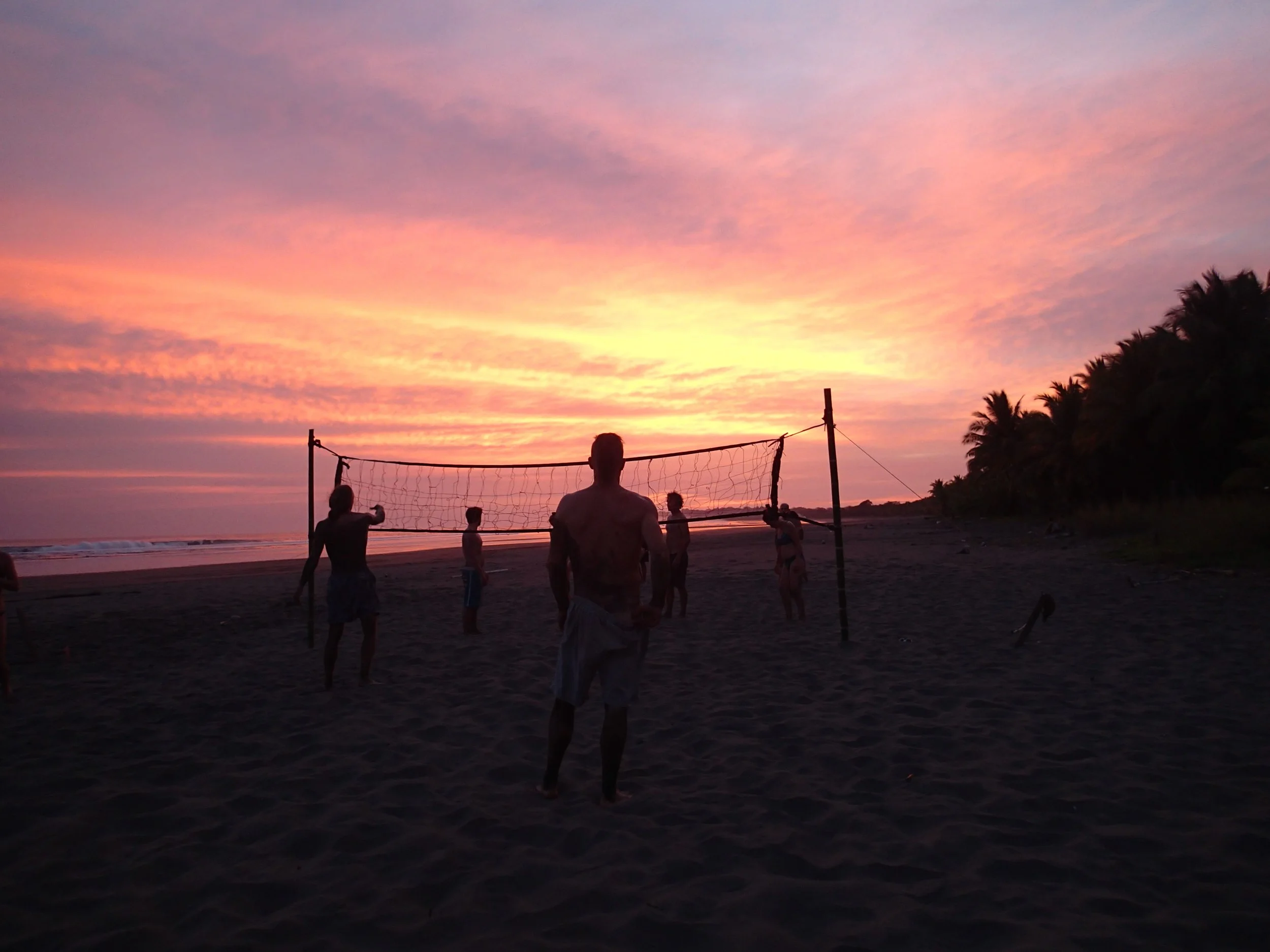
Playing volleyball down at the local field. All ages welcome!
Permaculture thinking moves us towards finding solutions that can serve multiple functions. This can be known as stacking functions with the goal to develop more “free time”. Simply put and maybe more traditionally put, “killing two birds with one stone”. How you spend that free time is something that really gets very little attention in the permaculture community and one that I am particularly interested in. Once you begin to think about it, the way we spend our “free time” will define the sustainability of the entire system. If we choose to pack in more projects and more tasks, in the short term we may benefit from our added productivity, but is this sustainable in the long term? In this article I am going to talk about how we design our lives using permaculture based thinking to create sustainable patterns for not just our farm but for our lives. Bill Mollinson once asked, “How can we maximize hammock time?”. Whilst I agree with the sentiment, I prefer to run around in my free time!
We aim to create balance between the needs of the farm (which has endless lists of projects that could be done) and the needs of us as individuals to relax, recreate, unwind and decompress. The benefit of playing team sports together helps build team morale, a sense of togetherness and comradery that is vitally important to the fluid functioning of our community.
Think back to your childhood days. What were you spending most of your time doing? If you said playing video games, I can’t relate, but if you responded with getting dirty and running around outside, I recommend you keep reading.
The first day I arrived at the Ranch for my year-long apprenticeship, everyone was involved in a heated game of volleyball. I joined in and after brief introductions, I shared the field with myriad new faces, and we worked together toward a common goal for the next hour. I couldn’t have asked for a better initiation into Ranch life than that first volleyball game.
As a child, playing outside is instinctive and it’s how we begin to understand the physics of the natural world. In school there are scheduled times to play outside. Where I’m from, it’s called recess. When I was growing up, we were given three different times throughout the day to release our pent-up energy and run rampant through the school yard. As I got older and school years passed, the allotted recess time slowly disappeared and was replaced with longer class times.

Many community members take daily trips to our waterfall
Recreation is an important aspect of life that we begin to lose as we age. It’s the hardest part of life to hold onto because it’s no longer allotted for us. Western society has deemed it unimportant and prioritizes work and time spent at a desk. Here at the Ranch, we have designed in ample opportunities to recreate. Pitching in to clean up brunch, taking a trip to the waterfall, practicing yoga, and reading a good book are all forms of recreation. We have scheduled in plenty of downtime and we have made a conscious decision to start the work day early in order to end our work day earlier to allow more time for afternoon team recreation. The inspiration for this blog post comes from what I like to call 16:00 Mass (a.k.a sports time).
Here at the Ranch we schedule our free time. That’s how serious we are about it. We are currently in the dry season, so the “cancha” (sports field) gets a lot of use by the Mastatal community this time of year. Every town in Costa Rica is given a church, an elementary school, a community center, and a sports field. Our main forms of team recreation are frisbee and volleyball. Every day I trot down to the field at 15:50, tired from a full workday at the Ranch. I’ve got a frisbee, volleyball, and a bunch of bright orange cones in my hand. As I step out onto the field, I look at everyone’s tired eyes and I smile because I know that it’s all about to change. We split up into teams and the game begins. I begin to move into my body and out of my head. Before I’m aware of my actions, I stop to catch my breath and realize how much energy I have. I sweat not only from running around but from the intensity of the game. Coupled with teamwork, this form of exercise alters my thought pattern and I find myself in a state of euphoria and limitless energy. For the next hour I’m on Cloud 9 and I don’t want the excitement to end. When the game does end, my bare feet thank me for stopping and I find myself in high spirits with an overwhelming feeling of accomplishment and grit. Everyone is talking of food now and my stomach rumbles in anticipation for a Ranch dinner.
I’ve always placed great importance on exercise in my life, but I mainly participated in individual sports like swimming or tennis. Working in teams at the Ranch is paramount to our success here and it’s no different on the field. Playing a team sport changes my mood and puts me in a flow state. No longer am I thinking of the past or the future. I am right there on the field in the present moment. If my mind strays away, my teammates are sure to let me know. I can no longer only think of myself - I must take other people’s needs and wants into account. Playing a team sport necessitates quick thinking and sound decision making. These qualities allow for a dynamic community and encourages the development of well-rounded individuals. Whenever I’m having an off day, I feel a sense of balance and grounding after running around on the field with my peers.
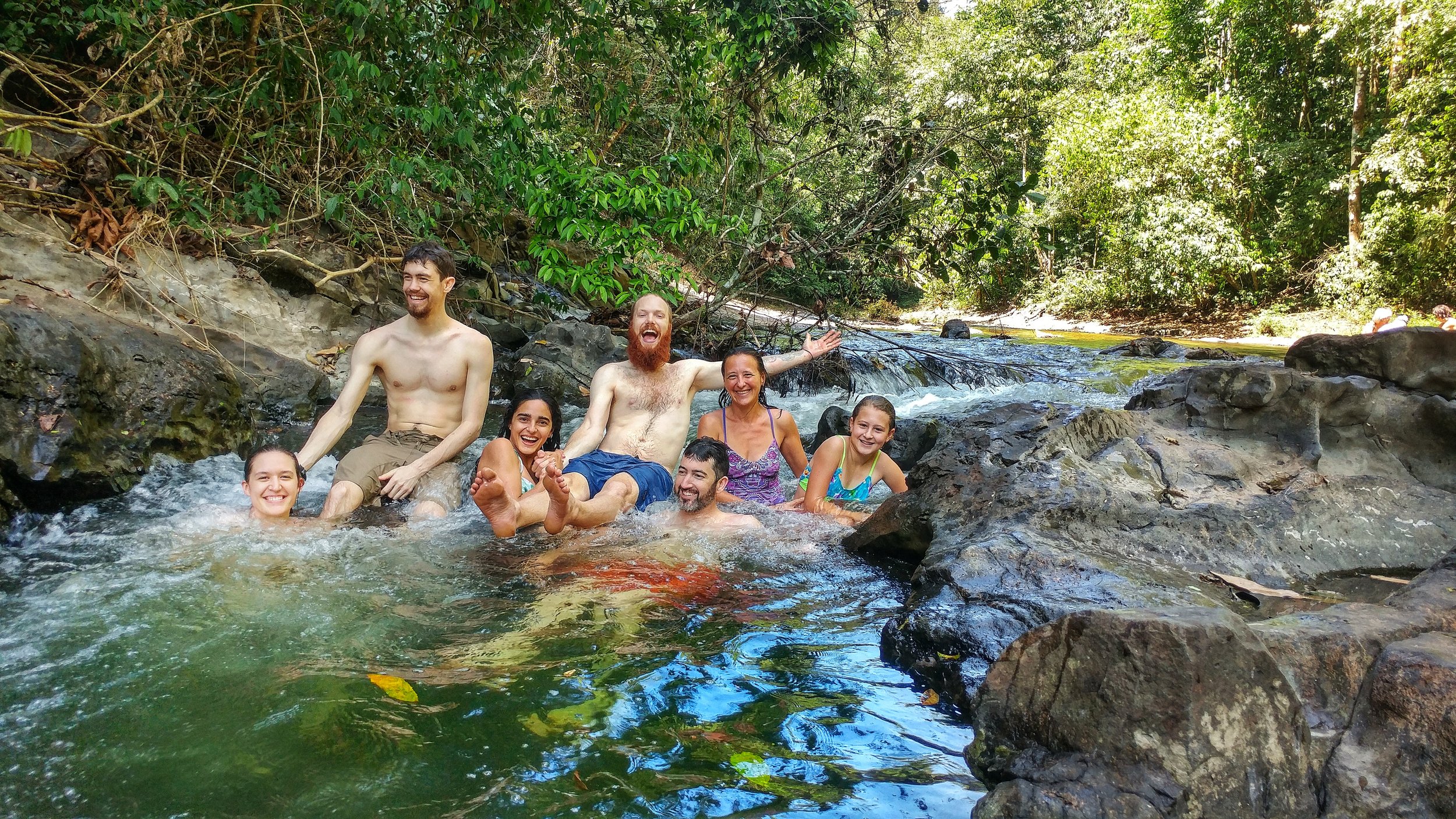
Enjoying the refreshing swims in the river
I am extremely lucky to be living in a community that prioritizes recreation and down-time. The world would be a much happier place if a higher value was placed on these activities. It’s a privilege to have free-time and I encourage others to do the same. Play outside with your kids, join a local soccer league, take a yoga class, or pick up that book you’ve been wanting to read forever. Whatever your preferred form of recreation is, it will dramatically alter your mental state and contribute to your happiness and overall well-being.
One thing that has been learnt over the years at the Ranch though, is that recreation time must be planned in. If we leave it to chance it becomes difficult for us to find space for it with all the other tasks and activities going on. Although Permaculture Design tends to focus on the design of your land based project, food forest or garden systems, I think it is also very important to place a large emphasis on planning our social lives, activities and recreation times. Collectively we have found that just like planning a garden and selecting the best place to plant your favourite perennial salad crop, it is vitally important to plan your daily activities and make sure to plan in recreation time.
How you choose to spend your recreation time is up to you but if you need me, I’ll be down at the “cancha”.
Other Community and Permaculture Related Blogs
How to Run a Permaculture Internship
Enriching Community Soil: 5 Simple Strategies that Support Sustainable Relationships

View of the sports field and La Cangreja National Park
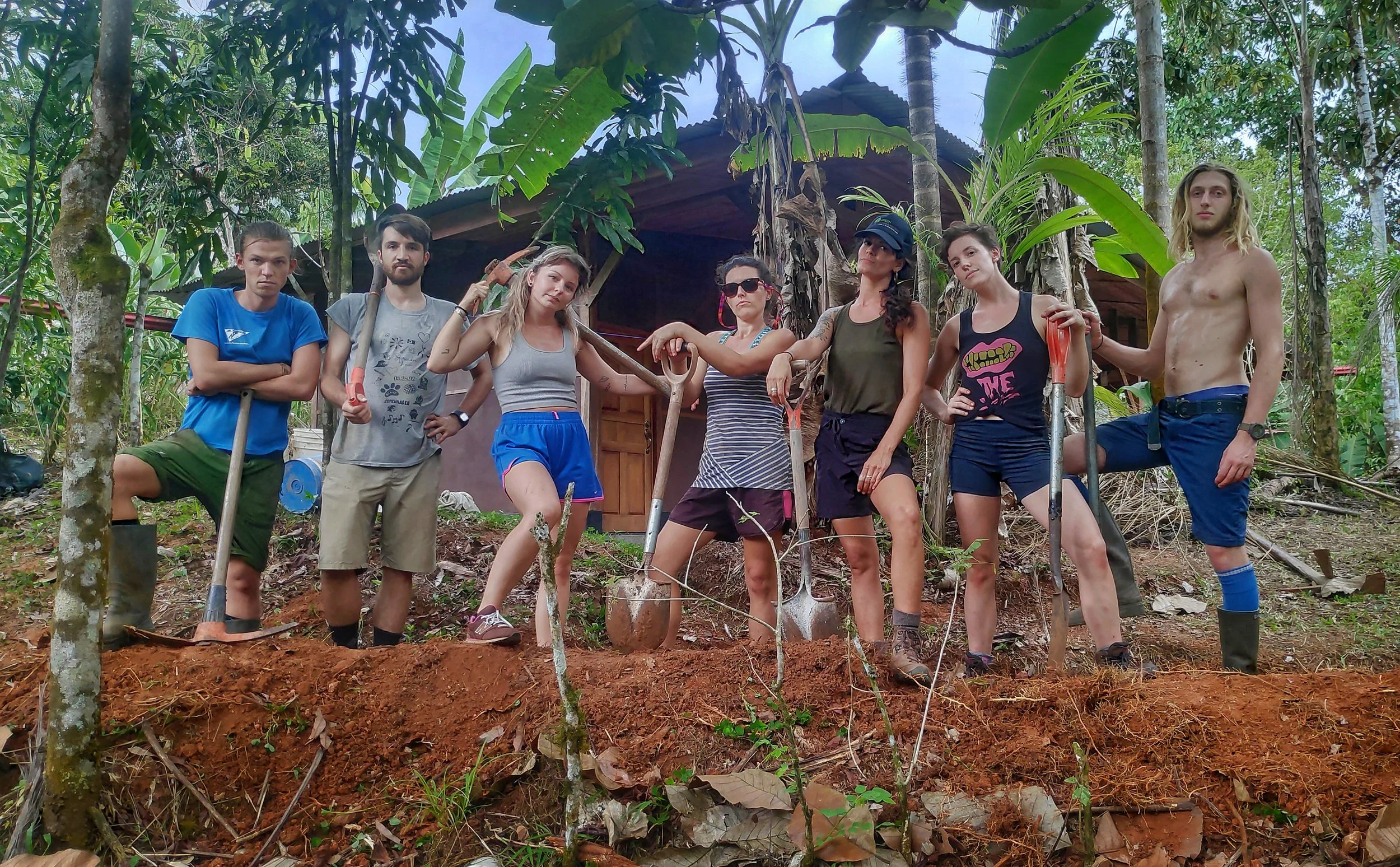
How to Run A Permaculture Internship
Every year, Rancho Mastatal offers a year long apprenticeship and a 2 month long internship for people interested in taking a deep dive into agroforestry, natural building, and farm to table food preparation while living in community.
By 2021 Apprentice Abbey Cmiel
Every year, Rancho Mastatal offers a year long apprenticeship and a 2 month long internship for people interested in taking a deep dive into agroforestry, natural building, and farm to table food preparation while living in community. In the Rancho Mastatal model, all apprentices arrive in January and have 7 months of varied and ongoing learning in all the Ranch has to offer. Then, the apprentices fully organize and run the two month internship in August and September. As an apprentice, this means I had the opportunity to first study and absorb an immense amount of knowledge, and then share it with 4-5 other individuals interested in learning as interns.
When I first learned about this aspect of the apprenticeship I felt quite intimidated. Who was I to run an internship at a center that was not my own on subjects I had not yet learned? But now having completed running the internship, I am extremely proud of our collective ability to offer an educational and entertaining program, as well as grateful for the chance to deepen my knowledge through the leadership role.
My intention in writing this blog is to support others who are interested in starting or developing an internship program at their farm or educational center. Though my experience is somewhat limited, I hope to offer some of the challenges we faced, the successes we found, and my own experience as both a participant and teacher in permaculture immersion programs. Also, I would love to learn about other similar programs and your experiences, so please feel free to reach out!
First, a bit about myself and my experiences of permaculture-based internships. My name is Abbey and I am a 24 year from North Carolina and California. Following college, I signed up for a 10 week permaculture immersion at the Eco Institute in Chapel Hill, NC and fell in love with the integrated lifestyle of a farm and justice based community. Following this path, I then moved to The Occidental Arts & Ecology Center in Northern California where as a year long intern, I helped run the nursery, host activist groups, work in the garden, and organize a permaculture design course. These experiences each brought me to Rancho Mastatal, where I recently finished organizing and running the two month internship alongside my six fellow apprentices.
These combined experiences of living in community, participating in, and running permaculture-based internships have allowed me to see common challenges and successes between them. So, without further ado, here are some of the tips and tricks I’ve gathered over the years.
1. Create a schedule or structure
Most people enjoy having routine or some basic structure to return to, especially when in an unfamiliar location and social setting. Even if what you’re doing changes every day, it’s helpful to have a standing schedule so interns can create expectations. At the Ranch we have two “work parties” a day from 7:30-10 am and 11:30 am-2 pm. We eat our meals at 10 am and 6 pm, and also have set times for sports, meetings, and rest. This makes it easier for everyone to take care of other needs, such as self care, laundry, tool maintenance, phone communication etc. because they know when they’ll have time.
2. Have Established Meeting Times
At the Ranch, we have four types of meetings: square, circle, app/intern/core team meetings, and 1-on-1s. Square meetings happen every morning after brunch around 10:30 am. During this time, one person volunteers to facilitate “reading the board” and we review what we did in the morning, briefly discuss the upcoming day, delegate projects, and go over any simple announcements. This meeting takes no longer than 15 minutes. Any longer form questions or decisions are reserved for “circle” meetings.

Our earthen structure that we hold our meetings in
Circle meetings happen every Friday afternoon and last 1-2 hours. We begin by going around the circle and sharing a 3 minute-ish update on how we’re doing mentally, physically, emotionally, etc. After completing the circle, the space is opened for agenda items that require more in-depth discussion. We use consent-based decision making in which, after discussion, a person will make a proposal. That proposal is then voted on by everyone who chooses to participate with a thumbs up or thumbs down. Thumbs up agreeing to the proposal or willing to live with it, thumbs down having “paramount objection”, something they absolutely cannot agree to otherwise they will leave. This is an abbreviated account of the decision making protocol, read here for a more in depth explanation. Finally, we end by going around the circle and stating an intention or hope for the upcoming week.
Every week on Thursdays, we meet amongst our intern, apprentice, and core team cohorts to discuss any agenda items that pertain directly to that group. This meeting typically lasts an hour.
Lastly, about once a month, we have 1-on-1s in which a “core team” (long term staff or residents) member pairs off with an apprentice to discuss their experiences and how each party can be better supported. While running the internship, each apprentice would pair off with an intern. This is a good time to talk over any challenges, feedback or affirmations each party has. It’s important that time is set aside for a longer conversation so both people feel they are being heard and the person with less authority is comfortable expressing discomforts.
3. Make sure people have enough food
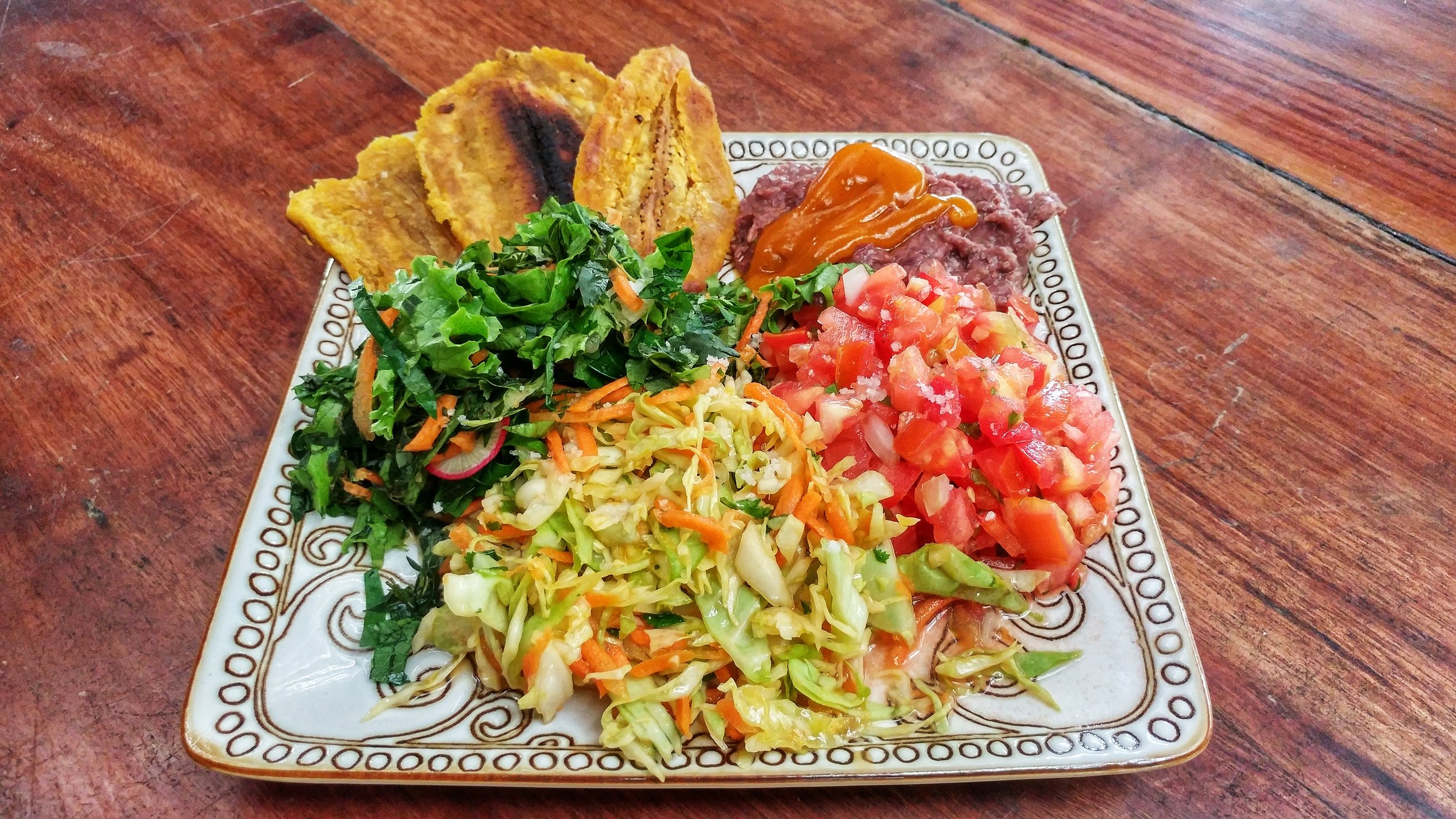
A typical dinner plate
Ah, the near-impossible task of feeding many people with different food needs! Especially if you are hosting a permaculture or sustainability related internship, expect people who are very intentional about their eating habits. Always ask for food restrictions. Be sure to outline what a typical meal schedule looks like so people who are vegan, vegetarian, gluten free, dairy free, and those with other allergies can decide if the program aligns with their needs.
As someone with an allergy to gluten, I am quite used to preparing additional food or being flexible with what I eat. You will find most people with alternative diets are quite good at meeting their needs with little additional input. It is important, however, that they have access to kitchen time or a grocery store. If neither of these are accessible, be sure to outline these limitations.
At the Ranch, we eat two meals a day at 10 am and 6:30 pm. Additionally, hard boiled eggs, leftovers, and bananas always available. We find this two meal a day schedule means much less cooking and cleaning and more time to do what we love!
Create clear guidelines about what food can be eaten for snacks and what is reserved for communal meals. Check in to see people are feeling fed and energized.
4. Distribute cooking and dishes equitably
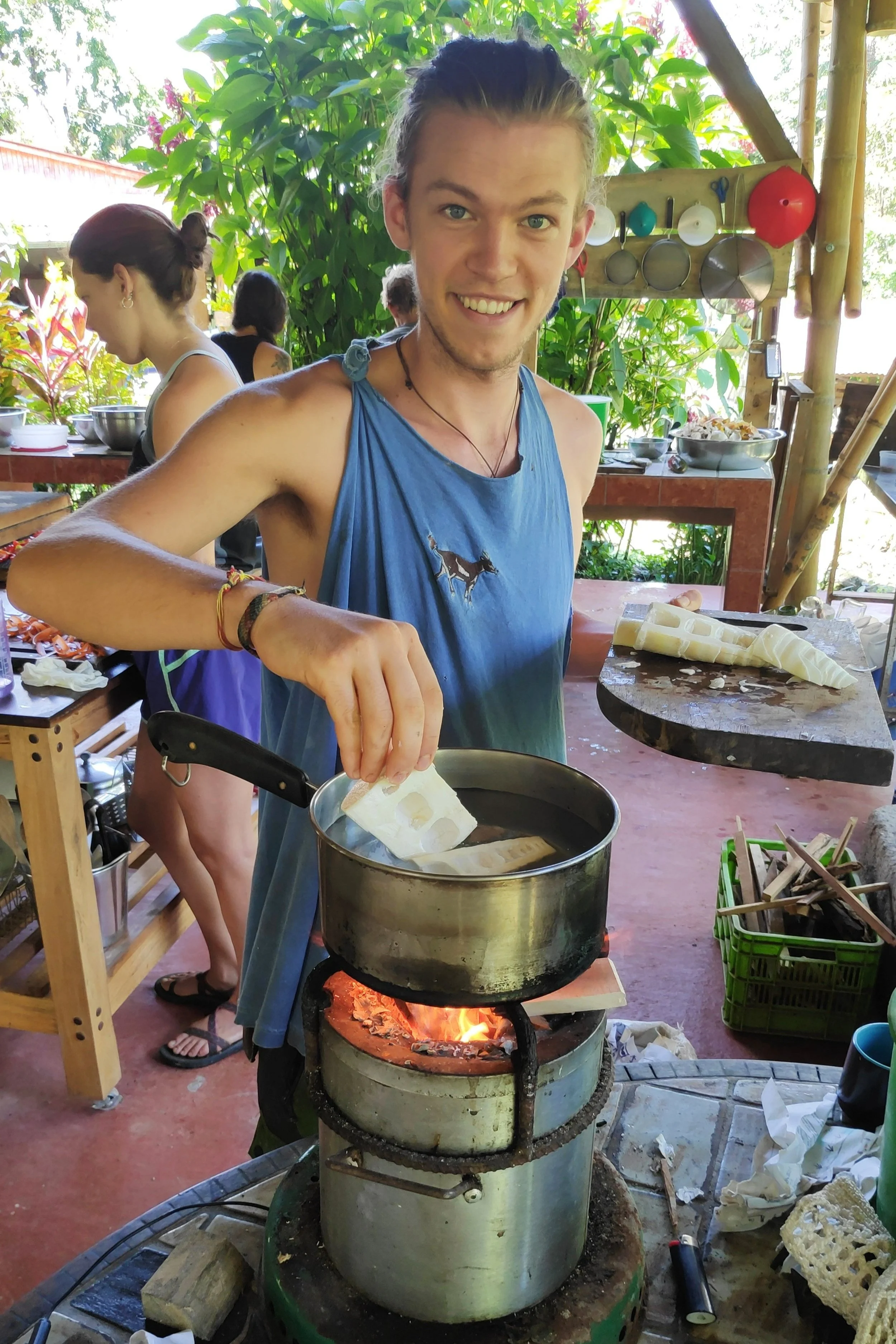
Cooking up some bamboo shoots for condiments
I’ve heard it said before that communities are made or broken by their dish washing systems. At the Eco Institute we had 3 “cook teams” and “dish teams”. The group on cooking would cook all meals for a week. The team on washing washed all serving and eating dishes (dishes other than those used to prepare food) that week. The third group has a rest week. At OAEC, the person on dinner cooking duty also washes the dishes after dinner. Otherwise people wash their own dishes throughout the day. Finally, at the Ranch we rotate cooking and cleaning duties so people have an equal number of cooking and cleaning shifts throughout the week.
If hosting an internship, decide how much of their experience you want to be dedicated to cooking and cleaning. These are formative times for group bonding, but can also be quite time consuming and draining. At both OAEC and the Ranch, we were lucky to have cooking support from local chefs to take on some of the cooking shifts. Especially if interns are paying to be there, it may be worth hiring a cook to help with at least a few meals a week.
5. Don’t underestimate the time and energy needed to have interns
A common fallacy is that internships will be an easy way to make money and have extra labor. Be sure to make a thorough budget to make sure this is actually the case. If interns pay to attend your program, they will likely expect an educational experience as much as a work experience. This requires significant time and energy from staff or a program manager. If they do not pay, they are likely unskilled labor who will require significant training to do the work you might be able to pay someone to do or do yourself much faster. If you decide to take on interns, be sure there are enough tasks that are educational, fitting for their skill level, and meaningful.
6. To charge or not to charge?
That is the question. It’s time for some deep soul searching. Why do you want to have interns? What are the added benefits to your community?
At the Ranch, the core team decided to run the internship program to provide a shorter educational program to the year long apprenticeship, as well as a learning opportunity for the apprentices. Their model is learn, practice, teach, manage. The internships falls in the “teach” section, providing a great opportuniy to hone in their new skills.
Now that you’re clear on the why, what input do you need to make it happen? Is your program designed to be educational or does it require significant labor from the interns? How much will it cost to feed, house, and take care of the miscellaneous expenses for each intern? How much of your labor will go into planning for, instructing, feeding, and managing the group? What is your target market?
Once you factor in the time necessary to teach interns, you may realize it is quite “expensive” to have them there. How might you be able to offset some of the costs? Can you apply for grants or host a fundraising dinner and silent auction for a scholarship fund, particularly to support marginalized groups in attending your program? Can you create a set up where longer term apprentices run the internship?
7. Get out there!

Going on field trips to our local farmers
One of my favorite parts of our internship was planning field trips to connect with nearby farms and neighbors. During the two months, we organized a trip to the “trapiche” where our sugar cane is milled, to our neighbor who keeps cows and supplies us with milk and cheese, and went on day hikes to the waterfalls and mountains nearby. All of these trips, combined with playing sports in town and cooking with locals, help paint a larger picture of the community we’re a part of and mix up group dynamics.
8. Give Interns a sense of autonomy
More and more, highly educated and motivated people are seeking out farming and permaculture immersions. As a result, you may attract very intelligent and independent individuals to your program. Make sure there are ways for people to take on individual responsibility and challenge. At the Ranch, we each have morning community contribution skills such as chopping wood, preparing salads, tending the garden, etc. Additionally, we have the opportunity to submit project proposals to take on larger independent projects on our own. This allows people to express themselves individually and find pride in their work.
Personally, I have taught weekly yoga classes for the community, led vermicompost workshops, and led many gardening and permaculture sessions for our interns. These individual tasks allowed me to deepen my knowledge and share it with others.
9. Practice nonviolent communication or otherwise encourage open communication between participants
At the beginning of the apprenticeship and internship at Rancho Mastatal, we create a collective community cultural agreement for how we will interact with one another and then sign it. Additionally, we taught nonviolent communication modules (based on Marshall B. Rosenberg’s Nonviolent Communication) to encourage open communication around the conflicts that naturally arise when living in community.
10. Create a comprehensive document with expectations and packing list before arrival
The more you can set expectations coming in the better! Send pictures or thorough descriptions of the housing, food, work expectations, visitor policy, phone policy, the larger community, etc. Supply a thorough packing list with any items that will be helpful during the internship. If you are able, set up a text, email or WhatsApp group with the interns in advance so they meet one another and ask questions.
11. Make sure everyone has enough rest and alone time
At the Ranch, we have free time every day from 2 pm - 6:30 pm. This is a great time to work on independent projects in the orchards, woodshop, food smithery, and kitchen. Additionally, we have a large library with fiction, nonfiction, and educational books to deepen our learning experience. Most days, a group meets at 4 pm to play sports or do yoga. The key is that people have a choice whether to interact with others or take time for themselves.
12. Organize special events & find time to celebrate!!
Woohoo! You have done the hard work of bringing together a group of amazing people and creating a super special intern program. Now find the time to celebrate! We have made a practice of gathering for new and full moons, the equinoxes and solstices, birthdays, and other special days. Something as simple as playing music, having a small party, making a fire, watching a movie with popcorn, or baking a cake with local ingredients can allow people to feel socially and emotionally fulfilled. Isn’t that why we all want to live in community anyways? Support any ideas your interns have for fun and creative gatherings. A field day, trivia night, or tea party are all great ways to bond and be silly together.

The yearly talent show
I am infinitely grateful to the centers and people who have opened their doors and arms to me as an intern or apprentice. I hope this article empowers you to do the same so we can continue to build purposeful, skilled, and joyful communities together!
Check out these past blogs on Community Living
Enriching Community Soil: 5 Simple Strategies That Support Sustainable Relationships
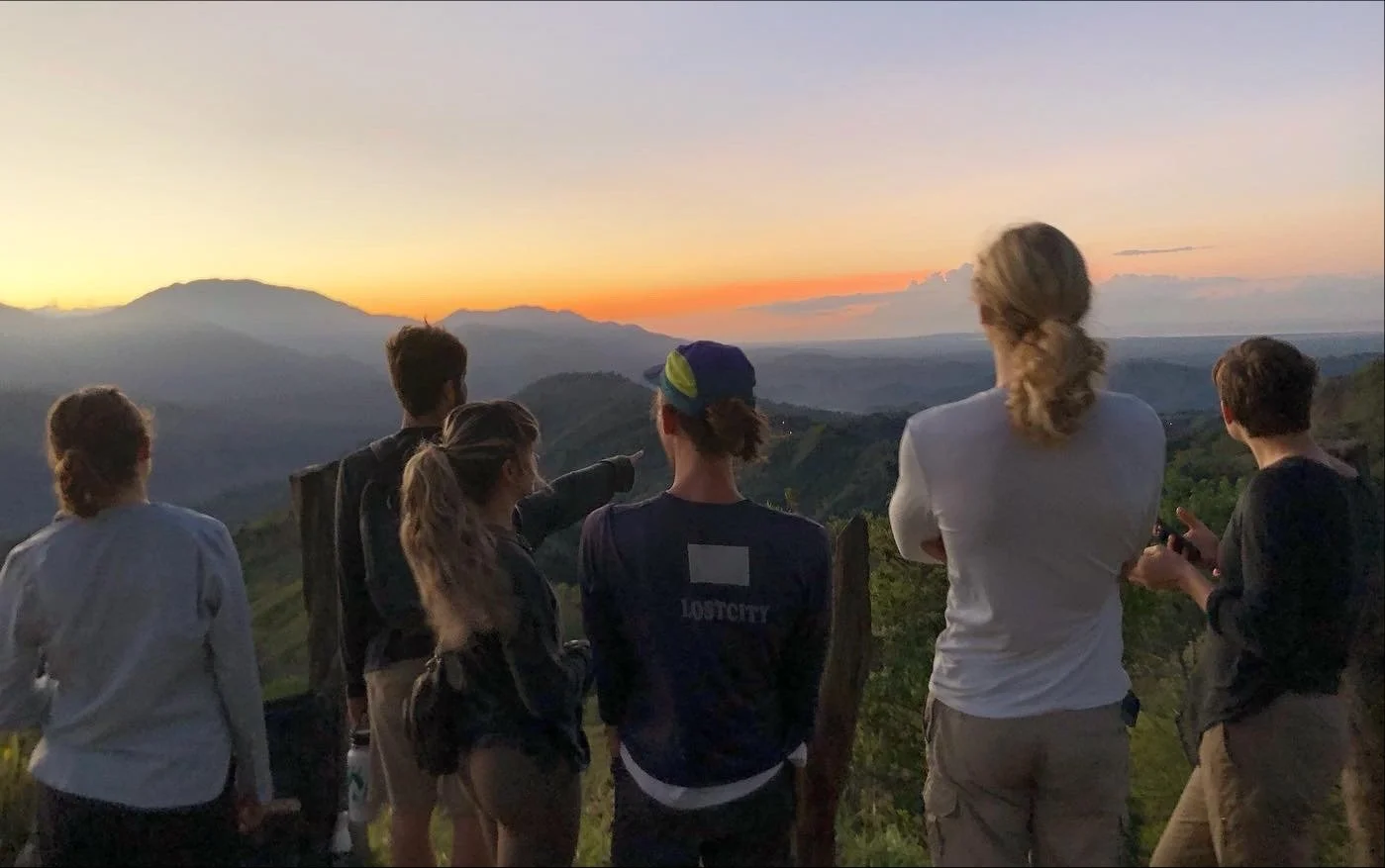
#Pura Vida: The Art of Living and Letting Go in Community
But although Pura Vida certainly alludes to living a healthy, and “pure” life, I soon learned of a more nuanced translation, something closer to “that’s pure life” or “it is what it is”.
By 2021 apprentice Abbey Cmiel
“Pura Vida, Pura Vida!” we all shouted as we backed away from our clay plastered walls. Many of us perfectionist-types begrudgingly set down our plastering tools and glanced side to side to compare our practice panels to our neighbors. I itched to go back in with my trowel and get all those micro-cracks or indentations just right, but lunch would not wait.

Apprentices practicing the art of plastering
If you’ve spent any time in Costa Rica, you’ve probably become accustomed to the common refrain of “Pura Vida”. A phrase that simultaneously means hello, goodbye, what’s up, “thank you”, “sorry”, and “how are you?”, it’s extremely useful for novice Spanish speakers and members of large communities. When you live amongst 20 or so people, finding the right words for in-passing greetings and remarks can be challenging. I’m one to reply, “you too” when someone says “Happy Birthday” or “Thanks” when someone asks how I am. Having this catch-all phrase, if nothing else, is a handy device the Ticos have perfected.
At first, I was confused by the term which I had mentally translated directly to “Pure Life.” Costa Rica is certainly known for being one of the healthiest places to live on Earth with high environmental protections and standard of living. But although Pura Vida certainly alludes to living a healthy, and “pure” life, I soon learned of a more nuanced translation, something closer to “that’s pure life” or “it is what it is”.
About a month ago, my phone was stolen while on a beach trip with friends from Rancho. We scoured the beach before finally giving up, at which point my friend shrugged and said, “Pura Vida” with a wink. After tempering my immediate impulse to smack him, I laughed and realized this was indeed part of the Pura Vida. Pure, unadulterated life- with it’s crazy roller coaster of frustrations, fears, excitements, and successes.
In just a few short months at the Ranch, I have personally experienced a myriad of life challenges: losing my grandpa, sustaining a back injury that had me down for a few weeks, homesickness, questioning my purpose, and interpersonal relationship struggles. Simultaneously, I have felt more forms of joy than I knew existed: from running on the soccer field, to carving a beautiful clay plaster, to cooking an excellent meal with friends, to watching a seedling I had planted grow. Every moment here feels so rich with wisdom to be gleaned, relationships to be deepened, and love to be shared.

Abbey cooking the crew a delcious farm to table dinner
It seems many cultures have a version of “Pura Vida”: in France “c’est la vie”, in Spain, “que será, será”, and in Japan “Wabi-Sabi”. In each of these concepts there’s a sense of “well, that’s just how it is”, but more importantly, that there’s a joy that comes from embracing what appear to be life’s imperfections. I have learned here at Rancho Mastatal that the immense range of life experiences, particularly the rough spots, not only make us better people, but make life worth living at all. If I had it my way, my plastered walls would look smooth as silk, my rice would be perfectly cooked, I would never get sick and I would never be so silly as to leave my phone out on the beach unattended. However, it’s these challenges that force us to lean on one another. They’re the backbone of community.
When I lost my phone, another apprentice offered me his old one. When my grandpa passed away, the group made a gorgeous bouquet and held me in countless hugs. My complete incompetence at making the perfectly plump and oily Costa Rican rice gives me the chance to hover around the amazing Tica chefs we work with and learn their ways. It’s in the moments of supposed shortcomings, incompetence, and sadness that allow us to step up for one another and remember our interdependence.
Pura Vida, above all else, are the reminders that we are “Pure Life”. We are all a part of the intricately woven and beautifully imperfect tapestry of life, death, food, decay, sharing and giving. By offering my skills and abilities, whether doing a few extra dishes or translating for visitors, I support this web of wellbeing. We do our best, step up fully to the challenges, and then put down the plastering trowel when we can do no more. And in embracing my imperfections as opportunities for others to love and support me, we collectively build a more connected and whole culture.

Having fun and making local chocolate bon bons
Stay tuned for more stories of life at the Rancho and the daily life of communal living.
Pura vida!
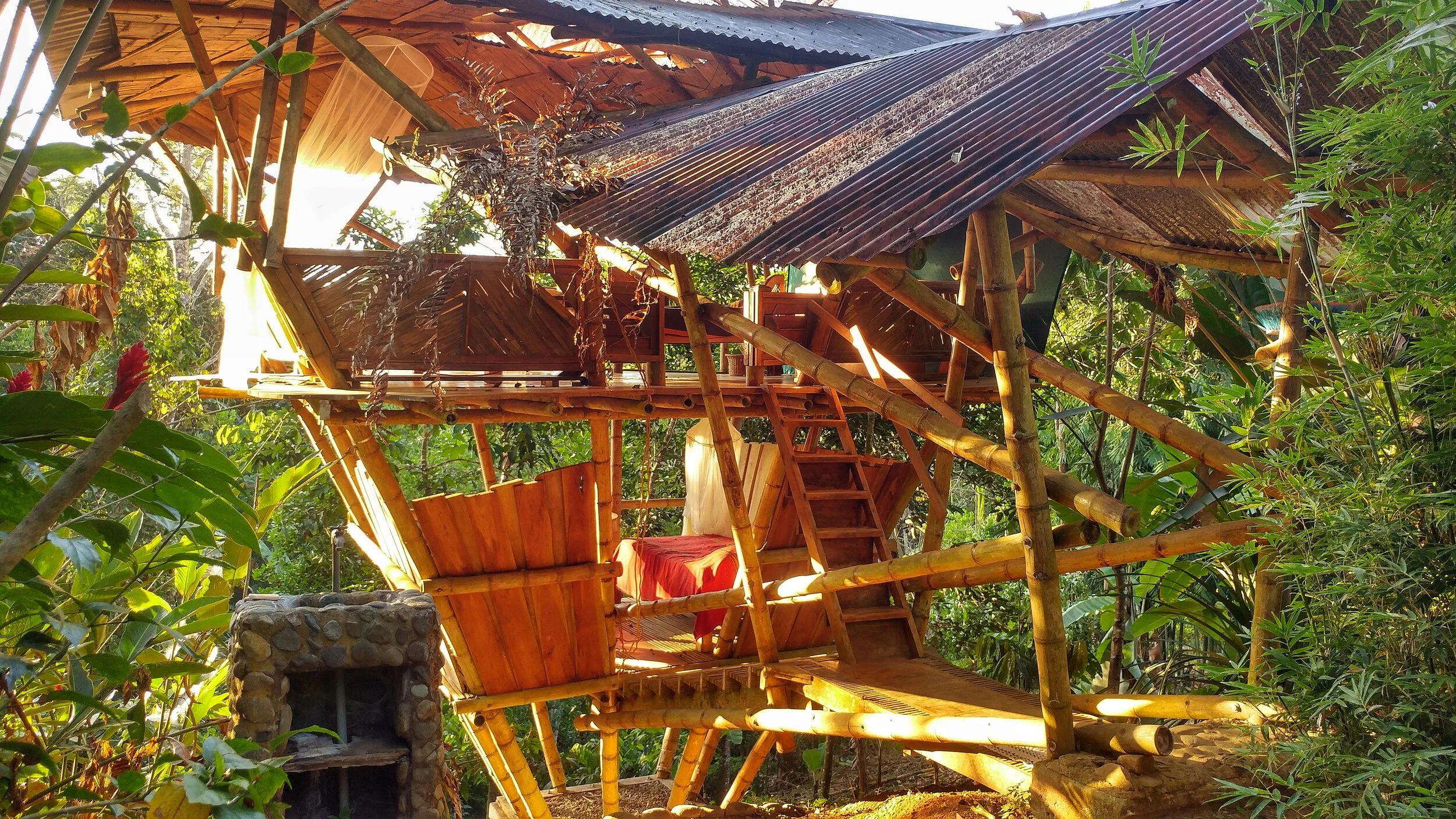
Living Without Walls - A Year of Jungle Community Living
Every day was a very present reminder that this physical barrier has created a deep division in how we perceive and interact with each other.
By 2021 apprentice Hanita Knudson

Many of our buildings have fewer and unique “walls”
Being an Arizona native, much of my life is defined by walls. As a border state our boundaries are clearly defined by the massive border wall that separates us from our neighbors.
I also come from the opposite landscape of the tropical jungles of Costa Rica- at home we rarely receive rain and have extreme temperature shifts in the summer. Walls can provide us with essential insulation from the elements, and also create the structure for me to decorate and form a sense of comfort.
However, my relationship with walls is complex. As someone who has lived, studied, and worked in border communities for most of my adult life, it is an overarching theme I think of often. Before I arrived at Rancho, I was working with children mostly from Central and South America coming to the states to reunify with their families. Every day was a very present reminder that this physical barrier has created a deep division in how we perceive and interact with each other. For years I have seen how one wall can have continual detrimental effects both on our natural landscapes and our relationships between countries.
One of the first things I noticed and continue to observe at the Ranch is the absence of walls. Here, we live in open air structures and are constantly connected to each other and nature. All of our spaces meld together, which means we share just about everything. This has made my understanding of walls, or lack thereof, even more complex. Nature is always around us and it feels as if we are naturalized citizens of the jungle rather than the owners of the land. We are in constant shared space with the jungles plants and creatures. From ants building nests in my bed, to spiders laying eggs on my mosquito net, to toads hopping about the floor of the main house, to boa constrictors slithering around the ceiling of the food prep kitchen, I could go on and on about my daily interactions with my animal land-mates. To say it has been easy would be a far stretch from the truth. However, I have also seen the immense benefits, both personally and in community, of living without walls.

An example of our natural building with earthen walls
Walls obviously serve various functions, and we spend a decent amount of time at the Ranch building earthen walls for safety and shelter. But often, in other contexts, their function of separation is more harmful than helpful. It is easy to disconnect yourself from something if you never have direct interactions with it. We often consume resources without a second thought as how those resources made it to us or how the Earth was affected to obtain them. Now that I can see the farm where much of my food is grown, and hear my neighbors who provide what we cannot produce ourselves, I am continually reminded of every life that provides for my own. I am a witness to all the pollinators, plants, and people who I depend on, and as a result and I continue to learn to care on a deeper level about their wellbeing.

Community spaces being shared
It is also easy to make assumptions and judge others when you stay separated from them. When you share a bedroom, bathroom, kitchen, and all other living spaces with a group of people, you end up learning quite a bit about them. The other apprentices and I talk and interact just about all the time- whether doing dishes, building adobe bricks, or even brushing our teeth. During these times, we share almost too many details about our day to day lives, but in the end, understand each other so much more deeply than if we had our own spaces. This makes it much easier for us to support one another or just let the little annoyances go.
In permaculture, one of the most essential concepts is “edges”. While dominant Western society tends to value centralization, efficiency, and consistency, permaculture places immense value on the interaction between people, places, and biomas. Here, at the edge of the jungle, Mother Nature is my consistent teacher and friend. I am constantly living at the edges - talking, learning, growing, and adapting with all the other beings around me. Without separation, I can observe how nature functions and deepen my understanding on a daily basis. Without borders, I deepen my relationships with all my neighbors, from cicadas who sing into the night to the many other jungle sounds. Though it’s not always easy, we form a more interconnected and resilient community as a result.

Our earthen meeting structure where we hold classes, community meetings, talent shows and more
Read Past Blogs about Community Living

Enriching Community Soil: 5 Simple Strategies That Support Sustainable Relationships
"Sustainable community must be based on sustainable relationships- relationships that give more than they take- that nourish, enliven & inspire us."
By Brittany Bares, Intern 2020
"Sustainable community must be based on sustainable relationships- relationships that give more than they take- that nourish, enliven & inspire us." Larry Kaplowitz, in "Creating a Life Together: Practical Tools to Grow Ecovillages and Intentional Communities".

Taking time to enjoy each others company and make new connections
At the beginning of August, four interns, myself included, arrived at Rancho Mastatal, bubbling with anticipation and wonder. What would we be learning? Who were the people living here? What was the overall "vibe”? With a background in social work, I arrived particularly curious about how this unique group of people related to one another, as well what invisible structures were in place, if any, that supported sustainable relationships.
With a few weeks of experience at the Ranch, I have observed several simple strategies that support sustainable relationships and are both: 1) being taught and 2) being practiced in real time by community members.
The following 5 strategies are a few of the ways Rancho Mastatal supports sustainable relationships and practice social permaculture. Following each simple strategy is a recommendation for how you too can create sustainable relationships within any community you are a part of, be it family, work or any other group.

Community activities to create trust and bonding
1. Share Responsibilities
What The Ranch Does
The community members of the Ranch share daily responsibilities, called “community contribution skills”, ranging from the daily care of the Biodigestor to making the water kefir drinks. Every month, community members rotate from one skill to the next. As well, community members share the responsibility of daily cooking and cleaning by rotating through a weekly schedule.
What You Can Do
In any group you are a part of, begin by creating a list of daily/weekly tasks that, however mundane, contribute to the order, operation & cleanliness of the shared space. Make agreements on how the tasks are to be completed and then, write the expectations, as well as who is responsible for what, in a place that is visible to all members. Assign each person a task and rotate through the tasks on a weekly or monthly basis.
How does this enrich community soil?
Sharing responsibilities saves individual time, while contributing to the community in a way that is beneficial for all. As well, it increases the ownership and value each community member has for the shared space and resources they use.
2. Check-Ins

We hold all our communal meetings in this circular, earthen space called the Ceiba Lounge
What The Ranch Does
Ranch members meet for a brief meeting everyday to review the daily schedule. Once per week, the core-team, apprentices and interns meet in seperate groups to discuss a variety of topics, ranging from personal challenges to project planning. Then, once per week, all community members meet in a "community check-in", where members have the opportunity to share highs and lows, discuss "square items'' and set intentions.
What You Can Do
Similar practices can be implemented at home or in the office. If you choose to implement community check-ins, have specific boundaries that will create a safe and meaningful space for people to share honestly and openly. These boundaries may include: 1) No obligation to share- a member can “pass” 2) No one can interrupt the speaker, respond directly or give any advice 3) Set a time limit for each share (usually 5-10 minutes max). *the intent of each check-in should guide the boundaries of the meeting.
How does this enrich community soil?
Check-ins help to keep everyone organized and up-to-date on information. They also help to reduce conflict among members because when folks have a safe space to share their values and feelings, potential conflict can be mitigated. Check-ins are a space to share openly and vulnerably, as well as a space to practice active listening and empathy. This, in turn, can create authentic connection and compassionate understanding, which are essential ingredients for sustainable relationships.
3. Play Together

Communal yoga sessions
What The Ranch Does
The days at the Ranch can be long and labor intensive. The Ranch does a beautiful job of balancing long work days with several opportunities to play! Whether it is volleyball, frisbee, playing music, salsa dance nights, storytelling, movie nights, yoga classes or card games, community members at the Ranch love to play!
What You Can Do
At home, implement a game night or schedule family hikes or bike rides. At work, organize a volleyball or softball league or something more simple, like trivia night or board-game lunches.
How does this enrich community soil?
Life can become serious quickly. With work, daily responsibilities, and other duties, it is easy to get trapped in the daily grind. When we actively participate in play, we make space for joy and fun. If you get stuck in " I don't know what to play", simply remember how you used to have fun as a child and do that!
4. Offer Daily Gratitude
What The Ranch Does
Every night, before eating dinner, community members take a few moments to offer gratitude for specific people or events that happened during the day. The expressions of gratitude range from thanking someone for teaching a lesson to thanking the Earth for the abundance of food provided.
What You Can Do
Whether at home or at work, you can implement the same practice by simply providing space before a shared meal to express any daily gratitudes. Another way would be to have a gratitude jar, where anyone can write down what they are grateful for, place it in the jar and then, at a specific time during the day or week, read the gratitudes aloud as a community.
How does this enrich community soil?
Actively giving gratitude helps us shift our mind from the things that have gone wrong or the challenges we have had, to the things that went right, while acknowledging the many things we all have to be grateful for. A simple shift in thinking can have a profound effect on our well being, while enlivening our relationships.
5. Frameworks for Communication & Conflict Management
What The Ranch Does
Whenever working or living with other humans, there is bound to be conflict. Here at the Ranch, members are provided basic training in conflict resolution and effective communication frameworks. Specifically, they practice compassionate communication methods as outlined in NonViolent Communication by Marshall Rosenberg.
What You Can Do
READ NONVIOLENT COMMUNICATION! It will change your life and how you have relationships with others. The framework for communicating and resolving conflict are simple, pragmatic and have been found to be effective by millions of people, in various types of organizations and settings.
How does this enrich community soil?
How we communicate, i.e. the words we use and how we say them, greatly impact our relationships. Many of us were never taught how to communicate to connect or how to resolve conflict in a meaningful way. If there is only one thing you can do to create more sustainable relationships, learn how to compassionately communicate, as outlined in the book Nonviolent Communication by Marshall Rosenberg.

The more sustainable our relationships are, the more purpose and meaning each individual will be able to experience. Healthy communities inspire growth and offer a sense of belonging to its members. They are safe places to learn, explore, inquire and connect to our truest selves. If you are looking for ways to enrich the soil of your own community, be it at home or work, keep it simple with these 5 strategies: share responsibilities, check-in, communicate compassionately, say thanks and PLAY!
Learn More
Want to experience communal living and put these social permaculture skills into practice? Consider applying for either our 2 month internship or year long apprenticeship.

Lighthearted Advice for New Apprentices
Arriving in the jungle was quite a shock, especially when they called the time of year of our arrival the “dry season”. Moisture seemed to pervade every orifice. Sometimes that was a good thing, but mostly I’d argue that it was not. Still, the vegetation thrived, as did the bacterial and yeast colonies that fill every niche of life in this ecosytem. As apprentices we learn how to wield these little microscopic buggers for our own benefit in a process colloquially known as “fermentation”.
by Denise Mc Keown, 2018 Rancho Mastatal Apprentice
NOTE: For those of you not proficient in Denise’s North Irish humor, this article is written with tongue in cheek about the Ranch’s 11-month apprenticeship.
Arriving in the jungle was quite a shock, especially when they called the time of year of our arrival the “dry season”. Moisture seemed to pervade every orifice. Sometimes that was a good thing, but mostly I’d argue that it was not. Still, the vegetation thrived, as did the bacterial and yeast colonies that fill every niche of life in this ecosytem. As apprentices we learn how to wield these little microscopic buggers for our own benefit in a process colloquially known as “fermentation”. Sandor Katz, the well-known author of Wild Fermentation and other great books about food refers to this process as the place where “life meets death”. He suggests that the best tool for informing you at which point you arrive to a nice fermentation equilibrium is your sense of smell. Here at the Ranch that equates to anywhere along the continuum of “rico” to “bury it deep in the compost”. Piece of Advice 1: When the stinks right, eat it.

The tropical woods that we are afforded to work with gave me a special type of masochistic pleasure. I could lovingly carve some poor joinery with inexperienced hands only to awake the next day and see my piece, bowed four ways from Friday, writhing and distorted. It’s a fun feature of fast growing tropical wood and a never ending learning curve. Piece of Advice 2: Don’t forget that two people test all your furniture so embrace the process of “practice”.

Upon arriving to the Ranch I was staggered by its feats of natural building, much like the adobe bricks that I made at the start of my apprenticeship. Yet the result of the adobe's’ non-conformity, as I liked to qualify their shape, meant that they had to be rendered back to the earth from once they came. Piece of advice 3: Do it right or do it again.
“Ag” is not an abbreviation for agroforestry or agriculture around here as it is commonly thought. Instead it’s what you will say and feel when your knee-deep in the orchards. It’s also what you’ll exclaim when you taste the fruits of our labor and that of many others before us. It’s a different world in those food production systems; miracle fruit, mangosteens, ice cream beans, cashew apples, rambutan, vanilla and black pepper. Prepare to have buckets and wheelbarrows of fun helping the fruit trees to thrive. Piece of Advice 4: Don’t touch the cute caterpillars and watch out for snakes.

You’ll really dig Zone 1. Take care to nurse and propagate the work we started. Remembering that sometimes it’s overwhelming and that it will be your job to swing that ‘whelm’ towards the food and flowers and not the weeds. Piece of Advice 5: Learn to fill a nursery bag the right way from the get go.
I wish I could tell you that “Chester the Molester” was just a cute nick name, but “molestar you” he will, which is fine as he’s just one of the Ranch’s cat. The less said about Max (short for “Maximo Gordo) the better. “Lola” or “Lolita” is just like the story, a young pup who’s only companion is a male dog several times her age, the elder which we call Jack. They all protect the Ranch from motorbikes and people with umbrellas and hats. Piece of Advice 6: Don’t f**k with Chester.

The core team might be the only thing in the tropics not trying to kill you. This is because they have enough to do. While it might feel like you’re doing some of the shittiest jobs, pun intended, it’s nothing compared to the effort put in by the “tico” team. If you make it through the first three months, you’ll be capable of the rest. If you do it without any holes in your clothes, then you’re not really doing it. Or you have some fancy-assed clothes. Piece of Advice 7: Remember that “ticos” can always do it faster and better
The tropics will jolt you in the same way they will your electronics, leaving you somewhat reeling and occasionally frozen in time when asked to do more than one task at once. You’ve been forewarned now, so come prepared for your life to never be the same again. Last Piece of Advice: If you care about it, leave it home.


Invisible Infrastructure: How We Build Our Lives Together
Developing the physical infrastructure of our campus gets me up every morning. I don't need coffee nor an alarm clock; I'm just excited to keep building. Building the orchards and earthworks, furniture for my home, a better feeder for our chickens; these are the projects that rev my permaculture engine. They are concrete, you can see the results of your physical labor immediately, and they are often the first projects of burgeoning permaculture sites. It requires little effort to dedicate the time, space, resources and money to these projects. Yet their impact on the success of a project, despite all this dedication, pales in comparison to another type of infrastructure; the invisible infrastructure.

by former core team member Scott Gallant
Developing the physical infrastructure of our campus gets me up every morning. I don't need coffee nor an alarm clock; I'm just excited to keep building. Building the orchards and earthworks, furniture for my home, a better feeder for our chickens; these are the projects that rev my permaculture engine. They are concrete, you can see the results of your physical labor immediately, and they are often the first projects of burgeoning permaculture sites. It requires little effort to dedicate the time, space, resources and money to these projects. Yet their impact on the success of a project, despite all this dedication, pales in comparison to another type of infrastructure; the invisible infrastructure.
Although much harder to apply, invisible infrastructures are the most crucial aspects of successful design. They are intangible elements which determine:
how we exchange goods and services.
how we transmit knowledge and information.
how we make decisions in groups.
how we take care of ourselves.
They are our economic, legal, and interpersonal arrangements and dynamics. For many of us drawn towards living and working with others in community, it is the invisible social arrangements or infrastructure that we must strive to understand.

Structural Conflict
When working in community, the social structures become our guiding influence. They are the structured relationships which hold us together. They can be deliberately designed into the system--or they can be ignored.
Not choosing a decision making protocol, for example, does not mean there is an absence of decision making. Rather it means a pattern is generated spontaneously through a combination of each individual's personality and position in the group, as well as cultural and social standards. This un-designed protocol may work for the group, but more often than not it defaults to a cultural status quo of how power is carried by different types of people, and eventually becomes what we call a structural conflict.
Just as you can eloquently or poorly design a garden, the same can be done with our social structures. When there is a lack of good design, structural conflict occurs, and usually arises from two major themes of group dynamics: purpose and power.
Purpose
Purpose begets our vision and mission statements: why we are here and what are we doing together to accomplish this vision? Conflict around purpose can be recognized when ordinary issues become unresolvable and when decision making stalemates occur.

A classic example of this structural conflict occurred a few years ago at the Ranch. Our goats had begun to cause discord and stress amongst our team. One side valued their products (milk and cheese) and the opportunity they provided for visitors to experience milking animals for the first time, while the other side was frustrated by the amount of effort needed to generate these products and the goat system's larger lack of replicability and sustainability. Both sides understood each other, but it took many years and lots of conversations before a genuine agreement could be made about whether to keep the goats or not.
This agreement was only possible once our team stepped back to better determine our greater purpose (mission) and how the goats fit into this. We finally asked, as an education center, what type of education did we want to provide? Inspirational? The goats certainly accomplished this, it was often the highlight of short term groups and guests' visits. Or was it a practical skill based education we wanted to provide? At times the goats accomplished this, but it was not the sustainable animal husbandry program that we dreamed of and at times marketed.
While our team all valued the inspirational side of the goats, in the end we decided we wanted to be teaching hard, practical skills, that were transferable outside our gate, and the goats too often failed to align with this purpose. We also realized that we could achieve the goal of inspiration in other areas that were simultaneously more productive.
The stress that this structural conflict caused often felt like a personality clash, but in reality the clash was between the perceived difference of our purpose. This is an important point: structural conflicts often appear to be personal conflicts, but they are rooted in the way our invisible infrastructure is designed.

Power
Power, the other main structural conflict, can be defined as the ability to influence. When there exists an unequal distribution of this influence amongst the group, conflict occurs. Most commonly this is experienced through decision making.
This unmistakable conflict occurred back when our kitchen garden had too many cooks in the kitchen. It was unclear who was in charge and often the loudest voice won out. One long term volunteer in particular, felt very strongly about how the garden was supposed to be managed. If the moon cycle didn't call for weeding then we were told not to weed, despite an abundance of eager labor. Someone would plant something and someone else would pull it up a week later. Volunteers were making important decisions that affected a valuable space, and as they transitioned out our core team was left with the remnants.
Two core team members, Rachel Jackson and Laura Killingbeck, recognized the need for consistency and efficiency. But the situation was complicated because so many people felt strongly about what the space was supposed to be. In order to do their jobs, Rachel and Laura both needed to be able to make decisions in the area, but knew that if they didn't meet everyone's needs the space would ultimately not succeed. The two of them teamed up to lead the rest of the group to set goals for the area. Once they gathered everyone's input, they collated the goals and used them to design different options for the garden. They presented these options to the group, edited them based on group input, divided up the installation work, and carried it out.
Today it is this plan, created by two designers and based on the needs of the entire group, which holds the power over that space. Decision making still occurs with regard to the details, but the primary conflict--who gets to decide-- has evaporated.
Decision Making at the Ranch
There are many different forms of decision making; majority, concentrated power, consensus, and consensus minus one are common examples. At the Ranch, for the past year, we have been practicing consent decision making, adapted from the sociocracy governance framework. Consent is different from consensus.
Consensus decision making requires an affirmative from all group members to pass a proposal, and a single person in that group can also block that proposal. As many have experienced, this often leaves too much power with a single divergent viewpoint, which can stalemate any and all conversations.
Consent, on the other hand, also requires an affirmative from all group members to pass a proposal, but a single person can only block a proposal if they have a reasoned and paramount objection. A paramount objection is one of overriding importance, and means that something about the proposal will inhibit the individual from doing her or his job or from being well.
The philosophy of consent decision making is that the group functions as a single organism with shared goals. Each individual is a part of the organism. Therefore, the group actively asks members to reflect on proposals and express paramount objections when they arise, based on the idea that what is good for the individual will also be good for the group, and vice versa.

Creating Our Lives Together
Perhaps the best book on this topic, originally recommended to us by our friend Nate Sanders, is Creating A Life Together by Diana Leafe Christian. Leafe Christian researched intentional communities and ecovillages around the United States to determine why so many fail and what patterns emerged from the successful examples.
The most prominent lesson from this research is that so many seeking community also find it difficult to work out their invisible infrastructure. Whether it stems from a belief, common in spiritual communities, that one's group is mature beyond the need for these arrangements, or that those of us driven toward community have done so to remove ourselves from the legal and economic bureaucracy; it is apparent that many communities forget the power of these arrangements. They have the power to help us succeed or cause our demise.
For anyone seeking community, hoping to build their own ecovillage or permaculture cooperative farm, the following are the key invisible infrastructure that all successful community examples have in place.
Purpose and vision: Discussed above; are you on the same page about what you are trying to accomplish and how you will do so?
Decision making: Also discussed above as it relates to power. Agree upon a protocol and hold each other accountable.
Ownership structures: Be very clear about who owns what, power often resides here; and be very clear about how you would like to change this in the future.
Entry and exit strategies: How do new members join your groups and how do members leave, all without engendering resentment toward past time/money put in so that everyone is on an even playing field.
Finances: Get your house in order and be clear as day to how money can be spent, earned, and distributed.
Conflict resolution: Have a clear protocol for dealing with conflict. This doesn't have to involve deep, new-age personal reflection but it does need to make everyone feel safe.
Communication: When, why, and how do you meet? Separate meetings for big picture, planning conversations from those of the day-to-day work.
We seek community because we want to live with other people. We want to cultivate deeper relationships. We might believe those relationships are bomb-proof, that the above organizational structures are unnecessary, but above all they do one thing really well; they protect our friendships. And this is why the eloquent design of these structures into our lives is the most important part of permaculture design.
Resources
We the People: Consenting to a Deeper Democracy, A Guide to Sociocratic Principles and Methods by John Buck and Sharon Villines
Creating a Life Together: Practical Tools to Grow Ecovillages and Intentional Communities by Diana Leafe Christian

Permaculture Design Certification Course
Are you interested in learning more about designing invisible infrastructure into your community? Join our community at Rancho Mastatal this April and May 2017 for our annual Permaculture Design Certification course. The course is taught by a diverse team of instructors and is ideal for anyone who wants to:
Experience an established permaculture site in action.
Devote two weeks to an intensive learning process.
Learn from instructors who practice professional design and install work.
Explore rural Costa Rica, swim in breathtaking waterfalls, eat delicious tropical food, drink homemade hooch, play lots of futbol and frisbee, and make lifelong friends!
Abrazos
The Ranch Crew

Year of the Ear: Nursing in the Tropics
The sun rises in Mastatal around 5:30 am, and with the light comes a symphony of sound. Buzzing, chirping, and humming act as constant and steady instruments to the jungle orchestra. Every morning without fail they fill the Hankey with music. In the comfort of my bed, I can hear the roosters crowing and a chorus of bird songs. This natural symphony signals the dawn of a new day. But recently many of the residents of Rancho Mastatal have been unable to hear this daily symphony. Tropical ear has literally blocked the music of the jungle.
Ashley is one of our 2016 Apprentices in Sustainable Living. She has a Bachelor of Science in Nursing from the University of Florida. This post is about the challenges of nursing in the tropics, common ailments in the community and how these challenges are managed at Rancho Mastatal. If you would like to learn more about medicine outside of hospital settings, consider joining us this June for our annual Wilderness First Responder Certification.
The sun rises in Mastatal around 5:30 am, and with the light comes a symphony of sound. Buzzing, chirping, and humming act as constant and steady instruments to the jungle orchestra. Every morning without fail they fill the Hankey with music. In the comfort of my bed, I can hear the roosters crowing and a chorus of bird songs. This natural symphony signals the dawn of a new day. But recently many of the residents of Rancho Mastatal have been unable to hear this daily symphony. Tropical ear has literally blocked the music of the jungle.

Halfway through a bowl of breakfast pinto, a student from the visiting Villanova University approaches me with the familiar symptoms of hearing and ear discomfort. David had just returned from a trip to the local waterfall and fell victim to an ear full of trapped water. This condition is called swimmers ear and not ironically is also called tropical ear. What is a nurse to do in the tropics? No otoscope, no problem. Allow the ancient wisdom of observation to begin.

The best way to examine an ear is to pull the ear gently down and away from the face to straighten the ear canal. A headlamp is best for visualizing blockages. "If the gentle pulling of the ear causes pain, then the canal is infected.(1)" A simple recipe, despite limited resources, can be the front line defense for ear infections. "Drop into affected ear 1 spoon of vinegar with 1 spoon of boiled water 3 to 4 times a day. (2)" Fortunately, an ear infection is not what David has. My headlamp has spotted a crusted golden plug. "The ear canal cleans itself by moving dead skin from the eardrum out through the canal as if they were on a conveyor belt. Accumulated debris and earwax tends to trap water that gets into the ear canal during a shower or while swimming. The resulting wet, softened skin in the ear canal is more easily infected by bacteria and fungi. (2)"
David looks around nervously, aware his classmates are peering into his ear with me. Their faces scrunch up with amusement and wonder. David's ear needs to be irrigated. We sit at a bench around the corner and he comfortably lays down. I proceed to place 10 drops of mineral oil into his affected ear. His classmates are commenting on the size of David's golden wax build up.
If mineral oil is not present in your community any natural oil is a good substitute. The oil needs to be in the ear for 10 minutes to break up the earwax. With the help of his classmates' good company, the 10 minutes flies by. When you irrigate an ear, warm water is important. Using an irrigation syringe, I gently flush his ear. With his classmates on my heels, I feel them starting to lose hope as I continued to flush and flush. I gave his ear a grand finale flush and the golden treasures came pouring out. The "ohs" and "ahs" of his classmates shortly follow. David faces us with a look of confusion. "I can hear again!" He says remarkably as he catches a glimpse of the golden nuggets that left his ear.
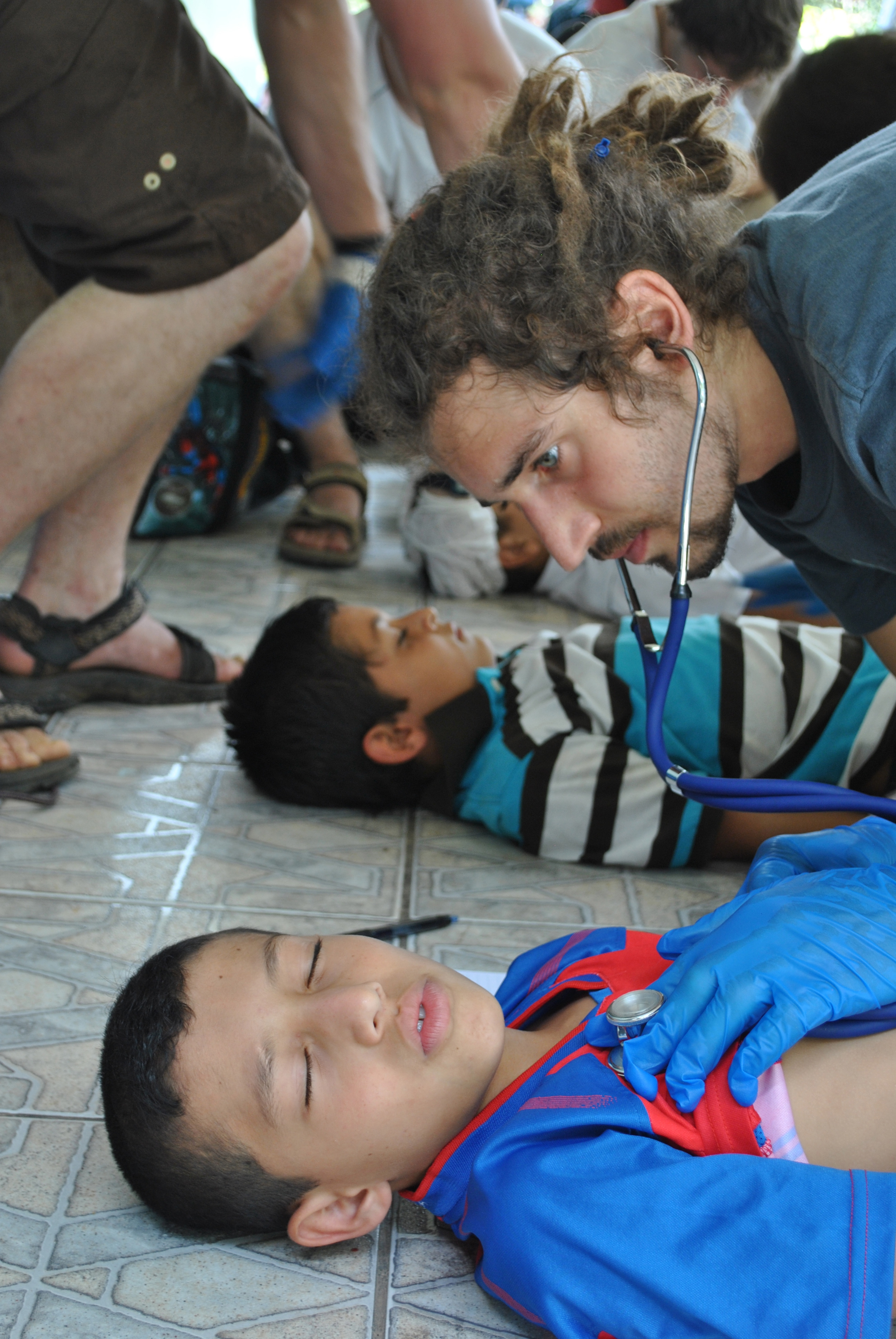
Nursing in a small community has its challenges. With limited resources you are forced to get crafty. Books supplement my medical knowledge. The realm of Google and quick answers is unavailable. The lack of privacy can be daunting; as the majority of treatments are centered around meal times. The main house is the keeper of the medical supplies and the maker of all meals. Still, when David full force hugs me, I can feel his appreciation osmose into my body, up to my face where it turns into a smile. He thanks me for opening his ears to the symphony he's been missing. I've learned in the short time I've been part of this community that together we are capable of some very amazing things.
(1) Berkow, Robert M.D., The Merck Manual of Medical Info, 1997
(2) Werner, David. Where There is No Doctor: a Village Health Care Handbook, 1992.
NEWS AND NOTES
We have a number of life changing workshops coming up.
Please share around if you know anyone who is ready for a trip to beautiful Costa Rica, a swim in the waterfalls, nourished with homemade meals, and challenged with an intensive educational experience.
Abrazos,
The Ranch Crew
Categories
Topics
- Agriculture 6
- Agroforestry 21
- Animals 2
- Apprenticeship 19
- Appropriate Technology 6
- Backpacking 1
- Bananas 1
- Basic Pantry 4
- Biochar 1
- Books 3
- Build Your Own Home 1
- Central America 5
- Chiles 1
- Cinnamon 1
- Clay Carving 1
- Climate 2
- Climate Change 1
- Cob oven 1
- Communication 5
- Community 24
- Compost 2
- Composting Toilets 2
- Condiments 1
- Conservation 2
- Cooking 4
- Costa Rica 18
- Design 10
- Earthen Construction 10
- Eat Local 2
- Ecohome 1
- Education 9
- Environment 3
- Ethics 4
- Farm to Table 12
- Fasting 1
- Fermentation 14
- Food 22
- Food Choices 8
- Food Forest 8
- Food Processing 15
- Food Systems 12
- Gap Year 1
- Gardening 5
- Ginger Beer 1
- Harvest 2
- Health 12
- Healthy living 5
- Homemade 2
- Homestead 8
- Internet 2