

BLOG
Stories, articles, and updates from the Ranch community.
The Ethics of Permaculture
Are ethics universal, or are they subjective, governed by individual attitudes and circumstances? And if that is the case, how can anyone be sure that they have “good ethics” and are always making the right decision? And by what means can we design a future in which every choice leads to the wellbeing of all humanity and to the wellbeing of the planet?
By core team member, Sam Hansen
Philosophy is the study of knowledge, truth, and meaning. Ethics or “moral philosophy” embraces those principles as they influence human behavior. Socrates, who was a foundational figure in western philosophy thought that ethics are based on the premise that all people are essentially good and given the choice will make good decisions. Aristotle called this behavior “virtue,” a striving to do the right thing and make the ethical decision.
When these concepts are applied in practice, the seeking after right and wrong gets a little more complicated. Are ethics universal, or are they subjective, governed by individual attitudes and circumstances? And if that is the case, how can anyone be sure that they have “good ethics” and are always making the right decision? And by what means can we design a future in which every choice leads to the wellbeing of all humanity and to the wellbeing of the planet?
In 1978 Bill Mollison and David Holmgren, two Australian ecologists took on that challenge by developing an interdisciplinary design manual which they believed, if followed would result in a positive, integrated and prosperous future. They called their enterprise “permaculture” and created three fundamental ethical formations as its foundation.
“The only ethical decision is to take responsibility for our own existence and that of our children. Make it now.” – Bill Mollison
Care of the EARTH
Care of the PEOPLE
Set LIMITS to consumption
Transition

Earth Care
The permaculture ethic of caring for the earth is founded on an understanding of the interconnectedness we share with all nature and that our survival as a species is dependent on that of the planet earth. While some might argue that this ethic stems from our own self-interest, Bill and David believed that the “survival of natural systems” is based on cooperation with, rather than domination over, the natural systems that provide a healthy habitat for us.
“When we lose plant and animal species due to our actions, we lose many survival opportunities”- B. Mollison.
Permaculture states that we leave these natural systems to flourish and when we require resources, we harvest them applying the rules of “necessitous use” which includes reducing waste, avoiding pollution, and safeguarding against any process with negative environmental or human impacts.
The Earth care ethic reminds us that our best, our only future, depends on the common goal of living together in harmony and cooperation on a thriving sustainable Earth.

People Care
When we come together and agree on the common goal of taking care of the earth and ensuring its existence and our survival on it, we can then focus on our relationships with others. From an early age we are taught to look out for our family and keep each other safe. As global citizens it is essential to treat all humanity as part of our family and extend the same care to all. A population that values each and every individual’s contribution and functions to support each other is more likely to thrive than one based on competition and opposition. Sadly, most political and state systems function by setting us on opposing teams. How much better would it be for everyone if we were on the same side working towards a unified and prosperous future?
What Bill Mollison called “communal permanence” is creating a strong sense of interconnectedness with nature and with each other so that we can thrive for many generations. For example, knowing that the forests we plant today will be nurtured and cherished for the future and not harvested for short term gain. This ethic is not a simple one in which to find balance, given that we have such a diverse range of cultures, customs, values and philosophies in the world. However, by working together towards common goals that allow us to live in harmony with nature, ensure that everyone has access to clean water and healthy food and enjoys the right to free expression, all the while not imposing on other’s well-being, we can strive to create a future in which we protect our planet and each other.
Set Limits to consumption – redistribute surplus
“Beneficial behavior involves managing natural systems for their own, and our, long-term benefit, not for our immediate and exploitative personal gain” - Bill Mollison

In a world of rampant consumption and waste the third ethic of Permaculture is based on setting limits and seeking to live a sustainable life by relying on the rule of necessitous use. When we free ourselves from competitive and wasteful economic systems, and organize equitable distribution systems, we discover that there are certainly enough resources to meet everyone’s needs.
The “Fair-share” ethic teaches us to look after our neighbor when they have fewer yields and in turn they will look after us when our yields are low. We can extend this ethic to all of nature and leave space for ecosystems to thrive. Minimizing waste and developing as many renewable resources and systems as possible will help us achieve a balance where we can all enjoy the bounty the earth has to offer, and we can care for each other.
Transitioning into a permanent agriculture and a permanent culture
Since the first permaculture design manuals were written in the late 70’s, much work has been done that has advanced all aspects of permaculture both in design and philosophy. As a result, a fourth ethic has been added to the original three, the “transition ethic.” As we endeavor to make our planet a better and more equitable one, and to protect the natural world and all who inhabit it, the reality of the tremendous inequities of the people who share it, make that a formidable task.

Differing perspectives based on vastly different realities and experiences, make consensus on any and every decision extremely challenging. For example, so many of the agricultural practices employed in conventional farming are hugely destructive to the health of the soil and the people who are fed by it. But persuading a farmer not to use pesticides, tilling or monocropping, when they are convinced that their livelihood depends upon it, is not a simple matter. But neither is it impossible. Through education and support and the awareness of sustainable agricultural practices, farmers could make the necessary transition into rewarding, diversified agro-ecological systems that are resilient, respect the earth and provide plenty for all.
Transitioning people from a globalized individualistic consumption-based economy into one that is rooted in local communities and tied to resource sharing, also poses a challenge. Meeting people where they are and having patience with the fact that not everyone can immediately escape from under the thumb of the current economic paradigm comes with the understanding and application of permaculture ethics and their application in creating a better future.
Breaking down existing systems and interacting with each other in respect and harmony will lead to the just future we seek. The process is a long one, but the transition ethic teaches us to be compassionate and patient as well as understanding that not everyone can simply make that immediate “switch.”

In a perfect world
The path humanity has taken since the industrial revolution, colonial exploration and exploitation, has been a hugely destructive and divisive one. The planet has been massively degraded and political elites acting in their own narrow interests have kept entire peoples and societies apart and impoverished. While the ethics permaculture proposes may seem utopic and difficult to achieve in the short term or on any significant scale, it’s important to remember that living mindfully, guided by these ethics and practices, can have a significant impact.
They can guide us to living in a harmonious relationship to the earth, ourselves and each other if only we keep them close in all aspects of our daily life. By starting out small and applying the ethics and practices of permaculture in our homes, neighborhoods and communities, every positive decision we make or action we take, has ripple effects that contribute to the transformations we yearn to see in the world.
This is the goal of the permaculture movement on a global scale, to share ancient wisdom that largely has been forgotten and that can be used to connect us with a collective vision, behaviors and actions that will lead all who participate, to a just, equal and abundant way of life.
“Meaning in life is lost by striving after status and future glory; it is gained and realized by action towards a common ideal, in serving the whole according to our physical, mental, educational and understanding capacities. It is never enough to mean well, rather, it is necessary to ensure that it gets done.”
- Bill Mollison
Learn More
Join us for one of our yearly Permaculture Design Certifications to get theory and hands on experience from leading experts. Check out our workshop calendar for more educational experiences.

La Importancia de la Permacultura
La creciente crisis social y medioambiental nos ha obligado a buscar métodos y procesos alternativos que reduzcan el impacto humano en la naturaleza y nuestro entorno. Como una de las principales alternativas de cambio, la Permacultura constituye un sistema donde se combinan la vida de los seres humanos de una manera respetuosa y beneficiosa con los animales y plantas, y donde se logran implementar soluciones de menor impacto medioambiental para satisfacer las principales necesidades humanas
Rhina Guido Tellez, Estudiante de Permacultura
La creciente crisis social y medioambiental nos ha obligado a buscar métodos y procesos alternativos que reduzcan el impacto humano en la naturaleza y nuestro entorno. Como una de las principales alternativas de cambio, la Permacultura constituye un sistema donde se combinan la vida de los seres humanos de una manera respetuosa y beneficiosa con los animales y plantas, y donde se logran implementar soluciones de menor impacto medioambiental para satisfacer las principales necesidades humanas. Si bien el termino Permacultura suena nuevo o hasta desconocido para algunos, podríamos traducirlo en ecología, desarrollo sustentable, preservación del hábitat, practicas eco amigables, etc. Este término no es más que la compilación de éticas y principios de diseño universales en planeación, desarrollo, mantenimiento, organización y preservación del hábitat apto para sostenerse en el futuro.

La Permacultura reúne una seria de principios éticos y de diseño que aplicados en áreas como la Arquitectura hacen posible la creación de entornos sustentables. Los principios éticos están dirigidos al desarrollo de la conciencia en temas del cuido de la tierra, relaciones humanas y equidad. Por su parte, los principios de diseño son los que fácilmente podemos ver materializados, en el ambiente construido con la utilización de materiales y técnicas de construcción locales, la autoconstrucción, climatización natural, implementación de técnicas eco amigables como sanitarios secos, reutilización y reciclaje, generación de energías renovables y cultivo biointensivo.
¿Por qué es importante la Permacultura? Porque nos encontramos en ese punto de inflexión donde se hace necesario tomar medidas que nos permitan crear ambientes más seguros y sanos. El sistema permacultural nos ayuda a generar cambios a nivel personal y local para proceder con los niveles colectivos y global. Este como tal contribuye poco a poco a reducir las marcadas brechas sociales, los altos niveles de pobreza, la falta de acceso a viviendas dignas así como a lograr cambios en los sistemas económicos globales que producen y reproducen desigualdad y que limitan el acceso a bienes físicos y sociales.
La Permacultura nos permite crear sistemas productivos sostenibles en espacios de área reducida, lo que significa que puede ser fácilmente aplicado tanto en zonas rurales como urbanas mediante el reconocimiento de los patrones y procesos naturales para luego ser integrados en nuestra vida diaria sin alterar el orden natural de los elementos que constituyen los diferentes ecosistemas. Su principal importancia radica en que no solo genera cambios a nivel personal sino que una vez que es implementado produce una especie de efecto domino en los demás ámbitos de nuestras vidas como en las prácticas de consumo, relaciones humanas, niveles de respuesta ante temas sociales, etc.
Teniendo en cuenta que uno de los principales agravantes de las problemáticas sociales y ambientales lo constituyen en muchas casos los mismos gobiernos locales que se rehúsan a destinar los recursos necesarios para llevar a cabo políticas públicas que ayuden a contrarrestar las diferentes problemáticas que aquejan a nuestras sociedades; se hace necesario contar con espacios como el que nos brinda Rancho Matastal, donde haciendo uso del método de aprender haciendo, podemos adquirir una serie de conocimientos teórico-prácticos para luego ser capaces de brindar soluciones que pueden ser fácilmente aplicadas en nuestras comunidades sin la necesidad de contar con altos niveles de experiencia.

Rancho Matastal no solo nos brinda la oportunidad de obtener conocimientos básicos en temas como Permacultura, Bioconstrucción, Agroforestación, entre otros; sino que podemos experimentar en primera persona la oportunidad de convivir en un entorno sustentable y evidenciar los cambios que se pueden lograr con la implementación de sistemas amigables con la naturaleza y que a su vez propician la preservación de las costumbres y tradiciones que forman parte de la identidad de cada lugar donde son desarrollados. Además de su aporte a la preservación del medio ambiente este tipo de centros de educación nos ayudan a elevar nuestros niveles de conciencia acerca de los efectos que tienen cada acción individual y colectiva en nuestro entorno y que terminan convirtiéndose en verdaderas experiencias de vida que hacen replantearnos hábitos y costumbres que pudieran afectar directa o indirectamente nuestro entorno.


Poop: The Secret to Sustainable Solutions
Poop. Shit. Mierda. Caca. Crap. Boñiga. Excrement. Feces. Dung. There are countless ways to say what comes out of an animal’s body as solid waste. As most visitors to the Ranch realize soon after their arrival to Mastatal, we talk about poop more than the average learning center or household, and it’s not uncommon for it to be the center of a meal conversation.

By Tim O'Hara
Poop. Shit. Mierda. Caca. Crap. Boñiga. Excrement. Feces. Dung. There are countless ways to say what comes out of an animal’s body as solid waste. As most visitors to the Ranch realize soon after their arrival to Mastatal, we talk about poop more than the average learning center or household, and it’s not uncommon for it to be the center of a meal conversation.

Human beings’ evolution towards “fecophobia”, or a fear of fecal matter, has been steady and consistent over the past few decades. The reasons behind this observation have at times been warranted, but not always. One of our goals as an organization is to initiate honest and open conversations about controversial topics related to sustainability, including how best to manage animal waste. As a child, I was taught to avoid poop at all costs. Poop was meant to be flushed away to some unknown, unasked about destination far from my house. Pull the lever on the porcelain throne and think no more about it. My closest encounters with poop growing up mostly consisted of scraping dog shit from the bottom of my sneaker with a stick after a game in the yard. This type of experience only increased any justification for not being endeared to this smelly, dangerous, and sticky substance. Nevertheless, most of us spend part of the first years of our life walking around with a load of it in our diapers, which may help to explain why my relationship with poop has oftentimes been defined by confusion. Everybody poops. That’s also the title of a book that a friend gave to our daughter Soledad when she turned 1. This wonderful little read is the author’s effort to encourage listeners and readers to start to develop a more comfortable association with an undertaking that we all partake in every day.
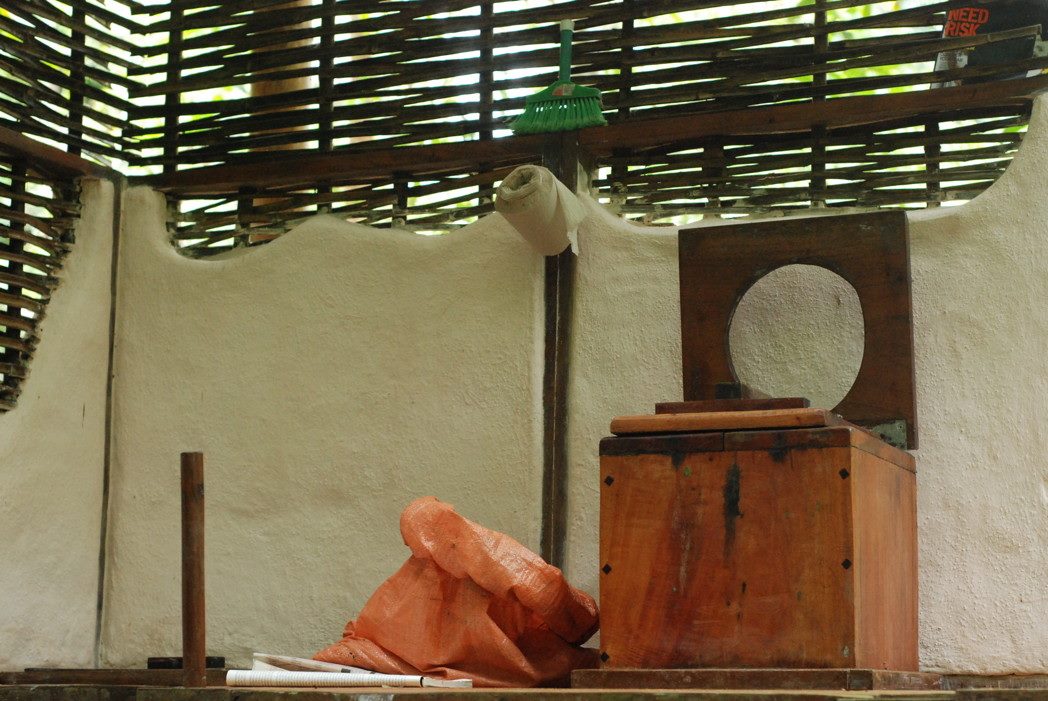
Since the years of my youth, I’ve grown more comfortable with the process of defecating. I have come to see what I used to see as waste and gross as not only a normal part of nature but a potentially valuable resource. As a Peace Corps volunteer in Uruguay in the early nineties working with organic farmers, I saw how animal manures made up an important part of the soil fertility building techniques employed by the food growers that I worked with on a daily basis. Years later upon arriving to Mastatal I was convinced that one of our first projects should be to construct a composting toilet that would turn our and our guests' body waste into usable fertilizer for our orchards. We thought that this would be a good alternative to the infrastructure that I grew up with in New York State that utilized drinking water to transport my family’s poop to some unseen (but not unsmelled) place to be treated with chemicals.

Fifteen years later we have eight composting toilets scattered around our campus. From our forays into natural building we successfully experimented with using manures in the plasters that now protect and beautify our buildings. Around 2005 we learned from a Costa Rican friend, an organic coffee farmer outside of Puriscal, about using animal waste to produce cooking gas. Shortly after hearing about this possibility the Ranch built its first methane digester that has helped us reduce our dependence on imported fossil fuel based cooking fuels. We also learned from a Ranch guest that you could raise a child without diapers and soon before Sole’s birth Robin and I decided to give that “radical” idea a try. Humans today that spend their first years in diapers contribute an average of 2 tons of feces filled diaper garbage to their local dumps. Diapers reportedly make up about 4% of landfill volume. When I read these figures for the first time I had to take a step back and think whether it could possibly make sense to contribute to this reality while allowing my child to walk around with a pile of crap in her drawers. The more I thought about it, and the more I researched the alternatives, the more I decided that diapers were yet another co-opted, environmentally destructive, profit driven invention that has been forced down the throats of almost every developed and many developing world families as the only civil and rational way to raise your baby. The vast majority of diapers are expensive, non-biodegradable, and in many cases, unnecessary. I concede that raising your child diaper free is not for everyone, but I am convinced that it could be an option for many more families if they understood the process and the benefits of this mode of child rearing.

Animal feces, if handled irresponsibly, can and does make people sick. Millions of children in Africa and other parts of the developing world die each year from diarrhea caused by poor sanitation and water contaminated by animal waste. These are serious issues that need to be addressed in responsible ways so that children do not die avoidable deaths. I am not condoning that we we live in a world where crap runs down sidewalks and flows untreated into our rivers. What I’m hoping for is that humans can develop a healthier understanding about both the benefits and shortcomings of animal waste and as a result promote rational and sustainable techniques, policies and ideas that allow us to relate with poop in ways that maximize its advantages and minimize its risks.
At Rancho Mastatal we think and talk a lot about our impact. We look for ways to build using local and natural resources, produce our own energy, improve our community’s health, save money and ameliorate the fertility of our soils. The sustainable solutions to all of these goals are in part hidden in the dark, rich world of animal poop, and when handled responsibly and intelligently provide answers to how humans can start shifting, and shitting, towards a more healthy relationship with our bodies and our planet.
NEWS AND NOTES
The busy season has come to an end, the last of our groups for the fiscal year have come and gone. Our Apprentice Crew has all but taken over running the Ranch. It is a time for projects, practice, rest, reflection, and beginning to prepare for 2017.
One of our favorite ways to reflect is looking back over old photos. Want to explore the Ranch's past with us? Check us out on Flickr and let us know your favorite pics!
Abrazos
The Ranch Crew
Transition Ethics: The Art of Compromise
Permaculture Design is many things to many people, but one of its pillars is a set of three ethics. These as originally laid out by Bill Mollison are
- Care of the Earth
- Care of People
- Redistribution of the Surplus
These are our primary directives for how to act to sustain the earth. Or on a simpler level these are the ways to a good life.
By Scott Gallant

Permaculture Design is many things to many people, but one of its pillars is a set of three ethics. These as originally laid out by Bill Mollison are
Care of the Earth
Care of People
Redistribution of the Surplus
These are our primary directives for how to act to sustain the earth. Or on a simpler level these are the ways to a good life.
Teaching these ethics during our annual Permaculture Design Certification (PDC) course is one of my favorite topics. It inevitably brings up pointed and challenging conversations, commonly around how to live these ethics in a world that often does not care for the earth, nor its people. How do we live and design for today’s world and for the parallel world we want to create? This discussion leads to fear and anger based responses, a tear-it-down approach easy to rally around in a classroom of like minded, fed up and passionate souls. Unsurprisingly, this is not an effective route for change. It became apparent to our teaching team that this conversation on ethics lacked a route to speak about compromise. To fill this gap we utilize a fourth ethic in our PDC curriculum; the Transition Ethic.
The Transition Ethic is a guide for how to be effective in creating change. In their recent book Practical Permaculture (one of the few references to the Transition Ethic in permaculture) Jessi Bloom and Dave Boehnlein state that “the transition ethic says that no one is going from zero to sustainable overnight. Making the transition takes time.” We have to meet people where they are at. We must understand their cultural context.
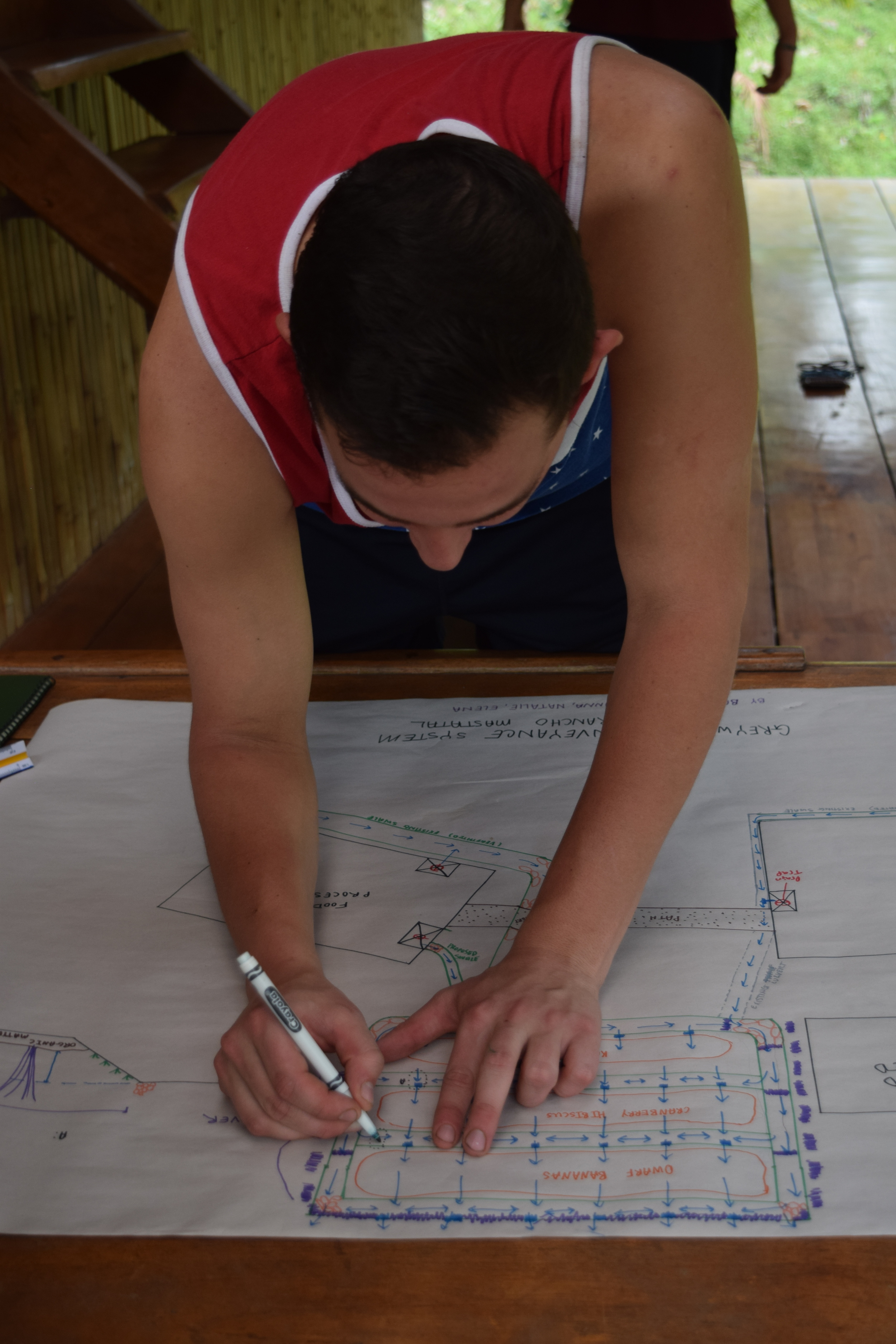
When I first began learning about the industrial food system and what it was doing to our personal and environmental health, I was angry. I desperately avoided all participation in that system. This was easier to embrace while living and working at the Ranch, a NuMundo impact center. But it was challenging when I returned to my parents’ home during the holidays. While they eat healthy by many standards, I was disappointed to find apples from Chile, processed meats, and corn-syrup fueled snacks around the kitchen. It was not a local food paradise by any means, so I jumped on my soapbox and preached. They needed to support local economies and take care of their bodies! Didn’t they care about the amount of pesticides used on those tomatoes?!
They responded with kindness and listened, like the wonderful parents they are, but were likely rolling their eyes in the background, and not much changed. A few years latter though, when I was able to show them how excited I was to manage a farm in Costa Rica, bake my own bread, and build my own furniture. I began to see them make real changes. As soon as my ideas came from a place of positive examples versus negative critiques the transition began for them. Their garden as expanded, they save and share more and more seeds every year, and the kitchen has a few more jars of ferments upon my home arrival.
This instilled in me that even though I was ready to change, the world around me operated at a different pace. So the question became: how do I navigate the series of compromises needed to encourage change? The original three ethics of permaculture speak to this in varying ways, but they don’t provide a road map as clearly as an ethic of transition. For me it is a road map of humility, recognizing that we are all coming from different places and we can’t begin to guess the context of others’ lives.
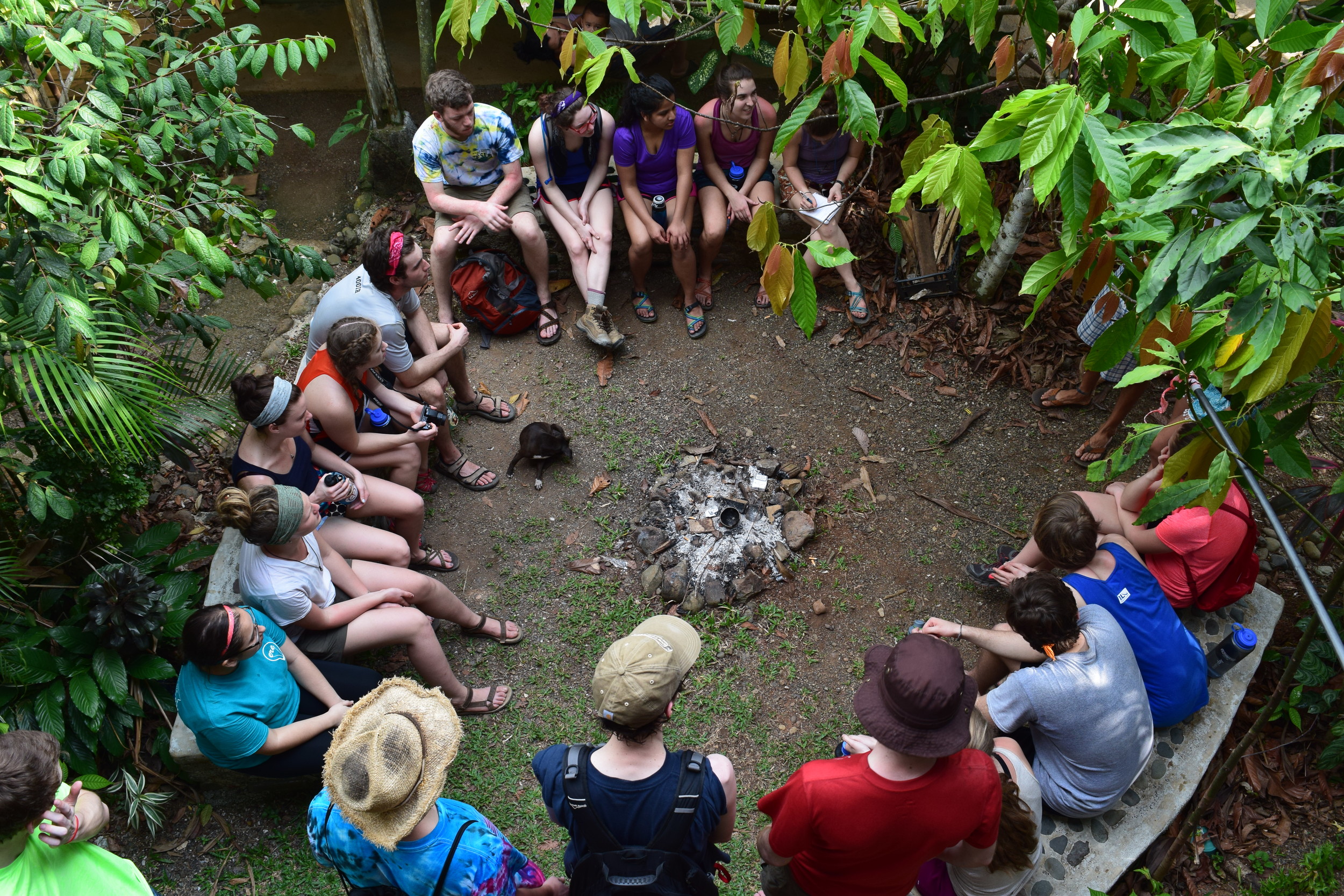
The Ranch is one of the leading natural building centers in the Americas. Yet, we still use concrete in our foundations and metal on our roofs. We don’t love the environmental impact of either of these materials, but we have done the due diligence to know that they make the most sense in our current context. These are compromises we must make in order to protect our infrastructure investments from rain, earthquakes, termites, and the tropical climate. This infrastructure allows us to operate as a world-class education center, without it our livelihood and mission fails. It is a compromise we must make.
The Transition Ethic makes it clear that these compromises are ok and often necessary. The key take away that I share with our students is that we can never compromise our ethics but we can make ethical compromises.
Most of us use fossil fuels, don’t eat only local organic food, and participate in a globalized economy. We may wish this wasn’t true, but this is the world we live in; and it requires an art of compromise. So how do we make choices and design our lives for the current world and the one we are creating and visioning for the future?
Permaculture design is one tool at our disposal to navigate these waters (primarily through good design of our lives, homes, and land) and with a Transition Ethic in place it becomes an even more robust tool.

Learn more
We have a number of life changing workshops yearly.
We rely on all of the amazing ambassadors to our project to spread the word; if you know of anyone who needs a get-life-into-gear experience, send them to one of our classes!
Abrazos,
The Ranch Crew
Categories
Topics
- Agriculture 6
- Agroforestry 21
- Animals 2
- Apprenticeship 19
- Appropriate Technology 6
- Backpacking 1
- Bananas 1
- Basic Pantry 4
- Biochar 1
- Books 3
- Build Your Own Home 1
- Central America 5
- Chiles 1
- Cinnamon 1
- Clay Carving 1
- Climate 2
- Climate Change 1
- Cob oven 1
- Communication 5
- Community 24
- Compost 2
- Composting Toilets 2
- Condiments 1
- Conservation 2
- Cooking 4
- Costa Rica 18
- Design 10
- Earthen Construction 10
- Eat Local 2
- Ecohome 1
- Education 9
- Environment 3
- Ethics 4
- Farm to Table 12
- Fasting 1
- Fermentation 14
- Food 22
- Food Choices 8
- Food Forest 8
- Food Processing 15
- Food Systems 12
- Gap Year 1
- Gardening 5
- Ginger Beer 1
- Harvest 2
- Health 12
- Healthy living 5
- Homemade 2
- Homestead 8
- Internet 2