

BLOG
Stories, articles, and updates from the Ranch community.
Permaculture Entrepreneurship: Navigating the Path from Student to Professional
After completing a Permaculture Design Course (PDC), natural building workshop, or any other educational opportunities at a place like Rancho Mastatal, many students find themselves wondering how to turn their newfound knowledge and passion into a career. This transition from student to professional is a common challenge in the permaculture world.
By Jason Thomas
The voice behind the podcast Regeneration Nation Costa Rica
After completing a Permaculture Design Course (PDC), natural building workshop, or any other educational opportunities at a place like Rancho Mastatal, many students find themselves wondering how to turn their newfound knowledge and passion into a career. This transition from student to professional is a common challenge in the permaculture world.
It’s not surprising, considering that most standard education programs don’t teach entrepreneurship, and new students of the trade often feel like they lack sufficient experience to charge for their services.

Common Challenges Faced by Permaculture and Alternative Solutions Students
I’ve interviewed dozens of permaculture professionals and students wishing to make their mark, and I’ve found some common hurdles that seem to hold people back.
Some of those obstacles include:
Lack of business education and experience
Little understanding of how to monetize their skills
Imposter syndrome
Limited support network
Balancing ideals with practicality
Many potential clients don’t know what permaculture or these sustainable solutions are, and many regenerative entrepreneurs don’t understand how their ideal clients are thinking about their needs from their perspective.
Insight Tool: Identify Your Hurdles
Take a moment to reflect on your own journey. What are some challenges you're currently facing in turning your ideas into a profession? Write them down and consider how they align with or differ from the common challenges mentioned above.
The Gap Between Passion and Profession:
This gap isn't unique to permaculture. Many individuals who care about helping humanity turn its trajectory around face a similar divide between academic knowledge and professional application.
In permaculture, this gap is often widened by the holistic, systems-thinking approach that doesn't always align neatly with traditional business models but does exceedingly well when harnessing traditional tactics, repurposed in a holistic system approach.
Tim O’Hara from Rancho Mastatal shared with me in one of our conversations that he felt like they were chasing their tails for several years as they tried to figure out how to make it all work. It’s a similar story for many people who embark on a project like this.
… but that’s not the only way to go about it.

In today’s age, it’s easier than ever to learn from wisdom keepers like this and model from the solutions they’ve arrived to through their mistakes. It IS NOT a wheel worth recreating. We have work to do and the faster we can get our services out to the world, the better off we’re all going to be.
The trick is not to do it so fast that you skip the foundational steps of contemplative design.
So, from a design perspective, let’s look at some solutions we can embrace to bridge this gap between passion and professional application.
Key Business Skills Needed to Bridge the GaP
Business planning:
Overcome your unclear direction and orientation to business by looking at your business idea as if it were pasture land that you are about to implement into a multi-yielding homestead.
Taking the time to design your enterprise will earn you an intimate relationship with the path ahead and the confidence to walk it.

Marketing and communication:
Conveying the value of permaculture and other sustainable solutions to potential clients can be tricky because they lack the vocabulary and point of reference for what it means, let alone how or why it provides any unique benefits to them.
In marketing and communication, describe the benefits from the prospect’s point of view.
Financial management:
Understanding budgeting, pricing, and sustainable revenue streams may not sound sexy as you’re getting started, but careful documentation will come in handy when you revisit the feedback loop and want to understand what worked well, what didn’t, and how to do it better next time.
Finances are only one part of the puzzle, but trying to skip it will leave you hanging with gaps in your picture.
Legal and administrative skills:
Navigating regulations, contracts, and business structures is another aspect that many new entrepreneurs would prefer to skip.
However, if you want to practice your trade as anything more than a hobby, you might as well start with the end in mind and get some of those things squared away as soon as they are relevant.
Networking and collaboration:
Building a supportive community and finding complementary partners is the practice that will serve all others. We are a culture of people that want to help each other. We need each other! Reach out to other regenerative activators in your area and get to know them.
I even teach people to create a database of these projects and their owners. This could prove to be your business’s most valuable asset.

Insight Tool: Skill Assessment
On a scale of 1-5 (1 being novice, 5 being expert), rate yourself on each of the key business skills mentioned. Which areas do you feel strongest in? Which areas need the most improvement?
Essential Skills and Mindsets to Adapt as a Regenerative Entrepreneur:
As you embark on your journey as an entrepreneur and business operator, you’ll want to cultivate a set of skills and mindsets that support your personal growth and business development.
The following attributes, to the degree they’re cultivated, will help you navigate challenges, recognize and embrace aligned opportunities, and cultivate the confidence to see them through. Let's explore some skills and mindsets worth developing:
Holistic Systems Thinking:
Apply the holistic approach of permaculture to your business. Understand how different aspects of your business interact and support each other. Find common problems people face in your area that have insufficient solutions and find the place where those meet your passions and skill set.
… or desired skill set.
Remember, you’re a student who likes to learn new things. Nothing can hold you back!

Insight Tool: Map Your Business Ecosystem
Sketch a simple mind map, outline, or diagram of your current or planned business idea. Include key elements such as your services, target audience, resources, and potential partners. Draw arrows to show how these elements interact and support each other.
Adaptability to Change:
Be prepared to adjust your strategies as you learn and grow. As Tim has mentioned to me, even they, after all these years, continue to develop and refine policies as they learn and grow. Their documents are regularly being edited and revised by new people with fresh perspectives.
It’s a regular, intentionally planned practice.
Patience and Persistence:
Building a successful business takes time. Rancho Mastatal, like most projects of this nature, didn’t have a huge budget to just set up shop and run massive retreats. Instead, they took a slow, iterative approach, using the resources they had on hand, which included the support of their neighbors, and slowly, persistently, grew as resources and wisdom allowed.
Creating a phase-planned design for your new enterprise to spread your ambitions out over the next 3-5 years is a great way to resist distracting impulses and stay on track.

Lifelong Learning:
Never stop learning. Stay open to new ideas and keep developing your skills. This is the habit that keeps on giving. However, don’t just study information focused on your trade.
Round out your education so that you can understand the macro patterns of the human condition, market patterns, and personal development, as well as the micro details of your business operations.
Community Integration:
Understand the importance of community integration. Of all the community projects and education centers I’ve researched around Costa Rica, Rancho Mastatal is one of the shining examples of community integration and worth modeling at any opportunity.
Community integration is an extremely important part of our work. It helps us to integrate in a way that allows us to be accepted by those we wish to influence and serve.
Insight Tool: Community Asset Mapping
List 5-10 local business owners, organizations, or other leaders in your community that could potentially support or collaborate with your efforts. How might you engage with each of them?
Innovative Problem-Solving:
Use holistic thinking to find innovative solutions to your business challenges. Permaculture teaches us that each problem holds a gem of solution just waiting to be discovered. By carefully researching and analyzing your options and approach, you can see these pitfalls before they ever become a problem and design ways to ensure they never will be.
By staying vigilant in your process to find ways you can stack functions in your solutions, your experience operating your business will improve.

Clear & Effective Communication:
Develop the ability to explain what you do and its benefits to a wide range of audiences. While it's always advised to start any product or service creation with a specific client avatar profile in mind to help target your messaging, we’re not just here to get customers. We want to affect change in the world, and that requires speaking other people’s languages.
The best way to do that is to talk to more people about the problems you provide solutions for, but not with an intention to pitch your services. Instead, talk to them with a sense of curiosity and care.
Get to know them and pay attention to the words they use in describing their challenges and perceived options. If you take the time to do this in a systematic way, you’ll develop the vocabulary and sensibility to make the impact you’re hoping for.
How the Permaculture Business Design Course Helps Bridge These Gaps:
The Permaculture Business Design Course is designed to bridge the gap between a passion for making regenerative practices what you do for a living and the business skills needed to make that happen.
It applies the permaculture methodology and principles to design your business like you would a multi-yielding food system or a physical structure made from carefully calculated materials and procedures.
Why would we celebrate those practices on the land and houses, but not our business?
It’s impressive how often we stumble into a business idea, throwing offers out there hoping it will land with someone as we describe OUR favorite features of the service, rather than the benefits THEY want to receive. Business development is too common a reactionary process of figuring out as you go, which is exhilarating in moments, but not an effective way to get off the ground flying.

In this course, you’ll:
Expand your perspective on how to solve common challenges people are actually experiencing so you can find the unique niche that’s perfect for you.
Gain clarity around your unique vision and how it meets the needs of your region to purposefully design a financially regenerative enterprise that people can relate to.
Enhance your professional skill set through training videos, insight tools, worksheets, and other guided exercises.
Proceed through the lessons at your own pace to develop your offer, invisible infrastructure, marketing strategies, and operational procedures through slow and small solutions.
It’s a start-to-finish roadmap for the motivated permaculture entrepreneur, from ideation to implementation.
Insight Tool: Your Next Steps
Based on what you've learned in this post, what are three specific actions you can take in the next month to move closer to your goal of becoming a permaculture professional?
A Little More About Rancho Mastatal's Journey from Vision to Successful Enterprise:
I’ve had the pleasure of hearing Rancho Mastatal's story through my various interviews with Tim and the fortunate opportunity I’ve had to visit on the Ecovillage Tours that we now operate annually.
Each interaction with Tim, Robin, and their team has demonstrated:
Consistency in their intention to integrate and serve with the local community
Persistence in finding solutions when change happens
Adaptability through intentional experimentation
And ongoing education and refinement of their practices.
In an interview we did for the Permaculture Professionals Interview series, Tim shared that, early on, they didn't focus enough on compensating and taking care of the people that were making it possible. And that is unfortunately common amidst foreigners who buy land are happy to take advantage of the poverty wages many rural farm-hands are willing to work for.
Many of us have that wake-up call at some point, and for them it led to significant changes in their approach.
They implemented changes like:
Formalizing their business structure
Creating clear agreements and expectations
Developing a core team with defined roles
Implementing financial tools for better decision-making
Tim shared that developing more of a structure has helped them feel much more stable and resilient.
Rancho Mastatal's evolution is one of my favorite examples of combining permaculture principles with sound business practices. They've grown from a couple running a farm to an education center offering diverse courses, an apprenticeship program, and strong community integration directly affecting who knows how many hundreds of people each year, and thousands through the lives touched by those who’ve passed through their doors.
In the guest presentation Tim provided for the Community Living Agreements Training, he emphasized the value that clear documentation has brought to their project.
He explained that creating documents outlining standards for:
Sharing communal space
Participation expectations for members and guests
And common operating procedures
They have a library of best practices they can use to inform guests, train staff, and keep their intentions on track over time.
(Image) PBDC Landscape 1.jpg
Are you ready to start to design?
The Permaculture Business Design Course offers the knowledge, tools, and support needed to navigate the journey from permaculture student to professional. It provides practical skills to design a business that's as regenerative and abundant as the ecosystems we aim to protect and regenerate through our work.
Enroll in the course to start designing a business in a way that will earn you experience, confidence, and clear enough vision to motivate people to your cause.
If you like the idea of designing and developing your regenerative enterprise in the company of other dedicated entrepreneurs, I offer a seasonal group program for permaculture-minded professionals looking for support and accountability as they navigate the path ahead. It’s application only and an interview is required to ensure we have a committed group of aligned individuals in the cohort.

Let’s do it together!
To learn more, visit the Permaculture Professionals Program and fill out the application. I’d love to meet you and hear about your ambitions to cultivate a regenerative livelihood.
Remember, as in permaculture design, the key to a successful business is thoughtful planning, diverse strategies, and regular visits to the feedback loop.
However, accountability, coaching, and peer support are powerful amendments worth investing in.
May your dreams to serve through right action flourish!

Jason Thomas is the voice behind the podcast Regeneration Nation Costa Rica, designer and guide for Ecovillage Tours CR, mastermind facilitator for the Community Founders Circle and the Permaculture Professionals Program, and creator of the Permaculture Business Design Course.
With over 20 years practicing both permaculture and entrepreneurship, he bridges these two worlds to empower our next agents of change.
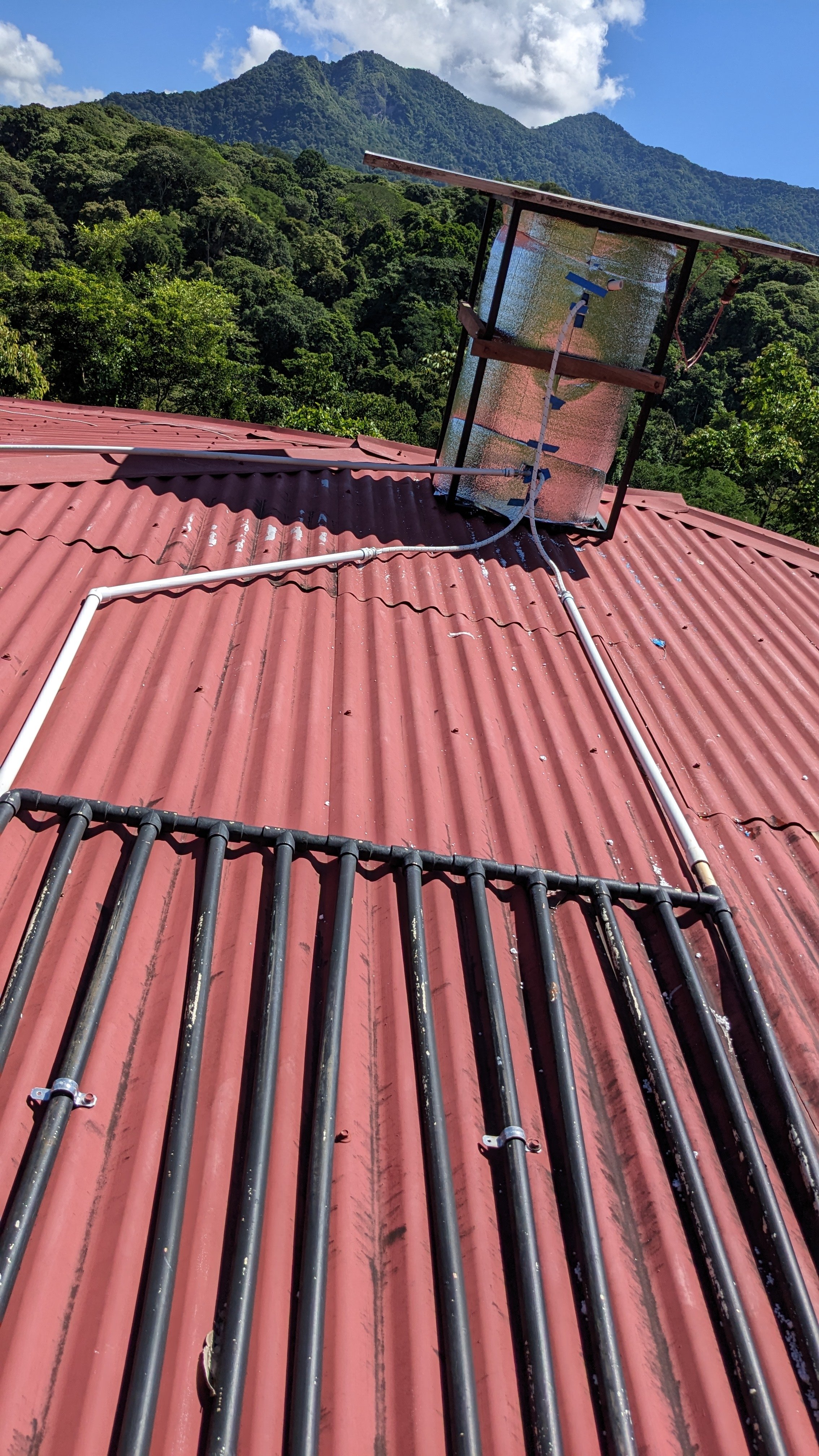
How to Make a Solar Hot Water Heater for under $100
You wouldn't guess that in the tropics having hot water was so desirable, but at our elevation, it gets quite chilly for me in the evenings. During the rainy season the nights can get particularly cold and if you've been in the rain working, a rejuvenating warm shower is just the ticket!
Over the years we have trialed two different types of hot water systems: composting hot water and solar hot water. I've personally installed and used both systems and would like to share what I've learned.
By Nic, Core Team
You wouldn't guess that in the tropics having hot water was so desirable, but at our elevation, it gets quite chilly for me in the evenings. During the rainy season the nights can get particularly cold and if you've been in the rain working, a rejuvenating warm shower is just the ticket!
Over the years we have trialed two different types of hot water systems: composting hot water and solar hot water. I've personally installed and used both systems and would like to share what I've learned.
Using appropriate technologies is one of the cornerstones of our permaculture principles and something that we teach about during our Permaculture Design Certification. It meets many of our principles to use local, recycled and repurposed materials and not only does that create a functional piece of technology its also cheap! This project came in under $100 and mainly used recycled materials.
Here is what you would need
55 gallon barrel
10 gallon barrel this must fit inside and leave enough space for insulation
Old EPS packaging (see below for description)
24m of 3/4” PVC tubes, Ts and Ls fittings
1/2” PVC for connecting to shower
Material for making the frame for the barrel ( i used some 1” steel square stock but you could use wood too)
reflective insulation to prevent 55 gal degrading in sun
Bulkhead fittings to connect pipes to tank
Compost Hot Water
When we first installed the composting hot water it was revolutionary in its simplicity: one uses the heat of a decomposing compost pile to heat water. It also is a classic permaculture stacked function of decomposing material and taking advantage of the heat that it creates. We refer to this typically in Permaculture as “stacking functions”. This is generally achieved by having a long tube coiled inside the compost mound. As you create the pile you slowly coil the tube amongst all the to be decomposed additions. This must be a hot, or thermophilic, compost system. When I first constructed this system it was fantastic. The water heats up within 24 hours and it stays hot night and day.
The really hot water lasts around two to four weeks, depending on the size of the pile, but over the next six weeks it does start to slowly cool down. At this point you have to build another pile for it to heat up again. At first this was easy, we would collect all of the trimmings from the occasional chopping of the soccer field to make the next pile. This would last about the same amount of time as the field took to overgrow and be cut again. It was good timing.
Once the community bought a lawn mower though, this abundant supply of nitrogen for the pile dried up. Instead of waiting six to eight weeks between cuttings, the field began to get mowed regularly and now there are no longer large amounts of grass clippings available for a hot compost pile. There were other challenges; the tubing often became twisted and was an absolute pain to dismantle and re-use with each new pile. The hot water didn't last long per shower, about five minutes, as it was limited to the amount of water held in the total length of tubing. All of this added up to a trip back to the drawing board!
Solar Hot Water


One of the key Permaculture principles, Catch and Store Energy is perfectly illustrated by using the suns energy to heat water. We have had several different solar hot water systems at the ranch. They all work really well as long as it is hot and sunny while you are taking a shower. Of course this is exactly the time when you don't need a hot shower, usually a cold water shower feels most refreshing. I want a hot shower when it is cold and rainy!
Until now, none of our solar hot water showers would produce hot water when I wanted hot water. This was for two main reasons. The first was that the tanks were never insulated. Even though the water in the tank would heat up, it would not stay warm into the night without insulation. The second was the lack of a functioning thermosiphon system.
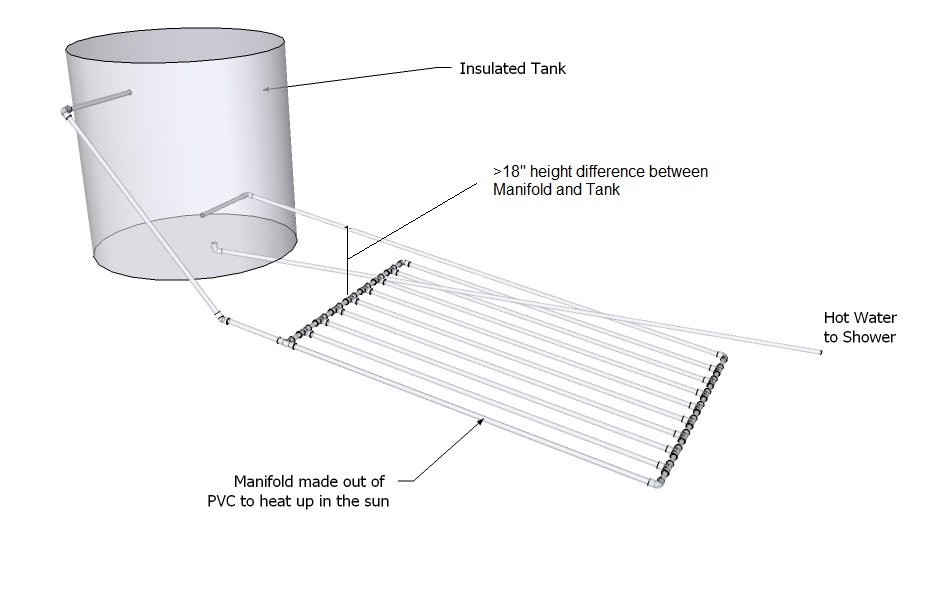
A thermosiphon is created when a manifold exposed to the sun heats up, this then hats the water inside, the water expands and becomes less dense than the cool water in the system. This creates a cycle of the cooler water in the tank sinking into the manifold (area exposed to the sun) below it whilst the water in the manifold travels up into the tank. This creates a continuous cycling of hot water through the system.

3/4” PVC Manifold
But if the height differential between the tank and the manifold is not large enough or there is not a one way valve the same thing can happen in reverse, this is known as reverse thermosiphoning. This meant that the passive thermosiphon process which heats the water up while it was sunny would then reverse once it cooled down and the tank would quickly cool. This occurred in our systems because there needs to be at least 18” height difference between the tank and manifold.
Manifold
In the photo above you can see the manifold we glued together using 3/4” PVC. It is 1.5m long (so that you can get 4 lengths from a 6m piece) by 1.2m. The large surface area and the black paint are what allows the water to heat up inside of the tubes and to circulate via the thermosiphon. We decided to use 3/4” PVC to reduce the friction inside of the tubes and allow the water to circulate more easily vs using the 1/2” PVC. we just used any old black paint that was lying around, it wasn’t specifically for painting PVC. Lightly sand the PVC with 220 grit and the paint will stick much better!
Improved Hot Water Batch System
We have now created what we believe to be the perfect appropriate technology permaculture solution, the solar hot water batch system! In our new solar hot water system we have made some important changes from our past systems.

EPS Loose Insulation
We increased the surface area of water in the pipe to increase speed of water heating up. By using 3/4" PVC pipe in the form seen in the pictures we are creating a larger surface area to heat water up in the sun. There is also a relatively short distance for each amount of heated water to travel in order to rise to the tank. In old systems we have had one long continuous tube.
We insulated the tank to keep the water hotter for a longer period of time. By insulating the tank with about 4-5" of EPS insulation we can now keep the water hot for a minimum of 24 hours (enough time until the sun comes out to continue heating the water again).
We made sure that the bottom of the tank was more than 18” above the top of the manifold.
In its current form the solar hot water works as a batch heater, meaning that as you use the hot water one must manually refill the tank by opening and closing the cold water input to the tank. The overflow on the tank tells you when it is full. We do not have access to tanks that can control the very high water mains pressure that we have, therefore we use this manual system.
Insulation
We have experimented with a number of natural insulations over the years including sawdust, newspaper, clay sawdust fired bricks, wood ash and pummice amongst others. In our first solar hot water we used sawdust insulation and it did a good job. This time we had bought several ceiling fans for a new construction that had come packaged in Expanded Polystyrene (EPS). We used the weedwacker and the metal blade attachment in a large barrell to chop up the EPS to a loose fill. This way we could easily pour the insulation into our barrell. The advantage of using this insulation is that we were able to recycle a material that would have otherwise gone to the landfill. It would also not break down in a potentially damp environment, if there was a leak or excessive condensation.
Water pressure
As this is essentially a tank of water on your roof the pressure is dictated by the height of your roof, the higher the water tank the higher the pressure. It means that the water pressure whilst perfectly adequate to take a nice warm shower is much lower than that of our mains water. If you want high pressure hot water you would have to install a pump of use a pressurized tank and heat exchanger all of which add complexity and cost. You also must consider that if you don't live close to the equator you will have to think about the potential freeze risk of having a tank of water on your roof during colder months.
There are many forms and variations of solar hot water systems which can be designed and built. I like this system because it is passive, simple, cheap, uses easy to source materials and involves very little maintenance.
To learn more about systems like these, keep an eye out for upcoming workshops on renewable energy and appropriate technology. We include an appropriate technology module in our annual Permaculture Design Certification.
NEWS AND NOTES
We have a number of life changing workshops coming up. Please check out our workshops page for more information of upcoming workshop.
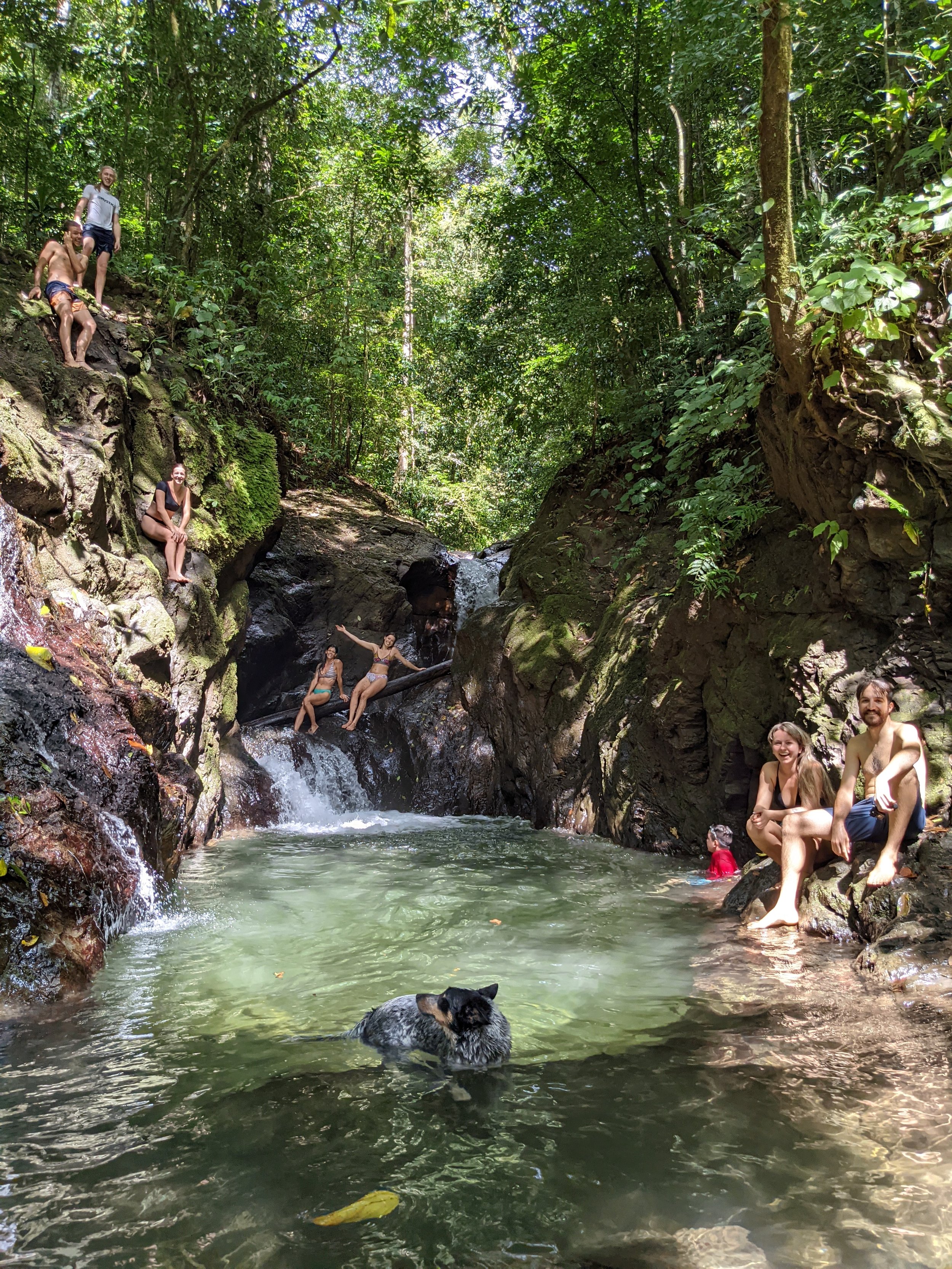
Please share around if you know anyone who is ready for a trip to beautiful Costa Rica, a swim in the waterfalls, nourished with homemade meals, and challenged with an intensive educational experience.
Abrazos,
The Ranch Crew

Permaculture-Based Alcohol Production as an Energy Source — “The Proof is in your Buzz”
Bring to mind a world where energy is cheap, plentiful, AND environmentally friendly. What’s powering that world? Wind? Biogas? Hydroelectric? Solar?
By 2022 apprentice Lucas Babinec
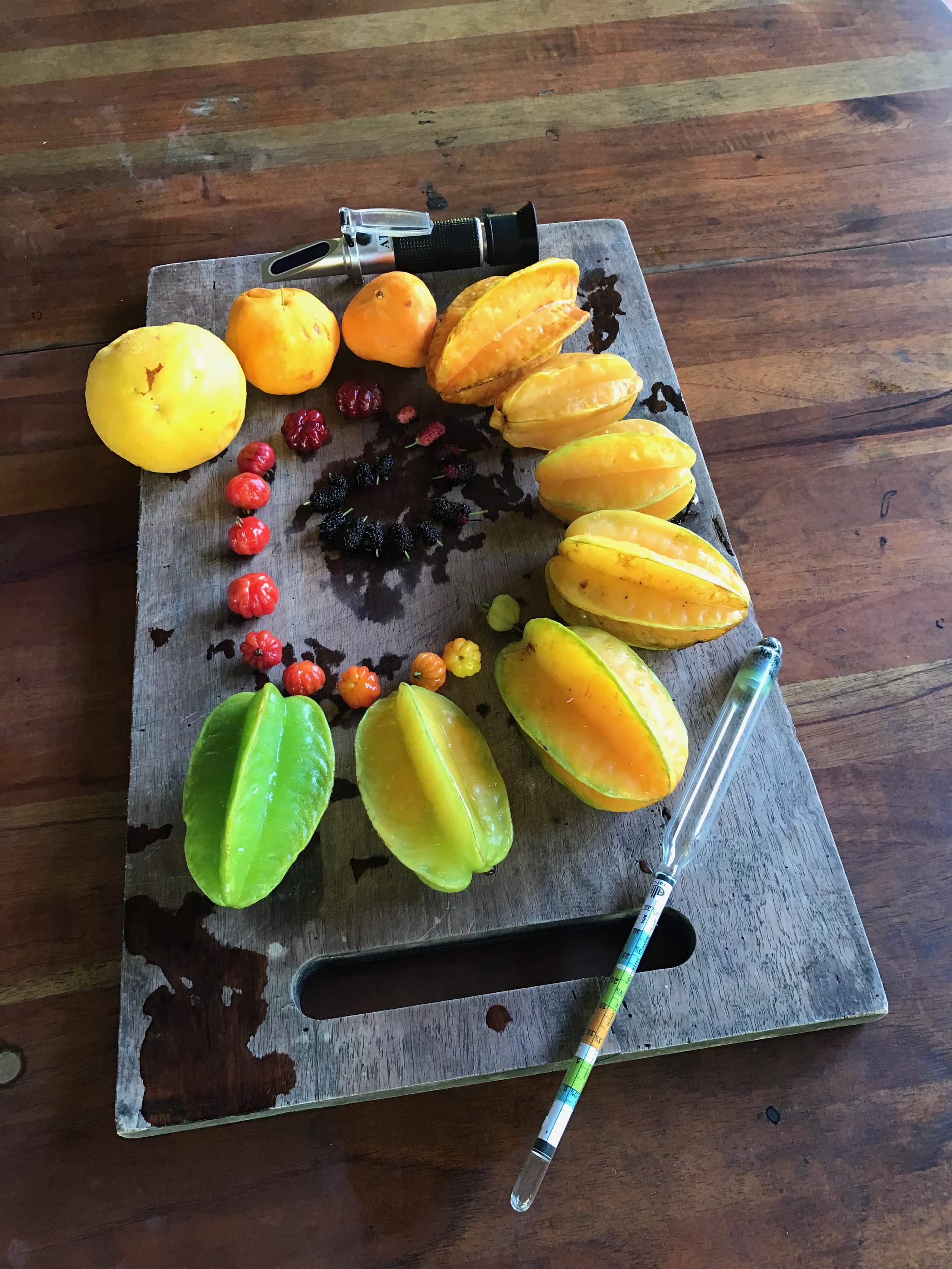
With a refractometer we determine the brix of various fruits
Bring to mind a world where energy is cheap, plentiful, AND environmentally friendly. What’s powering that world? Wind? Biogas? Hydroelectric? Solar?
Pause.
Take this question seriously.
Our current track record with energy has us in a planetary ecological crisis, not to mention indirectly causing inequity and oppression all over the world. Now, what if we could grow our own fuel, in a way that increases soil fertility, ecosystem health, biodiversity and without any pollution or additional extraction of our planet’s precious resources. In a decentralized, community supporting, and resilient system. Caring for each other (people), the earth, and sharing the abundance fairly. Crazy. Nonsense. Not possible.
Enter Permaculture-Based Alcohol Production as an energy source
Please, if you’re here reading this and are unfamiliar with permaculture, check out these essential blog posts: Why Permaculture and Applied Permaculture Principles. Also, *shameless plug warning* look into taking one of our yearly Permaculture Design Courses.
In my first blog article I reviewed a book, ‘The Wizard and the Prophet’, about two different mindsets when working through our ecological challenges as a species. Permaculture-based alcohol fuel production harmonizes both perspectives, bring the best tech magic from the wizard and the most essential wisdom from the prophet together. At this point you probably are asking the question:
How?
Simple. Regenerative agriculture. Fermentation. Distillation. And then cycling all yields back into the system, aided by stacking functions and honoring the principle of zero-waste. This can be done on a household level or on a community level. Both would work within the design framework of permaculture and both are probably needed to gain true energy sovereignty. Primary fuel crop and overall polyculture selection would be specific to each biosphere and personal/regional culture preference.

A productive banana grey water circle
For example, here in Mastatal that might look like a great diversity of fruit trees: Sapote, pitanga, starfruit, jackfruit, mango, papaya, and many others that offer both food and the chance to ferment whatever can’t be eaten. Then, you’d have your staple fuel crops such as bananas, cassava (yuca), bamboo, and sugar cane. These would all be supported by other plants that fix nutrients in the soil (making them more bio-available), attract pollinators, and provide biomass for mulching. With skillful agroforestry methods in place, such as those implemented at Rancho Mastatal, anyone or any community could grow their own fuel. In a temperate climate like North Carolina, the fruit trees might be pawpaws, apples, and mulberries, with staple crops like potatoes, corn, soy beans, and hemp (grown in a polyculture/plant guilds with regenerative practices; no monocultures, no GMOs, no pesticides and other toxic chemicals).
Okay, now you might be wondering why this isn’t already the case. How come we don’t already have alcohol (aka ethanol) as an abundant, environmentally friendly fuel source?
100 years ago
What was going on in the United States back in 1922? Any guesses? Alright, well, many things actually, but what was a major one relevant to this topic? One word. Begins with a ‘P’.
PROHIBITION.
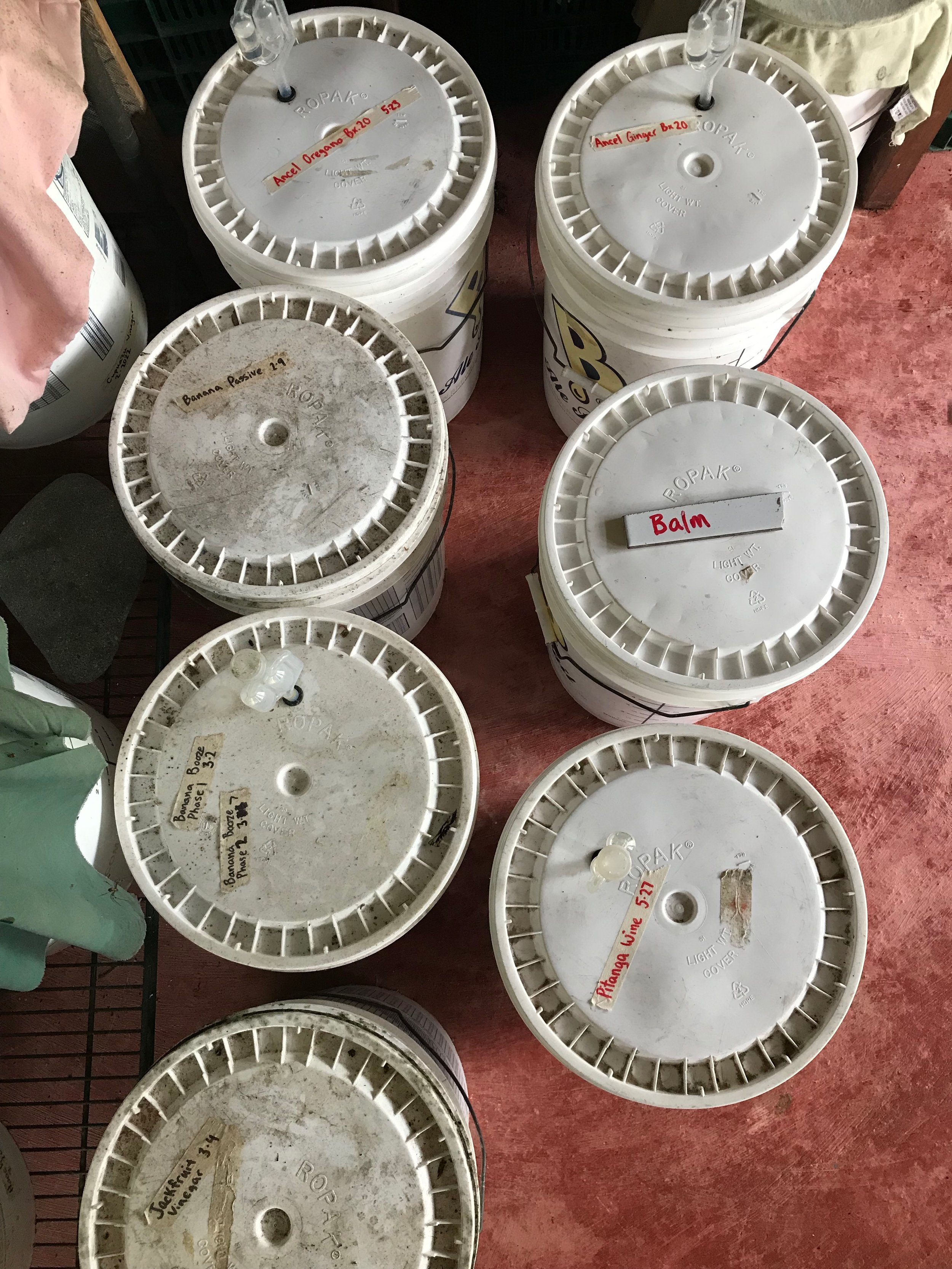
Our homemade alcohol station
The US Congress passed the 18th amendment in 1919, outlawing all production and distribution of alcohol. This destroyed the alcohol fuel industry and all farmer led cooperative distilleries, which had been booming since Pres. Teddy Roosevelt championed some liberating legislation in 1906. At the time, even Henry Ford preferred alcohol as a fuel source. The Model T was a dual fuel vehicle, able to run on ethanol or gasoline. Then an oil man with a last name beginning with ‘R’ ruined the party. When prohibition was reversed in 1933, gasoline was firmly positioned as America’s favorite fuel. Great for Big Oil. Bad for the people. Bad for the planet.
If this surprises you or leaves you feeling skeptical, I totally understand. Dive in, investigate and decide for yourself.

My curiosity has been sparked. I picked up the book ‘Alcohol Can Be a Gas’ by David Blume and now I want to prove that these possibilities are real. With more than six months left in my apprenticeship at the time of this writing, I reckon some experimentation and hands-on learning is in the cards. I didn’t even get into explaining the whole fermentation and distillation steps in this post or the various co-products that can be harvested from it. There’s a lot more to learn, stay tuned for the next installment of Permaculture-Based Alcohol Production. To be continued…
Read Other Permaculture Related Blogs
La Importancia de la Permacultura
6 Reasons to Use a Biodigester
Endeavors to End Propane: Local Fuel Sources and Efficient Cooking Technologies
Endeavors to End Propane: Local Fuel Sources and Efficient Cooking Technologies
Cooking food can make it tastier, easier to digest and absorb nutrients, and safer and healthier to eat. Cooking at the Ranch happens multiple times a day, and on some days, pretty continuously throughout the day. We generally have a lot of hungry bellies to fill! Over the decades we have been steadily reducing our use of propane to meet our cooking needs.

Self-made rocket stove at the Ranch
By Tim O’Hara
Ranch Core Team Member
Endeavors to End Propane: Local Fuel Sources and Efficient Cooking Technologies
Cooking food can make it tastier, easier to digest and absorb nutrients, and safer and healthier to eat. Cooking at the Ranch happens multiple times a day, and on some days, pretty continuously throughout the day. We generally have a lot of hungry bellies to fill! Over the decades we have been steadily reducing our use of propane to meet our cooking needs. Propane is a refined product that comes from crude oil or natural gas. The negative environmental impact from its extraction and refinement on communities and the earth are well documented. We have lessened our dependency on this imported product (Costa Rica has few crude oil resources and a moratorium on oil drilling) through the production and use of our own biogas, the utilization of solar cookers, dehydrators, and hay boxes and perhaps most importantly by incorporating efficient wood burning stove technology into our culinary domain.

Our woodshed
Wood is renewable and abundant in and around Mastatal. That’s not to say that wood can’t and isn’t managed poorly in many parts of the world where it is used for cooking. For us, fortunately, we have a plentitude of this resource in a country that does a commendable job of taking care of its timber resources. We have almost limitless supplies of firewood coming from our woodshed, local small-scale bandsaw mills that operate in the region, and our own agroforestry systems.

Common open cook stove
According to the World Health Organization, approximately 3 billion people worldwide still cook using solid fuels such as wood and dung in open fires and on inefficient stoves. Poorly designed stoves and age-old cooking practices can produce high levels of small soot particles and other pollutants that penetrate deep into our lungs. Exposure is particularly high among women who cook indoors and their children resulting in 3.8 million premature deaths a year from pulmonary illnesses. The extensive use of wood for cooking can also contribute severely to deforestation and its associated devastating social and environmental impacts. It can also consume precious and considerable time to gather and haul.
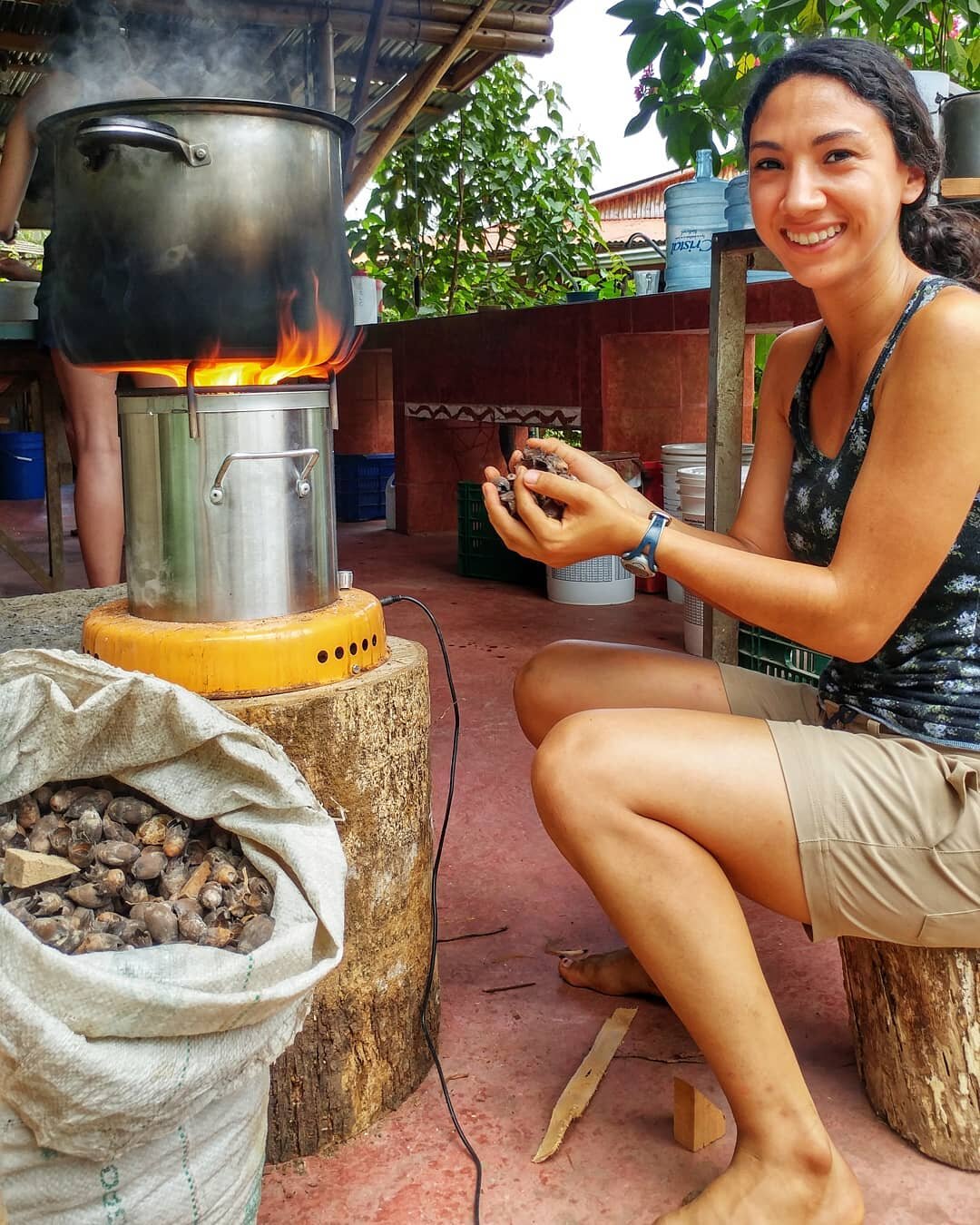
ACE One in action!
These worrisome facts have led us to build and invest in efficient wood burning technologies and food production methods that allow us to sustainably and safely use this local resource to cook with. Our alternative cooking workhorses are our 5 rocket stoves; 3 purchased ACE Ones, and two adobe/cob stoves designed and built in-house. These stoves produce little to no smoke based on a design that features an air intake or fan that produces extreme heat in the combustion chamber that ignites and “burns away” any smoke that is produced. This can be referred to as “complete combustion” and reduces or eliminates soot from the cooking process. The ACE One stoves use small pieces of wood whereas the home-built versions use slightly larger pieces of wood. These efficient stoves burn smaller quantities of wood and produce less or no smoke while retaining the many benefits of cooking with this local and accessible resource.

One of Ranch’s agroforestry systems
When possible, efficient rocket stoves can be coupled with a well-managed agroforestry system that through the extensive planting and pruning of nitrogen-fixing and food producing trees can yield a steady supply of accessible firewood and the food that will be cooked on the rocket stoves. This is yet another example of the closed-loop systems that we oftentimes strive for on our farm.

Adobe rocket stove being built at Ranch
Rocket stoves can be small or large, take many shapes, and can be made from a wide variety of materials. What’s common to all of them is the their ability to efficiently produce extremely hot combustion chambers. To improve performance, your rocket stove chamber can be insulated and your burning surface sized and designed to effectively support your favorite cooking pot. You can even buy rocket stoves for camping these days though if you’re a do-it-yourselfer or on a tight budget, we’d encourage you to design and build your own. There are plans all over the internet.

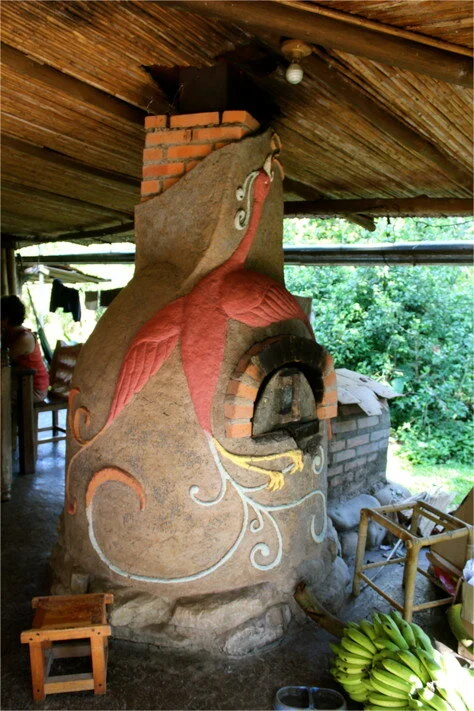
Our cob oven
In addition to our repertoire of rocket stoves, we have a self-built cob oven that we use for pizza parties and other baking endeavors, 3 Wonderbags, a solar and electric dehydrator and of course our magical biogas stove. We’ll tell you more about these in a future article but in the meantime I’d encourage those that love simple solutions to check out the wonders of the Wonderbag and see how you can help transform a family’s life in Africa while saving a considerable amount of cooking fuel.
Let us know if you have any questions and come and check out are array of alternative cooking technologies if you find yourself in our neighborhood. We love to share our experiences and hope that this has found you well well.

Simple rocket stove being built in community of Mastatal

6 reasons to use a biodigester as a low tech, off the grid, renewable energy source for cooking
For almost two decades now, Rancho Mastatal has been working on creating a more sustainable lifestyle by researching, developing, and teaching about more efficient ways to build, grow food, cook, and live as a community while reducing the impact these activities have on our environment.
As cooking is one of the most energy-consuming activities within a house, we find it relevant to implement an alternative renewable energy source to satisfy one of our guests’ favorite moments of the day: meals. With that perspective, we built a biodigestor 8 years ago.
By Nico, Apprentice 2020
“Agricultural, industrial, and human digestion processes create an ongoing (and growing) stream of organic refuse. Without thoughtful management, organic wastes can emit fugitive methane gases as they decompose. Methane creates a warming effect 34 times stronger than carbon dioxide over one hundred years.” - Project Drawdown
Renewable Energy for Cooking
For almost two decades now, Rancho Mastatal has been working on creating a more sustainable lifestyle by researching, developing, and teaching about more efficient ways to build, grow food, cook, and live as a community while reducing the impact these activities have on our environment.
As cooking is one of the most energy-consuming activities within a house, we find it relevant to implement an alternative renewable energy source to satisfy one of our guests’ favorite moments of the day: meals. With that perspective, we built a biodigestor 8 years ago.
What is a Biodigestor?

Our biodigestor
A biodigestor is basically a system that allows us to produce methane out of human and animal manure (see more info on last year’s article). Here at the Ranch we decided to go for a low tech, polyethylene tubular biodigester technology, also known as the sausage system here in Costa Rica, because of the shape of the chamber. We chose this because it is a cheap and simple way to produce methane for small-scale farmers. It is appealing to rural people, firstly because of the low cost of the installation and therefore of the gas, and also for the improvement in the environment that the installation allows. It can be applied in rural or urban areas and in both low and hilly lands, creating a low tech system able to produce a renewable energy source as well as a fertilizer for your land.

A glance at our system
6 Reasons to Build a Biodigestor
But besides the awesome concept of being able to transform waste into energy, there are many other advantages to having a biodigestor. Here are 6 reasons on why you should build one:
1. Biodigestors can be Low Tech
A common misconception about biodigestors is that they should be these high tech, expensive systems made out of a lot of different components. Like people, biodigestors come in many shapes and sizes: from continuously fed to batch fed, made out of metal or polyethylene, vertical or horizontal, using cow manure or human waste (or both), there is probably a biodigestor out there waiting for you. If you decide to go for a simple system like ours, there aren’t many components and you would be surprised by their simplicity. With the help of a couple people and some skills, you can set your system up within two days. The maintenance is pretty simple as well, and again, depending on the system you choose, you can decide to either dedicate a bit of time for maintenance every day, or choose a batch fed system, which takes more time to put in place but is then autonomous for a couple weeks
2. Biodigestors can be cheap
Again, this depends on a lot of variables: which system you choose, whether you have to excavate soil, if you are willing to do it yourself or prefer hiring people, whether you are able to use reused materials, etc. For instance, the main component of our system, which acts as a fermentation chamber and a gas reservoir, cost us $700.
3. It can be used off-grid
Here at the Ranch, the amount of people coming through doesn’t allow us to be completely off the grid; we cook over 23,000 meals a year! We still decided to implement this system in an effort to reduce our dependence upon fossil fuels such as propane and take a step toward ecological self-sufficiency. For smaller communities, like a small scale farm, or by increasing the size of the system, it is totally possible to implement an off the grid cooking system.

The methane stove that we cook meals on
4. It creates a nutrient rich organic fertilizer
This low tech system houses a wide variety of bacteria, each one with a specific task. Some break the matter into simpler molecules of sugars and acids. Other microbes, which find oxygen toxic, are able to break down the simple organic matter to form gases. The ultimate end result of this process is both the natural gas for heat and electricity as well as valuable soil amendments which we disperse throughout our gardens.
5. It reduces the greenhouse effect
Methane, CH4, which makes up 70% of the biogas produced by our biodigester, creates a warming effect 34 times stronger than carbon dioxide. By burning this gas, not only do we create a renewable energy source that allows us to produce energy, we decompose the methane into a less potent greenhouse gas.
6. It’s comfortable
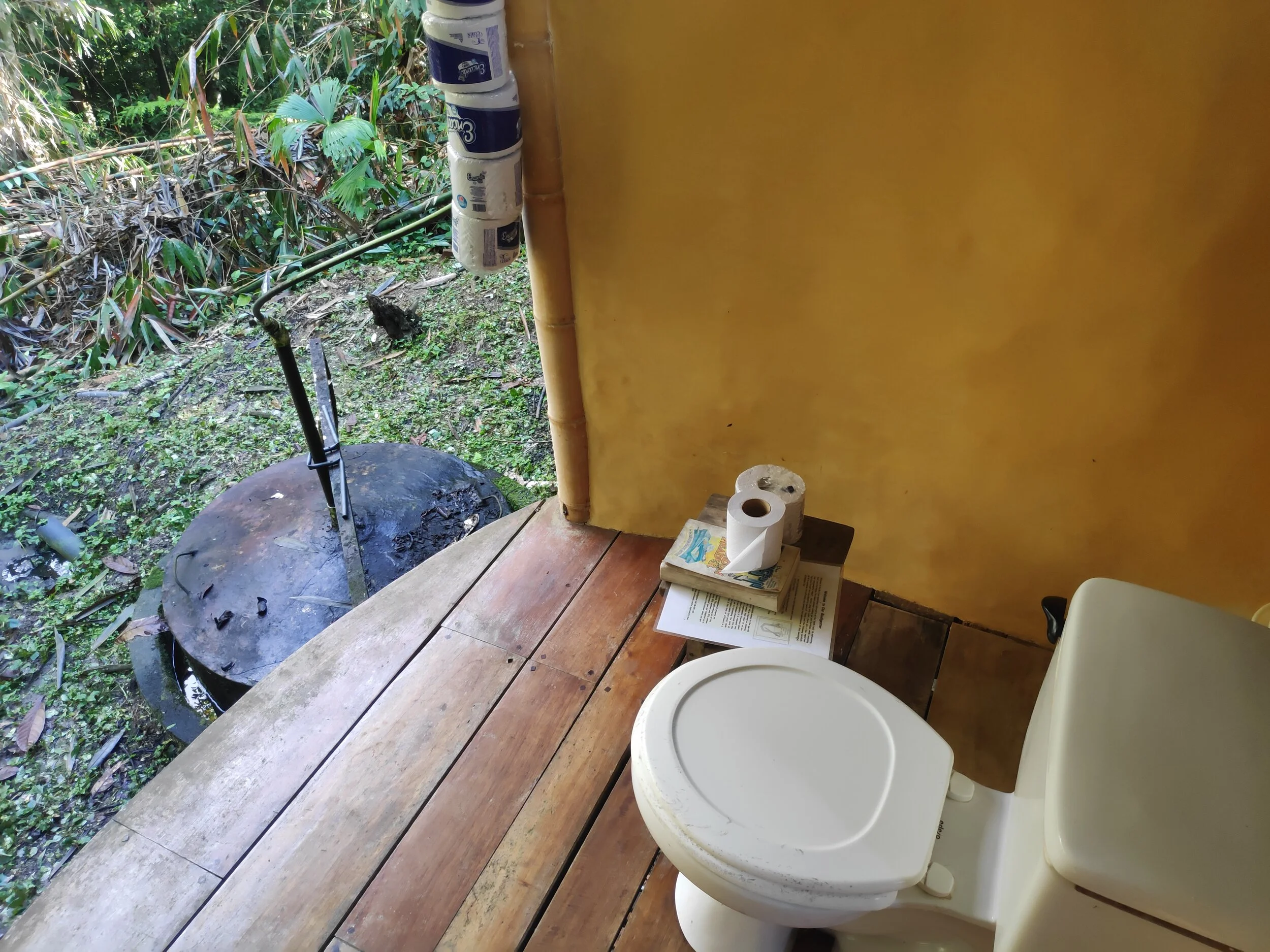
Some people are apprehensive about the idea of having to use a composting toilet ( even though they shouldn’t be, see article by Moanna on Composting Toilets to discover all the wonders of using a composting toilet, a wonderful low tech and off the grid system). By connecting your greywater system to a biodigestor, you will keep the comfort of doing your doodies in a water system while doing your duties for our wonderful Earth. As a matter of fact, our biodigster’s toilet was voted the Best Compost Loo In The World Award in 2012 by the readers of Permaculture Magazine, Inspiration for Sustainable Living.
Why else are Biodigestors Great!
The list doesn’t stop here. A biodigester helps reduce landfill and water-polluting effluents, and eradicates odors and pathogens. It allows small scale farming to create a renewable energy source while allowing them to better control the breaking down of their animal manure into fertilizer, being more self-sufficient and less dependent upon other chemicals. In a world where it has become increasingly urgent to find simple solutions to step towards sustainability, implementing low tech and easy to manage solutions like this one seems more relevant than ever.
The Project Drawdown, a comprehensive plan to combating climate change, puts Biodigestors in the top 100 things we can do.
Hope you feel inspired to think about and make changes to the current system of waste management.
Check out Moanna’s latest article on why composting toilets are another great way to make a sustainable change in the system.

Why Permaculture?
What is Permaculture?
Permaculture is the design system for creating sustainable human environments. In a modern society, which is not sustainable could permaculture hold a solution?
by PJ Barton
2019 Apprentice
During our Apprenticeship at Rancho Mastatal we spend a year immersed in a working example of how Permaculture can work on a practical level. We take several workshops throughout the year including the annual Permaculture Design Certification (PDC).
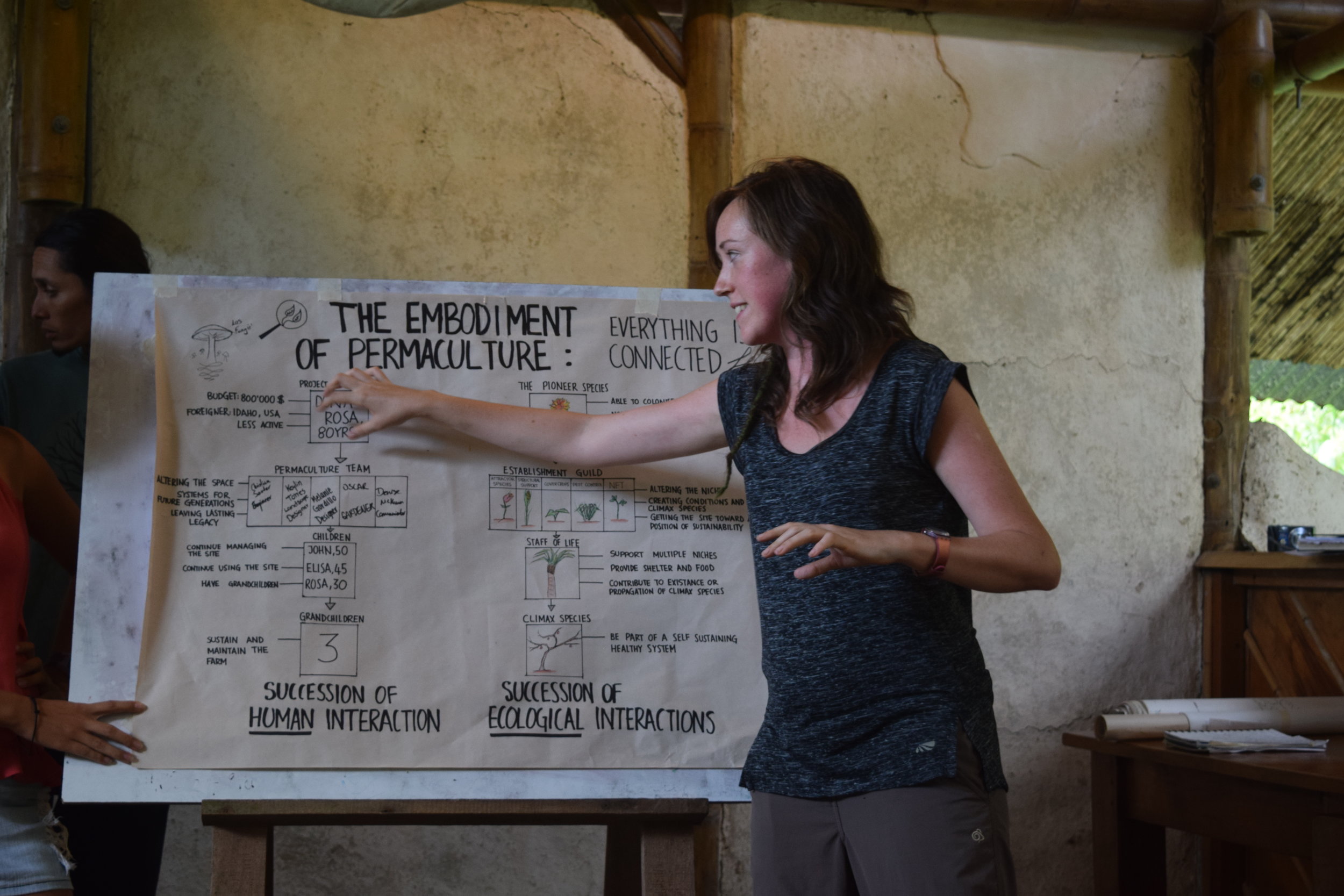
Presentation at the PDC
What is Permaculture?
Permaculture is the design system for creating sustainable human environments. In a modern society, which is not sustainable could permaculture hold a solution?
Permaculture was coined in the 1970s by Bill Mollison and David Holmgren, the word is a contraction of permanent agriculture and permanent culture which are intertwined in our history as a society. By pulling both culture and agriculture into our attention we a focusing on what the relationship is between them, how they function together as a whole. Permaculture looks at meeting the needs of the present in harmony with our environment. Although it is designed as a agricultural practices it also can be applied socially. The broad framework means it can include multiple parts of our society linking things together and how they function as a whole.
The 3 Core Ethics of Permaculture
1. Care of the Earth
Care of all living and non living things. By applying this ethic we can appreciate all organisms on earth. Invisible to the naked eye are all the mico-organisms upon which life is built; everything is alive. It is not obvious at first that a plant is breathing and under its roots there's an incredible network of organisms working together. If we view all things as beings our attitude and relationship will change towards them, developing respect for what we interact with.
2. Care of the People
As a society/ individual we need to meet our basic needs as humans: food, water and shelter. Considering our basic needs while creating systems that can sustain us in the long term. Permaculture uses these basic needs to design systems that can hold solutions for the growing inequality that is gathering pace on a global scale. Modern systems don't focus on care instead they're driven through profit. Many of our social programs designed to care for the less fortunate are being dismantled in an effort to create more profit; looking after one another and care are given little time into our busy society.
3. Contribution of Surplus
This ethic is a way of circulating the wealth back into the system. In a our conditioned society, rather than circulating wealth it is common to hoard it - the idea of spending all of your wealth is a radical idea, when is enough money or wealth enough to have surplus? By reinvesting surplus, it self perpetuates the movement. The system would be regenerative constantly sustaining itself. Like any system if you continually extract resources without replenishing them it will eventually collapse. When the needs of a society are not met from within the system we look to extra energy inputs and ultimately pay the price in increasing energy consumption and its resulting pollution.

The ethics of permaculture give us another way to view the world which is perhaps different from modern, conventional society. Observing and approaching situations guided by these ethics permaculture can be applied to help us steward the earth and guide our activities in a better direction. Our fragmented society often misses the connection that helps it function as a whole seeing only the tip of a large iceberg. Sometimes we make connections but fail as a whole. Moving together, finding patterns that work and what needs to be improved. We are surrounded by nature who we can observe and mimic. She becomes our inspiration helping us establish sustainable systems. Perhaps that is why we should use permaculture.
For more information about Permaculture check out some of the excellent free resources on David Holmgrens website get involved in you local permaculture movement and consider taking a Permaculture Design Certification near you or with us!
Categories
Topics
- Agriculture 6
- Agroforestry 21
- Animals 2
- Apprenticeship 19
- Appropriate Technology 6
- Backpacking 1
- Bananas 1
- Basic Pantry 4
- Biochar 1
- Books 3
- Build Your Own Home 1
- Central America 5
- Chiles 1
- Cinnamon 1
- Clay Carving 1
- Climate 2
- Climate Change 1
- Cob oven 1
- Communication 5
- Community 24
- Compost 2
- Composting Toilets 2
- Condiments 1
- Conservation 2
- Cooking 4
- Costa Rica 18
- Design 10
- Earthen Construction 10
- Eat Local 2
- Ecohome 1
- Education 9
- Environment 3
- Ethics 4
- Farm to Table 12
- Fasting 1
- Fermentation 14
- Food 22
- Food Choices 8
- Food Forest 8
- Food Processing 15
- Food Systems 12
- Gap Year 1
- Gardening 5
- Ginger Beer 1
- Harvest 2
- Health 12
- Healthy living 5
- Homemade 2
- Homestead 8
- Internet 2