

BLOG
Stories, articles, and updates from the Ranch community.

Finding Home in Permaculture
There is a word I once heard called Solistalgia. It’s meaning is similar to nostalgia, but it is for a place you are already in. It is feeling lost and missing even when you are “home.”
By 2024 apprentice Allura
“Stand Still. The trees ahead and bushes beside you are not lost. Wherever you are is called Here, and you must treat it as a powerful stranger, must ask permission to know it and be known. The forest breathes. Listen. It answers, I have made this place around you. If you leave it you may come back again, saying Here. No two trees are the same to Raven. No two branches are the same to Wren. If what a tree or a bush does is lost on you, you are surely lost. Stand still. The forest knows where you are. You must let it find you.” - David Wagoner
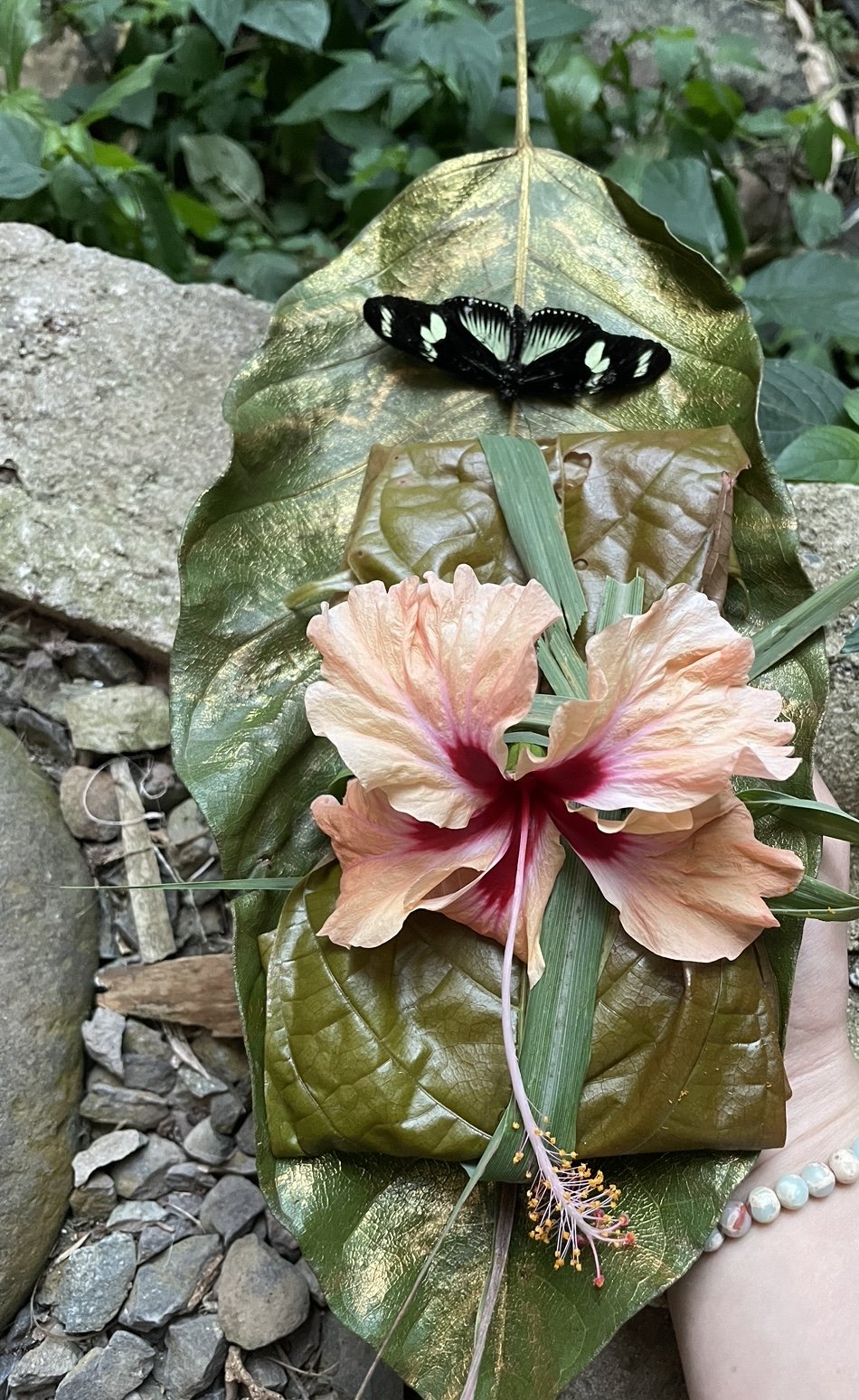
There is a word I once heard called Solistalgia. It’s meaning is similar to nostalgia, but it is for a place you are already in. It is feeling lost and missing even when you are “home.” It was brought up at a discussion I attended by an indigenous elder, so too was the quote above, recited with strength and invitation. She said it is a collective occurrence, “for the forest to be lost on us”. For us to be disconnected from the land in which we dwell, for nowhere to feel quite like home and to be searching for it everywhere. To remain in a state of longing. But then a sense of gladness washed over her form, and she spoke again with an antidote: ‘let the forest find you. let the plants identify you instead of you trying to identify them. That is how we come home’ This wisdom is an upside down concept for many of us when we’ve been taught that we are the only observers when “alone” within the trees. Yet I also think it is quite simple and innate, to remember the awareness that surrounds us. It is a practice of receptivity and reconnection, one that seems so natural within children. Simply opening ourselves up to pay attention to the wonders and mystery of life as adults may at first seem like an intangible act but I truly believe it is just a practice of nurturing and reawakening one of our many organs of perception. One of my greatest guides to relearning these perceptions has been through the study of Permaculture, a culture that merges ancient wisdom and new through a system of principles and designs, bringing humans back into harmony with the earth. And it is the first principle, to Observe and Interact, that grounds me with roots deep and unwavering into my sense of ‘Here’ wherever my feet kiss the ground.
When we are children, it is instinctual to observe the mystery and wonder of life through interacting with nature. When we are small and physically closer to the earth it's as if we can hear her better and we naturally want to play, explore and relish in the awe of it all. I believe Observing and Interacting is the first principle to practice in permaculture because it drops us into the beginner's mind reminding us that we need to return to this way of observation and truly learn how to be with the land before anything else. This seems simple but it takes time. This principle goes against the reading or looking up of information on the internet with motivations of speeding up the process. David Holmgren, co-founder of Permaculture, says in his book “Although I recognize the value of formal education and training and communications media, they are also part of the problem preventing us from a more direct connection with, and experience of, the natural world through observation and experience.” Relearning how to be present and open is a fundamental prerequisite to reigniting our connection to the earth in order to work with her again. It is as if only the soft whisper in the trees can sing us a song to enchant us with her magic- ‘do you remember how to be with me?’ she asks. When coming to the first principle of permaculture, we must take the time to get to know our unique ways of observing and interacting with the earth.

So I am learning how to join the dance of being one with the heartbeat of the earth again, a rhythm that I realize I knew quite well when I was young. Some ways I choose to interact with the land is by falling to my knees in her beauty, before the silent mountains or at dawn in the long grass that holds the morning dew. Falling in love with Earth, I consider an interaction too, with the sounds of the jungle’s midnight symphony lulling me into my dreams, or with the seedling in the nursery that sprouts strongly towards the long time sun. Sometimes I do interact with reading, about the plants or out loud to them. I merge my sense of play and devotion by encircling trees with offerings. Sometimes that is by clearing the space around them and surrounding their trunk in leaves and compost for nourishing support. Other times it is an altar of flowers and dark chocolate in honor of their beating spirit. I dare my quiet and shaky voice to talk with the plants too, asking questions and for guidance or by offering words of my own love. I am learning that I am interacting when I am in the forest and being, just being or singing, laughing or crying, dancing or resting, and loving. These are the ways I know to Interact. And I observe with my breath in reverent stillness of my mind. Sitting with a plant and breathing in, gratitude for their life and the air they feed me, I breathe out- this exhalation is for them. I believe these ways of observing and interacting with the land relays a message to the earth that I am ‘Here’, that I am listening and I am paying attention. I think it is not about what we do when we “Observe and Interact” but the intention behind it that forms a language of patience, appreciation and awe with the earth. The ways in which we each do this are unique to each person but in essence I think it is all within the same song. I hope this song can be heard, but in truth, I don’t know if I can prove to you that it is. I decide to carry on and do it anyway because after all, this is a process of being found rather than of finding.

“By observation we usually mean using our eyes, but this reflects how visually dominated modern people are, raised in a literate and now graphical world. All of our senses have great potential to provide valuable information.” David Holmgren
I believe it is possible to reconnect to the wonder and mystery of life by opening our senses to observe and interact, as the first principle of permaculture suggests. And when we can learn/remember how to connect with the wondrous earth that holds us, maybe within our sense of longing we can feel her longing for us too. Longing for us to remember that she is home and our ‘Here’ no matter where we wander off to in this wild world. How can we feel her closeness? There have been studies that show us the mycelium mat under the soil, which acts as the sentient mind of the forest connecting all trees, is able to sense when someone walks inside. It is becoming common academic knowledge that individual trees have the ability to hear, feel, see, recognize rhythm, store memory and the ability to communicate what they know amongst other trees. We already know the earth is identifying us. The unraveling knowledge becoming apparent is pure magic and can provide some reassurance to this process. But must we read it to believe it? Or can we simply join the dance and awaken our perception to believe and know it deep in our bones. ‘Stand still, the forest knows where you are.’ It has certainly found me.
“Thus the thinking and design revolution, of which permaculture is a part, only makes sense when it reconnects us to the wonder and mystery of life” David Holmgren


Rancho Mastatal Wildlife Catalogue
My goal here is to catalogue and display some of the wild critters that we are exposed to while living in our little jungle homes.
Rancho Mastatal is nestled in almost 300 acres of rich, wild jungle. We are constantly surrounded by a huge quantity of flora and fauna, with lots of our lessons revolving around learning about and caring for the flora we cultivate. Fauna care certainly has its place in Permaculture and is a part of Ranch life. During our year here as apprentices, however, we have no livestock or producing animals to care for; only our lovely pets.

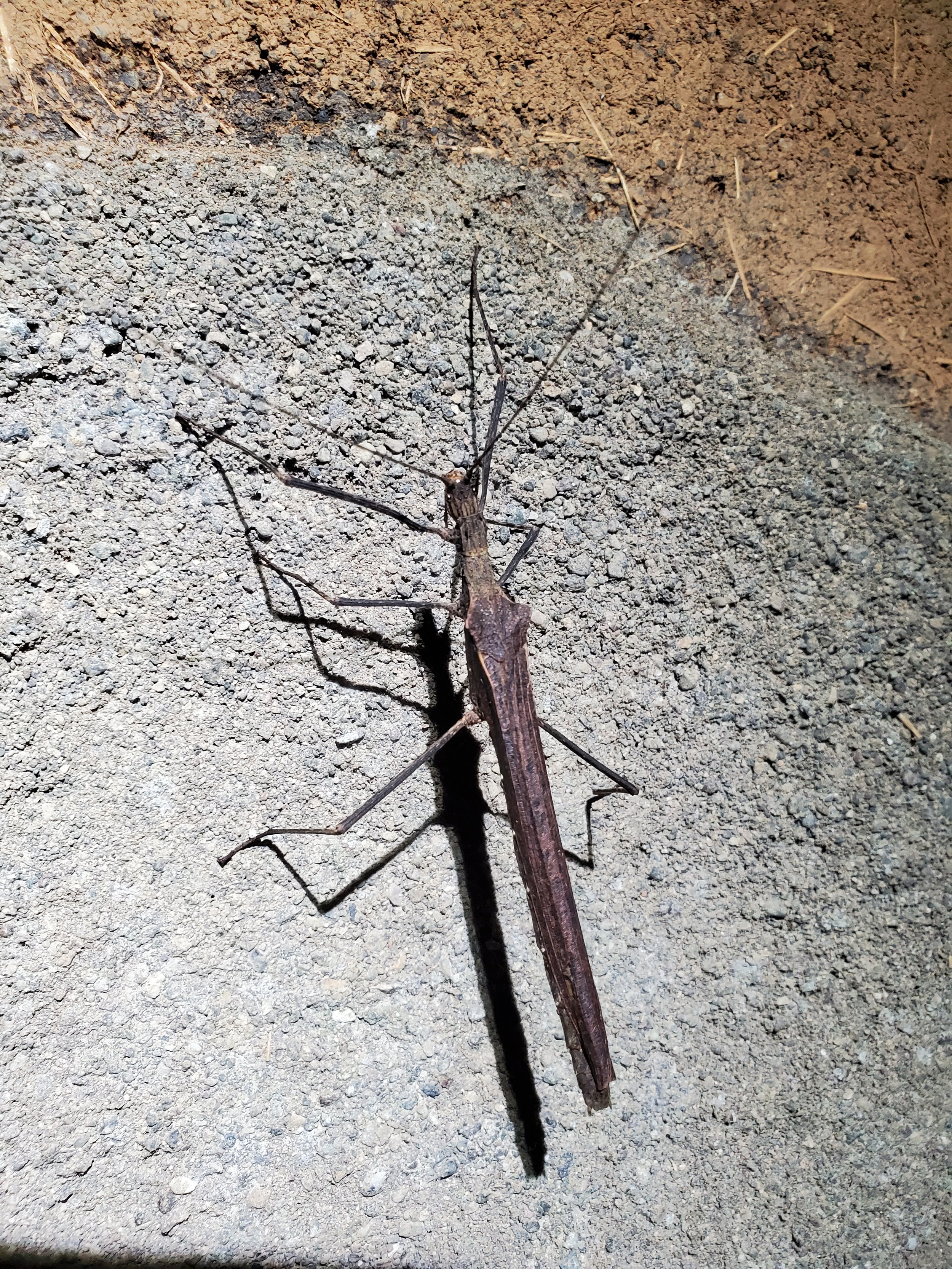
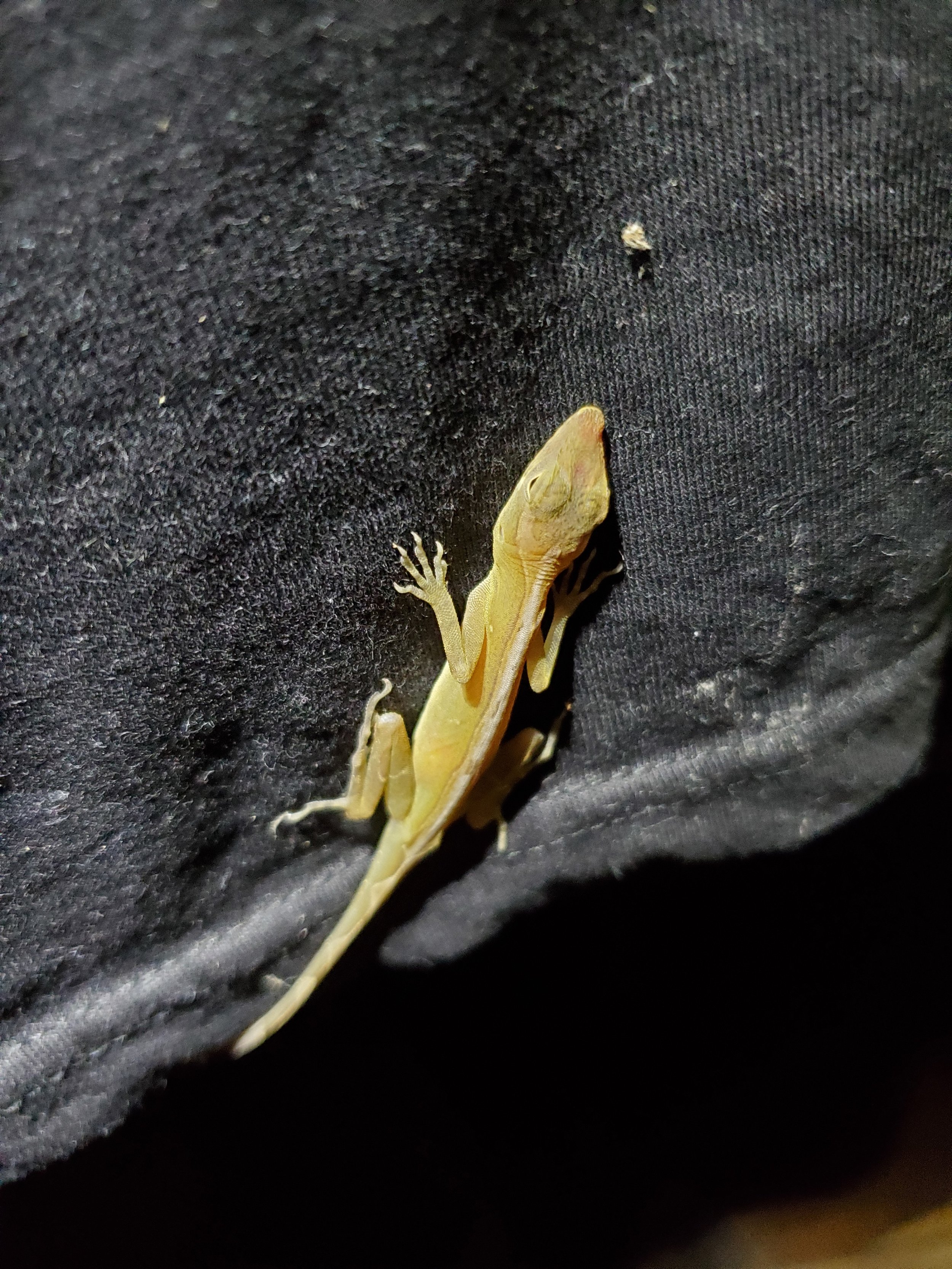
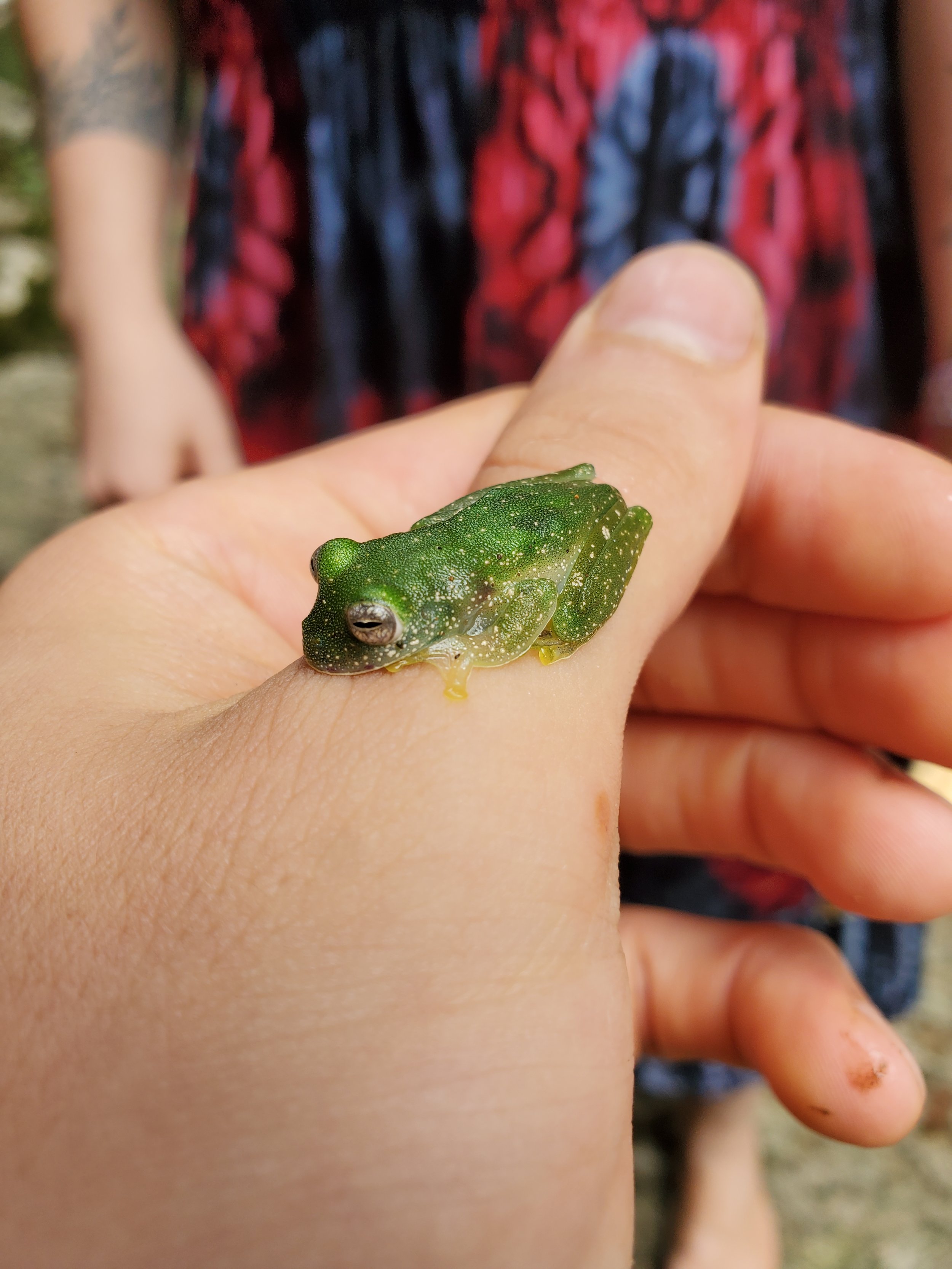
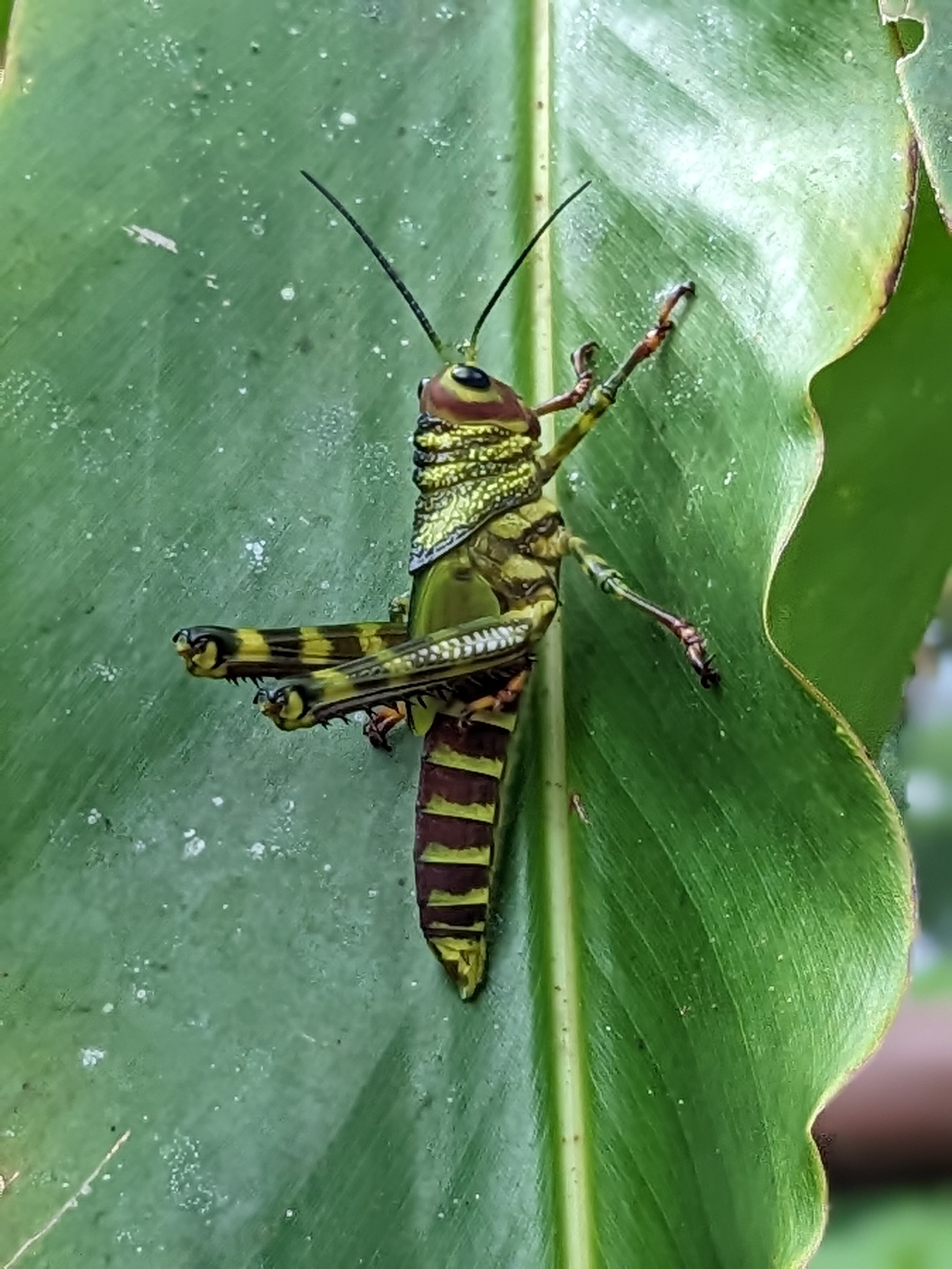
As a lover of animals I am somewhat saddened by the lack of time we get to spend with creatures here; I know some of the struggles the Ranch has experienced in the past with animals, and appreciate that this isn't a time for intensive livestock care. That being said, we still get to see loads of things on a daily basis! My goal here is to catalogue and display some of the wild critters that we are exposed to while living in our little jungle homes. It will be a wildly incomplete list, hopefully subsidized by stories from others who have spent time here, and more official wildlife catalogues of mountainous areas in Costa Rica. We'll have sections of mammals, birds, reptiles and amphibians, and crawlies, and we'll go small to big because that's fun.
Reptiles, Amphibians (Scaly, slimy, slithery)
1 - Geckos
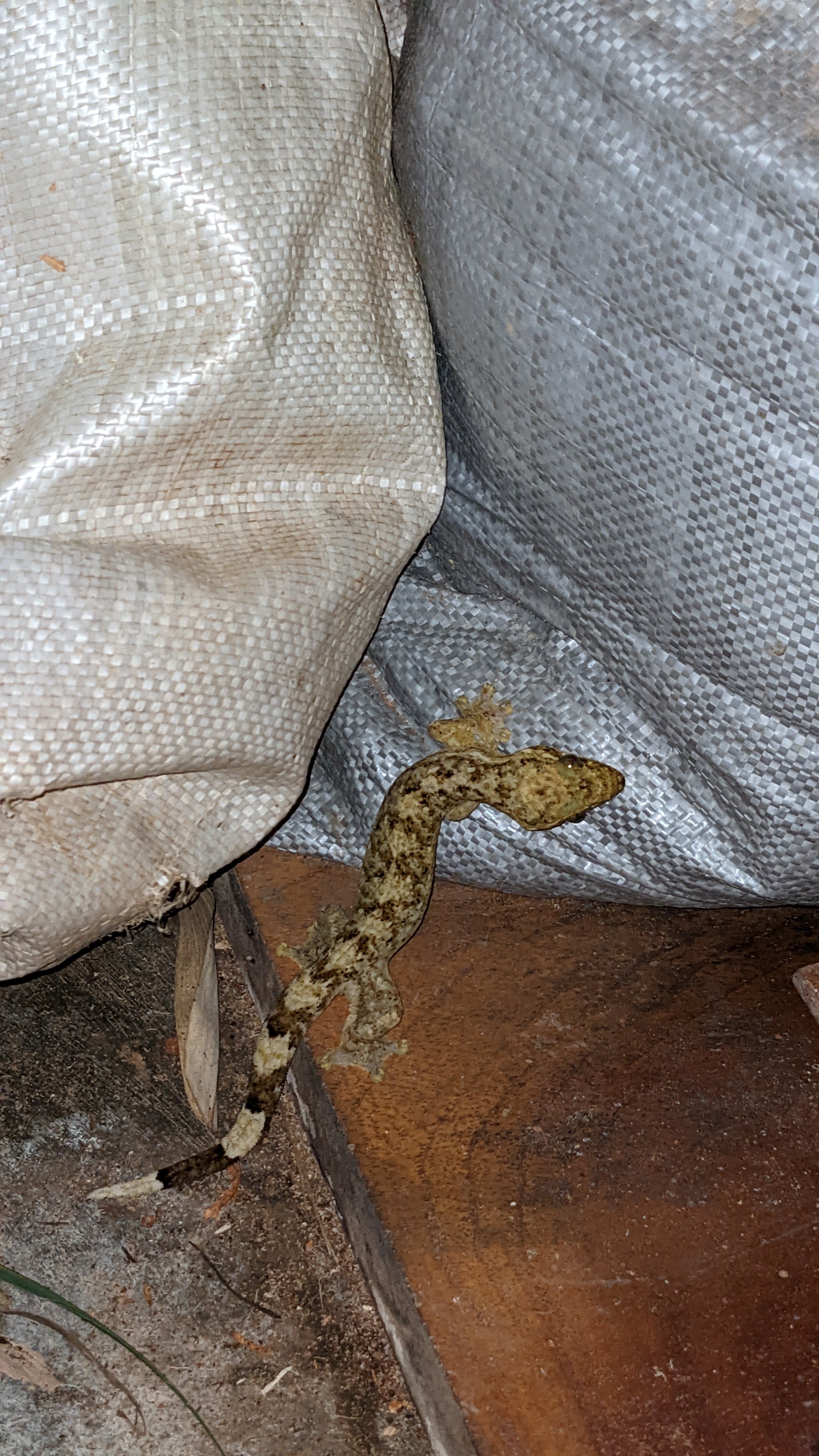
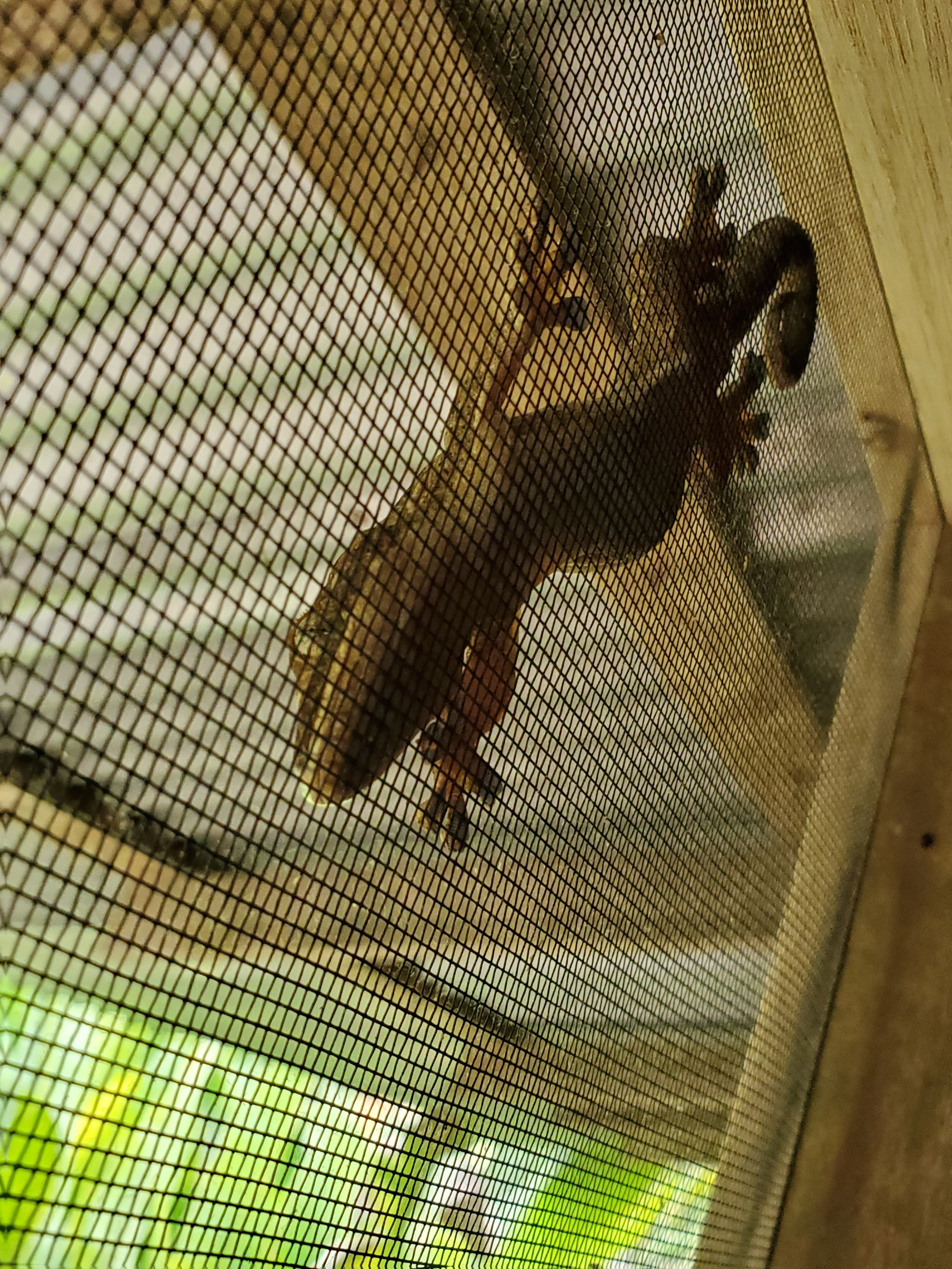
Geckos are everywhere at the Ranch! The common invasive varieties are usually no more than about 5 centimeters long, where fully-grown endemic varieties can be upwards of about 12. Our most common are Yellow-headed Geckos (Gonatodes albogularis), and the most wonderful are Banded Geckos (Coleonyx mitratus). They have sticky pads on their little toes to help them climb everywhere, and they chirp much louder than you'd expect!
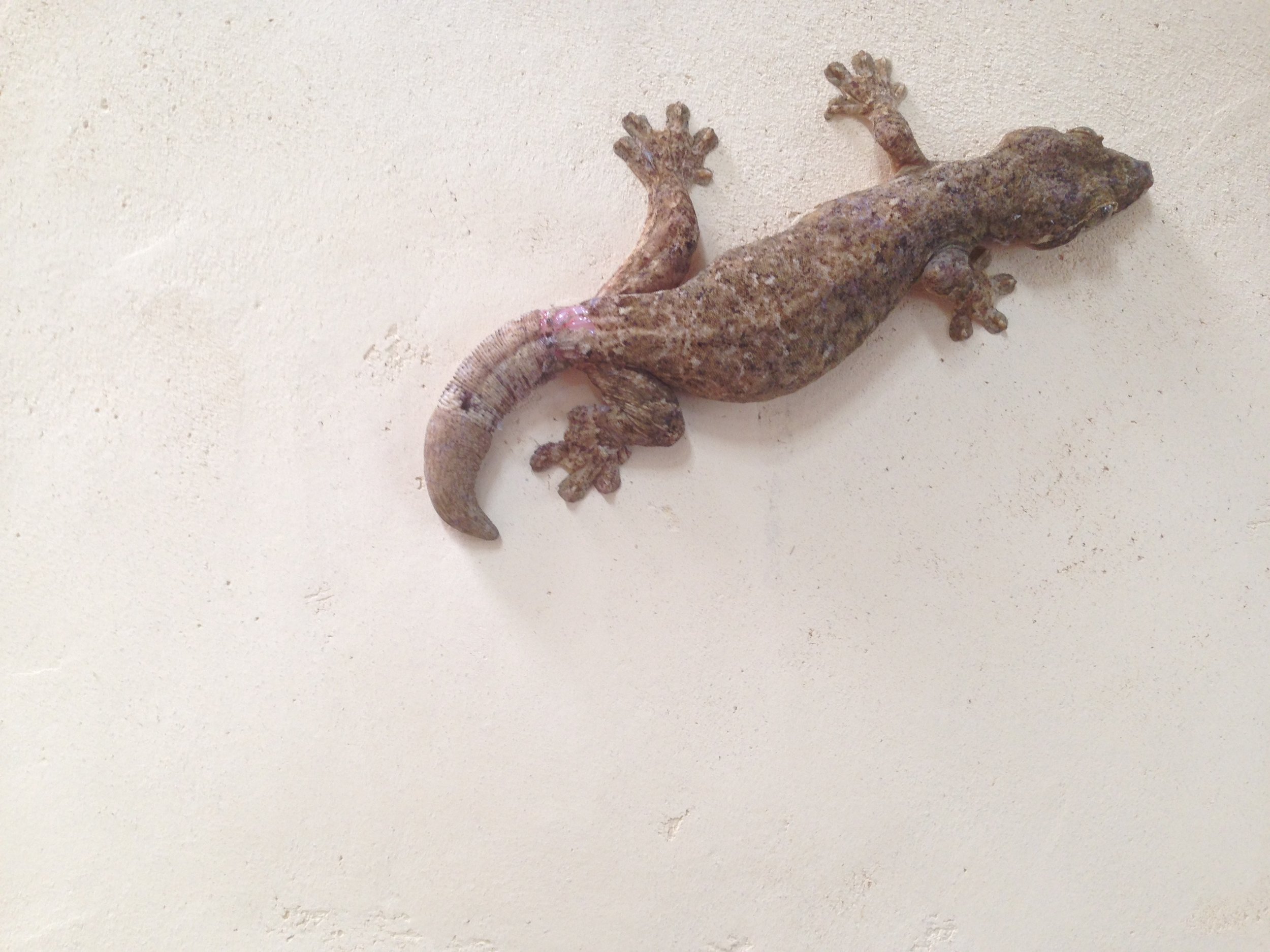
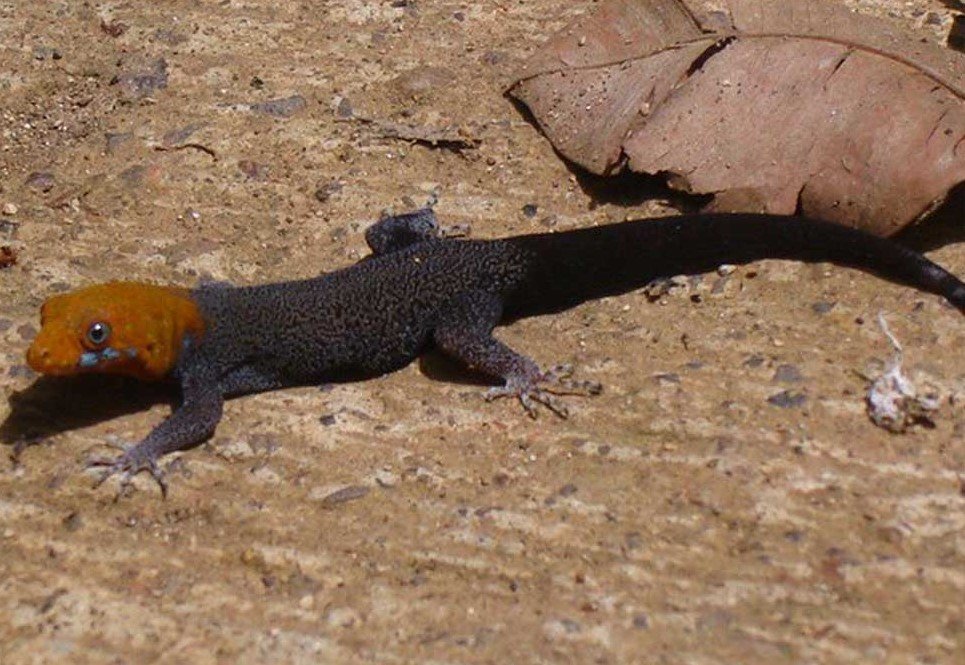

2 - Dart Frogs (Dendrobates auratus)
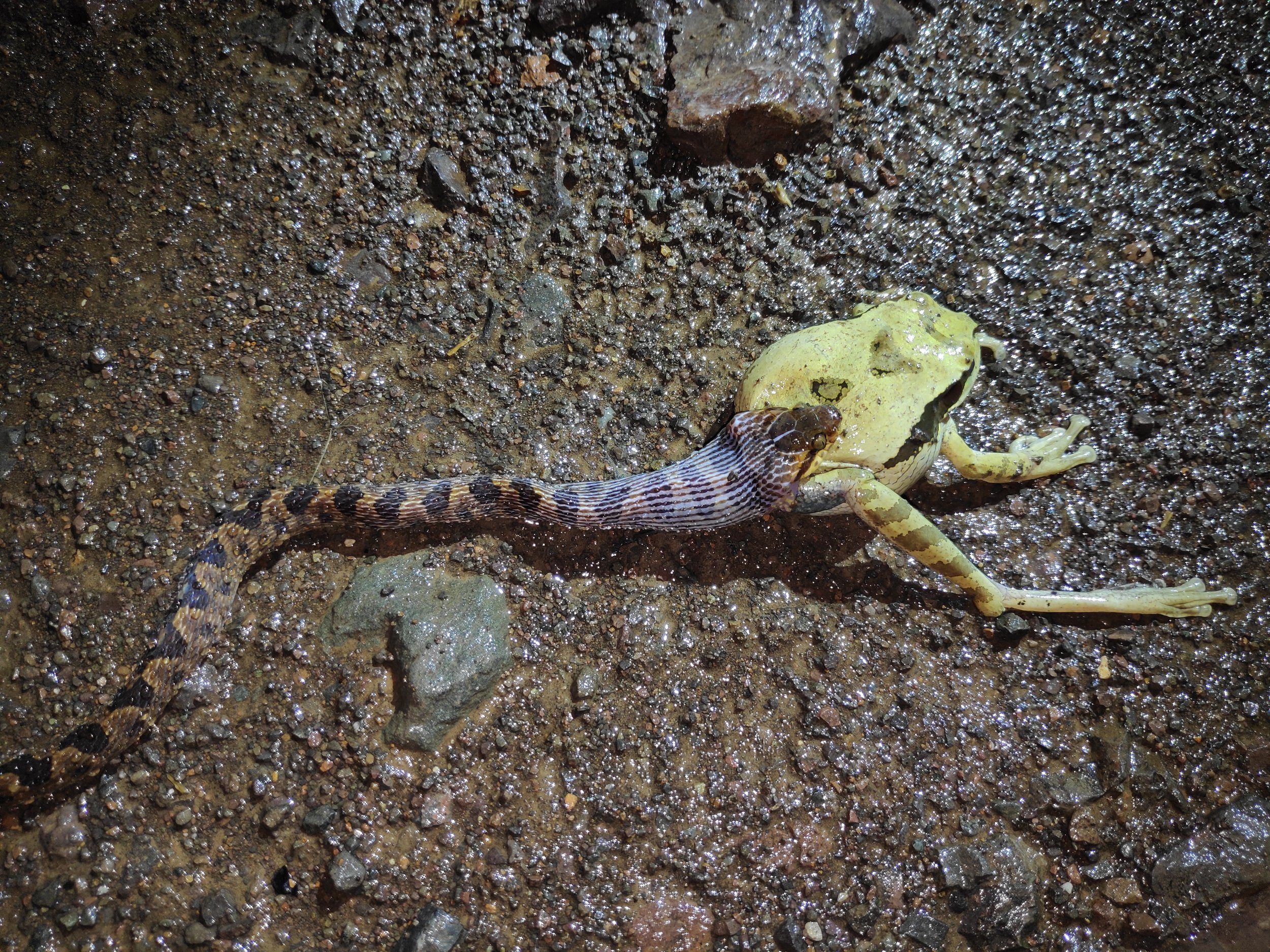
Green-and-Black Poison Dart Frogs are very common in the forested areas surrounding the Ranch. Indigenous peoples used them throughout Central and South America to coat the tips of darts and arrows with poison, which can actually be done without harming the frog; the coating of their skin contains the toxin. Super fun to look at, but caution recommends not to touch.
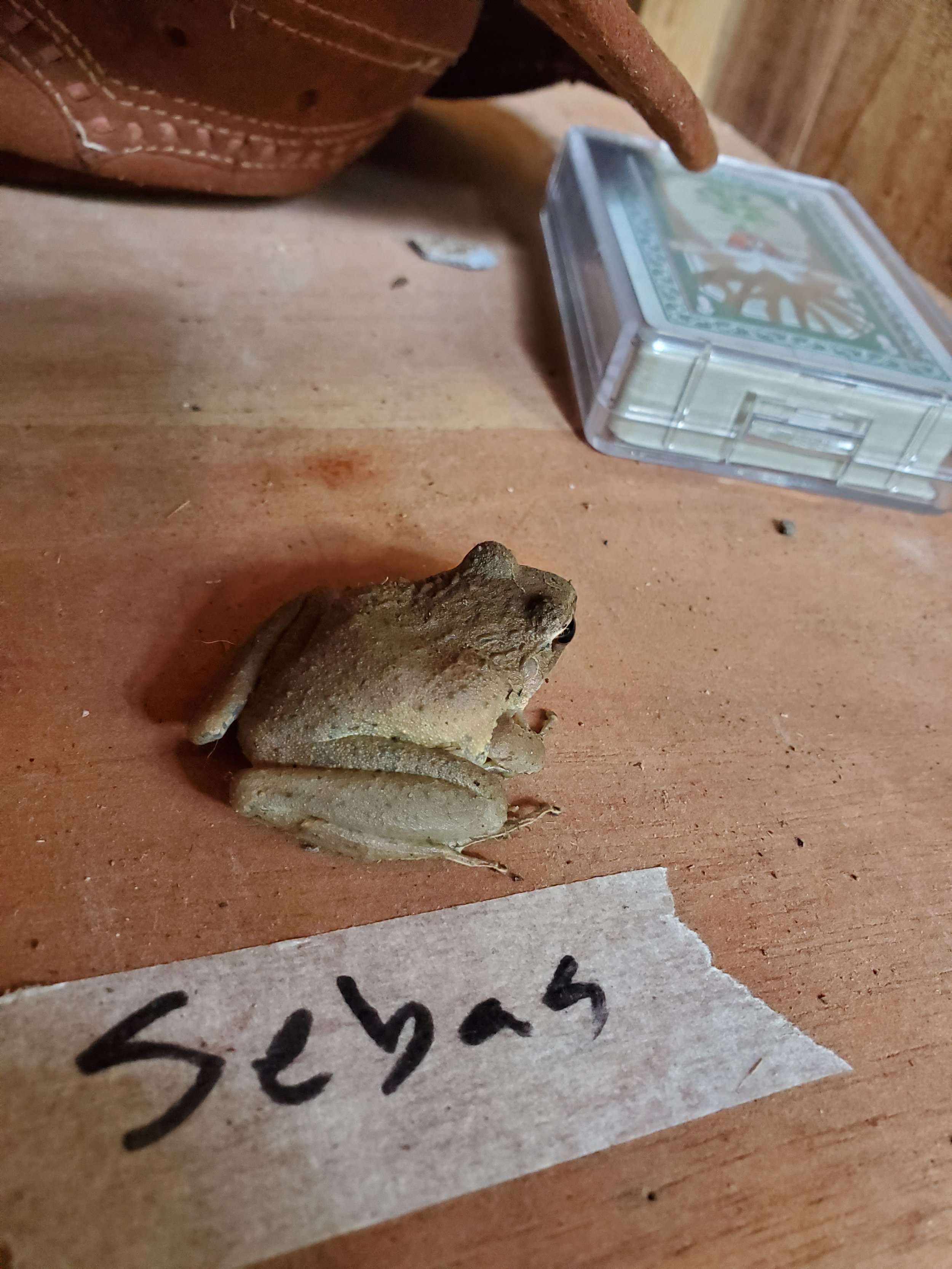
3 - Cane Toad, or Giant Toad (Bufo marinus)
My personal favorite. Very common in all areas, especially babies and adolescents in damp forested areas and around the rivers. Can grow quite large, enough to intimidate a cat. They can actually be quite dangerous, especially for dogs and other small animals, as they produce a milky substance in glands behind their eyes that can be psychoactive and extremely toxic. Good rainy day companions.

4 - Snakes
Snakes could be an entire topic of their own, and I'll keep it short as opposed to diving in to a very deep subject. The two most common types here are Pit Vipers and Corals.
Our biggest concern here is the Fer-De-Lance (Bothrops asper), or known here as terciopelo, a type of pit viper. A very large, naturally intimidating snake. Very large head in relation to the body, and an angular diamond pattern along its length. There is a "falso" or copycat species which is not venemous, so knowing what is dangerous and what isn't is important.
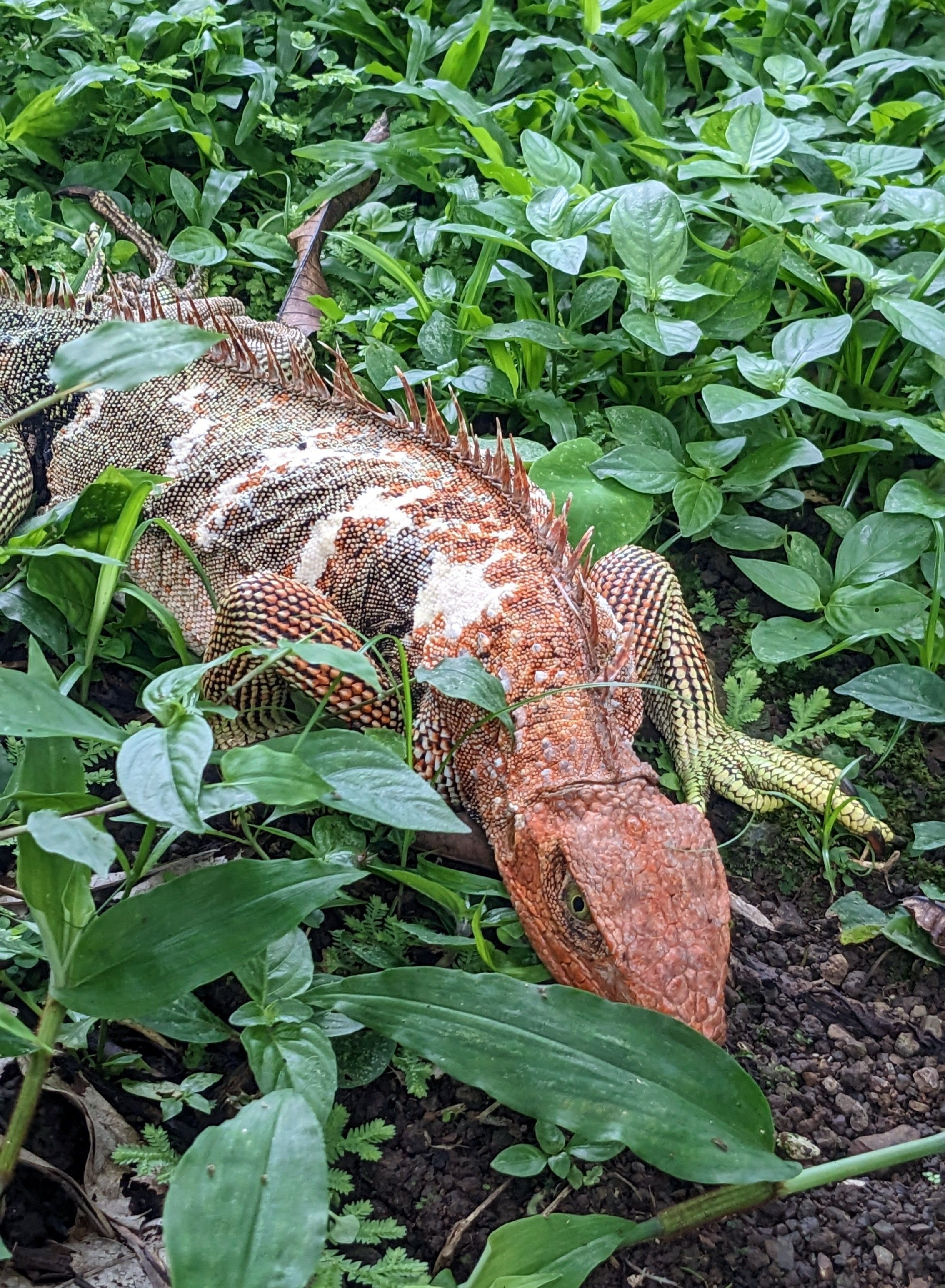
5 - Iguana (Ctenosaura similis)
Spiny-tailed Iguana are not uncommon, and are most noticeable when they fall out of trees onto roofs, producing a massive crash. A very tragic spectacle to behold, but, being ancient reptiles very well adapted to the hardships of life, they are usually fine. Also regularly seen crossing roads or lazing in tree branches. They can grow to over a meter in length. Spines run down their back from head to tail.
Birds (Flap flap, flap!)
Again, far too large a topic to cover in depth! Just a few favorites and common sightings here. Costa Rica, and our area around La Cangreja National Park in particular, are amazing places for birdwatching and I will not be able to do justice to the hundreds of species we are neighbors with here. In recent bird counts here in the park they have identified over 300 different birds!
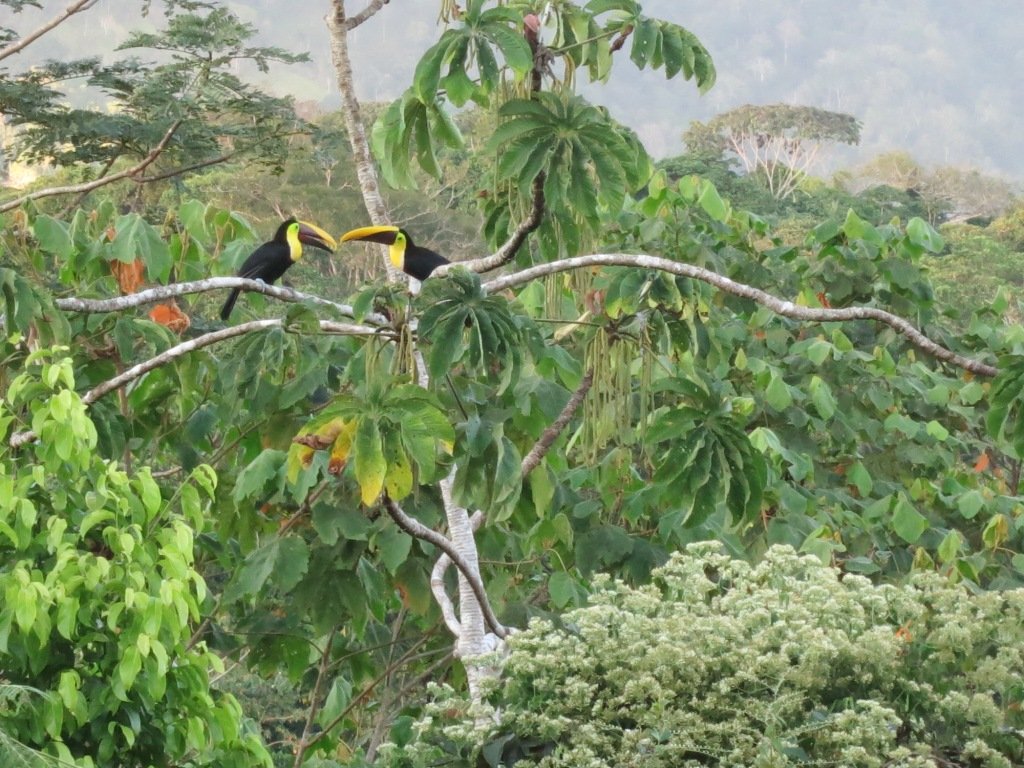
1 - Toucan
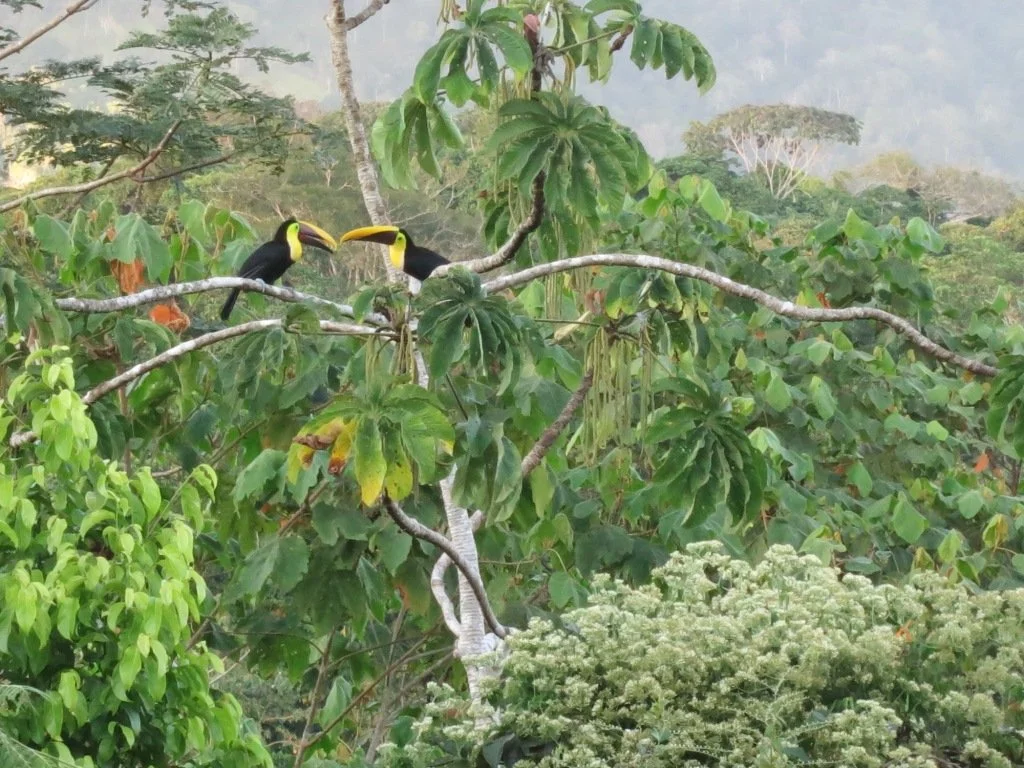
There are several different types of toucans that live in and move through Mastatal, but the most common is the Chestnut-mandibled Toucan (Ramphastos swainsonii). They are kind of bullies, and will take advantage of squirrels and eggs and other slightly saddening sources of food regularly. Beautiful, though!
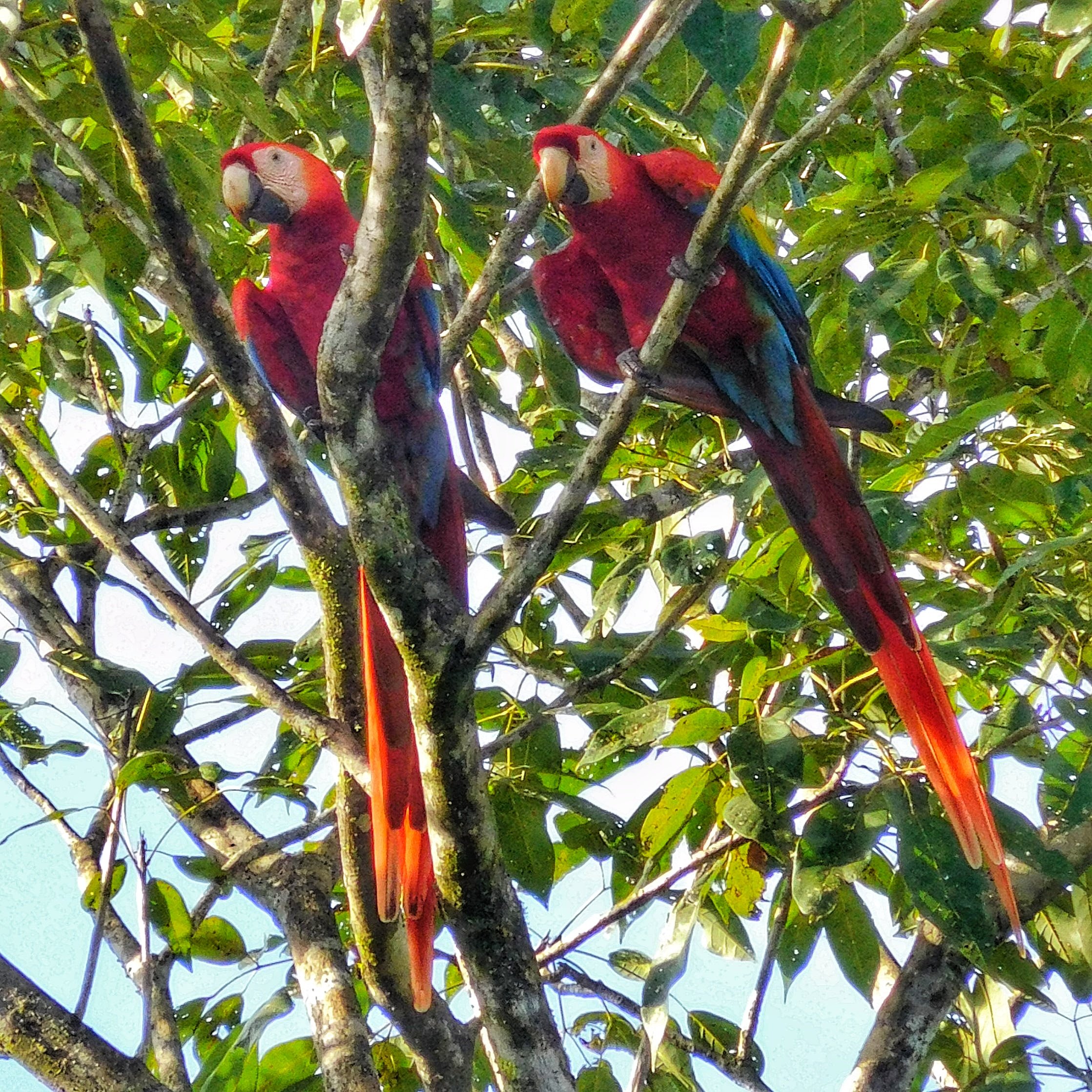
2- Scarlet Macaw (Ara macao)
Macaws are incredibly beautiful to behold and make a squawk like an animal in a great deal of pain. They travel daily from the mountains to the coast (and then back), so we often see them flying overhead towards the west. They mate for life, so you always see them travelling in pairs, which is precious.
3 - Turkey vultures (Cathartes aura)
One I'm familiar with from my home region, and was very happy to encounter here. Not the most enchantingly beautiful creatures on the planet, but they have some of the best souls. Incredible composters and digesters, they feed on carrion and do a fantastic job of cleaning up the forest. Their stomach acid is strong enough to kill almost all harmful viruses and pathogens that they ingest. I wonder if they have tasted ripe fruit before, and if they've enjoyed it. I hope so.
Mammals (Fuzzy, hairy, tails sometimes)
1 - Squirrels (Sciurus variegatoides)
Squirrels, while lovely and precious, are relatively mundane. Although less common here than they are in my native Appalachia, they perform about the same role. Not a ton of wow factor, but still a valued sighting. Our most common variety here is the Variegated Squirrel which vary in color and pattern very greatly.
2- Agouti - Dasyprocta punctata
Agoutis are rodents that look very similar to capybaras in build. The only difference is that they are tiny :) They spend lots of time in our orchard spaces under fruiting trees, and around our banana-compost circle near the main house. They will steal (forage is a fairer word, there's no hard feelings) bananas and peels to snack on and then rush back into the woods. Our cat Chester, pictured above, is not fond of them in the slightest.
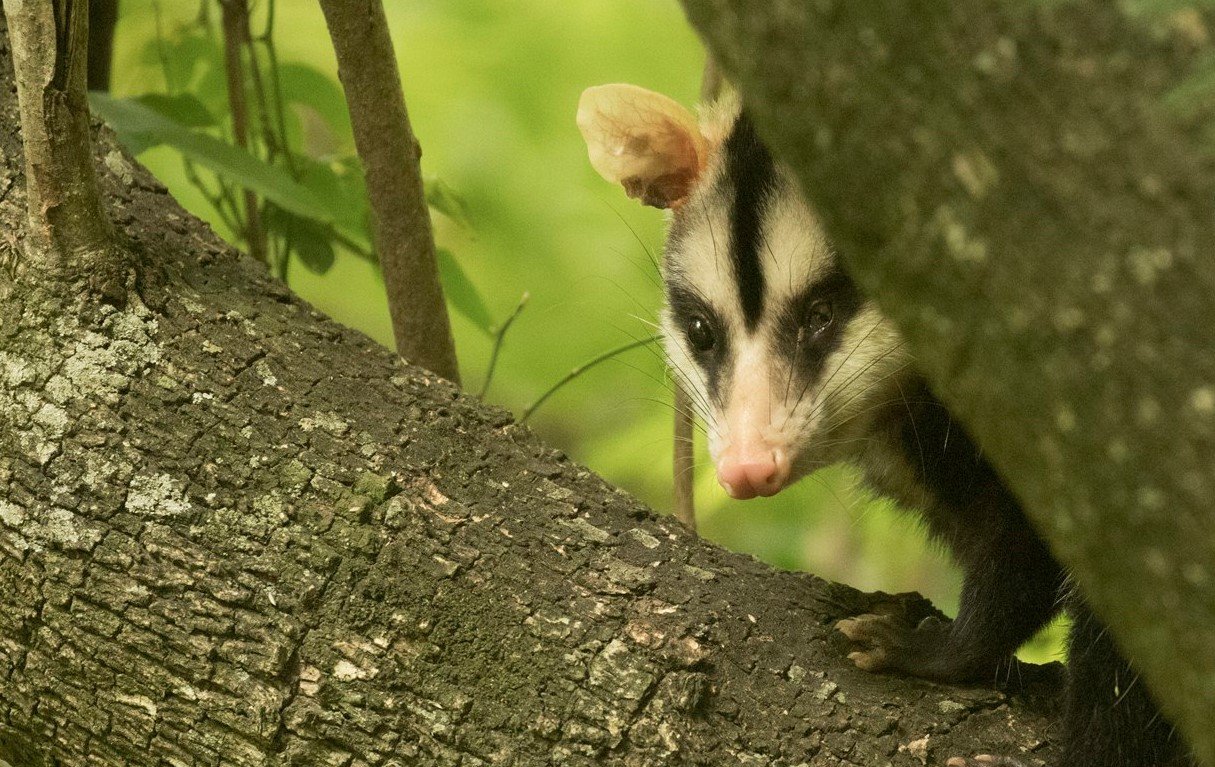
3 - Opossum - Didelphis marsupialis
Similar interactions here as the interactions I've had in Appalachia. They are usually encountered wandering guiltily in the dead of the night, freezing when found. We saw one, absolutely mortified, in the middle of the day in a Mulberry tree not too long ago. I adore them, and hope they get their fill of berries and fruits. The jungle is a hard place for a lil opossum.
4 - Pizote, or Coati - Nasua narica
Coati resemble raccoons with longer tails and precious long little noses. They are climbers, and regularly fight our harvesters for the best in-season fruits. They have very good taste, unfortunately, and will take the best of the best of our rarer fruits. Guard your zapote well.
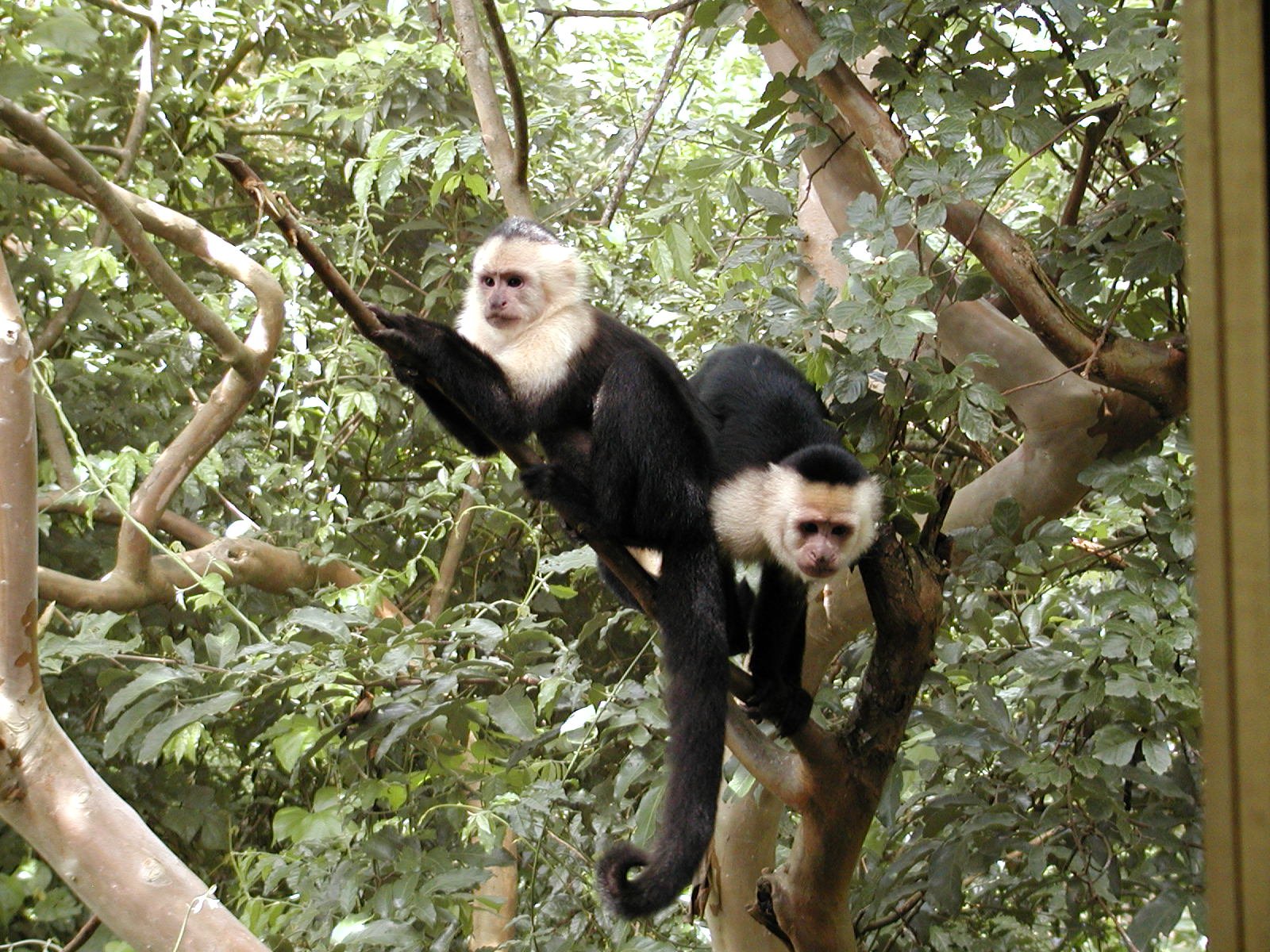
5 - Caro blanco, or Capuchin
Capuchins are the most well-represented type of monkey in pop culture. They live in large family groups led by alpha males, and spend the vast majority of their time in the canopy of more forested areas. Groups will range in size from the single digits to upwards of 30. In about six months here I have seen two groups passing through the jungle around our river trail.
6 - Puma
I have not seen this beast myself yet, maybe for the best. A couple here this year had an encounter with a mature puma while on their way down to the river, with a neighborhood dog accompanying them; as recanted to me, it seems like the encounter could have gone very badly for the dog, but all escaped unharmed. No photo for this one, because I am not a tracker and wouldn't be brave enough to wait for a picture if I saw one.
Creepy Crawlies (or creepy flyers. Sometimes not creepy)
1 - Ants
Mundane, but they demand mentioning. They are our most numerous neighbors, and vary in type widely. "Sugar ants" are harmless and numerous, mostly found in and around our kitchens taking advantage of anything left unattended for a few sparing moments. Fire ants are very common in our garden spaces and are your punishment for weeding in one spot for too long. Army ants act as a single massive organism, living nomadically and weeding out other bugs from their areas of interest ruthlessly. Incredible to behold in action. Finally, cuiscanas, (SPELL CHECK) or "devil ants" are small, red, slow ants that live in garden and orchard spaces. They don't bite, but secrete an acid as they wander on your bod which burns and stings for longer than preferred. Spraying alcohol on the affected area helps, but not enough.
2 - Horsefly
With the rainy season come the tabanos, horrible flying creatures which are much more aggressive here than I've experienced them being in the southern States. They hunt you and bite hard. They range in size from about housefly size to about the size of a quarter. Particularly horrible to experience while playing field sports, and while showering. No photo, primarily because I do not think they deserve it, secondarily because they pretty much just look like normal flies.
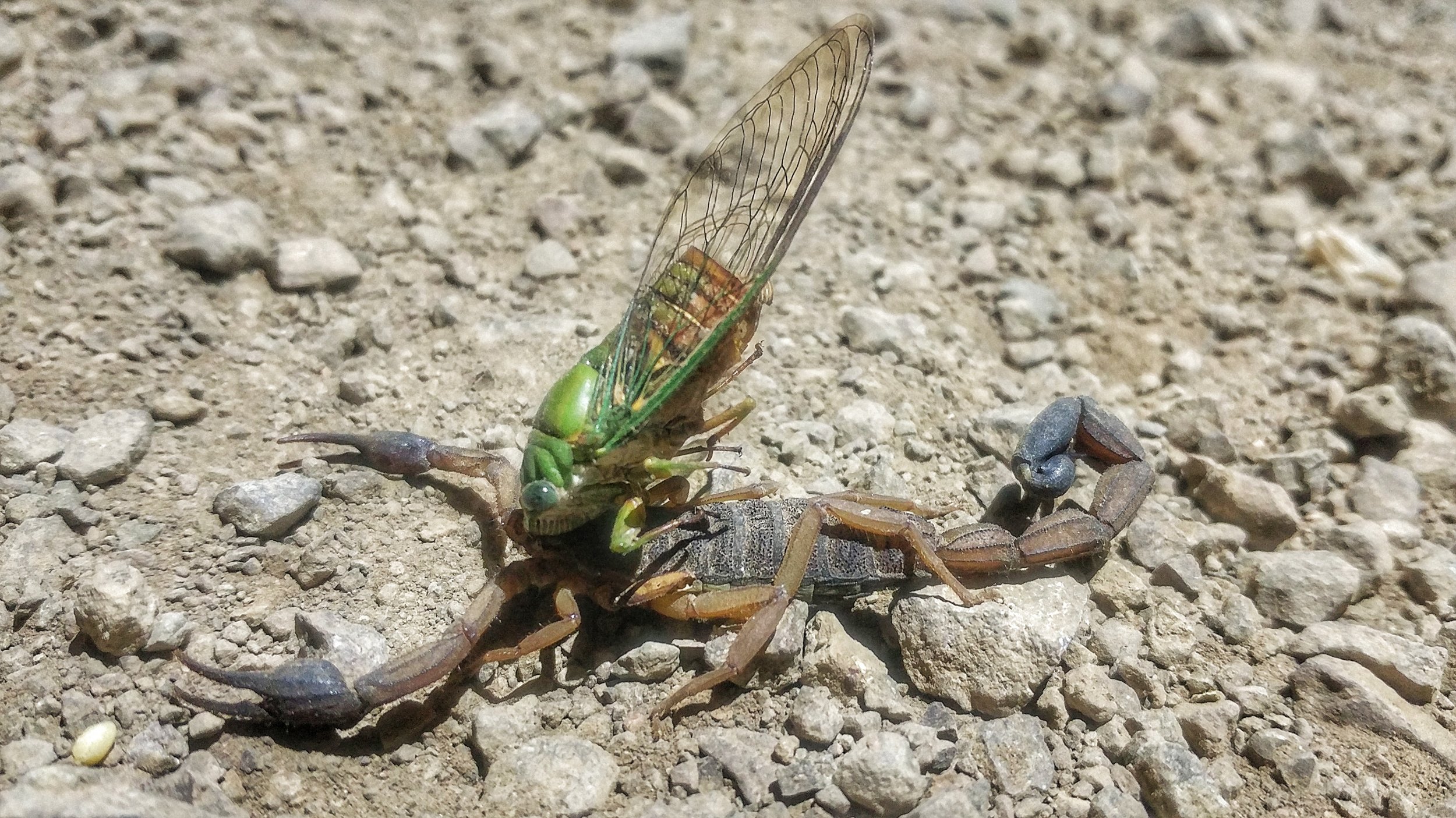
3 - Scorpions - Centruroides limbatus
Certainly creepy, certainly crawly. Our most common here is the Bark Scorpion, which can grow to be upwards of about 10 centimeters. Thankfully there are no varieties which will harm you much more than a stinging bee, though in other places in the world they can be much more dangerous. Check your boots, and pillowcases :)
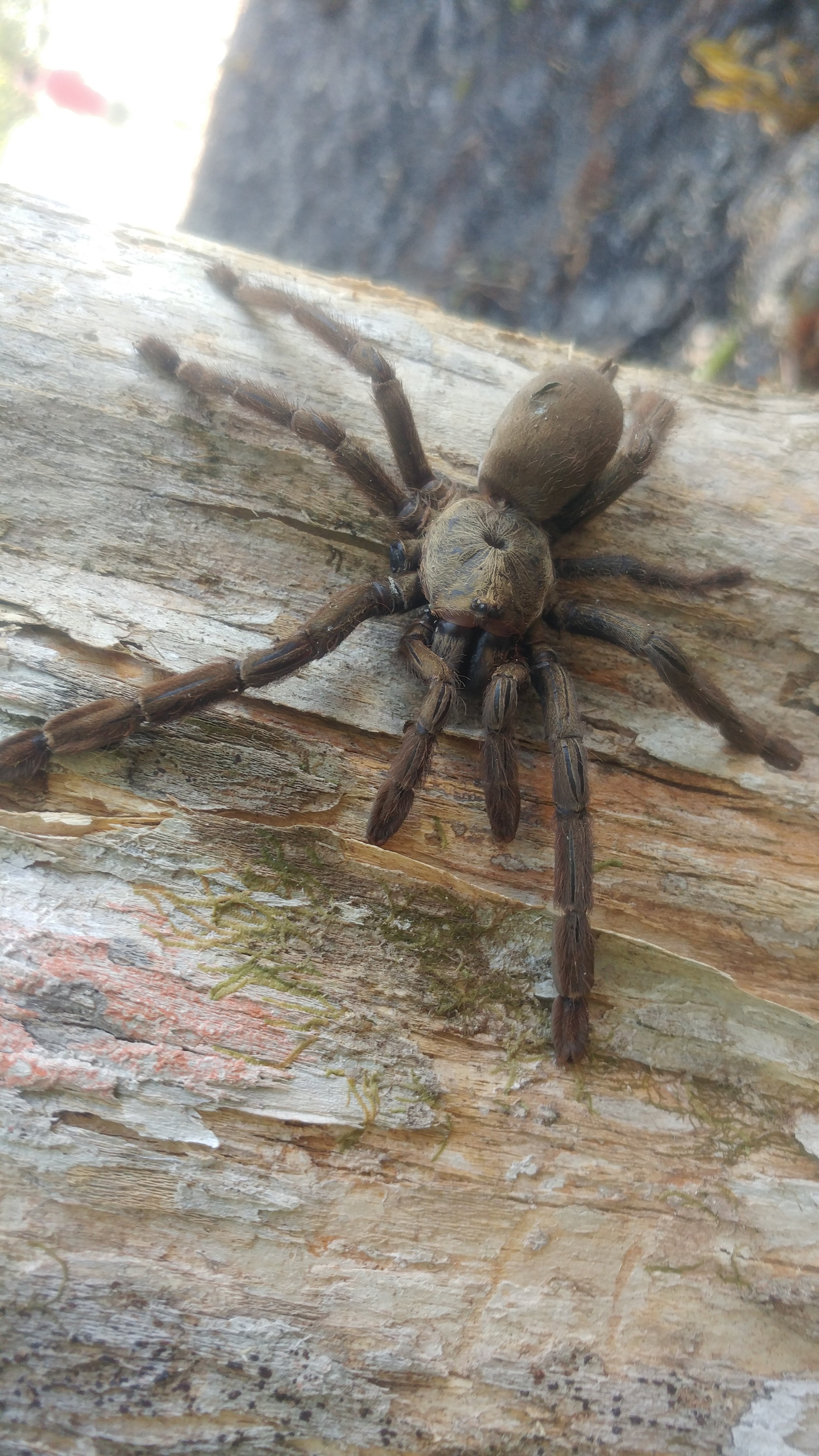
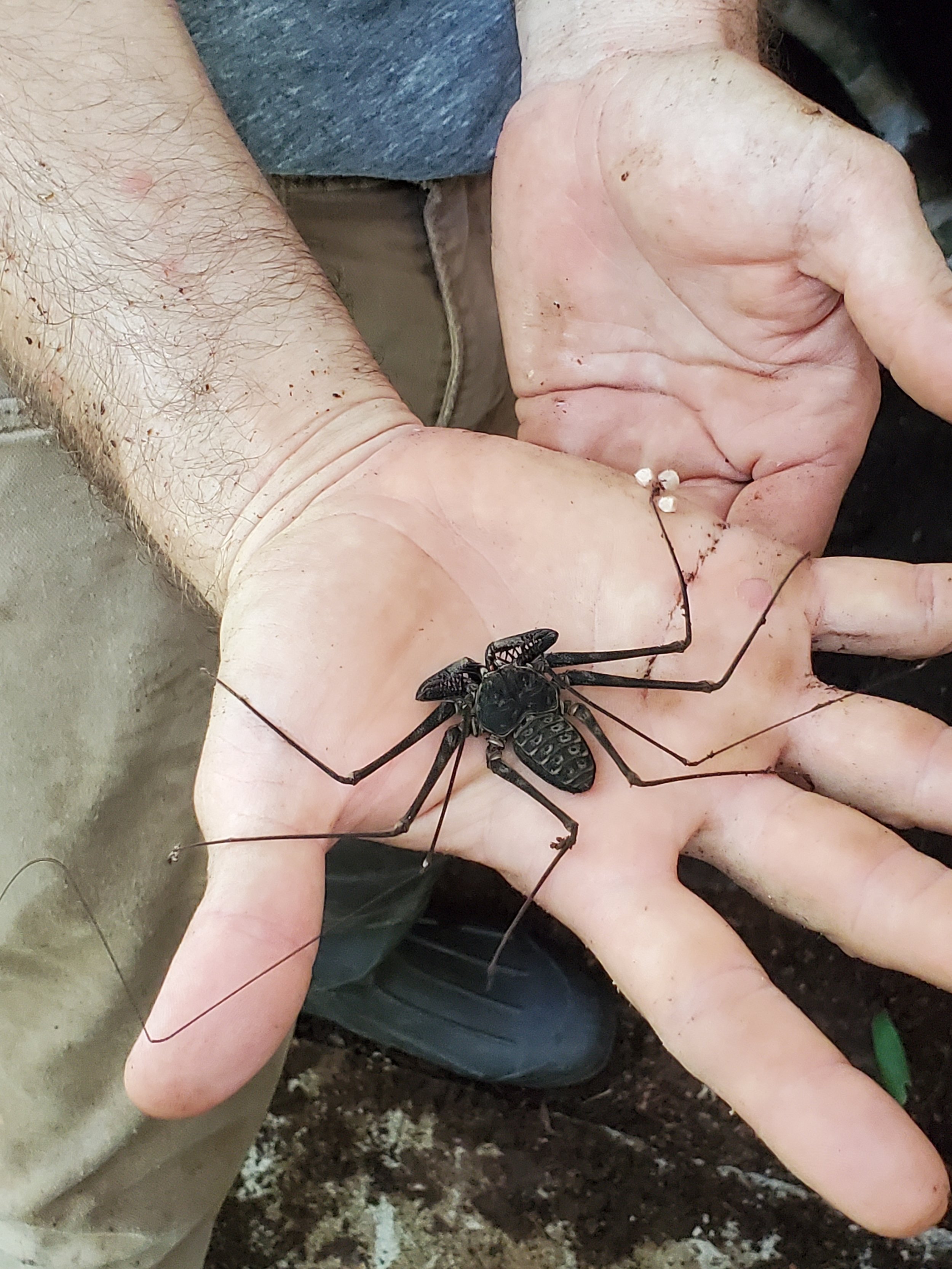
4 - Tarantula
Honorable mention, shamefully with no photograph, because I got to see a baby in a firewood bucket. I'm unsure of how common they are, having only seen one once so far. Consequently I'm also not too loaded with tarantula facts. They are many-legged and hairy, and I've heard they can shoot their spines off their legs! Not sure if that's a myth or fact. Definitely sounds believeable.
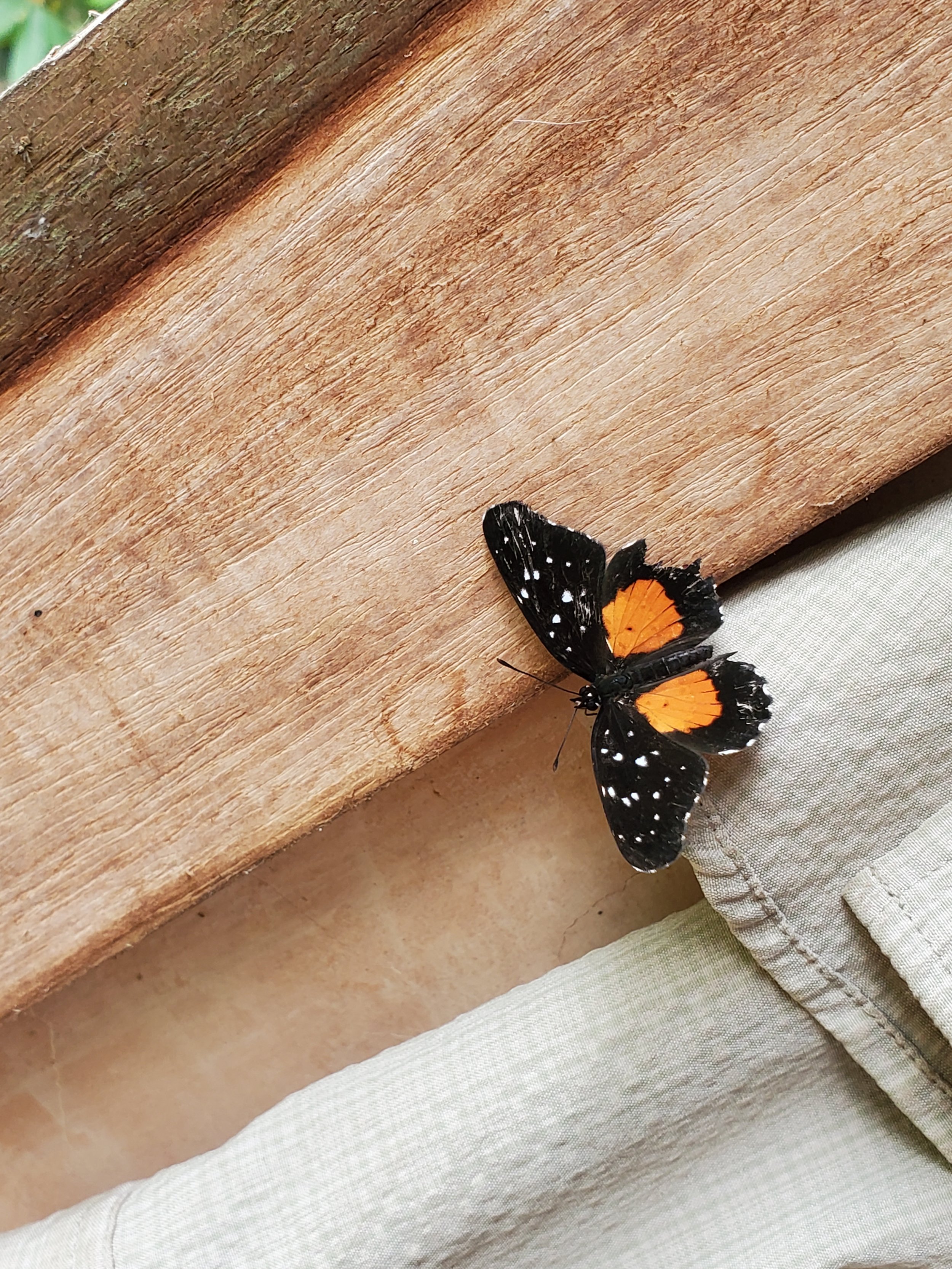
5 - Blue Morpho - Morpho helenor (and other beautiful flyers)
Blue Morpho butterflys are very well known by Central American travellers. Their bright color is astounding and their manner of flying very interesting. They bob through the air with long, slow, heavy beats of their wings, rising and falling huge distances between flaps in a mezmerizing way. They are deceptively quick, however, and are excellent at avoiding photographs which display their in-person vibrance.
The Wizard and The Prophet — A Book Review that Resolves the Duel
Imagine two completely opposed ways of seeing the world and today’s environmental issues.
By 2022 apprentice Lucas Babinec

Imagine two completely opposed ways of seeing the world and today’s environmental issues. The first represents the Wizards and sees humans as large-scale problem solvers, able to create massive top-down fixes with cutting edge technology and innovations, perhaps outside the bounds of nature. The second features the Prophets and sees humans as needing to consume less, becoming more efficient, less wasteful, adhering to the biological limits all other species live within. These two paradigms became two of the most significant movements within environmentalism over the last 150 years and in The Wizard and The Prophet, Charles Mann dives deep into the lives of the two men who most embodied the two distinct views: William Vogt and Norman Borlaug. Mann also brings a magnifying glass up to their impact on initiatives to modern day dilemmas regarding food, water, energy, and climate change.
The book’s successes
The read was often captivating, really humanizing two prominent people who dedicated their lives to the environmental challenges we face as a species. I feel environmentalism can get quite unapproachable and unrelatable for the typical person. People talking about problems that are far away from one’s own backyard, not only physically, but timescale too (decades in the future). Mann impressively paints the story arc of the lives of these two men, weaving the philosophies and figures that influenced them smoothly into a cohesive narrative. Here’s some essential info about them:
William Vogt ~ aka the Prophet
· Born in “pre-suburban” Long Island in 1902 and dealt with polio and serious family drama
· Saw the degradation of the surrounding natural habitat during his early adulthood as a bird watching enthusiast
· Headed to the guano islands off the coast of Peru in 1939; hired to conduct research about the birds there
· Published The Road to Survival in 1948
· National director of Planned Parenthood from 1951 until 1961
Norman Borlaug ~ aka the Wizard
· Born in rural Iowa in 1914 and watched his family struggle to make ends meet year after year farming the land
· Had ambitions to get out of his small town and studied forestry at the University of Minnesota
· Researched wheat rust in Mexico beginning in 1944; new cultivars of disease resistant wheat discovered in the late 1950s
· Methods applied to wheat in other countries plus rice and other staple crops throughout 1960s, “Green Revolution” coined in 1968
· Won a Nobel prize in 1970
The way Mann structures the middle portion of the book into sections (food production, freshwater supply, energy usage, and climate change) is intuitive. To see the two different approaches directly applied to real life challenges made the whole premise of the book way more relevant.
Mann skillfully explains the process farmers use to create new breeds of a plant as well as the process of photosynthesis as it relates to attempts to create adaptations in new varieties of food plants. There are a couple of helpful graphics to accompany these detailed explanations too (pp140 & pp195).
In the water section it was fascinating to learn about mega-projects and the pitfalls that come up, like lack of funding, ecosystem degradation, and poor efficiency.
The stories in the energy section about the demise of oil boom towns and the machines of the initial solar power movement like the Pyrheliophoro, were particularly interesting.
In the climate change section Mann nimbly bounces between reforestation of deserts in Burkina Faso, a debris mountain named Fridgelandia in post-Katrina NOLA, the burning Jharia coal field, US senate testimonies about change in carbon dioxide levels, and much much more.
The deluge of information would be overwhelming if it weren’t for Mann’s deft ability to sow the threads in the overarching narrative.
Constructive criticisms
While being quite exhaustive in regard to history, the book’s breadth of scope looking at how the ideologies look in modern day solutions is disappointing. For example, the word ‘permaculture’ is not mentioned a single time in the book. One reason that alternative solutions are marginalized is because best-selling authors such as Charles Mann don’t devote awareness to them. Thousands of readers could have been exposed to key words such as permaculture, holistic management, or regenerative agriculture and are instead left to wonder if big technological fixes are our only way out. To his credit, Mann does say in the prologue that the book is not “a blueprint for tomorrow.” However, this contradicts the text on the cover flap that claims “The Wizard and The Prophet is essential reading on the future of our species.”
Another critique is the subtle sensationalization of opposition in the two views. Though they did have their differences, Vogt and Borlaug shared many similarities, most importantly being english speaking white men who grew up in the United States in the early 20th century. Both were immersed in the cultural soup of the times and it follows that they were subject to the same biases as anyone with close proximity to power. Vogt walked in the footsteps of racist elitist conservationists (pp81-82) and Borlaug was influenced by the heads of the big money groups who funded his projects (pp119-120). The inherited intellectual imperialism seeps out insidiously in both the Wizard and Prophet views portrayed in this book. A caption on a photo captures it perfectly:
“According to its architect, Ralph Walker, the modernist IRRI [International Rice Research Institute — An institute based in the Philippines funded by the Rockefeller and Ford Foundations] campus, constructed entirely of imported materials, symbolized ‘a new type of imperialism’ of ‘specialized knowledge generously given to backwards peoples,’” (190).
The passages that compare the two ideologies are rift with divisive language such as: ‘hostilities’, ‘conflict’, and ‘radically different’. Mann even writes, “indeed, the dispute between Wizards and Prophets has, if anything, become more vehement” (7).
It’s 2022 and there’s enough tribalism and opposition going on, at least in my home country of the US. We don’t need another book that pits two groups against each other. Maybe that is what’s needed for some people to build awareness of our species’ ecological situation.
Personally, I would have been much more interested if Mann also focused a bit on the similarities between the two men and their philosophies and how we can integrate both approaches to find the best, most appropriate solutions.
In the end of the prologue Mann asserts that “I wrote this book to satisfy my own curiosity, and to see if I could learn something about the roads my children could take,” and I hope his curiosity has led him into researching more holistic, healing, and regenerative solutions (such as permaculture) in the next book he publishes.

The Bottom Line
The Wizard and The Prophet is exceptional as a history and at the same time, lacking as a source of knowledge for the future. If you want a detailed account of two major establishment approaches to environmental challenges, this is a book for you. If you are more interested in reading about holistic solutions to our global ecological crisis, seeking a source of inspiration, or want to read about ways of bridging different ways of thinking, I highly recommend these books:
All We Can Save
Braiding Sweetgrass
Climate: A New Story
Permaculture: A Designer’s Handbook

Categories
Topics
- Agriculture 6
- Agroforestry 21
- Animals 2
- Apprenticeship 19
- Appropriate Technology 6
- Backpacking 1
- Bananas 1
- Basic Pantry 4
- Biochar 1
- Books 3
- Build Your Own Home 1
- Central America 5
- Chiles 1
- Cinnamon 1
- Clay Carving 1
- Climate 2
- Climate Change 1
- Cob oven 1
- Communication 5
- Community 24
- Compost 2
- Composting Toilets 2
- Condiments 1
- Conservation 2
- Cooking 4
- Costa Rica 18
- Design 10
- Earthen Construction 10
- Eat Local 2
- Ecohome 1
- Education 9
- Environment 3
- Ethics 4
- Farm to Table 12
- Fasting 1
- Fermentation 14
- Food 22
- Food Choices 8
- Food Forest 8
- Food Processing 15
- Food Systems 12
- Gap Year 1
- Gardening 5
- Ginger Beer 1
- Harvest 2
- Health 12
- Healthy living 5
- Homemade 2
- Homestead 8
- Internet 2