

BLOG
Stories, articles, and updates from the Ranch community.
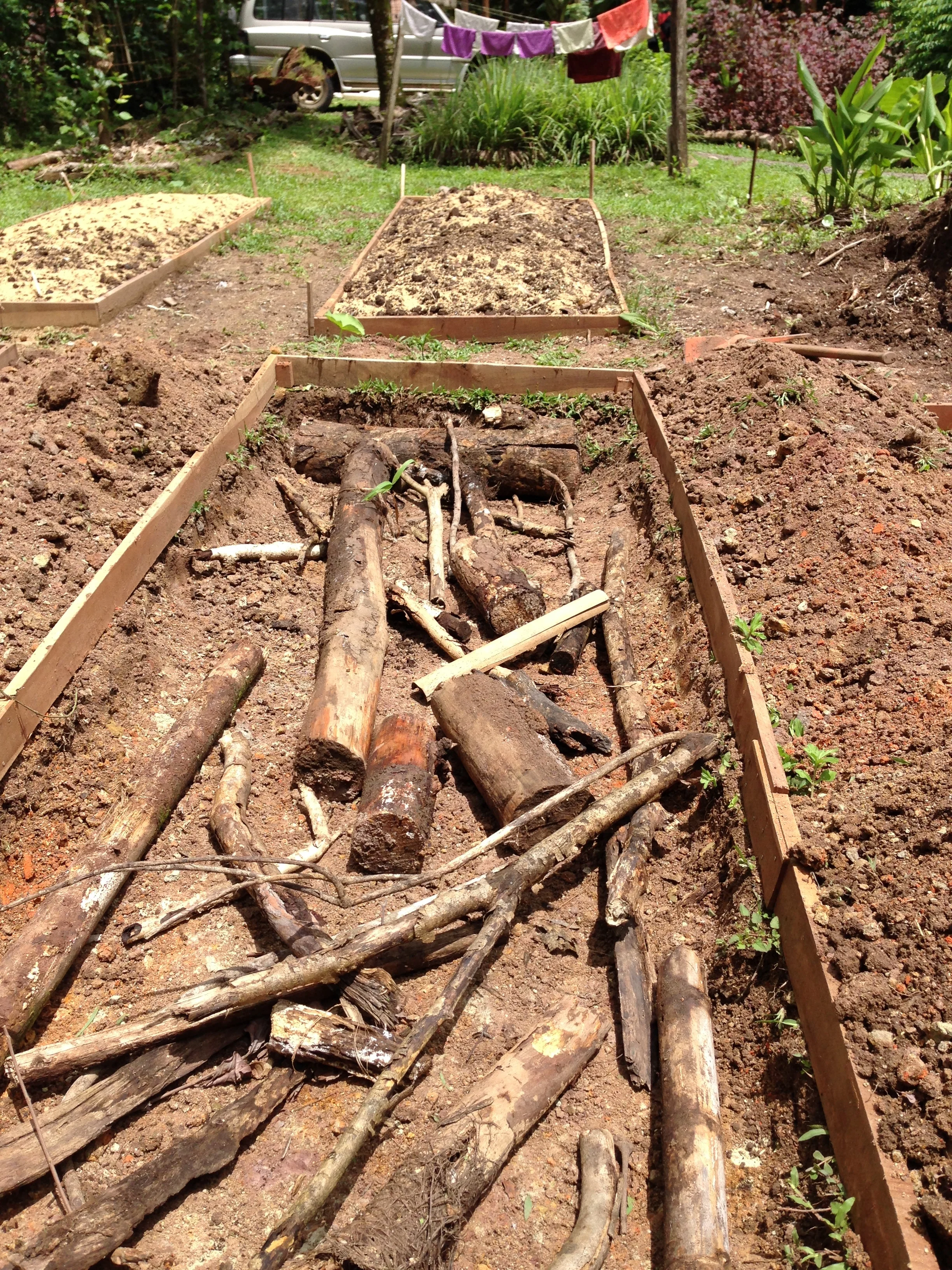
Hugulkultur in the Tropics
Hugelkultur means hill or mound in German combined with culture. It has been practiced in Europe for hundreds of years. Hugelkultur is a simple agricultural practice that doesn’t take much to set up and provides numerous benefits.
by Ben Behrend, 2019 Apprentice
Hugelkultur means “hill” or “mound” in German combined with “culture”. It has been practiced in Europe for hundreds of years. Hugelkultur is a simple agricultural practice that doesn’t take much to set up and provides numerous benefits. As the wood decomposes it creates air pockets; it releases nutrients slowly and also absorbs and retains water. This retention of water is important during drier periods or places like the desert or the dry season in the tropics.
This year at Rancho Mastatal, it has been hot and dry, causing strain on many of our plants. Immediately surrounding our main gathering area/kitchen is zone 1 which would be a great place to experiment with hugelkultur. Not much has been written on Hugelkultur in the tropics. Several groups of apprentices have trialed using woody material underneath garden beds. Whilst it is difficult to say with certainty that due to the hugelkultur practices yields have increased, it is safe to say that yields have increased and i would summarize that this due to many factors one of which is the use of hugelkultur. I feel inspired to continue experimenting myself and see how it works first hand. Below are instructions that you can follow to make your own hugelkultur.

· Dig a foot or two of the top soil and put that aside.
· Pile in decomposing tree limbs the more “rotten” the better, biggest on bottom and working up with smaller. Some people use burned logs, or add ash for extra potassium. Not all woods are created equally when it comes to hugelkultur
o It is not good to use Cedar for example as it takes longer to decomposes due to its natural pesticides/ herbicides/anti-fungal/anti-microbial properties. Black locust won’t break down fast and is very toxic. Based on this i would guess that Spanish Cedar and any hardwood used as fence posts may not be suitable in the tropics either eg Guachipelin, Madero Negro etc…
o Woods that work best: Alders, apple, aspen, birch, cottonwood, maple, oak, poplar, willow in temperate climates. For the tropics i would guess that any wood refered to as “semi-duro” would work i.e. any medium strength hardwood eg. Roble, most fruit tree woods etc…
o Layer the sod on top of this
· Layer sheet mulch an example
o 5 inches well aged compost
o 4 inches manure
o 8-12 inches of hay, straw, dead decomposing leaves, seaweed
o 1 inch of newspaper/cardboard
o Soil amendments (blood meal, bone meal, manure)
Letting the mound “rest” for several months, or even 1-2 years before planting is sometimes recommended. Beds are built up in a mound that can be up to waist height, any desired a length, and a narrow width (one source recommended three feet width). The recommended angle of the mound is 60-85 degrees by some sources, creating a triangle. Others, make a less steep slope that is also documented to work well. Over time as the wood decomposes it creates a sponge like bed underneath. This holds the moisture and produces lots of nutrients and fungal friends.

Toby Hemenway mentions in “Gaia’s Garden”, you can start potatoes a month early in this kind of bed. “Some naturalists theorize that roots and fungal mycelia may translocate water from these woody caches to plants and fungi many feet away.” (Gaia’s Garden, pg. 70). Wood locking up nitrogen has been a concern by some yet Hemenway feels wood decomposes so slowly that very little nitrogen is tied up by microbes gnawing at logs.
Over the first year, your hugels may sink as much as a foot depending on the climate. This is a natural settling of the pile, as the mound breaks down and decomposes. If you want to “rebuild’ hugels at the beginning of each year you can add more compost, otherwise you will produce excellent humus by the time your hugel levels out. Hugelkultur offers an attractive way to build top soil and retain water during the dry season.
We will keep you updated with our progress, in the mean time let us know what you are trying to do at home or have done with hugelkultur!
Interested in having the opportunity to learn whilst doing? Why not apply for our year long apprenticeship. Can’t dedicate the time to our year long apprenticeship, why not join us for our shorter internship?

Gardening and Permaculture practices at the Ranch
Here at the Ranch the year long apprentices have various roles and functions that support the Ranch community. By taking on responsibilities and managing certain areas we the chance to learn and experience those areas on a deeper level . Part of the educational model created by the ranch team is a monthly rotation of these so called life skills. Each apprentice transitions their life skill to the next apprentice, passing on all of the relevant information to their colleague in order to complete the various tasks associated with each life skill.
by Diana Dagash
2019 Apprentice

our front gardens
Here at the Ranch the year long apprentices have various roles and functions that support the Ranch community. By taking on responsibilities and managing certain areas we the chance to learn and experience those areas on a deeper level . Part of the educational model created by the ranch team is a monthly rotation of these so called life skills. Each apprentice transitions their life skill to the next apprentice, passing on all of the relevant information to their colleague in order to complete the various tasks associated with each life skill.
One of the life skills is currently called the Garden Gnome. I would like to share some of my experience and reflections from doing this task every morning for a month. The garden gnome is in charge of maintaining the front gardens. This is referred to as our zone 1 garden using permaculture lingo. It is the area that is in closest in proximity to the most frequently used space- the main house. In the Zone 1 gardens we grow herbs, annual and perennial crops such as mustard greens, katuk, Haitian basket vine, hibiscus, cucumbers, squash, yard long beans,wing beans, radishes, sweet potato, moringa, basil, oregano, mint, parsley and curry leaf and other amazing tropical goodies which we use in our kitchen everyday. Having these crops growing in close proximity to where we spend most of our time allows us to easily provide the daily maintenance of this space such as watering, harvesting and weeding.
In Rancho Mastatal we approach gardening through a permaculture lens. By mimicking the patterns in nature we are able to create micro climates in which our crops thrive. We create systems that have many functions and support other systems in their functions, allowing them to thrive in harmony with nature. We apply a range of those practices at the ranch and we continue learning and experimenting with new possibilities.
Given that we live in the tropics we have two opposite seasons, about half the year its is dry and the other half rainy. Although the dry season has its own challenges I can only speak from my own experience taking care of the garden in the rainy season, for instance i believe that in the rainy season there is a lot of weeding whereas in the dry season there is a lot of watering!
As the rains increase in volume and frequency it is a time when everything begins to grow rapidly. The jungle fills up with even more green vegetation, popping out of every space available. It rains consistently every afternoon , sometimes all day and night. The soil is saturated . It is a happy time for ALL living things to thrive, including some of the more challenging species like mold, fungus and insects. Some of our crops were over taken by fungus or eaten by insects, others became over saturated with water as they were lacking sun and/or air flow. As with every challenge, i found an opportunity to research and experiment with natural recipes for pest and fungus control.
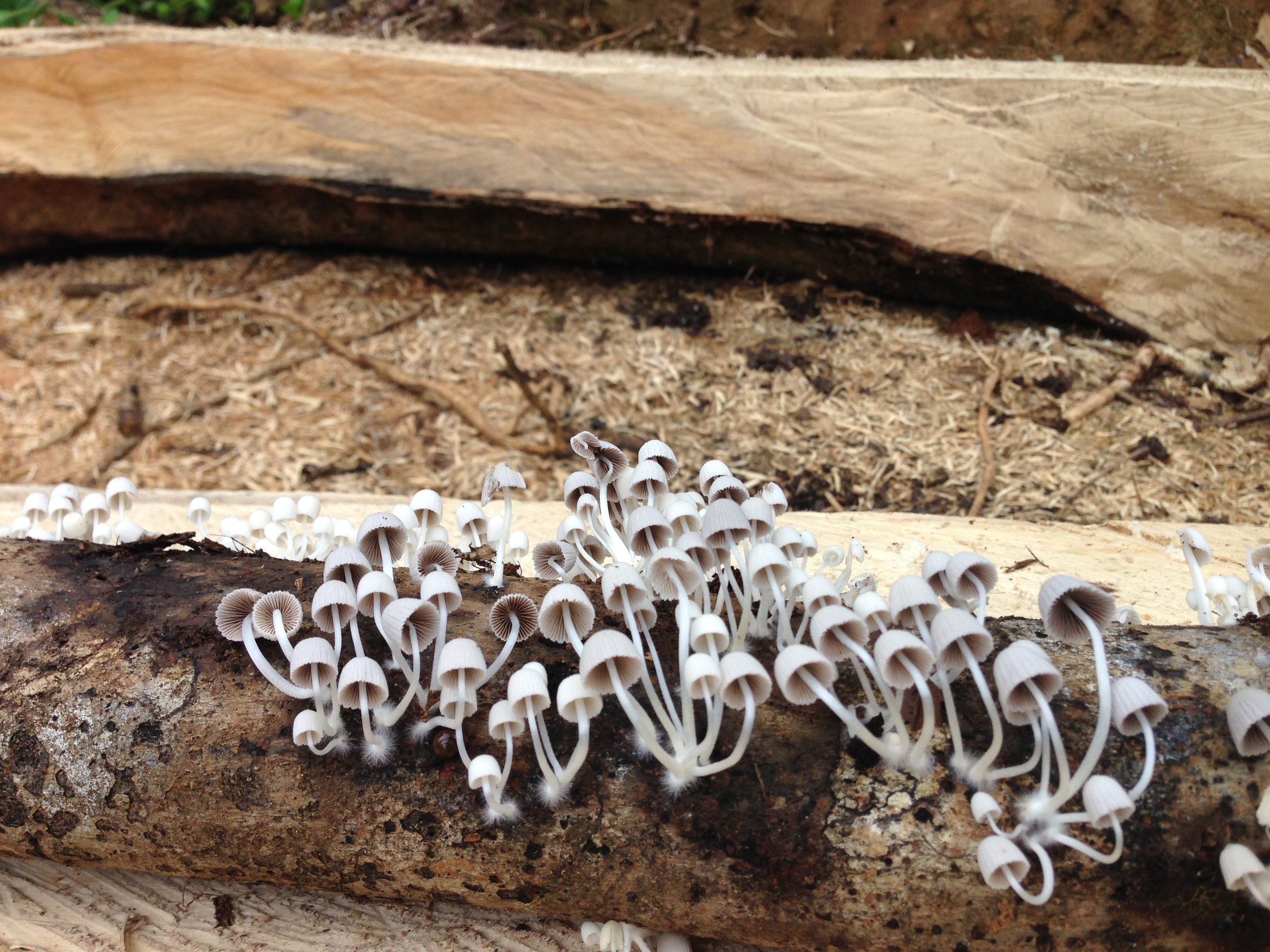
with the onset of the rains, mushrooms started popping up everywhere
My days started early in the mornings with a walk through the garden, observing the plants and checking the soil moisture levels. As I walked I noticed plants that seem to be struggling and tried to identify what might be affecting them. This is then communicated with the garden manager so we could discuss further ideas and solutions. We researched potential natural insecticides and fungicides that could help solve these issues.
Here is some of what we have learned and the practices we apply here at the ranch.
We are surrounded by amazing medicinal plants growing all around us, thriving under the jungle canopy or occupying disturbed pockets. These plants contain medicinal properties that can benefit humans as well as plants.

For example turmeric contains anti-inflammatory and antibacterial properties beneficial to humans and when planted among the roots of a tree, benefits the tree with those same properties This is referred to as companion planting. By planting diverse species next to each other they are able to support, protect and ultimately benefit one another. This can be as simple as providing shade or wind protection. Not only can companion planting by a useful tool in our belt to fight against disease and pest pressure but we can also use the properties of some local herbs. Here are some examples of what we have been doing.
Jackass bitter - the most bitter herb known, contains antifungal and antiparasitic properties. Spraying this tea onto diseased plants can repel insects and prevent fungal issues.
Inter cropping aromatic herbs like oregano, lemon grass and basil with certain food crops can confuse and repel insects with their scent and prevent disease with their antimicrobial and antifungal properties.
Using the shade of the cucumber trellis to help shade and shelter more delicate herbs underneath them.
Using peanut grass as a living mulch to crowd out weeds and provide nitrogen to the soil underneath some of our taller perennial crops such as Katuk and Cranberry hibiscus.
Planting Marigolds everywhere to reduce nematode populations, there is controversy about the effectiveness of this though.
Working in the front gardens has also made me reflect on the ideas of closed loop systems. As i am partially responsible for management of the kitchen compost. I really like the idea that there is no such thing as waste. Everything can be transformed into something useful. All of our food scraps are composted creating a finished compost that can then be added back to the soil to enrich it, closing the loop.

Another big part of the practices we apply when it comes to the food forests is observation of the environment and meeting the land's needs by mimicking patterns in nature. Thanks to all the researches and life long practices in the agro forestry and gardening world, a network of knowledge has been created for us to share our experience and knowledge. We are continuously learning and working towards improvement of our systems.
With each piece of land we carry the responsibility for the history, present and future of it. It is up to us to create a relationship with our land, to observe it's needs and potentials.To be stewards of the land and assist it to become a healthy ecosystem in which we can humbly live and feed ourselves.
This experience, of being an apprentice at Rancho Mastatal, has opened my eyes to a new world of possibilities, inspiring ideas, regenerative solutions, discovering new ways to live lighter on the planet and in harmony with nature .
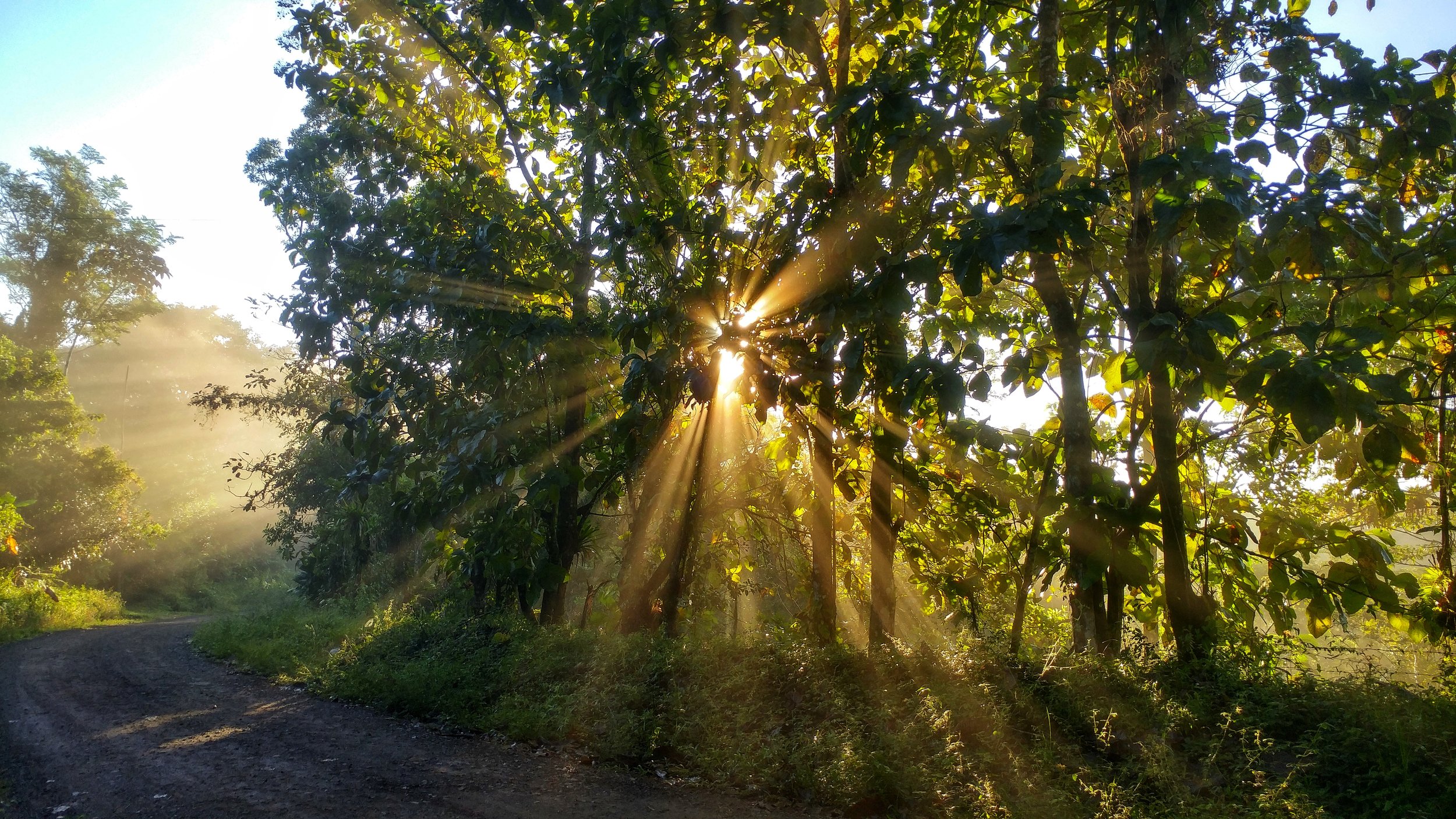
I am inspired by the movement towards an ecological , sustainable lifestyle and feel grateful to be a part of a project that focuses on sustainability, permanent culture and agriculture.
I invite you to share your experience and discoveries with growing food in the lowland tropics.
What interesting practices have you learn about recently?
Which annual crops did well for you in the tropical rainy season of Costa Rica?
What kind of companion planting worked well for you?
Would love to hear from you!
Blessings,
Diana D.
For more information about Permaculture consider joining us for our Permaculture Design Certification. For info about being an apprentice please go to the apprentice page. Here you will find in depth descriptions of what life is like in Mastatal.
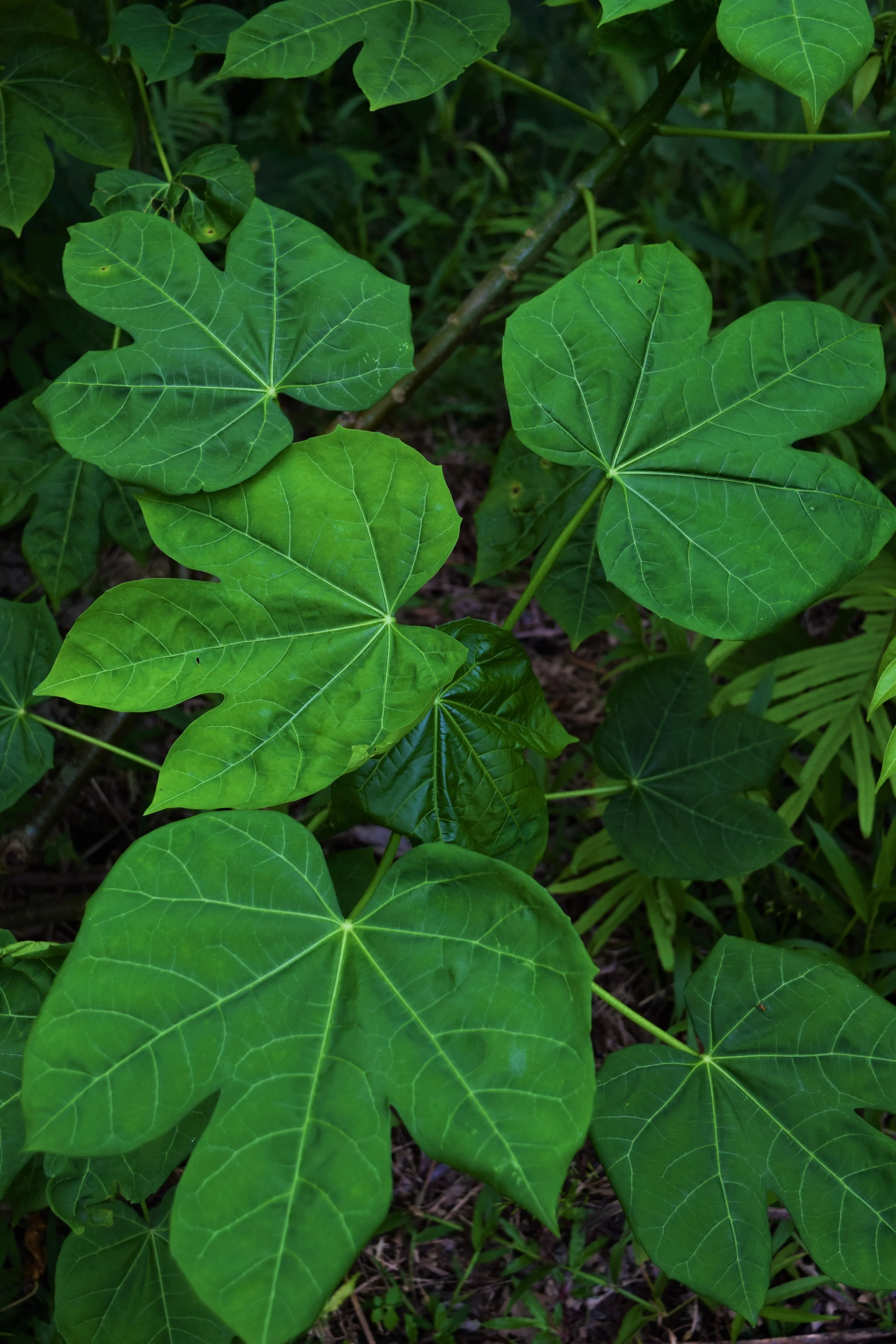
Vegetables & Greens that Thrive in the Tropical Rainy Season
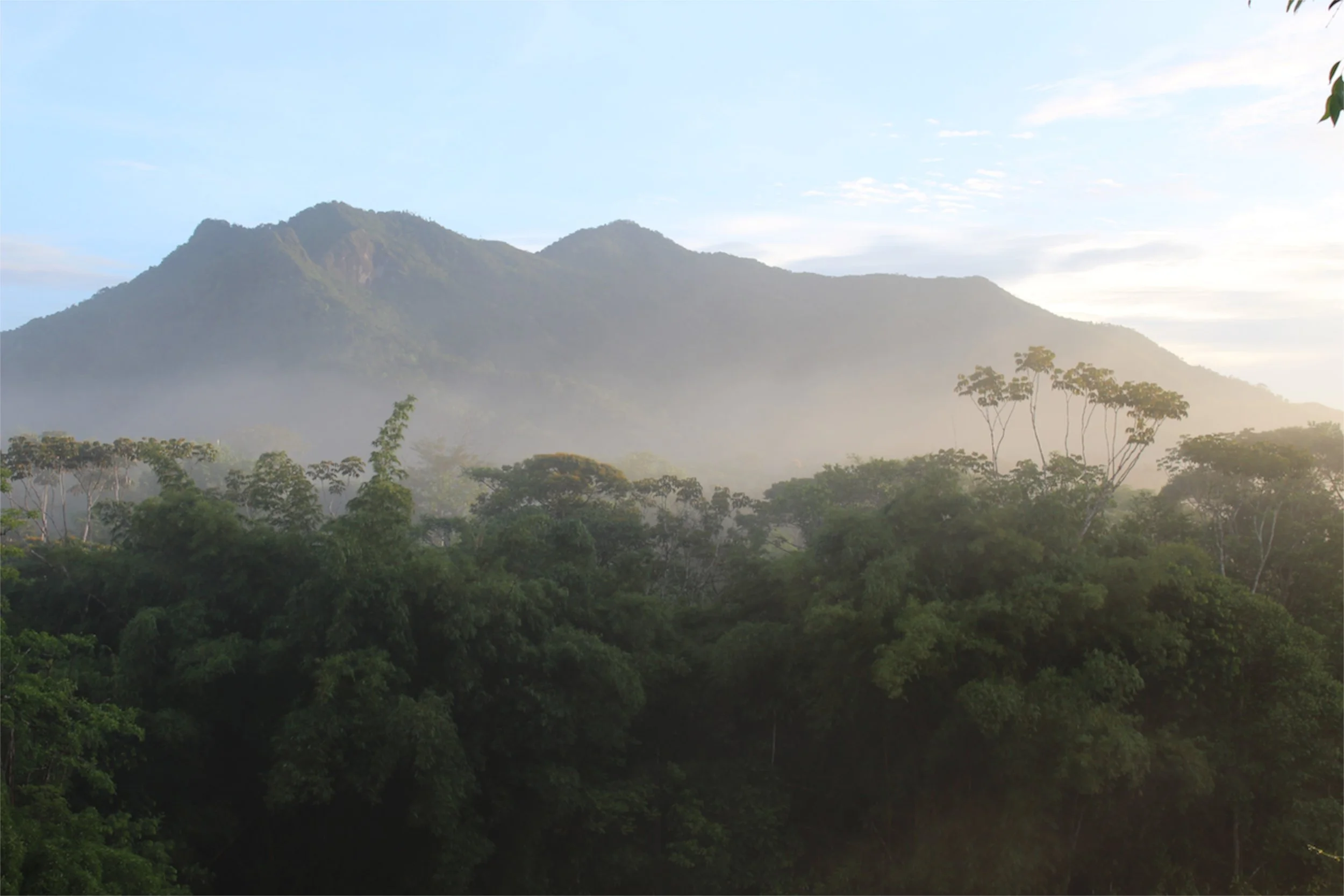
When the rainy season arrived, it started with a sense of relief - dry season went on longer than expected and our trees and plants were scorching in the heat. For myself the cooler air was welcome comfort, and the rains a reminder of home and getting cozy. Mornings were beautiful with the sight of the sun rising through the dewy mist.
By Amy Dodds,
2019 Apprentice
When the rainy season arrived, it started with a sense of relief - dry season went on longer than expected and our trees and plants were scorching in the heat. For myself the cooler air was welcome comfort, and the rains a reminder of home and getting cozy. Mornings were beautiful with the sight of the sun rising through the dewy mist.
But very soon our zone one vegetable gardens with our recently planted greens began to suffer - the sheer force of the rains and the humidity brought fungal and mildew issues. Faced with the reality that our beans and delicate greens were going to die out, I thought about the potential of using cover crops, such as sweet potato, for the rest of the year. But this did not seem to fit in my idea of what permaculture asks us to do: observe and interact with the environment we are situated in and use that to our advantage. With this in mind, we at Rancho Mastatal have been planting crops that thrive both in the intense heat and thumping rain. Below are some of the most popular vegetables that we are growing in the Ranch that are suitable for the rainy season:
Cucumber:
Cucumbers have been abundant in our garden this season with us pumping out quick pickles nearly every day. Not bad for a community feeding 30-40 people daily! Thankfully, cucumbers like warm, humid weather. We grew ours by seed on a trellis to allow for more air flow and for the fruit to stay above ground.

Okra:
Described as among the most heat-tolerant vegetable species in the world. It is planted for its seed pods which can be cooked, pickled, eaten raw, or included in salads. It does become mucilaginous so do consider this if you're sensitive to the slime.
Kang Kong spinach:
This leaf green is native to southeast Asian and is delicious stir-fried with soy sauce and garlic. It is a semi aquatic plant, a creeper that grows in or near the water on moist soils, so it is ideal for our climate.

Hibiscuses:
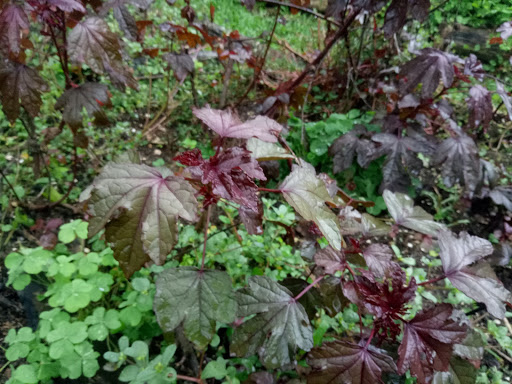
Both Green and Cranberry Hibiscus are delicious perennials that thrive in the warm and wet. They self seed easily during dry season so when the rains come you have a whole bunch of babies to keep your salad zesty and fresh. The leaves do contain oxalic acid so cannot be consumed in large, consistent quantities.
Chaya:
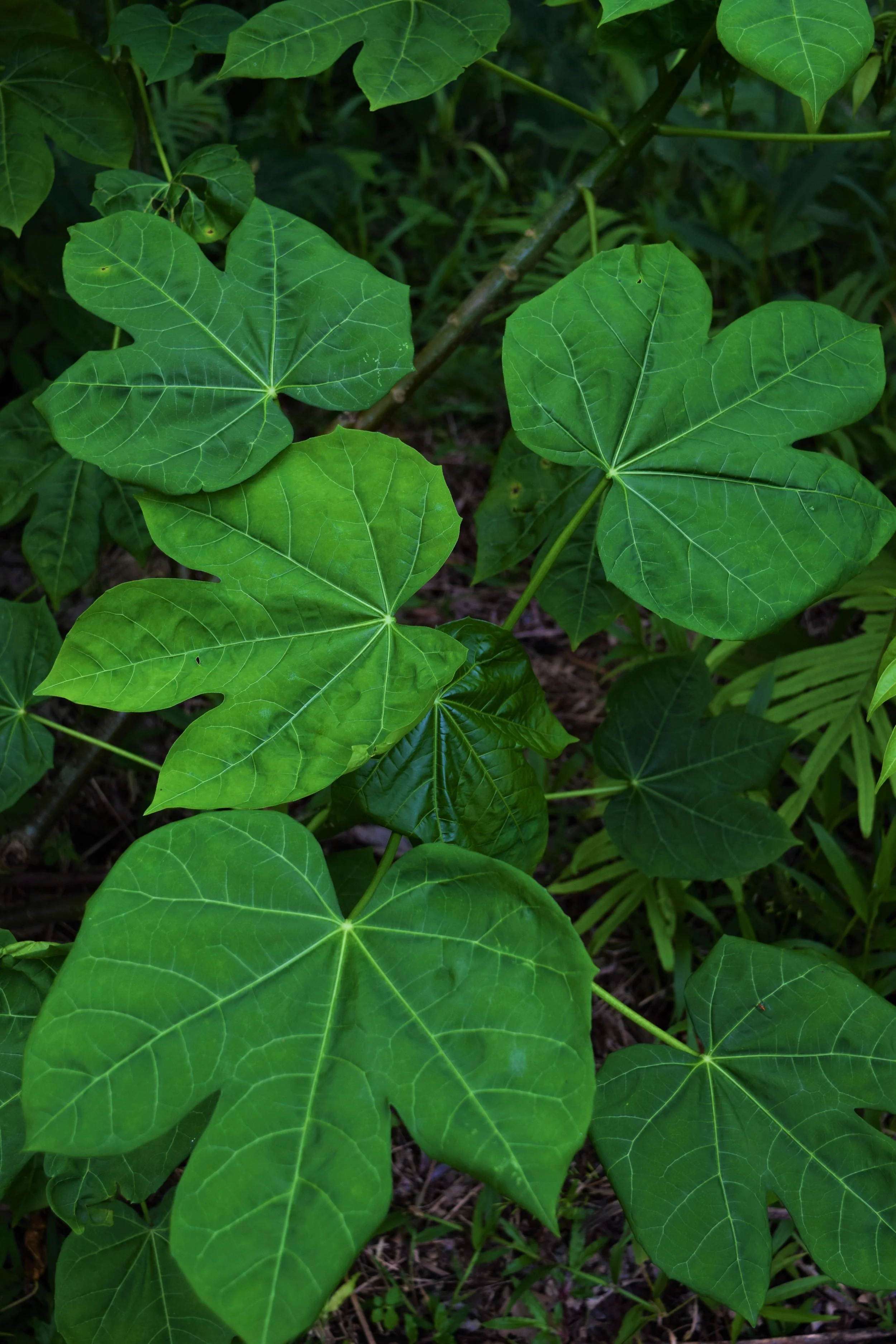
Also known as tree spinach this is an excellent perennial green native to Mexico. It's leaves are edible once cooked, like spinach. It's easy to propagate by cutting and loves the heavy rain.
Malabar spinach:
Malabar spinach is another heat and moisture-loving spinach-like green. The succulent leaves can be eaten both raw and cooked. We have only a few plants so we are trying to improve the population. We use a trellis to support its tendency to vine.
Winged bean:
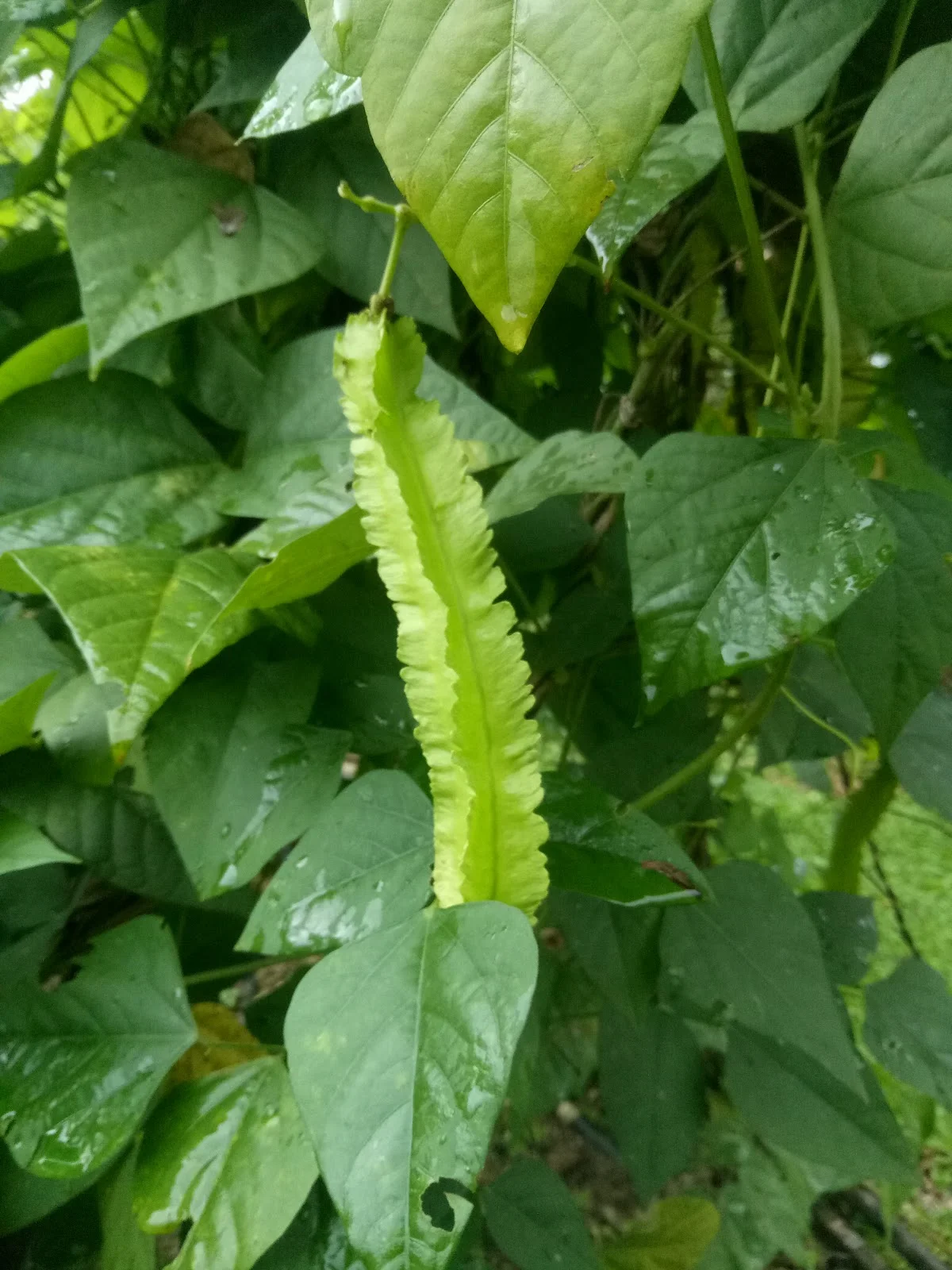
Also known as Goa bean and princess beans, these are sweet protein packed vegetables that do well in heat and humidity. They can fix their own nitrogen when the bacterium Rhizobium is in the soil. They are best harvested young and tender, and great raw in a salad.
Other more delicate greens we are growing in our nursery as they don't require as much water, such as Arugula, mustard greens and Asian cabbages.
By having our covered nursery space we are able to grow things under cover that otherwise would not do so well outside, we are also experimenting with making some movable covered spaces for out outdoor garden beds….. we will update you with progress so make sure to Like and Follow us on Facebook & Instagram
The Art of Stacking Functions
Stacking functions. What does this phrase mean to you? It could mean any number of things depending on what you apply it to. In this case I'm referring to the term as it's used in permaculture. It is one of the primary principles of permaculture design. Here at the Ranch we employ as many of these principles as we can in our work and in our daily lives.

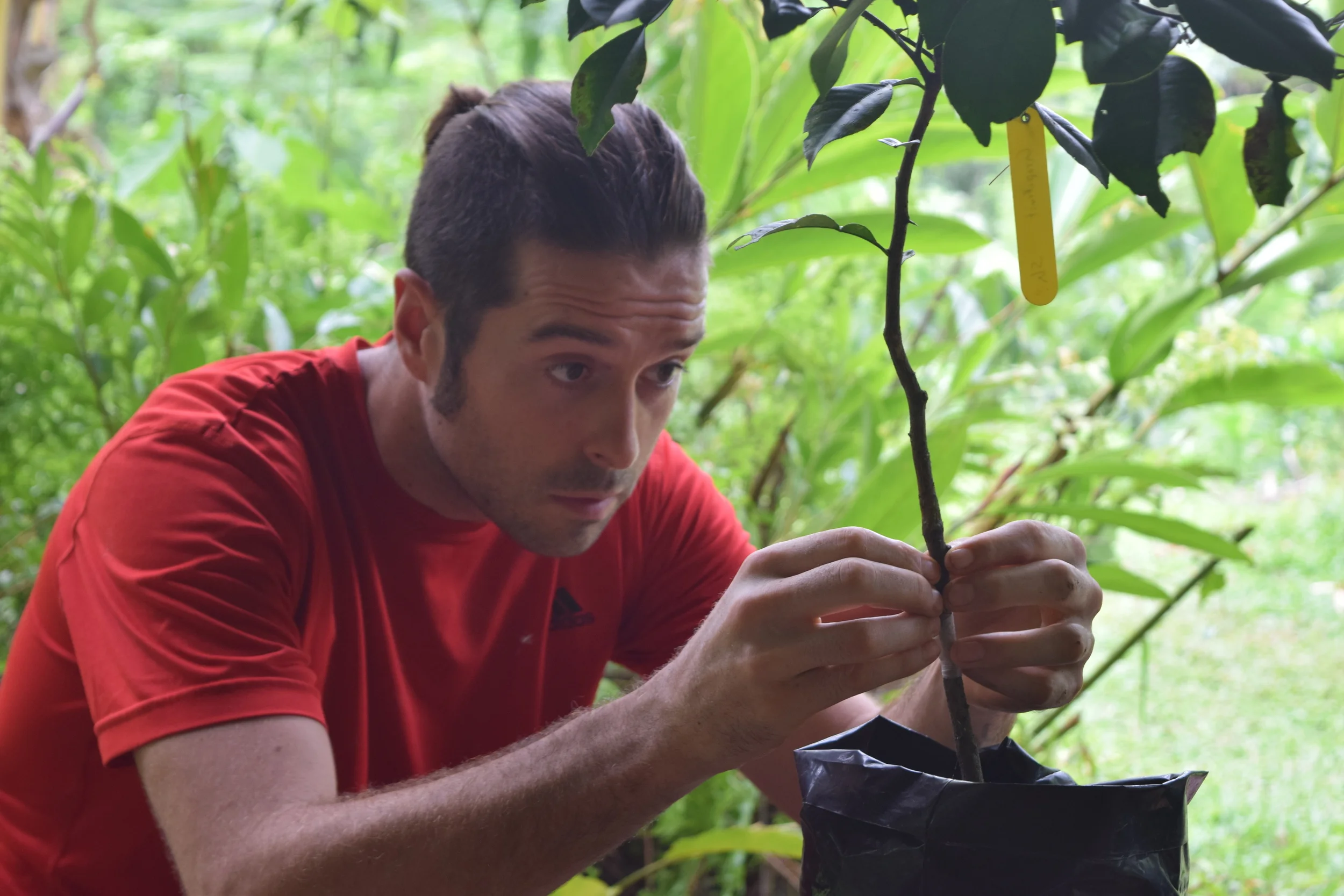
Tulsi or Sacred Basil harvested for tea.
Stacking functions. What does this phrase mean to you? It could mean any number of things depending on what you apply it to. In this case I'm referring to the term as it's used in permaculture. It is one of the primary principles of permaculture design. Here at the Ranch we employ as many of these principles as we can in our work and in our daily lives.
Before delving deeper into this topic, I think it's important to first define what permaculture is. There are thousands of definitions available but I've found it useful to come up with my own because it makes the most sense to me. I encourage anyone with an interest to do the same. Here is my definition: Permaculture is a way of life that empowers you to contribute to the regeneration of the earth on a personal level. Its use is guided by a set of principles that can be applied to any aspect of your life.
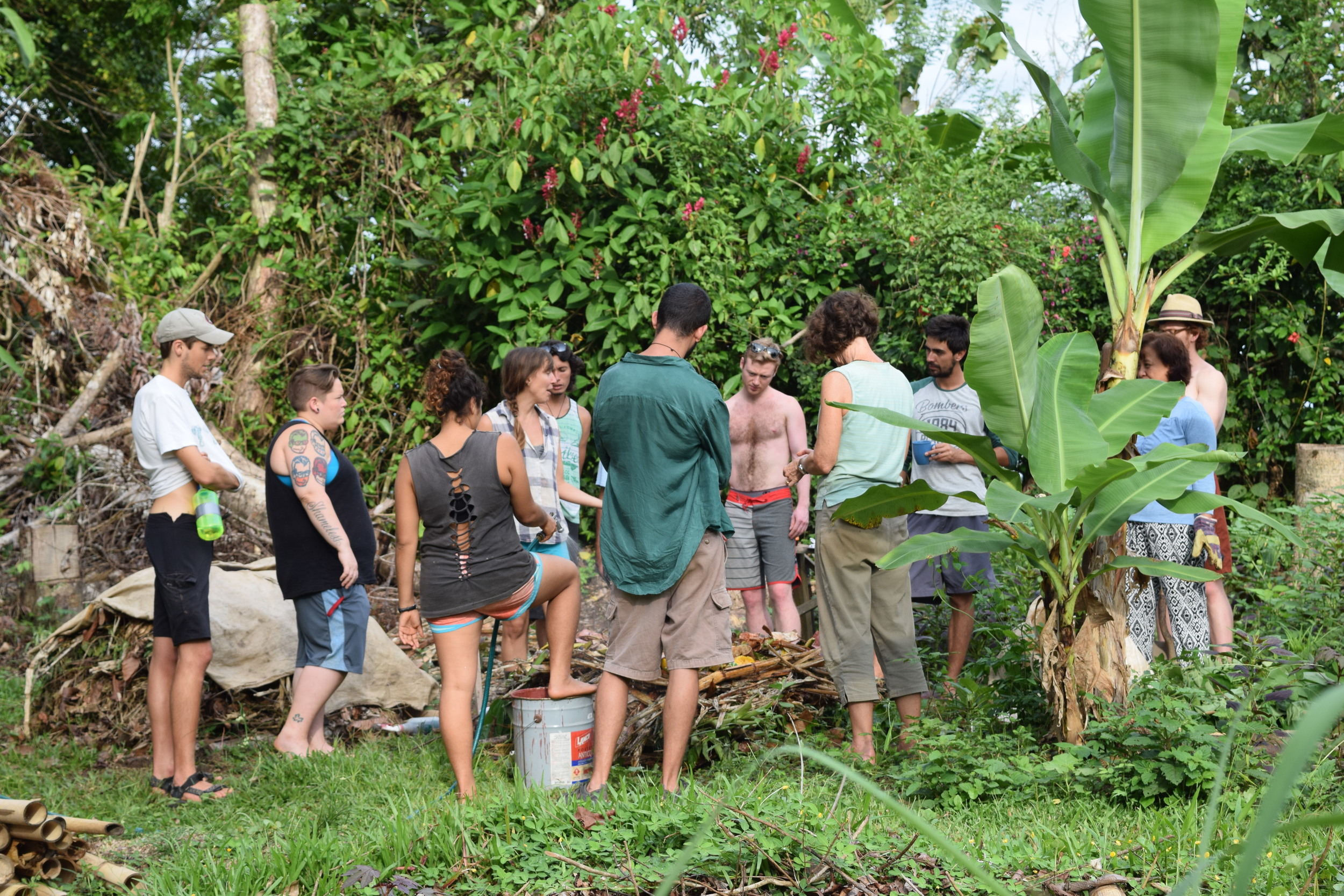
Learning about Compost making in our PDC.
With this in mind let's go back to stacking functions. As first mentioned, stacking functions is a primary principle of permaculture and basically refers to elements in your life having multiple functions, instead of a single function. I will offer a few examples to make the concept easier to grasp. A kitchen table is where food is prepared, where meals are shared and it can also become storage space. A fruit tree provides fruit, offers shade, produces mulch, fire wood and a climbing structure. Try to think of elements in your life and what you use them for. If you can only come up with one use for something, it's probably not necessary to have in your life. Can you think of anything that doesn't have multiple functions?
After taking the permaculture design course (PDC) at the ranch, I started to notice that I was applying these principles everywhere and had been all along, only now I was able to recognize this process. Stacking functions is apart of my everyday life here. My role has taken many forms, but recently I have focused on the farm to table operations. I propagate plants, nurture them and continuously maintain them until they are ready to be harvested and used in the kitchen.

Ready to make pickles.
One morning in the Vivero (plant nursery) and kitchen gardens I realized that everything I was doing actually had multiple functions. I'd set out to clear the paths and Swales from plants too tall to hold themselves up from the relentless rainy season downpours. I was simply cutting and clearing. But it was more than that. The plants I was tending too were edible salad and cooking greens, perfect to use in the kitchen later that day. And this got me thinking, what other functions do these humble garden tasks have? Well, I was pruning and shaping the plants, helping to promote new growth and removing old growth. I was collecting cuttings to propagate in the nursery later that day. And from what was leftover, I was gathering nitrogen rich green cover for our compost pile. When I was done clearing I got onto weeding and again found myself picking out perfectly edible food growing in unintentional places. I wasn't simply weeding, I was improving the aesthetic of the gardens, creating a new intentional herb garden and collecting herbs for use in the kitchen.
Later that week I was in the kitchen processing our farm food and found myself using these ingredients in many different ways. The tulsi or holy basil I'd cut back was used fresh to make a concentrate to flavor our kefir water sodas. Some of it was dried and put on the tea table and some of it was used to flavor a meal. One of my favorite foods to process this year has been mango. When it's ripe we eat it fresh, add it to our hot sauce, use it in smoothies and freeze it to make ice cream. When it's green we pickle it, make green mango kimchi, create green mango salads or simply slice it up and sprinkle with our chili lime salt. It seems simple but I'd bet many of you have set out to do a simple but necessary task in the kitchen or garden without realizing that what you're doing or using actually has many functions.
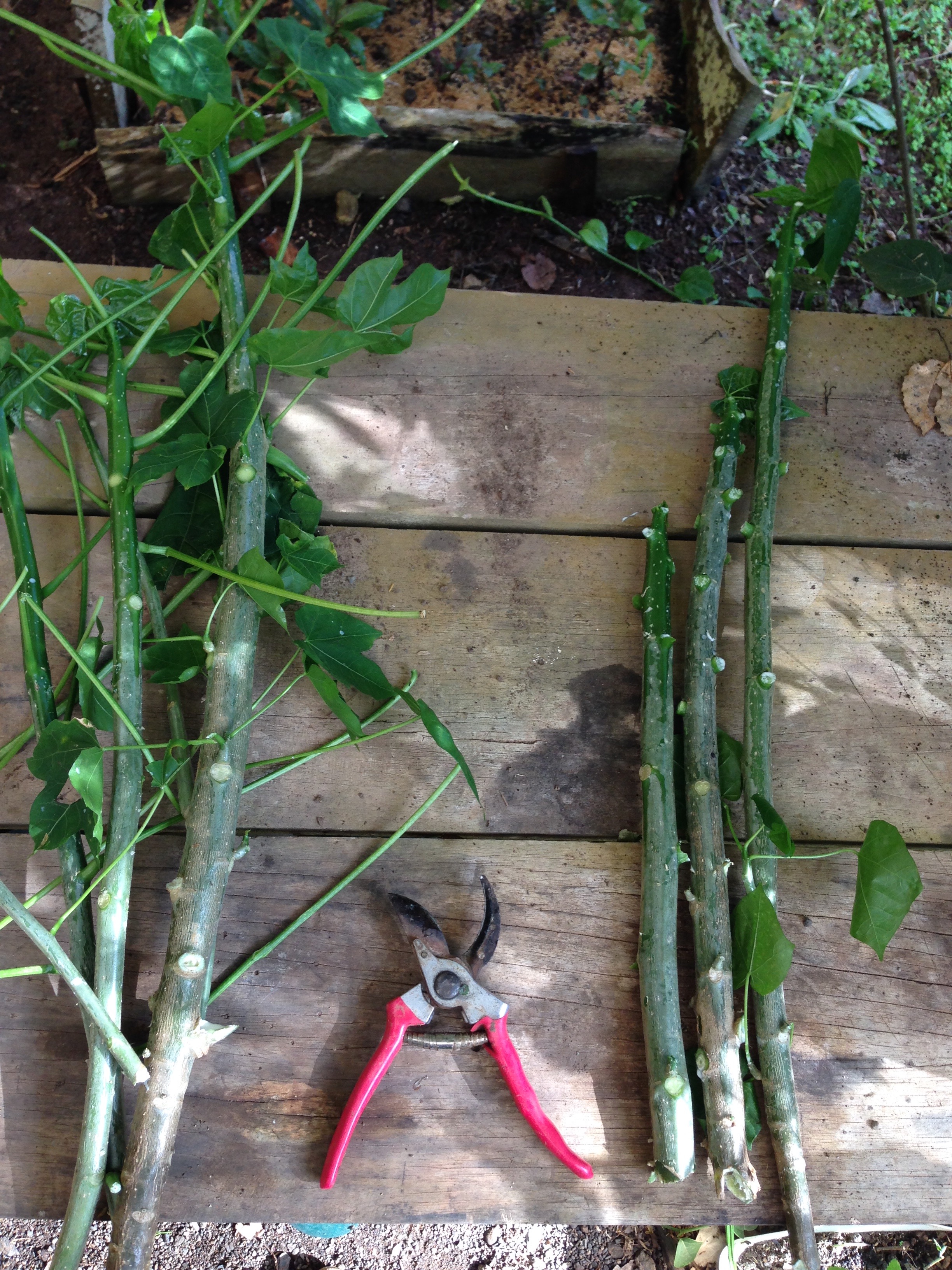
Chaya cuttings from the garden.
I've found this concept a wonderful and useful one to apply to my life here at the ranch. It is an approach I will take with me when I leave. A way of moving and doing that is easily applied to my life back home in the city. I will find myself asking the question, "what functions does this item/task/plant/food have?" over and over again. If I'm able to come up with at least 3 (positive) functions then I'm happy to purchase/do/ plant/use it. If not then I will rethink my choices. Of course there will be some situations where this concept is not applicable but there are many where it is and I believe it's simple enough for everyone to employ. After all it is these small changes in our lives and more specifically, in our thinking that help move the big change in the right direction. It is the decision to question what we are doing and using and actually think about the consequences, it is the decision to think and act consciously.
NEWS AND NOTES
Our Permaculture Design Course is on the schedule for 2017. Course runs from April 25th to May 8th. We are hoping for another great turnout so help us spread the word!
In 2016 we offered over a half dozen full and partial scholarships to students from Costa Rica and around Latin America to participate in our workshops.
We were able to do this through the generous support of the Mastate Charitable Foundation. We hope to continue this pattern in 2017 and are now accepting tax-deductible donations for our Central American Scholarship Program. Help has increase the accessibility of sustainability education to our neighbors and consider making a donation!
Abrazos
The Ranch Crew

Tips for Working with Tropical Soils
Soil, the ever fascinating topic to any garden guru or green thumb. Here at the Ranch it's all about topsoil, which is basically non-existent. The little soil that is present has a high clay content making it particularly susceptible to compaction. It is also highly acidic. The combination of the two means that without any additives it would be challenging to grow anything at all. So we've devised a number of methods to build up the topsoil, break up the clay and raise the pH throughout our orchard and garden spaces. These methods can be used anywhere in the world to improve your soil.
Lydia is one of our 2016 Apprentices in Sustainable Living. She has studied Horticulture and has a Bachelor of Environments (Landscape Architecture) from the University of Melbourne in Australia. She is super keen on plants and the fundamental relationship between plants and soil. Healthy soil is the key to healthy plants. This post is about soil in the tropics, including some of the challenges that exist and how these challenges are managed at Rancho Mastatal.

Sacha Inchi before a heavy mulch application.
Soil, the ever fascinating topic to any garden guru or green thumb. Here at the Ranch it's all about topsoil, which is basically non-existent. The little soil that is present has a high clay content making it particularly susceptible to compaction. It is also highly acidic. The combination of the two means that without any additives it would be challenging to grow anything at all. So we've devised a number of methods to build up the topsoil, break up the clay and raise the pH throughout our orchard and garden spaces. These methods can be used anywhere in the world to improve your soil.
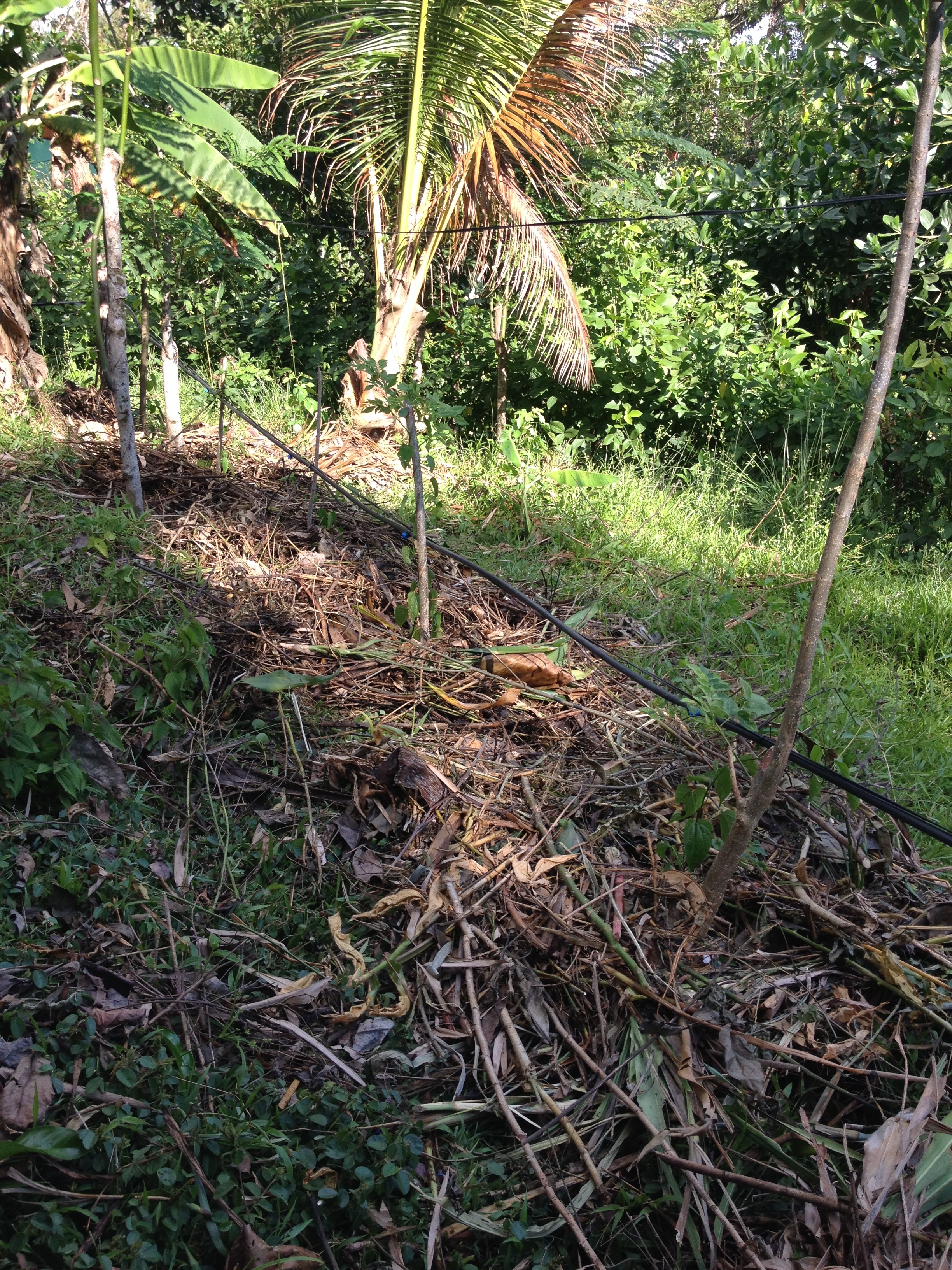
The same plants as above after a healthy mulch cover.
First and foremost, topsoil! How do we do it? The majority of nutrients in the jungle ecosystem are stored in plants. When nutrients become available plants are quick to soak them up because there is stiff competition when living in such close proximity to your neighbors. This means that plant biomass is an incredibly rich and abundant source of nutrients. Plant biomass refers to all plant material, living and dead including leaves, trunks and branches. The main way we utilize this biomass is what Scott refers to as "doughnut" mulching, basically forming circular doughnuts of plant material around the base of our fruit and nut trees. This mimics nature by following the 'top-down' approach that allows microorganisms to move the material down. It is important to note that mulch should never touch the trunk of your trees because this will cause rot. A 5 inch radius between trunk and mulch is a good aim.
Another method used in zone 1 to improve soil quality is to bury pieces of wood under the soil in our garden beds. The wood acts like a sponge, retaining water throughout the dry season and, reducing compactness in the wet season by aerating the soil. It also provides habitat for microorganisms, crucial for plant health and growth. Our garden beds are mulched regularly with dead leaves collected from the forest floor to retain moisture in the soil, reduce weed growth and add nutrients. This is known as Hugulkulture.
Now, onto soil pH, the next big topic around soil in the tropics. There are 6 cooking methods used at the Ranch, 3 of which rely on wood, the rocket stove, the biochar stove and the pizza oven (read here for more about our alternative cook stoves). With 3 meals per day, 6 days a week being pumped out of our kitchen, you can imagine how much charcoal and ash we produce. Instead of simply disposing of this alkaline-rich bi-product we add it to our soil.
Charcoal is a carbon-rich soil additive, that adds alkalinity to the soil, raising the pH. It has a high surface area on a microscopic level which means it is capable of storing water and nutrients in the soil, making it a valuable additive in both the dry season when water is required and the wet season when nutrients are required. The addition of charcoal also aerates the soil and breaks up the clay. It is essential to note that when adding charcoal to soil it must be soaked in a nitrogen solution first, such as compost/ worm tea. This will ensure it doesn't lock up precious nutrients from the soil. Ash is similar to charcoal but much finer. It also adds alkalinity to the soil, raising the pH. Limestone is another soil additive used to raise the pH and up the alkalinity. We spread lime around the base of our fruit and nut trees, vines and shrubs.
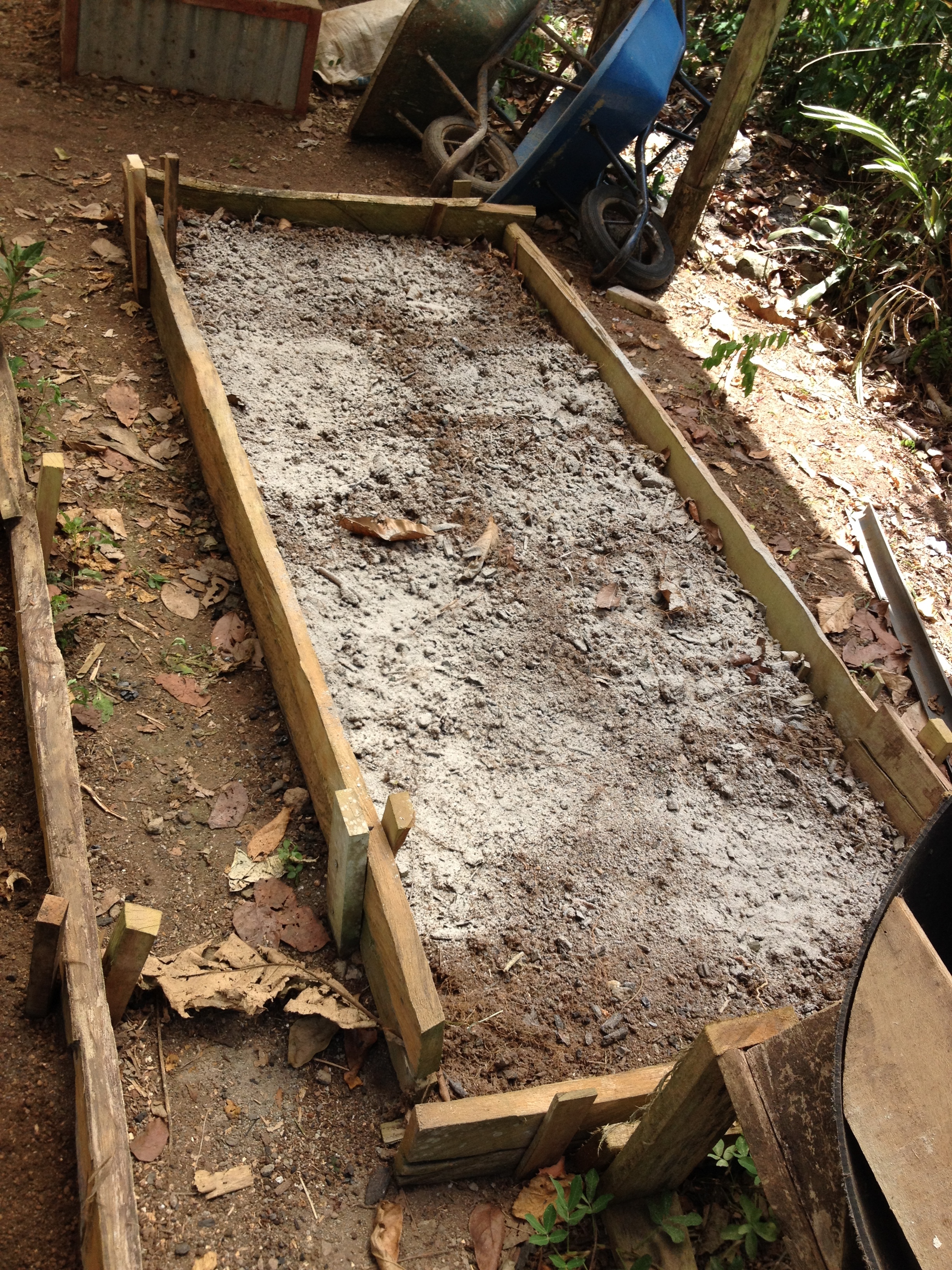
Lime applied to a raised garden bed.
Nitrogen is one of the most important soil nutrients and in order to produce good crops, nitrogen is essential. What better way to introduce nitrogen into the soil than with nitrogen fixing plants. These plants produce "cake & cookies" i.e. sugars in the soil that attract nitrogen fixing bacteria. These bacteria are capable of using these sugars to convert nitrogen gas in the soil into a plant soluble form, accessible to the surrounding plants. Believe it or not, plants control this process depending on how much nitrogen they feel they need.T he more sugars the plants produce, the more sugars the bacteria consume, converting this sugar into nitrogen for the plants. It's an incredible natural process! The nitrogen fixers most extensively used here are Acacia mangium, Shizolobium paryhybum, and Madero Negro, all of which are trees. We also use peanut grass, a spreading ground cover. Most plants in the Leguminosae family can be used as nitrogen fixing plants.
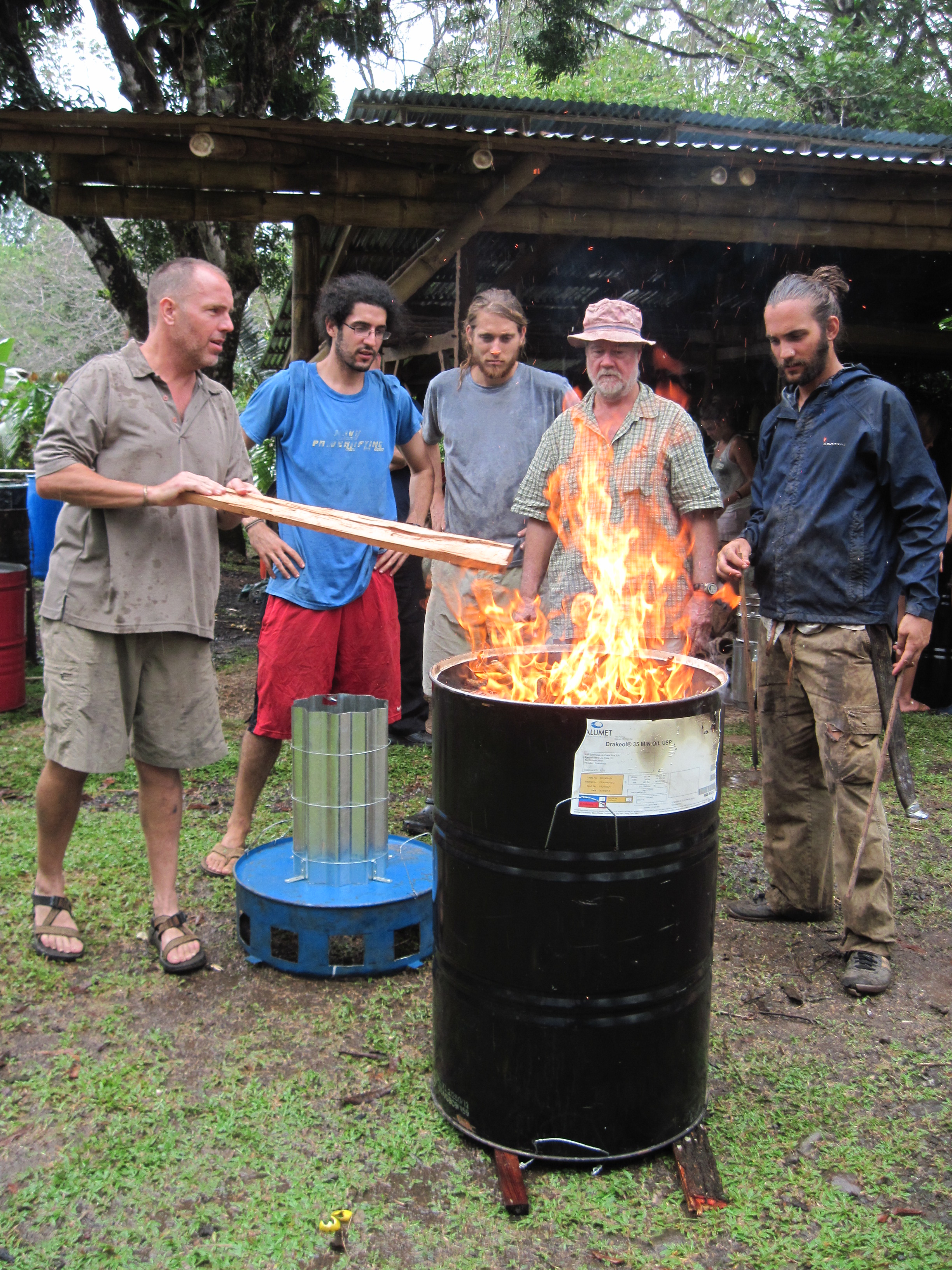
Making Biochar with a TLUD System.
Potting soil is another essential part of our plant operation here. The recipes used for potting soil change depending on what's available and required. One of the recipes we use is 2 parts forest soil plus 2 parts worm farm compost plus 1 part sifted builders sand. We collect the forest soil from the forest floor where a build up of plant material is prevalent e.g. a puddle, low point or valley. This is where nutrients gather because soil and small plant material is deposited (read here how we cultivate mountain microorganisms). The worm farm compost is a bi-product from our bio-digester system. This waste treatment system converts cow manure into methane gas, while leaving the fibrous material behind for the worm farm. The key to a great potting soil is to balance soil pH and ensue there is a rich source of matured compost where microorganisms thrive.
So there you have it, the challenges and of course the fun of soil in the tropics! Creating and enhancing topsoil, balancing soil pH, in this case raising it, balancing the clay content of your soil and making nutrient rich potting soil. I hope you can take some of these tips away and enrich your soil wherever you are. Here's to happy soil and abundant plants.
NEWS AND NOTES
We have a number of life changing workshops coming up.
We rely on all of the amazing ambassadors to our project to spread the word; if you know of anyone who needs a get-life-into-gear experience, send them to one of our classes!
Abrazos,
The Ranch Crew
Categories
Topics
- Agriculture 6
- Agroforestry 21
- Animals 2
- Apprenticeship 19
- Appropriate Technology 6
- Backpacking 1
- Bananas 1
- Basic Pantry 4
- Biochar 1
- Books 3
- Build Your Own Home 1
- Central America 5
- Chiles 1
- Cinnamon 1
- Clay Carving 1
- Climate 2
- Climate Change 1
- Cob oven 1
- Communication 5
- Community 24
- Compost 2
- Composting Toilets 2
- Condiments 1
- Conservation 2
- Cooking 4
- Costa Rica 18
- Design 10
- Earthen Construction 10
- Eat Local 2
- Ecohome 1
- Education 9
- Environment 3
- Ethics 4
- Farm to Table 12
- Fasting 1
- Fermentation 14
- Food 22
- Food Choices 8
- Food Forest 8
- Food Processing 15
- Food Systems 12
- Gap Year 1
- Gardening 5
- Ginger Beer 1
- Harvest 2
- Health 12
- Healthy living 5
- Homemade 2
- Homestead 8
- Internet 2