

BLOG
Stories, articles, and updates from the Ranch community.

Tropical Brewing
The craft brewing movement has migrated to Central America and the Caribbean. A growing number of small scale artisanal producers are building on the American Craft Brewing tradition by incorporating local spices and fruits into traditionally brewed ales. To distinguish themselves, from their temperate counterparts, they are adding a tropical flare and creating innovative flavor combinations
by Connor Harron
The craft brewing movement has migrated to Central America and the Caribbean. A growing number of small scale artisanal producers are building on the American Craft Brewing tradition by incorporating local spices and fruits into traditionally brewed ales. To distinguish themselves, from their temperate counterparts, they are adding a tropical flare and creating innovative flavor combinations. For example Domingo7’s Maracuyá Pale Ale (that’s Spanish for Passionfruit) in Costa Rica, Ocean Lab’s B.O.B. - Blood Orange Blonde in Puerto Rico and Lu Bru’s Maiz Azul (Blue Corn) Ale in Mexico all demonstrate how local producers are beginning to incorporate regional ingredients into local craft beer movements. This is surely a positive development and one that leads us to consider other ways we might be able to further highlight local and seasonal ingredients into craft beers.

These efforts will help to make brewing both more sustainable and position craft brewing as a vehicle for more thoroughly exploring terroir, which describes the potential for fermentation to be used as a method of expressing the unique environmental conditions of the places in which our ferments are produced. By using exclusively local ingredients as well as wild captured yeasts, we have the power to capture the unique flavors of seasons and regional differences that allow for near infinite variation and creativity to explore new combinations of flavors that are rooted in cultural tradition while simultaneously pushing the frontier of artesian brewing. As much as I love finding good craft beer in places like Mexico and Costa Rica, I constantly find myself asking if it really makes sense to be brewing beer with imported German Barley and Hops from the Pacific Northwest United States when there are such a plethora of sugar sources and bittering herbs available locally in nearly every corner of the globe. Could we instead develop beers using a hybridized process and create products that are truly local while still maintaining the key characteristics that make beer, beer?
Speaking of, have you ever asked yourself what it is that really makes a beer? It turns out, the answer really depends on who you ask and where you live. In the most general terms, beers are fermented from carbohydrate rich starches (typically grains such as barley) that first need to be enzymatically converted into simple sugars and extracted into a liquid malt before the substrate can be fermented to produce appreciable levels of alcohol. Wines and Ciders on the other hand, are fermented from fruits and simple sugars that can be fermented into alcohol with limited or no processing. In the case of beers, bittering herbs such as hops are commonly added to provide antimicrobial properties, improve shelf stability and add complex flavors to ferments. In the United States, it turns out that hops are not required in the production of beer and that there are many malt substitutes that are allowed in the production of beer, including “rice, grain of any kind, bran, glucose, sugar, and molasses (TTB Ruling, 2008).” This definition is actually quite liberating, and creates the opportunity to experiment with non-traditional malts and bittering herbs in ways that will promote creativity and improve the sustainability of the craft brewing market globally. This flexibility in malt production will be especially important given that recent climate models suggest that the regional distribution of barley production will become increasing restricted over the next 20 years (Nature, 2018).

In Costa Rica, we have been experimenting and finding repeated success using a wide range of local ingredients including banana, corn, rice, cacao beans, coffee and local cane sugar for producing malts. Corn and bananas, for example, both have long cultural traditions of being used in the creation of local beers. In Eastern Africa, Bananas have long been used to create malt for the production of banana beer (Urwaga or Mubisi as it is locally known). Bananas make for an interesting malt base because they fall into a relatively unique category of fruits that when ripe are rich in both simple sugars and complex carbohydrates that can be easily fermented into a strongly alcoholic brew while maintaining a mouthfeel that is remarkably similar to beer brewed from barley. When the ripe bananas are boiled for several hours, the sugars begin to caramelize, transforming the flavor of the malt into a sweet, neutral flavored base that remarkably, tastes very little of banana, making it an ideal substrate for mixing with bitter herbs or other local products such as coffee and chocolate that can be fermented into either an Ale or Stout like brew.

Conversely, in many parts of South America, but perhaps most notably in Peru, Maize has been used for centuries to produce a corn beer called Chicha. Unlike barley, which when sprouted produces a large concentration of Amylase Enzymes (the key types of enzymes needed to convert complex carbohydrates into fermentable sugars), to make a corn beer, these enzymes need to come from another source. The indigenous peoples of South America developed an ingenious solution to this challenge when they discovered that chewing the cooked corn would transform the starchy, carbohydrate rich grain into a sweet masa that could then be re-boiled in water and strained to create a fermentable Wort made purely from Maize. Although many foreigners cringe when they first learn about the process, for the Inca’s, it was a powerful community building practice that would bring people together to sit around the fire, alternating between sharing stories and laughter while chewing the cooked corn and then depositing all of the masa into a large pot. Although they almost assuredly could not have fully comprehended the transformations that were taking place, their solution was so ingenious because human saliva is packed full of the enzymes needed to break down the carbohydrates in corn into fermentable sugars. I experimented with the traditional process a couple years ago, and I have to admit it was a powerful community building process that for me, took the idea of collective fermentation to a whole other level. Talk about terroir!
The problem with the traditional process is that it is incredibly labor intensive. If you are lucky, like me, you might be able to convince your friends to help you chew a few pounds of corn once or twice for the novelty of the experience, but you are likely to be hard pressed to find a consistent source of labor to chew through the many pounds of corn you will need to produce even a few gallons of Peruvian style Chicha. Fortunately, today we have access to many sources of amylase besides our saliva. As it turns out, ripe bananas (and in particular, ripe banana peels), contain a very high concentration of the same amylase enzymes needed to convert the starches in Maize into fermentable sugars. If you think about it, this actually makes a lot of sense. Unripened green bananas and plantains are a very starchy staple food crop that is used culinarily in a similar fashion to potatoes. As the skin yellows and the banana ripens however, the banana naturally transforms those carbohydrates into simple sugars that make dessert bananas so pleasant to eat directly out of hand.
Due to the high concentration of amylase enzymes present in ripe banana peels, they can be dehydrated and pulverized into an enzyme rich powder that can be mixed with ground maize and water and then mashed similarly to a barley based beer between 140-160 F for 2-24 hours (depending on the ratio of corn to powdered banana peels used) before being strained and boiled to make a fermentable wort. You’ll need to taste the Mash or use iodine strips to determine when the conversion has been completed. There are actually lots of fruits and vegetables that are rich in amylase enzymes. Sweet potato, for example, has such a high concentration of these enzymes that its peel is often used in the commercial production of Amylase.
Alternatively, instead of using the enzymes present in another product, it is also possible to ferment grains with certain types of molds that consume starches and in turn naturally produce the enzymes needed to convert the grains of carbohydrates into fermentable sugars. In Japan for example, Aspergillus Oryzae (or Koji as it is better known), is a humble yet miraculous mold that has been grown on rice for millennia in order to sweeten the rice and make Sake. It is also the key ingredient for making naturally brewed Soy Sauce or fermenting Miso due to the rich diversity of enzymes Koji produces that not only sweeten carbohydrate rich foods, but also break down proteins into amino acids that are the basis for savory foods and the flavor of umami. Due to these impressive properties, koji has now made it’s way out of Japan is slowly become increasingly familiar around the globe. This is assuredly a wonderful thing, because it has now been well established that Koji can be grown on a variety of substrates and virtually any grain, including rice, barley and corn, making it an ideal candidate for assisting in the brewing process anywhere on Earth.

To further explore local flavors and novel combinations, while boiling our worts we have been experimenting with using a variety of local bittering herbs and teas to add complex flavors to our beers, including ginger, turmeric, lemongrass, vanilla and many others. During either primary or secondary fermentations, we use nylon mesh bags weighed down with boiled volcanic rocks to infuse fresh fruit from the farm such as Pineapple, Soursop, Starfruit, or freshly roasted Cacao Nibs, just to name a few examples. Finally, by fermenting our beers with mixed cultures, wild captured yeasts and/or locally adapted strains, we have been able to produce ales with several layers of harmonious flavors, which provide depth and complexity that is only possible to achieve with mixed culture fermentation.
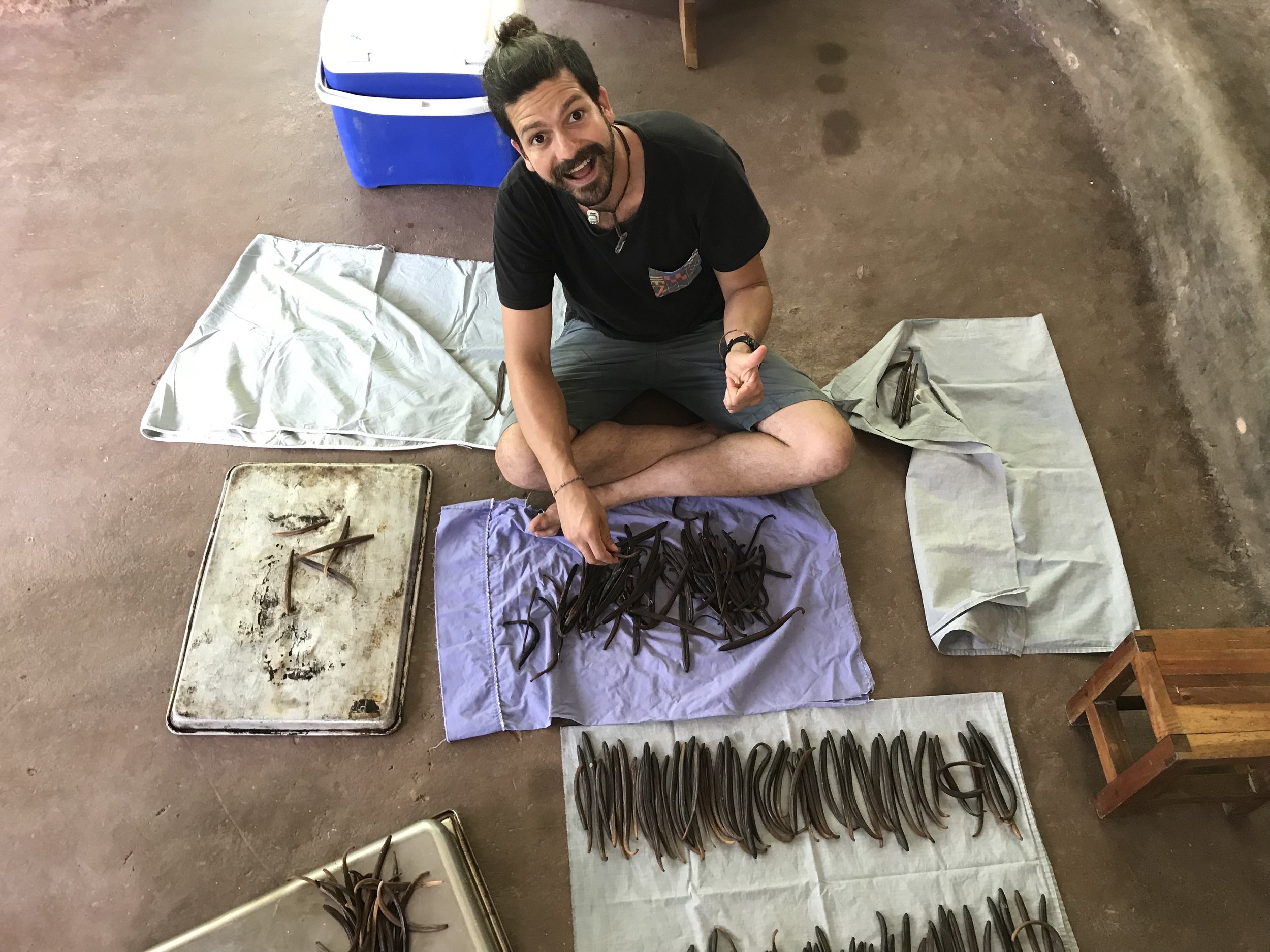
I would not have believed what a powerful role yeast and bacteria play in the creation of complex beers and wines when I first started brewing over a decade ago. Now however, I have learned first hand just what a difference the cultures we use can make. The experience of trialing yeast captured off of different fruits and flowers has led me to encounter flavors I never would have dreamed possible. Some have certainly been on the far side of the funky extreme, including cultures that produce the dreaded odor of sweaty feet or burnt rubber. This however, is exactly the reason for small scale trials rather than placing our faith in large scale spontaneous fermentation. Once you discover the joy of fermenting a simple malt of dissolved sugar or Dry Malt Extract with wild yeast and tasting apples, pears, or other citrus fruits magically appear in the finished product, I believe that like me, you will never want to use a commercialized yeast strain on it’s own again.
I believe that by drawing from the richness of our cultural traditions around the world, we have the potential to greatly expand the breadth of our palates and to more intimately link our brews to the time and place in which they were crafted. The craft brewing revolution is still in its infancy and if I am to have a part of to play in it’s development, then Ginger Hibiscus Sake Hybrids, Banana Coffee Stouts, and Mayan Chocolate Ales will be just the tip of the iceberg.

If you would like our simple Hooch recipe, read our blog article with step by step instructions. If you want to learn more about the wild world of fermentation consider joining us for our year long apprenticeship where apprentices go deep into advanced fermentation techniques.

Building an Adobe Shower with Tadelakt Plaster
We recently completed our adobe shower and thought we would share with everybody how and in what order it was executed. The building blocks of the design were Adobes that we made with our 2018 apprentices and student groups that visited us through the year
By core team members Nic & Ali
We recently completed another adobe shower and thought we would share with everybody how and in what order it was executed. The building blocks of the design were adobes that we made with our 2018 apprentices and student groups that visited us through the year. In total we used around 500 adobe bricks at 5” x 5” x 10”.

What is an Adobe brick?
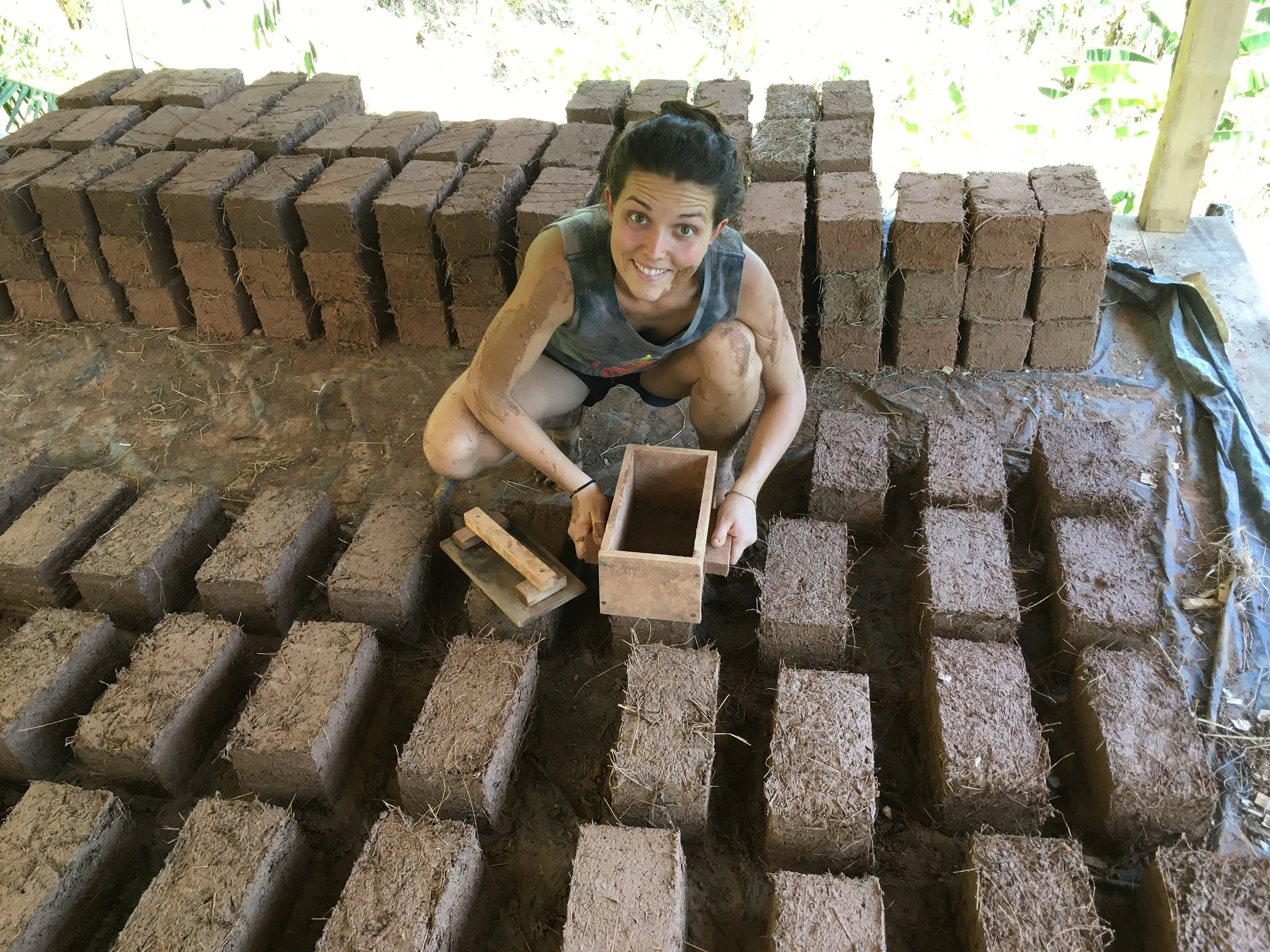
An adobe brick is mixture of sand, straw and clay, formed in a mold and sun dried.
How to make an Adobe brick
Start by making tests with your soil, if you are not sure what that means, read this article. Where we live we have an abundance of red clay soil. Using our soil, which is almost pure clay, we can use 1 part soil to 3 parts sand as a good starting point, depending on variations in the soil we may need to mix at 1:4 too. We add about ½ a part of long straw too, this gives the adobes some additional tensile strength. We then put all our ingredients on a tarp and begin to mix it together. Once the adobe mix is ready (one uniform color of mixed sand and clay) the mixture is put into an adobe form. When packing the forms make sure to fill all the corners! The form is then removed and the brick is left in the sun to dry until it dry enough to be moved and stacked. In our climate during the dry season this takes 3 to 5 days.
Steps to making a shower
1. Planning
As with all successful projects the key is good planning. We like to use a program called SketchUp to mock up all of our designs, lay out foundations, the frame and even plumbing. Every detail must be planned in advance this makes sure that the correct provisions can be designed in and made in advance.

2. Foundations
For our shower we used concrete blocks cut in half so that they could form the curves that we wanted. A shower is going to be a wet area so it is important that you think about this during the planning stage, where will the water drain to? Are my pipes embedded in my foundation? How is my roof going to be attached. In our design we decided to have a separate Timber Frame to support the roof structure.

Step 3 - Adobe
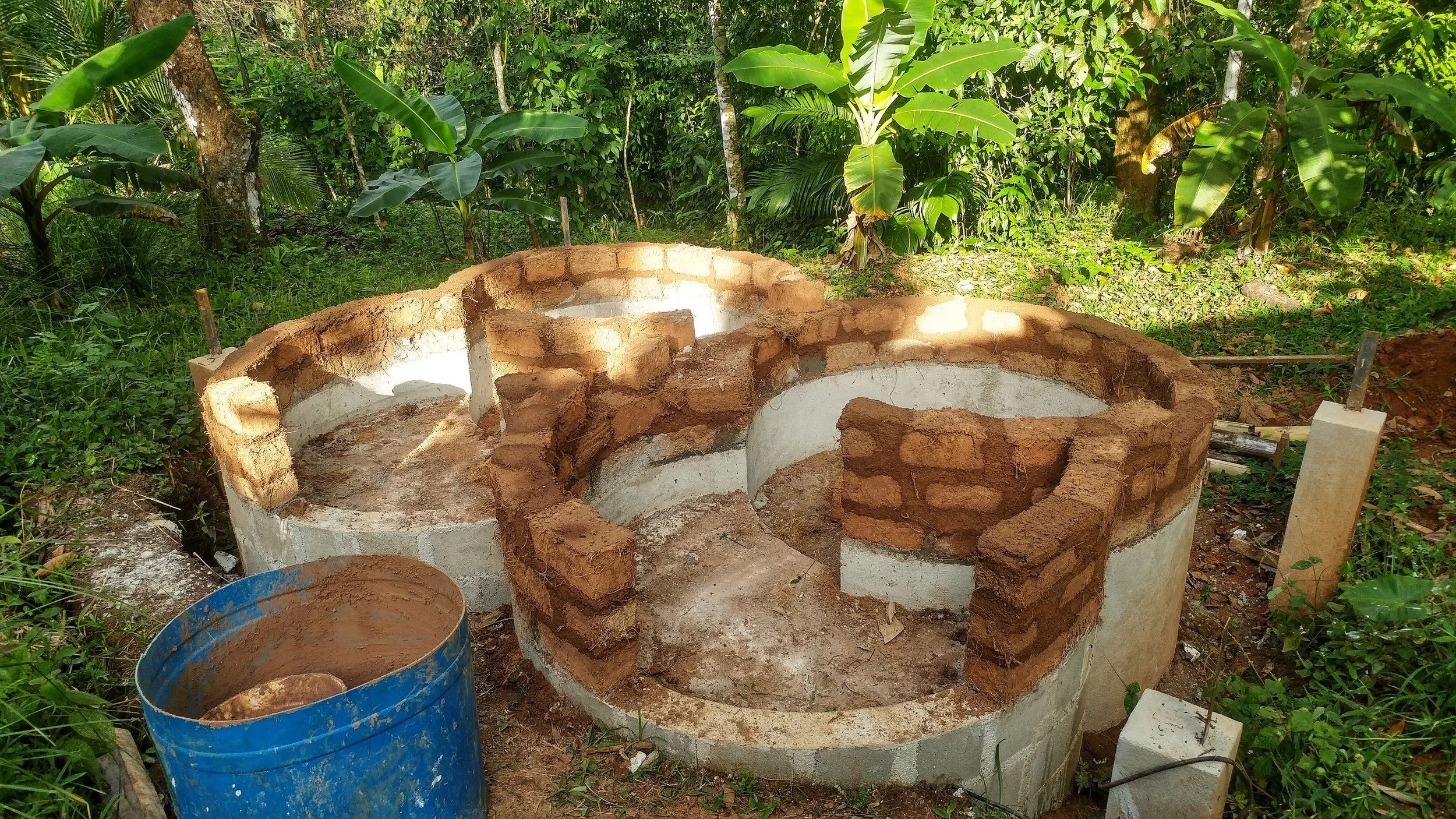
The first course of adobes were attached to the foundation using a cement based mortar this helped them bond strongly to the concrete foundation.
Step 4 - Bond Beam
From the second course upwards we used a sandy clay mortar for the adobes. Every 4 courses of adobes we made a cob bond beam for extra strength.

Step 5 - Gringo Blocks
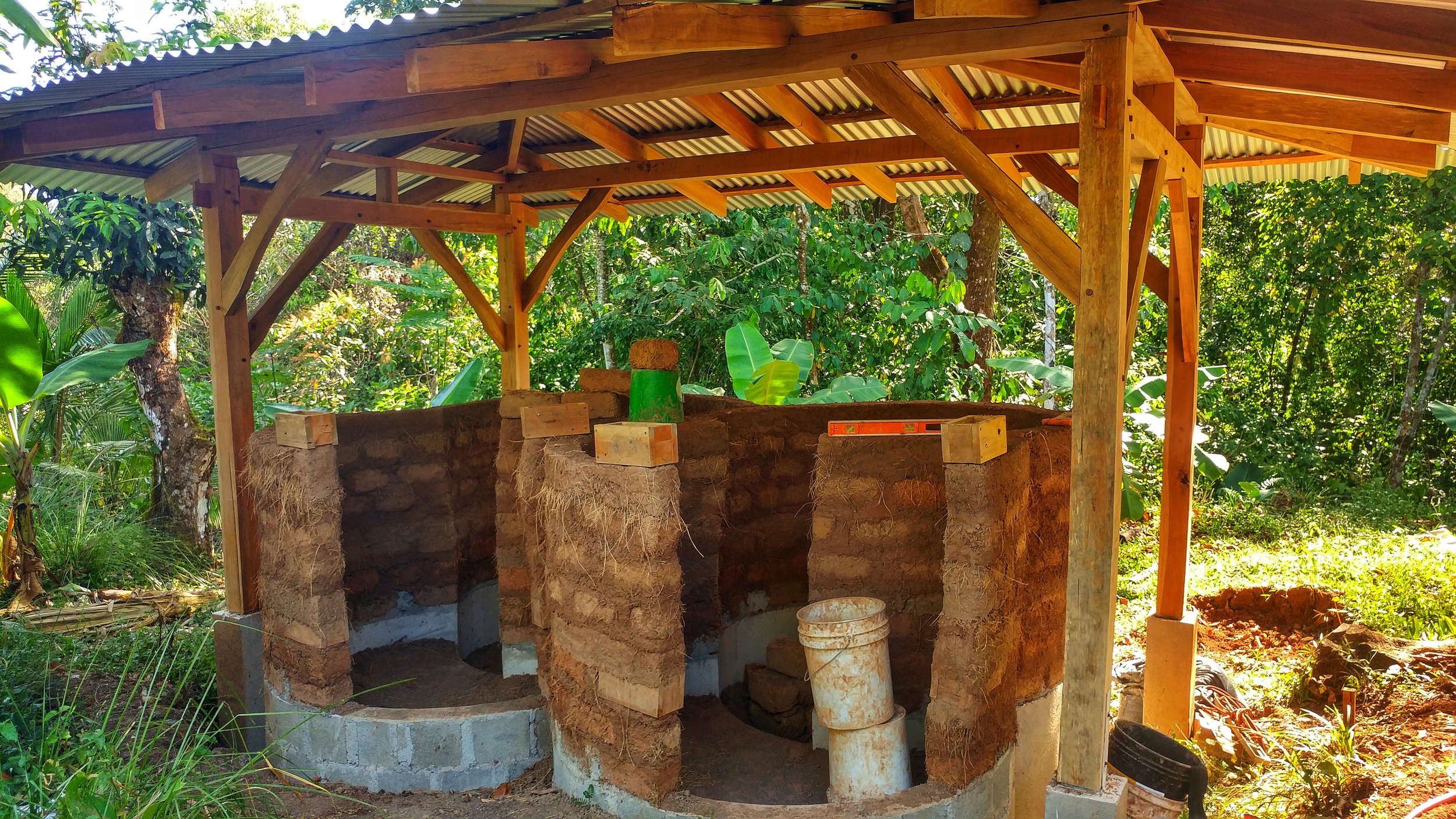
Wooden hollow blocks (known as gringo blocks) were put at the end of each wall to attach in the wooden frame for the doors and a hollow plumbing box was installed where all the plumbing would be inserted for the shower handle. In Costa Rica the plumbing parts easily purchased in the local hardware store are terrible and always leak so we made most of the plumbing accessible from the outside. It is generally a good idea when making your initial design to plan for replacing parts in the future.
Step 6 - Frames
The door frames were installed at this point and they were screwed into the Gringo blocks. The door frames were also tied into the adobe structure using some mesh, we used what we could locally find which is what they sell for chicken fencing. You could also use a variety of natural alternatives, attaching them to the wood and plastering them in to the wall to give them extra stability.

Step 7 - Leveling
A leveling coat was then applied to sculpt and level the walls, this was tied into the door frame to give extra support too.
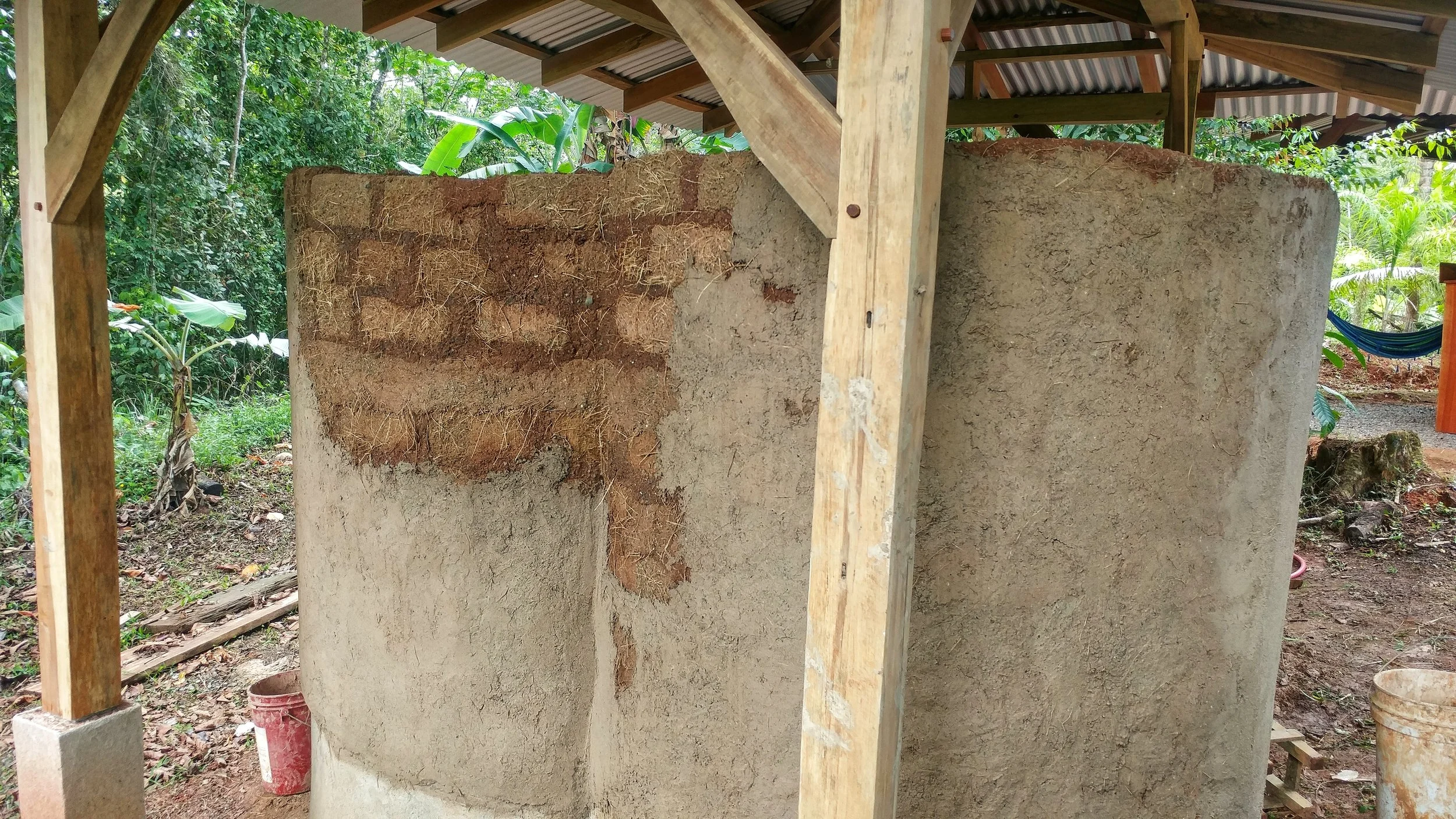
Step 8 - Tiling
The vertical surfaces of the concrete block were tiled to provide a plaster stop on the bottom edge were the plaster would meet the tile.
Step 9 - Plastering
A lime base coat was then applied over the earthen leveling coat. Whilst this basecoat was still damp (before it started wicking moisture again) we applied the tadelakt mix (1 part fine lime sand and 1 part lime). We did the Tadelakt like this as we had such a large continuous surface area to plaster and needed the time to work it all.

Step 10 - Tadelakt
Once the plaster had dried enough we stoned and soaped the wall using our homemade soap. The Stearic Acid in soap reacts with the Calcium Hydroxide (hydrated lime) to make Calcium Stearate which is highly hydrophobic and one of the reason Tadelakt is considered water resistant. Read more about Tadelakt here.
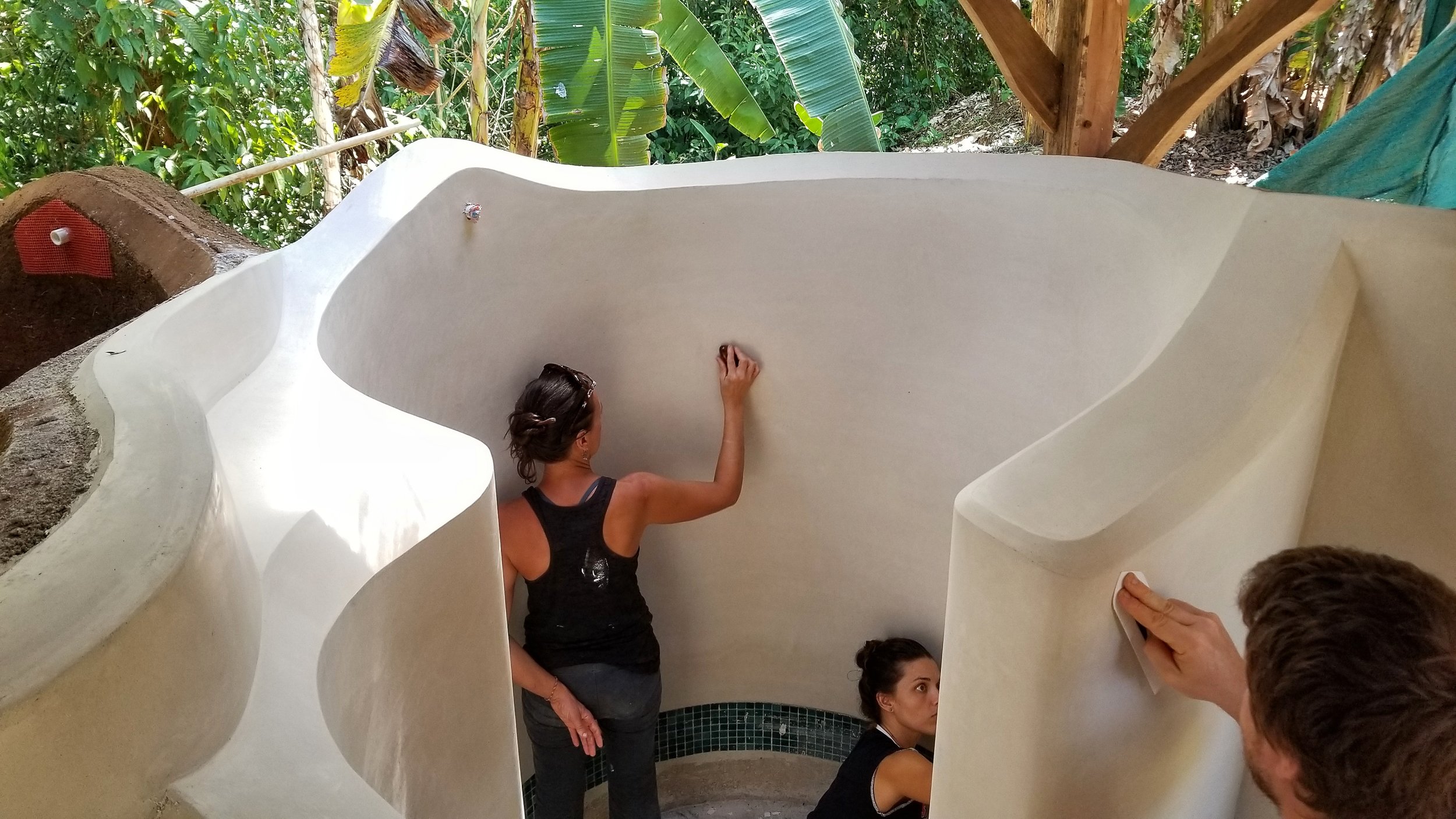
Step 11 - Mosaic
The remaining horizontal surfaces were tiled using different colored swimming pool tiles.

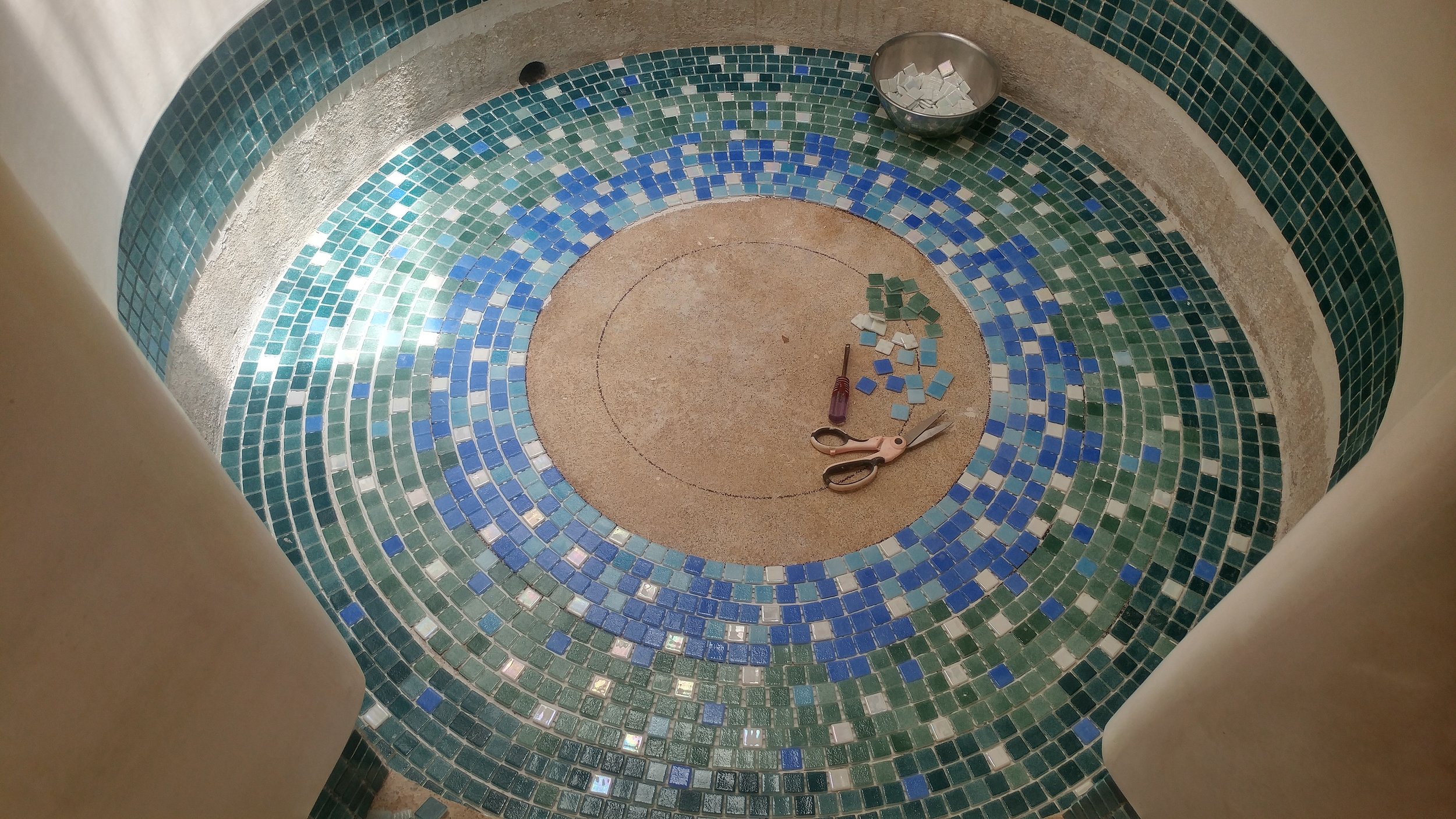

Step 12- Exterior Plaster
We used some of our left over mixes to do a base coat and finish in one pass, adding some pigments to alter the color. We used floats and darbies for the base coat and a sponge float and flexible Japanese trowel for the finish
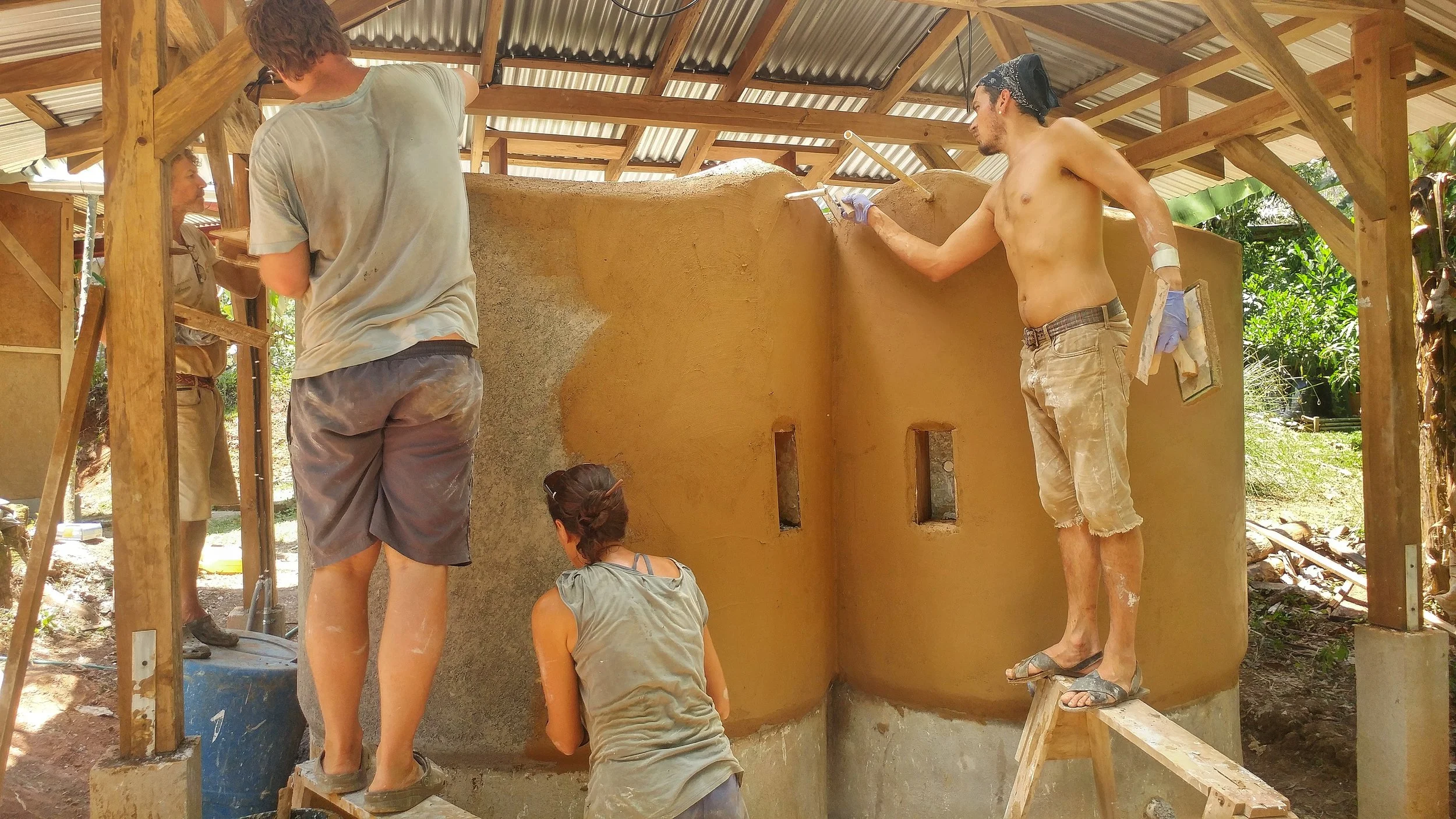
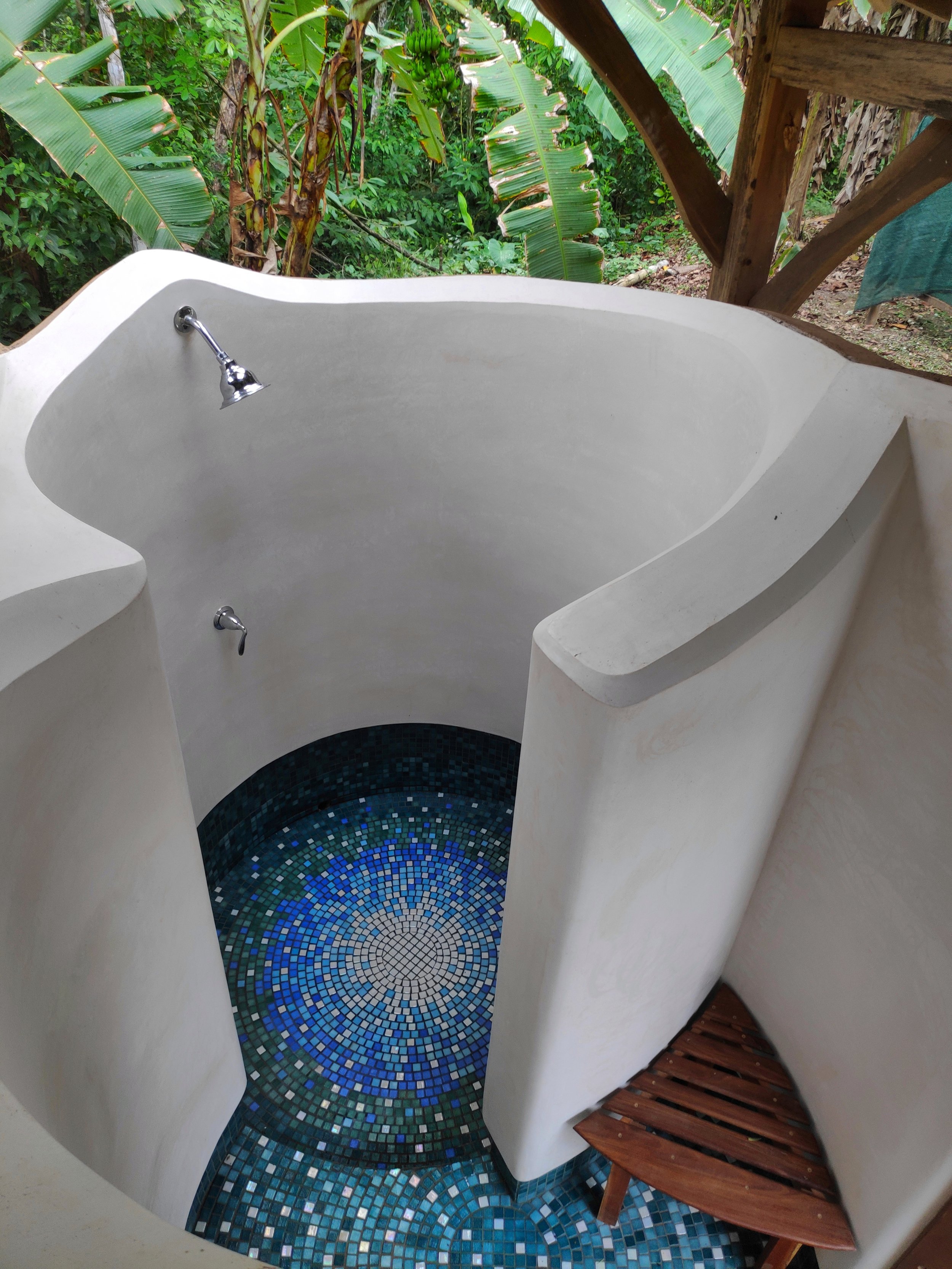
The shower was ready, once the plumbing was connected all that was left to do was enjoy the cool water in these wonderful showers. The two sides of the shower are pretty similar, the main difference being the color combination on the tile mosaic floor. Do you want to bathe in this epic outdoor shower? Come stay with us at Bernies Bungalow!
want to learn more?
Dream of building your own home, outdoor space, or maybe just a simple earthen garden bench?
With over 15 years of experience building and teaching natural building techniques, the Ranch is a perfect setting to get inspired and hands on learning.
Join us for one of our upcoming natural building focused workshops. We generally host a workshop in natural building, timber framing, and/or bamboo construction annually.

Hugulkultur in the Tropics
Hugelkultur means hill or mound in German combined with culture. It has been practiced in Europe for hundreds of years. Hugelkultur is a simple agricultural practice that doesn’t take much to set up and provides numerous benefits.
by Ben Behrend, 2019 Apprentice
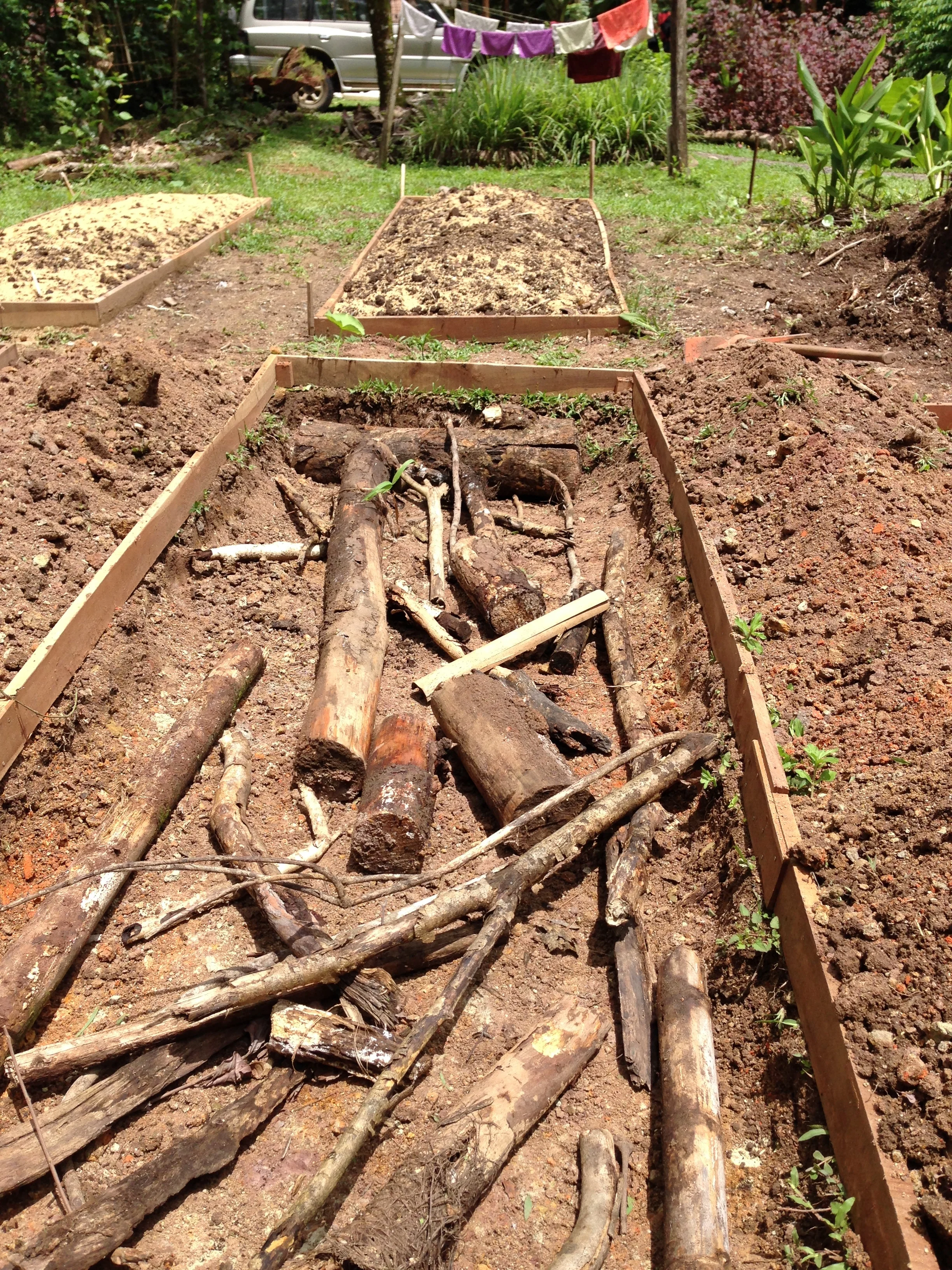
Hugelkultur means “hill” or “mound” in German combined with “culture”. It has been practiced in Europe for hundreds of years. Hugelkultur is a simple agricultural practice that doesn’t take much to set up and provides numerous benefits. As the wood decomposes it creates air pockets; it releases nutrients slowly and also absorbs and retains water. This retention of water is important during drier periods or places like the desert or the dry season in the tropics.
This year at Rancho Mastatal, it has been hot and dry, causing strain on many of our plants. Immediately surrounding our main gathering area/kitchen is zone 1 which would be a great place to experiment with hugelkultur. Not much has been written on Hugelkultur in the tropics. Several groups of apprentices have trialed using woody material underneath garden beds. Whilst it is difficult to say with certainty that due to the hugelkultur practices yields have increased, it is safe to say that yields have increased and i would summarize that this due to many factors one of which is the use of hugelkultur. I feel inspired to continue experimenting myself and see how it works first hand. Below are instructions that you can follow to make your own hugelkultur.

· Dig a foot or two of the top soil and put that aside.
· Pile in decomposing tree limbs the more “rotten” the better, biggest on bottom and working up with smaller. Some people use burned logs, or add ash for extra potassium. Not all woods are created equally when it comes to hugelkultur
o It is not good to use Cedar for example as it takes longer to decomposes due to its natural pesticides/ herbicides/anti-fungal/anti-microbial properties. Black locust won’t break down fast and is very toxic. Based on this i would guess that Spanish Cedar and any hardwood used as fence posts may not be suitable in the tropics either eg Guachipelin, Madero Negro etc…
o Woods that work best: Alders, apple, aspen, birch, cottonwood, maple, oak, poplar, willow in temperate climates. For the tropics i would guess that any wood refered to as “semi-duro” would work i.e. any medium strength hardwood eg. Roble, most fruit tree woods etc…
o Layer the sod on top of this
· Layer sheet mulch an example
o 5 inches well aged compost
o 4 inches manure
o 8-12 inches of hay, straw, dead decomposing leaves, seaweed
o 1 inch of newspaper/cardboard
o Soil amendments (blood meal, bone meal, manure)
Letting the mound “rest” for several months, or even 1-2 years before planting is sometimes recommended. Beds are built up in a mound that can be up to waist height, any desired a length, and a narrow width (one source recommended three feet width). The recommended angle of the mound is 60-85 degrees by some sources, creating a triangle. Others, make a less steep slope that is also documented to work well. Over time as the wood decomposes it creates a sponge like bed underneath. This holds the moisture and produces lots of nutrients and fungal friends.

Toby Hemenway mentions in “Gaia’s Garden”, you can start potatoes a month early in this kind of bed. “Some naturalists theorize that roots and fungal mycelia may translocate water from these woody caches to plants and fungi many feet away.” (Gaia’s Garden, pg. 70). Wood locking up nitrogen has been a concern by some yet Hemenway feels wood decomposes so slowly that very little nitrogen is tied up by microbes gnawing at logs.
Over the first year, your hugels may sink as much as a foot depending on the climate. This is a natural settling of the pile, as the mound breaks down and decomposes. If you want to “rebuild’ hugels at the beginning of each year you can add more compost, otherwise you will produce excellent humus by the time your hugel levels out. Hugelkultur offers an attractive way to build top soil and retain water during the dry season.
We will keep you updated with our progress, in the mean time let us know what you are trying to do at home or have done with hugelkultur!
Interested in having the opportunity to learn whilst doing? Why not apply for our year long apprenticeship. Can’t dedicate the time to our year long apprenticeship, why not join us for our shorter internship?

Gardening and Permaculture practices at the Ranch
Here at the Ranch the year long apprentices have various roles and functions that support the Ranch community. By taking on responsibilities and managing certain areas we the chance to learn and experience those areas on a deeper level . Part of the educational model created by the ranch team is a monthly rotation of these so called life skills. Each apprentice transitions their life skill to the next apprentice, passing on all of the relevant information to their colleague in order to complete the various tasks associated with each life skill.
by Diana Dagash
2019 Apprentice

our front gardens
Here at the Ranch the year long apprentices have various roles and functions that support the Ranch community. By taking on responsibilities and managing certain areas we the chance to learn and experience those areas on a deeper level . Part of the educational model created by the ranch team is a monthly rotation of these so called life skills. Each apprentice transitions their life skill to the next apprentice, passing on all of the relevant information to their colleague in order to complete the various tasks associated with each life skill.
One of the life skills is currently called the Garden Gnome. I would like to share some of my experience and reflections from doing this task every morning for a month. The garden gnome is in charge of maintaining the front gardens. This is referred to as our zone 1 garden using permaculture lingo. It is the area that is in closest in proximity to the most frequently used space- the main house. In the Zone 1 gardens we grow herbs, annual and perennial crops such as mustard greens, katuk, Haitian basket vine, hibiscus, cucumbers, squash, yard long beans,wing beans, radishes, sweet potato, moringa, basil, oregano, mint, parsley and curry leaf and other amazing tropical goodies which we use in our kitchen everyday. Having these crops growing in close proximity to where we spend most of our time allows us to easily provide the daily maintenance of this space such as watering, harvesting and weeding.
In Rancho Mastatal we approach gardening through a permaculture lens. By mimicking the patterns in nature we are able to create micro climates in which our crops thrive. We create systems that have many functions and support other systems in their functions, allowing them to thrive in harmony with nature. We apply a range of those practices at the ranch and we continue learning and experimenting with new possibilities.
Given that we live in the tropics we have two opposite seasons, about half the year its is dry and the other half rainy. Although the dry season has its own challenges I can only speak from my own experience taking care of the garden in the rainy season, for instance i believe that in the rainy season there is a lot of weeding whereas in the dry season there is a lot of watering!
As the rains increase in volume and frequency it is a time when everything begins to grow rapidly. The jungle fills up with even more green vegetation, popping out of every space available. It rains consistently every afternoon , sometimes all day and night. The soil is saturated . It is a happy time for ALL living things to thrive, including some of the more challenging species like mold, fungus and insects. Some of our crops were over taken by fungus or eaten by insects, others became over saturated with water as they were lacking sun and/or air flow. As with every challenge, i found an opportunity to research and experiment with natural recipes for pest and fungus control.
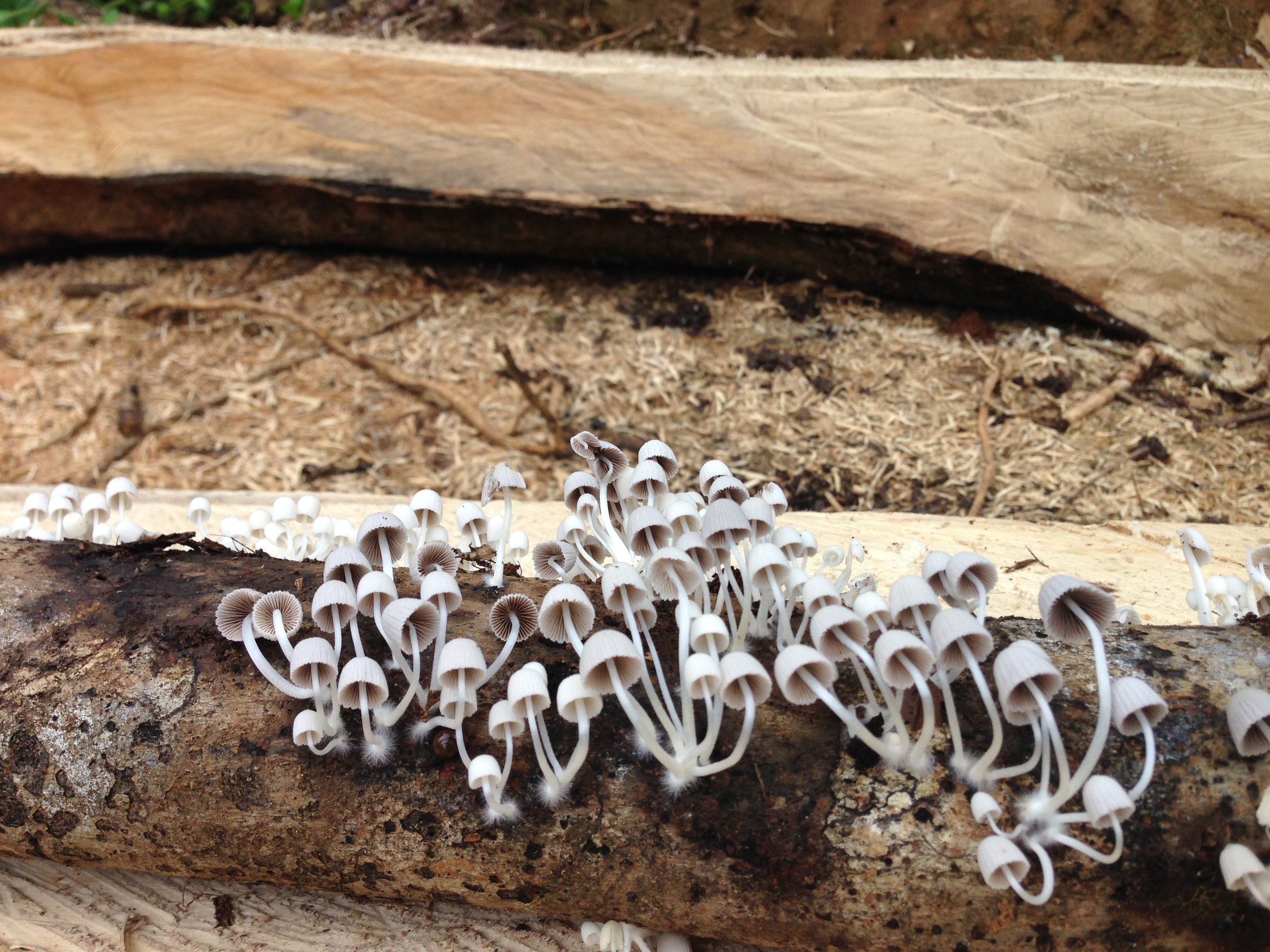
with the onset of the rains, mushrooms started popping up everywhere
My days started early in the mornings with a walk through the garden, observing the plants and checking the soil moisture levels. As I walked I noticed plants that seem to be struggling and tried to identify what might be affecting them. This is then communicated with the garden manager so we could discuss further ideas and solutions. We researched potential natural insecticides and fungicides that could help solve these issues.
Here is some of what we have learned and the practices we apply here at the ranch.
We are surrounded by amazing medicinal plants growing all around us, thriving under the jungle canopy or occupying disturbed pockets. These plants contain medicinal properties that can benefit humans as well as plants.

For example turmeric contains anti-inflammatory and antibacterial properties beneficial to humans and when planted among the roots of a tree, benefits the tree with those same properties This is referred to as companion planting. By planting diverse species next to each other they are able to support, protect and ultimately benefit one another. This can be as simple as providing shade or wind protection. Not only can companion planting by a useful tool in our belt to fight against disease and pest pressure but we can also use the properties of some local herbs. Here are some examples of what we have been doing.
Jackass bitter - the most bitter herb known, contains antifungal and antiparasitic properties. Spraying this tea onto diseased plants can repel insects and prevent fungal issues.
Inter cropping aromatic herbs like oregano, lemon grass and basil with certain food crops can confuse and repel insects with their scent and prevent disease with their antimicrobial and antifungal properties.
Using the shade of the cucumber trellis to help shade and shelter more delicate herbs underneath them.
Using peanut grass as a living mulch to crowd out weeds and provide nitrogen to the soil underneath some of our taller perennial crops such as Katuk and Cranberry hibiscus.
Planting Marigolds everywhere to reduce nematode populations, there is controversy about the effectiveness of this though.
Working in the front gardens has also made me reflect on the ideas of closed loop systems. As i am partially responsible for management of the kitchen compost. I really like the idea that there is no such thing as waste. Everything can be transformed into something useful. All of our food scraps are composted creating a finished compost that can then be added back to the soil to enrich it, closing the loop.

Another big part of the practices we apply when it comes to the food forests is observation of the environment and meeting the land's needs by mimicking patterns in nature. Thanks to all the researches and life long practices in the agro forestry and gardening world, a network of knowledge has been created for us to share our experience and knowledge. We are continuously learning and working towards improvement of our systems.
With each piece of land we carry the responsibility for the history, present and future of it. It is up to us to create a relationship with our land, to observe it's needs and potentials.To be stewards of the land and assist it to become a healthy ecosystem in which we can humbly live and feed ourselves.
This experience, of being an apprentice at Rancho Mastatal, has opened my eyes to a new world of possibilities, inspiring ideas, regenerative solutions, discovering new ways to live lighter on the planet and in harmony with nature .

I am inspired by the movement towards an ecological , sustainable lifestyle and feel grateful to be a part of a project that focuses on sustainability, permanent culture and agriculture.
I invite you to share your experience and discoveries with growing food in the lowland tropics.
What interesting practices have you learn about recently?
Which annual crops did well for you in the tropical rainy season of Costa Rica?
What kind of companion planting worked well for you?
Would love to hear from you!
Blessings,
Diana D.
For more information about Permaculture consider joining us for our Permaculture Design Certification. For info about being an apprentice please go to the apprentice page. Here you will find in depth descriptions of what life is like in Mastatal.

Vegetables & Greens that Thrive in the Tropical Rainy Season
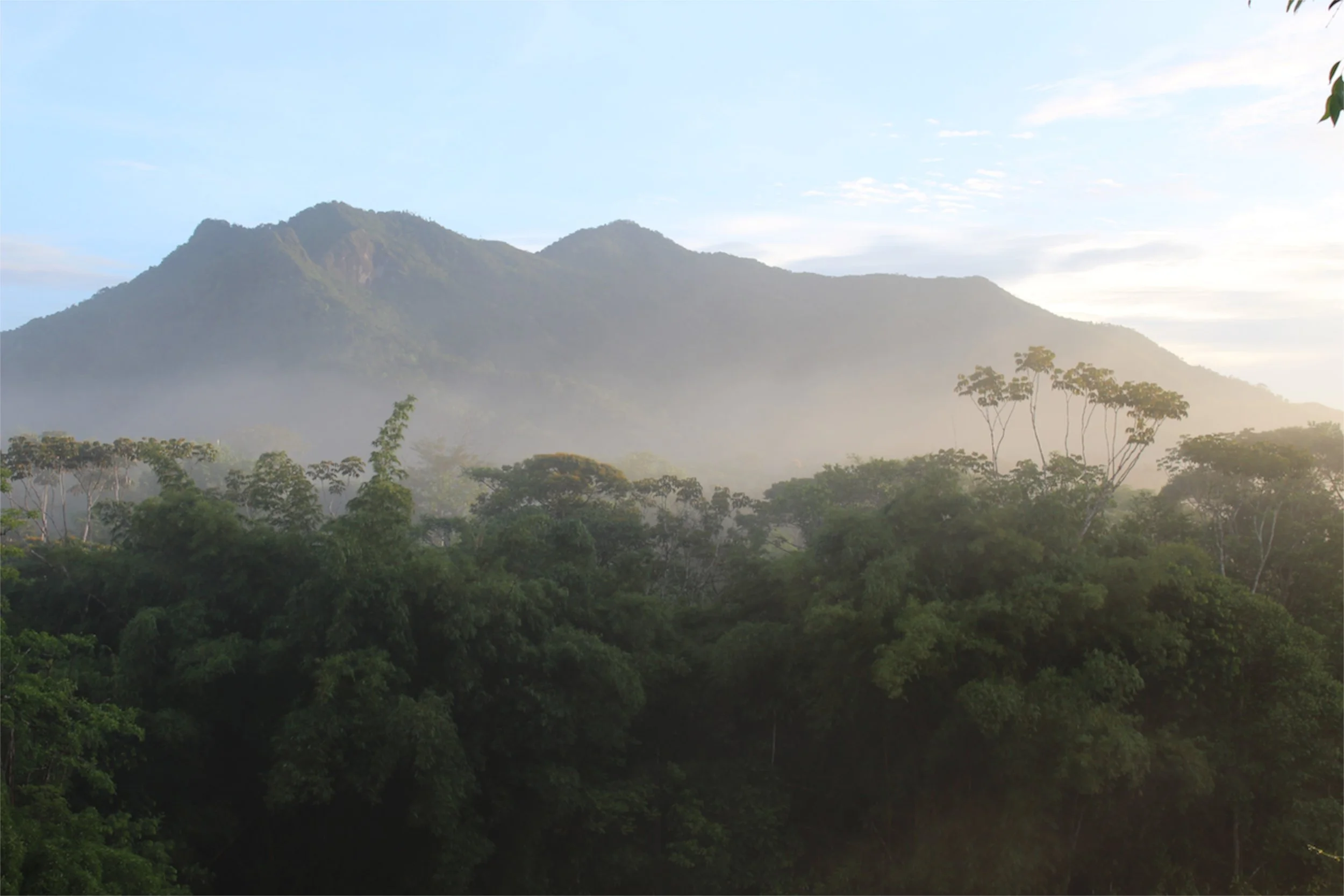
When the rainy season arrived, it started with a sense of relief - dry season went on longer than expected and our trees and plants were scorching in the heat. For myself the cooler air was welcome comfort, and the rains a reminder of home and getting cozy. Mornings were beautiful with the sight of the sun rising through the dewy mist.
By Amy Dodds,
2019 Apprentice
When the rainy season arrived, it started with a sense of relief - dry season went on longer than expected and our trees and plants were scorching in the heat. For myself the cooler air was welcome comfort, and the rains a reminder of home and getting cozy. Mornings were beautiful with the sight of the sun rising through the dewy mist.
But very soon our zone one vegetable gardens with our recently planted greens began to suffer - the sheer force of the rains and the humidity brought fungal and mildew issues. Faced with the reality that our beans and delicate greens were going to die out, I thought about the potential of using cover crops, such as sweet potato, for the rest of the year. But this did not seem to fit in my idea of what permaculture asks us to do: observe and interact with the environment we are situated in and use that to our advantage. With this in mind, we at Rancho Mastatal have been planting crops that thrive both in the intense heat and thumping rain. Below are some of the most popular vegetables that we are growing in the Ranch that are suitable for the rainy season:
Cucumber:
Cucumbers have been abundant in our garden this season with us pumping out quick pickles nearly every day. Not bad for a community feeding 30-40 people daily! Thankfully, cucumbers like warm, humid weather. We grew ours by seed on a trellis to allow for more air flow and for the fruit to stay above ground.

Okra:
Described as among the most heat-tolerant vegetable species in the world. It is planted for its seed pods which can be cooked, pickled, eaten raw, or included in salads. It does become mucilaginous so do consider this if you're sensitive to the slime.
Kang Kong spinach:
This leaf green is native to southeast Asian and is delicious stir-fried with soy sauce and garlic. It is a semi aquatic plant, a creeper that grows in or near the water on moist soils, so it is ideal for our climate.

Hibiscuses:
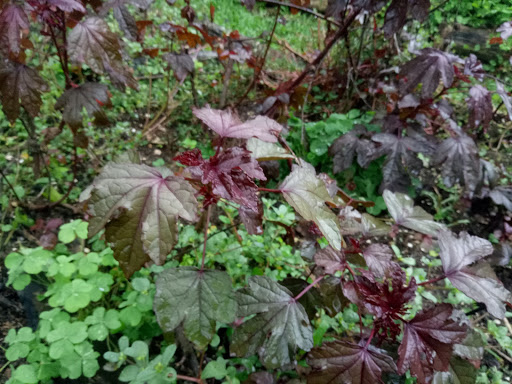
Both Green and Cranberry Hibiscus are delicious perennials that thrive in the warm and wet. They self seed easily during dry season so when the rains come you have a whole bunch of babies to keep your salad zesty and fresh. The leaves do contain oxalic acid so cannot be consumed in large, consistent quantities.
Chaya:
Also known as tree spinach this is an excellent perennial green native to Mexico. It's leaves are edible once cooked, like spinach. It's easy to propagate by cutting and loves the heavy rain.

Malabar spinach:
Malabar spinach is another heat and moisture-loving spinach-like green. The succulent leaves can be eaten both raw and cooked. We have only a few plants so we are trying to improve the population. We use a trellis to support its tendency to vine.
Winged bean:
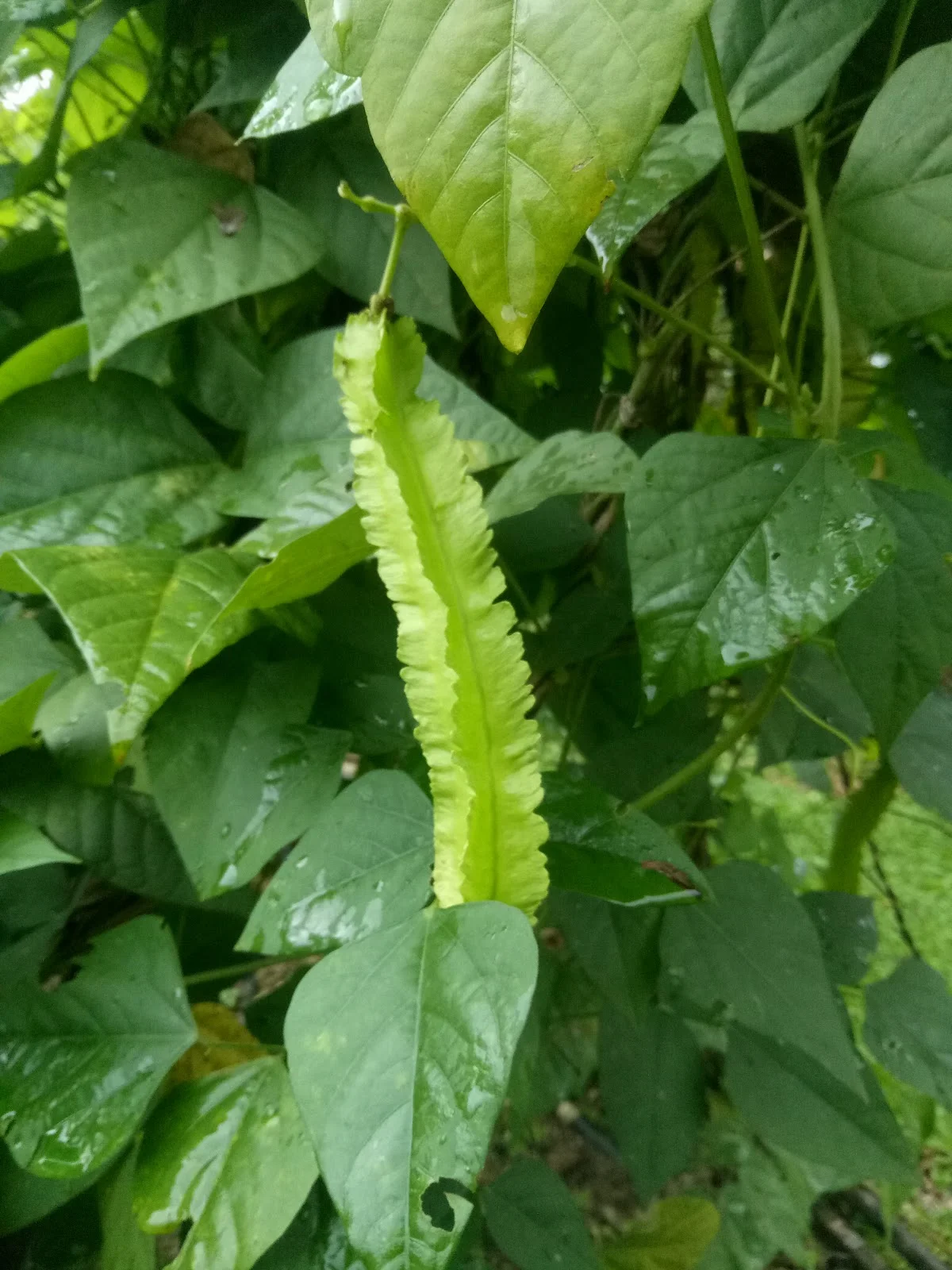
Also known as Goa bean and princess beans, these are sweet protein packed vegetables that do well in heat and humidity. They can fix their own nitrogen when the bacterium Rhizobium is in the soil. They are best harvested young and tender, and great raw in a salad.
Other more delicate greens we are growing in our nursery as they don't require as much water, such as Arugula, mustard greens and Asian cabbages.
By having our covered nursery space we are able to grow things under cover that otherwise would not do so well outside, we are also experimenting with making some movable covered spaces for out outdoor garden beds….. we will update you with progress so make sure to Like and Follow us on Facebook & Instagram

How Mentorship will Help our Permaculture Community Grow
Mentorship may be one of the biggest opportunities for growth in our fledgling permaculture movement. There is interest in professional careers as permaculture designers, but the field lacks quality mentoring opportunities. By these I mean mentoring in a specific field, by a professional who has years of experience, with the goal of developing a specific skill set and livelihood.
This article was originally published by the NuMundo Transformational Times blog. Please go to their website to read the entire article.
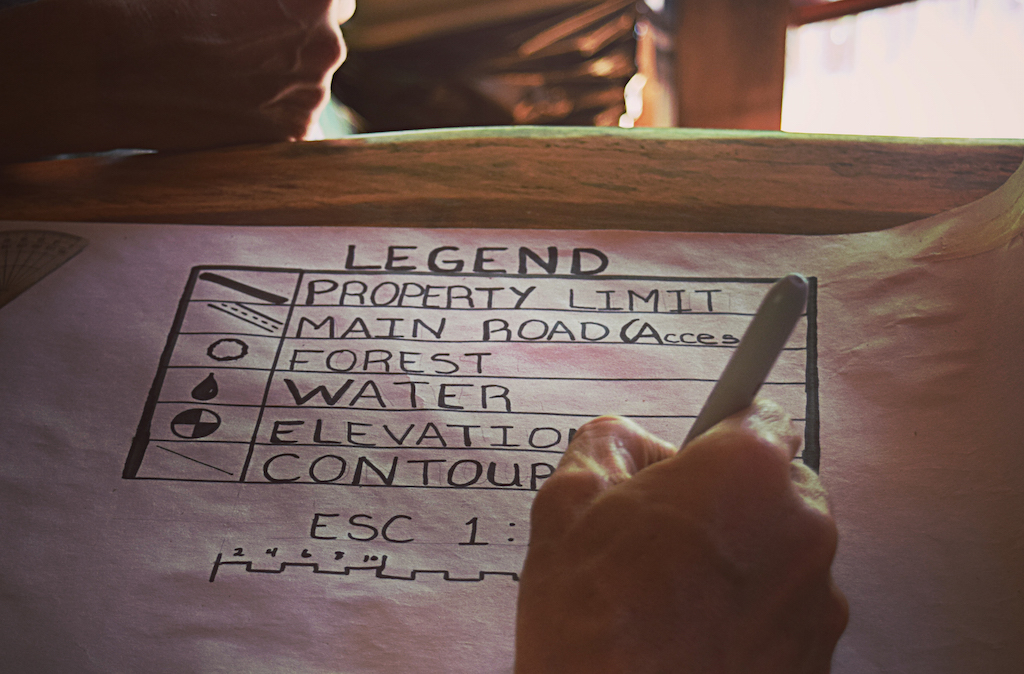
Mentorship may be one of the biggest opportunities for growth in our fledgling permaculture movement. There is interest in professional careers as permaculture designers, but the field lacks quality mentoring opportunities. By these I mean mentoring in a specific field, by a professional who has years of experience, with the goal of developing a specific skill set and livelihood.
Earlier this year I formalized my permaculture design consulting business as Porvenir Design. I’ve been doing design work for the last four years, but part time, informally, not running it as a genuine business. It was a side hustle that is now becoming a primary livelihood.
Never have I craved mentorship like I have during this process.
To finish reading this article please go to the NuMundo Transformational Times blog.
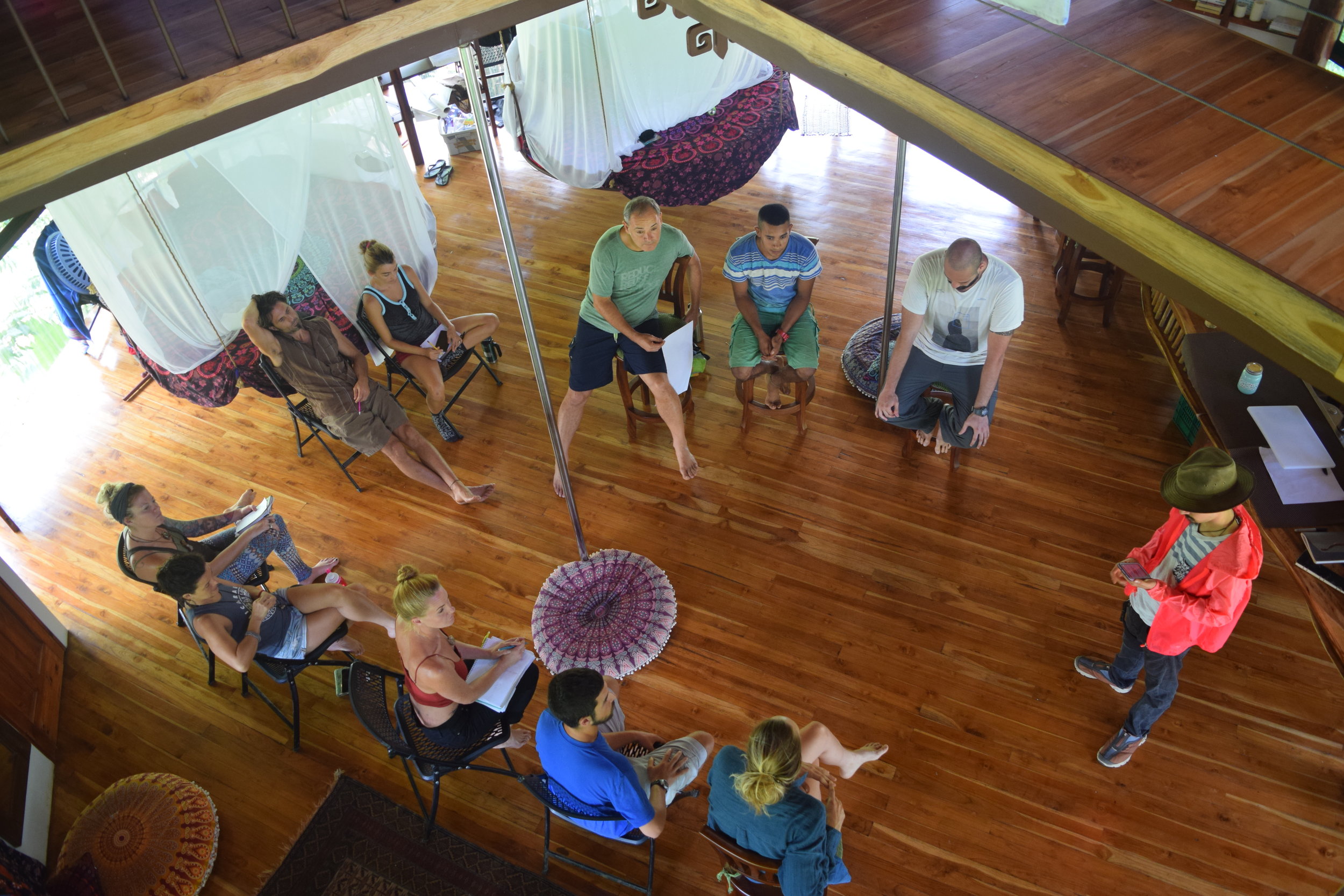

Interested in learning more? Consider joining the Porvenir Design team for their upcoming Permaculture Design Certification at Rancho Mastatal Sustainability Education Center! This intensive two week course is designed to give students hands on experience in a real world site design scenario.


How to Make a Real Tortilla
When I was a teenager, I traveled for a few months with a Mexican shoe-shiner I met in Mazatlán. We thumbed rides across the country and were taken in along the way by a dozen or so of his relatives. I often found myself in the kitchen with his aunts, cousins, and nieces, making tamales, sopes, or other dishes that were new to me.
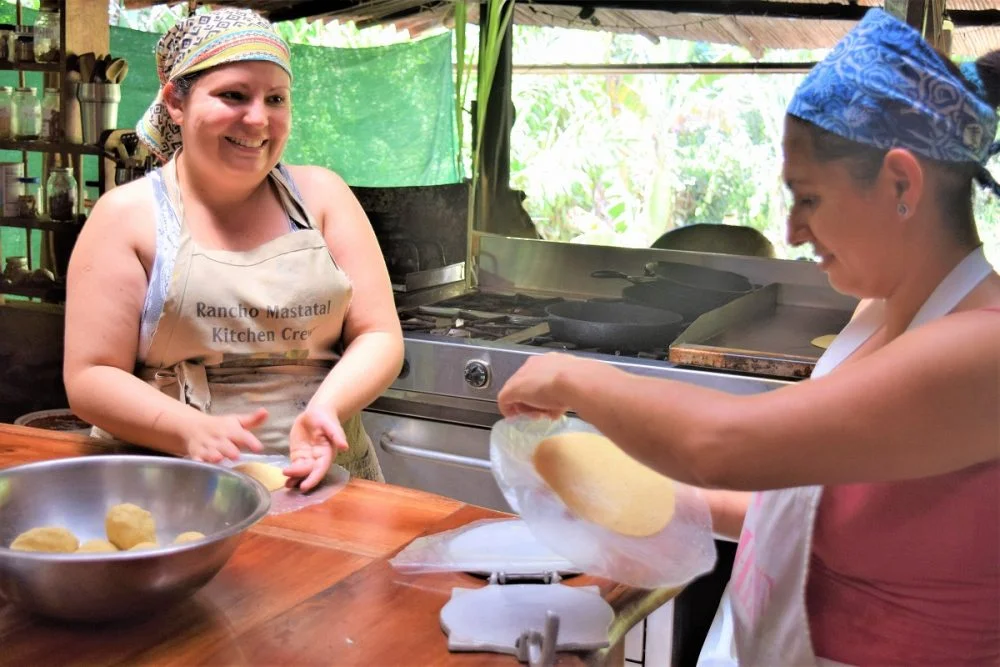
This article was originally published in the Tico Times. Please follow the link for the original article.
When I was a teenager, I traveled for a few months with a Mexican shoe-shiner I met in Mazatlán. We thumbed rides across the country and were taken in along the way by a dozen or so of his relatives. I often found myself in the kitchen with his aunts, cousins, and nieces, making tamales, sopes, or other dishes that were new to me.
Due to my lack of skill, the family often sent me to the local store to buy tortillas. Everywhere we went, no matter what town we stayed in, there was always some tiny store that sold stacks of them, fresh and hot. For me they came to represent the spirit of family and sharing in Mexican culture, and a deep pleasure in simplicity — there was really nothing better than those fresh tortillas with a slice of homemade cheese.
Most of the tortillas we bought or made were thin, six to eight inches in diameter, and made from corn. They tasted nothing like the giant flour disks from the grocery store that never went bad. They tasted original.
Later, traveling around Latin America, I came to realize that those corn tortillas really were original. In the different countries and communities I later visited, I tasted tortillas in vastly different forms. Some were fatter, some thinner, some made of yellow corn, or white, or blue, some pressed flat, others slapped into shape between two palms.
Most tortillas made by hand in Latin America are made with corn rather than wheat. This is because corn grows well here, whereas wheat in general does not. Some also incorporate pejibaye (fruits from a native palm, Bactris gasipaes) or ojoche (seeds from a a rainforest tree, Brosimum alicastrum). Variations stem from economy, culture, and landscape.
Tortillas do not have the same widespread status of daily consumption in Costa Rica as they do in Mexico or many other Latin American countries. But they do have a rich history here, and are still often eaten in the form of gallos (a tortilla curved in the hand around meat or a savory picadillo) or as an addition to a typical breakfast. There is no better way to impress your Tico and Tica friends than with a gallo made with a homemade tortilla! Where I live now in rural Costa Rica, a homemade tortilla is one made from whole corn that has been nixtamalized and ground into dough, also referred to as masa.
Corn
There are at least 150 different varieties of corn. They can be divided into four major types: sweet corn, popcorn, flint, and dent. Sweet corn is bred for its sugar content, and is eaten before the kernels are mature. Popcorn, which is usually round in size, has a specific protein ratio that makes it ideal for popping. Flint and dent varieties are generally flattish and oval, and are used to make corn flour, dough, and other foods for both humans and other animals. The corn used for making tortillas is usually a flint or dent variety that has been grown to maturity and dried. This is often referred to as field corn.
Many Costa Rican farmers still grow field corn for their families or to sell at market. A number of our neighbors grow corn and make tortillas and other corn dishes, such as tamal asada and chorreadas, at home. You can inquire about purchasing local corn at any major market, or ask your neighbors if you live in a rural area. Most people are usually quite excited to help you source this great product, and if you’re charming enough, someone’s grandma might help you make your first tortilla!
Nixtamalization
Mature dried corn presents a special challenge. Its outer seed coat, or pericarp, is hard and creates a strange texture unless you remove it. It also has a substance that can inhibit the body’s ability to uptake the vitamin niacin. You need to cook the corn in an alkaline substance to dissolve the seed coat and to ensure that niacin is bioavialable.
For populations that eat large quantities of corn, this process is essential to dry corn’s nutritional value. In addition to improving corn’s nutritional qualities, nixtamalization gives the corn structure and pliability, and improves the flavor. Ancient peoples cooked their corn in wood ash, or powders made from bones or shells, to achieve this. Many people around the world still use wood ash or other variations of alkaline substances to cook corn in this way. The following recipe calls for hydrated lime (calcium hydroxide). In Spanish this is referred to as cal.
There are many different methods to nixtamalize corn. The qualities of corn vary widely based on variety, post-harvest handling, and age of the dried kernel. The boiling time and temperature varies (15-90 minutes) depending on the type of corn you use. The following is a great recipe that works well for us with our local corn.
Nixtamalized Corn Recipe
Ingredients:
15 cups whole dry field corn
3 tablespoons hydrated lime (calcium hydroxide), sifted
Water

Instructions:
DAY 1
Rinse the corn thoroughly in water. Remove any particles, floating pieces, dirt, or corn silk.
Cover with at least four inches of water and let soak 12-24 hours in a covered pot.

DAY 2
Drain the corn, rinse again, and add nine liters of water. Mix in the 3 tablespoons of sifted lime. Stir. The corn should turn bright yellow-orange as you stir in the lime.
Put the corn and lime water on the stove and bring to a boil.
After the corn reaches a rolling boil, reduce the heat to a strong simmer and cook 30-60 minutes until the corn is tender and skins are separating and dissolving away from the kernels. The corn should be easy to bite into, but still have a bright white point in the center. The kernels should be firm and intact with the germ and tip still present.
Take the corn off the heat and let it rest for at least one hour. (We have tried many variations of this resting time, including letting it sit overnight, or not resting at all. Letting the corn rest in the alkaline solution after boiling is thought to further transform the starches and give the tortilla a better structure.)
Drain the corn into a sturdy metal colander and rinse with water. Rub the kernels between your hands and/or against the holes in the colander to remove all lime and the clear kernel skins. Use plenty of water. Once the corn is thoroughly rinsed and cleaned, it is called nixtamal.

Uses:
Nixtamal can be used whole in soups, casseroles, salsas, and side dishes; it can be ground for tortillas, corn crusts, or made into polenta, tamales, or atole. The whole nixtamal will keep for several days in the fridge, but once ground should be used within a day.
Tortilla Recipe
The dough used to make tortillas is referred to as masa. To make the masa, grind nixtamalized corn in a corona hand mill or other grinder. You may want to double grind for a finer texture. Mix with salt to taste and just enough warm water to make a dough that is soft and pliable, and adheres to itself but not to your hands. You should be able to roll it into balls that retain their form completely when you hold them in your palm.

The easiest way to make a tortilla is with a tortilla press, but if you don’t have one just substitute two cutting boards.
Grab a small chunk of masa and roll it into a ball. Use two sheets of plastic (zip lock bags work fine) and put the ball between them in the tortilla press. Press down the handle and open it back up. Carefully peel the tortilla from the plastic bag and flip it into a hot cast iron skillet.
Cook for about 40 seconds and then turn it over. If your masa is ground fine, you will see the tortilla puff up. If it is thick it won’t and that’s fine. Tortillas should be cooked through and golden (or another color depending on the color corn you started with).

“Food for Thought” is a Tico Times series from Laura Killingbeck, is the Director of Food Systems and Fermentation at Rancho Mastatal Sustainability Education Center. The Ranch is a community and education center in Mastatal, Costa Rica, that hosts residential workshops in food, permaculture, natural building, and more. Laura co-manages the Ranch facilities and programs, teaches fermentation workshops, and writes about the intersection between food, body, and place. To take a class with Laura or visit the Ranch, please visit www.ranchomastatal.com.

8 Tips for Starting your Tropical Homestead
You’ve just purchased your dream property in tropical Costa Rica. You want to grow your own food. You are anxious to get to work now, have bought some plants from a nursery you randomly drove by, and have a shovel in hand, but...where to start?
Most of our clients fall on either side of a spectrum of project implementation. Either they experience paralysis by analysis, overthinking every step, their confidence slowly eroding, or they dive in head first without any planning. Either way they hire our team at Porvenir Design to bring them to the middle. How can we take our time and plan while simultaneously moving forward with the energy and confidence that is required to see a project to completion?

8 Tips for Starting your Tropical Homestead
Originally published at the Porvenir Design blog.
You’ve just purchased your dream property in tropical Costa Rica. You want to grow your own food. You are anxious to get to work now, have bought some plants from a nursery you randomly drove by, and have a shovel in hand, but...where to start?
Most of our clients fall on either side of a spectrum of project implementation. Either they experience paralysis by analysis, overthinking every step, their confidence slowly eroding, or they dive in head first without any planning. Either way they hire our team at Porvenir Design to bring them to the middle. How can we take our time and plan while simultaneously moving forward with the energy and confidence that is required to see a project to completion? The answer revolves around good goal setting and thoughtful design. So as you look to set your goals and follow the permaculture design process, here are a few tips we’ve picked up over the years for starting your tropical homestead.
Consider Access First
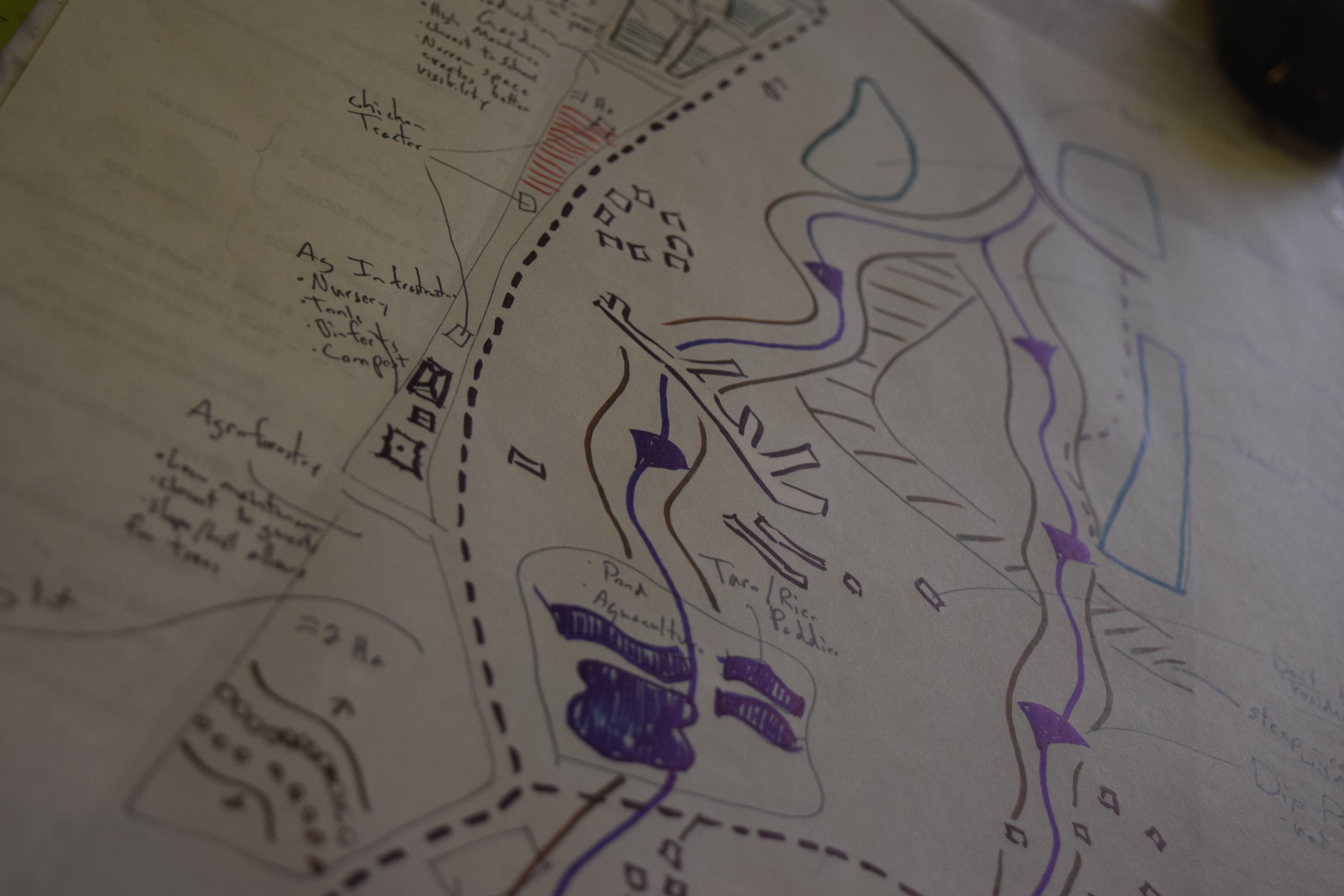
Before you do anything: planting a garden, siting a fruit tree, digging earthworks; make sure you know how you will access that space afterwards. The most common reason for systems to fail is that they are difficult to access. It may be easy to plant those nut trees at the bottom of the steep gully, but walking and slipping and falling down that slope in the middle of the rainy season, year after year, will quickly erode your enthusiasm for those plants’ care.
Paths should be wide, 1.5 meters at least, allow wheelbarrow access if possible, and should only be lined with plants that will not interfere with your movement. Anything that makes walking on a path less desirable means that whatever is at the end of the route will get less care and be less productive.
Consider lining paths with mundo grass for erosion control and delineation. Plant species around the path that you can trim in the rainy season for more sunlight and let grow in the dry season for more shade.

No Bare Soil
Do not underestimate the power of the tropical sun and rain to erode exposed soil. Anytime that you find bare soil on your property, you should instantly be thinking about how you can cover that soil with dead or living mulch. This will lower the soil temperature, increase nutrient cycling, improve water retention and so much more.
A dead mulch is effective and can be anything from grass clippings to pea gravel to chopped banana trunks. A living mulch is even more effective. This is a cover of living plants, also called a ground cover, that perform specific functions. Good tropical ground covers include peanut grass, sweet potato, wandering Jew, Okinawan spinach, and many beautiful ornamentals.
Don’t Overestimate Your Soil Fertility
It is easy to think that with a little compost from the Ag store and some mulch that your garden will be rocking for years to come. Clearly plants thrive in the soil all around your site; the tropics are a prolific place. But that doesn’t mean your soil is high in nutrients, has a balanced pH, or has a healthy microbial population. Most of us buying land in the tropics are working with degraded hill sides that were formerly cattle pasture. This is not prime farm land. Many of the plants we want to grow will struggle in this soil. Don’t be surprised if your first tomatoes and cucumbers struggle.
Fortunately soil is the component of our ecosystem that we can change the fastest. By actively promoting microbial health, planting leguminous trees and shrubs, providing fungal biomass, and reducing erosion we can quickly turn a site’s soil productive. Soil fertility requires consistent maintenance.

Tropical Tubers and Perennial Greens
Speaking of tomatoes and cucumbers, don’t bother growing these outside in your first year. Instead focus on very easy to grow, nutritious local foods adapted to the common soil conditions and heavy rain fall. Our typical western style vegetables can be grown in the tropics but the pest pressure is high here and these crops haven’t been bred with the same defense mechanisms.
Focus on tropical tubers such as yuca, sweet potato, taro, and yam. Plant greens like chaya, Haitian basket vine, and zorillo. Learn how to prepare them for your kitchen and enjoy!

Never Stop Planting and Observing
Don’t be afraid to put plants in the ground. You will plant stuff in poor locations, but that's okay on a home scale. Its better to move forward than not at all. If a year later you don’t like a plant’s location, you can transplant it! Most plants in the tropics transplant well with little shock.
It is only through the act of observing your plants over time that you can learn from them. Through good observation and feedback you knowledge level will zoom ahead. You will begin to see the pollinators in action, understand the rivulets of water moving your mulch around, and become familiar with the seasonality of your tropical climate. If you consistently put time toward putting new plants in the ground, and observing them, you will quickly develop a lush and tropical feel to your site.
Learn to Propagate your Own Plants
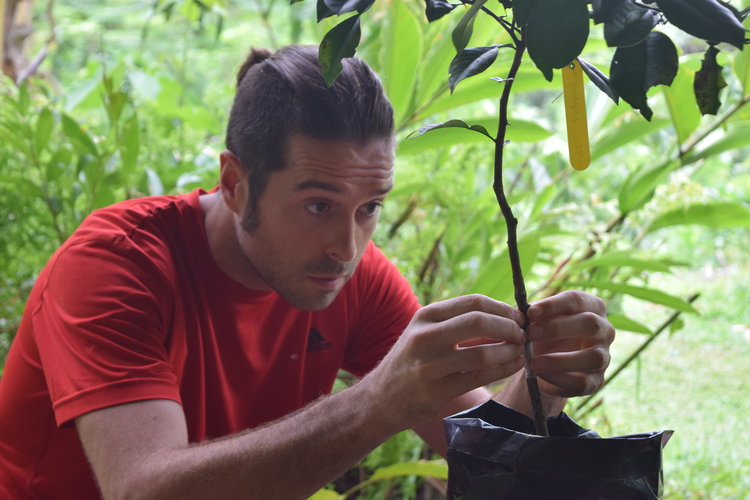
Related to the previous tip, learning to propagate your own plants will save you time and money. It will accelerate the biological succession of your homestead. A lot of tropical plants propagate vegetatively from cuttings or root divisions. As you travel around the country carry a pair of garden clippers and a sharp trowel, and when you see a new plant you love, ask if you can take a cutting or division.
Set up a nursery right away on your property to accommodate all of these new plants. It should let about 50% of light through, have easy access to water for irrigation, and be protected from the wind. You can start plants in pots, bags, or simply till a bit of soil and mix in good potting mix materials, such as rice hulls, manure, and biochar, and plant directly into this new bed. This is your transplant bed. Once the rains arrive and the plants are large enough move them to their final location. This allows you to gather new plants before you have had the opportunity to site them.
Buy Grafted Fruit Trees
Don’t plant that seedling avocado or mango! Rather, invest the 10 to 20 USD and purchase a grafted tree. Almost all fruit you buy in the store, temperate or tropical origin, is born on a grafted tree and for very good reasons. A seedling avocado can take well over 10 years to produce fruit, while a grafted avocado will produce in year 4 or 5. A grafted tree is a guarantee of a high quality and consistent fruit.
Try to source these trees from nurseries doing the grafting themselves from root stock that is adapted to your soil and climate. Check the graft well before purchasing. Does it look healthy and secure? Don’t purchase trees with fruit on them in the nursery. This can be a sign of stress. But an investment in grafted trees will pay off.

Hire a Consultant
Consider this an investment. Any land use planner, landscape designer, or permaculture designer should be able to articulate to you how an investment in their services will save you time and money in the long run. What is the expected return on investment?
A simple day consultation should help you gain confidence to implement systems. It should allow you to set your priorities and put unnecessary projects on the back-burner. A larger master planning program should save you money by connecting you with the best experts or local resources, such as tree planting programs, and catching costly mistakes on paper before any shovel hits the ground.
A good designer will help you identify your goals and apply those to the landscape, resulting in a beautiful and productive homestead.
Porvenir Design
Looking for more than tips? Consider bringing in the Porvenir Design team for their expert advice!

Our Natural Building World
In the natural building world at Rancho Mastatal there is no lack of projects to be done. I think as a team we have collected a list that will take us past 2020. And we already have been building our infrastructure for the past 16 years. One could say we are natural building addicts!

In the natural building world at Rancho Mastatal there is no lack of projects to be done. I think as a team we have collected a list that will take us past 2020. And we already have been building our infrastructure for the past 16 years. One could say we are natural building addicts!
But as Rancho Mastatal grows as a community, education center, and business our building list keeps getting bigger to accommodate our many needs. Although the upfront cost of building infrastructures is high in the long run the benefits should pay back plenty.
Taking stock of the different building projects that started and finished in the last year amazed me. Up until then I hadn’t thought about all that was accomplished. It is good to step back and look at the full picture, to feel satisfaction for what you have achieved. Especially in those times when you have been working on the same project for what seems like decades.
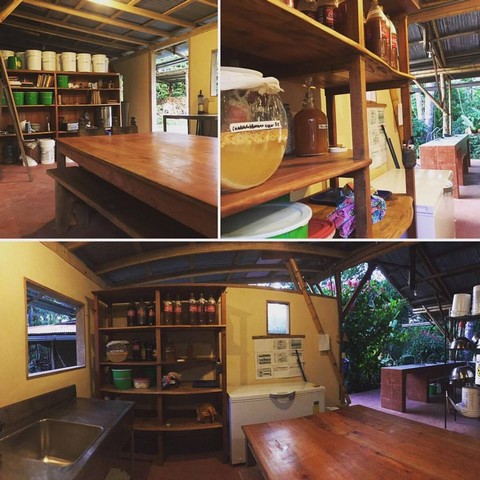
Here is a brief rundown of what was started or finished in the natural building world at Rancho Mastatal in the past year. With the help and hard work of our core team, apprentice crew, and our local staff we are proud to have accomplished so much!
We began our season with building and completing a timber framed compost toilet for our dorm room. We realized that it was finally time to have two toilets to a house that fits 20! This has definitely paid off!

Then we gave the two bedrooms at the Casucha a face lift. After removing the old plaster, we brightened the place up with a natural lime plaster finish inside and outside. Then we installed a beautiful hardwood floor.
We were honored to have Benito Steen, an amazing natural builder and plasterer, come down to live and work with us for six weeks. In that time, he taught us many new methods for building and plastering. Including a new, lighter earthen mixture for wattle and daub that has revolutionized our wall building; recipes and methods for Japanese clay, lime, tamped earthen floors; a bomber clay, lime, straw plaster; and just his overall skills in the entire building world! Along with all that, Benito helped us finish the floors and walls at the Honey Hut shower.
After a year of construction, in which nearly every group that came through our doors contributed to building the walls; we were delighted to finish the food processing kitchen wattle and daub walls and apply a beautiful burnished lime plaster. The entire food processing kitchen is coming together nicely and providing an area to productively accommodate the many needs surrounding food for our community.

Even with all the building we still seem to have a lack of space. With the hope to have 6-7 apprentices each year, and our current apprentice house only fitting 5, we decided to renovate our old goat barn into apprentice quarters. This structure was started in the Natural Building Course, and will be finished by our current year long apprentices. In the course, students learn to build various different walls systems including: wattle and daub, adobe brick, and cob. We are imagining this as a good cabina for a couple or two single apprentices.
While this was all happening, we also started the foundations and timber frame for our new 800 sq. foot guest cabin called Bernie’s Bungalow. By mid-season we raised the timber frame structure and began to frame the walls for the wattle and daub. We started the wattle and daub walls with our apprentices and then pushed them forward with a Natural Building Practicum which proved very successful. We are excited to finally be done with the walls for our guest cabin and beginning the process of plastering, making the earthen floors, furniture, and everything else to make this a cozy tropical space.
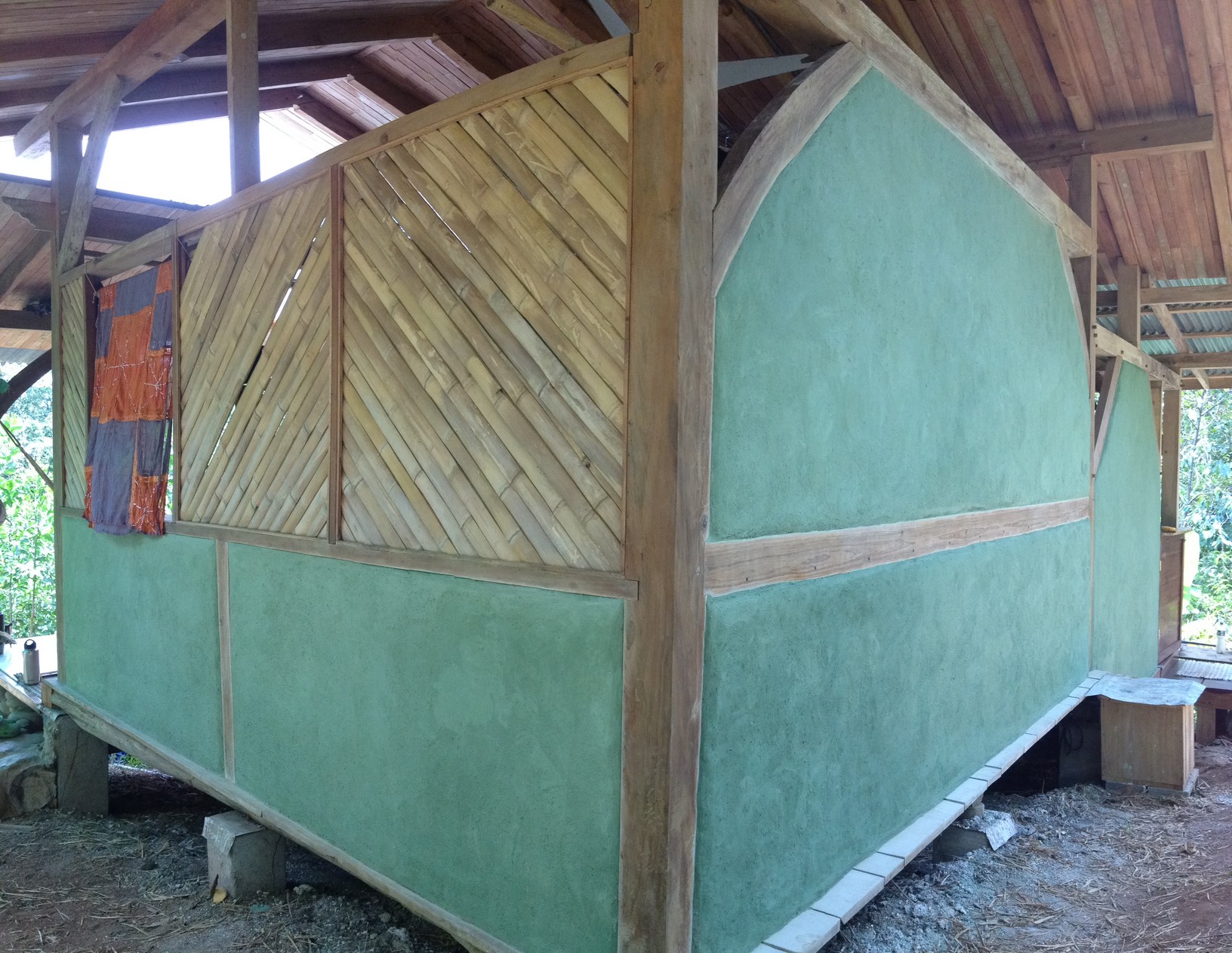
Finally, somewhere in the mix of all this natural building being done throughout the Ranch. We ran a ten-day Timber Framing Course with our good friends Skip and Lizbeth. In this course, we cut and rose the frame for Nic and Ali’s house. We are running a seven-day Natural Building Practicum from May 24th-30th. In this practicum, we hope to be able to start and finish all the wattle and daub walls for this house. It will be a big task, but we think we can make it happen! Participants pay a nominal fee that covers the cost of their food and we spend a focused week long period working on the walls. This allows much faster progress not just because of the focused time but because you can see the walls going up so fast it keeps you motivated, excited and learning. This is a great opportunity for anyone who would like to get some experience of building with earth, work with skilled professionals and come and visit the Ranch for a very affordable “working holiday” or break.
There it is; a recap of our past year's natural building season. Not too shabby of a list. In the process, we have learned a lot, discovered new methods, and bad methods, and everything in between. Even after all these years of natural building at the Ranch there is always something new to learn. We are thankful for all those natural builders that have and will come through Rancho Mastatal.
Cheers to muddy feet!
Across the Permaculture Universe
We still have space in a few upcoming workshops:
- The Art and Practice of Live Culture Fermentation
- Plants as Medicine: Reclaiming the Art of the Home Apothecary
- Agroforestry Skills Inspired by the Forest
Help us spread the word and fill them up!
We are also starting to interview and accept 2018 apprentices. If you know anyone who is seeking a life-changing experience please send them our way.
Abrazos
The Ranch Crew

Orienting Oneself to Mastatal
If you’re anything like me, then you will find Rancho Mastatal to be a place of incredible beauty, endless inspiration, and powerful community. Even if we have very little in common, you will certainly find it to be unique. Among ecovillages and permaculture communities, over the years Rancho Mastatal has developed a reputation for its intricate systems, well organized educational programs, and gorgeous natural buildings that sprinkle the 300 + acre Ranch.

This post was first published at the blog Fed by Connor. Connor is one of our year long apprentices.
We are now interviewing applicants for our 2018 apprenticeship program. Help us spread the word by sharing this blog post!
If you’re anything like me, then you will find Rancho Mastatal to be a place of incredible beauty, endless inspiration, and powerful community. Even if we have very little in common, you will certainly find it to be unique. Among ecovillages and permaculture communities, over the years Rancho Mastatal has developed a reputation for its intricate systems, well organized educational programs, and gorgeous natural buildings that sprinkle the 300 + acre Ranch.
Mastatal is a small rural community in central Costa Rica near the Pacific Coast, roughly a three hour drive from the capital, San Jose. In Mastatal things come in singles: there is one dirt road lined by the local bar, one restaurant, a school, community center, convenience store, and a soccer pitch. Although the community center technically provides wifi, it usually doesn’t work, which can add to a sense of isolation that can feel simultaneously liberating and stifling. Despite its size, the Ranch sits in the heart of the community. From the main house you are a stones throw away from the bar, and you can often hear music echoing across the valley as the locals unwind in the evening over one of the two Costa Rican brews.
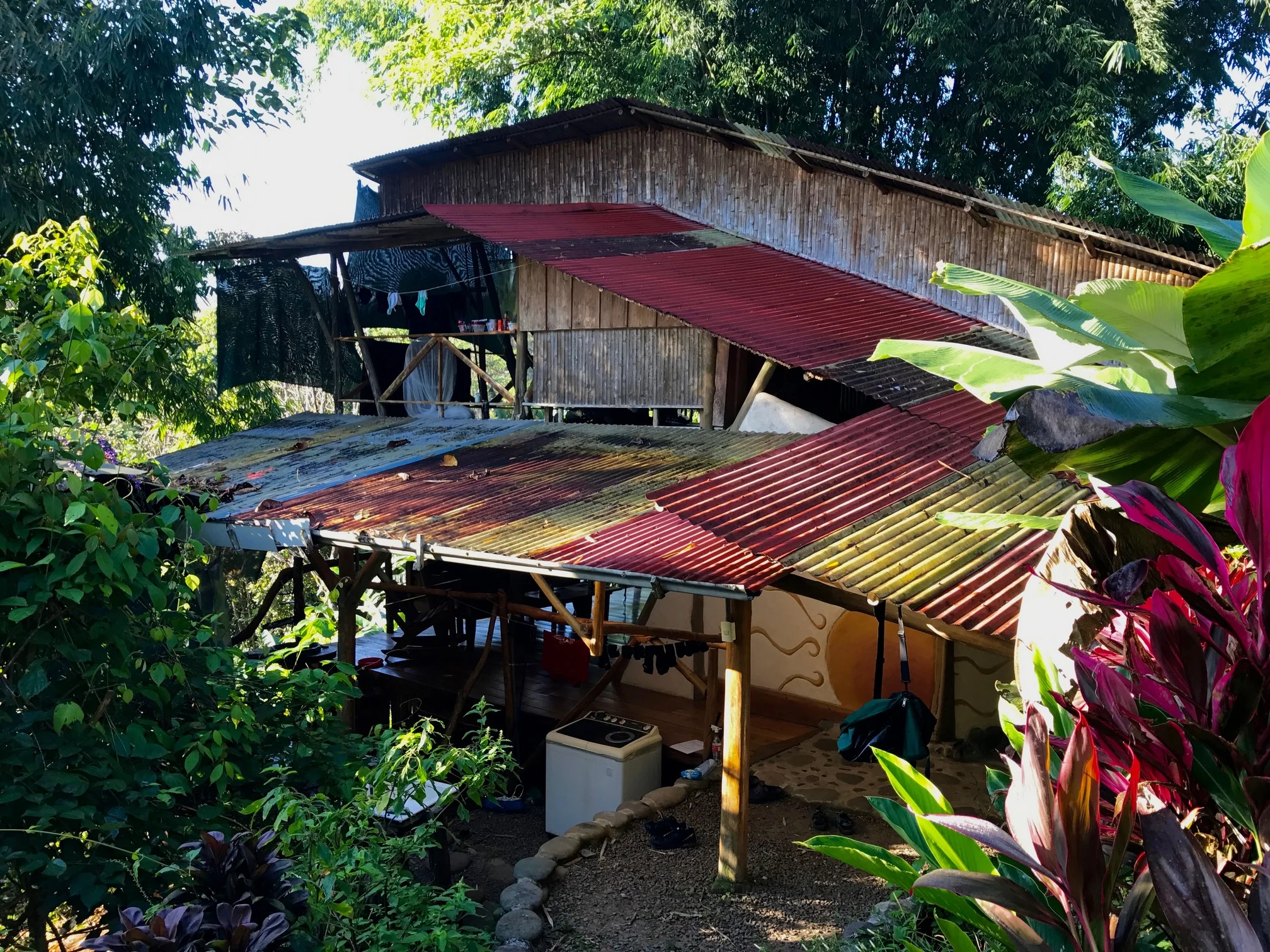
To orient oneself in Mastatal, especially coming from an urban hub like Los Angeles, requires a letting go of one's typical expectations. Many of the core team describe this experience as “losing oneself in a humble task,” or to be more accurate, a series of humble tasks. Fortunately, at the Ranch this is easy. Days here are filled from dawn until well past dusk, leaving precious little time to contemplate how or why someone has arrived in this space. Although often simple, each task requires focus and care in order to do well and avoid personal injury.
As an apprentice, our mornings begin at 6:00 am with “life skills.” These individual pre-breakfast chores make up the basic activities that are necessary to keep the farm running. These include managing the firewood, bio-digester (more on that later), and chickens; harvesting salad greens, caring for the main house/kitchen, nursery, zone 1 gardens, and orchards. To ensure that we gain experience in each system on the farm, the apprenticeship program is designed for us to rotate among the life skills on a monthly basis.
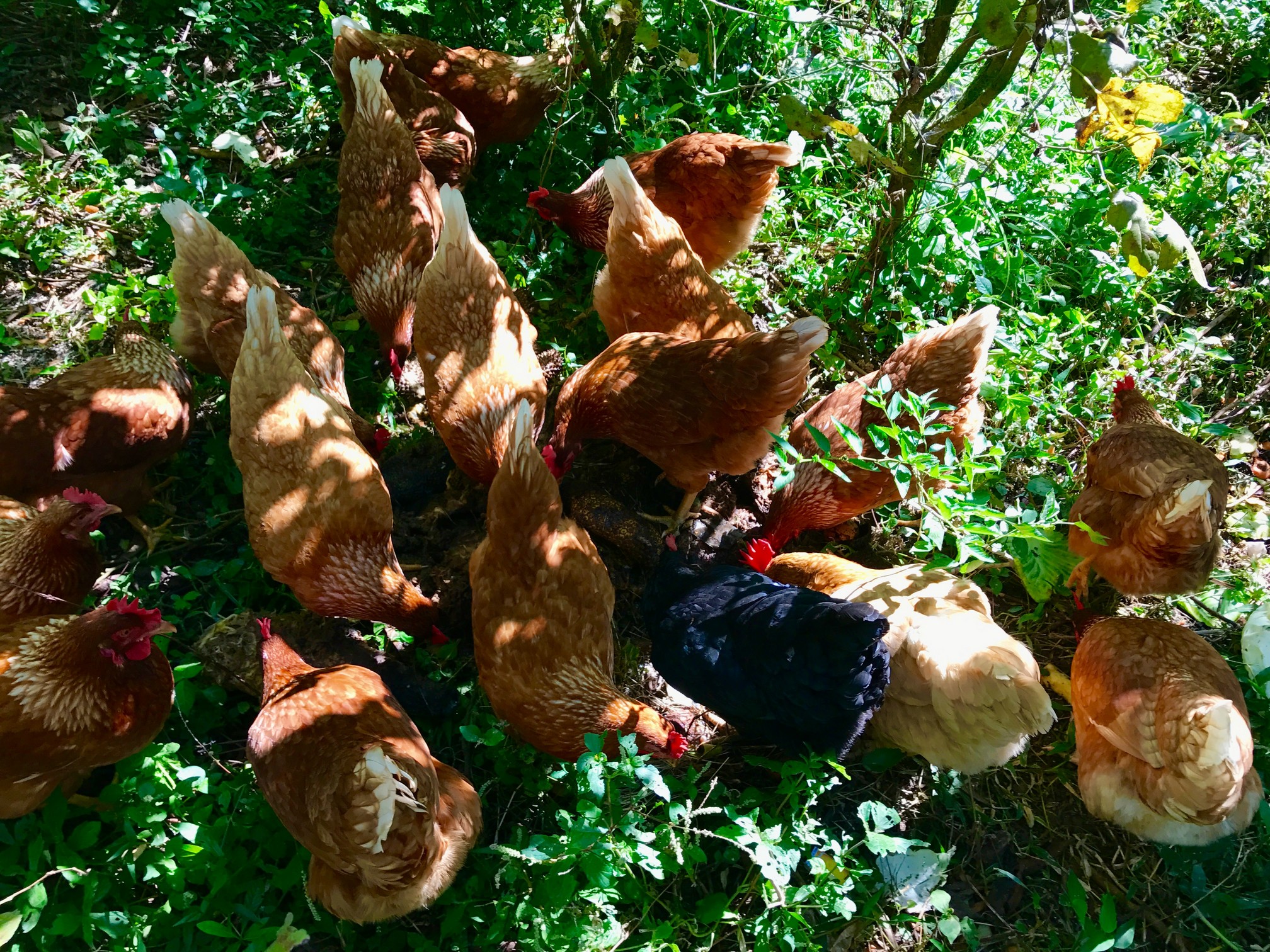
These tasks need to be completed by 8:00 am when we have a group breakfast, which depending on the number of visitors at the farm can range from 12 to 50 people. Cooking and cleaning shifts are also traded on a rotating schedule. After breakfast, all the apprentices chip in on a “work party” to help complete the larger projects around the Ranch. This can include trail building in the orchards, weeding and prepping new beds in the gardens, harvesting jackfruit or bananas, processing food for the kitchen, or even helping to build a new structure on the property.
At 1 pm everyone breaks for lunch. Nearly every meal served on the Ranch includes rice, beans, and a fresh garden salad prepared each morning. To add a little variety to the meals, each dish also includes something a little special. Whether it’s emplatanados con queso, fresh hand pressed tortillas or homemade dosas, each meal comes with a treat to avoid the monotony that is risked when eating arroz con frijoles three times each day. On the side, fresh salsa and a kefir dressing made from local cows milk and fresh herbs make each dish a true delight. To drink, there is fresh coffee from local shade grown beans, water kefir soda filled with pro-biotics to improve digestion, and a house-made rehydration drink (think homemade Gatorade) that is packed with electrolytes to prevent dehydration during long days working under the sun. In the evenings, there is even country wine or “hooch” as it is called here, that is fermented using yeast, water, local unprocessed sugar, and whatever fruit happens to be in season (jackfruit and passion fruit are two of the local favorites).

Afternoons at el Rancho are more varied. Three days a week this time is reserved for Personal and Practice Time. On the Ranch, one quickly realizes that these are extremely valuable chunks of time and can be used for many things, although jerking off in the apprentice house while a tour goes by (as the orientation packet mentions) is not one of them. It is however a great time for writing, taking a nap, swimming at the local waterfall, calling family, or sharpening one's tools; just to name a few examples. During the rest of the week, the afternoons are reserved for additional work parties, community check-ins, or cooking depending on the day.
Dinner is served every day (except Sunday) at 6:30 and begins with “circle time,” one of the oldest traditions on the Ranch. This time is nothing more, and nothing less than an opportunity each day for the entire community to come together, hold hands, and offer thanks (if one is so inclined) for anything/everything they are currently feeling grateful for. It is a brief yet powerful ritual that allows everyone to slow down, take a deep breath, and appreciate the wonderful space and community everyone here is privileged enough to enjoy. Afterwards dinner is served! The only rule is, be kind and respect those behind. This usually means there is more than enough for everyone, although specialty items (like guacamole) can mysteriously disappear rather quickly. The last person through the line rings the bell, meaning seconds are up for anyone still craving more.

After dinner and clean up, if you’re not ready for bed at 7:30, which is often the case, there are always a plethora of interesting people to chat with over a beer or glass of hooch, and any number of board games to be played until late into the evening (and by late I mean 9:30, because by then you will DEFINITELY be ready for bed). After lying down and becoming one with your mattress, dawn will come suddenly and this routine will repeat itself seemingly on end. At the time of writing this however I have now been here for two weeks. I can already tell that one day soon I will look up, only to realize it’s already December, time to pack my bags and head back to the “real” world. One lesson this experience has already taught me, however, is that for the individuals who make up this community, Mastatal is the real world, not just a temporary excursion. For those who choose to step outside the typical expectations of industrialized society and reconnect with the roots of human civilization, this is an obtainable lifestyle. Whether you want this world or the chaos of our modern cities to be more real, is up to you to decide.
Across the Permaculture Universe
We have a few spots left in our upcoming Fermentation Workshop! Learn the art and science of making microbes your allies.
Many of our core team members are starting to show off their work through some great photos on instagram. Check out Ali, Rachel, Laura, and Scott!
Our friends at ECHO have a new Central American and Caribbean forum, including development notes dedicated to this region. We are hoping to start sharing our work through their publication in the months ahead.
Abrazos
The Ranch Crew

Getting Inspired About Natural Building
Over the years of natural building at Rancho Mastatal my feelings on the process have gone through many stages. From the initial excitement of- wow, how cool you can build a house from the materials on your land, and all it takes is time, practice, and anyone can do this! To over time, after building many walls, an understanding of how long it takes to build a natural home and all the work that it entails.

Over the years of natural building at Rancho Mastatal my feelings on the process have gone through many stages. From the initial excitement of- wow, how cool you can build a house from the materials on your land, and all it takes is time, practice, and anyone can do this! To over time, after building many walls, an understanding of how long it takes to build a natural home and all the work that it entails.
The style we use at the Ranch for many buildings is a timber framed structure with wattle and daub walls. This is a faster and more effective method of building a natural home than say a pure cob house, which requires much more materials and time. Although, wattle and daub is a faster method, it still takes a fair amount of time and labor. Over the years my excitement for building wattle and daub walls has decreased as I’ve experienced the long, slow, drawn out process of it. Until this year when my hope for natural building was born again!
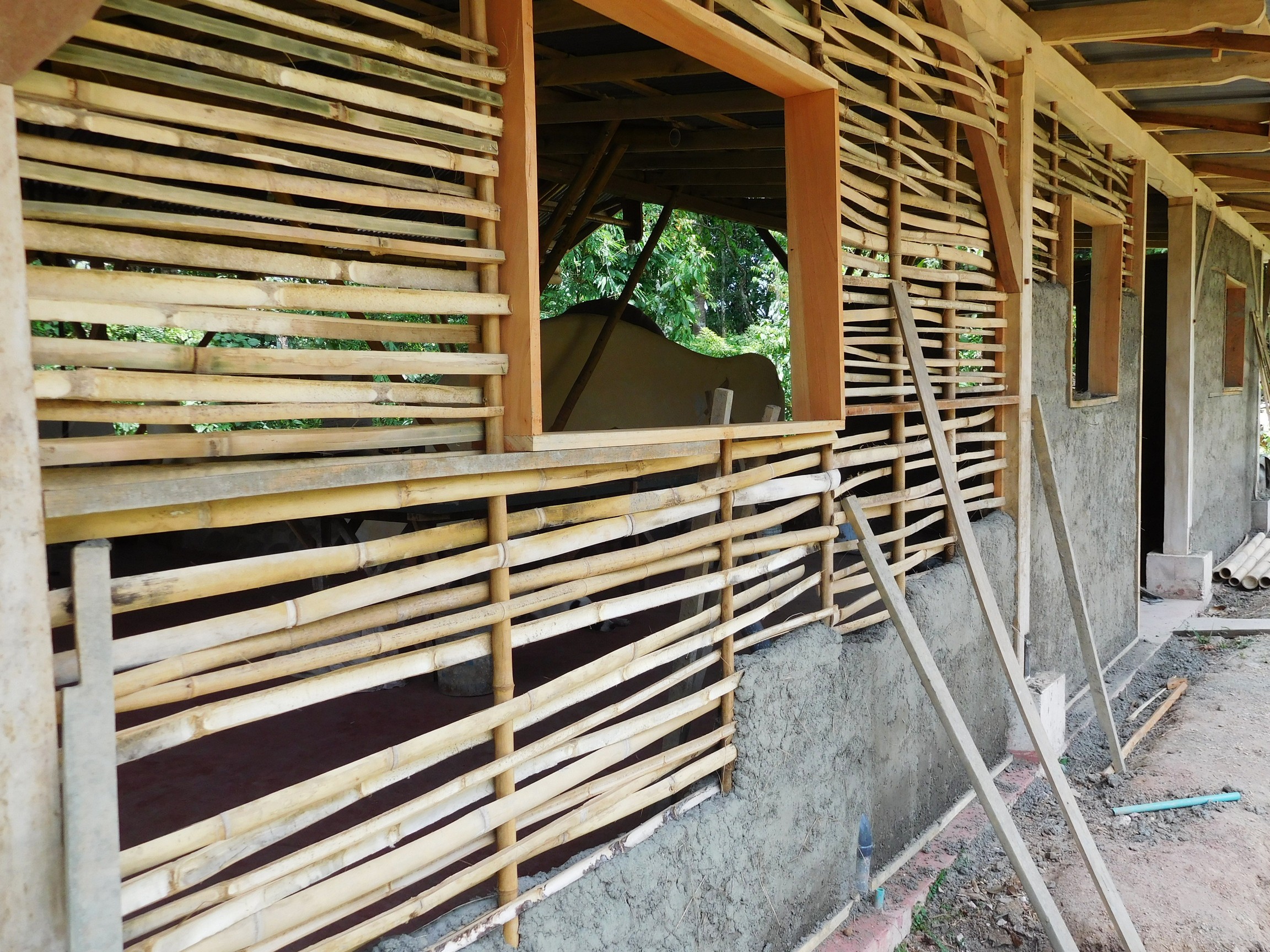
In the past years, we have purposefully left building projects for our educational groups, in order to give them the experience of natural building. Last year it was the walls for the Food Smithery, the year before that was the walls for the Honey Hut shower, the list goes on and on. This year we decided to try a different method in order to move our new guest cabin, Bernie’s Bungalow, forward faster.
Every year we host a Natural Building Course. This course is 10-14 days long and is an intensive break down of many different styles and methods of natural building. This course is more expensive because we bring down well known natural builders from around the world, the students get a diverse exposure to different topics, and hands on experiences with natural building. In these courses the students work on different structures and move projects forward around the Ranch, but finishing a project isn’t the goal for this course because of the wide range of topics covered. So, we decided to trial a Natural Building Practicum. A week-long program that was affordable, but more labor intensive. With the goal of finishing as many wattle and daub walls in the guest cabin as possible.
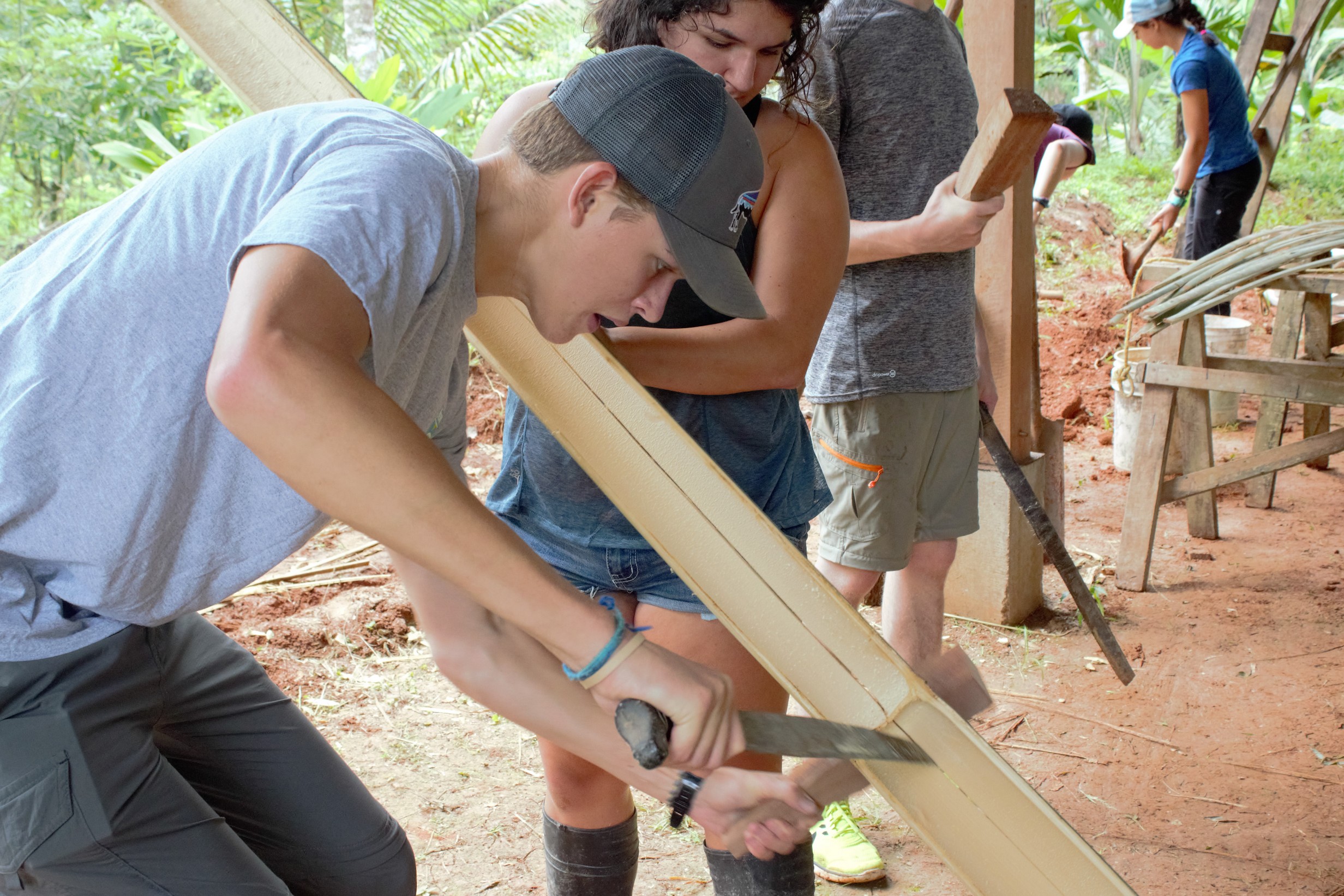
In December we received eleven sign ups, from people from all over the world that wanted to have a hands-on experience with natural building and an affordable way to visit the Ranch. Our first Practicum was under way!
The experience was amazing for myself and I believe the group. We watched every day our progress get better and better and the walls get higher and higher. We worked every day from 9am-5pm for a week. We developed a good system for rotating through the different stages: sifting clay, hauling sand, making mix, and applying to the walls. There were no lectures, power points, or hand outs to this practicum, but there was a general overview of wattle and daub, lots of teachable moments, and many questions from the students as we worked. It was a long and exhausting week, but with that many hands it made the walls fly up!

This made a world of difference to my opinion on natural building. Instead of slowly watching a building get put together over a years’ time, and never really feeling like you accomplished a good amount of wall building in a session. This practicum made it feel like natural building didn’t have to be such a long burden. It gave me satisfaction to see what many hands, working hard for a short period of time can accomplish. I don’t want to sound like natural building is a huge burden and that no one should take on a project, and of course buildings can be built over time with just a few people. But when you have as many buildings on the list as we do it really makes a difference to the moral if they can get pushed forward at a reasonable speed.
We will be offering another Natural Building Practicum from May 24th-30th, 2017 (cost $120 for 7 days). The structure that we will be working on will be much smaller than the guest cabin and we hope to be able to start and finish the entire wall system with the group! So if you’re interested in coming down to stay at the Ranch at a very affordable rate, get a little dirty in the mud, and probably sweat a lot then sign on up and we will see you in May!
Across the Permaculture Universe
Our friends at Black Sheep are promoting a new model of regenerative resource management in Costa Rica. For the last few years they have been finding vulnerable properties in the Puriscal region and bringing together investors to purchase the land and plant timber trees and cash crops. They have once again hired Scott and Rachel to complete the permaculture master plan of a 300 acre property. We are excited to partner up with so many great local change-agents on another great project.
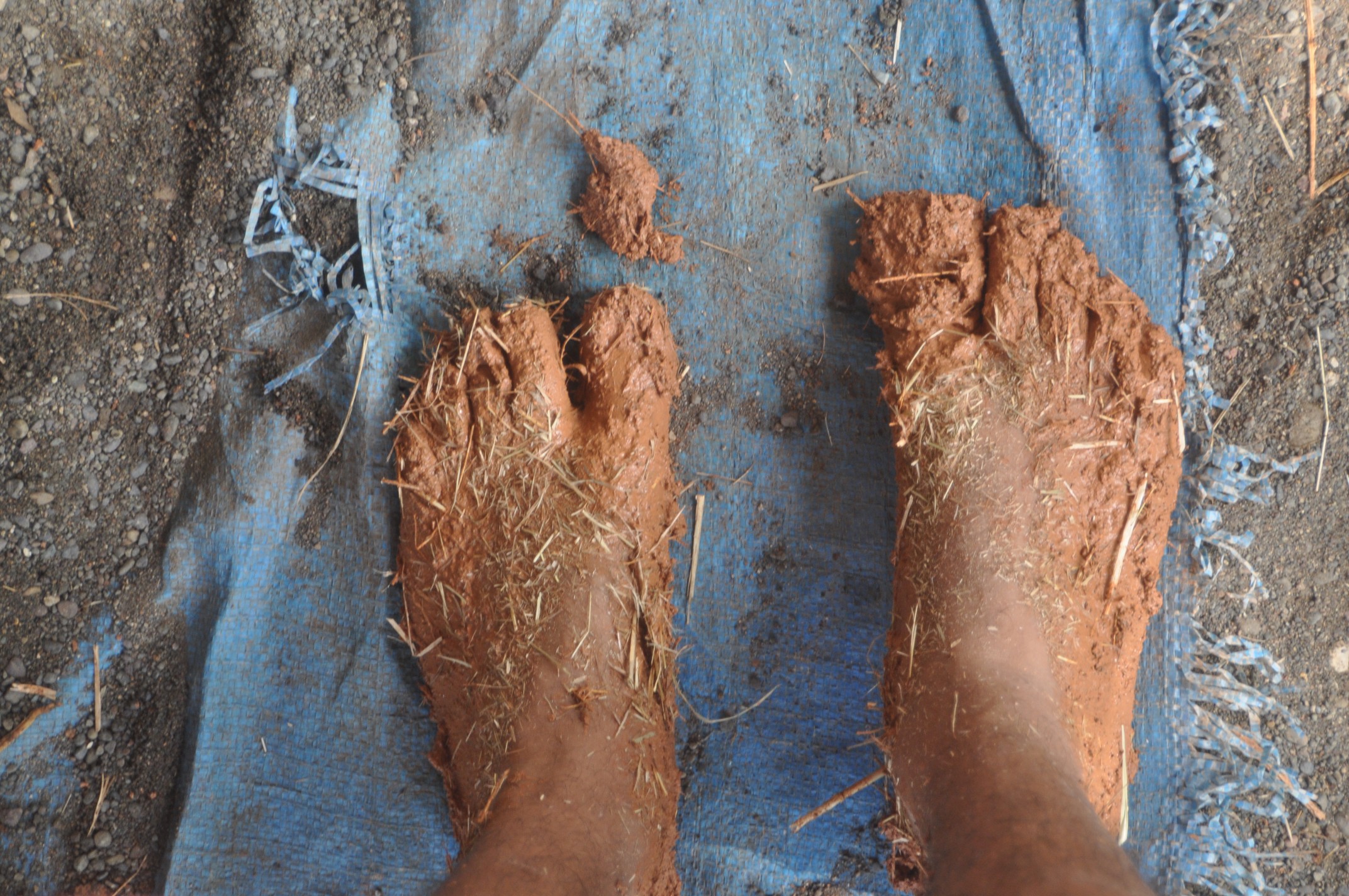
Speaking of permaculture master planning, we want to give a shout out to our friend Zach Weiss of Elemental Ecosystem. Zach is Sepp Holzer's protege and a young permaculture designer you should be paying attention to, especially if you are interested in water management!
And for anyone feeling generous, long time Ranch friend Eileen Richardson is part of the Rocky Mountain Land Library which is on the last leg of a Kickstarter campaign. They are hoping to transform an old cattle ranch into a home for writers and artist. Please support!
Abrazos
The Ranch Crew

Help Improve Workshop Access for Central Americans
Workshops, one of many forms of education, are expensive to organize, risky to run, and an immense amount of work to pull off and host well. They can also be transformational and inspirational for the participants and provide them with an amazing educational experience. We have been offering life-changing courses and classes in a vast array of areas related to sustainability for over 15 years
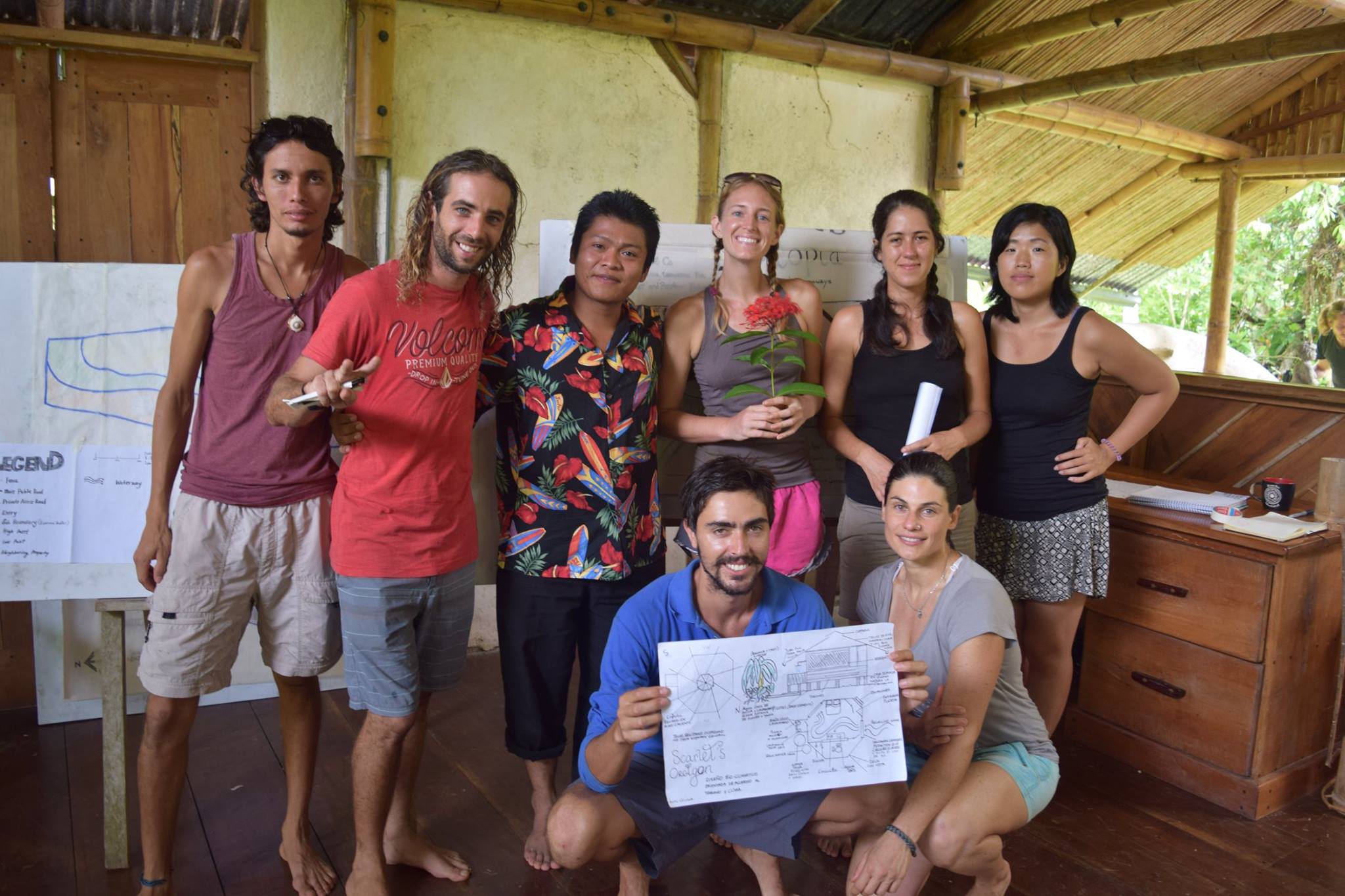
By Tim O'Hara
Workshops, one of many forms of education, are expensive to organize, risky to run, and an immense amount of work to pull off and host well. They can also be transformational and inspirational for the participants and provide them with an amazing educational experience. We have been offering life-changing courses and classes in a vast array of areas related to sustainability for over 15 years. During this time our core team has reflected on how to assure that our offerings are accessible to as many people as possible, especially low-income and future leaders in our region, without running our business into the red. It’s been a fine line to walk and one that we’ve commonly fallen on the wrong side of.
In 2015 we began a discussion about how to provide Central Americans with options to apply for economic assistance to attend permaculture, natural building and other sustainability related courses in our region. It is not uncommon for regional workshops to cost working Central Americans months of pay or more. Moreover, workshop students commonly lose income and make other sacrifices while away from their obligations at home. It’s a difficult situation that leaves these opportunities out of reach to the majority of people that are interested in them. From our observations, there are a growing number of people in our area that have a strong desire to participate in courses which will expand their horizons, expose them to valuable networking opportunities, and provide them with hard skills that they can take back to their communities. With all of this in mind, the idea of a scholarship fund began to emerge and make increasing sense.

Mastate Charitable Foundation (MCF), a small non-profit under the umbrella of the Marion Institute, achieved some important fundraising successes in 2015-16 that allowed them to create a Central American Scholarship Fund Program that provided seven partial scholarships to our Permaculture Design and Wilderness First Responder Certification courses and 2017 Apprenticeship in Sustainable Living.
Based on these favorable developments and the associated positive experiences participants had, we have been encouraged to look for ways to expand this program so as to meet the growing demand for these types of opportunities in the future.
Rancho Mastatal has already received over 20 scholarship applications for classes taking place in 2017. We believe that there are few better investments than supporting meaningful and empowering education for leaders rooted in their communities. In too many cases, populations worldwide have suffered the degradation of their communal structures from years of neglect and shrinking budgets, brain drain, worsening economic situations, and environmental atrocities that make living in certain areas of the world less viable. To rebuild will require courageous leadership, hard work and resources.
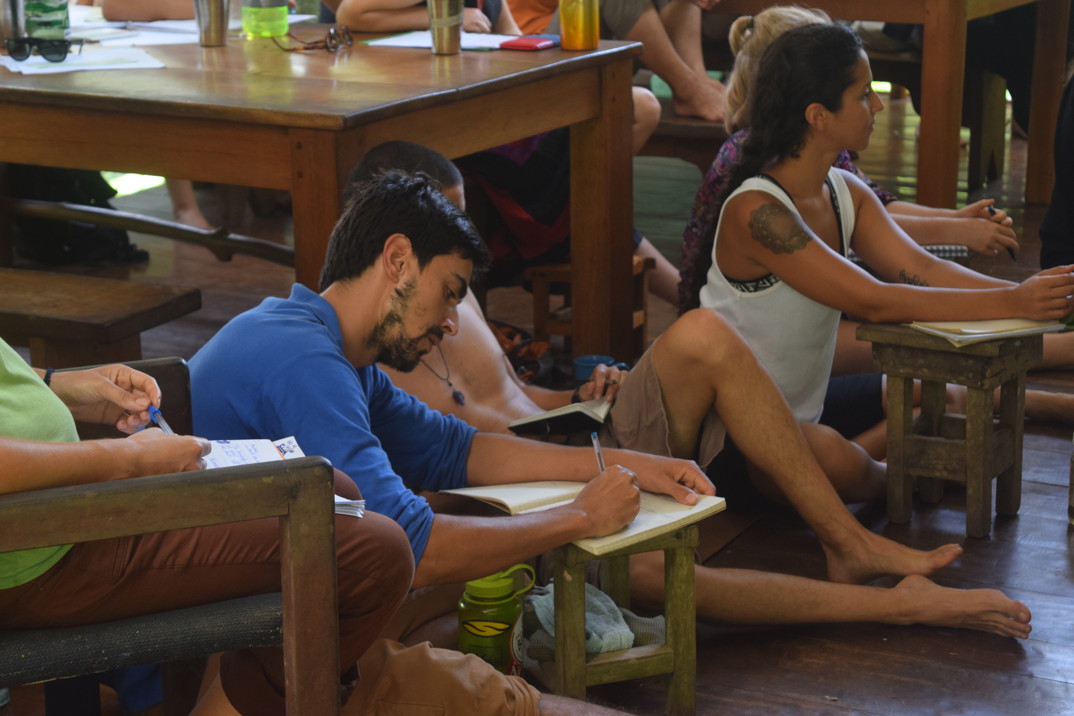
If you or someone you know would like to sponsor one or more scholarships during the upcoming calendar year please learn more about MCFs charitable work here. Tax deductible donations for the Central American Scholarship Fund can be made here. General donations can also be made on the MCF website here. The opportunities provided by your assistance can change the trajectory of not only a scholarship recipient but of their entire community. Help us to support a more sustainable future for Central America.
NEWS FROM AROUND THE PERMACULTURE COMMUNITY
We love food preservation at the Ranch, usually by means of fermentation. One of our challenges is finding good supplies, e.g. food grade, appropriate scale, etc., here in Costa Rica. But for you all in the States, you might check out Pantry Paratus for a great selection of supplies.
As our team at the Ranch looks toward the future, we've found much inspiration in the recent writings on commoning by David Bollier. We highly recommend the article Commoning as a Transformative Social Paradigm. You may also want to check out the workshop Reinventing the Commons: Social Ecosystems for Local Stewardship & Planetary Survival.
Abrazos,
The Ranch Crew

Non-Traditional Education: Reconnecting to our Roots
Modern, conventional education systems do not work for everyone. They cater well enough to many of today’s students but not to a significant portion of the population that might be better served by alternative pedagogical approaches. In most countries, at the age of 4 or 5, or even younger, kids are shuffled into busy classrooms to learn subjects that will reportedly prepare them for a successful future. As our economies become less predictable, politics less appealing, and the environment ever more damaged, current educational models are losing traction with increasing numbers of people who recognize that the one-size-fits all approach to education is not working for our society.

By Tim O'Hara
Modern, conventional education systems do not work for everyone. They cater well enough to many of today’s students but not to a significant portion of the population that might be better served by alternative pedagogical approaches. In most countries, at the age of 4 or 5, or even younger, kids are shuffled into busy classrooms to learn subjects that will reportedly prepare them for a successful future. As our economies become less predictable, politics less appealing, and the environment ever more damaged, current educational models are losing traction with increasing numbers of people who recognize that the one-size-fits all approach to education is not working for our society.
Terms referring to non-standardized teaching methods and ideas such as homeschooling, unschooling, gap years, Waldorf and BOCES are all becoming more familiar in today’s educational vernacular. Instead of paying an inordinate amount of money to learn how to navigate broken social and economic structures to barely make ends meet as an educated, employed adult, more and more people believe that it’s important that humans begin to train and prepare for meaningful, place-based work that provides a fair wage while better connecting to the elements that we most need to thrive; clean water, clean air, clean soil and clean food.
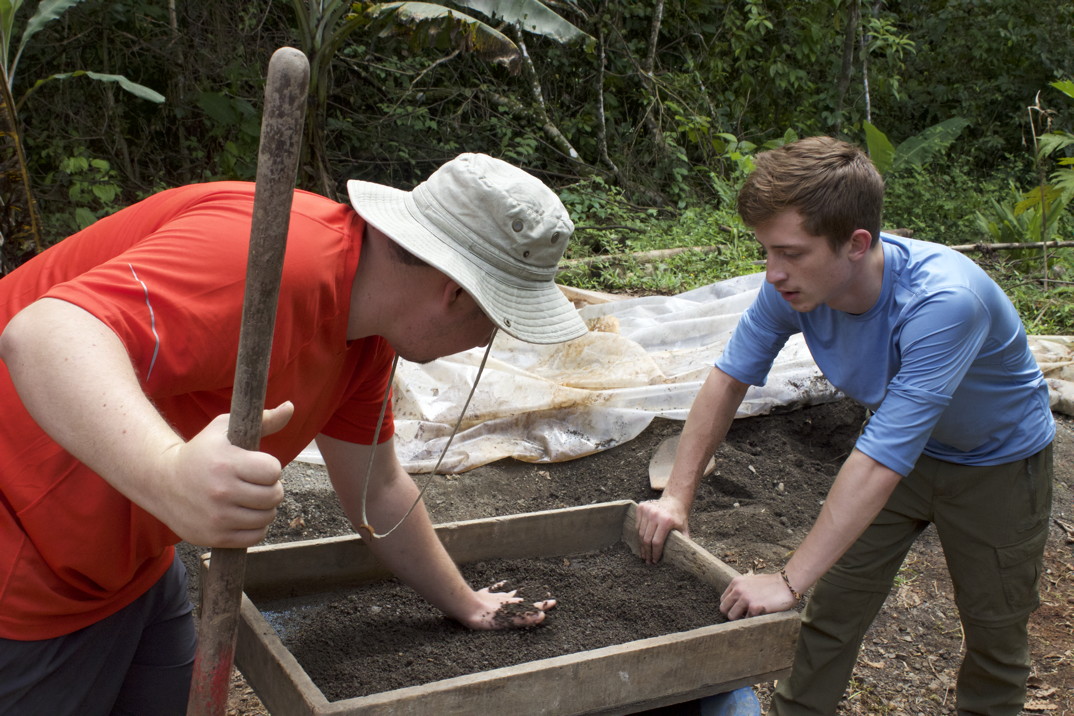
In our specie’s experiment to educate our populations to be good, productive denizens of the planet, we have lost sight of how to responsibly meet our basic needs and in the process have contaminated the resources that are inherent to a healthy life. We’re becoming a society more apt to care for our latest electronic purchase than one another.
Most visitors to the Ranch come to learn in a different setting. Many of these people are attracted to our experiential methods of teaching. As an education center since 2001, we have discovered a great deal about our students and how they develop best. We have also witnessed a trend over the last decade and a half that has students arriving to the Ranch with ever decreasing hands-on skills. It’s not uncommon to host students that have never picked up a shovel, dug their hands into the dirt, or cooked a meal from scratch.
Our education systems today praise computer work more than physical labor. While I think both skill sets are important in today’s economy, I would argue that we’ve let the pendulum swing much too far towards the idea that the solutions to today’s challenges lie only in high-tech devices and multi-billion dollar mega-projects that ignore our historical connection with and dependence on nature.
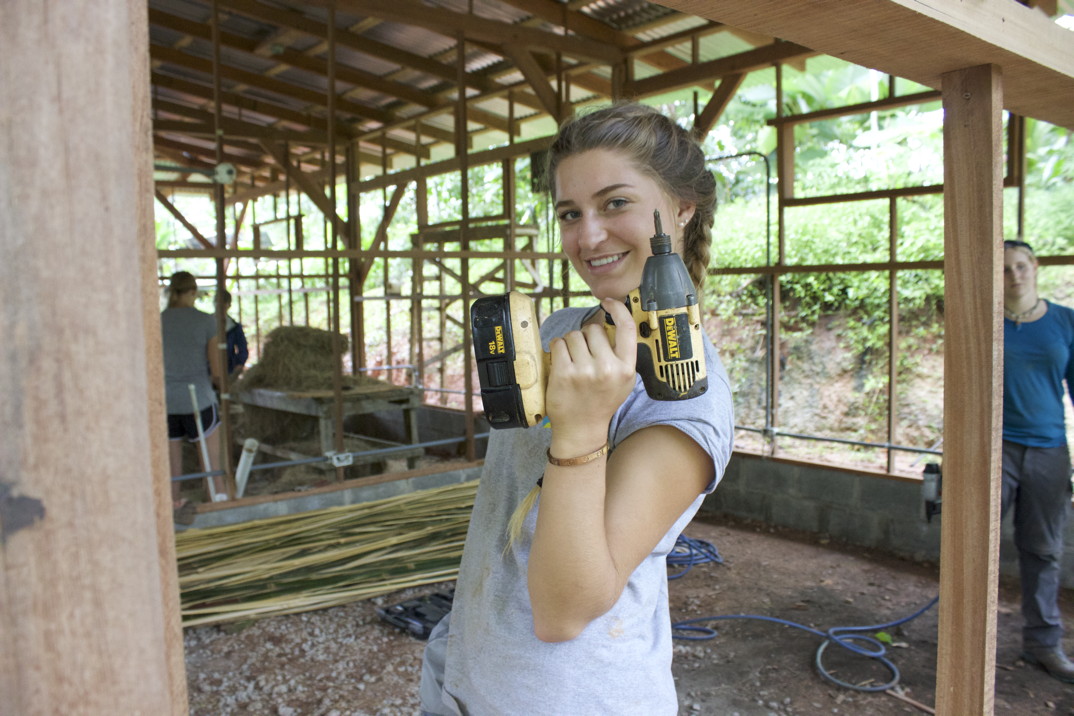
As parents, Robin and I have chosen a hybrid approach that has our daughter enrolled in Mastatal’s local, Spanish-speaking public elementary school and learning from Robin through a Waldorf-style homeschool curriculum during our trips outside of Costa Rica. We hope that this will provide her with a dynamic and solid educational foundation that will prepare her for the global problems that she and others in her generation will inherit and face as adults. We look forward to explore the growing number of non-conventional educational options as she gets older.
Gap year programs like those offered through Winterline provide an alternative to graduating high-school students. They allow students to better refine their interests before investing tens of thousands of dollars in an education that may not provide them with the schooling that they desire or need. Organizations such as Winterline recognize the existing gap in public education and focus on providing students with opportunities to learn hands-on skills. The growing popularity in these programs is a sign that parents are more willing to let go of the rigid ideas and standards that they experienced as students.
We’re proud to be a part of a more common sensible approach to schooling and we believe that well-thought out, inspirational and practical, applied programs can oftentimes provide students with a superior and more relevant learning experience. Some of today’s problems may require large, expensive and highly-engineered approaches, but others demand simplified but intelligent thinking and a genuine connection to the earth. The latter can and should be cultivated in our society’s educational programs.

Paul Stamets, the renowned mycologist, provides inspiration and an example via his mycoremediation work that partners with our fungal brethren to clean up toxic sites using simple, inexpensive and accessible technology as do Vandana Shiva’s efforts promoting food and seed sovereignty in India. Winona LaDuke’s achievement to build and restore community by means of wild rice harvesting and her work with the White Earth Land Recovery Project and Wes Jackson’s advances in perennial grain production in the Midwest of the US with The Land Institute provide us with precedents to learn from. Our hope is that the Ranch too can provide an example and a place for compassionate people in search of a better way to learn, teach, heal and live.
Check out our calendar and consider organizing a group to join our team as we promote a more rational, sensible and connected educational movement.
News from around the Permaculture Community
One of our favorite alternative education programs is Sustainable Summer. Their groups are always one of the highlights of our year and the students who go through the program leave us feeling hopeful for the future. If you are looking for something different to inspire your high- schooler, we can't recommend them enough.
We have two new stellar workshops on the calendar for May 2017:
Agroforestry Skills Inspired by the Forest: Orchard Planning, Propagation, Planting, & Production - May 17 - 18 with Peter Kring
Plant as Medicine: Reclaiming the Art of the Home Apothecary - May 17 - 18 with Ancel Mitchell
Our cob oven will be seven years old this season! We are looking at re-building the oven so that it better fits our kitchens needs. Ovens are great starter projects and these plans for a double chamber cob oven just might give you the confidence to tackle the project in your own backyard!
Abrazos
The Ranch Crew

The Peace in Knowing Yeast: How to Brew Your Own Ginger Beer
I knew there was something wrong when the fraternity brothers put codeine in the keg, when my friends got so sick that they went splat, when thirteen year old me took a sip of every wine bottle in the house when mom and dad weren't looking and I felt like I had done something naughty. European culture is renown for serving alcoholic beverages to children, yet in the USA where I grew up, something about alcohol is taboo. The cultural history reflects just that. Alcohol in Native American early history is absent, contraband could put you behind bars or blind you, prohibition made speakeasies a mischievous and alluring excursion, and even today a cultural lag in how we enjoy alcohol still exists.
By Doro

I knew there was something wrong when the fraternity brothers put codeine in the keg, when my friends got so sick that they went splat, when thirteen year old me took a sip of every wine bottle in the house when mom and dad weren't looking and I felt like I had done something naughty. European culture is renown for serving alcoholic beverages to children, yet in the USA where I grew up, something about alcohol is taboo. The cultural history reflects just that. Alcohol in Native American early history is absent, contraband could put you behind bars or blind you, prohibition made speakeasies a mischievous and alluring excursion, and even today a cultural lag in how we enjoy alcohol still exists.
It became very apparent to me in college that with alcohol, etiquette falls flat on its face. Why? Japanese tea ceremonies, to draw a stark comparison, dedicate hours to enjoying a tablespoon of liquid in the most refined fashion, yet the common bar pumps out wasted resources, wasted fools, and wasted dreams. People may drink so much as to make themselves sick, both physically and mentally.
The Origins of Homemade Hooch
Alcohol is actually an ancient substance that has been intentionally brewed since the beginning of mankind itself. Some people even go as far to claim that alcohol IS the reason for civilization. One theory suggests that contaminated drinking water in Europe warranted humans to grow grains and ferment them to cleanse the water. In this process, humans needed to orient themselves to the earth's growing cycles, work together to organize and specialize in different tasks, then celebrate communally with a drink because clever Homo sapiens managed to retrofit their pollution problem.
Health is a major benefit to why people drink. Medicinal plants have traditionally been brewed into alcoholic beverages and can prevent or cure illnesses. In the "blue zones"- regions of the world where people have measurably longer lifespans--one of the factors is that residents enjoy moderate alcohol intake. Blue zone residents also benefit from strong social relationships, so community is a major piece of healthy alcohol enjoyment. Sharing drinks with other people also lubricates and warms a gathering. So-- yes! You can have your brew AND drink it too. Alcohol gets the psychological, physiological, and sociological stamp of approval. Where did clever man go astray?
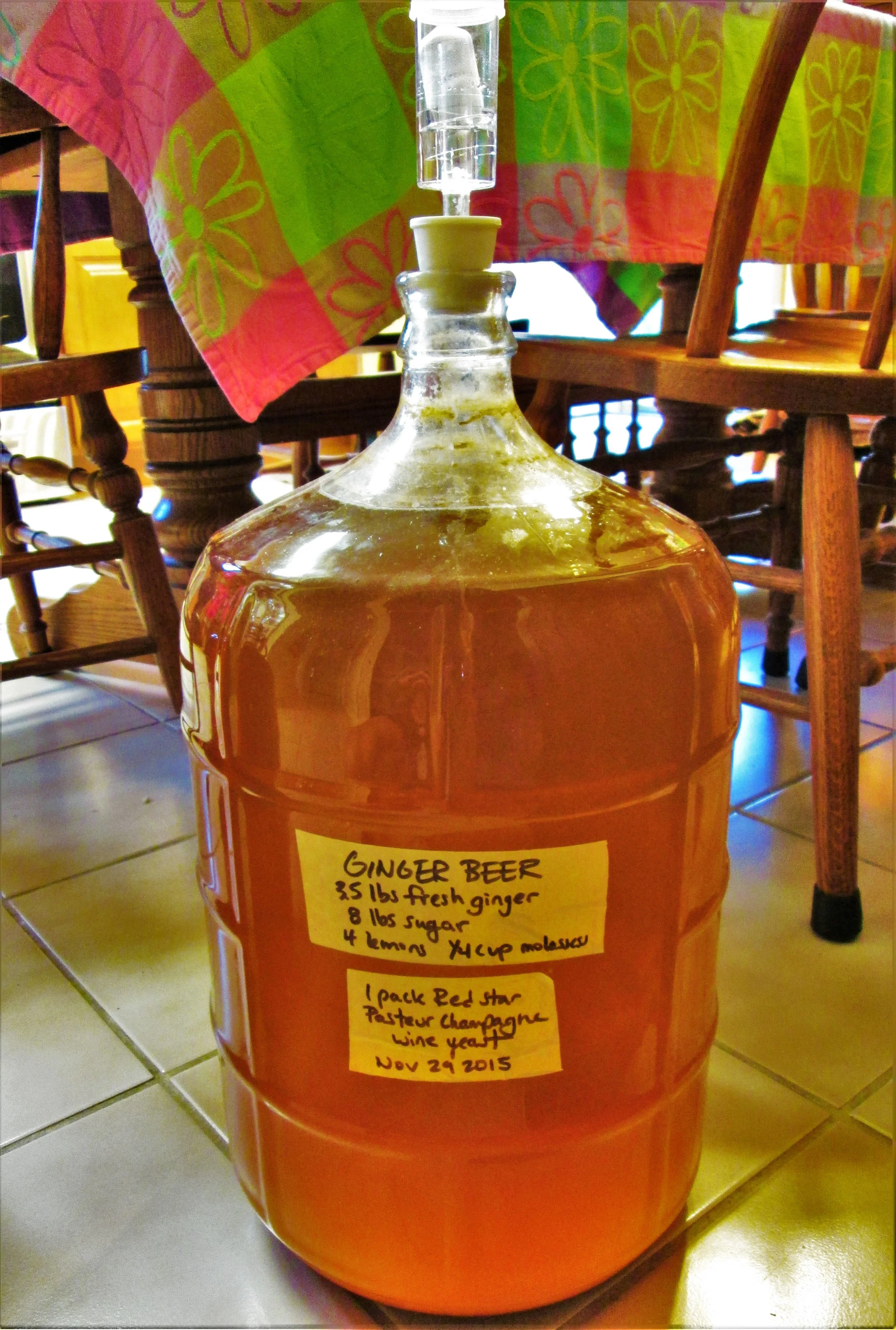
Time is the essential difference in how we relate to a drink we make ourselves and share compared to a drink we buy commercially. Like many good things in life, it takes a lot of time to see a good brew from start to finish-- or in the grand scheme, from seed to chalice. Modern "conveniences" allow people to buy Budlight from the cornerstore, then smash a can to the forehead before thinking twice about going for more. Woah, Nelly! Lack of restrictions on consumption could cost an eye, a tooth, and a frontal lobe if you're not careful, and then what kind of Homo sapiens would that be? Anthropologists suggest that it's our frontal lobes that allows our brains to use foresight and therefore be more aligned with the process of time. My suggestion goes beyond sipping more consciously, more graciously; start from the beginning and make the whole brew yourself.
Meet your Microorganisms
Did you know that one in ten cells of your body share the same human DNA. As for the rest, they are trillions of bacteria and yeasts that live symbiotically with your body. Microorganisms are a great tool for living in your body, or they can be a great tool for brewing the brews that will satisfy your body. There are numerous strands of yeasts that eat sugar and through their metabolic processes, they create alcohol as a waste. What a life! Some of these yeasts are more effective at creating alcohols than others. For example, the yeasts that you can buy in the grocery store were grown in sanitized laboratories to ensure that a very specific strain is repeatedly created. This is an effective means for getting a brew consistency. If you live in the middle of the Costa Rican jungle and cannot access such luxuries, or if you have pride in your local yeasts as San Fransciscans have in their sour dough bread, then you can easily grow your own brewing yeast.
The Ginger Bug

A ginger bug is the first step in brewing your own alcohol. Think of it as a little pet, like a fish in a bowl that you feed everyday. You nurture your ginger bug, and your ginger bug will nurture you. This is how you can deepen your awareness for the beverage that gave rise to humanity, and could propel it forward, or send it tumbling back down to dust.
Step 1: Locate fresh ginger. We happened to dig this rhizome up in our Zone 2 garden. The fresher the better, as it means more active enzymes that ultimately will nourish your bug, and in turn your body.
Step 2: Grate the ginger to increase the surface area. You're going to want about 2 tsp of ginger for 8 oz of water, which will yield a decent size ginger bug.

Step 3: Add 2 tsp of sweetener to your bug. If you can avoid heavily processed and pasteurized sugars, then do so. Honey, maple syrup, and fruit syrups are excellent choices. For this recipe, I used our locally preferred option, tapa dulce, or sugarcane. Bleached white sugars can impose genocide on your microbial populations and are best to be avoided.
Step 4: Stir your water, sugar, and ginger "bug" gently, then cover with a cloth and rubber band. This will allow yeasts in the air to get in, but keep larger creatures out.
Step 5: Carefully observe the nature of your bug. If it starts bubbling, this is a great sign that "it's working". Carbon dioxide, like alcohol, is a process of the yeasts' respiration, and it creates a fizzy bug.
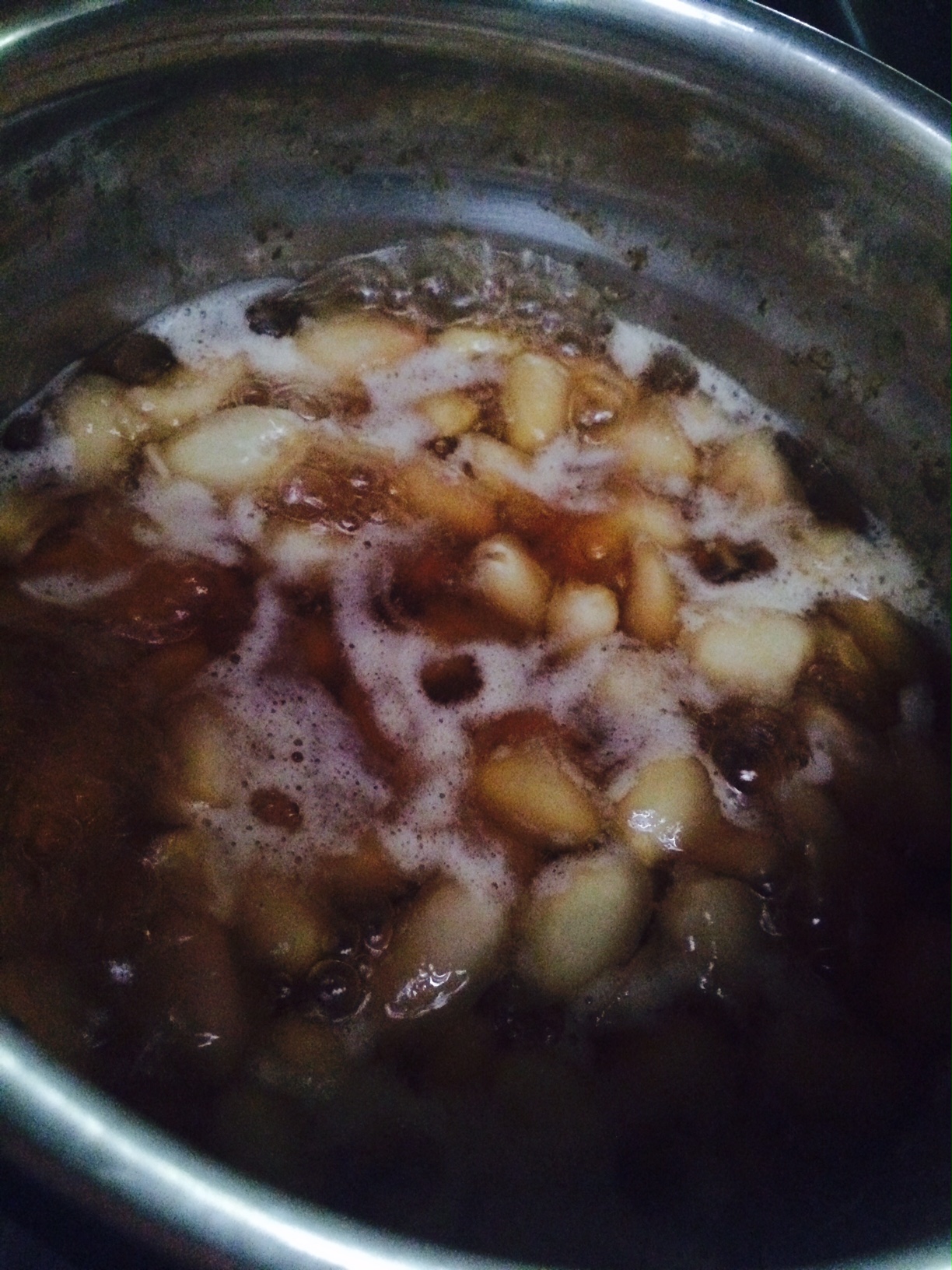
What's happening is that you are creating a mini ecosystem that allows local yeasts from the air a free place to get some lunch (sugar), hang out in a safe environment, maybe meet some cool other microbes; and if all goes well, fall in love, divide, and start a yeasty family. That's right, you are creating a yeast breeding ground, and because ginger tea is the base of the medium, the antibacterial properties of the ginger are keeping the population of "bad" microbes at bay. You can feed your ginger bug once every two days with the same ratios of sugar and ginger as before, but only if necessary. Avoid over feeding your bug and creating a viscous solution. Your bug is your pet. Know it, feed it, and it will reward you with love and affection. If your bug has some fizzy action-- congratulations!-- your pet is ready to use.
Fermentation Experimentation
Ginger bugs are good for inoculating teas with yeasts that will allow them to ferment into alcoholic beverages. The next step in creating a brew is to find a tea recipe or make one up using locally available resources. Fruits and herbs make great tea flavors. I brewed two separate teas for this occasion. The first is a ginger sour guava tea, in which the ingredients were chopped, boiled, and strained. The second is a cacao tea that used the same process except using the fruit that bears the infamous chocolate seed.

Once the tea is prepared, add a sweetener, just as in the ginger bug process. Sugars will continue to feed the microbial populations you are brewing. Like mentioned before, the less processed the sugar the better. Sometimes sugars even carry wild yeast colonies. This will encourage your brew to ferment.
Once you have your ginger bug and sweet tea, you can use the bug's yeast to inoculate the tea. Like a small fish released from bowl to small pond, your ginger bug yeast is off to fend for itself. Ensure that it is going into a safe, clean environment, and that your tea is not too hot. Room temperature to 105 degrees F is a safe range. Since you know that the health of your yeast will ultimately intertwine with the health of your own being, you continue to monitor the brew.
Thus, you have entered the experimental phase. The ultimate flavor and quality of your brew is at fate's discretion. Proceed valiantly! Check your brew at least once a day to ensure nothing is growing inside of it except for good microbes, that the texture is liquid and not thick, and that there is enough sugar.

It may take one day, it may take ten, but you will try your home brewed alcohol and realize that all that time you spent caring for your ginger bug and your brew was very well worth it. "This is delicious!" you'll say one day, "And my gift to humanity." A successful brewer is an artist-- one who reorders the chaos of water, sugar, plants, and airborne yeasts, and transforms them into a product that brings humans together. It turns out that it was never about the buzz, or the story the morning after-- it was always about the process. As humans face the coming challenges of the environment that our culture has shaped, it is important that we remember that each of our actions continues to evolve our relationship with the natural world. Even something as simple as brewing gives proof that the things we provide care for will in turn care for us. Sit back, sip back, and celebrate the pleasure of good brew and good company. Cheers!
News and Notes from around the Permaculture World
We are scheming and dreaming about expanding our chicken program in 2017. More eggs, meat, better breeding strategies, and figuring out how to get the birds to weed our orchards has got us motivated. If any of you are trying to do the same, you should check out the Permaculture Chicken Film from the guys and gals at Permies.com.
One of Scott's past PDC students, Levi Gardner, from a course taught in Nicaragua, is doing some excellent urban farming work in Grand Rapids, Michigan. Check out this article about Urban Roots. Levi states that for him, "a big turning point was going to Nicaragua for a month last year to study permaculture. I left there going, ‘I’m not just a guy that wants to be an urban farmer anymore. I want to build something.'" We are inspired!
As you know we practice agroforestry at the Ranch and love sharing our experiences with others. The USDA Inside Agroforestry publication is full of similar experiences from the states and around the globe which we are hope to contribute to in the future. Considering signing up for their quarterly publication to up your agroforestry skills!
Abrazos
The Ranch Crew
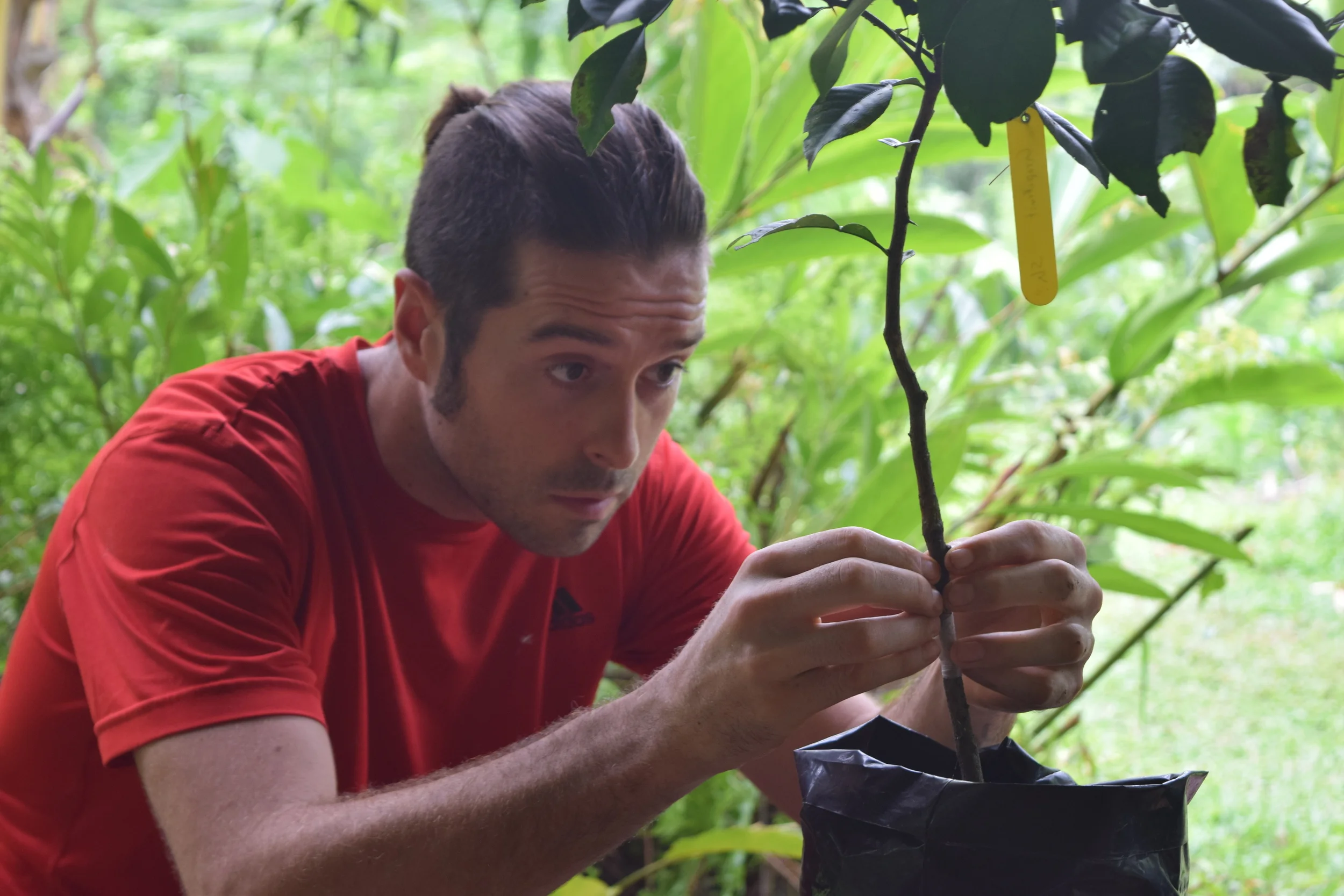
The Art of Stacking Functions
Stacking functions. What does this phrase mean to you? It could mean any number of things depending on what you apply it to. In this case I'm referring to the term as it's used in permaculture. It is one of the primary principles of permaculture design. Here at the Ranch we employ as many of these principles as we can in our work and in our daily lives.

Tulsi or Sacred Basil harvested for tea.
Stacking functions. What does this phrase mean to you? It could mean any number of things depending on what you apply it to. In this case I'm referring to the term as it's used in permaculture. It is one of the primary principles of permaculture design. Here at the Ranch we employ as many of these principles as we can in our work and in our daily lives.
Before delving deeper into this topic, I think it's important to first define what permaculture is. There are thousands of definitions available but I've found it useful to come up with my own because it makes the most sense to me. I encourage anyone with an interest to do the same. Here is my definition: Permaculture is a way of life that empowers you to contribute to the regeneration of the earth on a personal level. Its use is guided by a set of principles that can be applied to any aspect of your life.
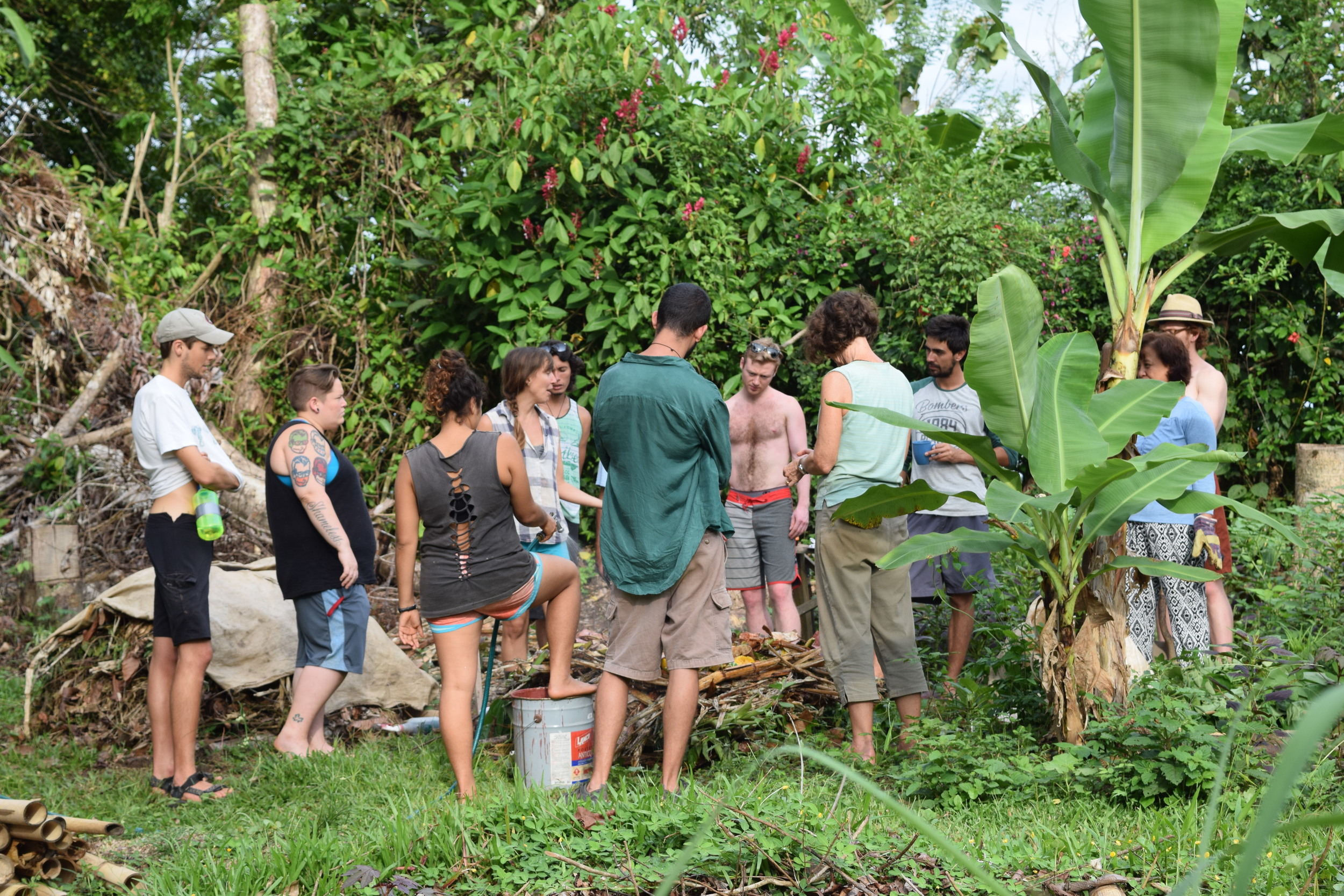
Learning about Compost making in our PDC.
With this in mind let's go back to stacking functions. As first mentioned, stacking functions is a primary principle of permaculture and basically refers to elements in your life having multiple functions, instead of a single function. I will offer a few examples to make the concept easier to grasp. A kitchen table is where food is prepared, where meals are shared and it can also become storage space. A fruit tree provides fruit, offers shade, produces mulch, fire wood and a climbing structure. Try to think of elements in your life and what you use them for. If you can only come up with one use for something, it's probably not necessary to have in your life. Can you think of anything that doesn't have multiple functions?
After taking the permaculture design course (PDC) at the ranch, I started to notice that I was applying these principles everywhere and had been all along, only now I was able to recognize this process. Stacking functions is apart of my everyday life here. My role has taken many forms, but recently I have focused on the farm to table operations. I propagate plants, nurture them and continuously maintain them until they are ready to be harvested and used in the kitchen.
Ready to make pickles.
One morning in the Vivero (plant nursery) and kitchen gardens I realized that everything I was doing actually had multiple functions. I'd set out to clear the paths and Swales from plants too tall to hold themselves up from the relentless rainy season downpours. I was simply cutting and clearing. But it was more than that. The plants I was tending too were edible salad and cooking greens, perfect to use in the kitchen later that day. And this got me thinking, what other functions do these humble garden tasks have? Well, I was pruning and shaping the plants, helping to promote new growth and removing old growth. I was collecting cuttings to propagate in the nursery later that day. And from what was leftover, I was gathering nitrogen rich green cover for our compost pile. When I was done clearing I got onto weeding and again found myself picking out perfectly edible food growing in unintentional places. I wasn't simply weeding, I was improving the aesthetic of the gardens, creating a new intentional herb garden and collecting herbs for use in the kitchen.
Later that week I was in the kitchen processing our farm food and found myself using these ingredients in many different ways. The tulsi or holy basil I'd cut back was used fresh to make a concentrate to flavor our kefir water sodas. Some of it was dried and put on the tea table and some of it was used to flavor a meal. One of my favorite foods to process this year has been mango. When it's ripe we eat it fresh, add it to our hot sauce, use it in smoothies and freeze it to make ice cream. When it's green we pickle it, make green mango kimchi, create green mango salads or simply slice it up and sprinkle with our chili lime salt. It seems simple but I'd bet many of you have set out to do a simple but necessary task in the kitchen or garden without realizing that what you're doing or using actually has many functions.
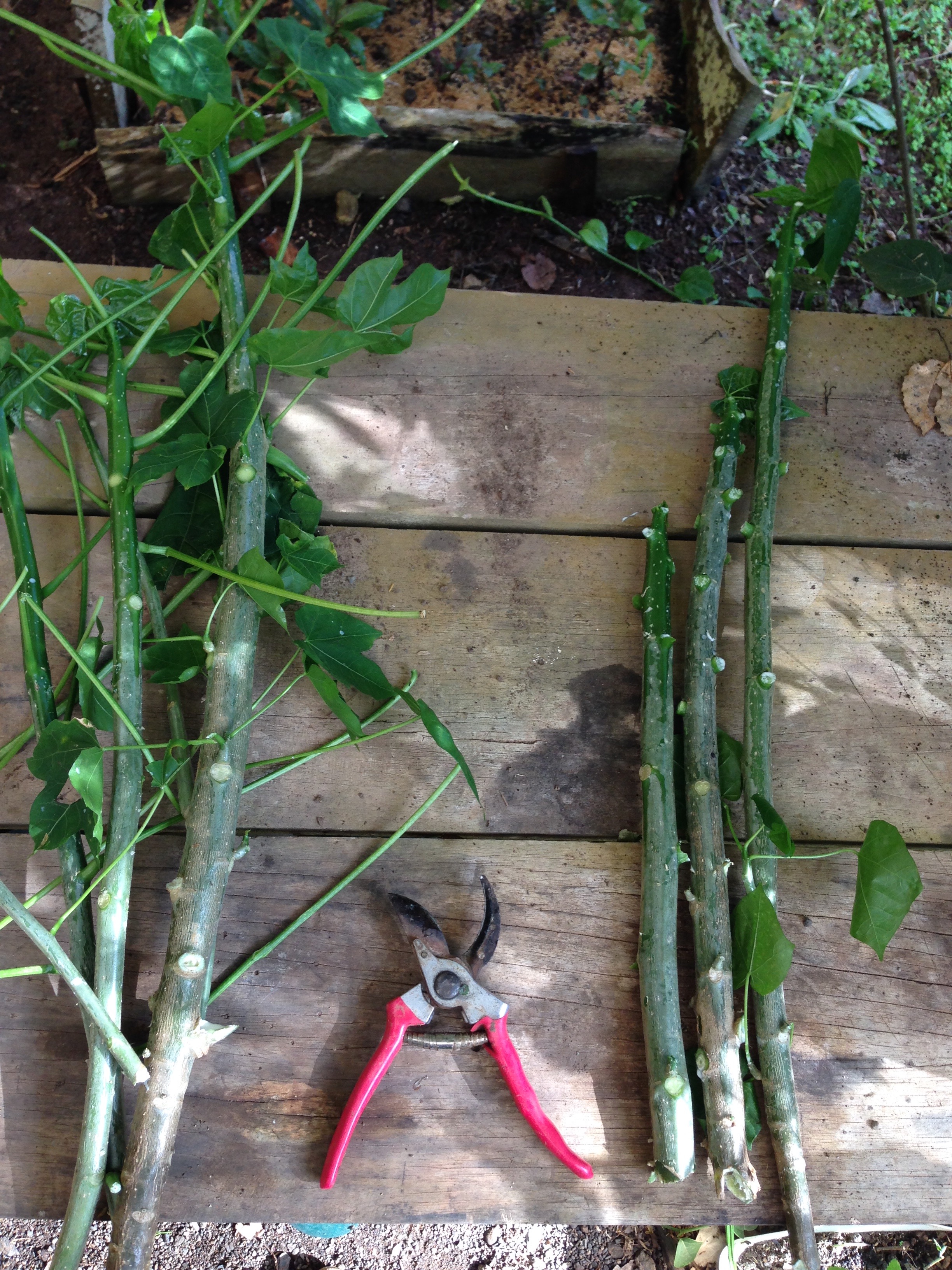
Chaya cuttings from the garden.
I've found this concept a wonderful and useful one to apply to my life here at the ranch. It is an approach I will take with me when I leave. A way of moving and doing that is easily applied to my life back home in the city. I will find myself asking the question, "what functions does this item/task/plant/food have?" over and over again. If I'm able to come up with at least 3 (positive) functions then I'm happy to purchase/do/ plant/use it. If not then I will rethink my choices. Of course there will be some situations where this concept is not applicable but there are many where it is and I believe it's simple enough for everyone to employ. After all it is these small changes in our lives and more specifically, in our thinking that help move the big change in the right direction. It is the decision to question what we are doing and using and actually think about the consequences, it is the decision to think and act consciously.
NEWS AND NOTES
Our Permaculture Design Course is on the schedule for 2017. Course runs from April 25th to May 8th. We are hoping for another great turnout so help us spread the word!
In 2016 we offered over a half dozen full and partial scholarships to students from Costa Rica and around Latin America to participate in our workshops.
We were able to do this through the generous support of the Mastate Charitable Foundation. We hope to continue this pattern in 2017 and are now accepting tax-deductible donations for our Central American Scholarship Program. Help has increase the accessibility of sustainability education to our neighbors and consider making a donation!
Abrazos
The Ranch Crew
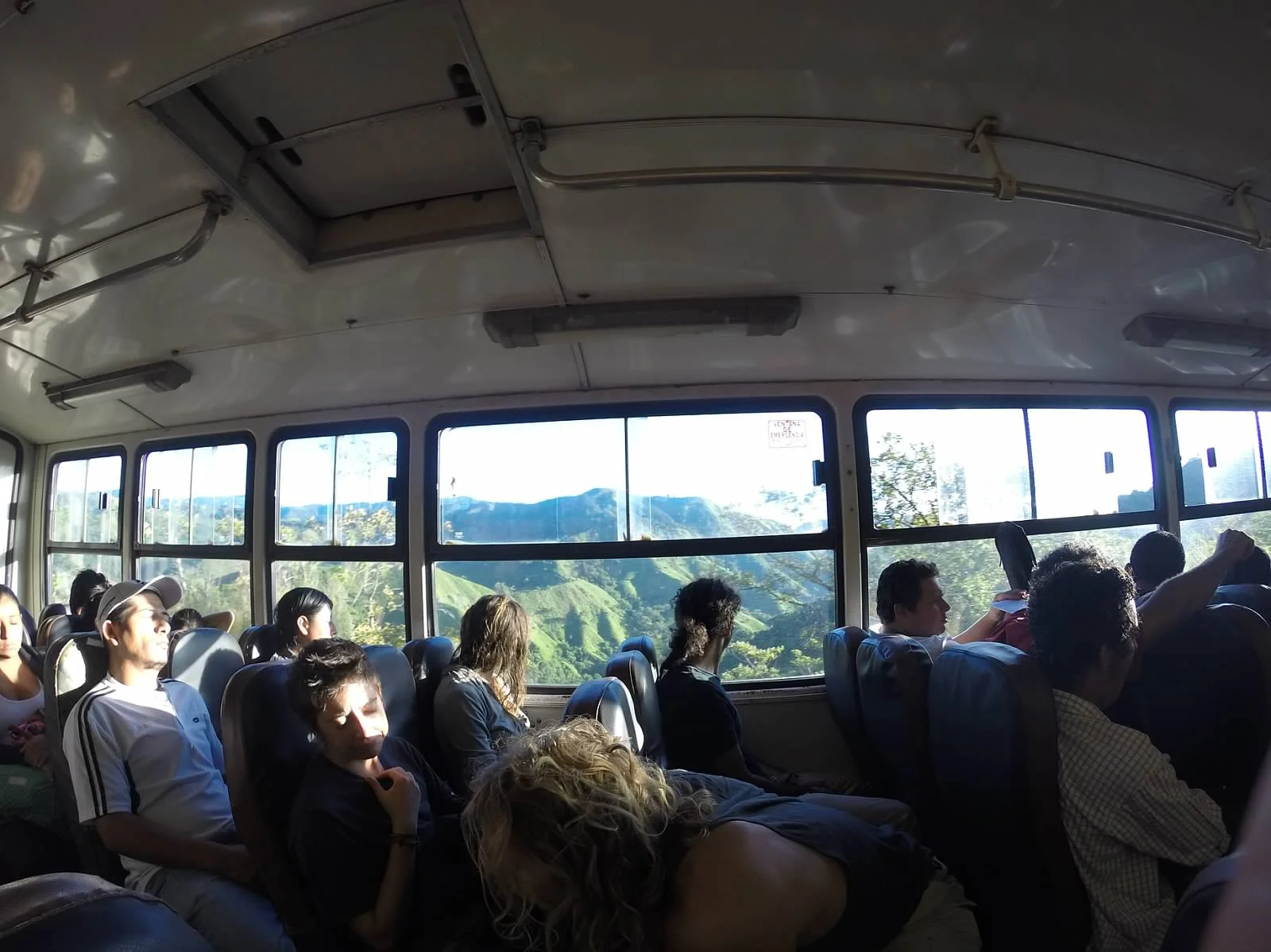
Going Home: The Long Road Leaving Mastatal
The journey starts with a 5am wake up; just as the sunlight is starting to spread through the jungle. I take a couple deep breaths as I admire the beautiful place that I am in.I take a last look around, heave my heavy backpack on, and head down to make a cup of coffee before embarking on what will be a 36+ hour adventure back "home." I have done this journey multiple times now, from California to Costa Rica and back and forth, and each time presents new challenges and exhausting travel times.
The journey starts with a 5am wake up; just as the sunlight is starting to spread through the jungle. I take a couple deep breaths as I admire the beautiful place that I am in.I take a last look around, heave my heavy backpack on, and head down to make a cup of coffee before embarking on what will be a 36+ hour adventure back "home." I have done this journey multiple times now, from California to Costa Rica and back and forth, and each time presents new challenges and exhausting travel times.

Every time I go from one place to the other I am overwhelmed with culture shock, but the shock is always greater in my trips back to the States. While leaving the small, tranquil, jungle town of Mastatal and landing in the big, bustling, concrete jungle of Los Angeles I am caught off guard by what is happening in the “real world.”
Fortunately, I do not and have never had to live in a city, especially not one as large as Los Angeles. I grew up in the small mountain town of Bishop, CA; population 4,000. For college I moved to what I considered the city of Durango, CO; population 20,000. Then I moved to Mastatal; population 100. You could say I don’t have much city or masses-of-people experience, and this probably factors into my feelings of shock when I leave the Ranch and get dropped into one of the biggest cities in the world.
After I chug down a delicious cup of local coffee, something I know I won’t enjoy again till I return, I head out to wait for the only bus out of town. The bus arrives and I awkwardly manage to load my bag on, which always seems to be a feat when traveling. So it begins; the first of many hours sitting, waiting, and fidgeting. If any of you have traveled to the Ranch you may feel the same way, but I think the bus ride is much easier on the way out then the way in. Better as the first leg of your journey than the last,.still with a fresh traveling bum.
I enjoy the ride through the jungle, on windy, bumpy, dirt roads, admiring the unique beauty of this place. We arrive in Puriscal and I head straight to get some chicharones. These yummy hunks of meat, an avocado, and bread have become my go to traveling food to fuel me through. I take my time because my flight doesn’t leave for hours and I would rather wander around the streets then wait in the airport.Still there aren’t many exciting activities to keep me in Puriscal so I load onto the next bus to San Jose.
The whole trip gradually eases me into civilization, each stop with an increasing population. The bus stops in the middle of San Jose, I get off onto the busy streets. I have done this journey many times but I have never had to find the next bus station to the airport by myself, so this will be the interesting part. As anxiety starts to come up with the increase of people and hustle, and every other person in a car is yelling “taxi, taxi!” I inhale, exhale, tighten my backpack straps, and start walking in the direction I think is to the next bus station.
After multiple blocks I start to think I may have missed a turn.I spot a group of police officers chatting on the corner and shyly approach to ask for directions. They all jump eagerly on the opportunity to practice their English on this lost, white girl.
I make it to the airport. The Costa Rican airport is so small that everything moves smoothly.This is where I will wait for eight hours before my plane leaves. I find a nice private corner, lay out my yoga mat and start stretching. I’m the wandering, hippy, dirty, traveler that doesn’t mind making herself comfortable and if that means doing some odd yoga moves in the airport then so be it.

On my flight to LAX I sit next to a Costa Rican man that is moving to Alaska to be with his family. I wish him good luck and warn that he better buy a coat! I arrive in LAX, wait in the two hour immigration line, get on the airport shuttle to the opposite side of the airport, find my next gate, find another private corner, and lay out my yoga mat in hopes to get some sleep. By this time it is at least midnight and there is hardly anyone in the airport.
It turns out not many people sleep in the airport; except for those too cheap to get a room. With the lack of body heat the airport feels like a walk in freezer, and this is not just because I am use to the heat of the tropics. I thought I brought enough warm clothes to bare the cold airports, but I can barely feel my toes so I try wrapping myself in my yoga mat. At this point I do look like a homeless person camping in the airport. The late hours of the night are also the time that all the construction and cleaning gets done in the airport, so between the jackhammers, vacuums, and freezing temperatures I don’t get much rest.
The early morning hours come, people slowly start trickling back into the airport. I continue to wait for my flight to Mammoth, the town an hour away from my home where I will get picked up by my parents. I have had this flight canceled on me multiple times due to not enough passengers, so I worry until I'm on the flight, if it will take off or not. If this flight doesn’t run that means one of my parents will need to drive the five hours to LAX to pick me up. That for lack of a better word, sucks. Finally, the time has arrived for the last leg of my trip; I board the Mammoth flight, an hour long beautiful trip over the Sierra Nevada Mountains. I land. My dad is there to pick me up and we drive home. It has been at least 35 hours now since I left Mastatal; I am exhausted.
I am in a totally different place now. It always amazes me how one day you can be living in the tropics and the next you are in the high desert mountains. I went from a landscape of complete green, to one of different shades of browns and speckles of green. On the drive home my dad comments “it’s been raining a lot, things are looking really green here.” Ha! I think, a lot of rain, really green, you should see the jungle.
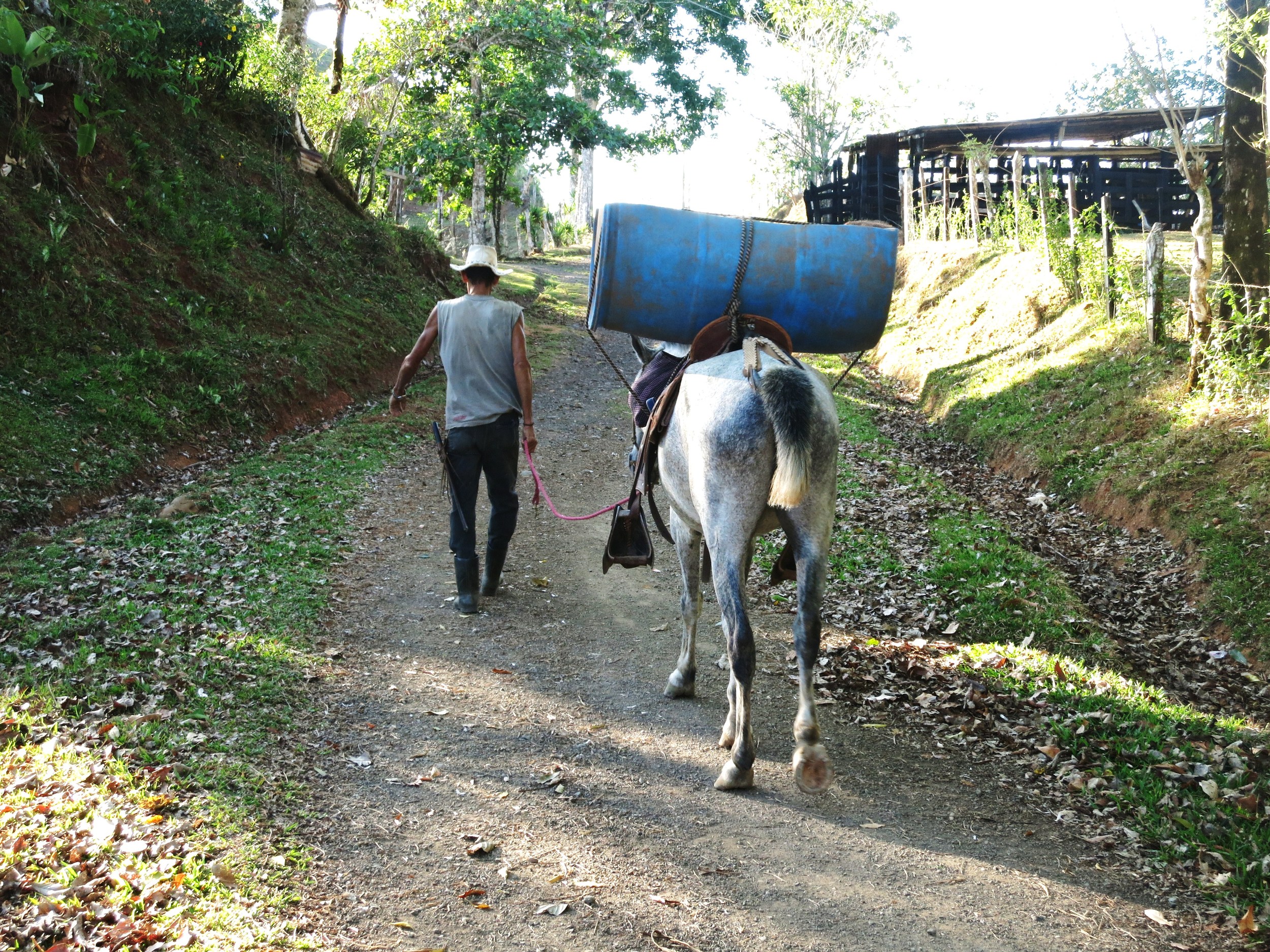
Usually my transition back into life in the States is cushioned by the comfort of being in Bishop, a town so small you almost know everyone. But unknowingly, I arrive back home during memorial day weekend. Which in Bishop is when the town holds its annual Mule Days event, a well known event that attracts 20,000+ people and their 20,000+ mules. All flooding into Bishop for a week of mule fun! It is as ridiculous as it sounds. Not having been to Mule Days in many years, a long time friend and I decide why not? So we put on the good ol’ blue jeans, cowboy boots, and plaid shirts and go down to watch the rodeo! I feel like I have walked into a costume party, what happened to the raggedy t-shirts, sweaty shorts, and old crocs of the jungle? I ain’t in Mastatal no more!
NEWS AND NOTES
Did you know the Ranch is on Instagram? Follow us here!
Have you ever wanted to build your own home? Just bought a piece of land in Costa Rica and want to create a jungle paradise? Well in 2017 we have the classes you need to re-skill and build your place in this world.
Abrazos
The Ranch Crew

Life with Limited Communications: How We Thrive with Crappy Internet
I’m unable to answer all of the emails that I receive into my inbox everyday. Even though I do receive my fair share of electronic correspondence, my inability to reply to all messages is not likely a result of the inordinate amount of inquiries that I receive compared to many of you out there. The reason is that I live in a place with shitty Internet.

I’m unable to answer all of the emails that I receive into my inbox everyday. Even though I do receive my fair share of electronic correspondence, my inability to reply to all messages is not likely a result of the inordinate amount of inquiries that I receive compared to many of you out there. The reason is that I live in a place with shitty Internet.
I have a 2-hour window each morning before most people in town are awake to get into my account and open and answer my emails. After that, people begin to chew up the ever so precious limited bandwidth that serves our community. In my head I envision people in town rolling out of bed to take a peak at their Facebook accounts or watch a video on Youtube before school or work while I struggle to open a reservation request that might result in a booking and some income for the Ranch. Our painfully slow Internet means that I can generally check emails only once a day. If I didn’t respond to an email this morning, it will simply have to wait until tomorrow.

To add to my current communication challenges, I don’t have a cell phone, much less a smart phone. The pressure seems to mount each day to get one. Given my administrative obligations as the director of Rancho Mastatal, all of this results in a daily confrontation that I strive to find balance with continuously. For those of you with poor Internet connections, which may only be a small minority of you reading this, what do you do when you simply can’t open an email that you know you should read and respond to as soon as possible? How do you react when you can’t attach a simple Excel spreadsheet to your email to send to a prospective client? In an age when businesses increasingly rely on the Internet for their survival, how has the Ranch been able to make ends meet for 15 years, the first 8 without even a phone in our town, in a world that today demands email responses in minutes or hours, not days or weeks?
Honestly, I don’t have a great answer or fully know. It’s an interesting dissertation topic for a future graduate student that loves our community. I think mostly it’s been a life-or-death (for the business, not us as humans) need. Somehow, we’ve been able to organize our work and lives to make it work, in spite of the poor odds in Vegas. We’ve persisted and persevered while the communications here have slowly improved. We’ve been forced to depend on our amazing library (with real books) for research and traditional means to build friendships, trust and a dedicated following that have kept us alive and mostly well.
Every 3 weeks, for almost a decade, I drove 2 hours to find a reasonably fast Internet connection. I also relied on a terribly annoying auto response message that asked those emailing to me to please be patient when waiting for a reply. Many of you probably remember (and still receive a watered down version of) the message that states that I’ll get back to you sometime within the next century. This is mainly how I assuaged and bought time with those interested in our project and “stayed on top” of bookings and guest visits early on in our evolution.

In the earliest days, I would wait in line at the public phone in San Miguel, 4 kilometers from Mastatal, to make bookings for our educational groups. If I had to make more than one call, I would have to get back in line to make the second. A third. Back in line. You catch my drift. This little exercise might take me half a day. Setting up homestays for our high school groups would take multiple days. It now takes me an hour by phone.
The current reality, fortunately, is that I’ll probably be able to respond to an email that you send to me within a week, and if it’s high priority, even sooner. But that doesn’t mean it’s always easy. While most of you enjoy life with high-speed wifi and 4g service, we struggle with a 3g network that’s reminiscent of my first email experience with AOL and dial up just out of the Peace Corps in the mid-90s. I haven’t come that far in the past 20 years, but I’ve come somewhere, and all this said, there’s great relief and many benefits in not owning a cell phone and being tied to the Internet 24/7. I am currently avoiding total dependence on modernity’s electronic leashes (or nooses) but also appreciate and recognize the great benefits that the Internet brings to me, my family, and our business. Without it we would struggle even more than we presently do to make financial ends meet and stay in touch with our families. My weekly drive to the highest point in the region to check phone messages has evolved to a predawn wakeup and email session in my cozy cob home, and I’ll take the latter any day of the week.

Visitors to the Ranch almost universally, eventually feel relief when they spend many days, weeks or months with us and are unable to stay uber connected to their digital lives back home. The Internet and cell phones are yet other additions to a continuous string of technologies that we have to learn to find a happy medium with and balance. Like so many of life’s conveniences, too much has proven over and over to destroy our mental and physical health in the long-run, and just like coffee, hooch and phone access, a little can and should go a long way.
NEWS AND NOTES
We have a number of life changing workshops coming up.
Please share around if you know anyone who is ready for a trip to beautiful Costa Rica, a swim in the waterfalls, nourished with homemade meals, and challenged with an intensive educational experience.
Abrazos,
The Ranch Crew

Tips for Working with Tropical Soils
Soil, the ever fascinating topic to any garden guru or green thumb. Here at the Ranch it's all about topsoil, which is basically non-existent. The little soil that is present has a high clay content making it particularly susceptible to compaction. It is also highly acidic. The combination of the two means that without any additives it would be challenging to grow anything at all. So we've devised a number of methods to build up the topsoil, break up the clay and raise the pH throughout our orchard and garden spaces. These methods can be used anywhere in the world to improve your soil.
Lydia is one of our 2016 Apprentices in Sustainable Living. She has studied Horticulture and has a Bachelor of Environments (Landscape Architecture) from the University of Melbourne in Australia. She is super keen on plants and the fundamental relationship between plants and soil. Healthy soil is the key to healthy plants. This post is about soil in the tropics, including some of the challenges that exist and how these challenges are managed at Rancho Mastatal.

Sacha Inchi before a heavy mulch application.
Soil, the ever fascinating topic to any garden guru or green thumb. Here at the Ranch it's all about topsoil, which is basically non-existent. The little soil that is present has a high clay content making it particularly susceptible to compaction. It is also highly acidic. The combination of the two means that without any additives it would be challenging to grow anything at all. So we've devised a number of methods to build up the topsoil, break up the clay and raise the pH throughout our orchard and garden spaces. These methods can be used anywhere in the world to improve your soil.
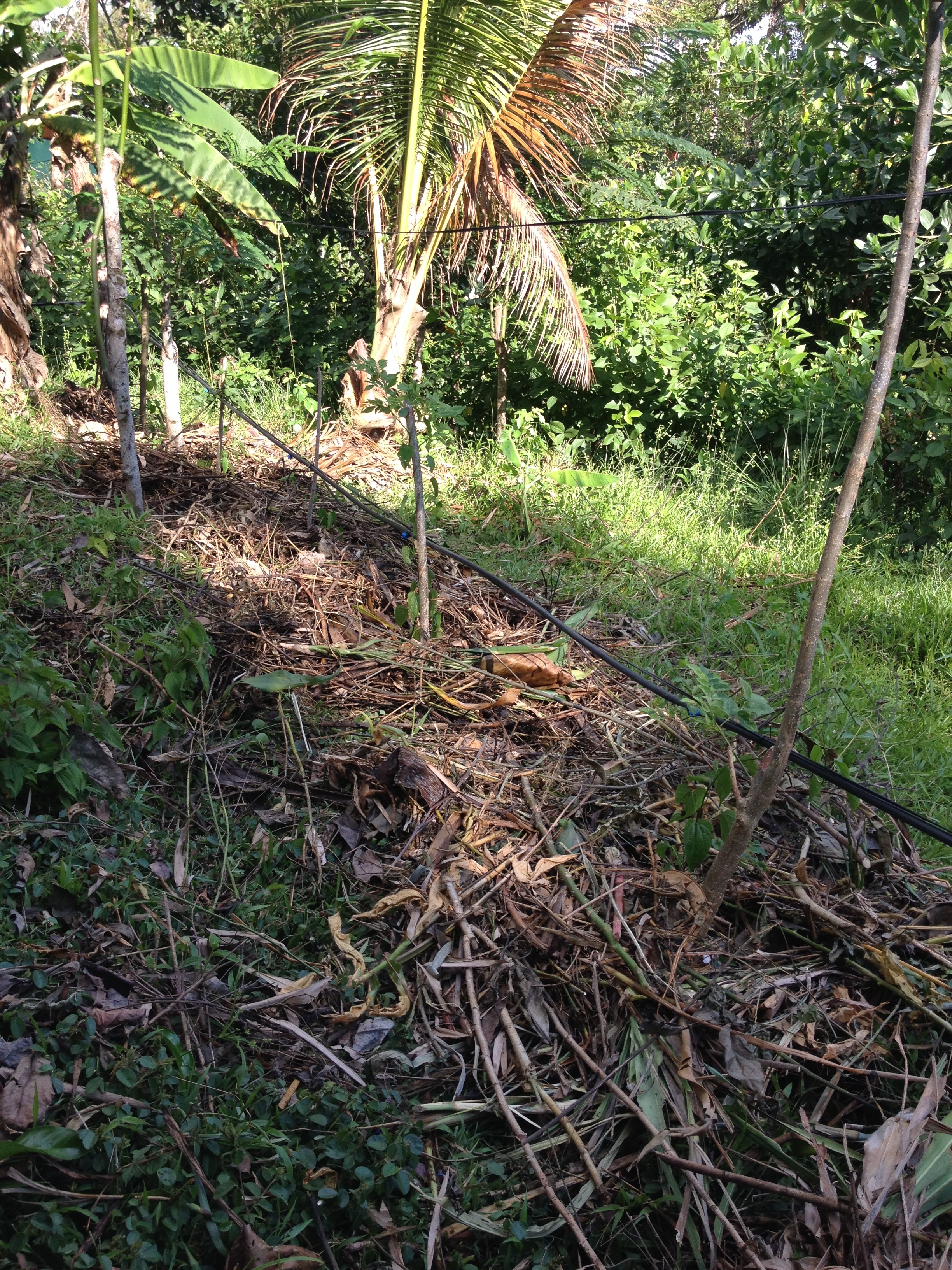
The same plants as above after a healthy mulch cover.
First and foremost, topsoil! How do we do it? The majority of nutrients in the jungle ecosystem are stored in plants. When nutrients become available plants are quick to soak them up because there is stiff competition when living in such close proximity to your neighbors. This means that plant biomass is an incredibly rich and abundant source of nutrients. Plant biomass refers to all plant material, living and dead including leaves, trunks and branches. The main way we utilize this biomass is what Scott refers to as "doughnut" mulching, basically forming circular doughnuts of plant material around the base of our fruit and nut trees. This mimics nature by following the 'top-down' approach that allows microorganisms to move the material down. It is important to note that mulch should never touch the trunk of your trees because this will cause rot. A 5 inch radius between trunk and mulch is a good aim.
Another method used in zone 1 to improve soil quality is to bury pieces of wood under the soil in our garden beds. The wood acts like a sponge, retaining water throughout the dry season and, reducing compactness in the wet season by aerating the soil. It also provides habitat for microorganisms, crucial for plant health and growth. Our garden beds are mulched regularly with dead leaves collected from the forest floor to retain moisture in the soil, reduce weed growth and add nutrients. This is known as Hugulkulture.
Now, onto soil pH, the next big topic around soil in the tropics. There are 6 cooking methods used at the Ranch, 3 of which rely on wood, the rocket stove, the biochar stove and the pizza oven (read here for more about our alternative cook stoves). With 3 meals per day, 6 days a week being pumped out of our kitchen, you can imagine how much charcoal and ash we produce. Instead of simply disposing of this alkaline-rich bi-product we add it to our soil.
Charcoal is a carbon-rich soil additive, that adds alkalinity to the soil, raising the pH. It has a high surface area on a microscopic level which means it is capable of storing water and nutrients in the soil, making it a valuable additive in both the dry season when water is required and the wet season when nutrients are required. The addition of charcoal also aerates the soil and breaks up the clay. It is essential to note that when adding charcoal to soil it must be soaked in a nitrogen solution first, such as compost/ worm tea. This will ensure it doesn't lock up precious nutrients from the soil. Ash is similar to charcoal but much finer. It also adds alkalinity to the soil, raising the pH. Limestone is another soil additive used to raise the pH and up the alkalinity. We spread lime around the base of our fruit and nut trees, vines and shrubs.
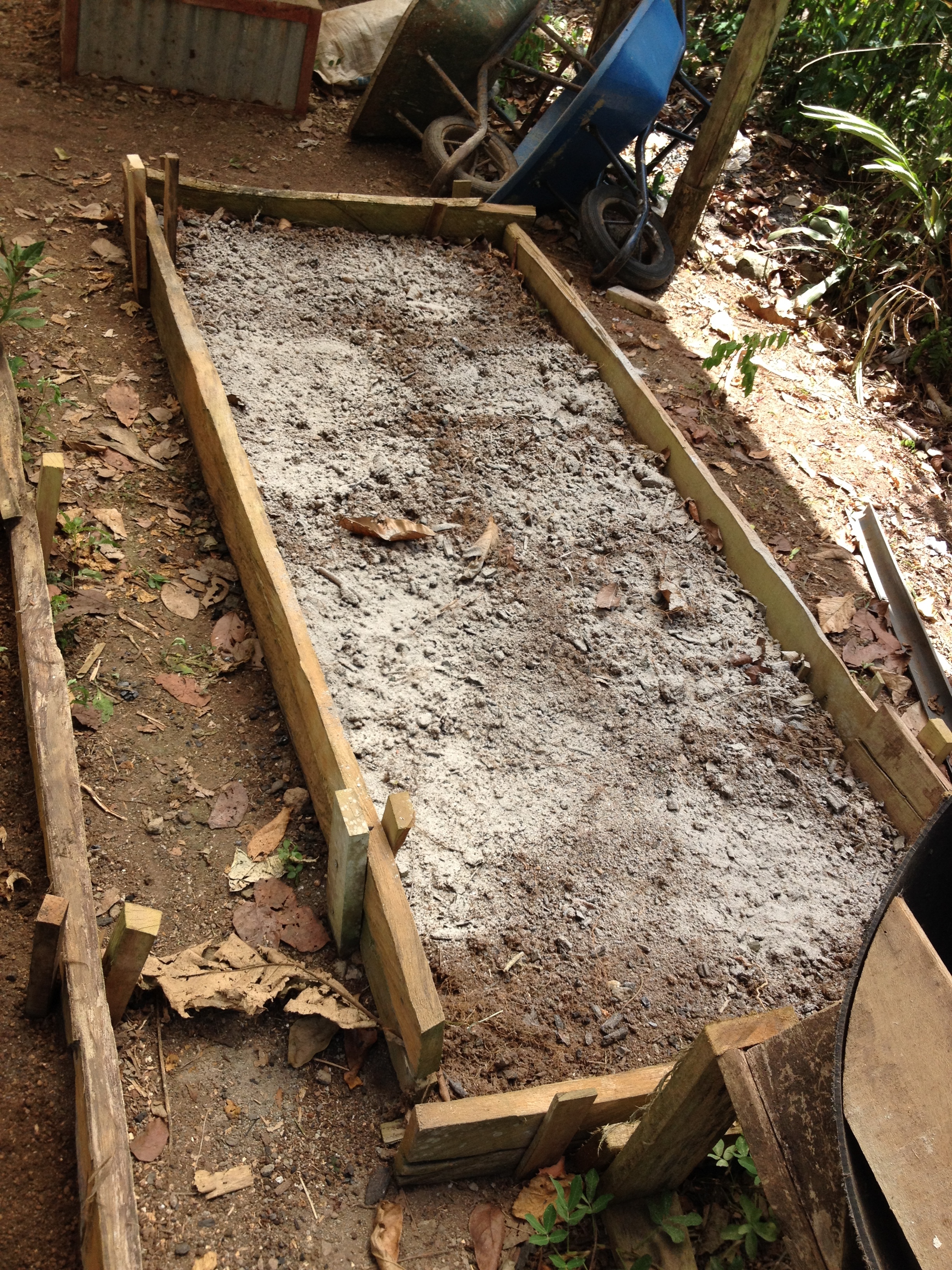
Lime applied to a raised garden bed.
Nitrogen is one of the most important soil nutrients and in order to produce good crops, nitrogen is essential. What better way to introduce nitrogen into the soil than with nitrogen fixing plants. These plants produce "cake & cookies" i.e. sugars in the soil that attract nitrogen fixing bacteria. These bacteria are capable of using these sugars to convert nitrogen gas in the soil into a plant soluble form, accessible to the surrounding plants. Believe it or not, plants control this process depending on how much nitrogen they feel they need.T he more sugars the plants produce, the more sugars the bacteria consume, converting this sugar into nitrogen for the plants. It's an incredible natural process! The nitrogen fixers most extensively used here are Acacia mangium, Shizolobium paryhybum, and Madero Negro, all of which are trees. We also use peanut grass, a spreading ground cover. Most plants in the Leguminosae family can be used as nitrogen fixing plants.
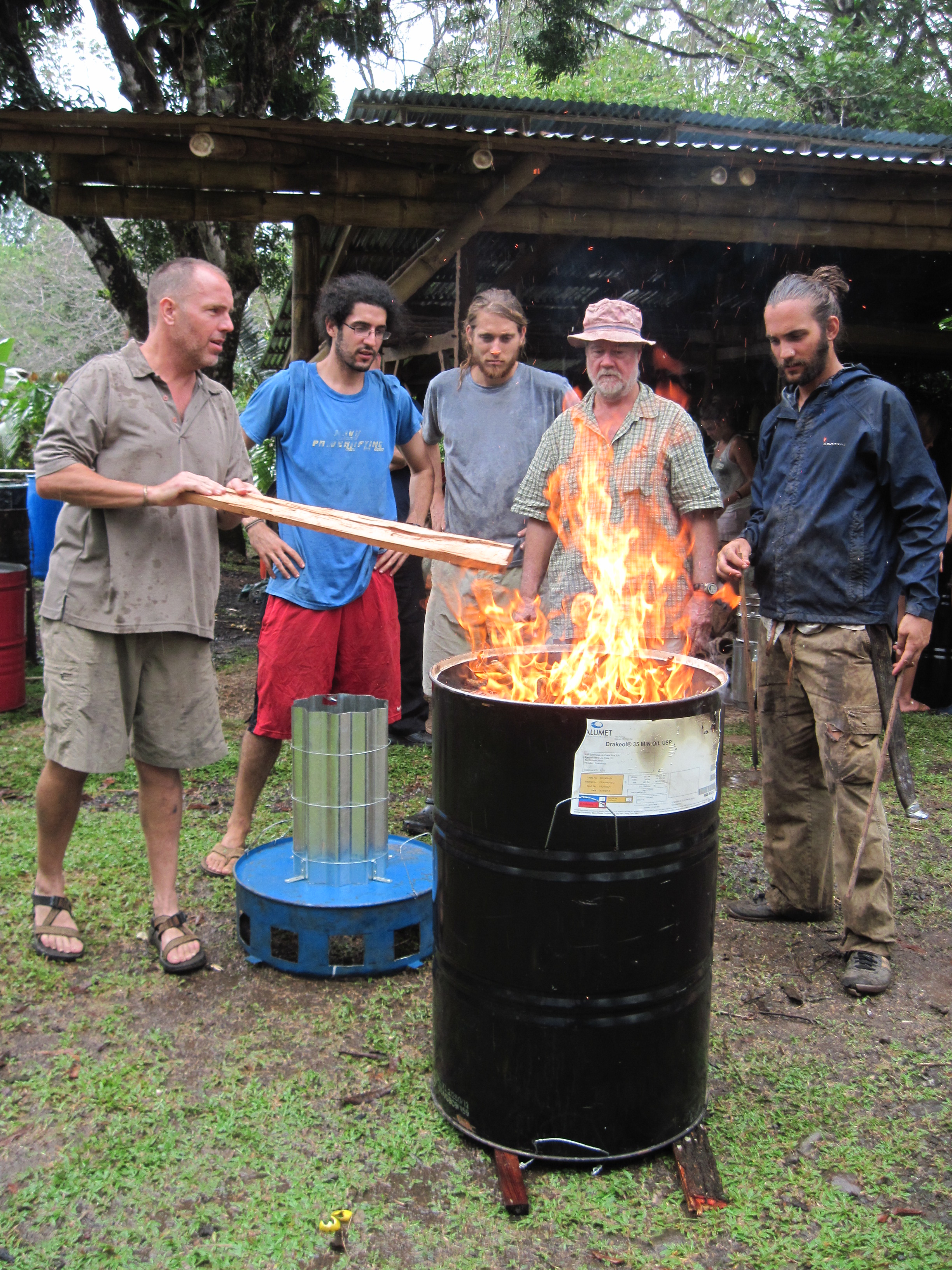
Making Biochar with a TLUD System.
Potting soil is another essential part of our plant operation here. The recipes used for potting soil change depending on what's available and required. One of the recipes we use is 2 parts forest soil plus 2 parts worm farm compost plus 1 part sifted builders sand. We collect the forest soil from the forest floor where a build up of plant material is prevalent e.g. a puddle, low point or valley. This is where nutrients gather because soil and small plant material is deposited (read here how we cultivate mountain microorganisms). The worm farm compost is a bi-product from our bio-digester system. This waste treatment system converts cow manure into methane gas, while leaving the fibrous material behind for the worm farm. The key to a great potting soil is to balance soil pH and ensue there is a rich source of matured compost where microorganisms thrive.
So there you have it, the challenges and of course the fun of soil in the tropics! Creating and enhancing topsoil, balancing soil pH, in this case raising it, balancing the clay content of your soil and making nutrient rich potting soil. I hope you can take some of these tips away and enrich your soil wherever you are. Here's to happy soil and abundant plants.
NEWS AND NOTES
We have a number of life changing workshops coming up.
We rely on all of the amazing ambassadors to our project to spread the word; if you know of anyone who needs a get-life-into-gear experience, send them to one of our classes!
Abrazos,
The Ranch Crew
Categories
Topics
- Agriculture 6
- Agroforestry 21
- Animals 2
- Apprenticeship 19
- Appropriate Technology 6
- Backpacking 1
- Bananas 1
- Basic Pantry 4
- Biochar 1
- Books 3
- Build Your Own Home 1
- Central America 5
- Chiles 1
- Cinnamon 1
- Clay Carving 1
- Climate 2
- Climate Change 1
- Cob oven 1
- Communication 5
- Community 24
- Compost 2
- Composting Toilets 2
- Condiments 1
- Conservation 2
- Cooking 4
- Costa Rica 18
- Design 10
- Earthen Construction 10
- Eat Local 2
- Ecohome 1
- Education 9
- Environment 3
- Ethics 4
- Farm to Table 12
- Fasting 1
- Fermentation 14
- Food 22
- Food Choices 8
- Food Forest 8
- Food Processing 15
- Food Systems 12
- Gap Year 1
- Gardening 5
- Ginger Beer 1
- Harvest 2
- Health 12
- Healthy living 5
- Homemade 2
- Homestead 8
- Internet 2