

BLOG
Stories, articles, and updates from the Ranch community.

Foundations for Success: 10 Considerations to Create a Healthy Project
After more than 20 years, we have been able to identify some trends that have led to our survival as a business and a community. The following advice is appropriate, and perhaps some of it even necessary, if you expect to live successfully in a communal work and living environment doing land-based work.
By Core Team Member Tim O’Hara
After more than 20 years, we have been able to identify some trends that have led to our survival as a business and a community. The following advice is appropriate, and perhaps some of it even necessary, if you expect to live successfully in a communal work and living environment doing land-based work.

Students in our annual Permaculture Design Course
Communal Continuity
It’s imperative to assemble a group of individuals that you can depend on, year after year. If the only people that are visiting your project are there for shorter or medium length stays, you will never feel as if you have a community to lean on during the harder stretches of running a project of this nature. Create realistic and concise agreements with one another and develop incentives that make everyone feel well taken care of.

Privacy
We learned the hard way that having your own private space is critical for long-term happiness. We decided to focus on building before planting in our early years. That has meant that our agroforestry spaces are a bit behind where you’d expect after 20 years of working in those spaces. But without privacy, it’s impossible to keep people around who are doing the important work in the orchards and other spaces. Create private spaces for everyone, with a focus on creating lovely, comfortable, healthy homes for your core team.
Collective Decision Making
Micromanaging is a recipe for burnout. Don’t fall into the trap. Develop trust with your partners and allow each leader to make decisions in their realm up to a certain value. Big decisions, that affect everyone, should be discussed by your entire team, but small decisions, like whether to buy 5 or 10 avocado trees, should be left to those managing the orchard spaces.
Balance and Rest
It’s imperative to figure this out before burning out. Burnout can be permanent, leading to the abandonment of your passions. Build into your day-to-day lives the time to run, breathe, nap, walk, draw, meditate and think. The work will never be done, so don’t try to do it all each day. It will be there waiting for you in the morning after a great night’s rest.

A Solid, Well-Taken Care of & Committed Core Team
We’ve got an amazing core team. But it took us longer than it should have to realize the importance of building a strong team at the center of our project. If we expect community members to stay committed, they need to have their needs met. And everyone has a unique set of needs. Create a compensation agreement that makes everyone feel valued.

Community Connection
Be an active member in your town. Demonstrate, over and over again, that your project exists to benefit everyone in your community, especially those most in need. Join your local woman’s group, offer free yoga classes once a week, develop a kids soccer camp, or create a language exchange.
Fair Share
Share what you have. It’s your easiest path to acceptance though far from the easiest practice to bring to fruition. It has taken a lot of time, energy and sacrifice to create Rancho Mastatal, and sometimes our knee-jerk reaction to “spreading the wealth” is instead to move to protect what we’ve created in the interest of stability and to prepare for future unforeseen issues. But true stability comes with sharing.

Communal Meals
This may be the hardest bit of advice to embrace for some. Sharing a meal takes more social energy, but weighed against the time you save on cleaning and cooking, it’s worth it. Communal meals encourage group debate, laughter, learning and the development of a strong social fabric. Humans have tended towards eating in front of screens or on the run. These trends lead to poor eating habits and encourage humans to disconnect from one another. To eat well today means a monumental and coordinated effort growing, processing and cooking food. Celebrate this activity each and every day and you will be rewarded in ways unexpected.
Make Time to Dream
We “talk shop” a lot around here. We love what we do and enjoy talking about what we’ve created and how we can improve it. It’s important for us to create spaces that allow for dreaming and scheming. Having the space to “zoom out” and move for a time away from the day-to-day allows for creative brainstorming that can lead to breakthroughs and new ideas that might otherwise never come to the surface. Dare to dream, and dream to create your ideal version of life.

Don’t Get in Over Your Head
This is much easier said than done. When you commit to a land based project, your to-do list immediately seems endless. There’s never enough time in the day to do everything that you need. Start small and work towards simple solutions whenever possible. Build and perfect one system at a time, as much as you can do that. Don’t add chickens, goats and fish in the same year but rather add one species and then see how that changes your life before adding another. We made the mistake of throwing too much at the wall early on in our development and when not everything stuck, it felt overwhelming picking up the pieces of many systems simultaneously.
We try to share our failures and successes frequently so that others can get to where we did in less time and with less effort. Please don’t hesitate to contact us with questions, comments, or suggestions and all the best in your journeys.
Check Out These Past Blogs About Permaculture and Community
How to Run a Permaculture Internship
Enriching Community Soil: 5 Simple Strategies That Support Sustainable Relationships

Bamboo Shoots
Bamboo is of huge economic value and is not only used in the building industry, but it can be used also for eating (more on this later!), as a cooking device, burnt for charcoal, woven into a fabric, made into paper, used as a musical instruments, and much more!!
By Nic, Core Team member
Bamboo
Bamboo is a wonderfully sustainable building material due to the speed in which it grows and its weight to strength ratio (stronger than steel for its weight!!). Bamboo is of huge economic value and is not only used in the building industry, but it can be used also for eating (more on this later!), as a cooking device, burnt for charcoal, woven into a fabric, made into paper, used as a musical instruments, and much more!! At the Ranch we use it for many of these things; the most noteworthy being our use of it in our natural buildings (read here about how to treat your bamboo). We have 6 structures that are built almost entirely from Bamboo including a nursery, a meeting room, our classroom and the popular guest structure the Hooch. We have also used it as firewood and to make biochar and we have several bamboo instruments. Today however we are going to talk about the latest way we have learnt to use bamboo and that is in our farm to table world!

A clump of bamboo on our farm
Bamboo as Food
Humans have a long history of eating bamboo, but we are not the only animals that love eating bamboo. The Giant Panda loves eating the young bamboo shoots as well as the leaves and stems, along with a number of other animals including the bamboo lemurs of Madagascar and mountain gorillas in central Africa. Chimpanzees have also been seen drinking fermented bamboo sap which has turned alcoholic. It will not be a surprise then to hear that Yes! we can eat bamboo too, in fact its delicious and during the beginning of the wet season it is an abundant source of food.
At Rancho Mastatal we have some of the most revered species of bamboo for eating and for building. The species that we have that are known for providing tasty bamboo shoots are Dendrocalymus asper, Gigantochloa sp. and Bitcheeyana sp.

These are just 2 week old bamboo shoots!
Farm to Table Bamboo Shoots
Bamboo shoots contain a cyanogenic glycoside that produces cyanide in the gut. This is not good for you as you might know, cyanide is very poisonous, so we have to be careful to process our bamboo shoots carefully in order to make them edible. As it turns out this is relatively simple! Just boiling the bamboo for around 10 minutes removes that compound and can also remove any bitterness that can be present in the shoot. We found that adding ample salt and some sugar to the water before boiling makes them instantly a delicious crunchy snack! We have also lacto-fermented them (make a very pungent ferment!), pickled them in vinegar, and just boiled them and added them to dishes. But before you get to eat the bamboo shoots you have to know when to harvest them and how to prepare them.
Harvesting bamboo shoots

Peeled bamboo shoot
Generally speaking you want to harvest them as young as possible as they can become bitter if they are too old. As you may know bamboo grows incredibly quickly, so you will need to keep an eye on your clumps as a daily practice. As the rains start here in Costa Rica around April/May (on the pacific side) we found that initiated the growth of the new shoots. There is a delay though between the start of the rains and the shooting of the bamboo and this will vary be species and by the year. So its safe to say that once it starts to rain you need to start checking your clumps regularly. We found that this year the Guadua started shooting first (not a good bamboo to eat) and Dendrocalymus was the last one to start shooting in late June/July. Ideally you will want to harvest the bamboo shoot when it is around ~10-15” (~25-35cm) tall. Cut it at an angle as low as you can. This will then shed water and is less likely to lead to disease entering the plant. Generally speaking from a well-managed clump you should be harvesting about 33% of the new shoots. Take them from the places where they are not as ideally situated ie. Close to another shoot, with a blocked path etc… To learn more about how to manage you bamboo, join us for our bamboo management workshop.
Processing Bamboo Shoots
Take the bamboo shoot back to the kitchen and cut it lengthwise in half. You should be able to get your thumb and then your hands between the outer layers and the inner solid part and pry off the sheathing. This will leave you with a rather alien looking shoot. At this point it’s a good idea to chop it into strips several inches wide and then slice across the strips into thin pieces. The thinner the pieces the more bitterness is removed by cooking. At this stage you have the option to lacto-ferment the bamboo in a 2-3% by weight salt brine. This produces a very pungent ferment that smells very reminiscent of canned bamboo shoots from the grocery store. By lacto fermenting the shoots you also remove the cyanogenic glycoside and you gain the nutritional value of a raw bamboo and the probiotic qualities of the ferment.
By cooking these thin pieces of bamboo in a salty and slightly sweet brine we were able to produce a delicious treat with a great crunch, the flavor is not too dissimilar to Heart of Palm, although there was a large spectrum of views on what it tasted like. Everyone agreed that it was a delicate flavor that had an excellent texture.

Cut lengthwise
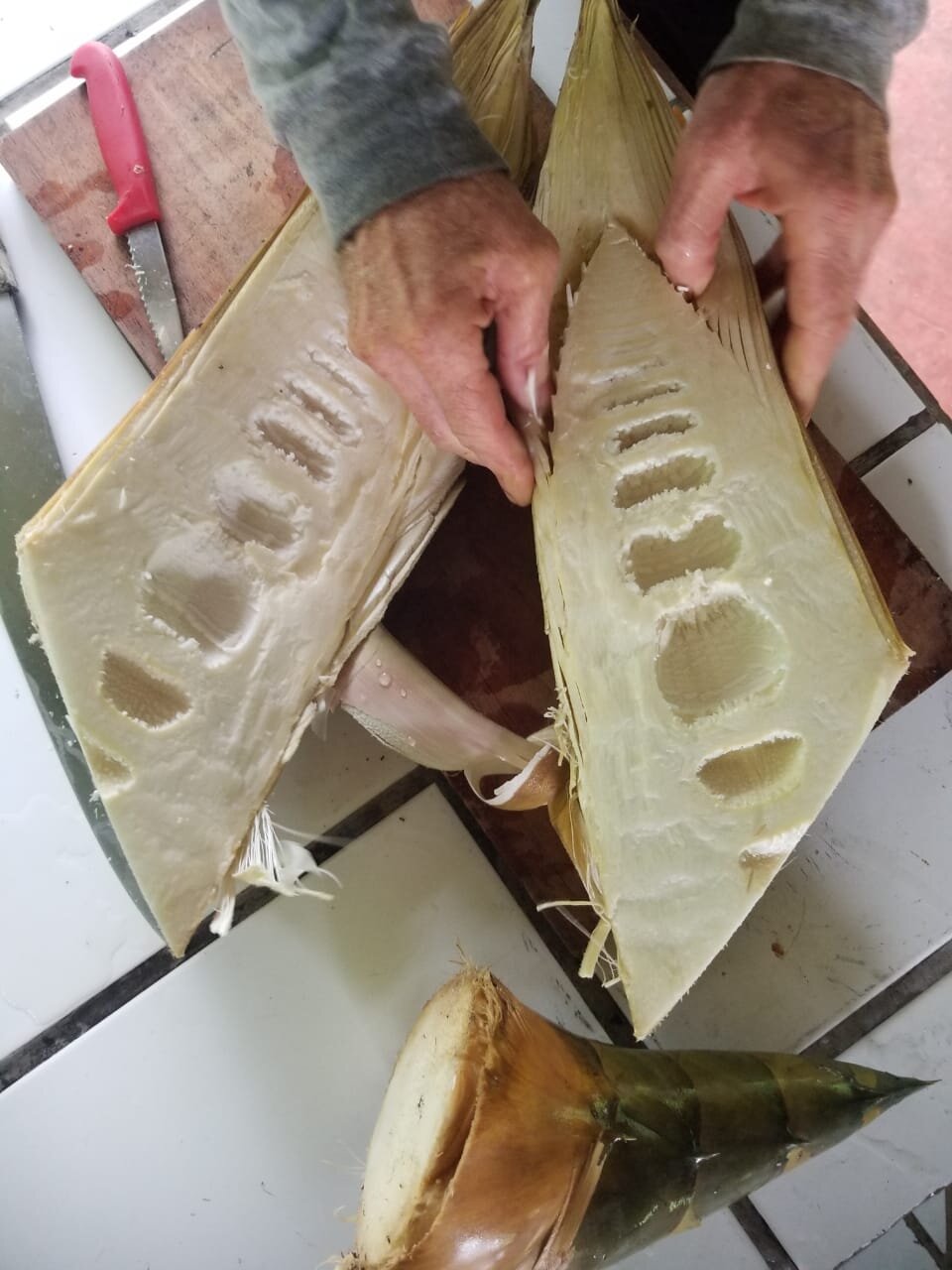
Then using your thumbs peel off outer layers
Bamboo Tea
The upper parts of the shoot that will have been left attached to the sheathing when you pried it out makes a very nice and refreshing tea. By taking a paring knife you can remove any of the soft parts still attached to the sheathing and dry them in the sun (or a dehydrator). This can then be added to hot water and left to steep.

Fresh bamboo shoot
Want to Learn More About Bamboo?
Join us for one or both of our upcoming bamboo related workshops!
Bamboo Management April 6 - 9, 2021
Bamboo Construction April 12 - 17, 2021
Stay tuned and up to date on what’s happening around here by subscribing to our monthly blog and visiting our website.
Check out our past blog article on Bamboo Treatment

Transforming Human-waste into Fertilizer: Compost Toilets
You likely grew up with flushing toilets, seeing your poop as something to dispose of, but you might also be one of those who agree that humans can only thrive once we live in harmony with nature. The zero-waste movement is in a sense, a yearning to imitate nature where there is no such thing as waste; one organism's excrement is another's food. Compost toilets turn human "waste" (discarded feces and urine) into soil fertility as humanure (food for micro-organisms and fruit trees) - the actual human waste is everything that cannot decompose: cigarette butts, plastic-sixpack rings, deodorant cans, batteries, the five billion gallons of polluted drinking water we flush down our toilets everyday, and the millions of tons of organic material dumped into the natural environment year after year.
by Moanna , 2020 Apprentice
"Carelessly dumping waste out into the world is a self-centered act of arrogance. Humanure composters can stand under the stars at night gazing at the heavens, and know that, when nature calls, their excretions will not foul the planet. Instead, those excretions are humbly collected, fed to microorganisms, and returned to the Earth as a healing medicine for the soil" -
Joseph Jenkins, author of the Humanure Handbook
Zero Waste?
You likely grew up with flushing toilets, seeing your poop as something to dispose of, but you might also be one of those who agree that humans can only thrive once we live in harmony with nature. The zero-waste movement is in a sense, a yearning to imitate nature where there is no such thing as waste; one organism's excrement is another's food. Compost toilets turn human "waste" (discarded feces and urine) into soil fertility as humanure (food for micro-organisms and fruit trees) - the actual human waste is everything that cannot decompose: cigarette butts, plastic-sixpack rings, deodorant cans, batteries, the five billion gallons of polluted drinking water we flush down our toilets everyday, and the millions of tons of organic material dumped into the natural environment year after year.
Two thirds of the world have no toilet, and don't have a choice, and must live intimately with their shit. Some of us have the opportunity to use it as fuel and fertilizer, instead of turning it into poison. It can feed us, heat us and cure us. There are so many ways to shit properly.


Composting Toilets
Pooping at any of the Rancho's outdoor compost toilets is a pleasing experience; they are made of beautiful natural materials and you are likely to observe all kinds of butterflies or birds. What has nourished your body and instead of being disposed, will feed and sustain millions of other lifeforms. Pooping and urinating becomes a contribution rather than a disposal; instead of waste that gets dumped somewhere, it's a useful resource that gets valued.
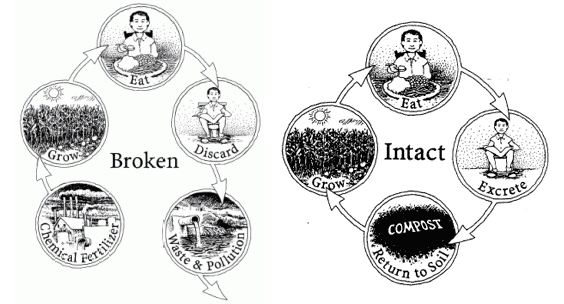
From the Humanure Handbook by Joseph Jenkins
The human nutrient cycle goes like this 1) grow food 2) eat it 3) collect and process organic residues (feces, urine, food scraps) 4) return the processed organic matter to the soil, thereby enriching the soil and enabling more food to grow!
Why Composting Toilets?
"If you want to be free, learn to live simply. Use what you have and be content where you are." - Joseph Jenkins, author of the Humanure Handbook
It is not only for those with gardens and fruit trees who should be excited by humanure but all of us who value clean water and air. Compost toilets align with the permaculture ethics of care for Earth and people, and a fair distribution of resources. Here are a few aspects on why and how.
Protect and save water
Each toilet flush launches five to six gallons of polluted water - All life depends on water, and although Earth is mostly water only 3% is without salt and of that 2/3's are locked up in ice - this means that humans pollute the less than 1% of drinking water we have. If a household switches to waterless toilets it would save 40 thousand gallons of water per year. Each flush usually goes somewhere to be "treated", where despite the massive amount of energy and chemical input, pollutants such as nitrates, chlorine, pharmaceutical drugs, industrial chemicals and many more are let out into our living planet, which affects us since we are apart of and one with this living world.
Pumps up resilience
We will be facing all kinds of disruption due to the speed and frequency of natural disasters and their consequences. Flushing toilets rely heavily on well-established infrastructure, and loads of energy, water and chemicals. With the growing number of natural disasters, this system is super vulnerable as storms, floods, and fires can cause disruption many parts of that system. Urban and suburban areas globally are experiencing storm events causing flooding and overflowing the basins in sewage systems. This can go on for days or weeks, and human excrement along with all the other waste that goes down the drains ends up in the streets, and we're back to the middle ages where diseases and pathogens get to have a big party. So if you know how to compost and make humanure, you can stop relying on this fragile and eco-cidic system and help others in the same direction, and when disruption occurs in your surrounding community you can continue to recycle your brown gold!
Compost can degrade toxic chemicals
An Austrian farmer could feed his community with the produce from his fields that were sprayed with compost-type microorganisms, whereas the produce from surrounding farms were banned due to radioactive cesium contamination from the Chernobyl disaster. Micro-organisms in compost are able to digest these toxic compounds because many produce antibiotics. If this excites you, check out Mycilium Running by Paul Stamets.
SCARY FACTS About the current waste system
There is an exceptional degree of agreement within the scientific community that natural systems can no longer absorb the burden of current human practices
The use of antibiotics is so widespread that many people are now breeding antibiotic resistant bacteria in their intestinal systems. These bacteria are excreted into toilets and make their way to wastewater treatment plants where the antibiotic resistance can be transferred to other bacteria, and the water containing and breeding these bacteria is led out into our living planet. The chlorine used to supposedly clean water seems to increase bacterial resistance to some antibiotics. (Waste water microbiology p.86 Humanure Handbook)
Chlorine is used to disinfect much of the world's drinking water and wastewater before its released out to our environment. The most harm comes from the by-products such as chloroform and dioxin, that cause all sorts of awful stuff such as death in snapping turtles, death in lake trout, reproductive problems in otters and minks, and cancer in humans - to name a few.
50-90% of pharmaceutical drugs humans consume end up in waterways - chemotherapy drugs, antibiotics, hormones and much more are found in tap water, lakes, rivers and drinking water aquifers.
Too often waste is being dumped into water bodies, which the treatment plants are not prepared to deal properly with. Sadly governments and private co-operations are too busy to let consumers know - in review of twenty water systems in six states, out 157 drinking water quality violations, the public were notified on time in only 17 of the cases (humanure book pg 112).
Humanure Fun Facts
Human excrement is in many south east asian countries known as "night soil", and was never wasted. Quite the opposite it was a valuable resource! On the island Tainan in Taiwan it was sold on blackmarkets to fertilize fishfarms.
Fecal transplant saves lifes: A dose of healthy poop, with its 35,000 families of bacteria, can replenish the gut's flora and settle it back to normal. With our massive use of antibiotics we wipe out the good bacteria along with the bad. Transplanting a healthy gut flora into a one suffering from Clostridium diificile (which kills 100,000 each year in america and europe) has been shown in studies to heal 91% of patients in certain cases. (Colours magazine, Shit: a survival guide)
Squating while pooping is the most healthy posture, as it straightens the canal to the desirable 132 degrees. In a study it took squatters 51 seconds to move their bowels, while it took 131 seconds for those who sat. (Colours magazine, Shit: a survival guide)
How do Composting Toilets Work?
"Composting is easier to do than to describe, and like lovemaking, magic when you do it well" -
Sim Van der Ryn
Is it safe? Will it eliminate pathogens and diseases? Does it get stinky? Will it attract flies and rats? Is it hard work? All these question will depend on how the system is designed. There are loads of different systems, and ways of composting humanure. You can buy all sorts of commercial composting toilets, and your climate, local regulations and way of living will guide you to the most appropriate way to turn your "waste" into resource. * This also means that the decomposition process depends on and varies according to each system, place and environment. *
Here at Rancho Mastatal we have 11 composting toilets in 2 sizes (large scale capacity and single family capacity). We size these based on their location and projected use. All of them are designed to be passive systems with little to no management or maintenance. The Ranch's compost toilet system is simple; there are two chambers, when one is filled it gets left to decompose, and by the time the second is filled, the first has transformed into brown gold/rich fertilizer!
The ones in the pictures are the large size composting toilets (each chamber about 2m x 1m x 1m), these are used on average over the year by 7-10 people. They have been sized to take about one year for one side of the chambers to fill up, and the decomposition process is also one year, the same amount of time for the other side to get filled up.

Emptying a composted side of humanure into reusable bags to spread on our orchards

The 2 chamber system that we use here
Composting requires 4 neccesities: Oxygen, moisture, appropriate temperature and a balanced diet, which is the right carbon/nitrogen ratio. When these conditions are right bacteria will start to get active and heat up the compost, creating temperatures over 120 degrees fahrenheit. This rapidly kills pathogens, and just like Mother Nature intended, humanure is a treat for the soil.
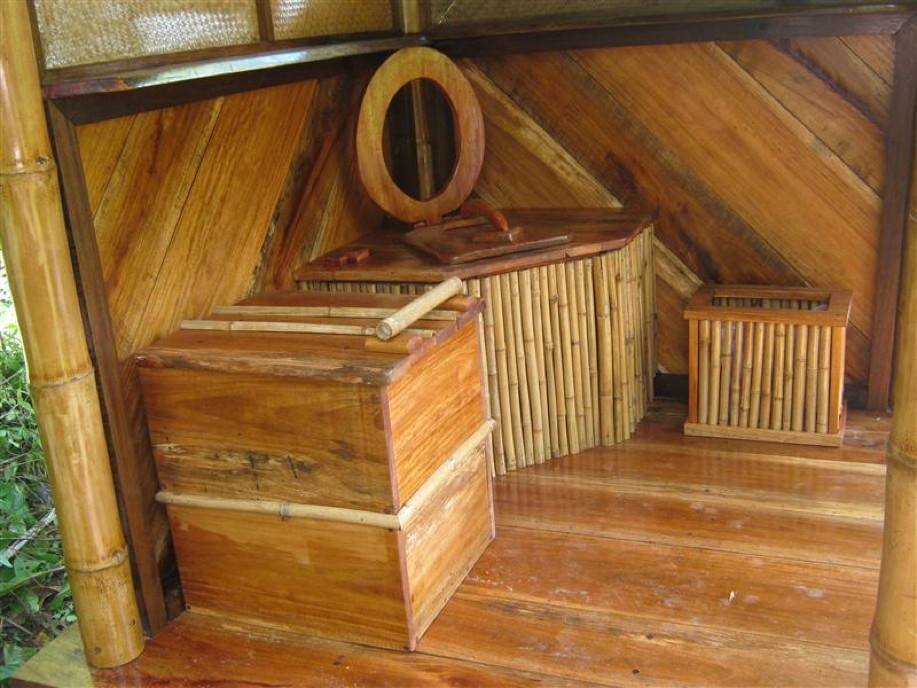
A cozy seat
When one chamber is filled the toilet-seat is moved on top of the next chamber, the first is left to decompose with a lid on, and in between is a box for sawdust. For each 'contribution' 2-3 scoops of sawdust is applied to balance the carbon/nitrogen ratio (Sawdust is the carbon sucking up all the nitrogen rich human contributions). Before starting a new chamber it is filled with bigger bulky carbon materials, generally a lattice of bamboo or sticks. This helps create an aerobic environment for the composting organisms to do their work and we avoid having an anaerobic environment, which means no air for the good bacteria to do their job resulting in a stinky toilet.
The design of this system is based on the diverse flow of people on the Ranch; when we have all kinds of people in different quantities for many different periods of time that use our compost toilets, the design is simple for low maintenance. All that needs to be managed is to make sure there is sawdust available and adding the finished soil fertilizer around our orchards once a year. Our main food production is in agro-forestry so we feed the humanure to the trees, by using the natural biological filter of the trees nutrient absorption system we get as an extra layer of safety from any potential pathogens or chemicals in the humanure.
The Composting Stages
Stage 1:
Mesophilic bacteria, (100 million - 1 billion per g of compost), eats, reproduce and create heat until it reaches around 44-52*C (111-125*F) which is the transition to
Stage 2:
Thermophilic bacteria thrives in the higher temperatures, takes over and continue to create heat, sometimes reaching up to 70*C . This heating stage can take place over days, weeks or months. As it cools down again we reach
Stage 3:
Where more diverse organisms such as fungi and earthworms moves in, and digest bigger and more coarse material.
Stage 4:
Is the curing/maturing phase, a long and important one. A long curing period (e.g., half a year in the tropics or a whole year in the temperate, after the thermophilic stage) adds a safety net for pathogen destruction. The longer they are subjected to the microbiological competition of the compost pile, the more likely they will die a swift death. All of this is linked to the soil food web.

Humanure is harmless to handle once fully decomposed and aged
Thanks to the bacteria, fungi and bugs, thriving with good moisture, air and a mix of human excrement and sawdust, the poop from 2018 has gone through a curing process through 2019, and last month the 2020 apprentice team could empty out the beautifully smelling and textured humanure.
Before you begin on this journey towards saving water, decreasing the the extraction and pollution of limited clean freshwater, protecting planetary health and enhancing soil fertility, further exploration and information is necessary. Some simple tips would also be to explore the possibilities to phase out flush toilets in your local community and check out what other people in similar situations to you are doing to stop pooping in drinking water. "The Humanure Handbook" is possibly the best and most enjoyable source of information, Joseph Jenkins shares his 20+years of compost toilet experience and knowledge, and the way he writes has made many crack out in laughter.
This simple low-tech composting system has a positive impact on the Earths ecosystems, making us closer to a harmonious relationship with this living planet. It aligns you with permaculture principles such as catching and storing energy, creating zero-waste, obtain a yield, and makes use of the permaculture attitude where "the problem is the solution". We don't need more science or bigger technology or complexity to meet the crazy complicated crisis that we're facing, but some humility and respect for all that is simple; deal with our own excretions, by making humanure that enhance soil fertility!
Legal issues in Costa Rica
Yes! They are Legal!!
In Costa Rica the legal principles guiding black water disposal are based on the possible contamination of fresh water resources. Composting toilets fall into the category of a safe alternative to blackwater disposal as they don't even create the blackwater in the first place as they are dry (use no flush system). In this document published by the ministry of health, you can see in annex 5 (scroll all the way to the bottom) that composting toilets are legally allowed as a viable alternative to a conventional septic system if the stipulations as outlined in the document are met. This is exciting news for people based in Costa Rica and hopefully can act as a catalyst for other places in the world including them in the building and health codes.
Humanure into Food?
Methane from a Biodigestor
Here at The Ranch our compost toilets feeds the soil, and our Bio-D toilet makes gas for cooking breakfast, it is more attractive option for those who are more comfortable with a flushing toilet, and it is another way of turning "waste" into a valuable resource.

Our biodigester
Black soldier flies
They eat everything, create rich fertilizer and both insects and flies can be a rich protein source for chickens!
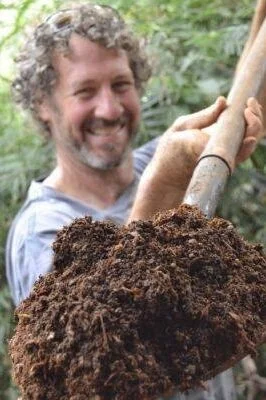
A beautiful scoop of humanure

One of our outdoor compost toilets
Hope you feel inspired to, if you can, stop contributing to the modern waste cycle and start creating closed loop systems! Don’t know what closed loop systems are? Join us for our annual Permaculture Design Course to learn about the ethics and principles of permaculture design.
We have been using compost toilets here on the farm for 19 years and always had successful turnouts.
Stay tuned for our next blog on our biodigestor.

Why Permaculture?
What is Permaculture?
Permaculture is the design system for creating sustainable human environments. In a modern society, which is not sustainable could permaculture hold a solution?
by PJ Barton
2019 Apprentice
During our Apprenticeship at Rancho Mastatal we spend a year immersed in a working example of how Permaculture can work on a practical level. We take several workshops throughout the year including the annual Permaculture Design Certification (PDC).
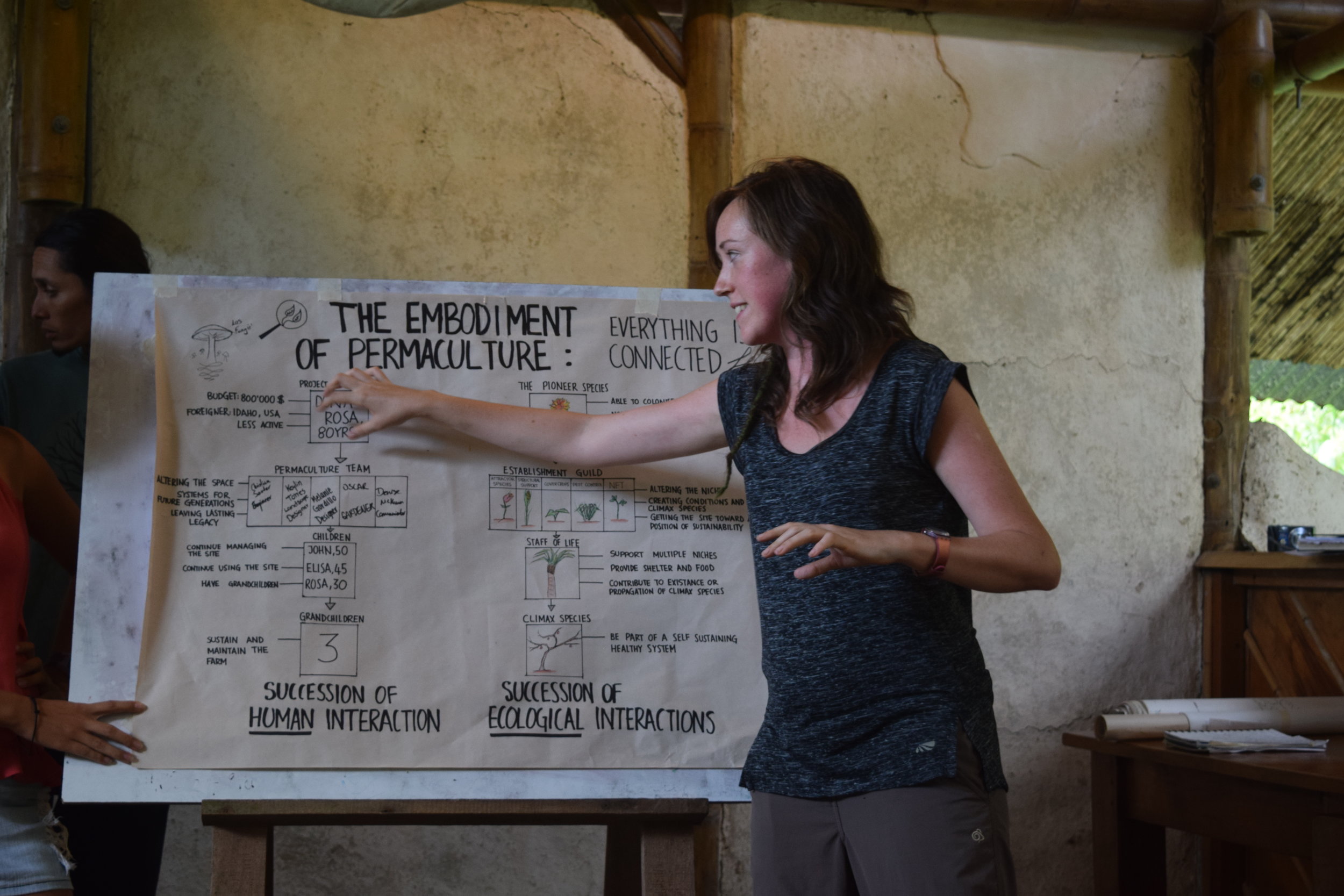
Presentation at the PDC
What is Permaculture?
Permaculture is the design system for creating sustainable human environments. In a modern society, which is not sustainable could permaculture hold a solution?
Permaculture was coined in the 1970s by Bill Mollison and David Holmgren, the word is a contraction of permanent agriculture and permanent culture which are intertwined in our history as a society. By pulling both culture and agriculture into our attention we a focusing on what the relationship is between them, how they function together as a whole. Permaculture looks at meeting the needs of the present in harmony with our environment. Although it is designed as a agricultural practices it also can be applied socially. The broad framework means it can include multiple parts of our society linking things together and how they function as a whole.
The 3 Core Ethics of Permaculture
1. Care of the Earth
Care of all living and non living things. By applying this ethic we can appreciate all organisms on earth. Invisible to the naked eye are all the mico-organisms upon which life is built; everything is alive. It is not obvious at first that a plant is breathing and under its roots there's an incredible network of organisms working together. If we view all things as beings our attitude and relationship will change towards them, developing respect for what we interact with.
2. Care of the People
As a society/ individual we need to meet our basic needs as humans: food, water and shelter. Considering our basic needs while creating systems that can sustain us in the long term. Permaculture uses these basic needs to design systems that can hold solutions for the growing inequality that is gathering pace on a global scale. Modern systems don't focus on care instead they're driven through profit. Many of our social programs designed to care for the less fortunate are being dismantled in an effort to create more profit; looking after one another and care are given little time into our busy society.
3. Contribution of Surplus
This ethic is a way of circulating the wealth back into the system. In a our conditioned society, rather than circulating wealth it is common to hoard it - the idea of spending all of your wealth is a radical idea, when is enough money or wealth enough to have surplus? By reinvesting surplus, it self perpetuates the movement. The system would be regenerative constantly sustaining itself. Like any system if you continually extract resources without replenishing them it will eventually collapse. When the needs of a society are not met from within the system we look to extra energy inputs and ultimately pay the price in increasing energy consumption and its resulting pollution.

The ethics of permaculture give us another way to view the world which is perhaps different from modern, conventional society. Observing and approaching situations guided by these ethics permaculture can be applied to help us steward the earth and guide our activities in a better direction. Our fragmented society often misses the connection that helps it function as a whole seeing only the tip of a large iceberg. Sometimes we make connections but fail as a whole. Moving together, finding patterns that work and what needs to be improved. We are surrounded by nature who we can observe and mimic. She becomes our inspiration helping us establish sustainable systems. Perhaps that is why we should use permaculture.
For more information about Permaculture check out some of the excellent free resources on David Holmgrens website get involved in you local permaculture movement and consider taking a Permaculture Design Certification near you or with us!

Dairy Dairies: How to Make Cream Cheese with Dairy Kefir
Dairy Kefir is so interesting to me because it embodies stacking functions - like alchemy, it's possible for 1+1 to equal 4. Milk, grains (scoby) and a days time and voila, you have a delicious base product better than the milk you started with. It's now lightly carbonated, stable in the fridge, resistant to microbial incursion, lower in lactose, tangy, creamy, probiotic and great for your gut.
By Ryan Roberts
2019 Apprentice
That's right folks, we're making cheese with the champagne of yogurts.
Dairy Kefir is so interesting to me because it embodies stacking functions - like alchemy, it's possible for 1+1 to equal 4. Milk, grains (scoby) and a days time and voila, you have a delicious base product better than the milk you started with. It's now lightly carbonated, stable in the fridge, resistant to microbial incursion, lower in lactose, tangy, creamy, probiotic and great for your gut.
Furthermore, that stable base product, can be used to create a wide variety of different specialty products that carry with it those unique value-added characteristics that we impart with our time, energy and expertise. During our last diary entry, we discovered Dairy Kefir Creme Fraiche, which you can read about here . This time we'll be making luscious, spreadable and customizable cream cheese out of dairy kefir.
In our first diary entry we discussed dairy kefir's characteristics and how it's made. You may recall that the dairy kefir scoby acidifies the milk as a defensive (or offensive) measure against other microbial life, which have difficulty surviving with such a low pH.
I've discovered for myself, though I don't claim to be first, that we can utilize that acidity to accomplish what is usually done with rennet, vinegar or citric acid: separating the curds (fats) from the whey (protein). Though the exact function of this process is unknown to me, the result appears to be the same. Left for a few days at room temperature, reveals to me that the dairy kefir will separate on its own. But there's a trick!
While leaving the scoby in the milk will speed the process of acidification, we want to be able to easily separate the scoby from the curds and from the whey. We do this with a sieve that catches only the grains, allowing the kefir to flow thru to your ready container. When the kefir is left to ferment longer and it separates, it makes it difficult to capture the curds and grains separately.
Instead, I remove the grains from the dairy kefir prior to separation. The dairy kefir will continue to acidify, though slower, but you'll be left without the headache of hunting thru the curds for your grains.
So starting with the previous step, here are the steps. Now that you have your dairy kefir and scoby separate we can begin:
1. Make your dairy kefir. Follow the instructions laid out in my first blog entry here (link 1st blog).
2. Remove scoby and place in a container with fresh milk.
3. Secure cheese cloth around the rim of a tall container. Make sure there is room for whey to drip to the bottom and accumulate.
4. Pour dairy kefir into fine cheese cloth hanging over the container.

5. Wait 24 hours, allowing time for the remaining whey to drain from the curds. I repeat this process a few times till it quits draining from gravity. The remaining cream is our cream cheese. The live-culture whey can be used in a variety of ways, including starting new ferments by inoculation, using as a probiotic protein supplement, and for cooking with in soups.

Dairy Kefir Cream Cheese

Whey - delicious for soup stock
6. Spread the cream cheese out on a pan with a rubber spatula. Sprinkle in salt and your choice of herbs or dried vegetables. Imagine sun-dried tomatoes, garlic, onions… yes please!

7. Now fold the cheese onto itself, repeatedly, which helps to mix the ingredients in evenly.

8. Place in a container and serve. Buen Provecho!
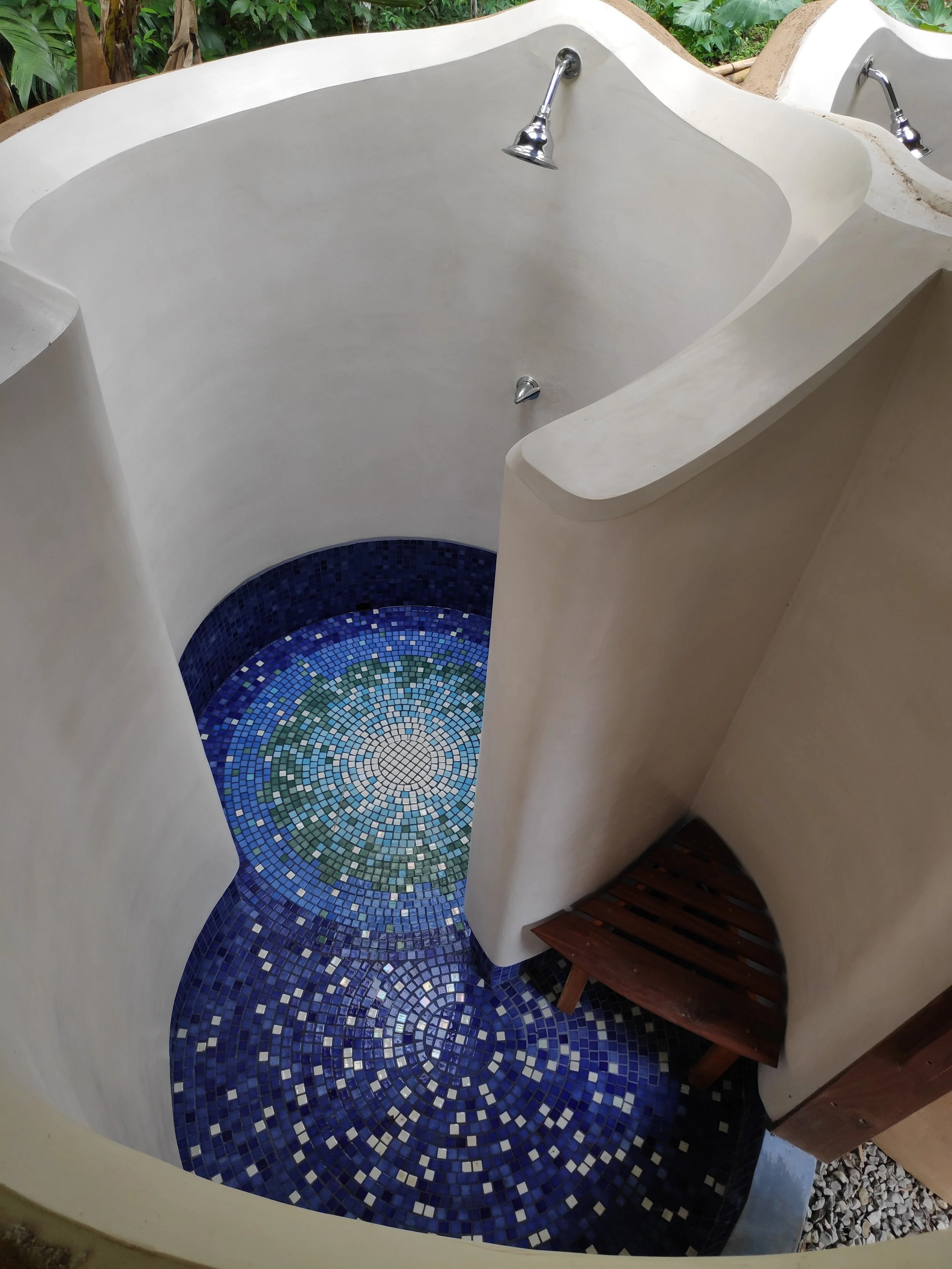
Building an Adobe Shower with Tadelakt Plaster
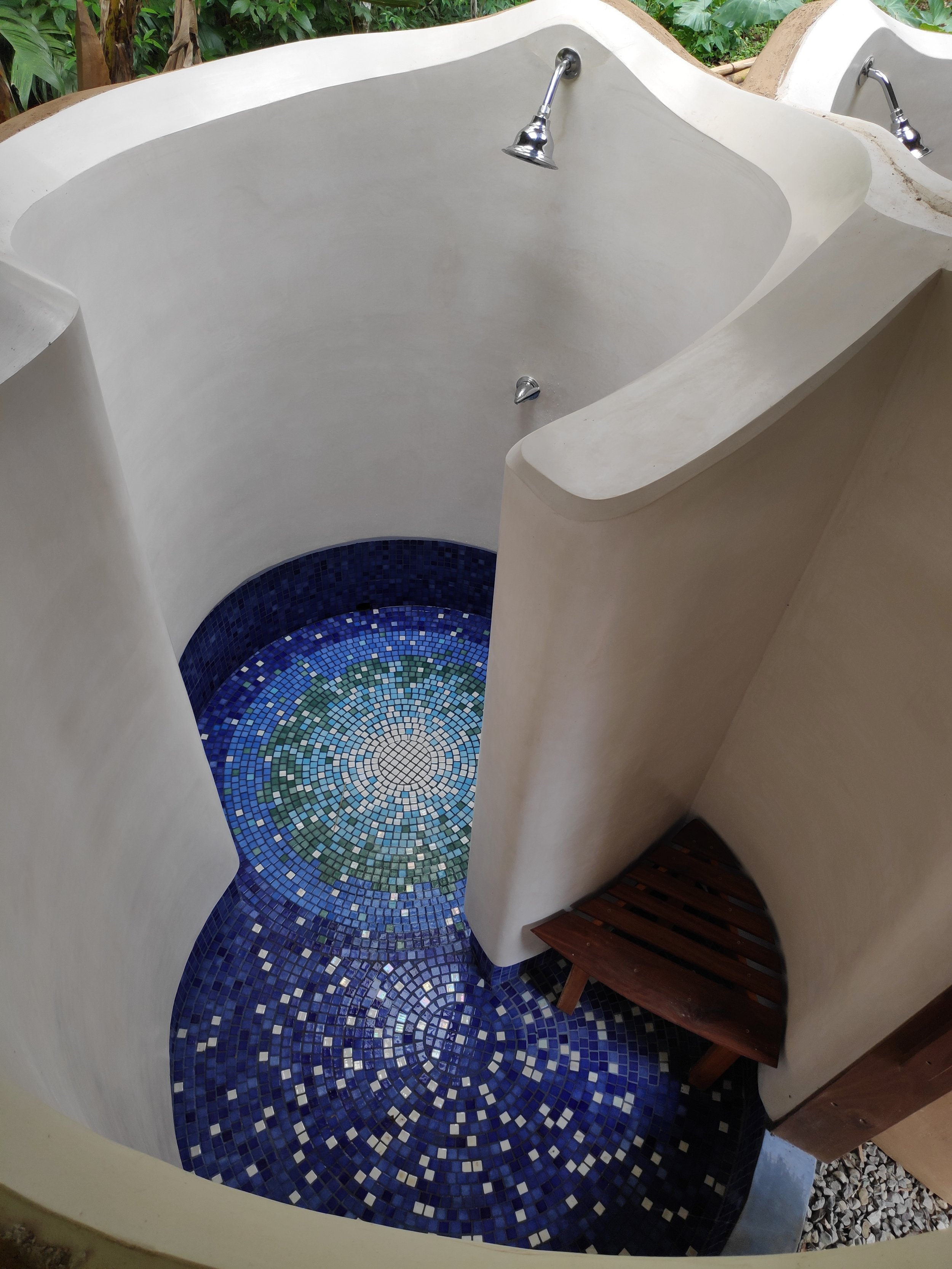
We recently completed our adobe shower and thought we would share with everybody how and in what order it was executed. The building blocks of the design were Adobes that we made with our 2018 apprentices and student groups that visited us through the year
By core team members Nic & Ali
We recently completed another adobe shower and thought we would share with everybody how and in what order it was executed. The building blocks of the design were adobes that we made with our 2018 apprentices and student groups that visited us through the year. In total we used around 500 adobe bricks at 5” x 5” x 10”.
What is an Adobe brick?
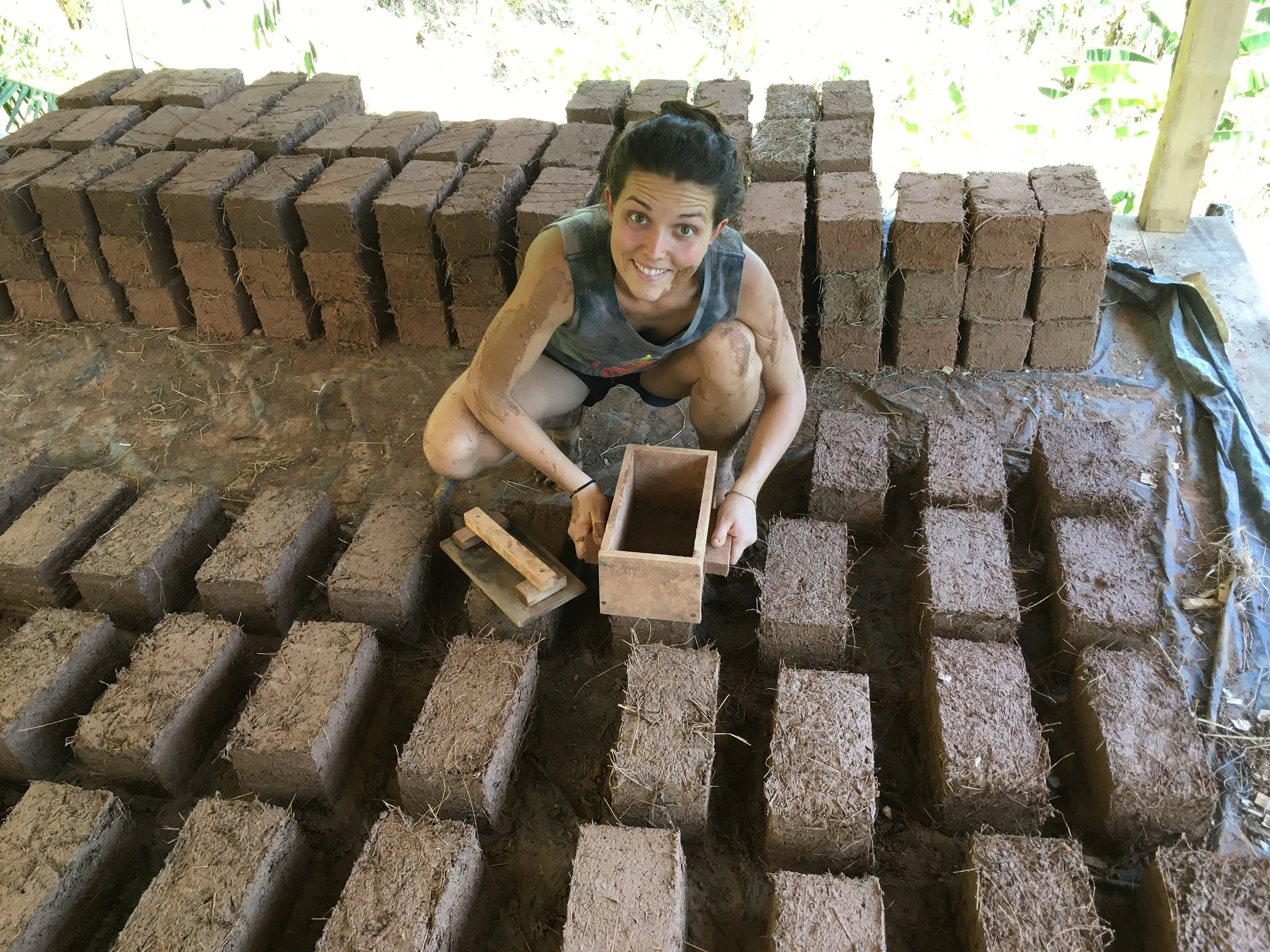
An adobe brick is mixture of sand, straw and clay, formed in a mold and sun dried.
How to make an Adobe brick
Start by making tests with your soil, if you are not sure what that means, read this article. Where we live we have an abundance of red clay soil. Using our soil, which is almost pure clay, we can use 1 part soil to 3 parts sand as a good starting point, depending on variations in the soil we may need to mix at 1:4 too. We add about ½ a part of long straw too, this gives the adobes some additional tensile strength. We then put all our ingredients on a tarp and begin to mix it together. Once the adobe mix is ready (one uniform color of mixed sand and clay) the mixture is put into an adobe form. When packing the forms make sure to fill all the corners! The form is then removed and the brick is left in the sun to dry until it dry enough to be moved and stacked. In our climate during the dry season this takes 3 to 5 days.
Steps to making a shower
1. Planning
As with all successful projects the key is good planning. We like to use a program called SketchUp to mock up all of our designs, lay out foundations, the frame and even plumbing. Every detail must be planned in advance this makes sure that the correct provisions can be designed in and made in advance.

2. Foundations
For our shower we used concrete blocks cut in half so that they could form the curves that we wanted. A shower is going to be a wet area so it is important that you think about this during the planning stage, where will the water drain to? Are my pipes embedded in my foundation? How is my roof going to be attached. In our design we decided to have a separate Timber Frame to support the roof structure.

Step 3 - Adobe
The first course of adobes were attached to the foundation using a cement based mortar this helped them bond strongly to the concrete foundation.
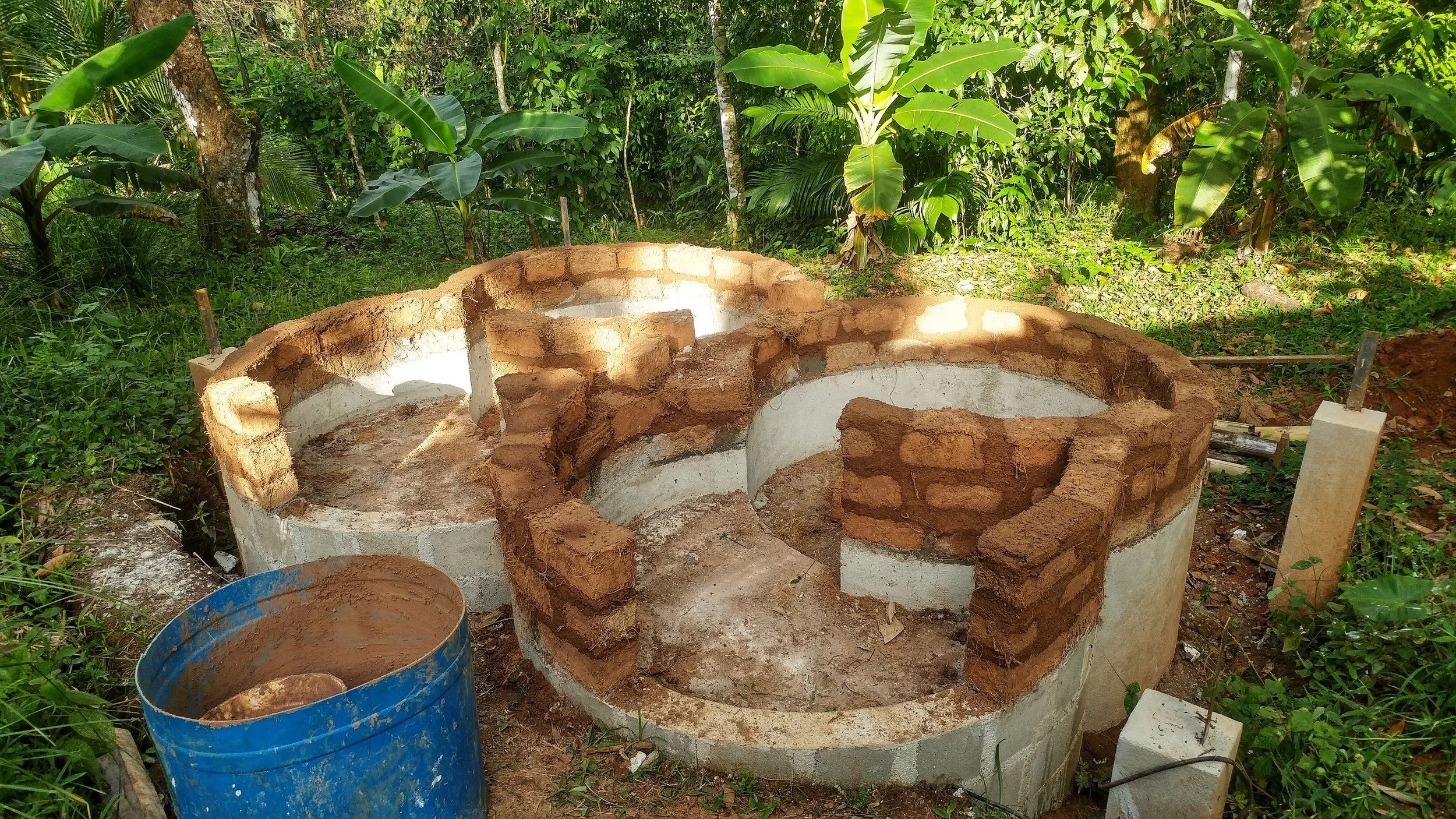
Step 4 - Bond Beam
From the second course upwards we used a sandy clay mortar for the adobes. Every 4 courses of adobes we made a cob bond beam for extra strength.

Step 5 - Gringo Blocks
Wooden hollow blocks (known as gringo blocks) were put at the end of each wall to attach in the wooden frame for the doors and a hollow plumbing box was installed where all the plumbing would be inserted for the shower handle. In Costa Rica the plumbing parts easily purchased in the local hardware store are terrible and always leak so we made most of the plumbing accessible from the outside. It is generally a good idea when making your initial design to plan for replacing parts in the future.
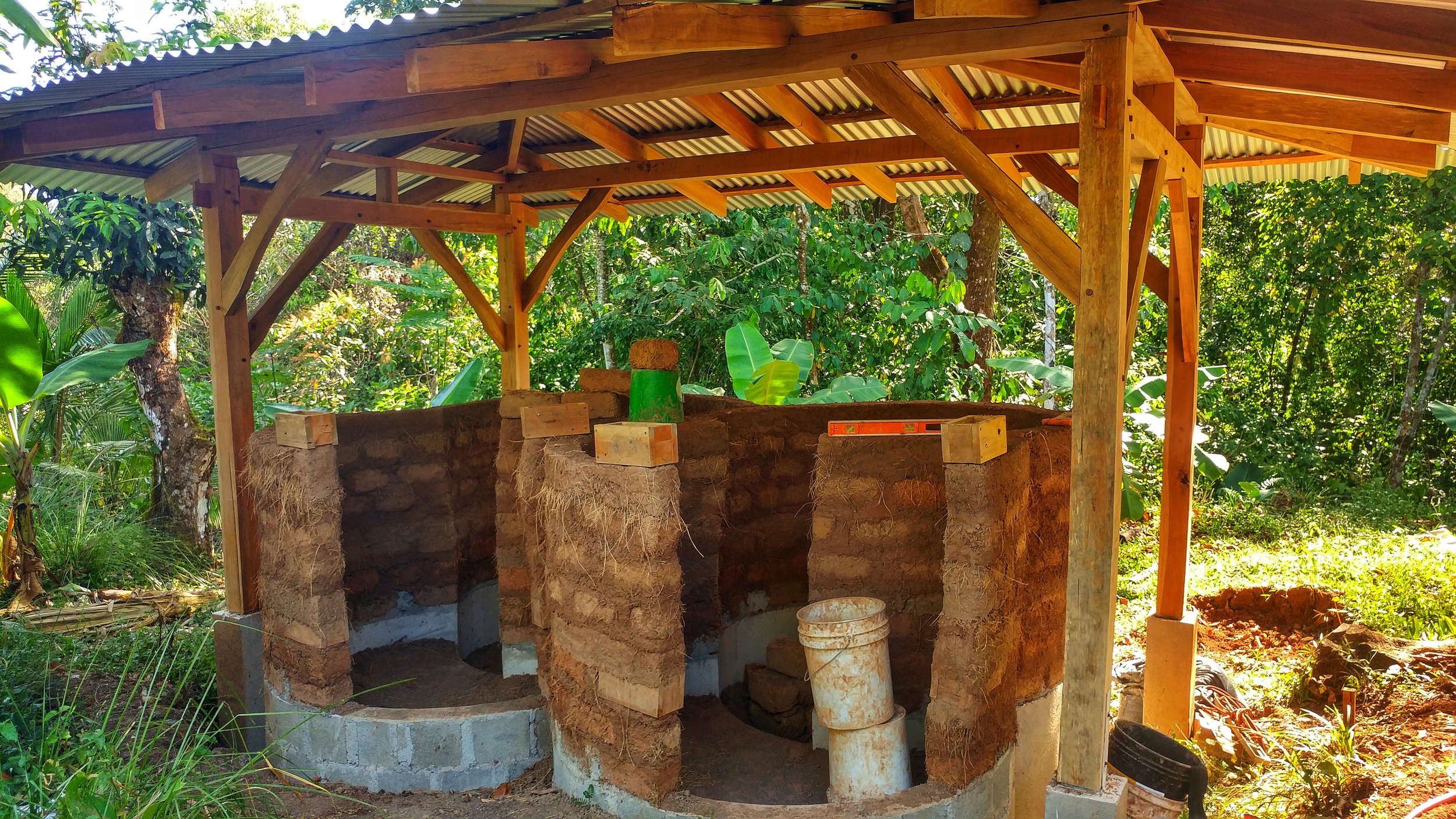
Step 6 - Frames
The door frames were installed at this point and they were screwed into the Gringo blocks. The door frames were also tied into the adobe structure using some mesh, we used what we could locally find which is what they sell for chicken fencing. You could also use a variety of natural alternatives, attaching them to the wood and plastering them in to the wall to give them extra stability.

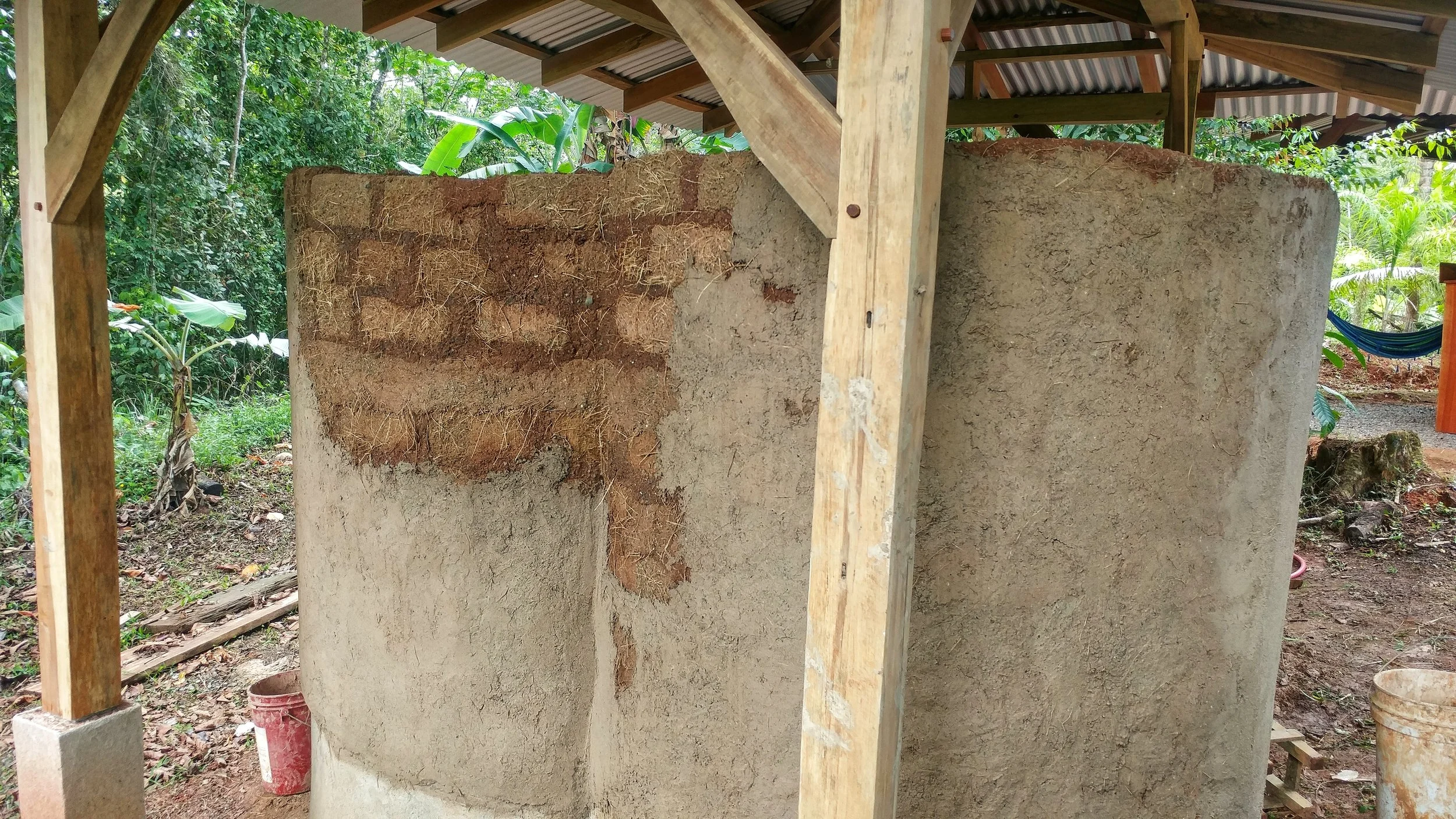
Step 7 - Leveling
A leveling coat was then applied to sculpt and level the walls, this was tied into the door frame to give extra support too.
Step 8 - Tiling
The vertical surfaces of the concrete block were tiled to provide a plaster stop on the bottom edge were the plaster would meet the tile.
Step 9 - Plastering
A lime base coat was then applied over the earthen leveling coat. Whilst this basecoat was still damp (before it started wicking moisture again) we applied the tadelakt mix (1 part fine lime sand and 1 part lime). We did the Tadelakt like this as we had such a large continuous surface area to plaster and needed the time to work it all.

Step 10 - Tadelakt
Once the plaster had dried enough we stoned and soaped the wall using our homemade soap. The Stearic Acid in soap reacts with the Calcium Hydroxide (hydrated lime) to make Calcium Stearate which is highly hydrophobic and one of the reason Tadelakt is considered water resistant. Read more about Tadelakt here.
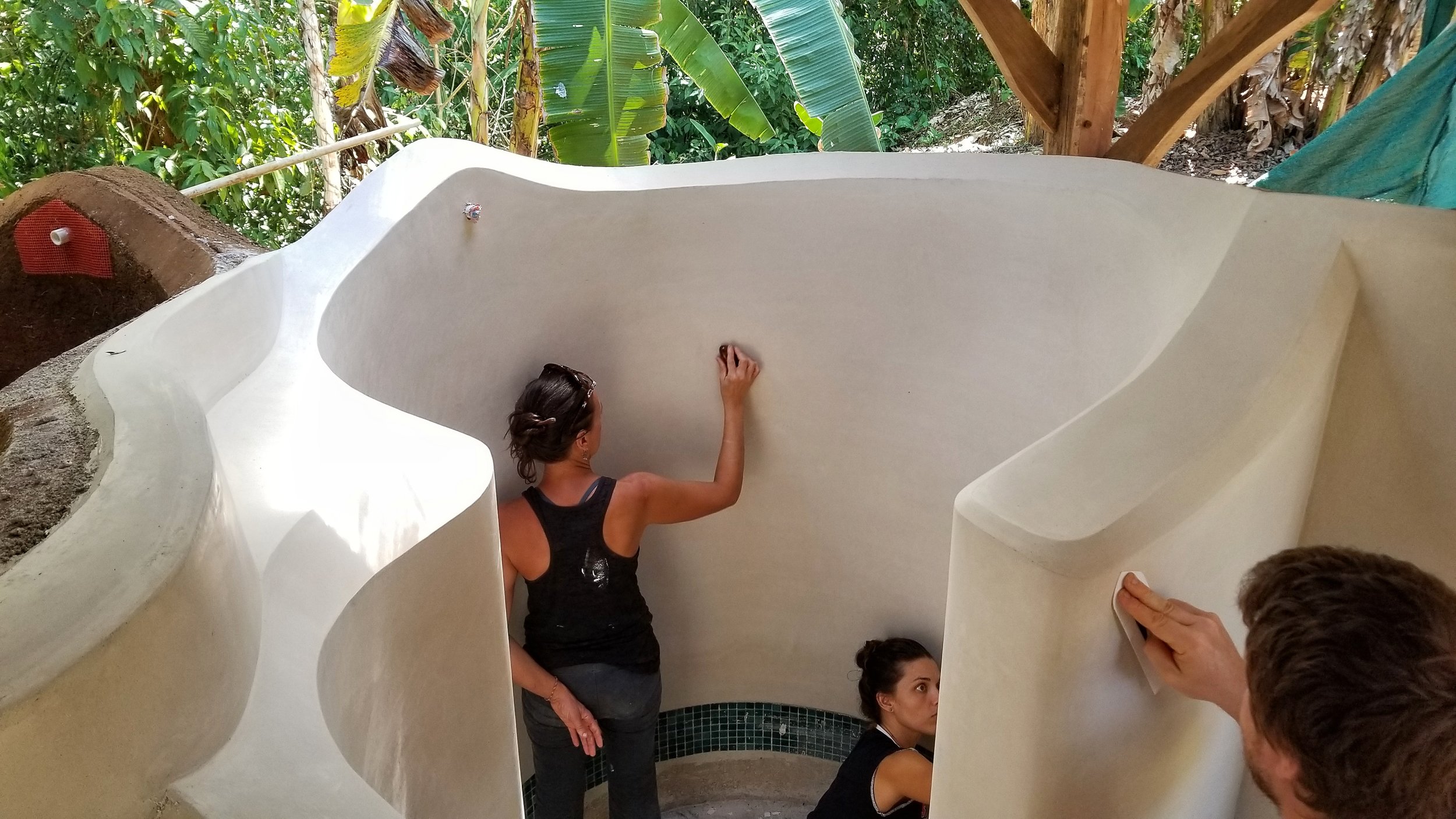
Step 11 - Mosaic
The remaining horizontal surfaces were tiled using different colored swimming pool tiles.

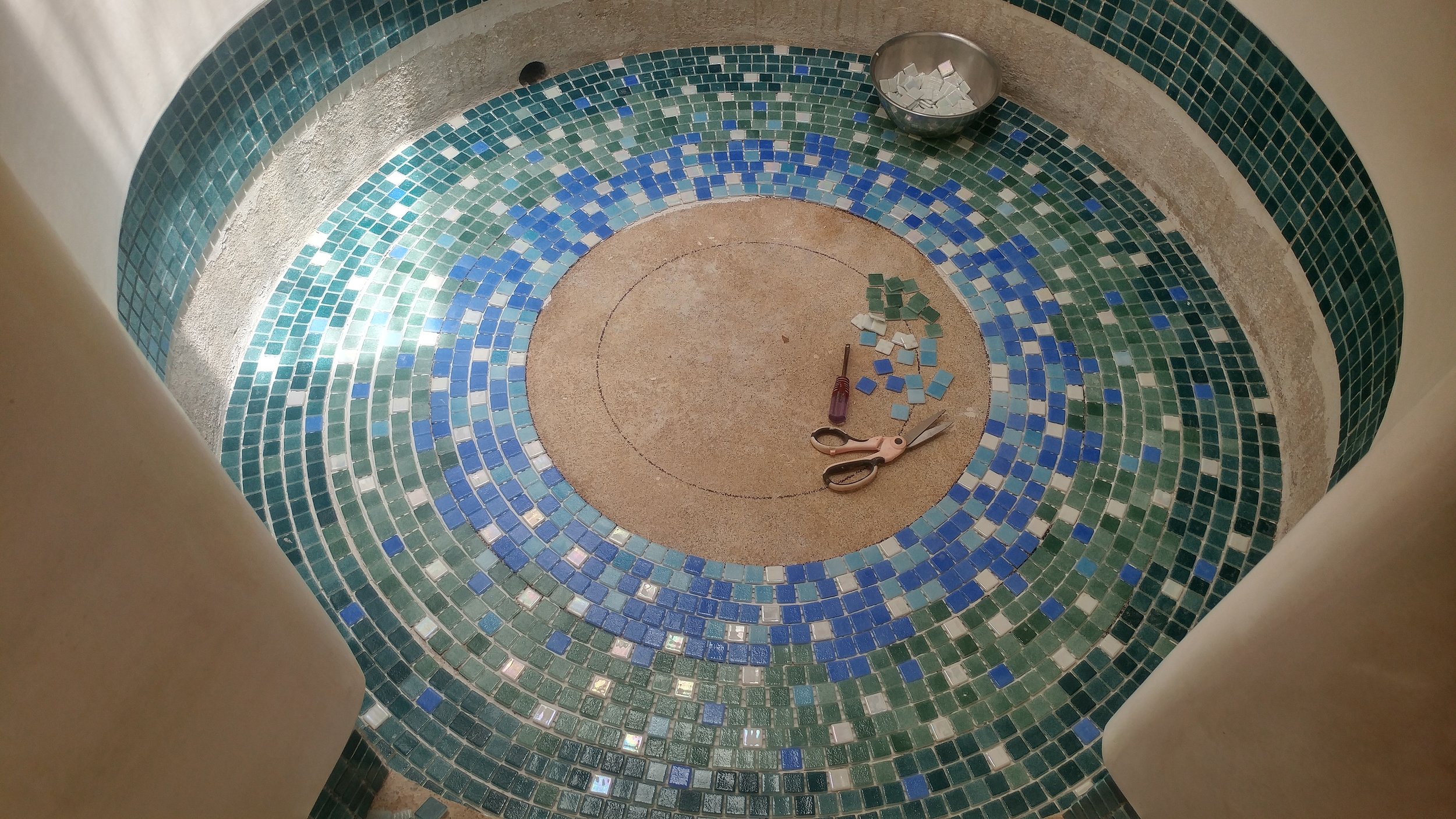

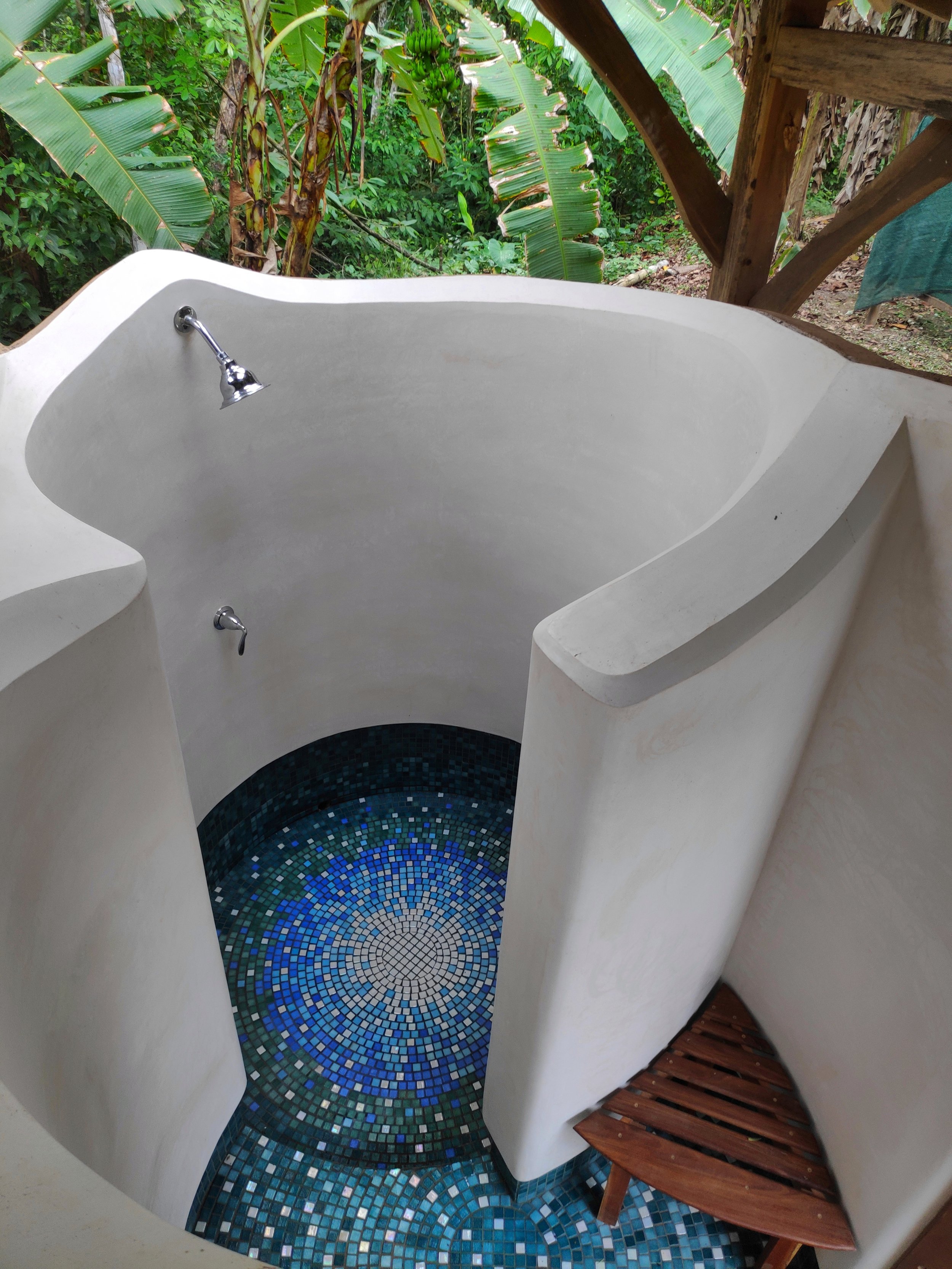
Step 12- Exterior Plaster
We used some of our left over mixes to do a base coat and finish in one pass, adding some pigments to alter the color. We used floats and darbies for the base coat and a sponge float and flexible Japanese trowel for the finish
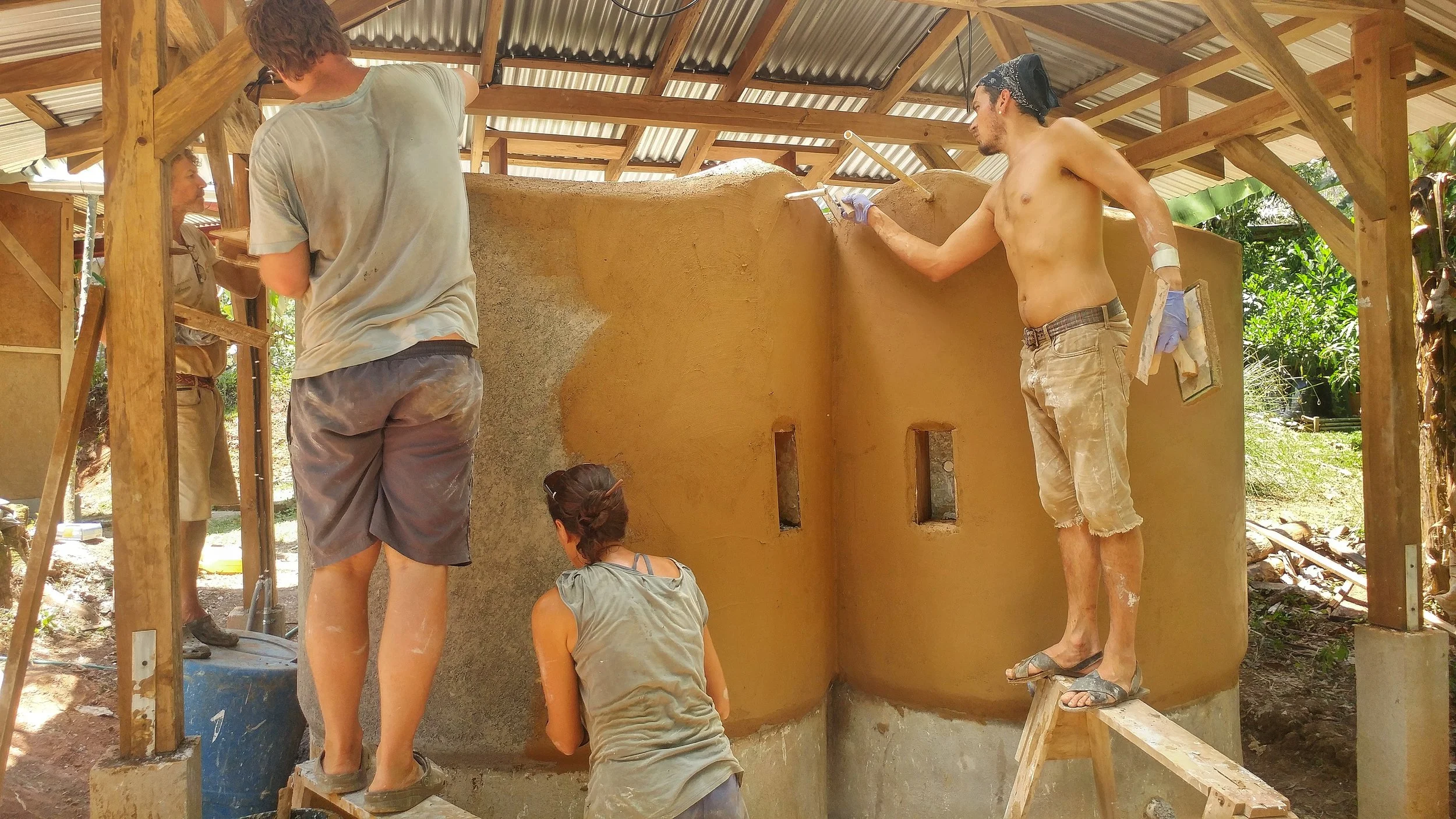
The shower was ready, once the plumbing was connected all that was left to do was enjoy the cool water in these wonderful showers. The two sides of the shower are pretty similar, the main difference being the color combination on the tile mosaic floor. Do you want to bathe in this epic outdoor shower? Come stay with us at Bernies Bungalow!
want to learn more?
Dream of building your own home, outdoor space, or maybe just a simple earthen garden bench?
With over 15 years of experience building and teaching natural building techniques, the Ranch is a perfect setting to get inspired and hands on learning.
Join us for one of our upcoming natural building focused workshops. We generally host a workshop in natural building, timber framing, and/or bamboo construction annually.


How Rancho Mastatal Changed my Life
It seems hyperbolic, but it’s hard to overstate the overwhelmingly positive effect that my experiences at Rancho Mastatal have had on my life, and my current career path.
By Kristen Mandala,
It seems hyperbolic, but it’s hard to overstate the overwhelmingly positive effect that my experiences at Rancho Mastatal have had on my life, and my current career path.
I was first introduced to Rancho Mastatal when I was running high school trips with a small Canadian eco-tourism company in January of 2017, called Evolve Tours. I was able to experience first-hand the effect the ranch has on inspiring young minds and reconnecting them with nature through hands-on activities and facilitation-style learning. I knew from the first night staying in the bamboo tree house (affectionately called the Hooch) that I was in for an unforgettable experience. The peaceful jungle-sleeps, coupled with the incredibly healthful and delicious food made it easy to return the following year to bring more youth to stay at the ranch.
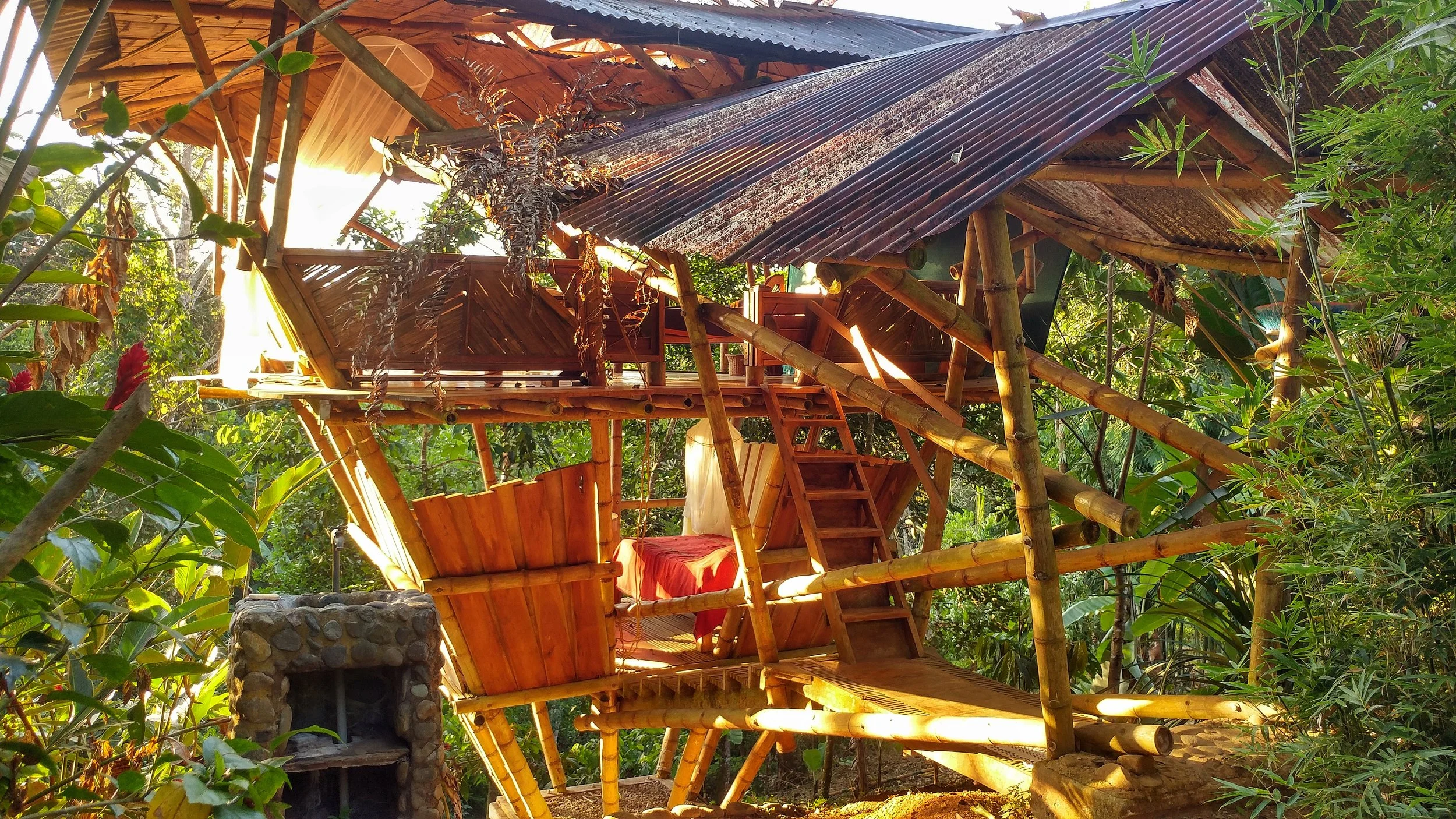
The Hooch at sunrise
They weren’t the only ones who gained knowledge from the lesson plans. The more I sat in on and participated in activities, the more I realized that my passion for sustainability and food systems could be more than my side “passion project” that I indulged in after regular work hours. Rancho Mastatal planted the seeds for what has become my new career back home in Toronto.
After moving on from touring, I decided to invest in my own education and enrolled in the Permaculture Design Course in April of 2018. This would be my first time travelling to the ranch as an individual and my first non-traditional education experience post-grad. My two weeks learning under Scott Gallant, Rachel Jackson, Laura Killingbeck, Chris Shanks, and Alejandro Arango as well as the incredible Core Team (love and gratitude to Nic, Ali, Timo, and Robin) and the 2018 apprentices was truly transformative.
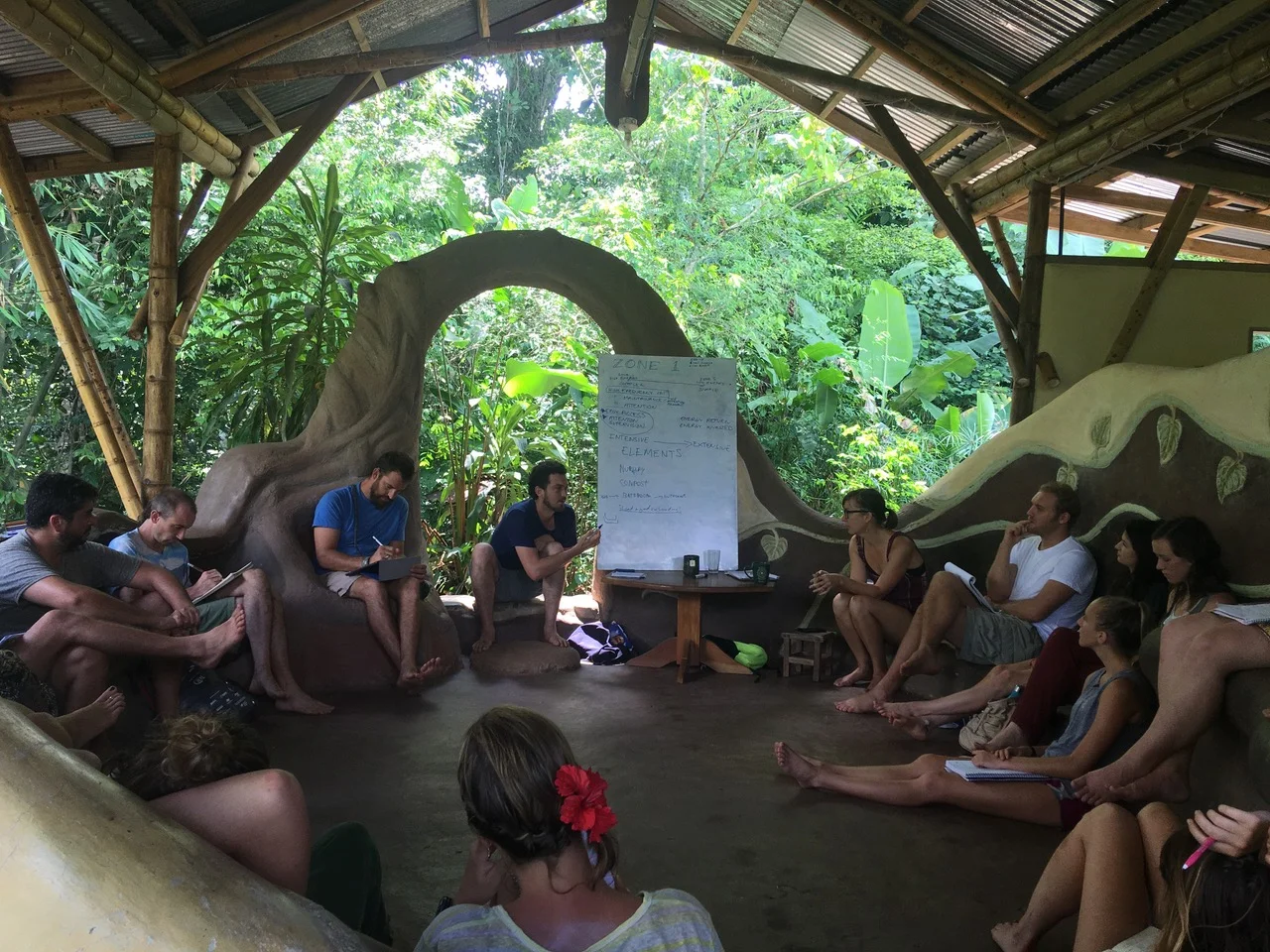
PDC lesson in our Ceiba Lounge
I was able to fully immerse myself in the world of permaculture, sustainable living, and social/food justice surrounded by like minded people from all over the world. It was like summer camp when I was a kid in all of the best ways, intersected with some of the most inspiring and stimulating lessons and conversations I’ve ever been apart of. The two weeks not only expanded my knowledge of regenerative ecology and permaculture, but also instilled in me a deep sense of optimism for the future state of the world knowing that there are so many incredibly intelligent people who want to bring the earth back to it’s roots through community-centered activism and organizing.
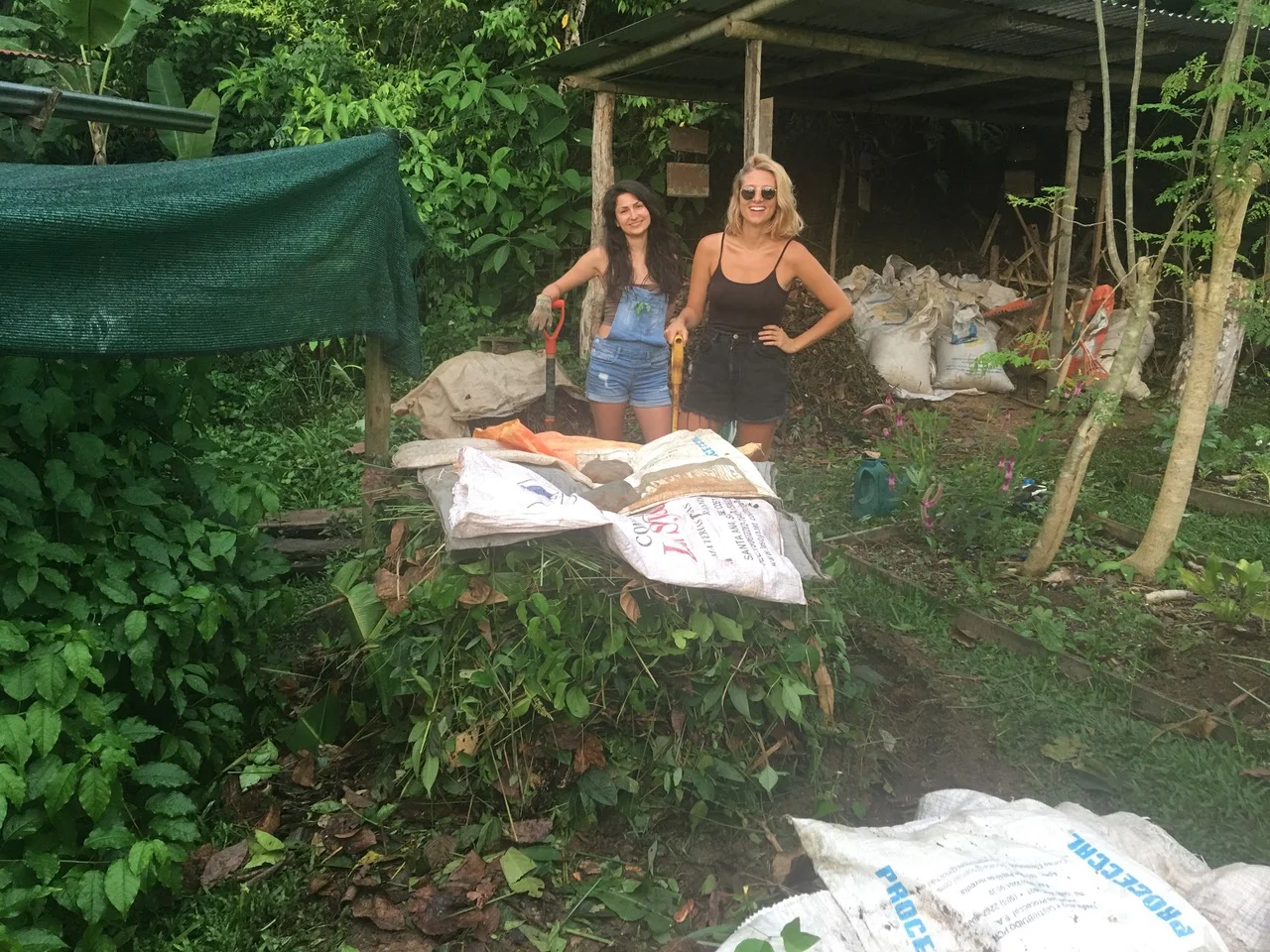
Fast-forward a year, I am lifelong friends with many of the people from the PDC, who have proven to be a beautiful support-system regardless of time zones; I have created a sustainable consulting company called The Greener Good, aimed at inspiring those in schools and offices throughout the Toronto area to incorporate sustainable habits into their daily lives through on-site workshops; and I am eternally grateful that I trusted myself and invested in my education by studying Permaculture Design at Rancho Mastatal.
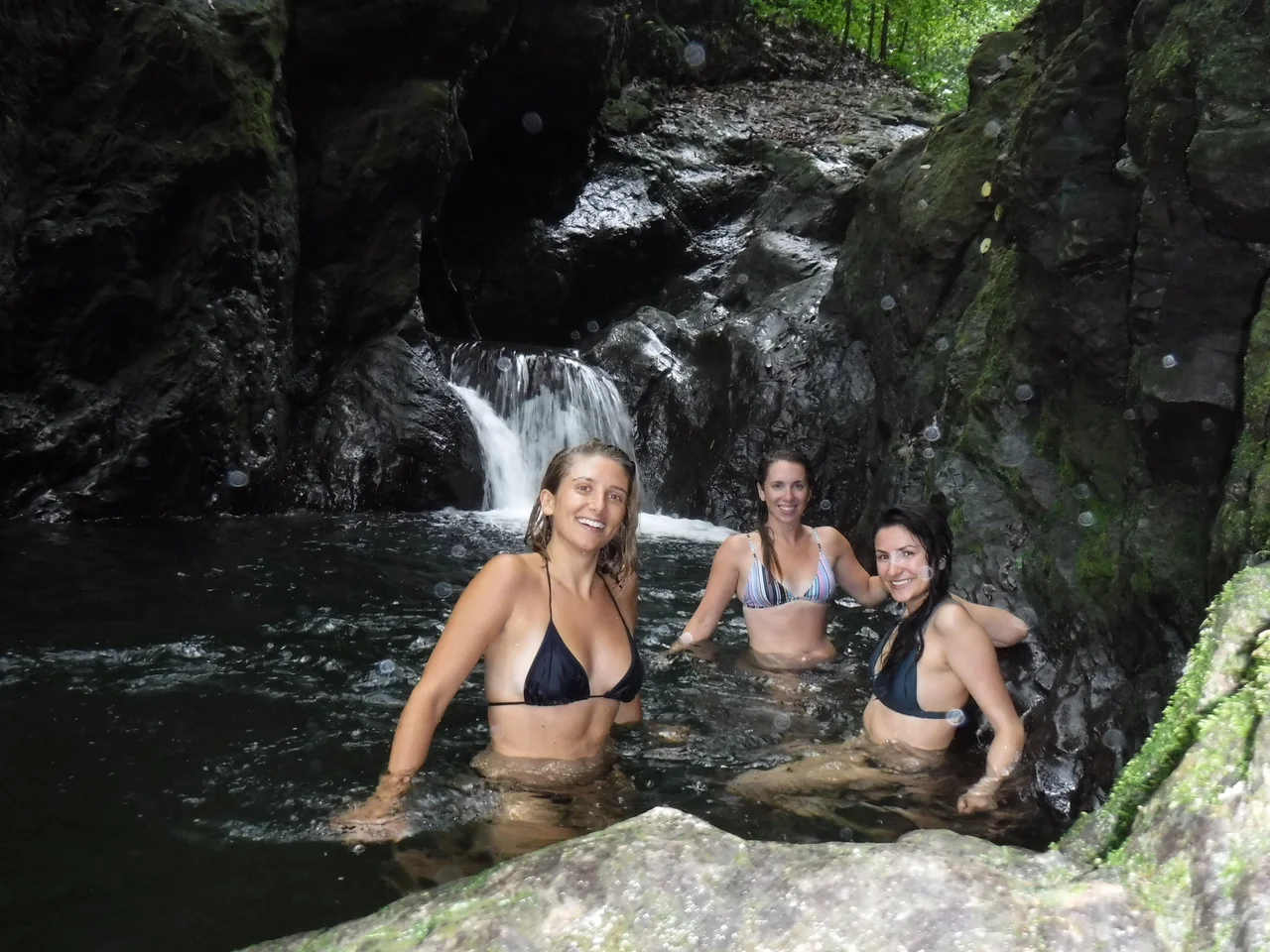
Enjoying the waterfall
My highlights of my time at the Ranch include: waking up and doing yoga on the deck overlooking the jungle, the coffee, the food (cannot emphasize enough how good the damn food is), SO MUCH LEARNING (from someone who struggled to stay engaged in school, I was hungry to learn more each day), running to the waterfall at lunch for a refreshing dip, walking to class and picking fruits on the way, playing soccer or ultimate before dinner, ending each night with some of the best conversations, and waking up and doing it all again.
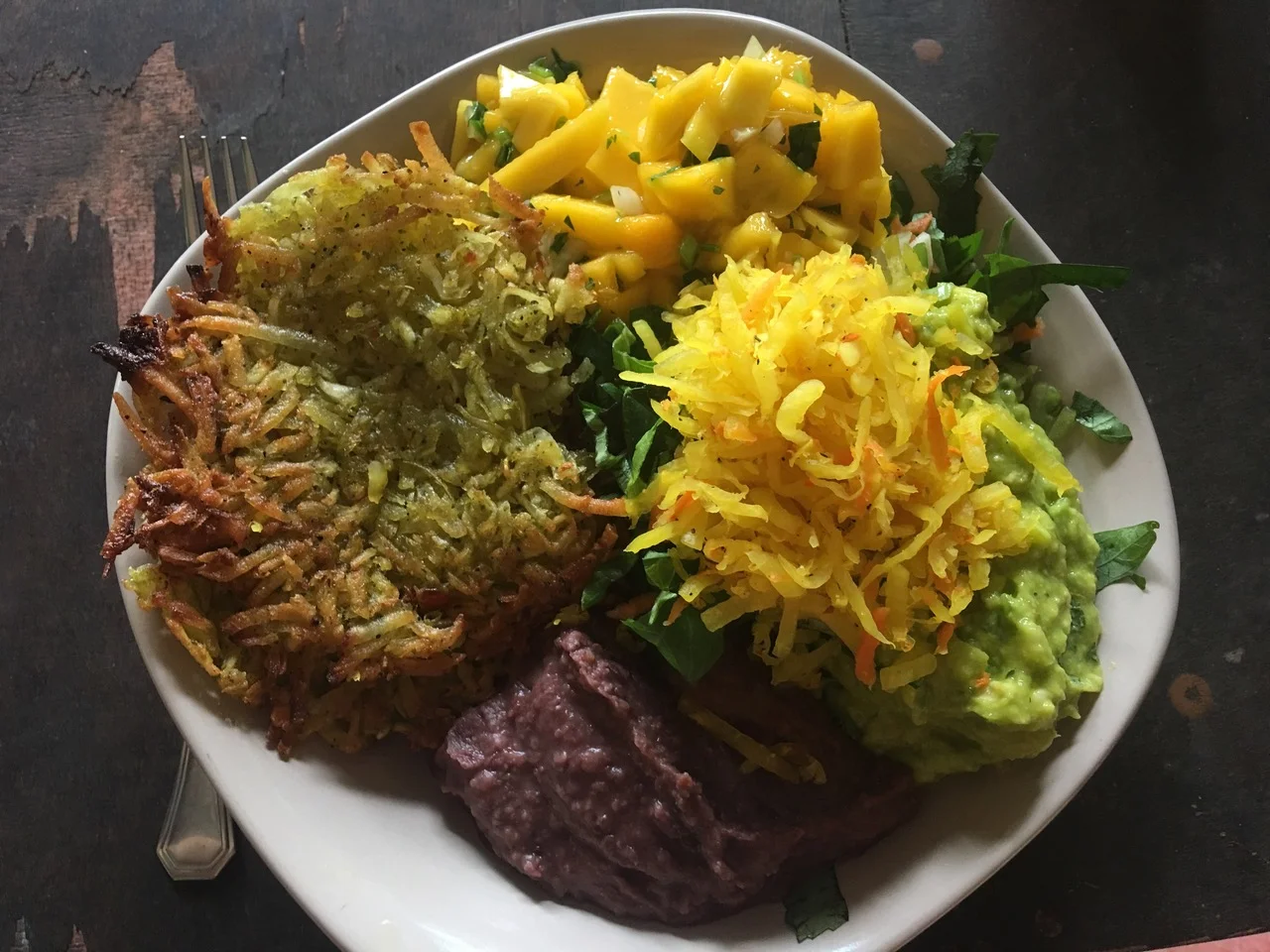
Locally sourced meals
Okay, I should end this now as I am currently flooded with nostalgia and my emotions doth runneth over as I type. To the folks at the Ranch, thank you for reminding me of my strengths, empowering me to use them, and for making a small piece of Costa Rica feel like home. I continue to thank Mother Nature before my meals and express gratitude at every turn, a practice introduced by Robin and Timo that I will always carry with me.
If anyone is looking for a sign to invest in themselves, this is it.
If you are interested in learning more about my project you can go to:
Instagram: www.instagram.com/@the.greener.good
Website: www.thegreenergood.net
Facebook: www.facebook.com/kristen.greener.good
With love and gratitude,
Kristen

Choosing Consciously for Healthier Families and a Safer Home
Many of us grow up thinking of home as our safest place. As consumers, we have been led to believe that by the time products make it to the market, they have been thoroughly tested and proven safe. We pick up packaging and read labels before buying, just to know what is in the products. But, what does a label really tell us? What are these manufactured products made with? Where and how was it cultivated, processed, packages and shipped?
By Sharleen Marie, Rancho Mastatal Teaching Staff, 2019
Many of us grow up thinking of home as our safest place. As consumers, we have been led to believe that by the time products make it to the market, they have been thoroughly tested and proven safe. We pick up packaging and read labels before buying, just to know what is in the products. But, what does a label really tell us? What are these manufactured products made with? Where and how was it cultivated, processed, packages and shipped? When I first began looking for answers, I encouraged myself to search, detach and reeducate myself about how better make conscious decisions and take actions aligned with my principals and values for my body, my community and my environment. I became passionate about searching what I now choose for nourishment in food, personal care, and lifestyle.

To begin this journey, I intentionally created the habit of choosing all products based on their ingredients rather than their label. I am grateful and fortunate that I had many people around me who inspired me to learn new ways in which I could live a sustainable life, aware of and driven to practice what was best for me, the people and the places I love and care about. After reading this article, I encourage you to continue your journey to discover alternatives solutions and create the changes that produce the results you wish to see in the world.
Don’t just Trust Labels Read the Ingredients
Labels can be misleading. What we think we know about a product may not be true. How safe are your cleaning supplies and skin care products, really? What does ‘Eco-friendly’, ‘Biodegradable’, ‘Natural’ and ‘Nontoxic’ really mean? For example, when we talk about biodegradability of a material or substance, we’re talking about its ability to be broken down into its smallest components parts. This decomposition can be caused by various natural forces like: hungry microorganisms with a digestive system that can break compounds apart into simpler substances, and by contact with light or water, processes called photolysis and hydrolysis consequently. Biodegradability lies at the heart of nature’s sustainable recycling system. Once created, everything from plants to animals is eventually broken down into its most basic parts, which then become the building blocks for new life that itself will some day similarly decay.
When it comes to household, skin care, beauty, and cosmetic chemicals, biodegradability is generally a good thing. In order for a product to be labeled as biodegradable, Federal Trade Commission (FTC) guidelines state that it must degrade when exposed to air, moisture, bacteria, or other organism, and it must return to the natural environment in a reasonably short time when properly disposed of. There is no standard or oversight for the label; manufacturers may label products “biodegradable” at their discretion.
Understanding What You Read

The business of manufacturing cleaning and cosmetic products relies on chemistry. Chemistry itself is not a bad thing. It’s the kinds of chemicals we make and use that matter. Like most anything else, there is a good side and a bad side to all the molecular manipulation chemists practice. There are safe chemicals, and there are unsafe chemicals. Our problem today is that we don’t know which are which. Chemical companies are not obligated to list the ingredients in their products, better known as Voluntary Disclosure Program. This program leaves of decision of wether or not to list ingredients at the sole discretion of the manufacturers. Manufacturers can also legally omit hazardous chemicals if they are part of a mixture the company claims to be a trade secret. (1)
How much do we know about the effects of daily contact with toxic household materials that retailers sell on faith, while we ourselves are serving as the test tubes while we live, breath, and raise our families among these components every day? Toxic chemicals found in detergents, perfumes, solvents, pesticides, pharmaceuticals, personal care products and household cleaners vary in their severity – from acute (immediate) hazards such as skin or respiratory issues, chemical burns or watery eyes to chronic (long term) hazards.
According to an Environmental Protection Agency (EPA) study of human fatty tissue samples, every American man, woman, and child carries at least 700 pollutants in his or her body. (2) Today, there are an estimated 80,000 different chemical compounds being made and used. (3) In 2016, the EPA named the first 10 chemicals it will evaluate under the new Frank R. Lautenberg Chemical Safety for the 21st Century Act, the first update since 1976 of the nation’s primary toxic substances law. (4)

In the last several years, a growing body of scientific evidence has indicated that the air within homes and indoor environment can be more seriously polluted than the outdoor air in even the largest and most industrialized cities. Other research indicates that people spend approximately 90% of their time indoors. Thus, for many people, the risks to health may be greater due to exposure to air pollution indoors than outdoors. In addition, people who may be exposed to indoor air pollutants for the longest periods of time are often those most susceptible to the effects of indoor air pollution. Such groups include the young, the elderly and the chronically ill, especially those suffering from respiratory or cardiovascular disease.
The evidence that does exist strongly suggests that exposure to many of the common products we take for granted can cause chronic diseases, cancer, fertility issues, ADHD, compromised immune system, hormone disruption, nerve and organ damage, allergies, asthma, sinusitis, anxiety, depression, and other health problems. Do any of these health problems sound familiar?

The 2017 American Association of Poison Control Centers' National Poison Data System (NPDS) reported, consistent with the previous year, that the top 5 substance classes most frequently involved in all human exposures were analgesics (11.08%), household cleaning substances (7.43%), cosmetics/personal care products (6.76%), sedatives/hypnotics/antipsychotics (5.74%), and antidepressants (5.02%). Including the top 5 most common exposures in children age 5 years or less were cosmetics/personal care products (12.59%), household cleaning substances (10.96%), analgesics (9.18%), foreign bodies/toys/miscellaneous (6.39%), and topical preparations (4.84%). (5)
Healthy homes must extend into the larger world beyond our windows. By definition it means not only making sure that the activities that take place inside our houses are as nontoxic as possible, but also doing whatever we can to make sure that these activities don’t negatively impact the environment outside. As ever increasing amounts and types of different industrial chemicals are being manufactured and used, our environment is becoming increasingly contaminated by the pollution these chemicals create. This is because many of the synthetic chemicals made today do not easily break down into harmless bits and pieces as natural materials do. Instead, they resist decomposition, and once they are introduced into our air, water, and soil, they tend to remain there for long periods of time. This persistence means that as more of these chemicals enter our environment and bodies, they accumulate in ever larger amounts.
What Can I Do? Small Changes = Huge Benefits
Manufacturers and the organizations that works to protect their interests aren’t going to make the changes we need. If, as consumers you want the right to know exactly what is in the products you purchase and to change the toxicity of products used all around you and your family, you need to ask for and demand change.
Research the products you buy. Purchase only from companies that list all the ingredients on their products’ packaging. When you do have a concern about a commercial product, contact the company and express your concerns about their ingredients and/or marketing practices.
Ask the places you frequent —schools, daycares, workplaces, in community centers— to change the products they use to safer, less toxic supplies for the well being of our children, friends, parents, and community.
Speak about this issue and your concerns with your family, neighbors, coworkers and friends.

Make your own cleaning products for your home, using less toxic ingredients. There are many resources available including immersive trainings like Sustainable Practice: Homesteading to Skin Care, which I will co teach this May 2019. During the course students will learn how to create their own line of nontoxic natural products and free themselves from a dependency on wasteful commercialized goods. This course and others like it can provide an introduction to topics such as fermentation, distillation and herbalism in order to help build the foundation skills and confidence students often need in order to safely create their own personal care products and promote holistic wellbeing in their home and environment.
Article written by Sharleen Marie, co-founder of Atabey Botanicals, a social enterprise dedicated to supporting you develop practical applications of sustainability into your lifestyle that will improve your health and well being and protect the environment.
The workshop will be held at Rancho Mastatal, Costa Rica. Learn, Stay and Explore the education center, working permaculture farm, lodge and community rooted in environmental sustainability, meaningful, place-based livelihoods, and caring relationships.
To know more, access https://ranchomastatal.com/sustainablepractice or contact me through atabeybotanicals@gmail.com
Sources:
(1) Welsh, M. S., Lamesse, M., Karpinski, E. (2000) “Te verification of hazardous ingredients disclosure in selected material safety data sheets.” Appl Occup Environ Hyg. 15(5):409-420.
(2) US Environmental Protection Agency Office of Toxic Substances, “Analysis of Human Adipose Tissue, Volume 1: Technical Approach.” (1987) Accessed online on April 4th 2019, https://nepis.epa.gov/Exe/ZyNET.exe/10003C6I.txt?ZyActionD=ZyDocument&Client=EPA&Index=1986%20Thru%201990&Docs=&Query=human%20adipose%20tissue%20technical%20approach&Time=&EndTime=&SearchMethod=2&TocRestrict=n&Toc=&TocEntry=&QField=&QFieldYear=&QFieldMonth=&QFieldDay=&UseQField=&IntQFieldOp=0&ExtQFieldOp=0&XmlQuery=&File=D%3A%5CZYFILES%5CINDEX%20DATA%5C86THRU90%5CTXT%5C00000000%5C10003C6I.txt&User=anonymous&Password=anonymous&SortMethod=-f%3Apubyear&MaximumDocuments=15&FuzzyDegree=-1&ImageQuality=r85g16/r85g16/x150y150g16/i500&Display=hpfr&DefSeekPage=x&SearchBack=ZyActionE&Back=ZyActionS&BackDesc=Results%20page&MaximumPages=1&ZyEntry=1&SeekPage=x
(3) Steve Waygood, “Uncertainty Persists on Chemical Equation.” Environmental Finance, September 2004
(4) https://www.ewg.org/research/under-new-safety-law-epa-picks-first-10-chemicals-review
(5) Gummin DD, Mowry JB, Spyker DA, Brooks DE, Osterthaler KM, et al. 2017 Annual Report of the American Association of Poison Control Centers' National Poison Data System (NPDS): 35th Annual Report. Clin Toxicol (Phila). 2018 Dec 21;:1-203. PubMed PMID: 30576252.

How Can We Make a Change in the World
Everything seems to have been created by a higher intelligence that has designed this universe in mysterious ways for us to live off. We live in a perfect symbiosis with nature. Everything seems to have a purpose which co-exists with all that is around us yet we don’t have an explanation to all this perfection.
by Diana Dagash, Apprentice 2019
Everything seems to have been created by a higher intelligence that has designed this universe in mysterious ways for us to live off. We live in a perfect symbiosis with nature. Everything seems to have a purpose which co-exists with all that is around us yet we don’t have an explanation to all this perfection.
What if we had the access to tap in to the secrets of nature, would it be possible to live a healthier and more sustainable way?
How does our connection and understanding of nature relate back to ourselves?
What if the way we treat our own bodies reflects on the way we treat Mother Earth?
If we look at the patterns in nature we can see that Earth is a macrocosm reflection of our own organisms. Earth is our body, the trees our lungs, plants our hair. The waters, seas are our fluids, that are in sync with the moon and the planets. The stages of the moon reflect on our emotional, energetical and physical states. The new moon represents a new cycle for growth, setting intentions, regeneration and with the full moon we reach peak of our energy as the tides of the sea rise, the winds get stronger, nature is at its highest strength. It is a good time to harvest what we’ve sown.
When the body is ill and weak it struggles to regulate its own temperature the, extremes of hot and cold temperatures resemble the behavior of our planet. Observing today’s climate change and natural disasters reflect on how we’ve been treating this planet. We already see the consequences of our actions. We have abused and exploited the forests and waters.
Mother Earth is patient and compassionate, she embraces us , provides us with all our needs , we are her children. She needs our cooperation , our understanding of the messages she sends to us, for us all to survive and thrive. We have forgotten our origin, where our food comes from, what allows us to coexist.
We are trying to live against the cycle of life by suppressing our illness symptoms just as we are manipulating the weather to cover the climate change that we have caused. Society has surrounded itself with comfort, trying to protect itself from nature and to change its power dynamics .We came out of sync and communication with Mother Earth. We are already paying the price of destruction, exploitation of natural resources and struggle to live in abundance.
The amount of food wasted that could feed the whole world if we stopped and reevaluated our needs and priorities in life. The individualism and race to accumulate more that we could every possible need! The greediness has blinded many of us from love and care to ourselves , to one another and to the planet we live on. The industrialism has left very little space for small farmers to survive. The food grown is mass produced and poisoned in interest to earn money as well as pharmaceutical companies wants us to always come back.
Our heads have been turned to the other side. Our education has not introduced us to our connection with nature and the healing powers within us and around us. We have not been taught to peacefully communicate with one another, nor how to explore our inner world that provides us with intuition and peaceful mind.
It has been said already “ The whole world is within you.” If we focused ourselves within, maybe we could find the answers to our problems and create a peaceful world we there is no war?
“You cannot solve a problem with the same way of thinking that create it “
I believe that if we integrate education on sustainable living into schools, children growing up with have more much awareness on the importance of sustainable living and the change we can make to a healthier life.
I strongly believe that if we want a change education would be at the base of it all.
How I believe we can make a change:
1. Proper education on sustainable living for example : permaculture, agroforestry, natural building, carpentry, homesteading , making your own biodegradable body and cleaning products, culinary skills.
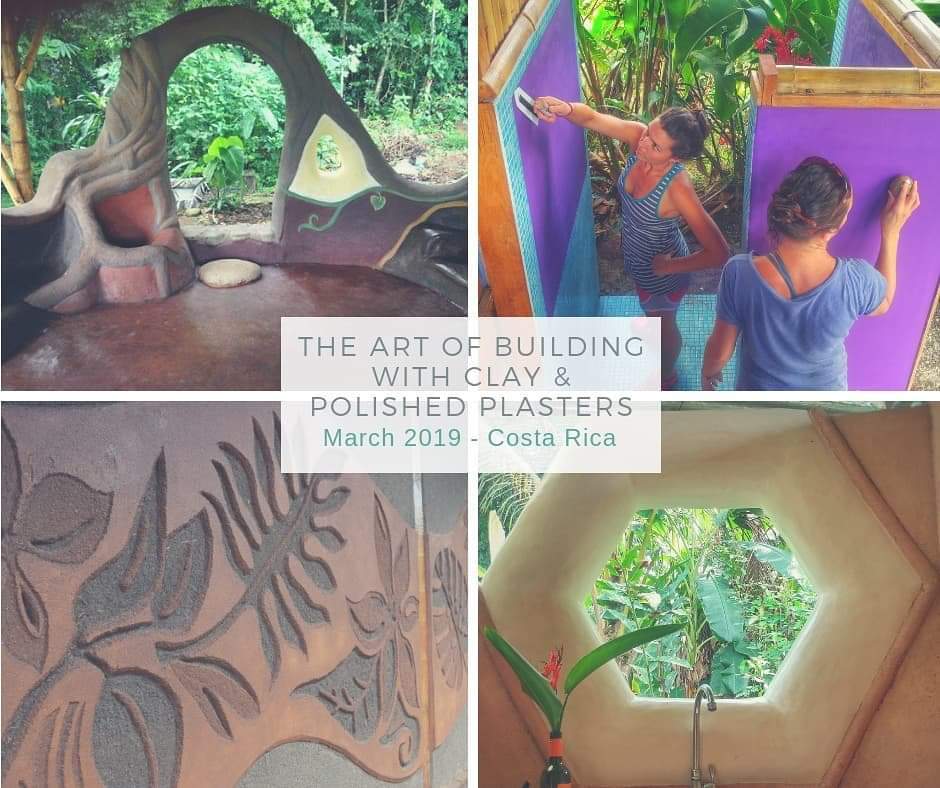
Workshops to inspire and empower you to change
2. Taking responsibility for our actions, the consequences of consumerism and how to stop mass waste production. For example – grow your own food.

Planting seedlings for food production
3. Self-development, healing the micro and macrocosm. Bringing awareness within, practices that pro mote introspection and self-reflection like meditation , learn to peacefully interact with others. Some great book references for this are the following :
The Power of Now by Eckhart Tolle
Non-Violent Communication Dr. Rosenberg
The 4 agreements Don Miguel Ruiz
4. Learn life skills that are beneficial to your environment.

Bamboo building at Rancho Mastatal, a sustainable building material
5. Choosing the possibility to live at your highest path , to stand for righteous actions and lifestyle.
6. Gain knowledge of medicinal plants in your area, get familiar with natural medicine, self-healing and maintain a preventative holistic lifestyle.
7. Make space for self-exploration , discover your interests and passions that you heart calls, surely they will benefit the world.
For me it is a priority to dedicate my life to create a greener healthier world, to learn how to be self-sufficient , build my own house , grow my own food, live harmlessly in nature, educate and promote that lifestyle and provide a good future for future generations .
Currently I live in Costa Rica doing a year long apprenticeship on sustainable educational farm that focuses on those matters and has created a heavenly community of loving , caring people that come together to learn and make a change.
I like to visualize a world that lives in abundance and has everyone’s basic needs met. A planet with clean air and water, where we would have food forests all around and houses surrounded with edible greens and herbs. It inspires me to think of what’s possible and focus my energy onto creating it.
Together we can change the world, so let’s take action, create ripples that will spread across the world. The power is within us to create the world we want to live in.
I wish you to pursue your purpose in life and discover your highest path for living.
I warmly invite you to visit farm that teach about sustainability such as Rancho Mastatal, learn about self-sufficiency, minimizing industrialism and harm to the ecology
Seeing all the movements rising to save our Earth I have faith and am excited to see the good changes happening in our society.
There is a rise in consciousness around the globe, let’s all be part of it!
Blessings to all
Diana
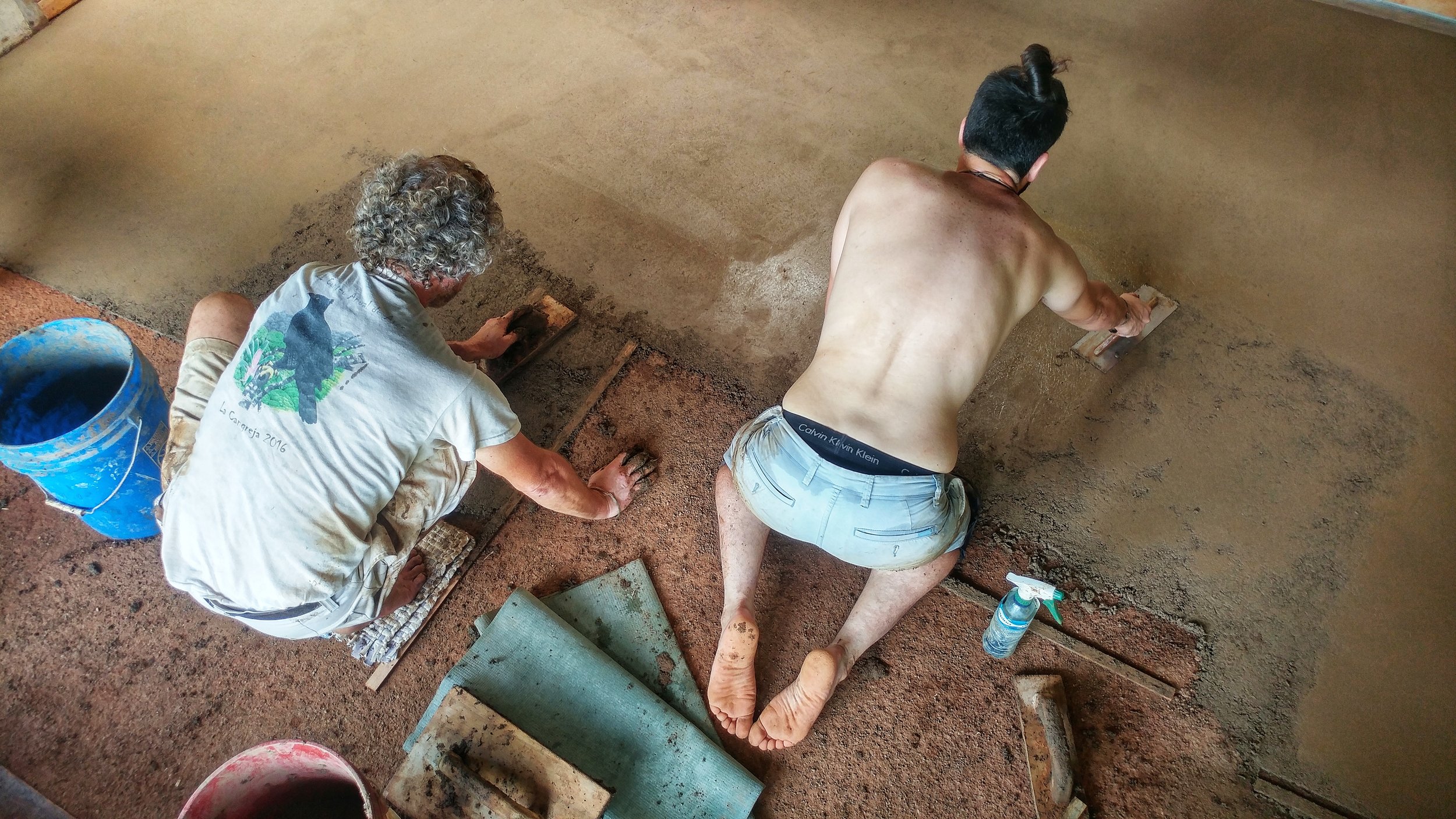
How to Make an Earthen Floor for Your Sustainable Home
Earthen floors add a great earthy touch to your sustainable home; whether that’s in your cob house or conventional stick frame home. They have more give than concrete or tile, meaning they are more comfortable and easy on your feet.
Why Build an Earthen Floor?
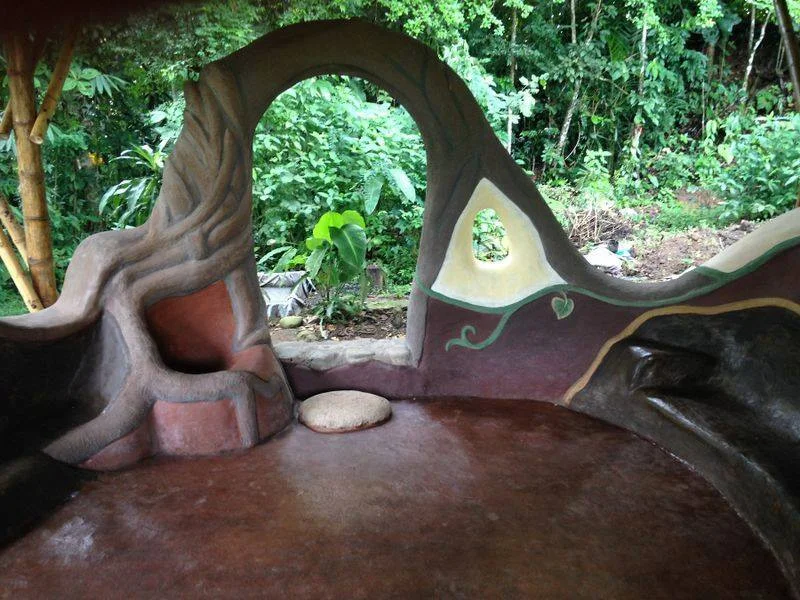
This Earthen Floor adds a wonderful warmth to the Ceiba Lounge
Earthen floors add a great earthy touch to your sustainable home; whether that’s in your cob house or conventional stick frame home. They have more give than concrete or tile, meaning they are more comfortable and easy on your feet. Earthen floors can be durable and last a long time, but are not the best material for all spaces in your home. They will break down faster when there is a lot of moisture on them or heavy items dropped on them. So places like your kitchen and bathroom are not ideal locations for an earthen floor. Earthen floors work great for bedrooms and living rooms.

Mixing by hand gives you a great feel for the mixture
Here at the Ranch we have been practicing and perfecting our earthen floors for more than 15 years. We strive to create sustainable homes from natural, local materials. Natural building is one of the ways we practice green living. We have seen what works and what doesn’t in many different structures and spaces throughout our community. After having an earthen floor in our kitchen, a space that produces three meals a day for an average of 30 people, and after repairing patches again and again, we realized this space is too heavily used for an earthen floor. Spaces like our guest cabins are perfect for earthen floors. Of course with hundreds of people going through these spaces they wear down over time. If you correctly lay an earthen floor in your home, and take care of it, they should last you for a long time.
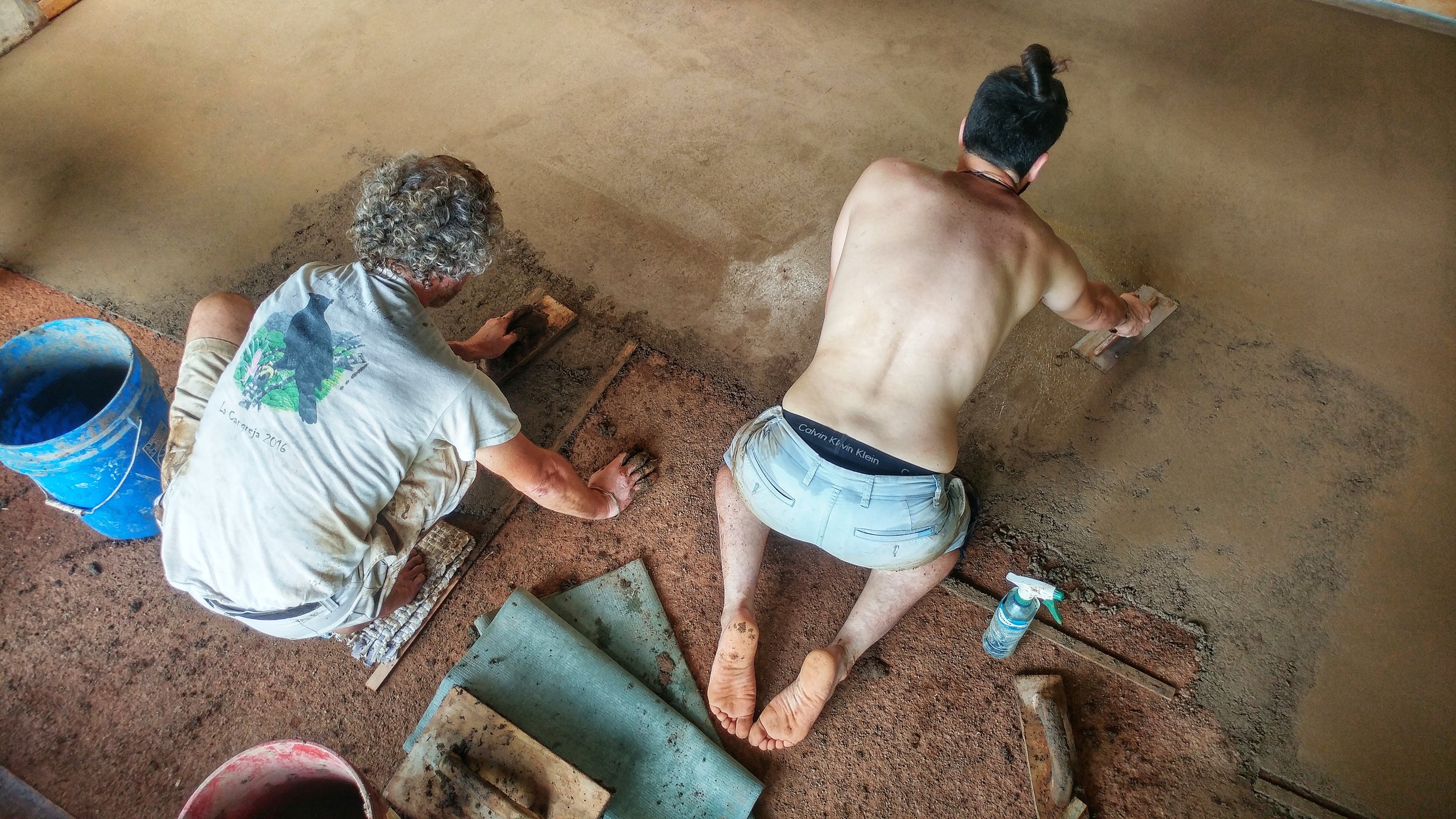
Wooden guides can be used to help keep the correct thickness
How We Build Our Earthen Floors
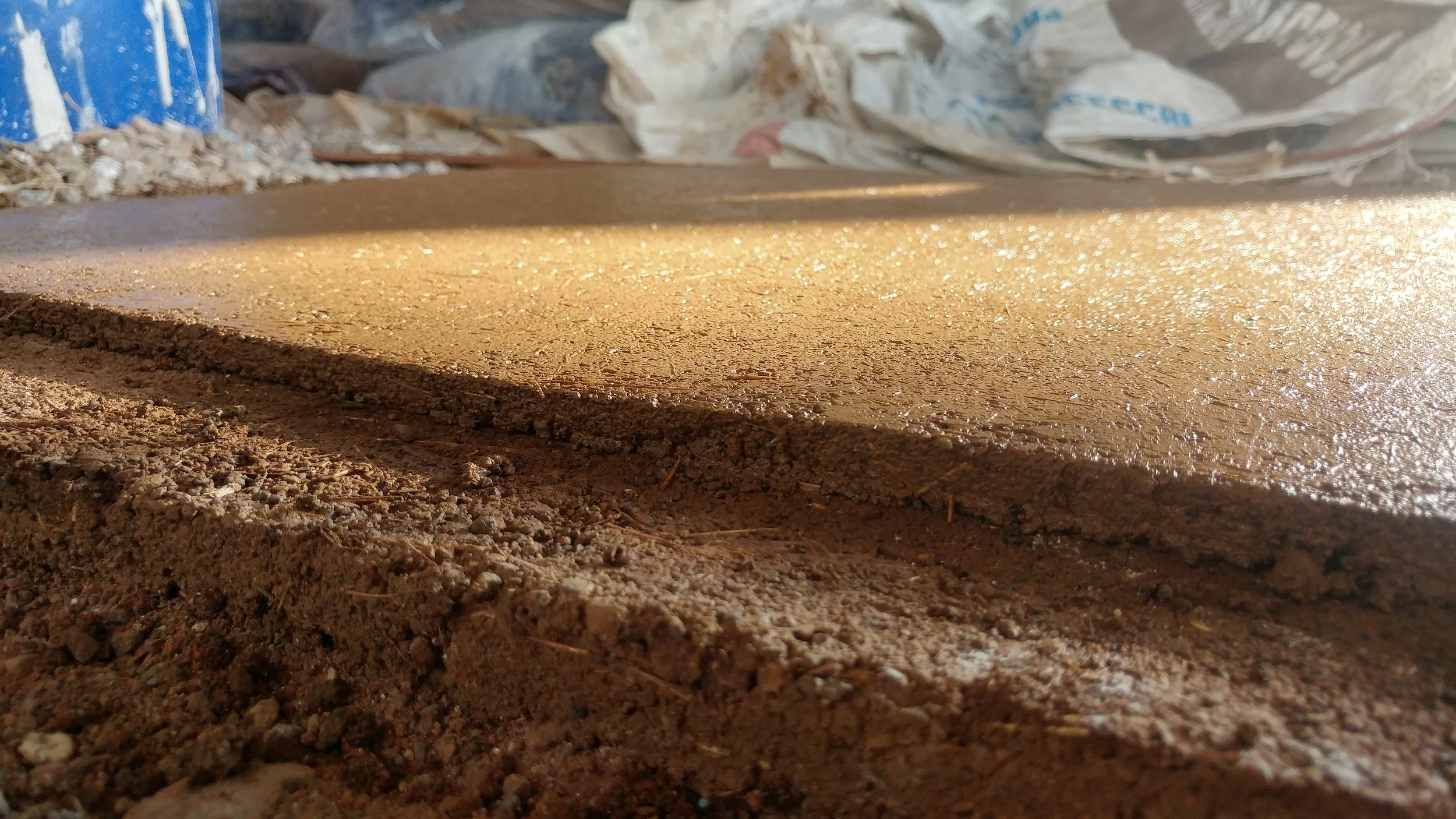
Base and final coat in a sample, always make tests!
Here in our tropical environment, with the materials locally available to us, we have finally figured out a bomber earthen floor. Here is a simple step by step guide on how we lay an earthen floor.
An earthen floor is comprised of 4 different layers
· Water proof membrane
· Tamped gravel (optional to increase total depth)
· Compacted road base (mixture of sand, clay and gravel)
· Two layers of final floor (mixture of sand, clay and chopped straw)
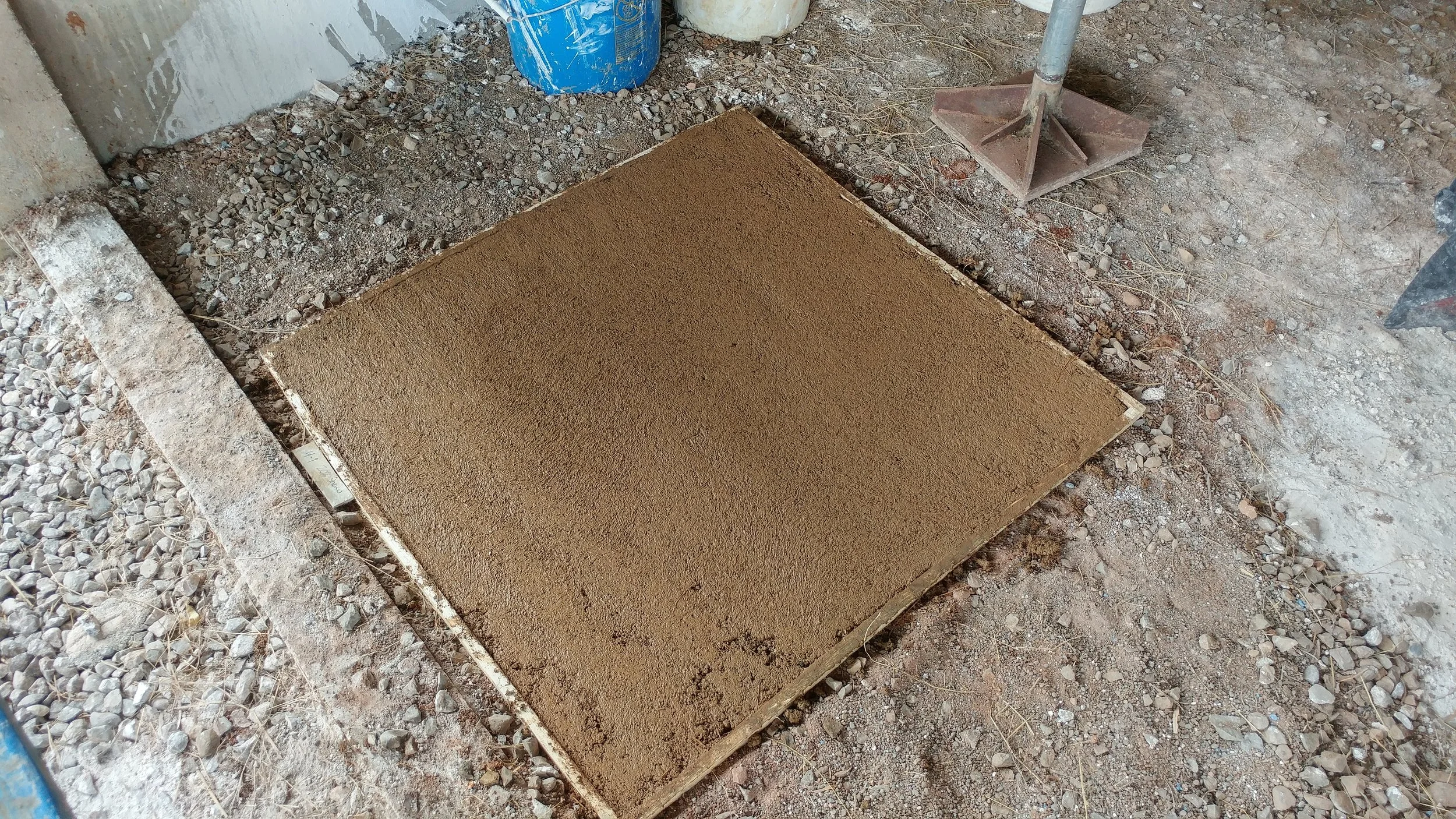
Make sure your samples are large enough to be representative!
Before you begin make samples! Always make samples for anything you plan on building; whether that is for your cob house, outdoor pizza oven, or natural plasters. We recommend making at least 3 samples with different ratios of clay, sand, and straw. These should be at least 1 meter by 1 meter to get an accurate example of the final product.
Steps once you find the correct ratios
1) Lay down a waterproof membrane, wrapping it up the inside of the stem wall.
2) If you need to increase the depth of your floor height you can add tamped gravel.
3) Compact your road base. Minimum depth is 4 inches.
4) Lay down your first layer of final floor. We do ¾ inch thick. Let completely dry.
5) Lay down your final layer of floor. We do ¼ inch thick. This can be troweled smooth to close any holes. Let completely dry.
6) Paint multiple layers of linseed oil/thinners combo at 3:1 ratio. This provides a protective coat that will increase the longevity of your floor.

Want to Learn More?
Perfecting an earthen floor takes time and practice. If you are trying to create a sustainable home consider using earth for your floor and throughout your home.
If you would like to get some hands on experience in natural building join us for one of our upcoming courses check out our workshops page for our latest offerings.
References:
Earthen Floors - A modern Approach to An Ancient Practice By Sukita Reay Crimmel & James Thomson
Contemplating an Uncertain Future: The Ranch and Climate Change
Climate change, after decades of lulling at the bottom of the news cycle, has belatedly made it into the headlines as increasing numbers of people become aware, convinced and concerned about the environmental and social impacts of the Earth’s evolving atmospheric conditions. I frequently think about disrupted weather patterns and what my role in this unfolding story should be.
by Tim O'Hara
Climate change, after decades of lulling at the bottom of the news cycle, has belatedly made it into the headlines as increasing numbers of people become aware, convinced and concerned about the environmental and social impacts of the Earth’s evolving atmospheric conditions. I frequently think about disrupted weather patterns and what my role in this unfolding story should be.

Many climate experts argue that we have surpassed the carrying capacity of our planet and that our natural resource base cannot support our modern lifestyles at our current population numbers. I find this argument believable given the observable degradation of our natural systems everywhere I go. Modern technology might for a time delay the worst impacts of our behavior, but soon we will stare more squarely in the face the consequences of the environmental alterations that we’ve set in motion. Indications of a more brittle world are clear to me.
Humans are descending to systematically destruct our limited natural resource base and in turn one another. I am discouraged thinking about the future that my daughter is inheriting and struggle to decide how to divide my time between work, personal care and engagement in efforts that help mitigate some of our biggest societal challenges, especially climate change. I’m not optimistic, but I cherish life, my family and my friends and strive to do my part in figuring out how we can usher in a more just world.

I was recently asked how Rancho Mastatal is responding to climate change and whether we feel as if we are helping to create an alternative future for those becoming heir to the approaching changes. In large part Robin and I started the Ranch to address and answer this question. Widespread social and environmental injustice partly inspired us to leave the United States and a more common life path to set up an “alternative” project that we hoped would contribute to a brighter future. We are dedicated to learning and teaching more environmentally appropriate ways to grow food in poor soils, build structures that are kinder on Mother Earth, and implement practices that allow us to meet our basic needs without destroying the elements that make it possible for the soil and atmosphere to sustain us. We are helping to teach future generations that there is indeed a better way to live; a way that is not dominated by an addiction to consumer purchases and modern conveniences or reliant on oppressive economic systems. We are experimenting with community structures that rely on cooperation and regeneration and have made efforts to conserve a relatively large and intact tract of rainforest.

A loss of corporate and governmental confidence in dealing with our warming climate has prompted us to start to execute strategies that make us less reliant on traditional businesses and executive bodies. We’re working towards attaining personal and communal well-being with our everyday activities and are compelled to look for ways to avoid our compromised medical care systems by looking at food as medicine. We’re looking for ways to engage in the process of designing and building our own homes with the help of friends and learning techniques to grow food for our family and community as global food supplies become more susceptible to unsteady financial systems and weather patterns. Communities are being torn apart by pollution, sickness, flagging economies and racism. To address this we want to learn and practice other forms of governance and community structure that we believe can serve us and the world more equitably.
Our modest efforts won’t be enough to stem the suffering for everyone. In fact the sad truth is that it might not even prevent future hardships for myself and family. Nevertheless, we’ve chosen to focus on this work with the hope that profound change might come from the accumulation of millions of small acts, projects and movements that when influential enough will begin to shift the human perspective to a more caring one. It’s also a way for us to prepare for changes ahead.

Future challenges will in part be most successfully met by strong networks of compassionate people dedicating their lives to the local problems that most impact them. As our daughter gets older we’ll encourage her to explore avenues that will simultaneously challenge her intellectually while leading to improvements in our world. Some of the areas that I encourage Ranch students to explore include energy conservation and renewable energy, education, responsible food production, social and environmental activism, politics, medicine, and counseling. A warming climate will require bold and courageous engineers, teachers, farmers, activists, health care professionals, mentors, and politicians. I encourage each of you today to take one small step to become a more engaged steward of our planet. If not now, then when?
Check out our updated workshop schedule to see how you can start building relevant skills to make a difference.
Read this interesting article about how agroforestry can help to sequester carbon, Can Dirt Save the Earth?
Timber Framing in the Tropics
The rainforests of Central America might not be the first place that you think of when you hear the term “timber frame construction”, but with initiatives in Monteverde and Mastatal, Costa Rica is starting to make a name for itself in the region for this post and beam building technique. We started to build the infrastructure of Rancho Mastatal Sustainability Education Center in the small rural community of Mastatal, Costa Rica in 2001.
By Tim O'Hara

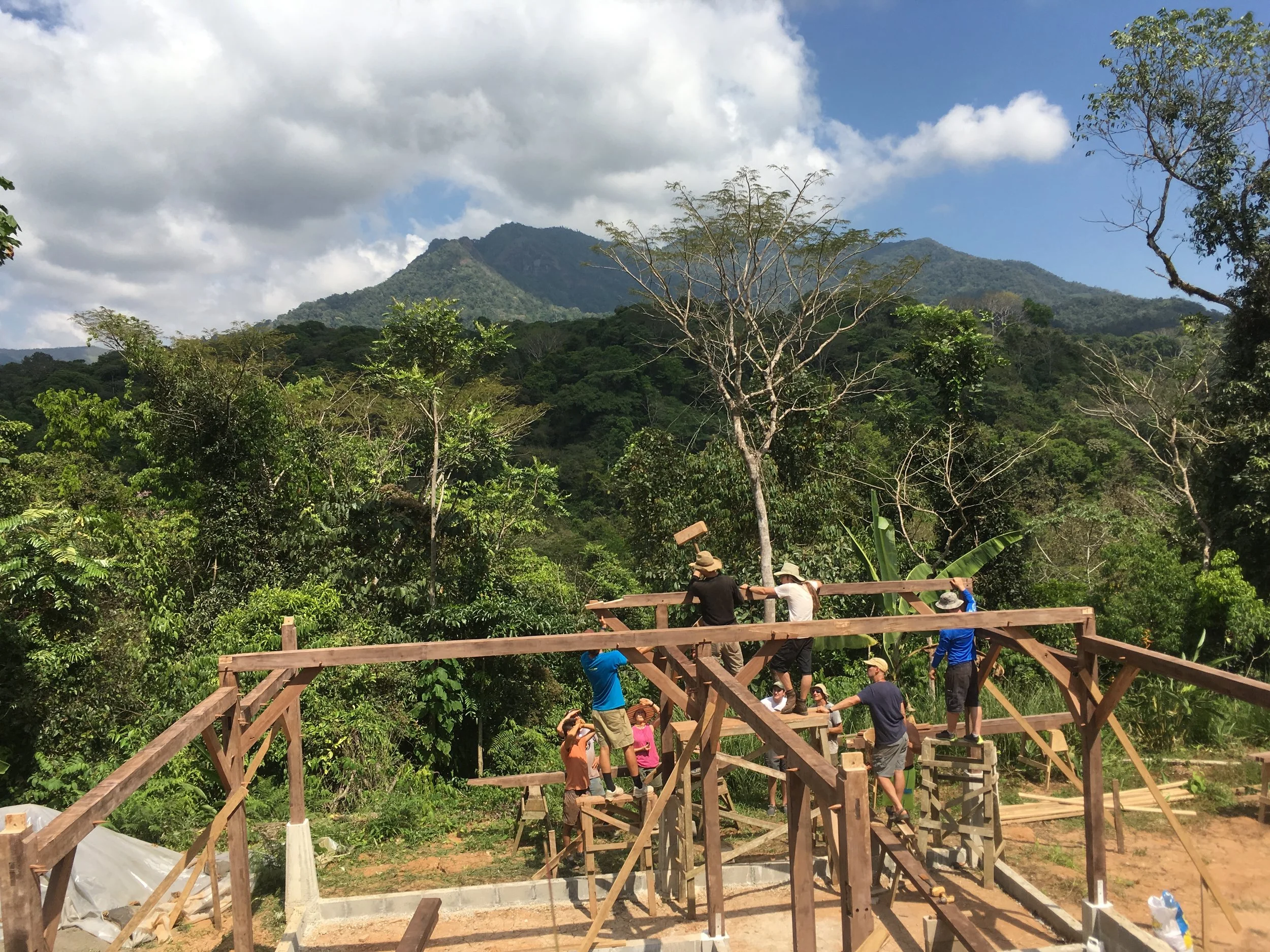
The rainforests of Central America might not be the first place that you think of when you hear the term “timber frame construction”, but with initiatives in Monteverde and Mastatal, Costa Rica is starting to make a name for itself in the region for this post and beam building technique. We started to build the infrastructure of Rancho Mastatal Sustainability Education Center in the small rural community of Mastatal, Costa Rica in 2001. At that time, we did not seriously contemplate this age-old technique of joining large timbers using mortise and tenon joinery. There were no local, established wood mills in the area in 2001 nor had we ever built anything in this manner. In addition, the portable Alaskan mills used by local sawyers are not up to the task of producing a 6'x6'x12' member straight enough to work using the square rule method that we would eventually be introduced to.

The possibility of building a timber frame structure on the Ranch's campus began to gain traction after our introduction to SKIP DEWHIRST and LIZABETH MONIZ in 2003 when these two Vermont-based builders came to Rancho Mastatal to teach a natural building workshop at our site offered through Yestermorow Design/Build School. After a successful first workshop, they began coming down every year to teach courses, though with a non-timber frame focus. Skip, a seasoned timber framer, eventually started to inquire about the possibility of sourcing long, straight, large timbers so that we could begin to incorporate this type of building into our natural building education programming and our infrastructure. During a conversation in 2006, we decided together to give it a try and started planning a 2007 workshop that would focus on the construction of a 10'x15' cabin on the edge of the rainforest. We would in due course call it La Casucha, meaning little rustic house in Spanish. We set about trying to source the cut list for the design that Skip had come up with. When we finally received the wood delivery for the class, banano was the first term I heard uttered by our talented and local worker ALEX HERNANDEZ. Banano in Spanish, as you can probably figure out, means banana in English and is not an endearing term when referring to a piece of wood to be used for the construction of a rectilinear home. It took us more time to plane the timbers to ready them for laying out the joinery than it did to actually cut the joinery with our chisels and mallets. Banano has since worked its way into our building lexicon and is uttered a bit more frequently than we'd like. But that's life in the rural tropics.

For those of you reading this in the comforts of your first world home, we do not have access to a lumber yard or a box store for our building needs. Nor at that time did we have easy access to a bandsaw mill. Almost all of the wood that we used for building purposes had to be straightened, planed and cut before even thinking about a layout. Fortunately for us and others interested in sourcing local wood, in 2010, a local man named CARLOS SOTO set up a portable bandsaw mill about a ½ mile from our town center. From that point forward we were able to more consistently obtain reasonably straight timbers and our foray into timber framing has not waned since. We now have a combined total of 9 timber frame buildings at the Ranch and in our small community. The practice has revolutionized the infrastructure of our organization and how we look at wood as a building material in our timber-rich ecosystem.
We have access to and have used many different species of wood for our projects and continue to learn about the different qualities that each have. There is much less written about the characteristics of the tropical woods that we use than the commonly used temperate species in North America. Much of our learning has happened through trial and error. Pilon, or bull's blood, is a heavy, resistant hardwood that we expected would be good for pegs until we realized how short-grained it was. Melina, a resistant softwood species originally imported from India, is a decent candidate for frames though the wood can be tricky to work with due to inconsistent grain patterns. Teak, another non-native wood increasingly common in Costa Rica, has a tendency to be knotty from some local suppliers and prone to termite damage if harvested too young, as is commonly done in our area. For most of the species that we've used, sourcing wood from older trees, keeping your chisel razor sharp and making sure that your stock of patience is full are all keys to a successful and strong frame.
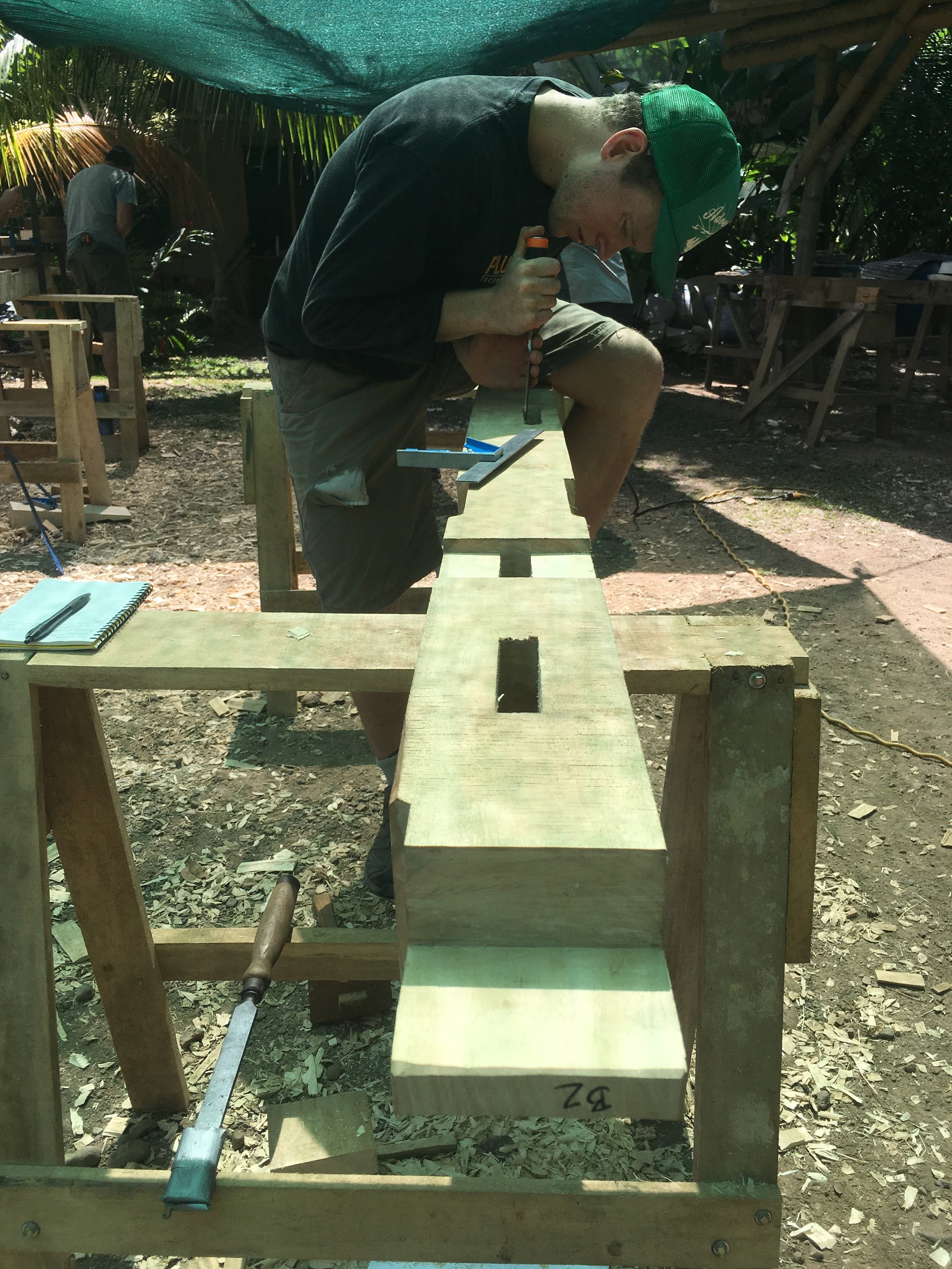
Since opening our doors in 2001, natural building has been one of our focuses. Our site is considered by some to be a leader in the relatively small natural building movement in Central America. All of our buildings are small, simple and nice on the eye with a focus on using materials that we can source in our region. To do this requires a lot of work, an abundance of persistence, and the willingness to slow down the building process. As our campus has organically grown, so has our network of people working in and interested in natural building. We've had the honor of working with and befriending a number of leaders in the sector including BILL, BENITO and ATHENA STEEN, RYAN CHIVERS, LIZ JOHNDROW, MATTS MYHRMAN, CHRIS MAGWOOD, SKIP and LIZABETH and others. We've also had the privilege of experimenting with other wonderful natural building resources such as clay, bamboo and lime that are so rich in our region. It's been a wild ride full of successes and failures but increasingly our infrastructure is starting to catch the eyes and fill the hearts of many a natural building lover with timber frame construction the crux of our building world. Even though this building technique has a shorter history in Central American compared to other parts of the world, our experience has shown that it's a relevant choice for our environ. We plan on continuing our experiments with timber frame construction and invite you to come and join us on our ride to discovering the beauty of building in the tropics. Hope to see you in Mastatal soon!
OPPORTUNITIES AT THE RANCH, IN THE REGION AND BEYOND
Japanese Natural Plastering
Interested in natural plasters? Join us in March, 2018 for a unique experience learning about Japanese Plastering at Rancho Mastatal.
Aerie Backcountry Medicine Semester in Wilderness Medicine
Join Aerie for its Semester in Wilderness Medicine at Ranch Mastatal and Montana this winter and spring. The field portion of this course runs January 31 through April 15th. The Semester offers 15 upper-division UM credits, EMT, Wilderness EMT, Swiftwater Rescue and Avalanche Rescue certifications, as well as training in LNT, wilderness survival and wilderness navigation. Students will live for a month at the Ranch, will help organize and run a free health clinic in Zapaton and will complete rotations in the Emergency Room as well as on an advanced life support ambulance. The cost for UM students, including room, board and all certifications, is approximately the same as in-state tuition at UM, and students can use their AmeriCorps awards as well as their financial aid.
Japanese Cooking at Rancho Mastatal
Love Japanese Food? Join us March 20-23 for a fantastic culinary immersion in Japanese cuisine during our Japanese Permaculture Cooking: An Introduction to Japanese Cooking and Permaculture
We hope to hear from some of you with your updates and stories! Thanks to all of you out there that make the Ranch community so strong and special.
Abrazos,
The Ranch Crew

Help Improve Workshop Access for Central Americans
Workshops, one of many forms of education, are expensive to organize, risky to run, and an immense amount of work to pull off and host well. They can also be transformational and inspirational for the participants and provide them with an amazing educational experience. We have been offering life-changing courses and classes in a vast array of areas related to sustainability for over 15 years
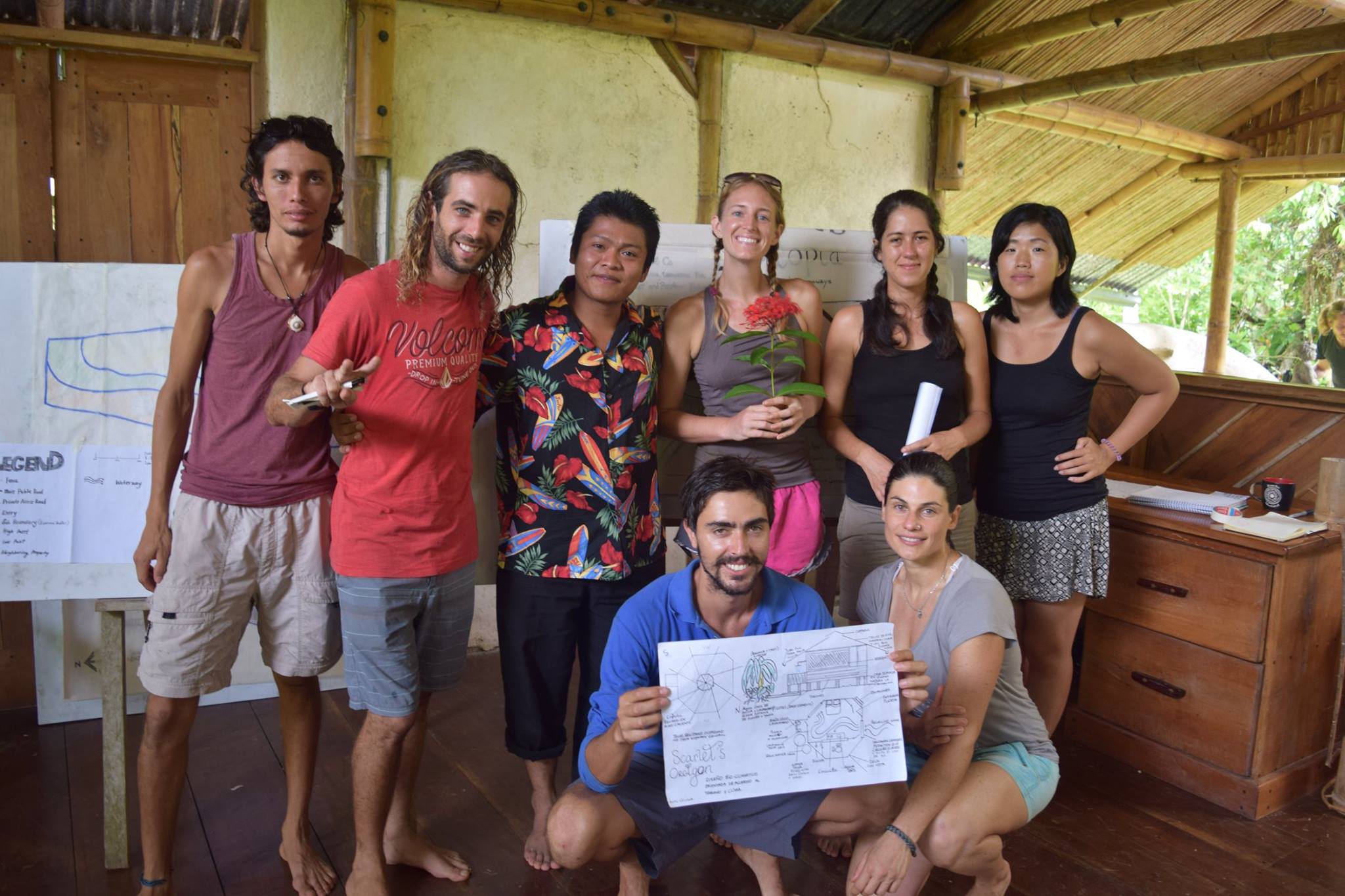
By Tim O'Hara
Workshops, one of many forms of education, are expensive to organize, risky to run, and an immense amount of work to pull off and host well. They can also be transformational and inspirational for the participants and provide them with an amazing educational experience. We have been offering life-changing courses and classes in a vast array of areas related to sustainability for over 15 years. During this time our core team has reflected on how to assure that our offerings are accessible to as many people as possible, especially low-income and future leaders in our region, without running our business into the red. It’s been a fine line to walk and one that we’ve commonly fallen on the wrong side of.
In 2015 we began a discussion about how to provide Central Americans with options to apply for economic assistance to attend permaculture, natural building and other sustainability related courses in our region. It is not uncommon for regional workshops to cost working Central Americans months of pay or more. Moreover, workshop students commonly lose income and make other sacrifices while away from their obligations at home. It’s a difficult situation that leaves these opportunities out of reach to the majority of people that are interested in them. From our observations, there are a growing number of people in our area that have a strong desire to participate in courses which will expand their horizons, expose them to valuable networking opportunities, and provide them with hard skills that they can take back to their communities. With all of this in mind, the idea of a scholarship fund began to emerge and make increasing sense.

Mastate Charitable Foundation (MCF), a small non-profit under the umbrella of the Marion Institute, achieved some important fundraising successes in 2015-16 that allowed them to create a Central American Scholarship Fund Program that provided seven partial scholarships to our Permaculture Design and Wilderness First Responder Certification courses and 2017 Apprenticeship in Sustainable Living.
Based on these favorable developments and the associated positive experiences participants had, we have been encouraged to look for ways to expand this program so as to meet the growing demand for these types of opportunities in the future.
Rancho Mastatal has already received over 20 scholarship applications for classes taking place in 2017. We believe that there are few better investments than supporting meaningful and empowering education for leaders rooted in their communities. In too many cases, populations worldwide have suffered the degradation of their communal structures from years of neglect and shrinking budgets, brain drain, worsening economic situations, and environmental atrocities that make living in certain areas of the world less viable. To rebuild will require courageous leadership, hard work and resources.
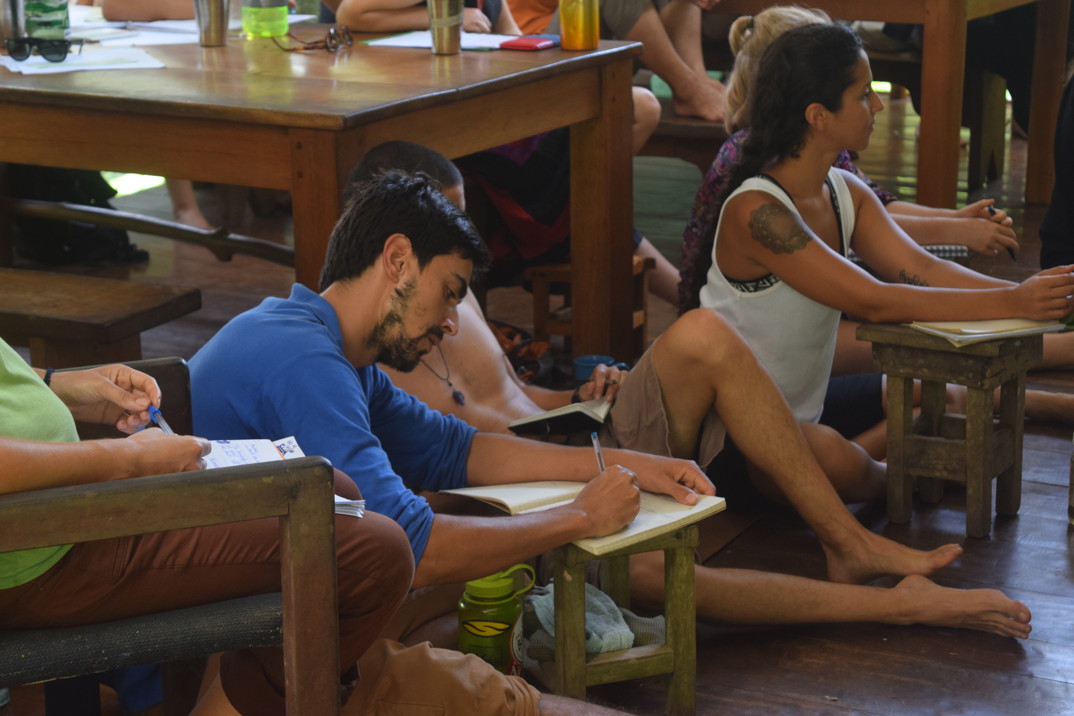
If you or someone you know would like to sponsor one or more scholarships during the upcoming calendar year please learn more about MCFs charitable work here. Tax deductible donations for the Central American Scholarship Fund can be made here. General donations can also be made on the MCF website here. The opportunities provided by your assistance can change the trajectory of not only a scholarship recipient but of their entire community. Help us to support a more sustainable future for Central America.
NEWS FROM AROUND THE PERMACULTURE COMMUNITY
We love food preservation at the Ranch, usually by means of fermentation. One of our challenges is finding good supplies, e.g. food grade, appropriate scale, etc., here in Costa Rica. But for you all in the States, you might check out Pantry Paratus for a great selection of supplies.
As our team at the Ranch looks toward the future, we've found much inspiration in the recent writings on commoning by David Bollier. We highly recommend the article Commoning as a Transformative Social Paradigm. You may also want to check out the workshop Reinventing the Commons: Social Ecosystems for Local Stewardship & Planetary Survival.
Abrazos,
The Ranch Crew
Categories
Topics
- Agriculture 6
- Agroforestry 21
- Animals 2
- Apprenticeship 19
- Appropriate Technology 6
- Backpacking 1
- Bananas 1
- Basic Pantry 4
- Biochar 1
- Books 3
- Build Your Own Home 1
- Central America 5
- Chiles 1
- Cinnamon 1
- Clay Carving 1
- Climate 2
- Climate Change 1
- Cob oven 1
- Communication 5
- Community 24
- Compost 2
- Composting Toilets 2
- Condiments 1
- Conservation 2
- Cooking 4
- Costa Rica 18
- Design 10
- Earthen Construction 10
- Eat Local 2
- Ecohome 1
- Education 9
- Environment 3
- Ethics 4
- Farm to Table 12
- Fasting 1
- Fermentation 14
- Food 22
- Food Choices 8
- Food Forest 8
- Food Processing 15
- Food Systems 12
- Gap Year 1
- Gardening 5
- Ginger Beer 1
- Harvest 2
- Health 12
- Healthy living 5
- Homemade 2
- Homestead 8
- Internet 2
Due to popular demand we have put together a document that outlines how our composting toilets are designed and made. The documents include
-dimensions for different size chambers based on number of people using it
-door design
-chamber design
We have spent years fine tuning our design and details based on what is easiest and what works. This is the culmination of building 11 different composting toilets and each time improving the design.
It is important that you understand that this design is only for the composting toilet element, it does not include any of the timber frame or bamboo framing that form the structure for the roof that covers these all over the ranch.