

BLOG
Stories, articles, and updates from the Ranch community.

Dairy Dairies: How to Make Cream Cheese with Dairy Kefir
Dairy Kefir is so interesting to me because it embodies stacking functions - like alchemy, it's possible for 1+1 to equal 4. Milk, grains (scoby) and a days time and voila, you have a delicious base product better than the milk you started with. It's now lightly carbonated, stable in the fridge, resistant to microbial incursion, lower in lactose, tangy, creamy, probiotic and great for your gut.
Dairy Dairies:
How to Make Cream Cheese
with Dairy Kefir
By Ryan Roberts
2019 Apprentice
That's right folks, we're making cheese with the champagne of yogurts.
Dairy Kefir is so interesting to me because it embodies stacking functions - like alchemy, it's possible for 1+1 to equal 4. Milk, grains (scoby) and a days time and voila, you have a delicious base product better than the milk you started with. It's now lightly carbonated, stable in the fridge, resistant to microbial incursion, lower in lactose, tangy, creamy, probiotic and great for your gut.
Furthermore, that stable base product, can be used to create a wide variety of different specialty products that carry with it those unique value-added characteristics that we impart with our time, energy and expertise. During our last diary entry, we discovered Dairy Kefir Creme Fraiche, which you can read about here . This time we'll be making luscious, spreadable and customizable cream cheese out of dairy kefir.
In our first diary entry we discussed dairy kefir's characteristics and how it's made. You may recall that the dairy kefir scoby acidifies the milk as a defensive (or offensive) measure against other microbial life, which have difficulty surviving with such a low pH.
I've discovered for myself, though I don't claim to be first, that we can utilize that acidity to accomplish what is usually done with rennet, vinegar or citric acid: separating the curds (fats) from the whey (protein). Though the exact function of this process is unknown to me, the result appears to be the same. Left for a few days at room temperature, reveals to me that the dairy kefir will separate on its own. But there's a trick!
While leaving the scoby in the milk will speed the process of acidification, we want to be able to easily separate the scoby from the curds and from the whey. We do this with a sieve that catches only the grains, allowing the kefir to flow thru to your ready container. When the kefir is left to ferment longer and it separates, it makes it difficult to capture the curds and grains separately.
Instead, I remove the grains from the dairy kefir prior to separation. The dairy kefir will continue to acidify, though slower, but you'll be left without the headache of hunting thru the curds for your grains.
So starting with the previous step, here are the steps. Now that you have your dairy kefir and scoby separate we can begin:
1. Make your dairy kefir. Follow the instructions laid out in my first blog entry here (link 1st blog).
2. Remove scoby and place in a container with fresh milk.
3. Secure cheese cloth around the rim of a tall container. Make sure there is room for whey to drip to the bottom and accumulate.
4. Pour dairy kefir into fine cheese cloth hanging over the container.

5. Wait 24 hours, allowing time for the remaining whey to drain from the curds. I repeat this process a few times till it quits draining from gravity. The remaining cream is our cream cheese. The live-culture whey can be used in a variety of ways, including starting new ferments by inoculation, using as a probiotic protein supplement, and for cooking with in soups.

Dairy Kefir Cream Cheese

Whey - delicious for soup stock
6. Spread the cream cheese out on a pan with a rubber spatula. Sprinkle in salt and your choice of herbs or dried vegetables. Imagine sun-dried tomatoes, garlic, onions… yes please!

7. Now fold the cheese onto itself, repeatedly, which helps to mix the ingredients in evenly.

8. Place in a container and serve. Buen Provecho!
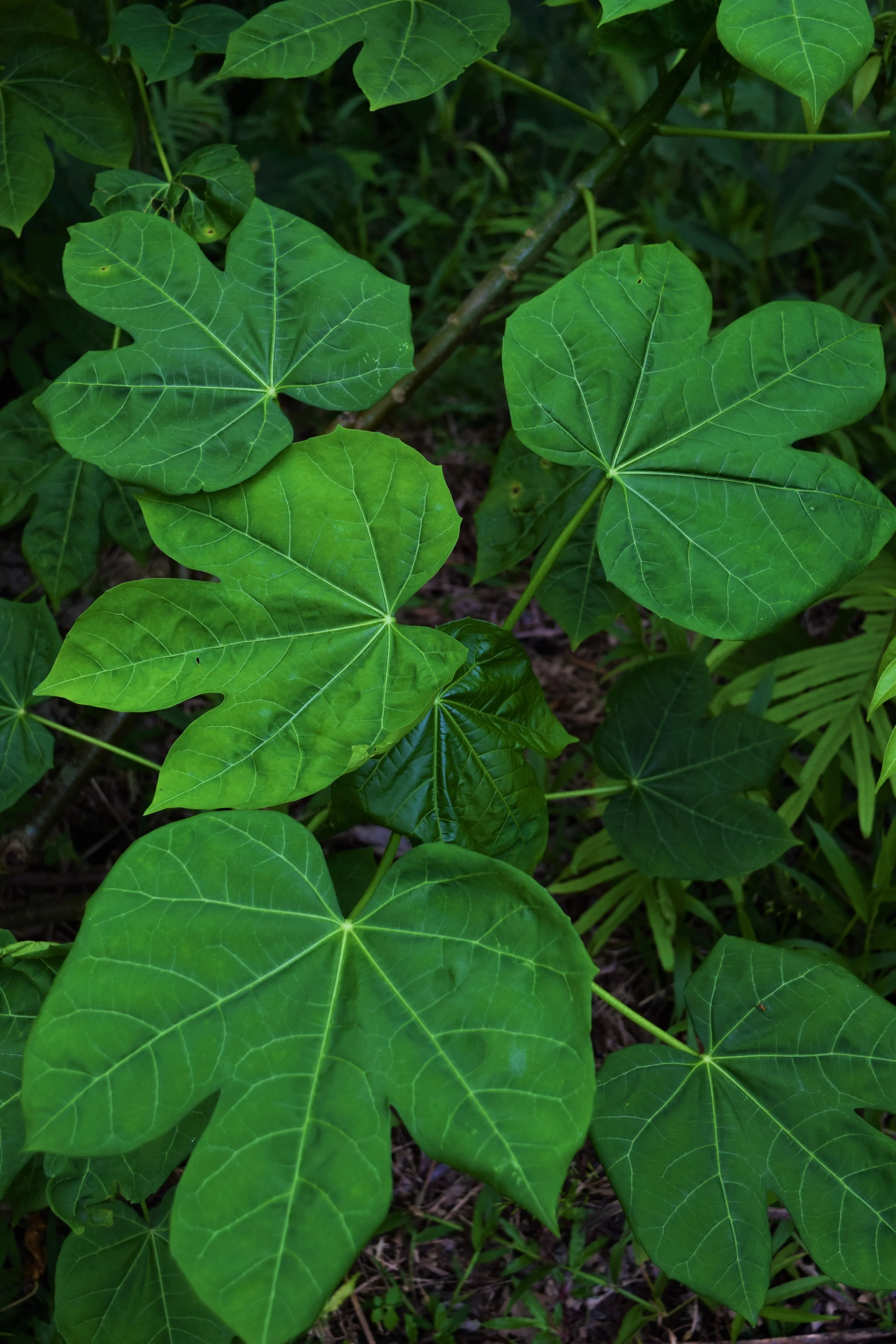
Vegetables & Greens that Thrive in the Tropical Rainy Season
When the rainy season arrived, it started with a sense of relief - dry season went on longer than expected and our trees and plants were scorching in the heat. For myself the cooler air was welcome comfort, and the rains a reminder of home and getting cozy. Mornings were beautiful with the sight of the sun rising through the dewy mist.
By Amy Dodds,
2019 Apprentice
When the rainy season arrived, it started with a sense of relief - dry season went on longer than expected and our trees and plants were scorching in the heat. For myself the cooler air was welcome comfort, and the rains a reminder of home and getting cozy. Mornings were beautiful with the sight of the sun rising through the dewy mist.
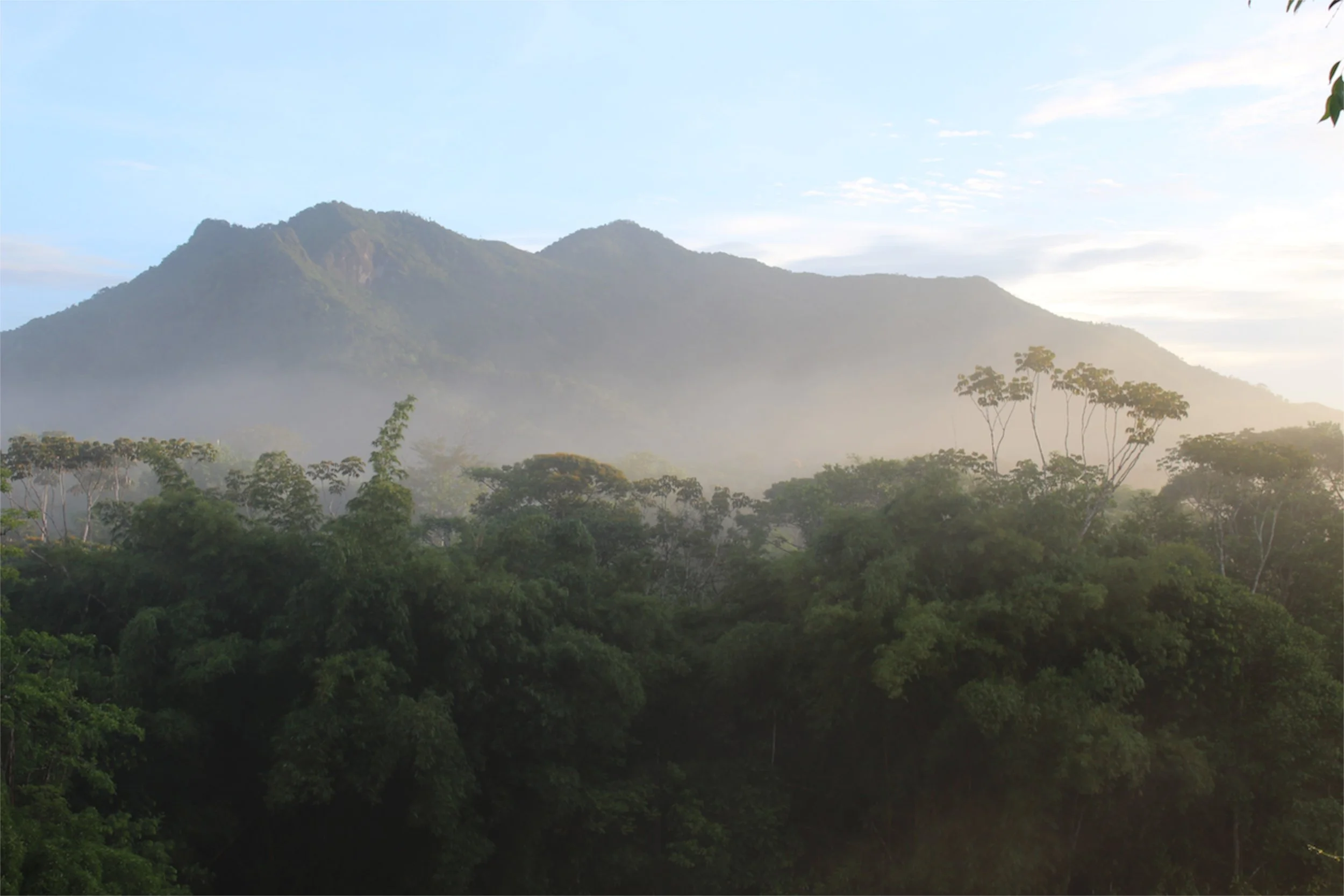
But very soon our zone one vegetable gardens with our recently planted greens began to suffer - the sheer force of the rains and the humidity brought fungal and mildew issues. Faced with the reality that our beans and delicate greens were going to die out, I thought about the potential of using cover crops, such as sweet potato, for the rest of the year. But this did not seem to fit in my idea of what permaculture asks us to do: observe and interact with the environment we are situated in and use that to our advantage. With this in mind, we at Rancho Mastatal have been planting crops that thrive both in the intense heat and thumping rain. Below are some of the most popular vegetables that we are growing in the Ranch that are suitable for the rainy season:
Cucumber:
Cucumbers have been abundant in our garden this season with us pumping out quick pickles nearly every day. Not bad for a community feeding 30-40 people daily! Thankfully, cucumbers like warm, humid weather. We grew ours by seed on a trellis to allow for more air flow and for the fruit to stay above ground.

Okra:
Described as among the most heat-tolerant vegetable species in the world. It is planted for its seed pods which can be cooked, pickled, eaten raw, or included in salads. It does become mucilaginous so do consider this if you're sensitive to the slime.
Kang Kong spinach:
This leaf green is native to southeast Asian and is delicious stir-fried with soy sauce and garlic. It is a semi aquatic plant, a creeper that grows in or near the water on moist soils, so it is ideal for our climate.

Hibiscuses:
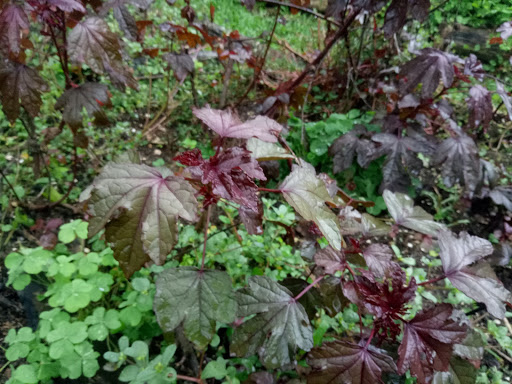
Both Green and Cranberry Hibiscus are delicious perennials that thrive in the warm and wet. They self seed easily during dry season so when the rains come you have a whole bunch of babies to keep your salad zesty and fresh. The leaves do contain oxalic acid so cannot be consumed in large, consistent quantities.
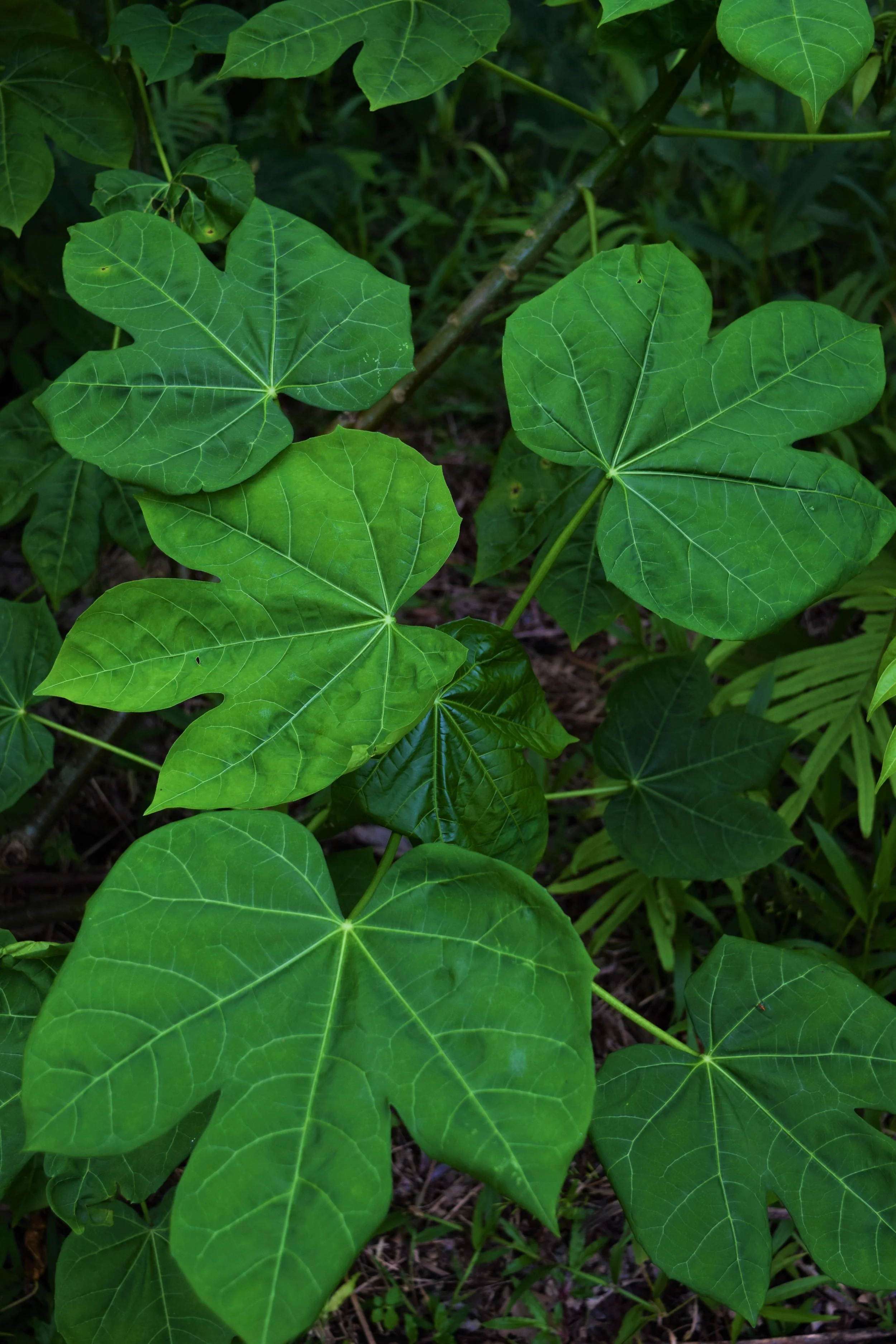
Chaya:
Also known as tree spinach this is an excellent perennial green native to Mexico. It's leaves are edible once cooked, like spinach. It's easy to propagate by cutting and loves the heavy rain.
Malabar spinach:
Malabar spinach is another heat and moisture-loving spinach-like green. The succulent leaves can be eaten both raw and cooked. We have only a few plants so we are trying to improve the population. We use a trellis to support its tendency to vine.
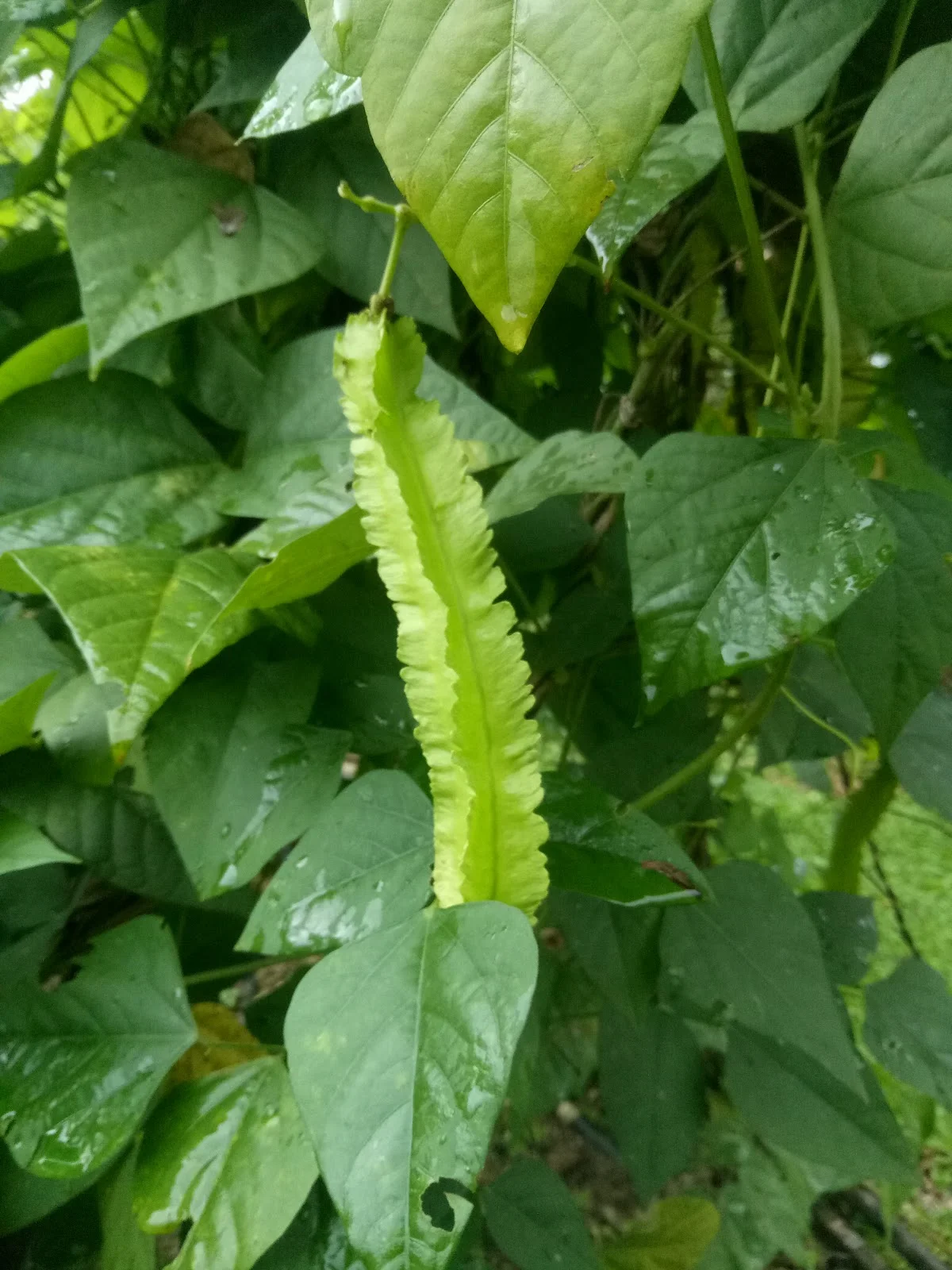
Winged bean:
Also known as Goa bean and princess beans, these are sweet protein packed vegetables that do well in heat and humidity. They can fix their own nitrogen when the bacterium Rhizobium is in the soil. They are best harvested young and tender, and great raw in a salad.
Other more delicate greens we are growing in our nursery as they don't require as much water, such as Arugula, mustard greens and Asian cabbages.
By having our covered nursery space we are able to grow things under cover that otherwise would not do so well outside, we are also experimenting with making some movable covered spaces for out outdoor garden beds….. we will update you with progress so make sure to Like and Follow us on Facebook & Instagram
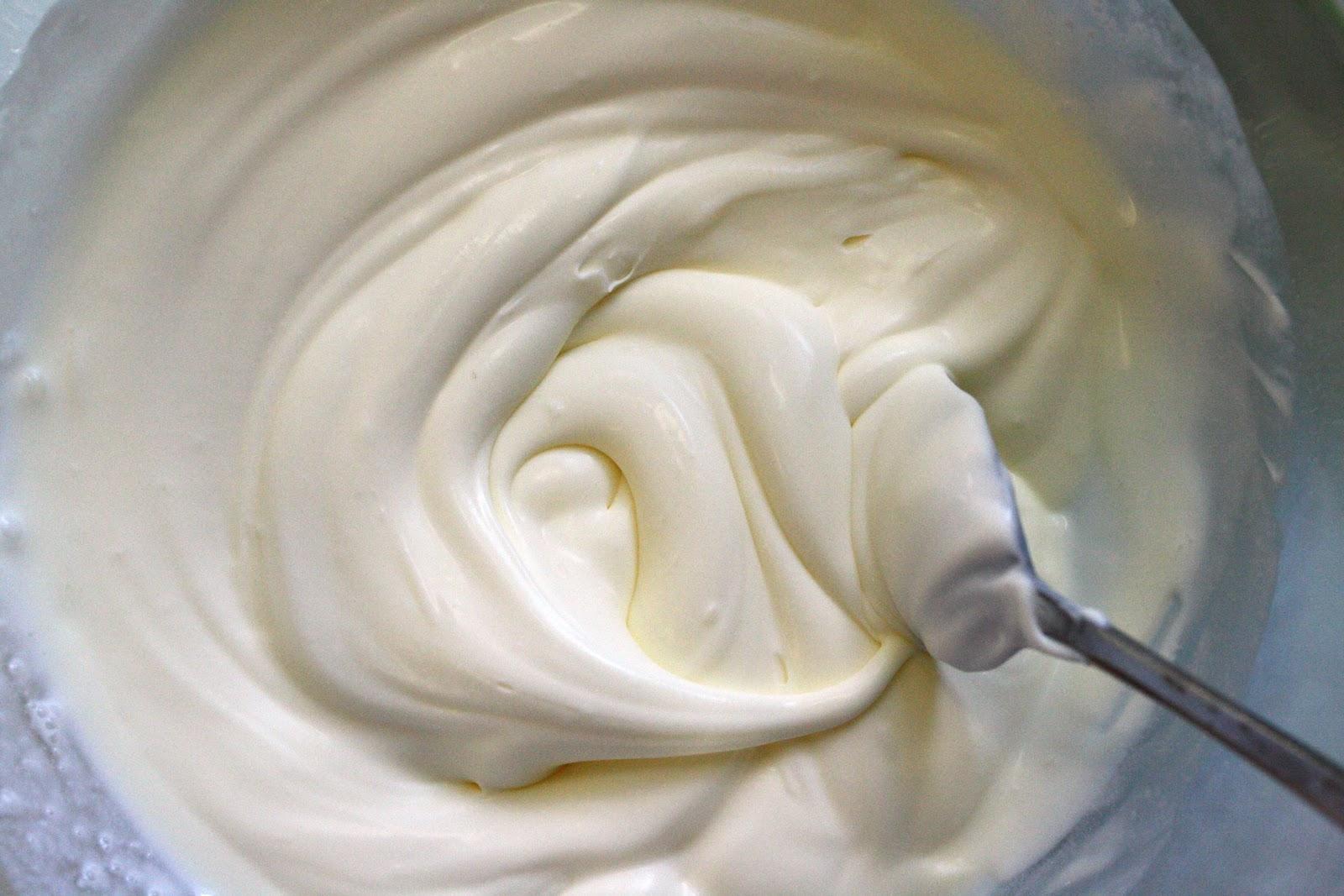
How to Make Dairy Kefir Banana Creme Fraiche
Welcome back, it's Ryan again!
In our last conversation I shared a little about dairy kefir; the history, chemistry and process for making it. This time we'll talk about an exceptional use of dairy kefir - making banana kefir creme fraiche!
Dairy Dairies: How to Make Dairy Kefir Banana Creme Fraiche
by Ryan Roberts, 2019 Apprentice
Welcome back, it's Ryan again!
In our last conversation I shared a little about dairy kefir; the history, chemistry and process for making it. This time we'll talk about an exceptional use of dairy kefir - making banana kefir creme fraiche!

Velvety smooth and udderly delicious, this topping is ideal applied atop crepes, pancakes, granola. Next time you're making a pancake breakfast-in-bed for your bae, you can blow their minds with this yummy topping.
Here's the kicker: the bi-product of this process will yield a delightfully flavorful and intensely proteus “banana-infused” whey. I recommend drinking it straight or adding it to your morning shake to spike it with great flavor and a boatload of protein.
If at this point your finding yourself lost on the fundamentals of dairy kefir, check out my first installment of Dairy Diaries here, before proceeding to the next section.
So diving back into the science for a moment; Dairy kefir is a specialized symbiotic colony of organisms, favoring lactose sugars, and adapted to consume them, but this doesn't preclude it from utilizing what sugars are available. Bananas are intensely sweet, potassium rich and full of minerals, making it a fine fuel for your SCOBY friends. The process will break down and alter the banana, unlocking new flavors and heightening nutritional qualities.
This process will take you through the steps of making dairy kefir first, then walk you through separating your two products and processing them to completion.
Ingredients
- Whole organic milk
- Spoonful of dairy kefir SCOBY (or “grains”)
- Glass container for your next batch
- Two medium-sized bowls: one for your creme fraiche, the other for your whey
- Spoon
- Funnel (optional)
- Fine mesh strainer
- Hand blender or food processor (optional)
Process
1. Sterilize your container, using boiling water for your first clean.
2. Chop bananas to your desired quantity and thickness. I chose to use three small bananas. Note that increasing the surface area of your banana by chopping it will make it easier for the SCOBY to access the sugars in the banana. In this step, I quartered the bananas then chopped them horizonally into thin pizza slices. Put the bananas into your container.


3. Put a spoon-full of dairy kefir SCOBY into your container.

4. Pour your organic whole milk into your container, taking care to minimize splashing.

5. Place a lid lightly over the container, creating only a light seal to allow CO2 to escape. Let sit for 12 - 24 hours depending on temperature. Warmer temperatures will yield a faster process. The goal here is to stimulate the mixture to self-separate into the whey on the bottom and the cream on top. It looks funky, but don't sweat it. The cream along with the bananas will become our creme fraiche and the whey, whatever you want to do with it.

6. Pour the whole mixture into a fine mesh strainer. Let the whey drip through the mesh, which will happen mostly on it's own because the cream is now chemically separated from the whey. Light stirring is ok, but seek to minimize the amount of cream that falls through the strainer!
7. Now hunt for your SCOBYs amongst the cream! The goal of this step is different from that of making plain dairy kefir. We want to recover our SCOBY, but we don't want our banana kefir cream to fall through into the whey, so we place our bowl under the strainer now. You may use a gentle scooping motion along the bottom of the strainer to find your grains. Whatever cream falls through should be added back once you've recovered your SCOBY babies. This step can be challenging and awkward.

8. Place your SCOBYs back into their home container, refill it with milk and lightly stir the milk with a clean spoon.
9. Now we have whey in one bowl, cream and bananas in the other and our SCOBYs happily in their new batch of milk.
10. The final step is optional and that is blending the mix. You can certainly enjoy the cream and banana bits mixture at this point, or you can thoroughly blend the bananas and the cream until you produce a uniform appearance. This final step is what yields your creme fraiche.

11. Keep refrigerated till consumption.
That concludes this little adventure into this novel dairy kefir product. Next installment, we'll be exploring a savory herbal cream cheese, YUM!
Have you always wanted to learn about SCOBYs, fermentation or brewing? Check out our upcoming workshops for anything that might be of interest!
Cultured Butter & the Culture of Butter
When my dad was in third grade, his class followed the cirriculum laid out in a workbook. In times of boredom and monoteny, he would flip ahead and learn new material the class was soon to arrive at. One day he came across a particularly interesting bit: a tongue twister. My dad spent the next six weeks practicing the tongue twister in secrecy of his classmates until, finally, the class caught up to that point in the workbook. The teacher gave each student the opportunity to recite the tongue twister from the book, and each student who attempted this tongue twister stumbled through a slew of "Betty botta buddhas," until it was my dad's opportunity.
Cultured Butter & the Culture of Butter

When my dad was in third grade, his class followed the curriculum laid out in a workbook. In times of boredom and monotony, he would flip ahead and learn new material the class was soon to arrive at. One day he came across a particularly interesting bit: a tongue twister. My dad spent the next six weeks practicing the tongue twister in secrecy of his classmates until, finally, the class caught up to that point in the workbook. The teacher gave each student the opportunity to recite the tongue twister from the book, and each student who attempted this tongue twister stumbled through a slew of "Betty botta buddhas," until it was my dad's opportunity. Without even glancing at the page, he busted out the tongue twister:
"Betty bought a bit of butter for the batter, but said she, 'This butter is bitter. If I'd bought a bit of better butter it would have made the butter better.'"
With impeccable clarity and speed, my dad enunciated each syllable with the swiftness of an engine. Every kid's jaw in the class dropped.
My dad told me this story when I was a kid, and at that time, it was just a funny story. Now having spent some time at the Ranch where foresight, accountability, and sustainability are key, the story has adopted some unique and colorful undertones.
We prepare a lot of our own food at the Ranch. Dark, leafy and salad greens are grown and processed right around our kitchens. Jackfruits, soncoyas, and mamonchinos are fruits grown in our orchards and slipped into our diets. We grow many of the ingredients processed into red curries, our chickens lay a portion of our own eggs and we even grate and make coconut milk. A lot of time and intention goes behind the scenes of preparing one of the 22,000 meals the Ranch serves on a yearly basis. The latest ingredient to pass through our team's newly established food processing kitchen is cultured butter.

Although butter whipping is a simple business, conventional agricultural processes have complicated matters. Imagery of sprawling fields with shady orange trees and golden sunsets are merely a misleading, commercial scheme that draws in consumers. If the same Betty from my dad's tongue twister had seen a butter package of a concentrated animal feeding operation, she may have consulted her local dairy neighbor instead.
In the campo of Costa Rica, we are fortunate enough to have two neighbors that milk their cows and preserve the cream with a microbial culture. Those two neighbors are Daisy, and coincidentally enough, Betty, who does not make bitter butter at all, but rather fresh butter. When we walk down the road, we can see that their land is integrated in Costa Rica's biological reserves, or protected forest lands that weave through the countryside's agricultural sites. A low intensive dairy system means that farmers can give more attention to the quality of the ambient environment. The flavor of the ecology shines through in four simple steps of processing sour creme into butter.
Step 1: Buy sour cream from your local dairy neighbor.
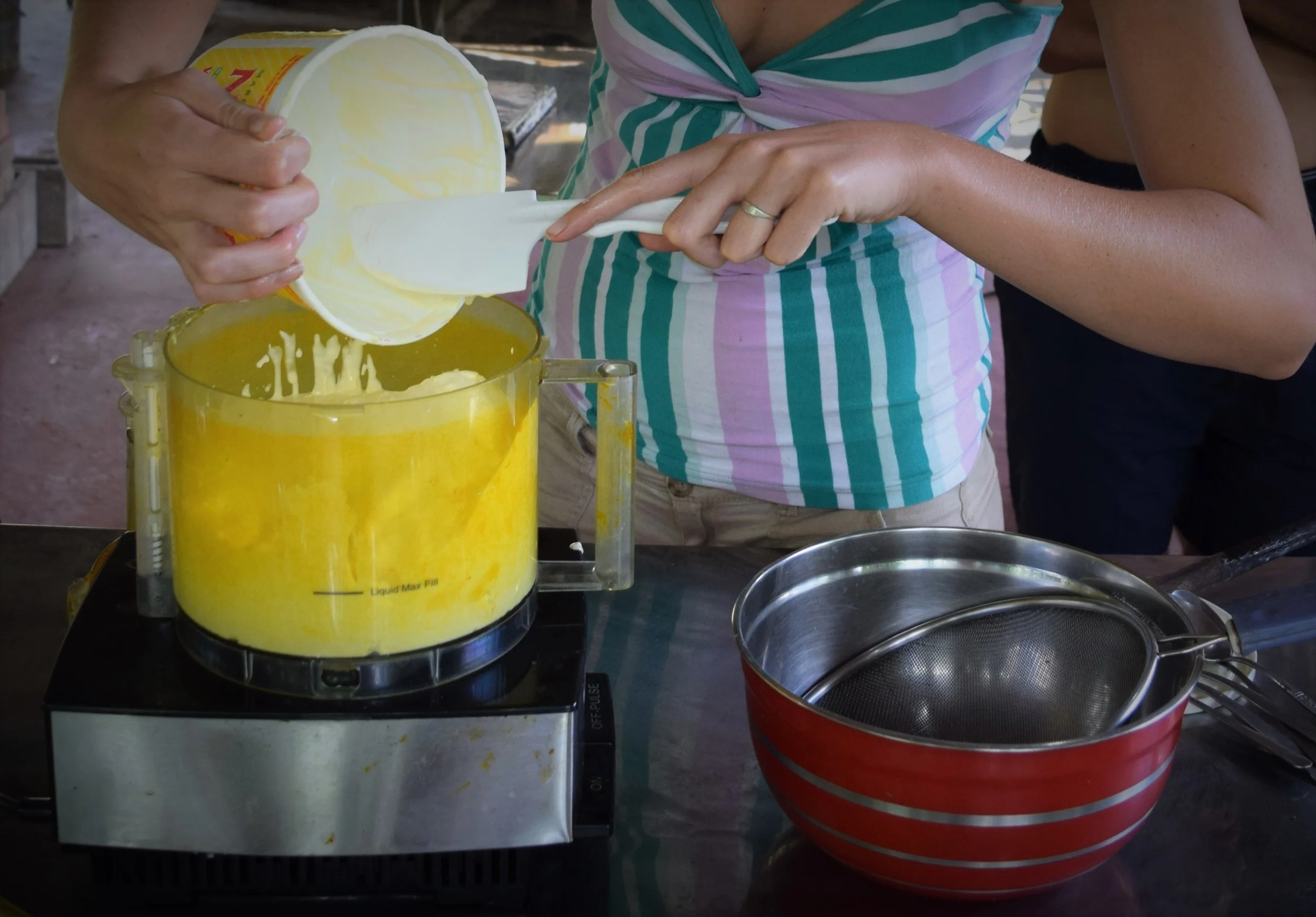
Step 2: Whip the creme with the keystone appliance, the food processor, until it has thickened.
Step 3: Pour the product through a food strainer. This separates a rich, cultured butter from the liquid, buttermilk.
Step 4: Add salt to the butter and use a spoon to press out any excess buttermilk and drain. Once this process is complete, you'll be left with your very own cultured butter product.

Freshly sourced cultured butter has revealed some illuminating assets to Ranch food culture. Like everything else served from our kitchens, the butter is delicious. It's a medium for live microbes that actually form symbiotic relationships with the microbes present in your gut. It's produced by our neighbors, so we are able to see the land and the cows and ensure we are sourcing responsibly. A simple price comparison even reveals that our homemade, cultured butter is less expensive than supermarket butter by about $1 per stick.
These are all great reasons to process your own butter, but the most important relates to reading and learning from patterns. When my dad was in third grade, he predicted the pattern laid out by the structure of his class. Each day, the class moved forward in the workbook, all of the information having been laid out before him. Patterns similarly exist in the ways cultures are interacting with their foods. We can read these patterns and change our behavior to make sure we are eating foods that are healthy for both our bodies and our land.
In 1963, maybe Betty going to the store to buy butter was the growing custom because social norms suggested that this is how the batter comes out best. As proof of the tongue twister, the only butter bought was an obviously unsatisfactory product. Global patterns in the vast mechanization of agriculture without cultural or environmental conscientiousness has contributed to their degradation. Industrializing a simple process such as butter-making means that the vitality in microbial life is significantly decreased, land ethics are overlooked, and the wheels of economic engine and government subsidies can keep the price of this process competitively low. Plus, the taste is never fresh, never pure.
Patterns are not just ways of reading into the past, they are tools for looking ahead to the future. As people make more conscience decisions about where they source their foods, they regain their food sovereignty. They can be a part of a cultural and environmental shift that heals their bodies, waterways, soils, and communities. The pattern of regeneration is exciting enough that reintroducing skills like simple butter making become more appealing. When we sit down together for a Ranch meal, we recognize a labor of love that goes into every ingredient.
In questions surrounding the ethics of sustainability, answers are never obvious. As we navigate these territories, we are met with the awesome challenge of reconstructing a culture that respects land and people. Sometimes that means we just want our butter to taste better! Whether that culture come from your food processing practices or your live microbes, it's a robust tool in assuring that nobody be left with bitter butter.
NEWS AND NOTES
Have you ever wanted to build your own home? Just bought a piece of land in Costa Rica and want to create a jungle paradise? Well in 2017 we have the classes you need to re-skill and build your place in this world.
We also have a few spots left in our Sustainability Primer program. If you know anyone interested in joining us please spread the word!
Abrazos,
The Ranch Crew

Lard, the new Super Food?
Everything we eat at the Ranch is homemade or made from scratch as we'd say on the east coast of the United States. It takes a lot of time, and is made with a lot of love, which makes it taste even better. Since I am someone who cares a lot about what is going into my body, I became very interested in how our food is grown, where it is coming from, and how it is being cooked.
Lard, the new Super Food?
Hola! My name is Jessica, and I am one of the five apprentices of the 2016 crew. Health and food are two very important topics I hold dear to my heart and are in my everyday thoughts. Essentially these are some of the main reasons why I decided to come to Costa Rica and apply for the 11 month apprenticeship at Rancho Mastatal. Some of my many roles here as an apprentice are harvesting, processing, and creating the delicious food we serve here at the ranch.
Everything we eat at the Ranch is homemade or made from scratch as we'd say on the east coast of the United States. It takes a lot of time, and is made with a lot of love, which makes it taste even better. Since I am someone who cares a lot about what is going into my body, I became very interested in how our food is grown, where it is coming from, and how it is being cooked.
During my first interview with Tim and Robin in the summer of 2014, they mentioned that the food at the Ranch is cooked in lard within the mix of all the details about the apprenticeship. After our hour long interview, the only thing that left me puzzled was the conversation on lard, and why would a sustainable center that grows such healthy food cook with lard?
What do you think about when you hear the word, Lard? Before coming to Rancho Mastatal I thought of lard as a sludgy, disgusting fat that was seemingly the most unhealthy thing you could put into your body and would make you obese. The name alone sent chills down my spine. All I could think about was a Family Guy episode where Peter chugged a whole barrel of lard and went from fit, skinny Peter back to overweight Peter. I never pictured cooking with or eating lard in my future. Tim assured me that the Ranch did their research on lard and it was the most sustainable and practical option for them. Feeling intrigued to learn more about this mysterious lard, I decided to dive into the research and see for myself. Was lard really unhealthy? Could it be a sustainable cooking oil? How does it compare to other cooking oils? These were some of the questions I set out to answer.
While conducting research using the Ranch's food cookbooks and articles about lard, I learned about the American history of lard. Did you know a hundred years ago lard was found in every household and was a big money maker within the meat packing industry? At the time, animal fats were the main use for all pan frying, until the invention of the light bulb. What does the light bulb have to do with lard?

Well, Procter & Gamble, a candle and soap making company, had all this extra oil from dropping candle sales and they needed to find a way to use the extra cotton seed oil. In 1907 a German chemist, E. C. Kayer came to Procter & Gambles' company with his invention of hydrogenated cotton seed oil. It looked and cooked like lard and it was cheaper than the American household staple. They called it Crisco. With an amazing marketing roll-out including advertisements, demonstrations, and free cookbooks promoting the use and purchase of this hydrogenated vegetable shortening, soon Crisco was all anyone was talking about. To top it off, in the 1950s, scientists claimed saturated fats, such as lard, caused heart disease which made consumers switch to the new vegetable shortening substitute.
Most of America soon ditched lard from their homes and restaurants. Today's health studies now say having a moderate consumption of saturated fat in your diet is not unhealthy. For example, coconut oil is a popular oil to cook with today and it has an 86% saturated fat level.
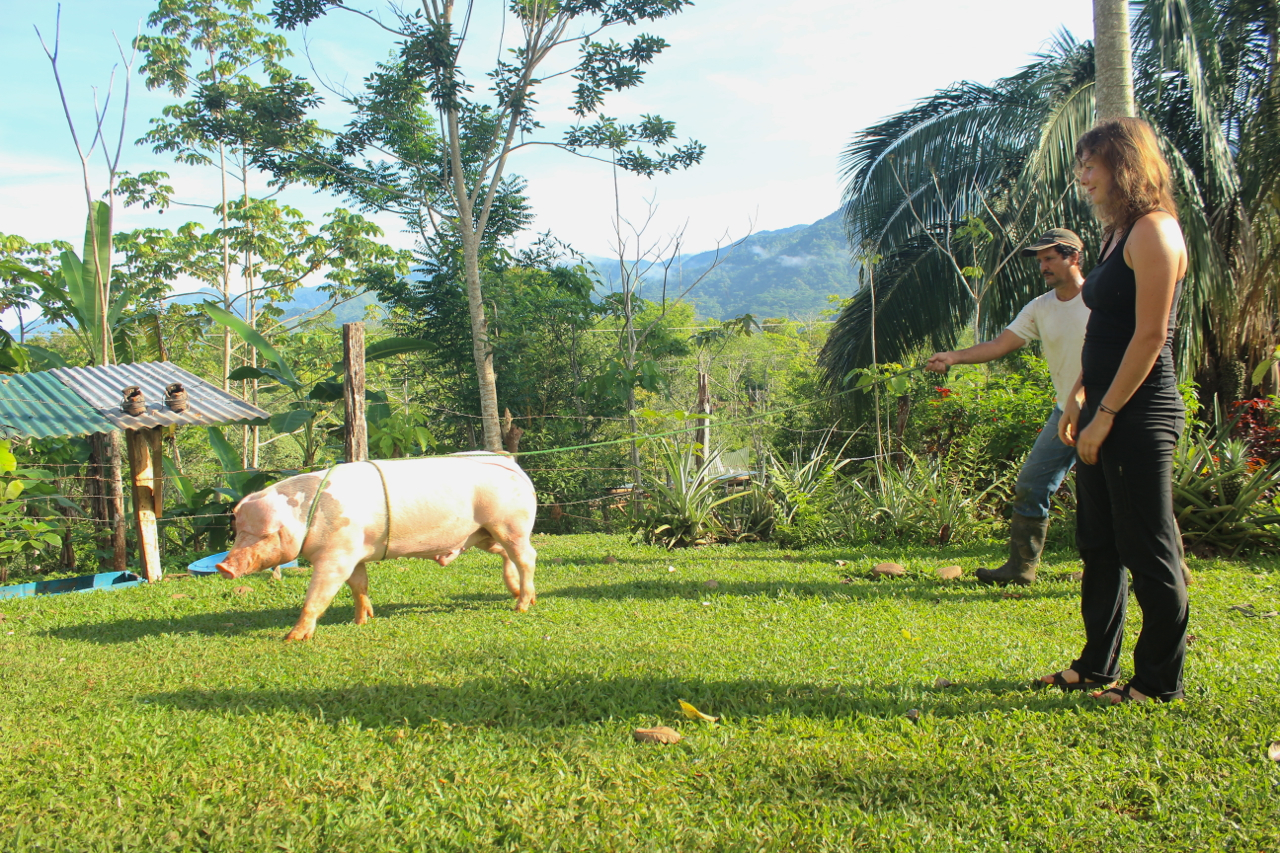
Given what we know now; why is lard the best choice for Rancho Mastatal and its guests? First, lard is local! We know exactly where it is coming from and it is very fresh. Secondly, we are supporting a small butcher in Puriscal, the closest town to Mastatal. The Ranch does all we can to eat only local and support small businesses. And finally, and most importantly, the taste test. The taste of a homemade falafel or yuca bammie made with pig lard is in no comparison to one cooked in sunflower seed oil. In a normal week, our meals are made with only vegetarian ingredients and the cooked dishes are sauteed in our local pig lard. We have all kinds of guests visiting the ranch for a tour or to take one of our amazing workshops, and between 5-10% of them are vegetarian or vegan. We always ask our guests if they have any dietary restrictions, some decide to opt out of trying our local based diet and instead have their food cooked in a mass produced sunflower seed oil. As a former vegetarian, I understand the reasons to not eat meat products, especially when you don't know where it is coming from.
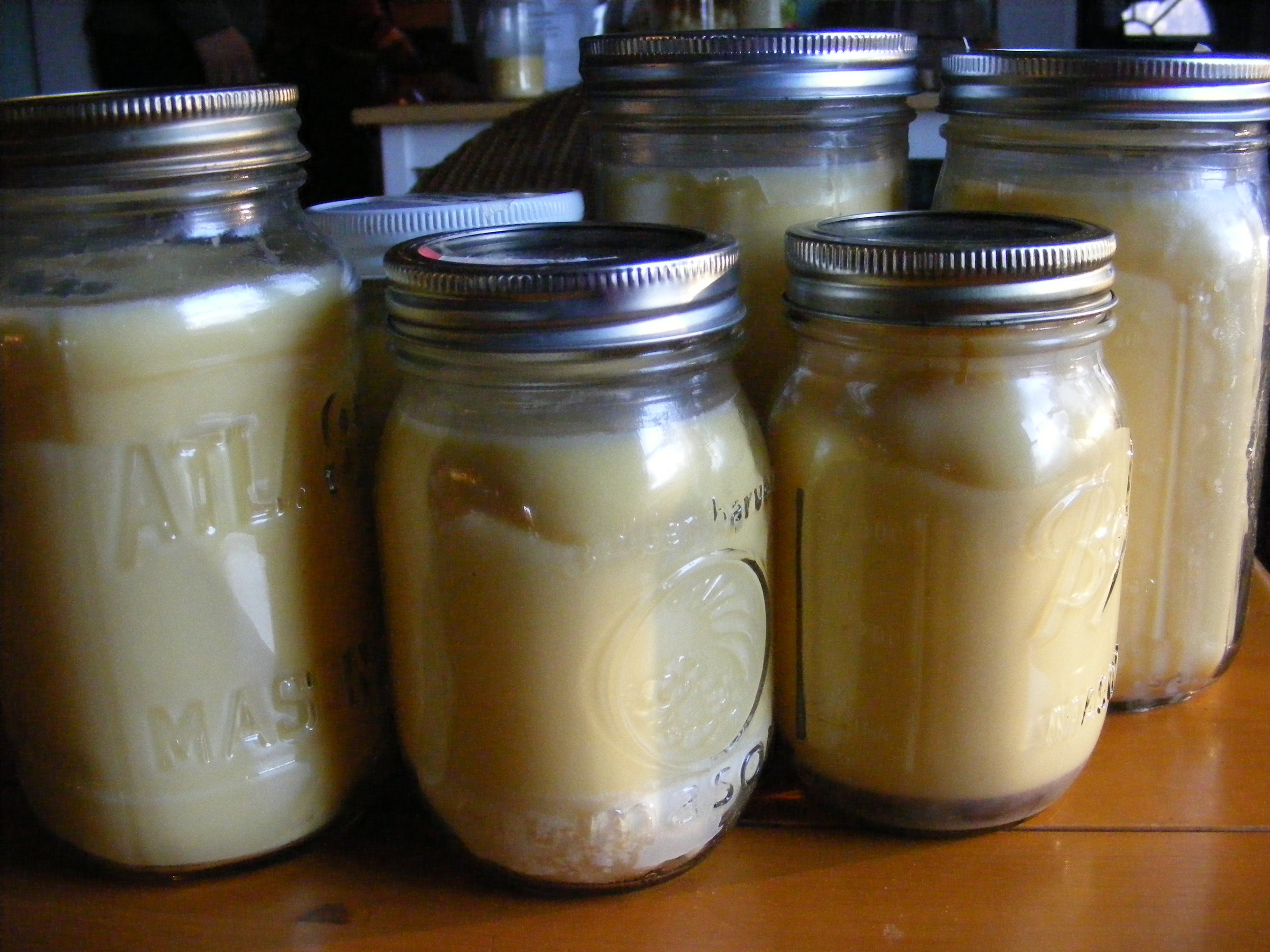
Here at the Ranch we know where everything we eat comes from and it feels good knowing we are eating as sustainable as possible. Pig lard has a respectable 40% saturated fat and 45% unsaturated fat compared to butter which has a 60% saturated fat and 23% unsaturated fat. For our vegetarian and vegan guests, we use non GMO sunflower seed oil which has 13% saturated fat, 24% unsaturated fat, and a not so well known active ingredient TBHQ- 0.02%.
TBHQ is a chemical cleaning agent and stabilizer to keep the oil from going rancid due to the low percentage of saturated fat in the vegetable oil. Most vegetable oils have low saturated fats and need to be chemically altered to preserve the oil, especially oils that are okay to use at higher cooking temperatures. Lard on the other hand can sit at a room temperature without any alterations. With limited knowledge about the mysterious TBHQ and its health risks, the decision to cook with local lard seems to be a no-brain-er.
Since the Ranch takes such pride in what we grow, source, process, cook and eat, I thought it would be only fair to bring awareness to our future guests and reveal the reasoning behind why we cook our meals with pig lard. It feels good knowing our food is always fresh, we know where it's coming from, and have the opportunity to build strong relationships with the people who grow and process the food we put on our plate. With one bite of our homemade corn empanadas cooked to a crispy perfection, you will understand our love for locally sourced lard.
Resources:
http://www.foodandwine.com/articles/lard-the-new-health-food
http://www.npr.org/blogs/money/2012/02/03/146356117/who-killed-lard
On Food and Cooking: The science and Lore of the Kitchen, Pages 799-802, Harold McGee
NEWS AND NOTES
We are planning some exciting new workshops for 2017 on plant propagation, soil re-mineralization, forestry and more. Keep an eye on the calendar for new additions. We still have space in the following workshops.
We also have a few spots left in our Sustainability Primer program. If you know anyone interested in joining us please spread the word!
Abrazos,
The Ranch Crew
Categories
Topics
- Agriculture 6
- Agroforestry 21
- Animals 2
- Apprenticeship 19
- Appropriate Technology 6
- Backpacking 1
- Bananas 1
- Basic Pantry 4
- Biochar 1
- Books 3
- Build Your Own Home 1
- Central America 5
- Chiles 1
- Cinnamon 1
- Clay Carving 1
- Climate 2
- Climate Change 1
- Cob oven 1
- Communication 5
- Community 24
- Compost 2
- Composting Toilets 2
- Condiments 1
- Conservation 2
- Cooking 4
- Costa Rica 18
- Design 10
- Earthen Construction 10
- Eat Local 2
- Ecohome 1
- Education 9
- Environment 3
- Ethics 4
- Farm to Table 12
- Fasting 1
- Fermentation 14
- Food 22
- Food Choices 8
- Food Forest 8
- Food Processing 15
- Food Systems 12
- Gap Year 1
- Gardening 5
- Ginger Beer 1
- Harvest 2
- Health 12
- Healthy living 5
- Homemade 2
- Homestead 8
- Internet 2