

BLOG
Stories, articles, and updates from the Ranch community.

The Ecstasy of Cheese: A Meditation on Our Conceptions of Value
After only a few months living at the Ranch, I have observed my experience of eating good cheese transform from mundane to something approaching ecstasy. This has lead me to reflect on our personal and collective conceptions of value.
By 2023 apprentice, Sedona Lewis
One evening the apprentices were enjoying dinner when Sam, a core team member, approached us with a gift. From our reaction, a bystander might have assumed he unveiled something approximating a winning lottery ticket. However our hoots and hollars were in response to, simply, cheese.
After only a few months living at the Ranch, I have observed my experience of eating good cheese transform from mundane to something approaching ecstasy. This has lead me to reflect on our personal and collective conceptions of value.
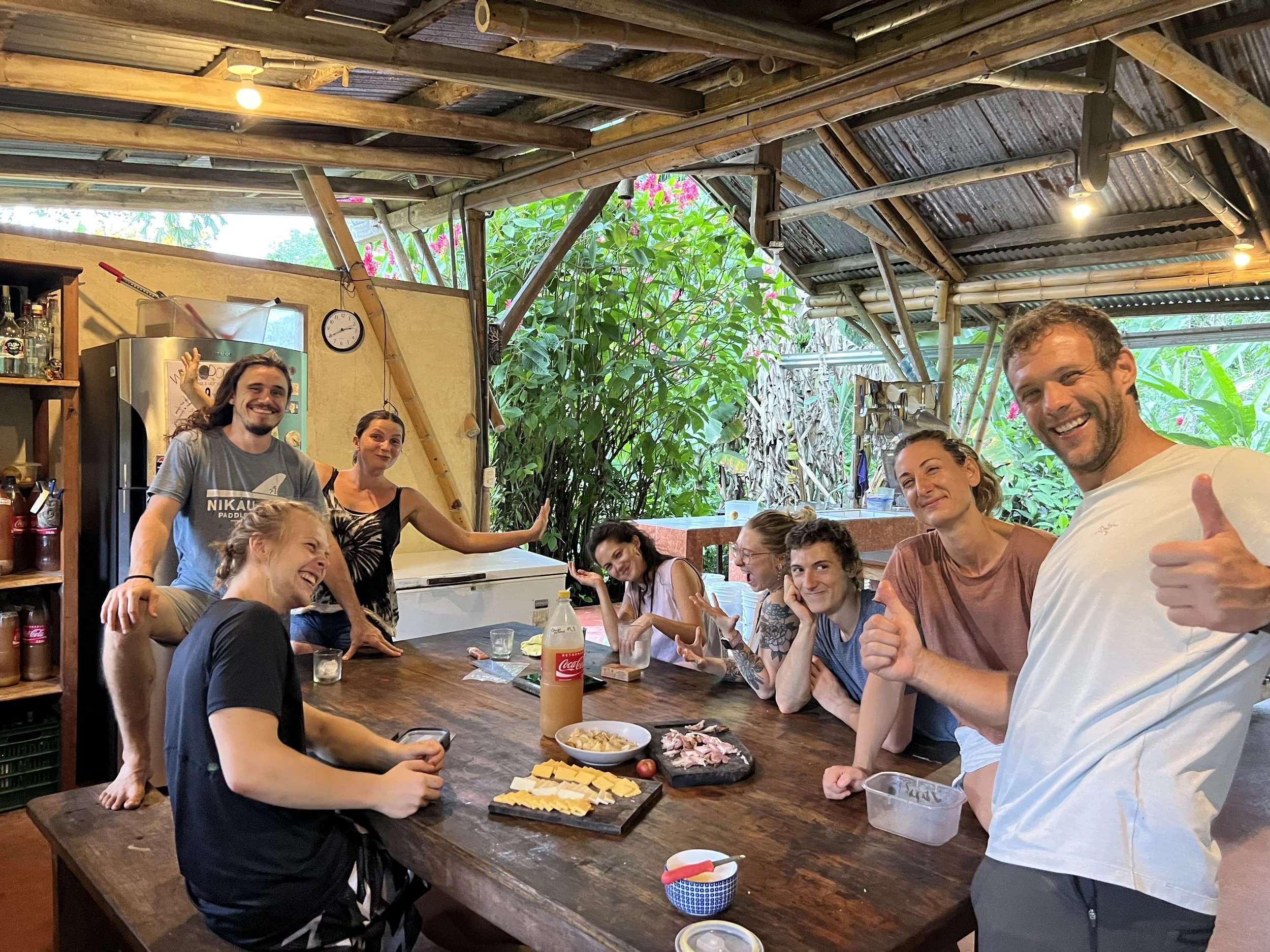
Apprentices excited about cheese!
A Permaculture Diet
As a society we have grown accustomed to waltzing into a grocery store and purchasing virtually any vegetable, fruit, grain, nut, or seed we desire. Globalization has artificially eliminated scarcity and seasonality from our lives; we are living in an age of unprecedented abundance.

Seasonal fruits off the farm
In Mastatal, there is no grocery store. Aside from the local bar and the Soda, a small restaurant, the closest store is forty minutes by car. Despite our isolation, the Ranch is a place of remarkable abundance. However different from the globalized, western sort of 'abundance' referenced earlier.
We are lucky to operate in a part of the world which provides a prolific variety of edible and otherwise useful plants. Things we can't produce ourselves are mostly purchased from our neighbors, such as milk, eggs, and pork. Nearly all other vegetables, fruits, and other food items sourced regionally. Thanks to the hard work of our meal coordinators (mostly Robin), over 80% of the calories we consume are sourced within fifty miles of the Ranch.
We maintain a sense of place within our diets; during meal times we are engaging with our surroundings. No longer are we enjoying cheese from France, salami from Italy, and wine from Spain in the same meal. We're embracing the here through our food.
In keeping with the ethics of Permaculture, this means we are dependent on and invested in the health of our local and regional communities. The variation in our meals comes with the seasons, and our health is linked to that of our environment. I have observed that this way of interacting with food has changed the way I think about, and value, my food.

Sedona with her morning harvest of salad greens
Our Conceptions of Value
Olive oil, butter, cheese, meat, bread, and nuts are examples of foods that many of us used to consume almost daily. Delicious, yes, but not extraordinary, and only worth what the price tag says at the store. Now, several months into the apprenticeship, items like these have become precious.
During my days splitting bamboo, sifting clay, and working in the orchards, I've had the opportunity to ponder the following questions. I invite you to consider them for yourself before reading my list of ideas.
What makes something valuable?
Perhaps...
An item's relative availability
The effort required to acquire the item
The relative necessity (a bowl of rice when you've just eaten a meal and a bowl of rice when you haven't eaten for 2 days may as well be two completely different items)
Personal preferences/tastes
The collective value structure and social narrative associated with that item
The experiential and monetary value of a food item can be somewhat arbitrary...
Of course it's important to note and remember that our species evolved under conditions in which sufficient nutrition was not the norm. It makes sense why nutrient dense foods such as cheese, meat, and honey were and are sought after and treasured.
But still, we invest a lot of resources shipping things like salad greens, spices, and liquors around the world. Is the Italian wine really that much better? Couldn't the same caloric and satisfactory needs be met with items produced regionally? It seems that there is something deeper influencing our values surrounding food.
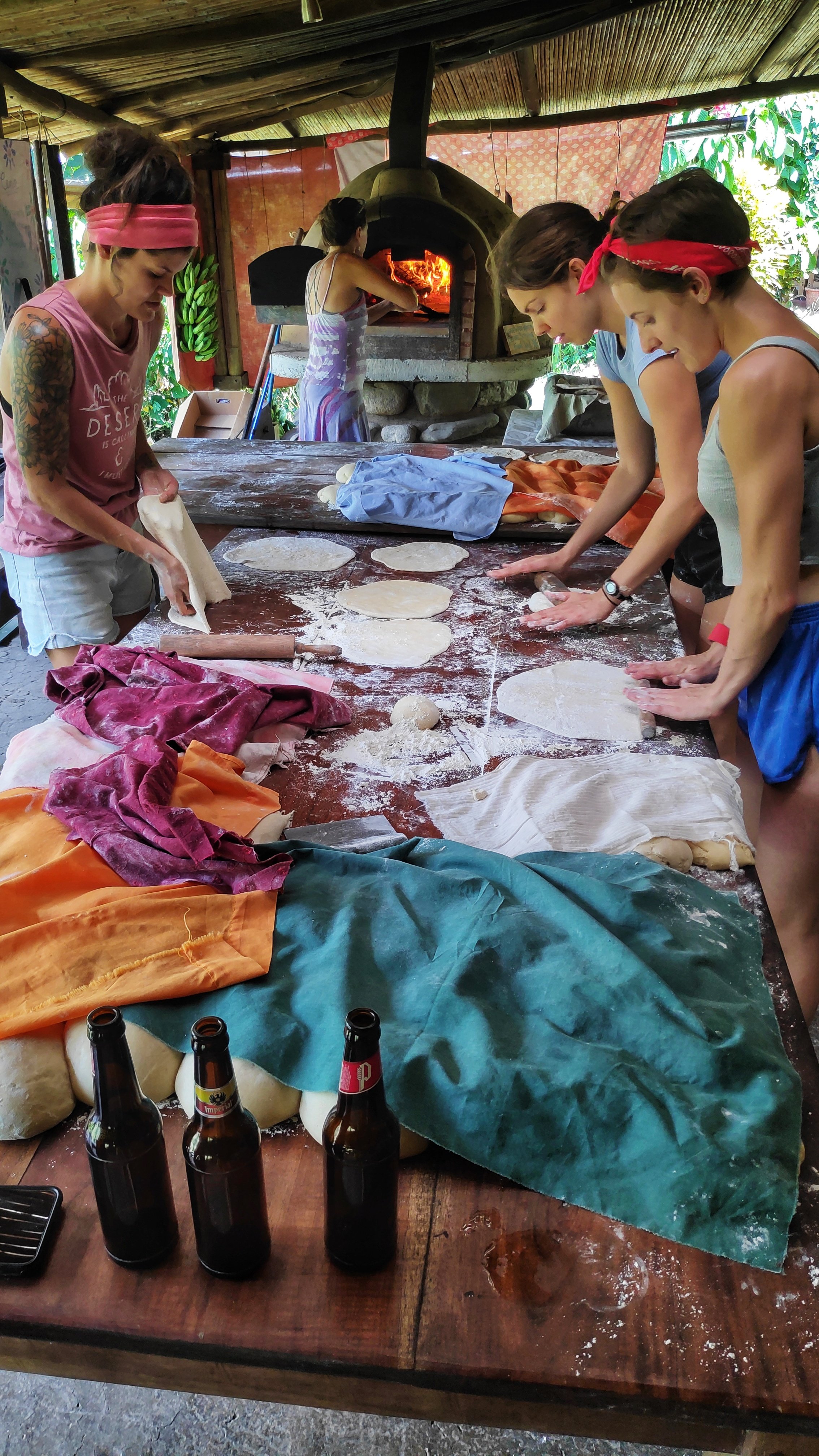
Our special occasion pizza party
what do we gain by attaching arbitrary value to specific foods?
Special foods provide a sense of occasion and celebration
These occasions provide a sense of anticipation, which alters our experience
Special foods, and the events formed around them, provide space for community to be built
As food is a human universal, sharing food is a way to bridge and build relationships
A Note on Sharing
One might assume that precious food items at the Ranch would be hoarded; kept in decoy packaging in the back of the refrigerator with the intention of maximal solitary indulgence. However, as we have adjusted to our new environment, I have observed something entirely different. The reflexive action when in possession of said precious items has been radical generosity. Perhaps it is because a precedent of sharing and reciprocity has been set for us by the culture here at the Ranch. However, it genuinely seems like reveling in the remarkable depth of blue cheese is just more enjoyable when done in the company of others.

Enjoying sharing some treats with the community
The utility of sharing is easy to see when living in community. When taken out of the individualist paradigm operating in most of the western world, reciprocity is an undeniably advantageous practice. Given the unpredictable nature of life, I wouldn't be surprised if appropriate generosity has been selected for throughout our evolutionary history. No doubt those who refuse to share with their community when needed would feel the consequences of their actions later on.
Looking Ahead
So, I invite you to consider how living in this age of convenience and instant gratification affects your sense of value.
How might your experience of peaches change if you only ate them when they were in season? What could be gained by manufacturing a bit of scarcity, creating some anticipation, in your life? How can you apply these principles, rooted in Permaculture, to repair your communities and regenerate our natural environment?
Just food for thought - because now we only have cake on birthdays, and I think it tastes sweeter.
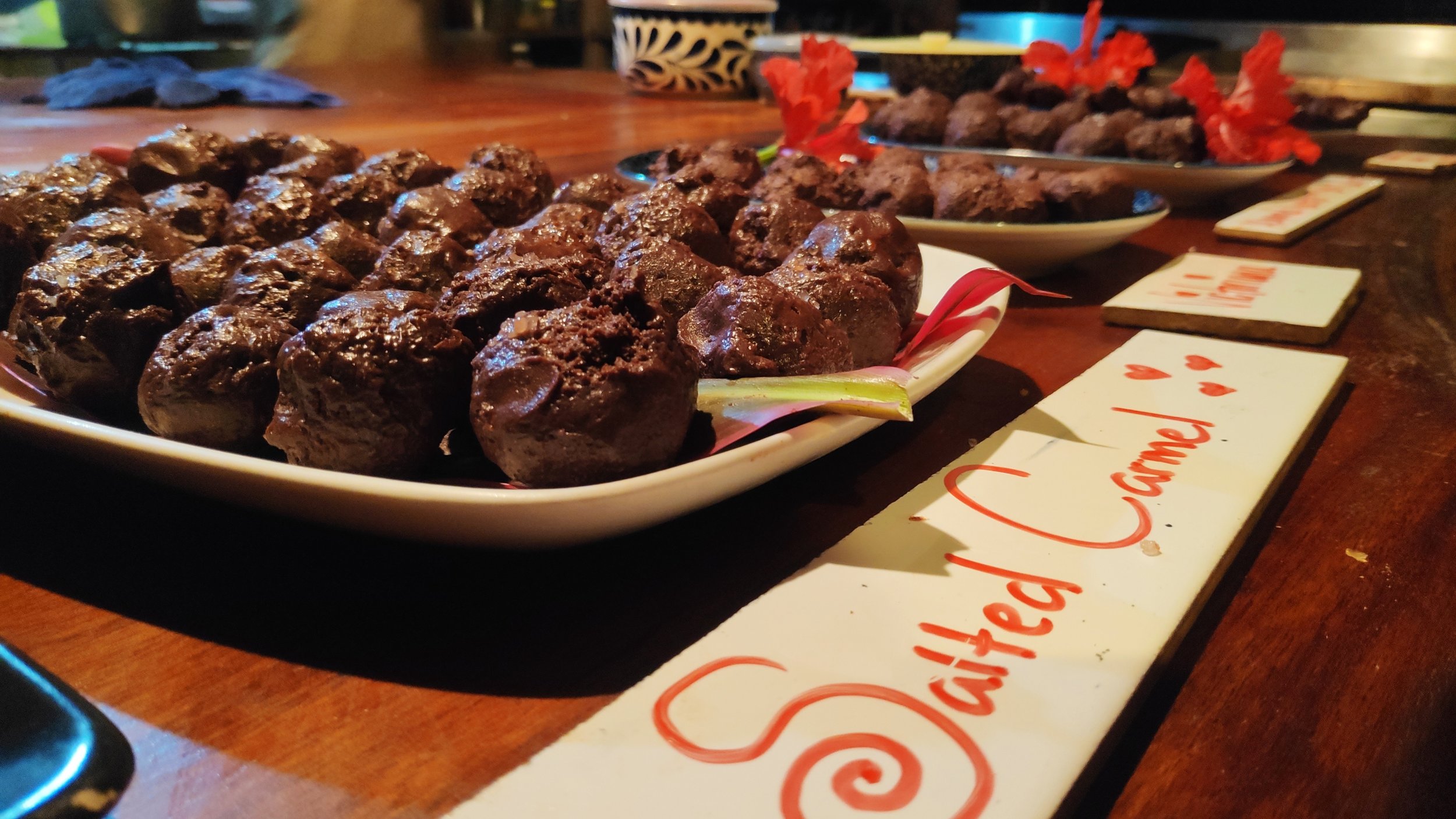
Chocolate bon bons, made from locally grown cacao
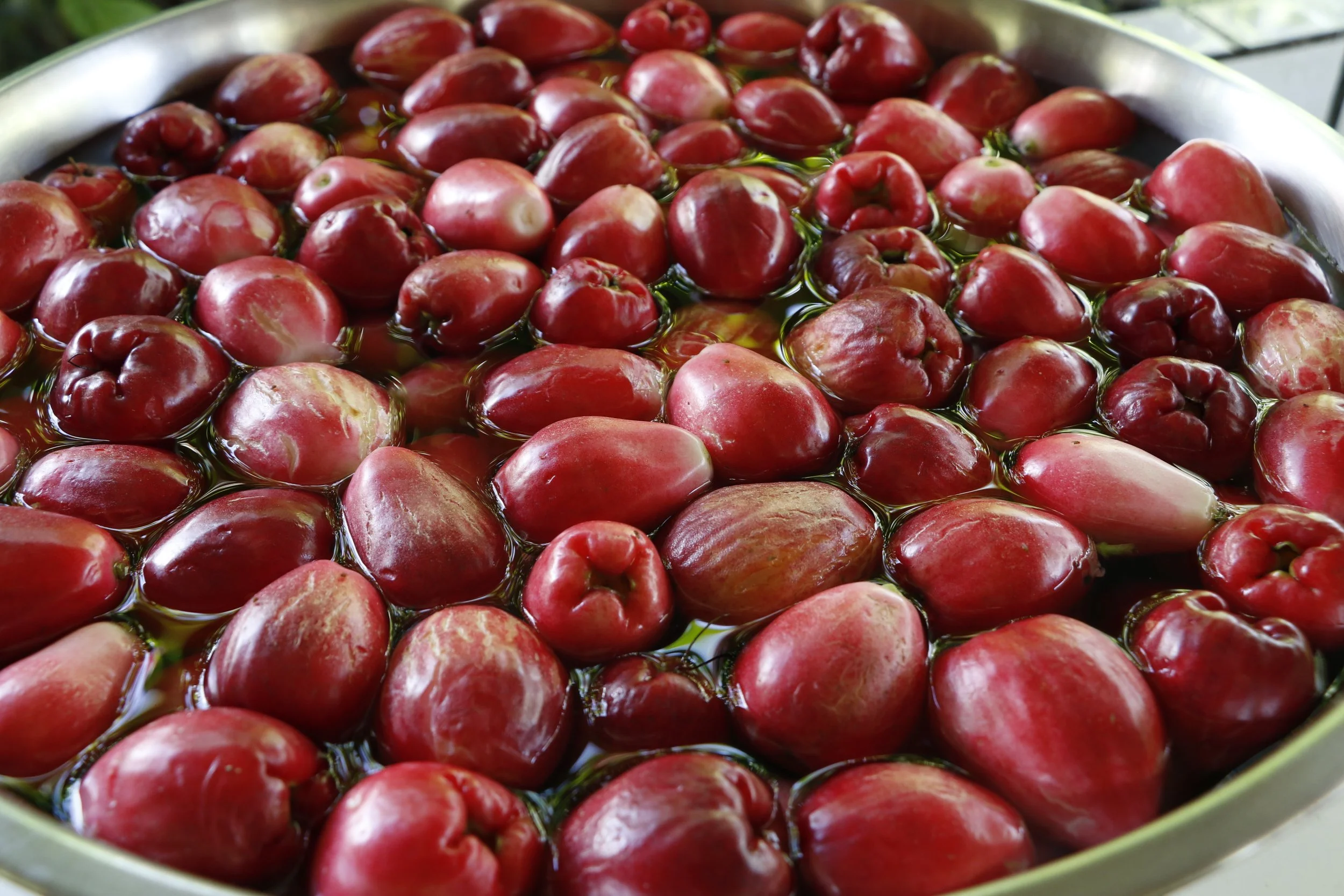
Phytochemicals: The Key to a Longer and Healthier Life
The way we treat the soil directly affects the plants health, which in turn affects our health. How we choose to farm shapes what we become. We are what our food eats.
By AJ Nolan, apprentice 2022
“The health of soil, plant, animal, and man is one indivisible whole.”
-Eve Balfour
There is not a doubt in my mind that living at Rancho Mastatal for the one year apprenticeship has contributed to extending and improving my life. I have been lucky enough to enjoy countless thought-provoking discussions, meaningful manual labor, and untethered access to healthy, local food.

In this article, I will focus on one aspect of our healthy lifestyle – food. Our foodshed is quite small and we always have access to seasonal fruits and vegetables. Using a refractometer, we have compared the nutrient density in the produce from our small foodshed to conventional supermarket produce. The Brix readings we get from our local, organically farmed produce are significantly higher than average Brix readings obtained from the supermarket produce. The Brix value indicates the number of soluble solids present in a sample of food. A higher Brix value indicates an increase in plant sugars, which can translate into a higher number of bio-available nutrients. Why does our hyper-local produce have more nutrients than supermarket produce? Phytochemicals.
Phytochemicals are compounds that plants make to help them defend themselves, facilitate growth, and communicate. Every plant on this great green earth makes phytochemicals. Stressors like temperature, drought, harvesting, and toxins cue plants to make phytochemicals. Plants then use these phytochemicals to communicate with their kin, warning them of nearby pests and pathogens. Plants are stuck in the ground and without these phytochemicals, they would be defenseless. They work as preventative medicine when they are a part of our diet. Phytochemicals neutralize toxins, aid in cellular cleanup, and retard the growth of cancerous cells. There are currently no daily dietary requirements for phytochemicals like there are for minerals and nutrients. This is a catastrophic oversight as phytochemicals are essential for optimal health. Phytochemicals lend flavor, color, and taste to every fruit, vegetable, grain, meat, and dairy product you’ve ever eaten.
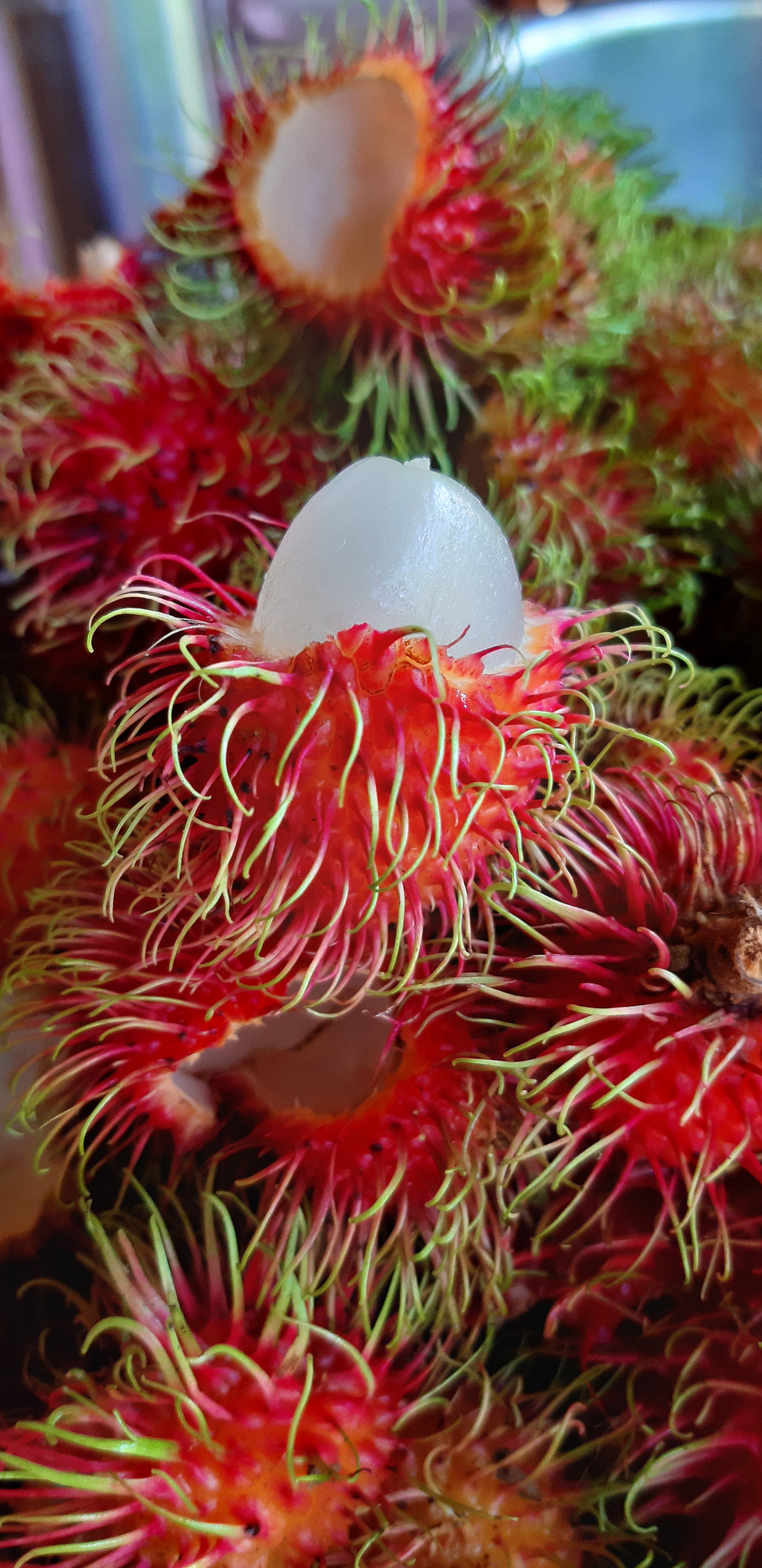
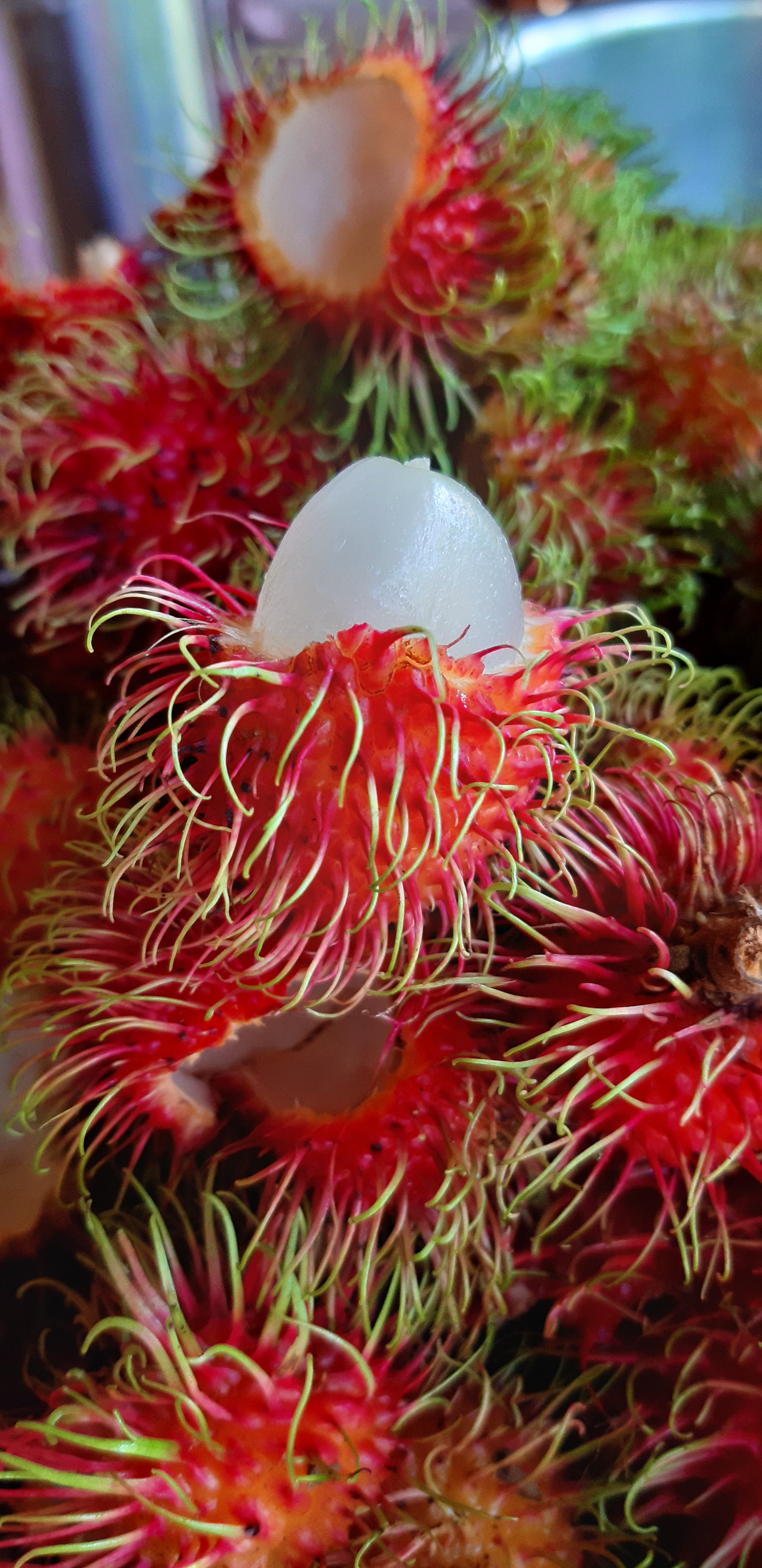
There are over 50,000 known phytochemicals. The most widely studied group of phytochemicals is called polyphenols. Polyphenols lower the risk of coronary heart disease, improve vascular health, and reduce inflammation through antioxidant and anti-inflammatory effects. When combined with a healthy gut microbiome, phytochemicals can perform essential cellular maintenance. Resveratrol is a polyphenol found in blueberries and red wine that promotes the death of tumor cells through its strong antioxidant and anti-inflammatory properties. Lycopene, found in tomatoes, influences intercellular communication and immune system modulation. Flavonoids are a subgroup of polyphenols that specifically inhibits the activity of enzymes associated with inflammation. Quercetin is a flavonoid pigment that is found in citrus, onions, grapes, and tea that inhibits the activity of enzymes linked to inflammation. It also aids in reversing diabetes as it blocks the uptake of glucose and triggers the destruction of existing fat cells.

Many phytochemicals act as antioxidants, thus reducing the amount of “reactive oxygen species” (ROS) or free radicals. All the cells in our body are constantly using oxygen to burn energy to fuel their activities. This oxidation process creates free radicals. Free radicals can cause tissue damage if they remain in our bodies for too long. This buildup can lead to chronic ailments such as autoimmune disorders and cancer. Antioxidants help in disposing free radicals, halting the acceleration of chronic diseases. What we need in our diets is a steady supply of these phytochemicals that act as antioxidants. Diets that are plentiful in whole grains, legumes, nuts, seeds, and colorful fruits and vegetables contain antioxidant phytochemicals necessary to maintain our long-term health.
Certain farming practices can influence the number of phytochemicals in plants. Conventional agriculture utilizes excessive amounts of pesticides and chemical fertilizers, inhibiting a plant’s ability to make phytochemicals. A study conducted by the British Journal of Nutrition found that organically grown foods contained 20 to 60 percent more phytochemicals than conventional farmed foods. Degraded soil undermines phytochemical production, leaving crops more vulnerable to pests and diseases. This leads to a greater use of pesticides that end up in our food and negatively impact our health. To increase phytochemical production in plants we need to rethink the way we farm. Regenerative agriculture practices that build soil health are key. These practices include minimal tillage, implementation of cover crops, composting, the utilization of soil amendments, and effective crop rotation without the use of chemical fertilizers and pesticides.
The way we treat the soil directly affects the plants health, which in turn affects our health. How we choose to farm shapes what we become. We are what our food eats.

Sources
“What Your Food Ate” by David Montgomery and Anne Biklé
“Nourishing Traditions” by Sally Fallon
“The Regenerative Grower’s Guide to Garden Amendments” by Nigel Palmer
“On Food and Cooking” by Harold McGee
Read Past Blog Articles
Improving Soils in the Humid Tropics of Costa Rica
Amending Calcium-Deficient Soils – A Tropical Permaculturist’s Approach

The Magical Benefits of Fasting
Fasting is one of the strongest cleansing and healing natural methods existing. It has been used since ancient times in many cultures and religions either as a medicine or for spiritual reasons.
By Nico, Apprentice 2020
Looking for alternatives
Human behaviors are very hard to change. Especially in today’s world where everything goes so fast, our brains have to deal with hundreds and thousands of pieces of information each day. Overwhelmed by the capitalists’ ideals of growth, money and defining ourselves through our productivity, when do we really take the time to take a step back and reconsider what it is we truly want to engage in? But some things are changing. Each day, people all around the globe feel that wrongness and fight against it through learning, teaching and developing alternatives for sustainable housing, transportation, education and the food industry.

What’s wrong with our diet?
A couple of years ago I dedicated myself to finding alternative solutions that could help me build a lifestyle in harmony with my values. But where to start? Out of the many challenges we will have to face in the upcoming decades, the food system is one the most important. It is also the one where we, as individuals, can have the biggest impact through small changes is our everyday choices. We all know that those fast food chain restaurants surrounding us in the city are bad for our health, that the greenhouse gas emissions generated by the meat industry is nowhere near sustainable, that we should be paying more attention to the origin and process of how our food is made. The public’s’ hunger for nutritional information is more present than ever, diet books are perennial best-sellers, almost every popular magazine features nutrition advice, newspapers, radio programs and TV constantly discuss diet and health. But once again, there are so many sources, so many programs, so much contradictory advice, what should we be listening to? I believe that if we truly want to change the way we eat, we should start by listening to the one and only true expert of our health: our body.
Why fasting?

Jackfruit harvest
My goal was not to lose weight, nor to go vegan. I didn’t want to be on a diet restricting myself from certain foods. I wanted to redefine my relation to food so that I could start enjoying it more at each meal, and start feeling the benefits of eating healthy food on my everyday energy. I wanted to understand why my body feels so tired after some meals but not others, even though it seems like I’ve been eating the same quantity. I wanted to truly enjoy each delicious meal without just stuffing myself with twice the amount of food my body needed. That’s when I came across fasting (we will be talking here about long term fasting on water only, not about intermittent fasting which is a whole other process). The studies about its many health benefits from helping with allergies, skin diseases, cancer, how it helps with setting you in a special meditation mind-set, and the challenge it represented, immediately got my curiosity. I have always thought I couldn’t go more than a day without eating, yet so many people were able to spend weeks, sometimes months just surviving on water, so I decided to take the challenge and prove myself wrong.
As I am neither an expert on fasting, nor nutrition or health, I will not talk about the medical science behind fasting but more about my personal experience and what it has brought me. If you are considering a fast I do however recommend you to read as much expert’s advice about the process, how to start it, end it (the most important parts about fasting are before you start and after you break the fast), what the dangers are, and precautions to take. I do not recommend that you start your first fast if you are alone for it can be a very dangerous process if not properly prepared.
So what is fasting?
There are many kind of fasts but the original and purest one is when you stop eating any kind of food and only drink water for a certain amount of time, usually longer than 3 days. Fasting is one of the strongest cleansing and healing natural methods existing. It has been used since ancient times in many cultures and religions either as a medicine or for spiritual reasons.
What happens during a fast?
The first three days of fasting are mentally challenging. Because we have been so used to eating three times a day, at very specific hours, our brain will send signals through hormones telling your body, “hey dude, we usually have food coming in around this time, what’s happening?” You have to understand that this does not mean you are in danger and start seeing those signs and hunger as a signal, not as pain. Keep yourself busy, go for walks in your favorite place, do yoga, exercises (on the first day of fasting you still have a lot of energy from the remaining food in your digestive track so you should be able to still enjoy intense activities).
On the second day things start to slow down, you feel your energy level going down and hunger is present. I find that this is a nice opportunity to be a little by yourself, doing small activities you enjoy where time flies like drawing, reading, walking in the woods, etc.
The third day is the trickiest one, because you will reach the real fast. After three days that the body doesn’t receive nutrients from the outside, it moves to a kind of emergency mode and starts to digest all kinds of proteins from unnecessary cells, excess proteins from overeating, germs and bacteria. The body knows exactly where all the garbage is stored and start eliminating it. It enters a serious deep cleansing. During the fast, the body uses all the energy that is normally used for digestion and assimilation (which represent a great amount of energy, especially if you eat the average American diet) to clean and repair the tissues, and many organs have the chance to rest and recuperate. Make sure you have this day for yourself and rest, watch some movies, listen to relaxing music. This phase varies a lot in time and effects depending on each individual, but from my experience after three fasts I find that the better I prepare my fast (by gradually stopping all processed food before I start fasting), the easier this phase is. The first time I fasted I was so prepared and excited that I didn’t even feel any of the downside effects people talk about except just wanting to be on my own. In ancient times people didn’t need to prepare so much for fasting because they didn’t have the poisons of the 21st century, so they could go bravely into long fasts. With today’s food system, and depending on your diet and health, it is really important not to shock your body too hard by preparing adequately for your fast. You can find a lot of information and programs on the internet, but the most important thing is that you do it at a rate which correspond to you, by always paying attention to your body. I also find that whenever I start having small headaches and unpleasant sensations on the first three days, being a bit active helps, “Movement creates energy.” You’ve done the hardest part, all the rewards and benefits are yet to come, don’t stop there!
After those three days (sometimes it can take 2 days before reaching the “ketosis”), things get interesting: you don’t feel hunger anymore, your energy level goes up, and you truly enter the “fast trance” I like. I find it is important to start a fast with some ideas about what you want to dedicate the fast towards. It could be researching more about nutrition, focusing on your body and how you feel, thinking about things you want to accomplish in the future, etc. It’s important to live your fast with some ideas about what you want to be thinking about but not setting yourself goals or objectives, since the fast is challenging and you never know what you will come across during the process. Keep an open mind, be focused on what your body is telling you and what it is asking for and enjoy the time you have dedicated to yourself. Don’t be afraid to change your initial plans according to the situation, fasting is all about yourself and how you feel, it might feel a bit selfish to cancel plans you have made with your friends, but I think it is important you realise that before starting the fast. Tell those around you about your plan to fast and that you might cancel last minute. It is better for you, better for your fast and also better for your friends since nobody wants to be around someone that doesn’t truly feel like being there in the first place. This doesn’t mean you shouldn’t do anything social during the fast. After 6 days of fasting I was going to parties and dinner without any problem, but pay attention to what you feel like doing, not what is expected of you.
Breaking the fast
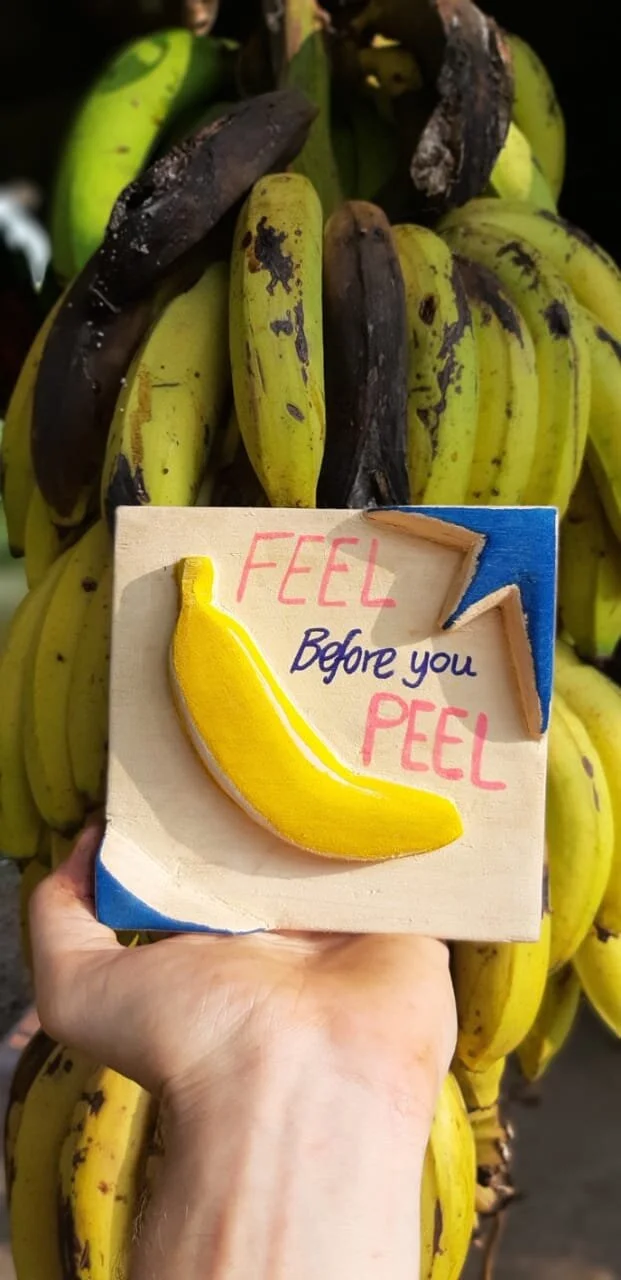
After several days without consuming any food, it is essential to break the fast wisely. Your body will not handle it if the first thing you eat is a huge hamburger with fries and mayonnaise, I guarantee you’ll be sick. Plus, you’ve gone through all the process of cleansing your body, do you really want to start off a fresh start by putting some unnaturally heavily processed food in your system? You want to start with something very light and easy to digest but flavourful, some fruit you truly enjoy. Take the time to choose it wisely, smell it and feel it, and start eating it only when you feel that you are ready. I find that during the fast my smell sense is way more developed than usual, and when you start eating, each bite will feel like heaven. Eat only one fruit and pay attention to the amazing taste, feel it going down your throat and sense all your digestive organs starting to work again after so long. They will truly thank you for the first rest you have given them in years, maybe decades, and your whole body is not craving food: it is craving good food. Think about all those delicious natural fruits and vegetables and all the amazing nutrients they will bring to your body. Enjoy each food like it’s the first time you had it, for me it truly tastes like that.
What fasting brought me
Fasting helped me redefine my relationship towards food. It helped me realize most of the time we don’t eat because we need it but by automatism. Sometime we are not even hungry, or we think we are hungry but we don’t truly need to eat, we just eat because it is the common thing to do. Our brain tricks us into thinking we want something while everything about our health tells us something is wrong with that. Like Paul Nison said: “Listen to your own body sense. If you listen to common sense, you will end up like common people in today’s world.”
Fasting also helped me enjoy more the food I eat. It helped me rediscover flavors I stopped tasting because I couldn’t see the beauty behind it anymore. Enjoying food is not about what your taste buds are receiving, but about how you are receiving those flavors and how you pay attention to them. It’s all about the setting. The best meal you’ll ever have will probably not be the most sophisticated or expensive one, but the one you took time to enjoy because you were with people you liked, in a place you like, like your grandmother’s homemade casserole, or the first time your dad took you out for ice cream. Like Anthony Bourdain says in his book, a cook’s tour “Nothing illustrates them more than the Last Meal Game.” You’re getting the electric chair tomorrow morning. […] You’ve got one meal left. What are you having for dinner? When playing this game with chefs – and we’re talking good chefs here – the answers are invariably simple ones.” Imagine you could rediscover the sensations you had the first time you took a bite out of your first pizza, your first ice cream, or the first apple pie you ever ate.
Fasting also brought me a lot of unexpected things not related to eating. It helped me push my limits and increase my willpower. It taught me that whatever people think is good or bad for you, the only true way to find out is to experience by yourself. It reaffirmed the idea that we shouldn’t be doing things blindly because it is the “normal” thing to do, because we have been doing it for a long time or because of social convention, but we should put everything in perspective and ask ourselves why is it that we do this. Only when we understand fully why we do something can we change it, improve it, or just decide that this is the way we want to go, and then human behaviour becomes easy to change.
People sometimes ask me how did I stop eating meat so easily after so many years as a meat lover? Not eating meat was not the hard part, just as spending 7 days without eating is not the hard part for me. The hard part was putting everything I have learned until here in perspective, unlearn what I thought was true and questioning the fundamentals about nutrition. It might be a hard and tiring process, but only from there can we start building on new foundations, towards a lifestyle in harmony with our values.

Apprentices doing yoga in the Hankey House
Eating Local: Reconnecting to Food
Food nourishes us and forms the heart of our community. Understanding where it comes from, how it is grown, and who has grown it helps us value our food in a way that we have lost in the modern era. We can get overwhelmed by the challenges of the modern world and food can provide us with some of the easiest and most accessible ways that we can begin to regenerate our planet.
By Nic, core team member
Food nourishes us and forms the heart of our community. Understanding where it comes from, how it is grown, and who has grown it helps us value our food in a way that we have lost in the modern era. We can get overwhelmed by the challenges of the modern world and food can provide us with some of the easiest and most accessible ways that we can begin to regenerate our planet.

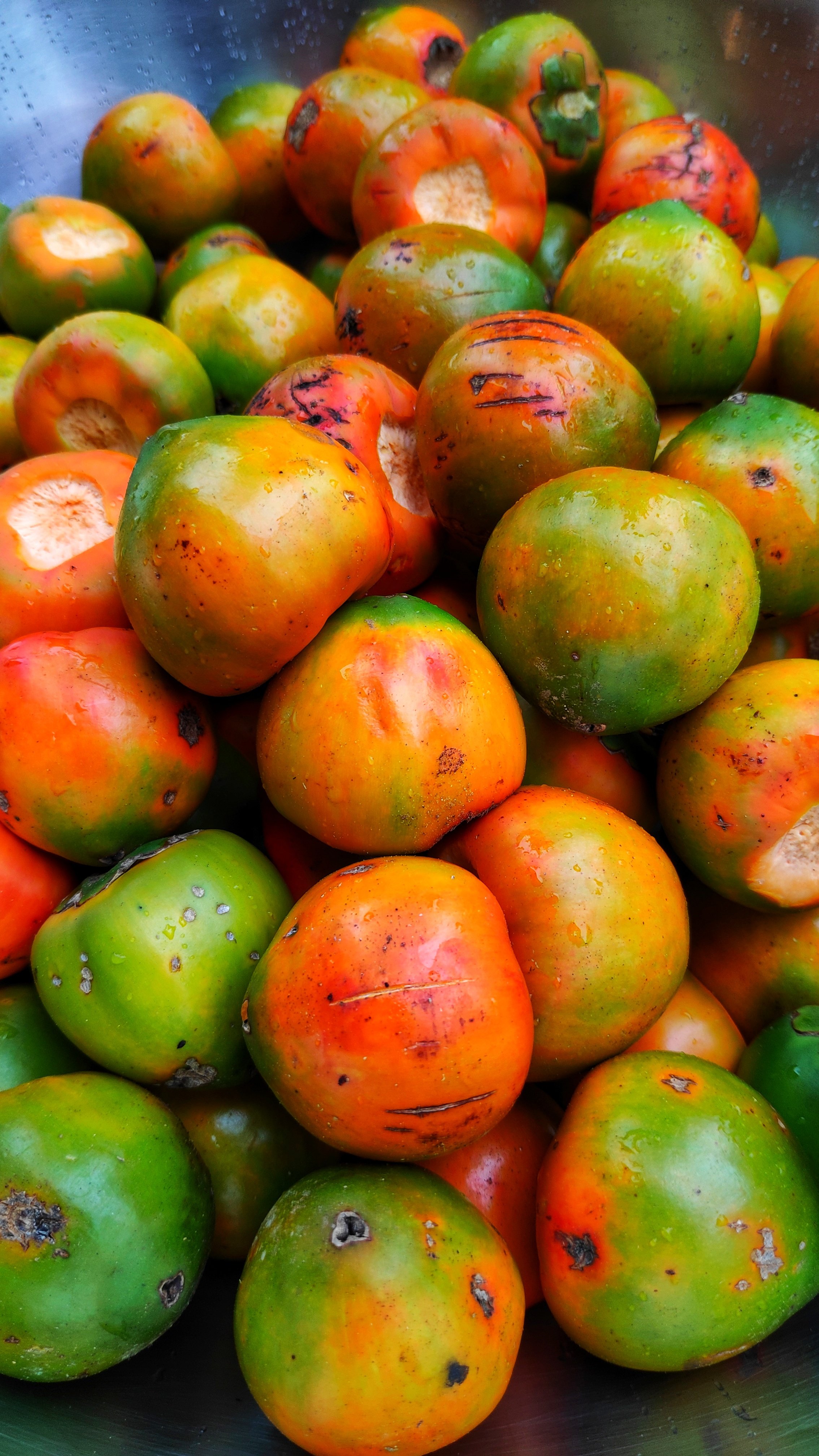
Pejibaye: One of the delicious, nutritious and locally available staple tree crops
Since the agricultural revolution, our communities have been molded by the food we produce. Thriving when abundant and starving when scarce. The quest to guarantee our food security has led to mass population movements, wars, terrible famines and giant metropolises. But as we stand on the edge of environmental catastrophe, does it also hold the key to our own redemption? Does revisiting and re-valuing what has become just another commodity on the store shelf give us the opportunity to take back the power that we have given up with our disassociation from our food production and provide real tangible solutions to the current climate crisis? In Paul Hawken’s excellent book Drawdown: The Most Comprehensive Plan Ever Proposed to Reverse Global Warming, 2 of the top 3 solutions are food based (reducing food waste and eating a plant based diet). Each one is totally achievable on an individual level and something that we must demand on a wider commercial and political level.
Working at the Ranch people often ask me what they can do to be more sustainable or environmentally friendly when they return home. This is a question that I could answer in any number of ways. The answer that is the easiest and most accessible is to simply “eat local”. This is by no means the only answer, but today I am going to discuss just this one, simple act. that could help us move to larger changes for our climate and population.
Eat Local
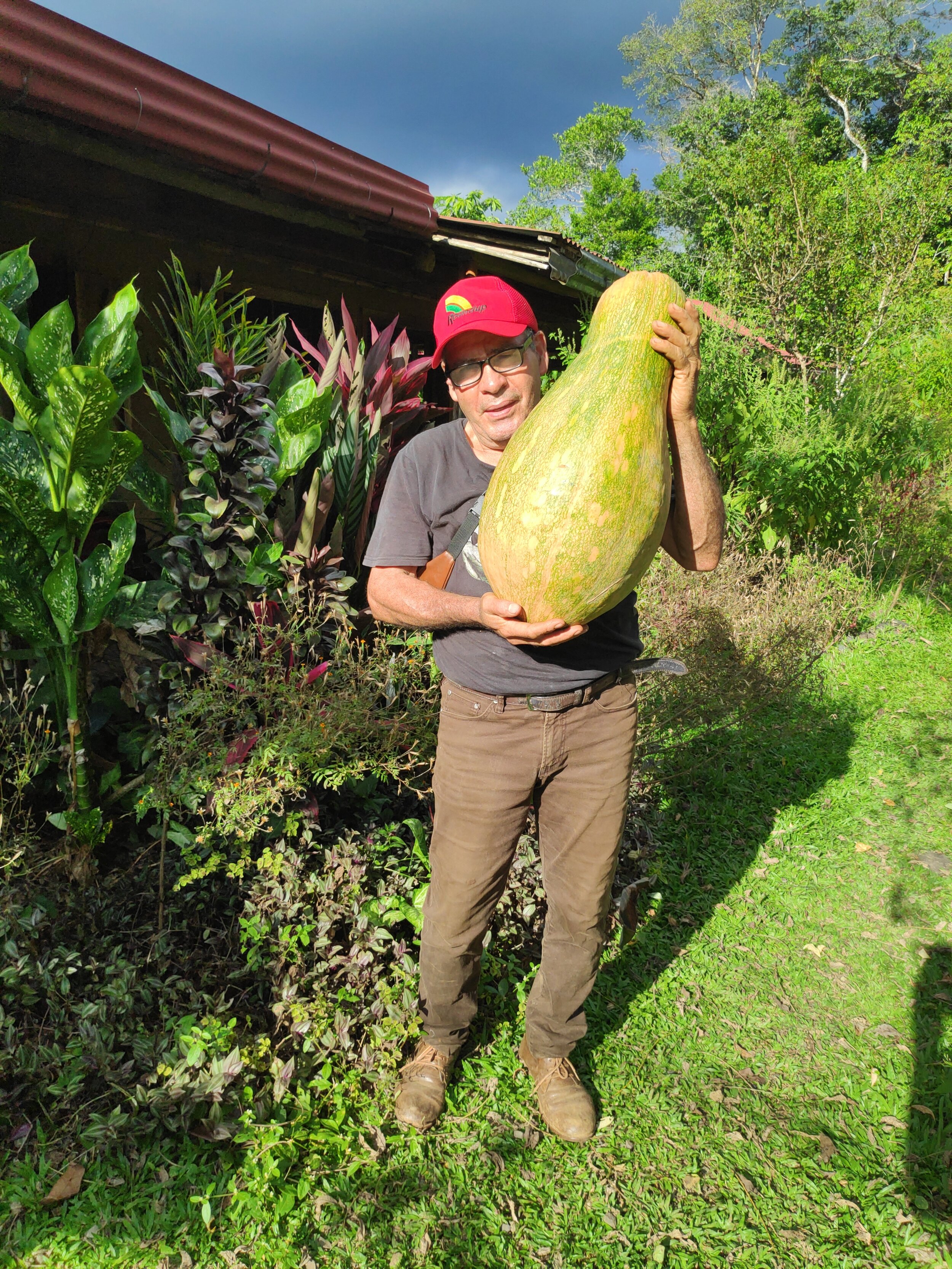
Nelson holding a giant squash he grew for us.
Since the early days of the Ranch, local foods have been a cornerstone of our cuisine. One of our goals is to create an easy market where local producers can sell their products. Not only does this reduce the carbon footprint of our meals, it helps to ensure that this region’s farmers continue to grow food. Unfortunately, people worldwide are moving to urban areas and abandoning the farming practices of their parents. Essentially, by buying whatever is brought to our door, we are saying to the local community; “if you produce it, we will buy it.” We want to let them know that we value their products and are committed to work with them to maintain the food security of our region. After 20 years we continue to buy from many of same producers. This results in delicious, locally grown food for our table, while providing an essential income to numerous households in our community.
Over the years the Ranch has produced increasing amounts of its own food as our agroforestry systems have matured and our understanding of tropical agriculture has evolved. We serve over 20,000 meals yearly with about 90% of our calories coming directly from the Ranch, the community of Mastatal, or the local area (within a 20 km radius from the Ranch). We are fortunate to still enjoy food security regionally. We purchase the following directly from the producers themselves: milk, eggs, cheese, sour cream, tapa dulce (unrefined sugar cane), coffee, corn, beans, rice, squash, yucca, plantains, avocados, chicken, pork, lard, peach palm, citrus, papaya, pineapple, citrus, mango, palm heart, lettuce and chocolate. We have created a diverse and delicious menu based on what we can either grow or buy from our friends and neighbors. We have taken the cuisine of the “ticas” and tweaked it a bit while adding an international flare.

One of our indulgences: wheat based pizza party!
This transition to eating a local based diet has taken some adjustments. As Westerners, our diet is heavily dominated by wheat products. Wheat comes in the form of cereal for breakfast, bread in a sandwich for lunch and pasta for dinner. Wheat is by far the most heavily consumed grain in the western world. After moving to Central America we needed to adapt to a new food culture full of new ingredients and tropical comestibles. We look to the wonderful traditions of our region and Asia to inspire our new diet and to create new and wonderful food that is based on locally available ingredients. We are not purists however, and of course we love to have a pizza party every now and again, but we have spent much time experimenting with wheat free, local doughs (read about our Permaculture pizza quest).
Why is eating local so important?
There are many pieces that make eating local such powerful change. I think one of the most appealing is that it is relatively easy to do, it is not really much of an inconvenience and does not require huge changes to your lifestyle. What follows are some of the reasons I believe eating local to be important.
Local Economy
By creating a market for local producers to sell their agricultural products we are supporting the local economy. This happens on many levels that are all intertwined. Firstly, you are valuing agricultural products that people know how to grow successfully. This means that farmers in our region can continue to do what they know how to do and are not forced from their land to cities to find other work. Secondly, they can get a much better price selling their products direct to the consumer as this removes the middle man (the supermarket) from the equation. When you buy a $3 head of lettuce, how much of that do you think goes to the farmer and how much goes to the supermarket? Thirdly, it keeps the money in town. By keeping transactions local the money tends to stay in our community, creating a circular economy that can support more than just the farmer. In this scenario the farmer can now buy products from other local people who can develop businesses that further support the community that in turns creates more economy!

We have been purchasing local eggs for Doña Flor for as long as I can remember.
Transportation and Carbon Footprint
This may seem obvious, but by buying local food you are reducing the carbon footprint and the transportation inputs that are associated with that food product. Unfortunately, in our globalized world, many of our products are shipped all over the world before making it to the final consumer. This is not just true of food, but also of many consumer goods. Cotton is often grown in the US and then exported to a country with a cheap labor force and poor working conditions so that it can be fabricated into a t-shirt, only to be shipped back to the US to be sold in the US market! Isn’t that crazy? If we buy our food from a local farmer then we know where it has come from and we know that the transportation of that food is minimized.
Fresh Food

Farm fresh: these bananas are simply delicious, ripening naturally.
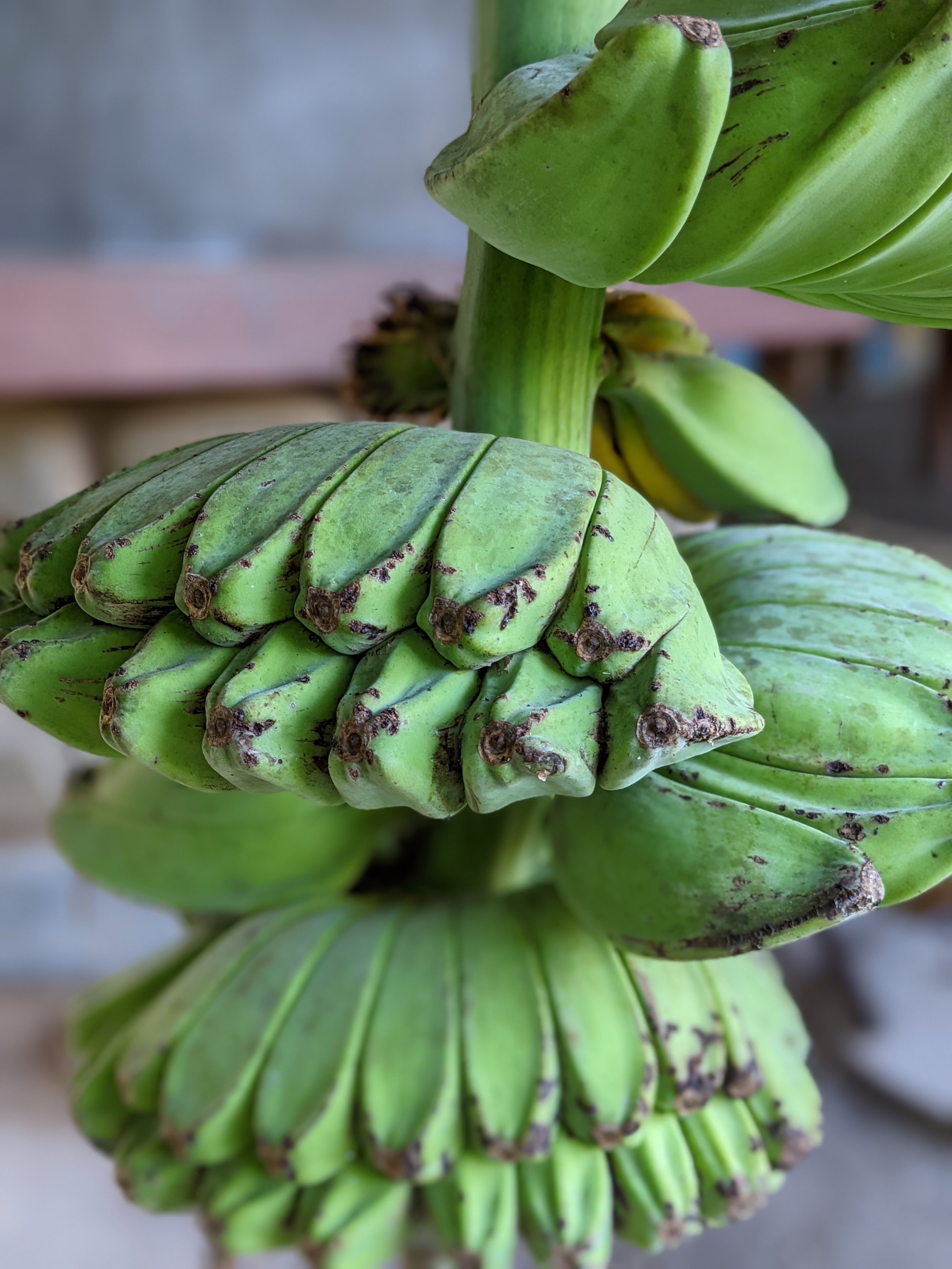
By reducing transportation, you also increase freshness! Did you know that the majority of fruits are shipped when they are still unripe in order to reduce damage during shipping? The banana is a classic example. When the banana arrives to its destination it is gassed with a chemical that induces the fruit to turn ripe so that it can be sold at the market. This effects freshness and flavor massively, not only because these commercial fruit varieties have been selected for good shipping quality rather than taste, but also because when the banana ripens like this it tastes totally different. I have eaten many supermarket bananas and after now living in the tropics can confidently say that they’re weird. They never hover in the perfect ripe zone like a farm fresh banana does, and it goes straight from green to brown and bad tasting. A banana that is harvested freshly and allowed to ripen naturally has a far superior flavor and hovers in that perfect zone of ripeness for many days.
Developing Relationships
By interacting directly with your farmer you can have your say about what is grown and how it’s grown,. You can visit their farm and see for yourself the practices that they use. This is a powerful tool as there are many misunderstandings as to how food is grown and where it comes from. This can only be reconciled through personal experience and empathy. Maybe you really love blueberries, but the organic type only come from far away, whereas all the local blueberries are not organic. Why might that be? Maybe this is worth further investigation that developing a relationship with some local berry farmers might shed some light on. Maybe this will lead you to understanding something that you didn’t know about berry farming in your area, or maybe it won’t, but you won’t know until you investigate!
Creating Community
Our globalized world has broken up small communities where everyone traditionally knew one another. It is not uncommon now to not know your neighbors or the people who live on the same street as you. This has broken down the fabric of our communities and our relationships with one another. It is up to us to rebuild those relationships and it is going to require time and effort. A great place to start is with your food choices. If you can buy food directly from farmers then you can begin to create that direct relationship with your food and the land that grows it. Maybe it will be with a local butcher, or a local shop, where you get to know the person or people who are selling the food. Once you have formed this relationship you can cultivate a mutual understanding of what you are looking for in your food. You will begin to see the same people also shopping in these places and this is the way that we can begin to cultivate community for ourselves in urban and rural environments. Another fantastic place to develop community is at your community gardens, “pea patches” or allotments. Food is so fundamental to us as humans that communities based around food are incredibly powerful and resilient.
Connection to Place
The average American moves 12 times in their lifetime. This is a long way from our lives just 100 years ago when most people grew up and died in the same house or the same town. By moving so frequently we lose our connection to place. Our homes, our food, our street are just commodities to be bought and sold. This loss of connection to our local environment creates a disconnect between our realities of the world and the limitations of our land. Avocados, believe it or not, are not in season all year round. You wouldn’t know it by going to the store though, as they are pretty much available all year round. In fact most food products are available all year round and we don’t even think about it. By eating locally you are by default also eating seasonally and this will allow you to truly connect to your place and environment, deepening your connection to the land and local climate.

Lights on in the food smithy!
How Can I Eat Local?
What follows are some of the simplest and most accessible ways that we can begin the transition to eating local.
Farmer Markets
In most urban centers now there are farmers’ markets. Usually they take place just a day or two a week so you might need to schedule time to go to these markets when they are open. Here you should be able to find local, seasonal and fresh food.
Directly from Farmers
If you live in a rural area it is likely that you have farmers all around you. You can approach them directly, ask them what they are cultivating and see if they already have a farm stand or go to farmers’ market on certain days. This is an opportunity to get know your neighbors! If you live in an urban center, check out if there is some innovative commercial urban or city farm that is selling their produce.

Tapa Dulce: locally sourced sugar - purchased directly from the local farmers
Grow your Own
Depending where you are, this could be on your balcony, at a community garden or in your yard! The scale of your new garden will have to be proportional to your available space and your time. Growing herbs on your window sill is a great place to start!
Local Business
Try and buy as much as you can from local business rather than going to a supermarket. It is not always cheaper from the supermarket and the quality and freshness can vary massively.
CSA or Veggie Box
If you can’t find a farmers’ market you could look into a veggie box or CSA (community supported agriculture). These are great ways to directly support farmers and you can often get the food delivered or pick it up close to your house to make it more convenient.
Farm to Table
Lastly, where do you choose to eat out? It might be worth exploring a local farm-to-table restaurant and make that your special treat for birthdays or special occasions.

Farm to Table meal at the Ranch, green banana chips, pejibaye dip, starfruit pickles and jackfruit salsa….Yummy!
I hope this has inspired you to think about your food and where it comes from and how to incorporate more locally available foods into your diet. Next time you see a farm stand, stop, buy your weekly fruits and veggies from there, and skip the supermarket. It wasn’t long ago when we all had a hand in the food we ate. To think about the separation that the majority of the world has from food now is astounding. So, plant something whether it’s big or small, find out where the nearest farms are to you, and change your diet to eat locally available products. I bet you’ll enjoy fresher, more delicious food and make a few connections along the way.

Life of Spice: Pepper
Farm to table is an inspiring movement whose time has come. As anxiety about our environment and health increases, awareness is spreading about the impact our diet has on not just own well-being, but the well-being and future of the entire planet. Alarms are going off worldwide. Our eyes are opening. People everywhere are waking up. We’re waking up… and eating breakfast.
By Dani, Apprentice 2020
Farm to table is an inspiring movement whose time has come. As anxiety about our environment and health increases, awareness is spreading about the impact our diet has on not just own well-being, but the well-being and future of the entire planet. Alarms are going off worldwide. Our eyes are opening. People everywhere are waking up. We’re waking up… and eating breakfast.
Eating Black Pepper
It’s a typical morning in the conscious kitchens of North America. Today’s special is one of my favorites, a spinach omelet with caramelized onions and a side of roasted potatoes. The eggs are from a permaculture farm’s weekly CSA box, the onions and potatoes from the local farmers’ market, and the spinach is from the garden in the backyard. The omelet slides off the skillet, smothered in rich butter from a small scale dairy farm nearby. The potatoes, piping hot from the oven, make a great companion on the plate. It’s a mouthwatering sight, dotted with black pepper for a little bit of spice.
Mmmmmm, pepper: king of the spices, maker of meals, creator of cuisine. The pepper in our breakfast today came from… somewhere. Somewhere local? Probably not. Spices are the sorcery of every meal, turning bland into brilliant, mediocre to magical. Most of us are blessed with a diet full of spice, but when we talk about eating local, the spice rack often gets overlooked. One way we can work towards restoring the health of our bodies, our minds, our society, and our home planet is to bring more awareness into our diets. Think local. Practice permaculture. Eat farm to table. We hear these terms all the time now, but while people talk about where the eggs on their breakfast table came from, what about the pepper on the eggs?
Black pepper is consumed more than all other spices put together. It sits next to salt on the tables in every diner in America and in most people’s homes. It is hard to imagine a kitchen without pepper, but it hasn’t always been this way. The globalization of food has been happening for so long, a lot of us are completely unaware of which foods are native to where. Chickens originally came from the jungle. Asia used to be without chilies, Italy without tomatoes. What does eating local mean, and how long has it been since people actually ate that way? We’re making big efforts to be conscious consumers, but how often do we stop and appreciate the spice in our lives?
Origins of Black Pepper
Pepper is native to India and is one of the spices that sparked the global spice trade and in turn the globalization of food. Pepper has been traded for thousands of years, and there are even references to pepper found in Egypt from 2600 B.C. For centuries, it spun the wheels of the trade world and brought wealth to many merchants, and it wasn’t only a way of making money. Pepper itself became money and served as hard currency throughout much of the middle ages. In some places, people’s wealth could actually be judged by their pepper assets. Imagine if they could see the casual way in which it is consumed today.
The Value of Black Pepper
Currently, the average price of pepper across the globe is $4.34 per kilogram. These days, Vietnam is the leading country in pepper production, producing about one-third of the world’s pepper. It’s followed by India. Vietnam is also the leading consumer of pepper at 166 thousand tons per year. Again, India follows at 88 thousand tons. That makes sense, right? The places producing pepper are consuming it, local eating. The third biggest consumer of pepper is the USA at 68 thousand tons per year. That is a lot of pepper for a place that doesn’t produce any. On Amazon, a kilogram of McCormick’s Whole Black Pepper costs about $30. The biggest cost in pepper production is labor, but the average price farmers collect for pepper is just $2-$4 per kilogram.
Farm to Table Spices
Understanding where things grow, how they are processed, and who grows them is one way to create a deeper appreciation and understanding of the food we eat and nourish our connection to the earth from which it grows. Trying to live a life embodying permaculture values at Rancho Mastatal has given me a wonderful opportunity to see how different foods are grown and processed. Until recently, I had definitely taken spices for granted. My experience with pepper here has led to reflection on the spice in my life and an appreciation for the sources behind the sorcery. So how does pepper get from the farm to our table?
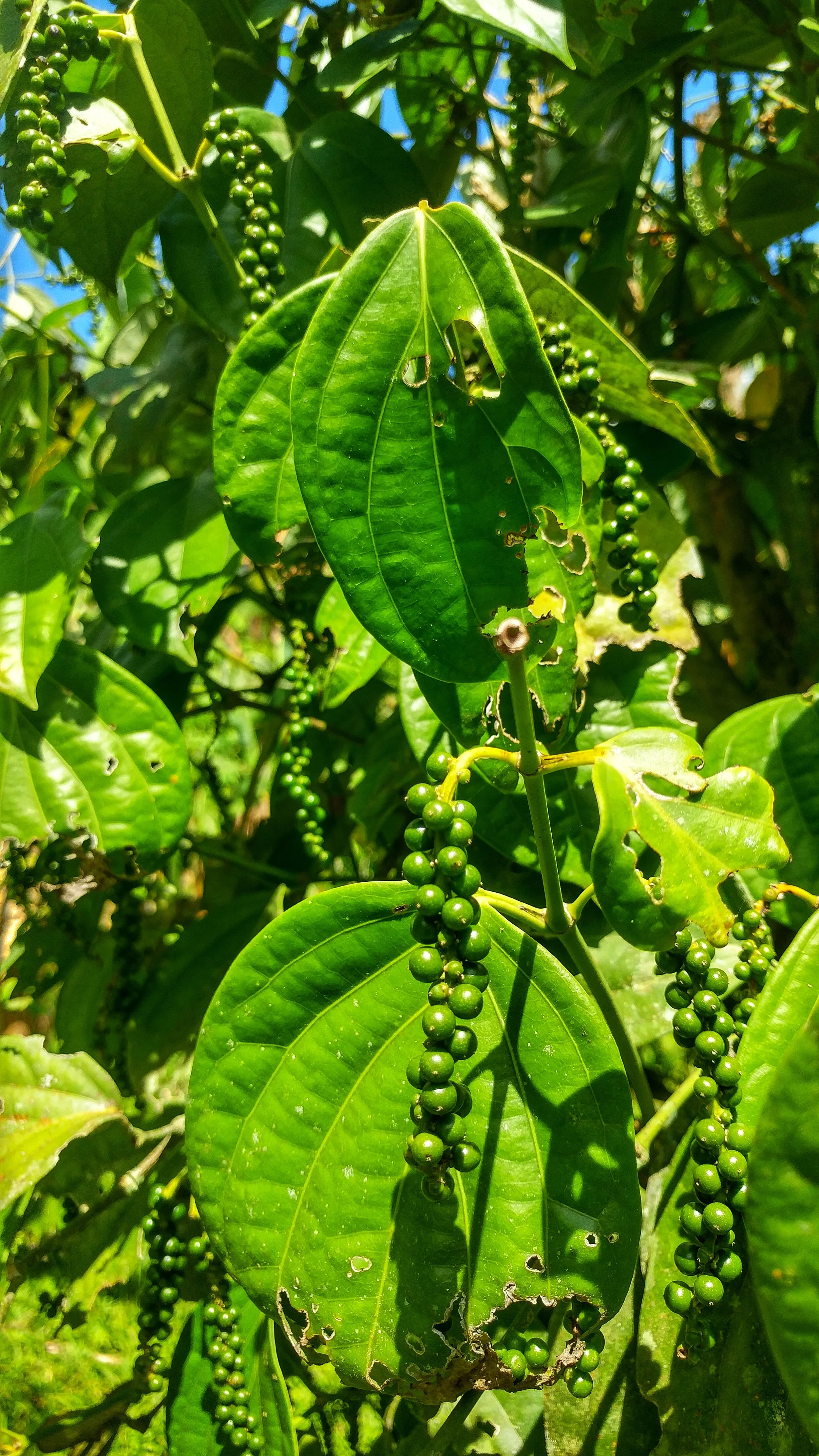
That black pepper on our omelet and potatoes is from a fruit, often referred to as a berry or peppercorn. It grows on a tropical climbing bush, and the white pepper in so many well-loved curries comes from the same plant. The pepper plant is a vine grown best on a living post, from small bushes to massive trees. Here at the ranch, we grow pepper on Gliricidia sepium, (known as madero negro in Costa Rica) a nitrogen fixing tree. Pepper has its origins in forest ecosystems, so it is a fitting plant for a permaculture food forest in the tropics.
How to care for your Black Pepper plant
To maximize yields, pepper plants need to be pruned properly. Once the vine is at least 8 nodes tall, it can be pruned from 3-4 nodes up from the base of the vine, just above a node. After pruning, the plant will send up two new shoots, and the vine cutting can be propagated by placing the stem in soil where it will grow new roots. People have given pepper new roots all over the world. Global trade increased the demand for pepper and sparked efforts to grow it in tropical places across the globe. Now, pepper is grown in 26 different countries, including Costa Rica.

Red Pepper and Green Pepper

White Pepper and Black Pepper
How to Process Peppercorns
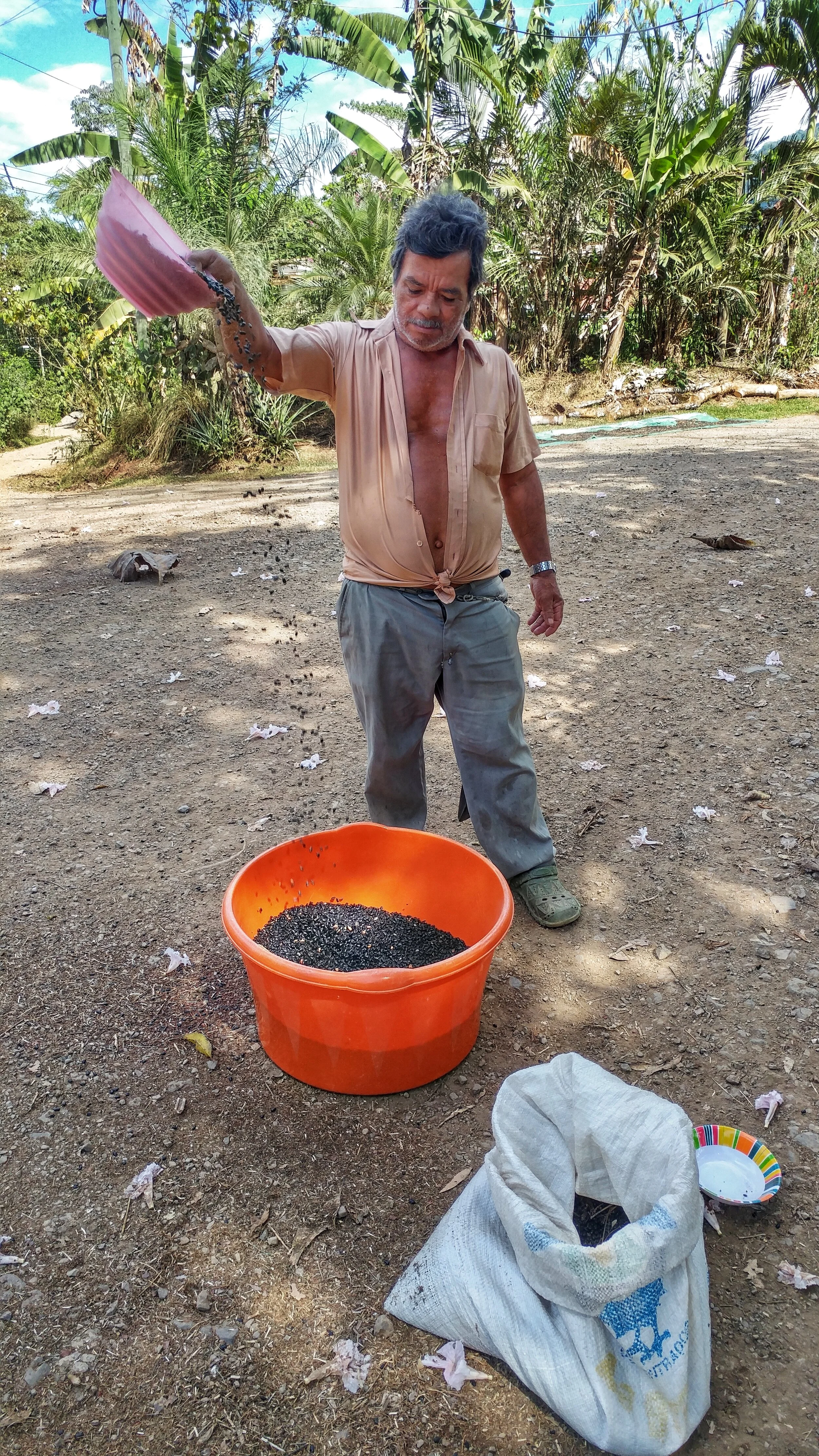
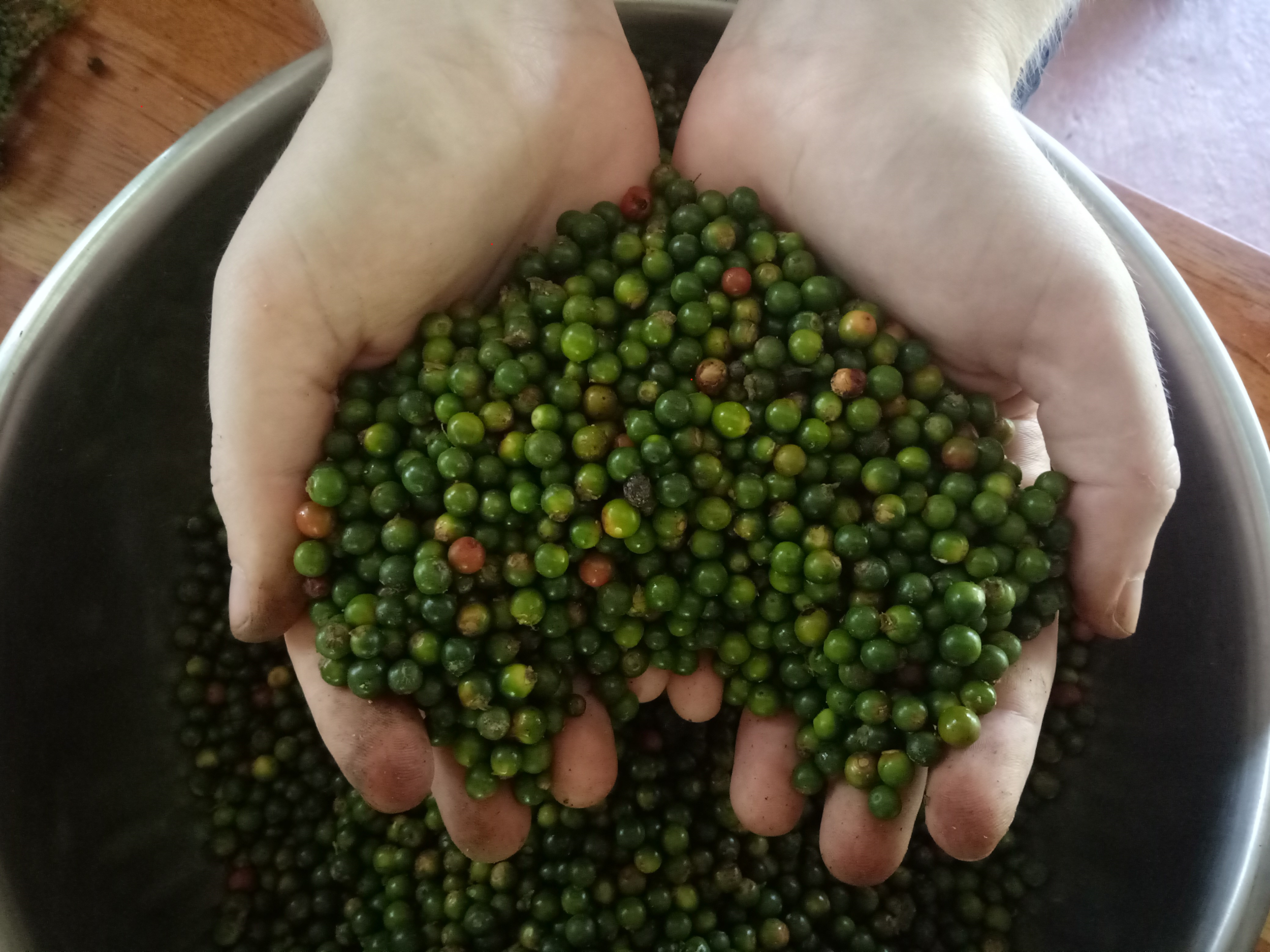
The first time I had pepper that was farm to table was here at Rancho Mastatal where we spent a day harvesting and processing pepper. Pepper is ready to harvest once one of the fruits in a bunch has turned red. First, the we collected the peppercorns in bunches and took them off the branches. We then separated the red berries from the green ones. The red berries become white pepper by soaking them in water for a day and peeling off the red flesh to reveal the white seeds. The seeds are then dried to make the white pepper on our spice racks.
The green berries we picked were destined to become black pepper. We blanched these for 1-2 minutes which starts an enzymatic reaction that turns the pepper black. Then we spread them on a drying rack. They can either be sun-dried, or you can use a dehydrator. Pepper dries to one-third of its weight.

Though the steps may seem simple, this was a very labor intensive process. It took seven of us 3 hours to harvest and process 4.5kg of pepper which dried down to 1.5 kg of pepper. This is about 40 dollars’ worth of pepper. It is truly a wonder that pepper is relatively inexpensive and so readily available. I wonder how many working hands and how many miles it has taken to bring pepper to my meals all these years.
Farm to Table Black Pepper
Farm to table has become a mainstream movement, and the growing awareness about the connection between our health and the well-being of our planet in relation to our diets is such a positive shift in our consciousness. But how would all those amazing farm fresh, local foods taste without spices? What would our omelet be without the king of spice itself?
Permaculture & Spices
While I don’t think people should go into their kitchens and empty their spice racks, I do think it’s important to appreciate all the resources and labor that go into every food we eat as well as understand the history of how it got from the forest to our table. Part of the word permaculture is culture, and it is incredible how pepper affected cultures everywhere and added to a permanent globalization of foods. It influenced the way people prepare, experience, and appreciate food. It changed people’s tastes. It changed cultures’ cuisines. Pepper was a powerful initiator in the transition away from eating local. With the globalization of our diets going back millenniums, what does it mean to truly eat local these days? As I continue to live my life of spice, I will keep asking these questions.
Hope you have a better understanding of the process of black pepper and how it gets from the vine to your grinder.
Speaking of spice… check out our past blog posts about vanilla!
And stay tuned for Dani’s next article on Life of Spice, featuring cinnamon!
Sources and Further Reading
Heinerman’s Encyclopedia of Healing Herbs and Spices by John Heinerman
Black Pepper- Piper Nigrum edited by P.N. Ravindran
Spices – A Global History by Fred Czarra

Tropical Brewing
The craft brewing movement has migrated to Central America and the Caribbean. A growing number of small scale artisanal producers are building on the American Craft Brewing tradition by incorporating local spices and fruits into traditionally brewed ales. To distinguish themselves, from their temperate counterparts, they are adding a tropical flare and creating innovative flavor combinations
by Connor Harron
The craft brewing movement has migrated to Central America and the Caribbean. A growing number of small scale artisanal producers are building on the American Craft Brewing tradition by incorporating local spices and fruits into traditionally brewed ales. To distinguish themselves, from their temperate counterparts, they are adding a tropical flare and creating innovative flavor combinations. For example Domingo7’s Maracuyá Pale Ale (that’s Spanish for Passionfruit) in Costa Rica, Ocean Lab’s B.O.B. - Blood Orange Blonde in Puerto Rico and Lu Bru’s Maiz Azul (Blue Corn) Ale in Mexico all demonstrate how local producers are beginning to incorporate regional ingredients into local craft beer movements. This is surely a positive development and one that leads us to consider other ways we might be able to further highlight local and seasonal ingredients into craft beers.

These efforts will help to make brewing both more sustainable and position craft brewing as a vehicle for more thoroughly exploring terroir, which describes the potential for fermentation to be used as a method of expressing the unique environmental conditions of the places in which our ferments are produced. By using exclusively local ingredients as well as wild captured yeasts, we have the power to capture the unique flavors of seasons and regional differences that allow for near infinite variation and creativity to explore new combinations of flavors that are rooted in cultural tradition while simultaneously pushing the frontier of artesian brewing. As much as I love finding good craft beer in places like Mexico and Costa Rica, I constantly find myself asking if it really makes sense to be brewing beer with imported German Barley and Hops from the Pacific Northwest United States when there are such a plethora of sugar sources and bittering herbs available locally in nearly every corner of the globe. Could we instead develop beers using a hybridized process and create products that are truly local while still maintaining the key characteristics that make beer, beer?
Speaking of, have you ever asked yourself what it is that really makes a beer? It turns out, the answer really depends on who you ask and where you live. In the most general terms, beers are fermented from carbohydrate rich starches (typically grains such as barley) that first need to be enzymatically converted into simple sugars and extracted into a liquid malt before the substrate can be fermented to produce appreciable levels of alcohol. Wines and Ciders on the other hand, are fermented from fruits and simple sugars that can be fermented into alcohol with limited or no processing. In the case of beers, bittering herbs such as hops are commonly added to provide antimicrobial properties, improve shelf stability and add complex flavors to ferments. In the United States, it turns out that hops are not required in the production of beer and that there are many malt substitutes that are allowed in the production of beer, including “rice, grain of any kind, bran, glucose, sugar, and molasses (TTB Ruling, 2008).” This definition is actually quite liberating, and creates the opportunity to experiment with non-traditional malts and bittering herbs in ways that will promote creativity and improve the sustainability of the craft brewing market globally. This flexibility in malt production will be especially important given that recent climate models suggest that the regional distribution of barley production will become increasing restricted over the next 20 years (Nature, 2018).

In Costa Rica, we have been experimenting and finding repeated success using a wide range of local ingredients including banana, corn, rice, cacao beans, coffee and local cane sugar for producing malts. Corn and bananas, for example, both have long cultural traditions of being used in the creation of local beers. In Eastern Africa, Bananas have long been used to create malt for the production of banana beer (Urwaga or Mubisi as it is locally known). Bananas make for an interesting malt base because they fall into a relatively unique category of fruits that when ripe are rich in both simple sugars and complex carbohydrates that can be easily fermented into a strongly alcoholic brew while maintaining a mouthfeel that is remarkably similar to beer brewed from barley. When the ripe bananas are boiled for several hours, the sugars begin to caramelize, transforming the flavor of the malt into a sweet, neutral flavored base that remarkably, tastes very little of banana, making it an ideal substrate for mixing with bitter herbs or other local products such as coffee and chocolate that can be fermented into either an Ale or Stout like brew.

Conversely, in many parts of South America, but perhaps most notably in Peru, Maize has been used for centuries to produce a corn beer called Chicha. Unlike barley, which when sprouted produces a large concentration of Amylase Enzymes (the key types of enzymes needed to convert complex carbohydrates into fermentable sugars), to make a corn beer, these enzymes need to come from another source. The indigenous peoples of South America developed an ingenious solution to this challenge when they discovered that chewing the cooked corn would transform the starchy, carbohydrate rich grain into a sweet masa that could then be re-boiled in water and strained to create a fermentable Wort made purely from Maize. Although many foreigners cringe when they first learn about the process, for the Inca’s, it was a powerful community building practice that would bring people together to sit around the fire, alternating between sharing stories and laughter while chewing the cooked corn and then depositing all of the masa into a large pot. Although they almost assuredly could not have fully comprehended the transformations that were taking place, their solution was so ingenious because human saliva is packed full of the enzymes needed to break down the carbohydrates in corn into fermentable sugars. I experimented with the traditional process a couple years ago, and I have to admit it was a powerful community building process that for me, took the idea of collective fermentation to a whole other level. Talk about terroir!
The problem with the traditional process is that it is incredibly labor intensive. If you are lucky, like me, you might be able to convince your friends to help you chew a few pounds of corn once or twice for the novelty of the experience, but you are likely to be hard pressed to find a consistent source of labor to chew through the many pounds of corn you will need to produce even a few gallons of Peruvian style Chicha. Fortunately, today we have access to many sources of amylase besides our saliva. As it turns out, ripe bananas (and in particular, ripe banana peels), contain a very high concentration of the same amylase enzymes needed to convert the starches in Maize into fermentable sugars. If you think about it, this actually makes a lot of sense. Unripened green bananas and plantains are a very starchy staple food crop that is used culinarily in a similar fashion to potatoes. As the skin yellows and the banana ripens however, the banana naturally transforms those carbohydrates into simple sugars that make dessert bananas so pleasant to eat directly out of hand.
Due to the high concentration of amylase enzymes present in ripe banana peels, they can be dehydrated and pulverized into an enzyme rich powder that can be mixed with ground maize and water and then mashed similarly to a barley based beer between 140-160 F for 2-24 hours (depending on the ratio of corn to powdered banana peels used) before being strained and boiled to make a fermentable wort. You’ll need to taste the Mash or use iodine strips to determine when the conversion has been completed. There are actually lots of fruits and vegetables that are rich in amylase enzymes. Sweet potato, for example, has such a high concentration of these enzymes that its peel is often used in the commercial production of Amylase.
Alternatively, instead of using the enzymes present in another product, it is also possible to ferment grains with certain types of molds that consume starches and in turn naturally produce the enzymes needed to convert the grains of carbohydrates into fermentable sugars. In Japan for example, Aspergillus Oryzae (or Koji as it is better known), is a humble yet miraculous mold that has been grown on rice for millennia in order to sweeten the rice and make Sake. It is also the key ingredient for making naturally brewed Soy Sauce or fermenting Miso due to the rich diversity of enzymes Koji produces that not only sweeten carbohydrate rich foods, but also break down proteins into amino acids that are the basis for savory foods and the flavor of umami. Due to these impressive properties, koji has now made it’s way out of Japan is slowly become increasingly familiar around the globe. This is assuredly a wonderful thing, because it has now been well established that Koji can be grown on a variety of substrates and virtually any grain, including rice, barley and corn, making it an ideal candidate for assisting in the brewing process anywhere on Earth.

To further explore local flavors and novel combinations, while boiling our worts we have been experimenting with using a variety of local bittering herbs and teas to add complex flavors to our beers, including ginger, turmeric, lemongrass, vanilla and many others. During either primary or secondary fermentations, we use nylon mesh bags weighed down with boiled volcanic rocks to infuse fresh fruit from the farm such as Pineapple, Soursop, Starfruit, or freshly roasted Cacao Nibs, just to name a few examples. Finally, by fermenting our beers with mixed cultures, wild captured yeasts and/or locally adapted strains, we have been able to produce ales with several layers of harmonious flavors, which provide depth and complexity that is only possible to achieve with mixed culture fermentation.
I would not have believed what a powerful role yeast and bacteria play in the creation of complex beers and wines when I first started brewing over a decade ago. Now however, I have learned first hand just what a difference the cultures we use can make. The experience of trialing yeast captured off of different fruits and flowers has led me to encounter flavors I never would have dreamed possible. Some have certainly been on the far side of the funky extreme, including cultures that produce the dreaded odor of sweaty feet or burnt rubber. This however, is exactly the reason for small scale trials rather than placing our faith in large scale spontaneous fermentation. Once you discover the joy of fermenting a simple malt of dissolved sugar or Dry Malt Extract with wild yeast and tasting apples, pears, or other citrus fruits magically appear in the finished product, I believe that like me, you will never want to use a commercialized yeast strain on it’s own again.
I believe that by drawing from the richness of our cultural traditions around the world, we have the potential to greatly expand the breadth of our palates and to more intimately link our brews to the time and place in which they were crafted. The craft brewing revolution is still in its infancy and if I am to have a part of to play in it’s development, then Ginger Hibiscus Sake Hybrids, Banana Coffee Stouts, and Mayan Chocolate Ales will be just the tip of the iceberg.

If you would like our simple Hooch recipe, read our blog article with step by step instructions. If you want to learn more about the wild world of fermentation consider joining us for our year long apprenticeship where apprentices go deep into advanced fermentation techniques.

The Basic Pantry Analysis: Design, Food, Sourcing
Cuisine is diet that's unique to a physical place and a human cultural group. We can taste the patterns of modern cuisine in the melding of characteristic ingredients into characteristic forms. Wheat noodles with tomato sauce points us in the direction of Italy. Fermented spiced cabbage leads us to Korean kimchi.
By Laura Killingbeck, Porvenir Design's Food System Designer
The Human Diet as An Ecological System
Cuisine is diet that's unique to a physical place and a human cultural group. We can taste the patterns of modern cuisine in the melding of characteristic ingredients into characteristic forms. Wheat noodles with tomato sauce points us in the direction of Italy. Fermented spiced cabbage leads us to Korean kimchi. Even amid tremendous variation, and even as these cultural foods are exported, appropriated, and evolve in different ways in different places, we are still able in many cases to recognize a cultural and geographical narrative embedded within relational patterns of flavors and forms.
Across the span of human agricultural history, cuisine sprung from ecological relationships—people ate what grew well in their area, and they grew what nourished them. Humans shaped the morphology of plant, animal, and microbial species by selective breeding; in turn, these foods changed the physiology of the human body. Cultural groups vary widely in their tolerance and desire for certain foods—these are genetic adaptations to their peoples' long history of evolution with specific cuisine. The co-transformation of people and food species was exquisitely mediated by the opportunities and limitations of the ecological niche of the place where they lived. Growth was balanced and calibrated within an ecological feedback loop of regenerating resources.
But in recent human history, globalization expanded our access to place and people, while simultaneously breaking this ecological feedback loop. We travel, and food travels; neither is linked, necessarily, in place. People are still connected with the world, but now we are connected differently. This shift is transforming the evolution of cuisine in unprecedented ways.

If you imagine the path of human ecology as a train traveling down a railroad track, globalization is the conductor turning the train onto a new track. Human relationships with food are now evolving in a different direction than they did before. The foundation for cuisine is no longer an ecological relationship between people and place; it is an economic relationship between people and business. Businesses grow or produce food and ship it around the world, where chains of distributors buy it and warehouse it in grocery stores. Surely this is not the only way that food works, and local food cultures still thrive in many areas. But it is a style of human-food interaction that is growing and replacing such local cultures. As we become increasingly separate from our direct relationship with the ecological patterns that once mediated food and diet, we become more deeply fused with a new, abstract, relationship with global commerce. The foods we like to eat often have less to do with healthy ecology, and more to do with macroeconomics and marketing.
We know there are a lot of problems with this. The Western Diet (aka, global cuisine) is correlated to chronic disease and poor health. Mass agriculture depletes soil and species diversity. Industrial pesticides and fertilizers damage ecosystems. There is a lot more to say but I don't have to say it—on some level we know, all the time, that this is bad. And even as we know, we still eat global-industrial foods, because we're hungry, its what we know, and its what's there.

Post-Harvest Permaculture Design
Permaculture design is essentially applied ecology for human development. It studies and teaches how life relates to place, with the object of sustaining that life and that place. A lot of the literature within Permaculture Design centers on the infrastructure development of building, landscape, and agricultural systems. It most often highlights the agricultural side, with ideas and methods of learning how to integrate human agricultural systems with the larger ecology of life on earth.
But interestingly, the focus on agricultural systems within Permaculture Design methodologies often only lightly brushes post-harvest food handling and cuisine development. The general thinking is that once people understand food production as a functional part of ecological systems, they will be able to grow more food. This has been very successful for many people, with one caveat—growing plants, animals, or microbial species that are edible does not mean you are growing food that is ready to eat. A a plot of wheat and a chicken pecking bugs can be wonderful parts of an agricultural ecosystem, but if you want a chicken sandwich there is still a lot of work to do.
Over the last nine years I've worked with two farms and education centers who dedicated themselves to the process of farm-to-table food production—one in temperate Massachusetts, and the other in tropical Costa Rica. This allowed me to study and practice food preservation and processing across climates, and see the similarities and differences that unfolded.

At Rancho Mastatal in Costa Rica, even very common foods, like malanga, tiquisque, cuadrados, pejibaye, and chaya were all new to us. And what do you do with a sudden hundred pounds of ripe bananas? At Round the Bend Farm in Massachusetts, we needed to preserve large quantities of food seasonally to last the winter, in a way that was totally different than in the tropics. We also transitioned from a home-scale cooking facility to one which could serve hundreds, and had to scale our systems up to meet new demands. At both organizations, it took us a lot of time, and a lot of trial and error, to acquire the skills, tools, and labor to do these things. And to do these things efficiently, it took structured seasonal planning. The teaspoon of ginger you need now in your recipe had to be grown a year ago, then harvested, dried, powdered, and stored. We had to learn how to organize ourselves in relation to local food, in ways that were intrinsically different from how we used to organize ourselves in relation to globalized foods.
The human element of how we interacted with food based on our personal and cultural backgrounds was another huge piece of the puzzle for local eating, especially in Costa Rica. We craved western-style bread products; people didn't always like Costa Rican cuisine; some people were afraid of new foods like fermented bananas. Eating locally meant coming to terms with the cultural references for desirability of foods we had brought with us, in relation to the ecological and cultural backdrop of a new country and climate. We had to adapt ourselves to new styles of cuisine, and adapt that cuisine to ourselves as newcomers.
Most of my work in Costa Rica and Massachusetts was to create, systematize, and implement post-harvest food processing and preservation strategies based on farm foods. I also worked with numerous farm owners, communities, and homesteaders who were and are in the process of divesting from their dependence on global-market food supplies. It is through these relationships and experiences that I began to notice consistent patterns in the challenges people faced in transforming their farms into food. I started comparing patterns of limitations and successes that people were reporting, with those of the organizations I was working with. I used permaculture design to organize these patterns into a systematic format that I could use to consult with people about how to achieve more efficient and accelerated farm-to-table food system success.

I call this consultation service the Basic Pantry Analysis. The title and process drew inspiration from many collaborators in the fields of permaculture design and farm-to-table cuisine; in particular the work of Costa Rican ethnobotonist Rafael Ocampo, as well as that of the Sat Yoga Institute. A similar process focused on family nutrition has also been promoted by the Instituto de Nutrición de Centroamérica y Panamá (INCAP). My version of this process is based on my experience working with farms and communities, and is an adaptation of a wonderful wealth of collaboration among many individuals and organizations.
The Basic Pantry Analysis
The Basic Pantry Analysis matches the ecological needs of your land, with your cultural and personal frames of reference, your dietary needs and desires, and your resource capacity, to form a “basic pantry” of ingredients, whole and value added, that you will use to develop your own dynamic cuisine—that is, the meals you eat every day to sustain yourself in the place you live. This process is useful for anyone who wants to accelerate their ability to grow, process, and eat local foods.
Your Basic Pantry will be designed through a combination of personal decisions and desires, which inform a multitude of what are often very simple tasks. Those big ideas and those little tasks are what build the complex whole. The consultation service is divided into four primary parts: Vision, Layout, Basic Pantry, and Adaptation. The scope of service varies depending on the client's needs and desires.

Sample Outline of Basic Pantry Service
Please note this varies based on client needs.
Vision
This is the overall concept of your cuisine. Exploration of goals and values, and how those relate to your capacity. Make decisions about priorities for ecological, cultural, dietary, financial, factors.
What the client receives:
• A one paragraph vision statement for your cuisine.
• A one page analysis of the factors and values that contribute to that vision.
• A sample set of meals you could expect to eat over the course of the year.
Layout
This is the architectural layout of your plan—it shows clearly how different food elements and tasks fit into your cuisine over time.
What the client receives:
• Daily, weekly, monthly, and/or annual list of post-harvest food tasks for your mature food system.
• Analysis of tools and infrastructure.
• Analysis of skills and labor needed.
• Basic five year analysis of how your food system transitions through time.
Basic Pantry
You need lots of ingredients to make meals—this is the list of those ingredients, whole and value-added. I work closely with the agricultural team to make recommendations about food species.
What the client receives:
• Sourcing and Growing list
• Processed and Preserved foods list
Adaptation
Your Basic Pantry Analysis is a starting point, not an end. It will grow and shift and evolve as you and your land do. This section is a structured feedback loop to help you grow and shift your cuisine based on your priorities.
What the client receives:
• Design concept follow up questions
• Blank harvest, processing, and/or other charts for feedback
• Supporting appendix—contains client-specific documents on further skills and strategies, and/or other supplementary documentation as needed.
For more information on costs and deliverables of this service please write our team at info@porvenirdesign.com.
For information on food related workshops at Rancho Mastatal please see go to our Workshops page.


Flexitarianism: Living and Sharing Solutions to Climate Change
DISCLAIMER: These are my thoughts and experiences on what can be a deeply cultural, charged and personal topic: diet. There is a lot we don’t know, especially when it comes to what a sustainable diet is. For one, most studies have been centred in high-income Western countries (Jones et al., 2016); it’s also still largely unclear exactly what a “healthy diet” should consist of, nevertheless what a truly sustainable society would look like. Integrating all of these concepts is an enormous challenge.
by Matthew Livingston
Matt is currently one of the Ranch's year-long apprentices.

DISCLAIMER: These are my thoughts and experiences on what can be a deeply cultural, charged and personal topic: diet. There is a lot we don’t know, especially when it comes to what a sustainable diet is. For one, most studies have been centred in high-income Western countries (Jones et al., 2016); it’s also still largely unclear exactly what a “healthy diet” should consist of, nevertheless what a truly sustainable society would look like. Integrating all of these concepts is an enormous challenge.
“Defining what represents a macro-nutritionally balanced diet remains an open question and a high priority in nutrition research.” (Song et al., 2016)
Before coming to the Ranch, I had been vegetarian for about a year and a half, predominantly for environmental reasons. Currently, I would probably classify as a “flexitarian” or “ethical omnivore”, as are most of the denizens here, with the majority of the diet being plant-based. Ideally ~95% of our calories would come from plants, due to extensive research on the health, longevity and environmental benefits of eating a predominantly plant-based diet (1, 2, 3). A 95:5 plant to meat ratio is manifest in all of the Blue Zones (4), examples being Okinawa & Sardinia, where people live the longest and most healthful lives in the world. Allow me to explain how I came to this decision and why I’m sticking with it for now…
My original swap to vegetarianism was influenced by my desire to live “more sustainably”, and healthily, as it is for many people now. I saw the documentary film “Cowspiracy” (bear with me) and this initiated my research into food and agriculture, which carried over into my environmental sustainability degree. It was also enough to shift one of my fundamental behavioural patterns – my diet. It was a little tough going at first, but I soon found that I didn’t miss eating meat much at all. I felt a bit better about myself, “knowing” that I wasn’t contributing as much to global warming, as my research indicated that changing one’s diet can be one of the most impactful ways of reducing your carbon footprint (Aleksandrowicz et al., 2016)…

Fast forward to May 2017, when I travelled to Ridgedale Permaculture farm in Sweden for my Permaculture Design Course with Richard Perkins. Richard is a proud meat-eater, being particularly fond of freshly line-caught fish, properly cured bacon & sausages, and a nice, juicy steak from locally reared, regeneratively farmed livestock, as viewers of his Youtube channel will know. He was keen to point out that there are in fact “no ecosystems on this planet that exist without animals driving the nutrient cycling” (Perkins, 2016). Ecosystems depend on the cycling of nutrients (and minerals) in order to function, and these nutrients can be accumulated, dispersed and concentrated by animals in such a way as to benefit the whole.
One beautiful example of this is the salmon of British Columbia, that feed the bears, eagles, forests and pretty much everything else that lives there with nitrogen and other accumulated minerals from the ocean when they return to their spawning grounds. Another was the Great Plains of North America, where tens of millions of bison roamed. These prairie lands were extraordinarily diverse habitats for a multitude of co-evolved flora & fauna, micro and macroscopic. Now they have predominantly been turned into endless fields of corn, wheat and soybeans, using fossil-fuel powered machinery and chemicals to maximise profit whilst depleting soil of not only its nutrients, contributing to erosion and nitrogen runoff, but its life too.
Regenerative Agriculture aims to work differently. The challenge is to maintain healthy yields and livelihoods whilst simultaneously enriching soil, biodiversity and ecosystems and improving the system’s ability to regenerate itself. Through various mechanisms, we can actually draw down carbon from the atmosphere and store it in soils and vegetation. What’s more, animals can help achieve this goal. Grazing animals such as bison co-evolved with grasses (which are extremely efficient sunlight accumulators, astronomically more so than our photovoltaic panels), such that massive herds would graze through perennial grasses whilst defecating and trampling the remnants down to create a mulch that left the soil covered, before moving on. The grasses would get a natural fertiliser boost but wouldn’t be eaten down completely, which meant that they could grow back and not have to deplete their soil nutrient reserves. Over time, this kind of rotational grazing, especially when well-managed, can build significant amounts of soil. At Ridgedale, they have employed it, along with other techniques such as Keyline Design, to build over 6 inches of soil in just four seasons. There is even a project called Pleistocene Park in northern Siberia that hopes to repopulate the Mammoth Steppe, which historically supported one of the largest densities of herbivores in history and could function as a massive carbon sink. Surely we need animals as a part of our (agri)culture, then?

Well, you might point out that ruminant animals like cows and sheep that we are now cultivating in extremely large numbers produce methane as a part of their digestion, a greenhouse gas with ~30 times more “global warming potential” than CO2. Greenhouse gas accountancy is a complex topic and there is still significant debate as to whether the sequestered carbon pays off the methane produced during the lifecycle of the animal (see Garnett et al., 2017 & P.P.S.); that said, it’s also possible that the earth historically supported much larger numbers of herbivores, many of which were likely driven extinct by humans thus contributing to ecosystem disruption, as discussed in Sapiens and elsewhere (7, 8).
Another common argument is that eating animals is calorically inefficient when we could eat what we feed them. I would say this is a partially valid point in that animals, especially cattle, often need more land and water to produce than their plant-based counterparts, but it’s less valid when discussing purely grass-fed animals whose rumens are evolutionarily designed to digest grass, which most of us humans obviously don’t do very well; this suggests that if you want to obtain food from a parcel of land that wants to be grassland, you could force it to be not grassland, or you could manage and eat animals that are designed to live in and perpetuate that ecosystem. The Sustainable Food Trust goes so far as to say “the only sustainable way to obtain food from grassland is to graze it with ruminants”, which does sound a bit extreme especially considering that rabbits and geese are just two examples of non-ruminants that can be grass-fed. Livestock especially are getting a lot of bad rap due to the significant environmental damages of deforestation for pasture (an example of forcing an ecosystem to be something it doesn’t want to be) and their methane and nitrous oxide emissions (Steinfield, 2006; Stoll-Kleemann, 2015; many others).

Whilst not negligible, I’m concerned that many of the livestock systems under scrutiny aren’t representative of best-practice regenerative methods and that there is definitely the problem of reducing a living creature to the efficiency metric of its greenhouse gas emissions per kg of meat without considering all of its other beneficial functions and services; this metric has led people to the conclusion that “landless systems” or feedlots are better for the environment (Garnett et al., 2017), despite animal welfare being known to be abysmal and where wastes are concentrated and rarely dealt with properly. These factors go against the principles of regenerative agriculture and thus wouldn’t be allowed to continue; yes, grass-fed cows and other ruminants require more land, but we could limit the amount of land devoted to raising them and thereby reduce the total stock and consumption. In this manner, by allowing animals and ecosystems to express their true functions and behaviours according to the co-evolutionary properties of the animals and their environments, it might be possible for humans to yield ethically sound animal-derived food that positively contributes to the whole-earth system.
There are also a few points I would like to discuss with regards to plant-based (especially vegan) diets. Vegetables and whole grains, which form the staples of most healthful plant-based diets, as well as fruits and nuts, obviously take some amount of energy to produce, thus we need to consider where this energy or fertility comes from. We also need to consider where the dietary fat, protein and vitamin B12 will come from (amongst other nutrients/minerals) when meat is abstained from completely; I believe it is possible to meet your protein needs on a plant-based diet (Ranganathan et al., 2016), but doing so in the dead of winter in a temperature climate in a sustainable manner might be more difficult (are the Inuits an unsustainable people?)

Even the “most sustainable”farming methods I am aware of (which may or may not be organic certified) acknowledge that the inputs to grow food ultimately have to come from biological nitrogen fixation, conversion via animals, or inorganic elements (chemicals). For example, compost is vital to almost all organic, traditional and regenerative farms, and often incorporates animal manure, which adds additional nitrogen and biology to the soil and ultimately to the plants. The only exceptions I can think of to this would be Jean-Pain compost (which uses only wood chips and water) and Masanobu Fukuoka style rice and winter wheat cultivation, where the straw from the previous crop was left on the field as mulch and nutrients. Even the ancient and incredibly successful Meso-american Chinampas systems, as well as the rice cultivating nations of China, South Korea and Japan, have utilised ferti-irrigation techniques comprised predominantly of the wastes of fish as nutrients. Thus, since no sustainable farming methods can use inorganic chemicals derived from fossil fuels, most consumers that eat a purely plant-based diet are still deriving their nutrients from (the functioning and inclusion of) animals… Perhaps the question then becomes can, should and how would we integrate animals into our farming systems without eating them?
I’m still considering the implications of these questions and my position on the frequency and type of my animal consumption. We’ve had four “Pig Parties” in the four months I’ve been here at the Ranch, and chicken about once a week on average, all of which was reared and slaughtered locally in Mastatal. This corresponds pretty well to a 95:5 plant:meat ratio (see P.P.P.S.). For the first of the two pigs I visited the farm where it lived, died and bore witness to how it was processed; for the second we had an intro on how to properly butcher a pig. I think this is a crucial missing link for the majority of meat consumers and we need to continue building awareness of the realities of industrial slaughterhouses. Both of the animals I visited lived outdoors in tropical home gardens, feeding on bananas and other food scraps, although I’ve now been told it’s likely they were fed some concentrated feed. Pigs will eat just about anything, including chickens – they are probably the ultimate organic material recycling animal. Feeding farm animals to other farm animals is illegal in many parts of the world, but we need to always be searching for ways to turn “waste” into food, and pigs are one effective way of doing so. They in turn provide manure to feed back into the ecosystem and, when the time is right, are themselves converted into protein, fat and flavour for dozens of people for multiple meals. They can also provide piglets so that the system can continue, perhaps indefinitely. Without pigs in this system, you would have to replace the dietary protein and fat, which in our climate would likely come from more annual beans and palm oil from cleared forest land, as well as find another method of recycling the food scraps (vermi-compost is great, but doesn’t provide food in return).

Based on this discussion, I would like to present my initial take on a scale to classify diets based on their ability to be sustained, from best to worst:
Local regenerative
Local organic certified
Non-local regenerative
Non-local organic certified (many vegetarians/vegans in cities)
Local conventional
Non-local conventional (most consumers)
Where locality is on a scale from hyper-local (within 5km), to local (within 50km), to regional (within 250km), to non-local (further than 250km). Another important variable that goes hand-in-hand with locality is seasonality. Thus a checklist for regenerative dietary choices might be something like:
Is it local? (as the crow flies to place of origin): <=5km — <=50km — <=250km — >250km — Don’t know
Does it come from your garden, your nearest farmer, your nearest market, or another country?
Is it in season?: Yes — No — Don’t know
Are you regularly eating avocado, chocolate or coffee in winter in a temperate climate? What can you eat and drink locally and seasonally to replace imported goods you habitually desire?
Are you consuming fermented foods and beverages? The Japanese have one of the strongest food cultures (called Washoku 和食) and longest lived people in the world, and 5/6 of their staple food ingredients are fermented foods. Fermentation is not only extremely beneficial for your health, but ties in beautifully with preserving the abundance of the harvest.
Was it produced regeneratively?
Did it build soil and/or sequester carbon?: Yes — No — Don’t know
Did its production support local farmer(s)/community? Yes — No — Don’t know
Did it use no chemicals and no or very little fossil-fuel powered machinery in its production? Yes — No — Don’t know

It is my guess that many consumers would tick No or Don’t Know for every field, whilst falling into the worst category (non-local conventional). We need to shift first from ignorance to awareness before we can shift to understanding and action – behavioural change is flipping hard! All I can say right now is the link between diet and planetary health is crucial in navigating our transition towards a sustainable prosperity.
Let me be clear: plant-based diets are absolutely a big part of the solution, and there are many cases (including the average Western diet) where meat consumption should be reduced, but nevertheless animals aren’t the enemy. Vegans, vegetarians and ethical omnivores have a common enemy, and that is industrial agriculture (especially feedlots, which are completely awful). Meat in moderation, i.e. Meat Mondays as opposed to Meatless Mondays, may be a way forward for many people, rather than jumping straight to 100% plant-based diets based on quinoa and avocados shipped in from someplace slightly more exotic. I think this better follows the Transition Ethic that Rob Hopkins thoroughly emphasises via the Transition Network, by meeting people where they’re at – there is an irrepressible demand for meat due to complex sociocultural factors that will take time to shift away from, but if we can make ethical compromises that simultaneously shift mindsets, we will be well on our way to a more symbiotic relationship between humans and Nature.

May The Triforce (Plants, Animals and Fungi!) Be With You!
P.S. Follow the debate here, and here.
P.P.S. For the adventurous you can read my Regenerative Agriculture Brief and explore the references there too!
P.P.P.S. Three meals a day with chicken for 52 meals and pork for 12 meals in a year = (365*3-(52+12))/(365*3)*100 = 94.2%.
References, a.k.a. some of the things I’ve read:
Badgley, C. et al., 2017. Organic agriculture and the global food supply.
Davis, K.F. et al., 2016. Meeting future food demand with current agricultural resources.
Garnett, T. et al., 2017. Grazed and Confused? Ruminating on cattle, grazing systems, methane, nitrous oxide, the soil carbon sequestration question – and what it all means for greenhouse gas emissions. FCRN, University of Oxford.
Jones et al., 2016. A Systematic Review of the Measurement of Sustainable Diets.
Perkins, R., 2016. Making Small Farms Work: A Pragmatic Whole Systems Approach to Profitable Regenerative Agriculture.
Ranganathan, J. et al., 2016. Shifting Diets for a Sustainable Future. World Resources Institute.
Smith, P.S. et al., 2014. AR5, WG3, Ch 11, Agriculture, Forestry and Other Land Use (AFOLU). Ar5, Wg3, pp.811–922.
Steinfield, H.G., 2006. Livestock’s role in climate change and air pollution. Livestock’s Long Shadow. Environmental Issues and Options, pp.79–123. Available at: http://www.fao.org/docrep/010/a0701e/a0701e00.HTM.
Stoll-Kleemann, S. & O’Riordan, T., 2015. The Sustainability Challenges of Our Meat and Dairy Diets.
Weber, C.L. & Matthews, H.S., 2008. Food-miles and the relative climate impacts of food choices in the United States. Environmental Science and Technology, 42(10), pp.3508–3513.
West el al., 2015. Leverage points for improving global
food security and the environment.

Categories
Topics
- Agriculture 6
- Agroforestry 21
- Animals 2
- Apprenticeship 19
- Appropriate Technology 6
- Backpacking 1
- Bananas 1
- Basic Pantry 4
- Biochar 1
- Books 3
- Build Your Own Home 1
- Central America 5
- Chiles 1
- Cinnamon 1
- Clay Carving 1
- Climate 2
- Climate Change 1
- Cob oven 1
- Communication 5
- Community 24
- Compost 2
- Composting Toilets 2
- Condiments 1
- Conservation 2
- Cooking 4
- Costa Rica 18
- Design 10
- Earthen Construction 10
- Eat Local 2
- Ecohome 1
- Education 9
- Environment 3
- Ethics 4
- Farm to Table 12
- Fasting 1
- Fermentation 14
- Food 22
- Food Choices 8
- Food Forest 8
- Food Processing 15
- Food Systems 12
- Gap Year 1
- Gardening 5
- Ginger Beer 1
- Harvest 2
- Health 12
- Healthy living 5
- Homemade 2
- Homestead 8
- Internet 2