

BLOG
Stories, articles, and updates from the Ranch community.

Why Rootedness Matters
Rootedness can create compassion and understanding for the place where we are, know, and love. I have seen the benefits firsthand from some of amazing people that were born in Mastatal and continue to call this place home. They anchor the business and environmental communities here.
By Core Team Member Tim O’Hara
Costa Rica is a popular destination for North American and European families looking to resettle in a place where life appears more promising. These desires may come from the need to escape a bad situation or a wish to find a better life. It’s a phenomenon that dates back thousands of years. We are a species that suffers from what I refer to as the “grass is greener syndrome”. We commonly dream of finding our Shangri-La somewhere different from where we were raised.
I grew up developing relatively deep roots in my hometown in upstate New York. But as a result of societal pressures, I moved away for college and never went back to my hometown to live full-time. These non-provincial experiences have been fruitful, transformational, and important to me to develop a more well-rounded view of the world. They also helped to nurture a tolerance and understanding for how others live. Nevertheless, they pushed against the societal benefits of growing deeper roots in the towns where we are born. With so many people uprooted, due to climate catastrophe, war, persecution, the desire to see the world or economic pressures, I fear that like a plant ripped up from the ground, this type of restless movement can result in community erosion, family disintegration, and a loss of geographical literacy. There are always tradeoffs, but I think that we should, when appropriate and possible, put more effort into encouraging humans to stay closer to home to do the good work that’s needed in every community around the world. Wealth continues to congregate in the “best” cities, leaving small towns and rural areas bereft of intellectual and physical stamina. I say this having left my home 30 years ago, so admittedly my perspective might come across as “curious.”
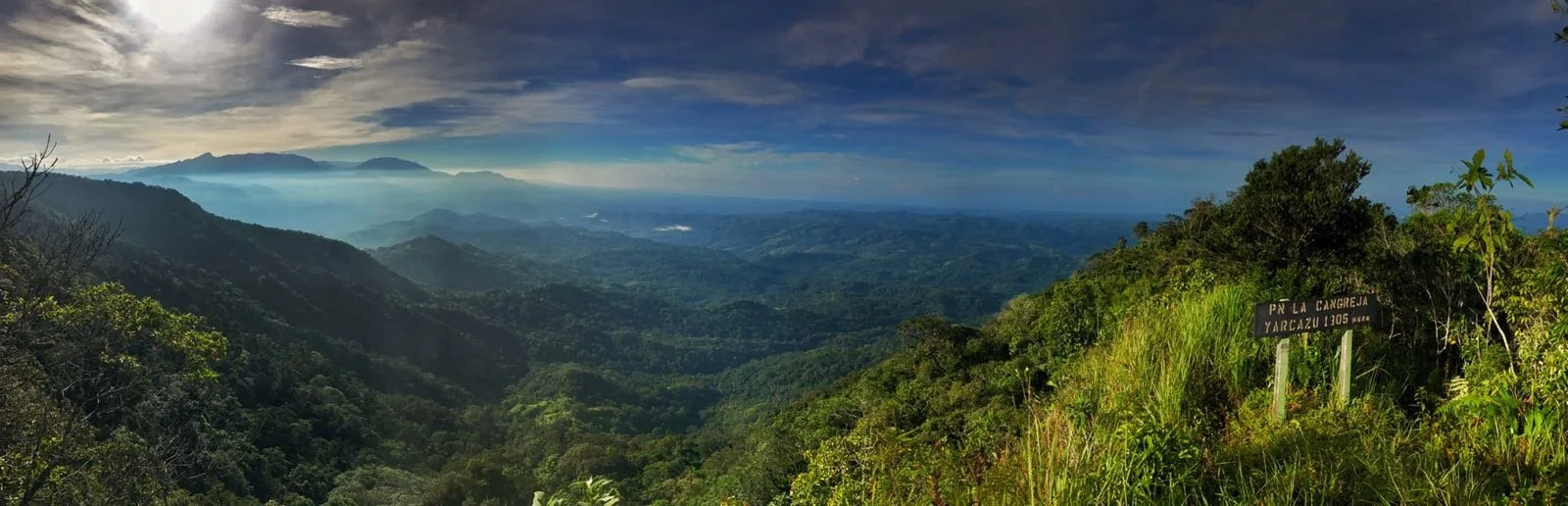
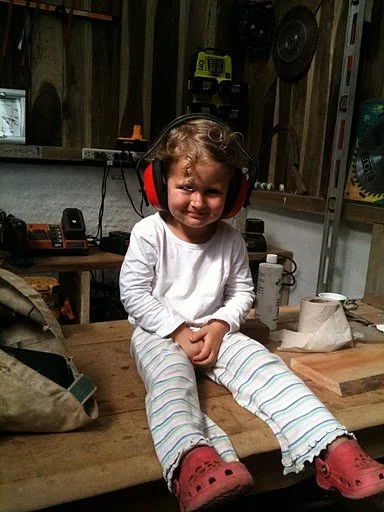
Robin and I started this business in 2000. We moved to rural Costa Rica in 2001 and in 2008 started a family with the arrival of our daughter Sole. Mastatal has been a challenging and amazing place to run an enterprise and raise a little girl. Sole has had what many people would consider a non-traditional upbringing. She grew up without diapers, went to an elementary school with 1 teacher and 10 students, and goes to a high school with 25. She plays unorganized soccer just about everyday and hikes to a nearby waterfall multiple days a week where she jumps off cliffs and catches freshwater shrimp and crabs. She watches out for snakes on her nightly trips home to an earthen house overlooking La Cangreja and has had to survive her early teenage years with horrible internet. She cooks for our entire community and is by far the best baker in town. We are so thankful for the environment that she has spent her first 15 years in, though it has been far from perfect.
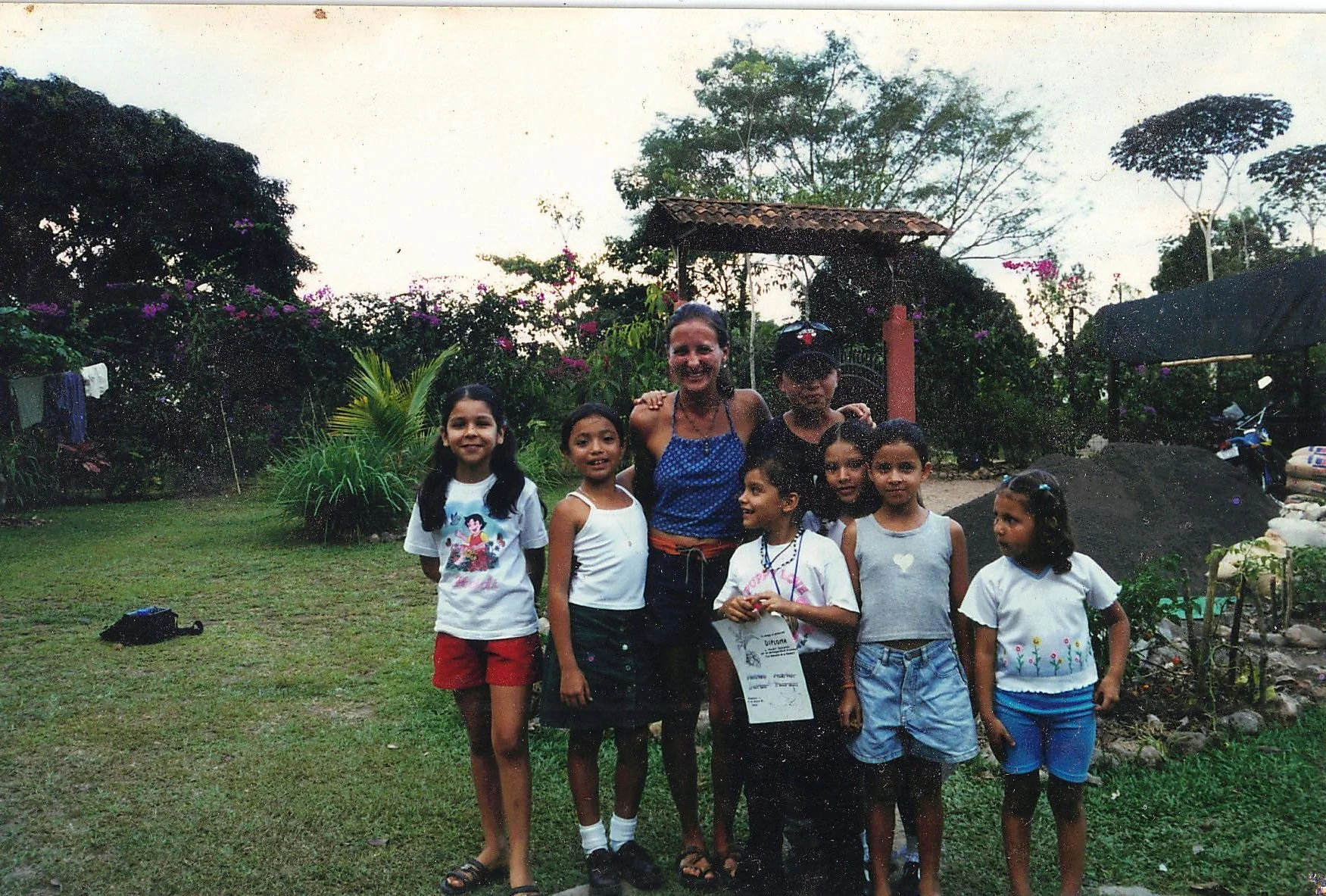
Upon our arrival to Mastatal, we were definitive outsiders who had moved from afar into a small, quiet, depopulating village without much happening. There were no phones, terrible road access, and no formal businesses. Our first years here required a lot of energy to begin developing relationships and friendships with the people of our adopted village. It was some of the hardest but most rewarding work that we did and continue to do. To feel at home anywhere requires a certain level of acceptance and connection, and this only comes with intention, compassion, understanding, sharing, and an acceptance of vulnerability. And it usually takes time. It was not an easy or fast path for us, but one that gradually crept into our lives quietly. It led to the rootedness that community strength is built on, and a vested interest in the future of what has become our home.
This lifestyle choice has come with its sacrifices. For me the largest of these has been 2 precious decades geographically distant from the people that I hold nearest and dearest to my heart. It has not been a minor loss. We have missed important family gatherings, weddings, births, deaths and precious time with kin. Our lives are full of compromises, and this choice, although it has brought great joy and happiness, has a sad component that is part of being a human living on this earth at this time. We have to pick our battles, and being able to go through a well-thought out decision making process when contemplating a move like we did is important. I would suggest not running for the hills with each passing doom and gloom story that you hear about on the news. Our problems at home are oftentimes universal, and the battles should sometimes be fought at home, where we can garner the most support, and perhaps have the greatest positive impact. This might seem strange advice from a transplant who has carved out a nice life abroad, but I think that rootedness is an important consideration for many people striving to attain meaning and happiness in their lives.

Rootedness can create compassion and understanding for the place where we are, know, and love. I have seen the benefits firsthand from some of amazing people that were born in Mastatal and continue to call this place home. They anchor the business and environmental communities here. They are smart, savvy, entrepreneurial, caring and vested. They are raising their families here, inheriting their family farms, planting food, and against all odds bringing about the revitalization of a small rural community. They are selling organic chocolate, offering amazing natural history and birding tours, preserving forests, planting trees, and running our local government. And after 22 years I do finally feel rooted here, but it took time, energy and resources that I could’ve also dedicated to the town that gave me so much as a youth, and I think that’s worth looking into a bit deeper for everyone contemplating where to call home.

Unexpected Aspects of Permacultural Communal Living
A grand year is made up of many aspects, mundane and beautiful. Things expected and shocking are sure to come. It is most of what I (we!) can do to approach it with grace, and let come what may.
By 2023 apprentice
Community living has been a positive experience for me so far. I have felt its benefits in my opportunities for quiet time away, knowing daily tasks can still be completed while individuals have time for rest. I have felt its benefits during our largest social nights, when incredible food, conversation, games, music, and travellers can all be found under the same roof. During times in between, I am discovering new benefits all the time; some are to be expected when living around others, and others come out of the blue! Let's look.

My fellow apprentices getting ready to learn about plastering!
To be clear, life as an apprentice at Rancho Mastatal is my first experience in community living beyond living in a private home within a neighborhood, or in an apartment with a few others. The former has not felt like existence as a true community to me - I led a private life among others who did the same. We interacted in a friendly manner, but beyond my childhood friendships I rarely felt a deep involvement in my neighbors' lives. The latter was more communal: shared facilities, responsibilities of cleaning and organization, and public space meant a deeper level of involvement in my roommates' lives. Being introduced to a preexisting community as a new contributing member was a shock, but thus far has been a positive one.

The Hankey House, where the apprentices live, viewed from the Goat Barn
One of the first aspects of community living that I had to adapt to was a new standard of privacy: The seven of us share a toilet and two showers. The Hankey House houses five apprentices with hardly a single solid wall in the building, and most public spaces in the Ranch are wide open to the jungle air and to passing observers. In fact, our group's level of privacy is apparently less than that of previous apprentice groups: a massive cluster of bamboo and surrounding vegetation between our two livings spaces was felled at the end of 2022, providing a very clear line of sight between the main area of the Hankey House and the porch of the Goat Barn. My partner and I occupy the Barn while the five others each have space in the Hankey -- if any of the seven of us spend time in our respective "living rooms," we are clearly visible to each other. In addition, some unfortunate hedge maintanance next to the Barn has left the bathroom and showers almost entirely visible from our porch (it seemed best not to show this in photographic form...) -- thus, we find opportunities to respect each others' privacy frequently!

Viewed from the top floor of the Hankey, the Goat Barn (left) and showers and bathroom (right). Also note the bright green bush in the bottom-center, which is what remains of the felled bamboo cluster from last year!
It would be easy to critique this living situation - its drawbacks can be detrimental if the users of the facilities are made uncomfortable. However, we are here for the year! We are seven new people in a permacultural education facility that hosts dozens at a time. We have been welcomed with open arms by the team here, fed and housed and accomodated for: how could we complain in a space of such blessings? We avert our gaze from showering neighbors, and chuckle together later. Changing clothes on your porch is a risk, but one with no lasting consequences. If a mutually friendly space can be created, the lack of immediate privacy can be much more of a goof than a discomfort.

The inside of the Hankey House! There are five bedrooms total, and you can *kind of* see two from here. A very beautiful communal space, built with as many aspects of permaculture as possible in mind!
Another aspect of a permacultural lifestyle which I hadn't a clear idea of was the allottment of our daily tasks; of course, coming in we all knew that there would be a plethora of work to go around for those living on a Ranch. I suppose what I didn't have a clear idea of was how organized it would be, and so apparently evenly distributed. The apprentices are allotted "Community Contribution skills," or CC skills, and are designed to switch every six weeks. We focus on these every morning, aiming to have finished our daily tasks by 7:15, granting us a little spare time before our first work party of the day. With this system seven individual tasks, each with its own dynamic system and set of moving parts, are completed every day in a short amount of time -- if one person or a duo were made to do all of these, it would take all morning or longer! The efficiency of this system speaks a lot to the amount of time the Ranch has had to design and refine it. A constant process of design, analysis, and redesign is integral to the permacultural approach to life! Just by the nature of the design and implementation process, it wouldn't be a shock to see this system change within the course of this year, even with the time it has had beforehand to establish itself.

The methane bio-digester, where manure is converted to rich compost and cooking gas

A pathway surrounded by greens used in our salads every day!
To be true we have only been here a short amount of time -- much more time than we have yet spent still awaits us. It is an exciting prospect. Many people will come and go, and here we will be! Helping each other out when we can, switching chores, trading shifts in the kitchen. A grand year is made up of many aspects, mundane and beautiful. Things expected and shocking are sure to come. It is most of what I (we!) can do to approach it with grace, and let come what may. The same can be said for all folk; you don't have to be living on a Ranch to let the principles of a collaborative community enrich you. Enjoy yourself! Help your neighbor plant, or rake, or daydream! Community binds us, and the pieces of it which you don't expect may very well become the most dear to you.

Beautiful space in between facilities used by the community every day. The building pictured is the Food Smithy, where harvested goods go for processing and loads of fermentation occurs. Behind me is a permaculture-design herb and veggie garden.
Read these past blogs about community living
How to Run a Permaculture Internship
Living Without Walls- A Year of Jungle Community Living
Enriching Community Soil: 5 Simple Strategies That Support Sustainable Relationships

Gardening and Permaculture practices at the Ranch
Here at the Ranch the year long apprentices have various roles and functions that support the Ranch community. By taking on responsibilities and managing certain areas we the chance to learn and experience those areas on a deeper level . Part of the educational model created by the ranch team is a monthly rotation of these so called life skills. Each apprentice transitions their life skill to the next apprentice, passing on all of the relevant information to their colleague in order to complete the various tasks associated with each life skill.
by Diana Dagash
2019 Apprentice

our front gardens
Here at the Ranch the year long apprentices have various roles and functions that support the Ranch community. By taking on responsibilities and managing certain areas we the chance to learn and experience those areas on a deeper level . Part of the educational model created by the ranch team is a monthly rotation of these so called life skills. Each apprentice transitions their life skill to the next apprentice, passing on all of the relevant information to their colleague in order to complete the various tasks associated with each life skill.
One of the life skills is currently called the Garden Gnome. I would like to share some of my experience and reflections from doing this task every morning for a month. The garden gnome is in charge of maintaining the front gardens. This is referred to as our zone 1 garden using permaculture lingo. It is the area that is in closest in proximity to the most frequently used space- the main house. In the Zone 1 gardens we grow herbs, annual and perennial crops such as mustard greens, katuk, Haitian basket vine, hibiscus, cucumbers, squash, yard long beans,wing beans, radishes, sweet potato, moringa, basil, oregano, mint, parsley and curry leaf and other amazing tropical goodies which we use in our kitchen everyday. Having these crops growing in close proximity to where we spend most of our time allows us to easily provide the daily maintenance of this space such as watering, harvesting and weeding.
In Rancho Mastatal we approach gardening through a permaculture lens. By mimicking the patterns in nature we are able to create micro climates in which our crops thrive. We create systems that have many functions and support other systems in their functions, allowing them to thrive in harmony with nature. We apply a range of those practices at the ranch and we continue learning and experimenting with new possibilities.
Given that we live in the tropics we have two opposite seasons, about half the year its is dry and the other half rainy. Although the dry season has its own challenges I can only speak from my own experience taking care of the garden in the rainy season, for instance i believe that in the rainy season there is a lot of weeding whereas in the dry season there is a lot of watering!
As the rains increase in volume and frequency it is a time when everything begins to grow rapidly. The jungle fills up with even more green vegetation, popping out of every space available. It rains consistently every afternoon , sometimes all day and night. The soil is saturated . It is a happy time for ALL living things to thrive, including some of the more challenging species like mold, fungus and insects. Some of our crops were over taken by fungus or eaten by insects, others became over saturated with water as they were lacking sun and/or air flow. As with every challenge, i found an opportunity to research and experiment with natural recipes for pest and fungus control.
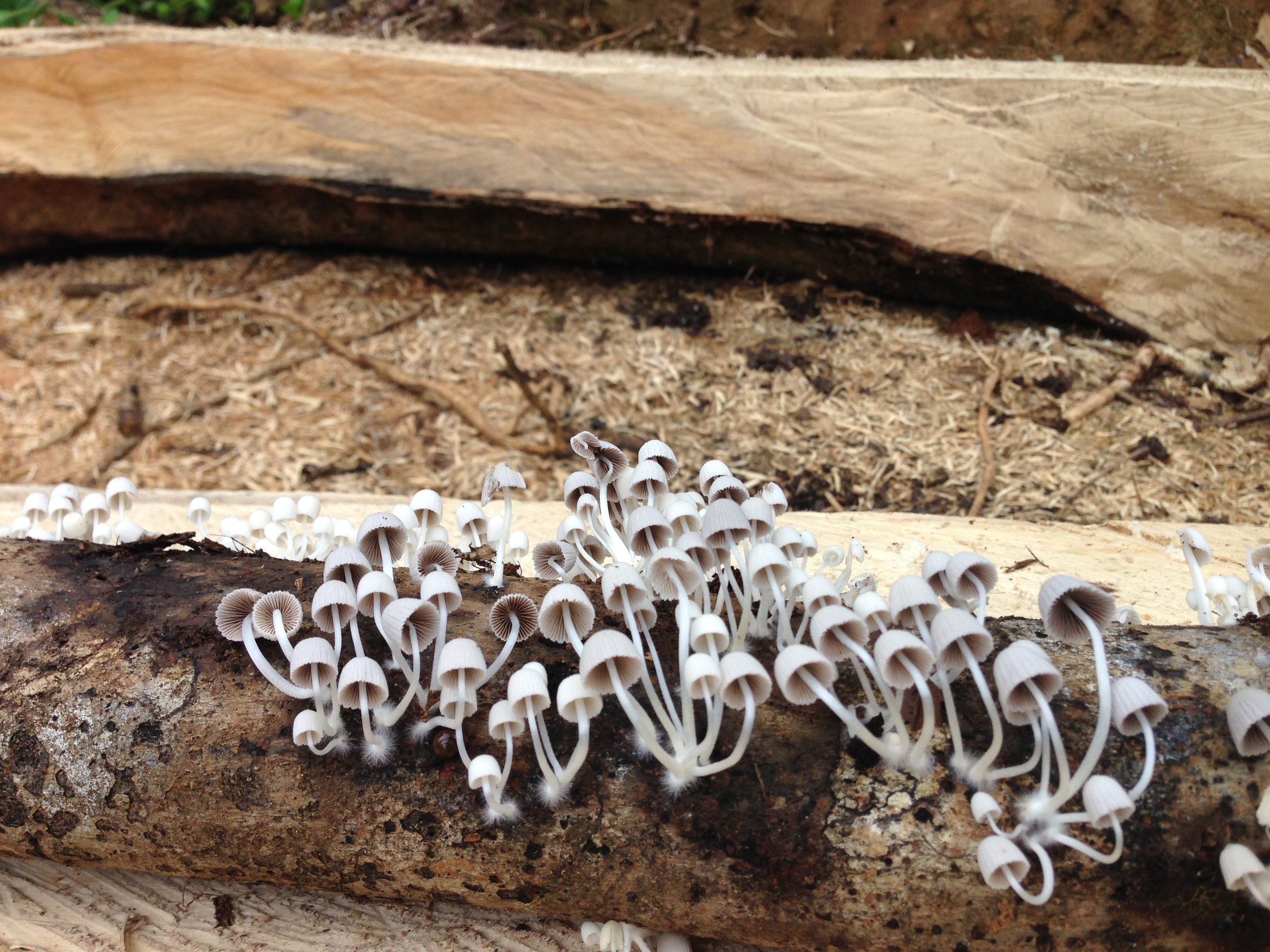
with the onset of the rains, mushrooms started popping up everywhere
My days started early in the mornings with a walk through the garden, observing the plants and checking the soil moisture levels. As I walked I noticed plants that seem to be struggling and tried to identify what might be affecting them. This is then communicated with the garden manager so we could discuss further ideas and solutions. We researched potential natural insecticides and fungicides that could help solve these issues.
Here is some of what we have learned and the practices we apply here at the ranch.
We are surrounded by amazing medicinal plants growing all around us, thriving under the jungle canopy or occupying disturbed pockets. These plants contain medicinal properties that can benefit humans as well as plants.

For example turmeric contains anti-inflammatory and antibacterial properties beneficial to humans and when planted among the roots of a tree, benefits the tree with those same properties This is referred to as companion planting. By planting diverse species next to each other they are able to support, protect and ultimately benefit one another. This can be as simple as providing shade or wind protection. Not only can companion planting by a useful tool in our belt to fight against disease and pest pressure but we can also use the properties of some local herbs. Here are some examples of what we have been doing.
Jackass bitter - the most bitter herb known, contains antifungal and antiparasitic properties. Spraying this tea onto diseased plants can repel insects and prevent fungal issues.
Inter cropping aromatic herbs like oregano, lemon grass and basil with certain food crops can confuse and repel insects with their scent and prevent disease with their antimicrobial and antifungal properties.
Using the shade of the cucumber trellis to help shade and shelter more delicate herbs underneath them.
Using peanut grass as a living mulch to crowd out weeds and provide nitrogen to the soil underneath some of our taller perennial crops such as Katuk and Cranberry hibiscus.
Planting Marigolds everywhere to reduce nematode populations, there is controversy about the effectiveness of this though.
Working in the front gardens has also made me reflect on the ideas of closed loop systems. As i am partially responsible for management of the kitchen compost. I really like the idea that there is no such thing as waste. Everything can be transformed into something useful. All of our food scraps are composted creating a finished compost that can then be added back to the soil to enrich it, closing the loop.

Another big part of the practices we apply when it comes to the food forests is observation of the environment and meeting the land's needs by mimicking patterns in nature. Thanks to all the researches and life long practices in the agro forestry and gardening world, a network of knowledge has been created for us to share our experience and knowledge. We are continuously learning and working towards improvement of our systems.
With each piece of land we carry the responsibility for the history, present and future of it. It is up to us to create a relationship with our land, to observe it's needs and potentials.To be stewards of the land and assist it to become a healthy ecosystem in which we can humbly live and feed ourselves.
This experience, of being an apprentice at Rancho Mastatal, has opened my eyes to a new world of possibilities, inspiring ideas, regenerative solutions, discovering new ways to live lighter on the planet and in harmony with nature .
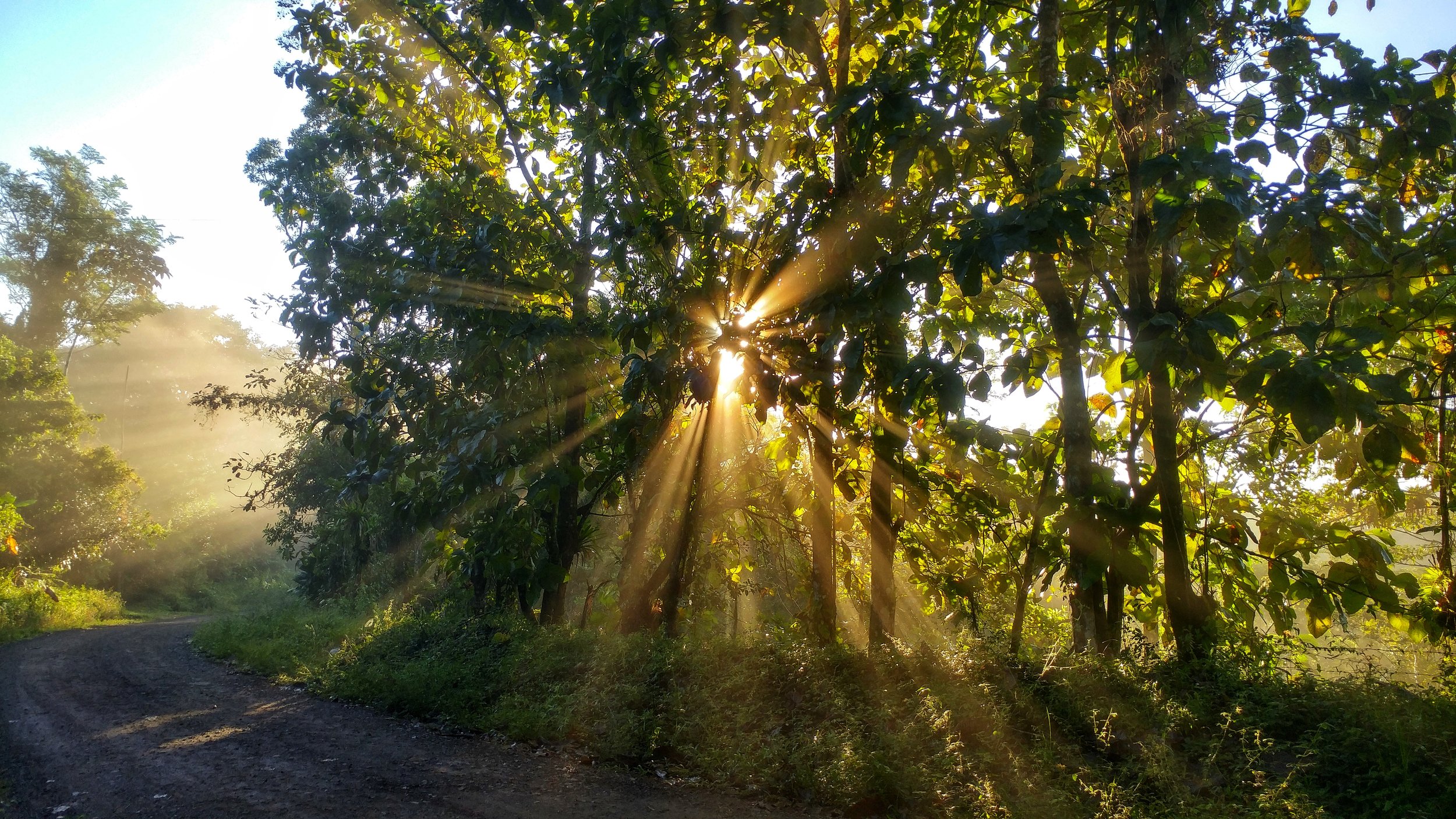
I am inspired by the movement towards an ecological , sustainable lifestyle and feel grateful to be a part of a project that focuses on sustainability, permanent culture and agriculture.
I invite you to share your experience and discoveries with growing food in the lowland tropics.
What interesting practices have you learn about recently?
Which annual crops did well for you in the tropical rainy season of Costa Rica?
What kind of companion planting worked well for you?
Would love to hear from you!
Blessings,
Diana D.
For more information about Permaculture consider joining us for our Permaculture Design Certification. For info about being an apprentice please go to the apprentice page. Here you will find in depth descriptions of what life is like in Mastatal.
Vegetables & Greens that Thrive in the Tropical Rainy Season
When the rainy season arrived, it started with a sense of relief - dry season went on longer than expected and our trees and plants were scorching in the heat. For myself the cooler air was welcome comfort, and the rains a reminder of home and getting cozy. Mornings were beautiful with the sight of the sun rising through the dewy mist.
By Amy Dodds,
2019 Apprentice
When the rainy season arrived, it started with a sense of relief - dry season went on longer than expected and our trees and plants were scorching in the heat. For myself the cooler air was welcome comfort, and the rains a reminder of home and getting cozy. Mornings were beautiful with the sight of the sun rising through the dewy mist.
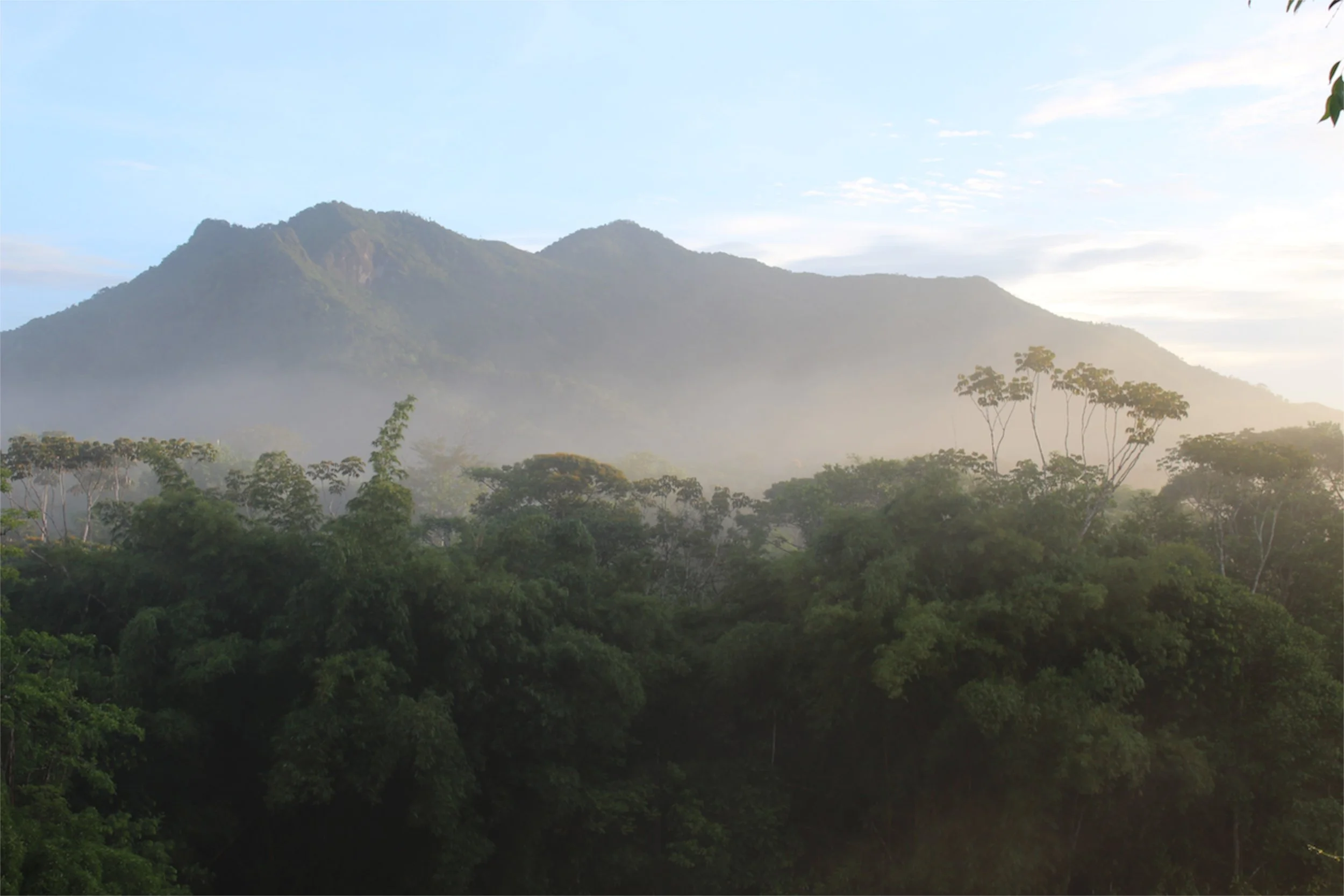
But very soon our zone one vegetable gardens with our recently planted greens began to suffer - the sheer force of the rains and the humidity brought fungal and mildew issues. Faced with the reality that our beans and delicate greens were going to die out, I thought about the potential of using cover crops, such as sweet potato, for the rest of the year. But this did not seem to fit in my idea of what permaculture asks us to do: observe and interact with the environment we are situated in and use that to our advantage. With this in mind, we at Rancho Mastatal have been planting crops that thrive both in the intense heat and thumping rain. Below are some of the most popular vegetables that we are growing in the Ranch that are suitable for the rainy season:
Cucumber:
Cucumbers have been abundant in our garden this season with us pumping out quick pickles nearly every day. Not bad for a community feeding 30-40 people daily! Thankfully, cucumbers like warm, humid weather. We grew ours by seed on a trellis to allow for more air flow and for the fruit to stay above ground.

Okra:
Described as among the most heat-tolerant vegetable species in the world. It is planted for its seed pods which can be cooked, pickled, eaten raw, or included in salads. It does become mucilaginous so do consider this if you're sensitive to the slime.
Kang Kong spinach:
This leaf green is native to southeast Asian and is delicious stir-fried with soy sauce and garlic. It is a semi aquatic plant, a creeper that grows in or near the water on moist soils, so it is ideal for our climate.

Hibiscuses:
Both Green and Cranberry Hibiscus are delicious perennials that thrive in the warm and wet. They self seed easily during dry season so when the rains come you have a whole bunch of babies to keep your salad zesty and fresh. The leaves do contain oxalic acid so cannot be consumed in large, consistent quantities.
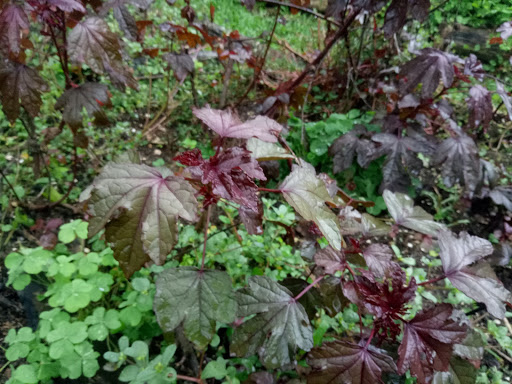
Chaya:
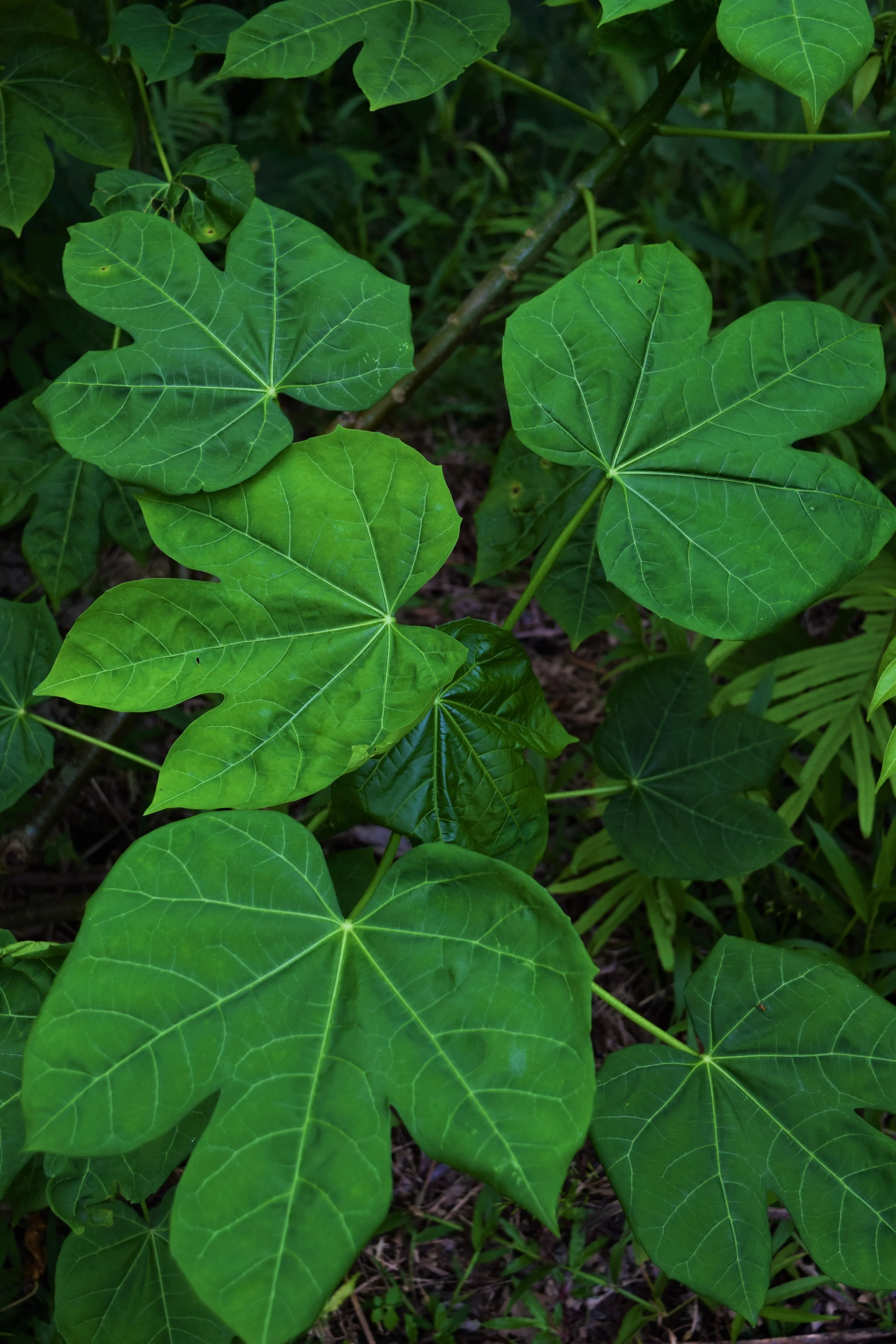
Also known as tree spinach this is an excellent perennial green native to Mexico. It's leaves are edible once cooked, like spinach. It's easy to propagate by cutting and loves the heavy rain.
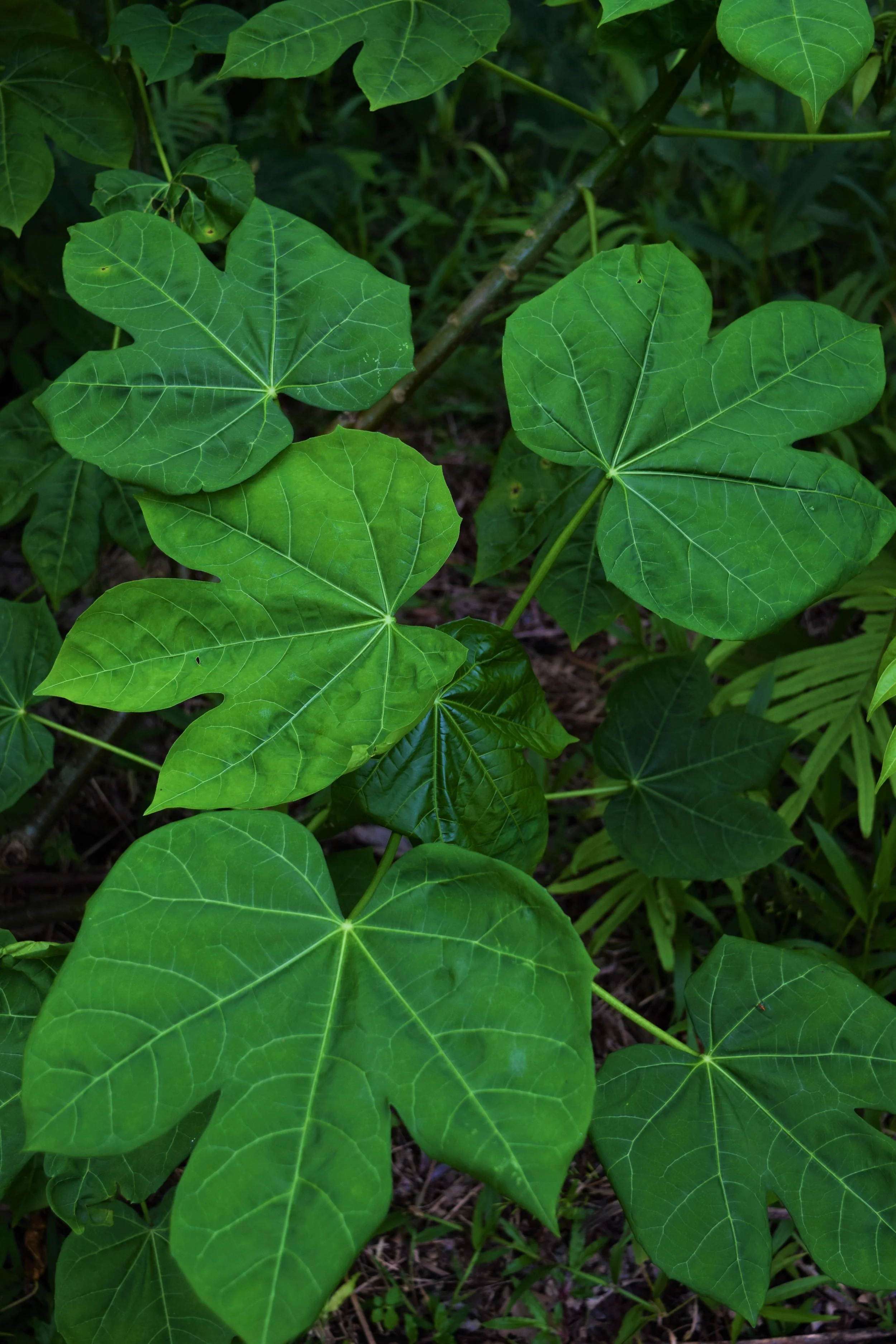
Malabar spinach:
Malabar spinach is another heat and moisture-loving spinach-like green. The succulent leaves can be eaten both raw and cooked. We have only a few plants so we are trying to improve the population. We use a trellis to support its tendency to vine.
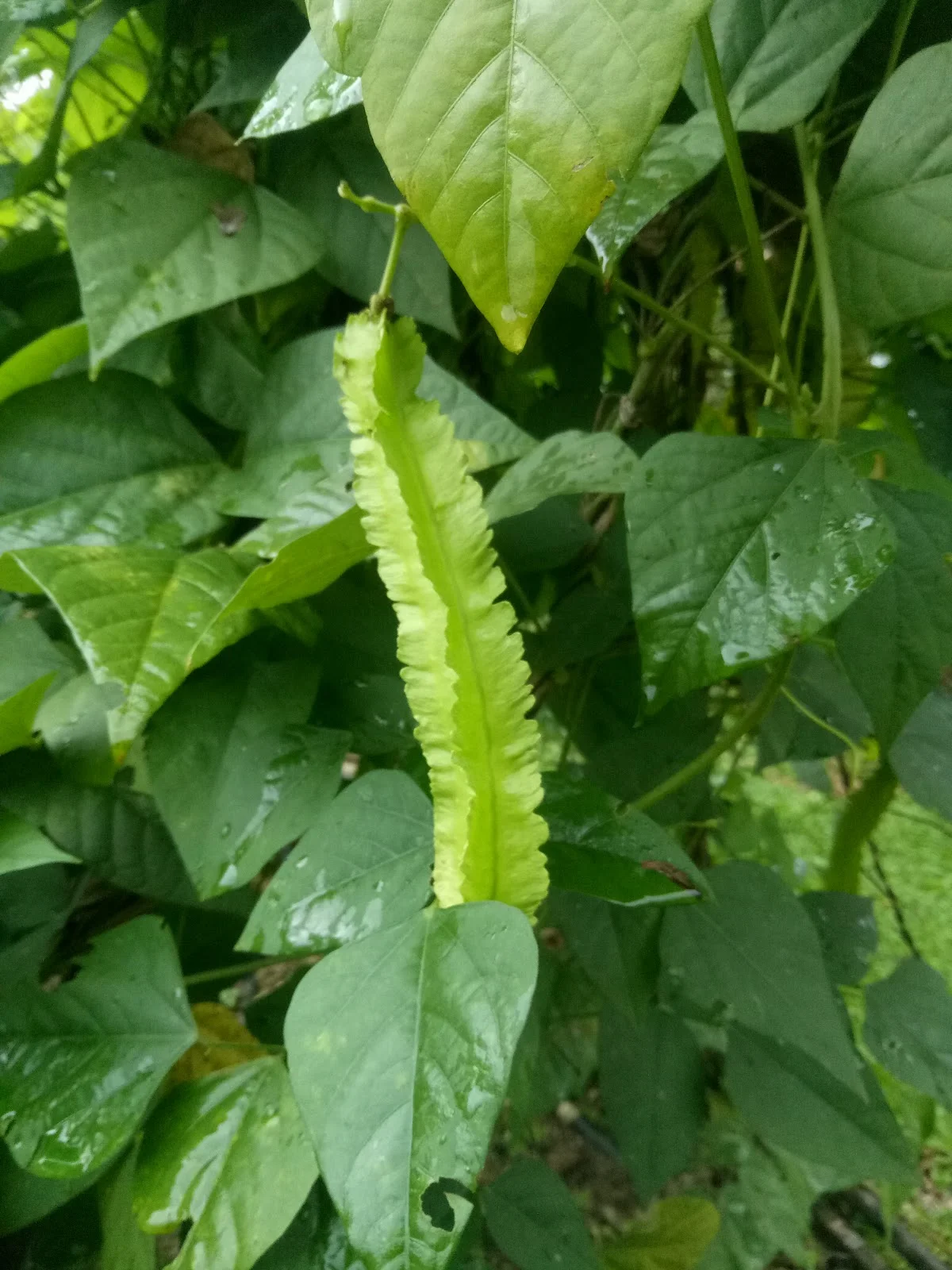
Winged bean:
Also known as Goa bean and princess beans, these are sweet protein packed vegetables that do well in heat and humidity. They can fix their own nitrogen when the bacterium Rhizobium is in the soil. They are best harvested young and tender, and great raw in a salad.
Other more delicate greens we are growing in our nursery as they don't require as much water, such as Arugula, mustard greens and Asian cabbages.
By having our covered nursery space we are able to grow things under cover that otherwise would not do so well outside, we are also experimenting with making some movable covered spaces for out outdoor garden beds….. we will update you with progress so make sure to Like and Follow us on Facebook & Instagram
Ranch Reading Recommendations: 8 Great Books I Read This Fall That Relate To Our Work
During my annual visits to see family in the United States, I oftentimes have the opportunity to catch up on some reading that regularly alludes me during the busy seasons here in Mastatal. More than any year in recent memory, I felt as if I hit the jackpot with the titles that I was recommended, came across, and picked up this fall.
Ranch Reading Recommendations: 8 Great Books I Read This Fall That Relate To Our Work
By Tim O’Hara, Ranch Core Team
During my annual visits to see family in the United States, I oftentimes have the opportunity to catch up on some reading that regularly alludes me during the busy seasons here in Mastatal. More than any year in recent memory, I felt as if I hit the jackpot with the titles that I was recommended, came across, and picked up this fall. Here’s a quick glance at them, all of which I’d suggest to anyone looking to add a good volume or two to their personal or professional library. I think that all of these titles are relevant to our work at the Ranch and the greater work that so many of you that read our blog are interested in.
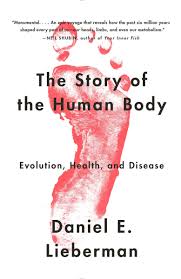
The Story of the Human Body: Evolution, Health and Disease by Dr. Daniel Lieberman
An informative and thought-provoking book for readers interested in human and cultural evolution and how they have come together to impact our specie’s health in modern times.
The Wizard and the Prophet: Two Remarkable Scientists and their Conflicting Visions of the Future of the Planet by Charles Mann
A dissertation about two philosophies on how to tackle current problems of feeding a growing global population and dealing with climate change. One view contemplates technological and engineering solutions while the other espouses resolutions with a softer touch on our environment.
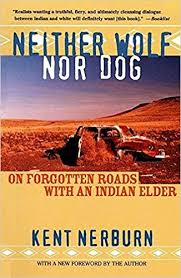
Neither Wolf Nor Dog: On Forgotten Roads with an Indian Elder by Kent Nerbern
Nerbern documents the thoughts, beliefs and stories of a Lakota Sioux elder in this eye-opening, sometimes heartbreaking, and other times hopeful look at how humans might change the way they live to find common ground in addressing past atrocities and future challenges. It had been quite a few years since I read a book focusing on Native American challenges. I couldn’t put this book down once I started. Some other titles related to Native American history that I’ve read in the past and also recommend include Peter Matthiesson’s In the Spirit of Crazy Horse, Dee Brown’s Bury My Heart at Wounded Knee, John Neihardt’s Black Elk Speaks, and Sherman Alexie’s Reservation Blues.
Lost Connections: Uncovering the Real Causes of Depression and the Unexpected Solutions by Johann Hari
An eye-opening book about the nature of anxiety and depression and some surprising strategies to deal with these increasingly challenging and difficult social issues. I read another of Hari’s books last fall entitled Chasing the Scream: The Opposite of Addiction is Connection. I raced through both books. Hari’s writing style is accessible, absorbing and compelling.

How to Change Your Mind: What the New Science of Psychedelics Teaches Us about Consciousness , Dying, Addiction, Depression and Transcendence by Michael Pollen
A fascinating read about the history of psychedelics and their potential use to address social problems such as addiction, depression and terminal illness. Pollen strays from writing about food for the first that I know about in many years. I think that this is a courageous attempt to shed light on an oftentimes contentious, misunderstood and polemic subject that deserves another look by researchers, academia, medical professionals and society as a whole.
Bringing it to the Table: On Farming and Food by Wendell Berry
A nice compilation of essays about food and farming. Over the last decade or more I have repeatedly returned to Berry when I feel the need to reground. His essays are a refreshing look into the darkness of what has become of conventional agriculture in the United States and elsewhere.
The Gift of Good Land by Wendell Berry
A great collection of short essays by one of my favorite authors. Berry’s compositions never fail to get me thinking deeply about the topics that are most relevant to my future.
I’ll also add another book even though I haven’t finished it yet as it is offering a fascinating perspective about humans and our current predicaments.

Sapiens: A Brief History of Humankind by Yuval Noah Harari
The book goes deeper into some topics populated by Jared Diamond’s Guns, Germs and Steel and Charles Mann’s 1492. It’s a fascinating read that includes new research and theory as to how we have become the planet’s dominant species with insight as to why that argument is changing so quickly and alarmingly as humans impact the natural planetary systems that sustain them.
I found all of the books on this list riveting, well-written and provocative. They all had me at one time or another thinking about what I could be doing better as a father, business owner and global citizen. The information that I ingested was at times difficult to read, inspiring, despairing, hopeful and motivational. As I always appreciate personal recommendations for new books, I wanted to share with others the topics that have most recently been on the forefront of my evolving brain.

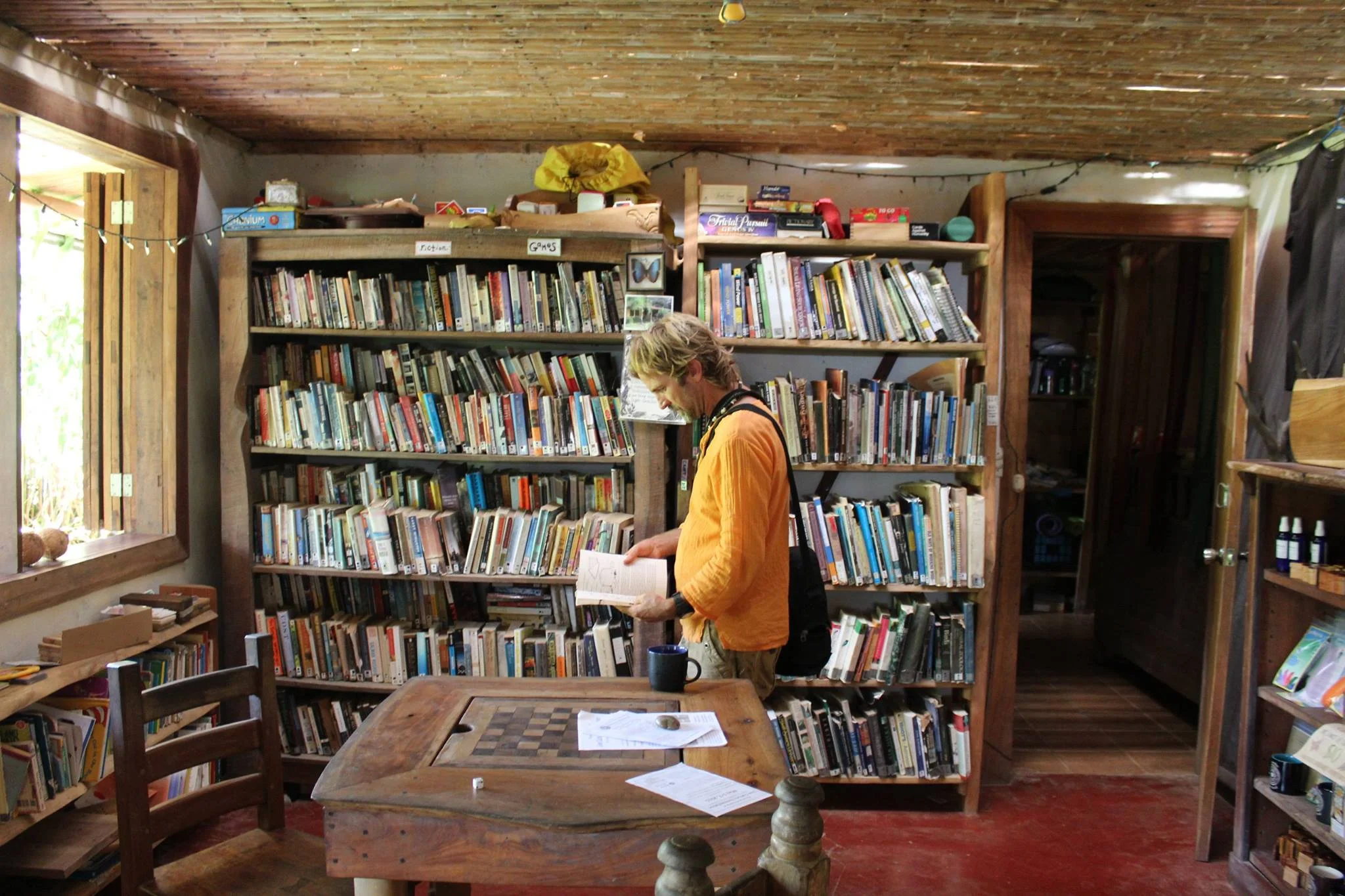
Mastatal’s Local Library

How to Make a Real Tortilla
When I was a teenager, I traveled for a few months with a Mexican shoe-shiner I met in Mazatlán. We thumbed rides across the country and were taken in along the way by a dozen or so of his relatives. I often found myself in the kitchen with his aunts, cousins, and nieces, making tamales, sopes, or other dishes that were new to me.
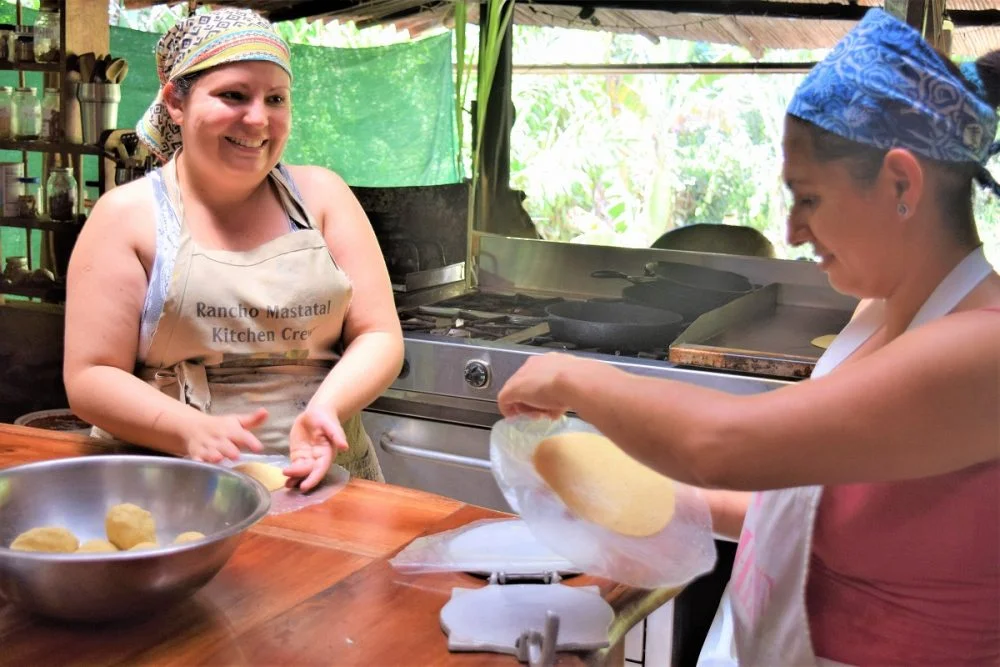
This article was originally published in the Tico Times. Please follow the link for the original article.
When I was a teenager, I traveled for a few months with a Mexican shoe-shiner I met in Mazatlán. We thumbed rides across the country and were taken in along the way by a dozen or so of his relatives. I often found myself in the kitchen with his aunts, cousins, and nieces, making tamales, sopes, or other dishes that were new to me.
Due to my lack of skill, the family often sent me to the local store to buy tortillas. Everywhere we went, no matter what town we stayed in, there was always some tiny store that sold stacks of them, fresh and hot. For me they came to represent the spirit of family and sharing in Mexican culture, and a deep pleasure in simplicity — there was really nothing better than those fresh tortillas with a slice of homemade cheese.
Most of the tortillas we bought or made were thin, six to eight inches in diameter, and made from corn. They tasted nothing like the giant flour disks from the grocery store that never went bad. They tasted original.
Later, traveling around Latin America, I came to realize that those corn tortillas really were original. In the different countries and communities I later visited, I tasted tortillas in vastly different forms. Some were fatter, some thinner, some made of yellow corn, or white, or blue, some pressed flat, others slapped into shape between two palms.
Most tortillas made by hand in Latin America are made with corn rather than wheat. This is because corn grows well here, whereas wheat in general does not. Some also incorporate pejibaye (fruits from a native palm, Bactris gasipaes) or ojoche (seeds from a a rainforest tree, Brosimum alicastrum). Variations stem from economy, culture, and landscape.
Tortillas do not have the same widespread status of daily consumption in Costa Rica as they do in Mexico or many other Latin American countries. But they do have a rich history here, and are still often eaten in the form of gallos (a tortilla curved in the hand around meat or a savory picadillo) or as an addition to a typical breakfast. There is no better way to impress your Tico and Tica friends than with a gallo made with a homemade tortilla! Where I live now in rural Costa Rica, a homemade tortilla is one made from whole corn that has been nixtamalized and ground into dough, also referred to as masa.
Corn
There are at least 150 different varieties of corn. They can be divided into four major types: sweet corn, popcorn, flint, and dent. Sweet corn is bred for its sugar content, and is eaten before the kernels are mature. Popcorn, which is usually round in size, has a specific protein ratio that makes it ideal for popping. Flint and dent varieties are generally flattish and oval, and are used to make corn flour, dough, and other foods for both humans and other animals. The corn used for making tortillas is usually a flint or dent variety that has been grown to maturity and dried. This is often referred to as field corn.
Many Costa Rican farmers still grow field corn for their families or to sell at market. A number of our neighbors grow corn and make tortillas and other corn dishes, such as tamal asada and chorreadas, at home. You can inquire about purchasing local corn at any major market, or ask your neighbors if you live in a rural area. Most people are usually quite excited to help you source this great product, and if you’re charming enough, someone’s grandma might help you make your first tortilla!
Nixtamalization
Mature dried corn presents a special challenge. Its outer seed coat, or pericarp, is hard and creates a strange texture unless you remove it. It also has a substance that can inhibit the body’s ability to uptake the vitamin niacin. You need to cook the corn in an alkaline substance to dissolve the seed coat and to ensure that niacin is bioavialable.
For populations that eat large quantities of corn, this process is essential to dry corn’s nutritional value. In addition to improving corn’s nutritional qualities, nixtamalization gives the corn structure and pliability, and improves the flavor. Ancient peoples cooked their corn in wood ash, or powders made from bones or shells, to achieve this. Many people around the world still use wood ash or other variations of alkaline substances to cook corn in this way. The following recipe calls for hydrated lime (calcium hydroxide). In Spanish this is referred to as cal.
There are many different methods to nixtamalize corn. The qualities of corn vary widely based on variety, post-harvest handling, and age of the dried kernel. The boiling time and temperature varies (15-90 minutes) depending on the type of corn you use. The following is a great recipe that works well for us with our local corn.
Nixtamalized Corn Recipe
Ingredients:
15 cups whole dry field corn
3 tablespoons hydrated lime (calcium hydroxide), sifted
Water

Instructions:
DAY 1
Rinse the corn thoroughly in water. Remove any particles, floating pieces, dirt, or corn silk.
Cover with at least four inches of water and let soak 12-24 hours in a covered pot.

DAY 2
Drain the corn, rinse again, and add nine liters of water. Mix in the 3 tablespoons of sifted lime. Stir. The corn should turn bright yellow-orange as you stir in the lime.
Put the corn and lime water on the stove and bring to a boil.
After the corn reaches a rolling boil, reduce the heat to a strong simmer and cook 30-60 minutes until the corn is tender and skins are separating and dissolving away from the kernels. The corn should be easy to bite into, but still have a bright white point in the center. The kernels should be firm and intact with the germ and tip still present.
Take the corn off the heat and let it rest for at least one hour. (We have tried many variations of this resting time, including letting it sit overnight, or not resting at all. Letting the corn rest in the alkaline solution after boiling is thought to further transform the starches and give the tortilla a better structure.)
Drain the corn into a sturdy metal colander and rinse with water. Rub the kernels between your hands and/or against the holes in the colander to remove all lime and the clear kernel skins. Use plenty of water. Once the corn is thoroughly rinsed and cleaned, it is called nixtamal.

Uses:
Nixtamal can be used whole in soups, casseroles, salsas, and side dishes; it can be ground for tortillas, corn crusts, or made into polenta, tamales, or atole. The whole nixtamal will keep for several days in the fridge, but once ground should be used within a day.
Tortilla Recipe
The dough used to make tortillas is referred to as masa. To make the masa, grind nixtamalized corn in a corona hand mill or other grinder. You may want to double grind for a finer texture. Mix with salt to taste and just enough warm water to make a dough that is soft and pliable, and adheres to itself but not to your hands. You should be able to roll it into balls that retain their form completely when you hold them in your palm.

The easiest way to make a tortilla is with a tortilla press, but if you don’t have one just substitute two cutting boards.
Grab a small chunk of masa and roll it into a ball. Use two sheets of plastic (zip lock bags work fine) and put the ball between them in the tortilla press. Press down the handle and open it back up. Carefully peel the tortilla from the plastic bag and flip it into a hot cast iron skillet.
Cook for about 40 seconds and then turn it over. If your masa is ground fine, you will see the tortilla puff up. If it is thick it won’t and that’s fine. Tortillas should be cooked through and golden (or another color depending on the color corn you started with).

“Food for Thought” is a Tico Times series from Laura Killingbeck, is the Director of Food Systems and Fermentation at Rancho Mastatal Sustainability Education Center. The Ranch is a community and education center in Mastatal, Costa Rica, that hosts residential workshops in food, permaculture, natural building, and more. Laura co-manages the Ranch facilities and programs, teaches fermentation workshops, and writes about the intersection between food, body, and place. To take a class with Laura or visit the Ranch, please visit www.ranchomastatal.com.

Orienting Oneself to Mastatal
If you’re anything like me, then you will find Rancho Mastatal to be a place of incredible beauty, endless inspiration, and powerful community. Even if we have very little in common, you will certainly find it to be unique. Among ecovillages and permaculture communities, over the years Rancho Mastatal has developed a reputation for its intricate systems, well organized educational programs, and gorgeous natural buildings that sprinkle the 300 + acre Ranch.

This post was first published at the blog Fed by Connor. Connor is one of our year long apprentices.
We are now interviewing applicants for our 2018 apprenticeship program. Help us spread the word by sharing this blog post!
If you’re anything like me, then you will find Rancho Mastatal to be a place of incredible beauty, endless inspiration, and powerful community. Even if we have very little in common, you will certainly find it to be unique. Among ecovillages and permaculture communities, over the years Rancho Mastatal has developed a reputation for its intricate systems, well organized educational programs, and gorgeous natural buildings that sprinkle the 300 + acre Ranch.
Mastatal is a small rural community in central Costa Rica near the Pacific Coast, roughly a three hour drive from the capital, San Jose. In Mastatal things come in singles: there is one dirt road lined by the local bar, one restaurant, a school, community center, convenience store, and a soccer pitch. Although the community center technically provides wifi, it usually doesn’t work, which can add to a sense of isolation that can feel simultaneously liberating and stifling. Despite its size, the Ranch sits in the heart of the community. From the main house you are a stones throw away from the bar, and you can often hear music echoing across the valley as the locals unwind in the evening over one of the two Costa Rican brews.
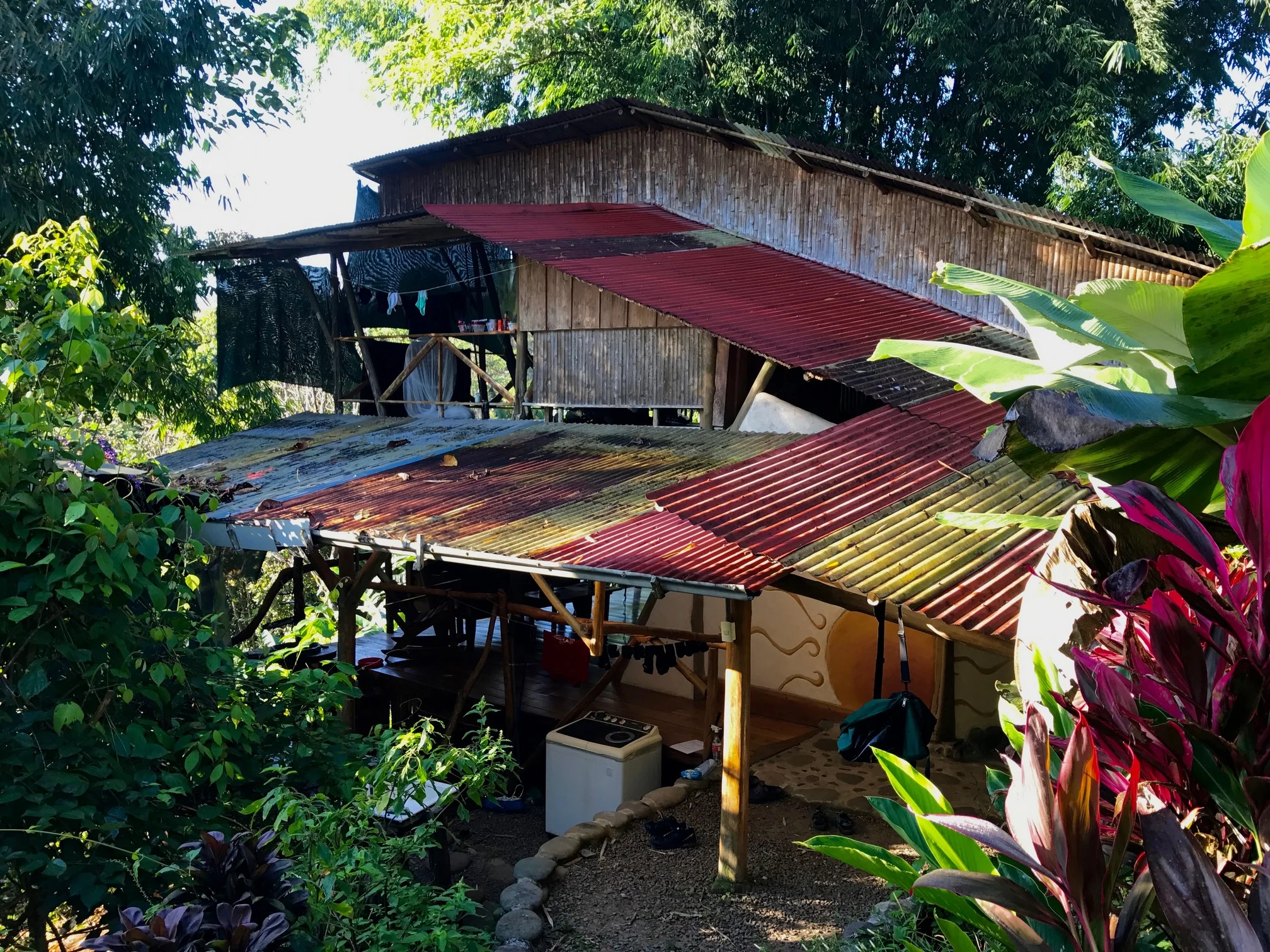
To orient oneself in Mastatal, especially coming from an urban hub like Los Angeles, requires a letting go of one's typical expectations. Many of the core team describe this experience as “losing oneself in a humble task,” or to be more accurate, a series of humble tasks. Fortunately, at the Ranch this is easy. Days here are filled from dawn until well past dusk, leaving precious little time to contemplate how or why someone has arrived in this space. Although often simple, each task requires focus and care in order to do well and avoid personal injury.
As an apprentice, our mornings begin at 6:00 am with “life skills.” These individual pre-breakfast chores make up the basic activities that are necessary to keep the farm running. These include managing the firewood, bio-digester (more on that later), and chickens; harvesting salad greens, caring for the main house/kitchen, nursery, zone 1 gardens, and orchards. To ensure that we gain experience in each system on the farm, the apprenticeship program is designed for us to rotate among the life skills on a monthly basis.
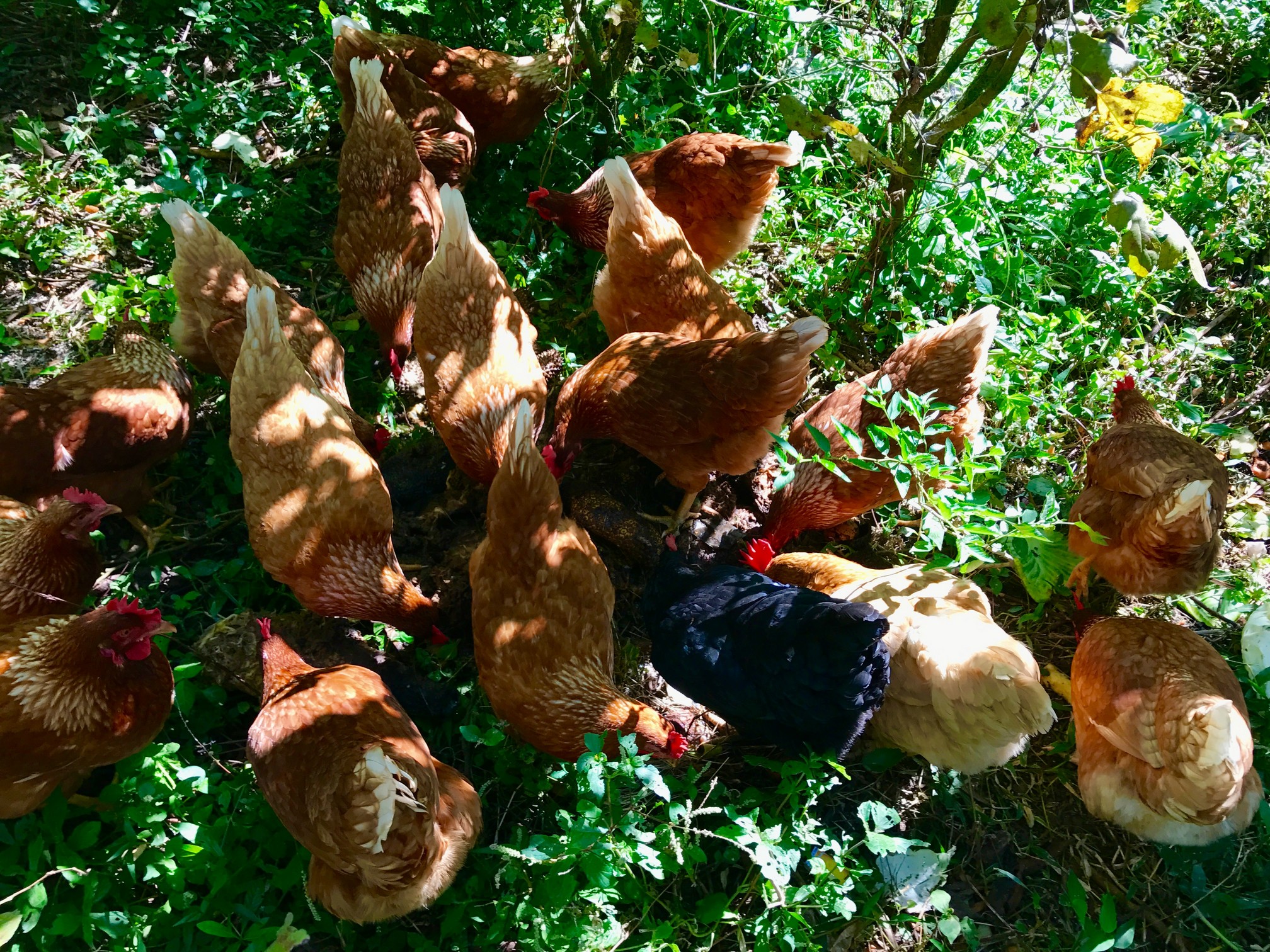
These tasks need to be completed by 8:00 am when we have a group breakfast, which depending on the number of visitors at the farm can range from 12 to 50 people. Cooking and cleaning shifts are also traded on a rotating schedule. After breakfast, all the apprentices chip in on a “work party” to help complete the larger projects around the Ranch. This can include trail building in the orchards, weeding and prepping new beds in the gardens, harvesting jackfruit or bananas, processing food for the kitchen, or even helping to build a new structure on the property.
At 1 pm everyone breaks for lunch. Nearly every meal served on the Ranch includes rice, beans, and a fresh garden salad prepared each morning. To add a little variety to the meals, each dish also includes something a little special. Whether it’s emplatanados con queso, fresh hand pressed tortillas or homemade dosas, each meal comes with a treat to avoid the monotony that is risked when eating arroz con frijoles three times each day. On the side, fresh salsa and a kefir dressing made from local cows milk and fresh herbs make each dish a true delight. To drink, there is fresh coffee from local shade grown beans, water kefir soda filled with pro-biotics to improve digestion, and a house-made rehydration drink (think homemade Gatorade) that is packed with electrolytes to prevent dehydration during long days working under the sun. In the evenings, there is even country wine or “hooch” as it is called here, that is fermented using yeast, water, local unprocessed sugar, and whatever fruit happens to be in season (jackfruit and passion fruit are two of the local favorites).

Afternoons at el Rancho are more varied. Three days a week this time is reserved for Personal and Practice Time. On the Ranch, one quickly realizes that these are extremely valuable chunks of time and can be used for many things, although jerking off in the apprentice house while a tour goes by (as the orientation packet mentions) is not one of them. It is however a great time for writing, taking a nap, swimming at the local waterfall, calling family, or sharpening one's tools; just to name a few examples. During the rest of the week, the afternoons are reserved for additional work parties, community check-ins, or cooking depending on the day.
Dinner is served every day (except Sunday) at 6:30 and begins with “circle time,” one of the oldest traditions on the Ranch. This time is nothing more, and nothing less than an opportunity each day for the entire community to come together, hold hands, and offer thanks (if one is so inclined) for anything/everything they are currently feeling grateful for. It is a brief yet powerful ritual that allows everyone to slow down, take a deep breath, and appreciate the wonderful space and community everyone here is privileged enough to enjoy. Afterwards dinner is served! The only rule is, be kind and respect those behind. This usually means there is more than enough for everyone, although specialty items (like guacamole) can mysteriously disappear rather quickly. The last person through the line rings the bell, meaning seconds are up for anyone still craving more.

After dinner and clean up, if you’re not ready for bed at 7:30, which is often the case, there are always a plethora of interesting people to chat with over a beer or glass of hooch, and any number of board games to be played until late into the evening (and by late I mean 9:30, because by then you will DEFINITELY be ready for bed). After lying down and becoming one with your mattress, dawn will come suddenly and this routine will repeat itself seemingly on end. At the time of writing this however I have now been here for two weeks. I can already tell that one day soon I will look up, only to realize it’s already December, time to pack my bags and head back to the “real” world. One lesson this experience has already taught me, however, is that for the individuals who make up this community, Mastatal is the real world, not just a temporary excursion. For those who choose to step outside the typical expectations of industrialized society and reconnect with the roots of human civilization, this is an obtainable lifestyle. Whether you want this world or the chaos of our modern cities to be more real, is up to you to decide.
Across the Permaculture Universe
We have a few spots left in our upcoming Fermentation Workshop! Learn the art and science of making microbes your allies.
Many of our core team members are starting to show off their work through some great photos on instagram. Check out Ali, Rachel, Laura, and Scott!
Our friends at ECHO have a new Central American and Caribbean forum, including development notes dedicated to this region. We are hoping to start sharing our work through their publication in the months ahead.
Abrazos
The Ranch Crew
Top Ten Tips for the New Apprentices
"Everyone is looking at my feet," I say to my dad.
"No they're not," he scoffs back. Sure enough, he glances sideways at a group of teenage girls eying my dirty toes clad in Chacos.
We are not in the jungle any more. It's December in New York City, I am traveling on the subway with a large backpack, and five layers of sweatshirts, never having worn more than one at a time in the tropics. Fresh off the airplane, here I am with my exposed feet and disheveled appearance-- "Is she homeless?" the girls snicker.

This post is part of a series of reflections we are asking past apprentices to contribute to our blog. If you would like to share where you stand now and how your time at the Ranch effected your place in the world please write to scott@ranchomastatal.com.
"Everyone is looking at my feet," I say to my dad.
"No they're not," he scoffs back. Sure enough, he glances sideways at a group of teenage girls eying my dirty toes clad in Chacos.
We are not in the jungle any more. It's December in New York City, I am traveling on the subway with a large backpack, and five layers of sweatshirts, never having worn more than one at a time in the tropics. Fresh off the airplane, here I am with my exposed feet and disheveled appearance-- "Is she homeless?" the girls snicker.
I come home and sit under my first hot shower in a year and scrub the dirt from my feet. Goodbye Rancho Mastatal, I'll be seeing you one day. In the meantime, I have a new life to create. Sometimes reverse culture shock can be more cunning than culture shock.
In case you are one of the seven new apprentices and worried about the ensuing change, this article serves as advice come January 2017. Are you ready? To be ready, you must clear your mind. You'll never be ready. Those who don't know speak of it. Those who do know don't speak of it. To stay afloat in the presence that is Rancho Mastatal means just this. This will all make sense soon. Now for ten more pieces of advice in preparation for your apprenticeship.
My fellow apprentice crew enthusiastically chimed in for this article to not bring any white clothing. It is very likely to get stained by any number of hands on tasks. Even if you're not performing physical labor, even if you're just eating lunch, there's a good chance that anything white you wear will be found by a stain. The turmeric in the pickle is a renown dye, as is the achiote in the rice. Whole food diets, with their richly colorful displays, are your wardrobes' worst enemy. Even if your white blouse is hanging on a line miles from the orchards, the wood shop, the kitchen-- virtually every danger zone-- black mold will STILL find it, stain it, and make you regret bringing it. Tip #1: Don't bring white clothes.
Tip #2: If you are prone to stains but want to maintain your public decency, patterned clothing compensates (credit tip to Rachel Jackson).

Stains and patterns aside, there is another debate on the type of clothing appropriate for the tropics. Expect the climate to be humid and hot. Cotton is not your friend. It takes a long time to dry and harbors all sorts of odorous microorganisms. Tip #3: Bring clothing made from synthetic materials that are comfortable to wear.
There are times, however, when you'll want to look sharp. Welcome to the campo of Costa Rica. Ticos take public appearances seriously, so pack accordingly. I recommend bringing something that is clean and modest, not something too out there. This is a small village, after all, and it's more valuable to blend in. A brief study of Costa Rican fashion will reveal that it's not too different from most mainstream, Western cultures. Tip #4: Keep an outfit clean reserved for community celebrations and appearances.
On that note, Tip #5: In Costa Rican culture, if you do not smell good, you smell bad. A good soap and light perfume are recommended for community occasions. The jungle offers delectable scents that can be sourced from plant materials on the Ranch. Tip #6: If you want to dabble in the ancient and romantic art of perfume making, bring a little bit of Everclear, coconut oil, and a spritzer bottle. Creative inspiration soon to follow, but I've had great success with vetiver root, galangal, orange peel, and lemongrass.
This brings us to the toiletry topic. Some people bring a lot of toiletries. In my experience, I learned the unnecessary reality of many of the things that can be purchased from the drug store. With a clean diet, acne can fade, and pesty bugs can be deterred. The humidity keeps your skin moist, and most lotions just sweat off. You may even want to try to go "no poo" (that is, shampoo) method this year.
Tip #7: Abandon shampoo and conditioners. I had personally been avoiding chemical hair soaps for one year before the Ranch, but for other people, this may be a great time to go "no poo". It's usually within the first two months that hair builds up an excess of grease, then soon after, this balances out. Shampoo strips your hair of its natural oils, and conditioner replaces it with a synthetic luster. If you want to keep your hair clean with minimal input, try the baking soda and vinegar method. Use one tablespoon of vinegar for one cup of water. Shake in a bottle with a dispenser cap, pour overhead, and massage deeply into your hair. Rinse with water. Vinegar can also be applied to help balance the pH. Any type of vinegar will work just fine, and the smell dissipates quickly. After the initial grease sweat, your locks will evolve into tropical lusciousness.

You may be concerned about sunscreen. Despite my pale complexion, the sun was never an issue for me. This is because most of the time outside is spent in the shade. Cheers to the benefits of an agroforestry canopy! If you're working in the sun, you'll probably be sweating any sun protection off. Tip #8: Favor sun hats and long, light sleeves for sun protection. Despite covering your skin, you'll actually stay a lot cooler, too.
Bugs can be another nuisance. Mosquito populations are typically non-problematic until the rains hit in April. That's when populations skyrocket. Maybe you don't mind the cloud of deet, or natural sprays that are also available, but the reapplication of sprays can be resource and time intensive. Tip #9: Either you suck it up and evolve some better antibodies, or just cover up with long pants and sleeves, and CERTAINLY bring a bug net for your bed. I've laid on my bed in October, the wettest month of the season, and counted literally dozens of mosquitoes trying to pass the unbreakable seal. Fortunately none of the sensationalized diseases that mosquitoes carry made an epidemic in Mastatal, so don't stress about vaccinations or antibiotics.
If mosquitoes aren't the type to sweeten your inner naturalist's cup of tea, think about the things that do. Maybe it's plants, maybe it's birds. Whatever it is, make a point to recognize those things at home before you leave, because when you come to the jungle, it's all going to change. Tip #10: Recognize the fauna and flora in your new home to develop a sense of place. A sense of awareness and appreciation for your home's native creatures will make rooting a lot easier. The dormilonas, which bow down when you tap or pee on them, and the carpet like moss that grows in the tree nursery, or the sprawling herb with small white flowers with purple stripes inside that attract the black bees with yellow bottoms-- those were some of my favorite Ranch weeds. You'll see patterns, and you'll appreciate the subtle natural life, too.
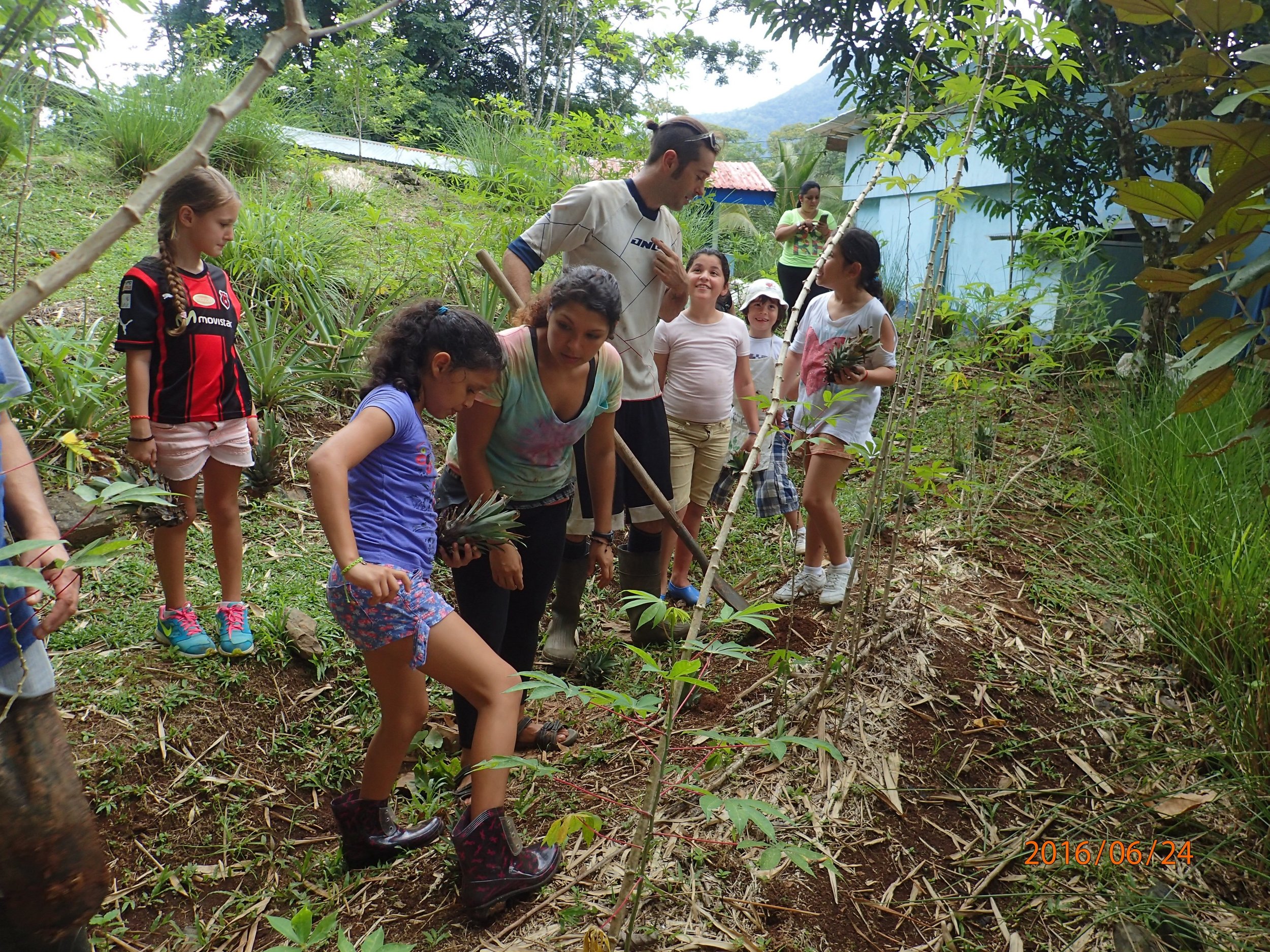
Bonus Tip #11: Appreciate the foods that are locally sourced. Rice and beans are the vehicles of countless cultural traditions and can be transformed in one million ways, but they're delicious served simply too. The Ranch agroforestry system offers biriba, jackfruit, coconuts, bananas, cuadrados, and plantains all year round. Be prepared for the grandeur of seasonality. Lemondrop mangosteens will be one of your first tree harvests in January. Then the acerola, aka Barbados cherries, will ripen. These ferment into an excellent, complexly flavored wine. The Victoriana and arasa will ripen shortly after: Sour, yet delicious, when sweetened for jams. Mango season starts in April and lasts for the month. Pickle as many green mangoes as you can stand, they make the best kimchi, especially when finely shredded. The pejibayes start turning color at the beginning of the rainy season, too, followed by the mamonchinos. The mamonchino tree with the best flavor lies at the bottom of the Banana Bowl, but you have to climb it, then sit in the branches with a huge pole with a basket on the end. This is farm fitness, but the collection process is worth it. Nature really did perfect the art of candy. Come December, the oranges will begin ripening, and you can race Scott in a juice pressing contest. You will experience the cycle of a year as it truly happens, as an ecosystem partitioned it; for each part to be appreciated.
Maybe you're the type to meditate, maybe not. When I left the Ranch, and the data came back to my cellphone, and the advertisements jumped off the walls of the streets, and the drama of the world flooded in like a leaky pipe, that's when I knew what it meant to be able to meditate. I once thought about running away to a monastery, but I found Rancho Mastatal instead. There's no preacher, there's no text, there's just you and your purpose for coming. You come, you work hard, you play hard, and you learn. It might not feel like you're meditating, but, if you allow the experience to envelop you, if you allow yourself to tread lightly on this planet, you too can be a great apprentice. You may not become an expert wood crafter or beekeeper, or even learn how to count, but there you have it: ten pieces of advice from a gal who now walks barefoot in the city.
News and Notes from Around the Permaculture Community
Laura has been busy the last few weeks filming an online fermentation workshop series. She is partnering with Ranch friend Spenser Gabin in the creation of this course. You can see more of Spenser's work at his website here.
We were fortunate enough to host Erle and Suset from Wa Samaki Ecosystems on Trinidad during our Natural Building Practicum. It is always inspiring to meet fellow permaculture teachers, doers, and designers, and now we have the itch to visit their site which has been operating for nearly 20 years!
Our Central American Scholarship Program fundraiser is underway! We've already had over 20 applicants for the few spots in our annual PDC. If the fundraiser is successful though, we hope to have a record number of Ticos in our course. Please give if you are able and share the word!
Abrazos
The Ranch Crew

No Pickup, No Problem: Social Capital Trumps a Shitty Situation
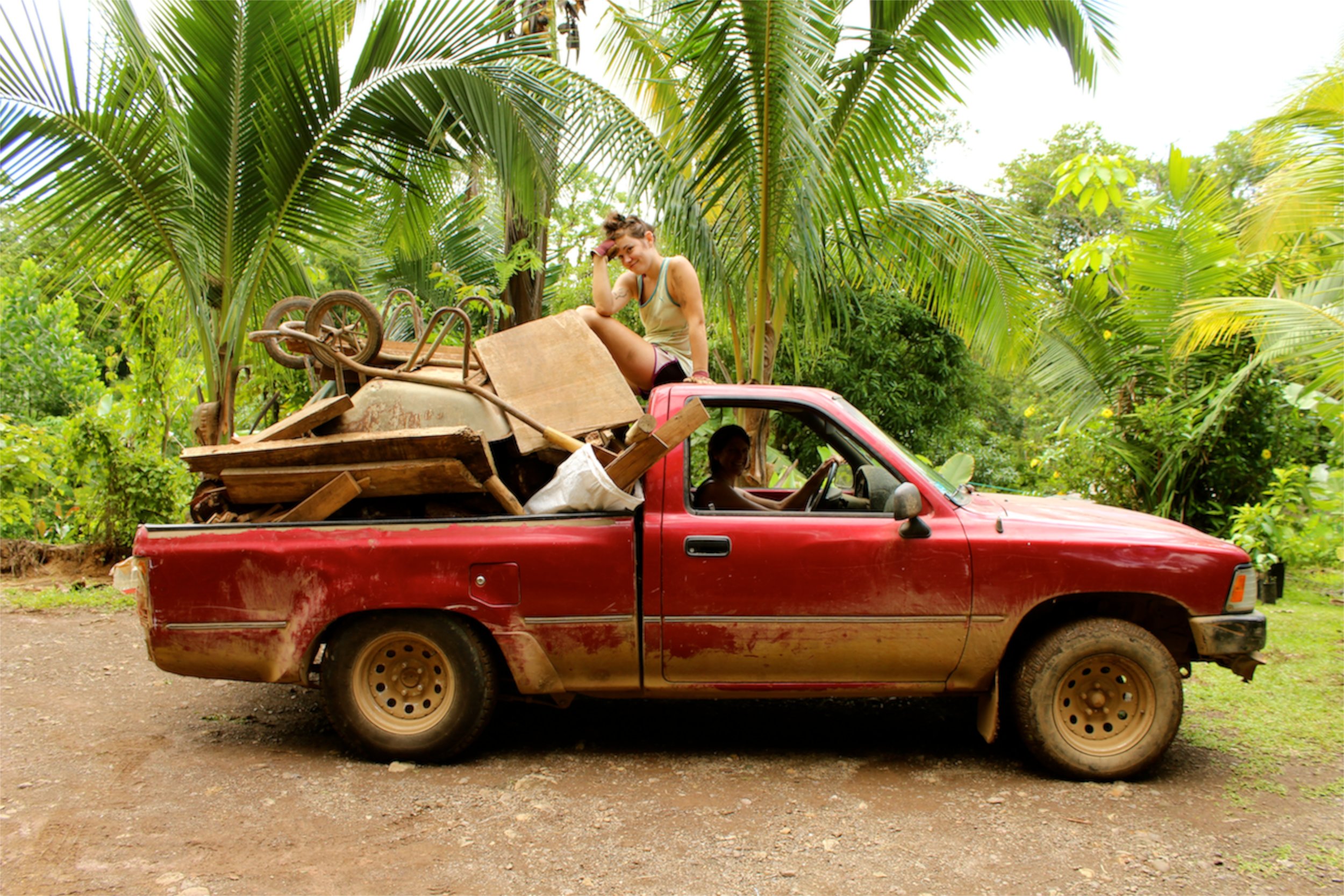
My hands are grappling the rumbling, rusty wheelbarrow handles, and as we walk half a mile through the village, everyone can hear the five Rancho apprentices clunk on through. In a village of 120 people, your whereabouts are everybody's business. Don't worry, I want to say, this will all make sense soon. They'll be having a chuckle by the end of the day. For now, we are five warriors defending alternative energy. We are making the best use of our woman power (and Dan power) when the white pickup truck is out of commission. We are going to pick up poop.
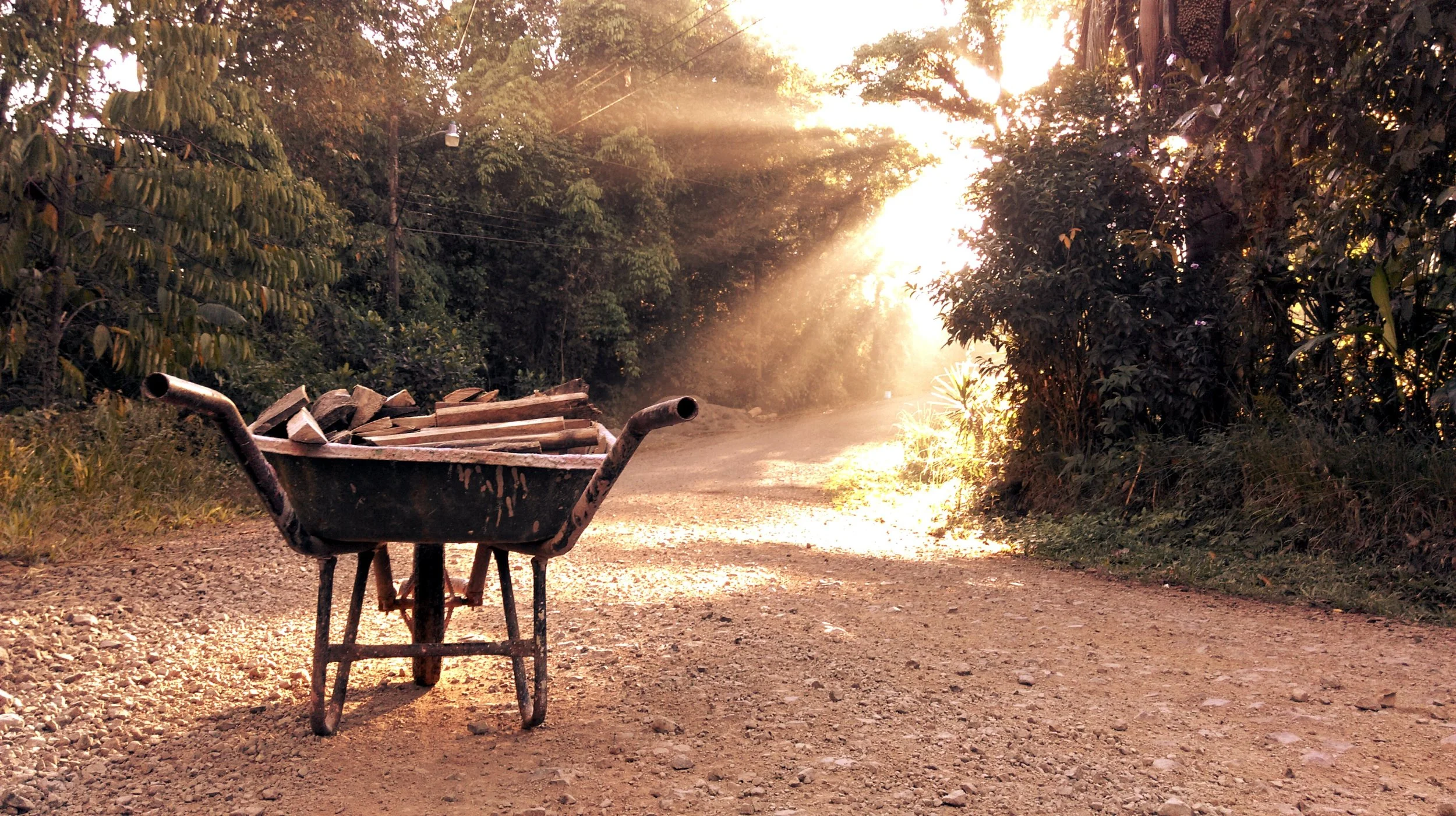
My hands are grappling the rumbling, rusty wheelbarrow handles, and as we walk half a mile through the village, everyone can hear the five Rancho apprentices clunk on through. In a village of 120 people, your whereabouts are everybody's business. Don't worry, I want to say, this will all make sense soon. They'll be having a chuckle by the end of the day. For now, we are five warriors defending alternative energy. We are making the best use of our woman power (and Dan power) when the white pickup truck is out of commission. We are going to pick up poop.
As Timo explained in a blog post last month, poop is the essential ingredient for synthesizing our kitchen's methane gas supply. Once a week, the white pickup truck is driven half a mile up the road to pick up ten sacks of manure. Assuming you have the human labor and the car labor, it's a brilliant system-- until the white truck, which has seen more years than myself, stops working. No truck, no poop, you say. Chuckle chuckle. Four of the baddest chicks and one man are about to prove you wrong. Here are two cents, to boot, on what makes a functional energy system.
We make it to Finca Siempre Verde dripping in sweat. Chilo, our friendly poop dealer, greets us as we roll five empty wheelbarrows up the driveway hill. Since we're on the theme of biodigestors, he offers to give us a tour through his biodigestor system. It's a work in progress, but here are the pigs. He shows us the pig pen which gets hosed down, and where the poop drains into a pipe. He then shows us a newly built pen that is slightly lower than the kitchen. Here, Chilo explains, will be the new site for the biodigestor. The manure will wash directly into the feeder barrel, no transport necessary.
We are five champions of renewable energy and suddenly I am wondering why my journey to move poop suddenly seems less noble. Here is a system that capitalizes on the fact that the source of manure is located at point zero for the biodigestor intake. If Chilo had a failure in one of his auto parts, there would still be gallo pinto on the table. Is Chilo's biodigestor any different than ours, or am I just about to push 100 pounds of manure half a mile because we built a delicate, un-resilient system?

Biological systems, such as Chilo's pigs, are complex. They are composed of living, breathing organisms whose livelihood is ingrained in the health of the entire system. As long as Chilo (who is also a living component in the system) continues to produce food on his farm, process it in his kitchen, bring the scraps to his pigs, and maintain his system accordingly, then poop will continue to flow through the biodigestor, methane will continue to be produced, food will continue to be produced, and the pigs will continue to be fed.
Now, suppose we swapped out those pigs for one of those nifty new robots on the market. The Porkolator 3000 is equipped with machinery that makes it the most efficient robot in converting biomass to waste product. This technological feat is revolutionary. As it turns out, however, the company that manufactures the Porkulator did not create the machine with the capacity to heal from, say, an erupted engine. So when that breaks down, and Chilo doesn't have a spare engine in the middle of the jungle, how on Earth will the gallo pinto get made?

Pigs are complex; Porkolators are complicated. The difference between a living system and a non-living system is that a living system has numerous connections and survival responses in accordance with the environment, whereas a non-living system cannot respond. A non-living system is complicated because if there are 1000 pieces and the tropics rusts one obsolete, the system will fail to function. A living system has 999 pieces you can name, and 999 to the ninth power of interconnections you cannot even see, that when one piece fails, the show must go on. On that day, our pickup truck proved to be complicated because the inability to start the engine meant that our biodigestor risked starvation.
Pigs are not the only example of complex, living systems. Communities are also complex. In the wake of realizing that our biodigestor may not get fed, we rallied the troops and took action. That's right, our engine may have failed, but our spirit did not. That morning, five apprentices and ten sacks of manure rolled through Mastatal and it didn't matter that my forearms were burning or that my hands were too dirty to wipe the sweat from my eyes. We were resilient, and let warm gallo pinto be proof.

News from around the Permaculture Community
We love books at the Ranch! Our library is constantly growing as each of us pick out a few new books to populate our shelves. Our favorite publisher is Chelsea Green publishing, and the folks over at Permies.com have been busy reviewing many of their best books. Check out the review list to see if any belong on your shelf!
The National Institute of Apprenticeships in Costa Rica is having their annual Agroecological Festival this December 3 & 4 in Cartago. We hope to attend. This will be a great opportunity for anyone interested in connecting with the Costa Rica permaculture and urban farming community!
Abrazos
The Ranch Crew

Farm to Table Tales
Good food takes time. I've heard this phrase many times before, but after nine months at the Ranch, I've truly come to understand what it means to me. The local Costa Ricans are called the Ticos. The Ticos live by the mantra "Pura Vida", which directly translates to pure life. This is indefinitely how they choose to live. "Tico time" is another phrase I've heard and come to understand here. Ticos work at their own pace, never feeling the need to hurry or stress at time. They are the happiest people I've ever met. The western way of life has much to learn from this, no more so than in the world of food. I have three stories to tell that I think shed perfect light on this matter.
Good food takes time. I've heard this phrase many times before, but after nine months at the Ranch, I've truly come to understand what it means to me. The local Costa Ricans are called the Ticos. The Ticos live by the mantra "Pura Vida", which directly translates to pure life. This is indefinitely how they choose to live. "Tico time" is another phrase I've heard and come to understand here. Ticos work at their own pace, never feeling the need to hurry or stress at time. They are the happiest people I've ever met. The western way of life has much to learn from this, no more so than in the world of food. I have three stories to tell that I think shed perfect light on this matter.
Beans

One day back in April myself and my fellow apprentices were asked by one of the local farmers and Mastatal old timer, Chepo, to help him with his black bean harvest. We were so excited by the opportunity to see and learn how black beans get from the soil to our plates, given the fact that we eat them with almost every meal. We started with a trek from the road through the jungle to the black bean field.
Here, Chepo was harvesting stems of beans that had been cut a week prior and left to dry on the ground. It was a blistering hot day, typical of the dry season and the sun was beating down on the exposed field. We jumped in and helped him collect the many hundreds of black bean vines from the undulating ground. We took them to the side of the field and mounded them up beside the bean bashing station, a big blue tarp strung between four bamboo poles. When the beans were all collected we started piling them onto the blue tarp, then Chepo stood at one end with two heavy wooden poles in both his hands. He started bashing the mounds of dried bean vines to release the beans from their pods. We rotated around, all getting in to have a go. The poles were much heavier than I'd expected and after about five minutes my shoulders started to burn and my sweaty palms started to blister.

Once one pile was done we tossed the bean vines to the side, bagged the loose beans on the tarp then loaded up another mound. It took our group of eight almost two hours to release and bag all of the beans. Once the bags were tied up we each grabbed one, slung it over our shoulders and started our slippery, steep 30 minute hike to the road, each one of us slipping under the weight of the bags and the tough terrain. But this didn't phase us, we all still had big smiles on our faces feeling accomplished and grateful for having this experience. We also all recognized that if we hadn't been there to help Chepo, he would have been doing all this work alone, as I'm sure he and fellow farmers have done many times before.
I will never eat beans the same way again. I have a new appreciation for this humble staple food. When I worked at an organic food store back home, it was regulation that if anything fell onto the floor we would throw it away. We had no compost system at the time so anything that fell onto the ground was destined for the landfill. I can't tell you how many times people struggled with the manual bean dispenser, spilling beans all over the floor. Never did we think twice about throwing them away, it was just what was done. Looking back on this now breaks my heart more than it initially did because I've seen the amount of work and effort that goes into growing and harvesting this food crop. One sweep of our broom and all the time, effort and resources that went into getting those beans into our shop were binned. Something that I never would have learned if I hadn't come here.

Pejibaye
Another story from the ranch is about the pejibaye season that has sadly just ended. Pejibaye is an incredibly nutrient-dense palm fruit. This season, each of our trees produced roughly nine bunches of fruit, each bunch containing about 30-40 fruits. Every golf-ball-sized fruit contains 200 calories! As you can imagine for an aspiring self-sufficient community, this is valuable food crop. But it doesn't come easily.
Pejibaye or peach palm in English is a tall skinny Palm tree. It's trunk is covered with needle-like spikes that will pierce through even the thickest rain boots. To harvest pejibaye we use our home crafted 20 meter long pull saw. It's a very useful tool but rather difficult to maneuver around a spiny trunk. Once the bunches of fruit are released from the tree, they splatter on the ground and we forage around the spine covered slopes to collect every one of these protein packed nature balls.
When these guys arrive in the kitchen they must be processed within two days or they will mold and spoil. So we remove them from their stems and boil them in their skin for 40 minutes. Then we drain them and have a peel party, each one of us delicately peeling and de-seeding around 60 fruits per weekly harvest. Once peeled they're ready to use in puree, soup, burgers, pancakes, torte and an endless number of other delicious recipes. It is a long process but well worthwhile when we enjoy the fruits of our labor for the next week and share this taste of the tropics with our guests.

Jackfruit
Jackfruit is a similar story. Harvesting just two mature jackfruit can feed ten people three meals. Harvesting jackfruit requires you to climb into the tree and up to the fruit, chop the stems with your machete and watch as the 5kg spiky football-shaped fruit catapults to the ground. It's not rare to get a splatter of glue-like sap on your clothes, hands and cheeks at this stage, as well as the canopy company of wasps residing in the trees. Once harvested, we take the fruit back to the kitchen, grabbing a few banana leaves on the way, oil our hands and knives, and get to work.
First we cut it open, separating the flesh from the seeds. To use the flesh we must brine or boil it. Brining takes one to three weeks and boiling takes 45 minutes. Then the flesh is ready to use in another recipe. The seeds must be dried, peeled and boiled. By the end of this process, our hands are covered with latex sap and so are the knives, despite our efforts to oil everything prior to processing. It's just the reality of processing your own food and a rather exciting part of it.
Good food really does take time. And I believe that this time and effort always makes our food taste better. Because we've put our hearts, our sweat, our blood and sometimes even our tears into growing, harvesting and preparing the food. It's an entire new way of eating that gives you a deep sense of appreciation for the food on your plate and on the plates of the people you love and care about.
News from around the permaculture community

The Monteverde Community Fund has a job opening for their Executive Director position. This is a great opportunity for the non-profit sector in Costa Rica.
What's your favorite permaculture present? We got a pack of the Permaculture Playing Cards from our friends at Permies.com this past year. We love the funky artwork and all the permaculture principles, founders, and strategies.
Abrazos
The Ranch Crew
Going Home: The Long Road Leaving Mastatal
The journey starts with a 5am wake up; just as the sunlight is starting to spread through the jungle. I take a couple deep breaths as I admire the beautiful place that I am in.I take a last look around, heave my heavy backpack on, and head down to make a cup of coffee before embarking on what will be a 36+ hour adventure back "home." I have done this journey multiple times now, from California to Costa Rica and back and forth, and each time presents new challenges and exhausting travel times.
The journey starts with a 5am wake up; just as the sunlight is starting to spread through the jungle. I take a couple deep breaths as I admire the beautiful place that I am in.I take a last look around, heave my heavy backpack on, and head down to make a cup of coffee before embarking on what will be a 36+ hour adventure back "home." I have done this journey multiple times now, from California to Costa Rica and back and forth, and each time presents new challenges and exhausting travel times.

Every time I go from one place to the other I am overwhelmed with culture shock, but the shock is always greater in my trips back to the States. While leaving the small, tranquil, jungle town of Mastatal and landing in the big, bustling, concrete jungle of Los Angeles I am caught off guard by what is happening in the “real world.”
Fortunately, I do not and have never had to live in a city, especially not one as large as Los Angeles. I grew up in the small mountain town of Bishop, CA; population 4,000. For college I moved to what I considered the city of Durango, CO; population 20,000. Then I moved to Mastatal; population 100. You could say I don’t have much city or masses-of-people experience, and this probably factors into my feelings of shock when I leave the Ranch and get dropped into one of the biggest cities in the world.
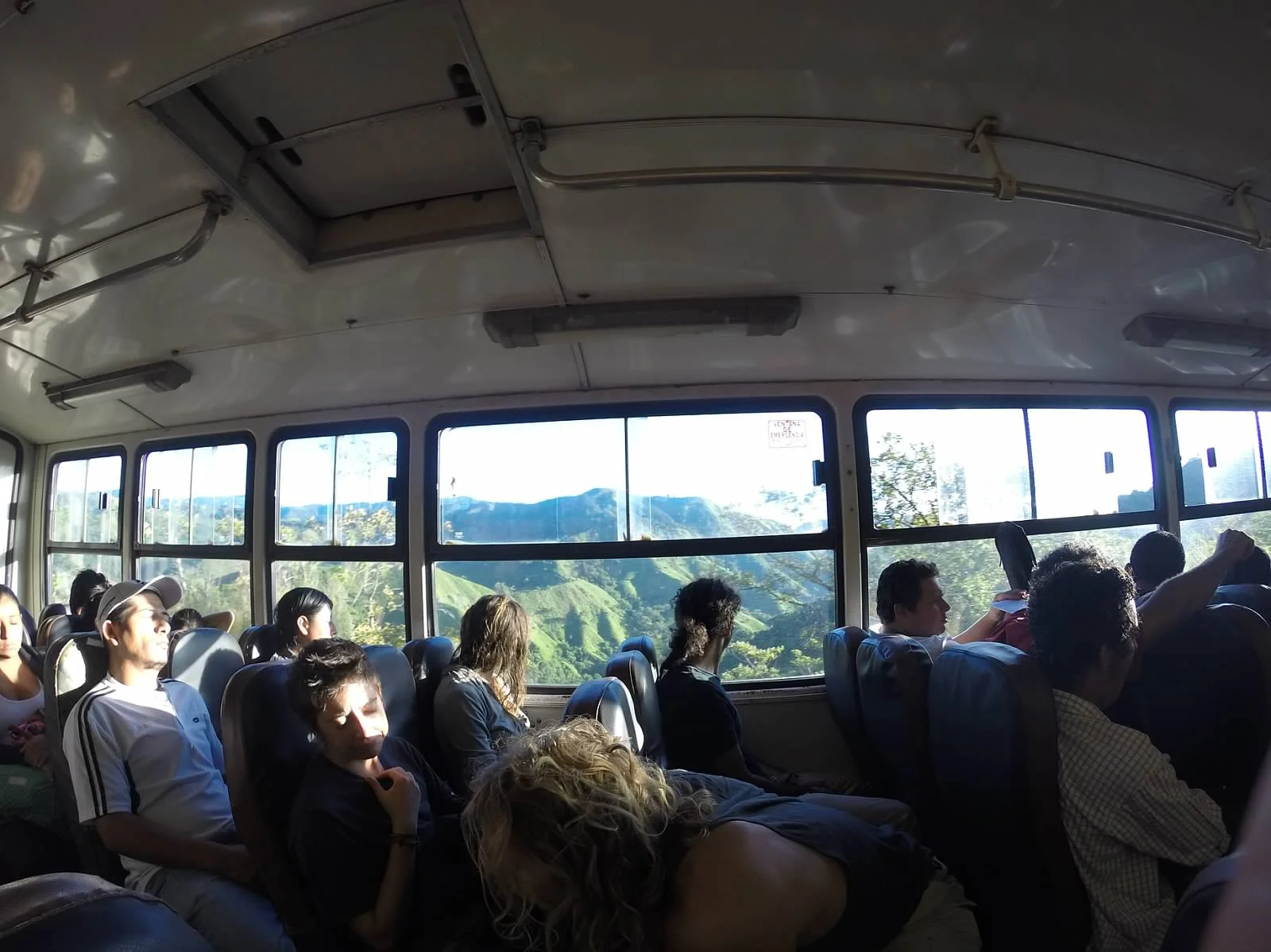
After I chug down a delicious cup of local coffee, something I know I won’t enjoy again till I return, I head out to wait for the only bus out of town. The bus arrives and I awkwardly manage to load my bag on, which always seems to be a feat when traveling. So it begins; the first of many hours sitting, waiting, and fidgeting. If any of you have traveled to the Ranch you may feel the same way, but I think the bus ride is much easier on the way out then the way in. Better as the first leg of your journey than the last,.still with a fresh traveling bum.
I enjoy the ride through the jungle, on windy, bumpy, dirt roads, admiring the unique beauty of this place. We arrive in Puriscal and I head straight to get some chicharones. These yummy hunks of meat, an avocado, and bread have become my go to traveling food to fuel me through. I take my time because my flight doesn’t leave for hours and I would rather wander around the streets then wait in the airport.Still there aren’t many exciting activities to keep me in Puriscal so I load onto the next bus to San Jose.
The whole trip gradually eases me into civilization, each stop with an increasing population. The bus stops in the middle of San Jose, I get off onto the busy streets. I have done this journey many times but I have never had to find the next bus station to the airport by myself, so this will be the interesting part. As anxiety starts to come up with the increase of people and hustle, and every other person in a car is yelling “taxi, taxi!” I inhale, exhale, tighten my backpack straps, and start walking in the direction I think is to the next bus station.
After multiple blocks I start to think I may have missed a turn.I spot a group of police officers chatting on the corner and shyly approach to ask for directions. They all jump eagerly on the opportunity to practice their English on this lost, white girl.
I make it to the airport. The Costa Rican airport is so small that everything moves smoothly.This is where I will wait for eight hours before my plane leaves. I find a nice private corner, lay out my yoga mat and start stretching. I’m the wandering, hippy, dirty, traveler that doesn’t mind making herself comfortable and if that means doing some odd yoga moves in the airport then so be it.

On my flight to LAX I sit next to a Costa Rican man that is moving to Alaska to be with his family. I wish him good luck and warn that he better buy a coat! I arrive in LAX, wait in the two hour immigration line, get on the airport shuttle to the opposite side of the airport, find my next gate, find another private corner, and lay out my yoga mat in hopes to get some sleep. By this time it is at least midnight and there is hardly anyone in the airport.
It turns out not many people sleep in the airport; except for those too cheap to get a room. With the lack of body heat the airport feels like a walk in freezer, and this is not just because I am use to the heat of the tropics. I thought I brought enough warm clothes to bare the cold airports, but I can barely feel my toes so I try wrapping myself in my yoga mat. At this point I do look like a homeless person camping in the airport. The late hours of the night are also the time that all the construction and cleaning gets done in the airport, so between the jackhammers, vacuums, and freezing temperatures I don’t get much rest.
The early morning hours come, people slowly start trickling back into the airport. I continue to wait for my flight to Mammoth, the town an hour away from my home where I will get picked up by my parents. I have had this flight canceled on me multiple times due to not enough passengers, so I worry until I'm on the flight, if it will take off or not. If this flight doesn’t run that means one of my parents will need to drive the five hours to LAX to pick me up. That for lack of a better word, sucks. Finally, the time has arrived for the last leg of my trip; I board the Mammoth flight, an hour long beautiful trip over the Sierra Nevada Mountains. I land. My dad is there to pick me up and we drive home. It has been at least 35 hours now since I left Mastatal; I am exhausted.
I am in a totally different place now. It always amazes me how one day you can be living in the tropics and the next you are in the high desert mountains. I went from a landscape of complete green, to one of different shades of browns and speckles of green. On the drive home my dad comments “it’s been raining a lot, things are looking really green here.” Ha! I think, a lot of rain, really green, you should see the jungle.
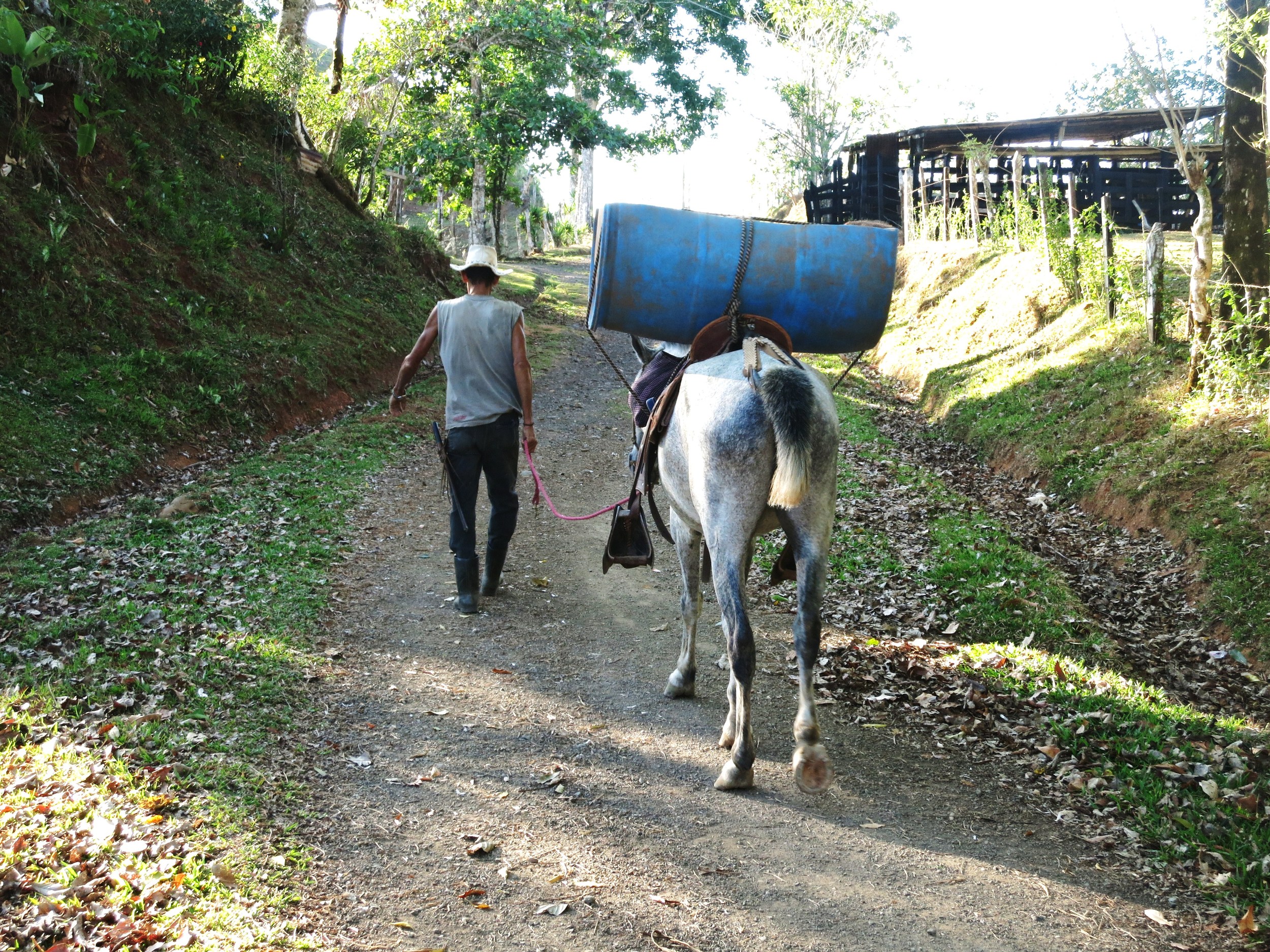
Usually my transition back into life in the States is cushioned by the comfort of being in Bishop, a town so small you almost know everyone. But unknowingly, I arrive back home during memorial day weekend. Which in Bishop is when the town holds its annual Mule Days event, a well known event that attracts 20,000+ people and their 20,000+ mules. All flooding into Bishop for a week of mule fun! It is as ridiculous as it sounds. Not having been to Mule Days in many years, a long time friend and I decide why not? So we put on the good ol’ blue jeans, cowboy boots, and plaid shirts and go down to watch the rodeo! I feel like I have walked into a costume party, what happened to the raggedy t-shirts, sweaty shorts, and old crocs of the jungle? I ain’t in Mastatal no more!
NEWS AND NOTES
Did you know the Ranch is on Instagram? Follow us here!
Have you ever wanted to build your own home? Just bought a piece of land in Costa Rica and want to create a jungle paradise? Well in 2017 we have the classes you need to re-skill and build your place in this world.
Abrazos
The Ranch Crew

Life with Limited Communications: How We Thrive with Crappy Internet
I’m unable to answer all of the emails that I receive into my inbox everyday. Even though I do receive my fair share of electronic correspondence, my inability to reply to all messages is not likely a result of the inordinate amount of inquiries that I receive compared to many of you out there. The reason is that I live in a place with shitty Internet.

I’m unable to answer all of the emails that I receive into my inbox everyday. Even though I do receive my fair share of electronic correspondence, my inability to reply to all messages is not likely a result of the inordinate amount of inquiries that I receive compared to many of you out there. The reason is that I live in a place with shitty Internet.
I have a 2-hour window each morning before most people in town are awake to get into my account and open and answer my emails. After that, people begin to chew up the ever so precious limited bandwidth that serves our community. In my head I envision people in town rolling out of bed to take a peak at their Facebook accounts or watch a video on Youtube before school or work while I struggle to open a reservation request that might result in a booking and some income for the Ranch. Our painfully slow Internet means that I can generally check emails only once a day. If I didn’t respond to an email this morning, it will simply have to wait until tomorrow.

To add to my current communication challenges, I don’t have a cell phone, much less a smart phone. The pressure seems to mount each day to get one. Given my administrative obligations as the director of Rancho Mastatal, all of this results in a daily confrontation that I strive to find balance with continuously. For those of you with poor Internet connections, which may only be a small minority of you reading this, what do you do when you simply can’t open an email that you know you should read and respond to as soon as possible? How do you react when you can’t attach a simple Excel spreadsheet to your email to send to a prospective client? In an age when businesses increasingly rely on the Internet for their survival, how has the Ranch been able to make ends meet for 15 years, the first 8 without even a phone in our town, in a world that today demands email responses in minutes or hours, not days or weeks?
Honestly, I don’t have a great answer or fully know. It’s an interesting dissertation topic for a future graduate student that loves our community. I think mostly it’s been a life-or-death (for the business, not us as humans) need. Somehow, we’ve been able to organize our work and lives to make it work, in spite of the poor odds in Vegas. We’ve persisted and persevered while the communications here have slowly improved. We’ve been forced to depend on our amazing library (with real books) for research and traditional means to build friendships, trust and a dedicated following that have kept us alive and mostly well.
Every 3 weeks, for almost a decade, I drove 2 hours to find a reasonably fast Internet connection. I also relied on a terribly annoying auto response message that asked those emailing to me to please be patient when waiting for a reply. Many of you probably remember (and still receive a watered down version of) the message that states that I’ll get back to you sometime within the next century. This is mainly how I assuaged and bought time with those interested in our project and “stayed on top” of bookings and guest visits early on in our evolution.

In the earliest days, I would wait in line at the public phone in San Miguel, 4 kilometers from Mastatal, to make bookings for our educational groups. If I had to make more than one call, I would have to get back in line to make the second. A third. Back in line. You catch my drift. This little exercise might take me half a day. Setting up homestays for our high school groups would take multiple days. It now takes me an hour by phone.
The current reality, fortunately, is that I’ll probably be able to respond to an email that you send to me within a week, and if it’s high priority, even sooner. But that doesn’t mean it’s always easy. While most of you enjoy life with high-speed wifi and 4g service, we struggle with a 3g network that’s reminiscent of my first email experience with AOL and dial up just out of the Peace Corps in the mid-90s. I haven’t come that far in the past 20 years, but I’ve come somewhere, and all this said, there’s great relief and many benefits in not owning a cell phone and being tied to the Internet 24/7. I am currently avoiding total dependence on modernity’s electronic leashes (or nooses) but also appreciate and recognize the great benefits that the Internet brings to me, my family, and our business. Without it we would struggle even more than we presently do to make financial ends meet and stay in touch with our families. My weekly drive to the highest point in the region to check phone messages has evolved to a predawn wakeup and email session in my cozy cob home, and I’ll take the latter any day of the week.

Visitors to the Ranch almost universally, eventually feel relief when they spend many days, weeks or months with us and are unable to stay uber connected to their digital lives back home. The Internet and cell phones are yet other additions to a continuous string of technologies that we have to learn to find a happy medium with and balance. Like so many of life’s conveniences, too much has proven over and over to destroy our mental and physical health in the long-run, and just like coffee, hooch and phone access, a little can and should go a long way.
NEWS AND NOTES
We have a number of life changing workshops coming up.
Please share around if you know anyone who is ready for a trip to beautiful Costa Rica, a swim in the waterfalls, nourished with homemade meals, and challenged with an intensive educational experience.
Abrazos,
The Ranch Crew

Year of the Ear: Nursing in the Tropics
The sun rises in Mastatal around 5:30 am, and with the light comes a symphony of sound. Buzzing, chirping, and humming act as constant and steady instruments to the jungle orchestra. Every morning without fail they fill the Hankey with music. In the comfort of my bed, I can hear the roosters crowing and a chorus of bird songs. This natural symphony signals the dawn of a new day. But recently many of the residents of Rancho Mastatal have been unable to hear this daily symphony. Tropical ear has literally blocked the music of the jungle.
Ashley is one of our 2016 Apprentices in Sustainable Living. She has a Bachelor of Science in Nursing from the University of Florida. This post is about the challenges of nursing in the tropics, common ailments in the community and how these challenges are managed at Rancho Mastatal. If you would like to learn more about medicine outside of hospital settings, consider joining us this June for our annual Wilderness First Responder Certification.
The sun rises in Mastatal around 5:30 am, and with the light comes a symphony of sound. Buzzing, chirping, and humming act as constant and steady instruments to the jungle orchestra. Every morning without fail they fill the Hankey with music. In the comfort of my bed, I can hear the roosters crowing and a chorus of bird songs. This natural symphony signals the dawn of a new day. But recently many of the residents of Rancho Mastatal have been unable to hear this daily symphony. Tropical ear has literally blocked the music of the jungle.

Halfway through a bowl of breakfast pinto, a student from the visiting Villanova University approaches me with the familiar symptoms of hearing and ear discomfort. David had just returned from a trip to the local waterfall and fell victim to an ear full of trapped water. This condition is called swimmers ear and not ironically is also called tropical ear. What is a nurse to do in the tropics? No otoscope, no problem. Allow the ancient wisdom of observation to begin.

The best way to examine an ear is to pull the ear gently down and away from the face to straighten the ear canal. A headlamp is best for visualizing blockages. "If the gentle pulling of the ear causes pain, then the canal is infected.(1)" A simple recipe, despite limited resources, can be the front line defense for ear infections. "Drop into affected ear 1 spoon of vinegar with 1 spoon of boiled water 3 to 4 times a day. (2)" Fortunately, an ear infection is not what David has. My headlamp has spotted a crusted golden plug. "The ear canal cleans itself by moving dead skin from the eardrum out through the canal as if they were on a conveyor belt. Accumulated debris and earwax tends to trap water that gets into the ear canal during a shower or while swimming. The resulting wet, softened skin in the ear canal is more easily infected by bacteria and fungi. (2)"
David looks around nervously, aware his classmates are peering into his ear with me. Their faces scrunch up with amusement and wonder. David's ear needs to be irrigated. We sit at a bench around the corner and he comfortably lays down. I proceed to place 10 drops of mineral oil into his affected ear. His classmates are commenting on the size of David's golden wax build up.
If mineral oil is not present in your community any natural oil is a good substitute. The oil needs to be in the ear for 10 minutes to break up the earwax. With the help of his classmates' good company, the 10 minutes flies by. When you irrigate an ear, warm water is important. Using an irrigation syringe, I gently flush his ear. With his classmates on my heels, I feel them starting to lose hope as I continued to flush and flush. I gave his ear a grand finale flush and the golden treasures came pouring out. The "ohs" and "ahs" of his classmates shortly follow. David faces us with a look of confusion. "I can hear again!" He says remarkably as he catches a glimpse of the golden nuggets that left his ear.
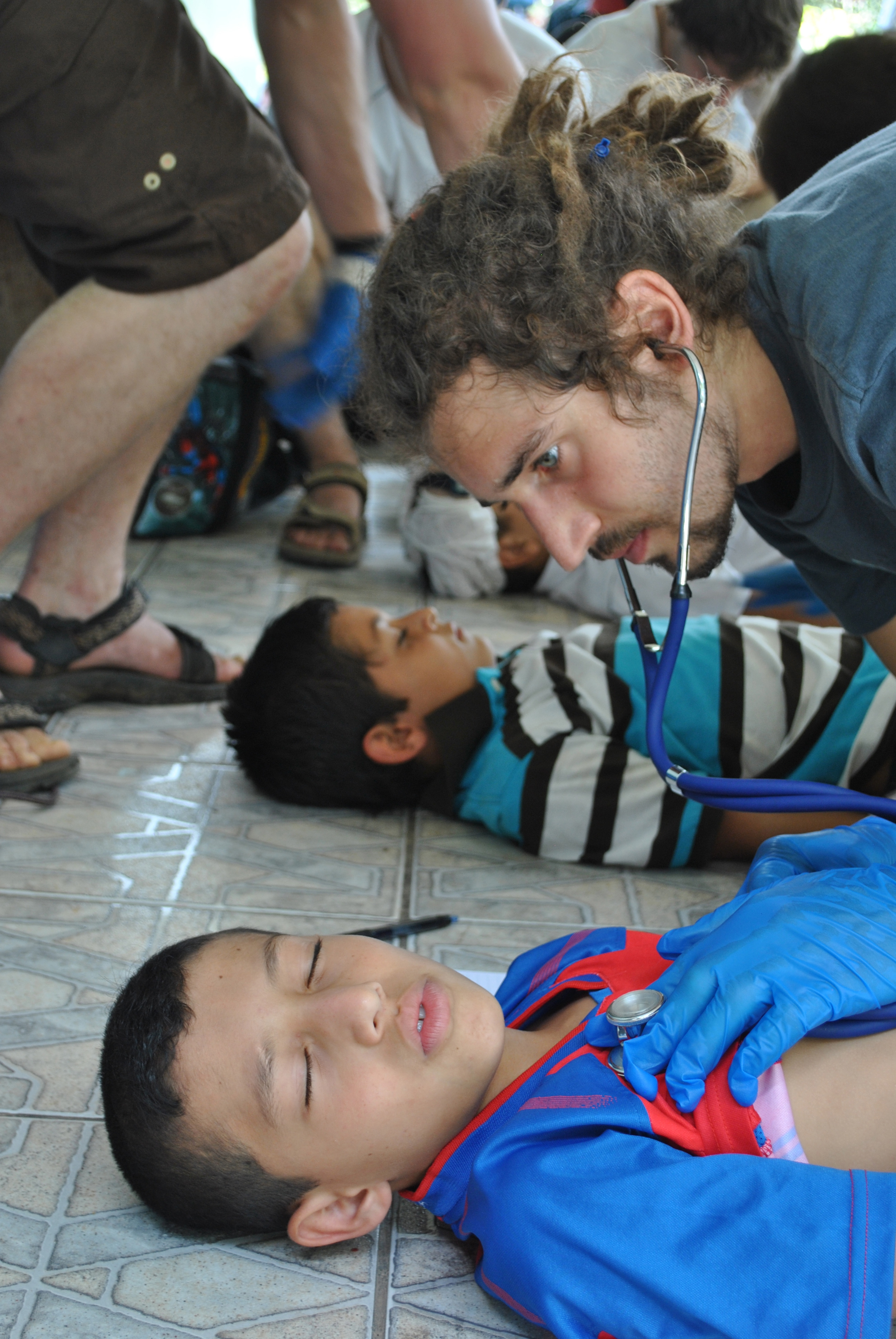
Nursing in a small community has its challenges. With limited resources you are forced to get crafty. Books supplement my medical knowledge. The realm of Google and quick answers is unavailable. The lack of privacy can be daunting; as the majority of treatments are centered around meal times. The main house is the keeper of the medical supplies and the maker of all meals. Still, when David full force hugs me, I can feel his appreciation osmose into my body, up to my face where it turns into a smile. He thanks me for opening his ears to the symphony he's been missing. I've learned in the short time I've been part of this community that together we are capable of some very amazing things.
(1) Berkow, Robert M.D., The Merck Manual of Medical Info, 1997
(2) Werner, David. Where There is No Doctor: a Village Health Care Handbook, 1992.
NEWS AND NOTES
We have a number of life changing workshops coming up.
Please share around if you know anyone who is ready for a trip to beautiful Costa Rica, a swim in the waterfalls, nourished with homemade meals, and challenged with an intensive educational experience.
Abrazos,
The Ranch Crew

Extreme Food Processing: Flaming Nuts and Poison Ivy Spray
I was harvesting fruits down by the classroom this week when Jenny walked by with a line of high school students, en route for the river trail. She paused for a moment as she passed.
“We're roasting cashews at five tomorrow. Why don't you gather some from the ground here and bring them?”

I was harvesting fruits down by the classroom this week when Jenny walked by with a line of high school students, en route for the river trail. She paused for a moment as she passed.
“We're roasting cashews at five tomorrow. Why don't you gather some from the ground here and bring them?”
As I nodded in reply, she kept walking, the line of students slowly disappearing into the trees.
I looked down at my harvest—a small sack of red lovi-lovis, pink water apples, and green peppercorns. Friendly faces of the fruit world, each one unique in form and function. The lovi-lovis bright and tart, the water apples soft and quenching, the peppers prized for their addictive pungency. Understanding each one's harvest, preparation, and usage is one of the true joys of farming and cooking; each new discovery a revelation in the subtle and powerful nuances of the life around us.

The cashews, though. The cashews were dangerous temptations.
I looked up from my harvest. The Ranch cashew trees were close enough that I could smell the fruits, softly sweet, with a piercing astringency. Cashews are mythical beasts of the fruit world, strangely formed in an unlikely combination of parts. The fruits themselves are soft and oval, and vary in size and color like apples do, most red or yellow. They have a soft, waxy skin and extreme juiciness—which ironically leaves your mouth completely dry when you bite into one, courtesy of the high quantity of astringent tannins. But the strangest part is the seed. Instead of hiding buried inside the fruit's flesh, the cashew seed dangles in a curved shell on the bottom of the fruit itself, like a tiny curled finger, beckoning and warning.
Each February and March at the Ranch, as soon as the first mythical cashew beasts begin to form and dangle from the trees at eye level, an urgent announcement is made to all apprentices, guests, and passersby: do not touch the cashew nuts or they will get you!! Like all mythical beasts, cashews come with a set of strange powers. In addition to the fruits sucking all the saliva out of your mouth when you eat them, the nuts are covered in urushiol, the same chemical substance that gives poison ivy its poison and people a terrifying rash when they touch it. Nuts nuts nuts!
I happen to be extremely allergic to lots of plants, including plain grass. My legs from the knees down still bear hundreds of poison oak scars. Urushiol is my nemesis, and I always lose our battles. So when Robin warned us about the cashew nuts' latent danger—don't touch them the wrong way, don't look at them the wrong way and above all else, don't try to roast them—I took the message to heart as fair warning and good advice. After all, this sound advice was preceded by experience: on the two occasions when people attempted to roast the nuts at the Ranch, both events ended in trips to the hospital for steroid injections. Swelling of the entire body after consuming urushiol is apparently even worse than itchy legs. “Robin had a cashew trauma,” Jenny later described it. Some fruits are better left untouched.
And yet. My friend Amanda who, bless her lovely heart, is afraid of nearly everything in the jungle, including insects, sounds, and rainstorms, happened to tell me just that morning that she was enjoying cashew processing with her four-year-old daughter Lily. “We just cooked them in the fire and then Lily broke open the nuts with a rock and they were really good,” she said. And then there was the time last year that we filled a whole sack full of cashew nuts from the driveway, and Junior was thrilled to lug the things back to his place to roast and eat. And of course the fact that there are cashew trees everywhere in Mastatal and everyone seems to eat them. Maybe it was time to try again.
The next morning at meeting I announced my plan to collect the nuts and bring them to Jenny and Marcos's to roast. A small sea of terrified faces looked back at me. “Its okay!” I said, “It's okay!” Having no idea if it would be okay or not, but hoping.
“For anyone that chooses to participate, we will help you in any way we can, but you will be responsible for the cost of your own transportation and hospital visit,” added Robin.
That afternoon I took a bag to the cashew tree patch, scavenged for fallen nuts, and thought about my future. Would it be bright? Painful? Delicious? It was easy to gather a good quantity of nuts in a half hour or so. I stuck them in a backpack along with a take-out container of salted Maya nut seeds to share. Just before leaving I asked Robin what part of the roasting process she had been allergic to. “The nuts, the utensils that handled the nuts, everything that touched the nuts, the smoke, and everything the smoke touched,” she said. I added a bottle of benadryl and an emergency inhaler to my backpack, and Rachel Jackson, Jess, and I set out walking to Marcos's.
When we arrived Arabela was sitting in a rocking chair on the front porch, and Chilo wandered up with a shovel in his hand. I could see smoke coming from behind the house, and Chilo pointed us around the corner.
There was Marcos, shirtless and stirring cashews over the fire with a very long stick. In front of him sat a small crowd of young tourists and volunteers, watching, chatting. Someone strummed a guitar. No one looked terrified or swollen. Jenny greeted us. Smoke wafted from the fire onto the crowd, and Rachel, Jess and I stepped back out of its reach. We explained our trepidation to Jenny, and she shook her head. “It's fine!” she said. “As long as the toxins spray out and burn up its no problem, its good.”


We handed Marcos our sack of cashews and he tossed them on a roofing sheet over the fire and poked them around with the stick. “You have to stir them until they pop,” he explained, “then they open and spray out all the toxins, and it runs into the fire and burns.” After a few minutes the cashews looked black and charred, and I heard the hiss and pop of shells breaking. Marcos pointed out the rivlet of liquid running off the roofing sheet onto the ground. Once he deemed that all the shells had opened, he dipped the end of the stick into the fire, and brought the burning tip up to the cashews. They ignited immediately, and burned like an enormous flambe. After a minute or so Marcos told us to step back, and he flipped the roofing sheet with the flaming nuts onto the ground, where they burned out in the dirt. Jenny used a stick to gather them into a pile and brought them over to us. They were completely charred, the husks burned through. She put one on a rock and tapped it with a piece of wood. The husk fell off, and she picked up the nut. A cashew! Golden brown, with one end toasted slightly black. “If its wet, and bends, don't eat it, its got the toxins,” she said, pressing the nut between her fingers. “This is good.” She handed it to me to eat. It was warm, and tasted sweet and tender-crisp.


We spent the rest of the evening by the fire, cracking open cashews and passing around May nuts. The Maya nut, also called ojoche or ramon, is a native rainforest tree that produces an edible, high-protein nut. The week before, Jenny accompanied us deep into the forest in Zapaton to track down one of the last known mature trees in the area. We hope that by valuing the Maya nuts as a food source and the trees that produce them, we will help drive sustainable food economies that are financially viable and promote conservation of forest ecosystems.
One of Marcos's volunteers took a Maya nut and popped it in his mouth. He looked at Marcos poking another roaring ball of fire on the roofing sheet. “If cashews were in the states people would go crazy, there'd be like cashew parties every year or something. Its so cool!” He took another Maya nut. “What are these, these are good?”
Around dusk it began to rain, and we crowded under the awning of Marcos's house, snacked on Maya nuts, and talked about the cashews. Marcos explained the differences in varieties and processing techniques. We concluded that the Ranch Cashew Trauma was probably a consequence of ingestion of un-combusted urushiol and a serious allergy to it. Even though Marcos made it all look easy, the complete combustion of the toxins in cashew nuts is an extreme food processing technique honed by many seasons of experience. I certainly won't be roasting them by myself any time soon. But hopefully Marcos and Jenny will let us continue to celebrate the season with them in years to come.
A Ranch guest recently asked me why local food traditions are important in Mastatal. Why trek into the jungle to gather rainforest seeds? Why feel the adrenaline spike of watching someone combust toxic nuts in a ball of fire? Why prepare three meals a day from local foods--no boxes, bags, or can openers involved? Why do we do this, and why is it important?
Food is constant. It builds us, it forms us, it unites us. Sustainable food systems are the heart of resilient communities and regenerative ecosystems. If you can do this one thing—food--on a sustainable community scale, everything else will follow. Community cohesion, local economies, conservation of diverse ecosystems, health and wellness, celebration—all fall into place as we create successful, vibrant local food systems. Its not just about the flaming nuts, its about the whole picture, and that's why it worth it.
NEWS AND NOTES
We have a number of life changing workshops coming up.
We rely on all of the amazing ambassadors to our project to spread the word; if you know of anyone who needs a get-life-into-gear experience, send them to one of our classes!
Abrazos,
The Ranch Crew
Categories
Topics
- Agriculture 6
- Agroforestry 21
- Animals 2
- Apprenticeship 19
- Appropriate Technology 6
- Backpacking 1
- Bananas 1
- Basic Pantry 4
- Biochar 1
- Books 3
- Build Your Own Home 1
- Central America 5
- Chiles 1
- Cinnamon 1
- Clay Carving 1
- Climate 2
- Climate Change 1
- Cob oven 1
- Communication 5
- Community 24
- Compost 2
- Composting Toilets 2
- Condiments 1
- Conservation 2
- Cooking 4
- Costa Rica 18
- Design 10
- Earthen Construction 10
- Eat Local 2
- Ecohome 1
- Education 9
- Environment 3
- Ethics 4
- Farm to Table 12
- Fasting 1
- Fermentation 14
- Food 22
- Food Choices 8
- Food Forest 8
- Food Processing 15
- Food Systems 12
- Gap Year 1
- Gardening 5
- Ginger Beer 1
- Harvest 2
- Health 12
- Healthy living 5
- Homemade 2
- Homestead 8
- Internet 2