

BLOG
Stories, articles, and updates from the Ranch community.
Vegetables & Greens that Thrive in the Tropical Rainy Season
When the rainy season arrived, it started with a sense of relief - dry season went on longer than expected and our trees and plants were scorching in the heat. For myself the cooler air was welcome comfort, and the rains a reminder of home and getting cozy. Mornings were beautiful with the sight of the sun rising through the dewy mist.
By Amy Dodds,
2019 Apprentice
When the rainy season arrived, it started with a sense of relief - dry season went on longer than expected and our trees and plants were scorching in the heat. For myself the cooler air was welcome comfort, and the rains a reminder of home and getting cozy. Mornings were beautiful with the sight of the sun rising through the dewy mist.

But very soon our zone one vegetable gardens with our recently planted greens began to suffer - the sheer force of the rains and the humidity brought fungal and mildew issues. Faced with the reality that our beans and delicate greens were going to die out, I thought about the potential of using cover crops, such as sweet potato, for the rest of the year. But this did not seem to fit in my idea of what permaculture asks us to do: observe and interact with the environment we are situated in and use that to our advantage. With this in mind, we at Rancho Mastatal have been planting crops that thrive both in the intense heat and thumping rain. Below are some of the most popular vegetables that we are growing in the Ranch that are suitable for the rainy season:
Cucumber:
Cucumbers have been abundant in our garden this season with us pumping out quick pickles nearly every day. Not bad for a community feeding 30-40 people daily! Thankfully, cucumbers like warm, humid weather. We grew ours by seed on a trellis to allow for more air flow and for the fruit to stay above ground.

Okra:
Described as among the most heat-tolerant vegetable species in the world. It is planted for its seed pods which can be cooked, pickled, eaten raw, or included in salads. It does become mucilaginous so do consider this if you're sensitive to the slime.
Kang Kong spinach:
This leaf green is native to southeast Asian and is delicious stir-fried with soy sauce and garlic. It is a semi aquatic plant, a creeper that grows in or near the water on moist soils, so it is ideal for our climate.

Hibiscuses:
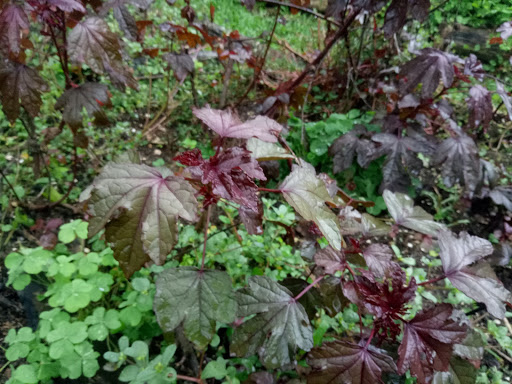
Both Green and Cranberry Hibiscus are delicious perennials that thrive in the warm and wet. They self seed easily during dry season so when the rains come you have a whole bunch of babies to keep your salad zesty and fresh. The leaves do contain oxalic acid so cannot be consumed in large, consistent quantities.
Chaya:
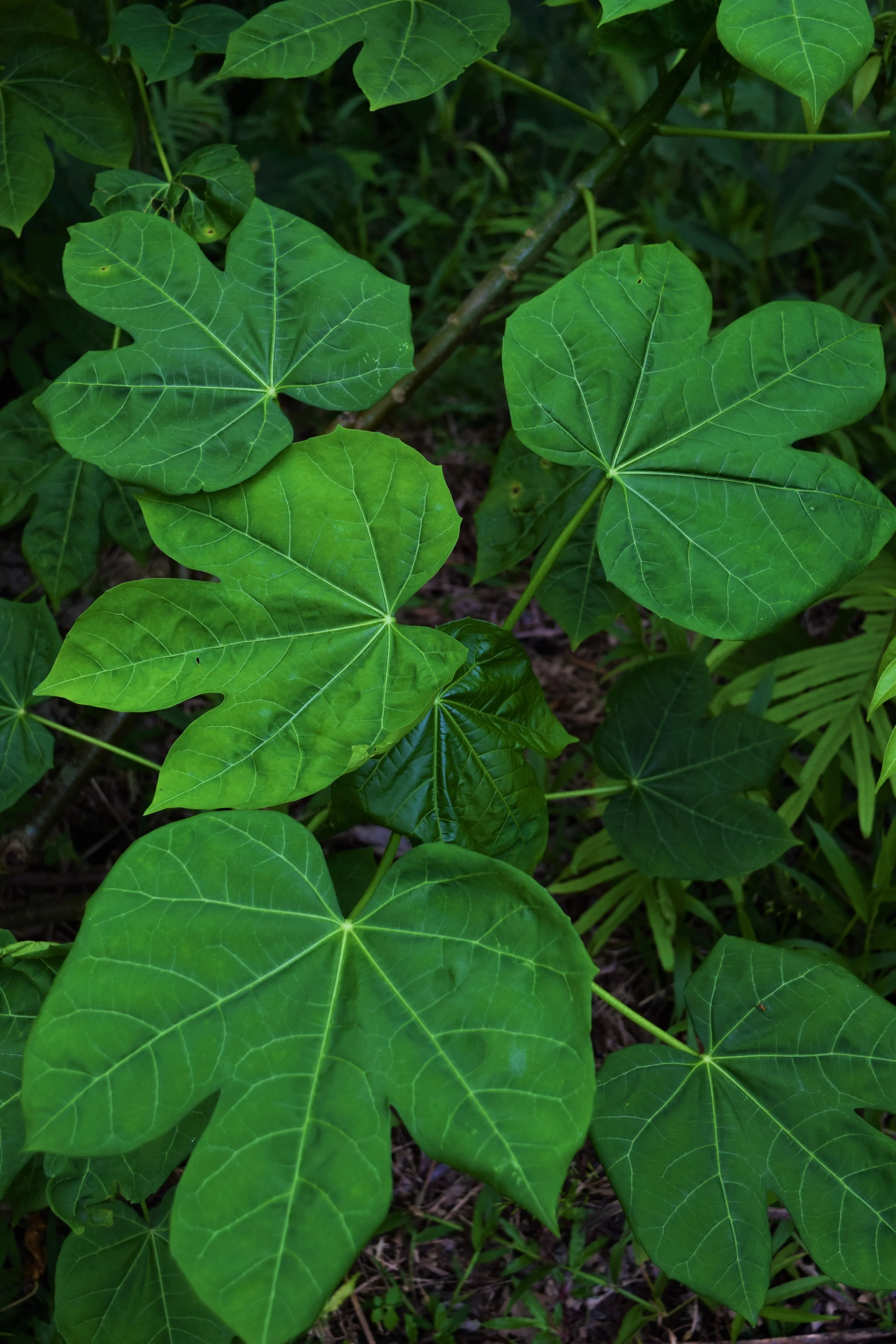
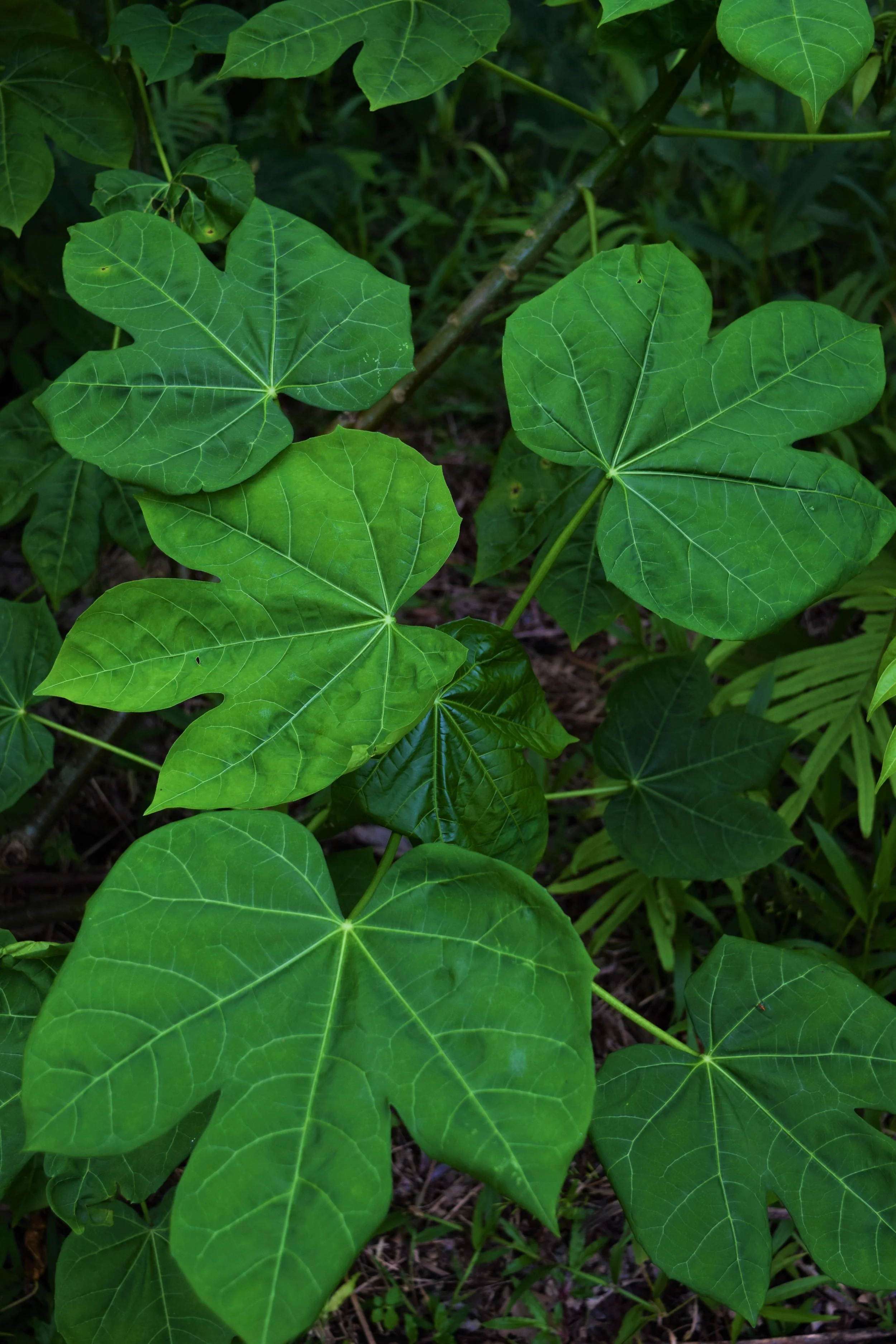
Also known as tree spinach this is an excellent perennial green native to Mexico. It's leaves are edible once cooked, like spinach. It's easy to propagate by cutting and loves the heavy rain.
Malabar spinach:
Malabar spinach is another heat and moisture-loving spinach-like green. The succulent leaves can be eaten both raw and cooked. We have only a few plants so we are trying to improve the population. We use a trellis to support its tendency to vine.
Winged bean:
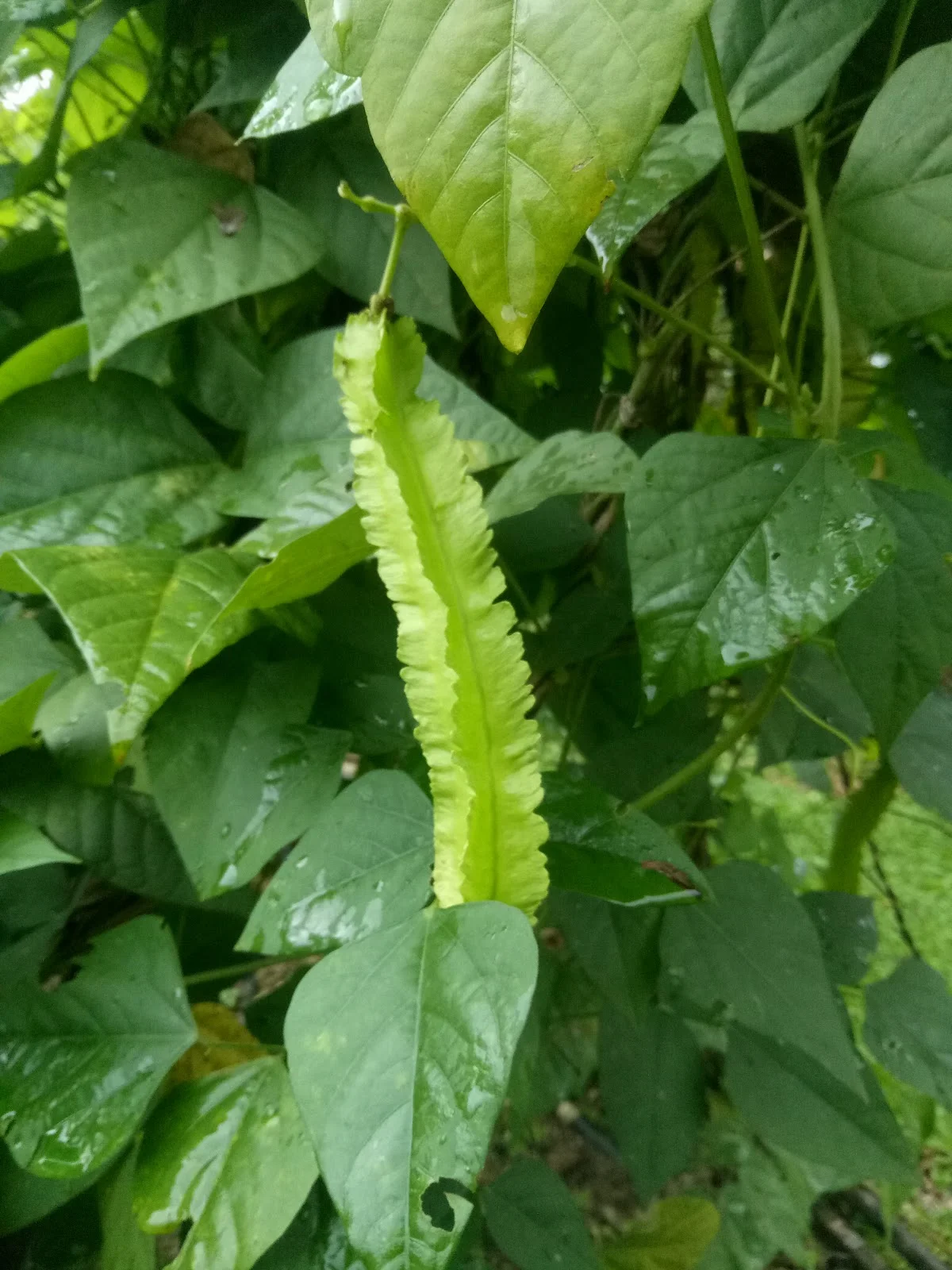
Also known as Goa bean and princess beans, these are sweet protein packed vegetables that do well in heat and humidity. They can fix their own nitrogen when the bacterium Rhizobium is in the soil. They are best harvested young and tender, and great raw in a salad.
Other more delicate greens we are growing in our nursery as they don't require as much water, such as Arugula, mustard greens and Asian cabbages.
By having our covered nursery space we are able to grow things under cover that otherwise would not do so well outside, we are also experimenting with making some movable covered spaces for out outdoor garden beds….. we will update you with progress so make sure to Like and Follow us on Facebook & Instagram

Where to Buy Your Trees and Seeds in Costa Rica?
Ever have a challenging time finding your favorite plant in Costa Rica? Or wonder where to get supplies for a new greenhouse? What about organic pesticides? After nearly a decade working in country, our team has compiled a comprehensive list of nurseries, seed banks, botanical gardens, and farm/garden suppliers.
By Nic, Core Team
Costa Rica has always been a challenging place to source your materials, as more places are getting online though, it is getting easier and easier to find things that were once impossible.

We are delighted to be able to share with you some of our favorite places to buy grafted fruit trees, seeds and so much more
Gary Zill is one of the leading produces of tropical grafted trees in Costa Rica and the tropics. A must visit in Orotina area. Check his website out for more info
Peter Kring runs a fantastic botanical gardens in Puerto Viejo and has many rare and difficult to find grafted fruit trees. Check out his Facebook, he also sells fruits at the puerto viejo farmers market every week.
The La Garita area in Alajuela just off the pan american highway near the airport is a place with many many nurseries, it is probably one of the best areas to purchase your more commonly available fruit trees like mango and citrus, but they are unlikely to have any more niche trees like Durian or Salak. El Punto is one we have used in the past.
CATIE in Turrialba area has a large seedbank of cover crops, native trees, timber species and some fruit trees. you can contact them through their website for upto date info about what they currently have.
ICE, Costa Rica’s electricity company usually has stock of native trees and nitrogen fixers available for free for reforestation projects. They can be phoned for free on 800-VIVEROS (800-8483-767) for more info.
For local annual vegetable seeds, our friends at Semillas Plantae have a fantastic selection of organic seeds available in country that can even be delivered to your house!
At the Ranch we also have a small nursery with a variety of Nitrogen Fixing Species, grafted fruit trees etc.. Please contact us if you would like to know what we currently have in stock.
The Earth University also maintains an extensive nursery, David Guido can be contacted on +506- 8639-9928
Join us for our annual Permaculture Design Course to learn more about designing, implementing, and maintaining your own farm and project.
The Art of Stacking Functions
Stacking functions. What does this phrase mean to you? It could mean any number of things depending on what you apply it to. In this case I'm referring to the term as it's used in permaculture. It is one of the primary principles of permaculture design. Here at the Ranch we employ as many of these principles as we can in our work and in our daily lives.

Tulsi or Sacred Basil harvested for tea.
Stacking functions. What does this phrase mean to you? It could mean any number of things depending on what you apply it to. In this case I'm referring to the term as it's used in permaculture. It is one of the primary principles of permaculture design. Here at the Ranch we employ as many of these principles as we can in our work and in our daily lives.
Before delving deeper into this topic, I think it's important to first define what permaculture is. There are thousands of definitions available but I've found it useful to come up with my own because it makes the most sense to me. I encourage anyone with an interest to do the same. Here is my definition: Permaculture is a way of life that empowers you to contribute to the regeneration of the earth on a personal level. Its use is guided by a set of principles that can be applied to any aspect of your life.
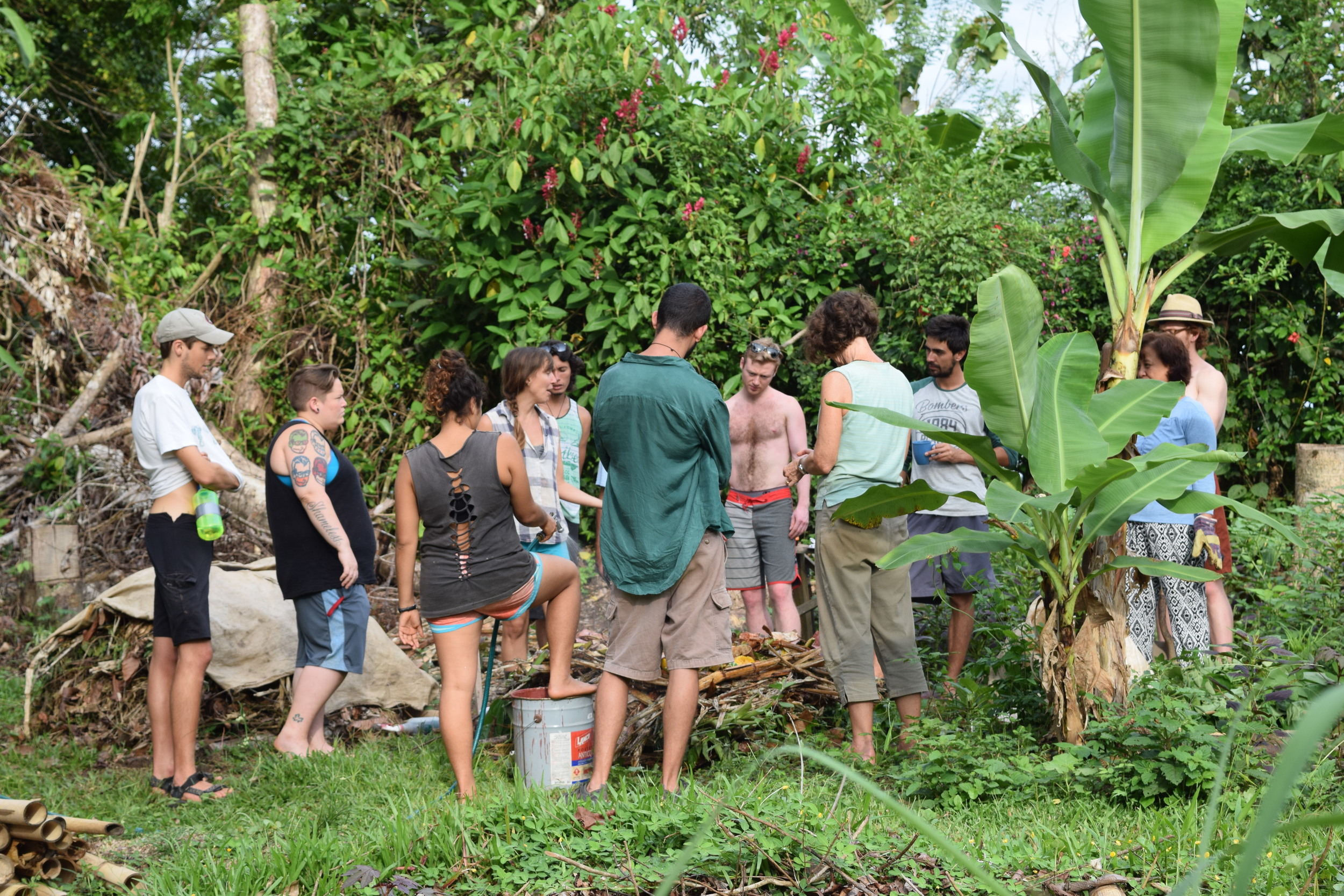
Learning about Compost making in our PDC.
With this in mind let's go back to stacking functions. As first mentioned, stacking functions is a primary principle of permaculture and basically refers to elements in your life having multiple functions, instead of a single function. I will offer a few examples to make the concept easier to grasp. A kitchen table is where food is prepared, where meals are shared and it can also become storage space. A fruit tree provides fruit, offers shade, produces mulch, fire wood and a climbing structure. Try to think of elements in your life and what you use them for. If you can only come up with one use for something, it's probably not necessary to have in your life. Can you think of anything that doesn't have multiple functions?
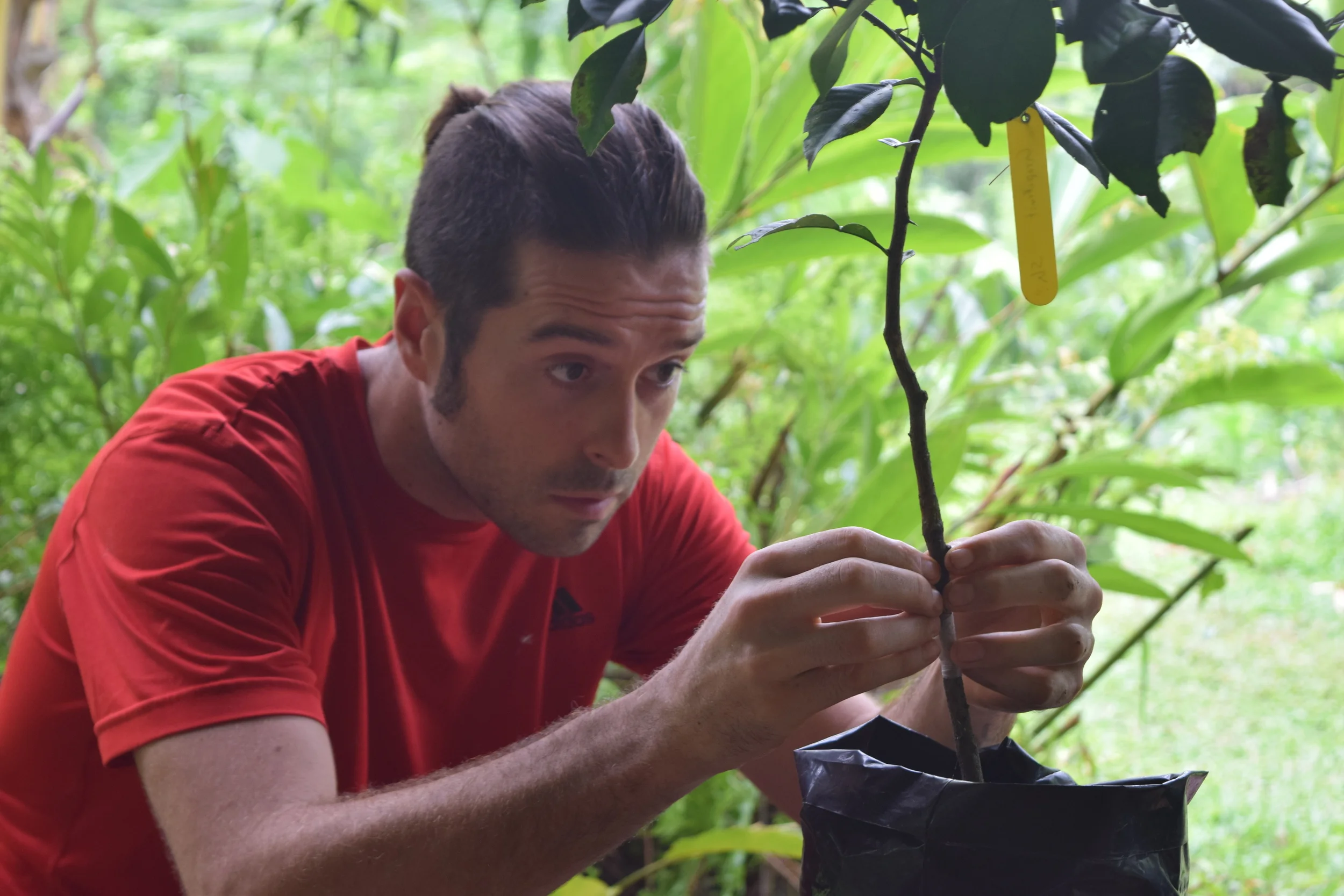
After taking the permaculture design course (PDC) at the ranch, I started to notice that I was applying these principles everywhere and had been all along, only now I was able to recognize this process. Stacking functions is apart of my everyday life here. My role has taken many forms, but recently I have focused on the farm to table operations. I propagate plants, nurture them and continuously maintain them until they are ready to be harvested and used in the kitchen.
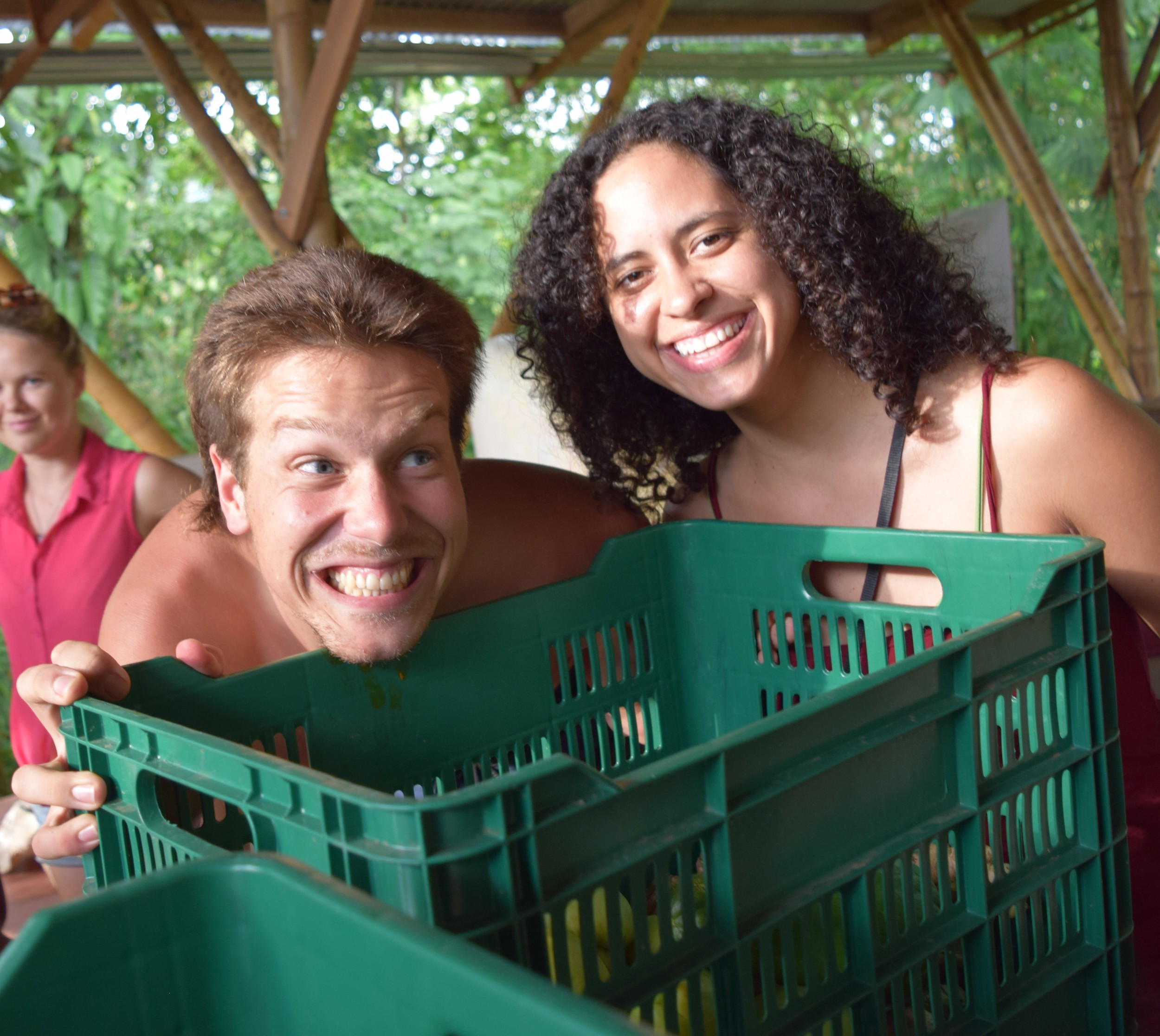
Ready to make pickles.
One morning in the Vivero (plant nursery) and kitchen gardens I realized that everything I was doing actually had multiple functions. I'd set out to clear the paths and Swales from plants too tall to hold themselves up from the relentless rainy season downpours. I was simply cutting and clearing. But it was more than that. The plants I was tending too were edible salad and cooking greens, perfect to use in the kitchen later that day. And this got me thinking, what other functions do these humble garden tasks have? Well, I was pruning and shaping the plants, helping to promote new growth and removing old growth. I was collecting cuttings to propagate in the nursery later that day. And from what was leftover, I was gathering nitrogen rich green cover for our compost pile. When I was done clearing I got onto weeding and again found myself picking out perfectly edible food growing in unintentional places. I wasn't simply weeding, I was improving the aesthetic of the gardens, creating a new intentional herb garden and collecting herbs for use in the kitchen.
Later that week I was in the kitchen processing our farm food and found myself using these ingredients in many different ways. The tulsi or holy basil I'd cut back was used fresh to make a concentrate to flavor our kefir water sodas. Some of it was dried and put on the tea table and some of it was used to flavor a meal. One of my favorite foods to process this year has been mango. When it's ripe we eat it fresh, add it to our hot sauce, use it in smoothies and freeze it to make ice cream. When it's green we pickle it, make green mango kimchi, create green mango salads or simply slice it up and sprinkle with our chili lime salt. It seems simple but I'd bet many of you have set out to do a simple but necessary task in the kitchen or garden without realizing that what you're doing or using actually has many functions.
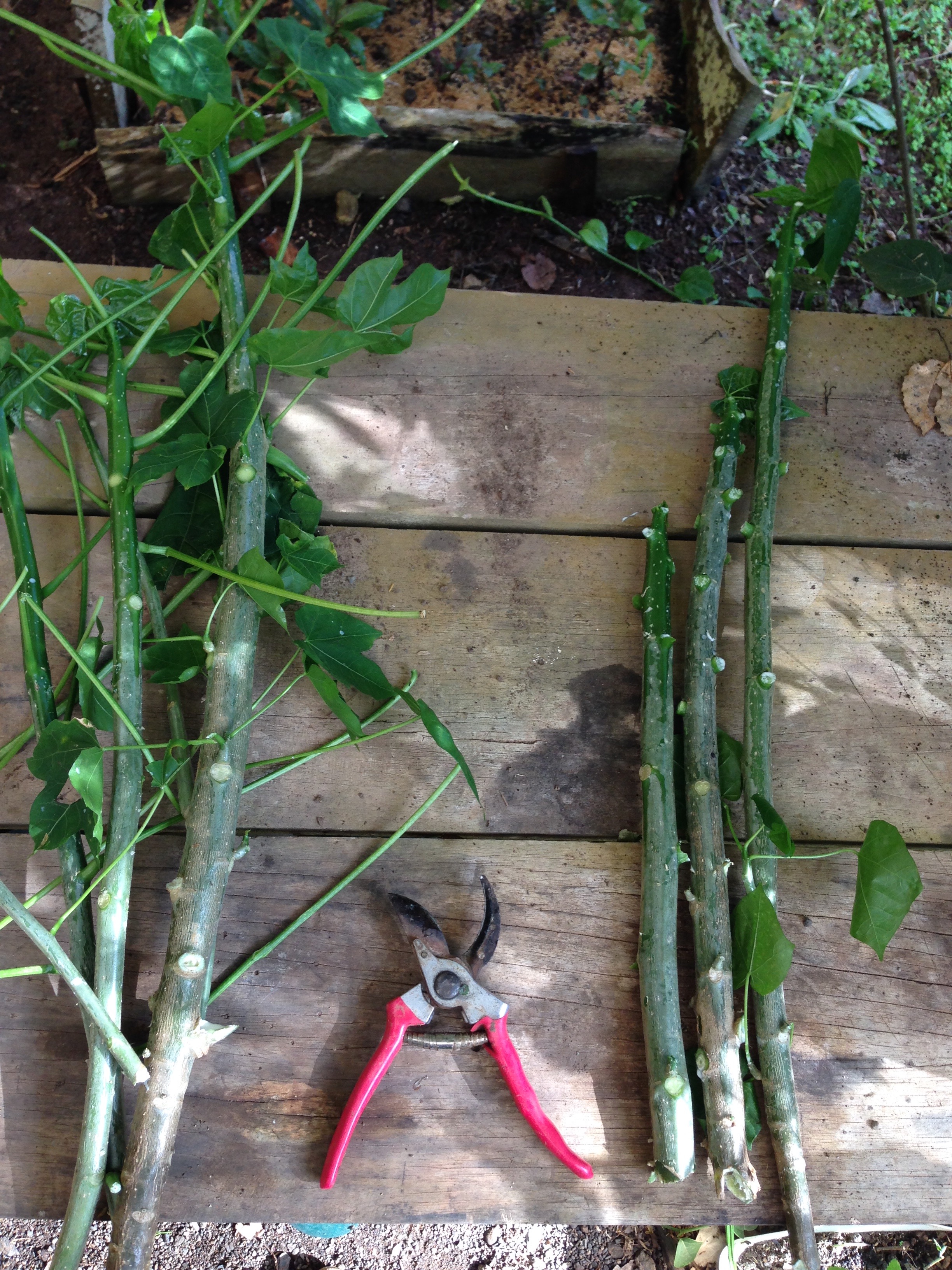
Chaya cuttings from the garden.
I've found this concept a wonderful and useful one to apply to my life here at the ranch. It is an approach I will take with me when I leave. A way of moving and doing that is easily applied to my life back home in the city. I will find myself asking the question, "what functions does this item/task/plant/food have?" over and over again. If I'm able to come up with at least 3 (positive) functions then I'm happy to purchase/do/ plant/use it. If not then I will rethink my choices. Of course there will be some situations where this concept is not applicable but there are many where it is and I believe it's simple enough for everyone to employ. After all it is these small changes in our lives and more specifically, in our thinking that help move the big change in the right direction. It is the decision to question what we are doing and using and actually think about the consequences, it is the decision to think and act consciously.
NEWS AND NOTES
Our Permaculture Design Course is on the schedule for 2017. Course runs from April 25th to May 8th. We are hoping for another great turnout so help us spread the word!
In 2016 we offered over a half dozen full and partial scholarships to students from Costa Rica and around Latin America to participate in our workshops.
We were able to do this through the generous support of the Mastate Charitable Foundation. We hope to continue this pattern in 2017 and are now accepting tax-deductible donations for our Central American Scholarship Program. Help has increase the accessibility of sustainability education to our neighbors and consider making a donation!
Abrazos
The Ranch Crew
Categories
Topics
- Agriculture 6
- Agroforestry 21
- Animals 2
- Apprenticeship 19
- Appropriate Technology 6
- Backpacking 1
- Bananas 1
- Basic Pantry 4
- Biochar 1
- Books 3
- Build Your Own Home 1
- Central America 5
- Chiles 1
- Cinnamon 1
- Clay Carving 1
- Climate 2
- Climate Change 1
- Cob oven 1
- Communication 5
- Community 24
- Compost 2
- Composting Toilets 2
- Condiments 1
- Conservation 2
- Cooking 4
- Costa Rica 18
- Design 10
- Earthen Construction 10
- Eat Local 2
- Ecohome 1
- Education 9
- Environment 3
- Ethics 4
- Farm to Table 12
- Fasting 1
- Fermentation 14
- Food 22
- Food Choices 8
- Food Forest 8
- Food Processing 15
- Food Systems 12
- Gap Year 1
- Gardening 5
- Ginger Beer 1
- Harvest 2
- Health 12
- Healthy living 5
- Homemade 2
- Homestead 8
- Internet 2