

BLOG
Stories, articles, and updates from the Ranch community.

The Ethics of Permaculture
Are ethics universal, or are they subjective, governed by individual attitudes and circumstances? And if that is the case, how can anyone be sure that they have “good ethics” and are always making the right decision? And by what means can we design a future in which every choice leads to the wellbeing of all humanity and to the wellbeing of the planet?
By core team member, Sam Hansen
Philosophy is the study of knowledge, truth, and meaning. Ethics or “moral philosophy” embraces those principles as they influence human behavior. Socrates, who was a foundational figure in western philosophy thought that ethics are based on the premise that all people are essentially good and given the choice will make good decisions. Aristotle called this behavior “virtue,” a striving to do the right thing and make the ethical decision.
When these concepts are applied in practice, the seeking after right and wrong gets a little more complicated. Are ethics universal, or are they subjective, governed by individual attitudes and circumstances? And if that is the case, how can anyone be sure that they have “good ethics” and are always making the right decision? And by what means can we design a future in which every choice leads to the wellbeing of all humanity and to the wellbeing of the planet?
In 1978 Bill Mollison and David Holmgren, two Australian ecologists took on that challenge by developing an interdisciplinary design manual which they believed, if followed would result in a positive, integrated and prosperous future. They called their enterprise “permaculture” and created three fundamental ethical formations as its foundation.
“The only ethical decision is to take responsibility for our own existence and that of our children. Make it now.” – Bill Mollison
Care of the EARTH
Care of the PEOPLE
Set LIMITS to consumption
Transition

Earth Care
The permaculture ethic of caring for the earth is founded on an understanding of the interconnectedness we share with all nature and that our survival as a species is dependent on that of the planet earth. While some might argue that this ethic stems from our own self-interest, Bill and David believed that the “survival of natural systems” is based on cooperation with, rather than domination over, the natural systems that provide a healthy habitat for us.
“When we lose plant and animal species due to our actions, we lose many survival opportunities”- B. Mollison.
Permaculture states that we leave these natural systems to flourish and when we require resources, we harvest them applying the rules of “necessitous use” which includes reducing waste, avoiding pollution, and safeguarding against any process with negative environmental or human impacts.
The Earth care ethic reminds us that our best, our only future, depends on the common goal of living together in harmony and cooperation on a thriving sustainable Earth.

People Care
When we come together and agree on the common goal of taking care of the earth and ensuring its existence and our survival on it, we can then focus on our relationships with others. From an early age we are taught to look out for our family and keep each other safe. As global citizens it is essential to treat all humanity as part of our family and extend the same care to all. A population that values each and every individual’s contribution and functions to support each other is more likely to thrive than one based on competition and opposition. Sadly, most political and state systems function by setting us on opposing teams. How much better would it be for everyone if we were on the same side working towards a unified and prosperous future?
What Bill Mollison called “communal permanence” is creating a strong sense of interconnectedness with nature and with each other so that we can thrive for many generations. For example, knowing that the forests we plant today will be nurtured and cherished for the future and not harvested for short term gain. This ethic is not a simple one in which to find balance, given that we have such a diverse range of cultures, customs, values and philosophies in the world. However, by working together towards common goals that allow us to live in harmony with nature, ensure that everyone has access to clean water and healthy food and enjoys the right to free expression, all the while not imposing on other’s well-being, we can strive to create a future in which we protect our planet and each other.
Set Limits to consumption – redistribute surplus
“Beneficial behavior involves managing natural systems for their own, and our, long-term benefit, not for our immediate and exploitative personal gain” - Bill Mollison

In a world of rampant consumption and waste the third ethic of Permaculture is based on setting limits and seeking to live a sustainable life by relying on the rule of necessitous use. When we free ourselves from competitive and wasteful economic systems, and organize equitable distribution systems, we discover that there are certainly enough resources to meet everyone’s needs.
The “Fair-share” ethic teaches us to look after our neighbor when they have fewer yields and in turn they will look after us when our yields are low. We can extend this ethic to all of nature and leave space for ecosystems to thrive. Minimizing waste and developing as many renewable resources and systems as possible will help us achieve a balance where we can all enjoy the bounty the earth has to offer, and we can care for each other.
Transitioning into a permanent agriculture and a permanent culture
Since the first permaculture design manuals were written in the late 70’s, much work has been done that has advanced all aspects of permaculture both in design and philosophy. As a result, a fourth ethic has been added to the original three, the “transition ethic.” As we endeavor to make our planet a better and more equitable one, and to protect the natural world and all who inhabit it, the reality of the tremendous inequities of the people who share it, make that a formidable task.

Differing perspectives based on vastly different realities and experiences, make consensus on any and every decision extremely challenging. For example, so many of the agricultural practices employed in conventional farming are hugely destructive to the health of the soil and the people who are fed by it. But persuading a farmer not to use pesticides, tilling or monocropping, when they are convinced that their livelihood depends upon it, is not a simple matter. But neither is it impossible. Through education and support and the awareness of sustainable agricultural practices, farmers could make the necessary transition into rewarding, diversified agro-ecological systems that are resilient, respect the earth and provide plenty for all.
Transitioning people from a globalized individualistic consumption-based economy into one that is rooted in local communities and tied to resource sharing, also poses a challenge. Meeting people where they are and having patience with the fact that not everyone can immediately escape from under the thumb of the current economic paradigm comes with the understanding and application of permaculture ethics and their application in creating a better future.
Breaking down existing systems and interacting with each other in respect and harmony will lead to the just future we seek. The process is a long one, but the transition ethic teaches us to be compassionate and patient as well as understanding that not everyone can simply make that immediate “switch.”

In a perfect world
The path humanity has taken since the industrial revolution, colonial exploration and exploitation, has been a hugely destructive and divisive one. The planet has been massively degraded and political elites acting in their own narrow interests have kept entire peoples and societies apart and impoverished. While the ethics permaculture proposes may seem utopic and difficult to achieve in the short term or on any significant scale, it’s important to remember that living mindfully, guided by these ethics and practices, can have a significant impact.
They can guide us to living in a harmonious relationship to the earth, ourselves and each other if only we keep them close in all aspects of our daily life. By starting out small and applying the ethics and practices of permaculture in our homes, neighborhoods and communities, every positive decision we make or action we take, has ripple effects that contribute to the transformations we yearn to see in the world.
This is the goal of the permaculture movement on a global scale, to share ancient wisdom that largely has been forgotten and that can be used to connect us with a collective vision, behaviors and actions that will lead all who participate, to a just, equal and abundant way of life.
“Meaning in life is lost by striving after status and future glory; it is gained and realized by action towards a common ideal, in serving the whole according to our physical, mental, educational and understanding capacities. It is never enough to mean well, rather, it is necessary to ensure that it gets done.”
- Bill Mollison
Learn More
Join us for one of our yearly Permaculture Design Certifications to get theory and hands on experience from leading experts. Check out our workshop calendar for more educational experiences.


What is Permaculture
Permaculture is a macro-concept that involves many different topics, methods, systems and ideas. Ideas like moving back to the land, using nature as our guide, applying ecology in our productive systems, reconnecting with the cycles of nature, approaching life holistically, creating stable local economies, regenerating the landscape and our relationships with others, investing in resiliency and interconnectivity; are in the heart of permaculture.
By core team member, Ambra Pirker
“Permaculture (permanent culture) is the conscious design and maintenance of agriculturally productive ecosystems which have diversity, stability, and resilience of natural ecosystems. It is the harmonious integrations of landscape and people providing their food, energy, shelter and other material and non-material needs in a sustainable way. Without permanent agriculture there is no possibility of a stable social order.” - Bill Mollison
History
Permaculture as a concept was coined in the late 1970s, between 1972 and 1974 Bill Mollison worked on developing an interdisciplinary earth science with help from David Holmgren in the later years. In 1981 the concept had matured sufficiently and it was thought of as an applied design system to the first 26 students through a 140-hour lecture series. The first literature around permaculture were two foundational texts: Permaculture One (1978), Permaculture Two (1979) followed by PEMACULTURE A Designers’ Manual (1979), the latter is considered the Permaculture ‘bible’ by many. In 2002 David Holmgren released the book “Permaculture- Principals & Pathways beyond Sustainability” where he summarized the principals into 12 and offered a smaller, easier but thorough read. Nowadays there are many different books around permaculture, many of them leaning to specific topics that fall under the big permaculture umbrella; some are more on the social side, many focus on homesteading and gardening and some are centered around agroforestry and tree crops.


Evolution
Permaculture’s concept has evolved since the 1970’s, in its beginning the focus was around the design of ecological, regenerative and smart agriculture with the idea of creating a permanent agriculture; with an emphasis on perennials, tree crops, water conservation, earthworks, soil improvement, biodiversity and much more. Many of the proposed systems and methods were drawn out or inspired by indigenous knowledge around land use and care. Mollison independently researched and published a three-volume treatise on the history and genealogies of the descendants of the Tasmanian aborigines, this interest and dedication around indigenous culture was key in the developing of permacultures basis.
Nowadays permaculture has a huge social side with the inspiration of creating a permanent culture of sustainable, regenerative, cooperative and compassionate living; while giving the power back to the people to design their lives in accordance to their values. Permaculture is helping in the creation of a network, a web of interconnected visions, dreams, projects, ideas and people, with a common intention of doing good for each other and the planet.
“Great change is taking place. These are not as a result of any one group or teachings, but as a result of millions of people defining one or more ways in which they can conserve energy, aid local self-reliance, or provide for themselves.” - Bill Mollison

Definitions
Permaculture is a macro-concept that involves many different topics, methods, systems and ideas. Ideas like moving back to the land, using nature as our guide, applying ecology in our productive systems, reconnecting with the cycles of nature, approaching life holistically, creating stable local economies, regenerating the landscape and our relationships with others, investing in resiliency and interconnectivity; are in the heart of permaculture. Since the beginning of permaculture, the sense of shared work has been central, “we could say that there are as many permaculture definitions as there are permaculturalists.” (People and Permaculture, 2012)

I personally like to describe permaculture as: “An ethically based design system for human habitation and regenerative living that encompasses most aspects of life as a part of this planet; based on observation, inspired by pattern, inclusive, biodiverse, holistic and kind.”
Essentially permaculture is a design methodology that has foundational ethics and core principals, that can be applied to most aspects in life. When practicing permaculture, the ethics are the guides and the principals are the canons, so for example when designing a new system or element first we evaluate if it respects the four ethics. There is a lot to say about each of these ethics, the following is a brief summary; to learn more check out our blog article The Ethics of Permaculture.
Ethics
1) The first ethic is Earth care, when considering that planet earth is our sole and only home the need to move away from our extractive, materialistic, consumption-based society becomes obvious. Taking care of nature’s resources needs to be a central part of any human endeavor, protecting our flora and its genetic diversity should be in mind every time we sew a seed. Defending our fauna and understanding their importance in ecological balance should be part of every anthropocentric project. Protecting and improving our soil, respecting our waters and using them rationally, understanding the importance of clean air and minimizing our contributions to its contamination, all of this is just the start.
2) The second ethic is People care, meeting tangible and intangible needs of humans is central in permaculture, we are not just talking about human rights, we are going way further into providing the space for people to flourish. Right livelihood is a common term in permaculture, based on the idea of working on something that feels right individually, suits our needs, and is in line with our ethics. When we think of people care, we think about the wellbeing, happiness, health and support that people need, not just in our immediate proximity like our family and friends, but also in our community and for the humans of the world, what can we do today to improve the life of others? Permaculture helps us remember how important it is to shift our attention onto how we interact with each other. We have the chance to support people doing good for the planet, for others and themselves, creating local economies and supporting ethically based business’ will have huge positive repercussions in our destiny as humans.
3) The third ethic is Fair share, also know as “set limits to consumption” or “redistribute surplus.” We need to live within the carrying capacities of the planet, in a finite world we can’t follow an infinite thirst for materialistic goods. Redistribution of resources including money, food, knowledge, skills, education, land, and time are needed if we want a prosperous future. This may sound utopic, but the reality is that there are enough resources on the planet to allow every human to have a balanced and enjoyable life, but the culture of consumerism and accumulation has enabled some to have way more than what they need. Permaculture promotes a simpler life, where we are able to appreciate what is actually important and necessary for humans to thrive. Luxury and opulence have no place in permaculture. Fair share is personal responsibility and we should take it seriously.
4) The fourth ethic is Transition, this one wasn’t part of the literature for a long time, it came as a compromise around time and cultural context. In this ethic the general idea is that change takes time, when switching to a different paradigm; capital is a limiting factor since in our current world a greener life is usually more expensive than a mainstream one, and honestly there is no valid reason to prolongate that reality. If big industries were truly paying the honest price of oil and big ag wasn’t subsidized by the state, the greener alternative would cease to be more expensive. Transition ethic also helps us come to terms with the time needed for change, the system that inhabits our society has been around for a long interval, a new age is coming as our only option for the prosperity of our species. I believe that permaculture is a great starting point in the creation of our next society.
There is a lot more to add to all of the ethics of permaculture, an important point to mention is that they are open for interpretation, so the extent and detail that every permaculture project is applying them to their decision-making will vary. There is no permaculture body that supervises if a so-called permaculture farm is actually taking good care of their employees or helping the surrounding community. This may be seen as a flaw in the construct of permaculture, but it’s a genuine effort for decentralized, independent, self-reliant change. The evaluator of genuine permaculture should be the education of the multitude, we have the authority to exclaim when the ethics are not being respected, caring for permaculture is supporting it.
Principles
Permaculture also has several principles that guide decision making, they vary from author to author, but focus on similar ideas. Bill listed five principals in the book PEMACULTURE A Designers’ Manual (1979):
Work with nature rather than against it: assisting rather than impeding nature, understanding natural succession and using it in our favor.
The problem is the solution: everything can be a positive resource, figuring out how we may use it as such depends on us.
Make the least change for the greatest possible effect: change is a constant in nature but when it comes from our development it’s many times very damaging. Designing to minimize change and maximize positive effect is central for a regenerative future.
The yield of a system is theoretically unlimited: the imagination and information are the only limits to the number of uses of a resource within a system.
Everything gardens: every creature makes its own garden and has an effect on its environment.
David Holmgren proposes 12 principals in the book Permaculture- Principals & Pathways Beyond Sustainability (2002), take in consideration that the first 6 principles study systems from the bottom-up perspective and the second 6 principals emphasize the top-down organization and relationships that tend to develop in co-evolution. The following is just a brief mention of the principals, to learn more check out the blog “Applied Permaculture Principles.”
Observe and interact: observation should be the teacher of any action, interacting the lessons. “Careful observation and thoughtful interaction.”
Catch and store energy: understanding energy in a broad sense, there are many different types of energy, some are solar, wind, biomass, soil, rain, heat, commitment, passion and love. “Make hay while the sun shines.”
Obtain a yield: yields of many types; harvests, fauna, habitat, knowledge, beauty etc., design systems to provide self-reliance at all levels.
Apply self-regulation and accept feedback: identifying positive and negative feedback loops. There is self-regulation in a system with a positive feedback loop. Accepting feedback will allow us to improve our designs to the point of self-reliance.
Use and value renewable: renewable resources are all which can be renewed and replace by natural processes over reasonable periods of time, and renewable services are the ones received by plants, animals, soil and water without damaging or consuming them.
Produce no waste: minimize pollution and waste by using all outputs, there is no waste in nature. Closing cycles with organic transformation of biomass and waste minimalist (refuse, reduce, reuse, repair and recycle.)
Design from patterns to details: the closer we get the harder it is to understand the bigger picture, pattern recognition is central. Patterns in nature are the arrangement of parts into a whole, our main source of inspiration and the answers of innumerable questions. Self-organization from symbiotic coevolution of nature.
Integrate rather than segregate: the integration of parts, elements, and humans is as important as themselves. Developing positive and reciprocal relationships lead to resiliency, balance, productivity, stability and effectiveness. Each element performs many functions and each important function is supported by many elements. Designing for synergistic relationships as a central point.
Use small and slow solutions: “Systems should be designed to perform functions at the smallest scale that is practical and energy-efficient for that function.” Start slow, receive feedback and expand accordingly.
Use and value diversity: diversity is key for balance. Diversity of ideas, knowledge, experience, age, culture, language, food and so on, are our tools for adapting to change and thriving in an uncertain future. Diversity in agriculture allows for resiliency and security.
Use edge and value the marginal: greater diversity of life in the region where the edges of two adjacent ecosystems overlap. There are special conditions in the transitions zone of two different areas, that allow for unique species or interactions.
Creatively use and respond to change: “The designer’s imagination and skill usually limit productivity and diversity before any physical limits are reached.”

Design Tools
Different authors will have varying definitions of the principles, but most of the time the same ideas and concepts are emphasized. There are a several important methods in permaculture design that I haven’t mentioned, one of them is the sector analysis which can be defined as the analysis of different energies that usually come from outside the land and have a direct influence on it. We as designers need to decide if these should be blocked, opened-up or channeled; some of them are the sun path (sunset/sunrise, winter sun/summer sun), winds, wildlife, views, neighboring structures, roads, etc.
The sector analysis allows the correct positioning of the different elements in the space, the elements are every system in the project; from the chicken coop, to the house. These can be productive systems (agroforestry, garden beds, cheese making facility, rotational grazing system, fish pond, etc.) or infrastructures (main house, yoga deck, kitchen, guest house, etc.) One very important methodology in permaculture is the element analysis, where we asses the needs, yields and intrinsic characteristics of each and every one of our elements, that way we can decipher the possible connections between them. Always with the goal of reusing every resource to its maximum, because we know there is no waste in nature, just inputs for a new process. By realizing the interconnectivity that is possible in our project, we can move on to the creating of a web of connections, which is a matrix that connects inputs and outputs of every element. This analysis will help us chose appropriate positioning of the systems, understanding that the element with more connections should be in a central position so we can save time when managing and navigating the space. The element analysis and web of connections should be hand in hand, because even though my pigs receive food scraps from the kitchen and the main garden, they need daily care and are able to forage in the food forest, we are not going to position them too close to the house because of their known odors and sounds.
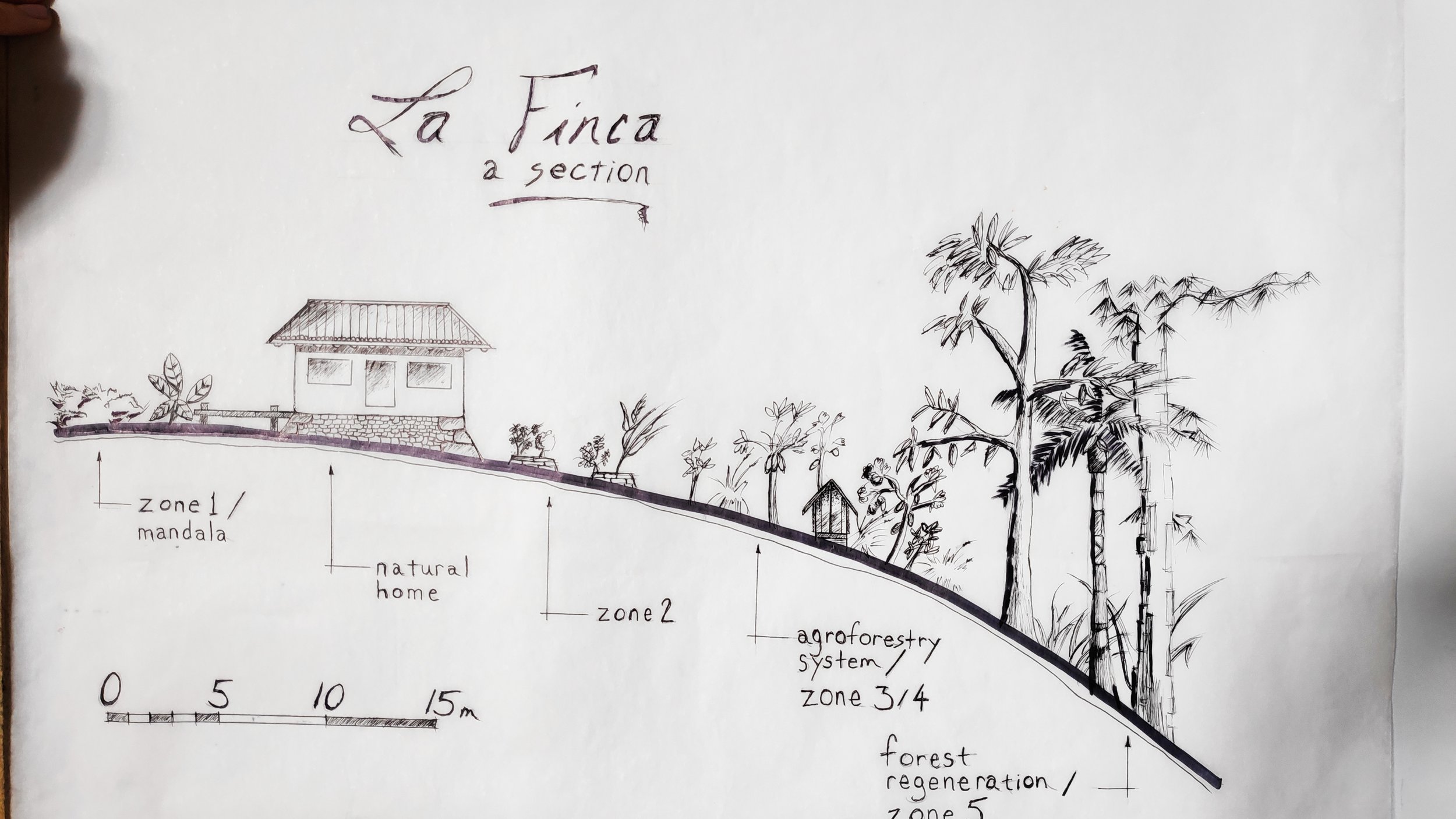
The last method in permaculture design that I’m sharing is the zone analysis, zoning is a tool to organize our project into areas that require the most and the least attention. This can be applied to a house with a small garden or to a big farm. Basically, the zones go from 0 to 5, following is a summary of what each zone may entail, remember that every project is different so the following will vary:
Zone 0: structures where permanent residents live.
Zone 1: areas that are visited several times a day, the area closest to the house and paths that are connected with important elements in the project. This zone includes a veggie garden, herb garden, greenhouse, small animals (rabbits, guinea pigs), etc. Let’s say that you have a cheese making laboratory and packing room as your main work area, if you are visiting that space several times a day, that would be part of your zone one, just like the path between your house and that facility.
Zone 2: areas that are visited at least once a day, we can have small animals and animal pens when they need to be fed on the daily, compost area, some fruit trees, more veggie beds, etc. Again, this classification will totally depend on our own daily schedule.
Zone 3: areas that are visited a few times a week. Larger food production system like a milpa, agroforestry systems, pasture lands, root crops etc.
Zone 4: areas that are visited several times a month. These are semi-wild/semi-managed areas, used for gathering materials (timber, firewood, bamboo, fiber) and can include food forests.
Zone 5: where we go to learn, where we are visitors and not managers, space that we give to nature. Many times, these are protected wildlife sanctuaries, ideally if the size allows it, 50% or more of your land should be in zone 5. In small, semi-urban and urban projects its complicated to dedicate an area to zone 5 because of the restricted space. In that case the edge of the property or even a corner where we allow native species to grow and thrive will have a big impact in the ecology of the project and the surroundings.
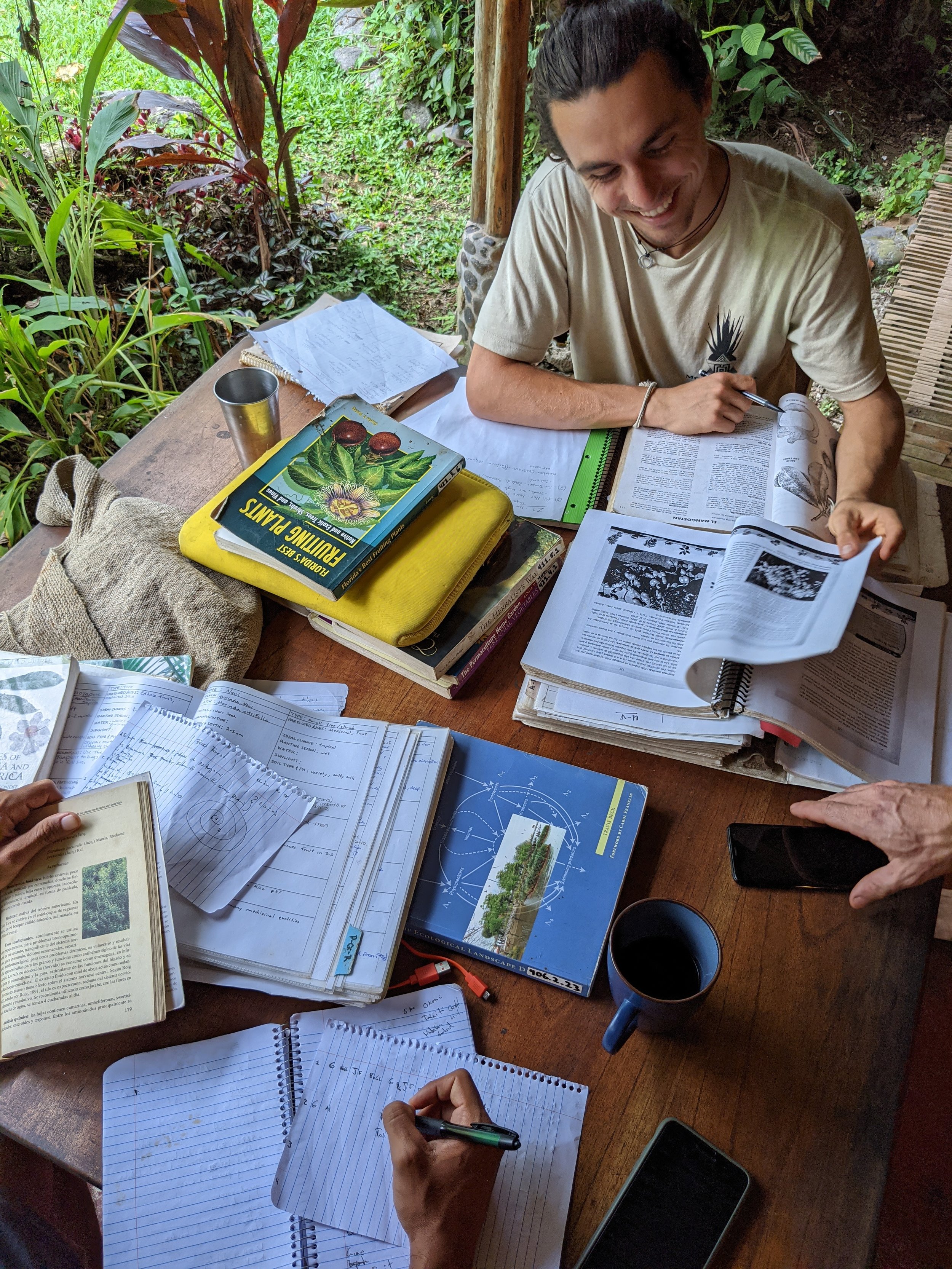


Concluding Thoughts
Now that we understand the basis of permaculture, its easy to find who is actually practicing permaculture. Its being practiced all over the globe in many land-based projects, intentional communities, homesteads, urban gardens. By many community leaders, innovators, architects, farmers, landscape designers, chefs, natural builders and many more.
It’s worth mentioning that permaculture can be many things, but it most definitely is not a neocolonialist tool, simply because the collective good and prosperity are keystones in actual Permaculture. As a design methodology for human habitats where some key concepts are: “share and return of surplus,” “integrate rather than segregate,” “cooperation instead of competition,” and “use and value diversity”; having an activity or development that damages local population or intends to create an exclusive bubble goes against permaculture. It’s necessary to protect permacultures name and reputation, for its reach to expand and create a better world, that is a task that we all should take seriously.
Using permaculture ethics and principles in the design of a project, regardless of its size, will promote a sustainable, low input to high output, self-reliant organism. For me permaculture is a way of thinking, a guide to understand and interact with the world, a kind reminder of our belonging to nature and a tool for living with intention. When we observe and interact with the world with permaculture lenses, we take action into choosing what is best for nature, others and ourselves, the sense of interconnection and reciprocity are in the heart of this philosophy. I believe that permaculture is a beautiful tool for positive impact and a way to create the change that we desperately need.
Learn More
Want to learn more about permaculture design and gets hands on experience from lead experts? Join us for one of our yearly Permaculture Design Certifications or other educational workshops.
Read these past related blogs
The Problem with Permaculture: Understanding Elements and Functions
Why the World Would be a Better Place if Everyone Took a Permaculture Design Certification
What is Natural Building?
So what is natural building? I would say the definition goes deeper than just constructing buildings with “natural” materials. After all how do we define what natural is?
By Core Team member Ali Ostergard

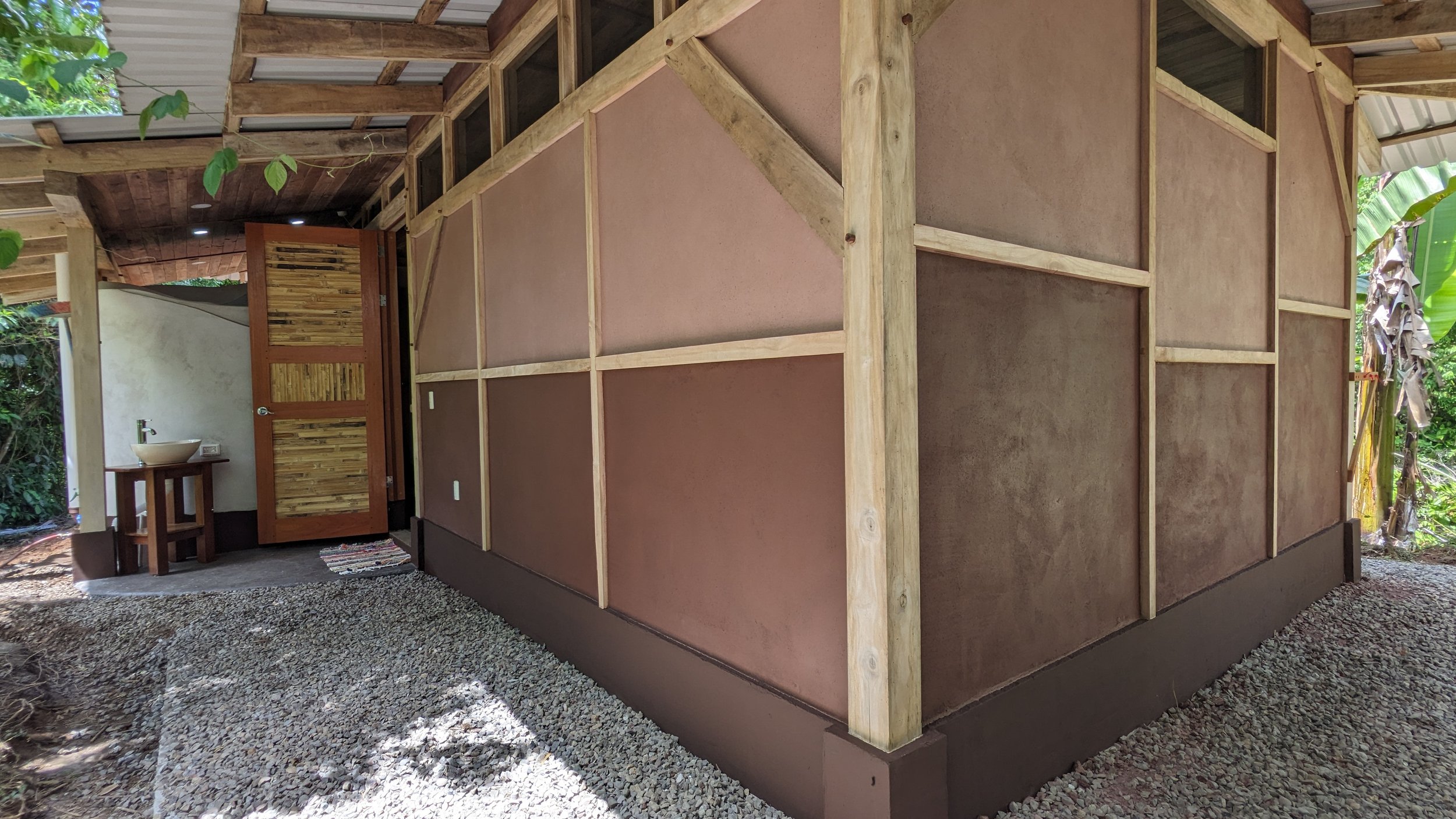
One of our guest cabins
We have been building our infrastructure with natural and local materials since the Ranch’s inception in 2001. Our homes are all sculpted from the earth beneath our feet, and we continue to develop and learn along the way about how to perfect natural building in this challenging tropical environment. There is something very special about the feeling of a home when you know the story behind where the materials came from and all the work and joy that went into the whole process.
So what is natural building? I would say the definition goes deeper than just constructing buildings with “natural” materials. After all how do we define what natural is? Is plastic natural? Technically it comes from oil, which comes from the earth, so one could argue that it is natural in origin, although you could also argue that due to the heavy amount of processing that goes into converting it into plastic moves it into the realm of a non-natural material. What about concrete? Again, it is just composed of portland cement (a mixture of limestone, shale, and other natural minerals), gravel and water. Yet concrete is often seen as a material not to be used in natural building. Why is this? It has something to do with the massive environmental effects it is causing through its production including, the high energy consumed in the mining, manufacturing, and transporting of cement, along with the related air pollution, making cement (a main ingredient in concrete) a large contributor to greenhouse gas emissions. Somewhere around 10% of current world greenhouse gas emissions are from the production of cement, and that number is predicted to raise 12-24% in the next thirty years.
Yet all this bad mouthing on concrete, and we still need this material in our modern world. For what it provides, we don’t currently have anything to replace it. For certain uses in our modern construction world, we need concrete; there is simply no other material that does what it does. Where we have gone wrong in the use of this amazing building material is that we now use it everywhere! Concrete is overly used in every building, home, city, and suburb. There are many other natural and more sustainable materials that could be used in a lot of areas in modern construction, but instead people resort to using concrete. Walls are a fantastic example, there really is no functional purpose to make your walls out of concrete, there are so many materials that have less environmental impact and perform much better than concrete as a wall system.
Buildings around the world account for about a third of greenhouse gas emissions. The time has come to reimagine our current housing choices. We are going to get nowhere on this planet without realizing we are a part of nature. So the more natural you can make a house, the better off you’re going to be.
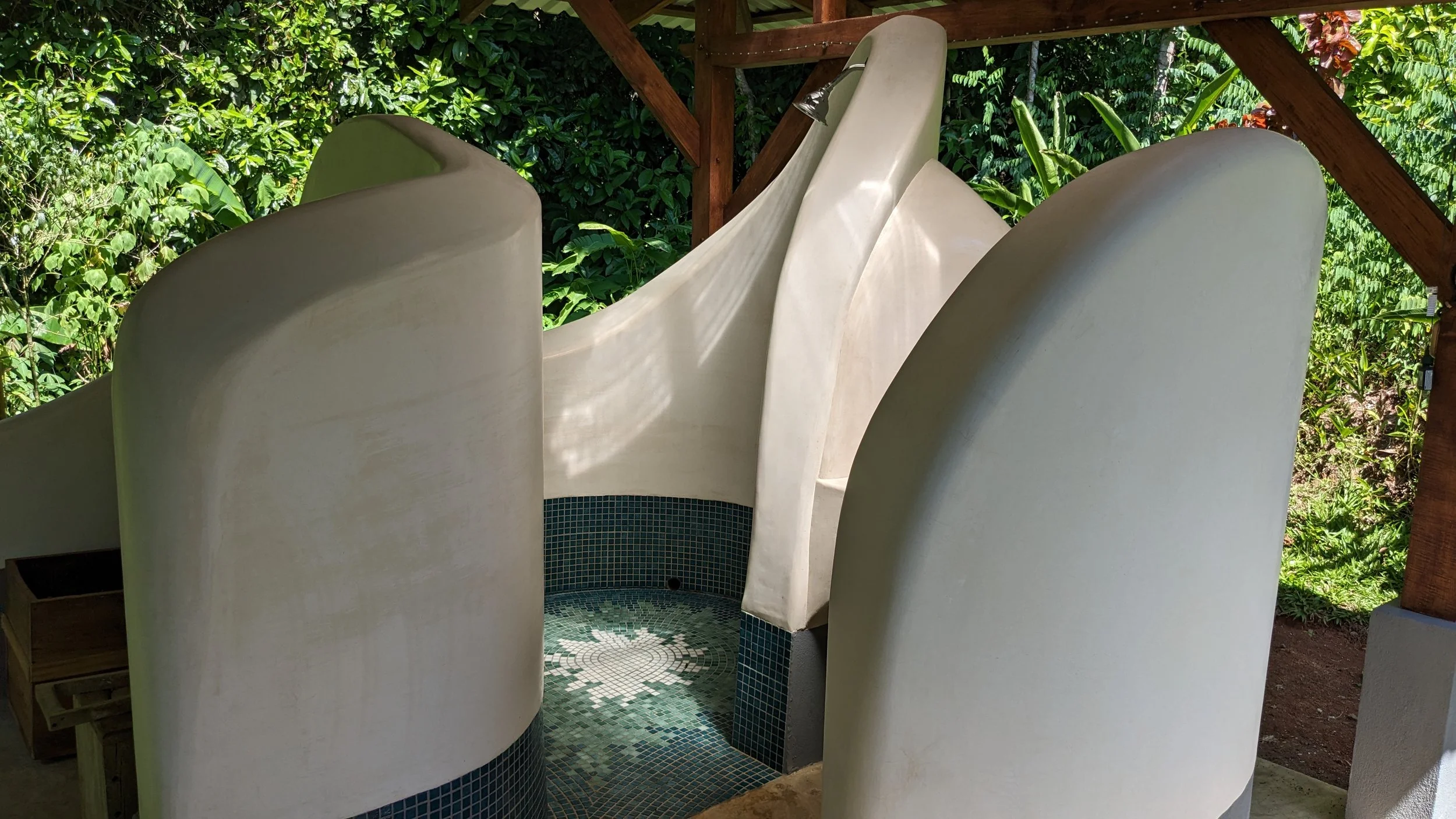
Adobe brick shower with tadelakt lime plaster finish
Circling back around to what is natural building then? Here are some things we are considering when choosing building materials for our structures:
Locality- how far did that product come before arriving at your building? How natural is your material anymore if it’s coming all the way from China, when we could use what is locally found here in Mastatal?
Organic- how fast will that material break down or go back to earth after its lifespan? Buildings come and go, generations change, natural disasters strike, modern conveniences evolve. What happens to that building when it’s no longer of use? We are proud to say that if we took off the metal roof, and removed the few plastic electrical items in our buildings, the jungle would take back the rest of the materials. They would literally go back to where they began.
Processing- how much processing was involved to get that material from its raw state into what you are using now? The clay that we dig out to build our walls goes through very little processing compared to the zinc roofing sheets.
Longevity- how long will this material last? Ultimately we want and need our structures to last for a significant amount of time. If we build a home that is constantly falling apart, needing repairs, the maintenance on that is going to be too much and we are probably going to give up. With a good design and a bit of know-how, natural materials can last in your home for your lifetime and there are examples of naturally built homes in virtually every type of climate that have lasted at least 100 years (some lasting much more).
At the Ranch we have been practicing and perfecting the art of natural building, especially for tropical climates. After decades of trial and error and fine tuning every detail, we are pretty confident we have come to a pretty dang perfect natural building style for tropical architecture.

Bernie’s Bunkhouse- a good showcase of what a typical building is made of here
Our natural homes consist of:
Timber frame- a style of post and beam construction that uses only wood and no metal fasteners. Using locally, sustainably sourced and milled species.
Earthen walls- in a style referred to as wattle and daub, a mixture of sand, clay and straw that is applied to a bamboo lattice. We also use adobe bricks in many aspects of the building.
Clay and lime plasters- both used in different scenarios.
Earthen floors- again a mixture of sand, clay, and straw.
Concrete foundations- yep, that controversial product. As I mentioned earlier, concrete is an amazing building material for certain aspects of building. In our case we live in a highly seismic area, concrete is currently the best material to use for the safety and longevity of our buildings.
Zinc roofing- also a heavily processed material, but in our area where we receive 4-6 meters of rain a year, this is the most sustainable material in the long run for our natural homes. We often say the beauty of these natural materials is you add water and they return to a workable state, but this is also their weakness. Therefore good protection in the forms of your roof and foundation are essential in the longevity of your building.
Over the years we have made an effort to build in a style that also appeals to the masses. We have plenty of unique and very different styles, but it was important for us to develop building styles that would be equally at home in an urban or rural area. We feel like all too often natural building has fallen into the bracket of only being suitable for the owner builder, or the hippies, or the isolated farm and we would like to create a style that is pleasing to a larger audience and demonstrate its flexibility in applications.

An example of the artistry clay plasters can have
We each have a part to play in this paradigm shift. When our buildings are having such a direct effect on the climate and our health, we are a part of that, and we have to make the choice of whether we would like to change that.
Patagonia put out a short film on the natural building movement, specifically looking at straw bale building. As Yvon Chouinard said,
“The solution may be for a lot of the world’s problems is to turn around and take a forward step. You can’t just keep trying to make a flawed system work.”
We have been offering natural building workshops for decades. These building classes teach people about building with timber, clay and lime in any climate. We are excited to be able to offer a heavily discounted natural building class for Central Americans in Spanish each year too.
Learn More
Want to get hands on practice and theory in many of these mentioned natural building techniques? Join us for one of our yearly workshops.
Related Blog Articles
Building an Adobe Shower with Tadelakt Plaster
Communication Breakdown: Strategies to Avoid Unhealthy Communal Relationships
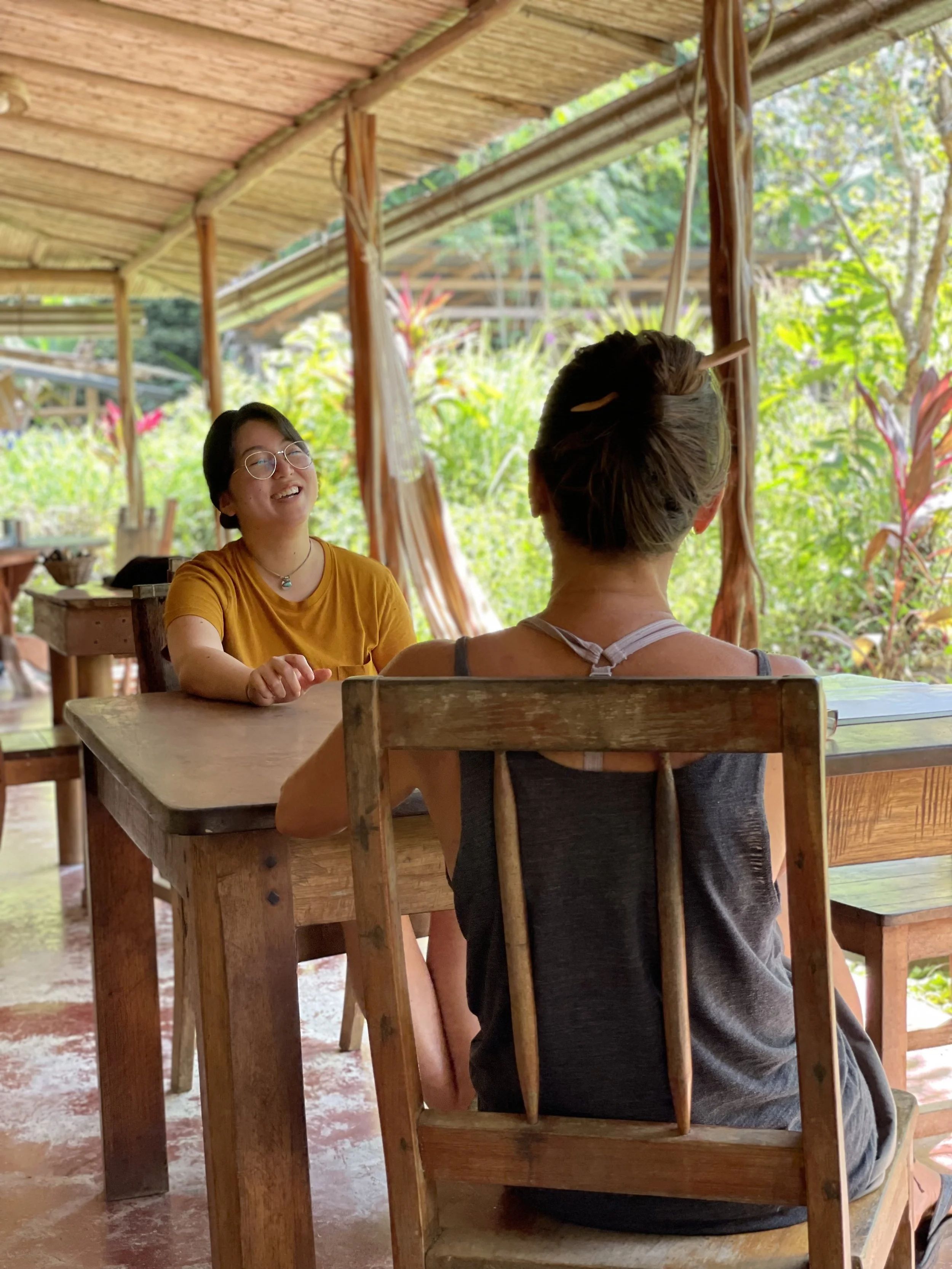
Here at the Ranch we are usually 13 people living and working together in community. Healthy communication is something we actively practice. Conflicts, disagreements and misunderstandings inevitably arise in our setting. How do we navigate these sometimes treacherous waters so that everyone's needs are met?
By Core Team Member Robin Nunes
”Communication breakdown
It's always the same
I'm having a nervous breakdown
Drive me insane!”
- Led Zeppelin

Have you ever felt the frenzied energy conveyed in this classic chorus sung by Led Zeppelin?
Here at the Ranch we are 13 people living and working together in community. Healthy communication is something we actively practice. Conflicts, disagreements and misunderstandings inevitably arise in our setting. How we navigate these sometimes treacherous waters so that everyone's needs are met is critical to the success of our project.
Three of the most important tools that we use here are the “community cultural agreement,” community check-ins and non-violent communication, or NVC. These are a few of the components that we include in a domain of our project called "invisible structures," or the parts of our business that specifically address healthy relationships. Just as your machete is an essential tool in keeping your orchard spaces tidy, and your shovel indispensable for building your buildings, these invisible structures are implements that we use to strive for a happy and thriving community.
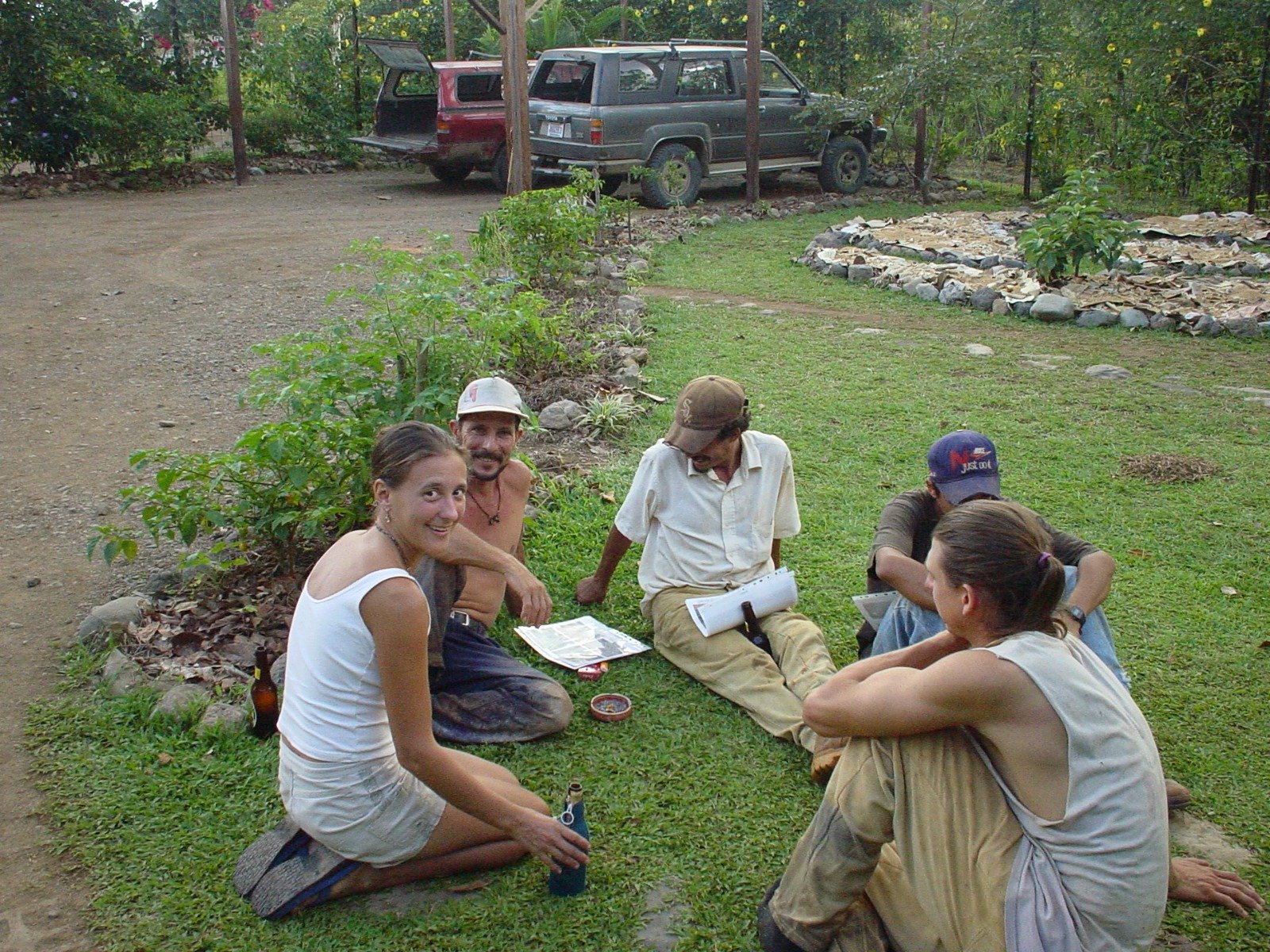
Communication forms the foundation for all of our relationships. The quality of those relationships define the flavor of our lives. And these tools give us the best chance to have “sweetness” in our lives. When our new group of apprentices arrive each year, one of the first activities that we engage in with them is co-creating agreements on how we want to communicate with each other. One of the most important of those agreements is making sure that we address and resolve negative emotions or interactions involving individuals or the community, and recognizing the detrimental impact they have if left unresolved. This agreement assures that when communication breakdown happens, we have agreed to address it openly instead of avoiding it or going insane!
Another agreement that we make is approaching conversations or conflicts with an intent to understand and connect, not judge or convince. This helps us to set the tone of the conversation. When our approach is rooted in curiosity and care, we are able to empathize with the other and see the process as one of growth and learning for all involved.

One of the challenges of upholding these agreements is making sure they are put into practice. Our habitual patterns of dealing with conflict are strong and we have to consciously choose to use these tools. When, inevitably, one of us forgets or doesn't uphold one of our agreements, we can gently "call in" (instead of the more aggressive "call out") the person into a conversation to acknowledge that the agreement was broken and have a conversation to understand what happened. All of this takes a commitment to the process and involves growth, learning and connections.
The second of the social permaculture tools that we use is one that creates the space for deeper connections and a safe place to be vulnerable. This is our weekly community check-in. This is a scheduled, once-a-week meeting to check in with each other to see how we are all doing physically, emotionally, and spiritually. We found that when we don't have this weekly meeting the cohesiveness and functioning of our group deteriorates.
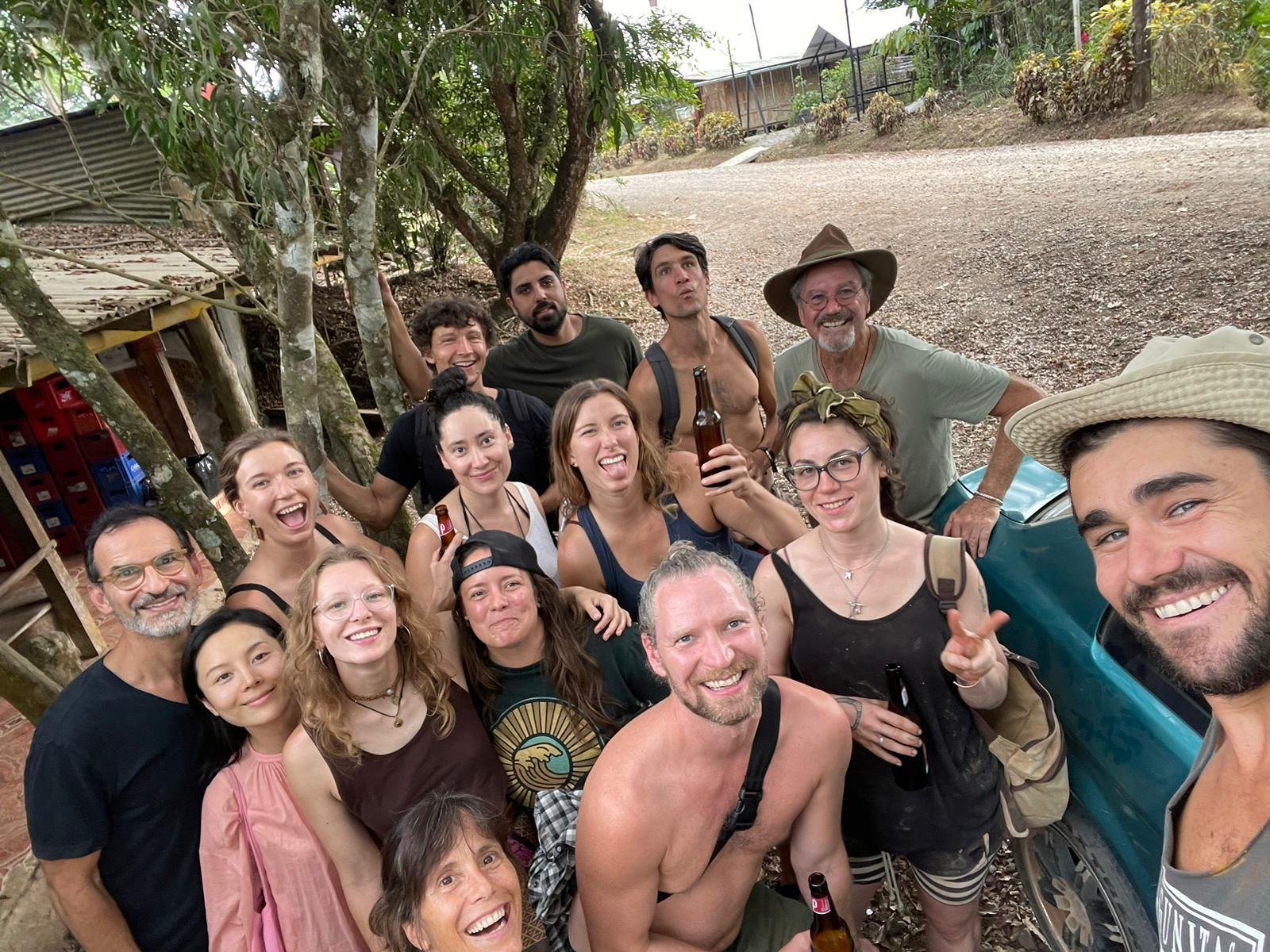
How we view conflict is extremely important as it frames our approach and dictates the tone of the hardest conversations. Our goal is to view conflict as an opportunity for personal growth and connection.
The last tool that I want to highlight that helps us achieve our goals of healthy communication is NVC, or non-violent communication, based on the work of Marshall Rosenberg. This framework is founded on the sanskrit word ahimsa, meaning non-injury. It is an ethical principle of not causing harm to other living things. It embodies reverence, compassion and empathy. When we use this pattern or framework we are embodying and using the ethics we strive to uphold. We all make the agreement to commit to working through conflict with NVC as our guide. This is like learning a new language and we have to practice it to become fluent.
So, although we really dig Led Zeppelin’s song, we are striving to minimize those communication breakdowns. When they inevitably occur, we now, after 23 years of trial, error and redesign, have come up with some very useful tools to help us all on this lifelong journey of learning and growth.
If you would like to experience and learn more about these invisible structures, come join us for one of our Permaculture Design Courses (PDC), our year long apprenticeship, or our two month internship.
Further reading:
Nonviolent Communication by Marshall Rosenburg
Say What You Mean by Oren Jay Sofer
The Four Agreements by Don Miguel Ruiz
People & Permaculture by Looby MacNamara


Social Permaculture: The Secret to a Successful Community
The people part of our work is arguably the trickiest. Even though it takes experience, know-how and intelligence to design and install orchards, build buildings, and manage water, I’d say that they all pale in comparison to the work that’s required to create a holistic and healthy human environment in which to live.
By Core Team Member Tim O’Hara
The people part of our work is arguably the trickiest. Even though it takes experience, know-how and intelligence to design and install orchards, design and build infrastructure, and manage water, I’d say that they all pale in comparison to the work that’s required to create a holistic and healthy human environment in which to live.

The aspects of our work that fall into this category can be referred to as “Social Permaculture.” How do we organize ourselves? Make decisions? Compensate ourselves? Resolve conflict? Balance work and play? Handle mental health concerns when they arise? Take care of people adequately when they’re sick? Raise a child in the same space where we work? Interact with the local population in a way that’s authentic, caring and positive?

The structures that we’ve attempted to put into place that address these questions and their subsequent success are critical to the prosperity of this place and the people that work, live and visit here.
We’ve spent a significant amount of energy in recent years developing systems that allow us to better respond to the issues that inevitably arise within our human ecosystem. It’s a work in progress, and it requires a lot of patience and perseverance when building a community from the bottom up.
The crux of this complex piece of our lives sits firmly in the art of creating clear agreements and transparent expectations. In the incipient years of our community and project, in what was perhaps a demonstration of “anti-capitalism”, we foolishly eschewed good documentation, written accords, and good financial planning. This led to what could have, and perhaps should have, been the demise of our idealistic notions of a sustainable and well-meaning business.
Through first-hand experience, insistence from team members, and at times shear desperation, we began to slowly put the pieces into place to shore up the systems that helped to create a fair, fun, equitable and economically successful workplace. The exercise was at times painful, tedious and uninspiring. And it took years, and continues to challenge our community through to today. It is always a work in progress, and is constantly informed by who is living and working at the Ranch.
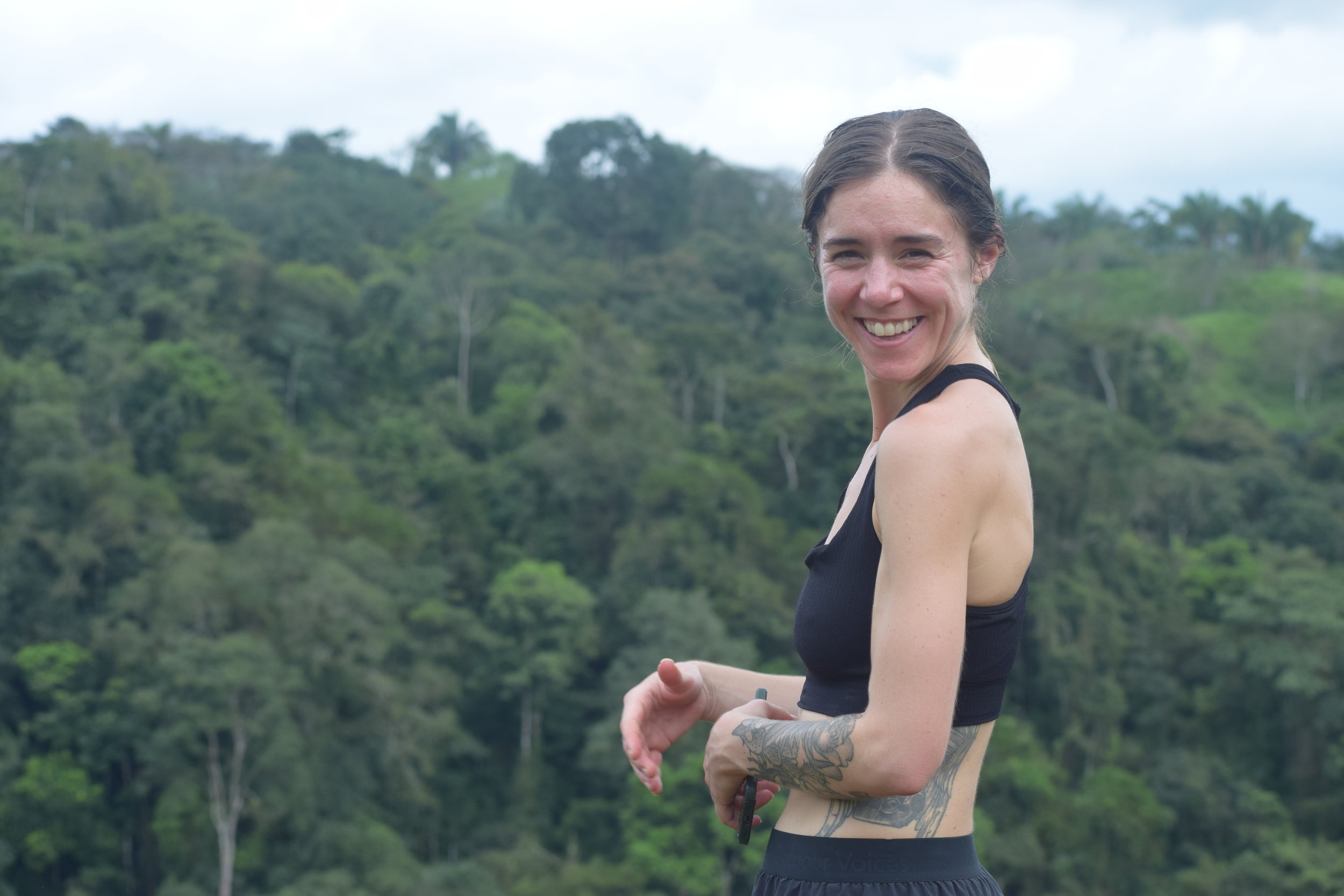
We are open to sharing both our triumphs and failures with those interested in learning from us. We have 23 years of them under our belt now, and we aspire to match that number again in the future. If we succeed, it will be a result of taking care of the people that take care of this place. There could be nothing more important than fairly treating the people that are impacted by your project, and that’s not something we’ve always done well, nor is it simply achieved just by saying that it’s important. It takes practice, education, trial and error and compassion, and along the way egos can be bruised and friendships disfigured. But it’s worth the hard work, and is a critical piece of any project or community to keep at its core, if it expects to get through and beyond the honeymoon phase.

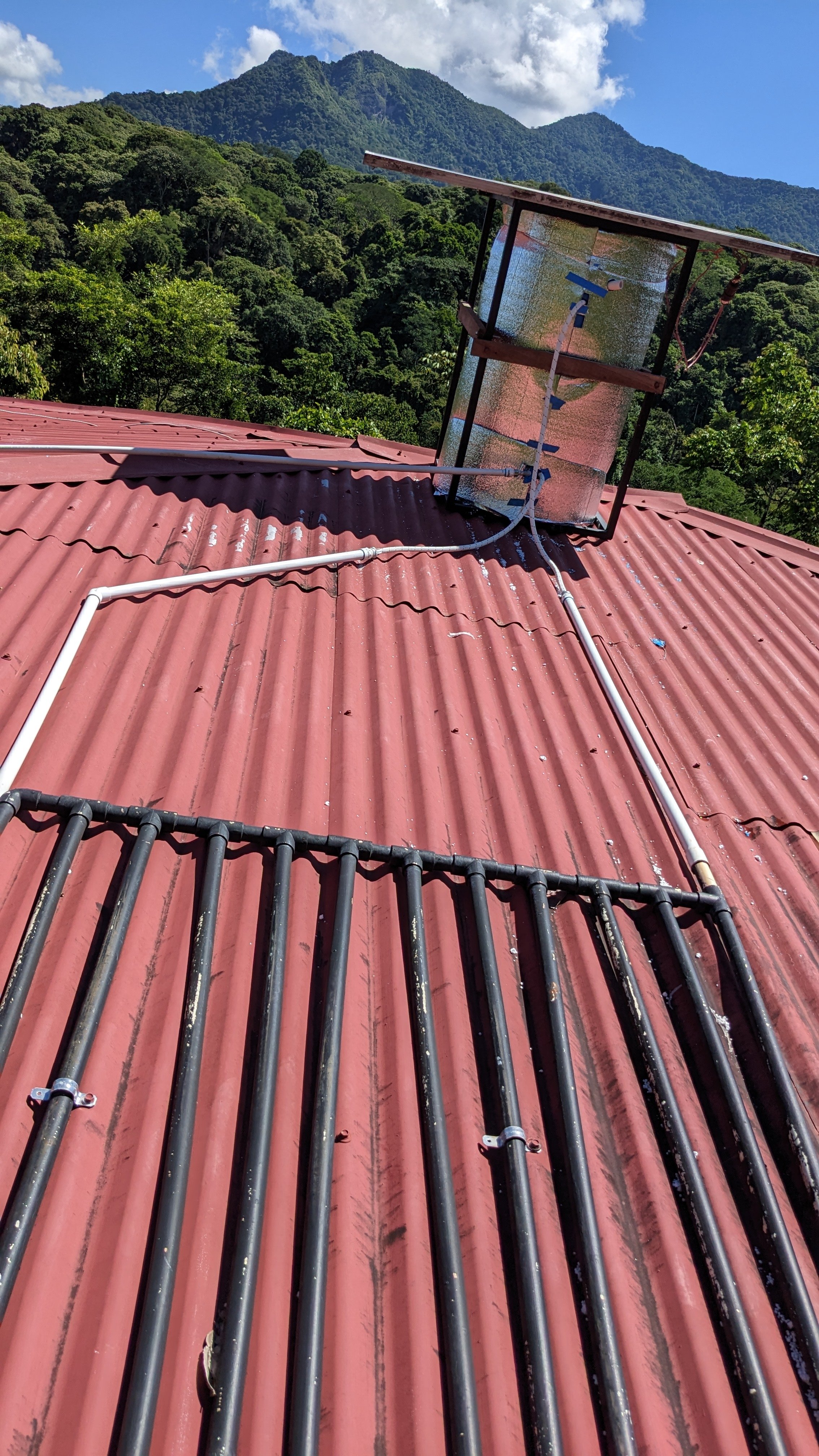
How to Make a Solar Hot Water Heater for under $100
You wouldn't guess that in the tropics having hot water was so desirable, but at our elevation, it gets quite chilly for me in the evenings. During the rainy season the nights can get particularly cold and if you've been in the rain working, a rejuvenating warm shower is just the ticket!
Over the years we have trialed two different types of hot water systems: composting hot water and solar hot water. I've personally installed and used both systems and would like to share what I've learned.
By Nic, Core Team
You wouldn't guess that in the tropics having hot water was so desirable, but at our elevation, it gets quite chilly for me in the evenings. During the rainy season the nights can get particularly cold and if you've been in the rain working, a rejuvenating warm shower is just the ticket!
Over the years we have trialed two different types of hot water systems: composting hot water and solar hot water. I've personally installed and used both systems and would like to share what I've learned.
Using appropriate technologies is one of the cornerstones of our permaculture principles and something that we teach about during our Permaculture Design Certification. It meets many of our principles to use local, recycled and repurposed materials and not only does that create a functional piece of technology its also cheap! This project came in under $100 and mainly used recycled materials.
Here is what you would need
55 gallon barrel
10 gallon barrel this must fit inside and leave enough space for insulation
Old EPS packaging (see below for description)
24m of 3/4” PVC tubes, Ts and Ls fittings
1/2” PVC for connecting to shower
Material for making the frame for the barrel ( i used some 1” steel square stock but you could use wood too)
reflective insulation to prevent 55 gal degrading in sun
Bulkhead fittings to connect pipes to tank
Compost Hot Water
When we first installed the composting hot water it was revolutionary in its simplicity: one uses the heat of a decomposing compost pile to heat water. It also is a classic permaculture stacked function of decomposing material and taking advantage of the heat that it creates. We refer to this typically in Permaculture as “stacking functions”. This is generally achieved by having a long tube coiled inside the compost mound. As you create the pile you slowly coil the tube amongst all the to be decomposed additions. This must be a hot, or thermophilic, compost system. When I first constructed this system it was fantastic. The water heats up within 24 hours and it stays hot night and day.
The really hot water lasts around two to four weeks, depending on the size of the pile, but over the next six weeks it does start to slowly cool down. At this point you have to build another pile for it to heat up again. At first this was easy, we would collect all of the trimmings from the occasional chopping of the soccer field to make the next pile. This would last about the same amount of time as the field took to overgrow and be cut again. It was good timing.
Once the community bought a lawn mower though, this abundant supply of nitrogen for the pile dried up. Instead of waiting six to eight weeks between cuttings, the field began to get mowed regularly and now there are no longer large amounts of grass clippings available for a hot compost pile. There were other challenges; the tubing often became twisted and was an absolute pain to dismantle and re-use with each new pile. The hot water didn't last long per shower, about five minutes, as it was limited to the amount of water held in the total length of tubing. All of this added up to a trip back to the drawing board!
Solar Hot Water


One of the key Permaculture principles, Catch and Store Energy is perfectly illustrated by using the suns energy to heat water. We have had several different solar hot water systems at the ranch. They all work really well as long as it is hot and sunny while you are taking a shower. Of course this is exactly the time when you don't need a hot shower, usually a cold water shower feels most refreshing. I want a hot shower when it is cold and rainy!
Until now, none of our solar hot water showers would produce hot water when I wanted hot water. This was for two main reasons. The first was that the tanks were never insulated. Even though the water in the tank would heat up, it would not stay warm into the night without insulation. The second was the lack of a functioning thermosiphon system.
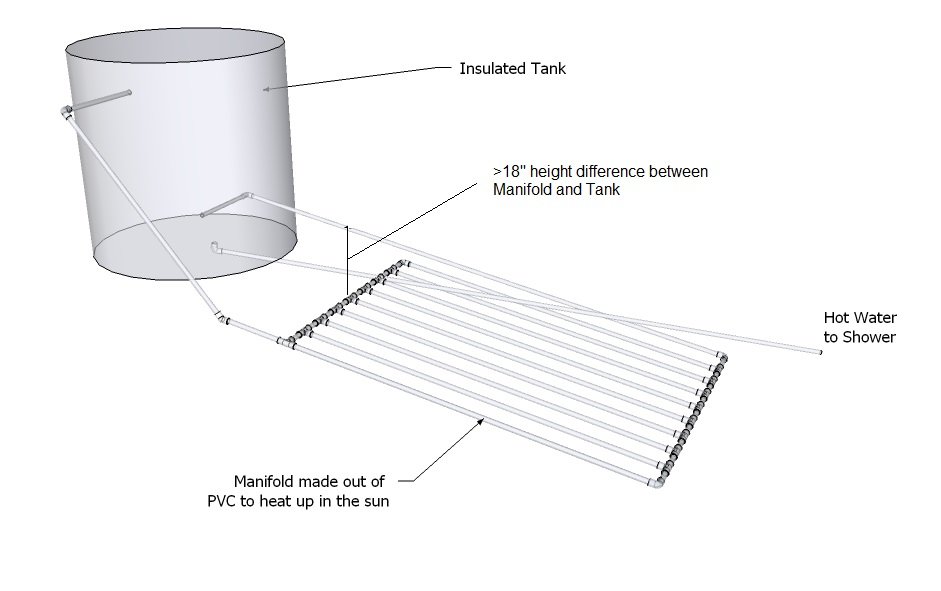
A thermosiphon is created when a manifold exposed to the sun heats up, this then hats the water inside, the water expands and becomes less dense than the cool water in the system. This creates a cycle of the cooler water in the tank sinking into the manifold (area exposed to the sun) below it whilst the water in the manifold travels up into the tank. This creates a continuous cycling of hot water through the system.

3/4” PVC Manifold
But if the height differential between the tank and the manifold is not large enough or there is not a one way valve the same thing can happen in reverse, this is known as reverse thermosiphoning. This meant that the passive thermosiphon process which heats the water up while it was sunny would then reverse once it cooled down and the tank would quickly cool. This occurred in our systems because there needs to be at least 18” height difference between the tank and manifold.
Manifold
In the photo above you can see the manifold we glued together using 3/4” PVC. It is 1.5m long (so that you can get 4 lengths from a 6m piece) by 1.2m. The large surface area and the black paint are what allows the water to heat up inside of the tubes and to circulate via the thermosiphon. We decided to use 3/4” PVC to reduce the friction inside of the tubes and allow the water to circulate more easily vs using the 1/2” PVC. we just used any old black paint that was lying around, it wasn’t specifically for painting PVC. Lightly sand the PVC with 220 grit and the paint will stick much better!
Improved Hot Water Batch System
We have now created what we believe to be the perfect appropriate technology permaculture solution, the solar hot water batch system! In our new solar hot water system we have made some important changes from our past systems.

EPS Loose Insulation
We increased the surface area of water in the pipe to increase speed of water heating up. By using 3/4" PVC pipe in the form seen in the pictures we are creating a larger surface area to heat water up in the sun. There is also a relatively short distance for each amount of heated water to travel in order to rise to the tank. In old systems we have had one long continuous tube.
We insulated the tank to keep the water hotter for a longer period of time. By insulating the tank with about 4-5" of EPS insulation we can now keep the water hot for a minimum of 24 hours (enough time until the sun comes out to continue heating the water again).
We made sure that the bottom of the tank was more than 18” above the top of the manifold.
In its current form the solar hot water works as a batch heater, meaning that as you use the hot water one must manually refill the tank by opening and closing the cold water input to the tank. The overflow on the tank tells you when it is full. We do not have access to tanks that can control the very high water mains pressure that we have, therefore we use this manual system.
Insulation
We have experimented with a number of natural insulations over the years including sawdust, newspaper, clay sawdust fired bricks, wood ash and pummice amongst others. In our first solar hot water we used sawdust insulation and it did a good job. This time we had bought several ceiling fans for a new construction that had come packaged in Expanded Polystyrene (EPS). We used the weedwacker and the metal blade attachment in a large barrell to chop up the EPS to a loose fill. This way we could easily pour the insulation into our barrell. The advantage of using this insulation is that we were able to recycle a material that would have otherwise gone to the landfill. It would also not break down in a potentially damp environment, if there was a leak or excessive condensation.
Water pressure
As this is essentially a tank of water on your roof the pressure is dictated by the height of your roof, the higher the water tank the higher the pressure. It means that the water pressure whilst perfectly adequate to take a nice warm shower is much lower than that of our mains water. If you want high pressure hot water you would have to install a pump of use a pressurized tank and heat exchanger all of which add complexity and cost. You also must consider that if you don't live close to the equator you will have to think about the potential freeze risk of having a tank of water on your roof during colder months.
There are many forms and variations of solar hot water systems which can be designed and built. I like this system because it is passive, simple, cheap, uses easy to source materials and involves very little maintenance.
To learn more about systems like these, keep an eye out for upcoming workshops on renewable energy and appropriate technology. We include an appropriate technology module in our annual Permaculture Design Certification.
NEWS AND NOTES
We have a number of life changing workshops coming up. Please check out our workshops page for more information of upcoming workshop.
Please share around if you know anyone who is ready for a trip to beautiful Costa Rica, a swim in the waterfalls, nourished with homemade meals, and challenged with an intensive educational experience.
Abrazos,
The Ranch Crew

Tips for Incoming Apprentices
Congrats on being accepted! As you are preparing for this crazy beautiful adventure, here´s a list of things we wish we knew before coming to the Ranch.
By Sedona Lewis and the 2023 Apprentices
Congrats on being accepted! As you are preparing for this crazy beautiful adventure, here´s a list of things we wish we knew before coming to the Ranch.
Re-read all apprenticeship documents multiple times. There are so many important details (including a lot of this information) that are easy to miss.
Types of shoes that we've found useful:
C.R.O.C.S. Release your inhibitions and just get yourself a pair. It's incredible how fitting they are for Ranch life.
Rain boots for work parties and rainy season, any brand will do. Its nice to have the tall ones.
Tennis shoes/ trainers for hiking and sports.
Comfortable shoes to wear indoors during cooking shifts and food days. The floors in the kitchen spaces are concrete.
Flip flops for the shower to prevent fungus.
Shoes for hiking down to the waterfall/river. Something that can get wet and doesn't fall off when walking through water. Crocs are great for this, but some prefer a Chaco/ Teva/ Bedrock/ Earthrunner kind of sandal.
Any shoes that slip on and off are really nice. We are constantly walking between structures and taking shoes on and off. This is why CROCS are the best!
Organize zoom calls together before you come! It is super useful to get to know each other a bit and ask questions as you are preparing and packing.
During these calls, discuss and plan for the beach trip in May. Book your house ASAP!
If possible, when arriving in January, organize transportation from San Jose to the Ranch. We rode with Fernando, his number can be found in the transportation section of the Ranch website. Regardless of who you choose, make sure to tell the driver how much luggage you have collectively!
Reach out to past (and current!) apprentices and ask questions. Email the core team for contact info and organize phone calls if you can!
It can be chilly at night. Its great to bring good long sleeved shirts/ a light hoodie/ leggings/ long pants. Also warm clothes to sleep in if you're a cold sleeper.
Light weight, long, loose fitting clothing is the best protection against bugs.
Bring good tupperware(s). The kitchen prepares two meals a day, so saving leftovers to eat in between is really nice. Also, containers are great for storing things other than food.
Be prepared to only eat meat once a week. If you´re accustomed to eating meat more than this, you can buy chickens or cheese from our providers in the community to supplement for yourself.
Seriously, make sure the core team knows about any health problems or dietary restrictions you have before you arrive so they can help you to prepare.
To keep electronics safe from the humidity, bring Ziploc bags and silica packs to store them in. Silica packs can be dehydrated in the dehydrator and reused once you are here. Surge protectors are a must too.
A heads-up for Spotify users: Spotify removes downloaded content from your phone after 30 days of being offline. Also, downloaded content has a tendency to mysteriously and randomly disappear. Maybe do some research on how this can be prevented / if a different streaming platform might work better during long periods offline? Or the safest option is to download your library as mp3s.
It is not necessary, but pretty useful to have a computer here. Mainly for writing blog posts, viewing e-library material, planning and teaching the internship, and organizing travel during visa runs. Be aware that this environment is very hard on electronics, so make sure to bring those silica packs and airtight packages!
Small, decorative things to make your room feel like home are worth the space in your suitcase. Thumb tacks are useful, as well as some rope to hang things. And tapestries are awesome to hang as curtains to create privacy in the Hankey. Also, completely unnecessary, but its nice to have some relaxed lighting for night time (fairy lights or a little salt lamp).
You want to have items that make you feel at home, but keep in mind that this climate is very harsh on everything including clothes, jewelry, leather goods, and anything wooden. Only bring things if you can accept that they will get moldy.
If you are going to bring a mosquito net, get a 4 point one that will fit over a double or queen sized bed. You want to have plenty of room under there!
Definitely bring a good notebook(s) and pens/ pencils- you'll be taking lots of notes!
Its worth it to invest in a good quality flashlight and umbrella. The cheap stuff doesn't last long.
Bring your favorite card games, instruments, and art supplies! Again, worth the suitcase space. Its refreshing to spend your free time doing things that make you feel like yourself. Some of our favorites have been playing guitar and flute, crosswords, painting, and beading.
The cell connection is weak and unreliable. Make sure your friends and family know that it will be difficult for you to maintain “normal” communications. We don't have major issues keeping in touch with people, but some days things just don't load.
Ladies, there is nowhere in Mastatal to buy menstrual products. Bring everything you need for the first three months. We have had great success with diva cups and reusable cloth pads and underwear.
Don't be afraid to bring some nail polish, a face mask, or a nice body scrub if you're into that. Some luxurious self care feels fabulous.
Stock up your med-kit and try to be prepared for all types of sickness (flu, cough, loose stools, fever, congestion, etc.) If you are prone to something (like headaches, UTIs, ear infections) be prepared!!!
Someone (usually Robin) goes to town once every couple months. So no need to panic if something small needs to be picked up (toothpaste, etc.).
To inform your decision making as you determine how much spending money you want to bring for periods in between visa runs: A beer at the bar costs about 1,500 colones, a small bar of chocolate is 1,500 colones and a large bar is 3,500 colones, and an empanada at Chepo's soda is about 1,000 colones.
Ranch life can be very emotionally, socially, and physically overwhelming, especially in the first few weeks. It is very important to develop a routine that allows you to stay balanced and recharge your batteries in the ways that you need. Be diligent about carving out time for yourself from the beginning. Listen to your body and bring what you can to make yourself comfy. Its going to be an amazing year!
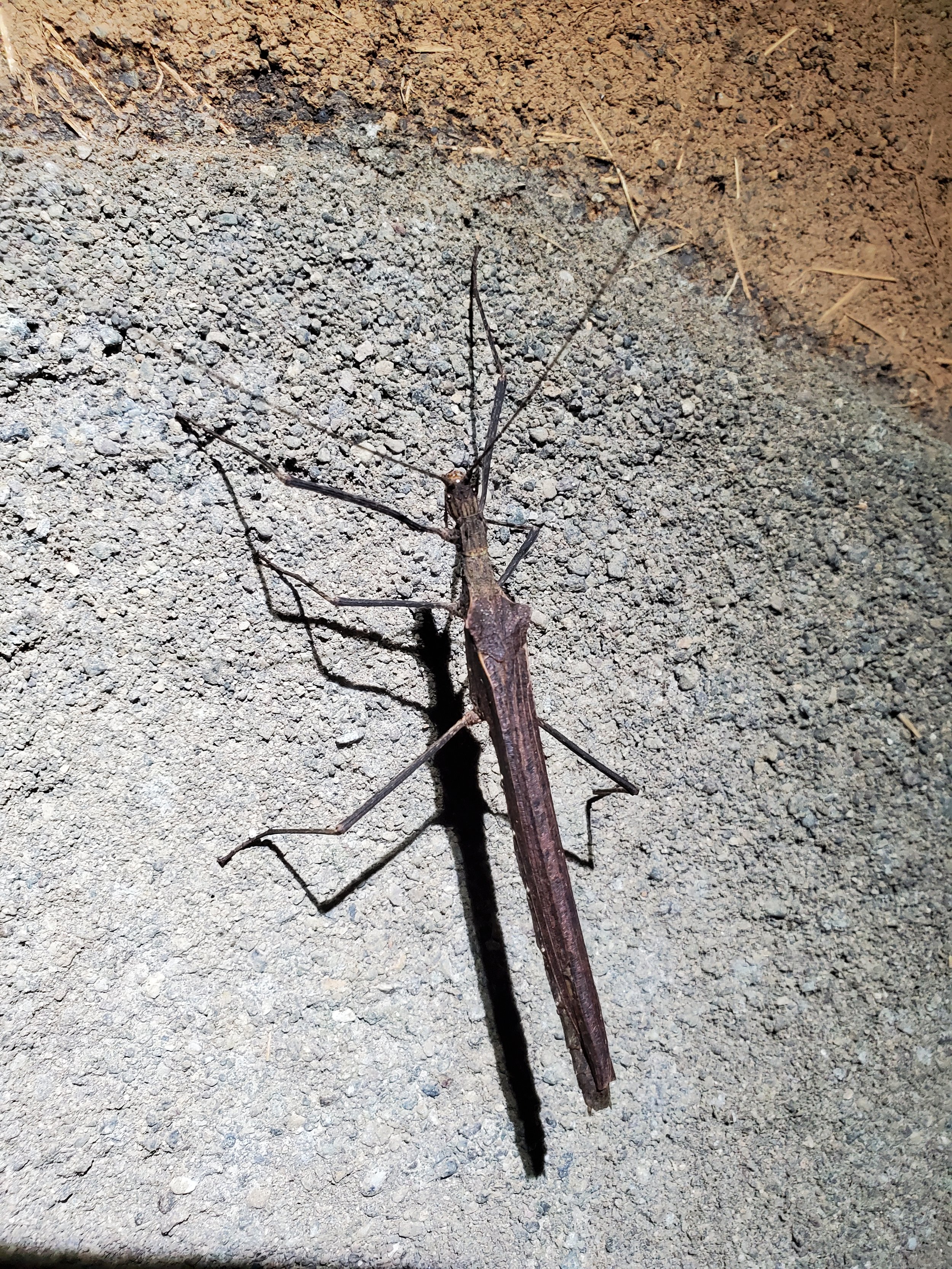
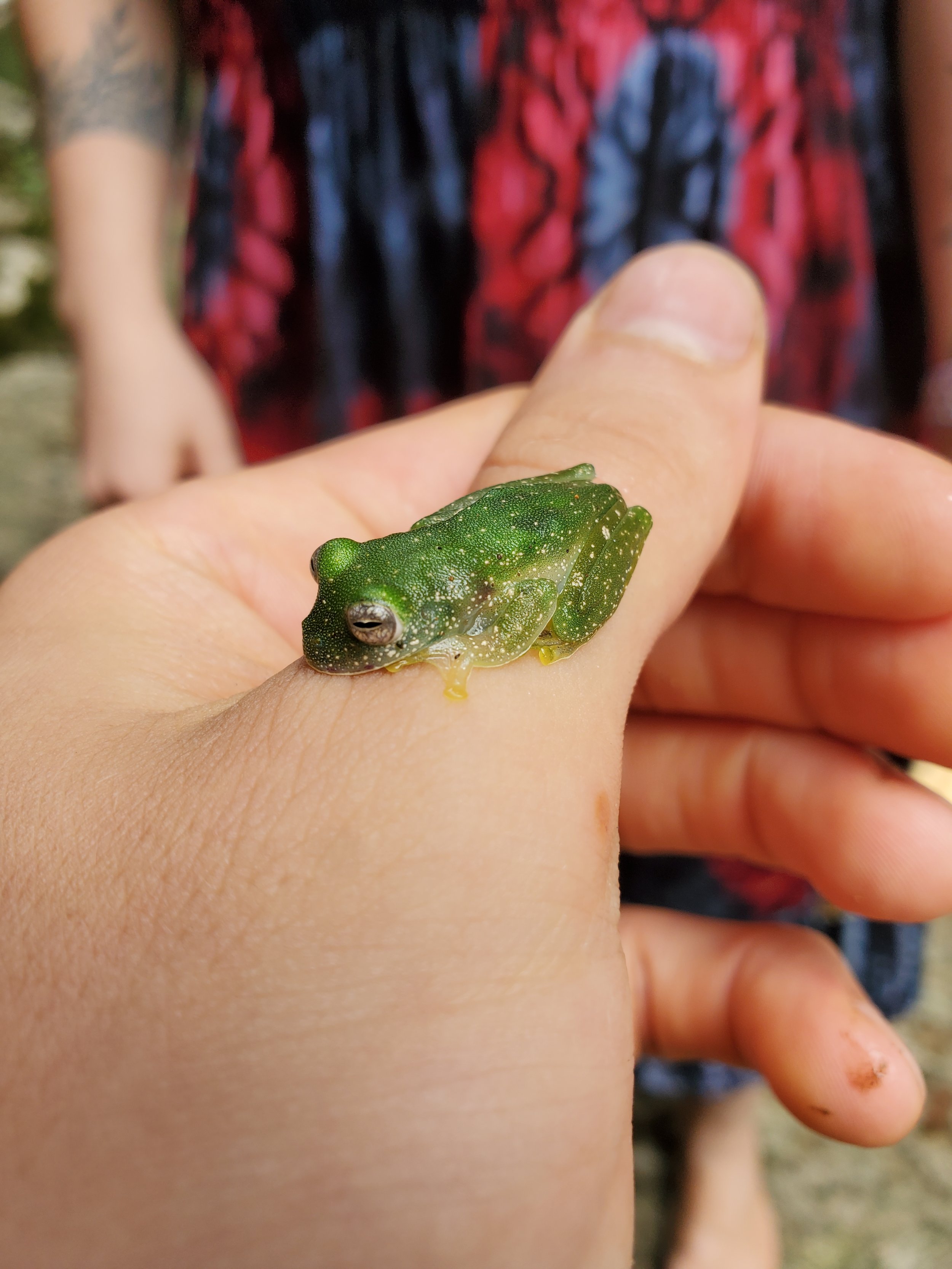
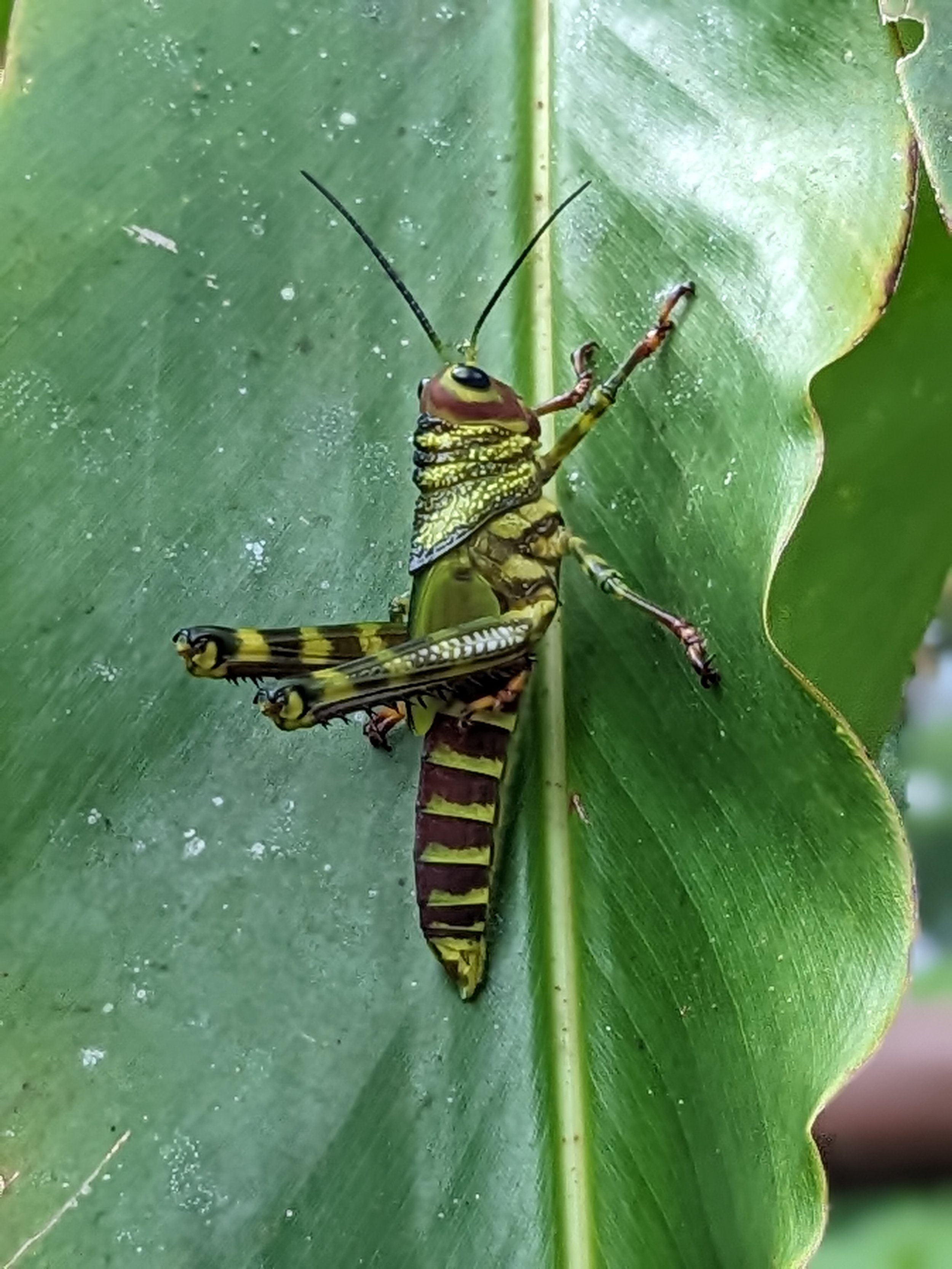
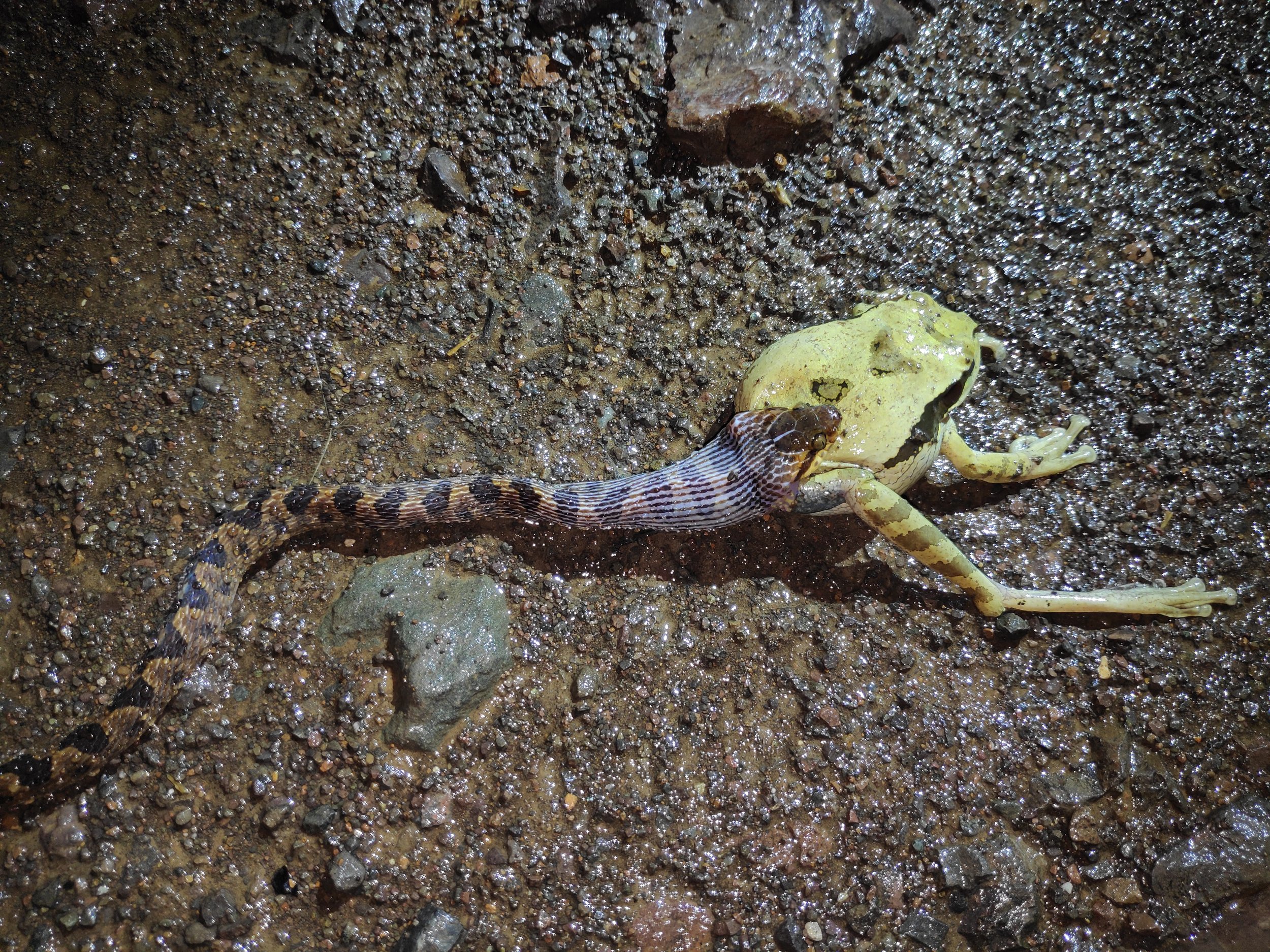
Rancho Mastatal Wildlife Catalogue
My goal here is to catalogue and display some of the wild critters that we are exposed to while living in our little jungle homes.
Rancho Mastatal is nestled in almost 300 acres of rich, wild jungle. We are constantly surrounded by a huge quantity of flora and fauna, with lots of our lessons revolving around learning about and caring for the flora we cultivate. Fauna care certainly has its place in Permaculture and is a part of Ranch life. During our year here as apprentices, however, we have no livestock or producing animals to care for; only our lovely pets.

As a lover of animals I am somewhat saddened by the lack of time we get to spend with creatures here; I know some of the struggles the Ranch has experienced in the past with animals, and appreciate that this isn't a time for intensive livestock care. That being said, we still get to see loads of things on a daily basis! My goal here is to catalogue and display some of the wild critters that we are exposed to while living in our little jungle homes. It will be a wildly incomplete list, hopefully subsidized by stories from others who have spent time here, and more official wildlife catalogues of mountainous areas in Costa Rica. We'll have sections of mammals, birds, reptiles and amphibians, and crawlies, and we'll go small to big because that's fun.
Reptiles, Amphibians (Scaly, slimy, slithery)
1 - Geckos
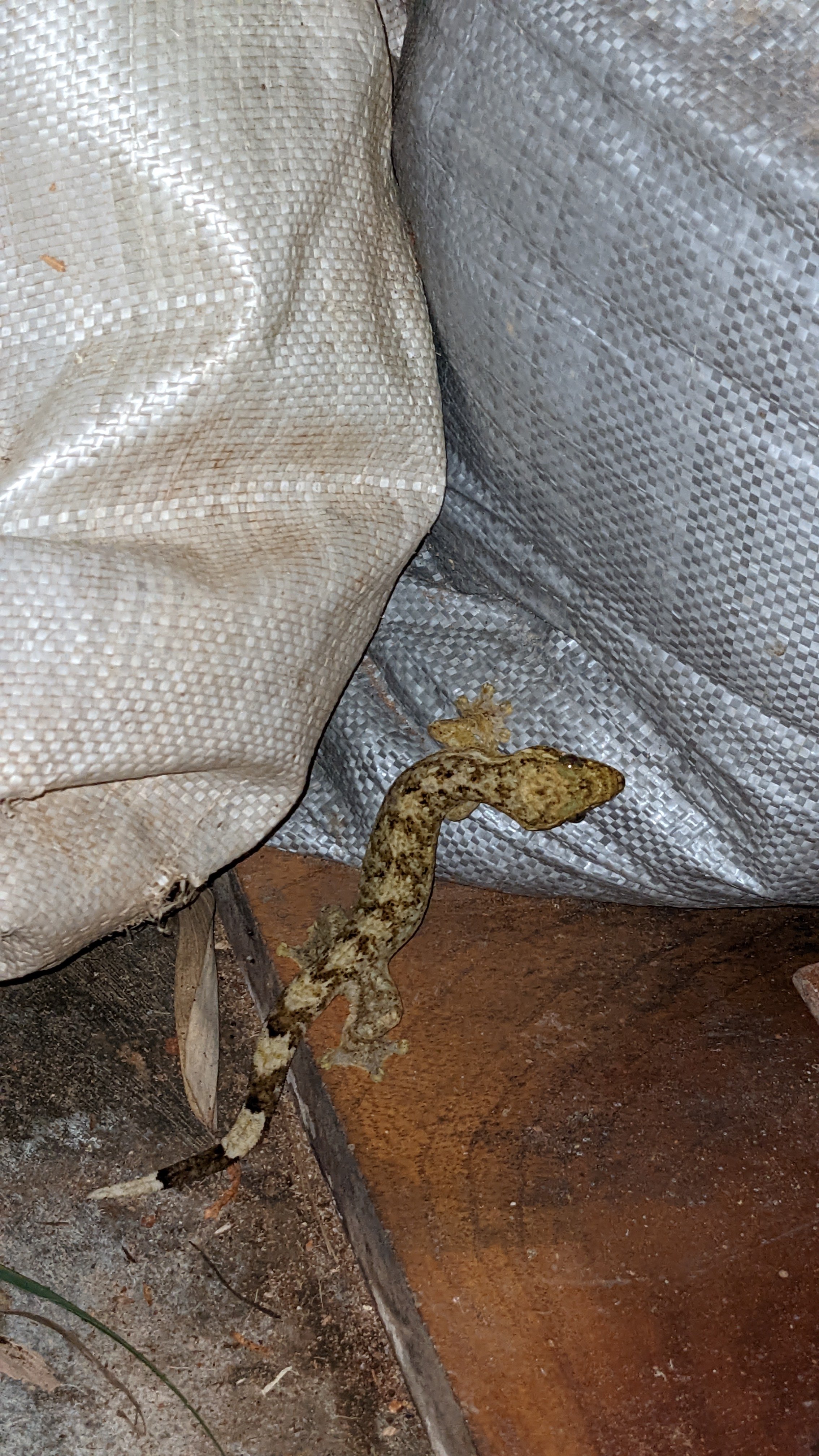
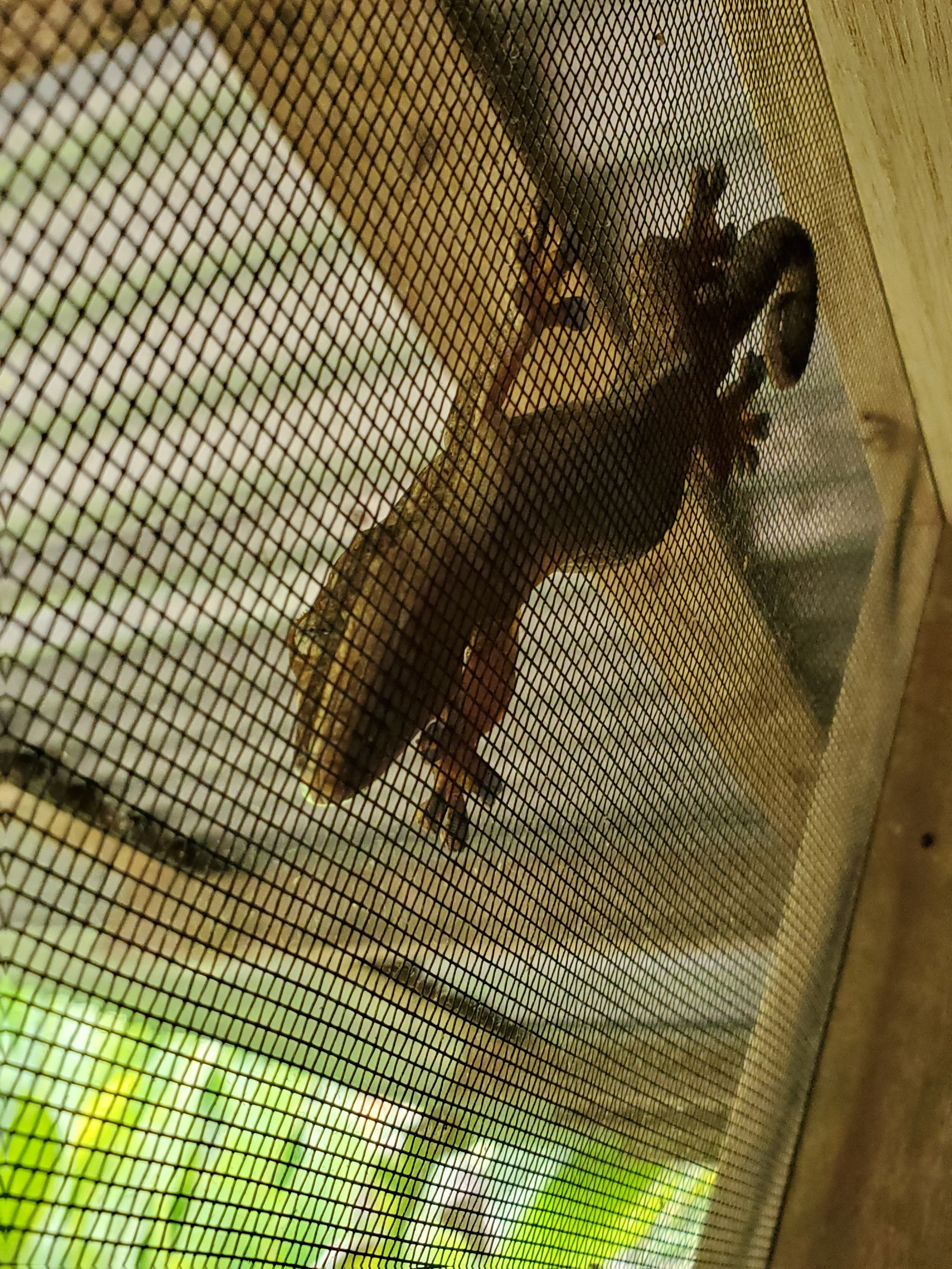
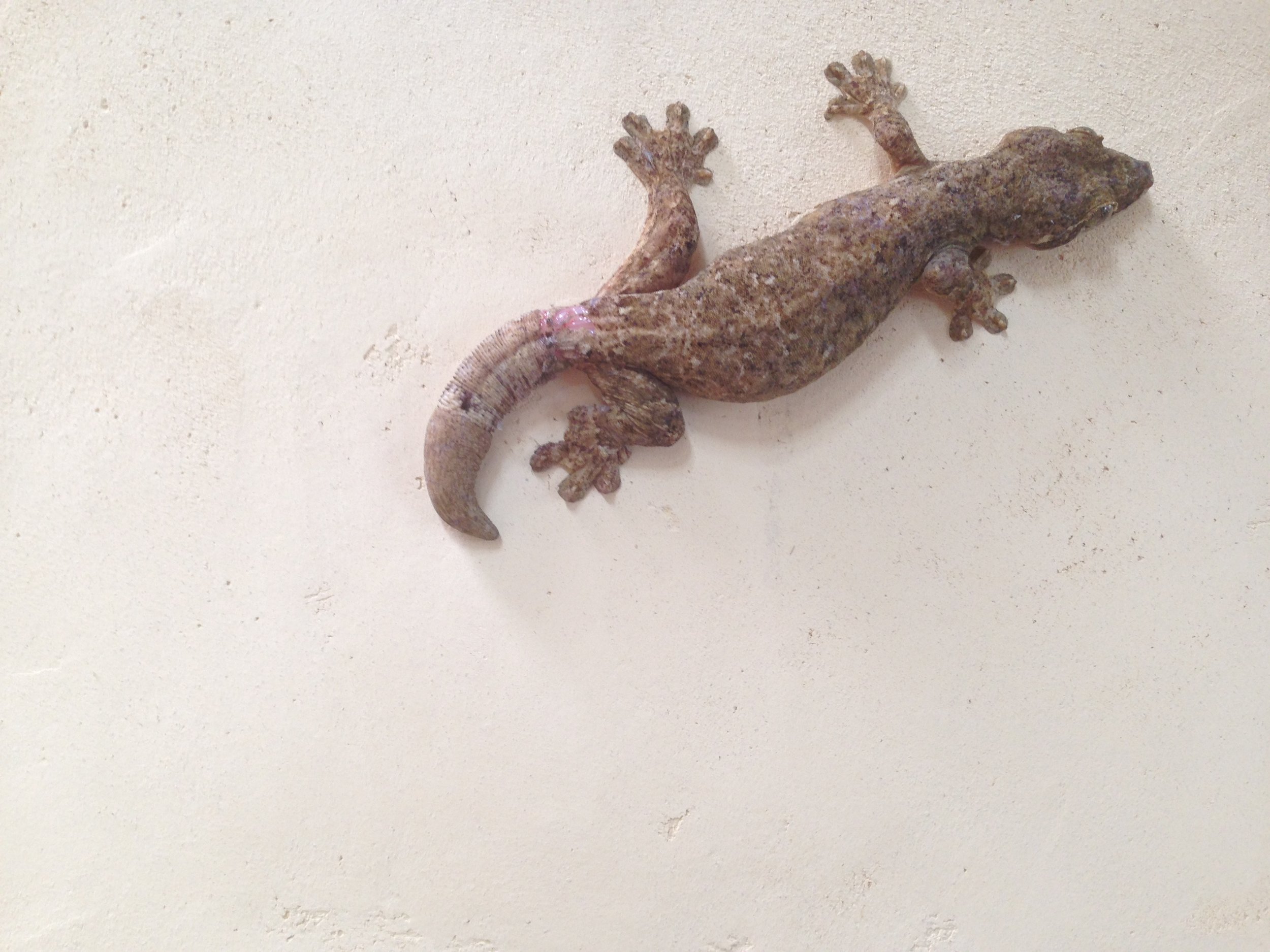
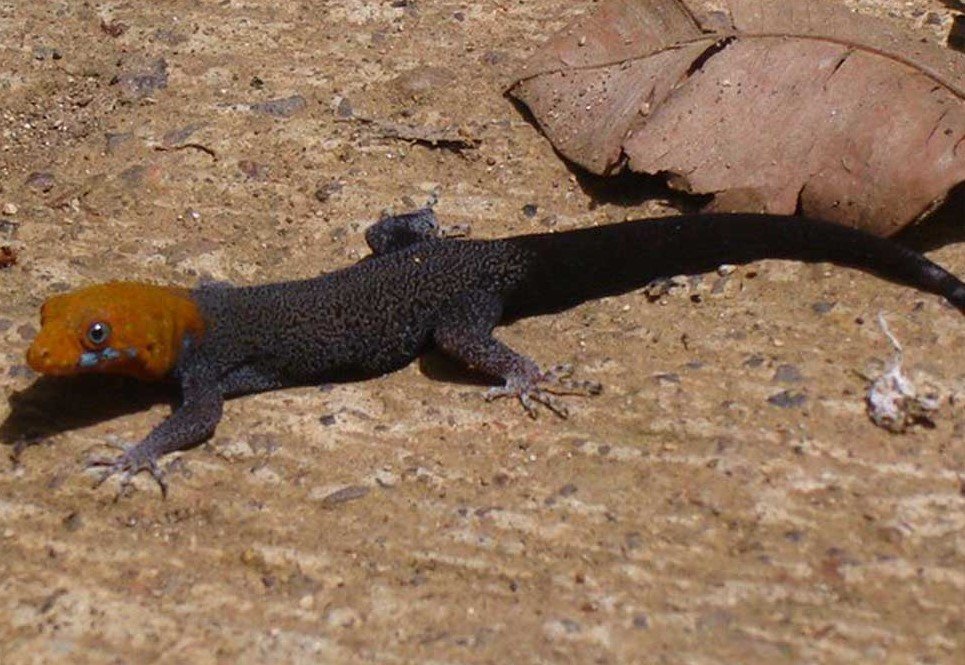
Geckos are everywhere at the Ranch! The common invasive varieties are usually no more than about 5 centimeters long, where fully-grown endemic varieties can be upwards of about 12. Our most common are Yellow-headed Geckos (Gonatodes albogularis), and the most wonderful are Banded Geckos (Coleonyx mitratus). They have sticky pads on their little toes to help them climb everywhere, and they chirp much louder than you'd expect!

2 - Dart Frogs (Dendrobates auratus)
Green-and-Black Poison Dart Frogs are very common in the forested areas surrounding the Ranch. Indigenous peoples used them throughout Central and South America to coat the tips of darts and arrows with poison, which can actually be done without harming the frog; the coating of their skin contains the toxin. Super fun to look at, but caution recommends not to touch.
3 - Cane Toad, or Giant Toad (Bufo marinus)
My personal favorite. Very common in all areas, especially babies and adolescents in damp forested areas and around the rivers. Can grow quite large, enough to intimidate a cat. They can actually be quite dangerous, especially for dogs and other small animals, as they produce a milky substance in glands behind their eyes that can be psychoactive and extremely toxic. Good rainy day companions.

4 - Snakes
Snakes could be an entire topic of their own, and I'll keep it short as opposed to diving in to a very deep subject. The two most common types here are Pit Vipers and Corals.
Our biggest concern here is the Fer-De-Lance (Bothrops asper), or known here as terciopelo, a type of pit viper. A very large, naturally intimidating snake. Very large head in relation to the body, and an angular diamond pattern along its length. There is a "falso" or copycat species which is not venemous, so knowing what is dangerous and what isn't is important.
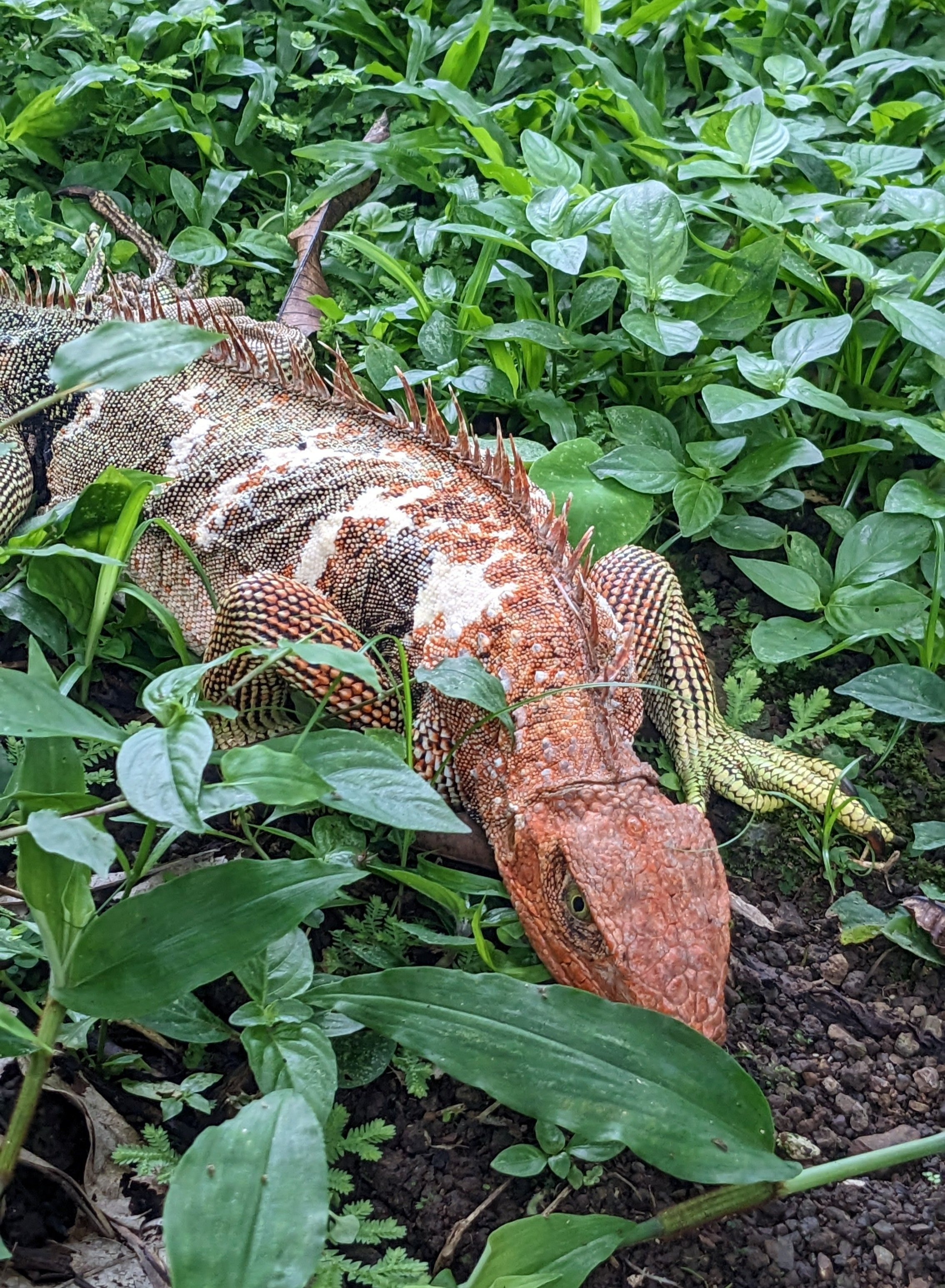
5 - Iguana (Ctenosaura similis)
Spiny-tailed Iguana are not uncommon, and are most noticeable when they fall out of trees onto roofs, producing a massive crash. A very tragic spectacle to behold, but, being ancient reptiles very well adapted to the hardships of life, they are usually fine. Also regularly seen crossing roads or lazing in tree branches. They can grow to over a meter in length. Spines run down their back from head to tail.
Birds (Flap flap, flap!)
Again, far too large a topic to cover in depth! Just a few favorites and common sightings here. Costa Rica, and our area around La Cangreja National Park in particular, are amazing places for birdwatching and I will not be able to do justice to the hundreds of species we are neighbors with here. In recent bird counts here in the park they have identified over 300 different birds!
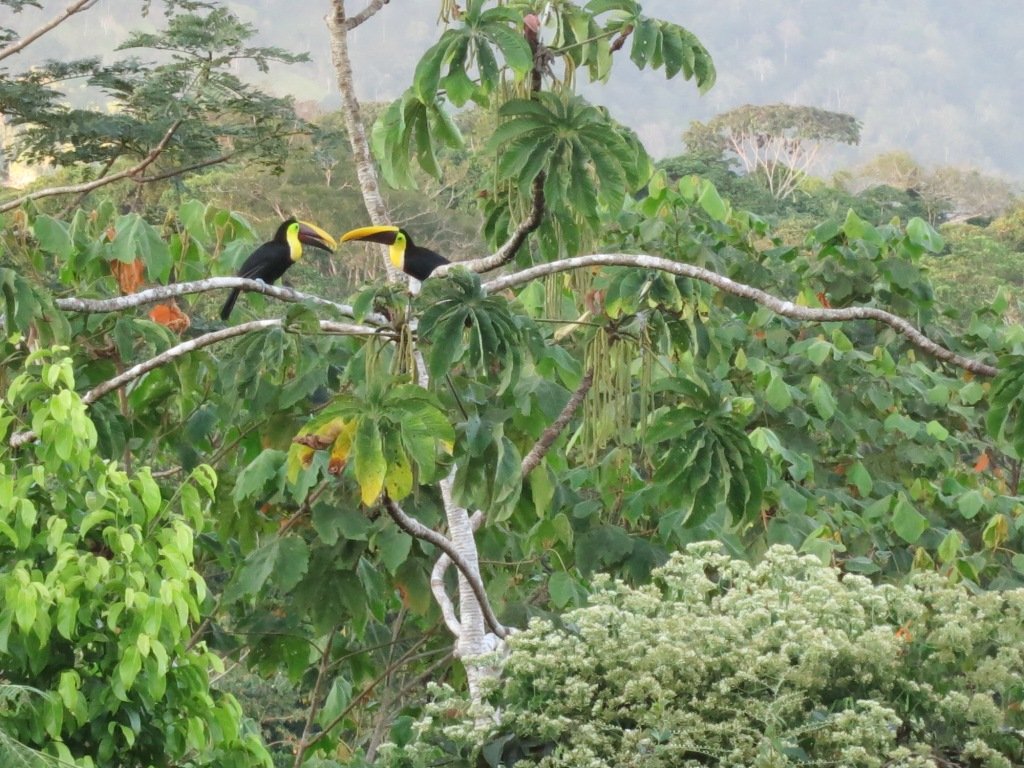
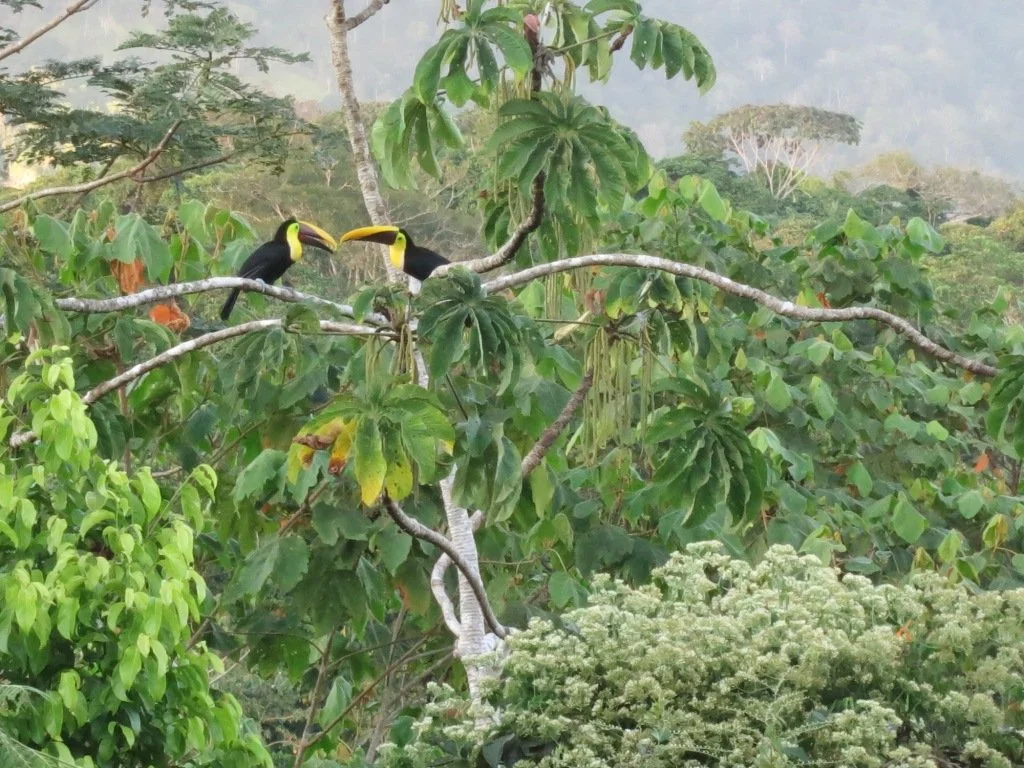
1 - Toucan
There are several different types of toucans that live in and move through Mastatal, but the most common is the Chestnut-mandibled Toucan (Ramphastos swainsonii). They are kind of bullies, and will take advantage of squirrels and eggs and other slightly saddening sources of food regularly. Beautiful, though!
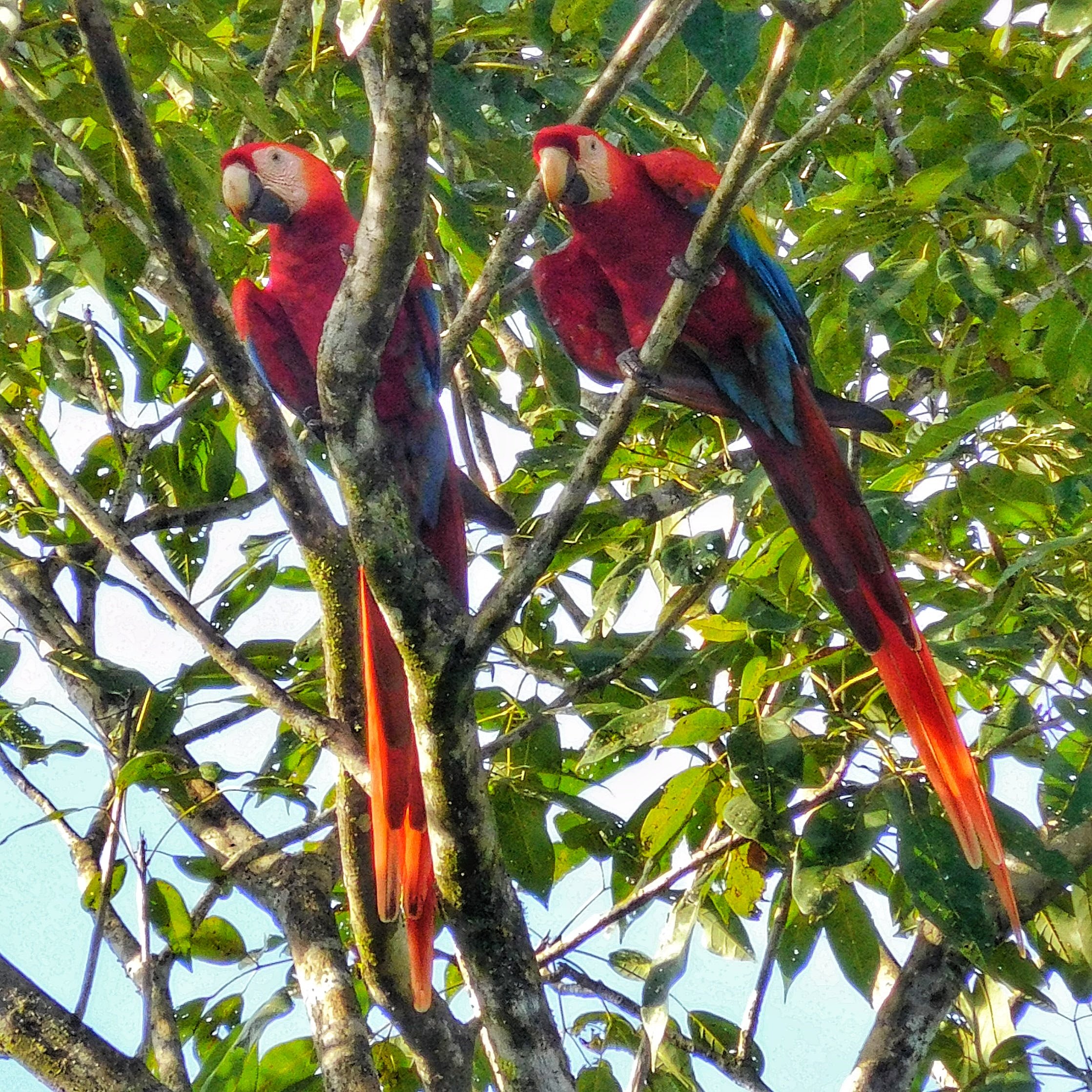
2- Scarlet Macaw (Ara macao)
Macaws are incredibly beautiful to behold and make a squawk like an animal in a great deal of pain. They travel daily from the mountains to the coast (and then back), so we often see them flying overhead towards the west. They mate for life, so you always see them travelling in pairs, which is precious.
3 - Turkey vultures (Cathartes aura)
One I'm familiar with from my home region, and was very happy to encounter here. Not the most enchantingly beautiful creatures on the planet, but they have some of the best souls. Incredible composters and digesters, they feed on carrion and do a fantastic job of cleaning up the forest. Their stomach acid is strong enough to kill almost all harmful viruses and pathogens that they ingest. I wonder if they have tasted ripe fruit before, and if they've enjoyed it. I hope so.
Mammals (Fuzzy, hairy, tails sometimes)

1 - Squirrels (Sciurus variegatoides)
Squirrels, while lovely and precious, are relatively mundane. Although less common here than they are in my native Appalachia, they perform about the same role. Not a ton of wow factor, but still a valued sighting. Our most common variety here is the Variegated Squirrel which vary in color and pattern very greatly.
2- Agouti - Dasyprocta punctata
Agoutis are rodents that look very similar to capybaras in build. The only difference is that they are tiny :) They spend lots of time in our orchard spaces under fruiting trees, and around our banana-compost circle near the main house. They will steal (forage is a fairer word, there's no hard feelings) bananas and peels to snack on and then rush back into the woods. Our cat Chester, pictured above, is not fond of them in the slightest.
3 - Opossum - Didelphis marsupialis
Similar interactions here as the interactions I've had in Appalachia. They are usually encountered wandering guiltily in the dead of the night, freezing when found. We saw one, absolutely mortified, in the middle of the day in a Mulberry tree not too long ago. I adore them, and hope they get their fill of berries and fruits. The jungle is a hard place for a lil opossum.
4 - Pizote, or Coati - Nasua narica
Coati resemble raccoons with longer tails and precious long little noses. They are climbers, and regularly fight our harvesters for the best in-season fruits. They have very good taste, unfortunately, and will take the best of the best of our rarer fruits. Guard your zapote well.
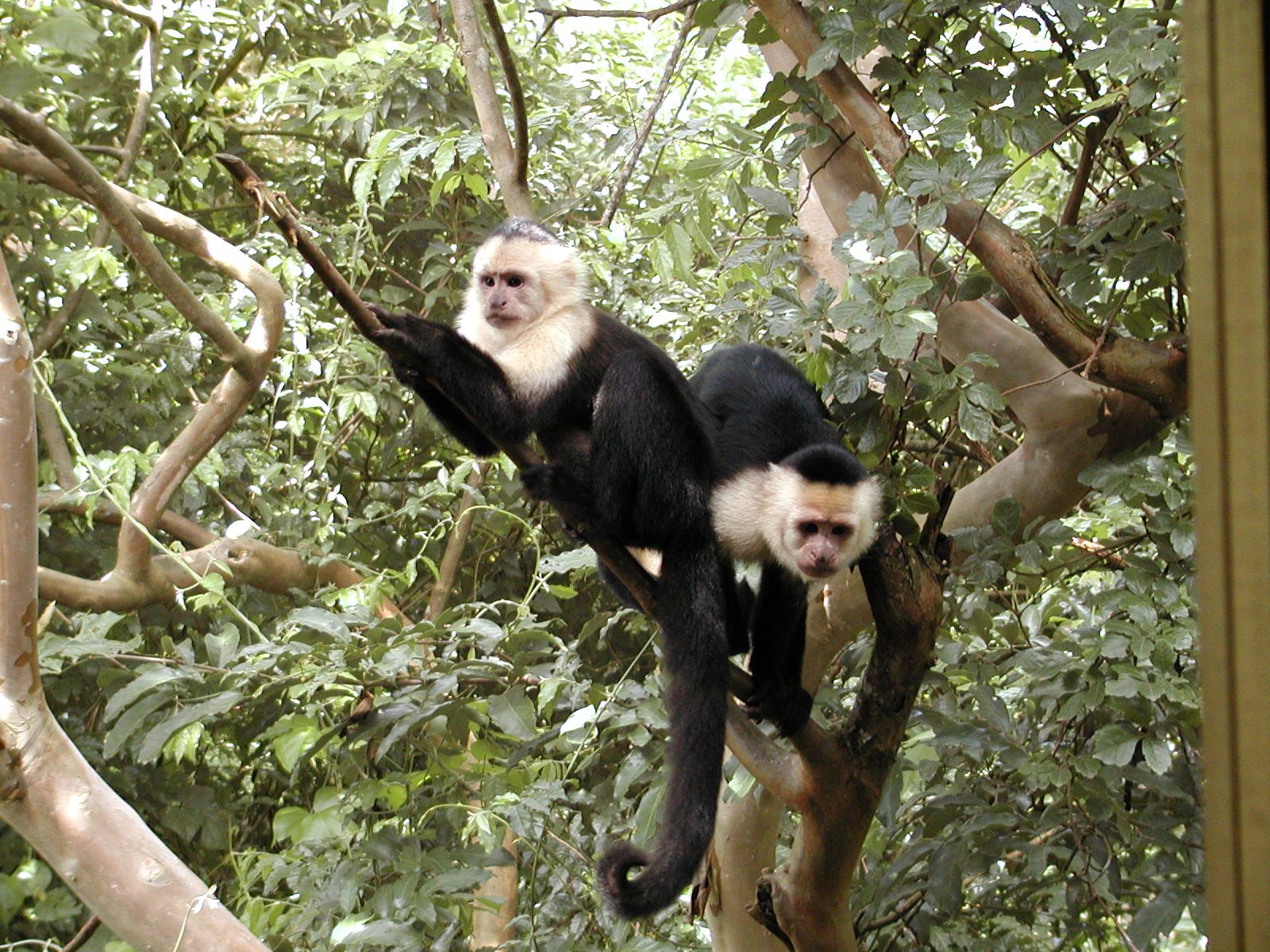
5 - Caro blanco, or Capuchin
Capuchins are the most well-represented type of monkey in pop culture. They live in large family groups led by alpha males, and spend the vast majority of their time in the canopy of more forested areas. Groups will range in size from the single digits to upwards of 30. In about six months here I have seen two groups passing through the jungle around our river trail.
6 - Puma
I have not seen this beast myself yet, maybe for the best. A couple here this year had an encounter with a mature puma while on their way down to the river, with a neighborhood dog accompanying them; as recanted to me, it seems like the encounter could have gone very badly for the dog, but all escaped unharmed. No photo for this one, because I am not a tracker and wouldn't be brave enough to wait for a picture if I saw one.
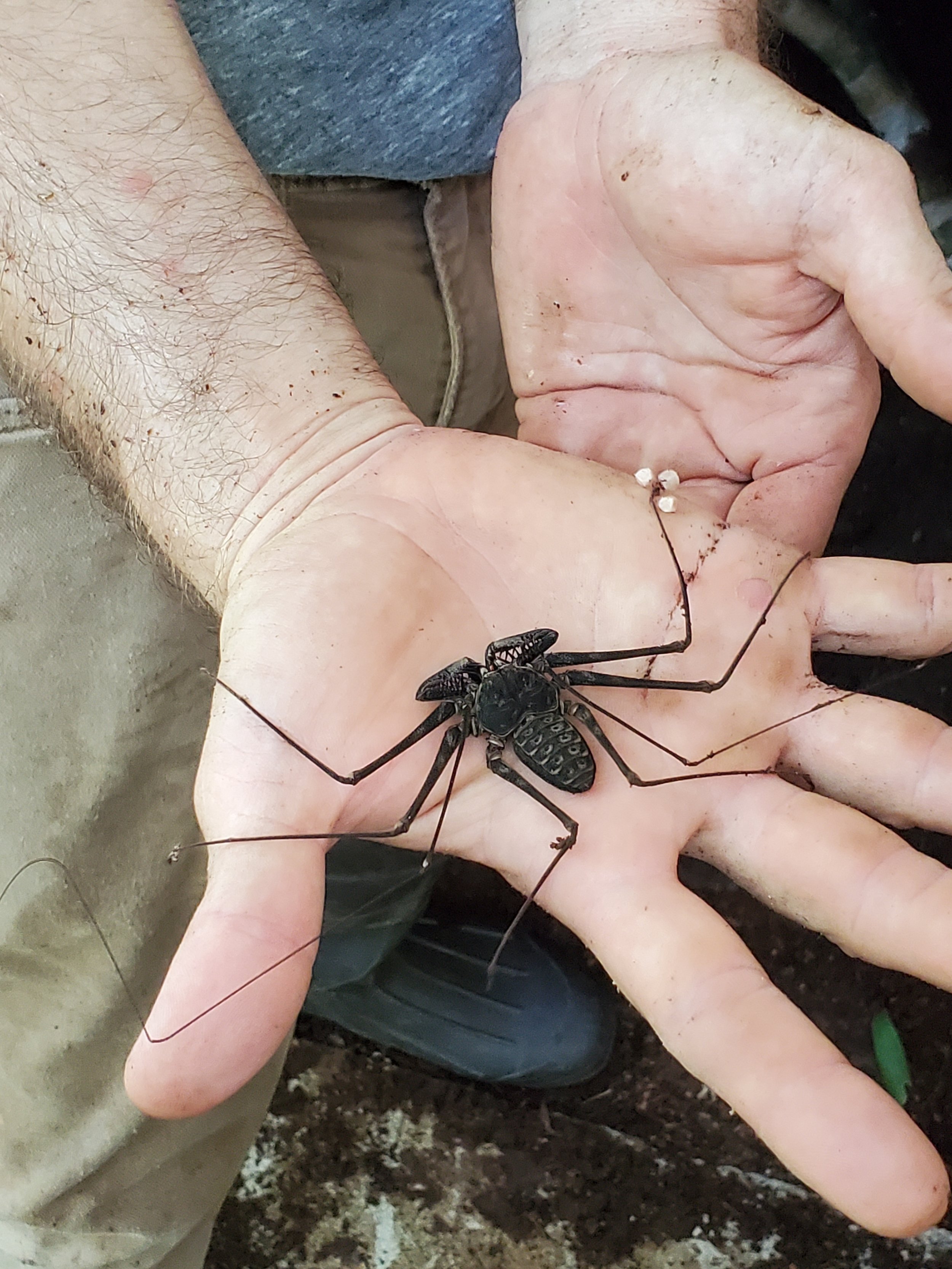
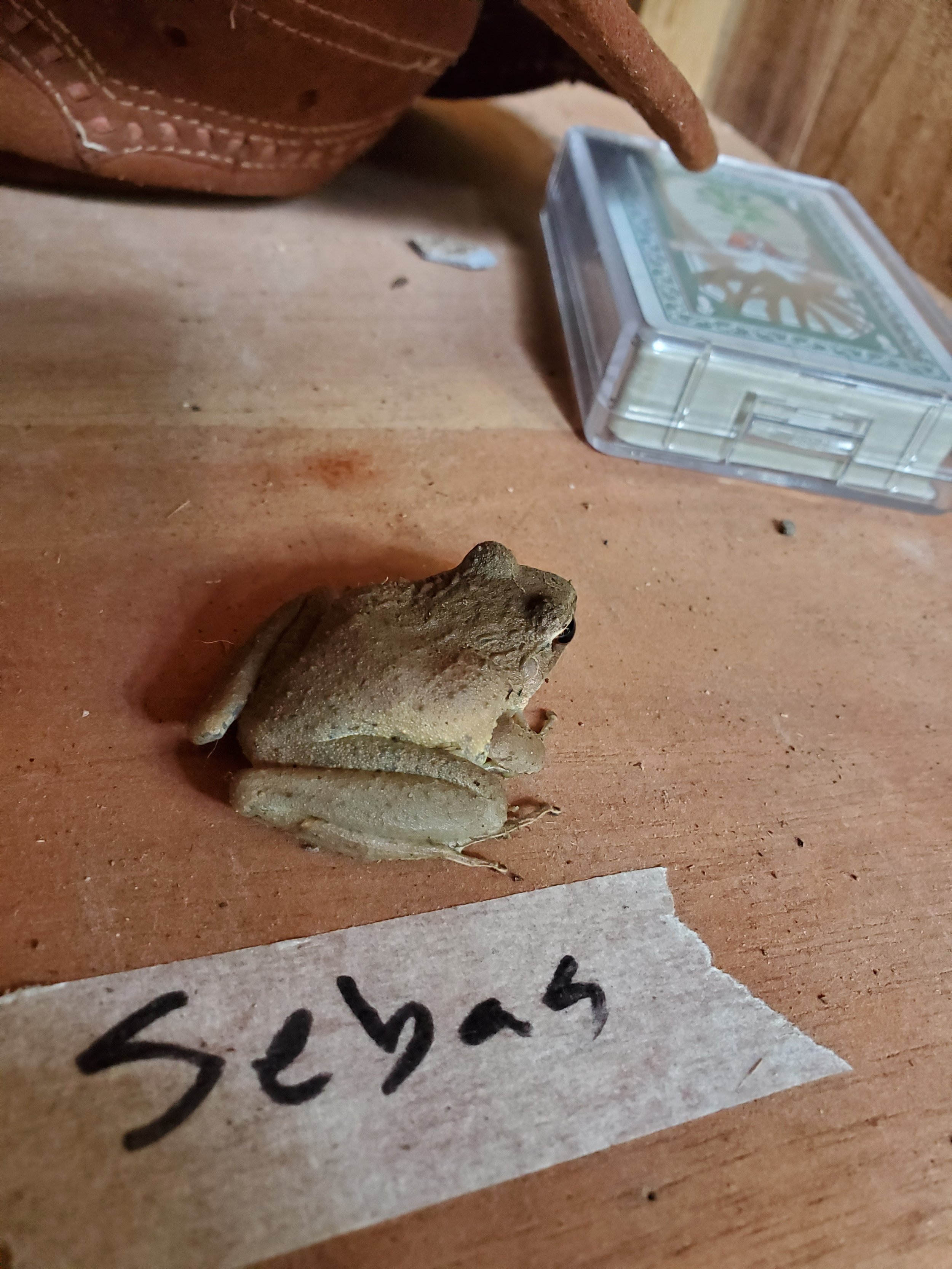
Creepy Crawlies (or creepy flyers. Sometimes not creepy)
1 - Ants
Mundane, but they demand mentioning. They are our most numerous neighbors, and vary in type widely. "Sugar ants" are harmless and numerous, mostly found in and around our kitchens taking advantage of anything left unattended for a few sparing moments. Fire ants are very common in our garden spaces and are your punishment for weeding in one spot for too long. Army ants act as a single massive organism, living nomadically and weeding out other bugs from their areas of interest ruthlessly. Incredible to behold in action. Finally, cuiscanas, (SPELL CHECK) or "devil ants" are small, red, slow ants that live in garden and orchard spaces. They don't bite, but secrete an acid as they wander on your bod which burns and stings for longer than preferred. Spraying alcohol on the affected area helps, but not enough.
2 - Horsefly
With the rainy season come the tabanos, horrible flying creatures which are much more aggressive here than I've experienced them being in the southern States. They hunt you and bite hard. They range in size from about housefly size to about the size of a quarter. Particularly horrible to experience while playing field sports, and while showering. No photo, primarily because I do not think they deserve it, secondarily because they pretty much just look like normal flies.
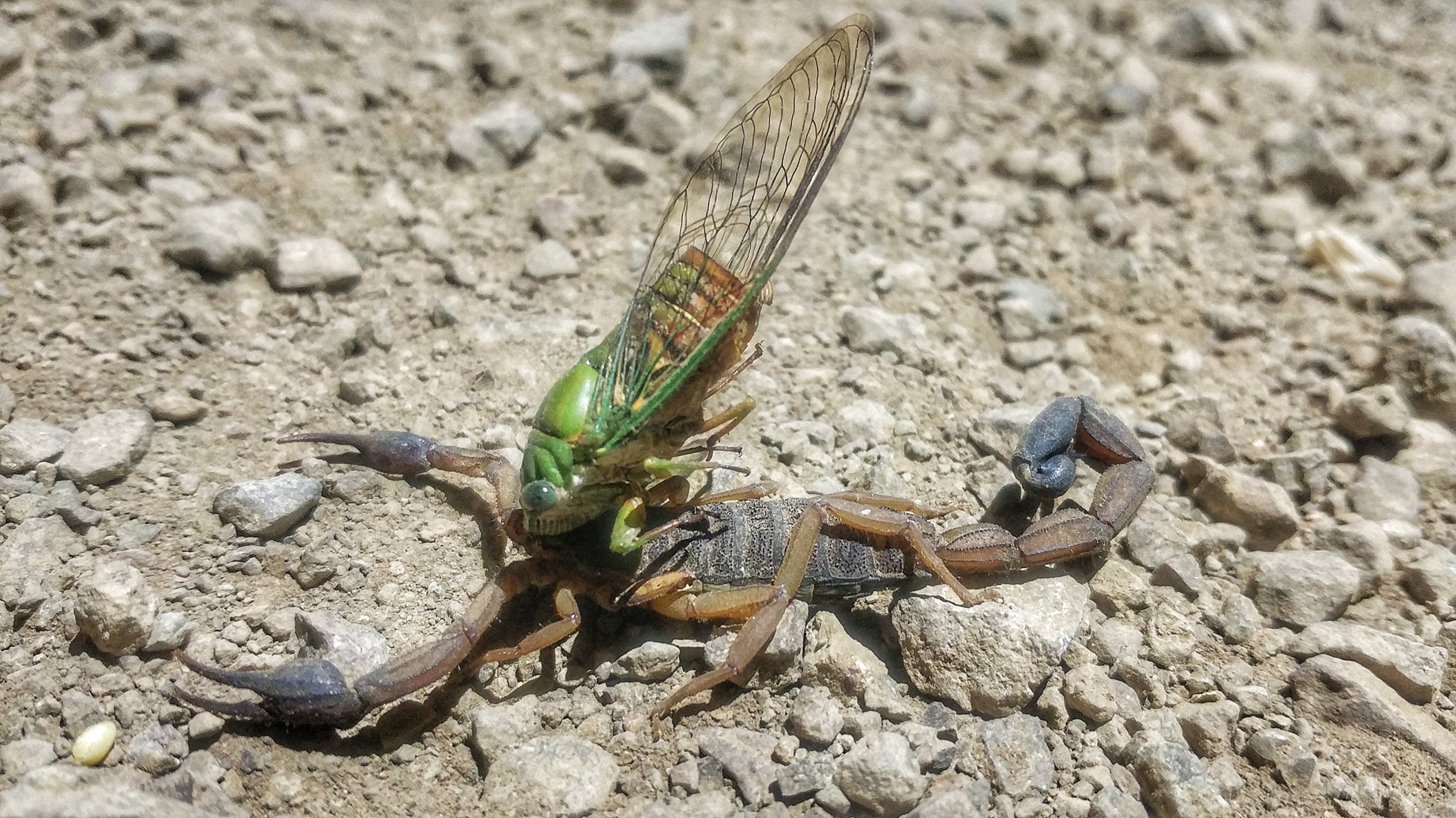
3 - Scorpions - Centruroides limbatus
Certainly creepy, certainly crawly. Our most common here is the Bark Scorpion, which can grow to be upwards of about 10 centimeters. Thankfully there are no varieties which will harm you much more than a stinging bee, though in other places in the world they can be much more dangerous. Check your boots, and pillowcases :)
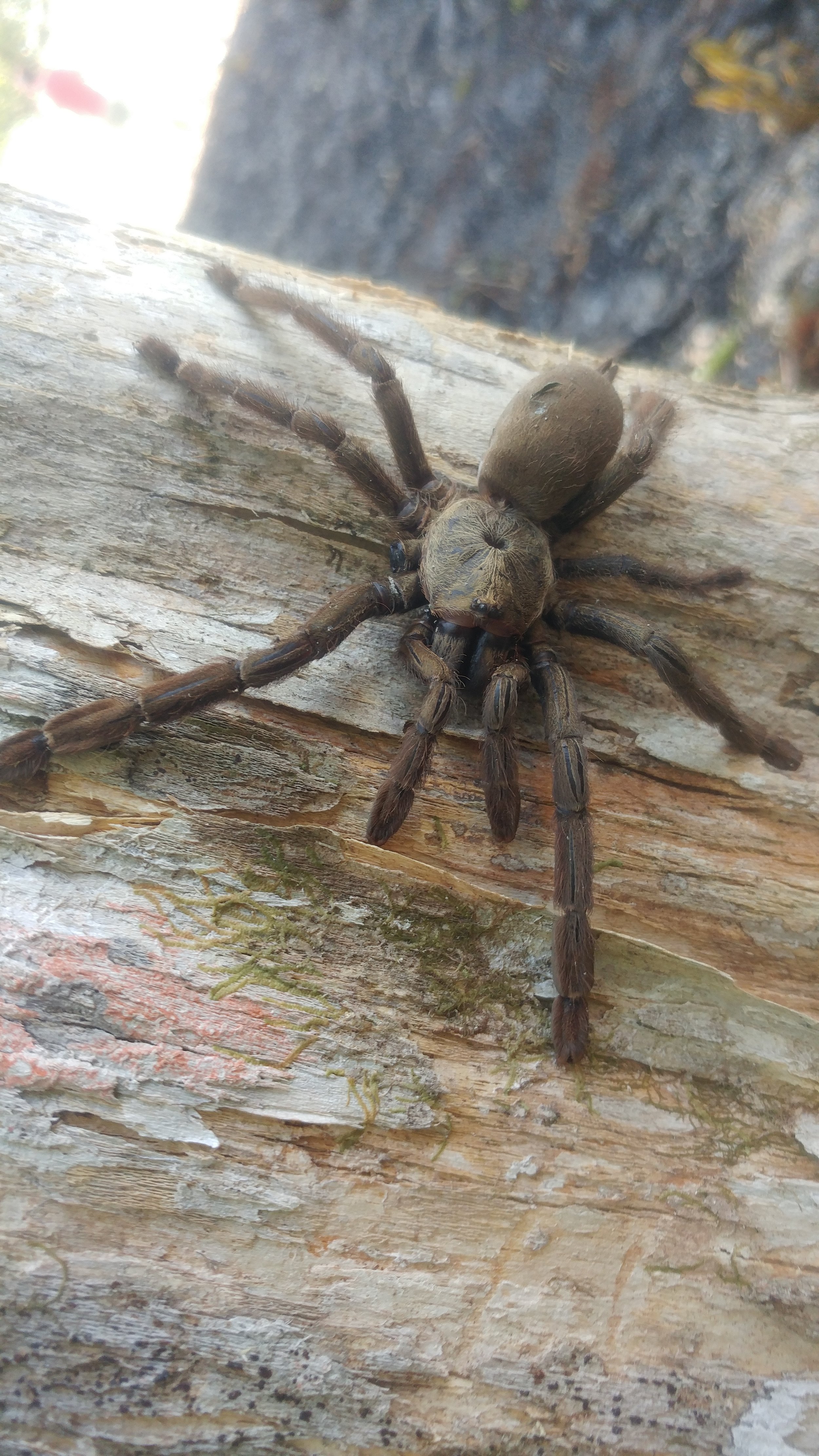
4 - Tarantula
Honorable mention, shamefully with no photograph, because I got to see a baby in a firewood bucket. I'm unsure of how common they are, having only seen one once so far. Consequently I'm also not too loaded with tarantula facts. They are many-legged and hairy, and I've heard they can shoot their spines off their legs! Not sure if that's a myth or fact. Definitely sounds believeable.
5 - Blue Morpho - Morpho helenor (and other beautiful flyers)
Blue Morpho butterflys are very well known by Central American travellers. Their bright color is astounding and their manner of flying very interesting. They bob through the air with long, slow, heavy beats of their wings, rising and falling huge distances between flaps in a mezmerizing way. They are deceptively quick, however, and are excellent at avoiding photographs which display their in-person vibrance.


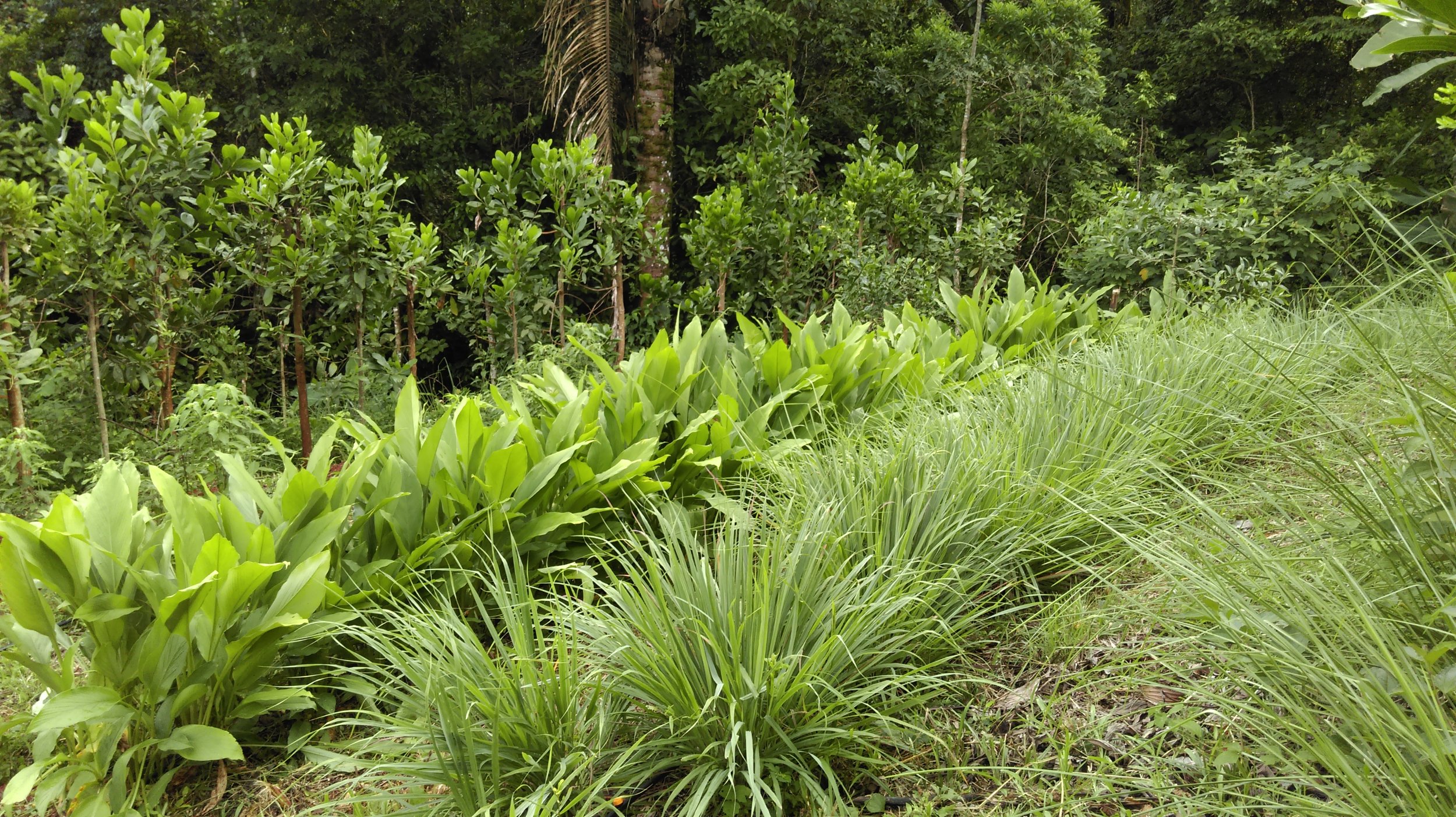
How to Optimize Your Syntropic Agroforestry Site
Syntropic agriculture is based on seeing evolutionary processes as driven by cooperation among members of the living system in a way that benefits the system as a whole. It aims to maximize of diversity and productivity.
By 2023 apprentice Seb W
Syntropic agroforestry is an agroforestry system developed by Ernst Götsch. Its philosophy lines up contrary to the Darwinian model of evolution, being driven by competition. It is based on seeing evolutionary processes as driven by cooperation among members of the living system in a way that benefits the system as a whole. It aims to maximize of diversity and productivity through aligning Stratification (space) and Succession (time) of its plants. Furthermore, it subdivides these plants into target and biomass species which allows for it to become self-sustainable over time. In its essence it means trying to mimic the real forest as close as possible.
What follows are factors to be integrated into your syntropic agroforestry site to optimize its potential outcome. If syntropic agroforestry is new to you, read What is Syntropic Farming first.

Image by Orchard of Flavours
Consortium of Plants for Syntropic Farming
Since every climate and microclimate offers different qualities, therefore being able to habitat different plants, just putting out a chart of plants won’t help a lot of you. Instead we want to explain at this point how you can write your own consortium. A consortium is basically an optimized garden guild which integrates the succession of its plants over time. Stratification still applies but it is now planned over time. To plan a good consortium you want to research a list of edible plants viable for your microclimate, their height at maturity as well as time until maturity. Based on that you can then categorize your plants into the different strata as well as time stages.
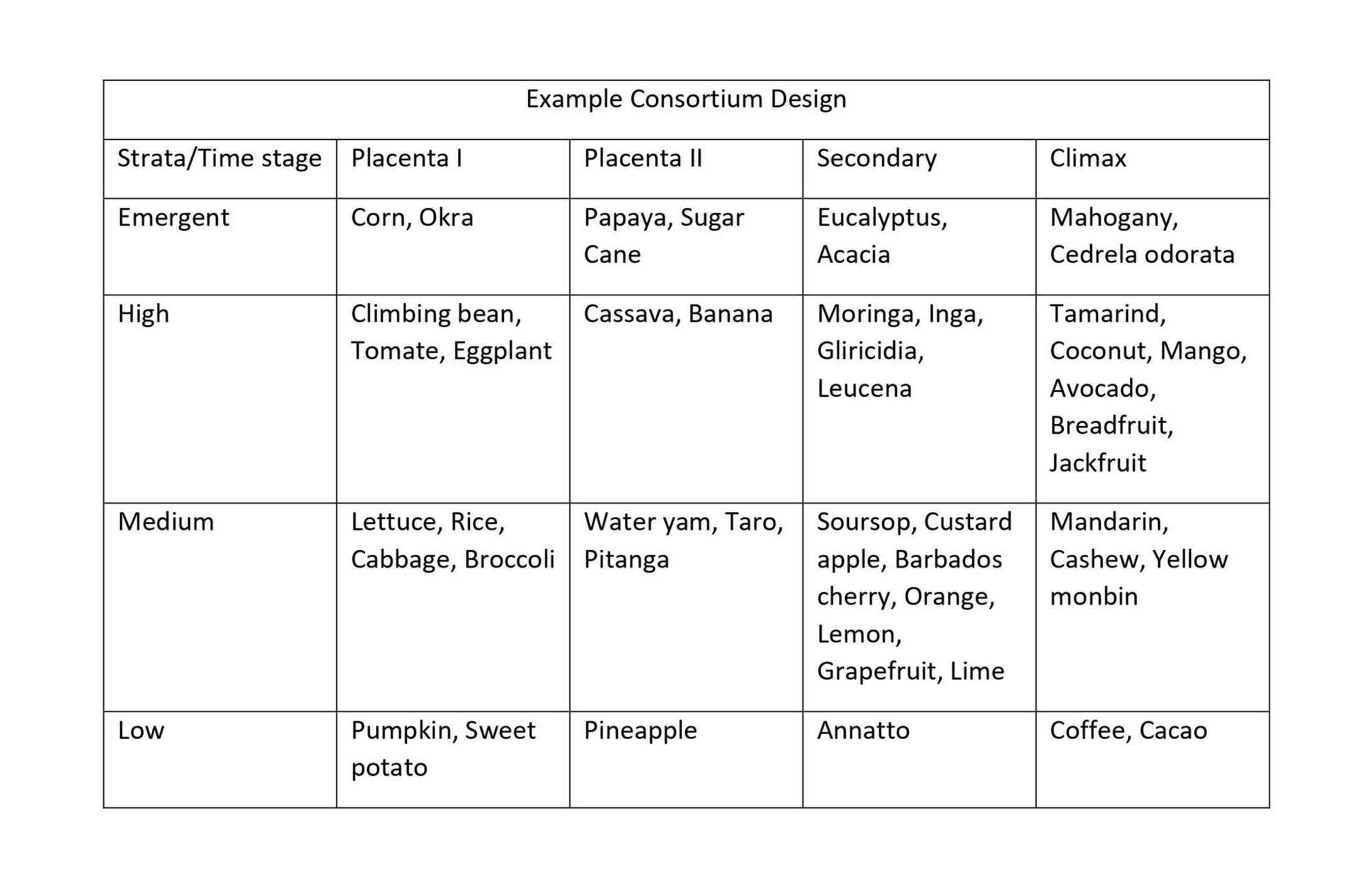
When planning a syntropic site we also want to keep in mind, that it will take at least 20 years until the climax stage is reached (if well managed). Within the first two years (until the end of placenta II) you can still add plants to the system though usually everything is planted in the beginning all at once. The only exception to that rule are climbers (exg. Vanilla or maracuja) as long as there is enough sunlight coming through to the ground.

Types of Plants to Plant
Whatever edible plants you want to grow, in syntropic agroforestry systems edible plants are not the only plants to be grown. Usually one aims to grow around 30% of plants just for biomass, of which again 30% are meant to be nitrogen fixers. Those biomass trees will then be cut down to chest level before the rainy season (or at the end of autumn in temperate climates). Applying this pruning technique will not only build good quality soil over time but also trigger a growth hormone release throughout the whole system pushing growth of everything within it. To attract native bird and insect species you should also consider adding some local plant species even though they might neither add to your table nor fix nitrogen.
Spacing Plants
To get a better understanding of how to finally design such a system, a spacing key is useful:
Tree line to tree line (wideness): 80cm first tree line – 50cm walkway – 70cm biomass plants (e.g.. Vetiver, Mexican sunflower, pigeon pea…) – 200cm filled with veggies – REPEAT
In the lines themselves the trees are planted super dense together.
Depending on size and needs one might combine walkway, biomass plants and/or the veggie area (veggies will only grow until end of placenta II due to shade coverage).

The minimum tree spacing key looks as follows:
Emergent to emergent tree: 12m
Emergent to high tree: 10m
Emergent to medium & low tree: 2m
Emergent to biomass tree: 0.5m
High to high tree: 9m
High to medium tree: 7.5m
High to low tree: 2m
High to biomass tree: 0.5m
Medium to medium tree: 6m
Medium to low tree: 3m
Medium to biomass tree: 0.5m
Low to low tree: 3m
Biomass to biomass tree: 0.5m
Ideally this spacing key is used on contour.
If you, like Ernst Götsch, are not a friend of tree lines, what Ernst recommends doing is: select an appropriate amount of diverse seeds, mix them all together, scatter them over your site and later decide which trees will stay and which won’t (negatives: some edible species vary heavily in flavour and consistency when grown from seed. Positives: way less work, good growing genetics only through natural selection, no row pattern).
Thoughts
Syntropic Agroforestry has received a lot of attention over the past few years. That being said, it is one of many different practices within the field of agroforestry practices and certainly has its negative sides. Contour is often times neglected in favor of north to south rows, invasive grasses instead of the mentioned vegetable rows will be a pain to manage over time, and proper spacing especially regarding tubers needs to be respected.
Hopefully this short how-to helps you get started on planning your own syntropic site to live more self-reliant.

Read These Past Blogs
Applied Permaculture Principles
Learn More
Join us for one of our annual workshops on farming, plants, permaculture and more!

Healing in Community
I’ve come to understand that although we all start from different places in life with a diversity of opportunities, we tend to have common pitfalls which lead us towards ill health and/or expression of pain.
By 2023 apprentice Grant Munro
“The art of healing comes from nature, not the physician. Therefore the physician should start from nature, with an open mind.”
Paracelsus
The health and wellness industry has taken on massive growth over the last ten years – probably in part due to the introduction and wide spread use of social media and unrestricted access to the internet. No longer do people have to rely on the chance discovery and passing around of old copies of The Alchemist, The Celestine Prophecy or The Prophet to name but a few. Nowadays it´s easy to scroll the page on our personal screens and come across cherry picked quotes, soundbites and memes and it’s clear to see from their popularity that people are yearning to be heard, felt and understood.
What leads us to pain
I’ve dedicated the last 14 years of life to learning to try to understand and coach others on how we can grow towards the expression of greater physical, emotional, mental and spiritual health. From working with thousands of people I’ve come to understand that although we all start from different places in life with a diversity of opportunities, we tend to have common pitfalls which lead us towards ill health and/or expression of pain.
On the whole, we tend not to move enough as humans were initially intended to, we have a habit of disconnecting from and avoiding our feeling bodies, we engage in repeated unhelpful thinking habits (such as catastrophizing, making assumptions and taking things personally), and we have had our connection to something greater than ourselves eroded over time – be that nature, a higher spiritual power or community.
A chink in the fullest expression in any of these four areas has an effect on the others to greater or lesser degrees. The acknowledgement of all aspects are essential to growth and restoring the adaptability to all life throws at us.
Using Permaculture Principles to Heal Social Issues
Permaculture’s design and problem-solving framework - at it’s core holding there are a set of twelve principles and four ethics – that can be utilized to address issues of almost any nature. It´s easy to see how principles such as observe and interact, apply self-regulation and accept feedback, integrate rather than segregate, and use value and diversity can be used to come up with solutions to some of the social issues we have in our relating circles and wider society.
When we look to the four ethics we could argue that the success in implementing earth care and fair share don’t really stand a chance until we reclaim our connection to all aspects of self, the people around us and understand what it is to be human . Until we reach this, we can’t accomplish the change that is being called for to create a healthy society and a healthy earth as a group of individuals.

Community Living and the importance of communication
As far back as the ancient Greeks (and undoubtedly further) we have understood that a strong connection to our community is essential for human health. Like many others of my generation, I don’t feel I have ever really experienced what it means to live as part of a community - so arriving in the jungle five months ago for the year long apprenticeship was an opportunity to truly lean in to the practices I felt I had been cultivating over the last seven years for my own healing/growth journey.
It’s been an, at times, a wild ride of ups and downs internally, and the number one practical thing I feel I’ve taken from it is: it’s important to have that difficult conversation in a timely manner. Feelings through miscommunications and misunderstandings can fester and be felt as an undertone by many in the group and can lead to what feels like fragmented energy. The stress of it can slowly eat us up and create a filter which can colour our whole experience. When something arises, ask clarifying questions, lead with what you are feeling but without blaming the other person. Perhaps describe what you are feeling in your body without naming an emotion can be helpful, too. Listen to the other person and accept responsibility for your part (there’s generally always a part we’ve played!). Sometimes it’s helpful to come back to a conversation a day or two later. Have compassion – we all have our own filters, biases and past experiences we are often living on autopilot from.
It has been well established now in the scientific literature that the brain doesn’t greatly differ in its response to an actual threat and a perceived threat – such as a repeating thought or judgement. Just thinking about a stressful event causes a discharge in stress hormones which our systems are not evolutionarily adapted to deal with for extended periods of time. Just as our physical body can bleed out from a thousand tiny cuts, we can look at these things that we are not facing as tiny cuts in our energy systems. Chronic overactivation of our stress response is implicated in almost all chronic disease.
It still blows my mind to this day how the impact of committing to practices of self-regulation can have a ripple effect throughout a community. When working in London we were measuring how after a relatively short period of time chiropractic was objectively helping people regulate their nervous systems more effectively than at the beginning of care. Subjectively, these clients would routinely mention how their relationships to their kids, spouses, friends, work and recreational acquaintances would improve.
Similarly, I’ve noticed at the Ranch that from one conversation between two people the whole group feels like it relaxes – not to mention the perception of my whole personal experience can flip 180 degrees in a matter of minutes. In reality, the conversations are very rarely as terrible as we build them up to be once we initiate them. That conversation may only be with one person, but the pent up energy can be liberated in you both, to ripple through time and space, in ways in which we may not be able to yet fully comprehend.
“We never know how far reaching something we think say or do today will affect the lives of millions tomorrow.”
B.J Palmer

Check Out these past blogs about community living
Enriching Community Soil: 5 Simple Strategies That Support Sustainable Relationships
Foundations for Success: 10 Considerations to Create a Healthy Project
Learn More
Learn more about community living and social permaculture in our annual Permaculture Design Course.

Natural Paints for Earthen Walls
Natural pigments are a fun part of natural building and the options are almost endless.
By 2023 apprentice Emme Nederbrock

Sample view of the layers of our earthen walls
Our shower walls here at the hankey and goat barn have a base of wattle and daub, a clay base layer, a lime coat, and a lime finisher.
Natural plasters are a key piece of the ranch’s structures. Check out our blog “Lime Plasters are In”, written by a past apprentice for more detail about our natural plasters!
Natural pigments are a fun part of natural building and the options are almost endless. Earth pigments consist of clays, minerals, rocks, carbon, and more ground up into a fine powder which can then be used to mix into your lime finish or natural paint recipes. Pigments can be sourced from all over the world. For example, pigments of the color umber, come from ground manganese and are found in abundance and quality from Italy, Cyprus, and Turkey. Recently, for our first natural building project as apprentices, we refurbished our bathroom walls with lime plasters. As a finishing touch we used a wheat paste recipe to add some small designs for a bit more character.

Clay paint recipe:
One part Kaolin clay powder
One part wheat paste (see recipe below)
One part agricultural lime powder
Pinch of gypsum powder (for preservation purposes)
Pinch of boric acid (for preservation purposes)
Wheat paste base:
One part flour
Six parts water
Pigment as desired
Regarding the wheat paste, boil water, then slowly add flour. Strain to get rid of lumps for a smoother paint. Then, measure out your kaolin clay, wheat paste, and lime, and mix thoroughly. Add your pigments last and have fun experimenting! The quantity is up to you and how much paint you need. The consistency is thick, and adding water can thin it, but will also tend to make the pigment more transparent and the . This paint can be saved in the fridge for a day or so if more time is needed to finish the project.
An element we will soon add to the bathroom walls are a more accented, watercolor-esk natural paint.
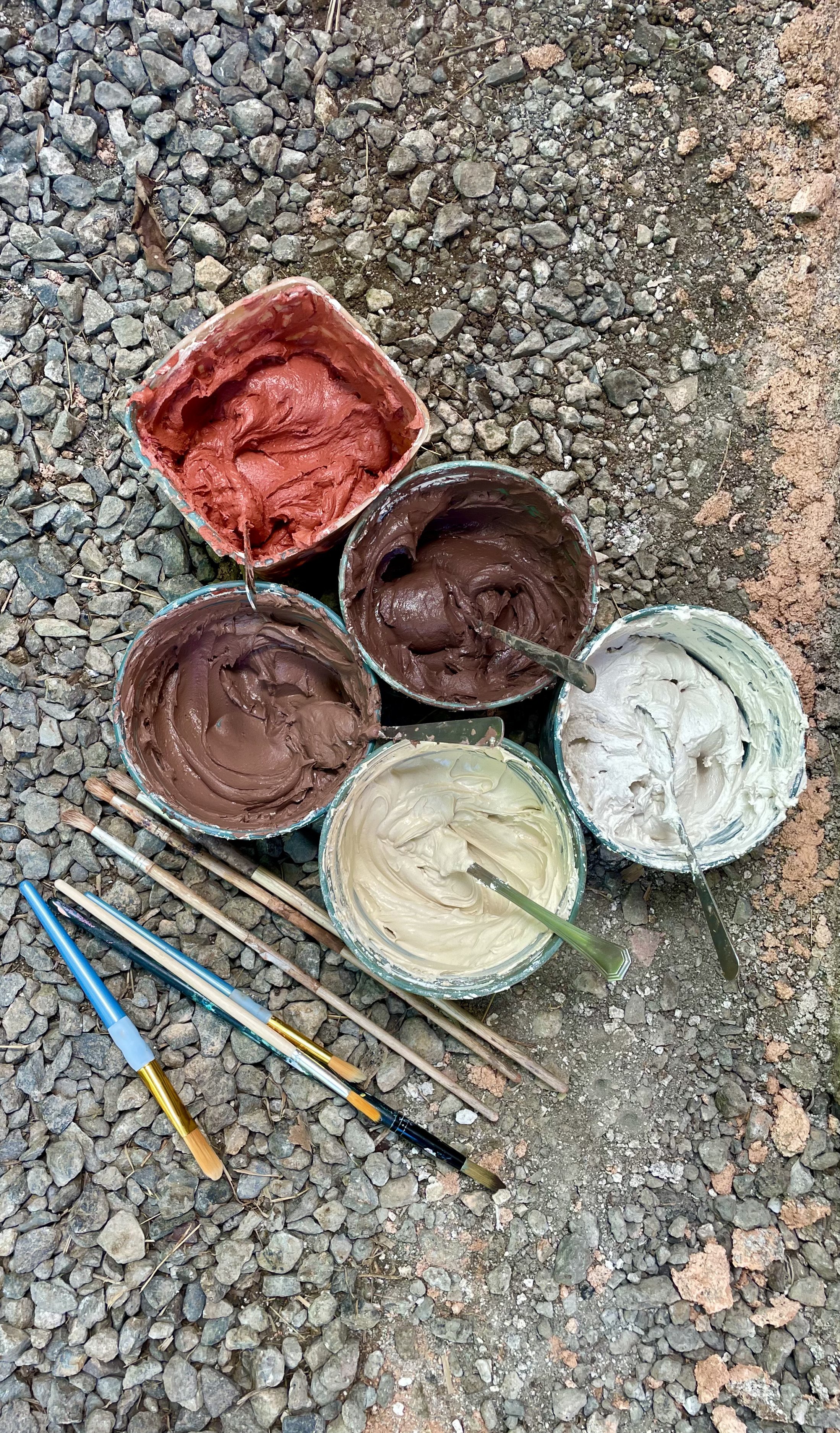

Egg tempera paint:
One part egg yolk
Two parts water
Pigment as desired
Take your egg and separate the yolk from the white. This is best done in the hands, passing the yolk from hand to hand until the yolk is almost sticking to your hands due to the dryness of the albumen. Remove the yolk from the albumen and put it in a container. Add water to the yolk and mix. Add desired pigments, watching the consistency of the paint as you add pigments. When we made the paint, a large amount of pigment could be added while maintaining a very thin paint consistency.

Always make color tests for your natural paints
A natural painted home or project can make your heart, and mind happy happy happy! Enjoy experimenting and remember, the earth is your oyster.

Check out these past blogs about natural building
Natural Building and Clay Carving
Building an Adobe Shower with Tadelakt Plaster
Want to Learn More?
Join us for one of our annual Natural Building and Plasters Workshops to get hands on experience in earthen wall systems and plasters.
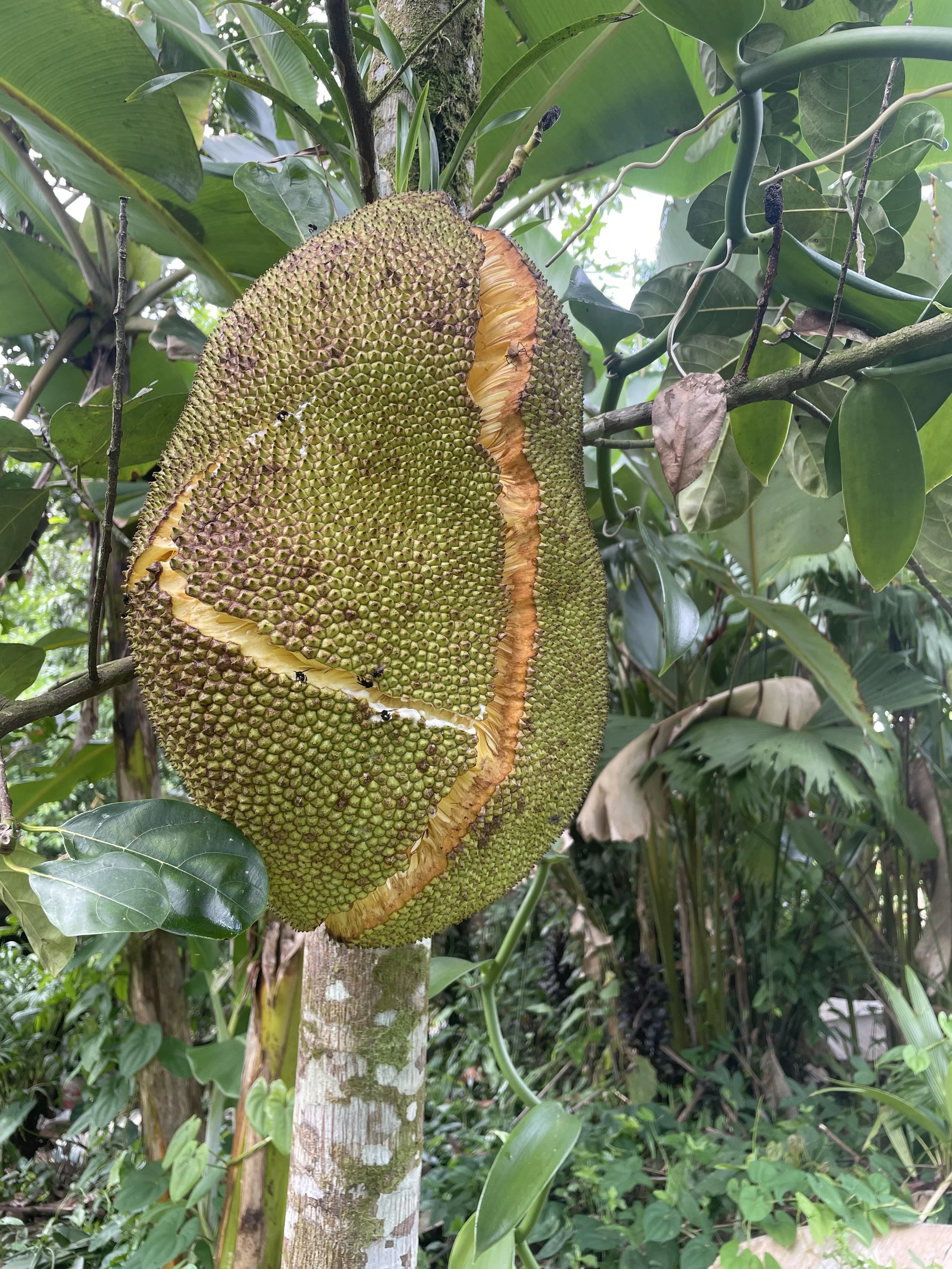
The Fear of Splitting Open, and no, I’m not talking About Jackfruit
The most transformational aspect of this experience, hands down, is the intensity of self-reflection and personal growth that is a natural biproduct of our new social living conditions.
By 2023 apprentice Elya Justina Mech
Living in community as an apprentice at Rancho Mastatal has stirred many changes within me, perhaps more so than the hotter climate, the ever present bugs and stinging things, the new work which challenges my body and mind. The most transformational aspect of this experience, hands down, is the intensity of self-reflection and personal growth that is a natural biproduct of our new social living conditions.

Who am I?
I thought I knew who I was before coming here, having been through many seasons of inner work and change, of death and rebirth. And of course one does not ‘arrive’, finding themselves in a place where the work is complete and the Self ceases to evolve. But there is a unique, accelerating factor of community that hastens this process and perhaps probes a little deeper than ‘regular life’.
Who am I in community?
In the earlier days of my arrival, I was surprised at how my personality took to hiding behind short, congenial answers, shy mouthfuls of food, and letting someone else do the talking. I was afraid to be vulnerable with my new group of apprentices and the core team, let alone the groups of guests who were arriving and departing every week or two and visitors who may join us for just a few days. I had considered myself to be outgoing, silly, confident and eager to speak of matters of the heart. Where did I go?
I recently read a passage of a book that said our personalities develop out of our survival of childhood – we are who we are to continue to receive love and affection. So perhaps unconsciously aware, I was craving such acceptance by my new group of friends/fellow students/housemates/teachers/mentors, and yet was afraid.
What parts of myself am I willing to share? What parts of myself am I willing to be rejected? Or misunderstood? Which of my shadows are being exposed against my attempts to conceal them, the bad habits I know I need to work on, the ones I’d rather not have to face right now? And who am I becoming, in this environment of everything new, who is this new me?

One aspect that has been particularly contrasted for me was the sharing of my artwork and poetry. Before coming to the Ranch, it was my usual habit to share these expressions of myself online or within an already established artist community. I have sold paintings at street markets, posted poetry online, and shared photos of projects I’ve been working on. Sharing bits of yourself to ‘’the whole world’’ although somewhat anonymously, hidden behind a profile is quite different to sitting in the presence of another while you open a part of your soul, vulnerable to their opinion whether spoken or simply felt. I had been meaning to attend an open mic night back home to read some of my writing aloud but I never worked up the courage and continued to find excuses not to get on stage.
But here at the Ranch, I felt a new opportunity stir within me, to be brave enough to share some of my poems that were closest to my heart. Firstly, at our evening Hankey hangouts by fairy lights (‘’The Hankey’’ is one of the natural buildings here which houses up to five of the apprentices at a time), and later at our dinnertime circles at the main house.

Thank you for letting me be brave in this community
I was further inspired by a solo traveller who was kind enough to gift me with a pocket sized watercolour set after our conversations regarding art and writing. I had packed my brushes and a pad of paper but neglected to bring along a vital set of paints. I have enjoyed many afternoons either in my ‘’Annex’’ bedroom (an extension of the Hankey that seems to float among the trees), down at the river or perched in the old honey bee shed among the jackfruit trees and bamboo. Thank you sweet friend.
I’m also grateful for the kind guest and new friend who spent time harvesting fruit with me several afternoons, speaking of our philosophies of life and talking about poetry, favourite books and humble living. I was encouraged to continue working on my books and art and it reaffirmed my desire to live as close to the creative process and Source of creation as possible, that being my true joy.

Thank you for letting me be me in this community
Another new interpersonal experience for me has been learning how to have a bad day around others. No longer being able to retreat fully from the world when I’m feeling out of sorts, I am discovering how to be myself and not put on a mask which is easy to do in conventional living. When someone here asks you how you’re doing, you don’t get away with a simple ‘’fine’’ or ‘’good’’ ;)
Conversely, I have also been learning how to let others have a bad day as well, offering concern and a listening ear but giving space, the understanding when perhaps they are short-tempered with you and being available later for smoothing things over if egos were bruised.

Thank you for letting me be imperfect in this community
At this point, after nearly five months of jungle community living, I’m forgetting what ‘normal’ is, what endless concrete feels like to look at, why billboards exist. The thought of eating dinner alone seems preposterous and I have grown quite used to living with no walls and only a curtain to provide me most of my privacy. (A hummingbird just flew into my bedroom as I write this, so, you can understand the trade-off). I’m still learning how to show up as my best self, allowing the lessons coming my way to be integrated gracefully.
So what profound conclusion can I leave you with? Just one that is not my own and has been said time and time again. Despite the truth in this song I’ve been listening to lately
‘’perhaps the fear of splitting open, showing some parts of yourself that you don’t even really want to –‘’
Be yourself. Bravely, your imperfect self and see what new things unfold.

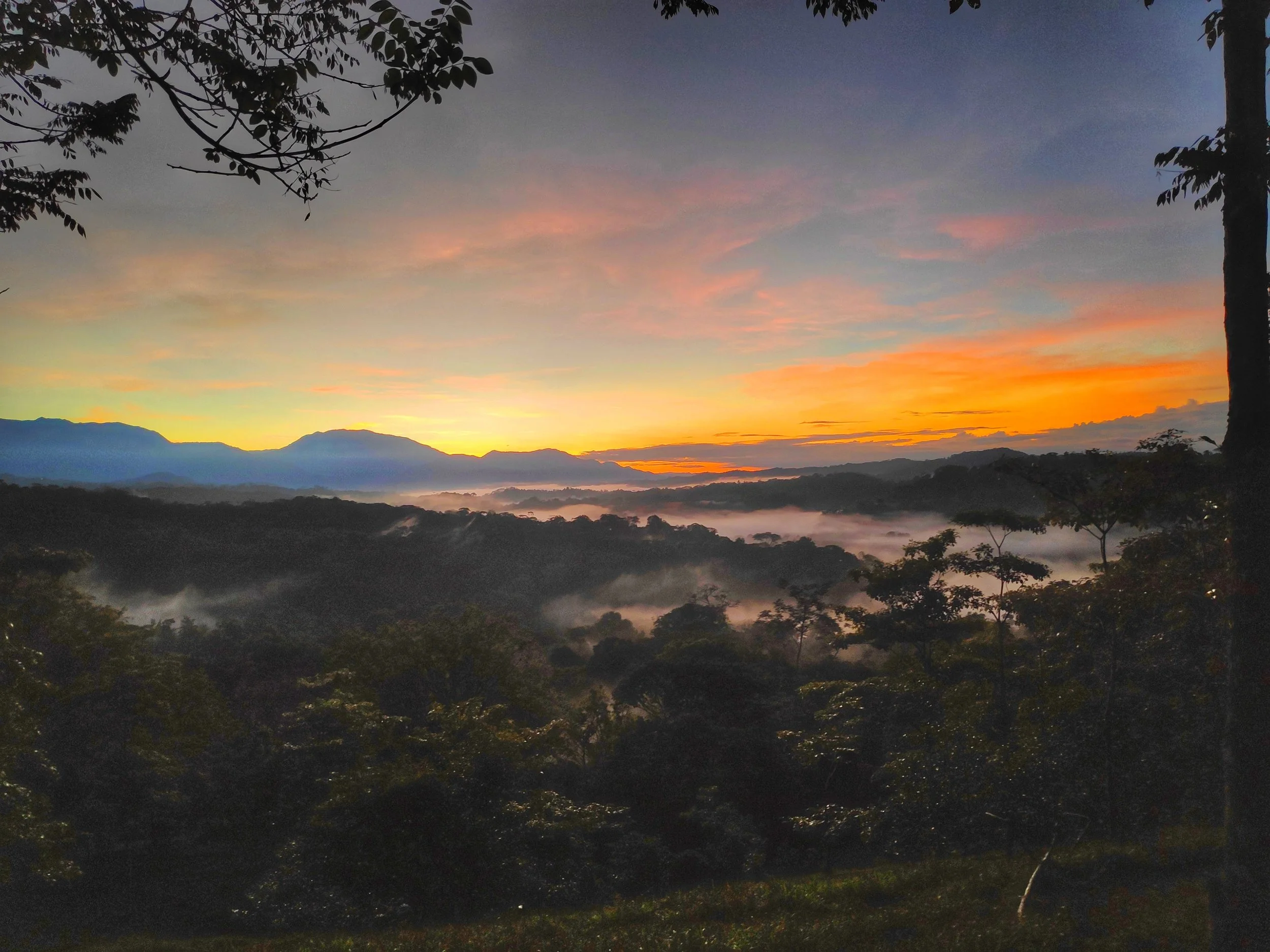
Rancho Mastatal - A Paradigm Shifter
To be able to initiate changes that may someday become radically transformative it needs places starting with small, reformist changes. Rancho Mastatal has proven itself over more than 20 years to be one of those places.
By 2023 Apprentice, Sebastian Wittwer
The current paradigm
PROGRESS, DEVELOPMENT, FREE TRADE. The western world runs on an inexplorable logic, replacing people with machines, creating local interdependences with global markets and excluding ancient knowledge preserved by native tribes. With an ultimate sense of righteousness, this industrial model is being spread around the globe, reducing the worlds diversity to a monoculture in a literal sense. This monoculture is only possible since freedom based on individualism is pushed as one of the “culture’s” main achievements. This freedom means also freedom from traditional community values which can lead to a loss of all sense of importance. Consumerism doesn’t express freedom, but slavery to purely material values. Everyone living in the same kind of buildings, wearing the same kind of clothes, working for the same reasons is not individuality but rather the homogenization of all people. True individuality depends on community. We have been taught to live in a culture of alienation, separation, and blocked initiatives rather than in practices of commitment. Freedom from responsibility for others is equally a loss of assurance that others are ready to be supportive of. To be able to obtain a rich diversity in culture around the globe and on the search for a renewed sense of community, it seems necessary to develop concepts of self that are very different from that with which we have been indoctrinated. Therefore we have to rethink the way we want to live in the modern world.
The significance of rooted teachers

Emme (Apprentice 2023) leading the daily meeting – the communal way of communication
Rancho Mastatal is living and teaching prime examples of what it actually means to loosen up these seemingly “set in stone” structures by returning to a communal oriented life.
Against sacrificing local production, local economic stability and communal security to transient efficiencies and the quick profits of distant businessmen/women through electronic communication and teaching, Rancho Mastatal provides educators willing to live where they work and to work where they live. A class of educators that cultivate a sense of place and that is therefore able to distinguish between local and universal, particular and general, concrete and abstract. Not only does this push their educational standard over most western universities’, it also helps building a strong local community by including native tribes and their knowledge, by creating local wealth and social security, and by emphasizing real and honest relationships towards everyone around.

Core team member Ali, hands on teaching clay plastering – one of the many skills she owns and can give instant feedback on
The importance of building onto the local economy
Through an orientation of their agriculture towards local needs, local possibilities, and local limits, Rancho Mastatal also supports the health of the land, the people, and their democratic liberties.
By switching their priority from the global to the local economy, they reduce the outflow of capital to distant corporations and capital then circulates within the local economy. Instead of trying to live as self-sufficient as possible, a sense of relying on their community has proven itself as the way to be. Instead of isolation, incorporation of the local community has proven itself as more community friendly, more efficient and a more sustainable way to be. This expresses itself especially through the food they eat (mostly locally grown rice, beans, eggs, veggies like yuca and malanga), which goes against the culture of food from where the majority of the core team comes from.

Typical brunch meal: Gallo Pinto, fried eggs, malanga patties, leftover frittata, fruit, salad, kimchi, salad dressing – mostly locally sourced, in parts even self-grown
By building this local food economy (which is at this point as much local as possible, though not free of regional, national and international products), one might even call it a local foodshed as they add a lot of value to the community. First it overall improves the quality of the food itself. Second they increase consumer influence over production which makes each and every consumer a participatory member in their own food economy and helps to ensure a sustainable dependable supply of food at the same time. Farming practices are immensely improved and last but not least the costs associated with long supply chains (locking at packaging, transportation and advertising) are reduced, reducing the cost of food in general while increasing income to local growers, creating a positive feedback loop within their community.
A constant moral compass
Through their degree of popularity, Rancho Mastatal could totally start emphasizing monetary profits and capitalize of the place a lot more, which would most probably induce a decrease in their ability to stick to the permaculture ethics (people care, earth care, fair share, transition). Against this common western path, this place and its people stay true to their moral compass even though they wouldn’t have to. Instead of going ever bigger and bigger while trying to maximize profits, they are using their resources to give back to their community in any and every way possible.
Courses held in Spanish that only cover the costs during its time or simply sending people over to the local soda to get extra/different food are minor examples of what is described above as measures of their established paradigm against the monocultural life of the west.
To be able to initiate changes that may someday become radically transformative it needs places starting with small, reformist changes. Rancho Mastatal has proven itself over more than 20 years to be one of those places.

Locally produced chocolate by La Iguana Chocolate sold by Juan Luis - Good business during the dry season with all the guests, course attendees and friends visiting the Ranch and therefore one way of bringing more capital into the community as a whole

Foundations for Success: 10 Considerations to Create a Healthy Project
After more than 20 years, we have been able to identify some trends that have led to our survival as a business and a community. The following advice is appropriate, and perhaps some of it even necessary, if you expect to live successfully in a communal work and living environment doing land-based work.
By Core Team Member Tim O’Hara
After more than 20 years, we have been able to identify some trends that have led to our survival as a business and a community. The following advice is appropriate, and perhaps some of it even necessary, if you expect to live successfully in a communal work and living environment doing land-based work.

Students in our annual Permaculture Design Course
Communal Continuity
It’s imperative to assemble a group of individuals that you can depend on, year after year. If the only people that are visiting your project are there for shorter or medium length stays, you will never feel as if you have a community to lean on during the harder stretches of running a project of this nature. Create realistic and concise agreements with one another and develop incentives that make everyone feel well taken care of.

Privacy
We learned the hard way that having your own private space is critical for long-term happiness. We decided to focus on building before planting in our early years. That has meant that our agroforestry spaces are a bit behind where you’d expect after 20 years of working in those spaces. But without privacy, it’s impossible to keep people around who are doing the important work in the orchards and other spaces. Create private spaces for everyone, with a focus on creating lovely, comfortable, healthy homes for your core team.
Collective Decision Making
Micromanaging is a recipe for burnout. Don’t fall into the trap. Develop trust with your partners and allow each leader to make decisions in their realm up to a certain value. Big decisions, that affect everyone, should be discussed by your entire team, but small decisions, like whether to buy 5 or 10 avocado trees, should be left to those managing the orchard spaces.
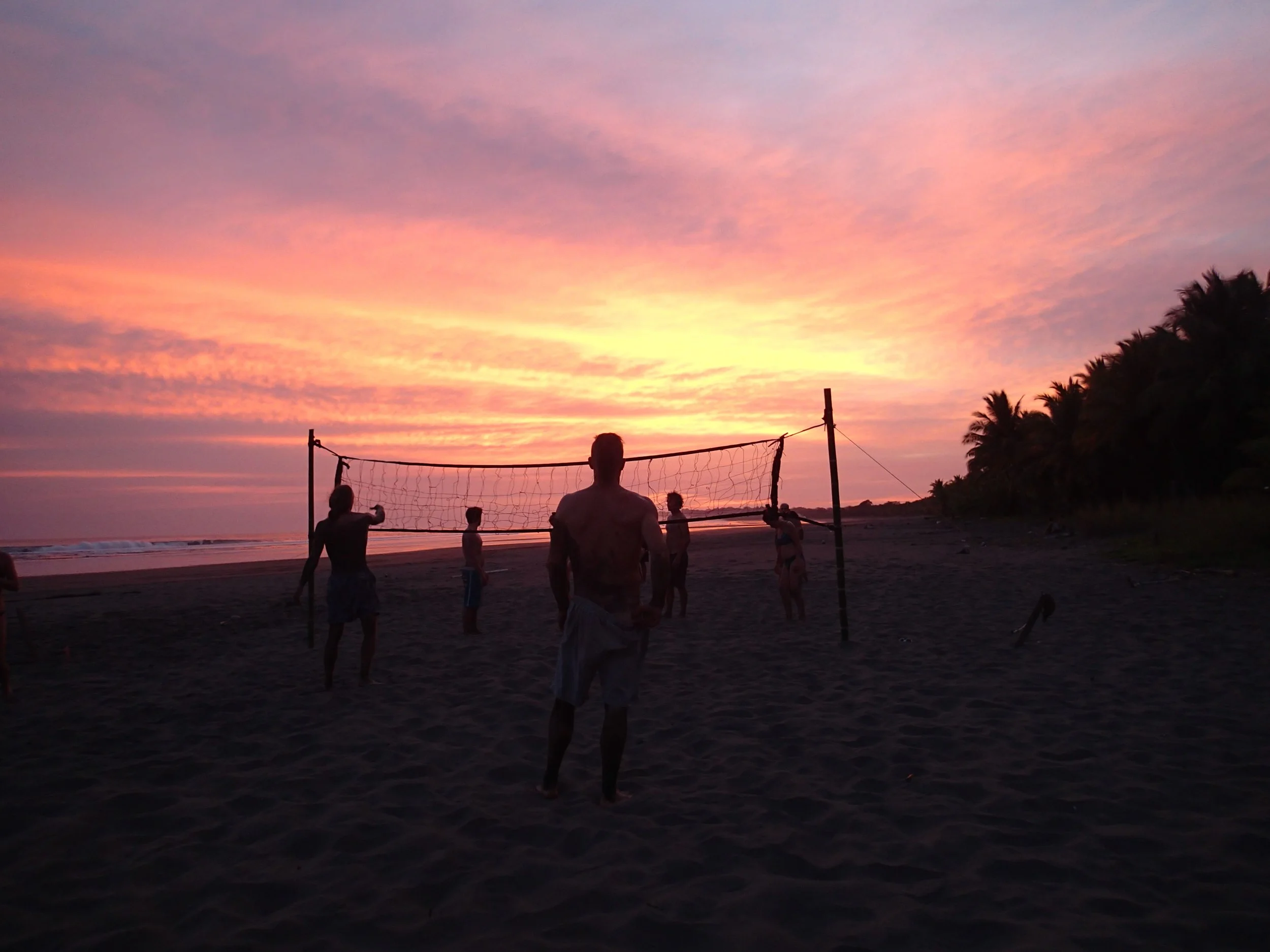
Balance and Rest
It’s imperative to figure this out before burning out. Burnout can be permanent, leading to the abandonment of your passions. Build into your day-to-day lives the time to run, breathe, nap, walk, draw, meditate and think. The work will never be done, so don’t try to do it all each day. It will be there waiting for you in the morning after a great night’s rest.

A Solid, Well-Taken Care of & Committed Core Team
We’ve got an amazing core team. But it took us longer than it should have to realize the importance of building a strong team at the center of our project. If we expect community members to stay committed, they need to have their needs met. And everyone has a unique set of needs. Create a compensation agreement that makes everyone feel valued.

Community Connection
Be an active member in your town. Demonstrate, over and over again, that your project exists to benefit everyone in your community, especially those most in need. Join your local woman’s group, offer free yoga classes once a week, develop a kids soccer camp, or create a language exchange.
Fair Share
Share what you have. It’s your easiest path to acceptance though far from the easiest practice to bring to fruition. It has taken a lot of time, energy and sacrifice to create Rancho Mastatal, and sometimes our knee-jerk reaction to “spreading the wealth” is instead to move to protect what we’ve created in the interest of stability and to prepare for future unforeseen issues. But true stability comes with sharing.

Communal Meals
This may be the hardest bit of advice to embrace for some. Sharing a meal takes more social energy, but weighed against the time you save on cleaning and cooking, it’s worth it. Communal meals encourage group debate, laughter, learning and the development of a strong social fabric. Humans have tended towards eating in front of screens or on the run. These trends lead to poor eating habits and encourage humans to disconnect from one another. To eat well today means a monumental and coordinated effort growing, processing and cooking food. Celebrate this activity each and every day and you will be rewarded in ways unexpected.
Make Time to Dream
We “talk shop” a lot around here. We love what we do and enjoy talking about what we’ve created and how we can improve it. It’s important for us to create spaces that allow for dreaming and scheming. Having the space to “zoom out” and move for a time away from the day-to-day allows for creative brainstorming that can lead to breakthroughs and new ideas that might otherwise never come to the surface. Dare to dream, and dream to create your ideal version of life.

Don’t Get in Over Your Head
This is much easier said than done. When you commit to a land based project, your to-do list immediately seems endless. There’s never enough time in the day to do everything that you need. Start small and work towards simple solutions whenever possible. Build and perfect one system at a time, as much as you can do that. Don’t add chickens, goats and fish in the same year but rather add one species and then see how that changes your life before adding another. We made the mistake of throwing too much at the wall early on in our development and when not everything stuck, it felt overwhelming picking up the pieces of many systems simultaneously.
We try to share our failures and successes frequently so that others can get to where we did in less time and with less effort. Please don’t hesitate to contact us with questions, comments, or suggestions and all the best in your journeys.
Check Out These Past Blogs About Permaculture and Community
How to Run a Permaculture Internship
Enriching Community Soil: 5 Simple Strategies That Support Sustainable Relationships
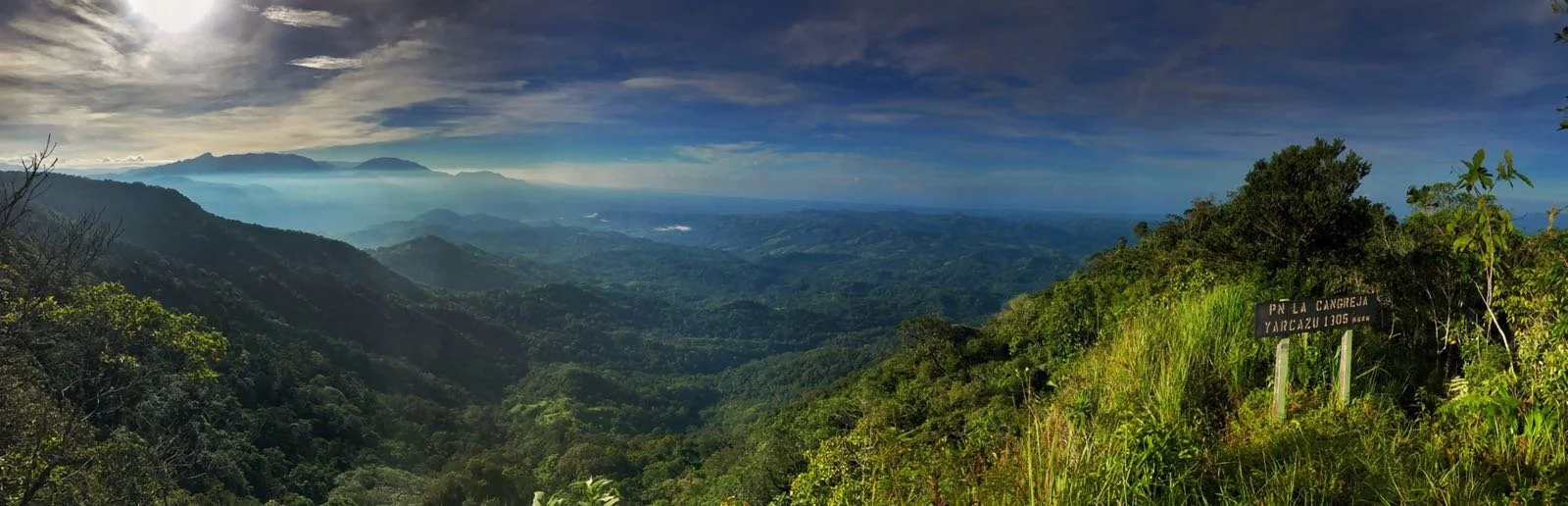
Speaking from the Heart
What does it mean to "Speak from the Heart"?
It sounds very easy, but it's not so easy to do.
The main difficulty in interpersonal communication is due to our natural physiological tendency to look first outward and not inward.
Almost 80% of the sensory information that comes to our brain comes from the eyes. It's not a mystery why we tend to blame the other for our own misery.
by Ariel Mayrose
What does it mean to "Speak from the Heart"?
It sounds very easy, but it's not so easy to do.
The main difficulty in interpersonal communication is due to our natural physiological tendency to look first outward and not inward.

Almost 80% of the sensory information that comes to our brain comes from the eyes. It's not a mystery why we tend to blame the other for our own misery. Our eyes, that look outwards, see the other as responsible for our personal difficulties. When our desires and needs are not met, we tend to judge the other, criticize and blame. This criticism causes the other to get offended, and to get caught in "fight, flight or freeze" patterns. Tragically, this creates a negative cycle that makes it difficult for us to fulfill our needs. Additionally, as a society, our current habitual way of thinking of right-wrong, should-shouldn't, good-evil, makes it even harder for us to behave in a different way.
The practice of Non-violent communication (NVC), developed by Dr. Marshal Rosenberg in the 1960's, succeeds in addressing the difficulty most of us have to understand and communicate with each other in a constructive way.

In NVC we practice listening to ourselves - which, as you may know, is easier said than done. This is the art of listening to our deepest fears and emotional challenges, that we've been trying to hide so we won't get hurt. This why listening to our feelings can be quite challenging, often leading us to neglect our feelings. But when we lose touch with our feelings, we lose touch with our life-censors - sometimes referred to as our "gut-feelings".
The good news is that even if we've lost touch with our censors, they are always there working hard to remind us and bring us back.
The bad news is that our habitual way of being, as a society, is to constantly be looking outside ourselves for someone to blame. This applies to virtually all of our collective structures and institutions - court systems, schools, and of course mainstream media.
We've been raised in this world and since we have been programmed to behave this way, it's quite challenging to change this negative cycle. Especially when people keep on blaming us. Is it any wonder that our hearts then shut down, preventing us from truly speaking from the heart?

The negative cycle can be described like this:
People are blaming us – we got hurt – the heart shuts down - we tend to forget our feelings – we look outside and not inside – we blame the other – people blame us.
The way to break this cycle is to slow down and remember, especially when we're hurt, that we want to act instead of continuing to re-act our past.
When we remember to slow down and look inside, the transformation begins.
We can get in touch with our feelings, our life-censors.
When we look at how we feel, we reconnect with our authentic needs, taking our attention away from blame and judgment.
The heart of the methodology of nonviolent communication, as Marshal Rosenberg says, is: "Everything we do, we do to meet a Need". When I can see my own actions or the actions of others in a context of human needs, I experience more understanding, connection, compassion and harmony.

As long as I choose to think about needs, the more likely I am to see and understand the other and myself.
When I understand myself, and get in touch with my real needs, then I am able to imagine ways to fulfill those needs. When I follow that path, of understanding my needs, trying to accomplish my needs, in a way that will be aligned with other people's needs – I can live a sustainable life of ease, joy and harmony.
At "Speaking from the Heart" course-retreat you will:
• Shift the focus from the other to yourself, becoming more familiar with tuning in to your feelings and needs without "involving" the other. By doing this, the automatic, habitual criticism will be replaced with understanding and empathy to both yourself and the other.
• Learn how to communicate your feelings and needs to the other, to fulfill your needs in effective, easy and joyful ways.
"Speaking from the Heart" provides tools for making a deep connection and compassion in your day-to-day life.
It is highly recommended for individuals and couples seeking better ways of understanding and communicating with each other, and is vital for those living in intentional communities who are often saddled with trying to solve conflicts in a peaceful way.
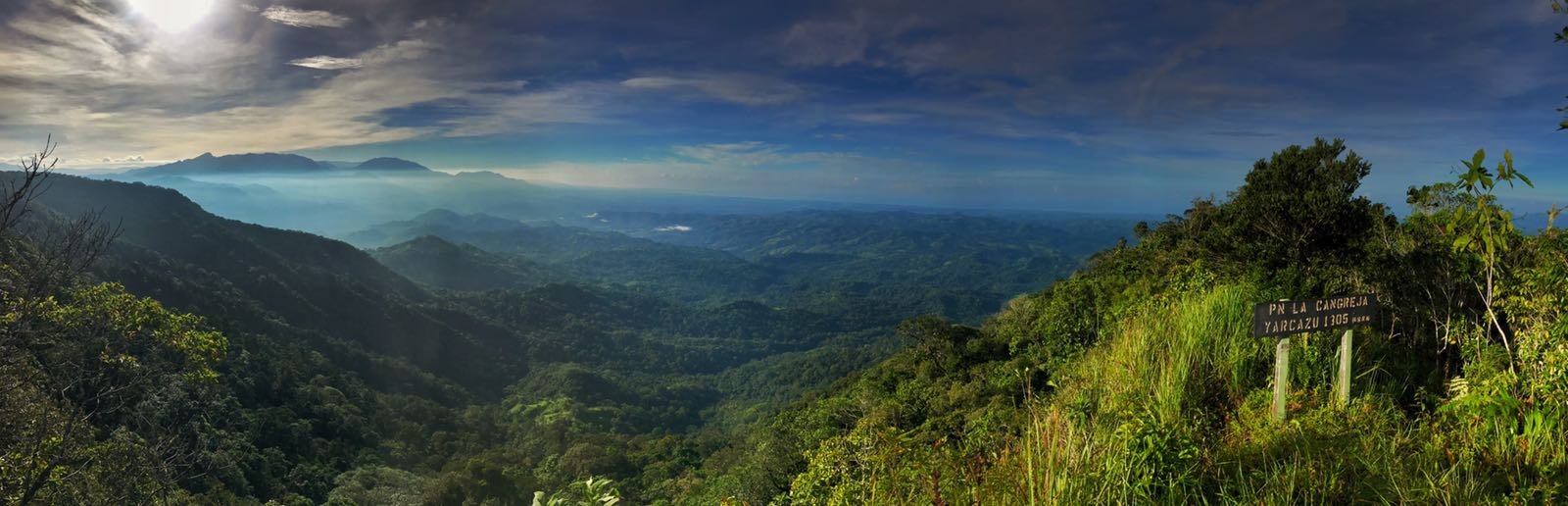
What will you get from this retreat?
• Connection to yourself and an understanding what underlies your behavior.
• Liberation from restraints and barriers that prevent you from realizing yourself.
• A shift away from automatic actions (re-actions) that are based on fear and anxiety into conscious and beneficial behavior.
• Clarity about your needs and how to fulfill them.
• Tools for effective communication.
• Noticeable improvement in the quality of your interpersonal relationships.
Our NVC work will be supported each day with the energetic practice of Qigong - to ground, center and connect ourselves with ourselves and our environment. The Qigong and meditations practices will also be offered to enable us to focus on effortless-effort, further aligning us with NVC's concept of getting rid of our habitual "should-shouldn't" thoughts.
Doing these body-practices daily in the routine of the course will keep your awareness within and connect you to the power of love, which is the highest form of energy. This will strengthen your ability to be compassionate and loving toward yourself and others as you learn the way of Nonviolent-communication, enabling you to find your way back to your truth and finally to Speak from the Heart.
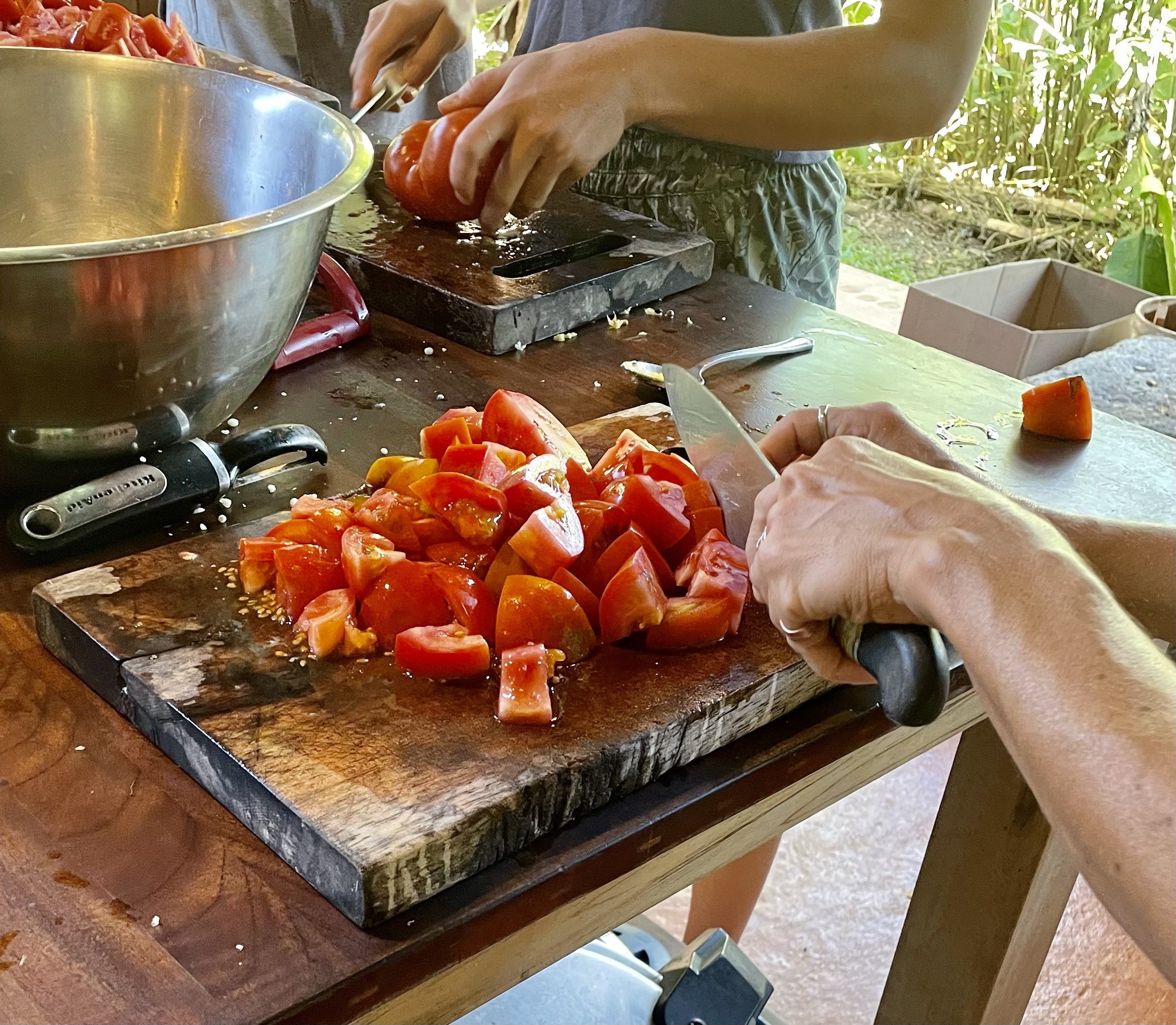
Homemade Ketchup Recipe
Ketchup over the years has been made in a plethora of different ways. The name originally comes from the Hokkien Chinese word ke-tsiap, meaning fermented fish sauce, and in Europe, the sauce has been recreated with mushrooms, walnuts, oysters, anchovies, and more.
By 2023 apprentice Emme Nederbrock
Ketchup over the years has been made in a plethora of different ways. The name originally comes from the Hokkien Chinese word ke-tsiap, meaning fermented fish sauce, and in Europe, the sauce has been recreated with mushrooms, walnuts, oysters, anchovies, and more. The first recipe that involved tomatoes was in 1812, and in 1876, the American Henry J. Heinz created his variation of ketchup. Today, about 97% of American households have a bottle of ketchup! Maybe the traditional Heinz ketchup isn't desirable to you, or doesn't taste good, try this fermented ketchup recipe made right here at Rancho Mastatal! Lots of the ingredients included in the recipe when it comes to spices and sweeteners can be altered due to desired taste, so get creative! This recipe is interpreted from the book “The Farmhouse Culture Guide to Fermenting” by Kathryn Lucas and Shane Peterson. We recommend checking out that book, learning from it, and trying out all their fun, sustainable recipes.
Before starting, there is an importance of making sure you are working in a clean environment. We are relying on natural bacterias to do their work and make a delicious ketchup, so keeping other random, possibly bad bacterias out of the mixture is key. Wash your hands consistently, wash all your produce, and make sure all vessels used for the fermentation have been disinfected properly.
Equipment Needed:
Food processor or blender
Kitchen scale
Pan for sautéing
Fermenting jar (for this recipe are using a 2 liter jar)
A stopper and weight for inside the jar
Pot for cooking down recipe after fermentation
Ingredients:
MAKES 2 LITERS (about 1/2 gallon or 2 quarts) will yield around 1 - 1.5kg of finished ketchup after boiling down
2 kg tomatoes
1 onion
2-4 cm knob of ginger
5 cloves of garlic
Salt (3% of total weight of ingredients above)
Brine (recommended but not a necessary factor)
Sugar (10% of total weight AFTER fermentation, about 200g)
1 Tbsp of cornstarch
Spices to your liking (mustard powder, pepper, smoked paprika, chili powder, etc)
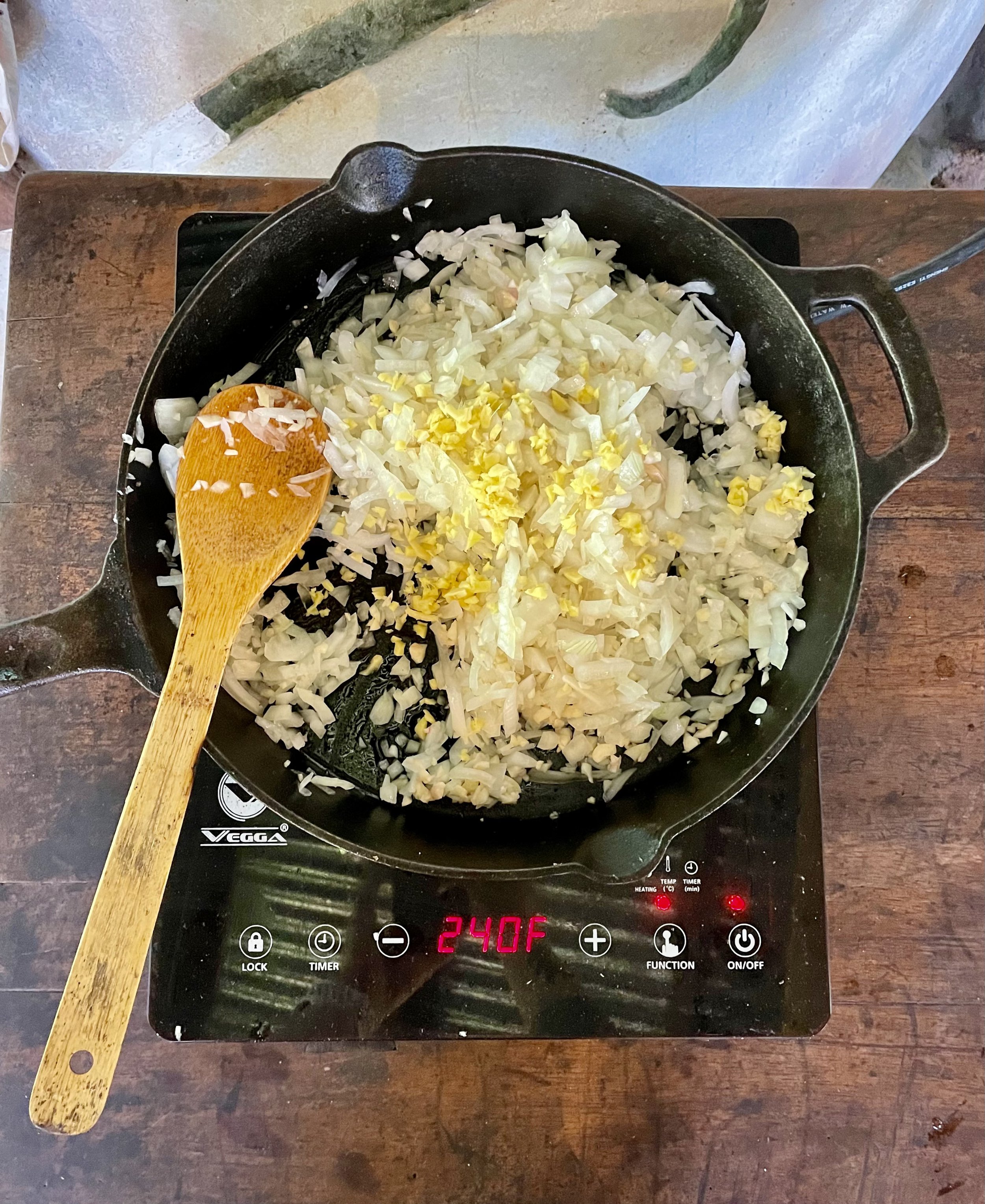
Instructions:
After washing, cut up all tomatoes and remove stems. These tomatoes will be processed in either a food processor or blender so size isn’t too important.
Wash and dice your onion, garlic cloves, and ginger. Add these 3 ingredients to a pan with a little bit of oil and sauté.
Combine your sautéed mixture and your pureed tomatoes and measure weight. Don’t forget to tare your scale with your glass.
Calculate 3% of weight in grams and add that salt in grams. Don’t lose this number! You will need it again after fermenting to calculate how much sugar to add.
Thoroughly combine the salt into mixture and place into the container that will be used for the fermenting! Make sure the sides of the container are clean after adding mixture.
Now is the time to place your follower and weight to keep your new fermented friend submerged! Your follower should fit well into the mouth of your container. Maybe there is a household object that can be disinfected and reused, such as a smaller lid to another container, or a piece of thicker, food safe, plastic you can cut to the desired shape. The weight is extra support for submersion. In our case, we used a disinfected rock. The weight should not cause the follower to sink below the ketchup, but just sit on top and keep everything in place. Worse case scenario, remember this tune, “submerge in brine and all will be fine.”
Close your container and allow to sit in a cool, dry place for about a week, or until desired sourness is acquired. It is possible that kham yeast will grow. Kham yeast is a completely safe, white layer that can sometimes form, even with an airtight lid. You can leave the yeast where it is until the fermentation process is done. When you're ready to finish the recipe, the yeast can either be left in the mixture, or removed.
After about a week, pour your yummy, fermented ketchup into a pot and begin to boil. Stir pretty consistently.
Once in the pot, add your 10% sugar. Maybe a little more or a little less if you prefer more sweet or a more sour ketchup. For our ketchup we used tapa dulce, which is a natural cane sugar, but any sweetener of your choice will do. Support local… and continue to stir!
If the sweetener did not thicken the ketchup enough, adding cornstarch will help. Add your cornstarch to a little bit of cold water and mix together BEFORE adding to your boiling ketchup. Adding the cornstarch straight to a boiling substance will not produce the same result. Keep stirring!
Time to get creative! Add spices of your choice whether that be smoked paprika, pepper, chili powder, and so many more options depending on your palate.
Once you’re done adding seasonings, remove from heat and place your pot in a Bano Maria. This is an ice bath. We do this to cool the temperature of the sauce before we place in into the fridge. Try to stir the ketchup during this process to simultaneously cool the middle and outside.
Final step: Choose your vessel! You can reuse an old ketchup bottle for the squeeze effect, or get fancy by reusing some old glass containers. The cupboard is your oyster.
Place in fridge! This ketchup should last 3-6 months depending on how often the container is opened or left out for dinner purposes. Enjoy!
Check Out These Other Blog Recipes
Make Black Garlic in Your Compost
Homemade Hoisin Sauce and Other Recipes with Fermented Black Bean Paste

Why Rootedness Matters
Rootedness can create compassion and understanding for the place where we are, know, and love. I have seen the benefits firsthand from some of amazing people that were born in Mastatal and continue to call this place home. They anchor the business and environmental communities here.
By Core Team Member Tim O’Hara
Costa Rica is a popular destination for North American and European families looking to resettle in a place where life appears more promising. These desires may come from the need to escape a bad situation or a wish to find a better life. It’s a phenomenon that dates back thousands of years. We are a species that suffers from what I refer to as the “grass is greener syndrome”. We commonly dream of finding our Shangri-La somewhere different from where we were raised.
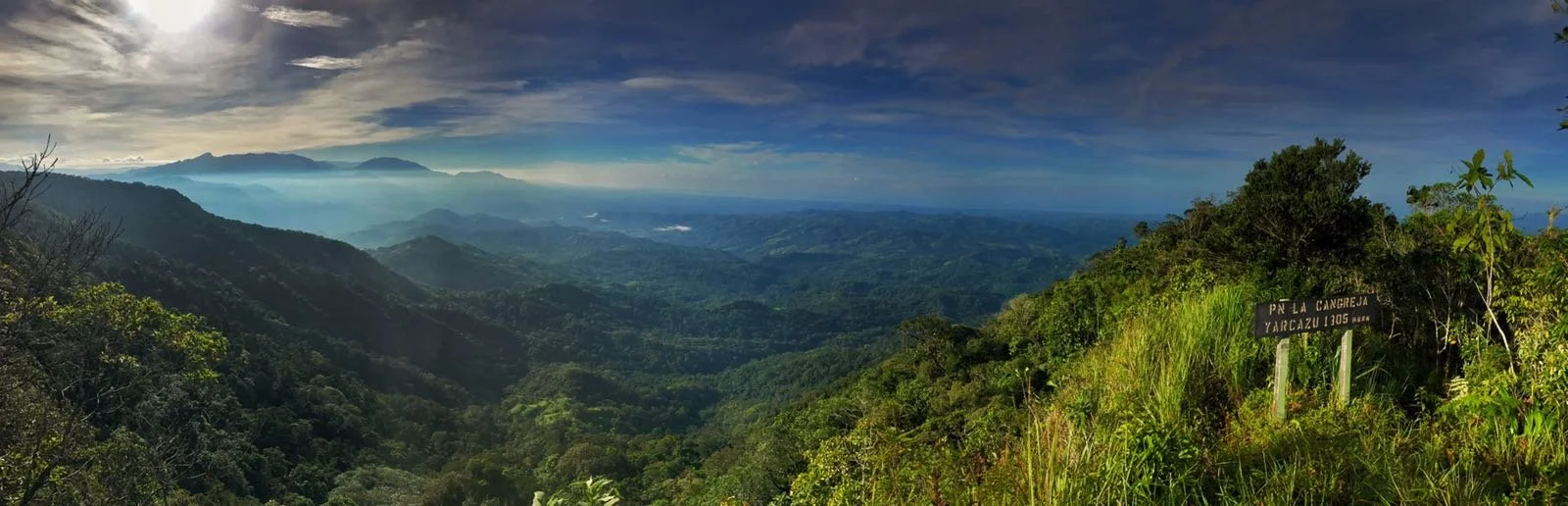
I grew up developing relatively deep roots in my hometown in upstate New York. But as a result of societal pressures, I moved away for college and never went back to my hometown to live full-time. These non-provincial experiences have been fruitful, transformational, and important to me to develop a more well-rounded view of the world. They also helped to nurture a tolerance and understanding for how others live. Nevertheless, they pushed against the societal benefits of growing deeper roots in the towns where we are born. With so many people uprooted, due to climate catastrophe, war, persecution, the desire to see the world or economic pressures, I fear that like a plant ripped up from the ground, this type of restless movement can result in community erosion, family disintegration, and a loss of geographical literacy. There are always tradeoffs, but I think that we should, when appropriate and possible, put more effort into encouraging humans to stay closer to home to do the good work that’s needed in every community around the world. Wealth continues to congregate in the “best” cities, leaving small towns and rural areas bereft of intellectual and physical stamina. I say this having left my home 30 years ago, so admittedly my perspective might come across as “curious.”
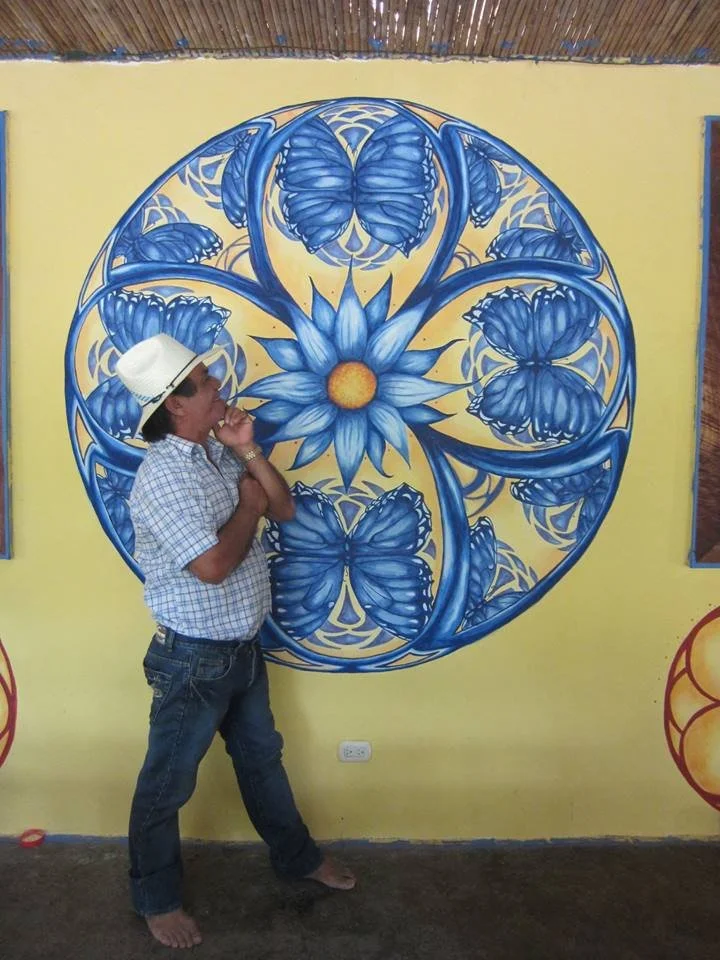
Robin and I started this business in 2000. We moved to rural Costa Rica in 2001 and in 2008 started a family with the arrival of our daughter Sole. Mastatal has been a challenging and amazing place to run an enterprise and raise a little girl. Sole has had what many people would consider a non-traditional upbringing. She grew up without diapers, went to an elementary school with 1 teacher and 10 students, and goes to a high school with 25. She plays unorganized soccer just about everyday and hikes to a nearby waterfall multiple days a week where she jumps off cliffs and catches freshwater shrimp and crabs. She watches out for snakes on her nightly trips home to an earthen house overlooking La Cangreja and has had to survive her early teenage years with horrible internet. She cooks for our entire community and is by far the best baker in town. We are so thankful for the environment that she has spent her first 15 years in, though it has been far from perfect.
Upon our arrival to Mastatal, we were definitive outsiders who had moved from afar into a small, quiet, depopulating village without much happening. There were no phones, terrible road access, and no formal businesses. Our first years here required a lot of energy to begin developing relationships and friendships with the people of our adopted village. It was some of the hardest but most rewarding work that we did and continue to do. To feel at home anywhere requires a certain level of acceptance and connection, and this only comes with intention, compassion, understanding, sharing, and an acceptance of vulnerability. And it usually takes time. It was not an easy or fast path for us, but one that gradually crept into our lives quietly. It led to the rootedness that community strength is built on, and a vested interest in the future of what has become our home.
This lifestyle choice has come with its sacrifices. For me the largest of these has been 2 precious decades geographically distant from the people that I hold nearest and dearest to my heart. It has not been a minor loss. We have missed important family gatherings, weddings, births, deaths and precious time with kin. Our lives are full of compromises, and this choice, although it has brought great joy and happiness, has a sad component that is part of being a human living on this earth at this time. We have to pick our battles, and being able to go through a well-thought out decision making process when contemplating a move like we did is important. I would suggest not running for the hills with each passing doom and gloom story that you hear about on the news. Our problems at home are oftentimes universal, and the battles should sometimes be fought at home, where we can garner the most support, and perhaps have the greatest positive impact. This might seem strange advice from a transplant who has carved out a nice life abroad, but I think that rootedness is an important consideration for many people striving to attain meaning and happiness in their lives.

Rootedness can create compassion and understanding for the place where we are, know, and love. I have seen the benefits firsthand from some of amazing people that were born in Mastatal and continue to call this place home. They anchor the business and environmental communities here. They are smart, savvy, entrepreneurial, caring and vested. They are raising their families here, inheriting their family farms, planting food, and against all odds bringing about the revitalization of a small rural community. They are selling organic chocolate, offering amazing natural history and birding tours, preserving forests, planting trees, and running our local government. And after 22 years I do finally feel rooted here, but it took time, energy and resources that I could’ve also dedicated to the town that gave me so much as a youth, and I think that’s worth looking into a bit deeper for everyone contemplating where to call home.

Post-Rancho Thoughts
If there's something to take away, it is that we need to tap into, develop, and release the inherent potential of every human being to live in ways that make meaningful contributions to the world and society.
By 2023 apprentice, Michelle Häuptli
"Throughout history, the really fundamental changes in society have come not from dictates of governments and the results of battles but through vast numbers of people changing their minds - sometimes by only a little bit... by deliberately changing the internal images of reality, people can change the world." - Willis Harmon
After 12 weeks at the Rancho, evaluation and re-evaluation have become an ever present part in day-to-day living. Pre-Rancho-life in a busy financial town of Switzerland is becoming a fading shade of a time that seems to be years in the past. The days are long but the weeks short and questions about post-Rancho life are stirring in the back of our heads. What happens after we leave this safe spot in the sweet, warm jungle? Where do we go to spread our wings? Where can we go to save the day?
The process of learning and implementation goes beyond the "heroic" and "do-good" models. If there's something to take away, it is that we need to tap into, develop, and release the inherent potential of every human being to live in ways that make meaningful contributions to the world and society.
According to Joseph Campbell, the mythic Hero's journey is always in service to and supported by a community. It is intended to achieve some larger beneficial effect. The hero returns with a treasure that will alter the community's role within its world. Ultimately there is no independent heroic ego, only the collective work of sustaining and evolving life by reshaping between the community and it's larger context.

Being part...

...of the bigger picture
We don't need to be heroes to have an impact on the world. However we must learn how to live our lives and play our roles in ways that are designed to create change. It is a slow, steady, cumulative and powerful process - like water shaping rock.
Lao Tzu wrote: "water is fluid, soft, and yielding. But water will wear away rock, which is rigid and cannot yield. As a rule, whatever is fluid, soft, and yielding will overcome whatever is rigid and hard... A paradox: what is soft is strong."

Leaf cutter ants working away
Any work we are doing can play a critical role within society. Our effects can be direct, through the influence we have on social institutions, or indirect, by preparing others to play their roles. Work is where we put our life energy and we tend to define our work in terms of career. But we have the option instead to think of ourselves as pursuing particular goals in society, goals that are meant to improve and transform the communities and industries we are part of. In the best case scenario we do this by enhancing the ability of living beings to eco-evolve, so that our planet can continue to express its potential for diversity, complexity and creativity. Whatever one believes, it is evident that every one of our critical planetary support systems - oceans, forests, soils, atmosphere, biodiversity etc. - is in decline. But with elegance and power, our human minds can create products of the same evolutionary flow and change as every other living system. Nature is also our nature.
At the Rancho we learn, live and teach these roles by following Permaculture principles and ethics. That can either be in consciously designing landscapes by respecting natural waterflows, rebuilding community structures together by using natural and local building materials or inviting the young generation to partake in an agroforestry class and simply interact by sharing each others visions.
The concept of being a part....

...of the whole!

In the end, we will all have to develop the capacity to hold the complexity and the not-knowing and the in-between as we move from the old ways to the even older regenerative ways that we have forgotten.
To close I would like to reference two books that assisted me to verbalize these ideas: "The regenerative life" by Carol Sandford and "Regenerative Development and Design" by Pamela Mang, Ben Haggard and Regenesis.
Check Out These Past Blog Articles
Enriching Community Soil: 5 Simple Strategies That Support Sustainable Relationships

Unexpected Aspects of Permacultural Communal Living
A grand year is made up of many aspects, mundane and beautiful. Things expected and shocking are sure to come. It is most of what I (we!) can do to approach it with grace, and let come what may.
By 2023 apprentice
Community living has been a positive experience for me so far. I have felt its benefits in my opportunities for quiet time away, knowing daily tasks can still be completed while individuals have time for rest. I have felt its benefits during our largest social nights, when incredible food, conversation, games, music, and travellers can all be found under the same roof. During times in between, I am discovering new benefits all the time; some are to be expected when living around others, and others come out of the blue! Let's look.

My fellow apprentices getting ready to learn about plastering!
To be clear, life as an apprentice at Rancho Mastatal is my first experience in community living beyond living in a private home within a neighborhood, or in an apartment with a few others. The former has not felt like existence as a true community to me - I led a private life among others who did the same. We interacted in a friendly manner, but beyond my childhood friendships I rarely felt a deep involvement in my neighbors' lives. The latter was more communal: shared facilities, responsibilities of cleaning and organization, and public space meant a deeper level of involvement in my roommates' lives. Being introduced to a preexisting community as a new contributing member was a shock, but thus far has been a positive one.

The Hankey House, where the apprentices live, viewed from the Goat Barn
One of the first aspects of community living that I had to adapt to was a new standard of privacy: The seven of us share a toilet and two showers. The Hankey House houses five apprentices with hardly a single solid wall in the building, and most public spaces in the Ranch are wide open to the jungle air and to passing observers. In fact, our group's level of privacy is apparently less than that of previous apprentice groups: a massive cluster of bamboo and surrounding vegetation between our two livings spaces was felled at the end of 2022, providing a very clear line of sight between the main area of the Hankey House and the porch of the Goat Barn. My partner and I occupy the Barn while the five others each have space in the Hankey -- if any of the seven of us spend time in our respective "living rooms," we are clearly visible to each other. In addition, some unfortunate hedge maintanance next to the Barn has left the bathroom and showers almost entirely visible from our porch (it seemed best not to show this in photographic form...) -- thus, we find opportunities to respect each others' privacy frequently!

Viewed from the top floor of the Hankey, the Goat Barn (left) and showers and bathroom (right). Also note the bright green bush in the bottom-center, which is what remains of the felled bamboo cluster from last year!
It would be easy to critique this living situation - its drawbacks can be detrimental if the users of the facilities are made uncomfortable. However, we are here for the year! We are seven new people in a permacultural education facility that hosts dozens at a time. We have been welcomed with open arms by the team here, fed and housed and accomodated for: how could we complain in a space of such blessings? We avert our gaze from showering neighbors, and chuckle together later. Changing clothes on your porch is a risk, but one with no lasting consequences. If a mutually friendly space can be created, the lack of immediate privacy can be much more of a goof than a discomfort.

The inside of the Hankey House! There are five bedrooms total, and you can *kind of* see two from here. A very beautiful communal space, built with as many aspects of permaculture as possible in mind!
Another aspect of a permacultural lifestyle which I hadn't a clear idea of was the allottment of our daily tasks; of course, coming in we all knew that there would be a plethora of work to go around for those living on a Ranch. I suppose what I didn't have a clear idea of was how organized it would be, and so apparently evenly distributed. The apprentices are allotted "Community Contribution skills," or CC skills, and are designed to switch every six weeks. We focus on these every morning, aiming to have finished our daily tasks by 7:15, granting us a little spare time before our first work party of the day. With this system seven individual tasks, each with its own dynamic system and set of moving parts, are completed every day in a short amount of time -- if one person or a duo were made to do all of these, it would take all morning or longer! The efficiency of this system speaks a lot to the amount of time the Ranch has had to design and refine it. A constant process of design, analysis, and redesign is integral to the permacultural approach to life! Just by the nature of the design and implementation process, it wouldn't be a shock to see this system change within the course of this year, even with the time it has had beforehand to establish itself.

The methane bio-digester, where manure is converted to rich compost and cooking gas

A pathway surrounded by greens used in our salads every day!
To be true we have only been here a short amount of time -- much more time than we have yet spent still awaits us. It is an exciting prospect. Many people will come and go, and here we will be! Helping each other out when we can, switching chores, trading shifts in the kitchen. A grand year is made up of many aspects, mundane and beautiful. Things expected and shocking are sure to come. It is most of what I (we!) can do to approach it with grace, and let come what may. The same can be said for all folk; you don't have to be living on a Ranch to let the principles of a collaborative community enrich you. Enjoy yourself! Help your neighbor plant, or rake, or daydream! Community binds us, and the pieces of it which you don't expect may very well become the most dear to you.

Beautiful space in between facilities used by the community every day. The building pictured is the Food Smithy, where harvested goods go for processing and loads of fermentation occurs. Behind me is a permaculture-design herb and veggie garden.
Read these past blogs about community living
How to Run a Permaculture Internship
Living Without Walls- A Year of Jungle Community Living
Enriching Community Soil: 5 Simple Strategies That Support Sustainable Relationships

The Ecstasy of Cheese: A Meditation on Our Conceptions of Value
After only a few months living at the Ranch, I have observed my experience of eating good cheese transform from mundane to something approaching ecstasy. This has lead me to reflect on our personal and collective conceptions of value.
By 2023 apprentice, Sedona Lewis
One evening the apprentices were enjoying dinner when Sam, a core team member, approached us with a gift. From our reaction, a bystander might have assumed he unveiled something approximating a winning lottery ticket. However our hoots and hollars were in response to, simply, cheese.
After only a few months living at the Ranch, I have observed my experience of eating good cheese transform from mundane to something approaching ecstasy. This has lead me to reflect on our personal and collective conceptions of value.
Apprentices excited about cheese!
A Permaculture Diet
As a society we have grown accustomed to waltzing into a grocery store and purchasing virtually any vegetable, fruit, grain, nut, or seed we desire. Globalization has artificially eliminated scarcity and seasonality from our lives; we are living in an age of unprecedented abundance.

Seasonal fruits off the farm
In Mastatal, there is no grocery store. Aside from the local bar and the Soda, a small restaurant, the closest store is forty minutes by car. Despite our isolation, the Ranch is a place of remarkable abundance. However different from the globalized, western sort of 'abundance' referenced earlier.
We are lucky to operate in a part of the world which provides a prolific variety of edible and otherwise useful plants. Things we can't produce ourselves are mostly purchased from our neighbors, such as milk, eggs, and pork. Nearly all other vegetables, fruits, and other food items sourced regionally. Thanks to the hard work of our meal coordinators (mostly Robin), over 80% of the calories we consume are sourced within fifty miles of the Ranch.
We maintain a sense of place within our diets; during meal times we are engaging with our surroundings. No longer are we enjoying cheese from France, salami from Italy, and wine from Spain in the same meal. We're embracing the here through our food.
In keeping with the ethics of Permaculture, this means we are dependent on and invested in the health of our local and regional communities. The variation in our meals comes with the seasons, and our health is linked to that of our environment. I have observed that this way of interacting with food has changed the way I think about, and value, my food.

Sedona with her morning harvest of salad greens
Our Conceptions of Value
Olive oil, butter, cheese, meat, bread, and nuts are examples of foods that many of us used to consume almost daily. Delicious, yes, but not extraordinary, and only worth what the price tag says at the store. Now, several months into the apprenticeship, items like these have become precious.
During my days splitting bamboo, sifting clay, and working in the orchards, I've had the opportunity to ponder the following questions. I invite you to consider them for yourself before reading my list of ideas.
What makes something valuable?
Perhaps...
An item's relative availability
The effort required to acquire the item
The relative necessity (a bowl of rice when you've just eaten a meal and a bowl of rice when you haven't eaten for 2 days may as well be two completely different items)
Personal preferences/tastes
The collective value structure and social narrative associated with that item
The experiential and monetary value of a food item can be somewhat arbitrary...
Of course it's important to note and remember that our species evolved under conditions in which sufficient nutrition was not the norm. It makes sense why nutrient dense foods such as cheese, meat, and honey were and are sought after and treasured.
But still, we invest a lot of resources shipping things like salad greens, spices, and liquors around the world. Is the Italian wine really that much better? Couldn't the same caloric and satisfactory needs be met with items produced regionally? It seems that there is something deeper influencing our values surrounding food.
Our special occasion pizza party
what do we gain by attaching arbitrary value to specific foods?
Special foods provide a sense of occasion and celebration
These occasions provide a sense of anticipation, which alters our experience
Special foods, and the events formed around them, provide space for community to be built
As food is a human universal, sharing food is a way to bridge and build relationships
A Note on Sharing
One might assume that precious food items at the Ranch would be hoarded; kept in decoy packaging in the back of the refrigerator with the intention of maximal solitary indulgence. However, as we have adjusted to our new environment, I have observed something entirely different. The reflexive action when in possession of said precious items has been radical generosity. Perhaps it is because a precedent of sharing and reciprocity has been set for us by the culture here at the Ranch. However, it genuinely seems like reveling in the remarkable depth of blue cheese is just more enjoyable when done in the company of others.

Enjoying sharing some treats with the community
The utility of sharing is easy to see when living in community. When taken out of the individualist paradigm operating in most of the western world, reciprocity is an undeniably advantageous practice. Given the unpredictable nature of life, I wouldn't be surprised if appropriate generosity has been selected for throughout our evolutionary history. No doubt those who refuse to share with their community when needed would feel the consequences of their actions later on.
Looking Ahead
So, I invite you to consider how living in this age of convenience and instant gratification affects your sense of value.
How might your experience of peaches change if you only ate them when they were in season? What could be gained by manufacturing a bit of scarcity, creating some anticipation, in your life? How can you apply these principles, rooted in Permaculture, to repair your communities and regenerate our natural environment?
Just food for thought - because now we only have cake on birthdays, and I think it tastes sweeter.
Chocolate bon bons, made from locally grown cacao
Categories
Topics
- Agriculture 6
- Agroforestry 21
- Animals 2
- Apprenticeship 19
- Appropriate Technology 6
- Backpacking 1
- Bananas 1
- Basic Pantry 4
- Biochar 1
- Books 3
- Build Your Own Home 1
- Central America 5
- Chiles 1
- Cinnamon 1
- Clay Carving 1
- Climate 2
- Climate Change 1
- Cob oven 1
- Communication 5
- Community 24
- Compost 2
- Composting Toilets 2
- Condiments 1
- Conservation 2
- Cooking 4
- Costa Rica 18
- Design 10
- Earthen Construction 10
- Eat Local 2
- Ecohome 1
- Education 9
- Environment 3
- Ethics 4
- Farm to Table 12
- Fasting 1
- Fermentation 14
- Food 22
- Food Choices 8
- Food Forest 8
- Food Processing 15
- Food Systems 12
- Gap Year 1
- Gardening 5
- Ginger Beer 1
- Harvest 2
- Health 12
- Healthy living 5
- Homemade 2
- Homestead 8
- Internet 2