

BLOG
Stories, articles, and updates from the Ranch community.
Rancho Mastatal - A Paradigm Shifter
To be able to initiate changes that may someday become radically transformative it needs places starting with small, reformist changes. Rancho Mastatal has proven itself over more than 20 years to be one of those places.
By 2023 Apprentice, Sebastian Wittwer
The current paradigm
PROGRESS, DEVELOPMENT, FREE TRADE. The western world runs on an inexplorable logic, replacing people with machines, creating local interdependences with global markets and excluding ancient knowledge preserved by native tribes. With an ultimate sense of righteousness, this industrial model is being spread around the globe, reducing the worlds diversity to a monoculture in a literal sense. This monoculture is only possible since freedom based on individualism is pushed as one of the “culture’s” main achievements. This freedom means also freedom from traditional community values which can lead to a loss of all sense of importance. Consumerism doesn’t express freedom, but slavery to purely material values. Everyone living in the same kind of buildings, wearing the same kind of clothes, working for the same reasons is not individuality but rather the homogenization of all people. True individuality depends on community. We have been taught to live in a culture of alienation, separation, and blocked initiatives rather than in practices of commitment. Freedom from responsibility for others is equally a loss of assurance that others are ready to be supportive of. To be able to obtain a rich diversity in culture around the globe and on the search for a renewed sense of community, it seems necessary to develop concepts of self that are very different from that with which we have been indoctrinated. Therefore we have to rethink the way we want to live in the modern world.
The significance of rooted teachers

Emme (Apprentice 2023) leading the daily meeting – the communal way of communication
Rancho Mastatal is living and teaching prime examples of what it actually means to loosen up these seemingly “set in stone” structures by returning to a communal oriented life.
Against sacrificing local production, local economic stability and communal security to transient efficiencies and the quick profits of distant businessmen/women through electronic communication and teaching, Rancho Mastatal provides educators willing to live where they work and to work where they live. A class of educators that cultivate a sense of place and that is therefore able to distinguish between local and universal, particular and general, concrete and abstract. Not only does this push their educational standard over most western universities’, it also helps building a strong local community by including native tribes and their knowledge, by creating local wealth and social security, and by emphasizing real and honest relationships towards everyone around.

Core team member Ali, hands on teaching clay plastering – one of the many skills she owns and can give instant feedback on
The importance of building onto the local economy
Through an orientation of their agriculture towards local needs, local possibilities, and local limits, Rancho Mastatal also supports the health of the land, the people, and their democratic liberties.
By switching their priority from the global to the local economy, they reduce the outflow of capital to distant corporations and capital then circulates within the local economy. Instead of trying to live as self-sufficient as possible, a sense of relying on their community has proven itself as the way to be. Instead of isolation, incorporation of the local community has proven itself as more community friendly, more efficient and a more sustainable way to be. This expresses itself especially through the food they eat (mostly locally grown rice, beans, eggs, veggies like yuca and malanga), which goes against the culture of food from where the majority of the core team comes from.

Typical brunch meal: Gallo Pinto, fried eggs, malanga patties, leftover frittata, fruit, salad, kimchi, salad dressing – mostly locally sourced, in parts even self-grown
By building this local food economy (which is at this point as much local as possible, though not free of regional, national and international products), one might even call it a local foodshed as they add a lot of value to the community. First it overall improves the quality of the food itself. Second they increase consumer influence over production which makes each and every consumer a participatory member in their own food economy and helps to ensure a sustainable dependable supply of food at the same time. Farming practices are immensely improved and last but not least the costs associated with long supply chains (locking at packaging, transportation and advertising) are reduced, reducing the cost of food in general while increasing income to local growers, creating a positive feedback loop within their community.
A constant moral compass
Through their degree of popularity, Rancho Mastatal could totally start emphasizing monetary profits and capitalize of the place a lot more, which would most probably induce a decrease in their ability to stick to the permaculture ethics (people care, earth care, fair share, transition). Against this common western path, this place and its people stay true to their moral compass even though they wouldn’t have to. Instead of going ever bigger and bigger while trying to maximize profits, they are using their resources to give back to their community in any and every way possible.
Courses held in Spanish that only cover the costs during its time or simply sending people over to the local soda to get extra/different food are minor examples of what is described above as measures of their established paradigm against the monocultural life of the west.
To be able to initiate changes that may someday become radically transformative it needs places starting with small, reformist changes. Rancho Mastatal has proven itself over more than 20 years to be one of those places.

Locally produced chocolate by La Iguana Chocolate sold by Juan Luis - Good business during the dry season with all the guests, course attendees and friends visiting the Ranch and therefore one way of bringing more capital into the community as a whole

Foundations for Success: 10 Considerations to Create a Healthy Project
After more than 20 years, we have been able to identify some trends that have led to our survival as a business and a community. The following advice is appropriate, and perhaps some of it even necessary, if you expect to live successfully in a communal work and living environment doing land-based work.
By Core Team Member Tim O’Hara
After more than 20 years, we have been able to identify some trends that have led to our survival as a business and a community. The following advice is appropriate, and perhaps some of it even necessary, if you expect to live successfully in a communal work and living environment doing land-based work.

Students in our annual Permaculture Design Course
Communal Continuity
It’s imperative to assemble a group of individuals that you can depend on, year after year. If the only people that are visiting your project are there for shorter or medium length stays, you will never feel as if you have a community to lean on during the harder stretches of running a project of this nature. Create realistic and concise agreements with one another and develop incentives that make everyone feel well taken care of.

Privacy
We learned the hard way that having your own private space is critical for long-term happiness. We decided to focus on building before planting in our early years. That has meant that our agroforestry spaces are a bit behind where you’d expect after 20 years of working in those spaces. But without privacy, it’s impossible to keep people around who are doing the important work in the orchards and other spaces. Create private spaces for everyone, with a focus on creating lovely, comfortable, healthy homes for your core team.
Collective Decision Making
Micromanaging is a recipe for burnout. Don’t fall into the trap. Develop trust with your partners and allow each leader to make decisions in their realm up to a certain value. Big decisions, that affect everyone, should be discussed by your entire team, but small decisions, like whether to buy 5 or 10 avocado trees, should be left to those managing the orchard spaces.
Balance and Rest
It’s imperative to figure this out before burning out. Burnout can be permanent, leading to the abandonment of your passions. Build into your day-to-day lives the time to run, breathe, nap, walk, draw, meditate and think. The work will never be done, so don’t try to do it all each day. It will be there waiting for you in the morning after a great night’s rest.

A Solid, Well-Taken Care of & Committed Core Team
We’ve got an amazing core team. But it took us longer than it should have to realize the importance of building a strong team at the center of our project. If we expect community members to stay committed, they need to have their needs met. And everyone has a unique set of needs. Create a compensation agreement that makes everyone feel valued.

Community Connection
Be an active member in your town. Demonstrate, over and over again, that your project exists to benefit everyone in your community, especially those most in need. Join your local woman’s group, offer free yoga classes once a week, develop a kids soccer camp, or create a language exchange.
Fair Share
Share what you have. It’s your easiest path to acceptance though far from the easiest practice to bring to fruition. It has taken a lot of time, energy and sacrifice to create Rancho Mastatal, and sometimes our knee-jerk reaction to “spreading the wealth” is instead to move to protect what we’ve created in the interest of stability and to prepare for future unforeseen issues. But true stability comes with sharing.

Communal Meals
This may be the hardest bit of advice to embrace for some. Sharing a meal takes more social energy, but weighed against the time you save on cleaning and cooking, it’s worth it. Communal meals encourage group debate, laughter, learning and the development of a strong social fabric. Humans have tended towards eating in front of screens or on the run. These trends lead to poor eating habits and encourage humans to disconnect from one another. To eat well today means a monumental and coordinated effort growing, processing and cooking food. Celebrate this activity each and every day and you will be rewarded in ways unexpected.
Make Time to Dream
We “talk shop” a lot around here. We love what we do and enjoy talking about what we’ve created and how we can improve it. It’s important for us to create spaces that allow for dreaming and scheming. Having the space to “zoom out” and move for a time away from the day-to-day allows for creative brainstorming that can lead to breakthroughs and new ideas that might otherwise never come to the surface. Dare to dream, and dream to create your ideal version of life.

Don’t Get in Over Your Head
This is much easier said than done. When you commit to a land based project, your to-do list immediately seems endless. There’s never enough time in the day to do everything that you need. Start small and work towards simple solutions whenever possible. Build and perfect one system at a time, as much as you can do that. Don’t add chickens, goats and fish in the same year but rather add one species and then see how that changes your life before adding another. We made the mistake of throwing too much at the wall early on in our development and when not everything stuck, it felt overwhelming picking up the pieces of many systems simultaneously.
We try to share our failures and successes frequently so that others can get to where we did in less time and with less effort. Please don’t hesitate to contact us with questions, comments, or suggestions and all the best in your journeys.
Check Out These Past Blogs About Permaculture and Community
How to Run a Permaculture Internship
Enriching Community Soil: 5 Simple Strategies That Support Sustainable Relationships
Speaking from the Heart
What does it mean to "Speak from the Heart"?
It sounds very easy, but it's not so easy to do.
The main difficulty in interpersonal communication is due to our natural physiological tendency to look first outward and not inward.
Almost 80% of the sensory information that comes to our brain comes from the eyes. It's not a mystery why we tend to blame the other for our own misery.
by Ariel Mayrose
What does it mean to "Speak from the Heart"?
It sounds very easy, but it's not so easy to do.
The main difficulty in interpersonal communication is due to our natural physiological tendency to look first outward and not inward.

Almost 80% of the sensory information that comes to our brain comes from the eyes. It's not a mystery why we tend to blame the other for our own misery. Our eyes, that look outwards, see the other as responsible for our personal difficulties. When our desires and needs are not met, we tend to judge the other, criticize and blame. This criticism causes the other to get offended, and to get caught in "fight, flight or freeze" patterns. Tragically, this creates a negative cycle that makes it difficult for us to fulfill our needs. Additionally, as a society, our current habitual way of thinking of right-wrong, should-shouldn't, good-evil, makes it even harder for us to behave in a different way.
The practice of Non-violent communication (NVC), developed by Dr. Marshal Rosenberg in the 1960's, succeeds in addressing the difficulty most of us have to understand and communicate with each other in a constructive way.

In NVC we practice listening to ourselves - which, as you may know, is easier said than done. This is the art of listening to our deepest fears and emotional challenges, that we've been trying to hide so we won't get hurt. This why listening to our feelings can be quite challenging, often leading us to neglect our feelings. But when we lose touch with our feelings, we lose touch with our life-censors - sometimes referred to as our "gut-feelings".
The good news is that even if we've lost touch with our censors, they are always there working hard to remind us and bring us back.
The bad news is that our habitual way of being, as a society, is to constantly be looking outside ourselves for someone to blame. This applies to virtually all of our collective structures and institutions - court systems, schools, and of course mainstream media.
We've been raised in this world and since we have been programmed to behave this way, it's quite challenging to change this negative cycle. Especially when people keep on blaming us. Is it any wonder that our hearts then shut down, preventing us from truly speaking from the heart?

The negative cycle can be described like this:
People are blaming us – we got hurt – the heart shuts down - we tend to forget our feelings – we look outside and not inside – we blame the other – people blame us.
The way to break this cycle is to slow down and remember, especially when we're hurt, that we want to act instead of continuing to re-act our past.
When we remember to slow down and look inside, the transformation begins.
We can get in touch with our feelings, our life-censors.
When we look at how we feel, we reconnect with our authentic needs, taking our attention away from blame and judgment.
The heart of the methodology of nonviolent communication, as Marshal Rosenberg says, is: "Everything we do, we do to meet a Need". When I can see my own actions or the actions of others in a context of human needs, I experience more understanding, connection, compassion and harmony.

As long as I choose to think about needs, the more likely I am to see and understand the other and myself.
When I understand myself, and get in touch with my real needs, then I am able to imagine ways to fulfill those needs. When I follow that path, of understanding my needs, trying to accomplish my needs, in a way that will be aligned with other people's needs – I can live a sustainable life of ease, joy and harmony.
At "Speaking from the Heart" course-retreat you will:
• Shift the focus from the other to yourself, becoming more familiar with tuning in to your feelings and needs without "involving" the other. By doing this, the automatic, habitual criticism will be replaced with understanding and empathy to both yourself and the other.
• Learn how to communicate your feelings and needs to the other, to fulfill your needs in effective, easy and joyful ways.
"Speaking from the Heart" provides tools for making a deep connection and compassion in your day-to-day life.
It is highly recommended for individuals and couples seeking better ways of understanding and communicating with each other, and is vital for those living in intentional communities who are often saddled with trying to solve conflicts in a peaceful way.
What will you get from this retreat?
• Connection to yourself and an understanding what underlies your behavior.
• Liberation from restraints and barriers that prevent you from realizing yourself.
• A shift away from automatic actions (re-actions) that are based on fear and anxiety into conscious and beneficial behavior.
• Clarity about your needs and how to fulfill them.
• Tools for effective communication.
• Noticeable improvement in the quality of your interpersonal relationships.
Our NVC work will be supported each day with the energetic practice of Qigong - to ground, center and connect ourselves with ourselves and our environment. The Qigong and meditations practices will also be offered to enable us to focus on effortless-effort, further aligning us with NVC's concept of getting rid of our habitual "should-shouldn't" thoughts.
Doing these body-practices daily in the routine of the course will keep your awareness within and connect you to the power of love, which is the highest form of energy. This will strengthen your ability to be compassionate and loving toward yourself and others as you learn the way of Nonviolent-communication, enabling you to find your way back to your truth and finally to Speak from the Heart.
Homemade Ketchup Recipe
Ketchup over the years has been made in a plethora of different ways. The name originally comes from the Hokkien Chinese word ke-tsiap, meaning fermented fish sauce, and in Europe, the sauce has been recreated with mushrooms, walnuts, oysters, anchovies, and more.
By 2023 apprentice Emme Nederbrock
Ketchup over the years has been made in a plethora of different ways. The name originally comes from the Hokkien Chinese word ke-tsiap, meaning fermented fish sauce, and in Europe, the sauce has been recreated with mushrooms, walnuts, oysters, anchovies, and more. The first recipe that involved tomatoes was in 1812, and in 1876, the American Henry J. Heinz created his variation of ketchup. Today, about 97% of American households have a bottle of ketchup! Maybe the traditional Heinz ketchup isn't desirable to you, or doesn't taste good, try this fermented ketchup recipe made right here at Rancho Mastatal! Lots of the ingredients included in the recipe when it comes to spices and sweeteners can be altered due to desired taste, so get creative! This recipe is interpreted from the book “The Farmhouse Culture Guide to Fermenting” by Kathryn Lucas and Shane Peterson. We recommend checking out that book, learning from it, and trying out all their fun, sustainable recipes.
Before starting, there is an importance of making sure you are working in a clean environment. We are relying on natural bacterias to do their work and make a delicious ketchup, so keeping other random, possibly bad bacterias out of the mixture is key. Wash your hands consistently, wash all your produce, and make sure all vessels used for the fermentation have been disinfected properly.
Equipment Needed:
Food processor or blender
Kitchen scale
Pan for sautéing
Fermenting jar (for this recipe are using a 2 liter jar)
A stopper and weight for inside the jar
Pot for cooking down recipe after fermentation
Ingredients:
MAKES 2 LITERS (about 1/2 gallon or 2 quarts) will yield around 1 - 1.5kg of finished ketchup after boiling down
2 kg tomatoes
1 onion
2-4 cm knob of ginger
5 cloves of garlic
Salt (3% of total weight of ingredients above)
Brine (recommended but not a necessary factor)
Sugar (10% of total weight AFTER fermentation, about 200g)
1 Tbsp of cornstarch
Spices to your liking (mustard powder, pepper, smoked paprika, chili powder, etc)
Instructions:
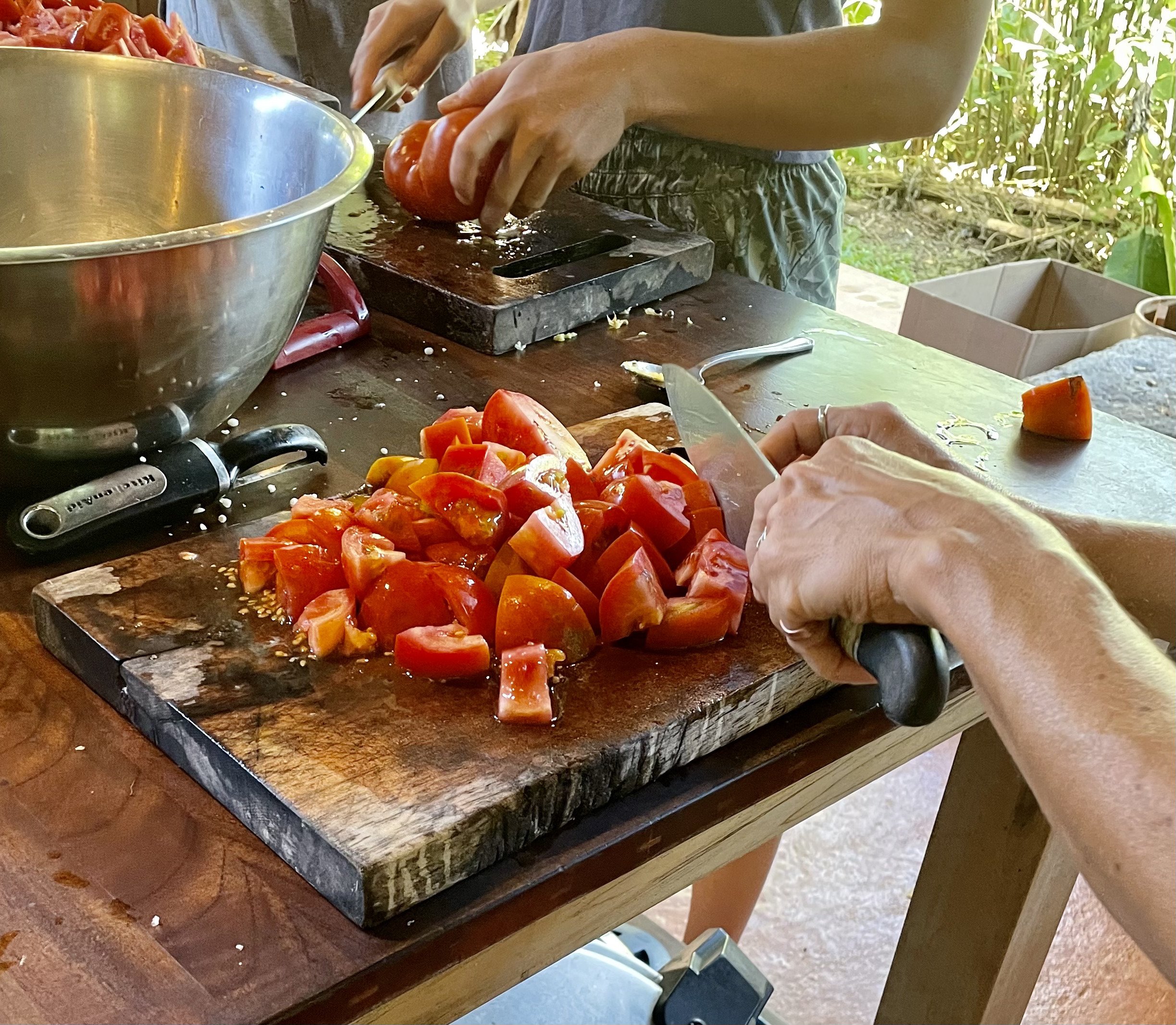
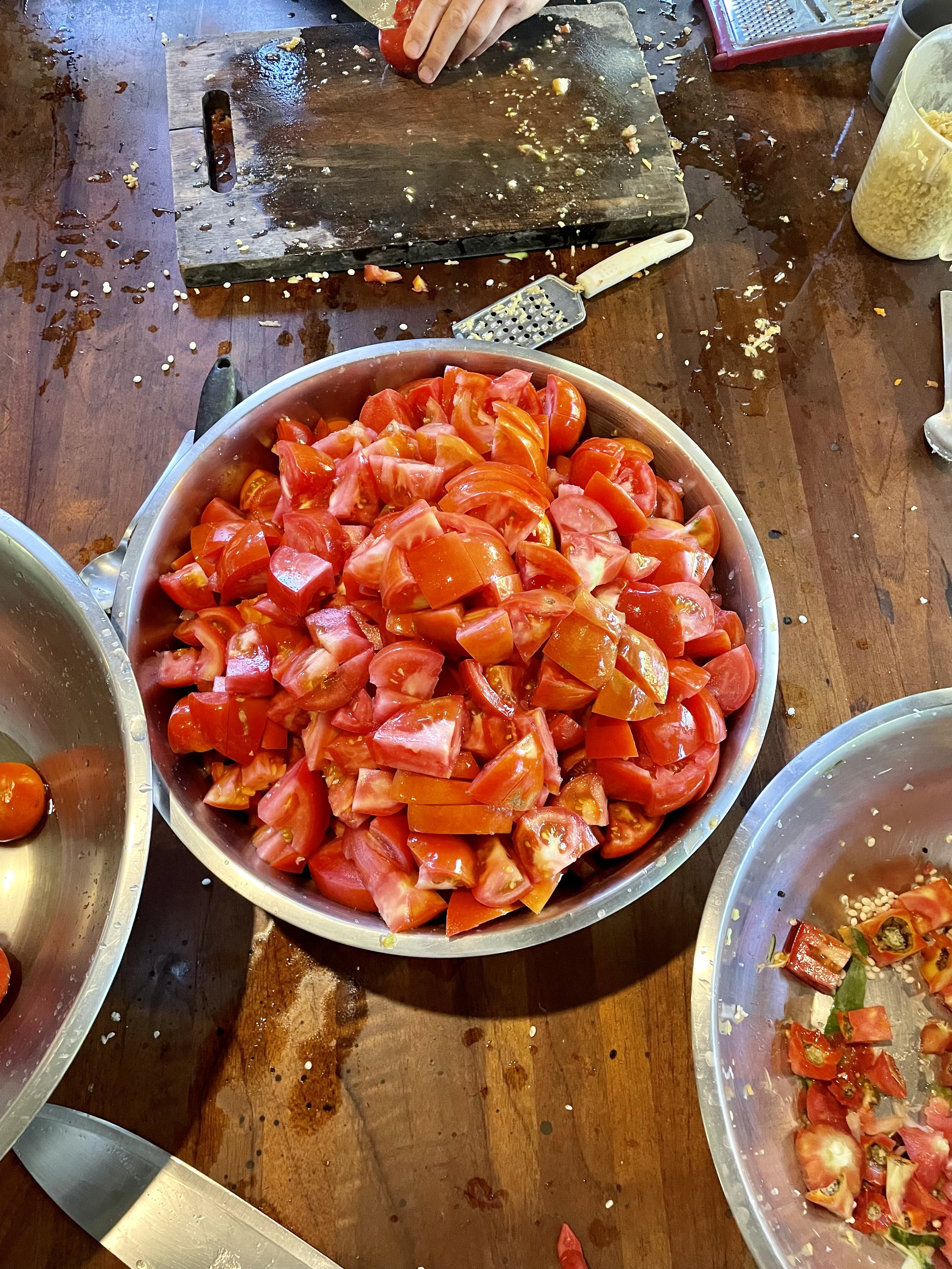
After washing, cut up all tomatoes and remove stems. These tomatoes will be processed in either a food processor or blender so size isn’t too important.
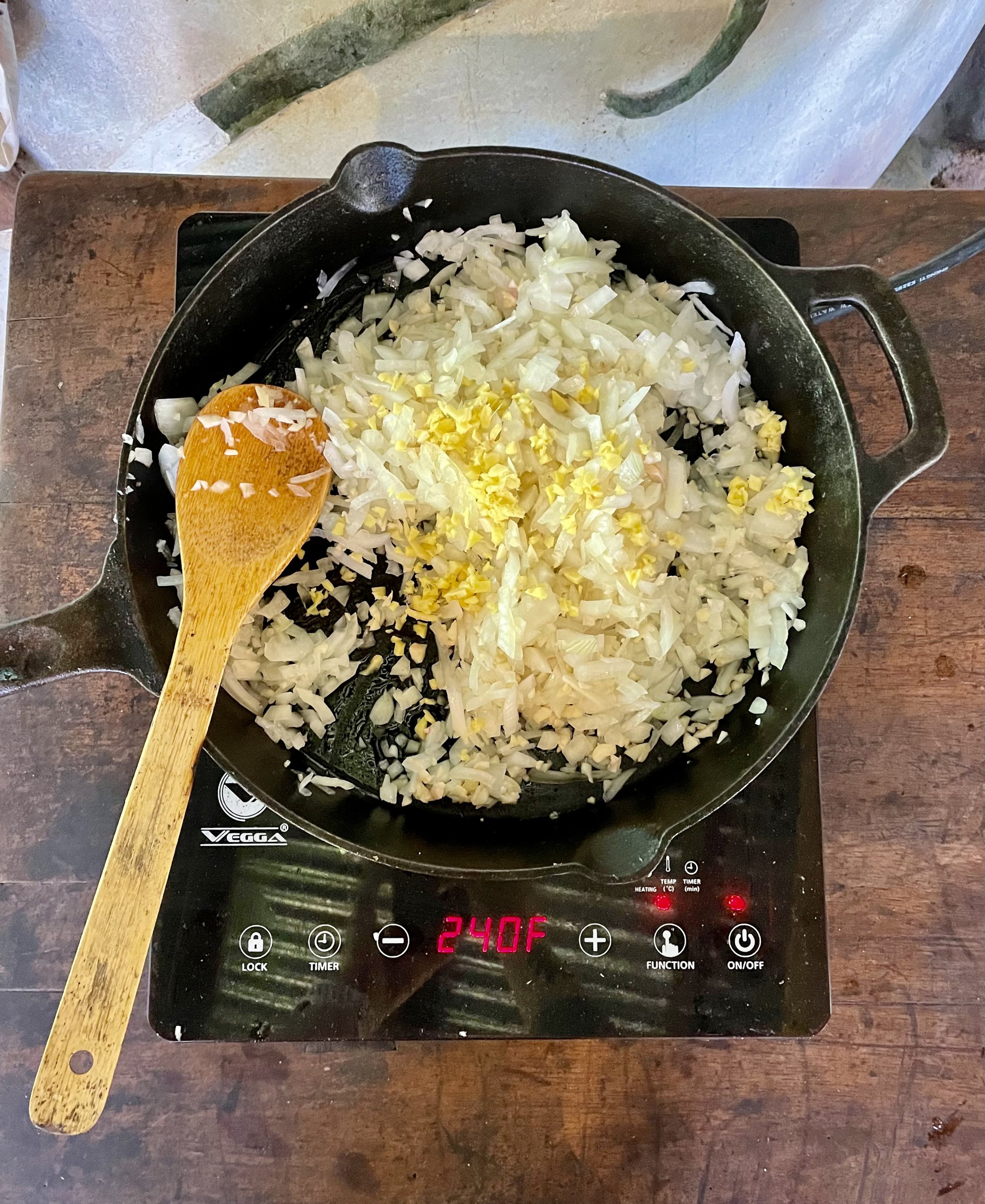
Wash and dice your onion, garlic cloves, and ginger. Add these 3 ingredients to a pan with a little bit of oil and sauté.
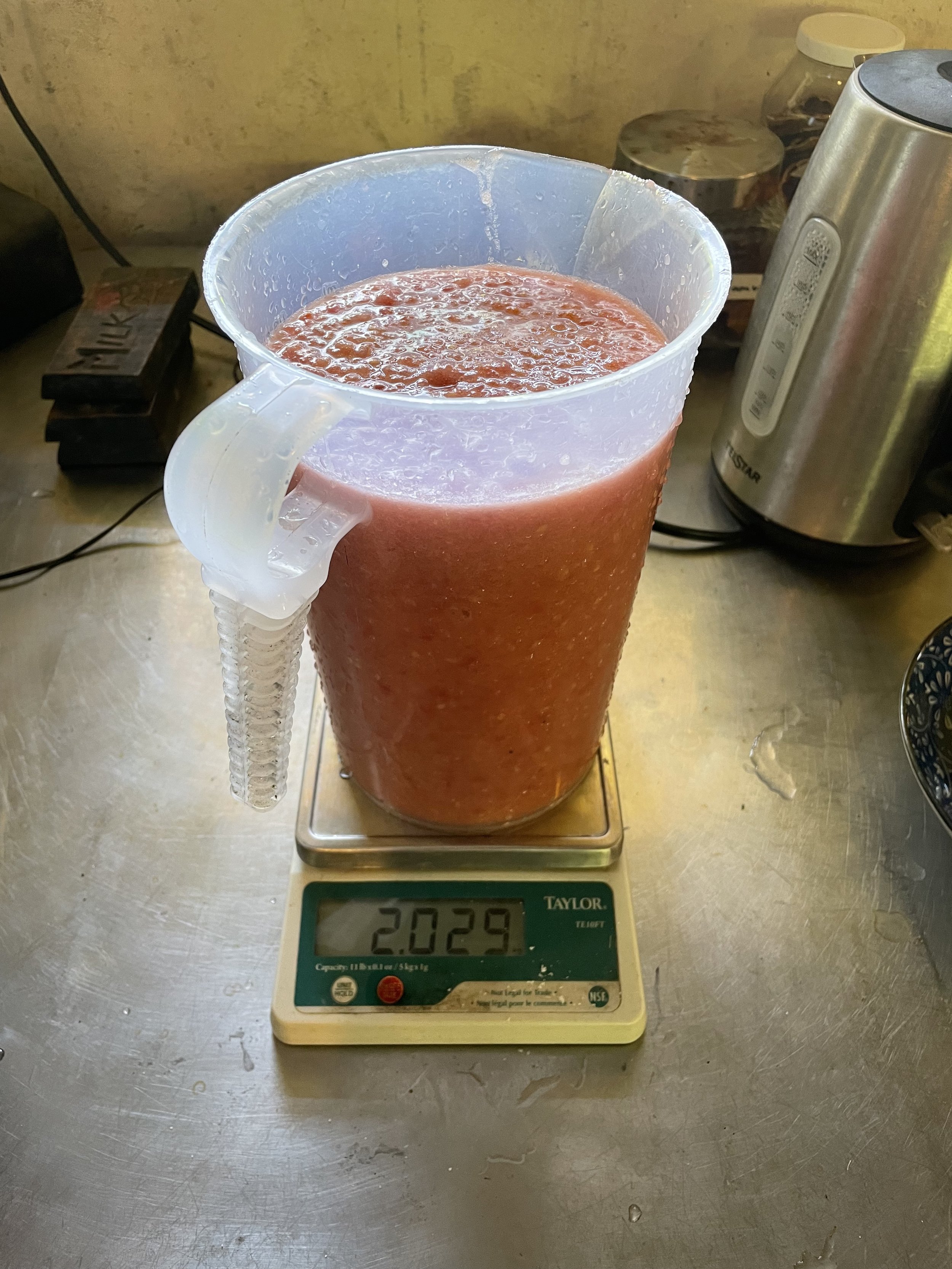
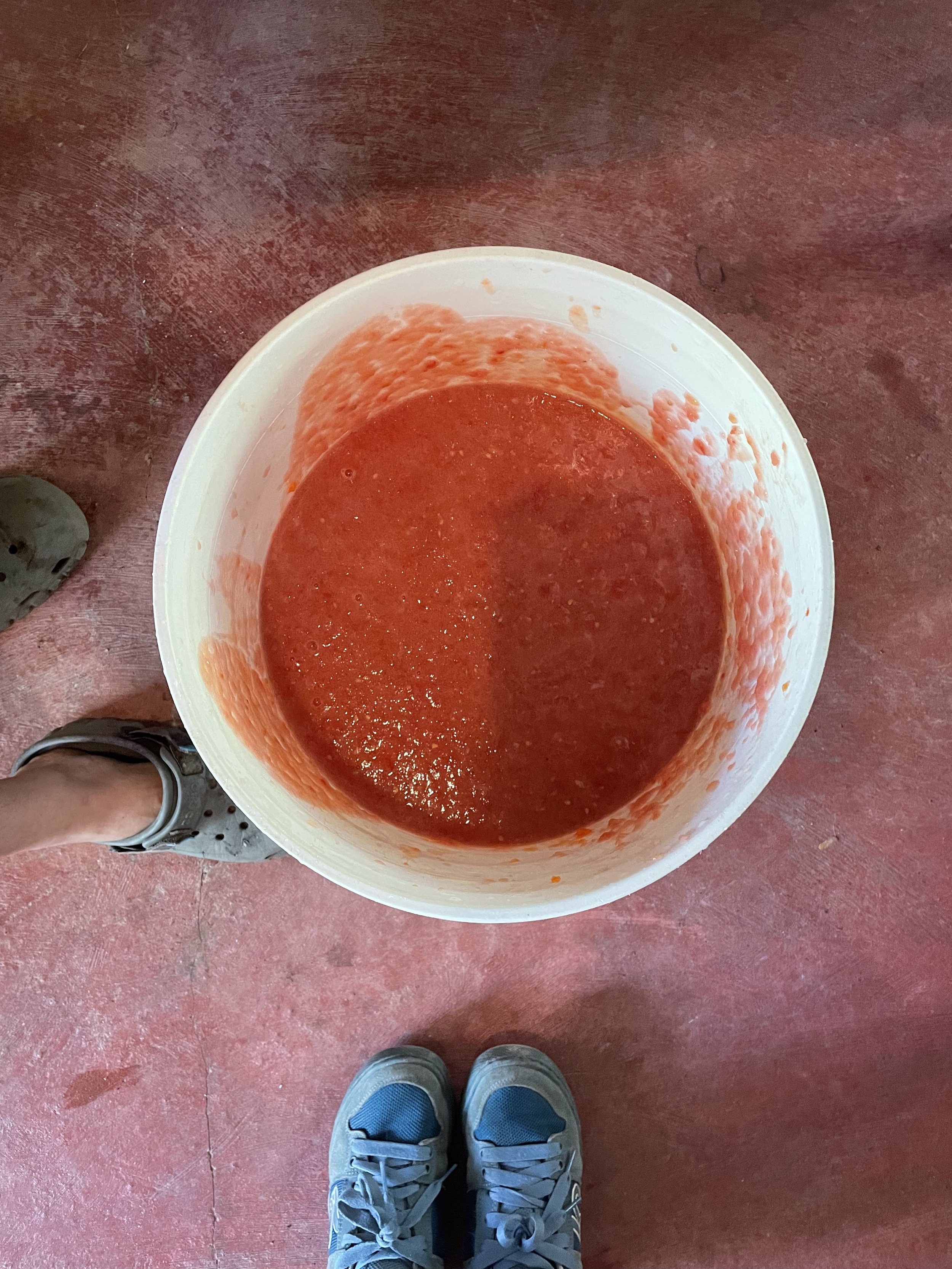
Combine your sautéed mixture and your pureed tomatoes and measure weight. Don’t forget to tare your scale with your glass.
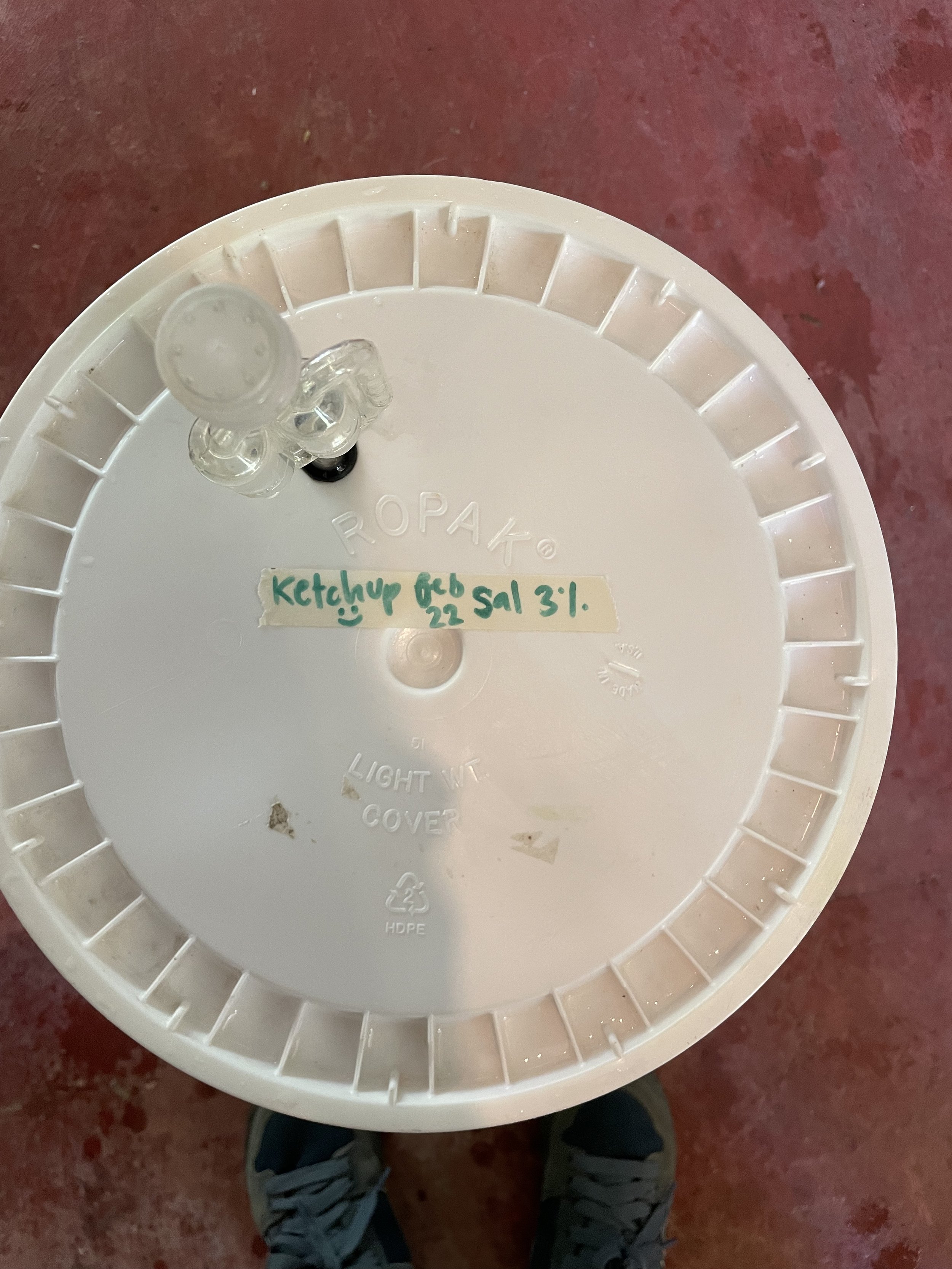
Calculate 3% of weight in grams and add that salt in grams. Don’t lose this number! You will need it again after fermenting to calculate how much sugar to add.
Thoroughly combine the salt into mixture and place into the container that will be used for the fermenting! Make sure the sides of the container are clean after adding mixture.
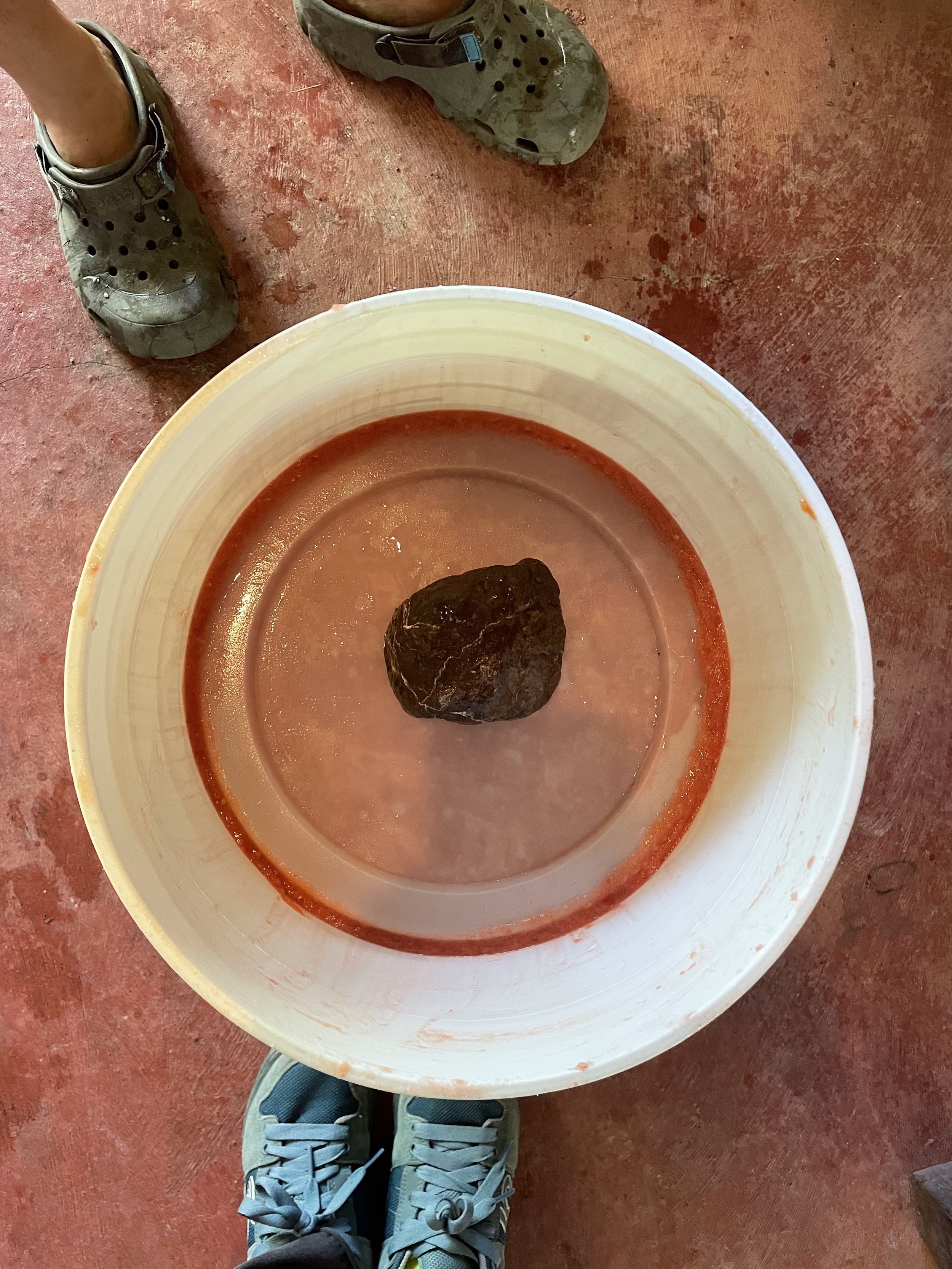
Now is the time to place your follower and weight to keep your new fermented friend submerged! Your follower should fit well into the mouth of your container. Maybe there is a household object that can be disinfected and reused, such as a smaller lid to another container, or a piece of thicker, food safe, plastic you can cut to the desired shape. The weight is extra support for submersion. In our case, we used a disinfected rock. The weight should not cause the follower to sink below the ketchup, but just sit on top and keep everything in place. Worse case scenario, remember this tune, “submerge in brine and all will be fine.”
Close your container and allow to sit in a cool, dry place for about a week, or until desired sourness is acquired. It is possible that kham yeast will grow. Kham yeast is a completely safe, white layer that can sometimes form, even with an airtight lid. You can leave the yeast where it is until the fermentation process is done. When you're ready to finish the recipe, the yeast can either be left in the mixture, or removed.
After about a week, pour your yummy, fermented ketchup into a pot and begin to boil. Stir pretty consistently.
Once in the pot, add your 10% sugar. Maybe a little more or a little less if you prefer more sweet or a more sour ketchup. For our ketchup we used tapa dulce, which is a natural cane sugar, but any sweetener of your choice will do. Support local… and continue to stir!
If the sweetener did not thicken the ketchup enough, adding cornstarch will help. Add your cornstarch to a little bit of cold water and mix together BEFORE adding to your boiling ketchup. Adding the cornstarch straight to a boiling substance will not produce the same result. Keep stirring!
Time to get creative! Add spices of your choice whether that be smoked paprika, pepper, chili powder, and so many more options depending on your palate.
Once you’re done adding seasonings, remove from heat and place your pot in a Bano Maria. This is an ice bath. We do this to cool the temperature of the sauce before we place in into the fridge. Try to stir the ketchup during this process to simultaneously cool the middle and outside.
Final step: Choose your vessel! You can reuse an old ketchup bottle for the squeeze effect, or get fancy by reusing some old glass containers. The cupboard is your oyster.
Place in fridge! This ketchup should last 3-6 months depending on how often the container is opened or left out for dinner purposes. Enjoy!
Check Out These Other Blog Recipes
Make Black Garlic in Your Compost
Homemade Hoisin Sauce and Other Recipes with Fermented Black Bean Paste

Why Rootedness Matters
Rootedness can create compassion and understanding for the place where we are, know, and love. I have seen the benefits firsthand from some of amazing people that were born in Mastatal and continue to call this place home. They anchor the business and environmental communities here.
By Core Team Member Tim O’Hara
Costa Rica is a popular destination for North American and European families looking to resettle in a place where life appears more promising. These desires may come from the need to escape a bad situation or a wish to find a better life. It’s a phenomenon that dates back thousands of years. We are a species that suffers from what I refer to as the “grass is greener syndrome”. We commonly dream of finding our Shangri-La somewhere different from where we were raised.
I grew up developing relatively deep roots in my hometown in upstate New York. But as a result of societal pressures, I moved away for college and never went back to my hometown to live full-time. These non-provincial experiences have been fruitful, transformational, and important to me to develop a more well-rounded view of the world. They also helped to nurture a tolerance and understanding for how others live. Nevertheless, they pushed against the societal benefits of growing deeper roots in the towns where we are born. With so many people uprooted, due to climate catastrophe, war, persecution, the desire to see the world or economic pressures, I fear that like a plant ripped up from the ground, this type of restless movement can result in community erosion, family disintegration, and a loss of geographical literacy. There are always tradeoffs, but I think that we should, when appropriate and possible, put more effort into encouraging humans to stay closer to home to do the good work that’s needed in every community around the world. Wealth continues to congregate in the “best” cities, leaving small towns and rural areas bereft of intellectual and physical stamina. I say this having left my home 30 years ago, so admittedly my perspective might come across as “curious.”
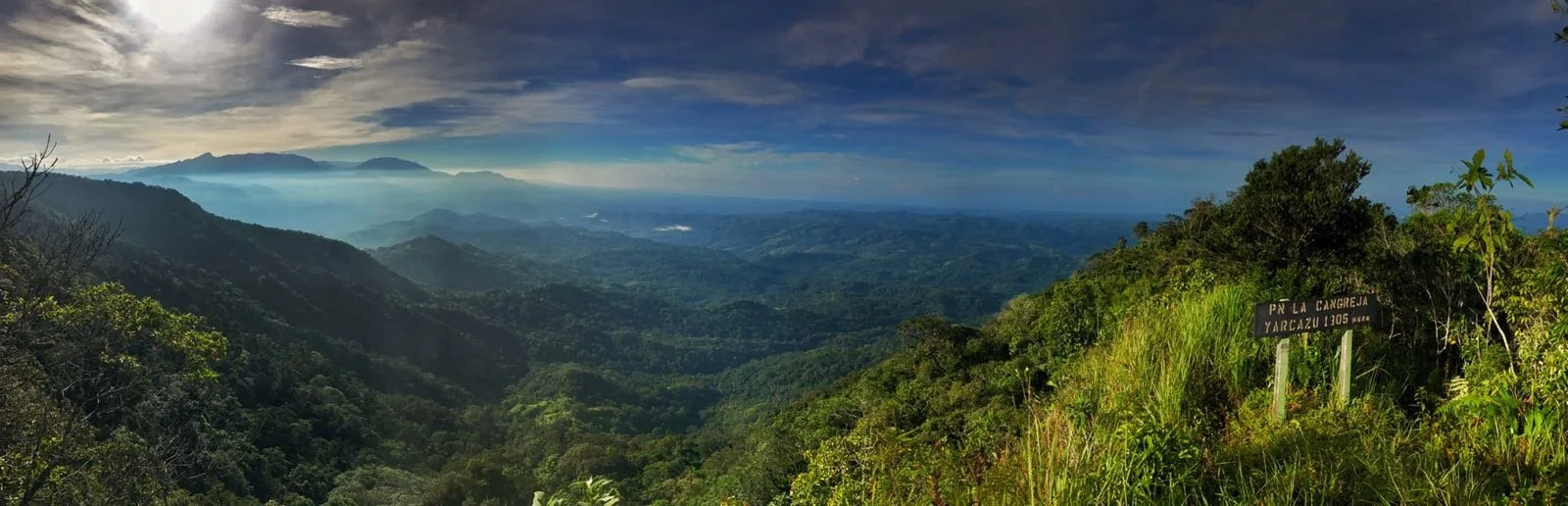
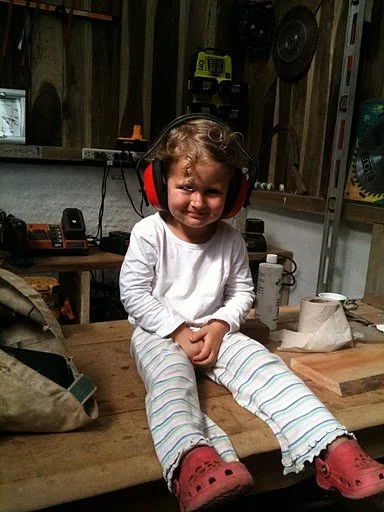
Robin and I started this business in 2000. We moved to rural Costa Rica in 2001 and in 2008 started a family with the arrival of our daughter Sole. Mastatal has been a challenging and amazing place to run an enterprise and raise a little girl. Sole has had what many people would consider a non-traditional upbringing. She grew up without diapers, went to an elementary school with 1 teacher and 10 students, and goes to a high school with 25. She plays unorganized soccer just about everyday and hikes to a nearby waterfall multiple days a week where she jumps off cliffs and catches freshwater shrimp and crabs. She watches out for snakes on her nightly trips home to an earthen house overlooking La Cangreja and has had to survive her early teenage years with horrible internet. She cooks for our entire community and is by far the best baker in town. We are so thankful for the environment that she has spent her first 15 years in, though it has been far from perfect.
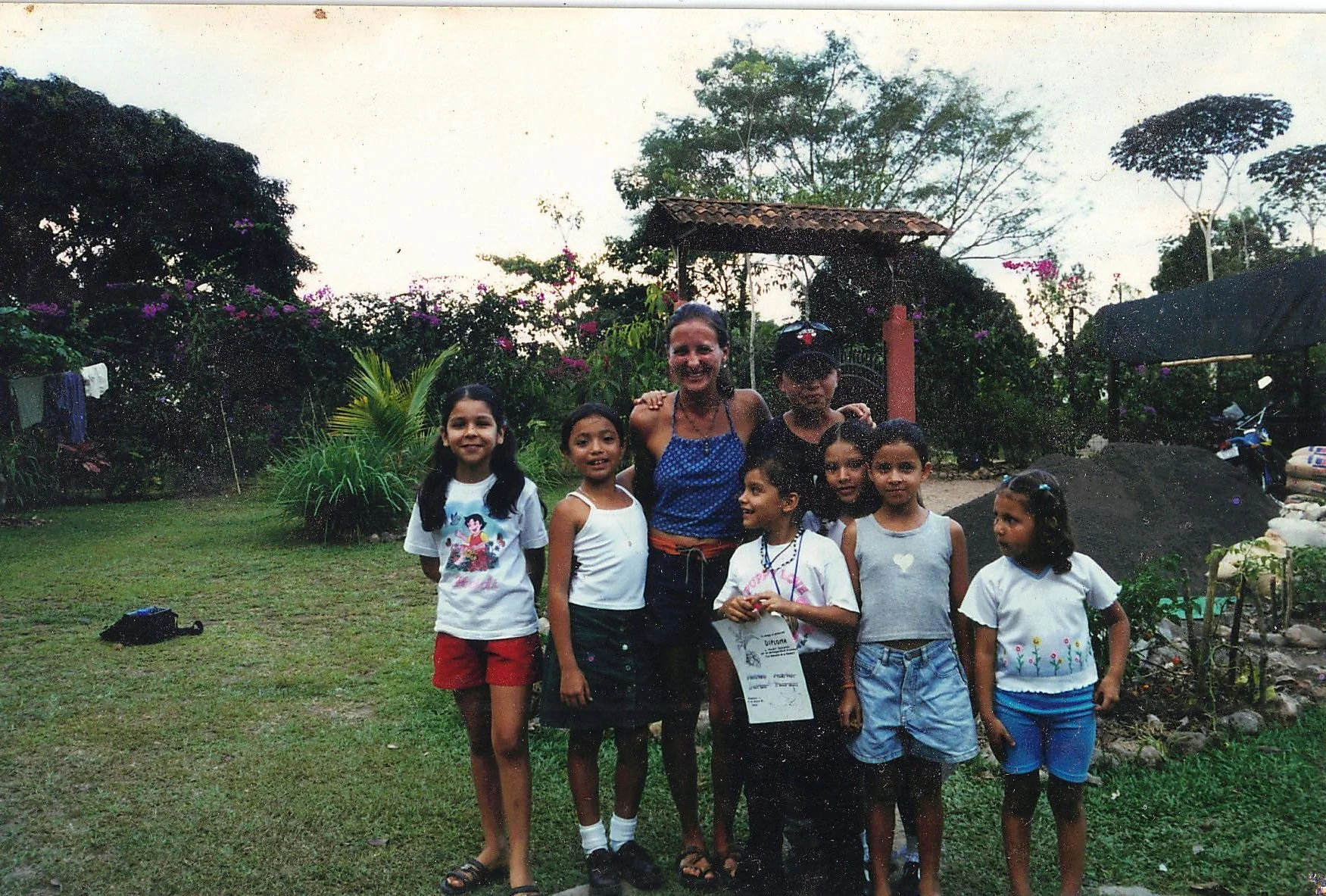
Upon our arrival to Mastatal, we were definitive outsiders who had moved from afar into a small, quiet, depopulating village without much happening. There were no phones, terrible road access, and no formal businesses. Our first years here required a lot of energy to begin developing relationships and friendships with the people of our adopted village. It was some of the hardest but most rewarding work that we did and continue to do. To feel at home anywhere requires a certain level of acceptance and connection, and this only comes with intention, compassion, understanding, sharing, and an acceptance of vulnerability. And it usually takes time. It was not an easy or fast path for us, but one that gradually crept into our lives quietly. It led to the rootedness that community strength is built on, and a vested interest in the future of what has become our home.
This lifestyle choice has come with its sacrifices. For me the largest of these has been 2 precious decades geographically distant from the people that I hold nearest and dearest to my heart. It has not been a minor loss. We have missed important family gatherings, weddings, births, deaths and precious time with kin. Our lives are full of compromises, and this choice, although it has brought great joy and happiness, has a sad component that is part of being a human living on this earth at this time. We have to pick our battles, and being able to go through a well-thought out decision making process when contemplating a move like we did is important. I would suggest not running for the hills with each passing doom and gloom story that you hear about on the news. Our problems at home are oftentimes universal, and the battles should sometimes be fought at home, where we can garner the most support, and perhaps have the greatest positive impact. This might seem strange advice from a transplant who has carved out a nice life abroad, but I think that rootedness is an important consideration for many people striving to attain meaning and happiness in their lives.

Rootedness can create compassion and understanding for the place where we are, know, and love. I have seen the benefits firsthand from some of amazing people that were born in Mastatal and continue to call this place home. They anchor the business and environmental communities here. They are smart, savvy, entrepreneurial, caring and vested. They are raising their families here, inheriting their family farms, planting food, and against all odds bringing about the revitalization of a small rural community. They are selling organic chocolate, offering amazing natural history and birding tours, preserving forests, planting trees, and running our local government. And after 22 years I do finally feel rooted here, but it took time, energy and resources that I could’ve also dedicated to the town that gave me so much as a youth, and I think that’s worth looking into a bit deeper for everyone contemplating where to call home.

Post-Rancho Thoughts
If there's something to take away, it is that we need to tap into, develop, and release the inherent potential of every human being to live in ways that make meaningful contributions to the world and society.
By 2023 apprentice, Michelle Häuptli
"Throughout history, the really fundamental changes in society have come not from dictates of governments and the results of battles but through vast numbers of people changing their minds - sometimes by only a little bit... by deliberately changing the internal images of reality, people can change the world." - Willis Harmon
After 12 weeks at the Rancho, evaluation and re-evaluation have become an ever present part in day-to-day living. Pre-Rancho-life in a busy financial town of Switzerland is becoming a fading shade of a time that seems to be years in the past. The days are long but the weeks short and questions about post-Rancho life are stirring in the back of our heads. What happens after we leave this safe spot in the sweet, warm jungle? Where do we go to spread our wings? Where can we go to save the day?
The process of learning and implementation goes beyond the "heroic" and "do-good" models. If there's something to take away, it is that we need to tap into, develop, and release the inherent potential of every human being to live in ways that make meaningful contributions to the world and society.
According to Joseph Campbell, the mythic Hero's journey is always in service to and supported by a community. It is intended to achieve some larger beneficial effect. The hero returns with a treasure that will alter the community's role within its world. Ultimately there is no independent heroic ego, only the collective work of sustaining and evolving life by reshaping between the community and it's larger context.

Being part...

...of the bigger picture
We don't need to be heroes to have an impact on the world. However we must learn how to live our lives and play our roles in ways that are designed to create change. It is a slow, steady, cumulative and powerful process - like water shaping rock.
Lao Tzu wrote: "water is fluid, soft, and yielding. But water will wear away rock, which is rigid and cannot yield. As a rule, whatever is fluid, soft, and yielding will overcome whatever is rigid and hard... A paradox: what is soft is strong."

Leaf cutter ants working away
Any work we are doing can play a critical role within society. Our effects can be direct, through the influence we have on social institutions, or indirect, by preparing others to play their roles. Work is where we put our life energy and we tend to define our work in terms of career. But we have the option instead to think of ourselves as pursuing particular goals in society, goals that are meant to improve and transform the communities and industries we are part of. In the best case scenario we do this by enhancing the ability of living beings to eco-evolve, so that our planet can continue to express its potential for diversity, complexity and creativity. Whatever one believes, it is evident that every one of our critical planetary support systems - oceans, forests, soils, atmosphere, biodiversity etc. - is in decline. But with elegance and power, our human minds can create products of the same evolutionary flow and change as every other living system. Nature is also our nature.
At the Rancho we learn, live and teach these roles by following Permaculture principles and ethics. That can either be in consciously designing landscapes by respecting natural waterflows, rebuilding community structures together by using natural and local building materials or inviting the young generation to partake in an agroforestry class and simply interact by sharing each others visions.
The concept of being a part....

...of the whole!

In the end, we will all have to develop the capacity to hold the complexity and the not-knowing and the in-between as we move from the old ways to the even older regenerative ways that we have forgotten.
To close I would like to reference two books that assisted me to verbalize these ideas: "The regenerative life" by Carol Sandford and "Regenerative Development and Design" by Pamela Mang, Ben Haggard and Regenesis.
Check Out These Past Blog Articles
Enriching Community Soil: 5 Simple Strategies That Support Sustainable Relationships

Unexpected Aspects of Permacultural Communal Living
A grand year is made up of many aspects, mundane and beautiful. Things expected and shocking are sure to come. It is most of what I (we!) can do to approach it with grace, and let come what may.
By 2023 apprentice
Community living has been a positive experience for me so far. I have felt its benefits in my opportunities for quiet time away, knowing daily tasks can still be completed while individuals have time for rest. I have felt its benefits during our largest social nights, when incredible food, conversation, games, music, and travellers can all be found under the same roof. During times in between, I am discovering new benefits all the time; some are to be expected when living around others, and others come out of the blue! Let's look.

My fellow apprentices getting ready to learn about plastering!
To be clear, life as an apprentice at Rancho Mastatal is my first experience in community living beyond living in a private home within a neighborhood, or in an apartment with a few others. The former has not felt like existence as a true community to me - I led a private life among others who did the same. We interacted in a friendly manner, but beyond my childhood friendships I rarely felt a deep involvement in my neighbors' lives. The latter was more communal: shared facilities, responsibilities of cleaning and organization, and public space meant a deeper level of involvement in my roommates' lives. Being introduced to a preexisting community as a new contributing member was a shock, but thus far has been a positive one.

The Hankey House, where the apprentices live, viewed from the Goat Barn
One of the first aspects of community living that I had to adapt to was a new standard of privacy: The seven of us share a toilet and two showers. The Hankey House houses five apprentices with hardly a single solid wall in the building, and most public spaces in the Ranch are wide open to the jungle air and to passing observers. In fact, our group's level of privacy is apparently less than that of previous apprentice groups: a massive cluster of bamboo and surrounding vegetation between our two livings spaces was felled at the end of 2022, providing a very clear line of sight between the main area of the Hankey House and the porch of the Goat Barn. My partner and I occupy the Barn while the five others each have space in the Hankey -- if any of the seven of us spend time in our respective "living rooms," we are clearly visible to each other. In addition, some unfortunate hedge maintanance next to the Barn has left the bathroom and showers almost entirely visible from our porch (it seemed best not to show this in photographic form...) -- thus, we find opportunities to respect each others' privacy frequently!

Viewed from the top floor of the Hankey, the Goat Barn (left) and showers and bathroom (right). Also note the bright green bush in the bottom-center, which is what remains of the felled bamboo cluster from last year!
It would be easy to critique this living situation - its drawbacks can be detrimental if the users of the facilities are made uncomfortable. However, we are here for the year! We are seven new people in a permacultural education facility that hosts dozens at a time. We have been welcomed with open arms by the team here, fed and housed and accomodated for: how could we complain in a space of such blessings? We avert our gaze from showering neighbors, and chuckle together later. Changing clothes on your porch is a risk, but one with no lasting consequences. If a mutually friendly space can be created, the lack of immediate privacy can be much more of a goof than a discomfort.

The inside of the Hankey House! There are five bedrooms total, and you can *kind of* see two from here. A very beautiful communal space, built with as many aspects of permaculture as possible in mind!
Another aspect of a permacultural lifestyle which I hadn't a clear idea of was the allottment of our daily tasks; of course, coming in we all knew that there would be a plethora of work to go around for those living on a Ranch. I suppose what I didn't have a clear idea of was how organized it would be, and so apparently evenly distributed. The apprentices are allotted "Community Contribution skills," or CC skills, and are designed to switch every six weeks. We focus on these every morning, aiming to have finished our daily tasks by 7:15, granting us a little spare time before our first work party of the day. With this system seven individual tasks, each with its own dynamic system and set of moving parts, are completed every day in a short amount of time -- if one person or a duo were made to do all of these, it would take all morning or longer! The efficiency of this system speaks a lot to the amount of time the Ranch has had to design and refine it. A constant process of design, analysis, and redesign is integral to the permacultural approach to life! Just by the nature of the design and implementation process, it wouldn't be a shock to see this system change within the course of this year, even with the time it has had beforehand to establish itself.

The methane bio-digester, where manure is converted to rich compost and cooking gas

A pathway surrounded by greens used in our salads every day!
To be true we have only been here a short amount of time -- much more time than we have yet spent still awaits us. It is an exciting prospect. Many people will come and go, and here we will be! Helping each other out when we can, switching chores, trading shifts in the kitchen. A grand year is made up of many aspects, mundane and beautiful. Things expected and shocking are sure to come. It is most of what I (we!) can do to approach it with grace, and let come what may. The same can be said for all folk; you don't have to be living on a Ranch to let the principles of a collaborative community enrich you. Enjoy yourself! Help your neighbor plant, or rake, or daydream! Community binds us, and the pieces of it which you don't expect may very well become the most dear to you.

Beautiful space in between facilities used by the community every day. The building pictured is the Food Smithy, where harvested goods go for processing and loads of fermentation occurs. Behind me is a permaculture-design herb and veggie garden.
Read these past blogs about community living
How to Run a Permaculture Internship
Living Without Walls- A Year of Jungle Community Living
Enriching Community Soil: 5 Simple Strategies That Support Sustainable Relationships

The Ecstasy of Cheese: A Meditation on Our Conceptions of Value
After only a few months living at the Ranch, I have observed my experience of eating good cheese transform from mundane to something approaching ecstasy. This has lead me to reflect on our personal and collective conceptions of value.
By 2023 apprentice, Sedona Lewis
One evening the apprentices were enjoying dinner when Sam, a core team member, approached us with a gift. From our reaction, a bystander might have assumed he unveiled something approximating a winning lottery ticket. However our hoots and hollars were in response to, simply, cheese.
After only a few months living at the Ranch, I have observed my experience of eating good cheese transform from mundane to something approaching ecstasy. This has lead me to reflect on our personal and collective conceptions of value.
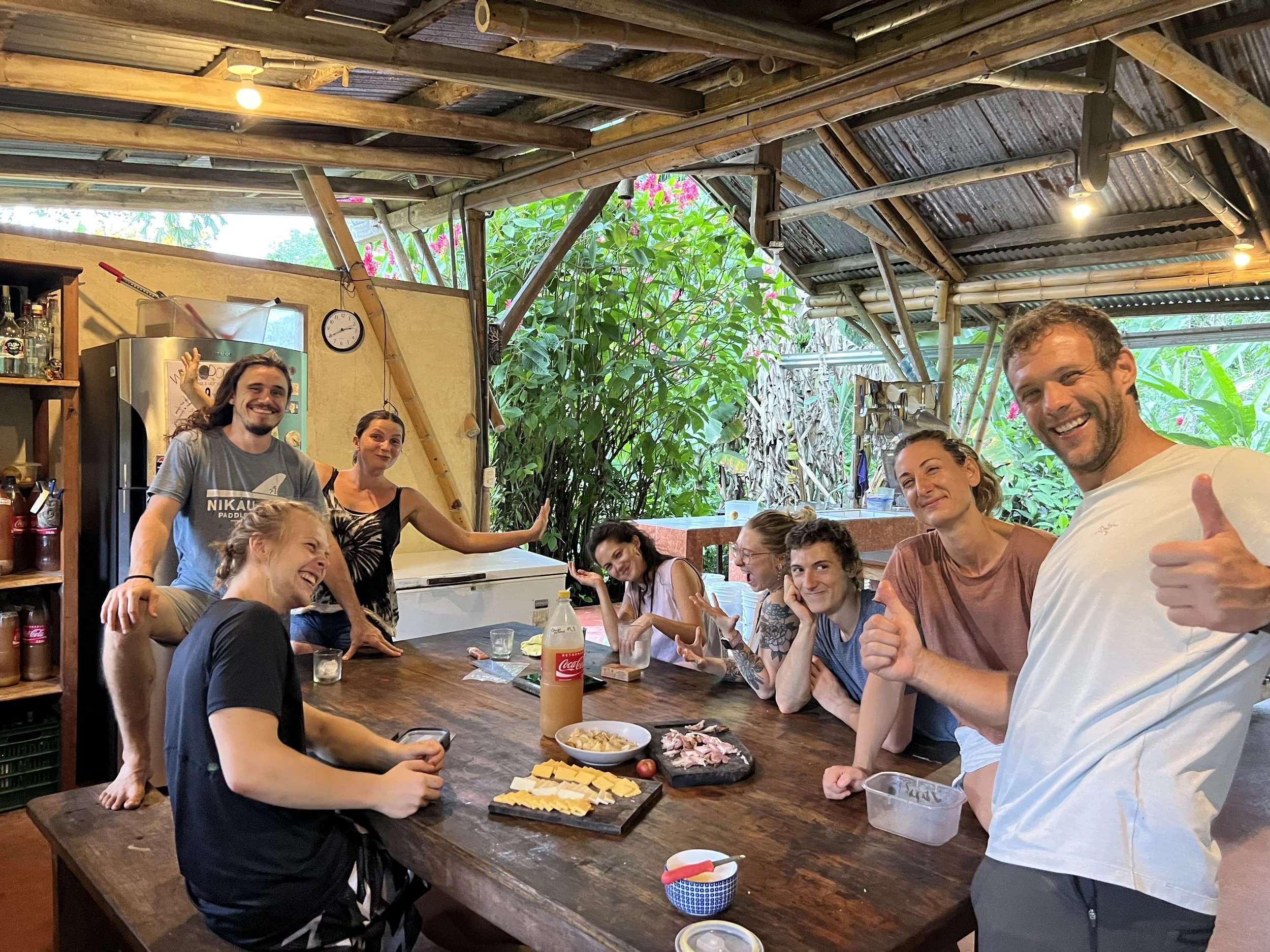
Apprentices excited about cheese!
A Permaculture Diet
As a society we have grown accustomed to waltzing into a grocery store and purchasing virtually any vegetable, fruit, grain, nut, or seed we desire. Globalization has artificially eliminated scarcity and seasonality from our lives; we are living in an age of unprecedented abundance.

Seasonal fruits off the farm
In Mastatal, there is no grocery store. Aside from the local bar and the Soda, a small restaurant, the closest store is forty minutes by car. Despite our isolation, the Ranch is a place of remarkable abundance. However different from the globalized, western sort of 'abundance' referenced earlier.
We are lucky to operate in a part of the world which provides a prolific variety of edible and otherwise useful plants. Things we can't produce ourselves are mostly purchased from our neighbors, such as milk, eggs, and pork. Nearly all other vegetables, fruits, and other food items sourced regionally. Thanks to the hard work of our meal coordinators (mostly Robin), over 80% of the calories we consume are sourced within fifty miles of the Ranch.
We maintain a sense of place within our diets; during meal times we are engaging with our surroundings. No longer are we enjoying cheese from France, salami from Italy, and wine from Spain in the same meal. We're embracing the here through our food.
In keeping with the ethics of Permaculture, this means we are dependent on and invested in the health of our local and regional communities. The variation in our meals comes with the seasons, and our health is linked to that of our environment. I have observed that this way of interacting with food has changed the way I think about, and value, my food.

Sedona with her morning harvest of salad greens
Our Conceptions of Value
Olive oil, butter, cheese, meat, bread, and nuts are examples of foods that many of us used to consume almost daily. Delicious, yes, but not extraordinary, and only worth what the price tag says at the store. Now, several months into the apprenticeship, items like these have become precious.
During my days splitting bamboo, sifting clay, and working in the orchards, I've had the opportunity to ponder the following questions. I invite you to consider them for yourself before reading my list of ideas.
What makes something valuable?
Perhaps...
An item's relative availability
The effort required to acquire the item
The relative necessity (a bowl of rice when you've just eaten a meal and a bowl of rice when you haven't eaten for 2 days may as well be two completely different items)
Personal preferences/tastes
The collective value structure and social narrative associated with that item
The experiential and monetary value of a food item can be somewhat arbitrary...
Of course it's important to note and remember that our species evolved under conditions in which sufficient nutrition was not the norm. It makes sense why nutrient dense foods such as cheese, meat, and honey were and are sought after and treasured.
But still, we invest a lot of resources shipping things like salad greens, spices, and liquors around the world. Is the Italian wine really that much better? Couldn't the same caloric and satisfactory needs be met with items produced regionally? It seems that there is something deeper influencing our values surrounding food.
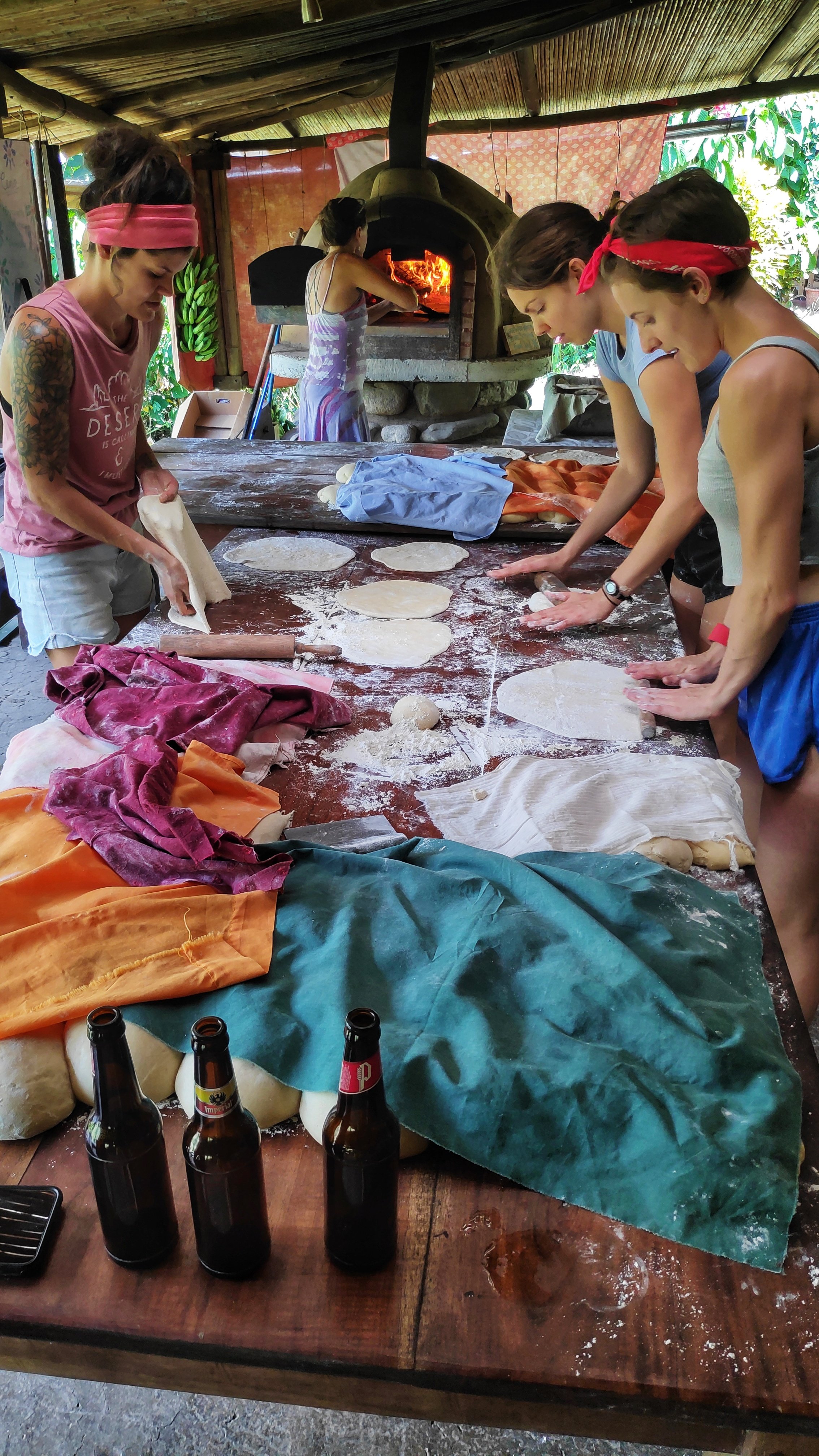
Our special occasion pizza party
what do we gain by attaching arbitrary value to specific foods?
Special foods provide a sense of occasion and celebration
These occasions provide a sense of anticipation, which alters our experience
Special foods, and the events formed around them, provide space for community to be built
As food is a human universal, sharing food is a way to bridge and build relationships
A Note on Sharing
One might assume that precious food items at the Ranch would be hoarded; kept in decoy packaging in the back of the refrigerator with the intention of maximal solitary indulgence. However, as we have adjusted to our new environment, I have observed something entirely different. The reflexive action when in possession of said precious items has been radical generosity. Perhaps it is because a precedent of sharing and reciprocity has been set for us by the culture here at the Ranch. However, it genuinely seems like reveling in the remarkable depth of blue cheese is just more enjoyable when done in the company of others.

Enjoying sharing some treats with the community
The utility of sharing is easy to see when living in community. When taken out of the individualist paradigm operating in most of the western world, reciprocity is an undeniably advantageous practice. Given the unpredictable nature of life, I wouldn't be surprised if appropriate generosity has been selected for throughout our evolutionary history. No doubt those who refuse to share with their community when needed would feel the consequences of their actions later on.
Looking Ahead
So, I invite you to consider how living in this age of convenience and instant gratification affects your sense of value.
How might your experience of peaches change if you only ate them when they were in season? What could be gained by manufacturing a bit of scarcity, creating some anticipation, in your life? How can you apply these principles, rooted in Permaculture, to repair your communities and regenerate our natural environment?
Just food for thought - because now we only have cake on birthdays, and I think it tastes sweeter.
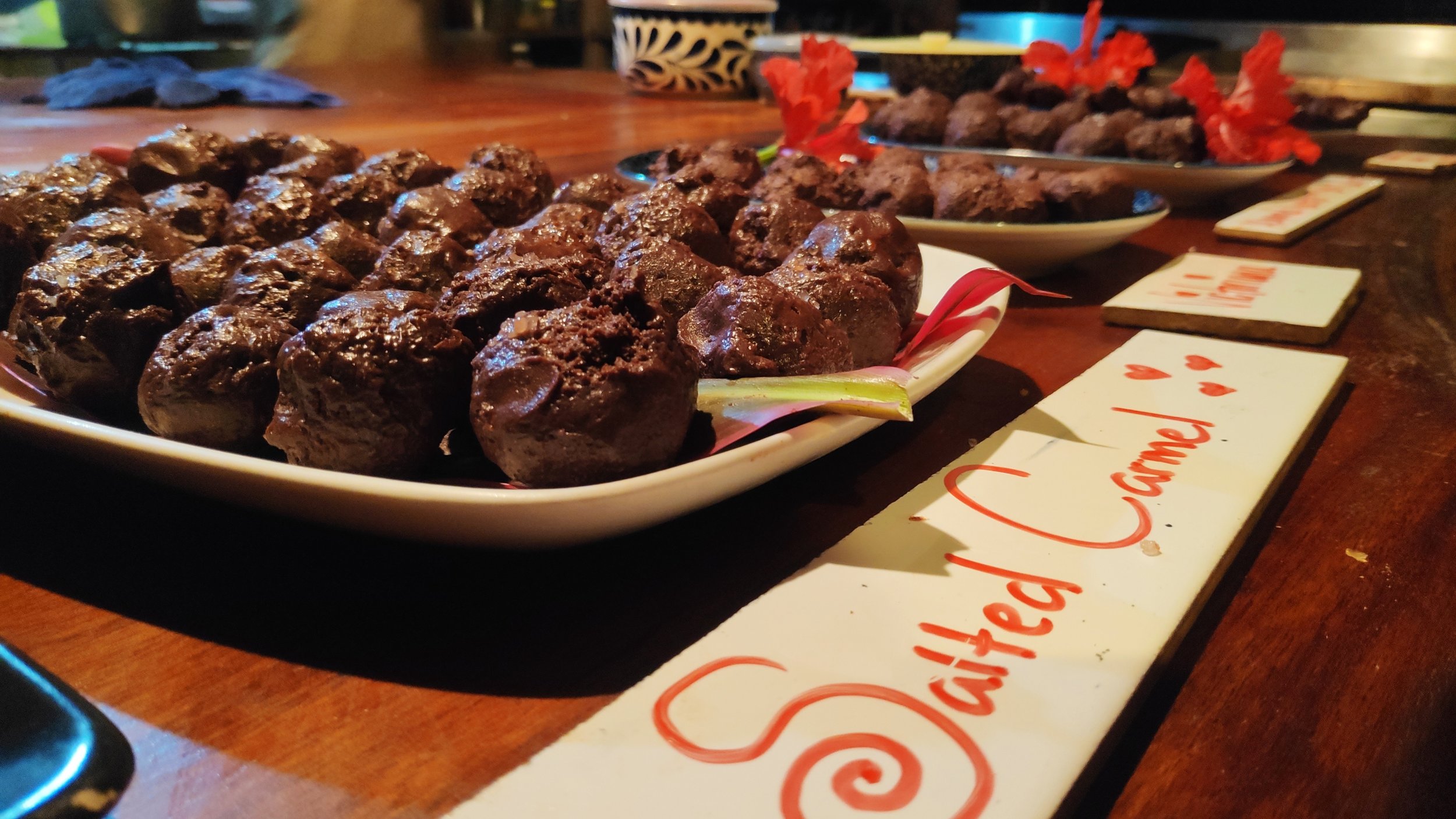
Chocolate bon bons, made from locally grown cacao

Wealth Exists Not in Having Great Possessions, But in Having Few Wants
There’s no escaping from the fact that we are in the midst of a social, economic, physical and mental health crisis. We have been waking up to this fact at an increasing pace and the majority of people can see that a change is essential if we don’t want to enter another mass extinction of our own doing.
By 2023 apprentice, Grant Munro
There’s no escaping from the fact that we are in the midst of a social, economic, physical and mental health crisis. We have been waking up to this fact at an increasing pace and the majority of people can see that a change is essential if we don’t want to enter another mass extinction of our own doing. The abundance of information out there can be confusing and can leave us feeling stuck in the mud, unsure of where to direct our efforts. Additionally, the typical modern lifestyle leaves most of us feeling far removed from the essence of what it is to be human. I can imagine that I’m not the only one who has felt overwhelmed, not knowing which way to turn to make an impact. Studying permaculture over the last 3 months at the Ranch has shown me the potential that the principles of permaculture have to help us with these problems.

Having spent the last 14 years of study and practice as a chiropractor, I’ve come to understand and witness that, most times, what makes us healthy or sick comes down to the stories and concepts we hold about our health, the world and our place in it. We could call this our world view, or cosmology. We align our behaviours to what we have been taught by our family traditions, trauma, our now archaic colonial educational institutions and cultural narratives shaped by the media. These behaviours either lead us towards health or towards chronic stress and ultimately disease. An example would be that my Grandad had back pain, my Dad has back pain, I have back pain therefore I must have back pain because it’s genetic. There has never been a gene found for expressing simple low back pain, what’s been passed down is a concept. When we shift the story, we shift the expression.
The recipe for shifting towards the expression of health looks to be simple and repeatable for those who truly desire to and have a driving reason to get well. In practice I have found we must create a healing image based upon logical truth to move towards health, and not away from disease. For example, we can logically argue that the human being is designed to be healthy, not sick. When we remove interference/irritations, establish new, simple behaviours aligned to human values and commit over time, people start to transition and get well. Irritations include intrusive thoughts, residual traumas and accumulation of toxins. The body naturally expresses health when we address these alongside the addition of gentle exercise, proper breathing, daily time in nature, a strong connection to community and nourishing food and water. However, Big Pharma’s marketing experts will have you believe it’s way more complicated than that, ensuring they rack up huge profits year on year whilst somehow we get sicker and sicker.
It’s easy to see how this draws parallels to climate catastrophe. Big Ag and other Big Industry see Earth as a giant dead rock for sale, extracting resources at an alarming rate in the name of profit and wealth accumulation for the few. Their marketing campaigns, execs and the media do a great job of spinning why we should sacrifice our lives and happiness for their cause. The stories they tell us are woven in to our very way of being and the behaviours we are coerced in to are impacting how we view and impact Earth.
In his book, ‘Change the Story’ Change the Future’ David C. Korten goes in to more detail about our psychology and how we make purpose in our lives. He describes the current paradigm as The Sacred Money and Markets Story; essentially we sacrifice ourselves to serve the Money God who is never happy. We can flip that story to one that is more consistent with living heart-centred and to the traditional values and needs of humans. It’s an easy and thought-provoking read which I assure will create a shift in your confidence in making change.
We have the responsibility to educate ourselves in order to educate our children. If we don’t do it, Big Industry will continue to do so through our educational systems and the current story will continue. We have sleepwalked in to this mess and it is going to take intentionality, commitment and consistency to rewrite the potential of the future. The ethics of permaculture are Earth Care, People Care, Fair Share and Transition. The act of transitioning is where the movement for change starts to take place.
Transition takes time. No one can expect to go from sick to healthy in a day. And we can’t expect to shift the health of the planet in a day or even a year. But change happens with commitment to small and consistent repeated inputs. Just finding a way to shift our energy balance from extraction to regeneration can be as simple as taking a moment to find out where your coffee comes from and give thanks to the Earth and people who grew it – creating ritual rather than chugging it down. Or it can be as grand as selling everything you own and moving to a countryside and starting a farm/community/education centre.
The truth is that most of us are going to be somewhere in between. Commit to what’s just uncomfortable enough for it to be meaningful. A Permaculture Design Course is a great place to start.



An Interwoven Life
As you pass through the gates at Rancho Mastatal, you step into another world. A place where perhaps the hands you hold at evening circle are the very ones who built the structure you'll sleep in that night.
By 2023 apprentice Elya Justina Mech
As you pass through the gates at Rancho Mastatal, you step into another world. A place where perhaps the hands you hold at evening circle are the very ones who built the structure you'll sleep in that night. Where your salad greens come from the garden you walked through that morning with your coffee, and the cows down the road have not only given the kitchen milk to make dairy kefir, but manure to fuel the bio-digester cooking system. The connections here are endless; its permaculture life you can see and touch.
As apprentices we are learning the principles of permaculture - not just in the classroom but also in our morning community contribution skills, during meal prep, on our walks through the agroforestry system, and as we assist with the daily function of the Ranch's infrastructure.
Its easy to understand why this way of life makes so much sense. We can see our regenerative influence on the natural environment, and feel a deep satisfaction from knowing how the components of your day are interwoven.
And at the Ranch it's very clear to see that you are also nature, you belong here, and you can have a healing impact on the earth.
Here are some more examples of ways in which our daily life is interconnected:
Water Kefir or "Balm" that we enjoy at our meals is a probiotic-rich, fermented drink made from yeast, local raw cane sugar with a base of fruits, spices and herbs from our gardens and orchards.
Eggs from Dona Flor, a chicken farmer in Mastatal who provides us with a large supply of our daily protein. Our beautiful brunches feature frittata or scrambled eggs. We also make homemade mayonnaise and use the eggs in baking for special occaisions.
Composting toilets allow us to drastically reduce our water consumption compared to conventional toilets. They also create nutrient-rich humanure to be used in our orchard spaces.
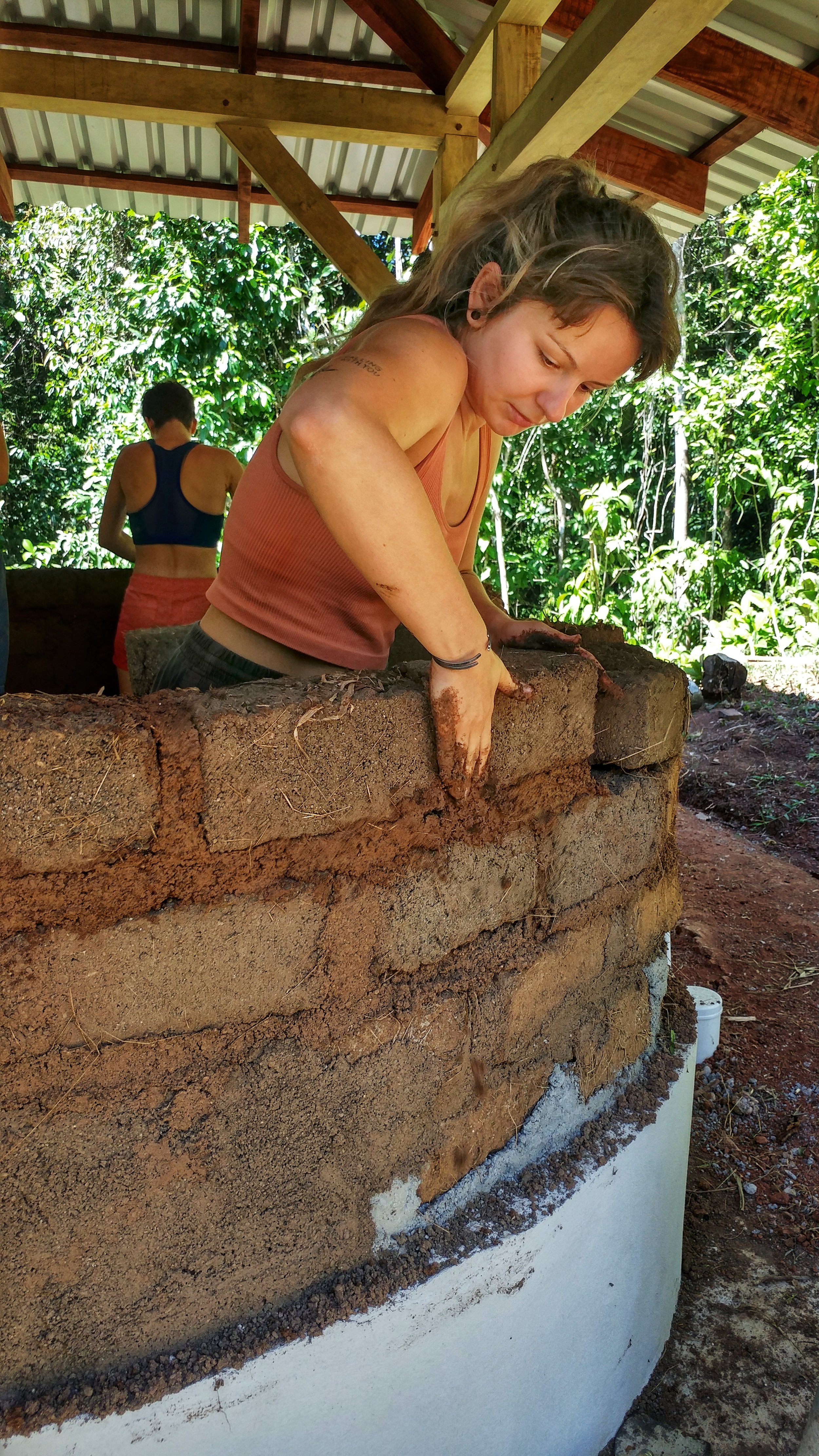
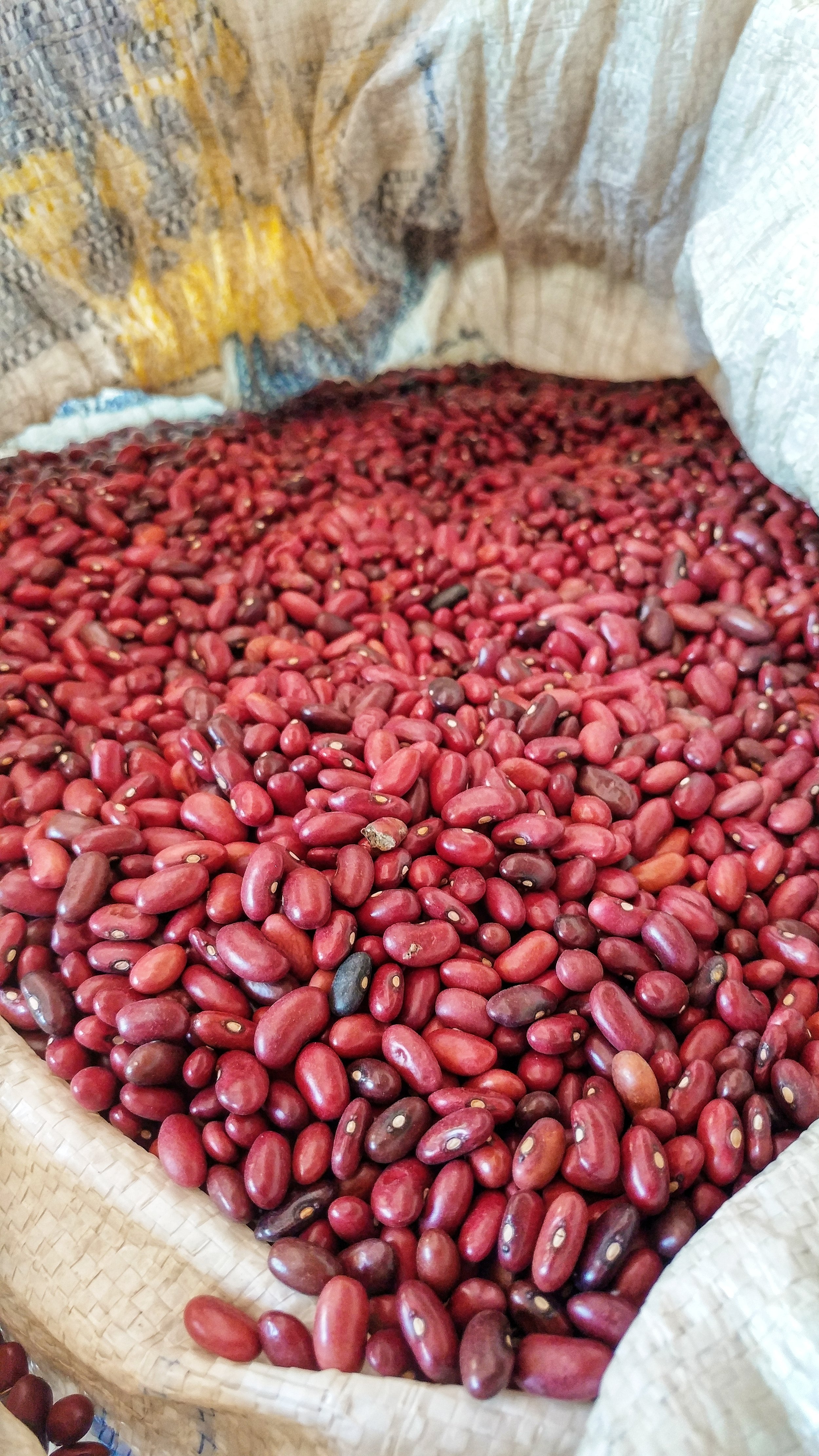
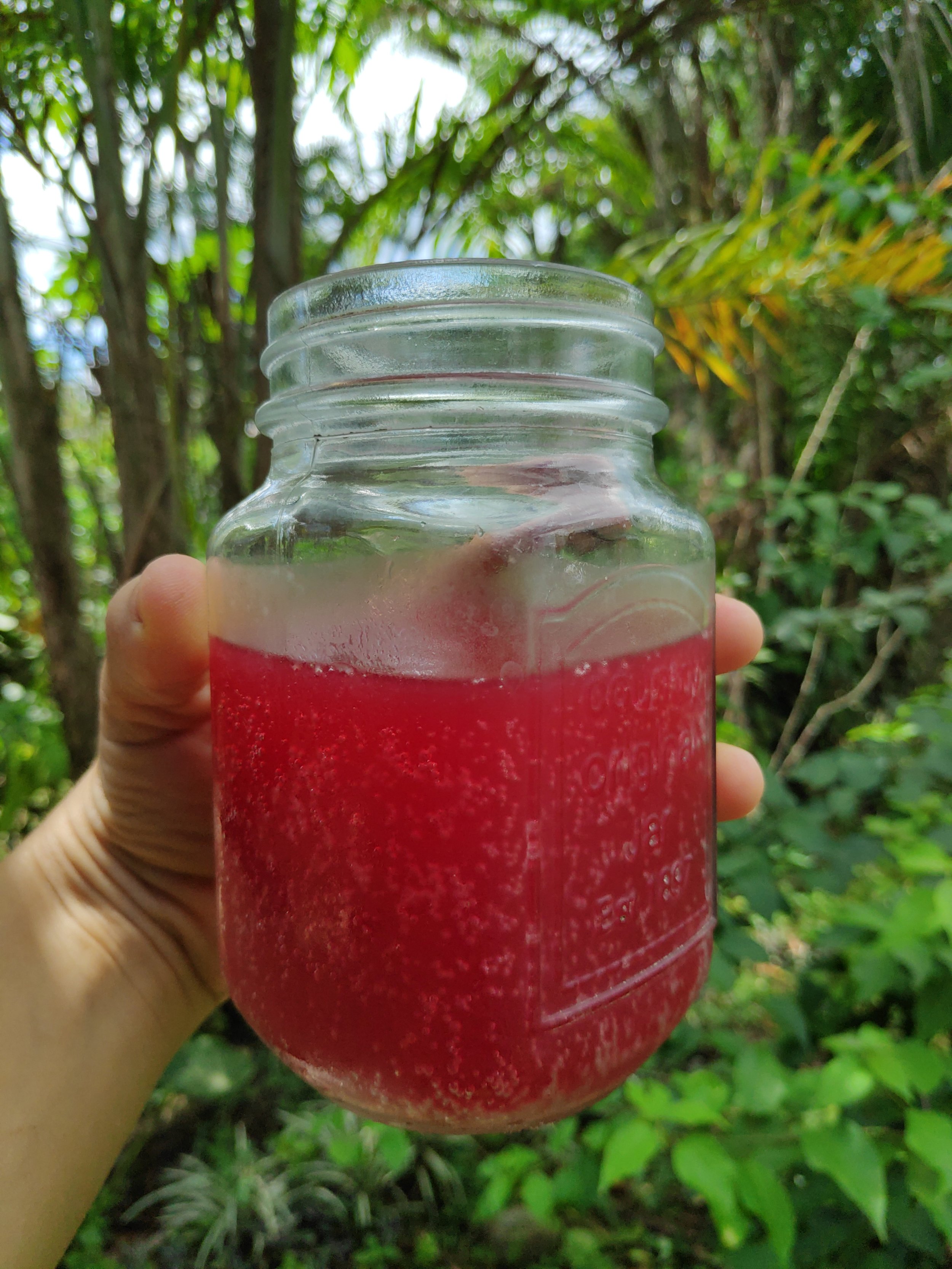
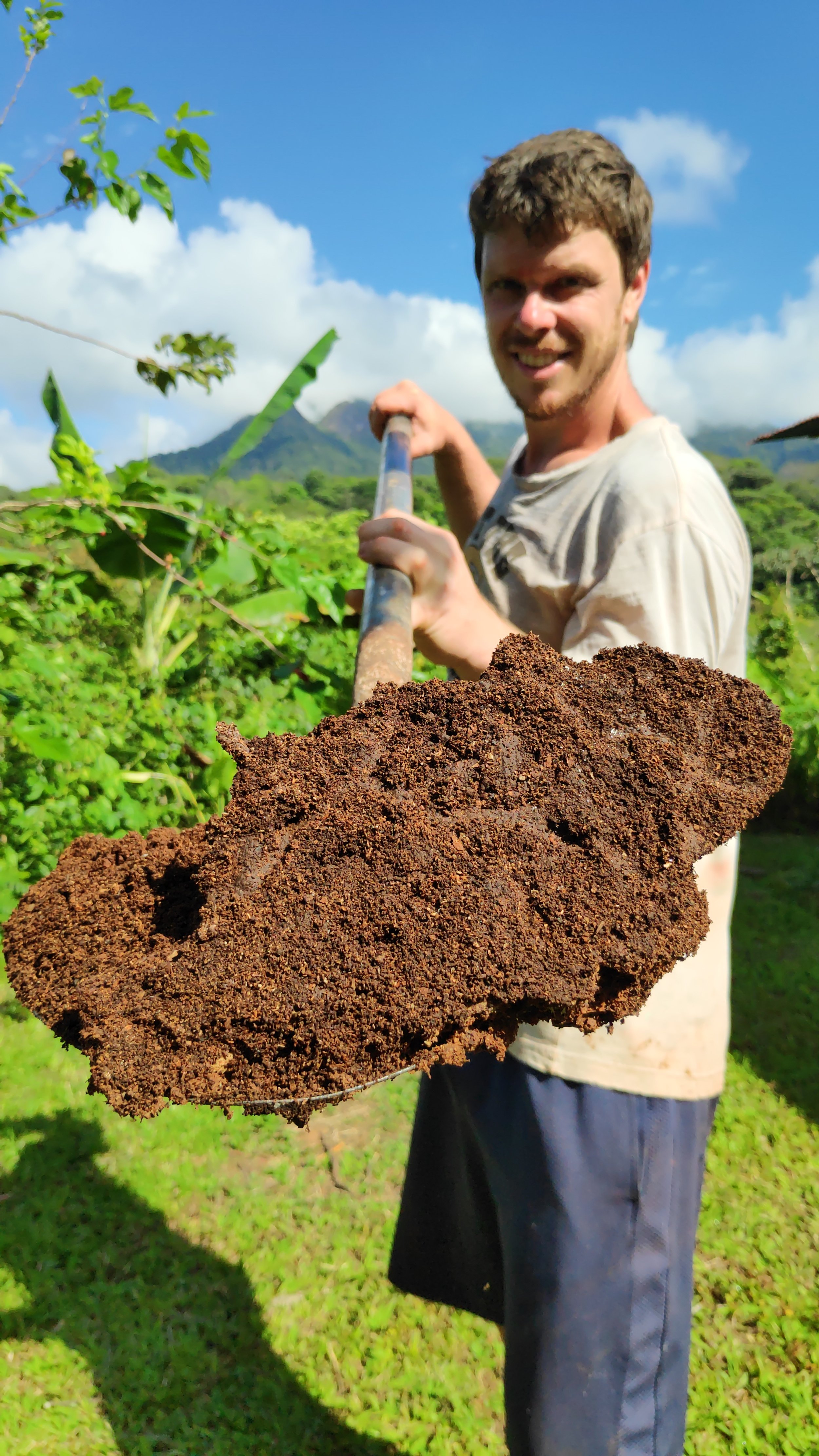
Meeting our energetic, nutritional, and social needs in symbiosis with nature brings such a joy and satisfaction to all those who live, work and visit Rancho Mastatal. Its inspiring to see how we can live in way that is kinder to the Earth and healthier for our bodies and minds.
Thinking back to life before the Ranch, its easy to see how many components of my daily life came from far off places and how my needs were often met by people whom I did not know and came from sources I was unfamiliar with. Without that integration I felt disconnected and there was a part of my spirit which was searching for more.
When we think about all the aspects of our daily lives - what we eat, how we process our waste, how we spend our time, and the spaces we occupy, we can ask ourselves 'how interconnected are these elements'?
Part of the magic of the Ranch is how its inspiring others to bring back these values and ideas to wherever they're from and share a new way of living with their family and community. You don't have to be living in a rural town in the tropical rainforest of Costa Rica to have a life that is interwoven, regenerative, and full of meaning.
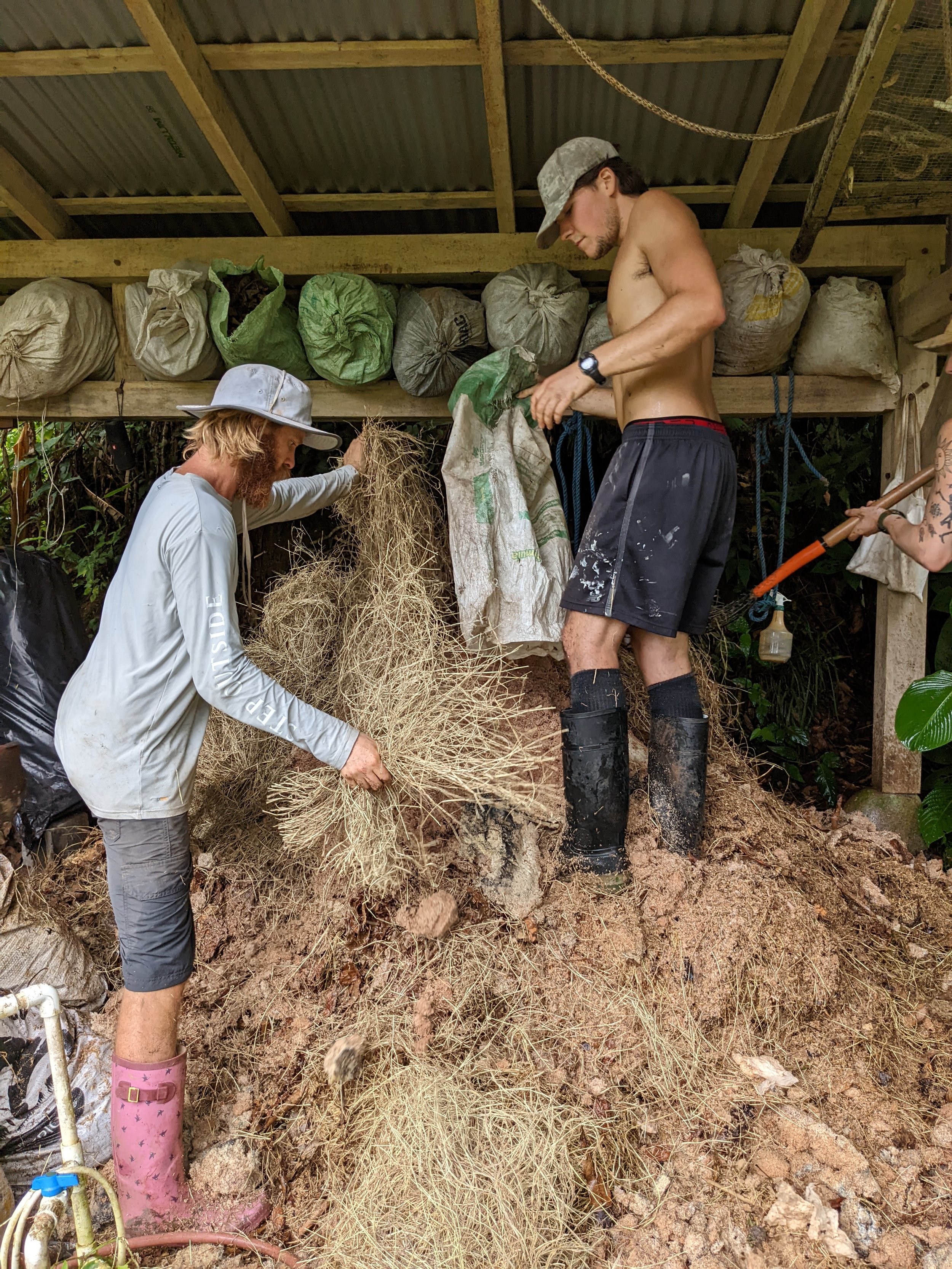
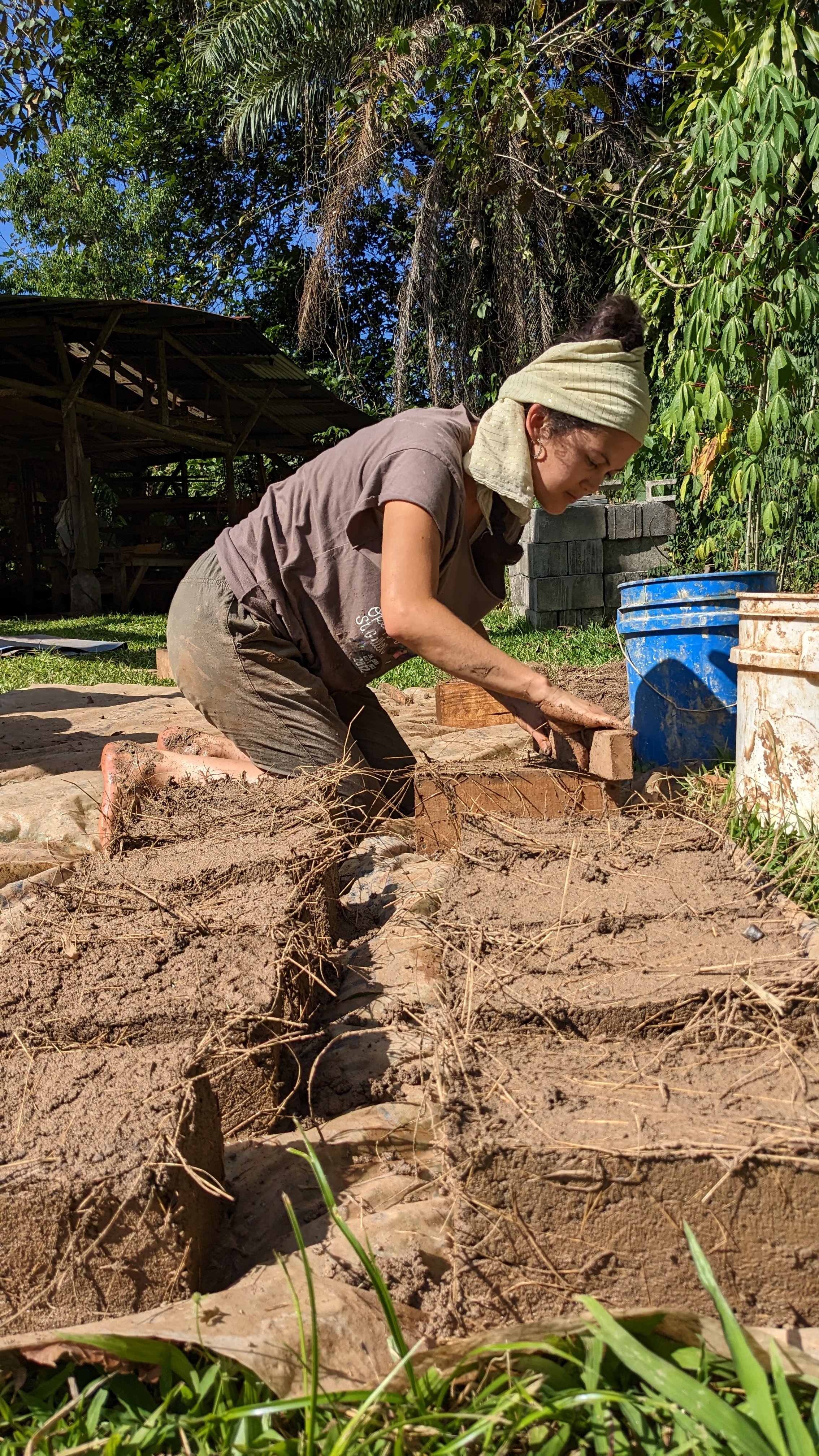
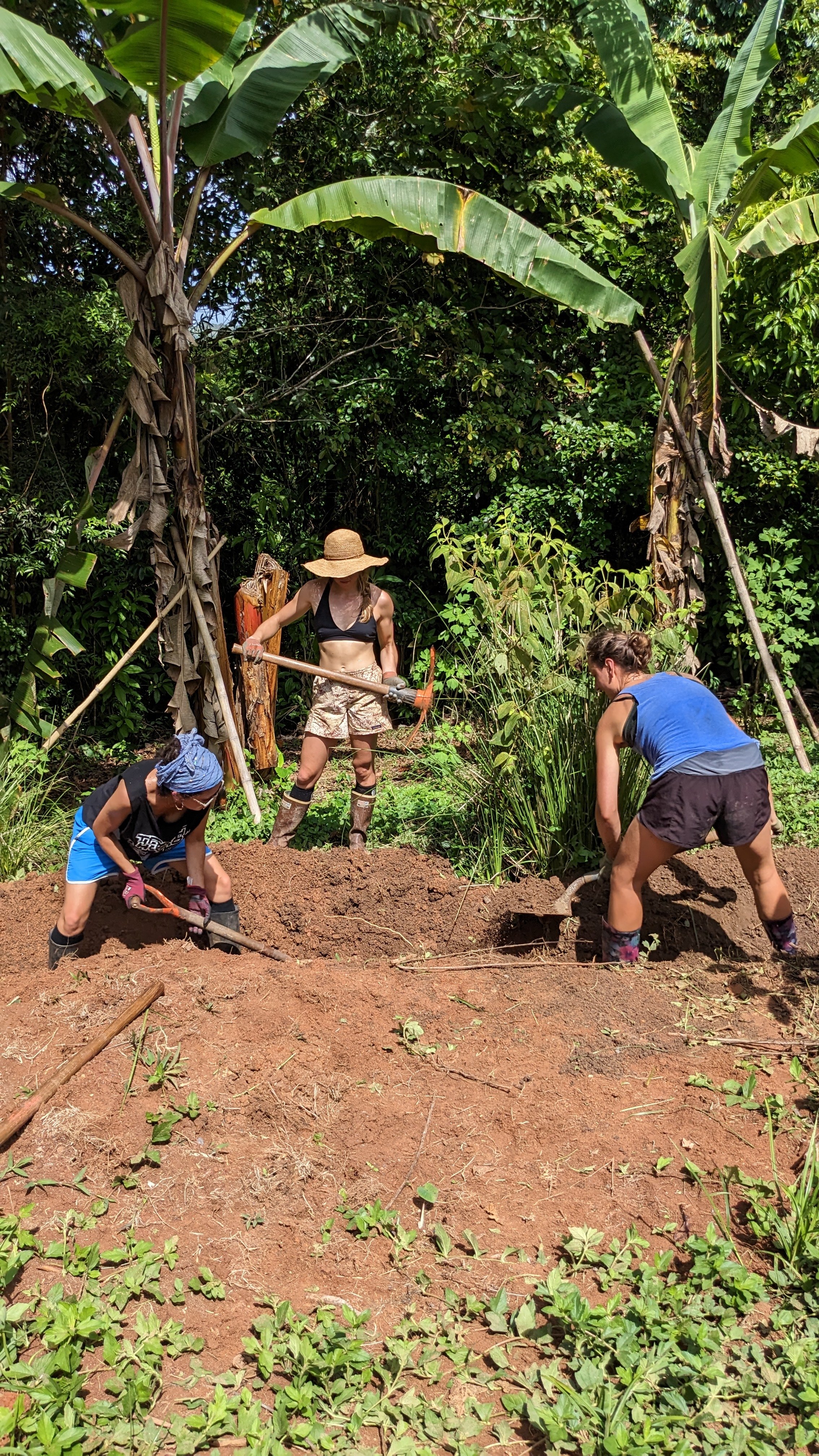
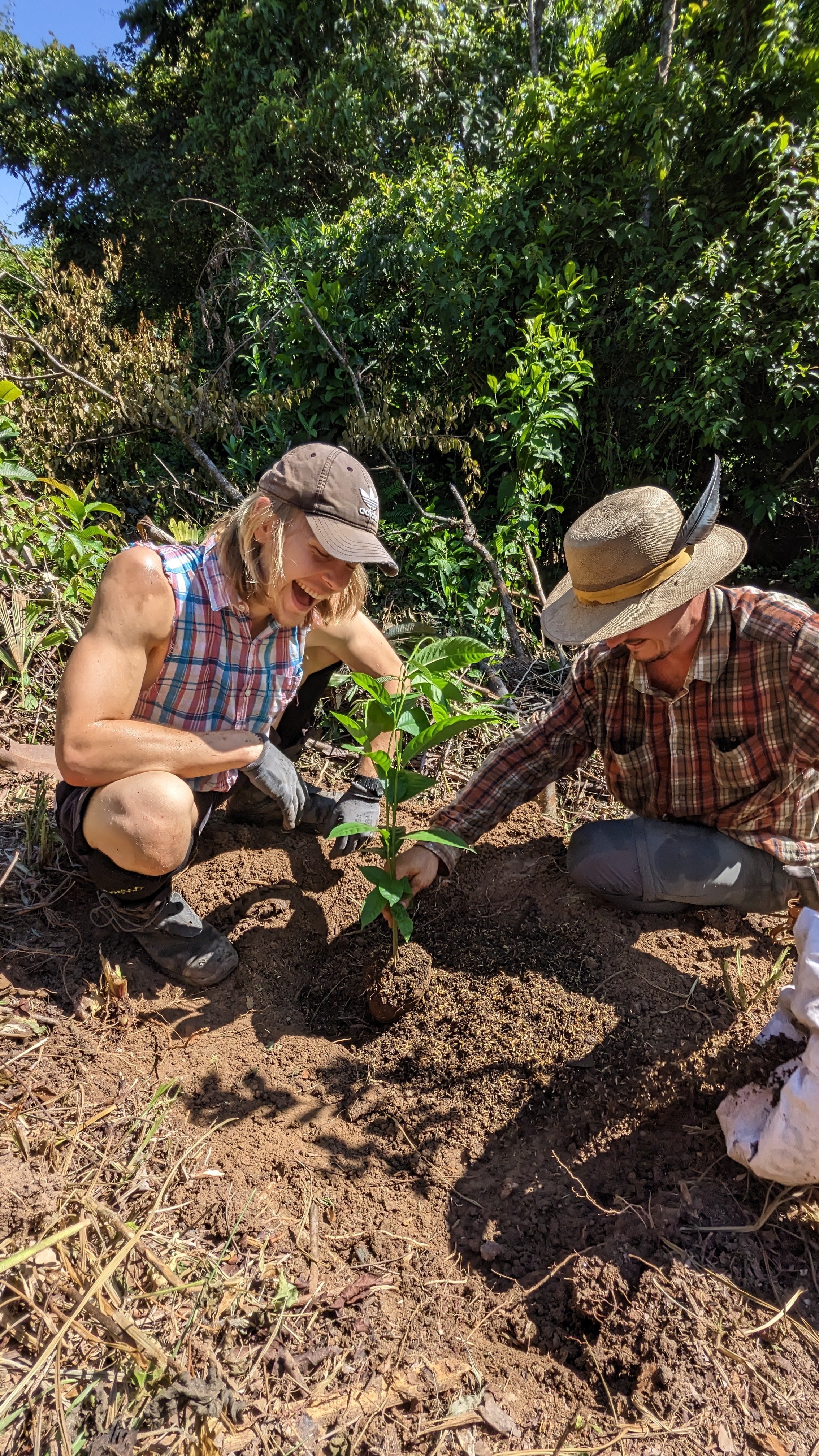
Perhaps you can start by growing some herbs or veggies in your own backyard or by finding a farmer's market to visit each week. How about hosting a monthly dinner with your neighbours and inviting everyone to bring a homemade dish? Which local businesses in your city can you become a patron of?
Maybe you are already living on a piece of land you'd like to develop into a community project. There could be a nearby seed saving bank to help you get started on growing heirloom varieties of vegetables or neighbours to borrow tools from and donate building materials. Often times there are school groups looking for volunteer opportunities and gardening clubs who have years worth of knowledge to share. The farmers in your area will also be a valuable resource to connect with, having insight into growing seasons and weather patterns. If you are looking to raise animals, they may be willing to help you get started and even sell animals to you.
Permaculture is all about creating a thriving and regenerative world for us to live in and enjoy. We can use smart and slow solutions right where we are to improve the way we meet our needs and the needs of others.
As I spend another beautiful day at Rancho Mastatal I am filled with gratitude to be able to learn these lessons in the heart of a thriving community. With each meal, every visit to the garden and orchardsand spending time in structures that have been lovingly made from the land, I realize how this interwoven life has enriched me and changed the way I will live from now on.


What is Syntropic Farming?
Syntropy and entropy are two forces at work in this universe. Syntropic farming is tapping into this universal force and leveraging it to produce a product useful to humans, food.
By Joshua Wright, apprentice 2022
Syntropy and entropy are two forces at work in this universe. Entropy being the movement of matter and energy towards chaos and simplicity over time. Syntropy being the opposite, of the movements of matter and energy towards higher levels of complexity and order over time. Syntropic farming is tapping into this universal force and leveraging it to produce a product useful to humans, food.
On Earth plants are the drivers of syntropy. Through photosynthesis they accumulate solar energy and make that energy available to other forms of life. Over time this accumulation of energy has led to the ability of our planet to support the order and complexity of life we see today.
To understand how we can use this for food production we need to have an understanding of a natural forest system and how it evolves and accumulates energy.
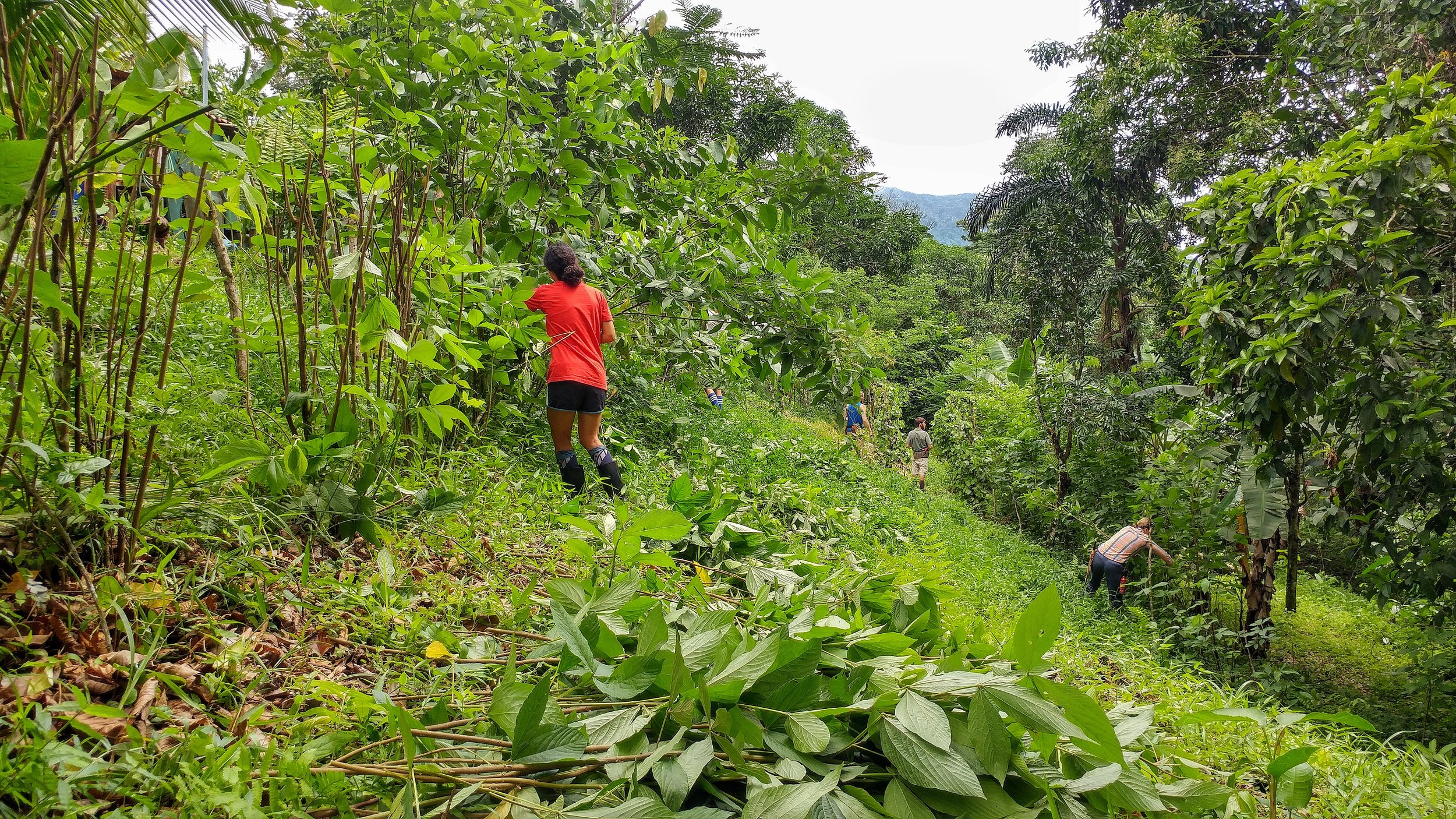
A forest cycle:
We define a forest cycle as from clearing to clearing.
Starting with a blank slate, "weeds" and grasses colonized bare ground. Slowly energy accumulates supporting shrubs, small trees and eventually a mature forest. Then an old tree dies and falls creating a new clearing.
This is one cycle. This process can take thousands if not millions of years. Then the next cycle begins anew. However this cycle isn't starting from the same point as the cycle before. The system has millennia of accumulated energy stored as organic matter, topsoil and biodiversity. The time taken in cycle two to reach a mature forest is dramatically reduced compared to cycle one.
This is syntropy at work!
When we start a syntropic agroforestry system we start by creating a clearing, kick-starting cycle two.
So what do we plant in this clearing?
When selecting our plants we want to make sure to represent all the different layers in a mature forest. The layers are categorized as Emergent, High, Medium and Low.
Mimicking a forest our emergent layer should occupy 20% of the canopy. Below that our high layer will occupy 40%, Medium 60% and low 80%.

Image by Orchard of Flavours
These layers are directly related to how much sunlight a plant needs to thrive. E.g. Papaya is emergent needing full sun. Most of your familiar fruit trees occupy the high layer, cocoa would be in the medium or low layer along with coffee as they tolerate lots of shade.
Another consideration when deciding what to plant is how quickly a plant will grow.
This takes us to a key idea in syntropic farming.
Maximizing solar energy capture
We don't want to have to wait several years for our fruit trees to be mature to have a closed canopy with maximum solar capture. We want to harvest this energy immediately.
To do this we have to design our syntropic farm not only in space but also in time.
A helpful tool is to further categorize our plants by their life cycle. In syntropic farming these categories are labeled: placenta 1, placenta 2, secondary 1, secondary 2 and climax.
Placenta 1 are fast growing annuals that mature within 6 months. E.g. Radish, arugula (note. these are also part of the emergent layer, not because they are tall trees, obviously, but because of how much sun they need.)
Placenta 2 are slower growing annuals or biannual that are ready to harvest between 6 months and 2 years. E.g. Banana, pineapple, yuca.
Secondary 1 are fast perennials ready between 2-10 years.
Secondary 2 are slow perennials, 10-15 years. E.g. Most fruit trees.
Climax, this category takes over 15 years to mature. E.g. hardwoods and nut trees.
Now I know this is sounding awfully complicated and it is. So let's take a step back and see what this looks like when we start putting it all together.
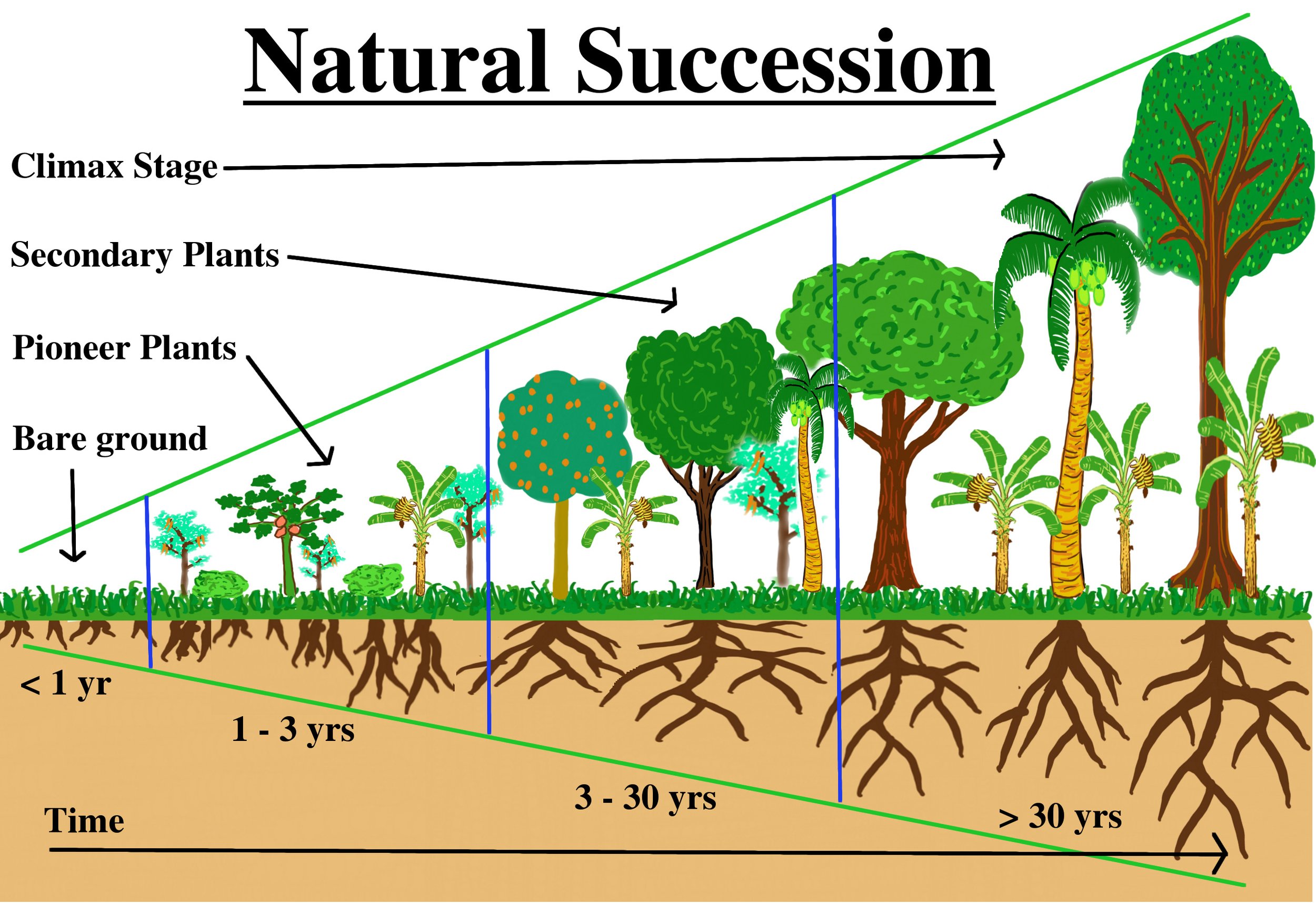
Image by ECHOcommunity
Understanding our layers and succession planting
We have our clearing, the stage is set.
In a mature forest all the seeds of the different layers are present in the soil together at the same time. When that clearing occurs they all start growing together, some fast, some slow, occupying all the different layers. We will do the same.

Sowing a variety of annuals, perennials, fast and slow growing plants. With good planning what we get is our annuals popping up, harvesting sunlight, shading the soil and providing us with a crop in the first few months. When we harvest those annuals, light and space is opened up for the next succession of plants to come through. There is always a cover of green, growing leaves on our site, photosynthesizing and shading the soil.
After a few years, after the harvest of placenta 2, our fruit trees will be well established saplings. They have been protected from wind and harsh sun, they have had the soil loosened by the roots of all the plants that came before and they are in the perfect position to thrive!
Your Syntropic orchard awaits
Through observing how natural systems work, partnering with nature, humble stewardship and intentional management, humans have the potential to shepherd and accelerate succession. Regenerating eroded landscapes, reversing desertification and growing plants to eat. Let's make our food production systems part of the solution.
Learn More
Join us for one of our yearly workshops about permaculture, farming, plants and more!
Phytochemicals: The Key to a Longer and Healthier Life
The way we treat the soil directly affects the plants health, which in turn affects our health. How we choose to farm shapes what we become. We are what our food eats.
By AJ Nolan, apprentice 2022
“The health of soil, plant, animal, and man is one indivisible whole.”
-Eve Balfour
There is not a doubt in my mind that living at Rancho Mastatal for the one year apprenticeship has contributed to extending and improving my life. I have been lucky enough to enjoy countless thought-provoking discussions, meaningful manual labor, and untethered access to healthy, local food.

In this article, I will focus on one aspect of our healthy lifestyle – food. Our foodshed is quite small and we always have access to seasonal fruits and vegetables. Using a refractometer, we have compared the nutrient density in the produce from our small foodshed to conventional supermarket produce. The Brix readings we get from our local, organically farmed produce are significantly higher than average Brix readings obtained from the supermarket produce. The Brix value indicates the number of soluble solids present in a sample of food. A higher Brix value indicates an increase in plant sugars, which can translate into a higher number of bio-available nutrients. Why does our hyper-local produce have more nutrients than supermarket produce? Phytochemicals.
Phytochemicals are compounds that plants make to help them defend themselves, facilitate growth, and communicate. Every plant on this great green earth makes phytochemicals. Stressors like temperature, drought, harvesting, and toxins cue plants to make phytochemicals. Plants then use these phytochemicals to communicate with their kin, warning them of nearby pests and pathogens. Plants are stuck in the ground and without these phytochemicals, they would be defenseless. They work as preventative medicine when they are a part of our diet. Phytochemicals neutralize toxins, aid in cellular cleanup, and retard the growth of cancerous cells. There are currently no daily dietary requirements for phytochemicals like there are for minerals and nutrients. This is a catastrophic oversight as phytochemicals are essential for optimal health. Phytochemicals lend flavor, color, and taste to every fruit, vegetable, grain, meat, and dairy product you’ve ever eaten.
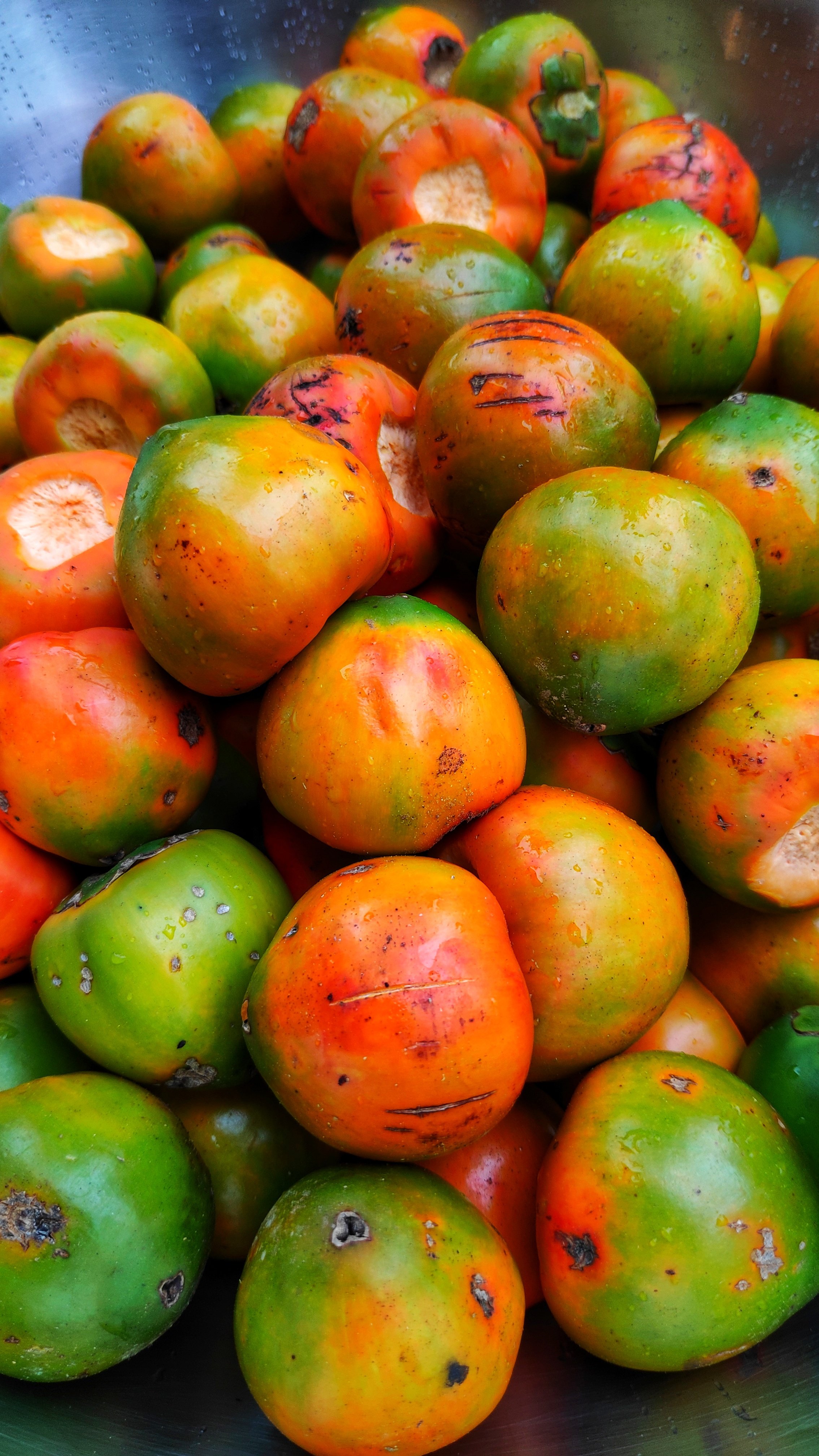
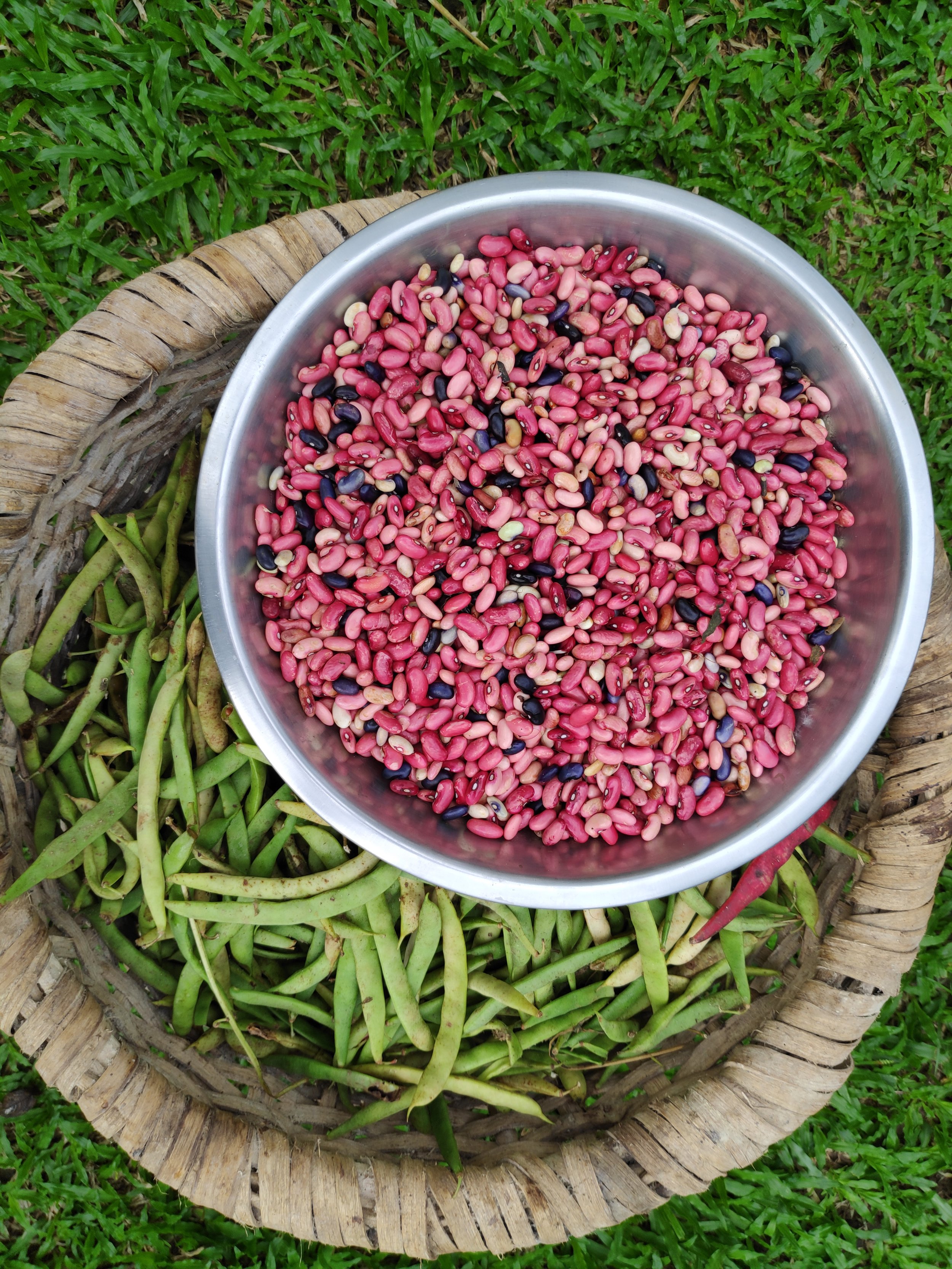
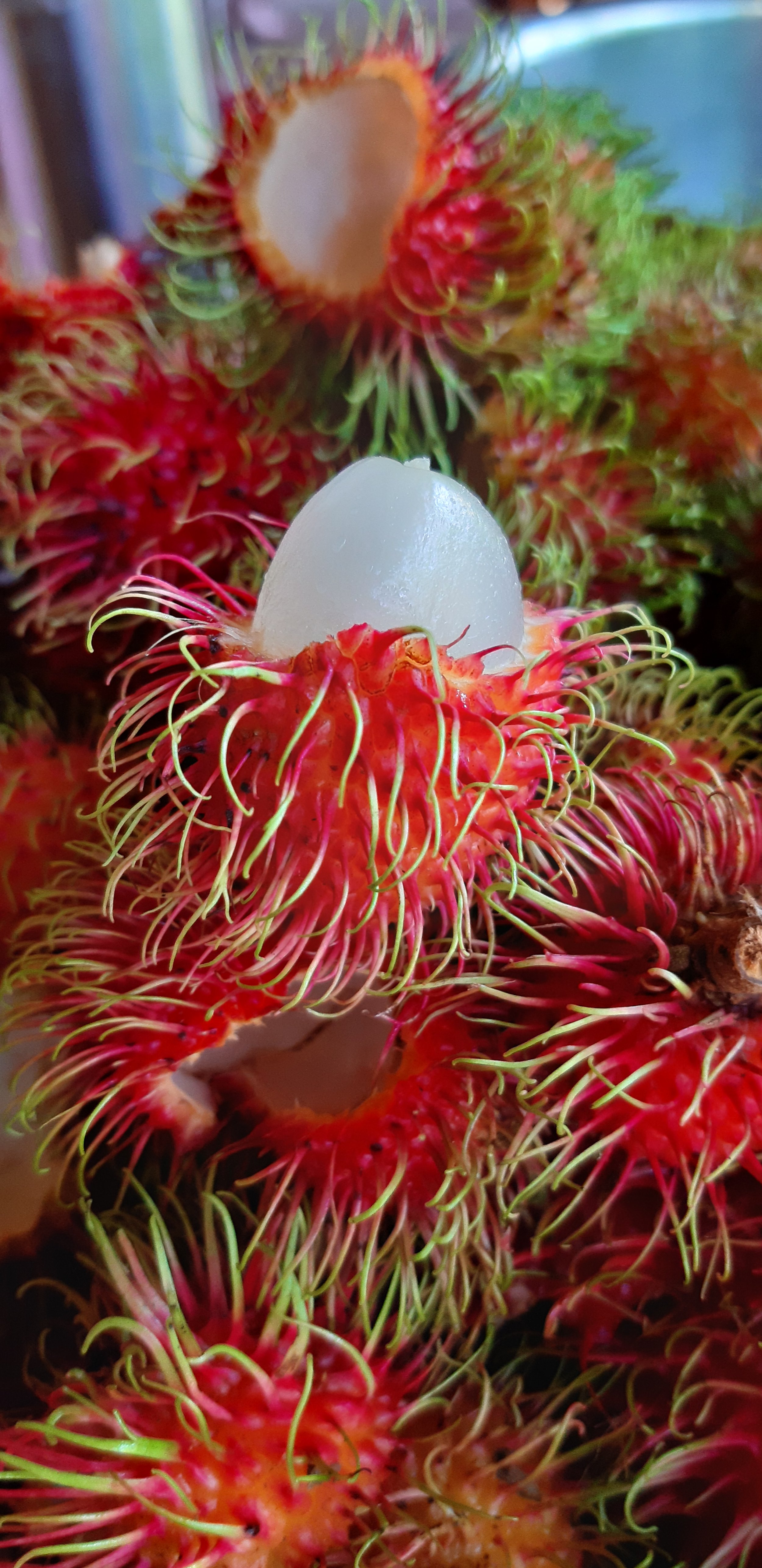
There are over 50,000 known phytochemicals. The most widely studied group of phytochemicals is called polyphenols. Polyphenols lower the risk of coronary heart disease, improve vascular health, and reduce inflammation through antioxidant and anti-inflammatory effects. When combined with a healthy gut microbiome, phytochemicals can perform essential cellular maintenance. Resveratrol is a polyphenol found in blueberries and red wine that promotes the death of tumor cells through its strong antioxidant and anti-inflammatory properties. Lycopene, found in tomatoes, influences intercellular communication and immune system modulation. Flavonoids are a subgroup of polyphenols that specifically inhibits the activity of enzymes associated with inflammation. Quercetin is a flavonoid pigment that is found in citrus, onions, grapes, and tea that inhibits the activity of enzymes linked to inflammation. It also aids in reversing diabetes as it blocks the uptake of glucose and triggers the destruction of existing fat cells.

Many phytochemicals act as antioxidants, thus reducing the amount of “reactive oxygen species” (ROS) or free radicals. All the cells in our body are constantly using oxygen to burn energy to fuel their activities. This oxidation process creates free radicals. Free radicals can cause tissue damage if they remain in our bodies for too long. This buildup can lead to chronic ailments such as autoimmune disorders and cancer. Antioxidants help in disposing free radicals, halting the acceleration of chronic diseases. What we need in our diets is a steady supply of these phytochemicals that act as antioxidants. Diets that are plentiful in whole grains, legumes, nuts, seeds, and colorful fruits and vegetables contain antioxidant phytochemicals necessary to maintain our long-term health.
Certain farming practices can influence the number of phytochemicals in plants. Conventional agriculture utilizes excessive amounts of pesticides and chemical fertilizers, inhibiting a plant’s ability to make phytochemicals. A study conducted by the British Journal of Nutrition found that organically grown foods contained 20 to 60 percent more phytochemicals than conventional farmed foods. Degraded soil undermines phytochemical production, leaving crops more vulnerable to pests and diseases. This leads to a greater use of pesticides that end up in our food and negatively impact our health. To increase phytochemical production in plants we need to rethink the way we farm. Regenerative agriculture practices that build soil health are key. These practices include minimal tillage, implementation of cover crops, composting, the utilization of soil amendments, and effective crop rotation without the use of chemical fertilizers and pesticides.
The way we treat the soil directly affects the plants health, which in turn affects our health. How we choose to farm shapes what we become. We are what our food eats.

Sources
“What Your Food Ate” by David Montgomery and Anne Biklé
“Nourishing Traditions” by Sally Fallon
“The Regenerative Grower’s Guide to Garden Amendments” by Nigel Palmer
“On Food and Cooking” by Harold McGee
Read Past Blog Articles
Improving Soils in the Humid Tropics of Costa Rica
Amending Calcium-Deficient Soils – A Tropical Permaculturist’s Approach
If You Practice Yoga, Practice Permaculture
Yoga. Permaculture. Two seemingly disparate systems of knowledge and practices. What does a morning vinyasa flow class have to do with a plant guild?
By 2022 apprentice Lucas
Yoga.* Permaculture. Two seemingly disparate systems of knowledge and practices. What does a morning vinyasa flow class have to do with a plant guild? What does a contour line have to do with downward facing dog? Sit back, find your beginner’s mind, and read on.
Here are 5 reasons to practice both yoga and permaculture:

#1 Ahimsa and permaculture ethics
Ahimsa is the first yama (observance) of yoga ethics. Ahimsa is non-violence, or translated affirmatively, it is compassionate living and celebrating the inherent sacredness of all life.
The three ethics of permaculture are earth care, people care, and fair share; there’s also arguably a fourth - transition.
Earth and human care are outward expressions of ahimsa. This is what grounds a skillful permaculturist AND a skillful yogi aspirant. An active practice of love is caring for the earth and caring for each other. All of permaculture and yoga is built on this.

#2 Prana and prosperity
Skillful permaculture yields prosperity and abundance of: food, fuel, diversity, resilience, and interconnection. By harnessing natural forces and energy (prana) like rainfall and sunlight, permaculture produces more life-serving outputs like food or wildlife habitat, with less energy invested.
By working with our breath in yoga, we cultivate prana, mastering our life force from within. This yields more steadiness and ease even in challenging physical movements, poses, or expressions. Many yoga sequences are based off of optimally activating the nadis (energy channels) in the body to rebalance and revitalize us. We hold downward dog after opening our hearts in cobra. On a landscape, we plant vegetation on contour to catch and store water and minimize erosion.
With permaculture, we breathe life into a landscape, channeling prana along the nadis, and the result is prosperity.

#3 Observe and interact
Observe and interact is the first principle of the permaculture design methodology.
When observing nature and the land from a permaculture paradigm, I notice how much sunlight a particular area gets, what the microclimate is, the qualities of the soil, and the wildlife present. I devote especially close attention to an orchard slope and make a mental note of which plants need pruning and which need more support. I prune, I apply some nitrogen rich compost, and I come back in a few days to observe again. I learn from my observations and I learn from my actions.
Observation is a cornerstone of yoga. We observe our breath. We observe our body. We bring conscious attention to our thoughts and allow them to pass through our awareness like leaves floating down a river. By observing closely we build our awareness.
We then engage the breath, mind, and body in various exercises and movements. The interactions lead to new observations in perfect interdependent co-arising. We feel greater well-being, samadhi, or connection to the divine.

#4 Sangha and community
Well-being is supported in community (sangha). In spite of a toxic dominant culture that tries its best to separate us and 2+ years of the covid experience, people found ways to connect and continue to create community. Yoga centers offered classes online, outdoors, or utilized other larger community spaces to accommodate mats being farther apart. The act of practicing together creates bonds between all beings present. The possibility of harmony emerges.
Mutual support is an essential aspect of successful permaculture communities and landscapes. From a permaculture perspective, we create the conditions needed for mutual support. We create a greywater system to disperse water to plants that need the water, plants who then filter the water to be clean enough to continue on in the water cycle. We create a salt-water brine to submerge green papaya in order to support the growth of Lactobacillus bacteria, who then ferment our raw papaya into tasty kimchi that improves the fortitude of our gut microbiome. We exist on this earth in a community of life.
Inclusive yoga spaces where people come together to practice creates communities of mutual support just like a plant guild of wild hops (nitrogen fixer and mulch), caña india (contour stabilizer), vetiver (erosion control), and pineapple (food crop). Thich Nhat Hahn said that the next Buddha will be a Sangha, a community. Perhaps that is a yoga community, or the permaculture community, or a synthesis of many communities.

#5 Skill in action
Yoga is skill in action. Permaculture is skill in action. Yoga is reunion. Permaculture is reunion in this 3D material reality.
What does social and environmental justice look like? What does healing look like? What does a healthy community and landscape look like? Drab concrete, hazy air, industrially processed food, and the pounding sound of heavy machinery? Or green spaces, fresh air, abundant fruit hanging off trees, and the song of birds and lively human conversation?
Both permaculture and yoga reckon with cultural appropriation, privilege, and the intersectional systemic injustice of our day. Both are attempting to bring forth ancient wisdom that differs from current societal norms. Both have immense potential to heal: individuals, communities, and the biosphere. Both are vehicles of transformation.
Stale, sterilized yoga practice in commercialized studios of the capitalistic west is not enough. Reunite with the divine AND local water, food, energy, and educational sovereignty. Activate your chakras AND your connection to the community of life. Put your head in the clouds AND your hands in the earth.
If you practice yoga, practice permaculture
All the “reasons” above are really all the same. A personal yoga practice can feed and nourish oneself to devote even greater energy into permaculture practices out in the world. An applied permaculture approach to one’s home and community creates opportunities for healing out in the world. The co-founder of the yoga studio I completed my yoga teacher training at often speaks about how important it is to take our yoga practice with us off of the mat. Bringing yoga into our everyday lives. I don’t know of a better systemized way to do that than through permaculture. If you practice yoga, practice permaculture.

Sources and notes:
1. Bhagavad-Gita
2. Skill in Action (Michelle Cassandra Johnson)
*Yoga means many things to many people. The yoga I’m writing about is the yoga I practice and study. Mostly Hatha-Raja yoga, with lineage through Lindsay and Bart of Global Breath in Durham, NC and their teacher Dharma Mittra in NYC
Want to Learn More About Permaculture?
Join us for one of our yearly Permaculture Design Certifications.
Check Out these past blog articles about permaculture
Why the World Would be a Better Place if Everyone Took a Permaculture Design Certification
Why you Should Take a Permaculture Design Certification course at Rancho Mastatal, Costa Rica
The Problem with Permaculture – Understanding Elements and Functions


Fermented Plant Juice (FPJ) and Its Application
Learning how to prepare these ferments will not only add macronutrients to your soil system but will increase the bioavailability of preexisting nutrients in your soil. Gardening really boils down to being a soil steward, which basically means we’re ranching microorganisms.
By Connor Gilmartin, apprentice 2022
Earlier this year, I wrote a short article on preparing a garden amendment called Water Soluble Calcium (WCA). That short essay focused on how to make small batches of WCA in the comfort of your home using discarded eggshells and vinegar. Water Soluble Calcium is one of the five pillars of Korean Natural Farming (KNF). The remaining four recipes KNF methodology encourages us to utilize are Lactic Acid Bacteria (LAB), Fermented Plant Juice (FPJ), Oriental Herbal Nutrient (OHN) and Fish Amino Acid (FAA). Because this article won’t cover the remaining three ferments in-depth, I highly recommend looking into the University of Hawaii’s College of Tropical Agriculture’s papers on this subject. The authors of those articles do a great job at explaining the process of making and applying these homemade amendments. These KNF ferments we’re talking about have a symbiotic relationship with one another. Generally speaking, they serve your garden’s needs best in the presence of each other – especially when they’re used to inoculate biochar or indigenous microorganism (IMO) culture.

It’s worth mentioning the obvious here - everyone’s gardening environment is completely unique, and every soil system has different nutritional requirements. For the sake of brevity, it’s necessary to generalize a bit. If you’re interested in diving deeper into soil science and plant nutrient uptake, I would highly recommend Jeff Lowenfels’s books Teaming with Microbes and Teaming with Nutrients, as well as Steve Solomon’s The Intelligent Gardener.
I chose to write my first article for Rancho Mastatal on Water Soluble Calcium simply because of the abundance of eggshells we have here, and our robust supply of homemade vinegars. While Calcium is an essential macronutrient in plant growth and fruit development, it is only one piece – albeit a very important piece - of the puzzle of plant nutrient uptake. So, with that being said, lets learn about another pillar of Korean Natural Farming, Fermented Plant Juice (FPJ).
“Growth is controlled not by the total amount of resources available, but by the scarcest resource.”
Before we learn about FPJ’s, dynamic accumulators, and the fundamentals of fermentation, I want to ramble about Justus Von Liebig’s Law of the Minimum - a very important concept in regard to plant nutrient uptake. Liebig’s law states, “Growth is controlled not by the total amount of resources available, but by the scarcest resource.” This is particularly relevant when trying to rebalance minerals and macronutrients in your soil. In, Teaming with Nutrients, Jeff Lowenfels discusses the Law of the Minimum and writes, “plant growth is limited by the least abundant mineral, no matter how abundant the other minerals happen to be.” So, with that in mind, we can make more informed decisions when choosing how to fertilize our gardens.
Before we fertilize at all, a soil test is probably in order. The informed gardener understands that N-P-K listings on commercially available fertilizers only account for three of the seventeen elements necessary for plant life. Many of us have been tricked into thinking Nitrogen, Phosphorus and Potassium are the only elements we need to consider when fertilizing our soil. This couldn’t be farther from the case, and has resulted in massive amounts of excess nutrients polluting our watersheds and harming aquatic life essential in maintaining Earth’s homeostasis. I am a firm believer in a balanced approach to gardening, and certainly don’t believe all bagged fertilizers and amendments are the devil’s work. There are amazing, conscious companies that specialize in producing ethically sourced organic fertilizers. I have purchased bulk earthworm castings, mycorrhizal inoculants, crustacean meals, bokashi grain blends, and many more amendments that did not come from my garden. Does this violate Albert Howards’s Law of Return? Certainly. I am importing ingredients from hundreds, maybe thousands of miles away into my garden’s soil. The very nature of gardening for consumption violates the law of return. This is okay – gardening is a dynamic process, yields can be achieved and measured in many ways. As Masanobu Fukuoka writes in One Straw Revolution,
“It doesn’t matter how the harvest will come out. Just sow seeds and care tenderly for the plants and soil… The ultimate goal of farming is not the growing of crops but the cultivation and perfection of human beings.”
I learn something every season I germinate seeds. I feel an overwhelming sense of satisfaction and joy when I feed my plants a nutrient-rich tea, or spread a cover crop on a resting hugelmound. Maybe these more philosophical “yields” are really what I crave… Who am I kidding – I also want massive, nutrient-dense broccoli, that I can brag about – and share – with my neighbors. Point in case, there are many ways to address fertilization requirements in the garden. I’m not a devotee of any gardening guru, and I’m not advocating for any one specific strategy. I’m interested in holistic plant and soil stewardship that integrates many approaches.

Now, lets get down to business. FPJ’s are made using two simple ingredients. Chopped up biomass and brown sugar. There are a whole lot of plant species that can be used to make FPJ’s. I’ve used the young, vigorously growing tips of mugwort, comfrey, stinging nettle, wormwood, tulsi, and Mexican sunflower to name a few. I’ve also used unripe persimmons, pumpkins, and other fruits and vegetables to make Fermented Fruit Juice (FFJ). There are a whole lot of individual plant species and combinations that experienced horticulturalists have found to be beneficial in their gardens. It’s been observed that certain plants have a tendency to accumulate one macronutrient more than others. In the Korean Natural Farming and biodynamic gardening community, these plants are generally referred to as, “dynamic accumulators.” The concept of dynamic accumulators is a bit contentious, and some people doubt the idea. To be fully transparent, I do not know enough to say with 100% certainty that certain plant species have an affinity to accumulate one macronutrient over the other. However, I’ve visited many extremely productive, beautiful garden spaces whose caretakers embrace this idea, and it certainly doesn’t seem to be hurting anything. I will leave this entirely up to you to decide for yourself. Horsetail (Lorim ipsum) is known to have a high concentration of silica in its stalky biomass. Bamboo shoot FPJ is known to contain high amounts of nitrogen. FfJ made from young, unripe fruit can contain high amounts of phosphorous. With mindful intervention, we can amplify the nutritional impact these biomasses have on our garden by utilizing the friendly yeasts and other microorganisms drifting about. By feeding the microorganisms that reside on the biomass of these plants organic brown sugar, we catalyze the process of fermentation. The weak alcohol that is produced by the yeast as they nibble on the sugar we’ve so graciously provided them extracts chlorophyl from the biomass and other ethanol-soluble compounds contained in the plants via the process of osmosis. These compounds are called phytochemicals. The following section will cover the materials needed and list the step-by-step process to produce and apply FPJ.
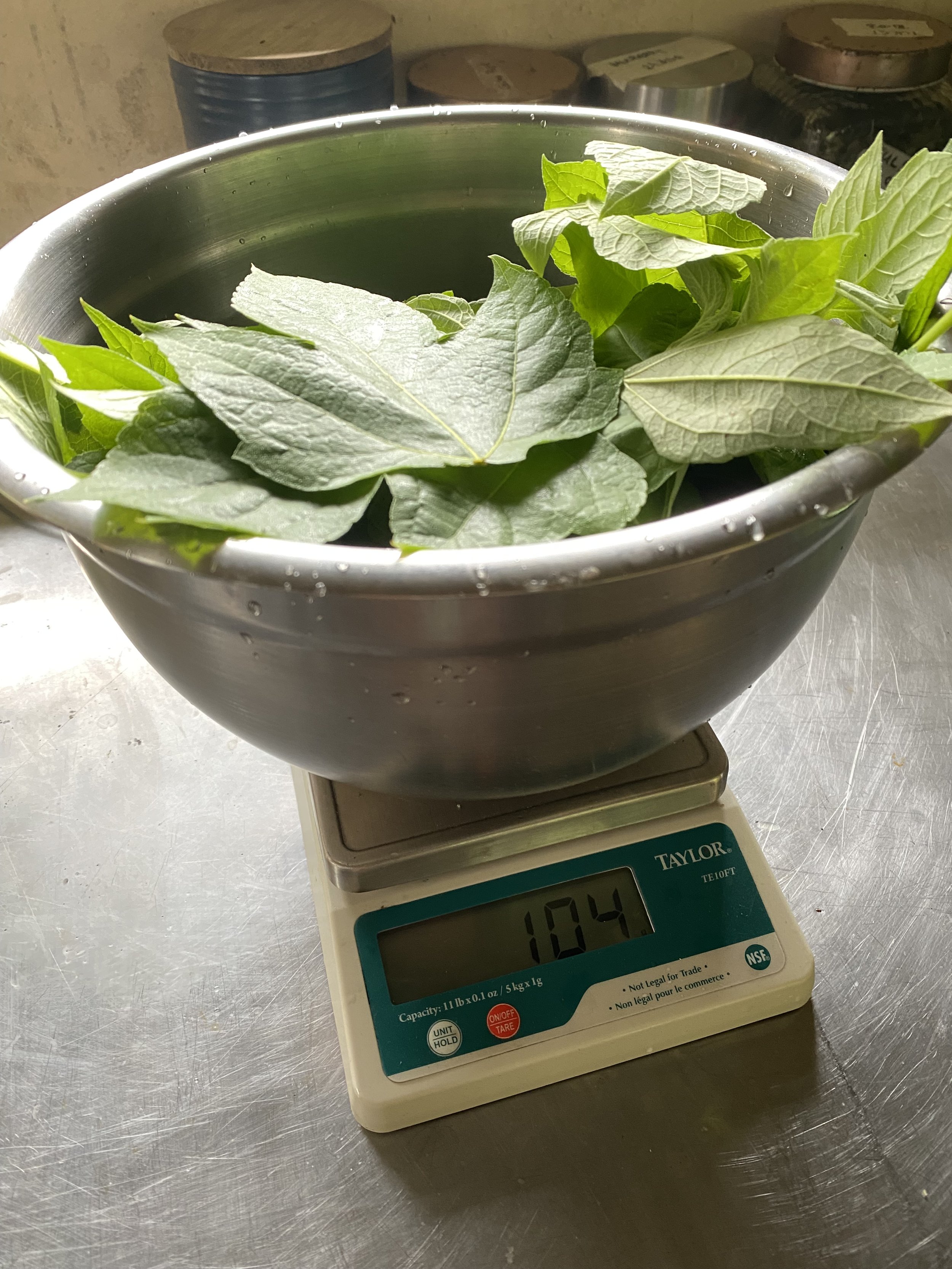

Materials
I’ll begin by listing the materials you’ll need to make a batch of Fermented Plant Juice (FPJ). They are as follows:
Glass jar or food-grade plastic container
A sharp, clean knife to chop up the biomass
Organic brown sugar
A breathable cloth to act as a “lid” (cheesecloth or nut milk bags work quite well)
How To Prepare a batch of FPJ
Collect plant material
It is ideal to harvest the biomass before sunrise. Cut the young, vigorously growing tips of your desired plant and store in a clean container
Harvesting before sunrise ensures the plants are in respiration-mode, not photosynthesis-mode
Avoid collecting biomass during or after a heavy rain event
Cut and weigh the plant material
Do not rinse collected plant parts, to conserve surface microorganisms
Record weight of biomass
Add brown sugar
1:1 (brown sugar to biomass) ratio. If you have one pound of comfrey, put in one pound of brown sugar. Coat as much of the surface area of the plant material as possible to encourage the fermentation process
Pack the brown sugar-coated biomass into a fermentation vessel
Pack tightly
Attach breathable lid using string or a rubber band, depending on the size of the fermentation vessel
Store the covered container in a well-ventilated area away from light and extreme heat or cold
Check the container after 24 hours and adjust the volume if necessary
Your fermentation vessel should be no more than 2/3 full. If the container is too full, the microbes will not have enough air to properly ferment.
Let the contents ferment for 4 -7 days
You will know that fermentation is occurring when bubbles start to form in the liquid
Fermentation is complete when the plant material floats and the liquid settles at the bottom, there is a slightly alcoholic smell due to breakdown of chlorophyll and the liquid tastes sweet, not bitter. It is possible that the plant material doesn’t form a distinct layer in the solution, so these are loose guidelines – everyone’s fermentation environment is different. This process is heavily influenced by the ambient temperature of the environment you live in.
Strain the solution
Separate the plant material from the liquid
The spent biomass can be added to compost or mulched directly into your soil
Store the FPJ
Transfer FPJ into a clean ball jar or food grade plastic container
Cover with a loose lid - the microorganisms in the solution are very much alive and will continue to produce carbon dioxide as they consume leftover sugar. This could cause a jar to explode if the lid is on too tight.
How To apply FPJ
Dilute at a ratio of 1:500, 1:800 or 1:1,000. This translates to 4-8ml of FPJ per gallon of water. It’s powerful! You can always add more, you can never add less.
The dilution of 1:800 or 1:1,000 should be used if:
You’re applying a mixture of different amendments (ex. WCA + FPJ + FAA)
You’re applying FPJ in hot weather
FPJ can be applied as a soil drench (diluted in a in a watering can or other water dispersal system) or as a foliar spray. Apply the solution once a week or so, no more than once a week. Try and apply FPJ’s that were prepared using biomass that was collected at a similar stage of the plant’s growth cycle to the ones you’re feeding. For example, use a light dilution of young mugwort FPJ for young plants, and use an FFJ of unripe, green fruit when those plants are beginning to enter their reproductive stage of development.
Korean Natural Farming is a dynamic process that requires familiarization with the unique terroir of your gardening environment. Just like baking sourdough or making kombucha, preparing KNF amendments might require some trial and error. I feel inclined to repeat – “dilution is the solution.” These ferments are highly concentrated. Apply wisely, consciously, and out of direct sunlight. Take your time, enjoy the process, and revel in the beneficial microorganisms you’re stewarding.
Learning how to prepare these ferments will not only add macronutrients to your soil system but will increase the bioavailability of preexisting nutrients in your soil. Gardening really boils down to being a soil steward, which basically means we’re ranching microorganisms. Imagine yourself as a benevolent god, feeding trillions of beneficial soil macro and microbiota for the betterment of the world. Your plants will thank you.
Happy gardening, mulch love.
Connor can be contacted via email with any questions or professional inquires (connorjgilmartin@gmail.com).
“I sometimes think that never blows so red
The rose as where some buried Caesar bled;
That every Hyacinth the garden wears
Dropt in her lap from some once lovely head”


How to Make Your Own Homemade Soap
Soap and permaculture go hand in hand. Making our own soap meets our environmental and sustainable goals, and beginning to do things for ourselves instead of relying on the big companies.
By core team member Ali Ostergard
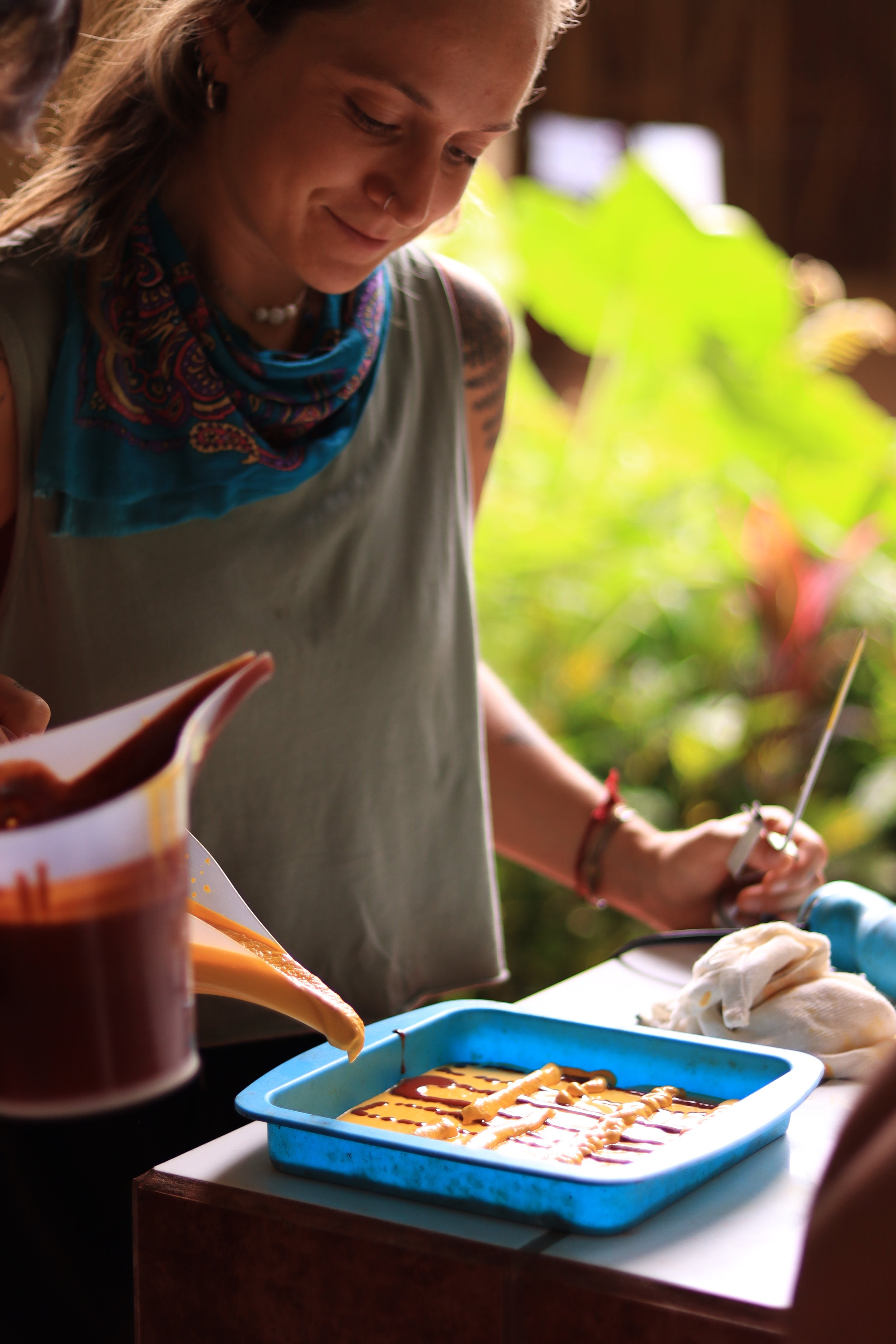
Story has it that soap was discovered by the women of Mount Sapo, Italy as they were washing in the river and noticed lathery bubbles beginning to form. These bubbles began to form after a volcanic eruption dumped ash into the river that flowed over their ceremonial location where they sacrificed animals to the gods. The combination of ash, animal fats, and water created the lather and bubbles, and what today we know as soap.
Soap, despite what you read on the back of a box of generic soap, is formed by three simple ingredients: sodium hydroxide (lye), fatty acids, and water. So for the town of Mount Sapo the volcanic eruption created ash, which contains sodium hydroxide, which fell into the waters of the river, which then flowed over the ceremonial areas that contained animal fats, the fatty acids, and once these elements all combined they reacted to create a simple soap.
Obviously as time progressed we modified and perfected this soap process and the ingredients. None the less, the process of soap making is still very simple and accessible to every household. If you use soap, which I sure hope you do, there is no reason to not be making it yourself.
WHY MAKE YOUR OWN SOAP
For us here at the Ranch we have three primary reasons for making our own soap, both body and dish.
Environmental: Creating your own soap allows you to assure it contains only biodegradable ingredients that aren’t harmful for the environment (especially important if you are using your grey-water to irrigate crops). Also, by making your own soap products you can reduce or even eliminate the packaging waste that comes along with store bought products. Think, everyone says, ‘oh I only use one shampoo bottle a year,’ times that by the millions that do, you end up with a lot of plastic bottles in landfills. Where if you make your own, you can reuse that bottle and reduce your waste.
Personal Health: Did you know that cosmetic companies and products outside the E.U. are not fully regulated by any health department? The rule is the ingredient needs to be proven harmful before it will be taken off the shelf, rather than proven safe before being put on the shelf. What company do you think is going to prove their product harmful…? When you look at the ingredients on the back of any cosmetic product, including soaps, the list is very long and full of words that can barely be pronounced. Our skin is our largest organ, and absorbs what we put on it, so does it seem healthy to be lathering up in something that contains Dimethicone 200/50, Disodium Edta, Stearoxytrimethylsilane, etc… every day? By making your own soap, you can insure the ingredients going into it are safe.
Be a Producer Not a Consumer: Not only is there immense satisfaction in making your own soap and products, but you are moving away from relying on outside sources for your basic needs. We are big believers in this here at the Ranch, not just with soap, but with building your own home, growing your own food, and if you can’t do it then supporting your neighbor that can. Check out our workshops that will help you begin learning how to do more of these basic skills.

WHAT IS SOAP
Soap as mentioned earlier, is made up of our three simple ingredients (lye, fat, water), that when combined go through a chemical reaction called saponification. There is some basic chemistry that happens here, that I’m not going to go into too much, but basically the process of saponification is the reaction that occurs when our lye water is combined with the fatty acids, and this process creates soap.
A soap molecule is made up of a hydrophobic end (water repelling) and a hydrophilic end (water loving). The hydrophobic end grabs onto the dirt and grime, and the hydrophilic end grabs onto the water and washes that dirt away.
Soap is not naturally antibacterial. It simply works by washing away the dirt, bacteria, etc off the surface. There is a lot of new studies to suggest that antibacterial soaps are causing more harm than good, and are really unnecessary outside a hospital setting. You can do your research on this topic.
MAKING YOUR OWN SOAP
Here at the Ranch we have been making our own body and dish soaps since the beginning. This skill is something we teach to our apprentices, school groups, and in our Permaculture Design Course. We truly believe it is something that everyone can do!
Equipment
Digital scale (accuracy is important)
Thermometer
Stainless steel or glass bowls
Emersion blender (you can do this by hand, but depending on the oils you use this step could take a while)
Spatula
Soap mold
Eye and hand protection (glasses and gloves)
Ingredients
Sodium Hydroxide (also known as lye)
Fatty acids (almost any oil can be used, this is where you can be creative)
Water
Additives: salt, exfoliants like oats or coffee grounds, essential oils, milk, honey, clay, pigments, dried flowers, etc…
Fatty Acids or Oils
You can use a variety of different oils to make your soap; the important thing to note is that each oil has a different amount of lye needed for saponification to happen. I’m going to give the recipes we use for our bar and dish soap using the oils we use, but if you are to use different oils, you will need to change the recipe. There are good online recipe calculators; one we use often is thesoapcalculator.com.
A quick note on the oils we use and why, because that also goes into our ethics as an organization and meeting those when making soap.
Lard: lard makes an excellent soap; it creates a lathery, creamy, and hard soap. But, we mainly use lard because it is produced locally in the next town, we get the second rounds of lard that have already been used in the restaurants, meaning we are using a byproduct that would usually just be thrown out. Some people find this gross, but I find it super amazing! You are taking a product that would be thrown out and making it into something useful again. AMAZING! Food for thought, check out our blog about lard and why we are big fans.
Palm oil: this very controversial oil is also great in soap making. Why we use it? Again it is produced locally down the road, somewhere that isn’t contributing to new deforestation. Of all the vegetable oils, palm oil is the most productive and yielding. If you are going to deem palm oil bad, I would ask yourself what about coconut oil, sunflower oil, soy oil, or any mono culture crop that is essentially grown and produced in the same way.
Coconut oil: also produced locally, we get ours from a small family operation. We don’t put this in our dish soap, as it is much more expensive to use on such a large scale (we go through a lot of soap).
We get all these oils in reusable containers that we send back to be refilled, reducing our waste.
The list of oils you can use is large, pretty much anything that is considered a fatty acid can be used. I would encourage you to find a local oil source.
Short list of oils that can be used: avocado, canola, vegetable, olive, cacao butter, shea butter…

Recipes:
Bar Soap
188 grams coconut oil
375 grams lard
188 grams palm oil
188 grams water
108 grams lye
1 tsp. salt
Dish Soap
500 grams lard
500 grams palm oil
300 grams water
137 grams lye
1 tsp. salt
Instructions
Measure out all your ingredients into separate containers.
Heat your oils to between 110-130 degrees Fahrenheit.
Add the salt to the water and then add the lye to the water, stirring constantly to make sure it doesn’t stick on the bottom. Lye is very caustic and will burn if it gets on your skin. Wearing eye protection and gloves is recommended. The lye water solution will heat up quickly and begin off gassing, so keep your head away from directly over the bowl and do this in a ventilated area. You need to cool the lye water solution down to between 110-130 degrees Fahrenheit.
You want your oil and lye water to be at the same temperatures. Once they are both within a few degrees of each other (between 110-130 degrees Fahrenheit), pour the lye water into the oil and stir.
Using the emersion blender begin slowly blending this solution, being careful not to splatter the mix on your skin or in your eyes.
You are now looking to get the solution to a light trace. Meaning when you drizzle some on the surface the lines are visible on the surface.
Once you have reached a light trace you can then pour the mix into your molds.
Wait 48 hours to pop your soap out of the mold.
Place in a ventilated area and let it cure for minimum 3 weeks before using.
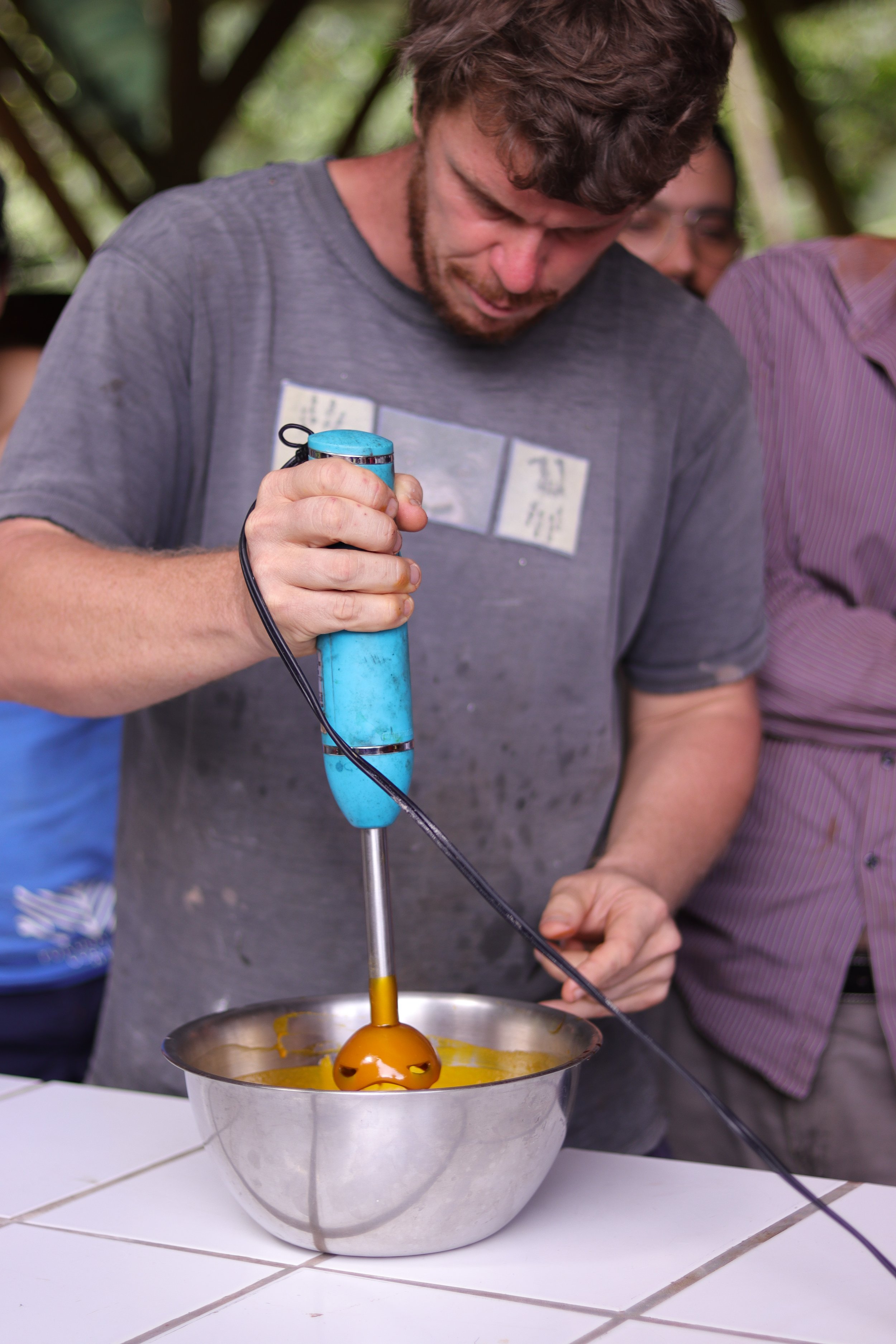
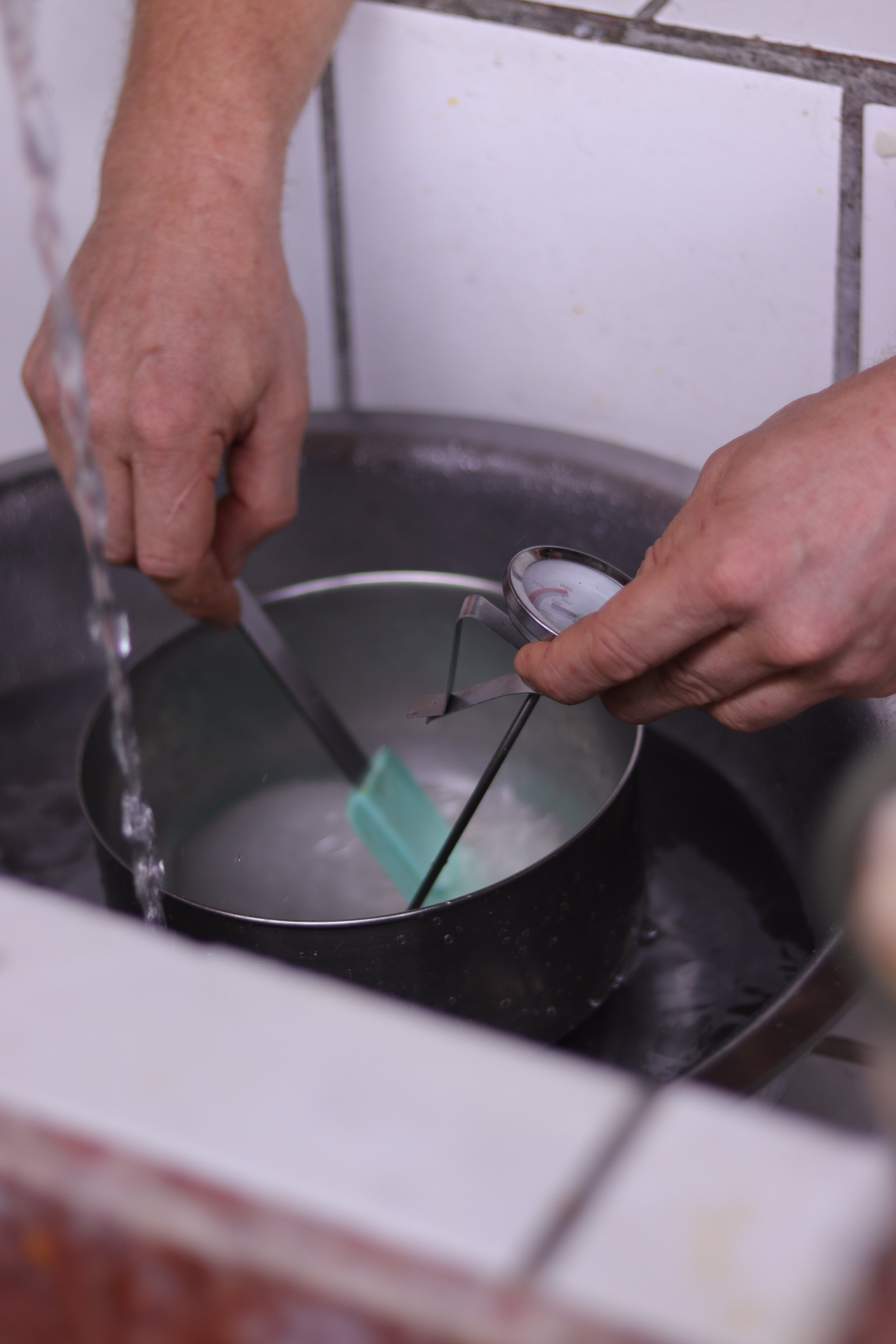
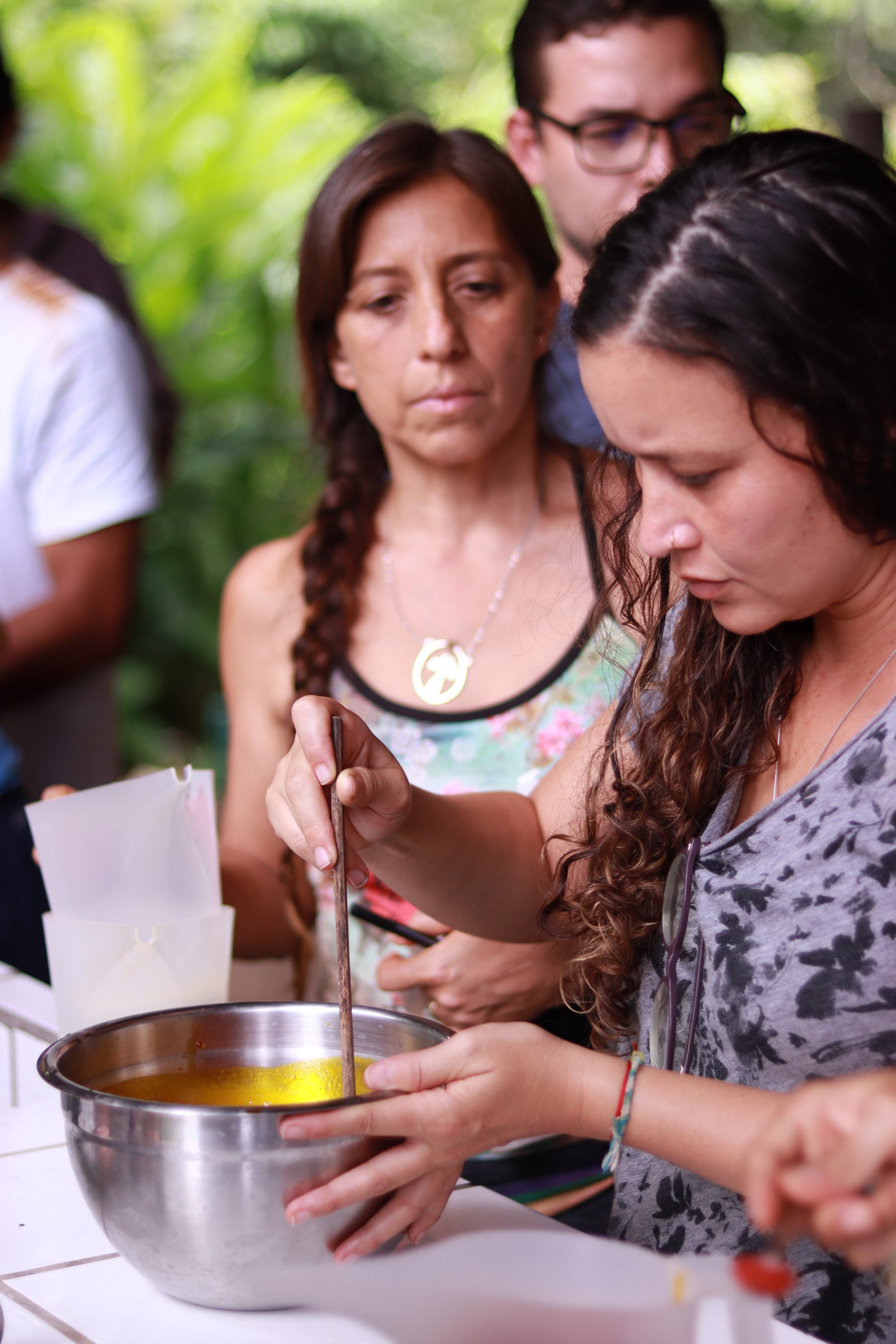
This version of soap making is called ‘cold process’, there is also a ‘hot process’ that involves slow cooking the ingredients which speeds up the saponification and curing time. To make liquid soap is another process and uses potassium hydroxide.

You can get super fancy and add fragrances, put in additives, and make pretty designs. I would do a couple simple batches before advancing to these. But in no time you will have perfected the process and be ready to make some gorgeous, sustainable, and luxurious soap.
Soap and permaculture go hand in hand. Making our own soap meets our environmental and sustainable goals, and beginning to do things for ourselves instead of relying on the big companies. Join us for one of our Permaculture Design Courses where we will have a class on soap making along with natural building, fermentation, soil building, and more.
Happy soap making!

The Problem with Permaculture – Understanding Elements and Functions
How often have you heard someone say “oh yeah we have a permaculture farm or garden because we have a [insert permaculture cliché element]”. They believe their project is permaculture based because it has some of the elements that are usually used as examples, such as composting or they have chickens, maybe a herb spiral or a rainwater catchment system?
By core team member, Nic Donati
DISCLAIMER. It is important to understand that Rancho Mastatal is by no means perfect. In fact much of what we have learnt has been the hard way, through many failures. I also don’t believe we are alone in making these sometimes questionable decisions. It is mainly for this reason that I feel compelled to try write this article and clarify some of the processes and ideas that are so often misunderstood, misrepresented and incorrectly applied in Permaculture. The goal of this article is not to criticize people for what they are doing, but merely to offer insight into the processes which will (hopefully!) lead to success and to learn from some of our failures (and of course successes!).
How often have you heard someone say “oh yeah we have a permaculture farm or garden because we have a [insert permaculture cliché element]”. They believe their project is permaculture based because it has some of the elements that are usually used as examples, such as composting or they have chickens, maybe a herb spiral or a rainwater catchment system?
I hear it all the time – the idea that somehow permaculture is a catalogue of elements and we have to use them in order for it to be permaculture. Herein lies the problem with permaculture… or as I would say the misunderstanding of what permaculture is.
These systems are all great systems and have proven success when used in the right context. Often they are used as examples in permaculture, as they do function very well in a number of contexts, have broad spectrum applicability and are relatively easy to install.
So why aren’t THEY permaculture, why am I saying that those elements are not permaculture if they work?
Well the simple answer is that permaculture is not a pre assigned group of elements; permaculture is a design methodology that helps you navigate through the myriad of options and select the elements that are going to provide the functions and outputs you desire.
Ok are you lost or confused? Let me break it down into examples of what I mean, I will give real world examples in order to help us understand what I mean by elements, functions, inputs and outputs.
The first thing we need to understand is what our context is and what our goals are. This will help us establish what functions we want to achieve and will help us understand what elements we might want to use in order to achieve these functions.
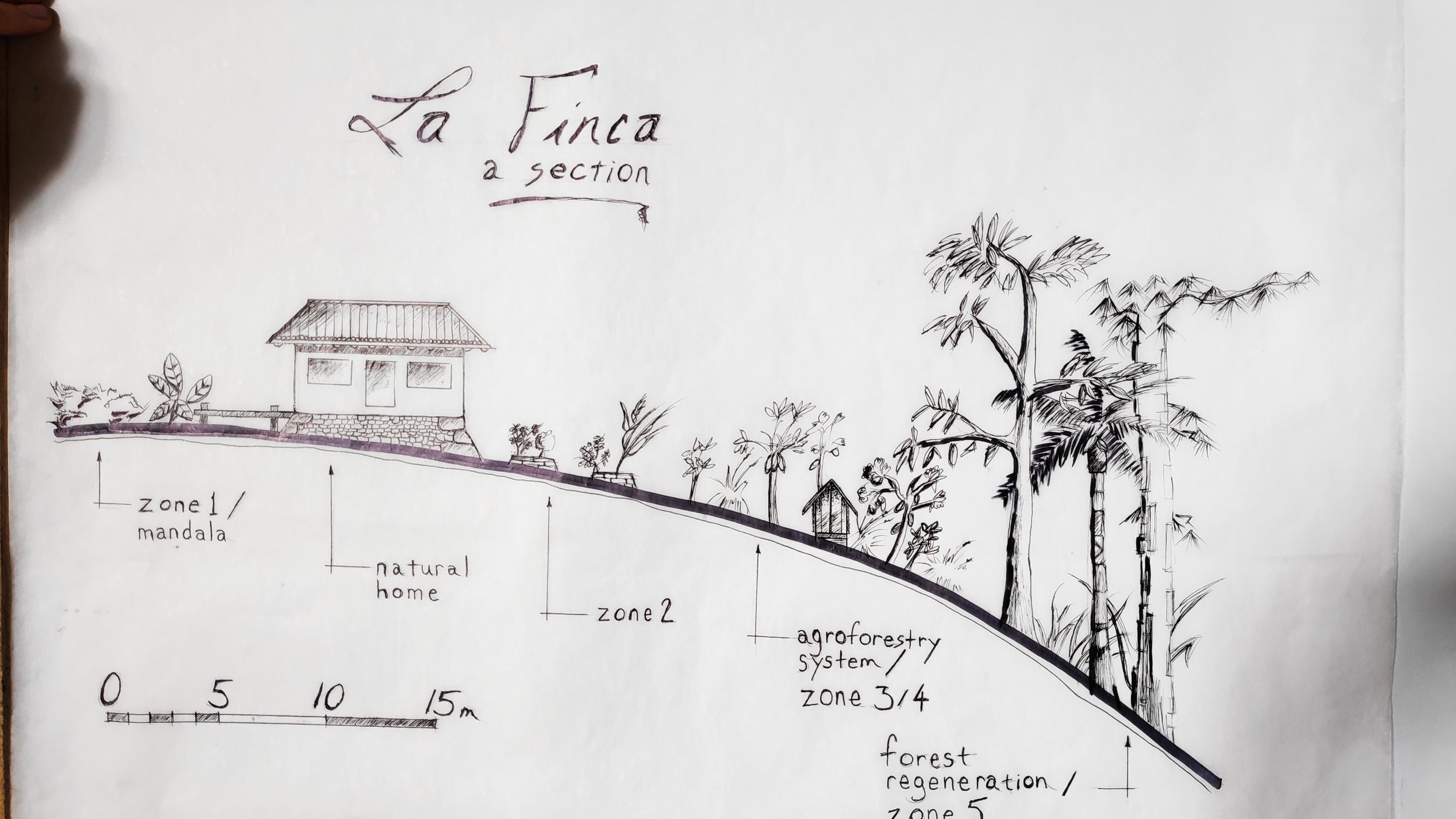
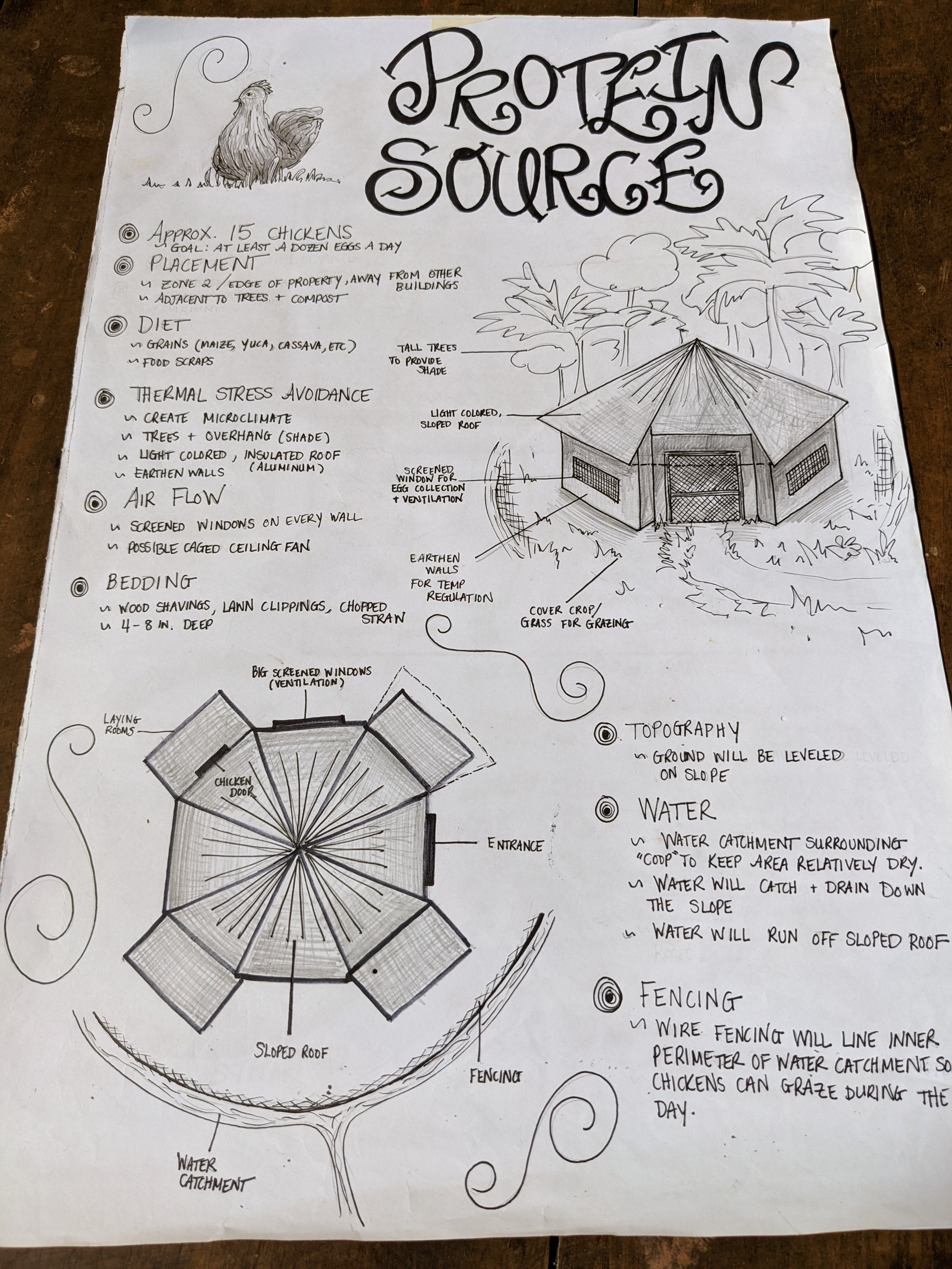
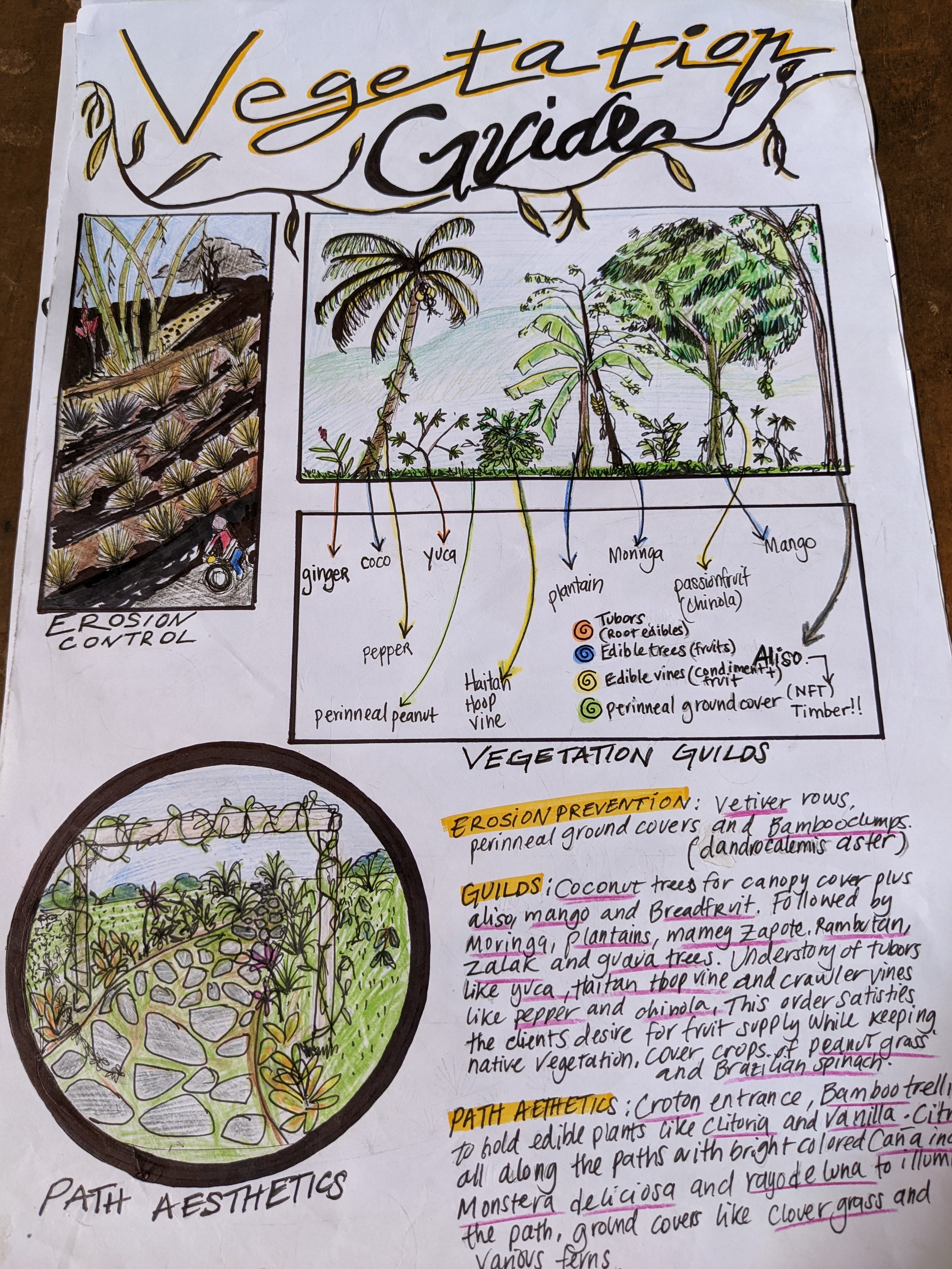
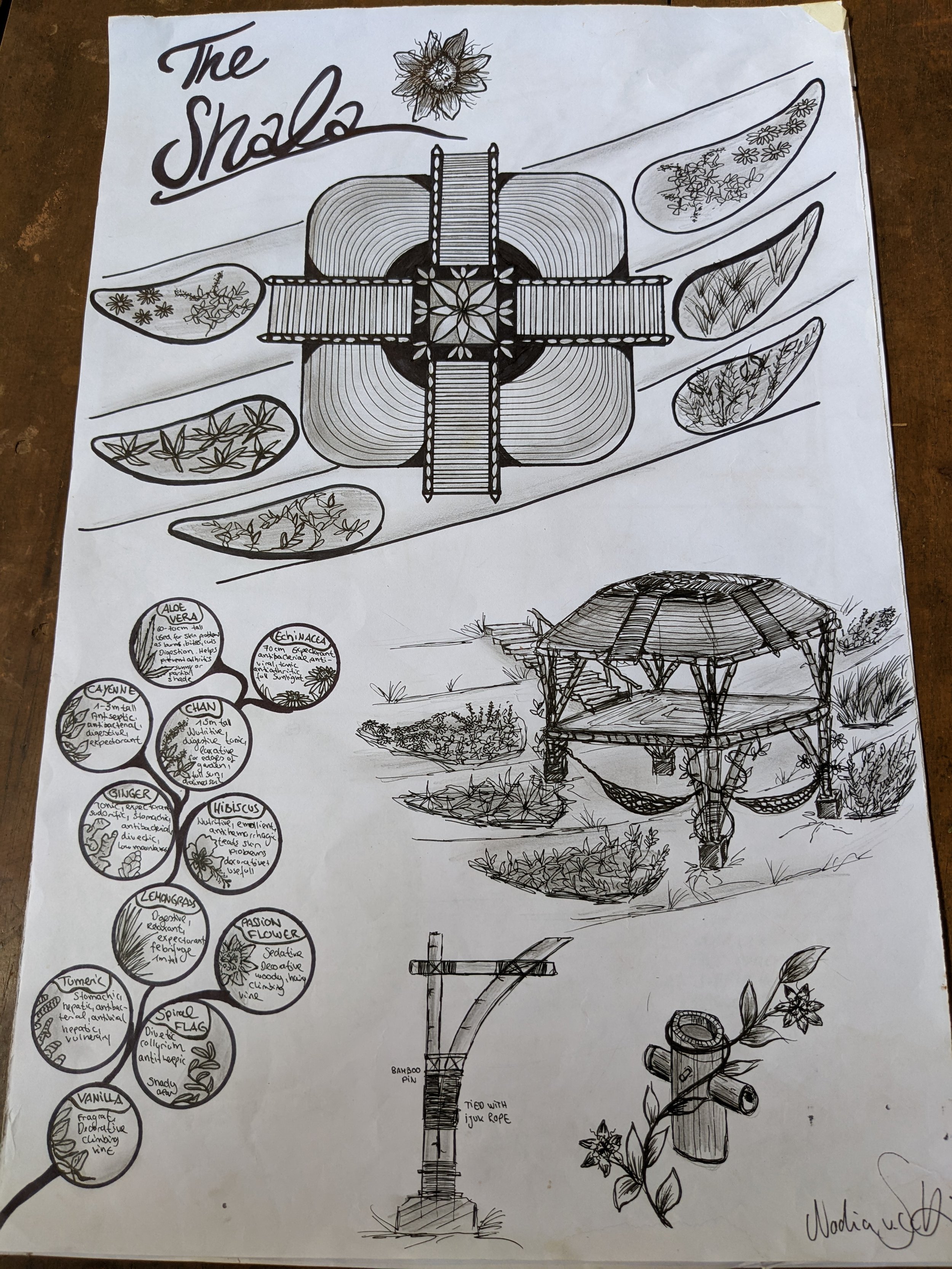
Establishing Context
What do I mean by establishing our context? Firstly we need to understand where we are and in order to do this we need to look at four main areas. We often do a lot of these types of assessment intuitively with or without realizing, but it is helpful to try and articulate your context so that you can refer to them again in the future. For further reading refer to Alan Savory’s work on holistic management.
Social
The first thing to establish is who are we talking about? Is it you on your own, you and a partner, a family, a community of people, etc…? This will be important as it will probably affect a number of the other categories, like legal issues and potentially your resource base.
Ecological
The next part of establishing your context is assessing your geographical location, weather patterns, climate, landform, water access, etc… This is going to affect many things, including what is possible to grow, how long your growing season is, establishing heating and cooling needs for a house, etc…
I will give you this example as it is pretty commonly brought up to me. Someone has decided that they want a particular element – in this case a cob house. My first question always is “where do you live?” - this is establishing context. In this scenario they live in a climate where building a cob house is quite literally insane and illegal! Cob is a very poor insulator and in many scenarios will not meet any environmental standards for insulation as defined by many temperate zone building codes. My second question is “why do you want a cob house?” – establishing the goal. Often their response is something to do with wanting a curvy naturally built structure (a goal). Obviously this person has fallen into the trap of deciding on an element (a cob house) without succinctly establishing their context or goals.
In this scenario, through asking questions we can begin to get to the core of why someone wants this specific element, what goals do they have and also what the function is (we want our house to be warm and comfortable, a poorly insulated house will not achieve that, at least not easily). At this point knowing their context and goals there is already a perfectly good, established design solution, it is called strawbale. Stawbale building has excellent insulative properties that meet the most stringent of building codes, it is a natural material and with some additions of clay and straw plasters can be made curvy and round or whatever your heart desires.
Legal
We need to establish our legal context, for instance are we in a rural, urban or suburban setting or somewhere else, this is going to affect what we can do in terms of space and also what we are legally allowed to do. For instance in urban settings there may be prescribed methods of how to deal with sewage, like you have to connect to the municipal sewage system if it available. Whereas if you are in a rural setting you are able to legally decide which type of sewage treatment system you would like to use. Now I’m talking about your legal context here and of course where you are located (not just within a country but in different countries is going to affect the rules). This also might affect if you will have space to do certain things. There is no point establishing a goal of producing all of your own dairy if you live in an apartment and only have access to a balcony. In many urban areas there are rules about animal ownership not to mention the practicalities! Seems obvious right? Well of course I am using examples that have obvious outcomes, it gets more complicated and the practicalities (the inputs) can become either harder to define or more difficult to predict.
We will also need to consider any other legal ramifications of our endeavor like labor laws for business, or taxes, whether that river that runs through your property is legally available or if you can cut down trees? These are all things which will dictate what you can or can’t do if we want to stick to the confines of the law.
Resource base
What resources we have available (time, money, energy, labor, etc…) is going to massively influence what is achievable. Like it or not our resource base is a critical factor when establishing our context and being realistic about this is going to be important in the success of any project.
A common theme I here is that people maybe don’t have the labor resource pool that is needed to achieve a particular goal so they are going to start a volunteer program in order to provide the labor. Again, this is a backward approach, you are setting a goal that is only achievable if a whole new program is designed and implemented. The inputs involved in managing people is huge and often overlooked, the structures required in order to successfully implement a volunteer program is vast especially if you want them to do what you want them to do as opposed to what they want to do. Read our article about running a successful internship program here.
Goal Setting
Now that we have more or less outlined out context we want to establish some goals for ourselves. There are many goal setting methods and techniques; the important thing to try and distill down is what is the underlying goal that you are hoping to achieve.
Let’s look at one of the examples that we used already, the desire to build a cob house. At this stage we should try and distill out the essence of the goal, let’s go through that process so that we can look at the functions and then identify the element.
GOAL: Build a Cob House
Let’s start with build: do we want to build it, do we have the resources to pay someone else to do it? Does it need to be a cob house? Can it be a natural material that also allows artistic freedom? Most importantly we want to have a house that is beautiful and functional, and as we discussed before we need a well-insulated house (if we live in a temperate climate). So maybe we can redefine our goal as something like this:
GOAL: To have a beautiful, functional and natural home.
Once we have distilled out our goal we can identify the functions that we want. Here is an example:
Home – somewhere that provides shelter for us primarily but is comfy and cozy
Beauty – something well designed with art built into the structure through sculpture and curves
Functional – well insulated and resistant to the climate, low maintenance
Natural – using materials that are local and have lower amounts of processing or low carbon footprint
Now that we have identified our functions we can begin to research our elements that meet these functions, this is the fun stage. This involves reading, researching online, sketching etc… soon we will settle upon our element that will provide all (or most) of our functions and meet our goal that makes sense within our context. This is good design; this is the methodology that a permaculturalist will employ.

Students in our Permaculture Design Course presenting their projects
I hope that you can see the difference in the methodology. One is looking at the goal and deciding from there what element we should use, and one is accumulating elements because we think they are a good idea without going through a design process.
We often innately do some of this process. It is much easier to do this process within the realms of things that we already know well and understand. As a natural builder it is much easier for me to distill out the goal and the functions within natural building as I am very familiar with a lot of the variables and a lot of the options. If you are new to this, there are obviously endless options and opportunities. I would recommend taking a permaculture design certification (read here why should take one at Rancho Mastatal). This will help contextualize lots of your goals and ideas. A PDC will give you the opportunity to talk about your ideas with other people so you can cross pollinate and create wonderful new schemes and plans.
To summarize the problem with permaculture, it is the misunderstanding of the design process not with the design process itself, although there are many people who are always working to improve the design process too. Here is a nice little diagram that was created by AppleSeed Permaculture that nicely summarizes the design process.

Hope you enjoyed my theory on this topic.
Join us for one of our two yearly Permaculture Design Courses to learn more about the topic and get inspired!


Why the World Would be a Better Place if Everyone Took a Permaculture Design Certification
Ultimately everyone has to decide for themselves how and where they want to invest their time and money, but we think the world would be a much better place if everyone took a permaculture design certification (pdc) course.
By core team member, Nic Donati
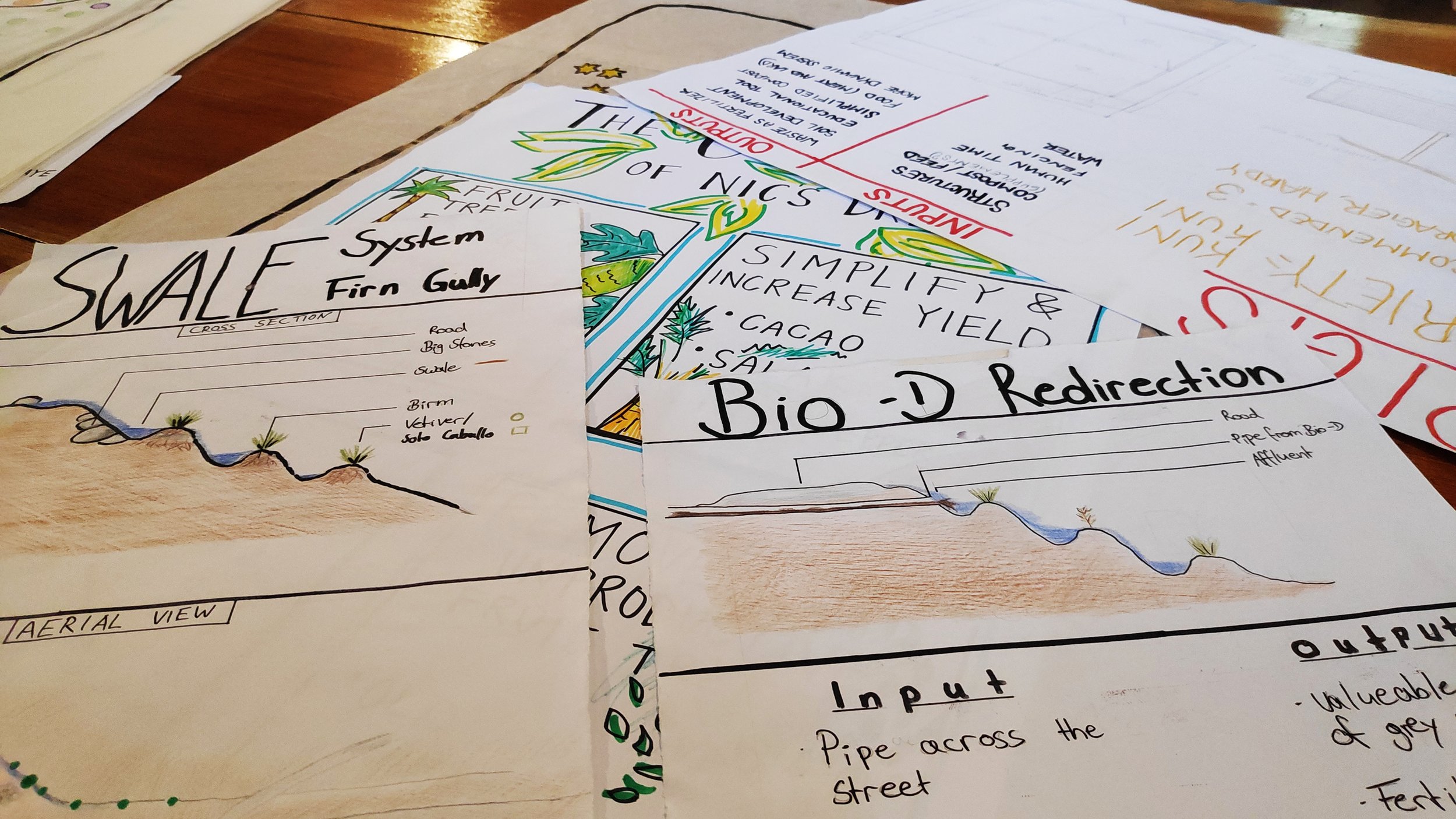
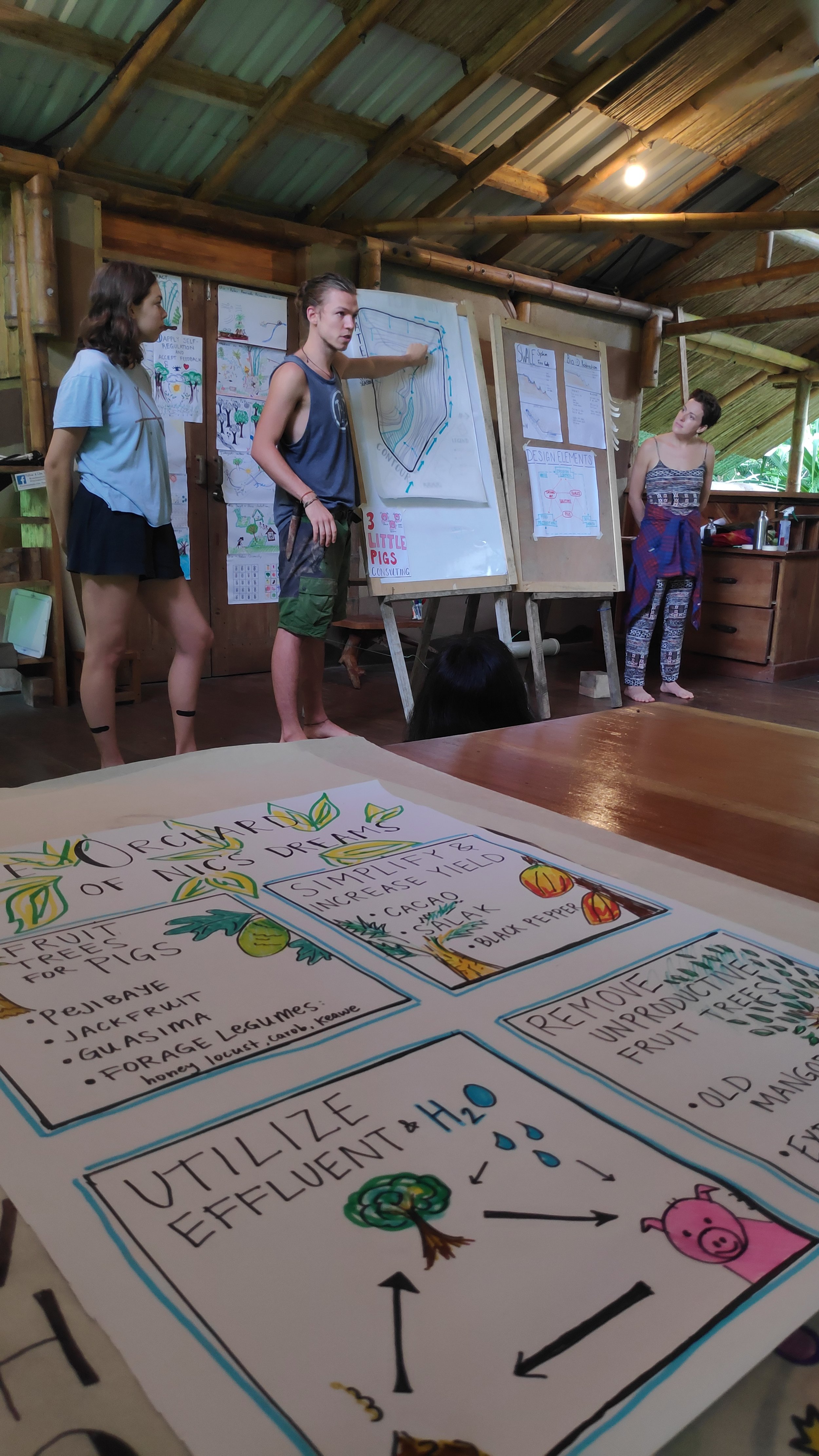
What is Permaculture
Permaculture is a methodology of thinking about, designing and creating environments that are regenerative from an environmental perspective and functional from a human perspective.
So, what does that actually mean? Let’s look at some specific examples, as often we struggle to take the theoretical to the practical.
Permaculture can be applied in pretty much any context, although historically it has most commonly been used in agriculture. So let’s start there.
Permaculture in Agriculture
In agriculture the goal is to grow food and in most cases create an income or profit for farmers. As a permaculturalist we can look at the system of agriculture, look how we can grow food (the goal), and design and create environments that are regenerative for the planet and functional for humans. In the context of agriculture we want to grow food that is going to regenerate our environment as well as create income and food for humans. This is the design problem and now we have to come up with solutions for this.
What is important is that as permaculturalists we put the needs of our environment and the needs of humans on the same level. In the past we have not considered the needs of the planet and that has led to deforestation, desertification, loss of biodiversity etc… this has met our goal (at least in the short term) of providing food and income for humans, but has woefully overlooked creating a model that is at the least sustainable (can continue in perpetuity) and at best regenerative (actually improve the environment e.g. soil quality, water quality, biodiversity etc…).
In permaculture we are interested in creating design solutions that meet both the needs of our environment and our human needs. Some of the design solutions that have been developed since the inception of permaculture have been to create more regenerative farming practices. These have often drawn upon and been inspired by traditional methods of agriculture, for example using polycultures (the use of many species in one area as opposed to whole fields of one crop, known as a mono crop), crop rotations that benefit one another, multi-story agroforestry systems (also types of polycultures), syntropic agriculture, green manures & cover crops etc…. These systems are seen as potential design solutions as they have the potential to produce food, profit and regenerate the land.
Going back to the beginning we can see that from a permaculture perspective what we have done is taken something like agriculture and redefined the goals of it, in order to create a different outcome. We have changed the goals of agriculture from simply growing food and creating profit, to growing food, creating profit AND regenerating the land.
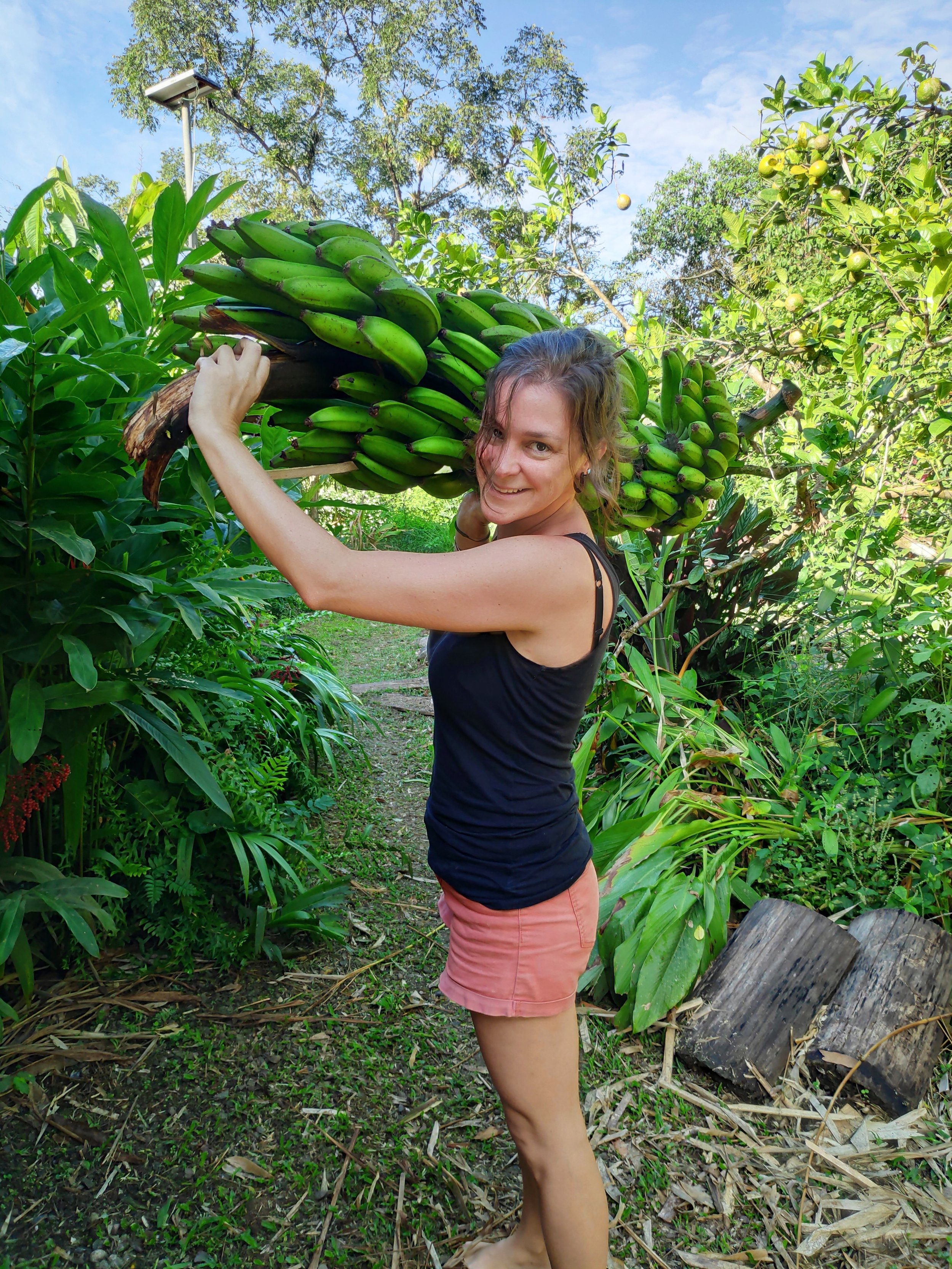
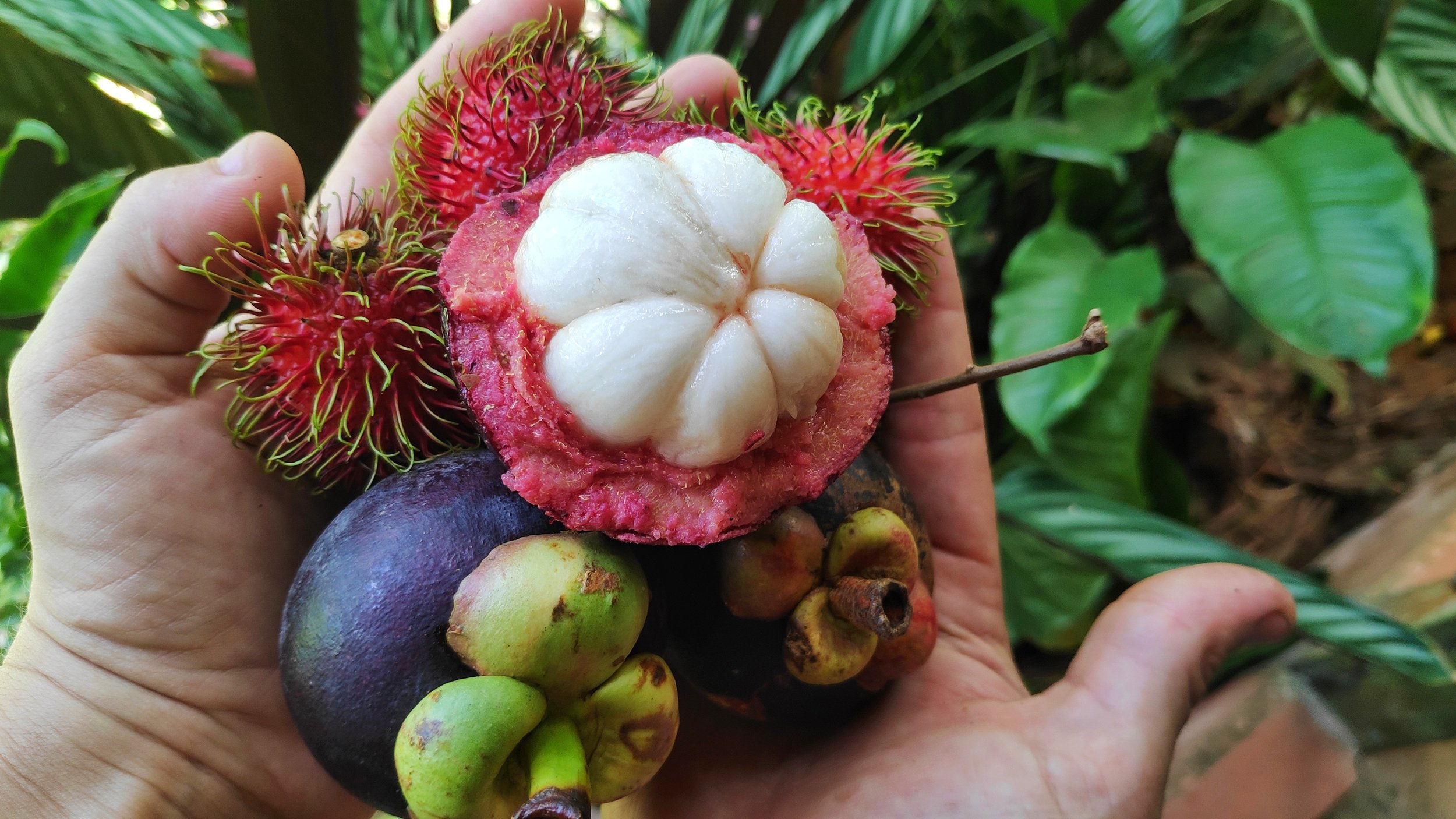
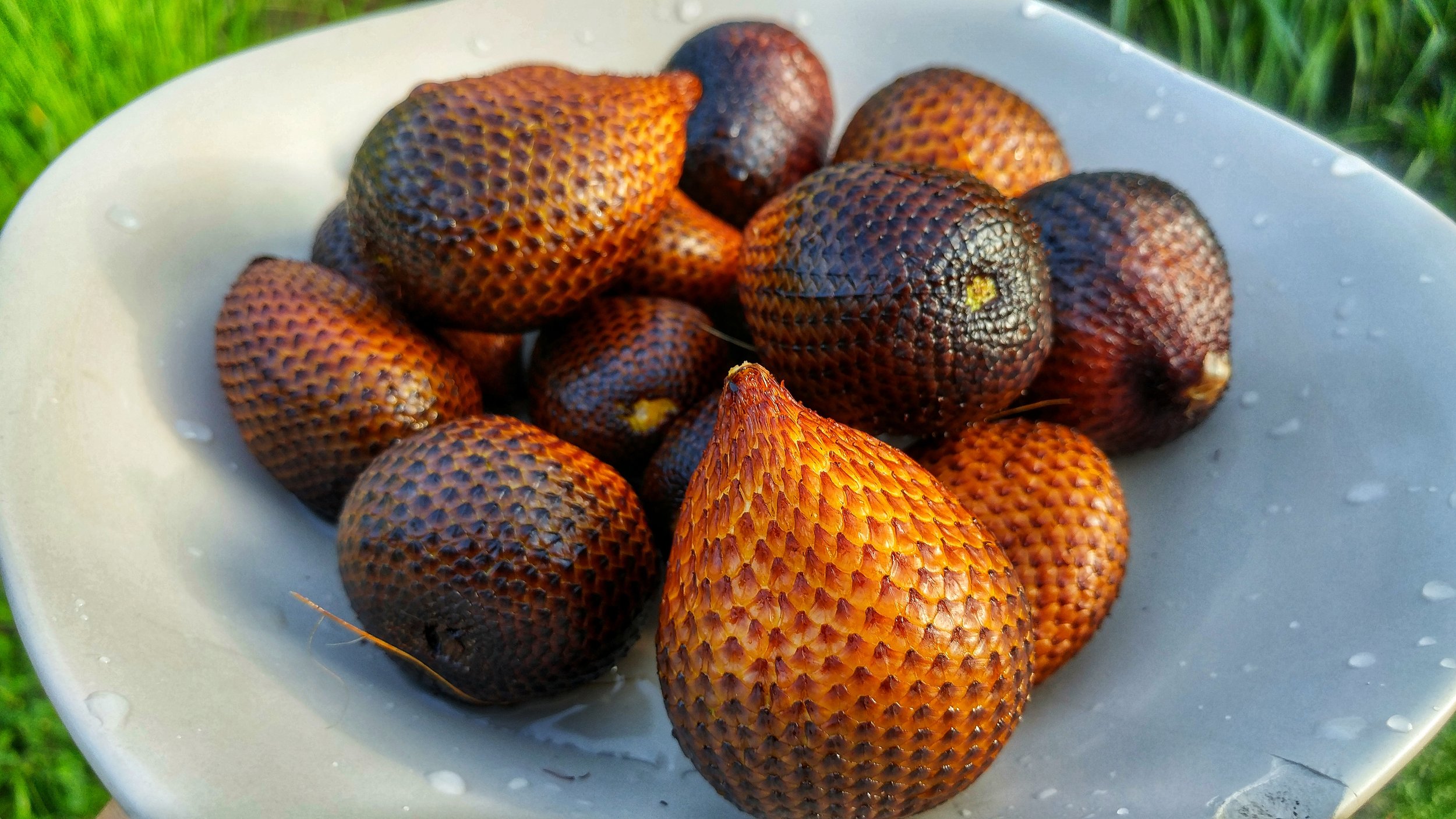
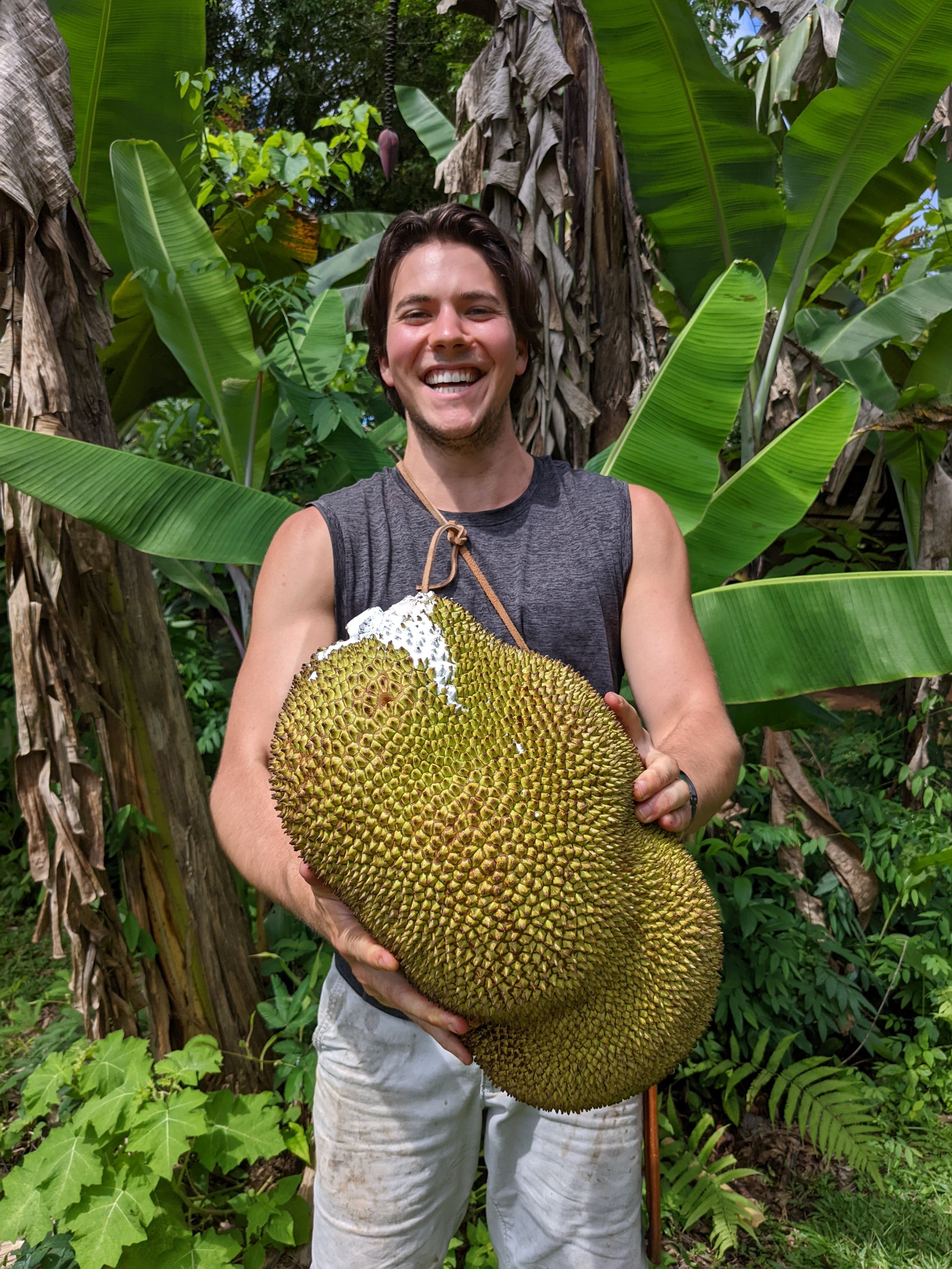
Defining Goals in Permaculture Design
This is a really important concept that we will learn more about - clearly defining your goals. Many of the problems that we see around the world are created by having poorly defined goals or inadequately inclusive goals. Our first step is to think through what our goals and context are in order to get the outcomes that we want. At this point it is worth mentioning that within permaculture we already have some defined ethics and principles (you can read more about them here and how we apply them) that can help us guide our goals. The original three core ethics are:
Earth Care
People Care
Fair Share
Defining our Goals in Agriculture
We have outlined that in the past we prioritized people care (or at least we thought we were) and now we have added in an earth care goal by wanting to regenerate the land too. Maybe we should also include a fair share element into our goals for agriculture?
As with any exercise to find design solutions, there are usually many different ways to achieve it. I am sure if people sit down and think about it we can come up with some good design solutions to implement our fair share goal in our agricultural model. One of the most obvious to me is making sure that farmers are getting paid a fair price for their production and that at the very least surplus from production is distributed to people who need it most through food banks, shelters, etc… Write in the comments below some of your ideas for creating fair share within agriculture.
How we can Meet our goals?
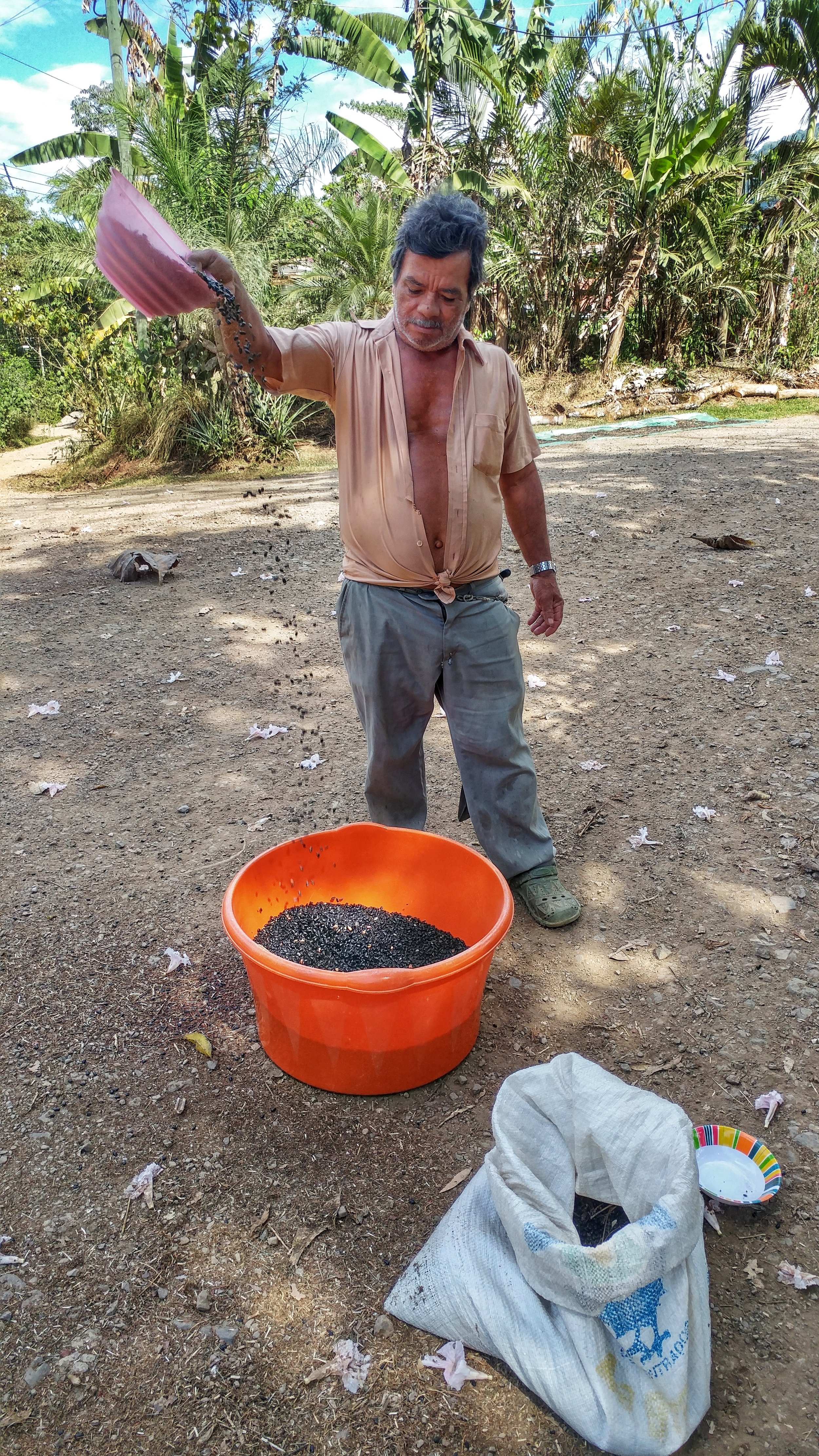
We buy all our beans from local farmers. Here is Chepo winnowing his harvest.
Now that we have identified how we want to shift the current agricultural paradigm, we have to implement our design solutions in a real world context… But, how? This is of course is the hardest part, its one thing to come up with an idea and another to actually go out there and do it. There are so many people who are working on this and so many different ways that these goals can be achieved. Our first step should be to research this market. Is anyone already doing this? How have they identified and articulated their goals? What are their solutions? Can we help them, work with them, collaborate or just support them by buying their products? If we can’t find anyone that is filling this niche then maybe this is an opportunity for us to fill it? Do we want to get into this market and start a business?
Maybe we identify through our research and based on our skills and context that we would be better off getting involved in the political realm. Classically we have relied upon government and law makers to impose rules and regulations on industry and commerce to shift practices. Can we advocate for the change we want to see? Can we be the change makers? One option could be to get into politics or join an advocacy group in order to make political changes that you believe in.
So, without a large career change what can we do? As individuals we have a lot of power even if we decide this is not what we want to throw ourselves into full time or for a living, we can still effect change more subtly. After all every time we spend money we are supporting one organization vs another. We can be diligent to make sure we know where our food is coming from and if they are producers that are supporting our paradigm shift or not. We will talk extensively about some of these issues and solutions in our Permaculture Design Certification (PDC).
We have looked at how we can take our definition of permaculture and practically apply it to agriculture and we have even looked at how we might go about implementing these changes that we want to see happen.

Social Permaculture
As I said before permaculture can be pretty much applied in any context and there is increasingly a body of work within social permaculture. Social permaculture is using these same basic ethics and principles that we mentioned above, but rather than applying them to the physical environment we are applying them to our social organizations.
As we talked about before let’s look at the classic business model of a Public Limited Company (PLC) or in the US its known as a Corporation. Essentially the goals of these companies are again centered on profit and distribution of profit to shareholders. We have seen over history that when the explicit goals of a business are to generate profit and to distribute it to shareholders, that is what they are going to do right, as that is their goal.
In social permaculture we are again interested in looking at business and defining their goals and objectives to include our three core ethics. We can then redefine the goals of our businesses to generate profit, regenerate the planet and fairly distribute surplus.
Let’s again use a practical example of how we can use permaculture design to redefine the goals in order to get the outcome we desire.
For example, let’s use a clothing company as a business that we are going to redefine the goals of so that they are using our 3 core ethics. Here are some ways that we might do this:
People Care – pays a fair living wage to its employees, maybe it’s a co-op? Maybe it uses a sociocratic model of governance.
Earth care – sources materials that are compostable and/or grown regeneratively, repairs old clothes so they don’t get thrown away, recycles old clothes.
Fair Share - gives clothes that are no longer in fashion (or the season has changed) to people who need them the most or donates them to charity. It could also be an employee co-operative that distribute profits to the people who work there too.
There are many ways in which we could imagine these ethics working for a business and many businesses are now starting to employ more of these ideas into their goals and objectives. The two most commonly used terms in business trying to do this work are - social enterprises and B-Corporations. These sorts of organizations are actively trying to change the way their organizational goals are structured in order to include some of the ethics we have outlined.
We have looked at what permaculture is and how we can apply permaculture in different contexts. Hopefully you can see that many of our problems that we face in the world are due to having either insufficient or poorly defined goals. Once we redefine these, we can begin to think about how we can design and create solutions.
How do You Study Permaculture?
Like any other topic you can learn a lot by reading books and studying the literature. Everyone learns in different ways and learning from text books is not necessarily everyone’s idea of fun! You could study in a practical way by working somewhere and looking at the designs people have created to solve their challenges. After reading this article I hope that everyone can begin to look at why problems are created and how we can redefine or clearly state our goals in order to try and change to a more desirable outcome.
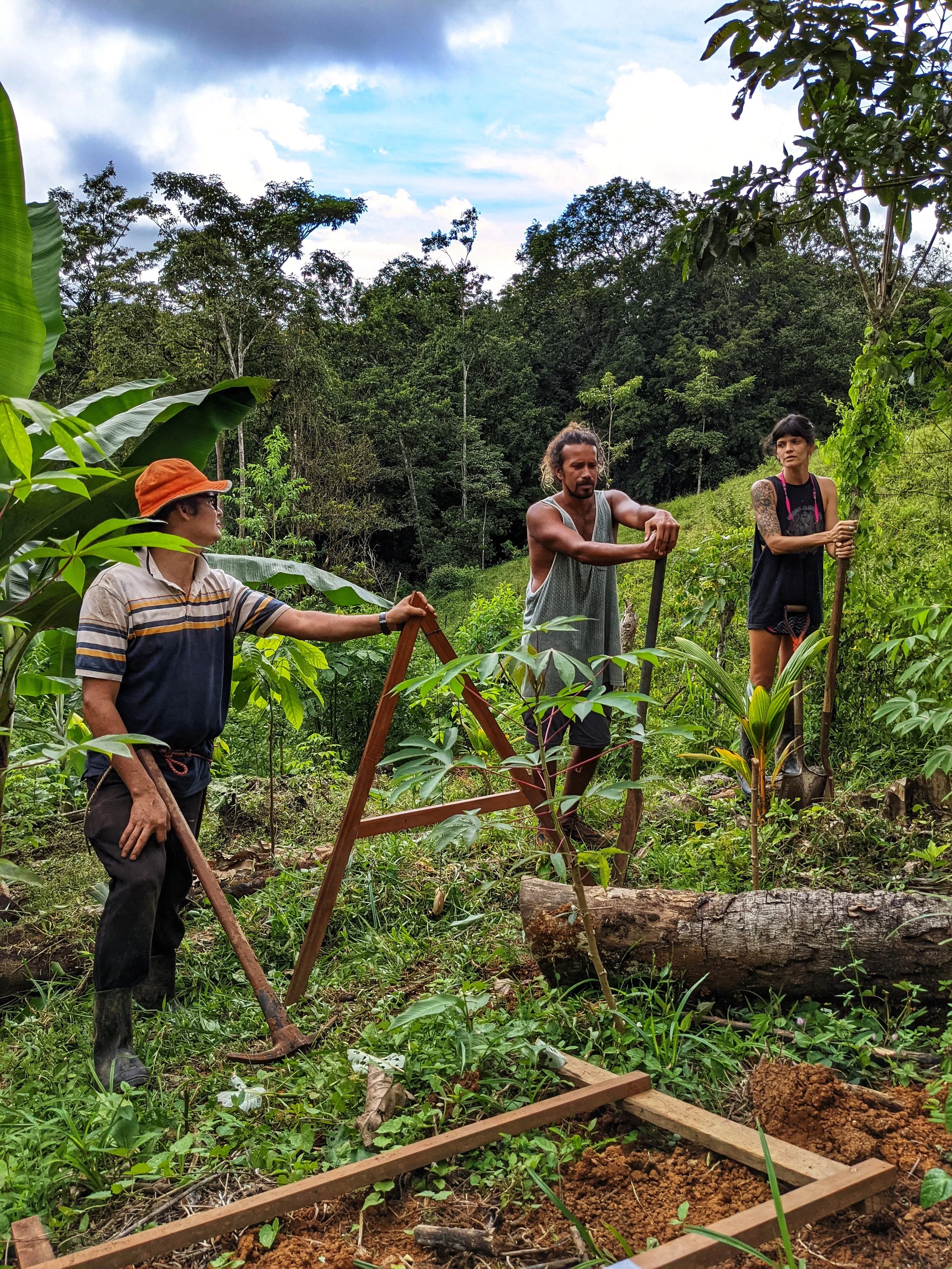
Students practicing using the A-frame during our PDC
Rancho Mastatal offers two Permaculture Design Certifications (PDC) a year, one in the November/December and one in April. In this course we go through many of the different design challenges we face as individuals and as a larger society and look at methods and techniques that have been identified to tackle these.
The PDC is very much focused on creating design solutions in a practical way, using the Ranch as a living example we will frequently walk around and see how we have created solutions for design challenges in our context. As I have done in this article it is often important to not just outline the problems and solutions, but actually see how they have been applied. Remember though context is key, the design solution for one place may not necessarily be the design solution for another place, so once we have established our goals and context we can begin to research and implement solutions.
The secret to humans’ success has been our ability to learn very quickly from one another. Our social learning abilities far outstrip that of our primate cousins and it is this innate ability to learn from others which is so crucial to our ecological success (which has also caused its own problems!).
We are big believers in harnessing this innate ability of humans to pass on our knowledge and experiences to you, so that you don’t have to learn it all by yourself, let us help you accelerate your learning.
You could also volunteer, although you are unlikely to receive the theoretical underpinnings that are important to gain context in different situations. At the Ranch we do offer a short two month internship however, we do not generally include the permaculture theory. You may do lots of activities that are associated with some of the ways we have designed our solutions, but getting the balance in this type of context is going to be difficult and will rely on you doing the leg work and reading in the background.
We offer a one year apprenticeship where all of this is covered. We teach all of the PDC modules to our apprentices and they receive plenty of practical opportunities to practice and apply these ideas. This is undoubtedly the best way to study permaculture, but not everyone can join us for a year and we recognize that.
Is a Permaculture Design Certification Worth it?
As I have said above, it may feel like a large investment for you, but in the context of the experience, we think it is worth the investment. You can definitely study all of these concepts in a book or online and you will learn a lot, especially if you are the type of person who retains information well after reading it. If you are more of a visual person, maybe watching YouTube videos will be your study tool.
We are big believer in first learning about something and then applying it and/or doing it, which is why there is plenty of opportunity in our course to practice what you have learnt through practical workshops. There is also time allotted to the design challenge, you will work in small groups to design solutions for the goals and objectives of your clients. This will reinforce the ideas of identifying goals and context and then designing solutions for them. You will get feedback on your designs and ideas during the final presentations that will act as the capstone project for the course.
During the 14 days you will be studying permaculture with a group of people all interested in the same topic, you will also find this incredibly motivating and inspiring, not just the content of the lectures and practicals, but the holistic learning environment.
What do I mean by a holistic learning environment? We specialize in educational workshops here and over many years have learnt a lot about the best way to teach and inspire people. We have created a schedule and environment during the PDC that we believe maximizes your experience. Your time is a balance of practical and theoretical classes, small group work and plenty of time to study in our extensive library of thousands of books. There will be community sharing opportunities, so you can learn from your fellow students. When you are not actively learning there will be time to regenerate your energy by playing sports or doing yoga, trips to the river and waterfall, walks in the jungle or through our small community of Mastatal and be fully immersed in what we believe is a little bit of paradise.
Ultimately everyone has to decide for themselves how and where they want to invest their time and money, but we think the world would be a much better place if everyone took a permaculture design certificate course.
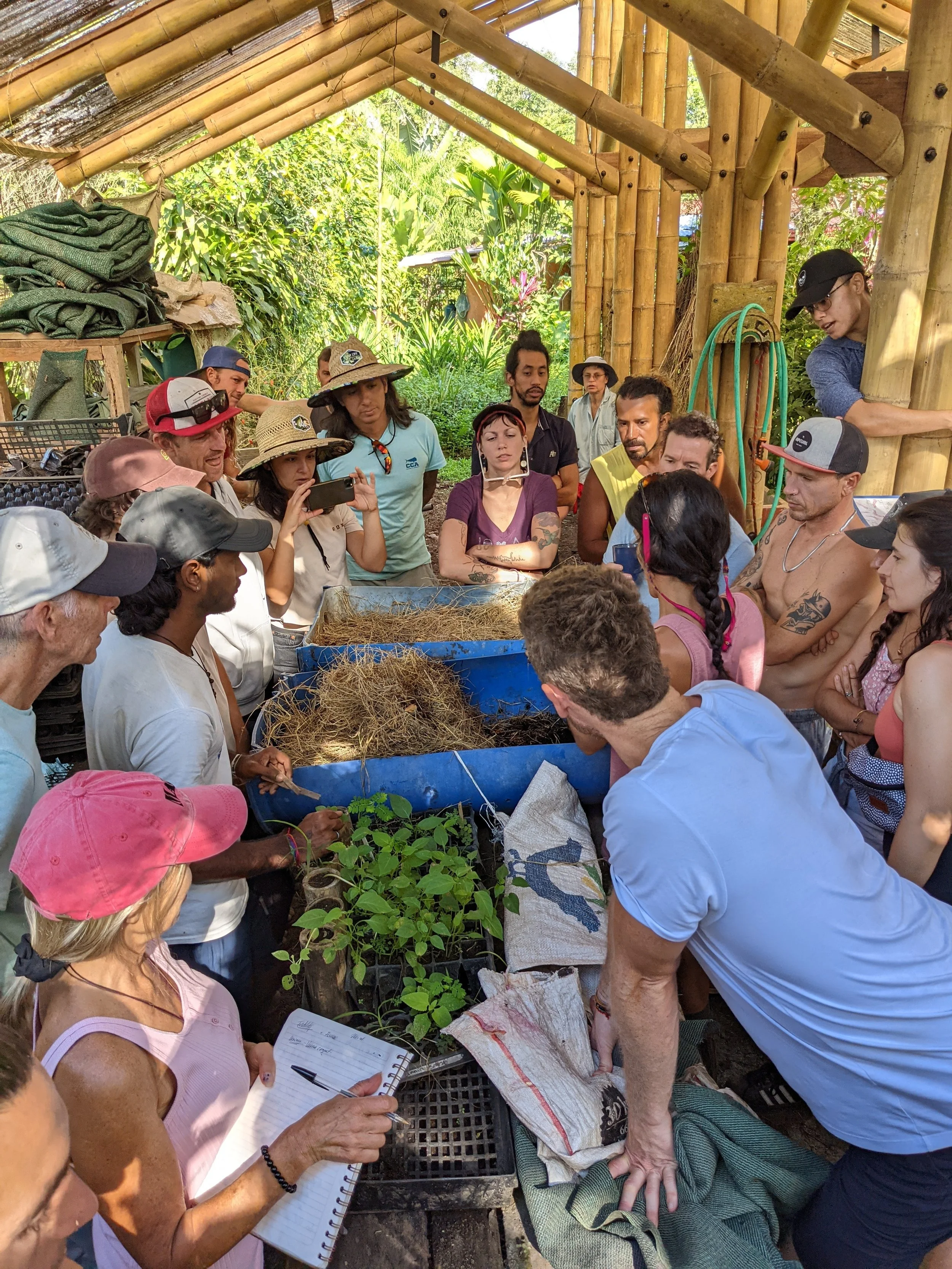
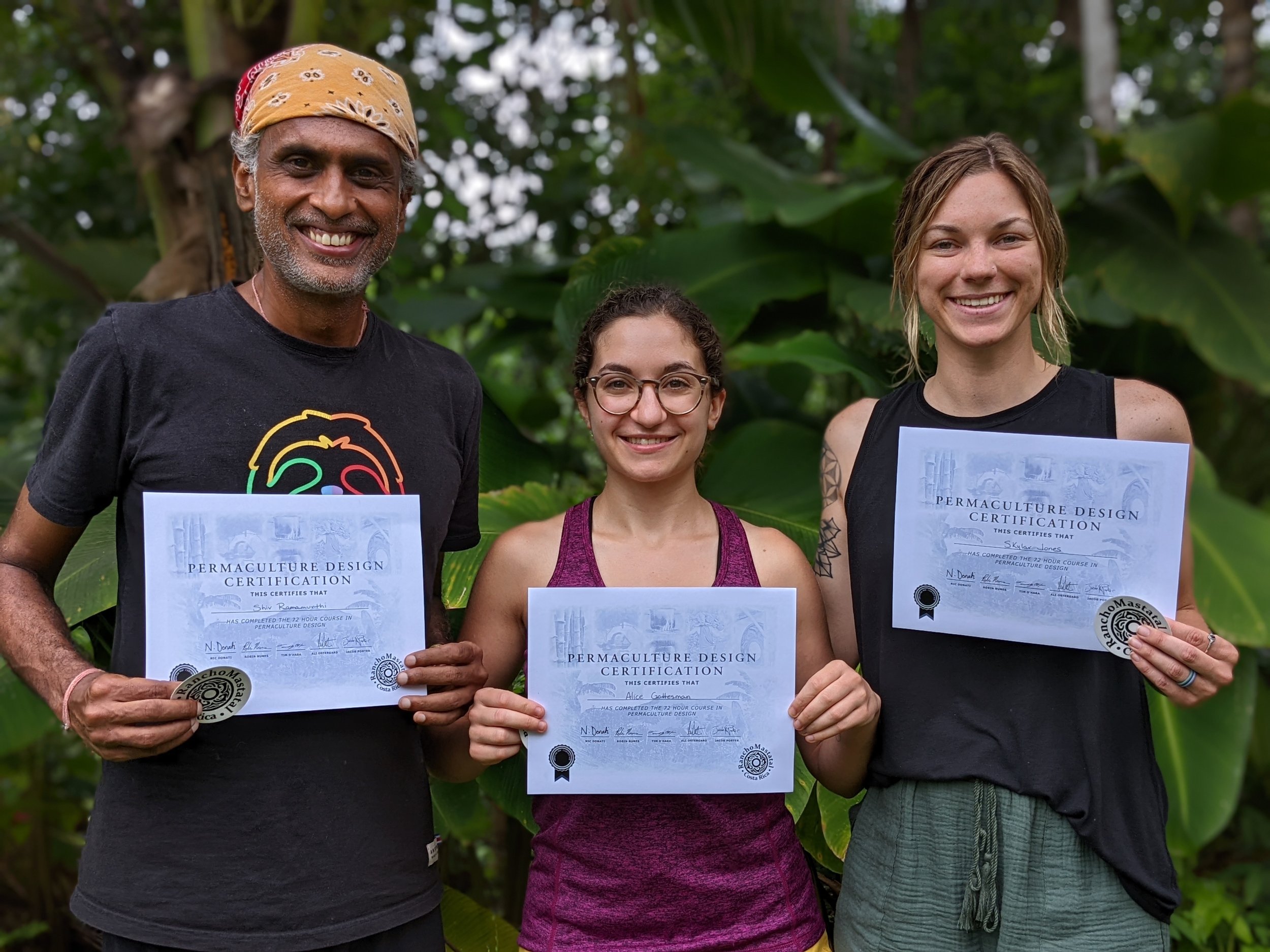
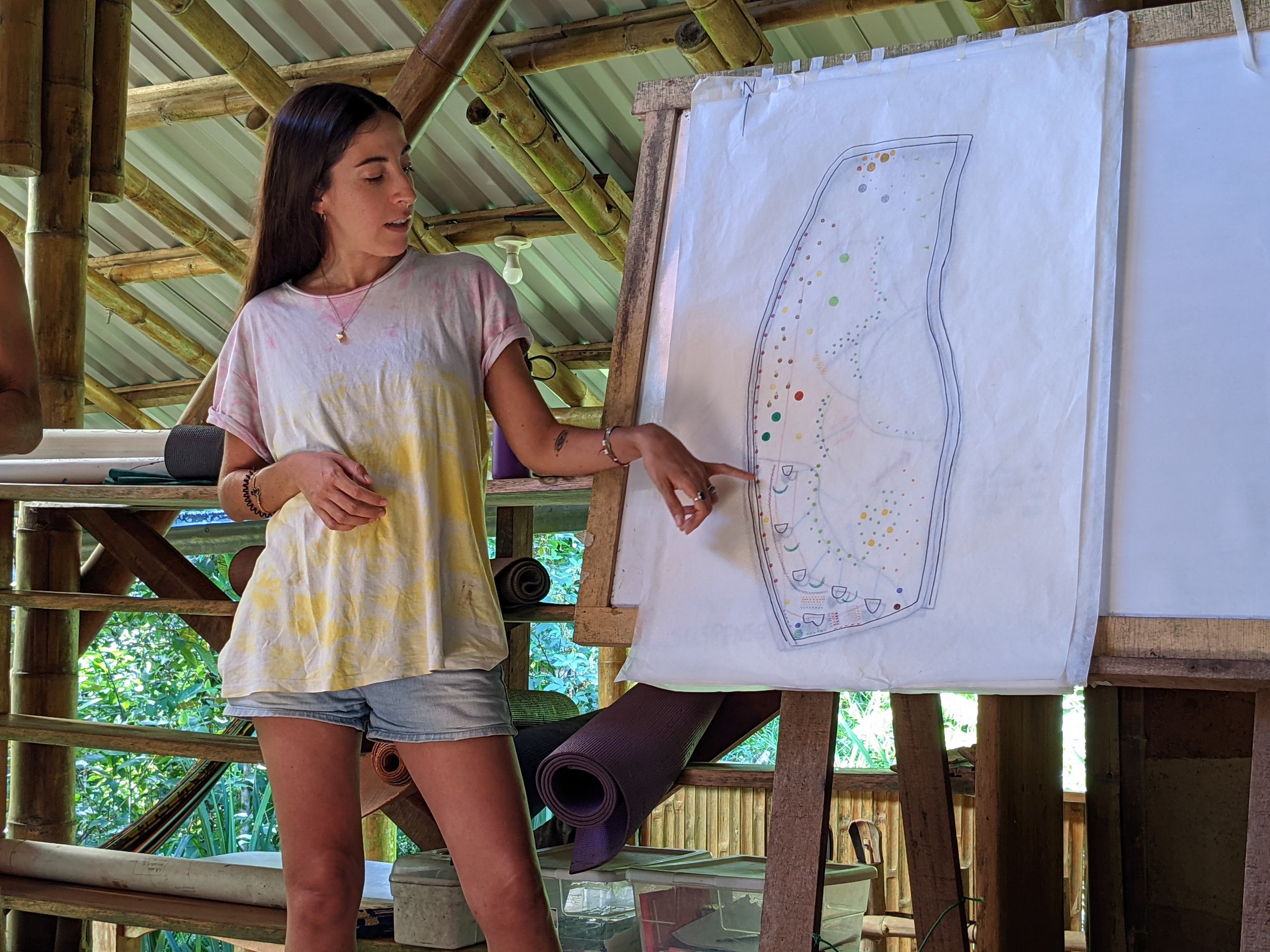
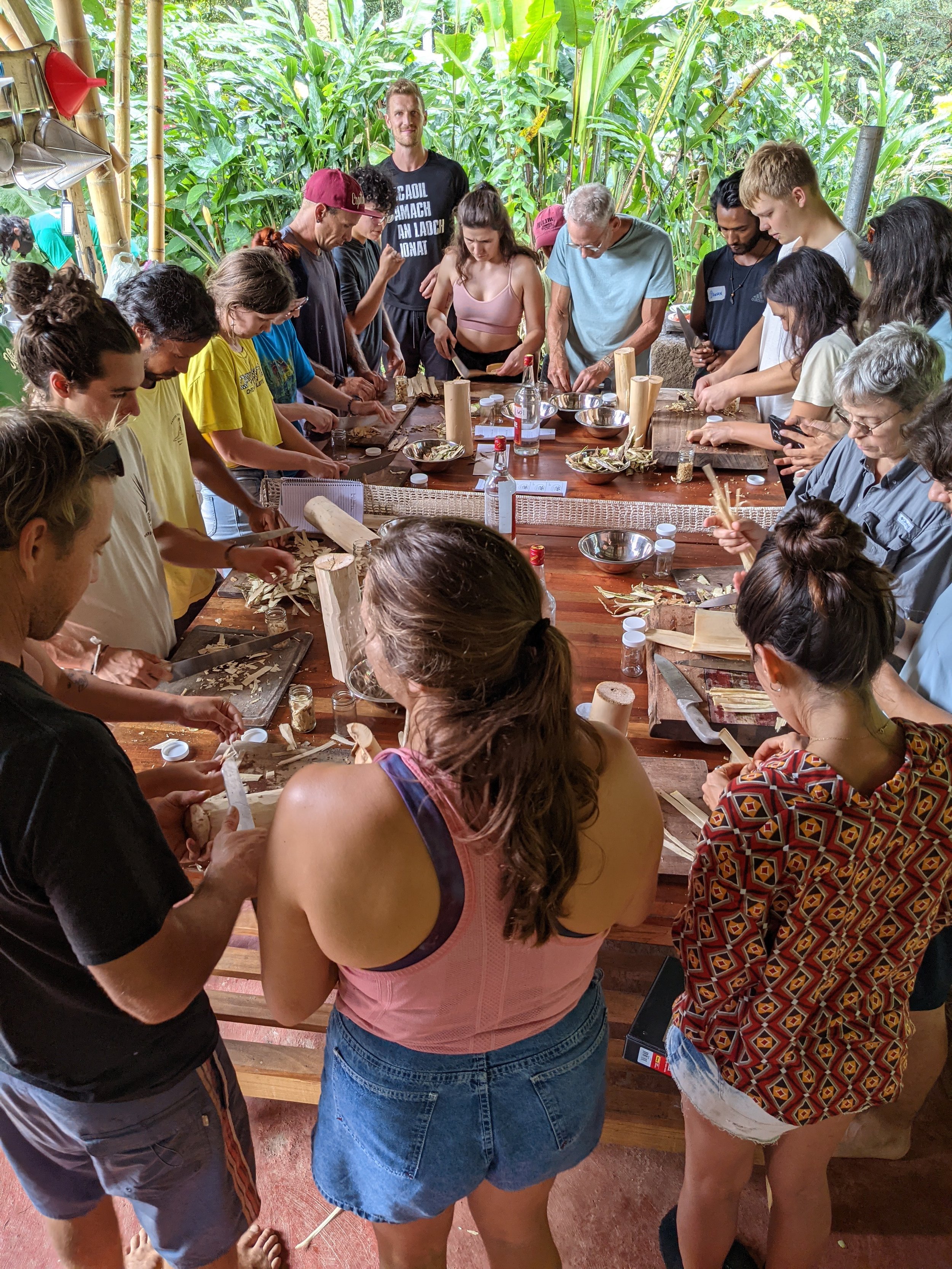
What is Wrong with Permaculture?
Permaculture is a methodology, so often times the things that people criticize permaculture for is not actually the methodology, but it’s the way in which people have used or applied this methodology that is the problem, not the methodology itself.
Having said that one of the biggest “problems” with the methodology is the lack of a good decision making tool. Now plenty of decision making tools have been developed and are frequently used within a permaculture methodology, but there is not an explicit permaculture decision making tool.
Why is this important? As we have discussed there are usually many different ways to approach and solve a problem and having a handy dandy decision making protocol would help weigh one solution over another. At the end of the day though decision making is a hard thing to develop tools for as they are based very much on the assumption that you know the different outcomes for each decision, but as the old adage goes - you don’t know what you don’t know. So whilst decision making tools can be helpful they are implicitly biased towards what you know about the solutions. This is always going to be tricky to overcome as we have said because it’s impossible to predict outcomes if we don’t know that they may happen. Even if we have researched that topic extensively it is still possible that we will overlook things, or attribute more weight to one thing over another incorrectly. Ultimately many of these things come down to experience, and being able to revisit the design process, aggregating problems as they occur and revisiting the goals and context and seeing how this may change the design solution. Confirmation bias can then play a large role here as we tend to favor information that confirms our beliefs even if from an outside (objective) view one can see that this design solution is not working. We see this sort of bias all the time in current paradigms that have been established although arguably this is less confirmation bias and more self-serving, short term decision making!
can we change the world with permaculture?

We think we can! With a good understanding of the design process and goal setting we think many areas of the world could be improved upon by looking at them through a permaculture lense.
How are you going to begin learning and getting experience in permaculture design?
A good start is keeping up to date with our blog articles that often discuss this theory and practical ways we are implenting designs around here.
And of course, joining us for our Permaculture Design Certification is a great way to get inspired, meet other like minded individuals, and have a beautiful experience.
Read other related articles
Revisión giraldística. Permacultura. Por qué Rancho Mastatal

Why You Should Take a Permaculture Design Certification at Rancho Mastatal, Costa Rica
There are not many places in the world that offer such a diverse number of examples of applied permaculture principles and ethics in practice as you will find at Rancho Mastatal. Bordering one of Costa Rica’s national parks, La Cangreja, we are surrounded by nature, biodiversity and abundance, providing the perfect learning environment for permaculture.
Why You Should Take a Permaculture Design Certification course at Rancho Mastatal, Costa Rica
By core team member, Nic Donati
The Permaculture Design Certificate (PDC) is a 14 day fully immersive, hands on, inspirational workshop. This course introduces you to all the major areas that we work in at Rancho Mastatal. We provide context for where we live, outline the specific goals and objectives that we are trying to achieve, while displaying excellent examples of different designs and elements. Read more here about Why the World would be a Better Place if Everyone took a PDC. The PDC is a foundational course that provides you with an overview of the permaculture toolkit, which includes the methodologies, the principles and ethics of permaculture and the ways that one can apply them.
There are not many places in the world that offer such a diverse number of examples of applied permaculture principles and ethics in practice as you will find at Rancho Mastatal.
Bordering one of Costa Rica’s national parks, La Cangreja, we are surrounded by nature, biodiversity and abundance, providing the perfect learning environment for permaculture. One of the core themes in permaculture is to use natural ecological patterns as a template for the systems you design. It also provides an inspirational environment to immerse yourself in, as you can swim in the clear waters of our private waterfall, enjoy the natural surroundings and jungle life.
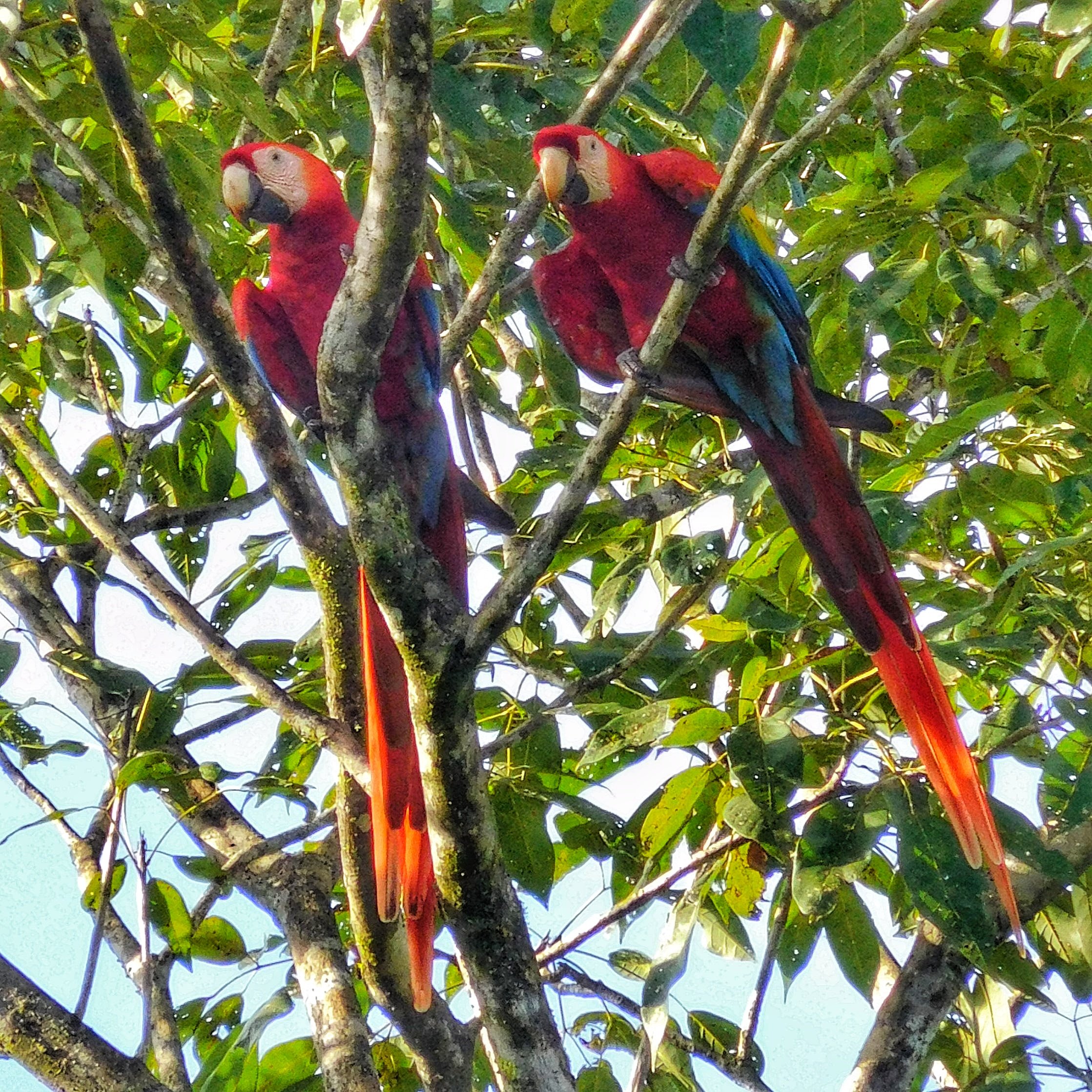

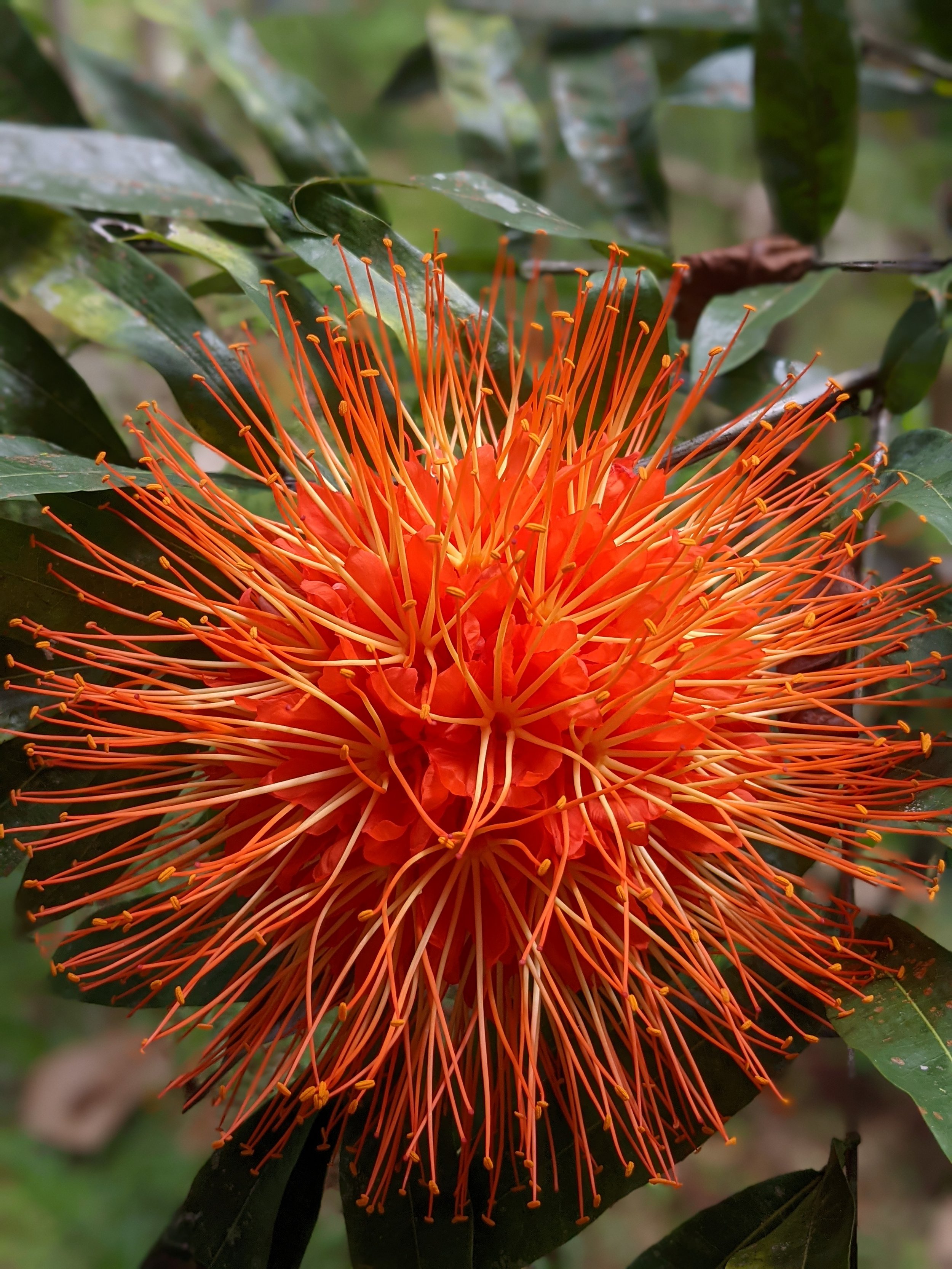
Rancho Mastatal was established in 2001, we have had lots of experience designing, implementing, evaluating and managing systems. This gives us the perfect platform to pass on this information to you and give you context as to why we have done certain things, why something’s didn’t work and others have been more successful. We have made plenty of mistakes over the years and we would love to share our experience with you of all of the success and failures so that you can accelerate your learning.
Rancho Mastatal is an established intentional community that manages the land using intelligent ecological design. We have over 200 acres of property that is at the disposal of students to explore during their time here.
We are one of the longest continually operating permaculture education centers in the world and not only do we provide a fantastic educational experience for all of our students we have always operated as a self-sustaining business. Apart from the initial seed money that was borrowed to purchase the land, all of the developments that have been made on the land have been funded through our own work, we do not rely on donors or wealthy benefactors and having slowly paid back the money borrowed to purchase the land. We are completely debt free and financially independent. We act as a model of developing a self-sustaining business, that uses permaculture ethics and principles to formulate our goals and objectives (read more about that here).
This is a really important element to us, through taking our workshops you support all of our work which includes community development, scholarship programs and all of the other ethical practices we employ in order to create a just and equitable system. You can learn a little more about our efforts by exploring our website and during our PDC.
In a practical sense you will also learn about many of the different systems we have implemented over the years and the systems that have proven to be the most resilient are still in use today. We will look at the design methodologies for deciding on our systems and then we will look at the detail of how these systems work and how you can effectively manage them.

A loaded jackfruit tree
Food Forests
We have a large diverse food forest on our property that incorporates hundreds of species of fruit and nut trees that we use for food, medicine, building materials, natural habitat, soil building, erosion control and so much more. Our food forest is designed to imitate our natural rainforest environment, using species that have evolved in our climate or similar ones. The food forest acts as a wonderful learning tool for students to walk through and see how you could create one yourself. We also have other examples of agroforestry systems, including alley cropping, riparian buffers and a syntropic site.
Organic Gardens
We have a small organic garden near our main house, where we have raised beds and many perennial food crops (read more: Tropical Agriculture Blogs) that we have collected from around the world, that provide an abundance of cooking green, salads and other delicacies. Our gardens are focused on growing crops appropriate to our harsh tropical climate and we don’t grow very many temperate climate annuals.

A beautiful jar of fermented veggies
Food and Fermentation
Food nourishes us and forms the heart of our community. Understanding where it comes from, how it is grown, and who has grown it helps us value our food in a way that we have lost in the modern era (read more: Eating Local: Reconnecting To Food). We will spend time talking about how we source our food, how we support local farmers, how we ferment foods for increased storage life and health benefits, and how we focus on developing a culinary experience that is based on local tropical foods rather than imported foods . We will have a hands on session to create delicious fermented treats that we will get to taste during your time at the Ranch. Read more: Farm to Table Blogs
Intentional community
The Ranch is not only a permanent intentional community for our core team members it also acts as year-long community for our apprentices. Each year we take on 5-7 apprentices to live with us. They learn about communal living, permaculture design, natural building and so much more, it is like a long Permaculture Design Certification! We have developed many structures in our community to help it function effectively and we will be sharing some of these strategies with you to help you on your journey. Things that we use and we will be teaching during the PDC, are Non Violent Communication (NVC), decision making protocols and systems, and our governance structure amongst other things. We will spend an entire day looking at how we can form communities in a general sense. These can be applied in many different areas not just intentional communities, but amongst friend groups, families and businesses. Read more: Communal Living Blogs

Water Management
We will look at the different water management strategies that we have in place on our land, to retain water in the landscape. Examples of systems we use are soil building techniques to increase moisture retention, swales to slow, spread and sink water, contour planting and dead barriers to slow the flow of water and prevent erosion amongst others. We will see how these systems work and practice their application.

Transforming “Waste” into Humaure
Waste Management
Our waste management strategies are diverse and numerous and showcase a number of different systems which can be used in any context. We have 11 composting toilets and one biodigestor that produces methane to cook with. These systems manage all of our human waste. We use several different greywater systems to manage shower, sink and laundry water including banana circles and a branched drain system. We compost all of our kitchen waste in a simple to understand composting system and use composting worms to create compost for the front gardens and make vermicompost teas. We also make our own dish soap and bar soap for use by everyone. We will do a practical soap making workshop during the class. On top of these systems, we make a concerted effort to reduce or simply not make waste (trash, single use plastics, etc…) by buying food in bulk and without packaging, making our own beverages in reusable bottles, fermenting in reusable vessels and more.
Soil Building & Fertility strategies
Soil building is essential for plant growth and moisture retention amongst other things (Read more: Improving Soils in the Humid Tropics). Our primary goal is to hold water in our soil and build the soils fertility. We are not blessed with deep top soils and the role of our soil building activities is crucial. We use many different Nitrogen Fixing Species on the property to help build and protect soil, often in combination with some of our water management strategies. We will look at our Mountain/Indigenous microorganism collection and the brewing and application of this system. We will also look at how we make compost and vermicompost tea and how we use some Korean Natural Farming techniques.
Natural Building
We have without doubt some of the best examples of natural building in the world on display, using bamboo, earth, timber framing, earthen floors, Tadelakt, polished lime and clay plasters, clay carving and sculpting, natural paints and so much more! We will also talk about design and walk around our extensive campus looking and talking about different techniques and get an opportunity to get our hands and feet dirty.
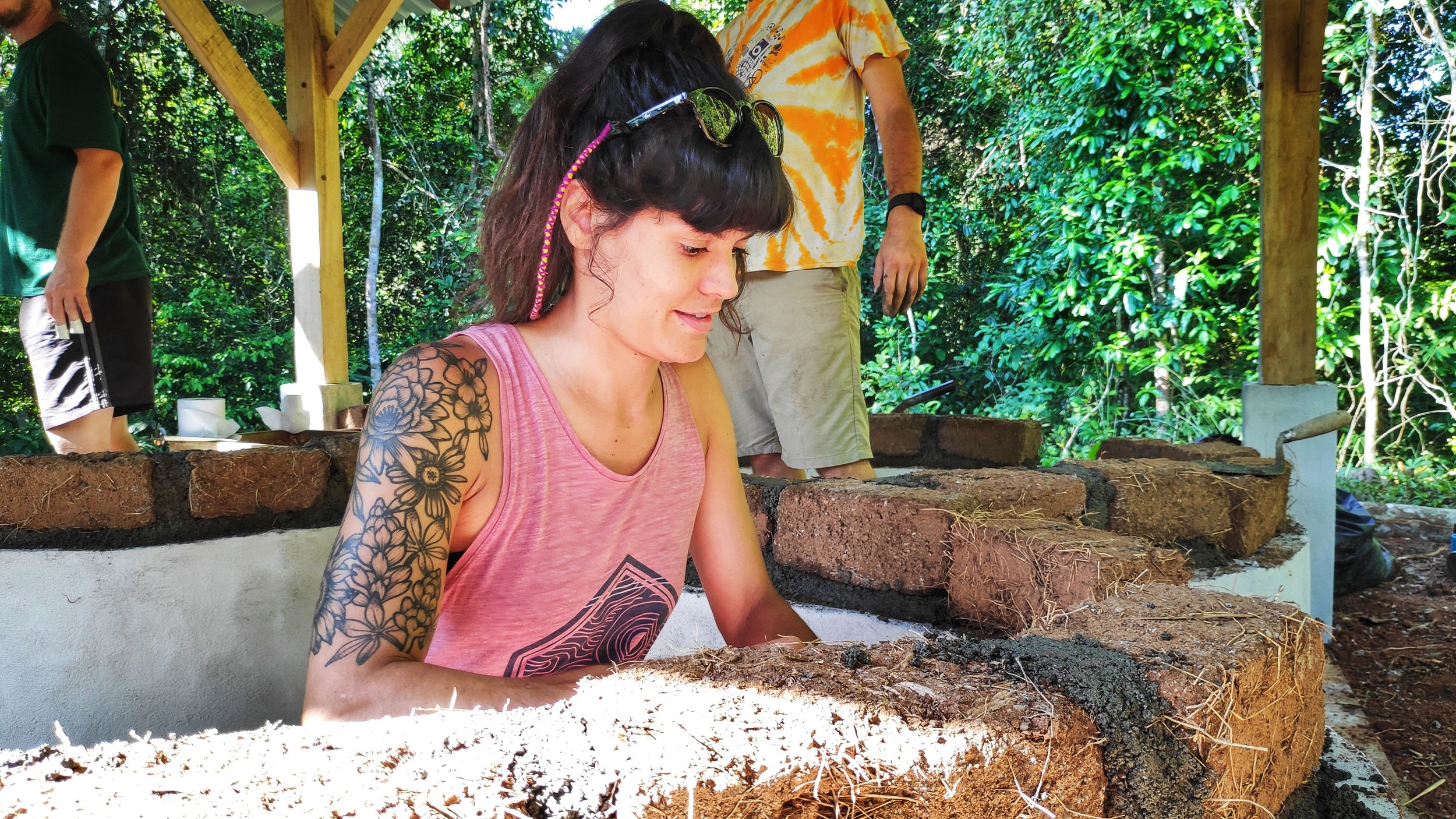
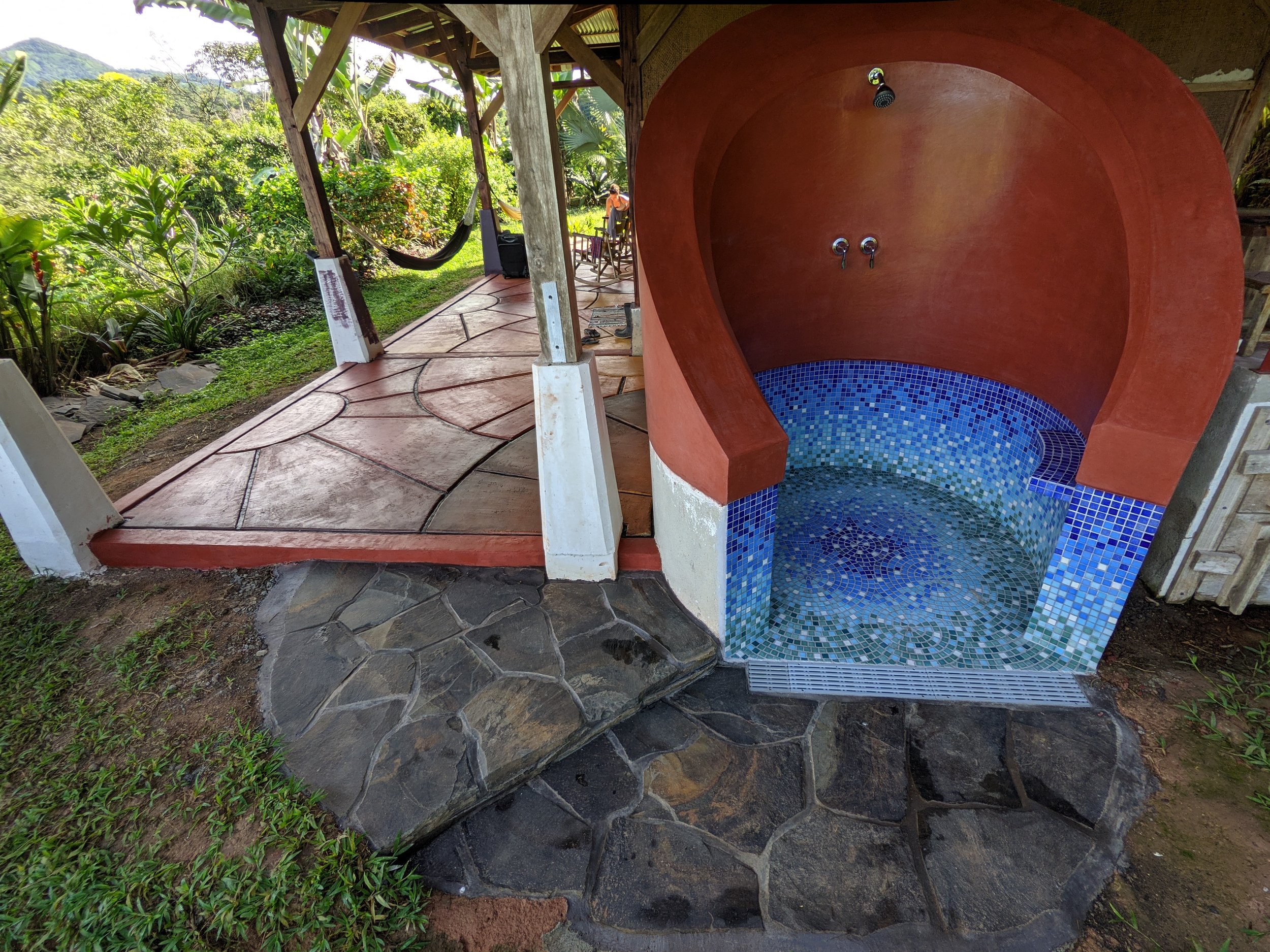
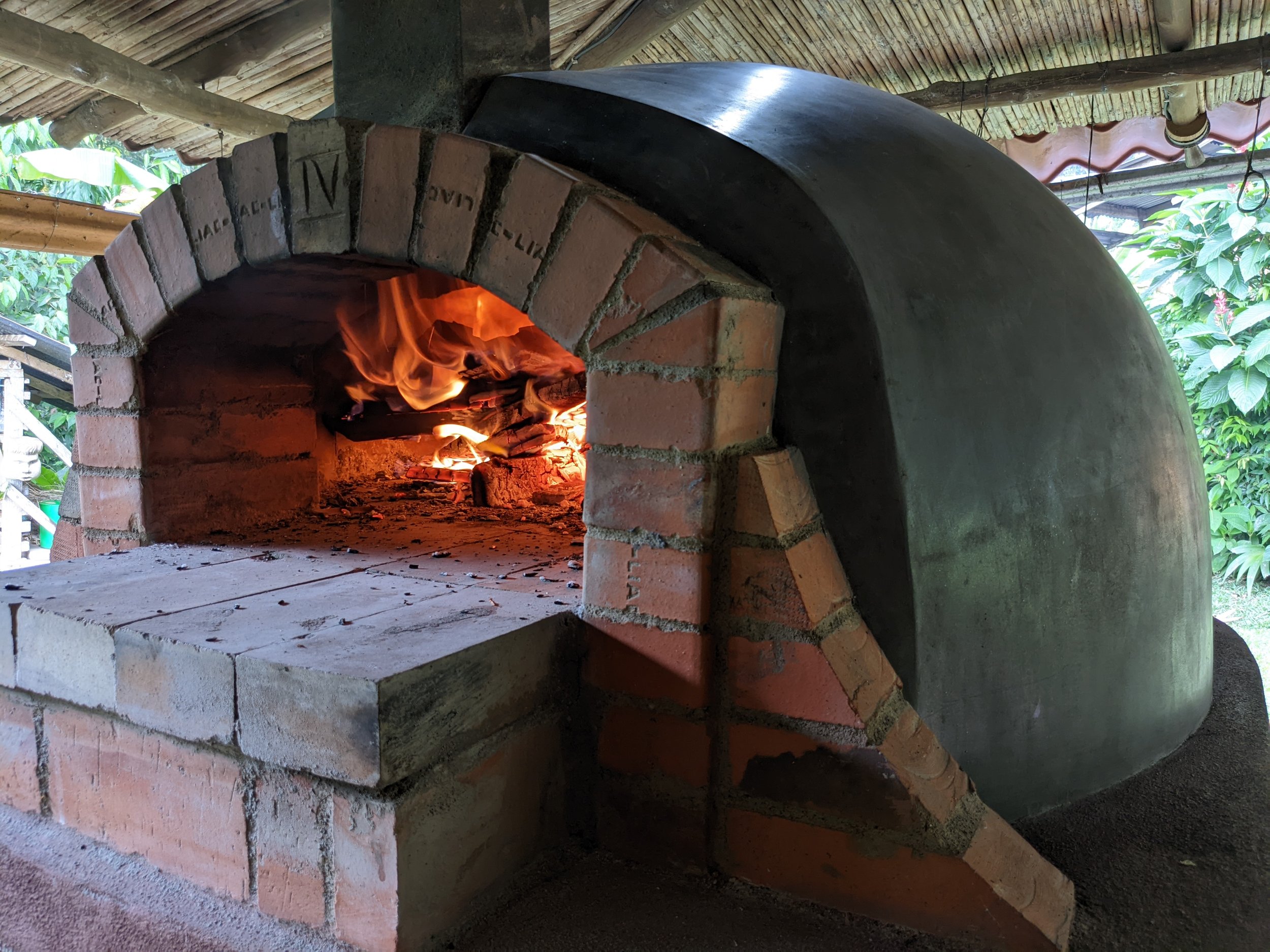
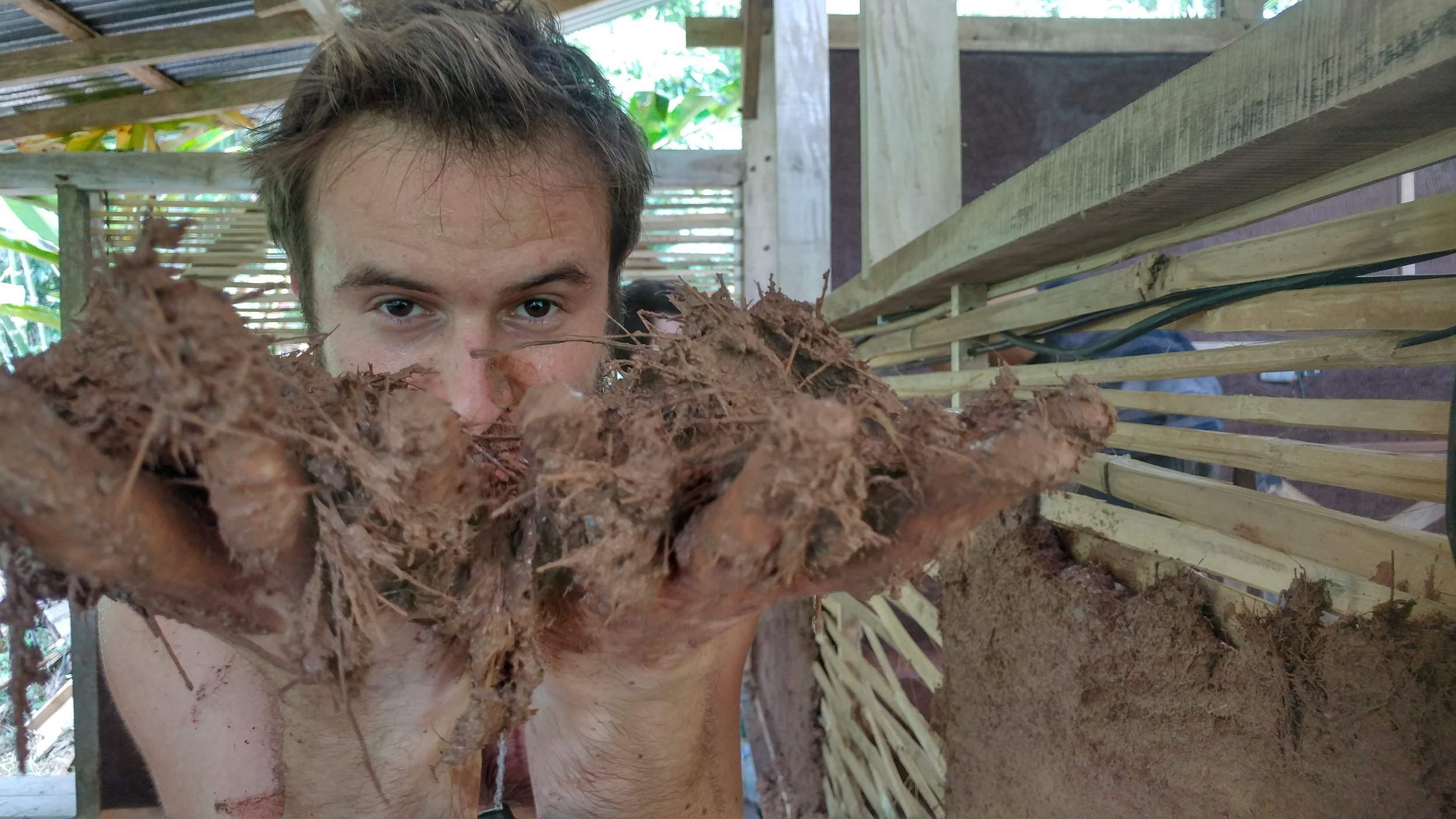
Appropriate technology
We have always strived to incorporate the “right” type of technologies into our repertoire. We are trying to develop tools that are genuinely going to improve productivity, rather than technology for the sake of it. We have wonderful examples of technologies that we think are accessible and simple for others to implement. Some of our favorites include the efficient wood burning stoves for cooking, solar dehydrators, earthen pizza oven, composting toilets, biodigestors, solar hot water, composting tubes for slow cooking, wonderbags/hayboxes for keeping food warm and many more. We will have a session about appropriate technologies (read more: Appropriate Technology Blogs) and renewable energy during our PDC. If there are specific things you are interested in make sure to ask us as we have experimented with many different technologies over the years.
Jorge Salazar - PDC instructor
Community support & inclusion
We have always endeavored to support our community as best we can and over the years we have been involved in many community projects. We have helped raise money to build a community library, build many additions to the primary school and high school, work on the community center, cemetery, church and football field. We have run classes in the primary school and high school in art, music and English to supplement the work of the underfunded rural schools. More recently we have been focusing our work on developing scholarship funds for our workshops and developing Spanish workshops with very accessible prices for the local people of Costa Rica and Central America. We have also been incredibly lucky that some of the community leaders have also begun to develop business that we can actively support; we work a lot of the Iguana Chocolate, Finca Siempre Verde and KIS botanicals who provide fantastic local guiding, tour and workshop services for guests and workshop participants. We have endeavored to include these local leaders in our permaculture design course, including family from La Iguana Chocolate and the founders of KIS botanicals to teach several modules in our Permaculture Design Certification.
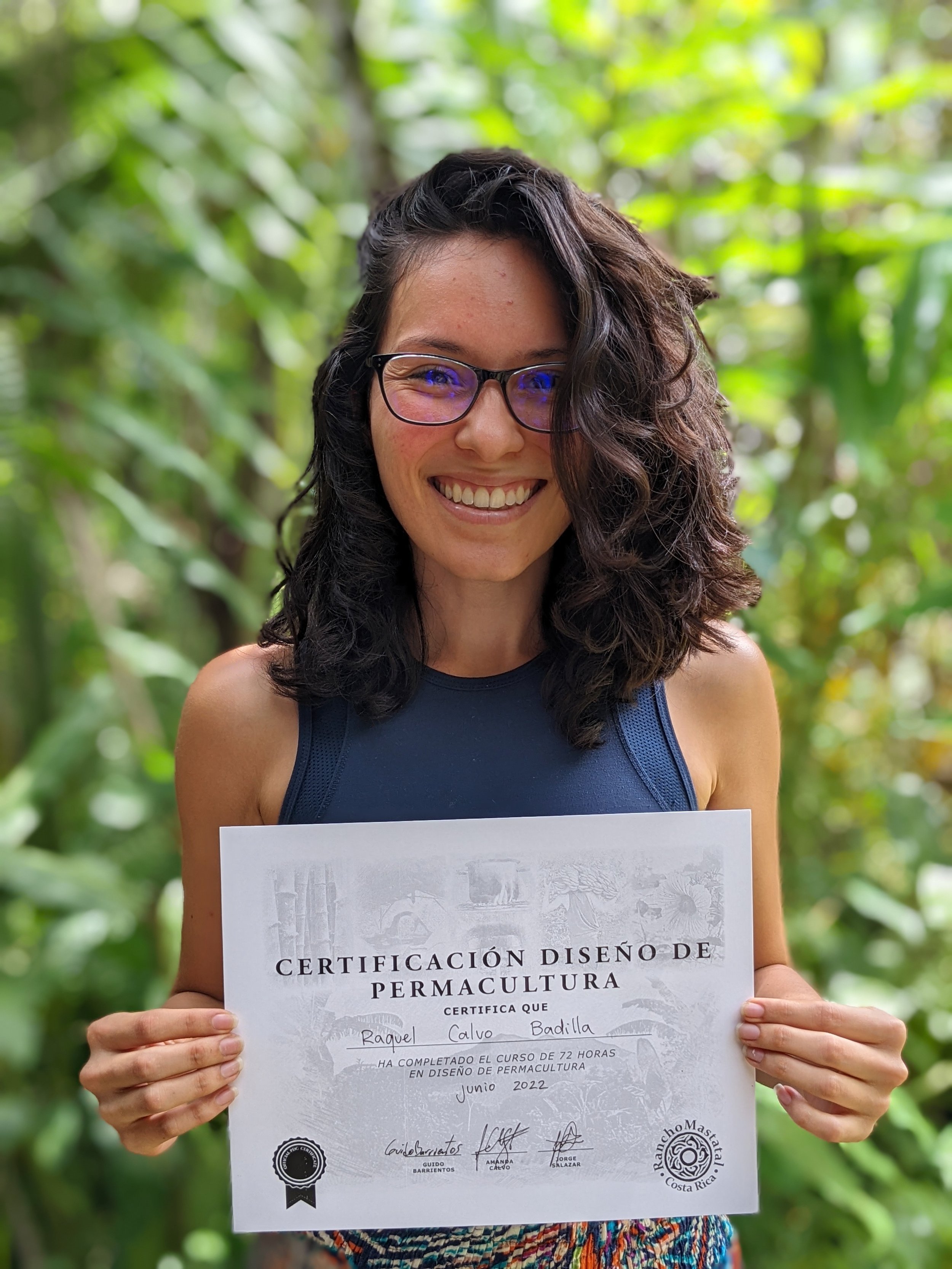
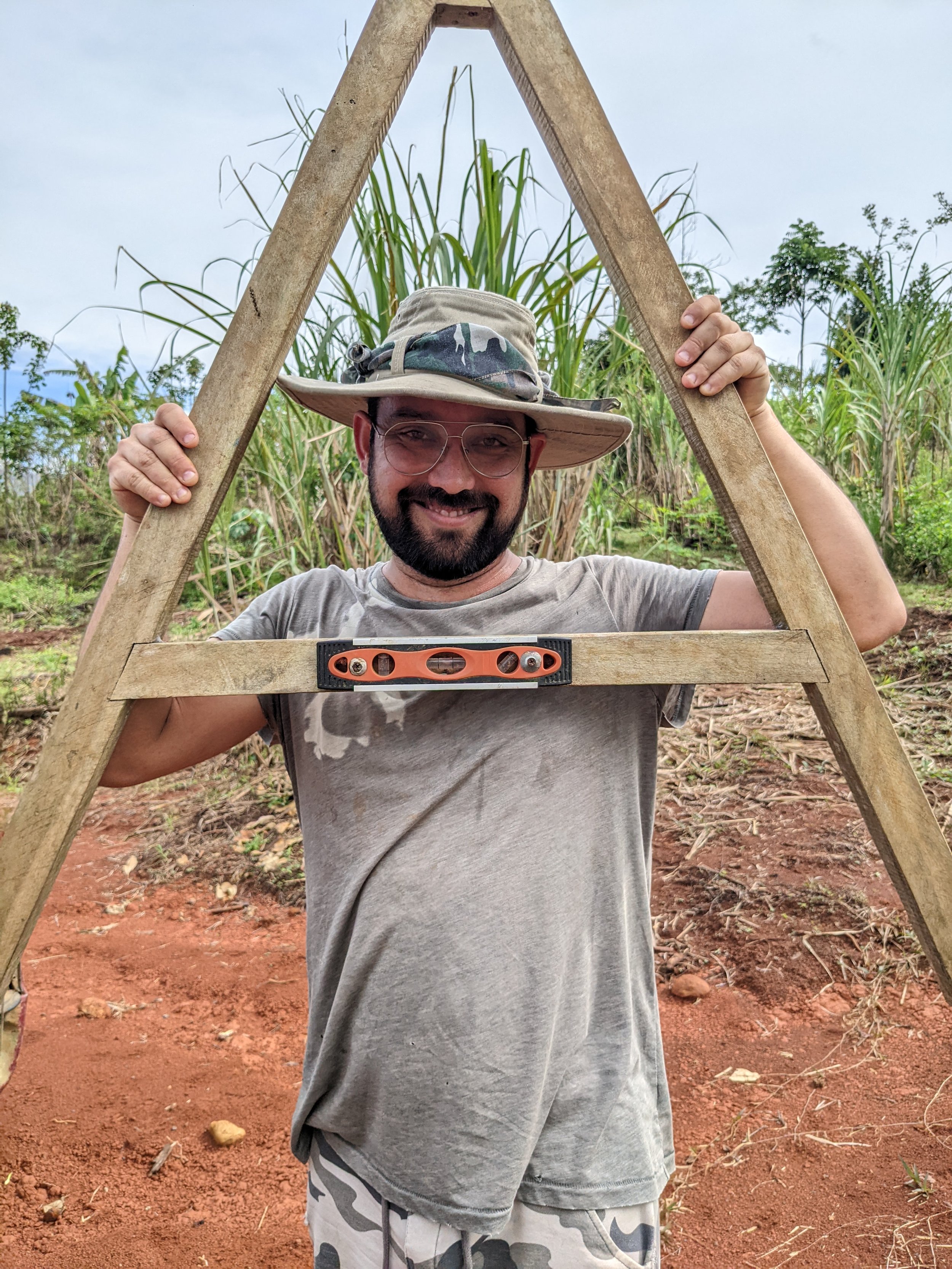
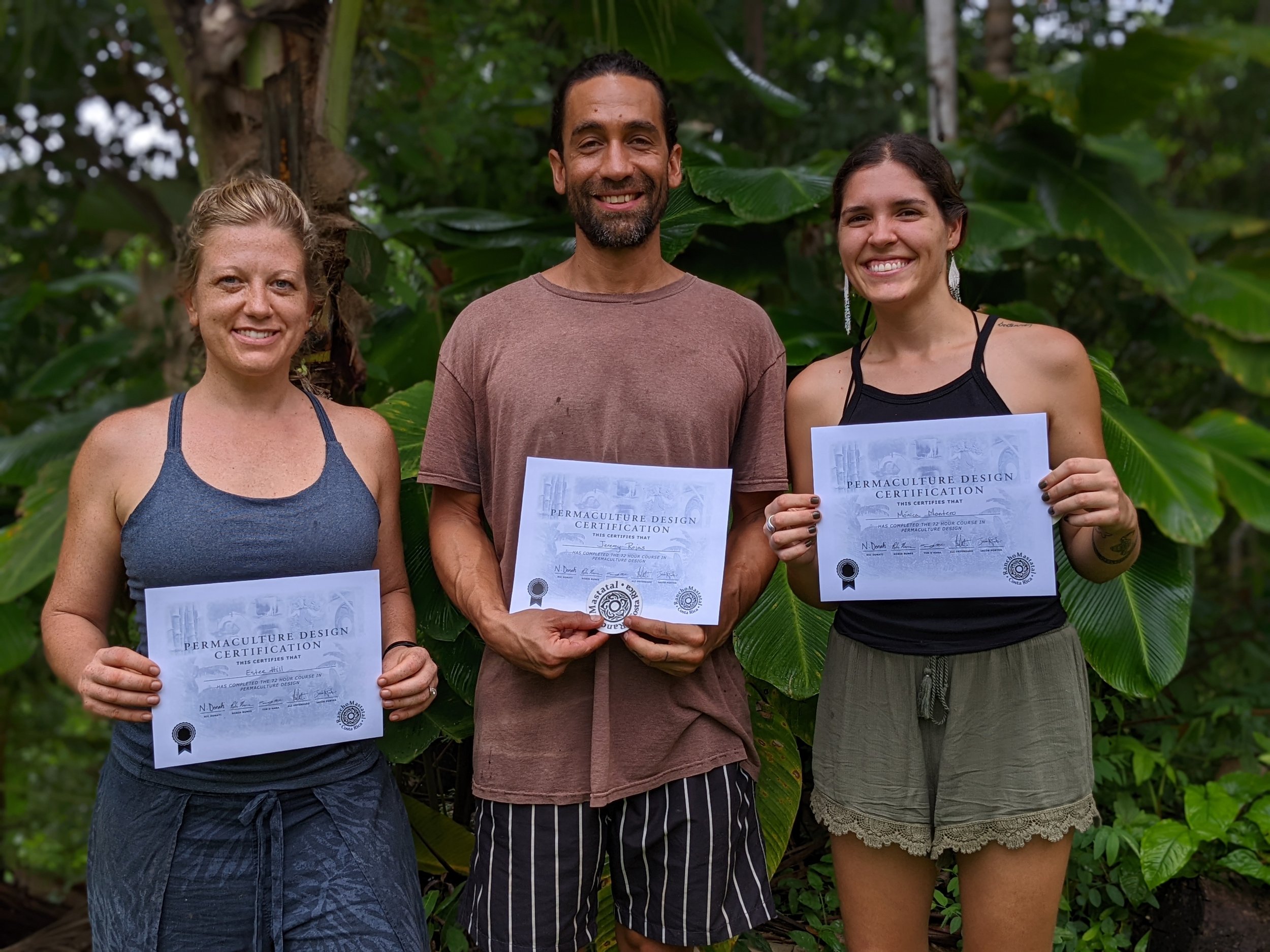
Why Us?
We believe that we have developed not only a fantastic and inclusive permaculture course, but that it is based on our many years of experience living on the land. The Ranch is unique in its breadth of different permaculture systems that take many years to cultivate.
By joining us for our Permaculture Design Certification course you will not only be learning about the systems that we have in place and the methodologies of design, but also about how to successfully run a business based on permaculture ethics and about a project firmly embedded in the local community.
We hope to have you join us for one of our two yearly Permaculture Design Courses. Stay tuned to our workshop calendar for dates!

Book Recommendations and Reviews #3
Due to the unique circumstances of the past two plus years, I never seemed to find the time to write what I hoped would be a yearly blog on the books that I read. The two times that I’ve done this in the past we were stateside visiting family, with a bit more time to dedicate to catching up on what seems to be an ever growing list of “books to read”.
by Tim O’Hara
Due to the unique circumstances of the past two plus years, I never seemed to find the time to write what I hoped would be a yearly blog on the books that I read. The two times that I’ve done this in the past we were stateside visiting family, with a bit more time to dedicate to catching up on what seems to be an ever growing list of “books to read”. With travel plans all over the board since COVID became a common part of life, we were only able to make 2 much quicker than normal trips back to see our loved ones in the US. Nevertheless, I’ve been able to squeeze in some solid educational, inspirational and informative reads that I’d like to quickly review for those of you out there that appreciate personal reading suggestions. I’ll try to include as many of the books that I’ve read since the last time I shared my recommendations though I may miss a few as it’s been a while. I’ll also do my best to list them in the order that I read them though my memory doesn’t always serve me as well as it used to. As always, I love to receive other people’s recommendations and in fact a few on those on the below list came from some of you that responded to my last blog reviewing books. Without further ado, here we go. Enjoy.
All the King’s Men by Robert Penn Warren
I randomly picked this classic off of the Ranch’s library shelf one day looking for a good read. I don’t often choose fiction these days but this book, written as fictional history, really resonated as I flipped through the pages and got lured in by the in-depth character development and story of corruption, dirty politics, and the reality of how decisions are sometimes made by those in power. The book is set in the southeastern US in the 1930s. I was saddened by how little much has seemed to change on the political front this past century.
Killer of the Flower Moon: The Osage Murders and the Birth of the FBI by David Grann
Holy shit. I wish I was surprised by the story laid out by author David Grann. This book was recommended to me by our neighbor Jim Veeder. It’s an unbelievable story of pillage, theft and the rising up of J. Edgar Hoover and the Federal Bureau of Investigation. Add another chapter to the story of sinister imperialism and Manifest Destiny that left destruction, thievery, and murder in its wake. The book was gripping. I burned through it in a few days and found myself at the end ashamed to descend from the race and gender that has done so much damage to this planet and its people. Highly recommended.
The Warmth of Other Suns: The Epic Story of America's Great Migration by Isabel Wilkerson
This book about the “Great Migration” of African Americans from the Southeastern US north and west follows the lives of 3 unrelated people that moved to New York, Los Angeles and Chicago respectively.
This is a good overview of the plight of black Americans in the early and mid-1900s as they continued to work against the repressive forces set in motion by slavery and subsequently Jim Crow. I also plan on reading Wilkerson’s more recent book entitled Caste.
Rising: Dispatches from the New American Shore by Elizabeth Rush
What will happen as our coastal cities go underwater? What will happen as our estuaries become part of the sea? How will we mitigate the ensuing disasters of climate chaos as sea levels rise and begin to swallow up areas inhabited by millions of people? We are in for a rude awakening and Elizabeth Rush does a nice job of laying out our despondent future in a way that I found accessible and even at times enjoyable. The book was written fairly recently and is a good selection to bring yourself up to speed on recent developments in the climate disaster conversation.
There There by Tommy Orange
This read takes a look at indigenous populations in urban settings as it individually follows the lives of a number of indigenous people who are connected in some way and who all come together in the same space in Oakland at the end of this compelling, sad but important and absorbing book. If you read Overstory, it’s similarly laid out by following and highlighting the lives of the characters and then creatively weaving them together before a final crescendo that leaves you reeling a bit. I blew through this page-turner and would highly recommend it to anyone interested in the human project. This is one the first books that I’ve read about American Indians that focuses on the urban story, where most American Indians live today, and their challenges as it relates to life in the city.
Call of the Reed Warbler: A New Agriculture – A New Earth by Charles Massy
This book was also recommended to me by Jim Veeder, our neighbor who lives up over the mountain in a small community named Tufares. Jim’s an avid reader that shares my reading preferences and this book really fit the bill with its many examples of regenerative food systems on the continent of Australia. Inspirational for readers concerned about how humans can responsibly provide for themselves in the future.
October 1964 by David Halberstam
I needed a break from the serious reads and settled on an account of the 1964 World Series between the St. Louis Cardinals and the New York Yankees. It was an enjoyable recount of the season leading up to what was one of the most exciting World Series up until that point in history. I especially enjoyed the read due to the fact that many of the players highlighted in the book were still playing when I started watching baseball in the early 70s.
The Human Swarm: How Our Societies Arise, Thrive, and Fall by Mark W. Moffett
This book impacted me more than any book I’ve read in a long time. Moffett, a biologist who for much of his career focused on ants, makes a leap into the world of apes as he uncovers why we do what we do. Fascinating, eye-opening, riveting and refreshing. It answered so many questions about human nature that I have been carrying around with me for a long time. Highly recommended for readers interested in human evolution and behavior.
Catching Fire: How Cooking Made Us Human by Richard W. Wrangham
I blasted through this easy-to-read book that postulates that we are who we are today due to as much as anything else our coevolution with fire. The author suggests that we essentially cannot be healthy beings without the act cooking. I found it to be a captivating book full of new ideas (for me) that seemed almost commonsensical and plausible looking back. Fire, more than any human “discovery”, influenced who our species is today. Dedicated raw food enthusiasts will likely push back on much of the content in this excellent read.
How to be an Anti-Racist by Ibram X. Kendi
It took me a few chapters to warm up to this New York Time’s bestseller. I learned a lot from Kendi’s messages and enjoyed the way that he wove his personal story into the bigger message of how to carry ourselves in an ever complex world of stereotypes, racism, sexism, homophobia, classicism and a white supremicist patriarchy. I’d say an important addition for anyone interested in working to navigate today’s entangled social landscape.
Parable of the Sower by Octavia E. Butler
This title was recommended to me twice on the same day by different people and so I decided that I had to give it a whirl. I found out afterwards that this book has been popular on a number of reading circuits based in part by the accuracy of it’s prophetic message. The book was written in the early 1990s and set in the mid-2020s and depicts an apocalyptic setting in California that features death, danger and dystopia in a way that makes the story totally believable given the current state of the world. Octavia Butler seems to continue to get increasingly popular since her recent death. This black award winning author who died in 2006 is known as a sci-fi writer and has enjoyed a large following for many years. This book has a sequel entitled Parable of the Talents.
The Red Deal: Indigenous Action to Save Our Earth by The Red Nation
This book outlines a bold sociopolitical message to reconcile past atrocities done to the indigenous people of North America. I’d say that everyone would benefit in some way from this book. It provides a roadmap for reparations to American Indians and in turn a roadmap to return to civility in American and human society. I greatly resonate with the content in this book.
A Flag for Sunrise by Robert Stone
One of only 3 fiction books on this list, I again randomly picked this up in the Ranch library and quickly got engrossed in this historically accurate book about imperial destruction, revolution, greed and power in Central America.
Farming While Black: Soul Fire Farm's Practical Guide to Liberation on the Land by Leah Penniman
We had the opportunity many years ago while visiting Robin’s mom outside of Albany, NY to visit Soul Fire Farm near Troy, NY not far from where Robin grew up and where the author and her partner Jonah started an impactful project that focuses on food security and farming with a focus on the underserved black community in the capitol district area of NY. The book is wonderfully written, clear and powerful and outlines a path for both black and white people to work towards a future of land justice.
Dirty Work: Essential Jobs and the Hidden Toll of Inequality in America by Eyal Press
I’ll start by sharing one of the final passages in this book that struck me, “When people gather to hear veterans talk about moral transgressions they had committed in the course of fighting America’s wars, the most effective way to help them overcome moral injury is to communize it, Jonathan Shay argued in Achilles in Vietnam. When those not doing the fighting can deliver a message to them and to all of the “dirty workers” that they deserved to hear. “We sent you into harm’s way. We put you into situations where atrocities were possible. We share responsibility with you: for all that you have seen; for that you have done; for all that you failed to do.”. This book should be read by all Americans and highlights the “dirty work” that helps to drive our economy, put food on our table, and keep us safe. This heart-wrenching book looks at the modern underclass and their struggles to get by by doing the least desirable work in our economy and its impact on their psyche and society at large. Essential reading.
America: The Farewell Tour by Chris Hedges
I’ve really liked Chris Hedges’ journalism over the years. He seems to have had the sustained courage to speak to power. I blew through this book. Sad, compelling, motivating, and provocative. Hedges delves deep into the addictions of opioids, gambling, sadism, and hate and how they are being fed by a failed corporate state. If you haven’t given Chris a shot, this would be a good dip into his decades long investigative journalism career.

The Heartbeat of Wounded Knee: Native America from 1890 to the Present by David Treuer
As you may remember I enjoy reading about Native American history. The first part of this book quickly recaps the history of Native Americans in North America up until the massacre at Wounded Knee in 1890 and then delves deep into American Indian policy post-Wounded Knee with a focus on the miraculous survival of Indians in the United States and the amazing stories of resilience that continue to define this segment of the population. The book ends on a high note by highlighting all of the incredible work being done on reservations and in urban centers. American Indians are beginning to thrive and create an example of what our nation can become in the face of climate disaster and out-of-control capitalism that’s pushing our species to the brink of extinction. It’s a somewhat thick read but a worthwhile one for those interested in issues that revolve around indigenous culture.
Building Community Food Webs by Ken Meter
A good, quick read for anyone looking to go a bit deeper into building local economies that revolve around food. Ken Meter argues why local food movements matter and why we should support those growing food in our regions.

Inflamed: Deep Medicine and the Anatomy of Injustice by Rupa Marya and Raj Patel
A great book for those interested in making the connections between physical deterioration and the deterioration of our economy and democracy. Chronic stress makes us sick in ways that we have not understood until recently. And low-income people of color experience the highest levels of chronic stress. This has led to generational sickness and a decreasing life expectancy in many demographics. Yet another call for equitable policies that lead to a brighter future for all. Thanks to former apprentice Abby Cmiel for this wonderful gift!
Bitter Grounds by Sandra Benitez
A wonderful read and the last fiction selection on the list. This book follows 3 generations of poor El Salvadoran women in the middle half of the 1900s who’s lives are intimately connected with an elite El Salvadoran family. Beautifully written. Sad, eye-opening, page-turning.
One Day of Life by Manlio Argueta
This book, also set in El Salvador in the 1970s, follows a family through the struggles of civil war and is told through the eyes of the poor rural women who lead tragic lives in this war-torn country. The sad and all too often told story of US government involvement leading to the installation of corrupt powerful figures who lead their countries with iron fists that have caused much of the strife that has led to mass migration to the US from this region of the world. A tragic, well told and easy read for those interested in the politics and strife of Central America.
Happy reading to you all. I’m always looking for book recommendations so let me know if there’s anything in your library that you think that I would enjoy and/or learn from. We just got an influx of a few hundred new books so more to come from me next year. Let me know if you have any questions in the meantime.
Abrazos,
Tim

Permacultura, ¿Porqué aprender en el Rancho Mastatal?
Imagina que tienes un lienzo en blanco para trazar y te dicen que lo que dibujes se va convertir en tu vida. Quizás, no tienes las herramientas, el conocimiento necesario para poder imaginarte en ese mundo ideal y te surgen preguntas: ¿cómo podré lograrlo?, ¿qué es lo realmente indispensable y necesario?, ¿esto me entusiasma o me agobia?, ¿por dónde empiezo?
Ari, Estudiante 2022
Imagina que tienes un lienzo en blanco para trazar y te dicen que lo que dibujes se va convertir en tu vida. Quizás, no tienes las herramientas, el conocimiento necesario para poder imaginarte en ese mundo ideal y te surgen preguntas: ¿cómo podré lograrlo?, ¿qué es lo realmente indispensable y necesario?, ¿esto me entusiasma o me agobia?, ¿por dónde empiezo?
Ahora volvamos a la realidad, pensemos en ese lienzo en blanco como las oportunidades de creación que tenemos disponibles todos los días. Conscientes o no, dibujamos diariamente en él con nuestros valores, desarrollo, conocimiento, con nuestras relaciones y decisiones. Siendo humanos, nos compenetramos con otros lienzos para tratar de descubrir; ¿cómo debería de verse el gran lienzo final?
La Permacultura es una herramienta para diseñar la vida. Sus ámbitos abarcan los grandes aspectos de la vida humana y su entorno: el diseño de un mundo real, social, práctico y sustentable. Así pues, un curso de Permacultura procura que sus estudiantes sean diseñadores y agentes efectivos de cambios en sus hogares y comunidades, procurando relaciones entre los diversos ámbitos de creación, sobre ese gran lienzo de oportunidades.
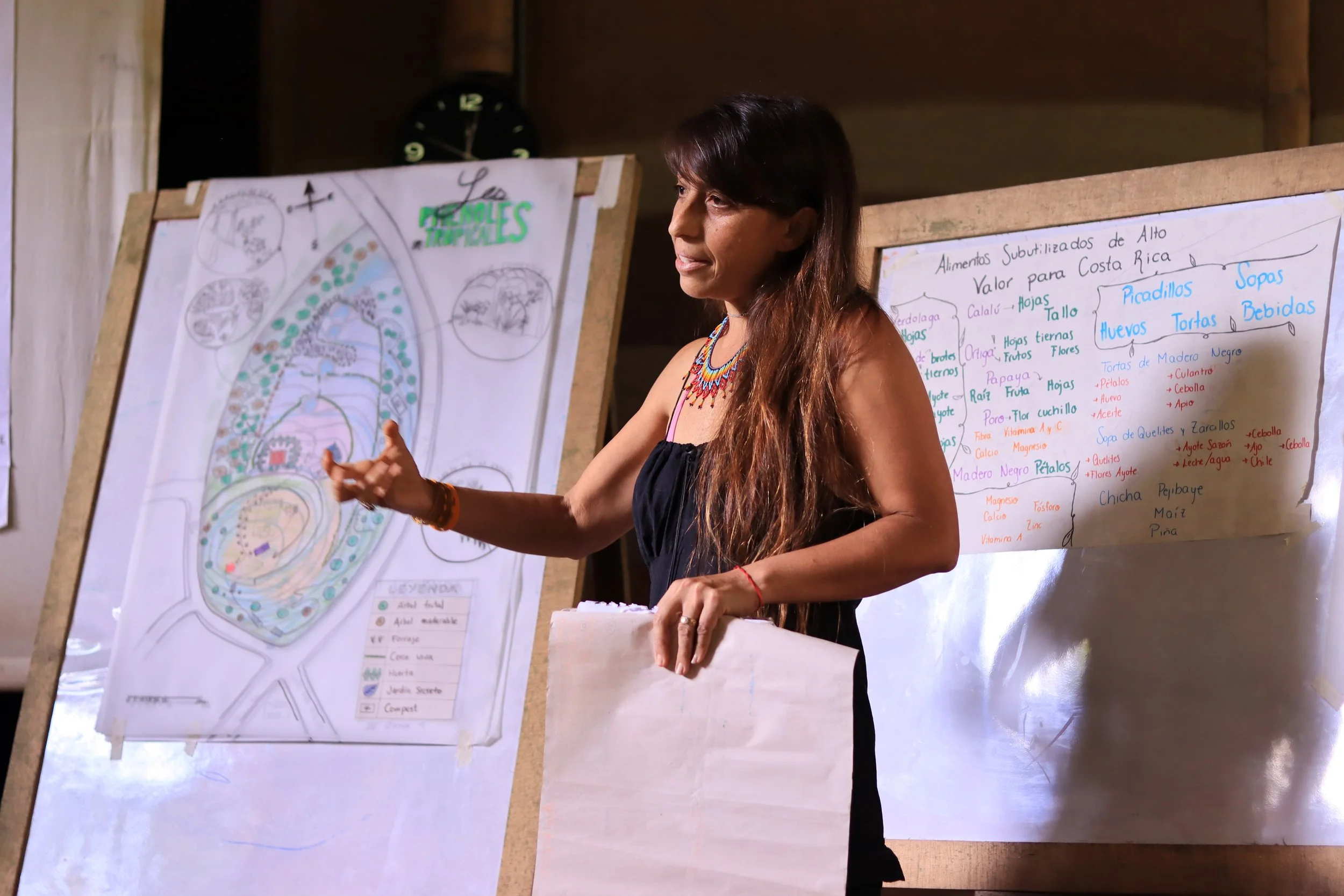
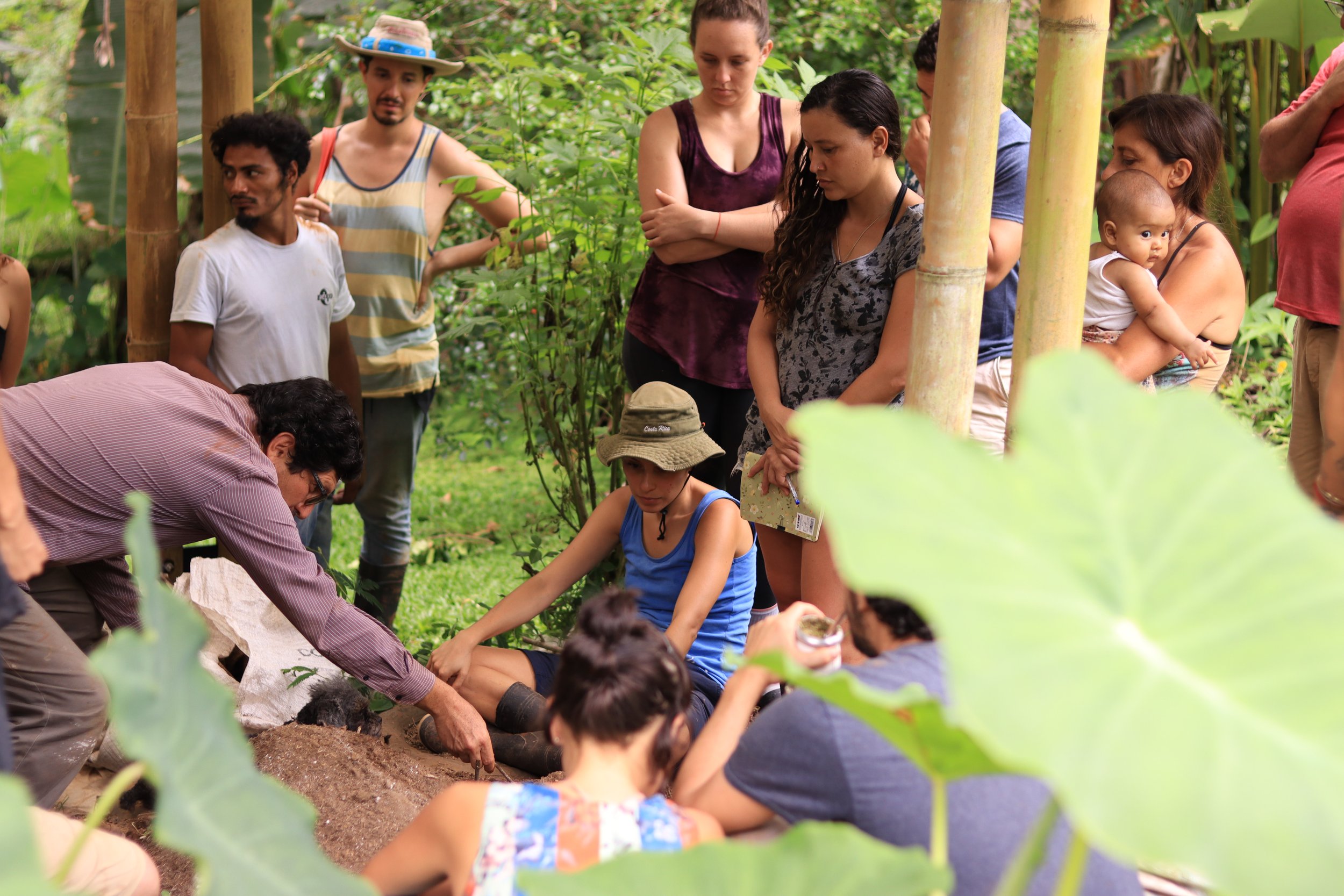
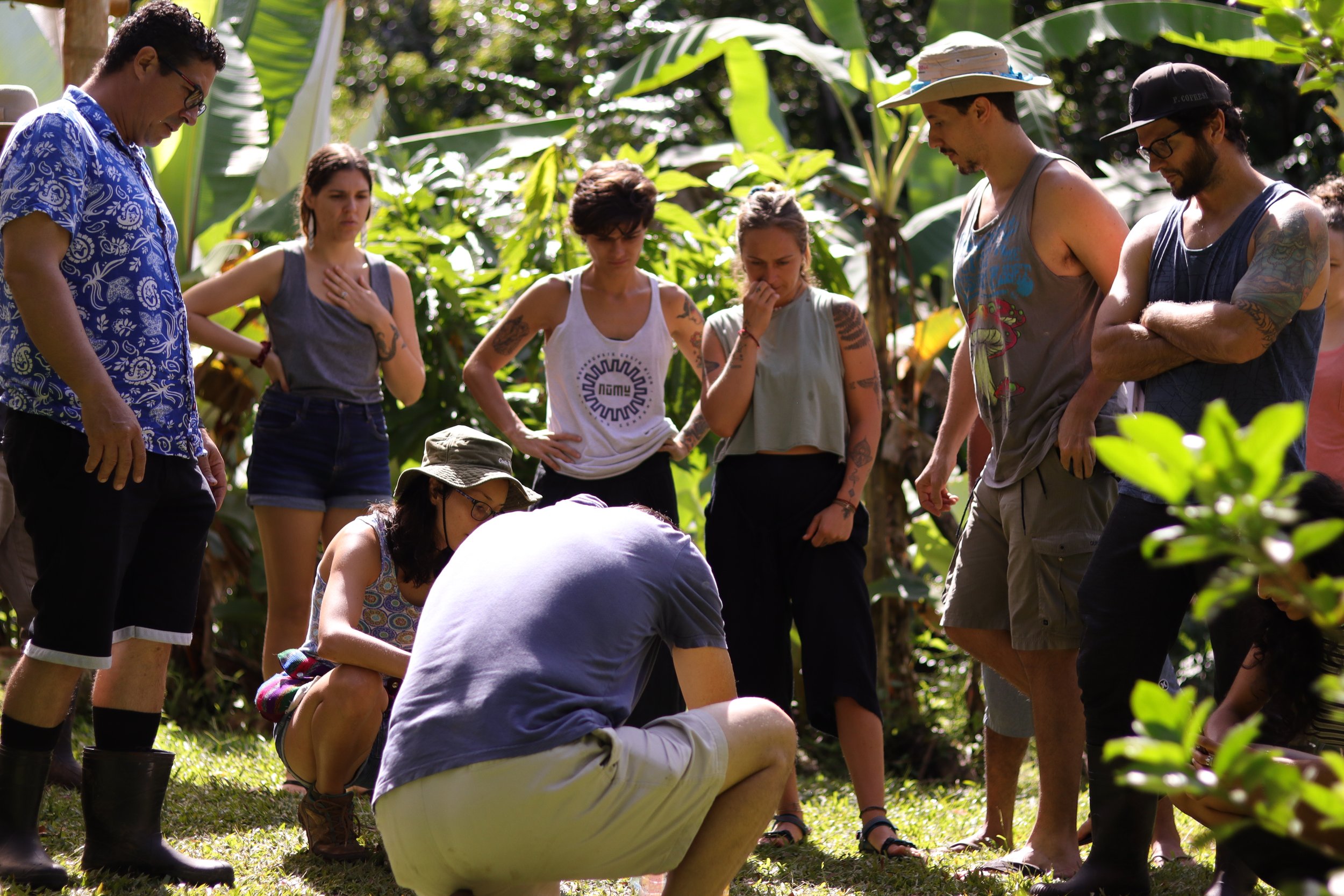
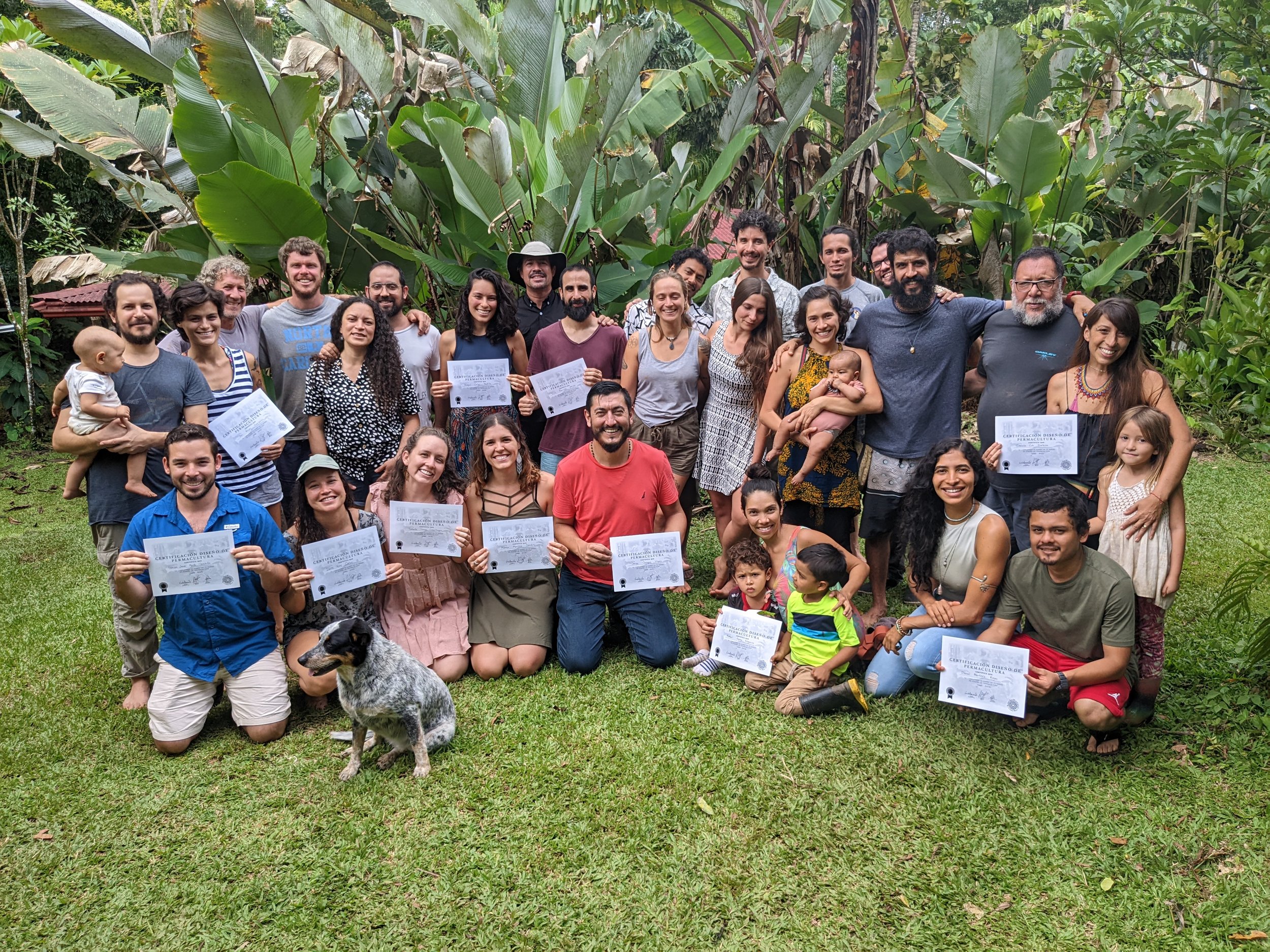
¿Qué es un PDC (Permaculture Design Course)?
En el año 1984 se definió el Curso de Diseño en Permacultura (PDC por sus siglas en inglés) como un curso estándar de 72 horas a partir de la recopilación de métodos, técnicas y formas de vivir de diversas comunidades de pueblos originarios en diferentes partes del mundo, trabajo que estuvo a cargo de Bill Mollison y David Holmgren. No es un título académico, es una certificación por parte de la comunidad de permacultura que reconoce en quién lo obtiene las bases conceptuales y buenas prácticas para su aplicación.
Este curso es útil en el trazo de relaciones humanas compatibles con los sistemas naturales, desde un cúmulo de principios y éticas en relación con el cuidado de las personas, el cuidado de la tierra y el justo repartir de los excedentes. En esta línea, las relaciones diseñadas construyen diseños autosuficientes que incluyen a la comunidad para ser efectivos y resilientes, diseños que respetan y entienden los patrones de la vida, la tierra, los microorganismos, los ecosistemas; diseños que contemplan y aprovechan el flujo energético entre todos los componentes incluidos, son regenerativos y permanecen.

¿Por qué cursar el PDC en Rancho Mastatal?
El PDC de Rancho Mastatal no es ni será el único certificado obtenido, pero por el momento sí es el mejor. Acá algunas razones relevantes:
1. Es el primer centro de conservación y educación para la sustentabilidad que desarrolló de forma completa y en español el Curso de Permacultura en Costa Rica, para ser impartido por profesores ticos previamente certificados. Este hecho influye positivamente en la accesibilidad del curso, abriendo oportunidades a todo Latinoamérica y Suramérica. Debido al uso de castellano, este curso rompe con la barrera del idioma: la gran mayoría de la bibliografía de Permacultura está en inglés.
2. En Rancho Mastatal respetan, cuidan y valoran el tiempo y recurso de cada integrante. Este curso no es uno que se extiende por 6 meses, tampoco es una experiencia de “retiro y sanación en el bosque” por valores excesivos por encima de los $1500, lo cual no se ajusta a la realidad económica de la mayoría de costarricenses, mesoamericanos e incluso personas latinoamericanas. Por el contrario, toman muy en cuenta el contexto: Si bien partimos de la cultura, el lugar y todas las condiciones externas y climáticas, tanto el Rancho Mastatal como los profesores del curso, entienden, viven y desarrollan su práctica en el mismo entorno en el que se imparte el curso (Costa Rica).

3. Se parte del punto obvio, pero muchas veces ignorado que la práctica hace al maestro. Es un curso presencial inmersivo de 15 días y Por un accesible costo de $400 con hospedaje y comida incluida (cabe mencionar que es toda una experiencia increíble) existe la posibilidad de vivir en el rancho, convivir, servir a la comunidad, aprender y practicar.

4. Todo el contenido y material del curso es invaluable. Partiendo de la estructura del curso (amplia y extensiva), esta experiencia de campo abre las puertas del conocimiento ancestral tradicional que envuelve la permacultura: biología, bio construcción, plantas medicinales, gastronomía, fermentación y conservación, tecnología apropiada, energía, compostaje, manejo de agua, manejo de residuos, manejo del suelo, autosuficiencia desde un código descentralizado, entre otros.
5. Aquí se vive bajo el principio básico de la vida: Estar presente y consciente. El constante contacto e interacción con la naturaleza y las distintas conexiones y lecciones humanas hacen, de este lugar, un espacio seguro de aprendizaje y de constante agradecimiento y motivación.
6. Por último, pero jamás menos importante, en Rancho Mastatal predican con el ejemplo. Su vida sencilla, práctica, sustentable, comunitaria y permanente, es un ejemplo claro y vivo de su lucha por la conservación y la educación.
Este curso es para quién se ha percatado de la necesidad de un cambio, sin olvidar que un cambio externo sacude y refleja la necesidad de un cambio interno. Si existe la intuición de hacer algo diferente, si te cuestionas los patrones, estereotipos y condiciones impuestas por la humanidad que nos ciega y dirige hacia la ignorancia, la separación y la destrucción… este curso puede dar rienda suelta a la transformación de tu lienzo diario para, finalmente, trazar juntos el gran lienzo final.

Categories
Topics
- Agriculture 6
- Agroforestry 21
- Animals 2
- Apprenticeship 19
- Appropriate Technology 6
- Backpacking 1
- Bananas 1
- Basic Pantry 4
- Biochar 1
- Books 3
- Build Your Own Home 1
- Central America 5
- Chiles 1
- Cinnamon 1
- Clay Carving 1
- Climate 2
- Climate Change 1
- Cob oven 1
- Communication 5
- Community 24
- Compost 2
- Composting Toilets 2
- Condiments 1
- Conservation 2
- Cooking 4
- Costa Rica 18
- Design 10
- Earthen Construction 10
- Eat Local 2
- Ecohome 1
- Education 9
- Environment 3
- Ethics 4
- Farm to Table 12
- Fasting 1
- Fermentation 14
- Food 22
- Food Choices 8
- Food Forest 8
- Food Processing 15
- Food Systems 12
- Gap Year 1
- Gardening 5
- Ginger Beer 1
- Harvest 2
- Health 12
- Healthy living 5
- Homemade 2
- Homestead 8
- Internet 2