

BLOG
Stories, articles, and updates from the Ranch community.

Foundations for Success: 10 Considerations to Create a Healthy Project
After more than 20 years, we have been able to identify some trends that have led to our survival as a business and a community. The following advice is appropriate, and perhaps some of it even necessary, if you expect to live successfully in a communal work and living environment doing land-based work.
By Core Team Member Tim O’Hara
After more than 20 years, we have been able to identify some trends that have led to our survival as a business and a community. The following advice is appropriate, and perhaps some of it even necessary, if you expect to live successfully in a communal work and living environment doing land-based work.

Students in our annual Permaculture Design Course
Communal Continuity
It’s imperative to assemble a group of individuals that you can depend on, year after year. If the only people that are visiting your project are there for shorter or medium length stays, you will never feel as if you have a community to lean on during the harder stretches of running a project of this nature. Create realistic and concise agreements with one another and develop incentives that make everyone feel well taken care of.

Privacy
We learned the hard way that having your own private space is critical for long-term happiness. We decided to focus on building before planting in our early years. That has meant that our agroforestry spaces are a bit behind where you’d expect after 20 years of working in those spaces. But without privacy, it’s impossible to keep people around who are doing the important work in the orchards and other spaces. Create private spaces for everyone, with a focus on creating lovely, comfortable, healthy homes for your core team.
Collective Decision Making
Micromanaging is a recipe for burnout. Don’t fall into the trap. Develop trust with your partners and allow each leader to make decisions in their realm up to a certain value. Big decisions, that affect everyone, should be discussed by your entire team, but small decisions, like whether to buy 5 or 10 avocado trees, should be left to those managing the orchard spaces.

Balance and Rest
It’s imperative to figure this out before burning out. Burnout can be permanent, leading to the abandonment of your passions. Build into your day-to-day lives the time to run, breathe, nap, walk, draw, meditate and think. The work will never be done, so don’t try to do it all each day. It will be there waiting for you in the morning after a great night’s rest.

A Solid, Well-Taken Care of & Committed Core Team
We’ve got an amazing core team. But it took us longer than it should have to realize the importance of building a strong team at the center of our project. If we expect community members to stay committed, they need to have their needs met. And everyone has a unique set of needs. Create a compensation agreement that makes everyone feel valued.

Community Connection
Be an active member in your town. Demonstrate, over and over again, that your project exists to benefit everyone in your community, especially those most in need. Join your local woman’s group, offer free yoga classes once a week, develop a kids soccer camp, or create a language exchange.
Fair Share
Share what you have. It’s your easiest path to acceptance though far from the easiest practice to bring to fruition. It has taken a lot of time, energy and sacrifice to create Rancho Mastatal, and sometimes our knee-jerk reaction to “spreading the wealth” is instead to move to protect what we’ve created in the interest of stability and to prepare for future unforeseen issues. But true stability comes with sharing.

Communal Meals
This may be the hardest bit of advice to embrace for some. Sharing a meal takes more social energy, but weighed against the time you save on cleaning and cooking, it’s worth it. Communal meals encourage group debate, laughter, learning and the development of a strong social fabric. Humans have tended towards eating in front of screens or on the run. These trends lead to poor eating habits and encourage humans to disconnect from one another. To eat well today means a monumental and coordinated effort growing, processing and cooking food. Celebrate this activity each and every day and you will be rewarded in ways unexpected.
Make Time to Dream
We “talk shop” a lot around here. We love what we do and enjoy talking about what we’ve created and how we can improve it. It’s important for us to create spaces that allow for dreaming and scheming. Having the space to “zoom out” and move for a time away from the day-to-day allows for creative brainstorming that can lead to breakthroughs and new ideas that might otherwise never come to the surface. Dare to dream, and dream to create your ideal version of life.

Don’t Get in Over Your Head
This is much easier said than done. When you commit to a land based project, your to-do list immediately seems endless. There’s never enough time in the day to do everything that you need. Start small and work towards simple solutions whenever possible. Build and perfect one system at a time, as much as you can do that. Don’t add chickens, goats and fish in the same year but rather add one species and then see how that changes your life before adding another. We made the mistake of throwing too much at the wall early on in our development and when not everything stuck, it felt overwhelming picking up the pieces of many systems simultaneously.
We try to share our failures and successes frequently so that others can get to where we did in less time and with less effort. Please don’t hesitate to contact us with questions, comments, or suggestions and all the best in your journeys.
Check Out These Past Blogs About Permaculture and Community
How to Run a Permaculture Internship
Enriching Community Soil: 5 Simple Strategies That Support Sustainable Relationships

Farm to Table Chocolate Bonbons
It wasn’t long into my apprenticeship that Robin handed me a piece of a chocolate bonbon, made with raw cacao picked from the farm down the road, that I experienced something like awe; and that in the old sense of both amazement and terror. This is what chocolate is supposed to taste like?
By Kara, Apprentice 2020
Beautiful beaches, abundant wildlife, fresh fruit, incredible coffee, and local chocolate; these are some of the things I anticipated experiencing in Costa Rica. While everything but the beaches has been a part of my experience here at Rancho Mastatal so far, one thing in that list stands out to me. The chocolate.
I’ve splurged on the good chocolate bars back home in Canada, the fair trade, single-origin, handmade stuff- and I enjoyed every bite to get my $10 worth- but I know now that I had never truly experienced chocolate. As fair-trade and handmade as all of that was, it was still flown halfway around the world and had sat on a store shelf for who-knows-how-long.

Cacao being toasted
It wasn’t long into my apprenticeship that Robin handed me a piece of a chocolate bonbon, made with raw cacao picked from the farm down the road, that I experienced something like awe; and that in the old sense of both amazement and terror. This is what chocolate is supposed to taste like? And I’ve been missing out on it for the last 27 years? Memories of foil-wrapped bunnies and coins surfaced, and I tried to make the connection between that waxy-sweet substance and what I had in my hand now; something subtle, complex, layered with sweet and smoky and earthy and bitter- no additives necessary.
I was hooked after that first taste, and when Robin said that she wanted a flight of bonbons for her
birthday dessert, I was ready to take on that challenge. The recipes we created for that event were truly a farm-to-table experience- nearly everything sourced from the Ranch property or from farms
around Mastatal (salt and peanuts being our exceptions). The focus on sustainable, local sourcing did nothing to impede the quality of our bonbons, in fact, it’s that parameter that brings out the most creativity (and the best flavors, oftentimes) of most food made at the Ranch.
So instead of going on waxing poetic about chocolate, I want to share those recipes we made and some tips on working with raw cacao. The funny thing about these recipes is that I don’t intend for them to be followed, not exactly, at least. We used what we had on hand; fruits in season, experimental condiments and flavorings from other projects- and I want to encourage the same approach in you. Look through the foods you have available, both in your pantry and in the local market. Can something be dehydrated? Fermented? Powdered? Turned into wine, vinegar or syrup?
Get creative, play, then eat some chocolate.

A productive harvest of cacao at our local family run chocolate farm, La Iguana Chocolate
Basic Chocolate mix
1 cup raw cacao
1 tsp salt (or to taste)
1 Tbsp grated tapa dulce (or sugar)
1. In a hot, dry skillet toast the raw cacao. They will blacken as they toast, and become wonderfully fragrant. You will know they are done when they start to make popping sounds as the skin separates from the seed.
2. Remove from heat, and let the cacao cool until you can comfortably handle them. Once cool, remove the outer skin by pinching the seed between thumb and forefinger of each hand, and twisting in opposite directions. Remove the skin, but don’t discard it! The little flakes of toasted skin make a wonderful cacao tea.
3. Grind the cacao. We use our hand-cranked corona coffee grinder, but a food processor or a mortar and pestle could work, too. Add the salt and tapa dulce to the cacao as you’re grinding to incorporate it into the resulting mix. You should end up with a mix the texture of gritty sand.
4. This is the base mix to which you will add all of your flavorings. For any bonbon flavor, you
will need something sticky to bind the cacao mixture. Syrups, dulce de leche, finely chopped gooey dried fruits such as dates, have all worked successfully for us. If you add liquids as flavoring, make
sure to watch the texture of the resulting mix. It needs to be wet and sticky enough to bind the cacao together, but not so wet that it slumps.
5. Roll your bonbons into spheres, or any shape of your choice, decorate, then refrigerate until serving.

Cacao seeds being crushed

A freshly picked cacao pod. The white pulp around the seeds is delicious!
Recipe Ideas
*all made with basic chocolate mix
Ranch-oreo: Make two small balls of chocolate mix per bonbon, mixing in dulce de leche to bind, then flatten them into bite size discs. Add a dollop of dulce de leche between the disks, and top with cinnamon and grated tapa.
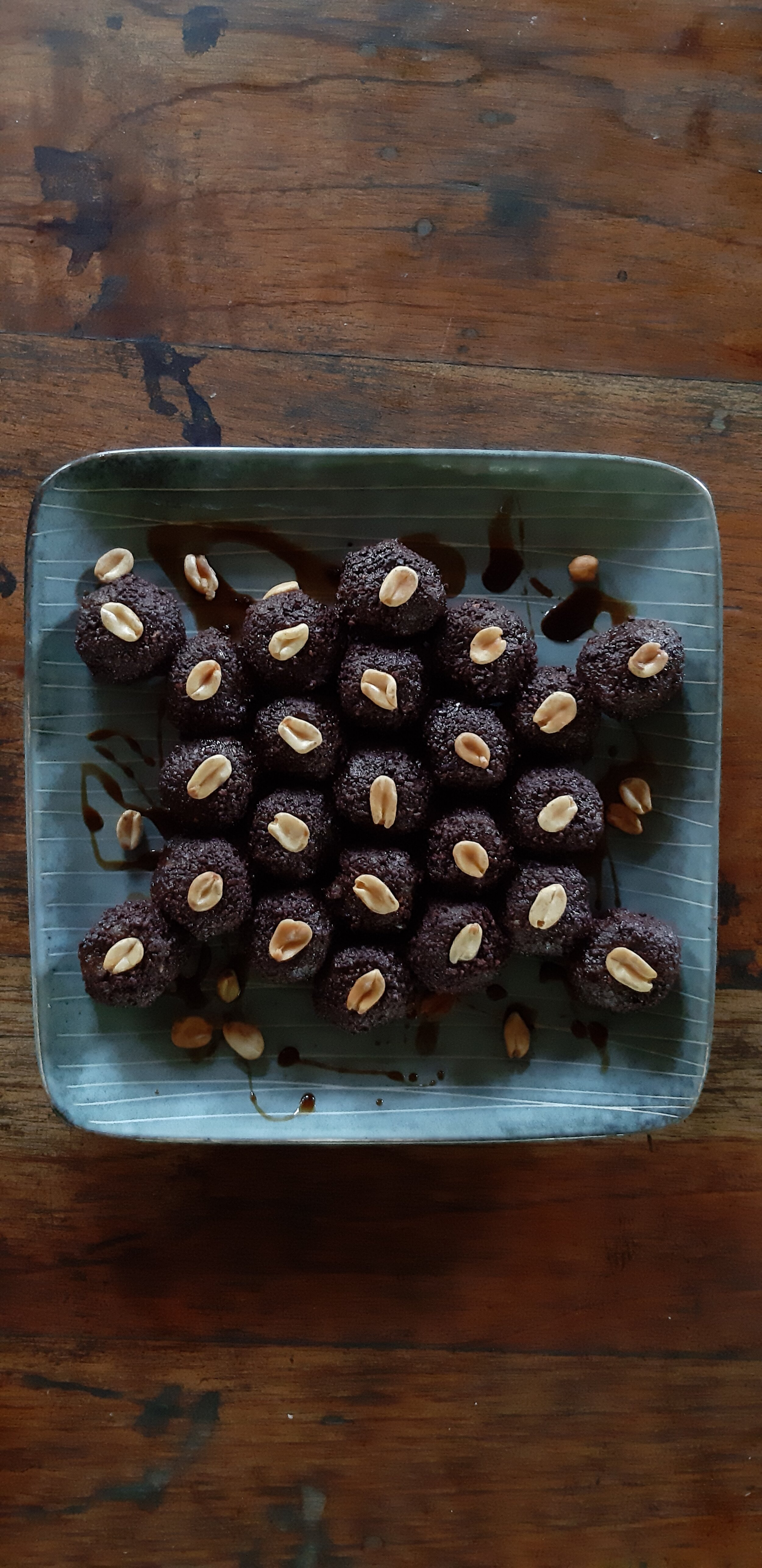
Peanut Butter Balls: Bind the chocolate mix with coffee flavored syrup (we used a coffee kombucha reduced with tapa dulce), and make a quick peanut butter to fill the bonbon. Toast peanuts with salt, and put them in a food processor with sour cream until it reached your desired texture. Make a ball of the peanut butter, then wrap a layer of the chocolate mix around it.
Ginger Jack Bites: Add ginger syrup and lime (we used powdered) to the chocolate mix, then incorporate finely chopped dried jackfruit. Roll into balls, and top with a slice of dried manzana de agua.
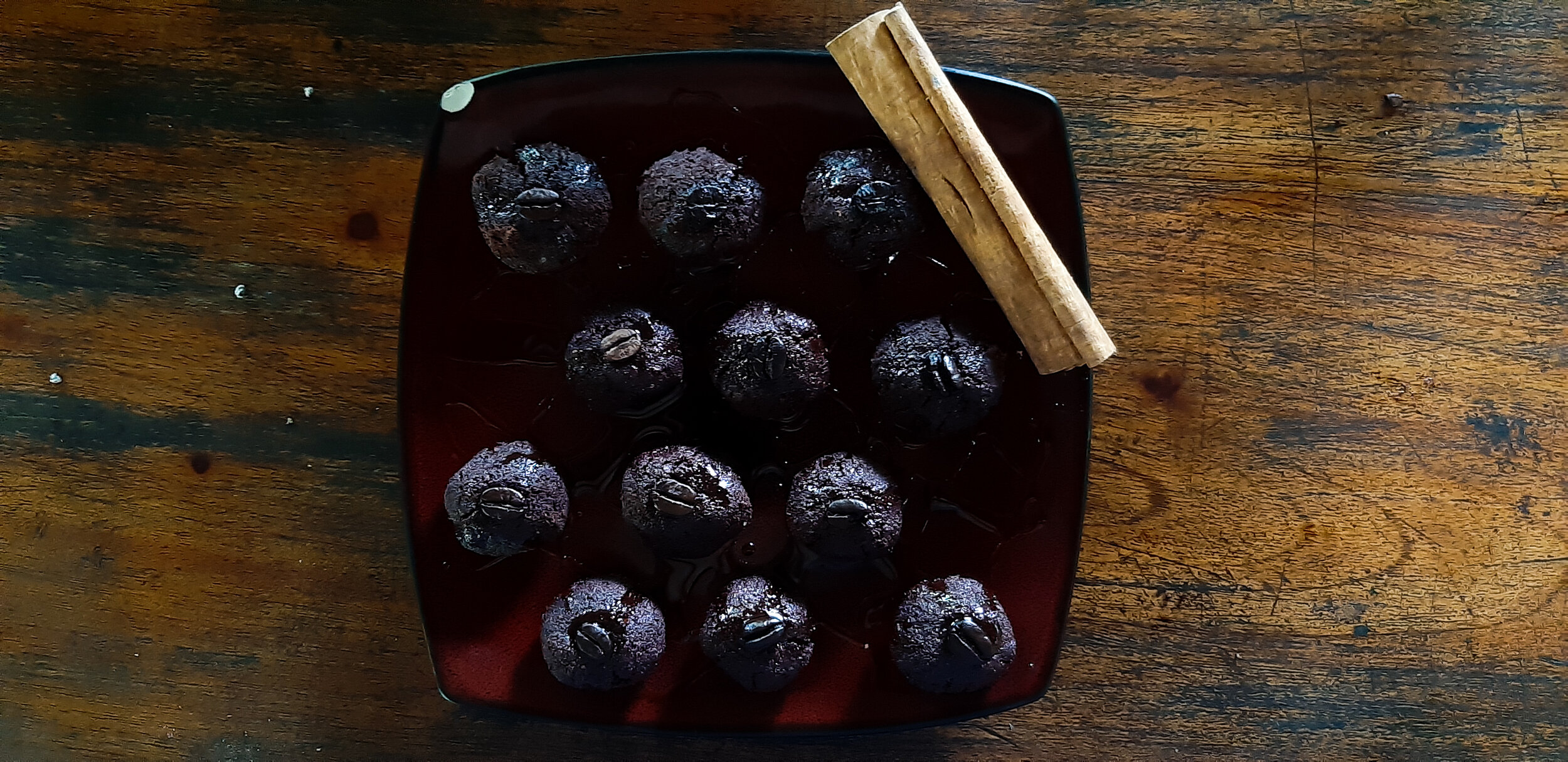
Coffee Cinnamon Balls: Mix the chocolate with coffee kombucha syrup to bind, roll into balls and top with a coffee bean and sprinkled cinnamon
Chilli Chocolate Bites: Mix the chocolate with starfruit syrup, chilli infused vinegar, lime, and dried chilli flakes. Roll into balls. Careful, this one gets hotter the longer you leave the chilli flakes infusing in the chocolate!
Simply Sweet: Mix the chocolate with dulce de leche, roll into balls, then create an indent with your finger in each bonbon, and fill it with a dollop of dulce de leche.
want to learn more?
Come stay with us as a guest and you’ll get to enjoy and make these tasty treats on a day trip to La Iguana Chocolate.
Visit our guest page for more info on coming and being a part of the Ranch and Mastatal community.
Past blog articles about cacao and farm to table products:
From Tree to Bar: How to Process Raw Cacao
Life of Spice: Farm to Table Cinnamon
Vanilla Cultivation: A Practical Guide for the Tropical Homestead
Workshops we host and teach that are related to agriculture and homesteading:
Permaculture Design Certification
Agroforestry Skills
Plants as Medicine
Syntropic Farming
And more! Visit our website for more information on our upcoming workshops.
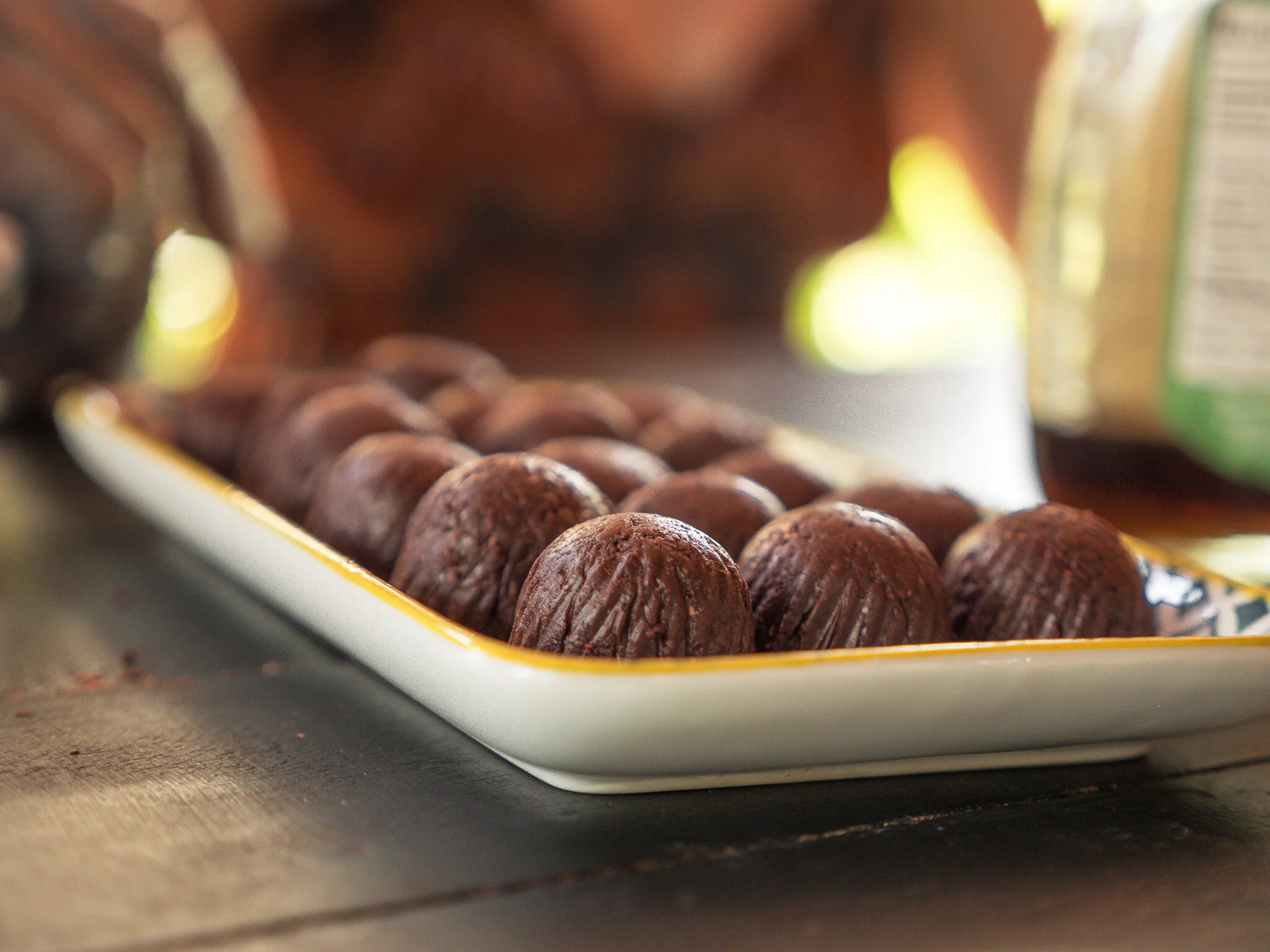
Locally sourced and made chocolate from our neighbors at La Iguana Chocolate
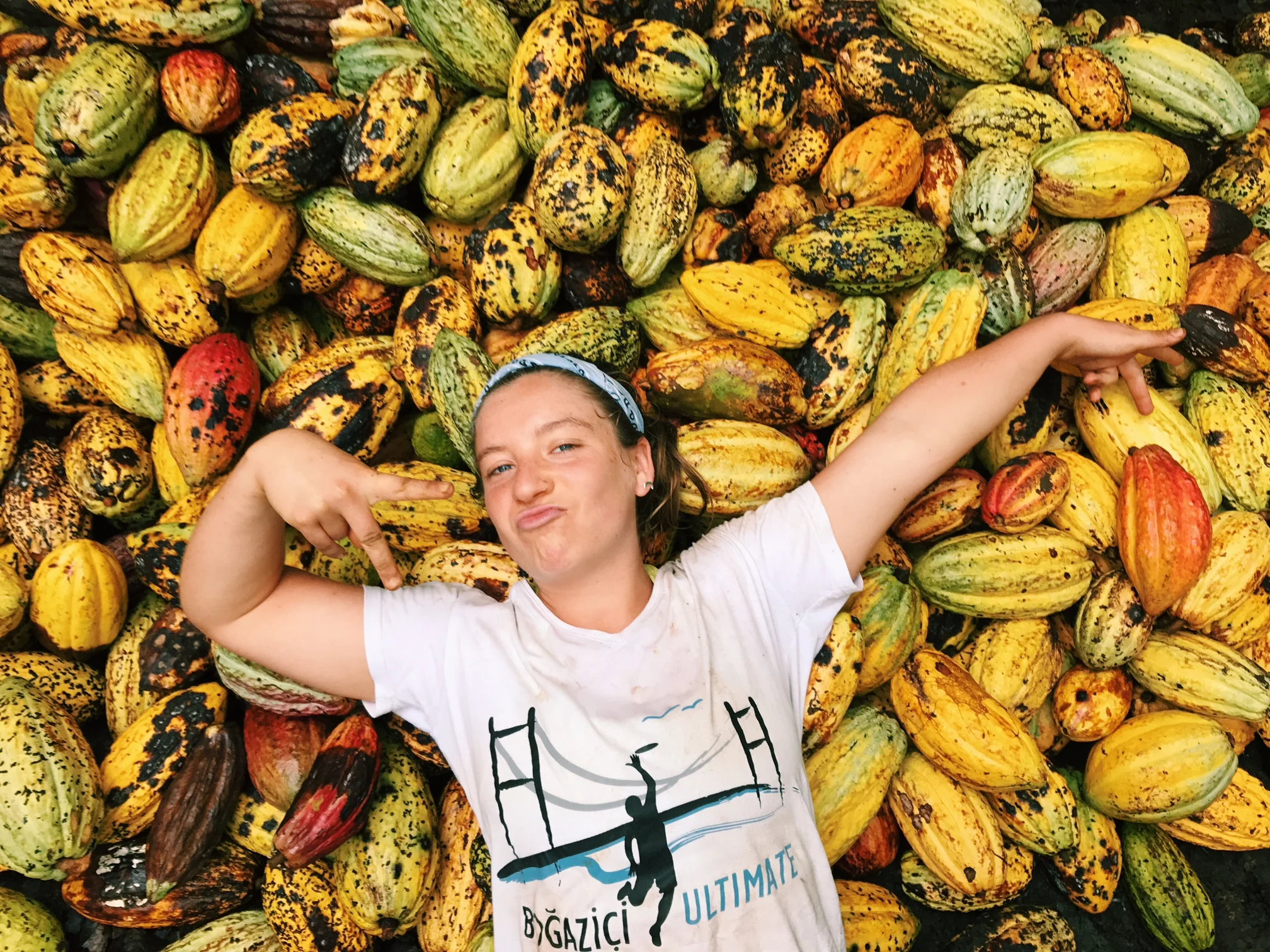
From Tree to Bar: How to Process Raw Cacao
Living in the tropics I found myself surrounded by cocoa trees, which was something you’d dream about as a kid. “Chocolate trees” But like so many things we’re used to consuming we don’t have the knowledge of how to process a raw material into something we can use, within the society we live convenience has removed us from the source. A simple act of making something gives us a connection to our environment.
by PJ Barton, Apprentice 2019
Living in the tropics I found myself surrounded by cacao trees, which was something you’d dream about as a kid. “Chocolate trees” But like so many things we’re used to consuming we don’t have the knowledge of how to process a raw material into something we can use, within the society we live convenience has removed us from the source. A simple act of making something gives us a connection to our environment. Walking through a supermarket we are surrounded by products readily available with a seemingly endless supply leading to a mass consumerism in our present society. This unsustainable consumption stems from our lack of involvement in the food we consume. So let us connect through raw cacao.
Throughout history so many cultures have cultivated cacao. From Mesoamerrica through to Europe. Its a world wide sweet enjoyed by millions, like most things the origin was much different to the present. Dating back 1400 BC chocolate was fermented into alcohol. It was a common commodity throughout Mesoamerica and the seeds were thought of as a gift from Quelzaledol, the goddess of wisdom. It was actually used as a currency.

Processing raw cacao pods into beans is easy, tasty and fun!!
Processing
After harvesting the seeds which should be a yellow or bronzed color you crack open the pods to reveal a white flesh seed with a brown centre. The fruit itself is commonly eaten in Indonesia and reminds me of a mangosteen.
Scrap the seeds out leaving them to ferment. Place in a bowl and leave with a lid to keep off flies. We used banana leaves. To help the fermentation, yeast can be added we put kombucha to inoculate the ferment. During this process maintain temperatures of around 40 degrees and gradually increasing to 50 degrees. It’s not dependent on this I’ve made cacao before by just leaving it alone but by monitoring the temperature you’re going to create an optimal environment from the enzymatic reaction breaking the acidity of the bean.

After the beans have fermented for 4 – 5 days spread the beans out in the sun to dry the beans. This can also be done using a low heat in the oven but let’s harvest the energy of the sun which will enrich the bean. This can take a few days. The outer shell will be easy to break and the raw cacao is ready to use as desired.
Alternatively you can then roast the nut in a wok or in the oven paying close attention not to burn the seeds. It will start to crackle and a fill the air with an intoxicating aroma of chocolate. Leave to cool and break off outer shell. These roasted chocolate beans can be used how ever you desire.

Chocolate doesn’t grow on trees but if we understand the process it suddenly feels like it. Using ingredients from there raw form makes us more conscience intertwining us with the food we are consuming leading to a sustainable outlook towards life.
In Mastatal we are fortunate to not only grow our own cacao but also live next to a family run buisness, The Iguana Chocolate. Why not come and stay with us as a guest and do a tour at the local chocolate farm!
Categories
Topics
- Agriculture 6
- Agroforestry 21
- Animals 2
- Apprenticeship 19
- Appropriate Technology 6
- Backpacking 1
- Bananas 1
- Basic Pantry 4
- Biochar 1
- Books 3
- Build Your Own Home 1
- Central America 5
- Chiles 1
- Cinnamon 1
- Clay Carving 1
- Climate 2
- Climate Change 1
- Cob oven 1
- Communication 5
- Community 24
- Compost 2
- Composting Toilets 2
- Condiments 1
- Conservation 2
- Cooking 4
- Costa Rica 18
- Design 10
- Earthen Construction 10
- Eat Local 2
- Ecohome 1
- Education 9
- Environment 3
- Ethics 4
- Farm to Table 12
- Fasting 1
- Fermentation 14
- Food 22
- Food Choices 8
- Food Forest 8
- Food Processing 15
- Food Systems 12
- Gap Year 1
- Gardening 5
- Ginger Beer 1
- Harvest 2
- Health 12
- Healthy living 5
- Homemade 2
- Homestead 8
- Internet 2