

BLOG
Stories, articles, and updates from the Ranch community.
Permaculture Entrepreneurship: Navigating the Path from Student to Professional
After completing a Permaculture Design Course (PDC), natural building workshop, or any other educational opportunities at a place like Rancho Mastatal, many students find themselves wondering how to turn their newfound knowledge and passion into a career. This transition from student to professional is a common challenge in the permaculture world.
By Jason Thomas
The voice behind the podcast Regeneration Nation Costa Rica
After completing a Permaculture Design Course (PDC), natural building workshop, or any other educational opportunities at a place like Rancho Mastatal, many students find themselves wondering how to turn their newfound knowledge and passion into a career. This transition from student to professional is a common challenge in the permaculture world.
It’s not surprising, considering that most standard education programs don’t teach entrepreneurship, and new students of the trade often feel like they lack sufficient experience to charge for their services.

Common Challenges Faced by Permaculture and Alternative Solutions Students
I’ve interviewed dozens of permaculture professionals and students wishing to make their mark, and I’ve found some common hurdles that seem to hold people back.
Some of those obstacles include:
Lack of business education and experience
Little understanding of how to monetize their skills
Imposter syndrome
Limited support network
Balancing ideals with practicality
Many potential clients don’t know what permaculture or these sustainable solutions are, and many regenerative entrepreneurs don’t understand how their ideal clients are thinking about their needs from their perspective.
Insight Tool: Identify Your Hurdles
Take a moment to reflect on your own journey. What are some challenges you're currently facing in turning your ideas into a profession? Write them down and consider how they align with or differ from the common challenges mentioned above.
The Gap Between Passion and Profession:
This gap isn't unique to permaculture. Many individuals who care about helping humanity turn its trajectory around face a similar divide between academic knowledge and professional application.
In permaculture, this gap is often widened by the holistic, systems-thinking approach that doesn't always align neatly with traditional business models but does exceedingly well when harnessing traditional tactics, repurposed in a holistic system approach.
Tim O’Hara from Rancho Mastatal shared with me in one of our conversations that he felt like they were chasing their tails for several years as they tried to figure out how to make it all work. It’s a similar story for many people who embark on a project like this.
… but that’s not the only way to go about it.

In today’s age, it’s easier than ever to learn from wisdom keepers like this and model from the solutions they’ve arrived to through their mistakes. It IS NOT a wheel worth recreating. We have work to do and the faster we can get our services out to the world, the better off we’re all going to be.
The trick is not to do it so fast that you skip the foundational steps of contemplative design.
So, from a design perspective, let’s look at some solutions we can embrace to bridge this gap between passion and professional application.
Key Business Skills Needed to Bridge the GaP
Business planning:
Overcome your unclear direction and orientation to business by looking at your business idea as if it were pasture land that you are about to implement into a multi-yielding homestead.
Taking the time to design your enterprise will earn you an intimate relationship with the path ahead and the confidence to walk it.

Marketing and communication:
Conveying the value of permaculture and other sustainable solutions to potential clients can be tricky because they lack the vocabulary and point of reference for what it means, let alone how or why it provides any unique benefits to them.
In marketing and communication, describe the benefits from the prospect’s point of view.
Financial management:
Understanding budgeting, pricing, and sustainable revenue streams may not sound sexy as you’re getting started, but careful documentation will come in handy when you revisit the feedback loop and want to understand what worked well, what didn’t, and how to do it better next time.
Finances are only one part of the puzzle, but trying to skip it will leave you hanging with gaps in your picture.
Legal and administrative skills:
Navigating regulations, contracts, and business structures is another aspect that many new entrepreneurs would prefer to skip.
However, if you want to practice your trade as anything more than a hobby, you might as well start with the end in mind and get some of those things squared away as soon as they are relevant.
Networking and collaboration:
Building a supportive community and finding complementary partners is the practice that will serve all others. We are a culture of people that want to help each other. We need each other! Reach out to other regenerative activators in your area and get to know them.
I even teach people to create a database of these projects and their owners. This could prove to be your business’s most valuable asset.

Insight Tool: Skill Assessment
On a scale of 1-5 (1 being novice, 5 being expert), rate yourself on each of the key business skills mentioned. Which areas do you feel strongest in? Which areas need the most improvement?
Essential Skills and Mindsets to Adapt as a Regenerative Entrepreneur:
As you embark on your journey as an entrepreneur and business operator, you’ll want to cultivate a set of skills and mindsets that support your personal growth and business development.
The following attributes, to the degree they’re cultivated, will help you navigate challenges, recognize and embrace aligned opportunities, and cultivate the confidence to see them through. Let's explore some skills and mindsets worth developing:
Holistic Systems Thinking:
Apply the holistic approach of permaculture to your business. Understand how different aspects of your business interact and support each other. Find common problems people face in your area that have insufficient solutions and find the place where those meet your passions and skill set.
… or desired skill set.
Remember, you’re a student who likes to learn new things. Nothing can hold you back!

Insight Tool: Map Your Business Ecosystem
Sketch a simple mind map, outline, or diagram of your current or planned business idea. Include key elements such as your services, target audience, resources, and potential partners. Draw arrows to show how these elements interact and support each other.
Adaptability to Change:
Be prepared to adjust your strategies as you learn and grow. As Tim has mentioned to me, even they, after all these years, continue to develop and refine policies as they learn and grow. Their documents are regularly being edited and revised by new people with fresh perspectives.
It’s a regular, intentionally planned practice.
Patience and Persistence:
Building a successful business takes time. Rancho Mastatal, like most projects of this nature, didn’t have a huge budget to just set up shop and run massive retreats. Instead, they took a slow, iterative approach, using the resources they had on hand, which included the support of their neighbors, and slowly, persistently, grew as resources and wisdom allowed.
Creating a phase-planned design for your new enterprise to spread your ambitions out over the next 3-5 years is a great way to resist distracting impulses and stay on track.

Lifelong Learning:
Never stop learning. Stay open to new ideas and keep developing your skills. This is the habit that keeps on giving. However, don’t just study information focused on your trade.
Round out your education so that you can understand the macro patterns of the human condition, market patterns, and personal development, as well as the micro details of your business operations.
Community Integration:
Understand the importance of community integration. Of all the community projects and education centers I’ve researched around Costa Rica, Rancho Mastatal is one of the shining examples of community integration and worth modeling at any opportunity.
Community integration is an extremely important part of our work. It helps us to integrate in a way that allows us to be accepted by those we wish to influence and serve.
Insight Tool: Community Asset Mapping
List 5-10 local business owners, organizations, or other leaders in your community that could potentially support or collaborate with your efforts. How might you engage with each of them?
Innovative Problem-Solving:
Use holistic thinking to find innovative solutions to your business challenges. Permaculture teaches us that each problem holds a gem of solution just waiting to be discovered. By carefully researching and analyzing your options and approach, you can see these pitfalls before they ever become a problem and design ways to ensure they never will be.
By staying vigilant in your process to find ways you can stack functions in your solutions, your experience operating your business will improve.

Clear & Effective Communication:
Develop the ability to explain what you do and its benefits to a wide range of audiences. While it's always advised to start any product or service creation with a specific client avatar profile in mind to help target your messaging, we’re not just here to get customers. We want to affect change in the world, and that requires speaking other people’s languages.
The best way to do that is to talk to more people about the problems you provide solutions for, but not with an intention to pitch your services. Instead, talk to them with a sense of curiosity and care.
Get to know them and pay attention to the words they use in describing their challenges and perceived options. If you take the time to do this in a systematic way, you’ll develop the vocabulary and sensibility to make the impact you’re hoping for.
How the Permaculture Business Design Course Helps Bridge These Gaps:
The Permaculture Business Design Course is designed to bridge the gap between a passion for making regenerative practices what you do for a living and the business skills needed to make that happen.
It applies the permaculture methodology and principles to design your business like you would a multi-yielding food system or a physical structure made from carefully calculated materials and procedures.
Why would we celebrate those practices on the land and houses, but not our business?
It’s impressive how often we stumble into a business idea, throwing offers out there hoping it will land with someone as we describe OUR favorite features of the service, rather than the benefits THEY want to receive. Business development is too common a reactionary process of figuring out as you go, which is exhilarating in moments, but not an effective way to get off the ground flying.

In this course, you’ll:
Expand your perspective on how to solve common challenges people are actually experiencing so you can find the unique niche that’s perfect for you.
Gain clarity around your unique vision and how it meets the needs of your region to purposefully design a financially regenerative enterprise that people can relate to.
Enhance your professional skill set through training videos, insight tools, worksheets, and other guided exercises.
Proceed through the lessons at your own pace to develop your offer, invisible infrastructure, marketing strategies, and operational procedures through slow and small solutions.
It’s a start-to-finish roadmap for the motivated permaculture entrepreneur, from ideation to implementation.
Insight Tool: Your Next Steps
Based on what you've learned in this post, what are three specific actions you can take in the next month to move closer to your goal of becoming a permaculture professional?
A Little More About Rancho Mastatal's Journey from Vision to Successful Enterprise:
I’ve had the pleasure of hearing Rancho Mastatal's story through my various interviews with Tim and the fortunate opportunity I’ve had to visit on the Ecovillage Tours that we now operate annually.
Each interaction with Tim, Robin, and their team has demonstrated:
Consistency in their intention to integrate and serve with the local community
Persistence in finding solutions when change happens
Adaptability through intentional experimentation
And ongoing education and refinement of their practices.
In an interview we did for the Permaculture Professionals Interview series, Tim shared that, early on, they didn't focus enough on compensating and taking care of the people that were making it possible. And that is unfortunately common amidst foreigners who buy land are happy to take advantage of the poverty wages many rural farm-hands are willing to work for.
Many of us have that wake-up call at some point, and for them it led to significant changes in their approach.
They implemented changes like:
Formalizing their business structure
Creating clear agreements and expectations
Developing a core team with defined roles
Implementing financial tools for better decision-making
Tim shared that developing more of a structure has helped them feel much more stable and resilient.
Rancho Mastatal's evolution is one of my favorite examples of combining permaculture principles with sound business practices. They've grown from a couple running a farm to an education center offering diverse courses, an apprenticeship program, and strong community integration directly affecting who knows how many hundreds of people each year, and thousands through the lives touched by those who’ve passed through their doors.
In the guest presentation Tim provided for the Community Living Agreements Training, he emphasized the value that clear documentation has brought to their project.
He explained that creating documents outlining standards for:
Sharing communal space
Participation expectations for members and guests
And common operating procedures
They have a library of best practices they can use to inform guests, train staff, and keep their intentions on track over time.
(Image) PBDC Landscape 1.jpg
Are you ready to start to design?
The Permaculture Business Design Course offers the knowledge, tools, and support needed to navigate the journey from permaculture student to professional. It provides practical skills to design a business that's as regenerative and abundant as the ecosystems we aim to protect and regenerate through our work.
Enroll in the course to start designing a business in a way that will earn you experience, confidence, and clear enough vision to motivate people to your cause.
If you like the idea of designing and developing your regenerative enterprise in the company of other dedicated entrepreneurs, I offer a seasonal group program for permaculture-minded professionals looking for support and accountability as they navigate the path ahead. It’s application only and an interview is required to ensure we have a committed group of aligned individuals in the cohort.

Let’s do it together!
To learn more, visit the Permaculture Professionals Program and fill out the application. I’d love to meet you and hear about your ambitions to cultivate a regenerative livelihood.
Remember, as in permaculture design, the key to a successful business is thoughtful planning, diverse strategies, and regular visits to the feedback loop.
However, accountability, coaching, and peer support are powerful amendments worth investing in.
May your dreams to serve through right action flourish!
Jason Thomas is the voice behind the podcast Regeneration Nation Costa Rica, designer and guide for Ecovillage Tours CR, mastermind facilitator for the Community Founders Circle and the Permaculture Professionals Program, and creator of the Permaculture Business Design Course.
With over 20 years practicing both permaculture and entrepreneurship, he bridges these two worlds to empower our next agents of change.

Invisible Structures
Just as strong buildings require a solid foundation to build upon, successful dynamics are also supported by invisible structures, or mutual understanding of needs, roles and beliefs.
By 2024 apprentice Yalan
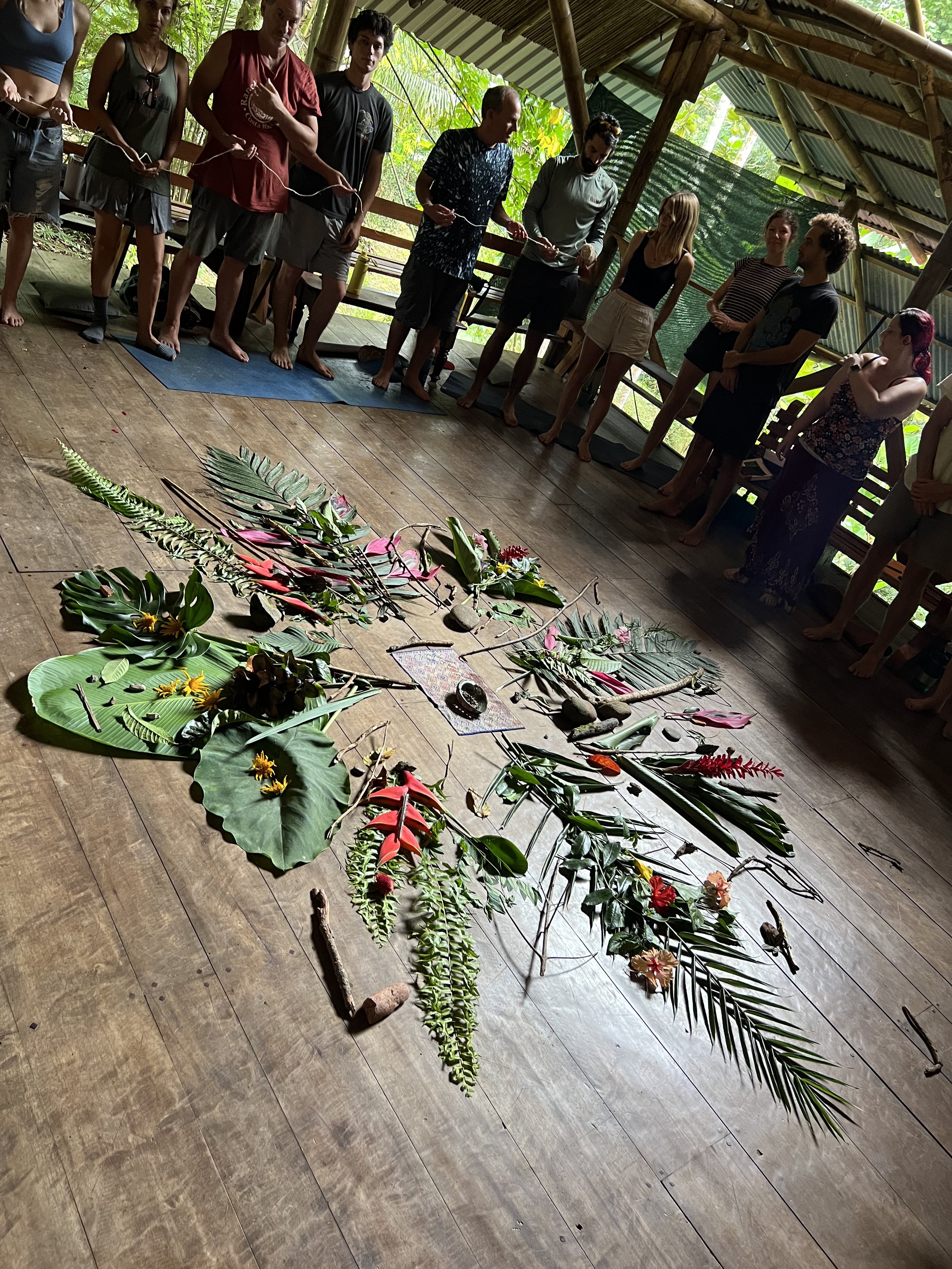
For every building to unfold, a detailed plan must be laid. A build for housing people, is not something we make up along the way. Just as strong buildings require a solid foundation to build upon, successful dynamics are also supported by invisible structures, or mutual understanding of needs, roles and beliefs. Invisible structures are the foundation to any successful team, community, or entity. Without invisible structures, these dynamics can fall into a downward spiral of misunderstandings, expectations and disappointment, as well as miscommunication and misplaced intentions. By being consistent in meetings, transparency, and inclusion, invisible structures have been attributed to the longevity of the Ranch.
Many a time, invisible structures can be assumed or implied. Our needs, roles, and beliefs can be some what difficult to share. Having consistent meetings can give us the space to discuss what we each find important. Life can get busy and the idea of committing to consistent communion whether its daily, weekly, or monthly can feel daunting, especially when its with more than one person.
Setting at least ten minutes aside to reorient and connect with those in your immediate environment not only helps organize the day ahead, but can shift your perspective and even values. For example, everyday at the ranch, the possibility of playing sports is discussed. Now, it’s not everyday that sports are played, however everyday is open for people to get in some cardio as well as participate in team building. If meetings are not established to discuss agenda, needs, etc. any dynamic can lose balance. I recall a community I was a part of where there was a lead who would ramble about what he wanted to see each person contribute individually. Instead of seating us together to express expectations collectively, he would pull us each aside to comment on what he saw our contribution being. This created confusion about our roles amongst each other and our purpose there. Expectations and needs on both sides weren’t expressed clearly, nor did they have the space to be expressed. For a community meeting to be successful, needs and values, are expressed and equally received from all parties.
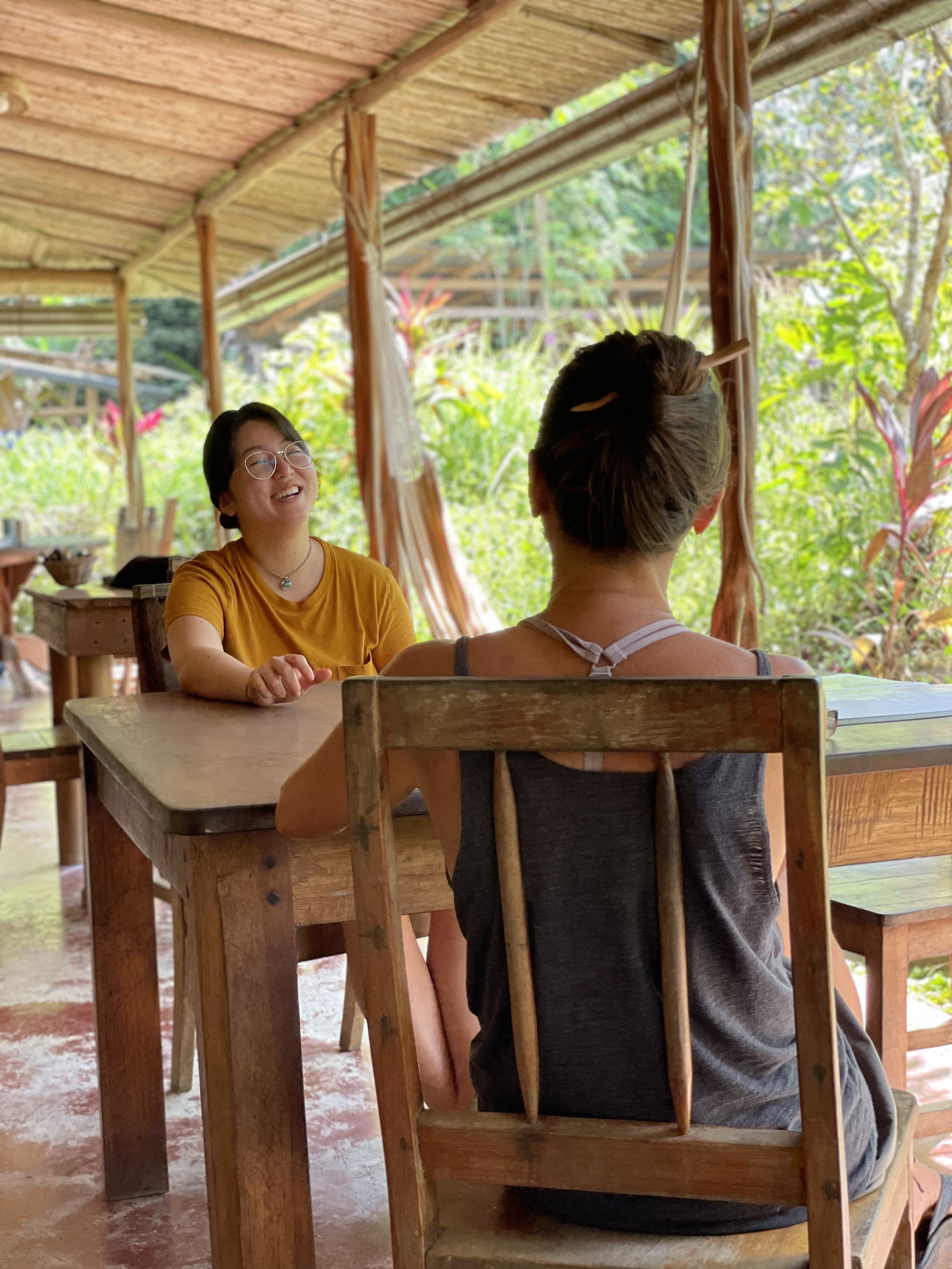
For meetings to be successful, one needs a sense of safety and vulnerability
With these conditions comes transparency, allowing ourselves to be seen and communicating our “internal weather report” allows for others in the community to take initiative. Responding appropriately to a need or role that needs fulfilling. However when being transparent, a level of delegation and discernment must be present to successfully have that need met. Problems are not solved by acting as if they are not there, or by going on about business as usual. Problems are solved by engaging, by observing and interacting with the problem until a solution is met. Again, meetings exist to generate a platform for transparency to exist. We must cultivate space to allow for things to become apparent. For example, if a role is placed on you or there is an expectation you cannot meet, you can suck it up and do your duty, or you can be vulnerable and say, “This does not work with me, are there any other places my energy would be useful?” We want to help one another, we want to play a role in the relieving of each other’s pain. We cannot do this if light is not shed on their struggles. If we cannot share our faults and struggles, we take on more than we can handle and resentment can develop. Allowing ourselves to be transparent with our faults and struggles gives rise to generosity and altruistic action. Once being vulnerable is established as safe, we can then bring people into our lives to be in sync with our rhythm.

From here we move from transparency to inclusion
Not just being open with our lives but actively involving others in our daily experience. By including others into our lives, we learn to delegate the weight we carry. There’s an expression, “many hands make light work.” I recall an open mic I hosted back in Los Angeles. I was transparent in my struggle setting up for the evening, huffing and puffing as I set up lights. Though I felt under pressure, many hands were available to assist me. I was not taking time to assess what was needed of me, so I could not delegate. By not including others in my tasks for the evening, I was suffocating under my own pressure. Needless to say it was a successful evening, however I could have relieved myself of struggle by involving others. My mind could have had more space to enjoy the evening rather than being hyper focused in providing a pleasant experience. While there is a pride to be experienced on the other side of accomplishing a task all on your own, there is a potential in connecting with others that is void when doing so. Expressing oneself as, “I could use ______ right now” or “I am in need of _______ at the moment” or “If you have a moment could you ______?” Are all examples of letting people into our lives. For the sake of connection and relieving our own pressure, let us open up to those in our immediate environment, and include them in our daily experience.
All in all living in community isn’t for everyone, it takes open hearts and open minds to communicate as fluidly as what is needed to live amongst peers. There are infinite ways to live in community and meetings, transparency, and inclusion are just a few examples of what’s needed to build solid invisible structures.
Learn More
Want to learn more about social permaculture, community living, and systems to create a healthy communal environment? Join us for our yearly Permaculture Design Course, where we will experience all this together in a two week, life-changing experience.
Check out these related blogs
Social Permaculture: The Secrets to a Successful Community
Foundations for Success: 10 Considerations to Create a Healthy Project
Enriching Community Soil: 5 Simple Strategies That Support Sustainable Relationships
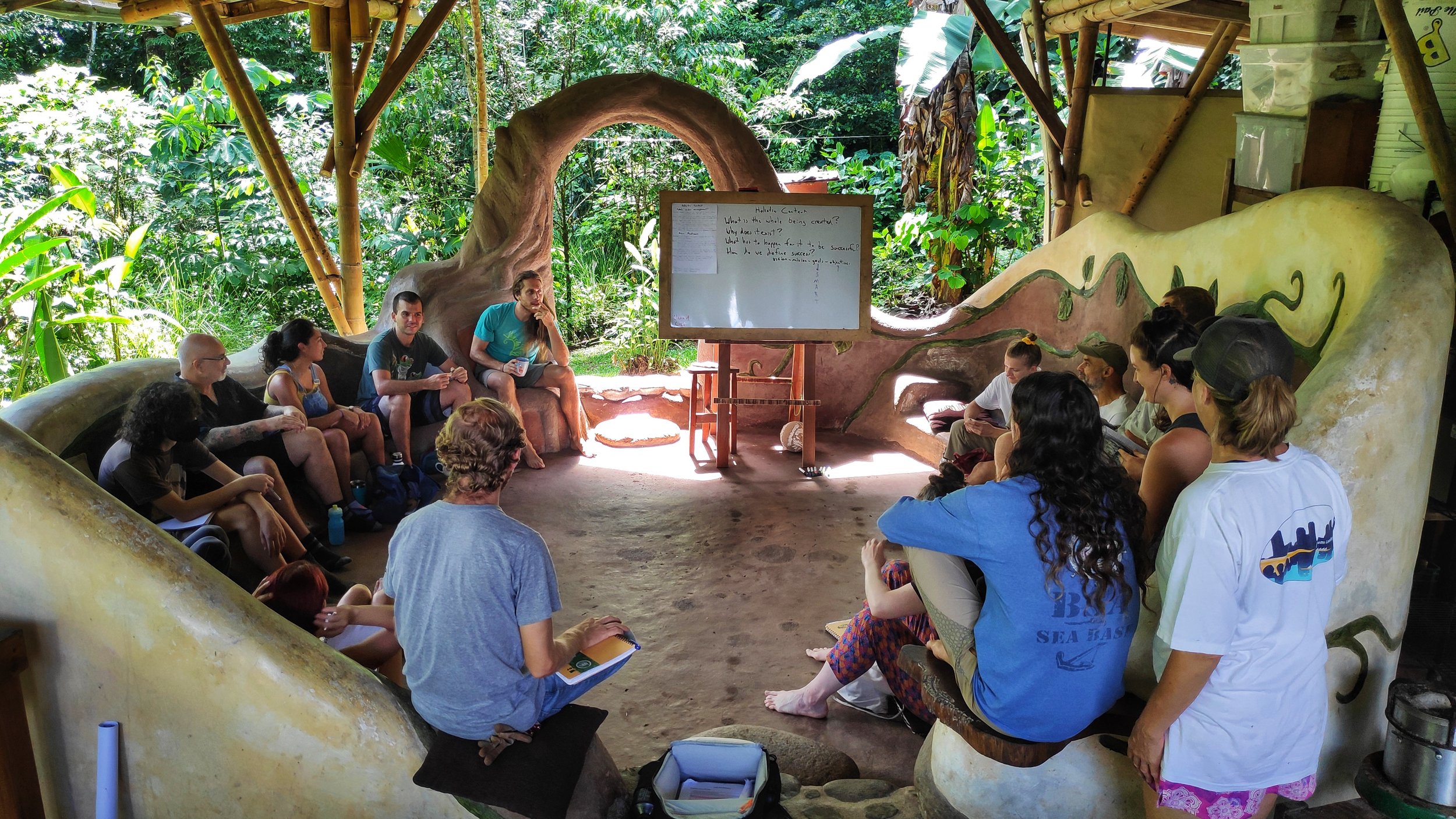

Team Sports as a Bridge Between Expats and Local Community
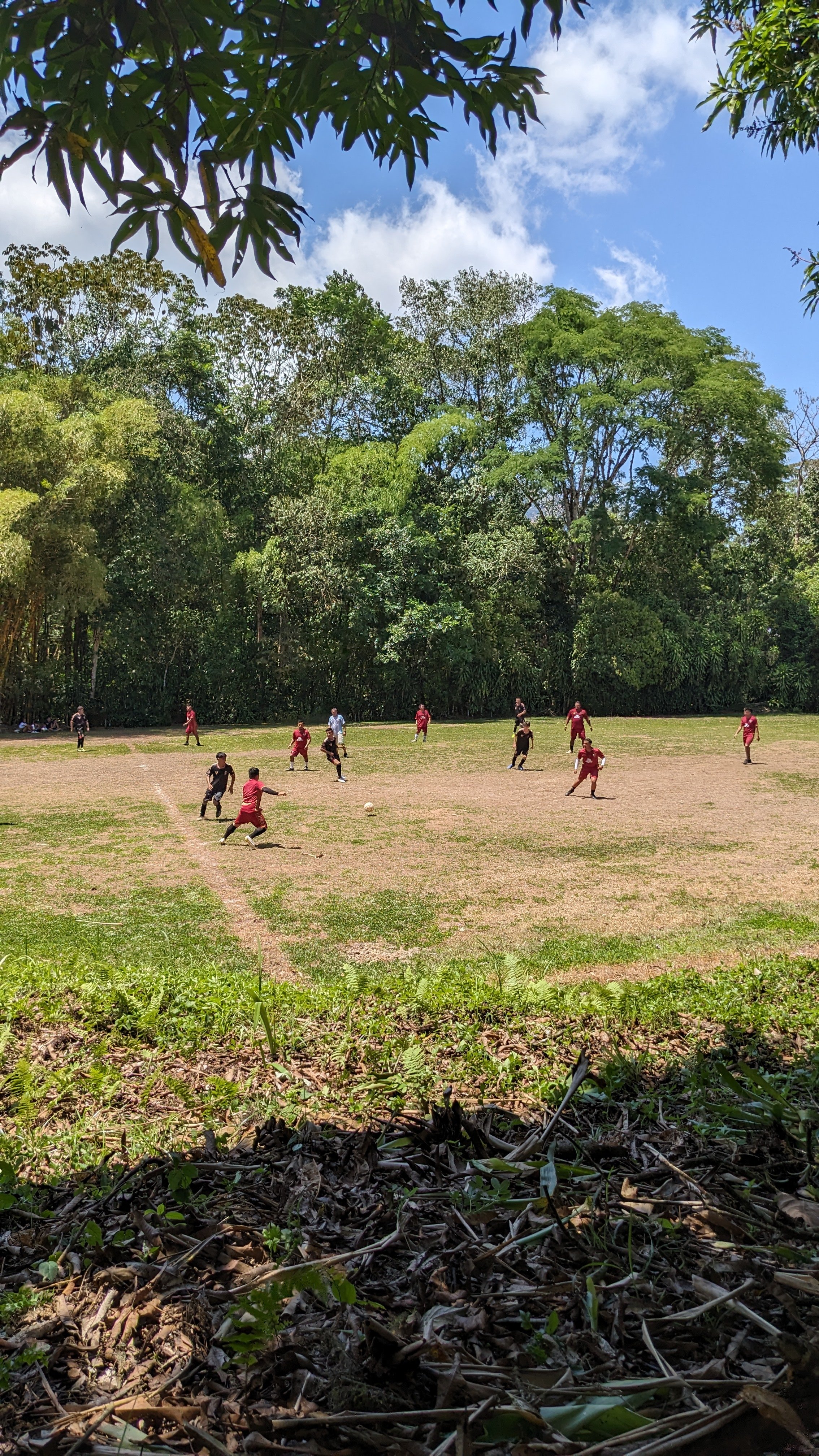
I am watching something pretty remarkable taking place almost every day here in Mastatal, Costa Rica, and that is the magic of team sports.
Written by 2024 apprentice Brooklyn
In my personal experience with international travel, I have time and time again come across the phenomenon of “Expat” communities separated both geographically and relationally from “Native” or “Natural Citizen” communities. We travel and migrate, often with the intention of immersing ourselves in a new culture, but remain “outsiders” “foreigners” etc. It can be challenging to integrate ourselves into our new homes and communities; to make friends, to really feel like a part of our new home. This is true even if we are collaborating with the locals in our work. This begs the question, how do we build real relationships with our new neighbors, colleagues, community?
I may not have a complete answer to this question yet, but I am watching something pretty remarkable taking place almost every day here in Mastatal, Costa Rica, and that is the magic of team sports.
In general, there are many benefits to participating in Team Sports – everything from morale, team building and physical fitness to self-esteem and mental health gains – but for the sake of this article, I will be looking at some of the benefits specific to blended native / expat communities.

Creating Common Ground
At first glance, we may not think we have a lot in common with the members of our new community, and/or maybe they feel that way about us. We come from different places, have totally different backgrounds and life experiences, maybe different religious and spiritual beliefs, different skillsets, different hobbies, likely different first languages- it can be challenging to know where to start in building relationships. The Campo here in Mastatal, from what I have seen so far, feels like the common thread that invites everyone together; puts us all on an even playing field, so to speak. It not only brings everyone to a central location, but also gives us something in common. Something to get excited about, to bond over.
Teamwork / Comradery
There are 3 main sports we play here: Volleyball, Ultimate Frisbee, and Soccer. There is a near-fixed schedule that repeats weekly (Monday, Wednesday, Friday – Ultimate Frisbee; Tuesday, Thursday, Saturday – Volleyball; Sundays are left open for whatever people are interested in playing, with some sort of pick-up soccer happening most days). Sports are scheduled for 4 pm every day, which around here means everyone shows up around 4:20-4:30 and we play until around 5:45-6 pm. No matter which day or which sport you join, everyone is invited and whoever shows up is split into teams as evenly as possible. You may or may not already know the members of your new team. They may be locals, longtime residents, new residents, long term guests or students, passers-through, you name it; it doesn’t matter. You are now working together to take your team to victory (in a friendly competition kind of spirit, of course). We get hyped together, we cheer each other on, we score, we drop passes, we win, we lose, we do it all as a team and it is an incredibly fast way to connect and bond with new friends.
**one caveat – that note about the friendly competitive spirit is CRUCIAL to this being a bonding experience. Egos and taking the game too seriously need to be left off the field. We try HARD around here, but there is no arguing over technicalities, or anything for that matter. Remember, we’re doing this for fun!**
Moves Relationships Beyond Work-Life
Speaking specifically of what I witness here at El Rancho Mastatal, participation in team sports makes a huge impact on working relationships. The Core Team at the ranch has cooperative working relationships with many locals. At this moment, we have a large structure being built on the property and it is a collective effort of our natural building team with local builders. The sheer size and scope of the project is grounds for accumulating tension. However, multiple times per week, everyone involved in the project makes their way to the field, runs hard, plays hard, laughs together, and lets off steam in a healthy way; and it shows in team morale and how well everyone continues to work together and stay on track.

Overcoming Language Barriers
We have a wide range of English / Spanish skill levels in this community. Spanish-only, Spanish / English, English only and every level in between. In sports here, you may be on a team with someone you aren’t able to have a proper conversation with, but you’re still able to work together toward a common goal, laugh together at mistakes and mishaps, and have a great time. It’s a starting point to making real connections.
Encouraging Intergenerational Bonds
Something I really felt was lacking in the communities I was familiar with back in the states is the connection between generations. There has been a loss of the passing down of wisdom and just generally spending time with people of different age groups. Here on el campo, there may be players who are 14 (occasionally even younger) and players in their 60s in the same game. Every age, gender, skill level, etc. is welcomed and encouraged to join. Everyone gets to play to the best of their ability and have an awesome experience.
Last Thoughts
I have written this article very much from a “new eyes” perspective. I am both new to Mastatal and pretty new to team sports in general. I didn’t even plan on getting involved in team sports before I came here. However, from what I can see, team sports are a powerful force here in this community. Joining in on the games has quickly become one of the aspects of living here that I value the most and has made me feel so much more connected to everyone around me.

The Art of Simplicity
If we intend to design a culture where the permaculture ethic "fair share" is embodied - where the needs of all beings are met- it is necessary to learn to live simply, taking only what we need and distributing the surplus fairly- the abundance that nature so graciously lavishes upon us.
By 2024 apprentice Julia Holer
If we intend to design a culture where the permaculture ethic "fair share" is embodied - where the needs of all beings are met- it is necessary to learn to live simply, taking only what we need and distributing the surplus fairly- the abundance that nature so graciously lavishes upon us. We have to (re)learn and practice the art of simplicity -a way of life many of us seem to have forgotten.
Living simply is living lightly on this earth. The complexity of modern life is weighing us down - in the material realm as well as the mental realm. Human made materials have already outweighed the earth's natural biomass.
We tend to look at people who do subsistence farming as "backwards," but considering the world's state isn't it more "backwards" to go to the gym and work out on exercise bikes while using fossil fuels to go grocery shopping? Modern life has created a lot of complexities - physically and mentally. Too much or too little of anything creates complexity. For example drinking water. If you drink too little your body dries up - If you drink too much you are bloated. Burn Out - Working yourself to the brink of exhaustion instead of having a balance between moving, challenging and nourishing yourself - is a symptom of the complexity of modern life. So is our consumerist culture - accumulating more and more stuff, distractions and stimuli of all sorts lead to polluted minds, stagnant creativity and a lack of focus and awareness.
Countermovement like the minimalist trend, pick up on the complexities modern living has created and embrace a simpler, decluttered lifestyle, following the quote by William Morris:

“Have nothing in your house
that you do not know to be useful
or believe to be beautiful.”
Learning to live with fewer and simpler things, fewer expenses brings us greater freedom and makes us less vulnerable to social and economic crisis. We worry less about loss and spend less time protecting what we have. Simple living is less exploitative and also requires less effort to maintain.
When we live in complexity our needs (energy, material goods...) increase and we live at the expense of others. The simpler our lives the more possible it becomes to contribute in proportion to what we use.
A handmade life
If you want to invite more simplicity into your life - learn and practice a craft - any craft (knitting, carving, drawing, weaving, cooking,...) where you have to use both head and hands. Crafting things with your hands brings you into a space of inner calmness and gives you confidence in your ability to create, expanding your creative potential as well as your wellbeing and contributes to the enrichment of the design and quality of the things surrounding us - which in consequence simplifies our lives - we own less things, but the things we have, we truly appreciate. There is a few things more satisfying than using items you have made yourself.
Living in intentional community
Living in intentional community can simplify our lives greatly - sharing tasks, tools, cooking and cleaning shifts, spaces and ideas is a beautiful way to consume less and live life in a more meaningful way. In a community where creativity is fostered the focus shifts from having things to making them, as a result they become a source of great satisfaction and pleasure.
Designing simplicity
Design in its essence is the analysis of a problem and seeking the best solution - in order to create more efficiency, solutions have to be simple (and slow). Using locally available materials reduces transport distances and carbon emissions. Using the output of one element of our system for another element’s input is diminishing the need for outside inputs, thus simplifiying the system as a whole. Appropriate technology needs to be fitted to human needs as well as the needs of our ecosystems. Thoughtful and conscious choices that might not seem like the "as little as possible" option at first but save energy, time or labor (power tools, using cement for certain structures, using washing machines,...) might also contribute to more simplicity if used with intention. Permaculture Design looks at all these factors - designing systems that simplify our lives while not creating more complexity for other (eco)systems.
Inner simplicity
Inner noise and turmoil is one of the symptoms of modern societies and can manifest in the form of stress, burn-out and mental illnesses. The times we spend in silence, meditation, prayer, contemplation or other spiritual/mindful practices helps us to remove inner clutter.
There lies immeasurable worth in treating our bodies and spirits as temples and gardens- entering barefoot and in quietness, watering and caring for them, tending them to grow, being diligent in discerning what we allow to enter in or let linger in these sacred spaces.
The clearing of inner spaces helps us to interact with the outside word in more simple and gracious ways - we are growing in our ability to communicate clearly, precisely and to the point - discerning when to be silent and practice active listening.


Coming here to Rancho Mastatal for the apprenticeship was the much needed fulfillment of a deep longing for more simplicity in my life. Complex life in the city required a lot of effort to stay energetically balanced and grounded. Being emmersed in nature, eating well, doing physical work, being surrounded and inspired by kindred spirits has simplified and at the same time enriched my life in so many ways.
Every day I feel more grounded, content and grateful for a simple, intentional and balanced life - which of course doesn't just happen randomly - at Rancho Mastatal you can find the well designed and continuously adjusted workspaces, living areas and agricultural spaces - as well as the beautiful weavings of invisible structures - community building through meetings, check-ins, team-sports and so much more that keeps this place working well, and simplifying while at the same time enhancing all of our lives here.
In the process of thinking about the art of simplicity the following questions came up that I want to share with you as a prompt to invite more simplicity into your own life:

How do I use my energy?
Am I aware of my needs?
What's the simplest solution you can think of to meet your needs?
Where can I do with less?
Where do I have too much clutter in my life -inside and outside?
Are the things I own useful or do they bring me joy?
How can I invite more simplicity and efficiency into my life - without creating complexity for others?
Contemplating simplicity and taking appropriate steps, designing your life with intention is contributing to the betterment of our world as a whole - ending with the words of Elizabeth Seton:
“Live simply - so that others may simply live.”

The Importance of Attention to Intention
In a world vying for attention in all directions and in oh so many ways, the importance of directing yours towards intention remains ever important but seemingly less inherent.
By 2024 apprentice Rabbit
In a world vying for attention in all directions and in oh so many ways, the importance of directing yours towards intention remains ever important but seemingly less inherent. Around us, there are currents that flow and paths to walk at all times. Currents as the energetic rivers created by individuals or groups, and paths as the trails we can walk towards our goals with our intentions. Taking a current forward, a flow, carries an air of submission while walking a path could be viewed as more self driven but both ways of moving forward are possible to be executed without any personal intention. It is also entirely possible to carry on in these ways chock-full of intention and the social aspects of permaculture taught here at the ranch have helped me to develop more lucidly a framework for moving forward in this manner.


The hypothetical person living as an island without relationships of any influence while still taking part in the world might find that they are able to remain in their own direction as a natural unfolding without much thought of intention - congratulations! The less hypothetical person who finds themselves more intricately involved with family, friends, partners, neighbors, community members, might find their direction in life altered from time to time by taking a dip in the flow of those that surround. One can live this way, flowing with the currents of folks and relations, and hark! experience a beautiful life! If this way of living is your intention I do believe when you reach that river’s delta on your way to Big Blue you might just be able to kick back in your innertube (compostable of course) close those weary eyes underneath your sweet foldable gracious sunnies and breath out a grateful last breath with a smile. On the other hand, if you reach the mouth of the river you fell in to by chance and without a thought as you pass by that old worn sign reading: “So long, and thanks for your intention!” and you mutter under your breath, “Intention?” the sight of the quickly approaching and assimilating hungry blue maw might make you lose those expensive foldable sunnies as you clamor to use the oars of your birthright, frantically doggy paddling your way back upstream.

Taking a step back from oceanic metaphors, I’d like to speak from personal experience. Arriving at the ranch and being still slightly new to the extroverted side of myself I stepped in to a pattern of being, subconscious as it is, or was. One would hope that in agreeing to take part in a year long apprenticeship four thousand miles from whence I came that I boarded that plane with intention. One would be pleased to hear that their hopes were not in vain. But upon joining a new group of strangers with curious dynamics and flows all their own I quickly became a thriving social lepidoptera, fluttering about, at times even frantically, sustained by the sweet nectar of long conversations and personal connection. A sustenance needed because I was not feeding myself in other equally important ways. Late nights formulate in to sleep deprivation, constant socializing leads to a neglected relationship with my internal self, at times even with my partner, and on a more material level; I don’t get jack done!
Praise the day we walked down to Robin’s porch and began a class labeled as Social Permaculture in which, on that day, we would find ourselves identifying our vision and core values.
If this lovely brain is remembering correctly, our first task was to envision an ideal self after this year long apprenticeship was through and to catalogue said vision in our notebooks. Then, with a list of some three hundred odd values encompassing a spectrum more specific and articulate than I could have hoped to pull out of the aforementioned noggin, we were to pick the ones we deemed important to us with the idea that we would also be refining them to a list of ten and ordering them in a cascade of importance. Once completed we were to re-visit our vision with the new outline of our values and see how they matched up. Was our vision displaying proudly the badges of our values as it walked off the ranch? These two processes alone were a breath of fresh (if somewhat sharp) air. Taking the time to look within to create an honest image of where I would like to be helped me to realize that I might be floating on a foreign river. However! Being that this class took place so early in the game, I was still able to see my desired path on the shore. But how do I get back to land? My solutions were discovered in the next step. Creating goals. Long term, short term, personal wellness, and learning goals. Who would have thought! A little structure for the self from the honest and thoughtful self and you’ve got yourself a dinghy with an outboard! The long term goals better defining what the vision consists of, and the contemporary personal wellness and learning goals being activities to create the future that is holding the desired vision and long term goals in its gentle hands.
With these goals as structures in place in my life I moved forward into the following weeks with a renewed sense of purpose in being here and a stronger sense of self. I had been living with the idea of intention but only sometimes employing it. While I am no perfect one, and am still prone to the occasional off day, I find myself refining and redefining my goals but keeping in the grace of my structures is allowing me to better ponder and act in and on my own desired intentions. I don’t know what every step of the path looks like, but as I move forward using these tools I swear I can see what looks like my vision illuminating and growing more opaque with each passing day, somewhere not far ahead.
See you not too soon Big Blue, I’ll be holding on to my sweet sunnies thank you very much.


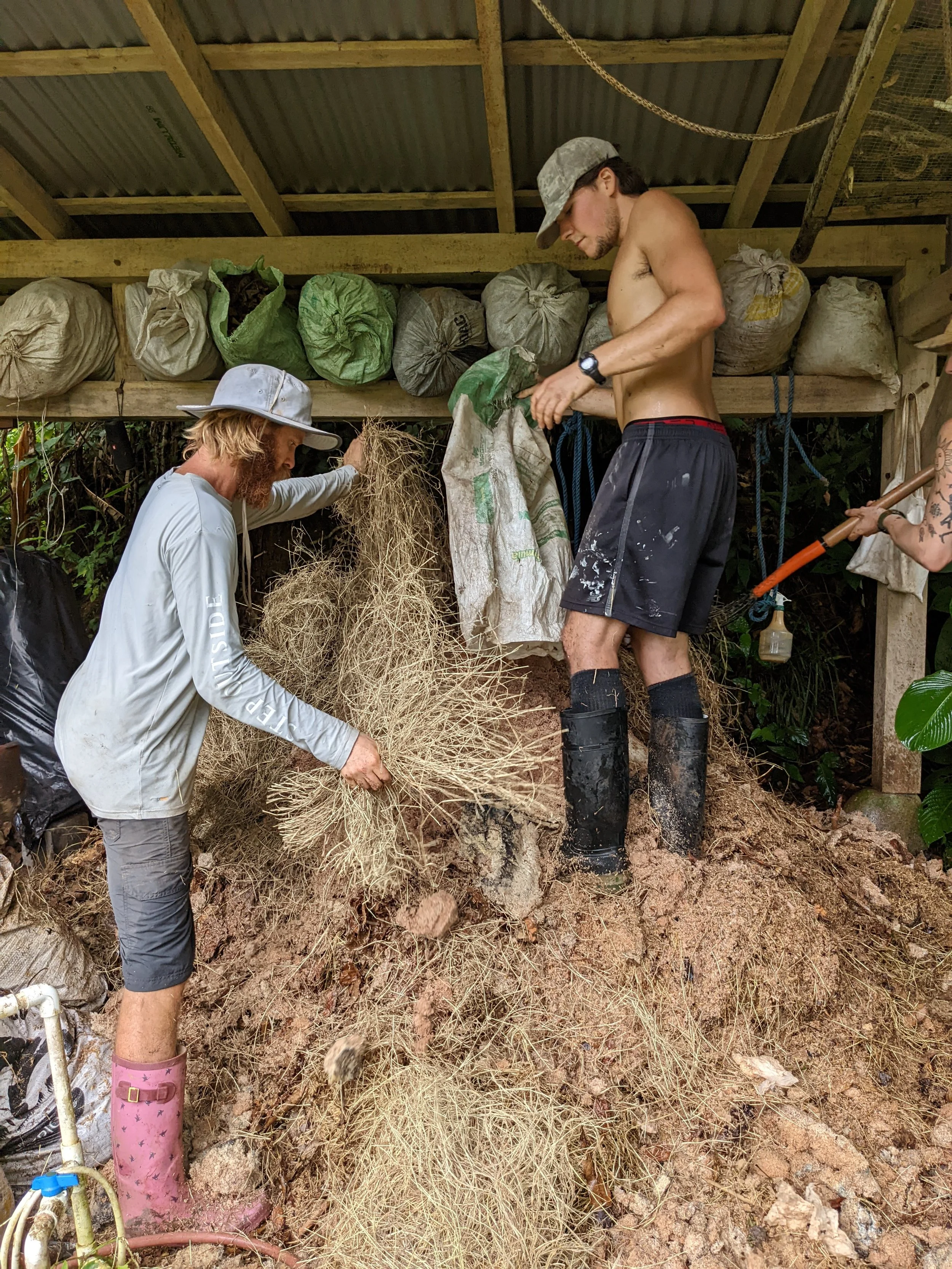

What is Permaculture
Permaculture is a macro-concept that involves many different topics, methods, systems and ideas. Ideas like moving back to the land, using nature as our guide, applying ecology in our productive systems, reconnecting with the cycles of nature, approaching life holistically, creating stable local economies, regenerating the landscape and our relationships with others, investing in resiliency and interconnectivity; are in the heart of permaculture.
By core team member, Ambra Pirker
“Permaculture (permanent culture) is the conscious design and maintenance of agriculturally productive ecosystems which have diversity, stability, and resilience of natural ecosystems. It is the harmonious integrations of landscape and people providing their food, energy, shelter and other material and non-material needs in a sustainable way. Without permanent agriculture there is no possibility of a stable social order.” - Bill Mollison
History
Permaculture as a concept was coined in the late 1970s, between 1972 and 1974 Bill Mollison worked on developing an interdisciplinary earth science with help from David Holmgren in the later years. In 1981 the concept had matured sufficiently and it was thought of as an applied design system to the first 26 students through a 140-hour lecture series. The first literature around permaculture were two foundational texts: Permaculture One (1978), Permaculture Two (1979) followed by PEMACULTURE A Designers’ Manual (1979), the latter is considered the Permaculture ‘bible’ by many. In 2002 David Holmgren released the book “Permaculture- Principals & Pathways beyond Sustainability” where he summarized the principals into 12 and offered a smaller, easier but thorough read. Nowadays there are many different books around permaculture, many of them leaning to specific topics that fall under the big permaculture umbrella; some are more on the social side, many focus on homesteading and gardening and some are centered around agroforestry and tree crops.
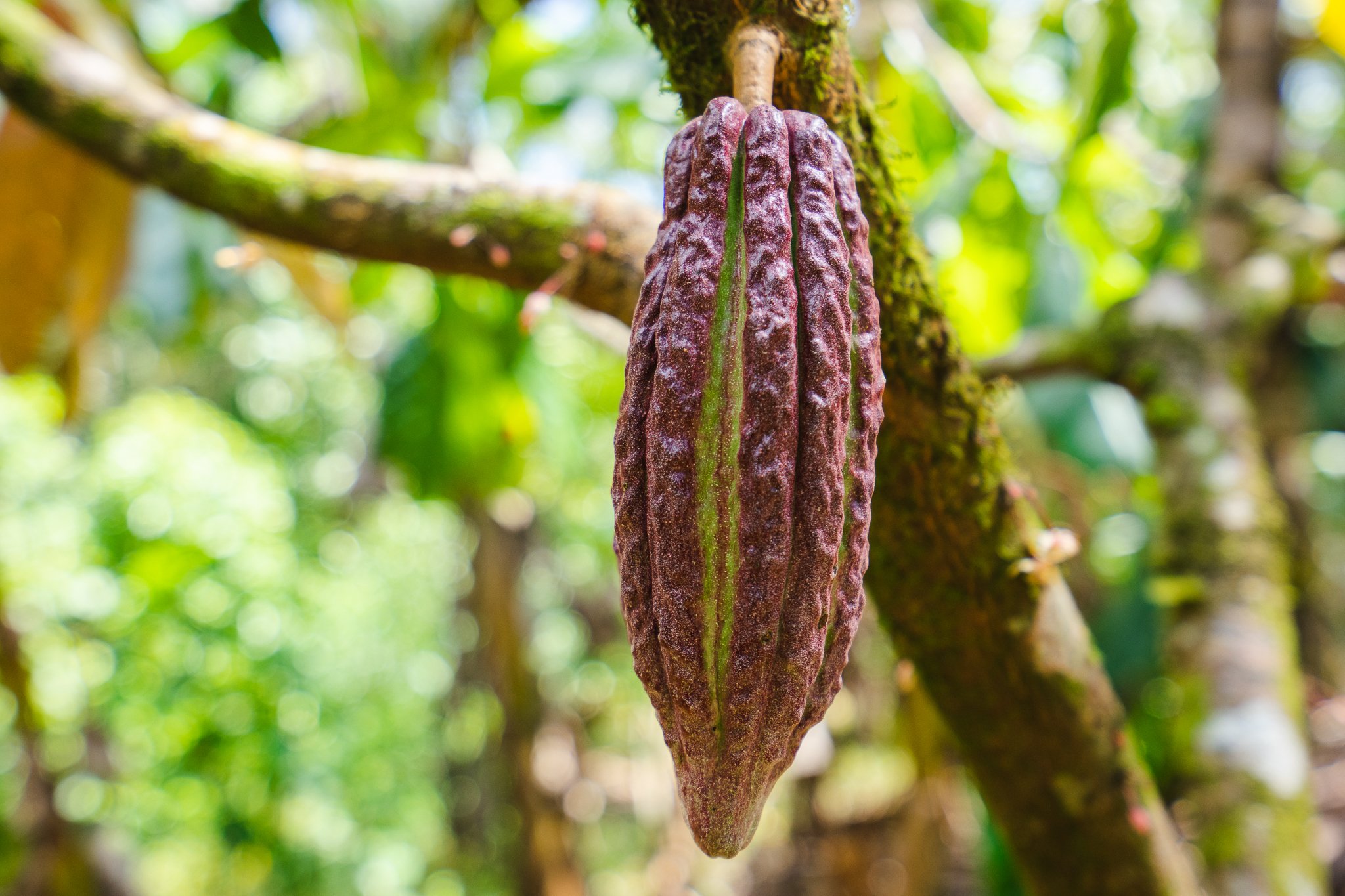

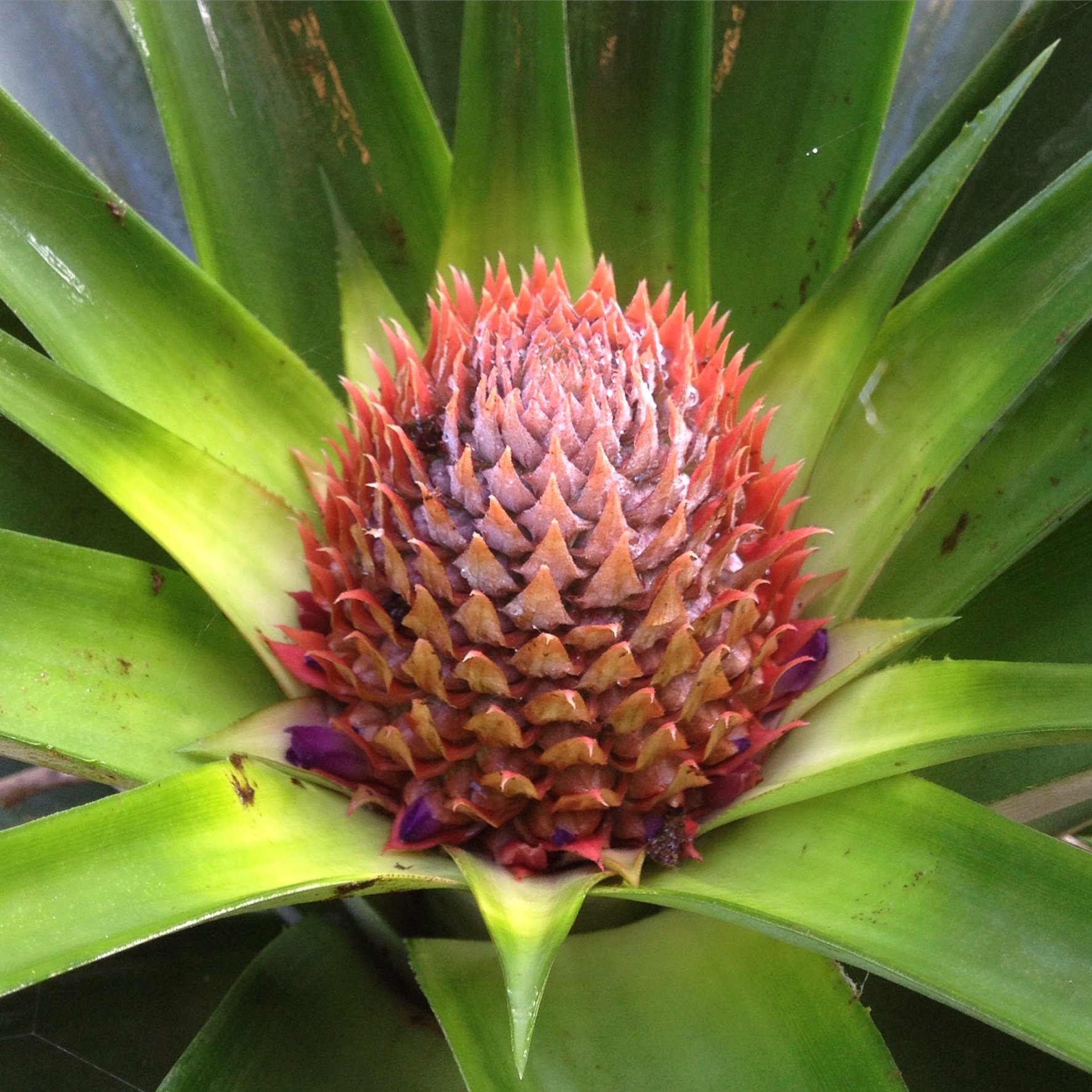
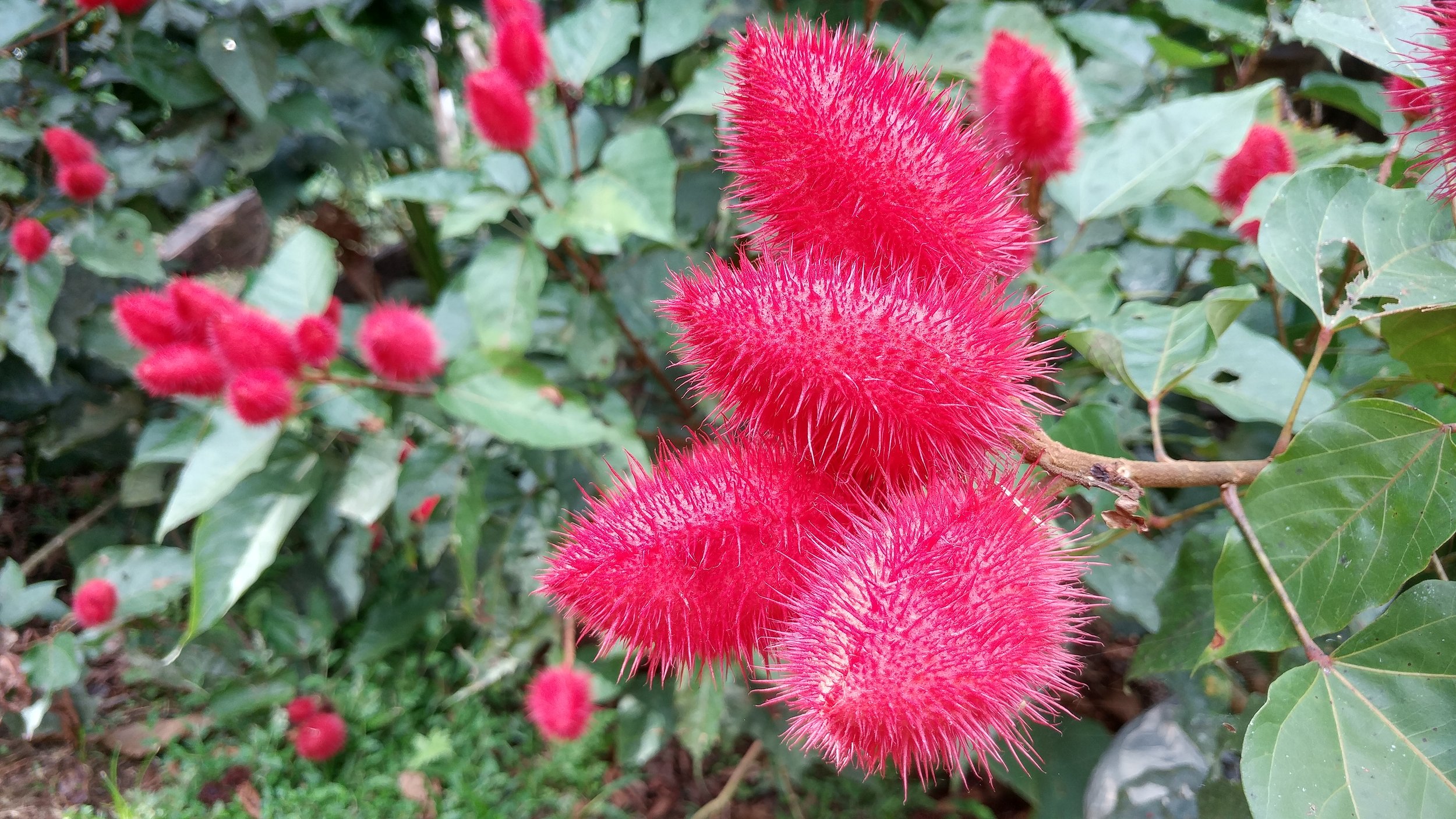
Evolution
Permaculture’s concept has evolved since the 1970’s, in its beginning the focus was around the design of ecological, regenerative and smart agriculture with the idea of creating a permanent agriculture; with an emphasis on perennials, tree crops, water conservation, earthworks, soil improvement, biodiversity and much more. Many of the proposed systems and methods were drawn out or inspired by indigenous knowledge around land use and care. Mollison independently researched and published a three-volume treatise on the history and genealogies of the descendants of the Tasmanian aborigines, this interest and dedication around indigenous culture was key in the developing of permacultures basis.
Nowadays permaculture has a huge social side with the inspiration of creating a permanent culture of sustainable, regenerative, cooperative and compassionate living; while giving the power back to the people to design their lives in accordance to their values. Permaculture is helping in the creation of a network, a web of interconnected visions, dreams, projects, ideas and people, with a common intention of doing good for each other and the planet.
“Great change is taking place. These are not as a result of any one group or teachings, but as a result of millions of people defining one or more ways in which they can conserve energy, aid local self-reliance, or provide for themselves.” - Bill Mollison

Definitions
Permaculture is a macro-concept that involves many different topics, methods, systems and ideas. Ideas like moving back to the land, using nature as our guide, applying ecology in our productive systems, reconnecting with the cycles of nature, approaching life holistically, creating stable local economies, regenerating the landscape and our relationships with others, investing in resiliency and interconnectivity; are in the heart of permaculture. Since the beginning of permaculture, the sense of shared work has been central, “we could say that there are as many permaculture definitions as there are permaculturalists.” (People and Permaculture, 2012)

I personally like to describe permaculture as: “An ethically based design system for human habitation and regenerative living that encompasses most aspects of life as a part of this planet; based on observation, inspired by pattern, inclusive, biodiverse, holistic and kind.”
Essentially permaculture is a design methodology that has foundational ethics and core principals, that can be applied to most aspects in life. When practicing permaculture, the ethics are the guides and the principals are the canons, so for example when designing a new system or element first we evaluate if it respects the four ethics. There is a lot to say about each of these ethics, the following is a brief summary; to learn more check out our blog article The Ethics of Permaculture.
Ethics
1) The first ethic is Earth care, when considering that planet earth is our sole and only home the need to move away from our extractive, materialistic, consumption-based society becomes obvious. Taking care of nature’s resources needs to be a central part of any human endeavor, protecting our flora and its genetic diversity should be in mind every time we sew a seed. Defending our fauna and understanding their importance in ecological balance should be part of every anthropocentric project. Protecting and improving our soil, respecting our waters and using them rationally, understanding the importance of clean air and minimizing our contributions to its contamination, all of this is just the start.
2) The second ethic is People care, meeting tangible and intangible needs of humans is central in permaculture, we are not just talking about human rights, we are going way further into providing the space for people to flourish. Right livelihood is a common term in permaculture, based on the idea of working on something that feels right individually, suits our needs, and is in line with our ethics. When we think of people care, we think about the wellbeing, happiness, health and support that people need, not just in our immediate proximity like our family and friends, but also in our community and for the humans of the world, what can we do today to improve the life of others? Permaculture helps us remember how important it is to shift our attention onto how we interact with each other. We have the chance to support people doing good for the planet, for others and themselves, creating local economies and supporting ethically based business’ will have huge positive repercussions in our destiny as humans.
3) The third ethic is Fair share, also know as “set limits to consumption” or “redistribute surplus.” We need to live within the carrying capacities of the planet, in a finite world we can’t follow an infinite thirst for materialistic goods. Redistribution of resources including money, food, knowledge, skills, education, land, and time are needed if we want a prosperous future. This may sound utopic, but the reality is that there are enough resources on the planet to allow every human to have a balanced and enjoyable life, but the culture of consumerism and accumulation has enabled some to have way more than what they need. Permaculture promotes a simpler life, where we are able to appreciate what is actually important and necessary for humans to thrive. Luxury and opulence have no place in permaculture. Fair share is personal responsibility and we should take it seriously.
4) The fourth ethic is Transition, this one wasn’t part of the literature for a long time, it came as a compromise around time and cultural context. In this ethic the general idea is that change takes time, when switching to a different paradigm; capital is a limiting factor since in our current world a greener life is usually more expensive than a mainstream one, and honestly there is no valid reason to prolongate that reality. If big industries were truly paying the honest price of oil and big ag wasn’t subsidized by the state, the greener alternative would cease to be more expensive. Transition ethic also helps us come to terms with the time needed for change, the system that inhabits our society has been around for a long interval, a new age is coming as our only option for the prosperity of our species. I believe that permaculture is a great starting point in the creation of our next society.
There is a lot more to add to all of the ethics of permaculture, an important point to mention is that they are open for interpretation, so the extent and detail that every permaculture project is applying them to their decision-making will vary. There is no permaculture body that supervises if a so-called permaculture farm is actually taking good care of their employees or helping the surrounding community. This may be seen as a flaw in the construct of permaculture, but it’s a genuine effort for decentralized, independent, self-reliant change. The evaluator of genuine permaculture should be the education of the multitude, we have the authority to exclaim when the ethics are not being respected, caring for permaculture is supporting it.
Principles
Permaculture also has several principles that guide decision making, they vary from author to author, but focus on similar ideas. Bill listed five principals in the book PEMACULTURE A Designers’ Manual (1979):
Work with nature rather than against it: assisting rather than impeding nature, understanding natural succession and using it in our favor.
The problem is the solution: everything can be a positive resource, figuring out how we may use it as such depends on us.
Make the least change for the greatest possible effect: change is a constant in nature but when it comes from our development it’s many times very damaging. Designing to minimize change and maximize positive effect is central for a regenerative future.
The yield of a system is theoretically unlimited: the imagination and information are the only limits to the number of uses of a resource within a system.
Everything gardens: every creature makes its own garden and has an effect on its environment.
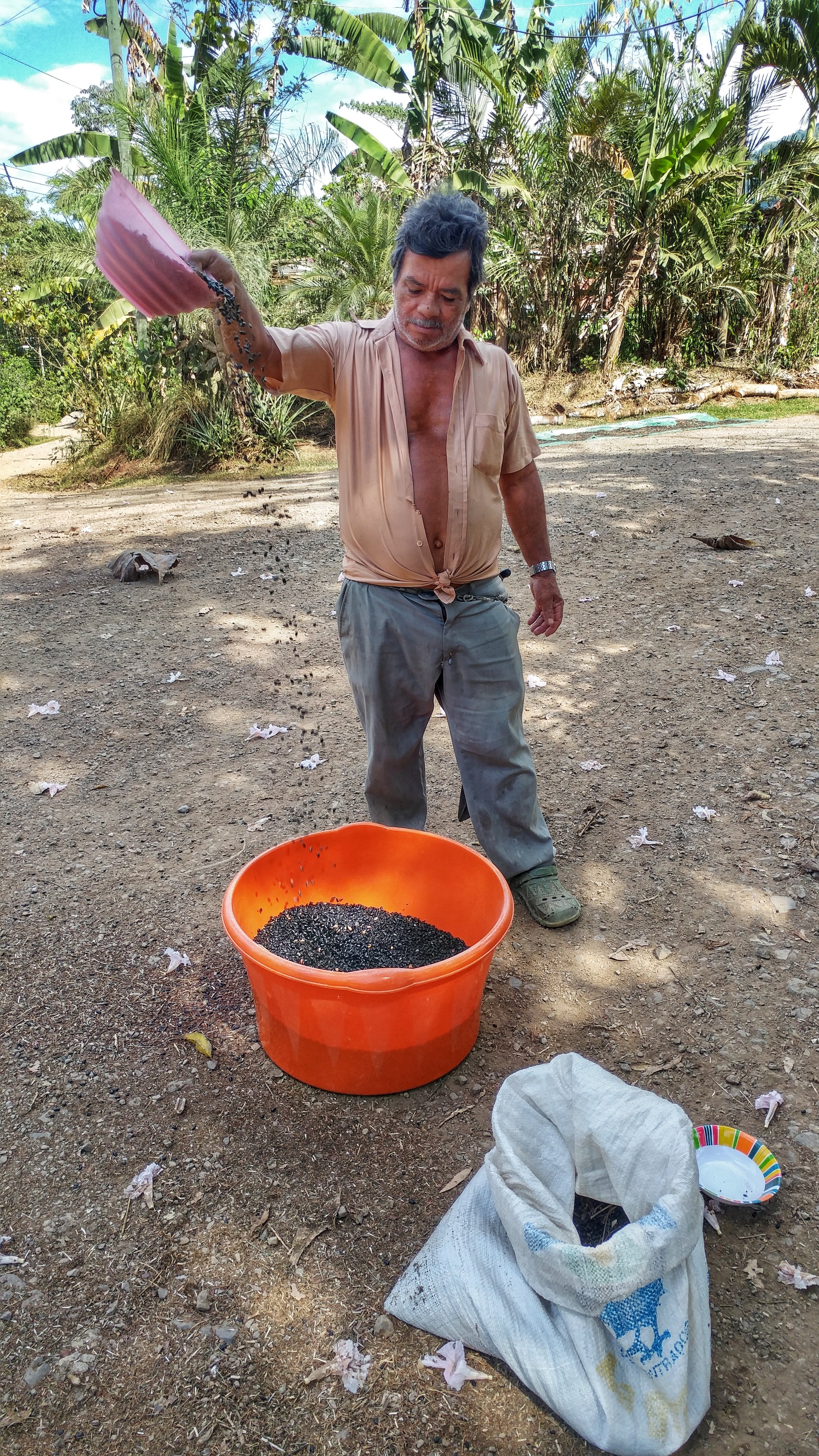
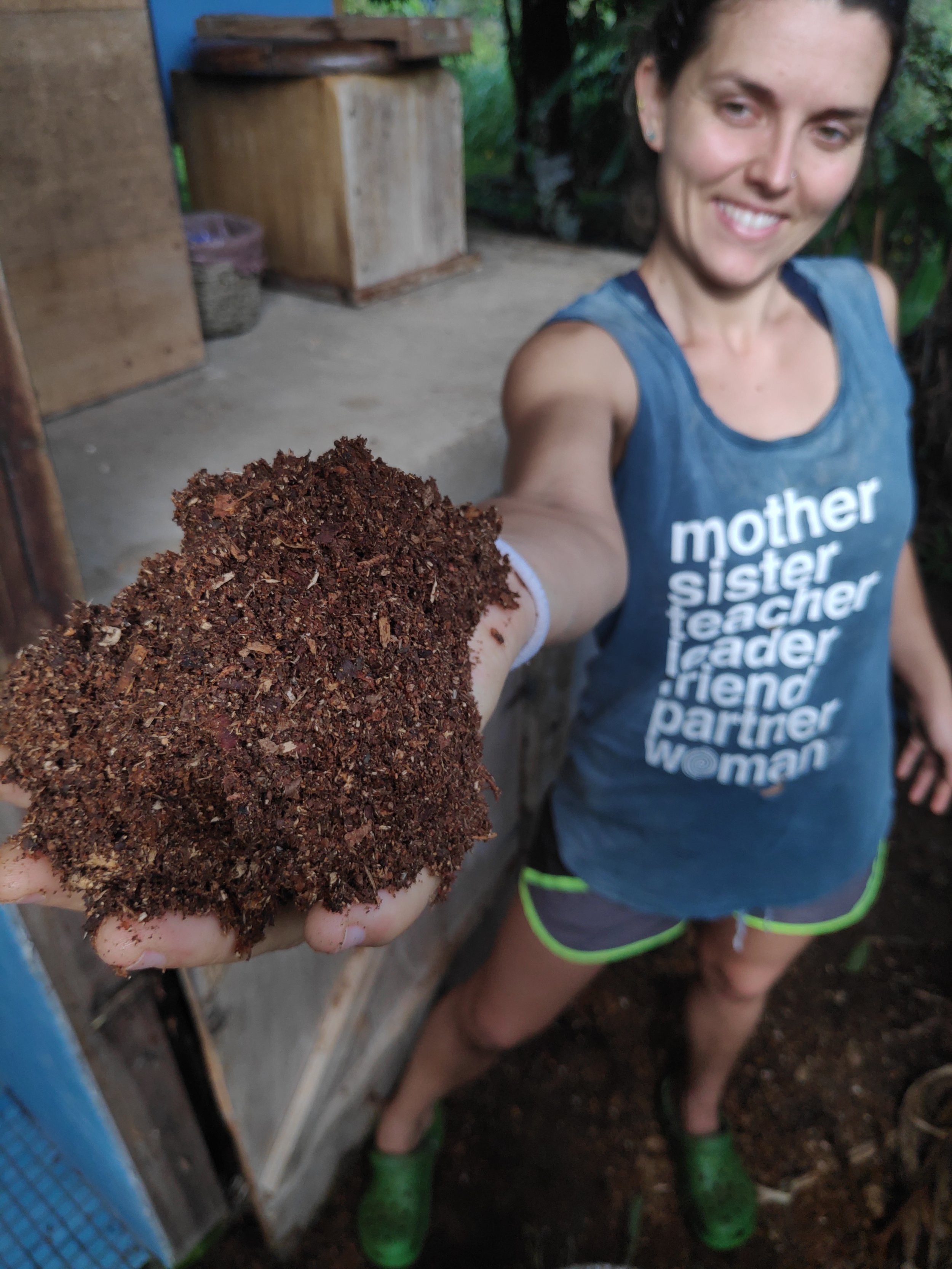
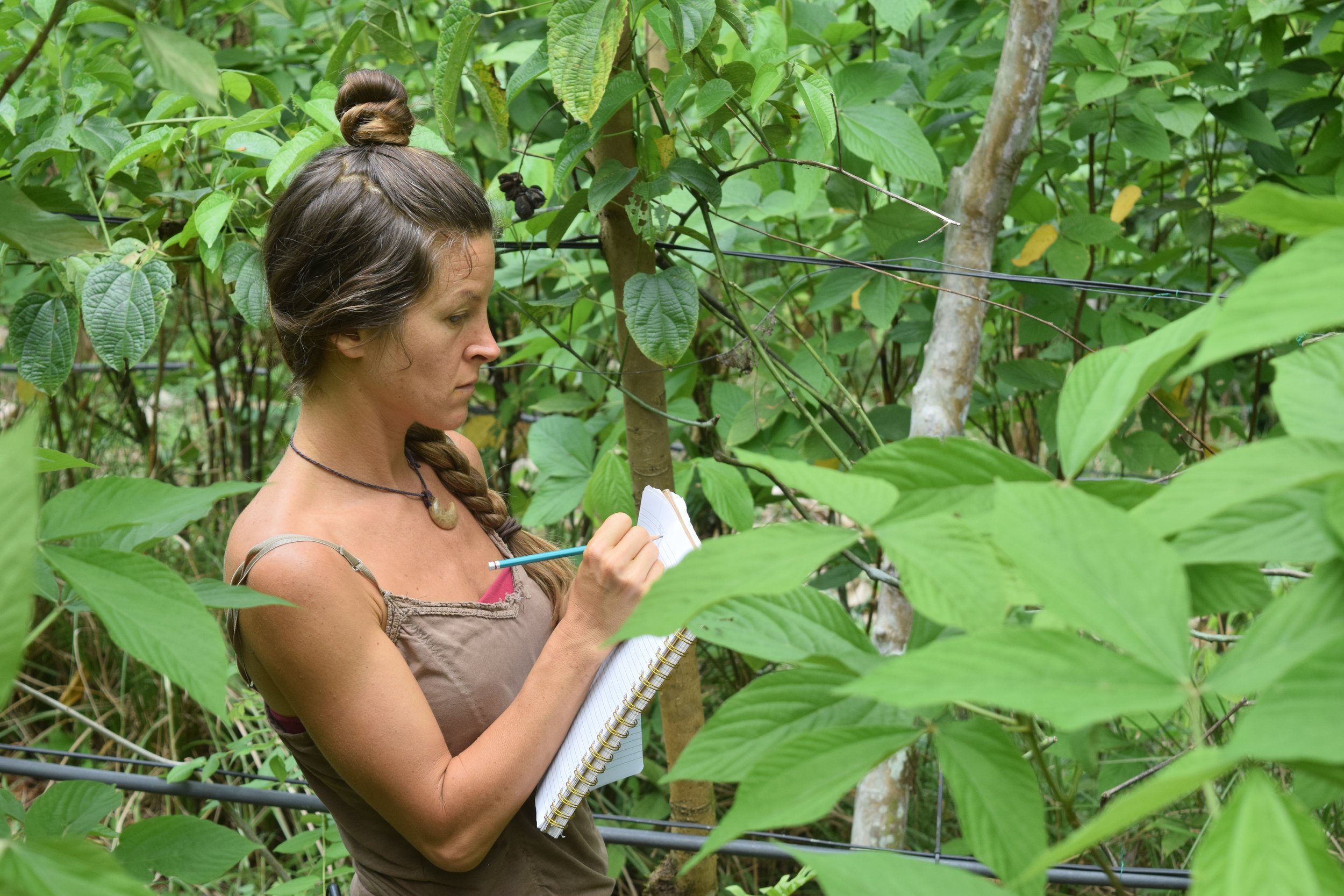
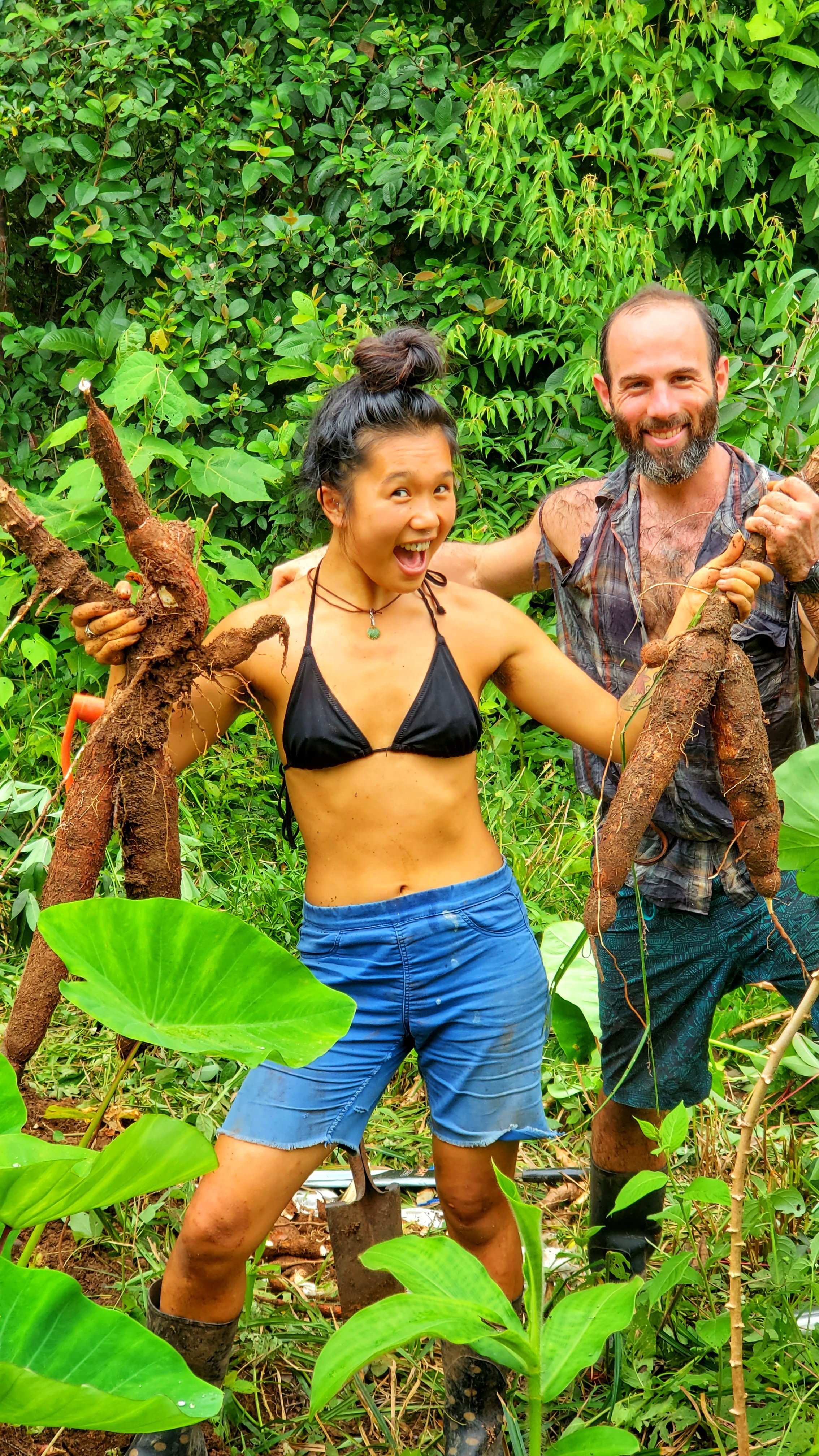
David Holmgren proposes 12 principals in the book Permaculture- Principals & Pathways Beyond Sustainability (2002), take in consideration that the first 6 principles study systems from the bottom-up perspective and the second 6 principals emphasize the top-down organization and relationships that tend to develop in co-evolution. The following is just a brief mention of the principals, to learn more check out the blog “Applied Permaculture Principles.”
Observe and interact: observation should be the teacher of any action, interacting the lessons. “Careful observation and thoughtful interaction.”
Catch and store energy: understanding energy in a broad sense, there are many different types of energy, some are solar, wind, biomass, soil, rain, heat, commitment, passion and love. “Make hay while the sun shines.”
Obtain a yield: yields of many types; harvests, fauna, habitat, knowledge, beauty etc., design systems to provide self-reliance at all levels.
Apply self-regulation and accept feedback: identifying positive and negative feedback loops. There is self-regulation in a system with a positive feedback loop. Accepting feedback will allow us to improve our designs to the point of self-reliance.
Use and value renewable: renewable resources are all which can be renewed and replace by natural processes over reasonable periods of time, and renewable services are the ones received by plants, animals, soil and water without damaging or consuming them.
Produce no waste: minimize pollution and waste by using all outputs, there is no waste in nature. Closing cycles with organic transformation of biomass and waste minimalist (refuse, reduce, reuse, repair and recycle.)
Design from patterns to details: the closer we get the harder it is to understand the bigger picture, pattern recognition is central. Patterns in nature are the arrangement of parts into a whole, our main source of inspiration and the answers of innumerable questions. Self-organization from symbiotic coevolution of nature.
Integrate rather than segregate: the integration of parts, elements, and humans is as important as themselves. Developing positive and reciprocal relationships lead to resiliency, balance, productivity, stability and effectiveness. Each element performs many functions and each important function is supported by many elements. Designing for synergistic relationships as a central point.
Use small and slow solutions: “Systems should be designed to perform functions at the smallest scale that is practical and energy-efficient for that function.” Start slow, receive feedback and expand accordingly.
Use and value diversity: diversity is key for balance. Diversity of ideas, knowledge, experience, age, culture, language, food and so on, are our tools for adapting to change and thriving in an uncertain future. Diversity in agriculture allows for resiliency and security.
Use edge and value the marginal: greater diversity of life in the region where the edges of two adjacent ecosystems overlap. There are special conditions in the transitions zone of two different areas, that allow for unique species or interactions.
Creatively use and respond to change: “The designer’s imagination and skill usually limit productivity and diversity before any physical limits are reached.”

Design Tools
Different authors will have varying definitions of the principles, but most of the time the same ideas and concepts are emphasized. There are a several important methods in permaculture design that I haven’t mentioned, one of them is the sector analysis which can be defined as the analysis of different energies that usually come from outside the land and have a direct influence on it. We as designers need to decide if these should be blocked, opened-up or channeled; some of them are the sun path (sunset/sunrise, winter sun/summer sun), winds, wildlife, views, neighboring structures, roads, etc.
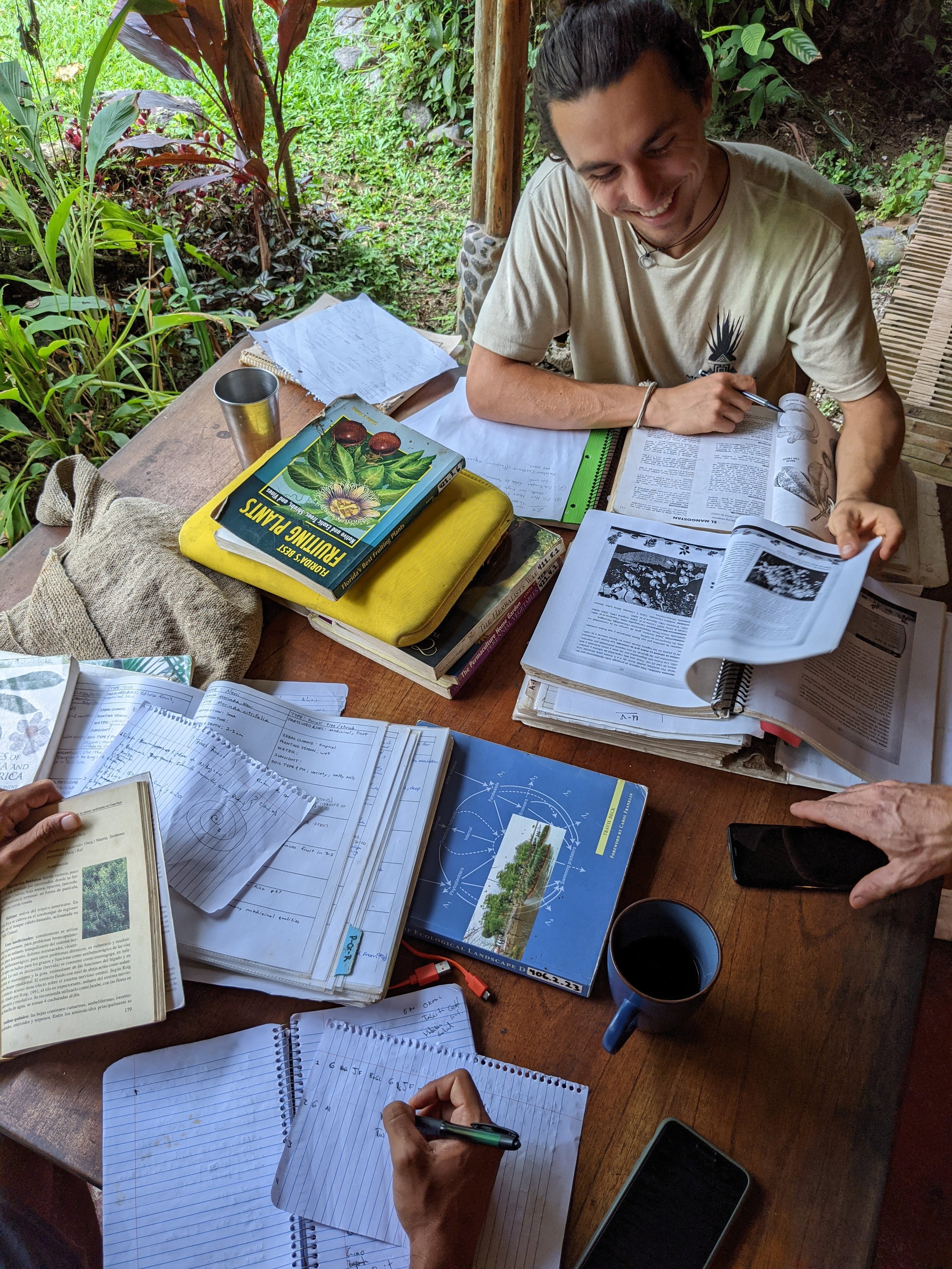
The sector analysis allows the correct positioning of the different elements in the space, the elements are every system in the project; from the chicken coop, to the house. These can be productive systems (agroforestry, garden beds, cheese making facility, rotational grazing system, fish pond, etc.) or infrastructures (main house, yoga deck, kitchen, guest house, etc.) One very important methodology in permaculture is the element analysis, where we asses the needs, yields and intrinsic characteristics of each and every one of our elements, that way we can decipher the possible connections between them. Always with the goal of reusing every resource to its maximum, because we know there is no waste in nature, just inputs for a new process. By realizing the interconnectivity that is possible in our project, we can move on to the creating of a web of connections, which is a matrix that connects inputs and outputs of every element. This analysis will help us chose appropriate positioning of the systems, understanding that the element with more connections should be in a central position so we can save time when managing and navigating the space. The element analysis and web of connections should be hand in hand, because even though my pigs receive food scraps from the kitchen and the main garden, they need daily care and are able to forage in the food forest, we are not going to position them too close to the house because of their known odors and sounds.
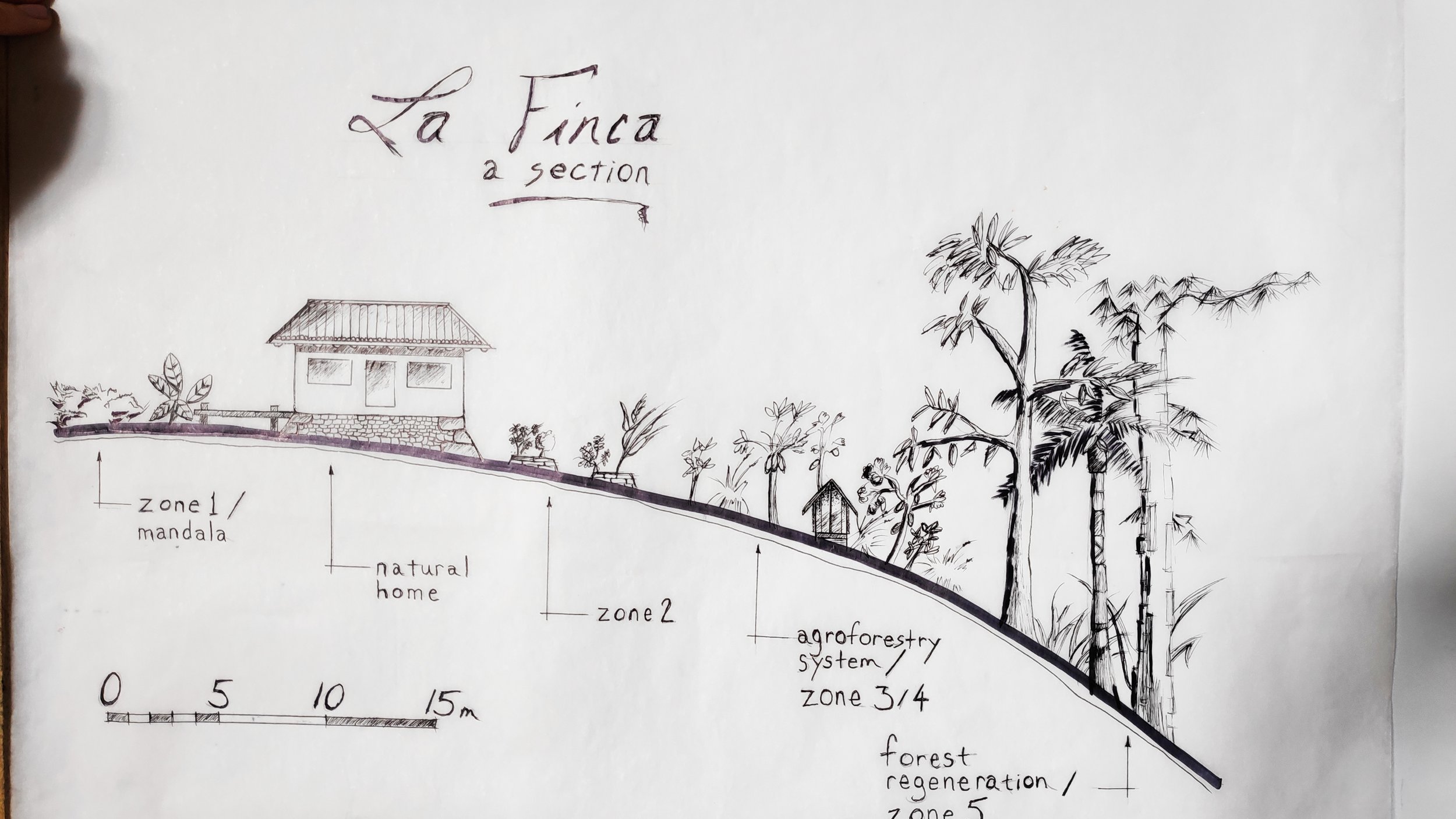
The last method in permaculture design that I’m sharing is the zone analysis, zoning is a tool to organize our project into areas that require the most and the least attention. This can be applied to a house with a small garden or to a big farm. Basically, the zones go from 0 to 5, following is a summary of what each zone may entail, remember that every project is different so the following will vary:
Zone 0: structures where permanent residents live.
Zone 1: areas that are visited several times a day, the area closest to the house and paths that are connected with important elements in the project. This zone includes a veggie garden, herb garden, greenhouse, small animals (rabbits, guinea pigs), etc. Let’s say that you have a cheese making laboratory and packing room as your main work area, if you are visiting that space several times a day, that would be part of your zone one, just like the path between your house and that facility.
Zone 2: areas that are visited at least once a day, we can have small animals and animal pens when they need to be fed on the daily, compost area, some fruit trees, more veggie beds, etc. Again, this classification will totally depend on our own daily schedule.
Zone 3: areas that are visited a few times a week. Larger food production system like a milpa, agroforestry systems, pasture lands, root crops etc.
Zone 4: areas that are visited several times a month. These are semi-wild/semi-managed areas, used for gathering materials (timber, firewood, bamboo, fiber) and can include food forests.
Zone 5: where we go to learn, where we are visitors and not managers, space that we give to nature. Many times, these are protected wildlife sanctuaries, ideally if the size allows it, 50% or more of your land should be in zone 5. In small, semi-urban and urban projects its complicated to dedicate an area to zone 5 because of the restricted space. In that case the edge of the property or even a corner where we allow native species to grow and thrive will have a big impact in the ecology of the project and the surroundings.

Concluding Thoughts
Now that we understand the basis of permaculture, its easy to find who is actually practicing permaculture. Its being practiced all over the globe in many land-based projects, intentional communities, homesteads, urban gardens. By many community leaders, innovators, architects, farmers, landscape designers, chefs, natural builders and many more.
It’s worth mentioning that permaculture can be many things, but it most definitely is not a neocolonialist tool, simply because the collective good and prosperity are keystones in actual Permaculture. As a design methodology for human habitats where some key concepts are: “share and return of surplus,” “integrate rather than segregate,” “cooperation instead of competition,” and “use and value diversity”; having an activity or development that damages local population or intends to create an exclusive bubble goes against permaculture. It’s necessary to protect permacultures name and reputation, for its reach to expand and create a better world, that is a task that we all should take seriously.
Using permaculture ethics and principles in the design of a project, regardless of its size, will promote a sustainable, low input to high output, self-reliant organism. For me permaculture is a way of thinking, a guide to understand and interact with the world, a kind reminder of our belonging to nature and a tool for living with intention. When we observe and interact with the world with permaculture lenses, we take action into choosing what is best for nature, others and ourselves, the sense of interconnection and reciprocity are in the heart of this philosophy. I believe that permaculture is a beautiful tool for positive impact and a way to create the change that we desperately need.
Learn More
Want to learn more about permaculture design and gets hands on experience from lead experts? Join us for one of our yearly Permaculture Design Certifications or other educational workshops.
Read these past related blogs
The Problem with Permaculture: Understanding Elements and Functions
Why the World Would be a Better Place if Everyone Took a Permaculture Design Certification
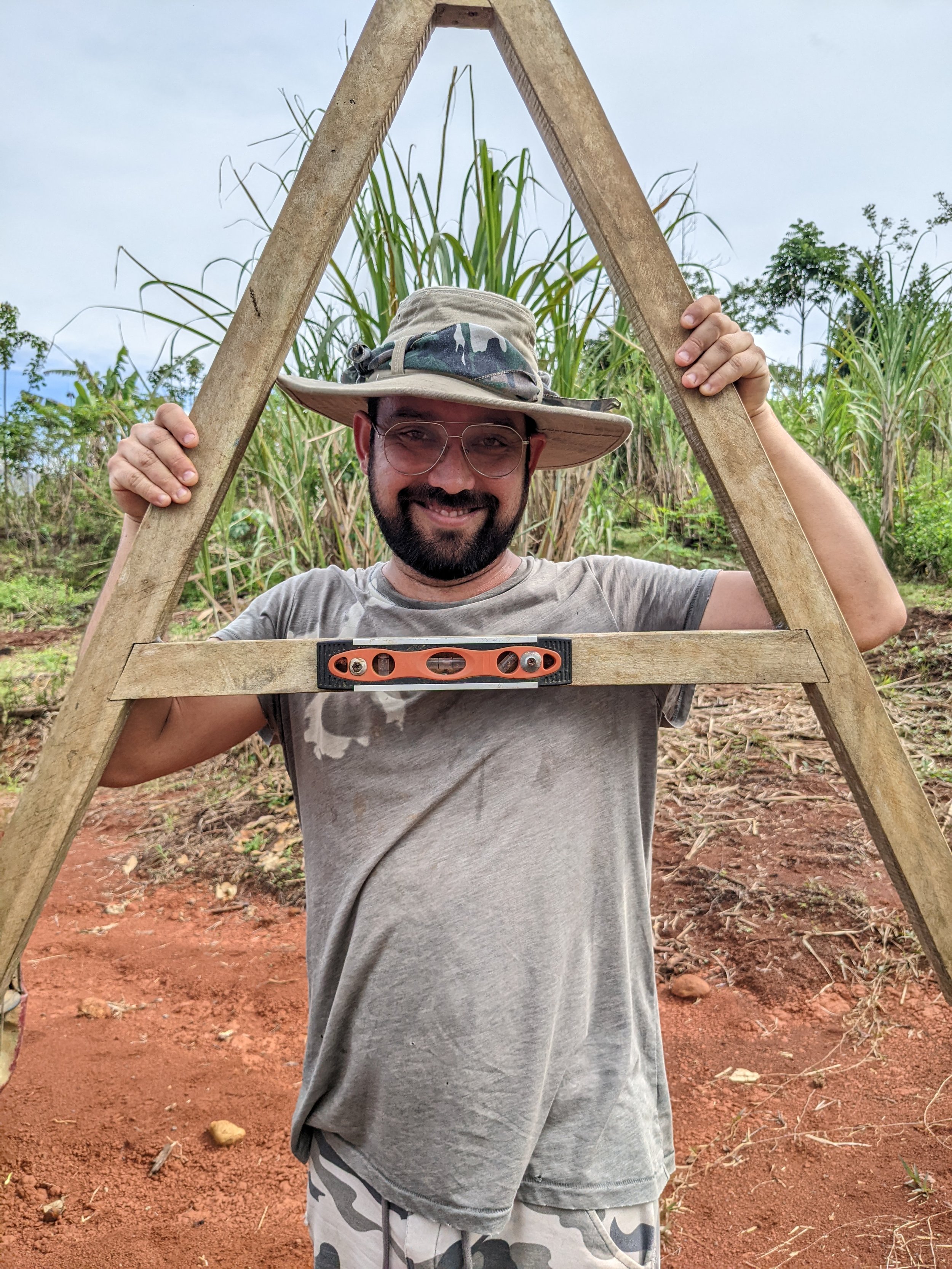
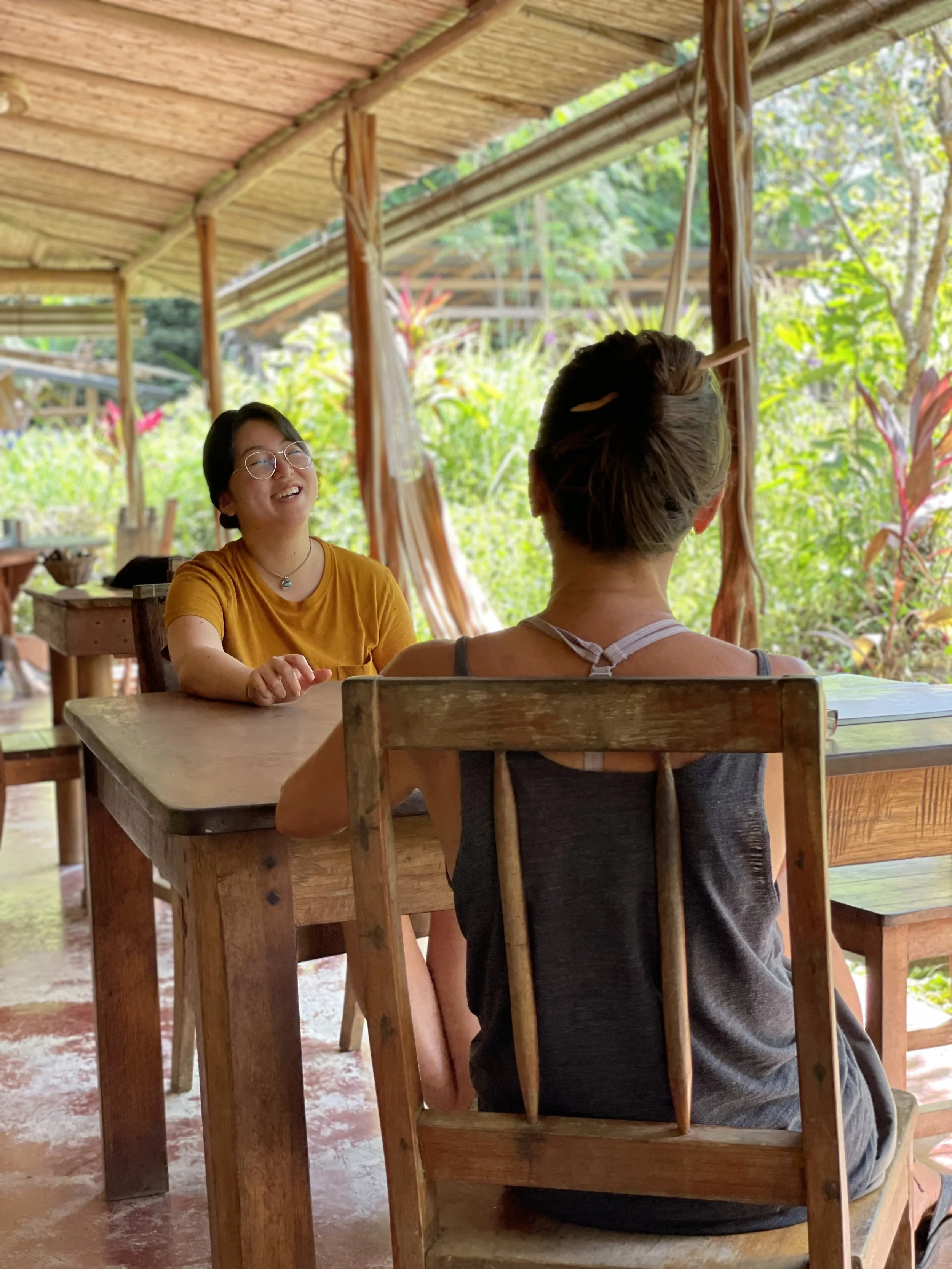
Communication Breakdown: Strategies to Avoid Unhealthy Communal Relationships
Here at the Ranch we are usually 13 people living and working together in community. Healthy communication is something we actively practice. Conflicts, disagreements and misunderstandings inevitably arise in our setting. How do we navigate these sometimes treacherous waters so that everyone's needs are met?
By Core Team Member Robin Nunes
”Communication breakdown
It's always the same
I'm having a nervous breakdown
Drive me insane!”
- Led Zeppelin

Have you ever felt the frenzied energy conveyed in this classic chorus sung by Led Zeppelin?
Here at the Ranch we are 13 people living and working together in community. Healthy communication is something we actively practice. Conflicts, disagreements and misunderstandings inevitably arise in our setting. How we navigate these sometimes treacherous waters so that everyone's needs are met is critical to the success of our project.
Three of the most important tools that we use here are the “community cultural agreement,” community check-ins and non-violent communication, or NVC. These are a few of the components that we include in a domain of our project called "invisible structures," or the parts of our business that specifically address healthy relationships. Just as your machete is an essential tool in keeping your orchard spaces tidy, and your shovel indispensable for building your buildings, these invisible structures are implements that we use to strive for a happy and thriving community.
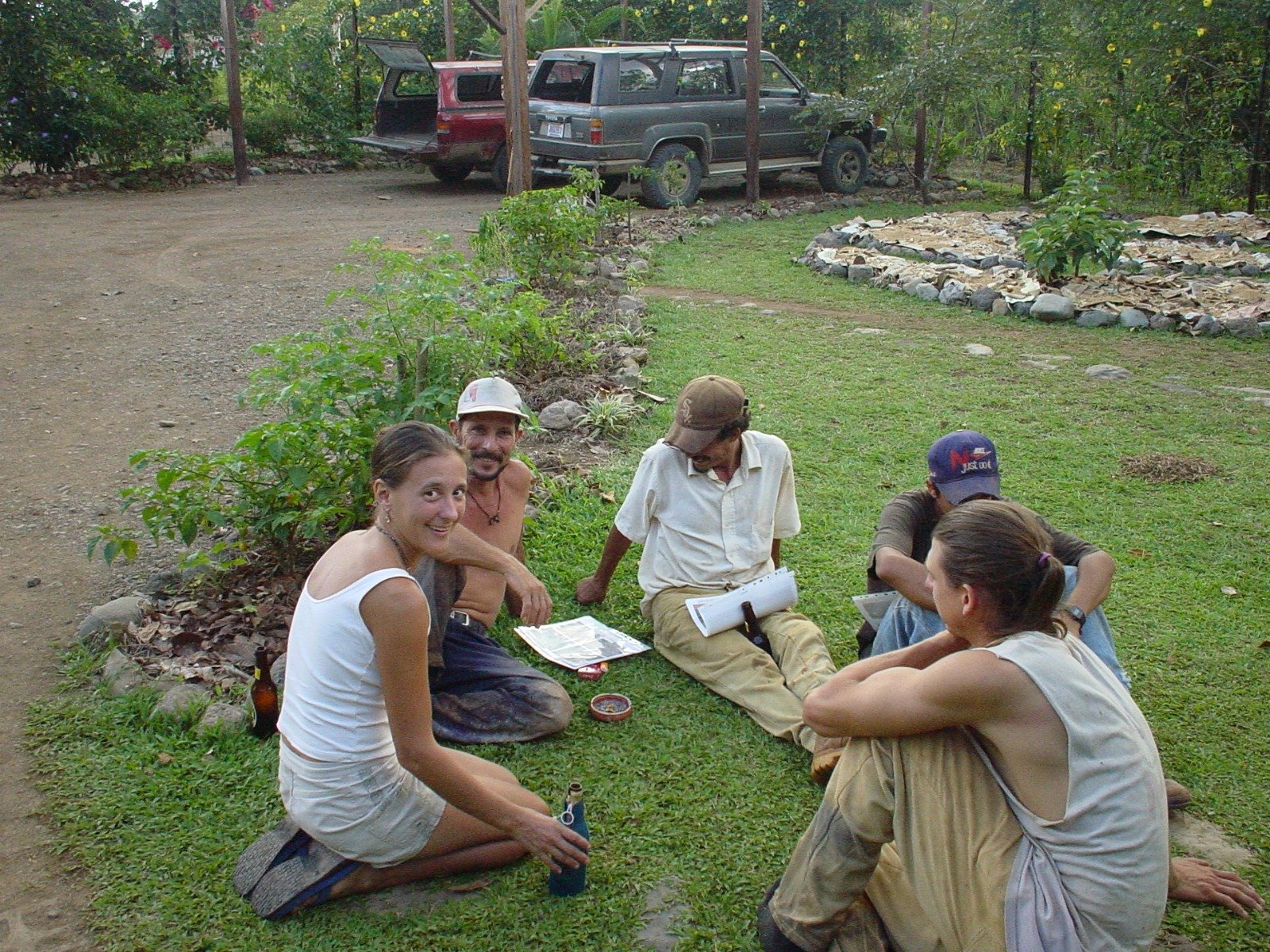
Communication forms the foundation for all of our relationships. The quality of those relationships define the flavor of our lives. And these tools give us the best chance to have “sweetness” in our lives. When our new group of apprentices arrive each year, one of the first activities that we engage in with them is co-creating agreements on how we want to communicate with each other. One of the most important of those agreements is making sure that we address and resolve negative emotions or interactions involving individuals or the community, and recognizing the detrimental impact they have if left unresolved. This agreement assures that when communication breakdown happens, we have agreed to address it openly instead of avoiding it or going insane!
Another agreement that we make is approaching conversations or conflicts with an intent to understand and connect, not judge or convince. This helps us to set the tone of the conversation. When our approach is rooted in curiosity and care, we are able to empathize with the other and see the process as one of growth and learning for all involved.

One of the challenges of upholding these agreements is making sure they are put into practice. Our habitual patterns of dealing with conflict are strong and we have to consciously choose to use these tools. When, inevitably, one of us forgets or doesn't uphold one of our agreements, we can gently "call in" (instead of the more aggressive "call out") the person into a conversation to acknowledge that the agreement was broken and have a conversation to understand what happened. All of this takes a commitment to the process and involves growth, learning and connections.
The second of the social permaculture tools that we use is one that creates the space for deeper connections and a safe place to be vulnerable. This is our weekly community check-in. This is a scheduled, once-a-week meeting to check in with each other to see how we are all doing physically, emotionally, and spiritually. We found that when we don't have this weekly meeting the cohesiveness and functioning of our group deteriorates.
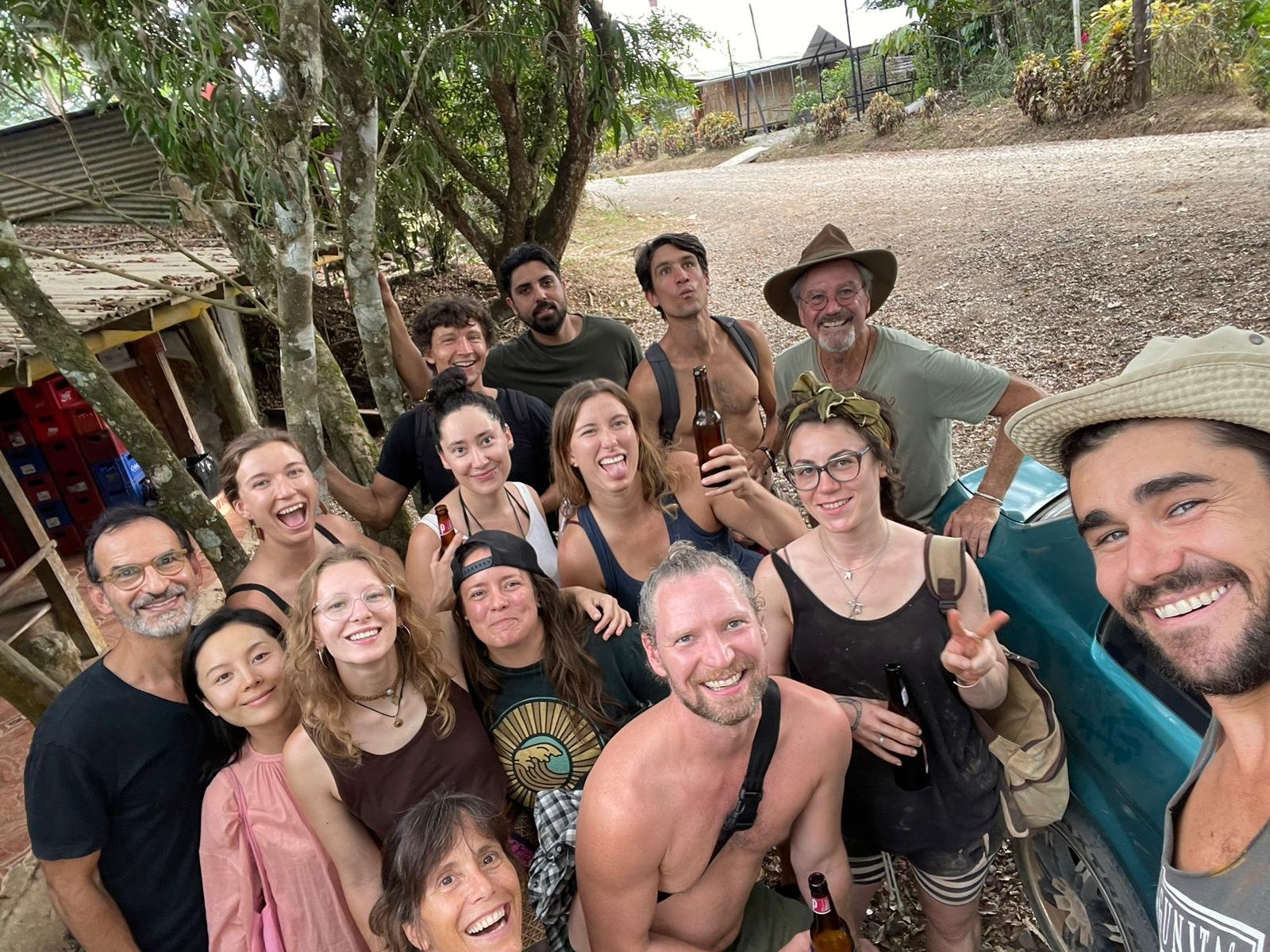
How we view conflict is extremely important as it frames our approach and dictates the tone of the hardest conversations. Our goal is to view conflict as an opportunity for personal growth and connection.
The last tool that I want to highlight that helps us achieve our goals of healthy communication is NVC, or non-violent communication, based on the work of Marshall Rosenberg. This framework is founded on the sanskrit word ahimsa, meaning non-injury. It is an ethical principle of not causing harm to other living things. It embodies reverence, compassion and empathy. When we use this pattern or framework we are embodying and using the ethics we strive to uphold. We all make the agreement to commit to working through conflict with NVC as our guide. This is like learning a new language and we have to practice it to become fluent.
So, although we really dig Led Zeppelin’s song, we are striving to minimize those communication breakdowns. When they inevitably occur, we now, after 23 years of trial, error and redesign, have come up with some very useful tools to help us all on this lifelong journey of learning and growth.
If you would like to experience and learn more about these invisible structures, come join us for one of our Permaculture Design Courses (PDC), our year long apprenticeship, or our two month internship.
Further reading:
Nonviolent Communication by Marshall Rosenburg
Say What You Mean by Oren Jay Sofer
The Four Agreements by Don Miguel Ruiz
People & Permaculture by Looby MacNamara


Social Permaculture: The Secret to a Successful Community
The people part of our work is arguably the trickiest. Even though it takes experience, know-how and intelligence to design and install orchards, build buildings, and manage water, I’d say that they all pale in comparison to the work that’s required to create a holistic and healthy human environment in which to live.
By Core Team Member Tim O’Hara
The people part of our work is arguably the trickiest. Even though it takes experience, know-how and intelligence to design and install orchards, design and build infrastructure, and manage water, I’d say that they all pale in comparison to the work that’s required to create a holistic and healthy human environment in which to live.

The aspects of our work that fall into this category can be referred to as “Social Permaculture.” How do we organize ourselves? Make decisions? Compensate ourselves? Resolve conflict? Balance work and play? Handle mental health concerns when they arise? Take care of people adequately when they’re sick? Raise a child in the same space where we work? Interact with the local population in a way that’s authentic, caring and positive?

The structures that we’ve attempted to put into place that address these questions and their subsequent success are critical to the prosperity of this place and the people that work, live and visit here.
We’ve spent a significant amount of energy in recent years developing systems that allow us to better respond to the issues that inevitably arise within our human ecosystem. It’s a work in progress, and it requires a lot of patience and perseverance when building a community from the bottom up.
The crux of this complex piece of our lives sits firmly in the art of creating clear agreements and transparent expectations. In the incipient years of our community and project, in what was perhaps a demonstration of “anti-capitalism”, we foolishly eschewed good documentation, written accords, and good financial planning. This led to what could have, and perhaps should have, been the demise of our idealistic notions of a sustainable and well-meaning business.
Through first-hand experience, insistence from team members, and at times shear desperation, we began to slowly put the pieces into place to shore up the systems that helped to create a fair, fun, equitable and economically successful workplace. The exercise was at times painful, tedious and uninspiring. And it took years, and continues to challenge our community through to today. It is always a work in progress, and is constantly informed by who is living and working at the Ranch.
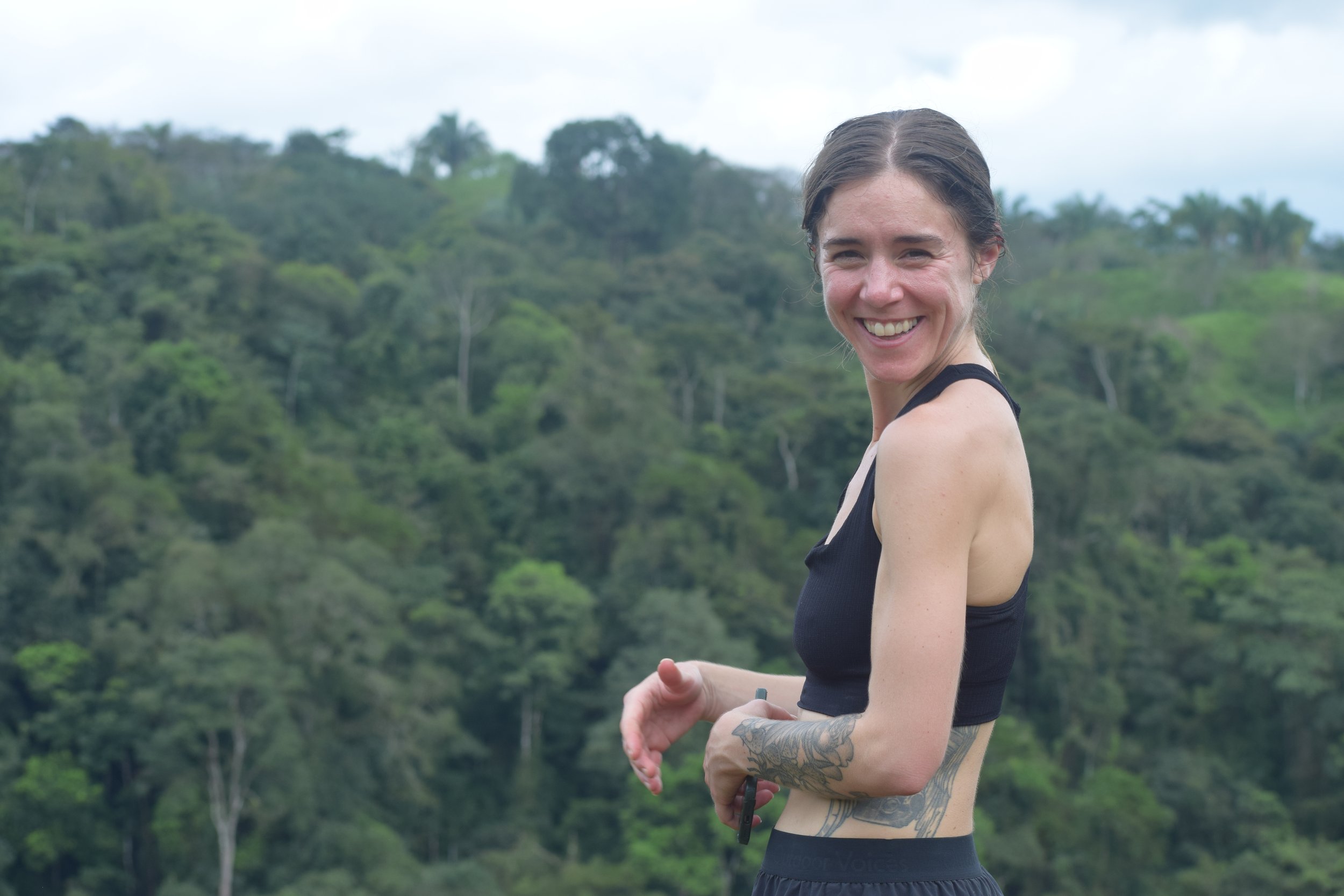
We are open to sharing both our triumphs and failures with those interested in learning from us. We have 23 years of them under our belt now, and we aspire to match that number again in the future. If we succeed, it will be a result of taking care of the people that take care of this place. There could be nothing more important than fairly treating the people that are impacted by your project, and that’s not something we’ve always done well, nor is it simply achieved just by saying that it’s important. It takes practice, education, trial and error and compassion, and along the way egos can be bruised and friendships disfigured. But it’s worth the hard work, and is a critical piece of any project or community to keep at its core, if it expects to get through and beyond the honeymoon phase.


Healing in Community
I’ve come to understand that although we all start from different places in life with a diversity of opportunities, we tend to have common pitfalls which lead us towards ill health and/or expression of pain.
By 2023 apprentice Grant Munro
“The art of healing comes from nature, not the physician. Therefore the physician should start from nature, with an open mind.”
Paracelsus
The health and wellness industry has taken on massive growth over the last ten years – probably in part due to the introduction and wide spread use of social media and unrestricted access to the internet. No longer do people have to rely on the chance discovery and passing around of old copies of The Alchemist, The Celestine Prophecy or The Prophet to name but a few. Nowadays it´s easy to scroll the page on our personal screens and come across cherry picked quotes, soundbites and memes and it’s clear to see from their popularity that people are yearning to be heard, felt and understood.
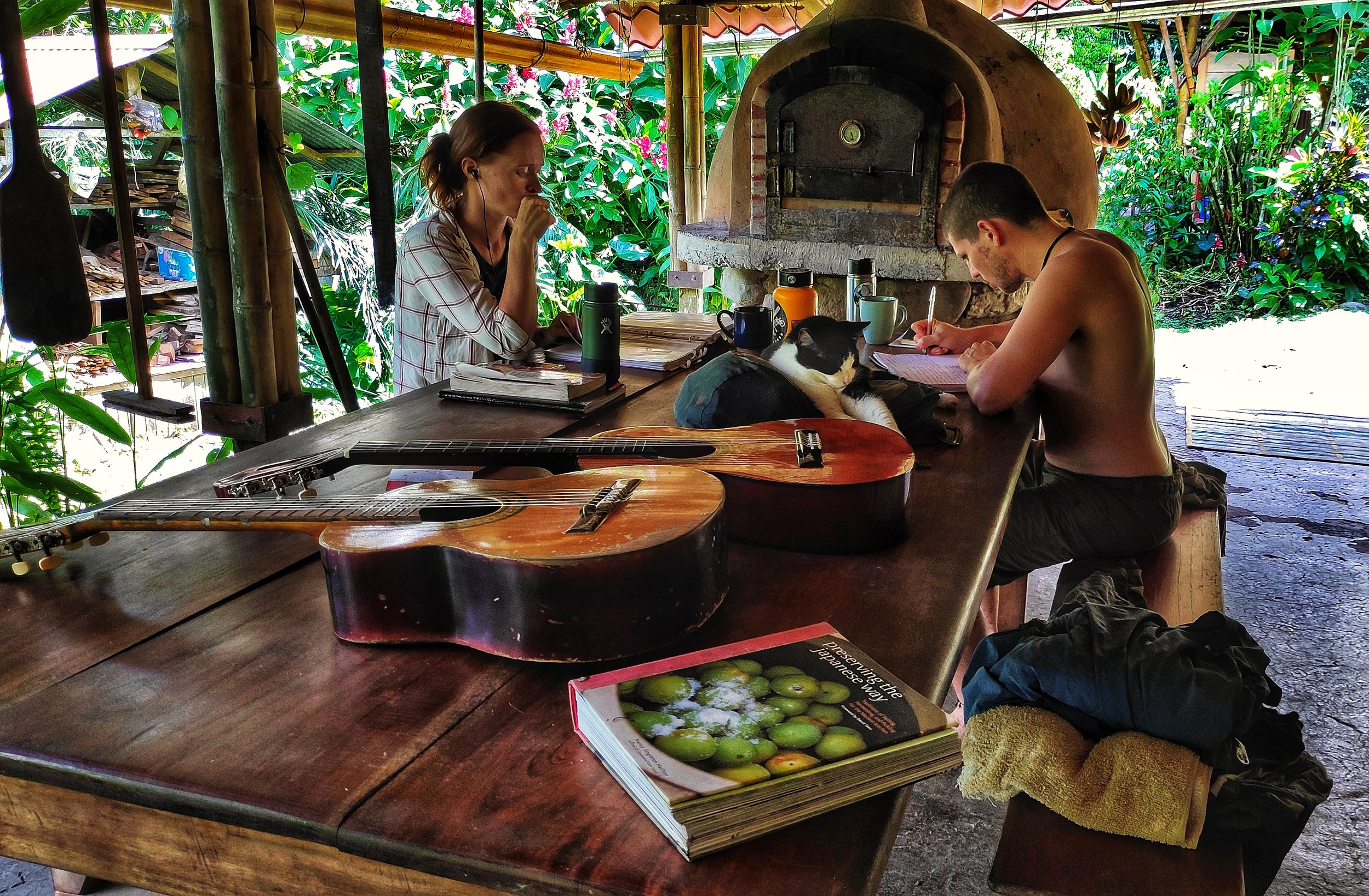
What leads us to pain
I’ve dedicated the last 14 years of life to learning to try to understand and coach others on how we can grow towards the expression of greater physical, emotional, mental and spiritual health. From working with thousands of people I’ve come to understand that although we all start from different places in life with a diversity of opportunities, we tend to have common pitfalls which lead us towards ill health and/or expression of pain.
On the whole, we tend not to move enough as humans were initially intended to, we have a habit of disconnecting from and avoiding our feeling bodies, we engage in repeated unhelpful thinking habits (such as catastrophizing, making assumptions and taking things personally), and we have had our connection to something greater than ourselves eroded over time – be that nature, a higher spiritual power or community.
A chink in the fullest expression in any of these four areas has an effect on the others to greater or lesser degrees. The acknowledgement of all aspects are essential to growth and restoring the adaptability to all life throws at us.
Using Permaculture Principles to Heal Social Issues
Permaculture’s design and problem-solving framework - at it’s core holding there are a set of twelve principles and four ethics – that can be utilized to address issues of almost any nature. It´s easy to see how principles such as observe and interact, apply self-regulation and accept feedback, integrate rather than segregate, and use value and diversity can be used to come up with solutions to some of the social issues we have in our relating circles and wider society.
When we look to the four ethics we could argue that the success in implementing earth care and fair share don’t really stand a chance until we reclaim our connection to all aspects of self, the people around us and understand what it is to be human . Until we reach this, we can’t accomplish the change that is being called for to create a healthy society and a healthy earth as a group of individuals.

Community Living and the importance of communication
As far back as the ancient Greeks (and undoubtedly further) we have understood that a strong connection to our community is essential for human health. Like many others of my generation, I don’t feel I have ever really experienced what it means to live as part of a community - so arriving in the jungle five months ago for the year long apprenticeship was an opportunity to truly lean in to the practices I felt I had been cultivating over the last seven years for my own healing/growth journey.
It’s been an, at times, a wild ride of ups and downs internally, and the number one practical thing I feel I’ve taken from it is: it’s important to have that difficult conversation in a timely manner. Feelings through miscommunications and misunderstandings can fester and be felt as an undertone by many in the group and can lead to what feels like fragmented energy. The stress of it can slowly eat us up and create a filter which can colour our whole experience. When something arises, ask clarifying questions, lead with what you are feeling but without blaming the other person. Perhaps describe what you are feeling in your body without naming an emotion can be helpful, too. Listen to the other person and accept responsibility for your part (there’s generally always a part we’ve played!). Sometimes it’s helpful to come back to a conversation a day or two later. Have compassion – we all have our own filters, biases and past experiences we are often living on autopilot from.
It has been well established now in the scientific literature that the brain doesn’t greatly differ in its response to an actual threat and a perceived threat – such as a repeating thought or judgement. Just thinking about a stressful event causes a discharge in stress hormones which our systems are not evolutionarily adapted to deal with for extended periods of time. Just as our physical body can bleed out from a thousand tiny cuts, we can look at these things that we are not facing as tiny cuts in our energy systems. Chronic overactivation of our stress response is implicated in almost all chronic disease.
It still blows my mind to this day how the impact of committing to practices of self-regulation can have a ripple effect throughout a community. When working in London we were measuring how after a relatively short period of time chiropractic was objectively helping people regulate their nervous systems more effectively than at the beginning of care. Subjectively, these clients would routinely mention how their relationships to their kids, spouses, friends, work and recreational acquaintances would improve.
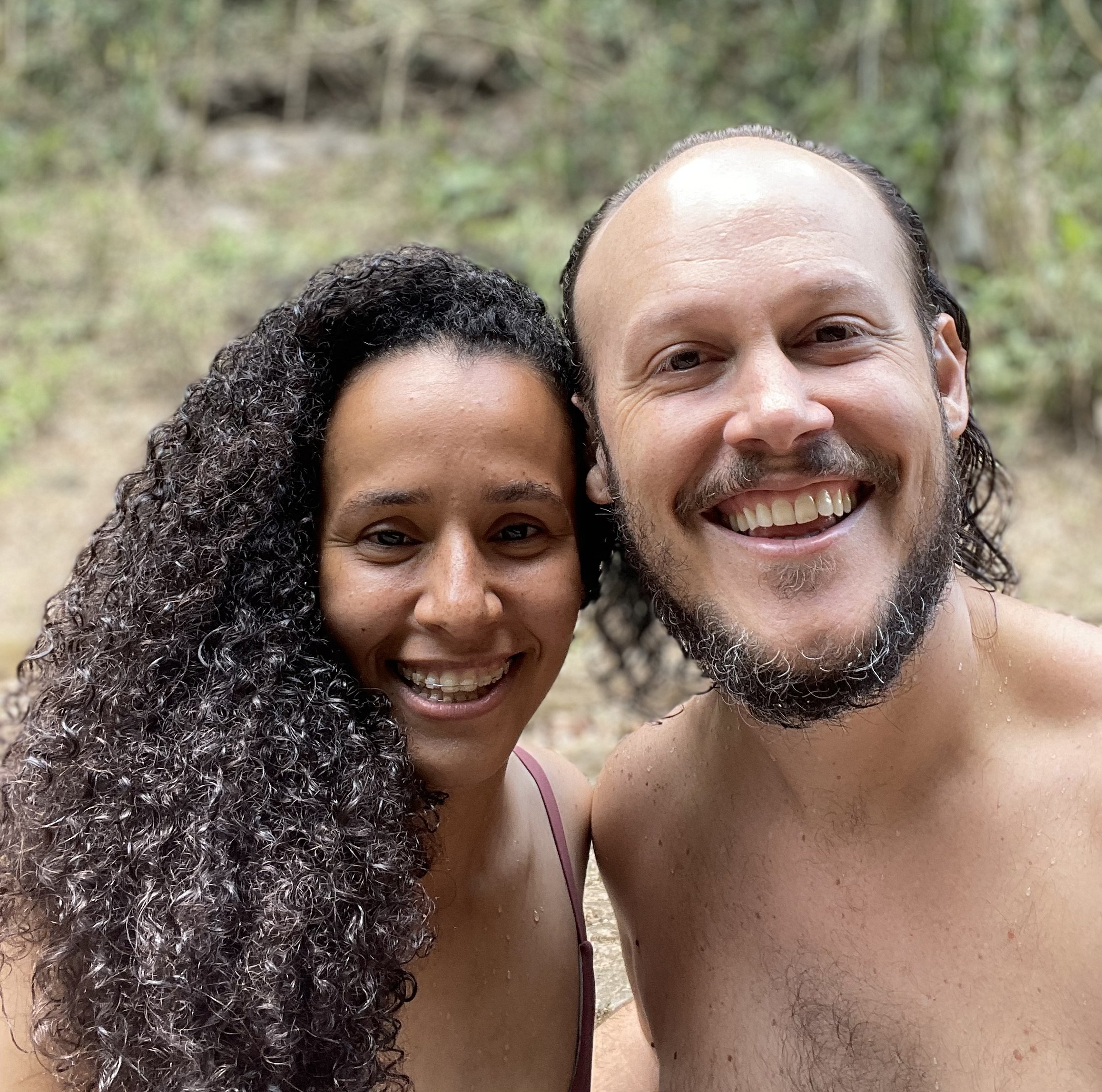
Similarly, I’ve noticed at the Ranch that from one conversation between two people the whole group feels like it relaxes – not to mention the perception of my whole personal experience can flip 180 degrees in a matter of minutes. In reality, the conversations are very rarely as terrible as we build them up to be once we initiate them. That conversation may only be with one person, but the pent up energy can be liberated in you both, to ripple through time and space, in ways in which we may not be able to yet fully comprehend.
“We never know how far reaching something we think say or do today will affect the lives of millions tomorrow.”
B.J Palmer

Check Out these past blogs about community living
Enriching Community Soil: 5 Simple Strategies That Support Sustainable Relationships
Foundations for Success: 10 Considerations to Create a Healthy Project
Learn More
Learn more about community living and social permaculture in our annual Permaculture Design Course.
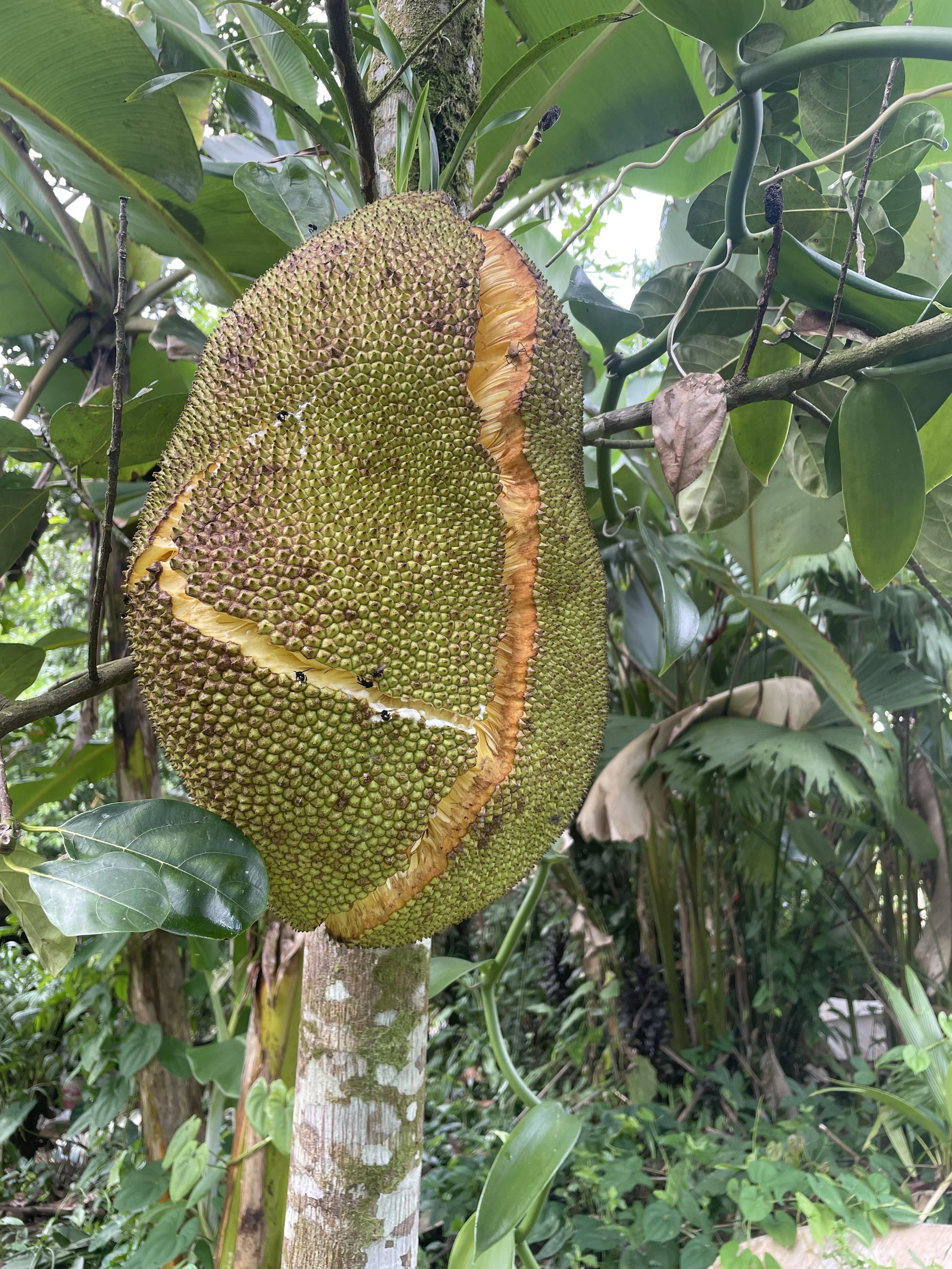
The Fear of Splitting Open, and no, I’m not talking About Jackfruit
The most transformational aspect of this experience, hands down, is the intensity of self-reflection and personal growth that is a natural biproduct of our new social living conditions.
By 2023 apprentice Elya Justina Mech
Living in community as an apprentice at Rancho Mastatal has stirred many changes within me, perhaps more so than the hotter climate, the ever present bugs and stinging things, the new work which challenges my body and mind. The most transformational aspect of this experience, hands down, is the intensity of self-reflection and personal growth that is a natural biproduct of our new social living conditions.

Who am I?
I thought I knew who I was before coming here, having been through many seasons of inner work and change, of death and rebirth. And of course one does not ‘arrive’, finding themselves in a place where the work is complete and the Self ceases to evolve. But there is a unique, accelerating factor of community that hastens this process and perhaps probes a little deeper than ‘regular life’.
Who am I in community?
In the earlier days of my arrival, I was surprised at how my personality took to hiding behind short, congenial answers, shy mouthfuls of food, and letting someone else do the talking. I was afraid to be vulnerable with my new group of apprentices and the core team, let alone the groups of guests who were arriving and departing every week or two and visitors who may join us for just a few days. I had considered myself to be outgoing, silly, confident and eager to speak of matters of the heart. Where did I go?
I recently read a passage of a book that said our personalities develop out of our survival of childhood – we are who we are to continue to receive love and affection. So perhaps unconsciously aware, I was craving such acceptance by my new group of friends/fellow students/housemates/teachers/mentors, and yet was afraid.
What parts of myself am I willing to share? What parts of myself am I willing to be rejected? Or misunderstood? Which of my shadows are being exposed against my attempts to conceal them, the bad habits I know I need to work on, the ones I’d rather not have to face right now? And who am I becoming, in this environment of everything new, who is this new me?

One aspect that has been particularly contrasted for me was the sharing of my artwork and poetry. Before coming to the Ranch, it was my usual habit to share these expressions of myself online or within an already established artist community. I have sold paintings at street markets, posted poetry online, and shared photos of projects I’ve been working on. Sharing bits of yourself to ‘’the whole world’’ although somewhat anonymously, hidden behind a profile is quite different to sitting in the presence of another while you open a part of your soul, vulnerable to their opinion whether spoken or simply felt. I had been meaning to attend an open mic night back home to read some of my writing aloud but I never worked up the courage and continued to find excuses not to get on stage.
But here at the Ranch, I felt a new opportunity stir within me, to be brave enough to share some of my poems that were closest to my heart. Firstly, at our evening Hankey hangouts by fairy lights (‘’The Hankey’’ is one of the natural buildings here which houses up to five of the apprentices at a time), and later at our dinnertime circles at the main house.

Thank you for letting me be brave in this community
I was further inspired by a solo traveller who was kind enough to gift me with a pocket sized watercolour set after our conversations regarding art and writing. I had packed my brushes and a pad of paper but neglected to bring along a vital set of paints. I have enjoyed many afternoons either in my ‘’Annex’’ bedroom (an extension of the Hankey that seems to float among the trees), down at the river or perched in the old honey bee shed among the jackfruit trees and bamboo. Thank you sweet friend.
I’m also grateful for the kind guest and new friend who spent time harvesting fruit with me several afternoons, speaking of our philosophies of life and talking about poetry, favourite books and humble living. I was encouraged to continue working on my books and art and it reaffirmed my desire to live as close to the creative process and Source of creation as possible, that being my true joy.

Thank you for letting me be me in this community
Another new interpersonal experience for me has been learning how to have a bad day around others. No longer being able to retreat fully from the world when I’m feeling out of sorts, I am discovering how to be myself and not put on a mask which is easy to do in conventional living. When someone here asks you how you’re doing, you don’t get away with a simple ‘’fine’’ or ‘’good’’ ;)
Conversely, I have also been learning how to let others have a bad day as well, offering concern and a listening ear but giving space, the understanding when perhaps they are short-tempered with you and being available later for smoothing things over if egos were bruised.

Thank you for letting me be imperfect in this community
At this point, after nearly five months of jungle community living, I’m forgetting what ‘normal’ is, what endless concrete feels like to look at, why billboards exist. The thought of eating dinner alone seems preposterous and I have grown quite used to living with no walls and only a curtain to provide me most of my privacy. (A hummingbird just flew into my bedroom as I write this, so, you can understand the trade-off). I’m still learning how to show up as my best self, allowing the lessons coming my way to be integrated gracefully.
So what profound conclusion can I leave you with? Just one that is not my own and has been said time and time again. Despite the truth in this song I’ve been listening to lately
‘’perhaps the fear of splitting open, showing some parts of yourself that you don’t even really want to –‘’
Be yourself. Bravely, your imperfect self and see what new things unfold.


Foundations for Success: 10 Considerations to Create a Healthy Project
After more than 20 years, we have been able to identify some trends that have led to our survival as a business and a community. The following advice is appropriate, and perhaps some of it even necessary, if you expect to live successfully in a communal work and living environment doing land-based work.
By Core Team Member Tim O’Hara
After more than 20 years, we have been able to identify some trends that have led to our survival as a business and a community. The following advice is appropriate, and perhaps some of it even necessary, if you expect to live successfully in a communal work and living environment doing land-based work.

Students in our annual Permaculture Design Course
Communal Continuity
It’s imperative to assemble a group of individuals that you can depend on, year after year. If the only people that are visiting your project are there for shorter or medium length stays, you will never feel as if you have a community to lean on during the harder stretches of running a project of this nature. Create realistic and concise agreements with one another and develop incentives that make everyone feel well taken care of.

Privacy
We learned the hard way that having your own private space is critical for long-term happiness. We decided to focus on building before planting in our early years. That has meant that our agroforestry spaces are a bit behind where you’d expect after 20 years of working in those spaces. But without privacy, it’s impossible to keep people around who are doing the important work in the orchards and other spaces. Create private spaces for everyone, with a focus on creating lovely, comfortable, healthy homes for your core team.
Collective Decision Making
Micromanaging is a recipe for burnout. Don’t fall into the trap. Develop trust with your partners and allow each leader to make decisions in their realm up to a certain value. Big decisions, that affect everyone, should be discussed by your entire team, but small decisions, like whether to buy 5 or 10 avocado trees, should be left to those managing the orchard spaces.
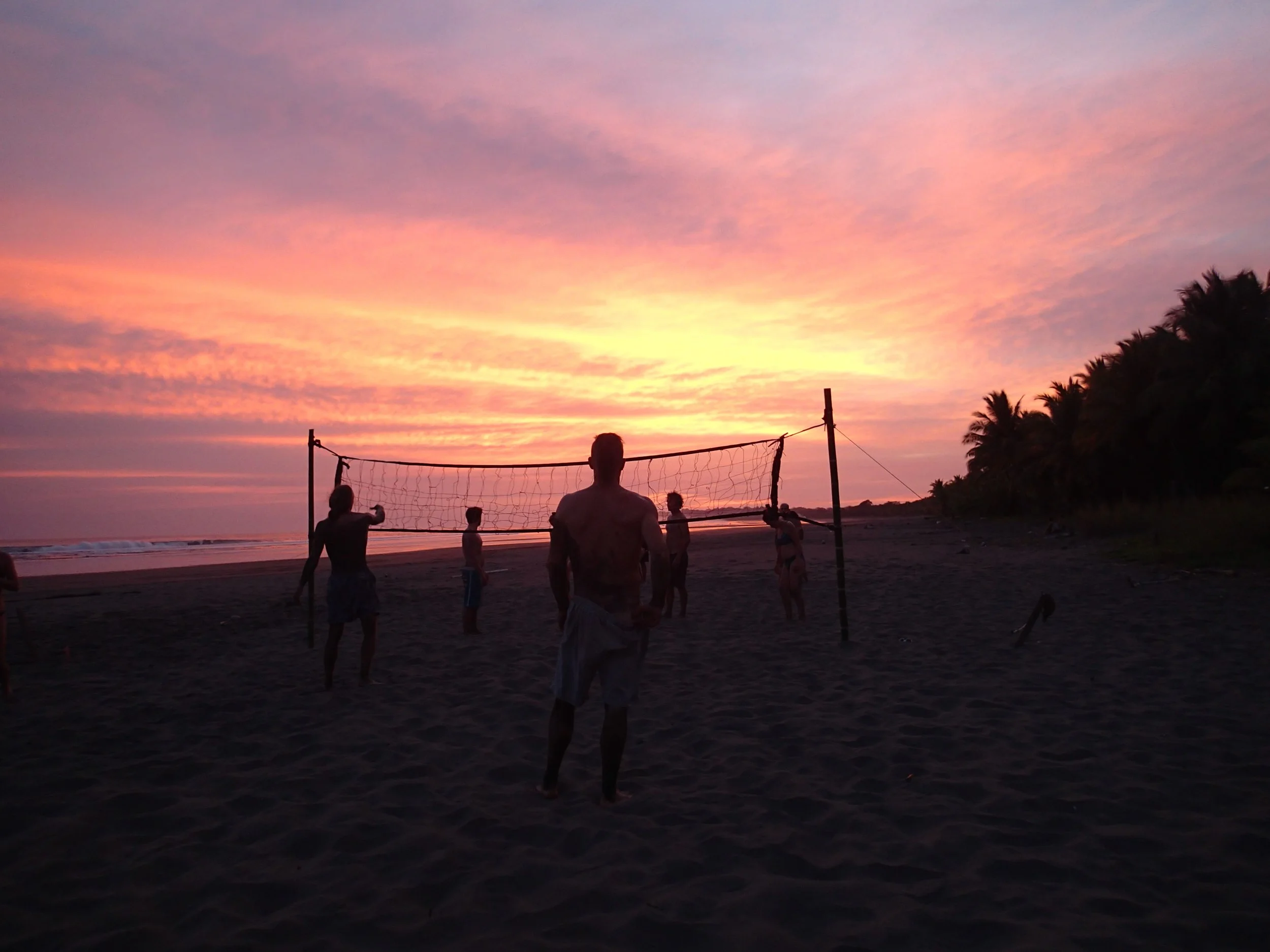
Balance and Rest
It’s imperative to figure this out before burning out. Burnout can be permanent, leading to the abandonment of your passions. Build into your day-to-day lives the time to run, breathe, nap, walk, draw, meditate and think. The work will never be done, so don’t try to do it all each day. It will be there waiting for you in the morning after a great night’s rest.

A Solid, Well-Taken Care of & Committed Core Team
We’ve got an amazing core team. But it took us longer than it should have to realize the importance of building a strong team at the center of our project. If we expect community members to stay committed, they need to have their needs met. And everyone has a unique set of needs. Create a compensation agreement that makes everyone feel valued.

Community Connection
Be an active member in your town. Demonstrate, over and over again, that your project exists to benefit everyone in your community, especially those most in need. Join your local woman’s group, offer free yoga classes once a week, develop a kids soccer camp, or create a language exchange.
Fair Share
Share what you have. It’s your easiest path to acceptance though far from the easiest practice to bring to fruition. It has taken a lot of time, energy and sacrifice to create Rancho Mastatal, and sometimes our knee-jerk reaction to “spreading the wealth” is instead to move to protect what we’ve created in the interest of stability and to prepare for future unforeseen issues. But true stability comes with sharing.

Communal Meals
This may be the hardest bit of advice to embrace for some. Sharing a meal takes more social energy, but weighed against the time you save on cleaning and cooking, it’s worth it. Communal meals encourage group debate, laughter, learning and the development of a strong social fabric. Humans have tended towards eating in front of screens or on the run. These trends lead to poor eating habits and encourage humans to disconnect from one another. To eat well today means a monumental and coordinated effort growing, processing and cooking food. Celebrate this activity each and every day and you will be rewarded in ways unexpected.
Make Time to Dream
We “talk shop” a lot around here. We love what we do and enjoy talking about what we’ve created and how we can improve it. It’s important for us to create spaces that allow for dreaming and scheming. Having the space to “zoom out” and move for a time away from the day-to-day allows for creative brainstorming that can lead to breakthroughs and new ideas that might otherwise never come to the surface. Dare to dream, and dream to create your ideal version of life.

Don’t Get in Over Your Head
This is much easier said than done. When you commit to a land based project, your to-do list immediately seems endless. There’s never enough time in the day to do everything that you need. Start small and work towards simple solutions whenever possible. Build and perfect one system at a time, as much as you can do that. Don’t add chickens, goats and fish in the same year but rather add one species and then see how that changes your life before adding another. We made the mistake of throwing too much at the wall early on in our development and when not everything stuck, it felt overwhelming picking up the pieces of many systems simultaneously.
We try to share our failures and successes frequently so that others can get to where we did in less time and with less effort. Please don’t hesitate to contact us with questions, comments, or suggestions and all the best in your journeys.
Check Out These Past Blogs About Permaculture and Community
How to Run a Permaculture Internship
Enriching Community Soil: 5 Simple Strategies That Support Sustainable Relationships

Why Rootedness Matters
Rootedness can create compassion and understanding for the place where we are, know, and love. I have seen the benefits firsthand from some of amazing people that were born in Mastatal and continue to call this place home. They anchor the business and environmental communities here.
By Core Team Member Tim O’Hara
Costa Rica is a popular destination for North American and European families looking to resettle in a place where life appears more promising. These desires may come from the need to escape a bad situation or a wish to find a better life. It’s a phenomenon that dates back thousands of years. We are a species that suffers from what I refer to as the “grass is greener syndrome”. We commonly dream of finding our Shangri-La somewhere different from where we were raised.
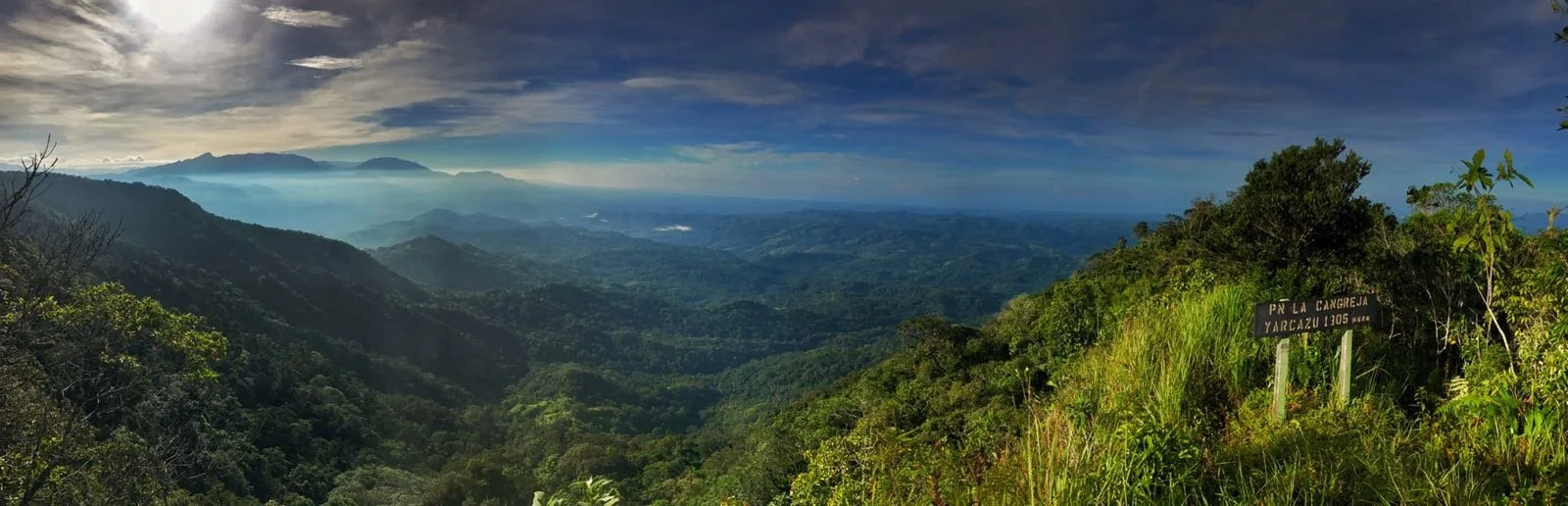
I grew up developing relatively deep roots in my hometown in upstate New York. But as a result of societal pressures, I moved away for college and never went back to my hometown to live full-time. These non-provincial experiences have been fruitful, transformational, and important to me to develop a more well-rounded view of the world. They also helped to nurture a tolerance and understanding for how others live. Nevertheless, they pushed against the societal benefits of growing deeper roots in the towns where we are born. With so many people uprooted, due to climate catastrophe, war, persecution, the desire to see the world or economic pressures, I fear that like a plant ripped up from the ground, this type of restless movement can result in community erosion, family disintegration, and a loss of geographical literacy. There are always tradeoffs, but I think that we should, when appropriate and possible, put more effort into encouraging humans to stay closer to home to do the good work that’s needed in every community around the world. Wealth continues to congregate in the “best” cities, leaving small towns and rural areas bereft of intellectual and physical stamina. I say this having left my home 30 years ago, so admittedly my perspective might come across as “curious.”
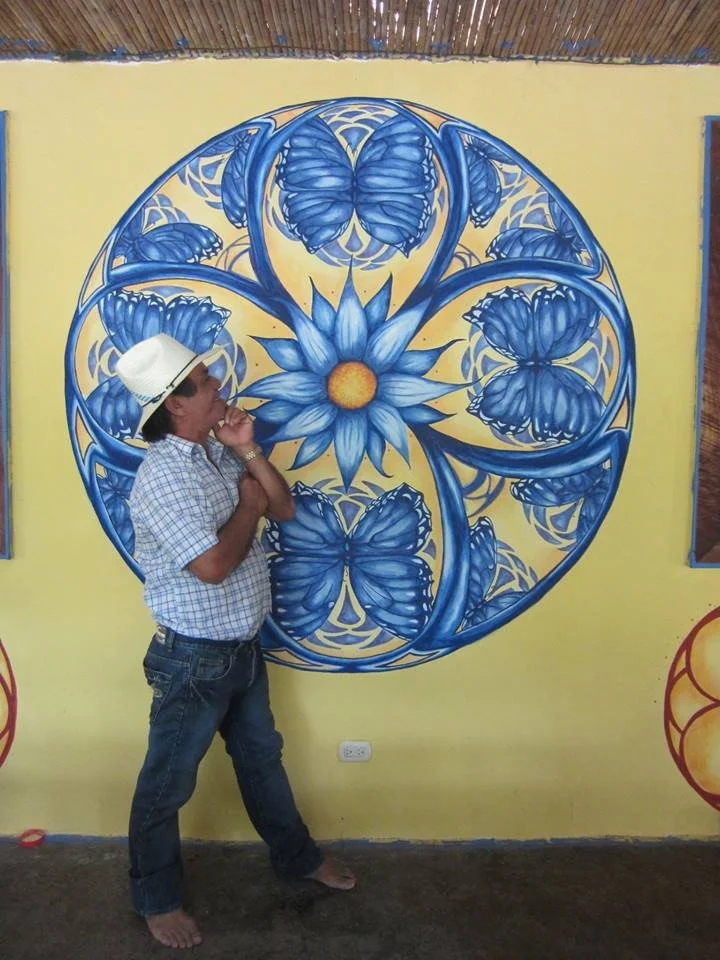
Robin and I started this business in 2000. We moved to rural Costa Rica in 2001 and in 2008 started a family with the arrival of our daughter Sole. Mastatal has been a challenging and amazing place to run an enterprise and raise a little girl. Sole has had what many people would consider a non-traditional upbringing. She grew up without diapers, went to an elementary school with 1 teacher and 10 students, and goes to a high school with 25. She plays unorganized soccer just about everyday and hikes to a nearby waterfall multiple days a week where she jumps off cliffs and catches freshwater shrimp and crabs. She watches out for snakes on her nightly trips home to an earthen house overlooking La Cangreja and has had to survive her early teenage years with horrible internet. She cooks for our entire community and is by far the best baker in town. We are so thankful for the environment that she has spent her first 15 years in, though it has been far from perfect.
Upon our arrival to Mastatal, we were definitive outsiders who had moved from afar into a small, quiet, depopulating village without much happening. There were no phones, terrible road access, and no formal businesses. Our first years here required a lot of energy to begin developing relationships and friendships with the people of our adopted village. It was some of the hardest but most rewarding work that we did and continue to do. To feel at home anywhere requires a certain level of acceptance and connection, and this only comes with intention, compassion, understanding, sharing, and an acceptance of vulnerability. And it usually takes time. It was not an easy or fast path for us, but one that gradually crept into our lives quietly. It led to the rootedness that community strength is built on, and a vested interest in the future of what has become our home.
This lifestyle choice has come with its sacrifices. For me the largest of these has been 2 precious decades geographically distant from the people that I hold nearest and dearest to my heart. It has not been a minor loss. We have missed important family gatherings, weddings, births, deaths and precious time with kin. Our lives are full of compromises, and this choice, although it has brought great joy and happiness, has a sad component that is part of being a human living on this earth at this time. We have to pick our battles, and being able to go through a well-thought out decision making process when contemplating a move like we did is important. I would suggest not running for the hills with each passing doom and gloom story that you hear about on the news. Our problems at home are oftentimes universal, and the battles should sometimes be fought at home, where we can garner the most support, and perhaps have the greatest positive impact. This might seem strange advice from a transplant who has carved out a nice life abroad, but I think that rootedness is an important consideration for many people striving to attain meaning and happiness in their lives.

Rootedness can create compassion and understanding for the place where we are, know, and love. I have seen the benefits firsthand from some of amazing people that were born in Mastatal and continue to call this place home. They anchor the business and environmental communities here. They are smart, savvy, entrepreneurial, caring and vested. They are raising their families here, inheriting their family farms, planting food, and against all odds bringing about the revitalization of a small rural community. They are selling organic chocolate, offering amazing natural history and birding tours, preserving forests, planting trees, and running our local government. And after 22 years I do finally feel rooted here, but it took time, energy and resources that I could’ve also dedicated to the town that gave me so much as a youth, and I think that’s worth looking into a bit deeper for everyone contemplating where to call home.

Post-Rancho Thoughts
If there's something to take away, it is that we need to tap into, develop, and release the inherent potential of every human being to live in ways that make meaningful contributions to the world and society.
By 2023 apprentice, Michelle Häuptli
"Throughout history, the really fundamental changes in society have come not from dictates of governments and the results of battles but through vast numbers of people changing their minds - sometimes by only a little bit... by deliberately changing the internal images of reality, people can change the world." - Willis Harmon
After 12 weeks at the Rancho, evaluation and re-evaluation have become an ever present part in day-to-day living. Pre-Rancho-life in a busy financial town of Switzerland is becoming a fading shade of a time that seems to be years in the past. The days are long but the weeks short and questions about post-Rancho life are stirring in the back of our heads. What happens after we leave this safe spot in the sweet, warm jungle? Where do we go to spread our wings? Where can we go to save the day?
The process of learning and implementation goes beyond the "heroic" and "do-good" models. If there's something to take away, it is that we need to tap into, develop, and release the inherent potential of every human being to live in ways that make meaningful contributions to the world and society.
According to Joseph Campbell, the mythic Hero's journey is always in service to and supported by a community. It is intended to achieve some larger beneficial effect. The hero returns with a treasure that will alter the community's role within its world. Ultimately there is no independent heroic ego, only the collective work of sustaining and evolving life by reshaping between the community and it's larger context.

Being part...

...of the bigger picture
We don't need to be heroes to have an impact on the world. However we must learn how to live our lives and play our roles in ways that are designed to create change. It is a slow, steady, cumulative and powerful process - like water shaping rock.
Lao Tzu wrote: "water is fluid, soft, and yielding. But water will wear away rock, which is rigid and cannot yield. As a rule, whatever is fluid, soft, and yielding will overcome whatever is rigid and hard... A paradox: what is soft is strong."

Leaf cutter ants working away
Any work we are doing can play a critical role within society. Our effects can be direct, through the influence we have on social institutions, or indirect, by preparing others to play their roles. Work is where we put our life energy and we tend to define our work in terms of career. But we have the option instead to think of ourselves as pursuing particular goals in society, goals that are meant to improve and transform the communities and industries we are part of. In the best case scenario we do this by enhancing the ability of living beings to eco-evolve, so that our planet can continue to express its potential for diversity, complexity and creativity. Whatever one believes, it is evident that every one of our critical planetary support systems - oceans, forests, soils, atmosphere, biodiversity etc. - is in decline. But with elegance and power, our human minds can create products of the same evolutionary flow and change as every other living system. Nature is also our nature.
At the Rancho we learn, live and teach these roles by following Permaculture principles and ethics. That can either be in consciously designing landscapes by respecting natural waterflows, rebuilding community structures together by using natural and local building materials or inviting the young generation to partake in an agroforestry class and simply interact by sharing each others visions.
The concept of being a part....

...of the whole!

In the end, we will all have to develop the capacity to hold the complexity and the not-knowing and the in-between as we move from the old ways to the even older regenerative ways that we have forgotten.
To close I would like to reference two books that assisted me to verbalize these ideas: "The regenerative life" by Carol Sandford and "Regenerative Development and Design" by Pamela Mang, Ben Haggard and Regenesis.
Check Out These Past Blog Articles
Enriching Community Soil: 5 Simple Strategies That Support Sustainable Relationships

An Interwoven Life
As you pass through the gates at Rancho Mastatal, you step into another world. A place where perhaps the hands you hold at evening circle are the very ones who built the structure you'll sleep in that night.
By 2023 apprentice Elya Justina Mech
As you pass through the gates at Rancho Mastatal, you step into another world. A place where perhaps the hands you hold at evening circle are the very ones who built the structure you'll sleep in that night. Where your salad greens come from the garden you walked through that morning with your coffee, and the cows down the road have not only given the kitchen milk to make dairy kefir, but manure to fuel the bio-digester cooking system. The connections here are endless; its permaculture life you can see and touch.
As apprentices we are learning the principles of permaculture - not just in the classroom but also in our morning community contribution skills, during meal prep, on our walks through the agroforestry system, and as we assist with the daily function of the Ranch's infrastructure.
Its easy to understand why this way of life makes so much sense. We can see our regenerative influence on the natural environment, and feel a deep satisfaction from knowing how the components of your day are interwoven.
And at the Ranch it's very clear to see that you are also nature, you belong here, and you can have a healing impact on the earth.
Here are some more examples of ways in which our daily life is interconnected:
Water Kefir or "Balm" that we enjoy at our meals is a probiotic-rich, fermented drink made from yeast, local raw cane sugar with a base of fruits, spices and herbs from our gardens and orchards.
Eggs from Dona Flor, a chicken farmer in Mastatal who provides us with a large supply of our daily protein. Our beautiful brunches feature frittata or scrambled eggs. We also make homemade mayonnaise and use the eggs in baking for special occaisions.
Composting toilets allow us to drastically reduce our water consumption compared to conventional toilets. They also create nutrient-rich humanure to be used in our orchard spaces.
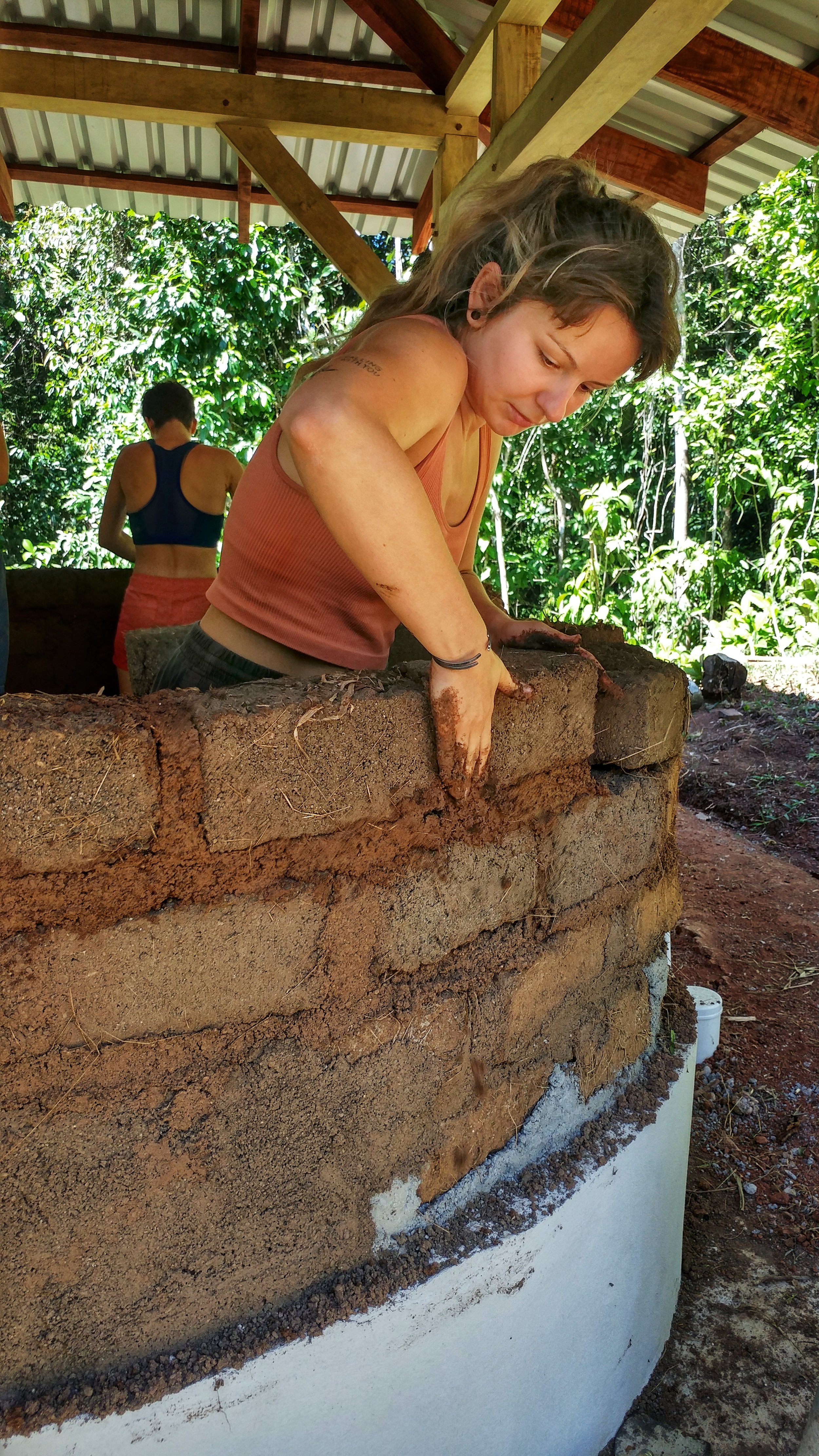
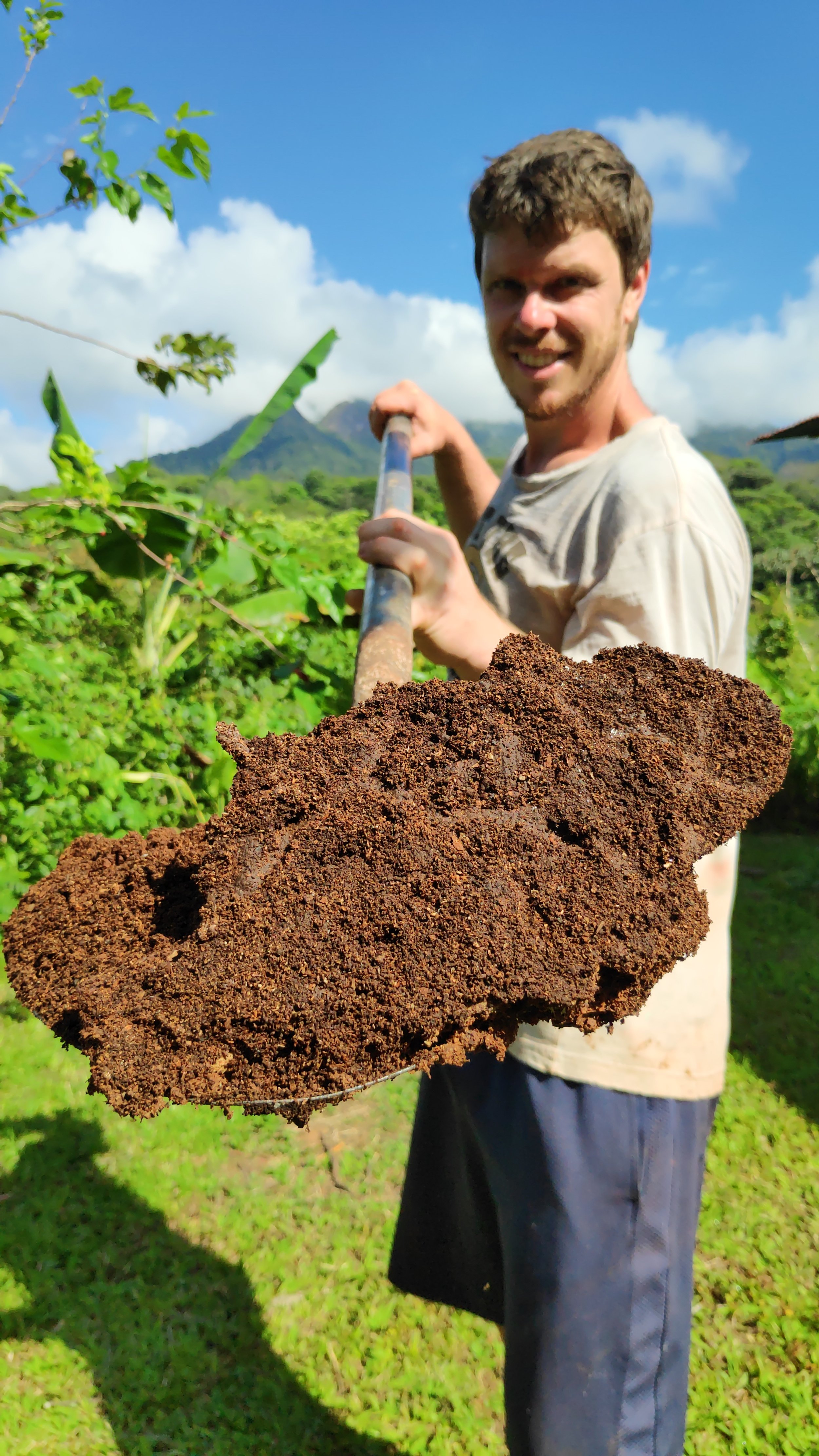
Meeting our energetic, nutritional, and social needs in symbiosis with nature brings such a joy and satisfaction to all those who live, work and visit Rancho Mastatal. Its inspiring to see how we can live in way that is kinder to the Earth and healthier for our bodies and minds.
Thinking back to life before the Ranch, its easy to see how many components of my daily life came from far off places and how my needs were often met by people whom I did not know and came from sources I was unfamiliar with. Without that integration I felt disconnected and there was a part of my spirit which was searching for more.
When we think about all the aspects of our daily lives - what we eat, how we process our waste, how we spend our time, and the spaces we occupy, we can ask ourselves 'how interconnected are these elements'?
Part of the magic of the Ranch is how its inspiring others to bring back these values and ideas to wherever they're from and share a new way of living with their family and community. You don't have to be living in a rural town in the tropical rainforest of Costa Rica to have a life that is interwoven, regenerative, and full of meaning.
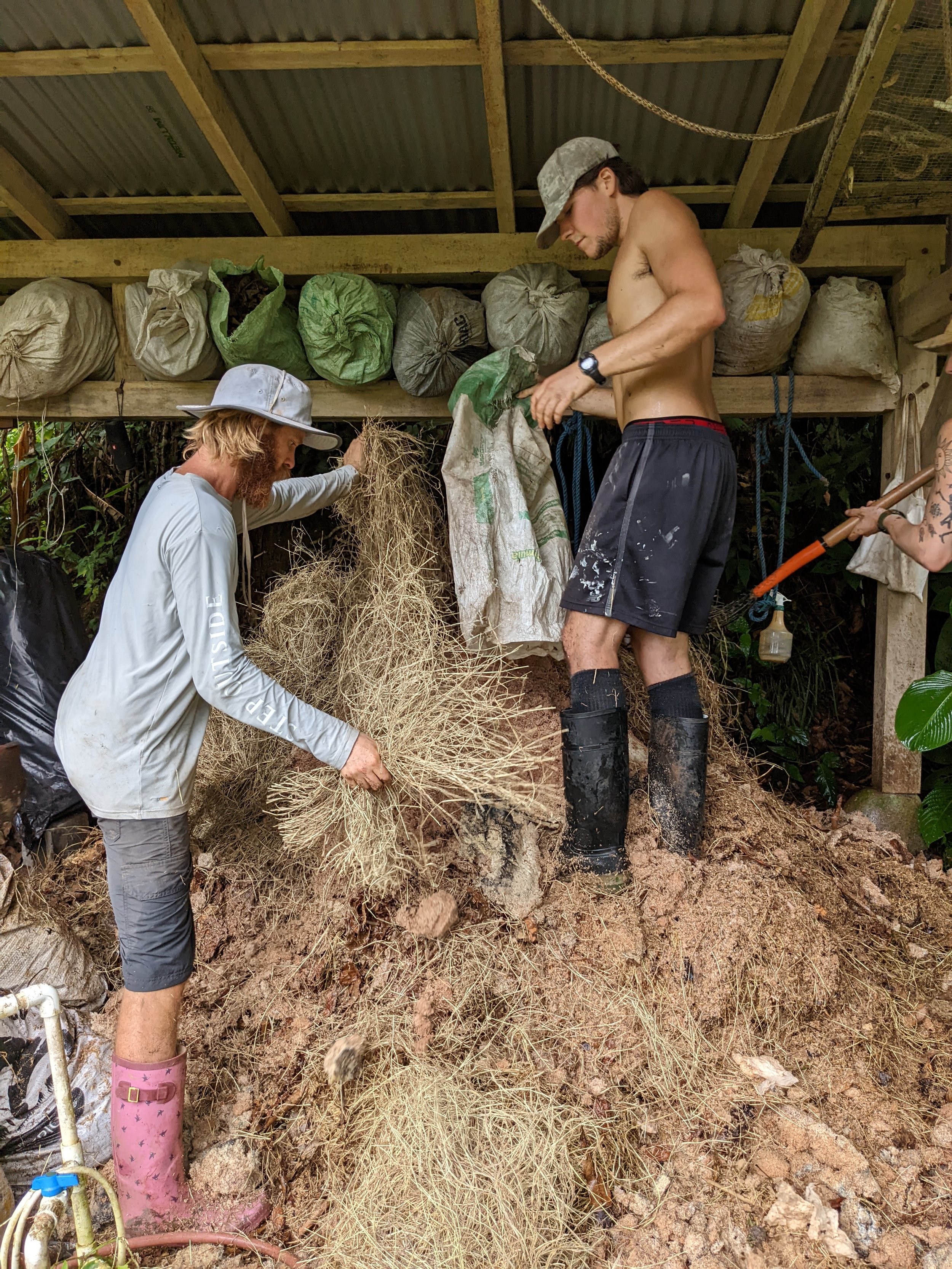
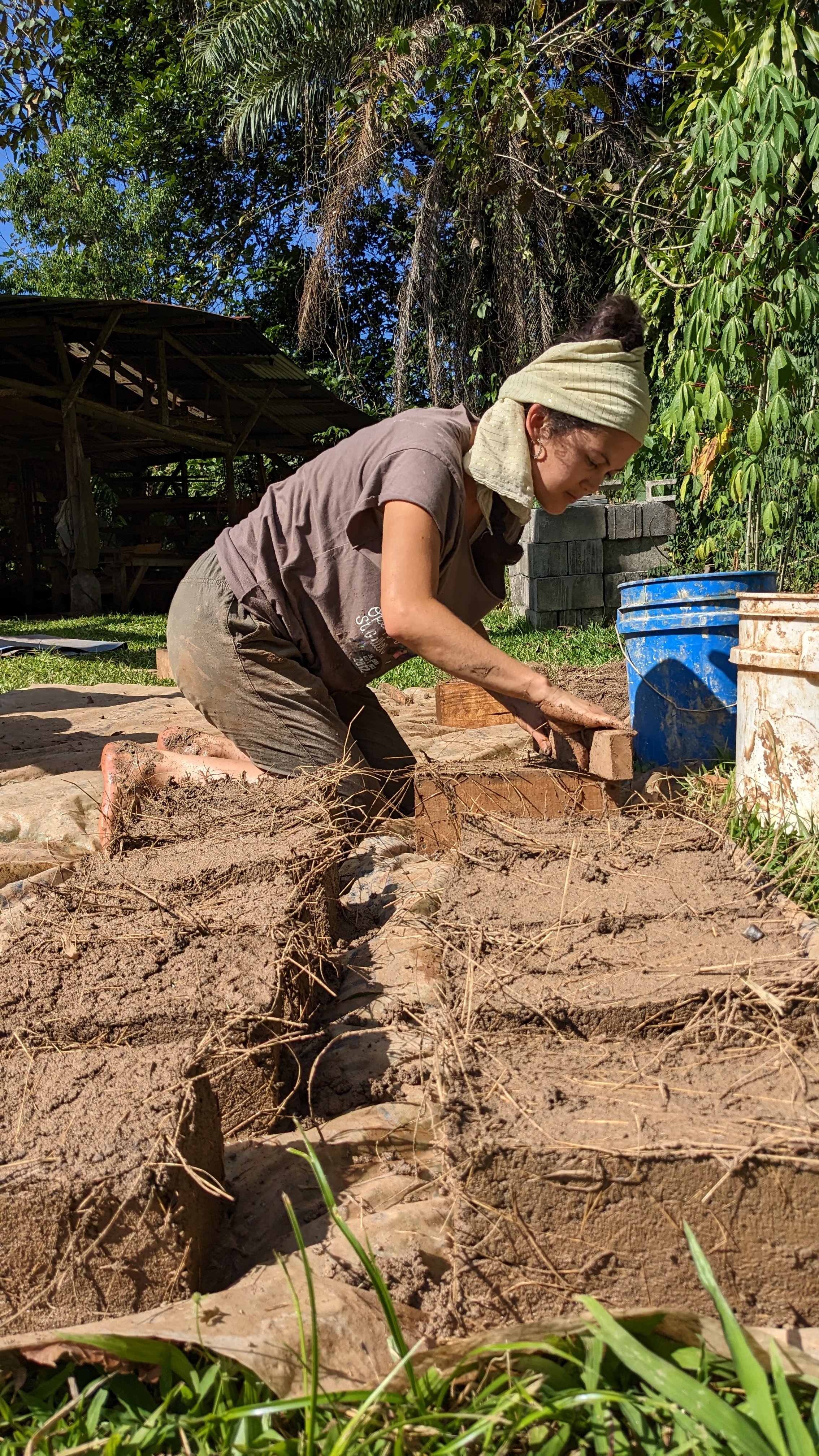
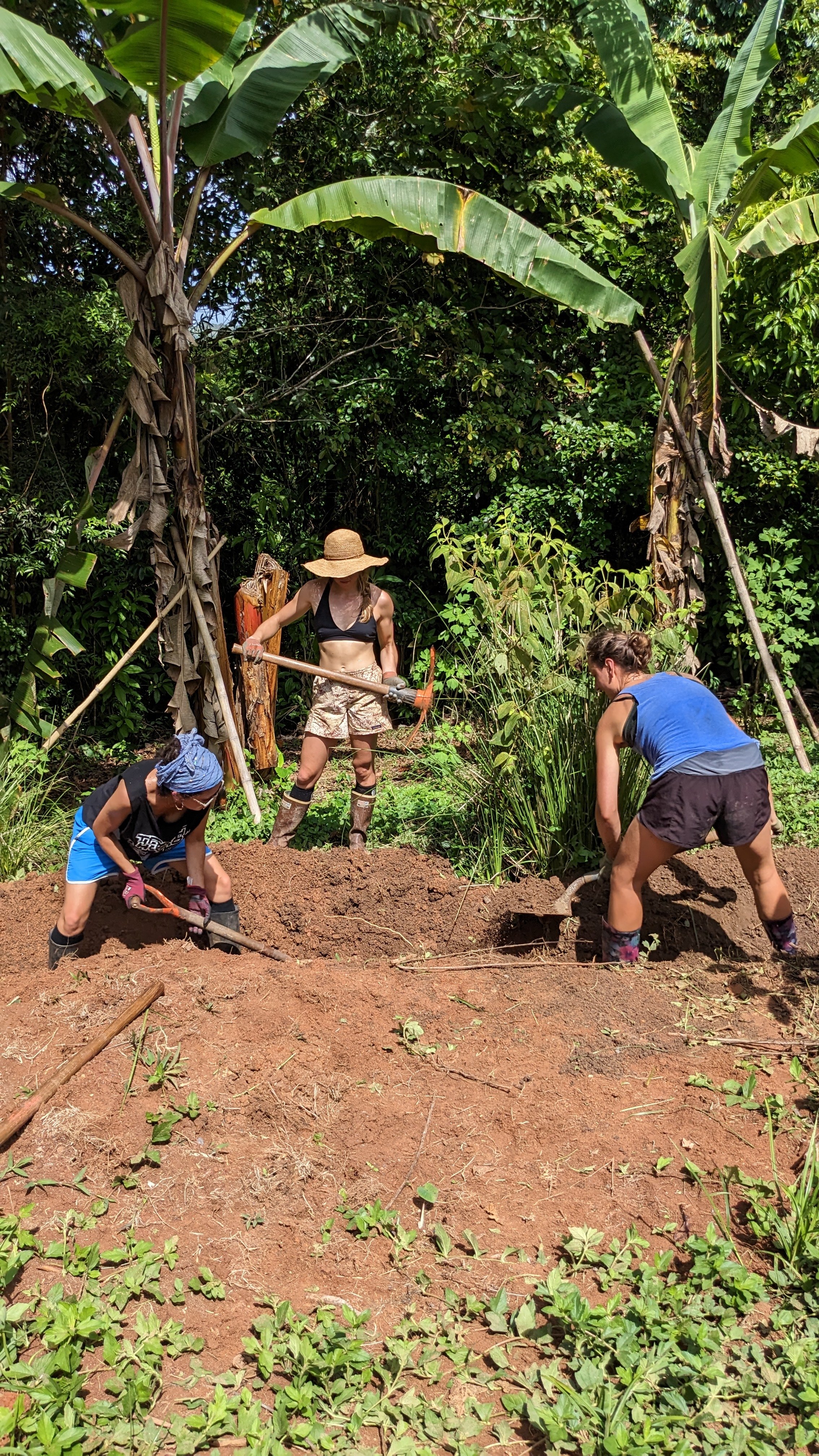
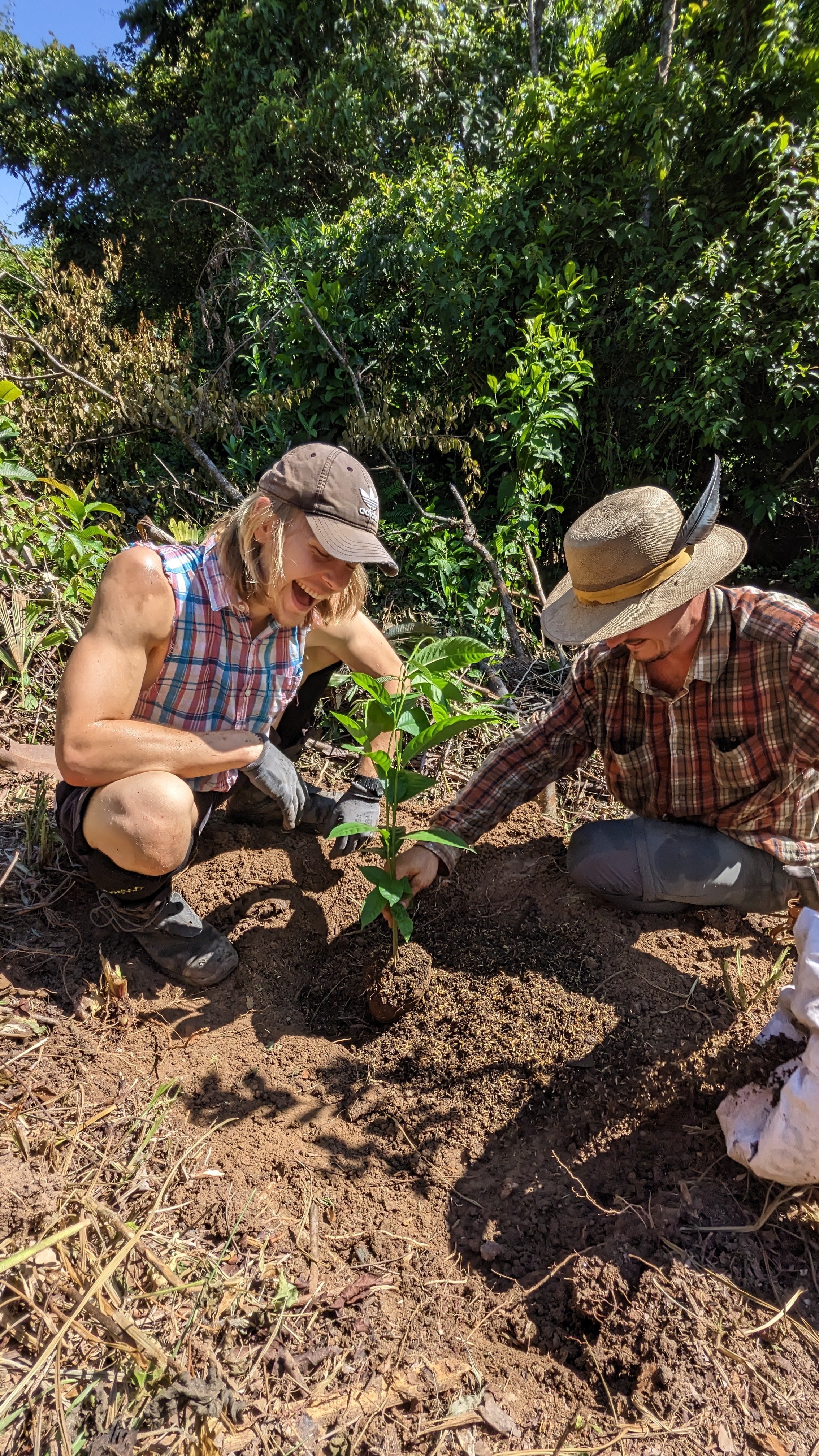
Perhaps you can start by growing some herbs or veggies in your own backyard or by finding a farmer's market to visit each week. How about hosting a monthly dinner with your neighbours and inviting everyone to bring a homemade dish? Which local businesses in your city can you become a patron of?
Maybe you are already living on a piece of land you'd like to develop into a community project. There could be a nearby seed saving bank to help you get started on growing heirloom varieties of vegetables or neighbours to borrow tools from and donate building materials. Often times there are school groups looking for volunteer opportunities and gardening clubs who have years worth of knowledge to share. The farmers in your area will also be a valuable resource to connect with, having insight into growing seasons and weather patterns. If you are looking to raise animals, they may be willing to help you get started and even sell animals to you.
Permaculture is all about creating a thriving and regenerative world for us to live in and enjoy. We can use smart and slow solutions right where we are to improve the way we meet our needs and the needs of others.
As I spend another beautiful day at Rancho Mastatal I am filled with gratitude to be able to learn these lessons in the heart of a thriving community. With each meal, every visit to the garden and orchardsand spending time in structures that have been lovingly made from the land, I realize how this interwoven life has enriched me and changed the way I will live from now on.

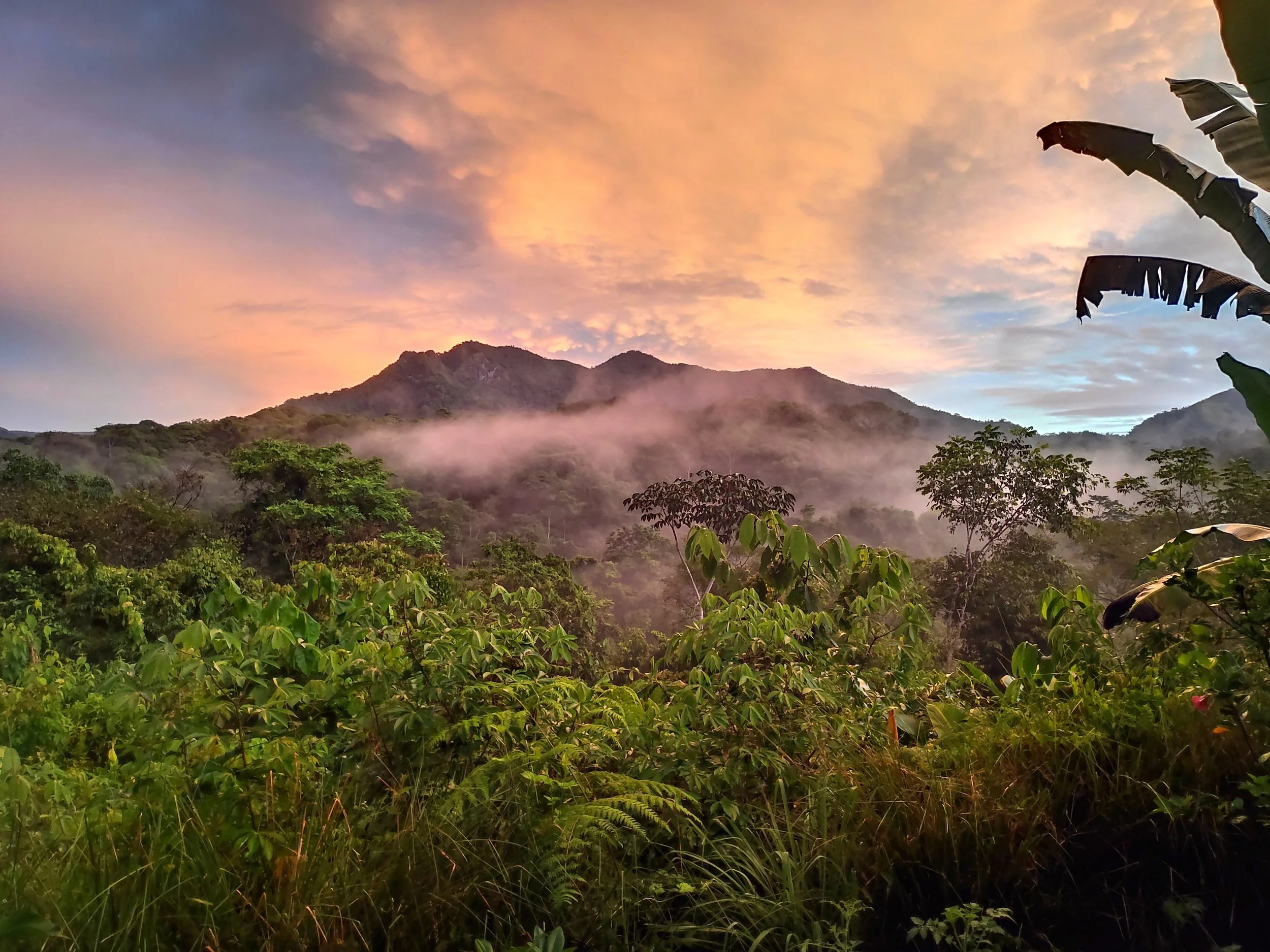
If You Practice Yoga, Practice Permaculture
Yoga. Permaculture. Two seemingly disparate systems of knowledge and practices. What does a morning vinyasa flow class have to do with a plant guild?
By 2022 apprentice Lucas
Yoga.* Permaculture. Two seemingly disparate systems of knowledge and practices. What does a morning vinyasa flow class have to do with a plant guild? What does a contour line have to do with downward facing dog? Sit back, find your beginner’s mind, and read on.
Here are 5 reasons to practice both yoga and permaculture:

#1 Ahimsa and permaculture ethics
Ahimsa is the first yama (observance) of yoga ethics. Ahimsa is non-violence, or translated affirmatively, it is compassionate living and celebrating the inherent sacredness of all life.
The three ethics of permaculture are earth care, people care, and fair share; there’s also arguably a fourth - transition.
Earth and human care are outward expressions of ahimsa. This is what grounds a skillful permaculturist AND a skillful yogi aspirant. An active practice of love is caring for the earth and caring for each other. All of permaculture and yoga is built on this.

#2 Prana and prosperity
Skillful permaculture yields prosperity and abundance of: food, fuel, diversity, resilience, and interconnection. By harnessing natural forces and energy (prana) like rainfall and sunlight, permaculture produces more life-serving outputs like food or wildlife habitat, with less energy invested.
By working with our breath in yoga, we cultivate prana, mastering our life force from within. This yields more steadiness and ease even in challenging physical movements, poses, or expressions. Many yoga sequences are based off of optimally activating the nadis (energy channels) in the body to rebalance and revitalize us. We hold downward dog after opening our hearts in cobra. On a landscape, we plant vegetation on contour to catch and store water and minimize erosion.
With permaculture, we breathe life into a landscape, channeling prana along the nadis, and the result is prosperity.

#3 Observe and interact
Observe and interact is the first principle of the permaculture design methodology.
When observing nature and the land from a permaculture paradigm, I notice how much sunlight a particular area gets, what the microclimate is, the qualities of the soil, and the wildlife present. I devote especially close attention to an orchard slope and make a mental note of which plants need pruning and which need more support. I prune, I apply some nitrogen rich compost, and I come back in a few days to observe again. I learn from my observations and I learn from my actions.
Observation is a cornerstone of yoga. We observe our breath. We observe our body. We bring conscious attention to our thoughts and allow them to pass through our awareness like leaves floating down a river. By observing closely we build our awareness.
We then engage the breath, mind, and body in various exercises and movements. The interactions lead to new observations in perfect interdependent co-arising. We feel greater well-being, samadhi, or connection to the divine.

#4 Sangha and community
Well-being is supported in community (sangha). In spite of a toxic dominant culture that tries its best to separate us and 2+ years of the covid experience, people found ways to connect and continue to create community. Yoga centers offered classes online, outdoors, or utilized other larger community spaces to accommodate mats being farther apart. The act of practicing together creates bonds between all beings present. The possibility of harmony emerges.
Mutual support is an essential aspect of successful permaculture communities and landscapes. From a permaculture perspective, we create the conditions needed for mutual support. We create a greywater system to disperse water to plants that need the water, plants who then filter the water to be clean enough to continue on in the water cycle. We create a salt-water brine to submerge green papaya in order to support the growth of Lactobacillus bacteria, who then ferment our raw papaya into tasty kimchi that improves the fortitude of our gut microbiome. We exist on this earth in a community of life.
Inclusive yoga spaces where people come together to practice creates communities of mutual support just like a plant guild of wild hops (nitrogen fixer and mulch), caña india (contour stabilizer), vetiver (erosion control), and pineapple (food crop). Thich Nhat Hahn said that the next Buddha will be a Sangha, a community. Perhaps that is a yoga community, or the permaculture community, or a synthesis of many communities.

#5 Skill in action
Yoga is skill in action. Permaculture is skill in action. Yoga is reunion. Permaculture is reunion in this 3D material reality.
What does social and environmental justice look like? What does healing look like? What does a healthy community and landscape look like? Drab concrete, hazy air, industrially processed food, and the pounding sound of heavy machinery? Or green spaces, fresh air, abundant fruit hanging off trees, and the song of birds and lively human conversation?
Both permaculture and yoga reckon with cultural appropriation, privilege, and the intersectional systemic injustice of our day. Both are attempting to bring forth ancient wisdom that differs from current societal norms. Both have immense potential to heal: individuals, communities, and the biosphere. Both are vehicles of transformation.
Stale, sterilized yoga practice in commercialized studios of the capitalistic west is not enough. Reunite with the divine AND local water, food, energy, and educational sovereignty. Activate your chakras AND your connection to the community of life. Put your head in the clouds AND your hands in the earth.
If you practice yoga, practice permaculture
All the “reasons” above are really all the same. A personal yoga practice can feed and nourish oneself to devote even greater energy into permaculture practices out in the world. An applied permaculture approach to one’s home and community creates opportunities for healing out in the world. The co-founder of the yoga studio I completed my yoga teacher training at often speaks about how important it is to take our yoga practice with us off of the mat. Bringing yoga into our everyday lives. I don’t know of a better systemized way to do that than through permaculture. If you practice yoga, practice permaculture.

Sources and notes:
1. Bhagavad-Gita
2. Skill in Action (Michelle Cassandra Johnson)
*Yoga means many things to many people. The yoga I’m writing about is the yoga I practice and study. Mostly Hatha-Raja yoga, with lineage through Lindsay and Bart of Global Breath in Durham, NC and their teacher Dharma Mittra in NYC
Want to Learn More About Permaculture?
Join us for one of our yearly Permaculture Design Certifications.
Check Out these past blog articles about permaculture
Why the World Would be a Better Place if Everyone Took a Permaculture Design Certification
Why you Should Take a Permaculture Design Certification course at Rancho Mastatal, Costa Rica
The Problem with Permaculture – Understanding Elements and Functions

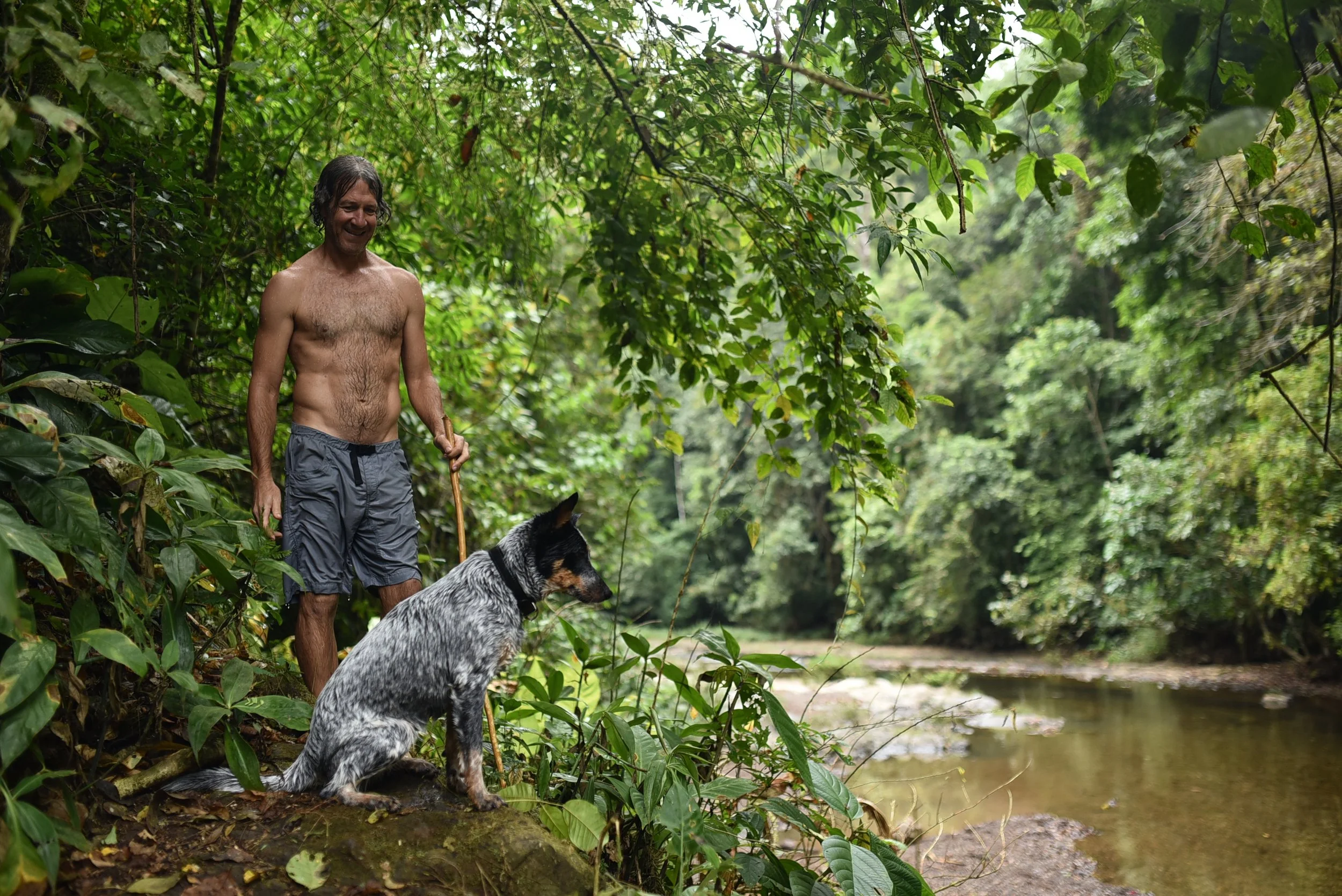
Permaculture Design & The Importance of Recreation and Team-Oriented Thinking
Once you begin to think about it, the way we spend our “free time” will define the sustainability of the entire system.
By 2022 Apprentice AJ Nolan

Playing volleyball down at the local field. All ages welcome!
Permaculture thinking moves us towards finding solutions that can serve multiple functions. This can be known as stacking functions with the goal to develop more “free time”. Simply put and maybe more traditionally put, “killing two birds with one stone”. How you spend that free time is something that really gets very little attention in the permaculture community and one that I am particularly interested in. Once you begin to think about it, the way we spend our “free time” will define the sustainability of the entire system. If we choose to pack in more projects and more tasks, in the short term we may benefit from our added productivity, but is this sustainable in the long term? In this article I am going to talk about how we design our lives using permaculture based thinking to create sustainable patterns for not just our farm but for our lives. Bill Mollinson once asked, “How can we maximize hammock time?”. Whilst I agree with the sentiment, I prefer to run around in my free time!
We aim to create balance between the needs of the farm (which has endless lists of projects that could be done) and the needs of us as individuals to relax, recreate, unwind and decompress. The benefit of playing team sports together helps build team morale, a sense of togetherness and comradery that is vitally important to the fluid functioning of our community.
Think back to your childhood days. What were you spending most of your time doing? If you said playing video games, I can’t relate, but if you responded with getting dirty and running around outside, I recommend you keep reading.
The first day I arrived at the Ranch for my year-long apprenticeship, everyone was involved in a heated game of volleyball. I joined in and after brief introductions, I shared the field with myriad new faces, and we worked together toward a common goal for the next hour. I couldn’t have asked for a better initiation into Ranch life than that first volleyball game.
As a child, playing outside is instinctive and it’s how we begin to understand the physics of the natural world. In school there are scheduled times to play outside. Where I’m from, it’s called recess. When I was growing up, we were given three different times throughout the day to release our pent-up energy and run rampant through the school yard. As I got older and school years passed, the allotted recess time slowly disappeared and was replaced with longer class times.

Many community members take daily trips to our waterfall
Recreation is an important aspect of life that we begin to lose as we age. It’s the hardest part of life to hold onto because it’s no longer allotted for us. Western society has deemed it unimportant and prioritizes work and time spent at a desk. Here at the Ranch, we have designed in ample opportunities to recreate. Pitching in to clean up brunch, taking a trip to the waterfall, practicing yoga, and reading a good book are all forms of recreation. We have scheduled in plenty of downtime and we have made a conscious decision to start the work day early in order to end our work day earlier to allow more time for afternoon team recreation. The inspiration for this blog post comes from what I like to call 16:00 Mass (a.k.a sports time).
Here at the Ranch we schedule our free time. That’s how serious we are about it. We are currently in the dry season, so the “cancha” (sports field) gets a lot of use by the Mastatal community this time of year. Every town in Costa Rica is given a church, an elementary school, a community center, and a sports field. Our main forms of team recreation are frisbee and volleyball. Every day I trot down to the field at 15:50, tired from a full workday at the Ranch. I’ve got a frisbee, volleyball, and a bunch of bright orange cones in my hand. As I step out onto the field, I look at everyone’s tired eyes and I smile because I know that it’s all about to change. We split up into teams and the game begins. I begin to move into my body and out of my head. Before I’m aware of my actions, I stop to catch my breath and realize how much energy I have. I sweat not only from running around but from the intensity of the game. Coupled with teamwork, this form of exercise alters my thought pattern and I find myself in a state of euphoria and limitless energy. For the next hour I’m on Cloud 9 and I don’t want the excitement to end. When the game does end, my bare feet thank me for stopping and I find myself in high spirits with an overwhelming feeling of accomplishment and grit. Everyone is talking of food now and my stomach rumbles in anticipation for a Ranch dinner.
I’ve always placed great importance on exercise in my life, but I mainly participated in individual sports like swimming or tennis. Working in teams at the Ranch is paramount to our success here and it’s no different on the field. Playing a team sport changes my mood and puts me in a flow state. No longer am I thinking of the past or the future. I am right there on the field in the present moment. If my mind strays away, my teammates are sure to let me know. I can no longer only think of myself - I must take other people’s needs and wants into account. Playing a team sport necessitates quick thinking and sound decision making. These qualities allow for a dynamic community and encourages the development of well-rounded individuals. Whenever I’m having an off day, I feel a sense of balance and grounding after running around on the field with my peers.
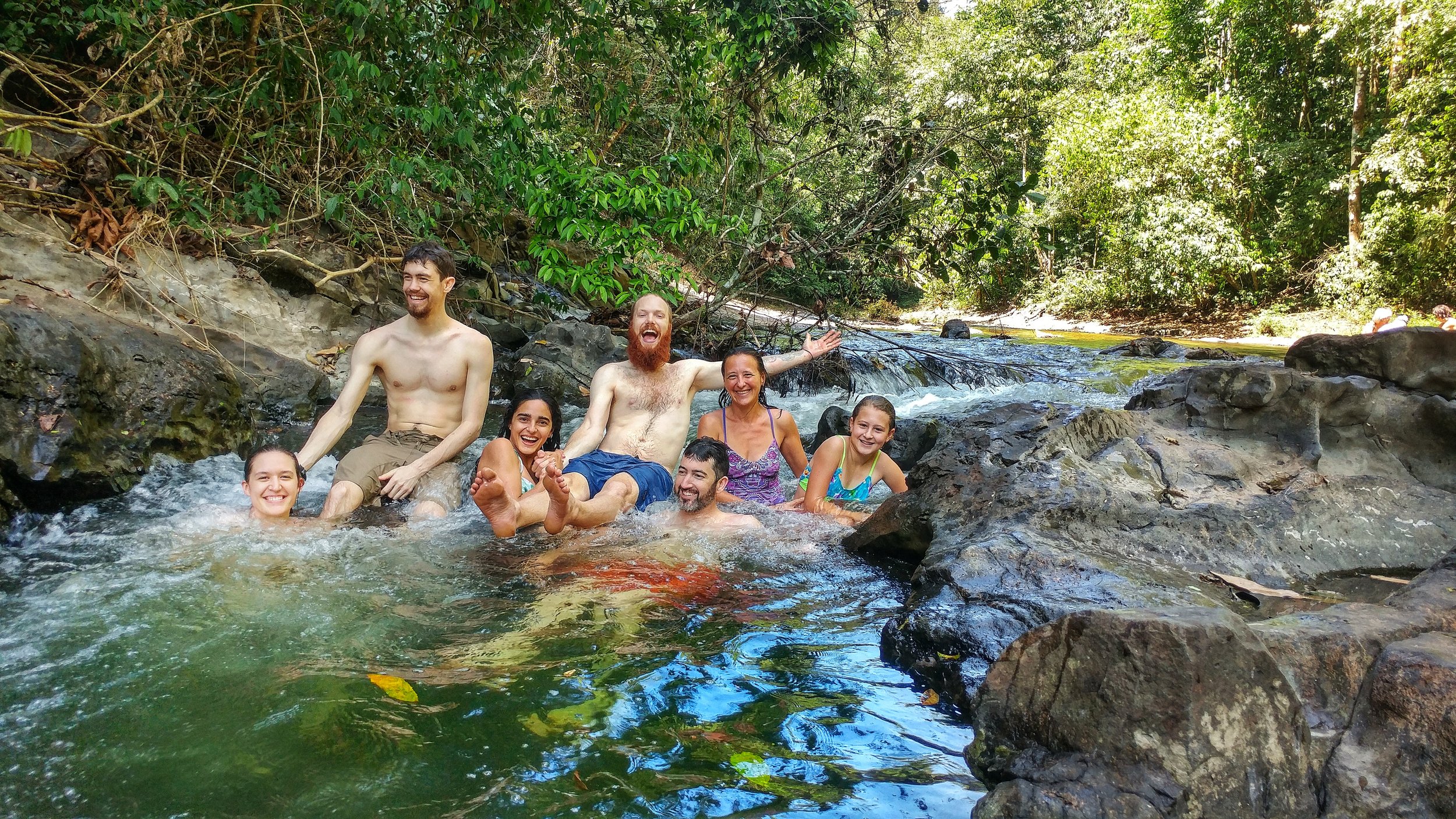
Enjoying the refreshing swims in the river
I am extremely lucky to be living in a community that prioritizes recreation and down-time. The world would be a much happier place if a higher value was placed on these activities. It’s a privilege to have free-time and I encourage others to do the same. Play outside with your kids, join a local soccer league, take a yoga class, or pick up that book you’ve been wanting to read forever. Whatever your preferred form of recreation is, it will dramatically alter your mental state and contribute to your happiness and overall well-being.
One thing that has been learnt over the years at the Ranch though, is that recreation time must be planned in. If we leave it to chance it becomes difficult for us to find space for it with all the other tasks and activities going on. Although Permaculture Design tends to focus on the design of your land based project, food forest or garden systems, I think it is also very important to place a large emphasis on planning our social lives, activities and recreation times. Collectively we have found that just like planning a garden and selecting the best place to plant your favourite perennial salad crop, it is vitally important to plan your daily activities and make sure to plan in recreation time.
How you choose to spend your recreation time is up to you but if you need me, I’ll be down at the “cancha”.
Other Community and Permaculture Related Blogs
How to Run a Permaculture Internship
Enriching Community Soil: 5 Simple Strategies that Support Sustainable Relationships

View of the sports field and La Cangreja National Park

Enriching Community Soil: 5 Simple Strategies That Support Sustainable Relationships
"Sustainable community must be based on sustainable relationships- relationships that give more than they take- that nourish, enliven & inspire us."
By Brittany Bares, Intern 2020
"Sustainable community must be based on sustainable relationships- relationships that give more than they take- that nourish, enliven & inspire us." Larry Kaplowitz, in "Creating a Life Together: Practical Tools to Grow Ecovillages and Intentional Communities".

Taking time to enjoy each others company and make new connections
At the beginning of August, four interns, myself included, arrived at Rancho Mastatal, bubbling with anticipation and wonder. What would we be learning? Who were the people living here? What was the overall "vibe”? With a background in social work, I arrived particularly curious about how this unique group of people related to one another, as well what invisible structures were in place, if any, that supported sustainable relationships.
With a few weeks of experience at the Ranch, I have observed several simple strategies that support sustainable relationships and are both: 1) being taught and 2) being practiced in real time by community members.
The following 5 strategies are a few of the ways Rancho Mastatal supports sustainable relationships and practice social permaculture. Following each simple strategy is a recommendation for how you too can create sustainable relationships within any community you are a part of, be it family, work or any other group.

Community activities to create trust and bonding
1. Share Responsibilities
What The Ranch Does
The community members of the Ranch share daily responsibilities, called “community contribution skills”, ranging from the daily care of the Biodigestor to making the water kefir drinks. Every month, community members rotate from one skill to the next. As well, community members share the responsibility of daily cooking and cleaning by rotating through a weekly schedule.
What You Can Do
In any group you are a part of, begin by creating a list of daily/weekly tasks that, however mundane, contribute to the order, operation & cleanliness of the shared space. Make agreements on how the tasks are to be completed and then, write the expectations, as well as who is responsible for what, in a place that is visible to all members. Assign each person a task and rotate through the tasks on a weekly or monthly basis.
How does this enrich community soil?
Sharing responsibilities saves individual time, while contributing to the community in a way that is beneficial for all. As well, it increases the ownership and value each community member has for the shared space and resources they use.
2. Check-Ins

We hold all our communal meetings in this circular, earthen space called the Ceiba Lounge
What The Ranch Does
Ranch members meet for a brief meeting everyday to review the daily schedule. Once per week, the core-team, apprentices and interns meet in seperate groups to discuss a variety of topics, ranging from personal challenges to project planning. Then, once per week, all community members meet in a "community check-in", where members have the opportunity to share highs and lows, discuss "square items'' and set intentions.
What You Can Do
Similar practices can be implemented at home or in the office. If you choose to implement community check-ins, have specific boundaries that will create a safe and meaningful space for people to share honestly and openly. These boundaries may include: 1) No obligation to share- a member can “pass” 2) No one can interrupt the speaker, respond directly or give any advice 3) Set a time limit for each share (usually 5-10 minutes max). *the intent of each check-in should guide the boundaries of the meeting.
How does this enrich community soil?
Check-ins help to keep everyone organized and up-to-date on information. They also help to reduce conflict among members because when folks have a safe space to share their values and feelings, potential conflict can be mitigated. Check-ins are a space to share openly and vulnerably, as well as a space to practice active listening and empathy. This, in turn, can create authentic connection and compassionate understanding, which are essential ingredients for sustainable relationships.
3. Play Together

Communal yoga sessions
What The Ranch Does
The days at the Ranch can be long and labor intensive. The Ranch does a beautiful job of balancing long work days with several opportunities to play! Whether it is volleyball, frisbee, playing music, salsa dance nights, storytelling, movie nights, yoga classes or card games, community members at the Ranch love to play!
What You Can Do
At home, implement a game night or schedule family hikes or bike rides. At work, organize a volleyball or softball league or something more simple, like trivia night or board-game lunches.
How does this enrich community soil?
Life can become serious quickly. With work, daily responsibilities, and other duties, it is easy to get trapped in the daily grind. When we actively participate in play, we make space for joy and fun. If you get stuck in " I don't know what to play", simply remember how you used to have fun as a child and do that!
4. Offer Daily Gratitude
What The Ranch Does
Every night, before eating dinner, community members take a few moments to offer gratitude for specific people or events that happened during the day. The expressions of gratitude range from thanking someone for teaching a lesson to thanking the Earth for the abundance of food provided.
What You Can Do
Whether at home or at work, you can implement the same practice by simply providing space before a shared meal to express any daily gratitudes. Another way would be to have a gratitude jar, where anyone can write down what they are grateful for, place it in the jar and then, at a specific time during the day or week, read the gratitudes aloud as a community.
How does this enrich community soil?
Actively giving gratitude helps us shift our mind from the things that have gone wrong or the challenges we have had, to the things that went right, while acknowledging the many things we all have to be grateful for. A simple shift in thinking can have a profound effect on our well being, while enlivening our relationships.
5. Frameworks for Communication & Conflict Management
What The Ranch Does
Whenever working or living with other humans, there is bound to be conflict. Here at the Ranch, members are provided basic training in conflict resolution and effective communication frameworks. Specifically, they practice compassionate communication methods as outlined in NonViolent Communication by Marshall Rosenberg.
What You Can Do
READ NONVIOLENT COMMUNICATION! It will change your life and how you have relationships with others. The framework for communicating and resolving conflict are simple, pragmatic and have been found to be effective by millions of people, in various types of organizations and settings.
How does this enrich community soil?
How we communicate, i.e. the words we use and how we say them, greatly impact our relationships. Many of us were never taught how to communicate to connect or how to resolve conflict in a meaningful way. If there is only one thing you can do to create more sustainable relationships, learn how to compassionately communicate, as outlined in the book Nonviolent Communication by Marshall Rosenberg.

The more sustainable our relationships are, the more purpose and meaning each individual will be able to experience. Healthy communities inspire growth and offer a sense of belonging to its members. They are safe places to learn, explore, inquire and connect to our truest selves. If you are looking for ways to enrich the soil of your own community, be it at home or work, keep it simple with these 5 strategies: share responsibilities, check-in, communicate compassionately, say thanks and PLAY!
Learn More
Want to experience communal living and put these social permaculture skills into practice? Consider applying for either our 2 month internship or year long apprenticeship.
Categories
Topics
- Agriculture 6
- Agroforestry 21
- Animals 2
- Apprenticeship 19
- Appropriate Technology 6
- Backpacking 1
- Bananas 1
- Basic Pantry 4
- Biochar 1
- Books 3
- Build Your Own Home 1
- Central America 5
- Chiles 1
- Cinnamon 1
- Clay Carving 1
- Climate 2
- Climate Change 1
- Cob oven 1
- Communication 5
- Community 24
- Compost 2
- Composting Toilets 2
- Condiments 1
- Conservation 2
- Cooking 4
- Costa Rica 18
- Design 10
- Earthen Construction 10
- Eat Local 2
- Ecohome 1
- Education 9
- Environment 3
- Ethics 4
- Farm to Table 12
- Fasting 1
- Fermentation 14
- Food 22
- Food Choices 8
- Food Forest 8
- Food Processing 15
- Food Systems 12
- Gap Year 1
- Gardening 5
- Ginger Beer 1
- Harvest 2
- Health 12
- Healthy living 5
- Homemade 2
- Homestead 8
- Internet 2