

BLOG
Stories, articles, and updates from the Ranch community.
Permaculture Entrepreneurship: Navigating the Path from Student to Professional
After completing a Permaculture Design Course (PDC), natural building workshop, or any other educational opportunities at a place like Rancho Mastatal, many students find themselves wondering how to turn their newfound knowledge and passion into a career. This transition from student to professional is a common challenge in the permaculture world.
By Jason Thomas
The voice behind the podcast Regeneration Nation Costa Rica
After completing a Permaculture Design Course (PDC), natural building workshop, or any other educational opportunities at a place like Rancho Mastatal, many students find themselves wondering how to turn their newfound knowledge and passion into a career. This transition from student to professional is a common challenge in the permaculture world.
It’s not surprising, considering that most standard education programs don’t teach entrepreneurship, and new students of the trade often feel like they lack sufficient experience to charge for their services.

Common Challenges Faced by Permaculture and Alternative Solutions Students
I’ve interviewed dozens of permaculture professionals and students wishing to make their mark, and I’ve found some common hurdles that seem to hold people back.
Some of those obstacles include:
Lack of business education and experience
Little understanding of how to monetize their skills
Imposter syndrome
Limited support network
Balancing ideals with practicality
Many potential clients don’t know what permaculture or these sustainable solutions are, and many regenerative entrepreneurs don’t understand how their ideal clients are thinking about their needs from their perspective.
Insight Tool: Identify Your Hurdles
Take a moment to reflect on your own journey. What are some challenges you're currently facing in turning your ideas into a profession? Write them down and consider how they align with or differ from the common challenges mentioned above.
The Gap Between Passion and Profession:
This gap isn't unique to permaculture. Many individuals who care about helping humanity turn its trajectory around face a similar divide between academic knowledge and professional application.
In permaculture, this gap is often widened by the holistic, systems-thinking approach that doesn't always align neatly with traditional business models but does exceedingly well when harnessing traditional tactics, repurposed in a holistic system approach.
Tim O’Hara from Rancho Mastatal shared with me in one of our conversations that he felt like they were chasing their tails for several years as they tried to figure out how to make it all work. It’s a similar story for many people who embark on a project like this.
… but that’s not the only way to go about it.

In today’s age, it’s easier than ever to learn from wisdom keepers like this and model from the solutions they’ve arrived to through their mistakes. It IS NOT a wheel worth recreating. We have work to do and the faster we can get our services out to the world, the better off we’re all going to be.
The trick is not to do it so fast that you skip the foundational steps of contemplative design.
So, from a design perspective, let’s look at some solutions we can embrace to bridge this gap between passion and professional application.
Key Business Skills Needed to Bridge the GaP
Business planning:
Overcome your unclear direction and orientation to business by looking at your business idea as if it were pasture land that you are about to implement into a multi-yielding homestead.
Taking the time to design your enterprise will earn you an intimate relationship with the path ahead and the confidence to walk it.

Marketing and communication:
Conveying the value of permaculture and other sustainable solutions to potential clients can be tricky because they lack the vocabulary and point of reference for what it means, let alone how or why it provides any unique benefits to them.
In marketing and communication, describe the benefits from the prospect’s point of view.
Financial management:
Understanding budgeting, pricing, and sustainable revenue streams may not sound sexy as you’re getting started, but careful documentation will come in handy when you revisit the feedback loop and want to understand what worked well, what didn’t, and how to do it better next time.
Finances are only one part of the puzzle, but trying to skip it will leave you hanging with gaps in your picture.
Legal and administrative skills:
Navigating regulations, contracts, and business structures is another aspect that many new entrepreneurs would prefer to skip.
However, if you want to practice your trade as anything more than a hobby, you might as well start with the end in mind and get some of those things squared away as soon as they are relevant.
Networking and collaboration:
Building a supportive community and finding complementary partners is the practice that will serve all others. We are a culture of people that want to help each other. We need each other! Reach out to other regenerative activators in your area and get to know them.
I even teach people to create a database of these projects and their owners. This could prove to be your business’s most valuable asset.

Insight Tool: Skill Assessment
On a scale of 1-5 (1 being novice, 5 being expert), rate yourself on each of the key business skills mentioned. Which areas do you feel strongest in? Which areas need the most improvement?
Essential Skills and Mindsets to Adapt as a Regenerative Entrepreneur:
As you embark on your journey as an entrepreneur and business operator, you’ll want to cultivate a set of skills and mindsets that support your personal growth and business development.
The following attributes, to the degree they’re cultivated, will help you navigate challenges, recognize and embrace aligned opportunities, and cultivate the confidence to see them through. Let's explore some skills and mindsets worth developing:
Holistic Systems Thinking:
Apply the holistic approach of permaculture to your business. Understand how different aspects of your business interact and support each other. Find common problems people face in your area that have insufficient solutions and find the place where those meet your passions and skill set.
… or desired skill set.
Remember, you’re a student who likes to learn new things. Nothing can hold you back!

Insight Tool: Map Your Business Ecosystem
Sketch a simple mind map, outline, or diagram of your current or planned business idea. Include key elements such as your services, target audience, resources, and potential partners. Draw arrows to show how these elements interact and support each other.
Adaptability to Change:
Be prepared to adjust your strategies as you learn and grow. As Tim has mentioned to me, even they, after all these years, continue to develop and refine policies as they learn and grow. Their documents are regularly being edited and revised by new people with fresh perspectives.
It’s a regular, intentionally planned practice.
Patience and Persistence:
Building a successful business takes time. Rancho Mastatal, like most projects of this nature, didn’t have a huge budget to just set up shop and run massive retreats. Instead, they took a slow, iterative approach, using the resources they had on hand, which included the support of their neighbors, and slowly, persistently, grew as resources and wisdom allowed.
Creating a phase-planned design for your new enterprise to spread your ambitions out over the next 3-5 years is a great way to resist distracting impulses and stay on track.

Lifelong Learning:
Never stop learning. Stay open to new ideas and keep developing your skills. This is the habit that keeps on giving. However, don’t just study information focused on your trade.
Round out your education so that you can understand the macro patterns of the human condition, market patterns, and personal development, as well as the micro details of your business operations.
Community Integration:
Understand the importance of community integration. Of all the community projects and education centers I’ve researched around Costa Rica, Rancho Mastatal is one of the shining examples of community integration and worth modeling at any opportunity.
Community integration is an extremely important part of our work. It helps us to integrate in a way that allows us to be accepted by those we wish to influence and serve.
Insight Tool: Community Asset Mapping
List 5-10 local business owners, organizations, or other leaders in your community that could potentially support or collaborate with your efforts. How might you engage with each of them?
Innovative Problem-Solving:
Use holistic thinking to find innovative solutions to your business challenges. Permaculture teaches us that each problem holds a gem of solution just waiting to be discovered. By carefully researching and analyzing your options and approach, you can see these pitfalls before they ever become a problem and design ways to ensure they never will be.
By staying vigilant in your process to find ways you can stack functions in your solutions, your experience operating your business will improve.

Clear & Effective Communication:
Develop the ability to explain what you do and its benefits to a wide range of audiences. While it's always advised to start any product or service creation with a specific client avatar profile in mind to help target your messaging, we’re not just here to get customers. We want to affect change in the world, and that requires speaking other people’s languages.
The best way to do that is to talk to more people about the problems you provide solutions for, but not with an intention to pitch your services. Instead, talk to them with a sense of curiosity and care.
Get to know them and pay attention to the words they use in describing their challenges and perceived options. If you take the time to do this in a systematic way, you’ll develop the vocabulary and sensibility to make the impact you’re hoping for.
How the Permaculture Business Design Course Helps Bridge These Gaps:
The Permaculture Business Design Course is designed to bridge the gap between a passion for making regenerative practices what you do for a living and the business skills needed to make that happen.
It applies the permaculture methodology and principles to design your business like you would a multi-yielding food system or a physical structure made from carefully calculated materials and procedures.
Why would we celebrate those practices on the land and houses, but not our business?
It’s impressive how often we stumble into a business idea, throwing offers out there hoping it will land with someone as we describe OUR favorite features of the service, rather than the benefits THEY want to receive. Business development is too common a reactionary process of figuring out as you go, which is exhilarating in moments, but not an effective way to get off the ground flying.

In this course, you’ll:
Expand your perspective on how to solve common challenges people are actually experiencing so you can find the unique niche that’s perfect for you.
Gain clarity around your unique vision and how it meets the needs of your region to purposefully design a financially regenerative enterprise that people can relate to.
Enhance your professional skill set through training videos, insight tools, worksheets, and other guided exercises.
Proceed through the lessons at your own pace to develop your offer, invisible infrastructure, marketing strategies, and operational procedures through slow and small solutions.
It’s a start-to-finish roadmap for the motivated permaculture entrepreneur, from ideation to implementation.
Insight Tool: Your Next Steps
Based on what you've learned in this post, what are three specific actions you can take in the next month to move closer to your goal of becoming a permaculture professional?
A Little More About Rancho Mastatal's Journey from Vision to Successful Enterprise:
I’ve had the pleasure of hearing Rancho Mastatal's story through my various interviews with Tim and the fortunate opportunity I’ve had to visit on the Ecovillage Tours that we now operate annually.
Each interaction with Tim, Robin, and their team has demonstrated:
Consistency in their intention to integrate and serve with the local community
Persistence in finding solutions when change happens
Adaptability through intentional experimentation
And ongoing education and refinement of their practices.
In an interview we did for the Permaculture Professionals Interview series, Tim shared that, early on, they didn't focus enough on compensating and taking care of the people that were making it possible. And that is unfortunately common amidst foreigners who buy land are happy to take advantage of the poverty wages many rural farm-hands are willing to work for.
Many of us have that wake-up call at some point, and for them it led to significant changes in their approach.
They implemented changes like:
Formalizing their business structure
Creating clear agreements and expectations
Developing a core team with defined roles
Implementing financial tools for better decision-making
Tim shared that developing more of a structure has helped them feel much more stable and resilient.
Rancho Mastatal's evolution is one of my favorite examples of combining permaculture principles with sound business practices. They've grown from a couple running a farm to an education center offering diverse courses, an apprenticeship program, and strong community integration directly affecting who knows how many hundreds of people each year, and thousands through the lives touched by those who’ve passed through their doors.
In the guest presentation Tim provided for the Community Living Agreements Training, he emphasized the value that clear documentation has brought to their project.
He explained that creating documents outlining standards for:
Sharing communal space
Participation expectations for members and guests
And common operating procedures
They have a library of best practices they can use to inform guests, train staff, and keep their intentions on track over time.
(Image) PBDC Landscape 1.jpg
Are you ready to start to design?
The Permaculture Business Design Course offers the knowledge, tools, and support needed to navigate the journey from permaculture student to professional. It provides practical skills to design a business that's as regenerative and abundant as the ecosystems we aim to protect and regenerate through our work.
Enroll in the course to start designing a business in a way that will earn you experience, confidence, and clear enough vision to motivate people to your cause.
If you like the idea of designing and developing your regenerative enterprise in the company of other dedicated entrepreneurs, I offer a seasonal group program for permaculture-minded professionals looking for support and accountability as they navigate the path ahead. It’s application only and an interview is required to ensure we have a committed group of aligned individuals in the cohort.

Let’s do it together!
To learn more, visit the Permaculture Professionals Program and fill out the application. I’d love to meet you and hear about your ambitions to cultivate a regenerative livelihood.
Remember, as in permaculture design, the key to a successful business is thoughtful planning, diverse strategies, and regular visits to the feedback loop.
However, accountability, coaching, and peer support are powerful amendments worth investing in.
May your dreams to serve through right action flourish!
Jason Thomas is the voice behind the podcast Regeneration Nation Costa Rica, designer and guide for Ecovillage Tours CR, mastermind facilitator for the Community Founders Circle and the Permaculture Professionals Program, and creator of the Permaculture Business Design Course.
With over 20 years practicing both permaculture and entrepreneurship, he bridges these two worlds to empower our next agents of change.

Invisible Structures
Just as strong buildings require a solid foundation to build upon, successful dynamics are also supported by invisible structures, or mutual understanding of needs, roles and beliefs.
By 2024 apprentice Yalan
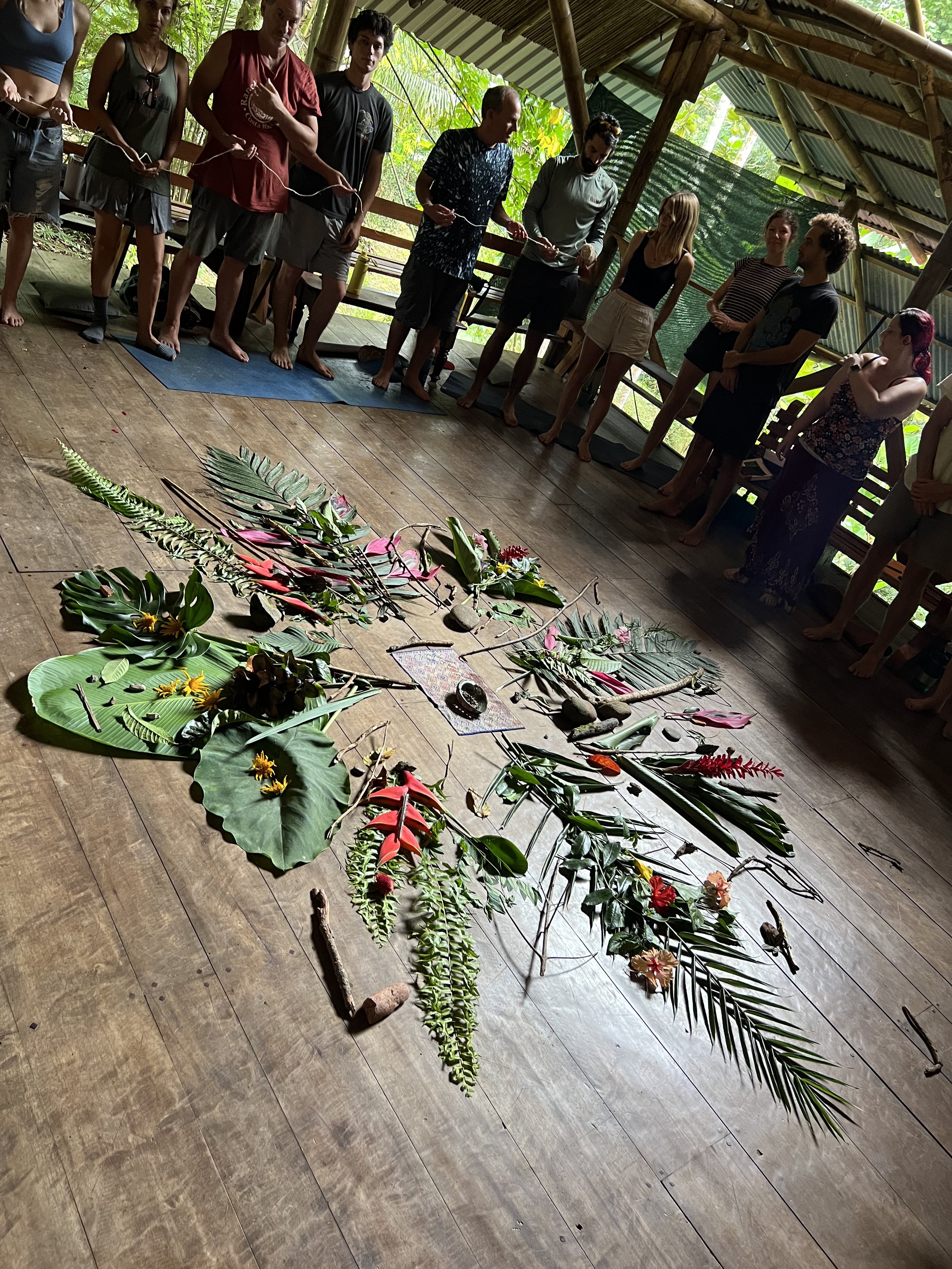
For every building to unfold, a detailed plan must be laid. A build for housing people, is not something we make up along the way. Just as strong buildings require a solid foundation to build upon, successful dynamics are also supported by invisible structures, or mutual understanding of needs, roles and beliefs. Invisible structures are the foundation to any successful team, community, or entity. Without invisible structures, these dynamics can fall into a downward spiral of misunderstandings, expectations and disappointment, as well as miscommunication and misplaced intentions. By being consistent in meetings, transparency, and inclusion, invisible structures have been attributed to the longevity of the Ranch.
Many a time, invisible structures can be assumed or implied. Our needs, roles, and beliefs can be some what difficult to share. Having consistent meetings can give us the space to discuss what we each find important. Life can get busy and the idea of committing to consistent communion whether its daily, weekly, or monthly can feel daunting, especially when its with more than one person.
Setting at least ten minutes aside to reorient and connect with those in your immediate environment not only helps organize the day ahead, but can shift your perspective and even values. For example, everyday at the ranch, the possibility of playing sports is discussed. Now, it’s not everyday that sports are played, however everyday is open for people to get in some cardio as well as participate in team building. If meetings are not established to discuss agenda, needs, etc. any dynamic can lose balance. I recall a community I was a part of where there was a lead who would ramble about what he wanted to see each person contribute individually. Instead of seating us together to express expectations collectively, he would pull us each aside to comment on what he saw our contribution being. This created confusion about our roles amongst each other and our purpose there. Expectations and needs on both sides weren’t expressed clearly, nor did they have the space to be expressed. For a community meeting to be successful, needs and values, are expressed and equally received from all parties.
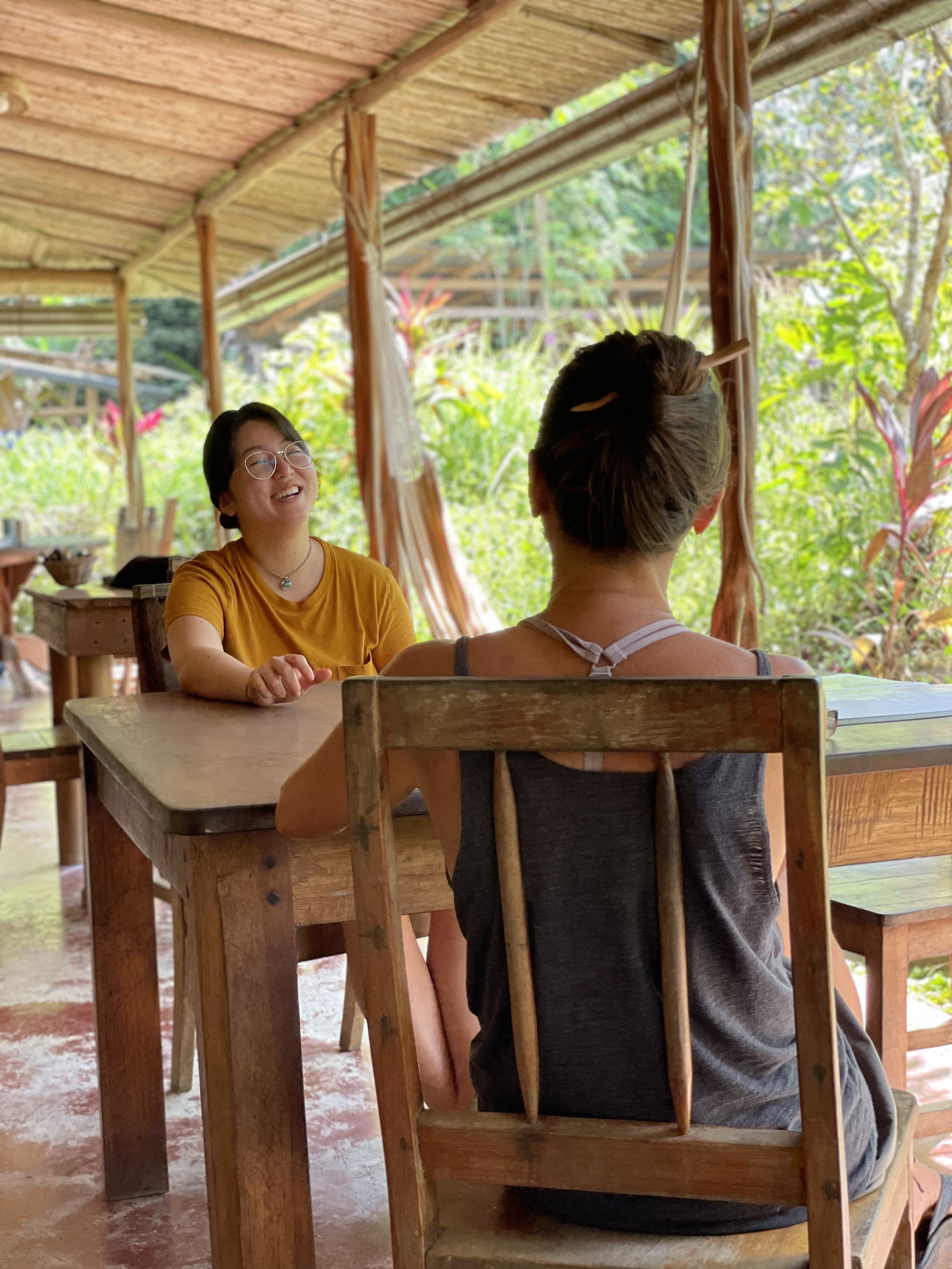
For meetings to be successful, one needs a sense of safety and vulnerability
With these conditions comes transparency, allowing ourselves to be seen and communicating our “internal weather report” allows for others in the community to take initiative. Responding appropriately to a need or role that needs fulfilling. However when being transparent, a level of delegation and discernment must be present to successfully have that need met. Problems are not solved by acting as if they are not there, or by going on about business as usual. Problems are solved by engaging, by observing and interacting with the problem until a solution is met. Again, meetings exist to generate a platform for transparency to exist. We must cultivate space to allow for things to become apparent. For example, if a role is placed on you or there is an expectation you cannot meet, you can suck it up and do your duty, or you can be vulnerable and say, “This does not work with me, are there any other places my energy would be useful?” We want to help one another, we want to play a role in the relieving of each other’s pain. We cannot do this if light is not shed on their struggles. If we cannot share our faults and struggles, we take on more than we can handle and resentment can develop. Allowing ourselves to be transparent with our faults and struggles gives rise to generosity and altruistic action. Once being vulnerable is established as safe, we can then bring people into our lives to be in sync with our rhythm.

From here we move from transparency to inclusion
Not just being open with our lives but actively involving others in our daily experience. By including others into our lives, we learn to delegate the weight we carry. There’s an expression, “many hands make light work.” I recall an open mic I hosted back in Los Angeles. I was transparent in my struggle setting up for the evening, huffing and puffing as I set up lights. Though I felt under pressure, many hands were available to assist me. I was not taking time to assess what was needed of me, so I could not delegate. By not including others in my tasks for the evening, I was suffocating under my own pressure. Needless to say it was a successful evening, however I could have relieved myself of struggle by involving others. My mind could have had more space to enjoy the evening rather than being hyper focused in providing a pleasant experience. While there is a pride to be experienced on the other side of accomplishing a task all on your own, there is a potential in connecting with others that is void when doing so. Expressing oneself as, “I could use ______ right now” or “I am in need of _______ at the moment” or “If you have a moment could you ______?” Are all examples of letting people into our lives. For the sake of connection and relieving our own pressure, let us open up to those in our immediate environment, and include them in our daily experience.
All in all living in community isn’t for everyone, it takes open hearts and open minds to communicate as fluidly as what is needed to live amongst peers. There are infinite ways to live in community and meetings, transparency, and inclusion are just a few examples of what’s needed to build solid invisible structures.
Learn More
Want to learn more about social permaculture, community living, and systems to create a healthy communal environment? Join us for our yearly Permaculture Design Course, where we will experience all this together in a two week, life-changing experience.
Check out these related blogs
Social Permaculture: The Secrets to a Successful Community
Foundations for Success: 10 Considerations to Create a Healthy Project
Enriching Community Soil: 5 Simple Strategies That Support Sustainable Relationships

Enriching Community Soil: 5 Simple Strategies That Support Sustainable Relationships
"Sustainable community must be based on sustainable relationships- relationships that give more than they take- that nourish, enliven & inspire us."
By Brittany Bares, Intern 2020
"Sustainable community must be based on sustainable relationships- relationships that give more than they take- that nourish, enliven & inspire us." Larry Kaplowitz, in "Creating a Life Together: Practical Tools to Grow Ecovillages and Intentional Communities".

Taking time to enjoy each others company and make new connections
At the beginning of August, four interns, myself included, arrived at Rancho Mastatal, bubbling with anticipation and wonder. What would we be learning? Who were the people living here? What was the overall "vibe”? With a background in social work, I arrived particularly curious about how this unique group of people related to one another, as well what invisible structures were in place, if any, that supported sustainable relationships.
With a few weeks of experience at the Ranch, I have observed several simple strategies that support sustainable relationships and are both: 1) being taught and 2) being practiced in real time by community members.
The following 5 strategies are a few of the ways Rancho Mastatal supports sustainable relationships and practice social permaculture. Following each simple strategy is a recommendation for how you too can create sustainable relationships within any community you are a part of, be it family, work or any other group.

Community activities to create trust and bonding
1. Share Responsibilities
What The Ranch Does
The community members of the Ranch share daily responsibilities, called “community contribution skills”, ranging from the daily care of the Biodigestor to making the water kefir drinks. Every month, community members rotate from one skill to the next. As well, community members share the responsibility of daily cooking and cleaning by rotating through a weekly schedule.
What You Can Do
In any group you are a part of, begin by creating a list of daily/weekly tasks that, however mundane, contribute to the order, operation & cleanliness of the shared space. Make agreements on how the tasks are to be completed and then, write the expectations, as well as who is responsible for what, in a place that is visible to all members. Assign each person a task and rotate through the tasks on a weekly or monthly basis.
How does this enrich community soil?
Sharing responsibilities saves individual time, while contributing to the community in a way that is beneficial for all. As well, it increases the ownership and value each community member has for the shared space and resources they use.
2. Check-Ins

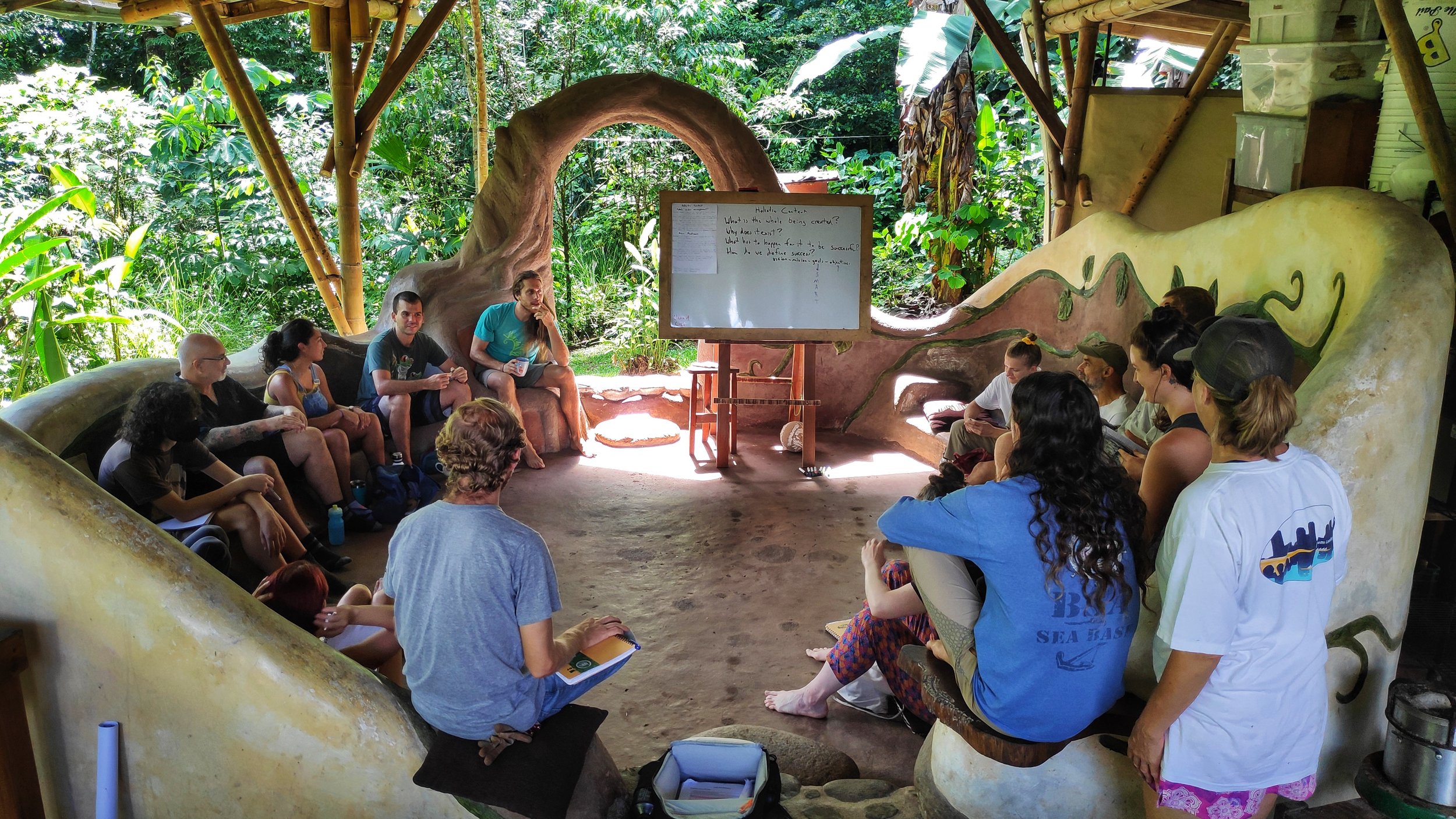
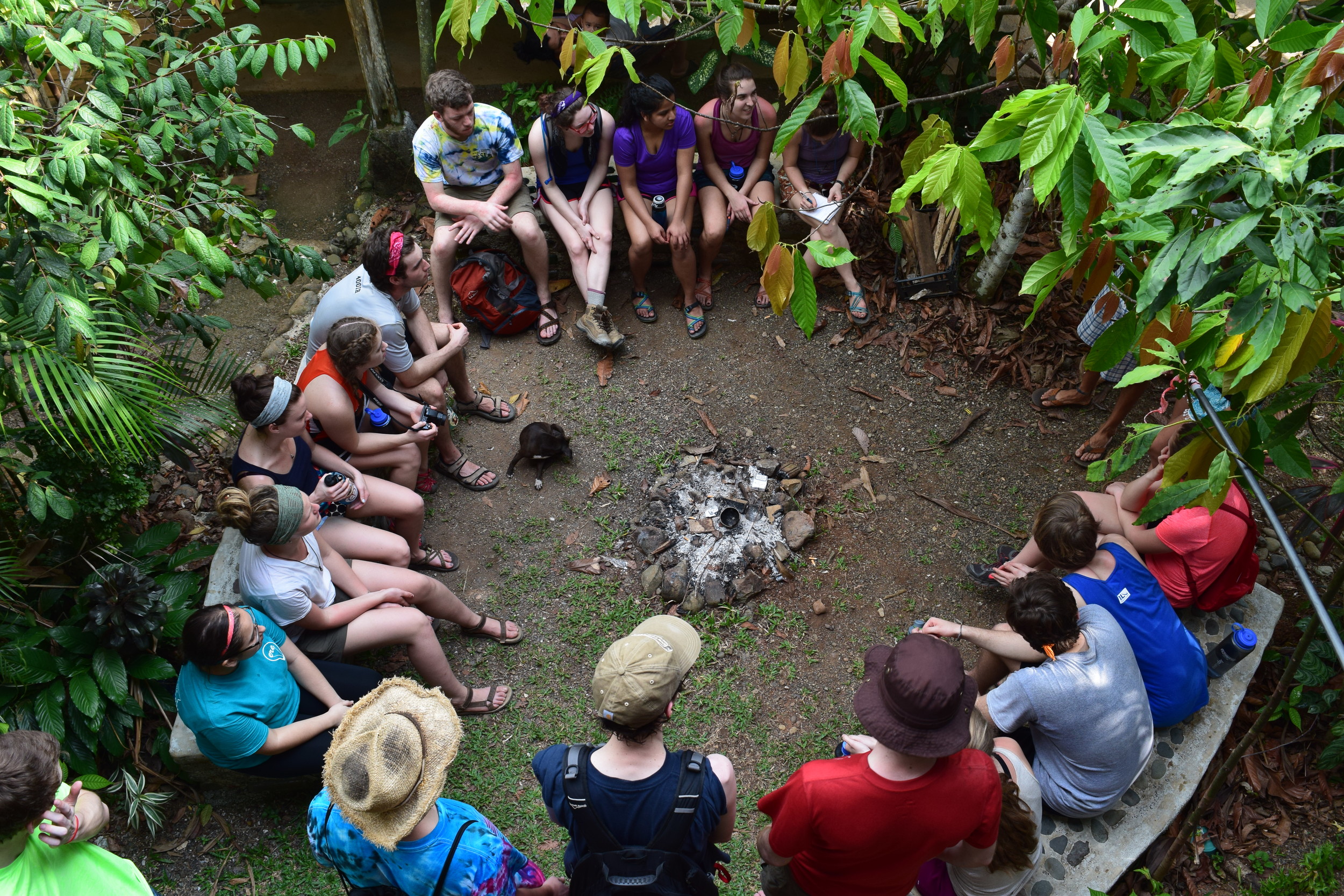
We hold all our communal meetings in this circular, earthen space called the Ceiba Lounge
What The Ranch Does
Ranch members meet for a brief meeting everyday to review the daily schedule. Once per week, the core-team, apprentices and interns meet in seperate groups to discuss a variety of topics, ranging from personal challenges to project planning. Then, once per week, all community members meet in a "community check-in", where members have the opportunity to share highs and lows, discuss "square items'' and set intentions.
What You Can Do
Similar practices can be implemented at home or in the office. If you choose to implement community check-ins, have specific boundaries that will create a safe and meaningful space for people to share honestly and openly. These boundaries may include: 1) No obligation to share- a member can “pass” 2) No one can interrupt the speaker, respond directly or give any advice 3) Set a time limit for each share (usually 5-10 minutes max). *the intent of each check-in should guide the boundaries of the meeting.
How does this enrich community soil?
Check-ins help to keep everyone organized and up-to-date on information. They also help to reduce conflict among members because when folks have a safe space to share their values and feelings, potential conflict can be mitigated. Check-ins are a space to share openly and vulnerably, as well as a space to practice active listening and empathy. This, in turn, can create authentic connection and compassionate understanding, which are essential ingredients for sustainable relationships.
3. Play Together

Communal yoga sessions
What The Ranch Does
The days at the Ranch can be long and labor intensive. The Ranch does a beautiful job of balancing long work days with several opportunities to play! Whether it is volleyball, frisbee, playing music, salsa dance nights, storytelling, movie nights, yoga classes or card games, community members at the Ranch love to play!
What You Can Do
At home, implement a game night or schedule family hikes or bike rides. At work, organize a volleyball or softball league or something more simple, like trivia night or board-game lunches.
How does this enrich community soil?
Life can become serious quickly. With work, daily responsibilities, and other duties, it is easy to get trapped in the daily grind. When we actively participate in play, we make space for joy and fun. If you get stuck in " I don't know what to play", simply remember how you used to have fun as a child and do that!
4. Offer Daily Gratitude
What The Ranch Does
Every night, before eating dinner, community members take a few moments to offer gratitude for specific people or events that happened during the day. The expressions of gratitude range from thanking someone for teaching a lesson to thanking the Earth for the abundance of food provided.
What You Can Do
Whether at home or at work, you can implement the same practice by simply providing space before a shared meal to express any daily gratitudes. Another way would be to have a gratitude jar, where anyone can write down what they are grateful for, place it in the jar and then, at a specific time during the day or week, read the gratitudes aloud as a community.
How does this enrich community soil?
Actively giving gratitude helps us shift our mind from the things that have gone wrong or the challenges we have had, to the things that went right, while acknowledging the many things we all have to be grateful for. A simple shift in thinking can have a profound effect on our well being, while enlivening our relationships.
5. Frameworks for Communication & Conflict Management
What The Ranch Does
Whenever working or living with other humans, there is bound to be conflict. Here at the Ranch, members are provided basic training in conflict resolution and effective communication frameworks. Specifically, they practice compassionate communication methods as outlined in NonViolent Communication by Marshall Rosenberg.
What You Can Do
READ NONVIOLENT COMMUNICATION! It will change your life and how you have relationships with others. The framework for communicating and resolving conflict are simple, pragmatic and have been found to be effective by millions of people, in various types of organizations and settings.
How does this enrich community soil?
How we communicate, i.e. the words we use and how we say them, greatly impact our relationships. Many of us were never taught how to communicate to connect or how to resolve conflict in a meaningful way. If there is only one thing you can do to create more sustainable relationships, learn how to compassionately communicate, as outlined in the book Nonviolent Communication by Marshall Rosenberg.

The more sustainable our relationships are, the more purpose and meaning each individual will be able to experience. Healthy communities inspire growth and offer a sense of belonging to its members. They are safe places to learn, explore, inquire and connect to our truest selves. If you are looking for ways to enrich the soil of your own community, be it at home or work, keep it simple with these 5 strategies: share responsibilities, check-in, communicate compassionately, say thanks and PLAY!
Learn More
Want to experience communal living and put these social permaculture skills into practice? Consider applying for either our 2 month internship or year long apprenticeship.

Permaculture Education: Virtual Reality and Keeping it Real
Nearly a decade ago I moved to where I live now-- a tiny, isolated, town in rural Latin America. Its charms include lush towers of tropical rain forest, rainbows of succulent fruits, and a nightly chorus of a thousand frogs. A single disheveled bus leaves in the morning and returns at night, except on Sundays, or when the road washes out. The place is home to farmers, families, and a spattering of eclectic foreigners. The town's namesake, the Mastate, is a tree that bears a thick white sap which people sometimes drink in coffee, like milk.
By Laura Killingbeck
This article was first published in the Permaculture Design Magazine.
Nearly a decade ago I moved to where I live now-- a tiny, isolated, town in rural Latin America. Its charms include lush towers of tropical rain forest, rainbows of succulent fruits, and a nightly chorus of a thousand frogs. A single disheveled bus leaves in the morning and returns at night, except on Sundays, or when the road washes out. The place is home to farmers, families, and a spattering of eclectic foreigners. The town's namesake, the Mastate, is a tree that bears a thick white sap which people sometimes drink in coffee, like milk.

Our house at Rancho Mastatal. My partner Scott Gallant and I designed the yard to grow food, medicine, and market crops. (Photo Credit Laura Killingbeck; Mastatal, Costa Rica)
I live in a two-room cabin made of wood, earth, and bamboo, and teach food and fermentation classes at a sustainability education center. Each morning I commute six minutes to work—by foot, of course--on a trail through the orchard. I do not have WiFi. And until very recently, I did not have a cell phone, a car, or grid electricity either. My life has been, and largely still is, made up entirely of the world that reaches me directly.
Despite the rural nature of my home and work, I am constantly surrounded by a transitioning cast of characters—short and long term residents of the community, students and instructors from around the world, and international guests and groups. I frequently share breakfast, lunch, and dinner, with 40 or more people. So my isolation really is a relative one: I have constant contact with many people face to face, and very little with anyone more than a quarter mile away.

Rancho Mastatal students and apprentices come from around the world to learn about engaging deeply with place. (Photo Credit Laura Killingbeck; Mastatal, Costa Rica; Instructors from left to right: Bill Steen, Athena Steen, Benito Steen)
Not all of my time is spent here. For part of the year I live on another beautiful and secluded farm in Massachusetts, where I also have no car, no cell phone, and limited internet. Here I also live in community, sharing most meals with at least a half dozen folks, and enjoy a social circle that radiates about five miles, to neighboring farms, the park, and a local brewery.
It is a simple and curious life. Most of the time I am literally surrounded by people, yet I have almost no access to anyone that is not directly in front of me. For most of my life, my participation in an online identity has been “virtually” blank.
This relative isolation has shaped my relationship with the world around me. Until very recently I never looked at something—a beautiful sunset, a fallen leaf, a friend--and thought to take a picture. I did not have a cell phone to take a selfie, or text someone, or make a Facebook post. It was just me, and us, and the moment I was a part of. With no truncated or modified story about what I was doing or why, I had the freedom to choose it and experience it, completely and wholly, of my own accord. In many ways, this “isolation” felt like the ultimate integrity.

Round the Bend Farm Center for Restorative Community in Dartmouth, Massachusetts. (Photo Credit Laura Killingbeck)
But the way people communicate, share, and socialize continues to evolve. A big part of how we understand ourselves and others is sculpted from the stories we tell about our lives. These stories begin from our own perspective, which is then shaped and shifted by the responses of others. How we understand ourselves and our lives is personal, and also social. And as more and more people are “virtually” social, my “virtual” isolation has felt more, well, isolating.
Social media, blogging, Facebook, Instagram, the internet in general, are all “virtual realities” of human engagement. The pictures we post, the hashtags we link to, the words or emoticons we use, form a web of “virtual” identity and relationships. Increasingly, we supplement or even replace our direct experience with other people and the world with the indirect experience mediated by this technology. And increasingly, we shift the way we actually live our real lives, or the stories we tell about our real lives, to accommodate the beast of social media.
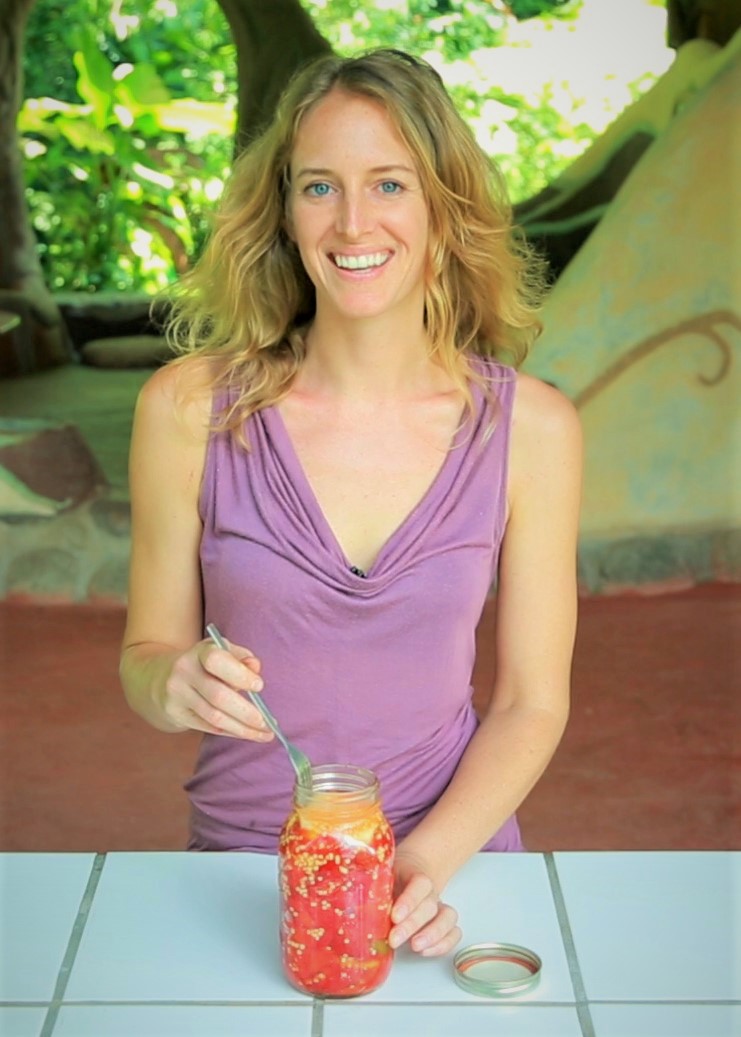
Filming the online Fermentation Tutorial. (Photo Credit Spenser Gabin; Mastatal, Costa Rica, of Laura Killingbeck)
Over the years I have seen thousands of people pass through my tiny corner of the world, seeking education, rejuvenation, inspiration. I have watched dozens of instructors across many disciplines—agroforestry, permaculture design, natural building, renewable energy, health and nutrition—repeat over and over again the same mantra—that we must learn how to engage with the world around us to create truly sustainable homes, livelihoods, and communities rooted in place. We have to actually feel the clay to know if its suitable for making clay plaster; to watch the tree to know when its time to prune; to taste the pickles to see if they're fully fermented. We need to focus our energy on the vivid, tangible relationships between the objects of our immediate surroundings. Every aspect of applied permaculture and sustainable design on some level revolves around this single spark of observation and engagement with real reality.
Just as there is an irony to my constant contact with streams of people in a tiny, rural setting, there is an irony that permaculture educators must increasingly tell the story of their direct experience with the world around them via the interface of the internet. We now use social media, online videos, and blogs to teach permaculture theory and skills, and connect with others doing the same. This makes sense--we need to be able to tell the stories of our lives and work in a way that people can access. Our great challenge in this is to translate our real reality into virtual reality, while keeping our lives really real, and keeping our students really involved.

I use Instagram to share simple recipes and special moments about real life. These are two varieties of jackfruit from the farm. (Photo Credit Laura Killingbeck; Mastatal, Costa Rica)
For most of my life I resisted getting a smart phone because I wanted to fully connect with the people and place around me; I finally got one for the same reason. This year I bought my first smart phone and got connected to the web. I entered online participation by starting an Instagram account and filming an online fermentation tutorial (Fermenting in Warm Climates, to be released in November, 2017). The purpose of the tutorial is to enable people to understand the broad theory and methods behind fermentation, in a way they can adapt to the specific foods from the place where they live. As devoted as I am to place-based experiential education, there was a constant irony to filming something designed to be accessible to a global market. But this is exactly the challenge of permaculture education in all its iterations—using a globalized perspective of broad methods to hone in on specific relationships with particular places. For this reason, the tutorial demonstrates patterns and methodologies for fermenting vegetables, dairy, fruits, etc, and provides instruction about how people can adapt these to their own local foods. The “best” fermentation recipes are not the same for everyone, everywhere. The best recipes are intrinsically tied to the fresh foods and cultures (both human and microbial!) of the specific places where people live. By creating an online tutorial I hope to be able to reach more people who find this information useful, while simultaneously leading them to engage directly with their own local foods.

Scott Gallant maps a landscape with a phone app. (Photo Credit Laura Killingbeck; Mastatal, Costa Rica; of Scott Gallant)
Online education, social media, and all other outlets of virtual reality that teach us about permaculture design and applied skills should always draw us to engage more in real reality. Real reality is dynamic, unstandardized, unhomogenized. Information on the internet often defaults to the least common denominator of most common products or ideas. In the case of fermentation, recipes often default to the most widely accessible ingredients, microbial cultures, or plant varieties from mass markets. This funnels more and more people into understanding fermentation and food from a peculiarly standardized perspective. But local food is dynamic, and microbes don't care about business as usual. Filming the online tutorial made me realize how important it is that we hold our ground and address a global audience with a clear emphasis on the dynamic nature of real reality, even if it doesn't fit the current most popular algorithm, hashtag, or SEO. When we go virtual, we need to keep it real.

Quiet moments are important arenas for self reflection. (Photo Credit Laura Killingbeck; Mastatal, Costa Rica)
There is something valuable about crafting our lives without anyone looking. About feeling, and appreciating, a moment without anyone knowing. About making decisions because they represent the core of who we are, nothing more and nothing less. I sometimes fear that the constant contact of social media draws us farther away from this core. I see people poking away at their phones when they could be experiencing a spectacular moment in real life. Or maybe not a spectacular moment—maybe just the mundane. But even these moments, rote, predictable, commonplace, are arenas for our minds to wander, probe, filter. We can find strange things in these moments. Simple or complicated truths. The moments when there is nothing to think about and nothing to do are some of the greatest resources we have for self reflection. To lose these to online shopping, Facebook scrolling, or texting would be devastating.

I learned a lot about tropical starch fermentation online. (Photo Credit Laura Killingbeck; Mastatal, Costa Rica)
But there is also something both valuable and necessary about sharing our lives with others, listening to a wider range of voices, and participating in global conversations. Even in Mastatal, my tiny green town, there is no real escape or seclusion. Here we see changes in climate that affect our crops; changes in tourism that affect our economies; changes in policies that affect our land and homes. You can escape from many things, but not from everything, happening all at once, sweeping you with it.
As a millennial just entering the periphery of online participation, I realize I am on the far end of a spectrum for how I balance my real life with my virtual one. But my position on the sideline has given me the advantage of a unique perspective about how to manage this balance. Most days I turn my phone on twice—once in the morning to check emails and make an Instagram post, and once in the afternoon to follow up on questions or comments. The bulk of the day is internet free, but I am still able to connect virtually to lots of people. I understand that this limited access is not possible or desirable for everyone. Lots of people do amazing and positive work via the internet, which I value to no end. What does apply to all of us though, is the understanding that we often have more power than we think to design a balanced relationship with the internet, and as permaculture educators and practitioners, we can use this to our advantage. We can leverage the global access the internet provides, to funnel people towards local engagement, without losing our real selves in the process.
When I gave my partner Scott the first draft of this article to edit, he read it and said “This is great, Sweetie, but I think this conversation already happened...twenty years ago!”
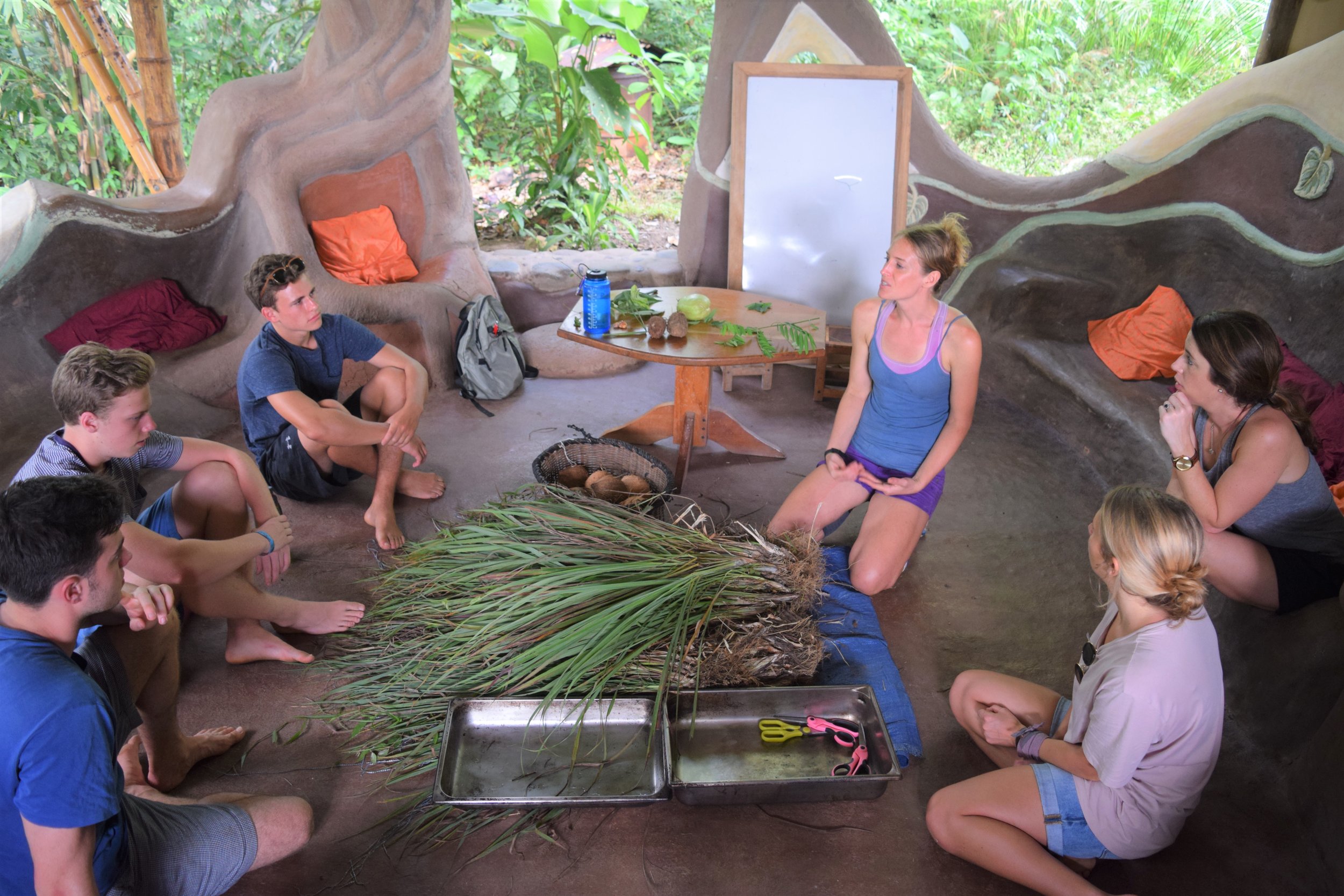
Students learn about herbal medicine by making it. (Photo Credit Scott Gallant; Mastatal, Costa Rica; of Laura Killingbeck and students)
I thought, “Dang.”
But then I realized that the longevity of this conversation is part of the point here. As time passes, our relationship with technology becomes habit. The fast growth and evolution of the internet means we continually need to navigate our interaction with it. As permaculture designers and educators, I think we need to embrace technology in its myriad forms to regenerate a positive human ecology with the earth. I also hope virtual reality will always remain a compliment to, rather than a replacement for, direct engagement with our real and living world. I think we need to pay attention to this as much now as we ever have, and I hope we do.
Bio: Laura Killingbeck has been working with Rancho Mastatal Sustainability Education Center in Costa Rica since 2009. She oversees the development and management of the Ranch's food education programs, and creates systems and strategies for utilizing whole foods on both a community and home scale. Follow her on Instagram @laurakillingbeck
Looking for opportunities to expand your horizons?
Join Rancho Mastatal for one of our upcoming 2018 workshops. Learn more here.
ViVerde is a developing educational eco-lodge and permaculture farm on a 15-acre property right outside of colonial Granada, Nicaragua. They are now recruiting for two work-trade positions, one to do fine woodworking and the other to coordinate the community kitchen and farm to table systems. Go to http://www.viverde-nica.com/recruiting-work-traders for more information.

Invisible Infrastructure: How We Build Our Lives Together
Developing the physical infrastructure of our campus gets me up every morning. I don't need coffee nor an alarm clock; I'm just excited to keep building. Building the orchards and earthworks, furniture for my home, a better feeder for our chickens; these are the projects that rev my permaculture engine. They are concrete, you can see the results of your physical labor immediately, and they are often the first projects of burgeoning permaculture sites. It requires little effort to dedicate the time, space, resources and money to these projects. Yet their impact on the success of a project, despite all this dedication, pales in comparison to another type of infrastructure; the invisible infrastructure.

by former core team member Scott Gallant
Developing the physical infrastructure of our campus gets me up every morning. I don't need coffee nor an alarm clock; I'm just excited to keep building. Building the orchards and earthworks, furniture for my home, a better feeder for our chickens; these are the projects that rev my permaculture engine. They are concrete, you can see the results of your physical labor immediately, and they are often the first projects of burgeoning permaculture sites. It requires little effort to dedicate the time, space, resources and money to these projects. Yet their impact on the success of a project, despite all this dedication, pales in comparison to another type of infrastructure; the invisible infrastructure.
Although much harder to apply, invisible infrastructures are the most crucial aspects of successful design. They are intangible elements which determine:
how we exchange goods and services.
how we transmit knowledge and information.
how we make decisions in groups.
how we take care of ourselves.
They are our economic, legal, and interpersonal arrangements and dynamics. For many of us drawn towards living and working with others in community, it is the invisible social arrangements or infrastructure that we must strive to understand.

Structural Conflict
When working in community, the social structures become our guiding influence. They are the structured relationships which hold us together. They can be deliberately designed into the system--or they can be ignored.
Not choosing a decision making protocol, for example, does not mean there is an absence of decision making. Rather it means a pattern is generated spontaneously through a combination of each individual's personality and position in the group, as well as cultural and social standards. This un-designed protocol may work for the group, but more often than not it defaults to a cultural status quo of how power is carried by different types of people, and eventually becomes what we call a structural conflict.
Just as you can eloquently or poorly design a garden, the same can be done with our social structures. When there is a lack of good design, structural conflict occurs, and usually arises from two major themes of group dynamics: purpose and power.
Purpose
Purpose begets our vision and mission statements: why we are here and what are we doing together to accomplish this vision? Conflict around purpose can be recognized when ordinary issues become unresolvable and when decision making stalemates occur.

A classic example of this structural conflict occurred a few years ago at the Ranch. Our goats had begun to cause discord and stress amongst our team. One side valued their products (milk and cheese) and the opportunity they provided for visitors to experience milking animals for the first time, while the other side was frustrated by the amount of effort needed to generate these products and the goat system's larger lack of replicability and sustainability. Both sides understood each other, but it took many years and lots of conversations before a genuine agreement could be made about whether to keep the goats or not.
This agreement was only possible once our team stepped back to better determine our greater purpose (mission) and how the goats fit into this. We finally asked, as an education center, what type of education did we want to provide? Inspirational? The goats certainly accomplished this, it was often the highlight of short term groups and guests' visits. Or was it a practical skill based education we wanted to provide? At times the goats accomplished this, but it was not the sustainable animal husbandry program that we dreamed of and at times marketed.
While our team all valued the inspirational side of the goats, in the end we decided we wanted to be teaching hard, practical skills, that were transferable outside our gate, and the goats too often failed to align with this purpose. We also realized that we could achieve the goal of inspiration in other areas that were simultaneously more productive.
The stress that this structural conflict caused often felt like a personality clash, but in reality the clash was between the perceived difference of our purpose. This is an important point: structural conflicts often appear to be personal conflicts, but they are rooted in the way our invisible infrastructure is designed.

Power
Power, the other main structural conflict, can be defined as the ability to influence. When there exists an unequal distribution of this influence amongst the group, conflict occurs. Most commonly this is experienced through decision making.
This unmistakable conflict occurred back when our kitchen garden had too many cooks in the kitchen. It was unclear who was in charge and often the loudest voice won out. One long term volunteer in particular, felt very strongly about how the garden was supposed to be managed. If the moon cycle didn't call for weeding then we were told not to weed, despite an abundance of eager labor. Someone would plant something and someone else would pull it up a week later. Volunteers were making important decisions that affected a valuable space, and as they transitioned out our core team was left with the remnants.
Two core team members, Rachel Jackson and Laura Killingbeck, recognized the need for consistency and efficiency. But the situation was complicated because so many people felt strongly about what the space was supposed to be. In order to do their jobs, Rachel and Laura both needed to be able to make decisions in the area, but knew that if they didn't meet everyone's needs the space would ultimately not succeed. The two of them teamed up to lead the rest of the group to set goals for the area. Once they gathered everyone's input, they collated the goals and used them to design different options for the garden. They presented these options to the group, edited them based on group input, divided up the installation work, and carried it out.
Today it is this plan, created by two designers and based on the needs of the entire group, which holds the power over that space. Decision making still occurs with regard to the details, but the primary conflict--who gets to decide-- has evaporated.
Decision Making at the Ranch
There are many different forms of decision making; majority, concentrated power, consensus, and consensus minus one are common examples. At the Ranch, for the past year, we have been practicing consent decision making, adapted from the sociocracy governance framework. Consent is different from consensus.
Consensus decision making requires an affirmative from all group members to pass a proposal, and a single person in that group can also block that proposal. As many have experienced, this often leaves too much power with a single divergent viewpoint, which can stalemate any and all conversations.
Consent, on the other hand, also requires an affirmative from all group members to pass a proposal, but a single person can only block a proposal if they have a reasoned and paramount objection. A paramount objection is one of overriding importance, and means that something about the proposal will inhibit the individual from doing her or his job or from being well.
The philosophy of consent decision making is that the group functions as a single organism with shared goals. Each individual is a part of the organism. Therefore, the group actively asks members to reflect on proposals and express paramount objections when they arise, based on the idea that what is good for the individual will also be good for the group, and vice versa.

Creating Our Lives Together
Perhaps the best book on this topic, originally recommended to us by our friend Nate Sanders, is Creating A Life Together by Diana Leafe Christian. Leafe Christian researched intentional communities and ecovillages around the United States to determine why so many fail and what patterns emerged from the successful examples.
The most prominent lesson from this research is that so many seeking community also find it difficult to work out their invisible infrastructure. Whether it stems from a belief, common in spiritual communities, that one's group is mature beyond the need for these arrangements, or that those of us driven toward community have done so to remove ourselves from the legal and economic bureaucracy; it is apparent that many communities forget the power of these arrangements. They have the power to help us succeed or cause our demise.
For anyone seeking community, hoping to build their own ecovillage or permaculture cooperative farm, the following are the key invisible infrastructure that all successful community examples have in place.
Purpose and vision: Discussed above; are you on the same page about what you are trying to accomplish and how you will do so?
Decision making: Also discussed above as it relates to power. Agree upon a protocol and hold each other accountable.
Ownership structures: Be very clear about who owns what, power often resides here; and be very clear about how you would like to change this in the future.
Entry and exit strategies: How do new members join your groups and how do members leave, all without engendering resentment toward past time/money put in so that everyone is on an even playing field.
Finances: Get your house in order and be clear as day to how money can be spent, earned, and distributed.
Conflict resolution: Have a clear protocol for dealing with conflict. This doesn't have to involve deep, new-age personal reflection but it does need to make everyone feel safe.
Communication: When, why, and how do you meet? Separate meetings for big picture, planning conversations from those of the day-to-day work.
We seek community because we want to live with other people. We want to cultivate deeper relationships. We might believe those relationships are bomb-proof, that the above organizational structures are unnecessary, but above all they do one thing really well; they protect our friendships. And this is why the eloquent design of these structures into our lives is the most important part of permaculture design.
Resources
We the People: Consenting to a Deeper Democracy, A Guide to Sociocratic Principles and Methods by John Buck and Sharon Villines
Creating a Life Together: Practical Tools to Grow Ecovillages and Intentional Communities by Diana Leafe Christian

Permaculture Design Certification Course
Are you interested in learning more about designing invisible infrastructure into your community? Join our community at Rancho Mastatal this April and May 2017 for our annual Permaculture Design Certification course. The course is taught by a diverse team of instructors and is ideal for anyone who wants to:
Experience an established permaculture site in action.
Devote two weeks to an intensive learning process.
Learn from instructors who practice professional design and install work.
Explore rural Costa Rica, swim in breathtaking waterfalls, eat delicious tropical food, drink homemade hooch, play lots of futbol and frisbee, and make lifelong friends!
Abrazos
The Ranch Crew
Transition Ethics: The Art of Compromise
Permaculture Design is many things to many people, but one of its pillars is a set of three ethics. These as originally laid out by Bill Mollison are
- Care of the Earth
- Care of People
- Redistribution of the Surplus
These are our primary directives for how to act to sustain the earth. Or on a simpler level these are the ways to a good life.
By Scott Gallant

Permaculture Design is many things to many people, but one of its pillars is a set of three ethics. These as originally laid out by Bill Mollison are
Care of the Earth
Care of People
Redistribution of the Surplus
These are our primary directives for how to act to sustain the earth. Or on a simpler level these are the ways to a good life.
Teaching these ethics during our annual Permaculture Design Certification (PDC) course is one of my favorite topics. It inevitably brings up pointed and challenging conversations, commonly around how to live these ethics in a world that often does not care for the earth, nor its people. How do we live and design for today’s world and for the parallel world we want to create? This discussion leads to fear and anger based responses, a tear-it-down approach easy to rally around in a classroom of like minded, fed up and passionate souls. Unsurprisingly, this is not an effective route for change. It became apparent to our teaching team that this conversation on ethics lacked a route to speak about compromise. To fill this gap we utilize a fourth ethic in our PDC curriculum; the Transition Ethic.
The Transition Ethic is a guide for how to be effective in creating change. In their recent book Practical Permaculture (one of the few references to the Transition Ethic in permaculture) Jessi Bloom and Dave Boehnlein state that “the transition ethic says that no one is going from zero to sustainable overnight. Making the transition takes time.” We have to meet people where they are at. We must understand their cultural context.
When I first began learning about the industrial food system and what it was doing to our personal and environmental health, I was angry. I desperately avoided all participation in that system. This was easier to embrace while living and working at the Ranch, a NuMundo impact center. But it was challenging when I returned to my parents’ home during the holidays. While they eat healthy by many standards, I was disappointed to find apples from Chile, processed meats, and corn-syrup fueled snacks around the kitchen. It was not a local food paradise by any means, so I jumped on my soapbox and preached. They needed to support local economies and take care of their bodies! Didn’t they care about the amount of pesticides used on those tomatoes?!
They responded with kindness and listened, like the wonderful parents they are, but were likely rolling their eyes in the background, and not much changed. A few years latter though, when I was able to show them how excited I was to manage a farm in Costa Rica, bake my own bread, and build my own furniture. I began to see them make real changes. As soon as my ideas came from a place of positive examples versus negative critiques the transition began for them. Their garden as expanded, they save and share more and more seeds every year, and the kitchen has a few more jars of ferments upon my home arrival.
This instilled in me that even though I was ready to change, the world around me operated at a different pace. So the question became: how do I navigate the series of compromises needed to encourage change? The original three ethics of permaculture speak to this in varying ways, but they don’t provide a road map as clearly as an ethic of transition. For me it is a road map of humility, recognizing that we are all coming from different places and we can’t begin to guess the context of others’ lives.
The Ranch is one of the leading natural building centers in the Americas. Yet, we still use concrete in our foundations and metal on our roofs. We don’t love the environmental impact of either of these materials, but we have done the due diligence to know that they make the most sense in our current context. These are compromises we must make in order to protect our infrastructure investments from rain, earthquakes, termites, and the tropical climate. This infrastructure allows us to operate as a world-class education center, without it our livelihood and mission fails. It is a compromise we must make.
The Transition Ethic makes it clear that these compromises are ok and often necessary. The key take away that I share with our students is that we can never compromise our ethics but we can make ethical compromises.
Most of us use fossil fuels, don’t eat only local organic food, and participate in a globalized economy. We may wish this wasn’t true, but this is the world we live in; and it requires an art of compromise. So how do we make choices and design our lives for the current world and the one we are creating and visioning for the future?
Permaculture design is one tool at our disposal to navigate these waters (primarily through good design of our lives, homes, and land) and with a Transition Ethic in place it becomes an even more robust tool.

Learn more
We have a number of life changing workshops yearly.
We rely on all of the amazing ambassadors to our project to spread the word; if you know of anyone who needs a get-life-into-gear experience, send them to one of our classes!
Abrazos,
The Ranch Crew
Categories
Topics
- Agriculture 6
- Agroforestry 21
- Animals 2
- Apprenticeship 19
- Appropriate Technology 6
- Backpacking 1
- Bananas 1
- Basic Pantry 4
- Biochar 1
- Books 3
- Build Your Own Home 1
- Central America 5
- Chiles 1
- Cinnamon 1
- Clay Carving 1
- Climate 2
- Climate Change 1
- Cob oven 1
- Communication 5
- Community 24
- Compost 2
- Composting Toilets 2
- Condiments 1
- Conservation 2
- Cooking 4
- Costa Rica 18
- Design 10
- Earthen Construction 10
- Eat Local 2
- Ecohome 1
- Education 9
- Environment 3
- Ethics 4
- Farm to Table 12
- Fasting 1
- Fermentation 14
- Food 22
- Food Choices 8
- Food Forest 8
- Food Processing 15
- Food Systems 12
- Gap Year 1
- Gardening 5
- Ginger Beer 1
- Harvest 2
- Health 12
- Healthy living 5
- Homemade 2
- Homestead 8
- Internet 2