

BLOG
Stories, articles, and updates from the Ranch community.
Endeavors to End Propane: Local Fuel Sources and Efficient Cooking Technologies
Cooking food can make it tastier, easier to digest and absorb nutrients, and safer and healthier to eat. Cooking at the Ranch happens multiple times a day, and on some days, pretty continuously throughout the day. We generally have a lot of hungry bellies to fill! Over the decades we have been steadily reducing our use of propane to meet our cooking needs.

Self-made rocket stove at the Ranch
By Tim O’Hara
Ranch Core Team Member
Endeavors to End Propane: Local Fuel Sources and Efficient Cooking Technologies
Cooking food can make it tastier, easier to digest and absorb nutrients, and safer and healthier to eat. Cooking at the Ranch happens multiple times a day, and on some days, pretty continuously throughout the day. We generally have a lot of hungry bellies to fill! Over the decades we have been steadily reducing our use of propane to meet our cooking needs. Propane is a refined product that comes from crude oil or natural gas. The negative environmental impact from its extraction and refinement on communities and the earth are well documented. We have lessened our dependency on this imported product (Costa Rica has few crude oil resources and a moratorium on oil drilling) through the production and use of our own biogas, the utilization of solar cookers, dehydrators, and hay boxes and perhaps most importantly by incorporating efficient wood burning stove technology into our culinary domain.

Our woodshed
Wood is renewable and abundant in and around Mastatal. That’s not to say that wood can’t and isn’t managed poorly in many parts of the world where it is used for cooking. For us, fortunately, we have a plentitude of this resource in a country that does a commendable job of taking care of its timber resources. We have almost limitless supplies of firewood coming from our woodshed, local small-scale bandsaw mills that operate in the region, and our own agroforestry systems.

Common open cook stove
According to the World Health Organization, approximately 3 billion people worldwide still cook using solid fuels such as wood and dung in open fires and on inefficient stoves. Poorly designed stoves and age-old cooking practices can produce high levels of small soot particles and other pollutants that penetrate deep into our lungs. Exposure is particularly high among women who cook indoors and their children resulting in 3.8 million premature deaths a year from pulmonary illnesses. The extensive use of wood for cooking can also contribute severely to deforestation and its associated devastating social and environmental impacts. It can also consume precious and considerable time to gather and haul.
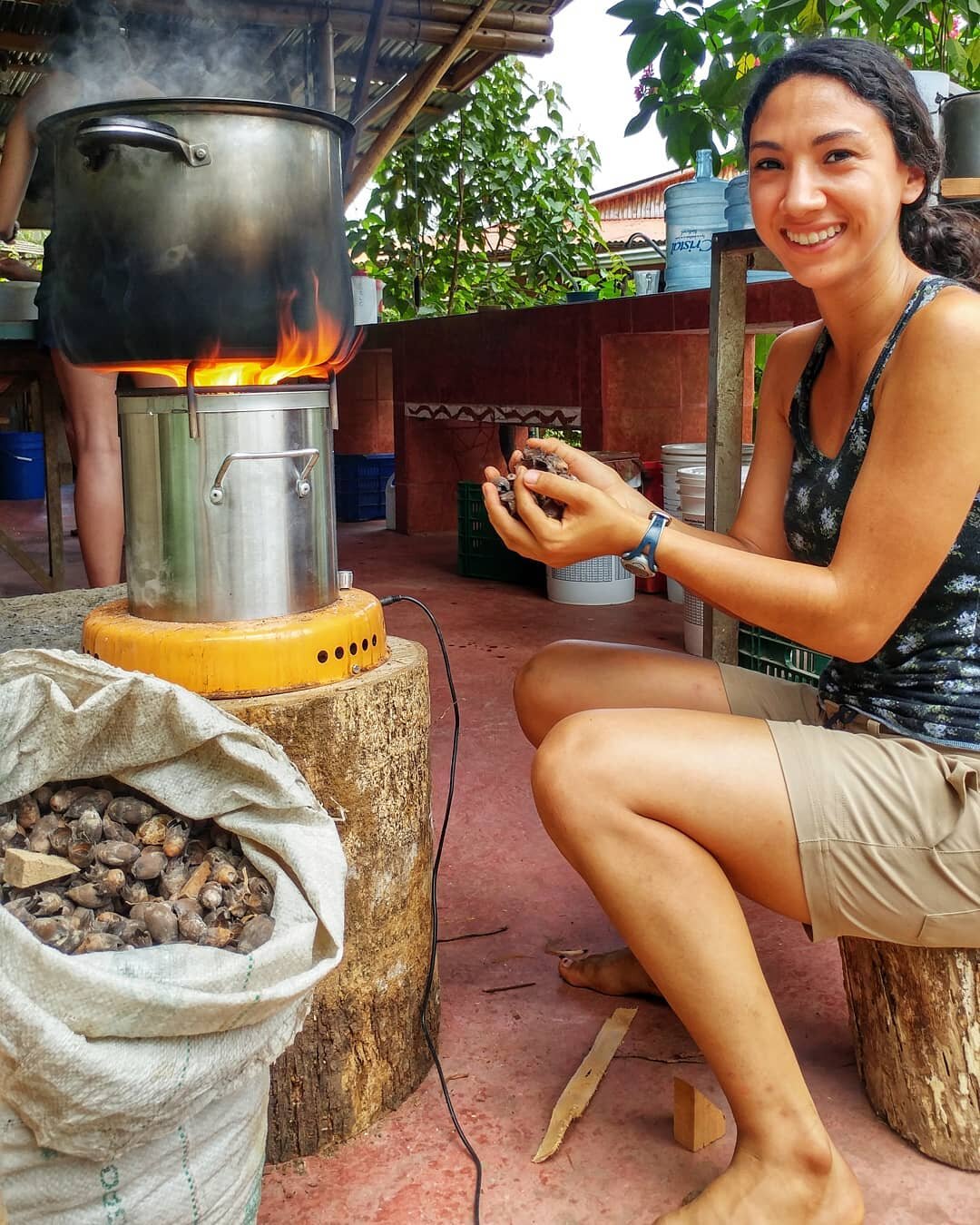
ACE One in action!
These worrisome facts have led us to build and invest in efficient wood burning technologies and food production methods that allow us to sustainably and safely use this local resource to cook with. Our alternative cooking workhorses are our 5 rocket stoves; 3 purchased ACE Ones, and two adobe/cob stoves designed and built in-house. These stoves produce little to no smoke based on a design that features an air intake or fan that produces extreme heat in the combustion chamber that ignites and “burns away” any smoke that is produced. This can be referred to as “complete combustion” and reduces or eliminates soot from the cooking process. The ACE One stoves use small pieces of wood whereas the home-built versions use slightly larger pieces of wood. These efficient stoves burn smaller quantities of wood and produce less or no smoke while retaining the many benefits of cooking with this local and accessible resource.

One of Ranch’s agroforestry systems
When possible, efficient rocket stoves can be coupled with a well-managed agroforestry system that through the extensive planting and pruning of nitrogen-fixing and food producing trees can yield a steady supply of accessible firewood and the food that will be cooked on the rocket stoves. This is yet another example of the closed-loop systems that we oftentimes strive for on our farm.

Adobe rocket stove being built at Ranch
Rocket stoves can be small or large, take many shapes, and can be made from a wide variety of materials. What’s common to all of them is the their ability to efficiently produce extremely hot combustion chambers. To improve performance, your rocket stove chamber can be insulated and your burning surface sized and designed to effectively support your favorite cooking pot. You can even buy rocket stoves for camping these days though if you’re a do-it-yourselfer or on a tight budget, we’d encourage you to design and build your own. There are plans all over the internet.

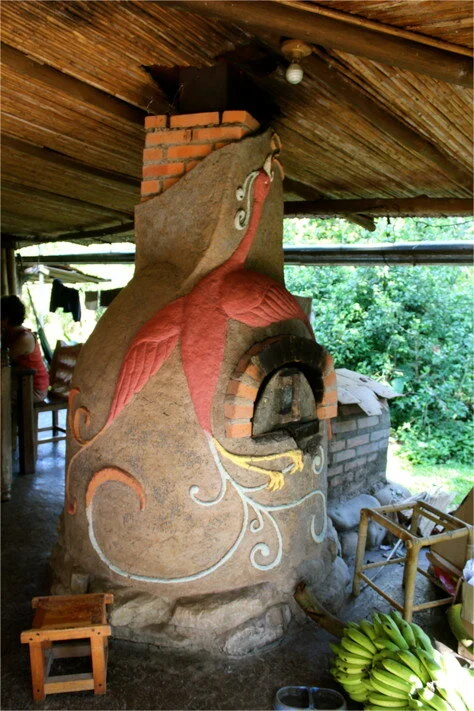
Our cob oven
In addition to our repertoire of rocket stoves, we have a self-built cob oven that we use for pizza parties and other baking endeavors, 3 Wonderbags, a solar and electric dehydrator and of course our magical biogas stove. We’ll tell you more about these in a future article but in the meantime I’d encourage those that love simple solutions to check out the wonders of the Wonderbag and see how you can help transform a family’s life in Africa while saving a considerable amount of cooking fuel.
Let us know if you have any questions and come and check out are array of alternative cooking technologies if you find yourself in our neighborhood. We love to share our experiences and hope that this has found you well well.

Simple rocket stove being built in community of Mastatal

6 reasons to use a biodigester as a low tech, off the grid, renewable energy source for cooking
For almost two decades now, Rancho Mastatal has been working on creating a more sustainable lifestyle by researching, developing, and teaching about more efficient ways to build, grow food, cook, and live as a community while reducing the impact these activities have on our environment.
As cooking is one of the most energy-consuming activities within a house, we find it relevant to implement an alternative renewable energy source to satisfy one of our guests’ favorite moments of the day: meals. With that perspective, we built a biodigestor 8 years ago.
By Nico, Apprentice 2020
“Agricultural, industrial, and human digestion processes create an ongoing (and growing) stream of organic refuse. Without thoughtful management, organic wastes can emit fugitive methane gases as they decompose. Methane creates a warming effect 34 times stronger than carbon dioxide over one hundred years.” - Project Drawdown
Renewable Energy for Cooking
For almost two decades now, Rancho Mastatal has been working on creating a more sustainable lifestyle by researching, developing, and teaching about more efficient ways to build, grow food, cook, and live as a community while reducing the impact these activities have on our environment.
As cooking is one of the most energy-consuming activities within a house, we find it relevant to implement an alternative renewable energy source to satisfy one of our guests’ favorite moments of the day: meals. With that perspective, we built a biodigestor 8 years ago.
What is a Biodigestor?

Our biodigestor
A biodigestor is basically a system that allows us to produce methane out of human and animal manure (see more info on last year’s article). Here at the Ranch we decided to go for a low tech, polyethylene tubular biodigester technology, also known as the sausage system here in Costa Rica, because of the shape of the chamber. We chose this because it is a cheap and simple way to produce methane for small-scale farmers. It is appealing to rural people, firstly because of the low cost of the installation and therefore of the gas, and also for the improvement in the environment that the installation allows. It can be applied in rural or urban areas and in both low and hilly lands, creating a low tech system able to produce a renewable energy source as well as a fertilizer for your land.

A glance at our system
6 Reasons to Build a Biodigestor
But besides the awesome concept of being able to transform waste into energy, there are many other advantages to having a biodigestor. Here are 6 reasons on why you should build one:
1. Biodigestors can be Low Tech
A common misconception about biodigestors is that they should be these high tech, expensive systems made out of a lot of different components. Like people, biodigestors come in many shapes and sizes: from continuously fed to batch fed, made out of metal or polyethylene, vertical or horizontal, using cow manure or human waste (or both), there is probably a biodigestor out there waiting for you. If you decide to go for a simple system like ours, there aren’t many components and you would be surprised by their simplicity. With the help of a couple people and some skills, you can set your system up within two days. The maintenance is pretty simple as well, and again, depending on the system you choose, you can decide to either dedicate a bit of time for maintenance every day, or choose a batch fed system, which takes more time to put in place but is then autonomous for a couple weeks
2. Biodigestors can be cheap
Again, this depends on a lot of variables: which system you choose, whether you have to excavate soil, if you are willing to do it yourself or prefer hiring people, whether you are able to use reused materials, etc. For instance, the main component of our system, which acts as a fermentation chamber and a gas reservoir, cost us $700.
3. It can be used off-grid
Here at the Ranch, the amount of people coming through doesn’t allow us to be completely off the grid; we cook over 23,000 meals a year! We still decided to implement this system in an effort to reduce our dependence upon fossil fuels such as propane and take a step toward ecological self-sufficiency. For smaller communities, like a small scale farm, or by increasing the size of the system, it is totally possible to implement an off the grid cooking system.

The methane stove that we cook meals on
4. It creates a nutrient rich organic fertilizer
This low tech system houses a wide variety of bacteria, each one with a specific task. Some break the matter into simpler molecules of sugars and acids. Other microbes, which find oxygen toxic, are able to break down the simple organic matter to form gases. The ultimate end result of this process is both the natural gas for heat and electricity as well as valuable soil amendments which we disperse throughout our gardens.
5. It reduces the greenhouse effect
Methane, CH4, which makes up 70% of the biogas produced by our biodigester, creates a warming effect 34 times stronger than carbon dioxide. By burning this gas, not only do we create a renewable energy source that allows us to produce energy, we decompose the methane into a less potent greenhouse gas.
6. It’s comfortable
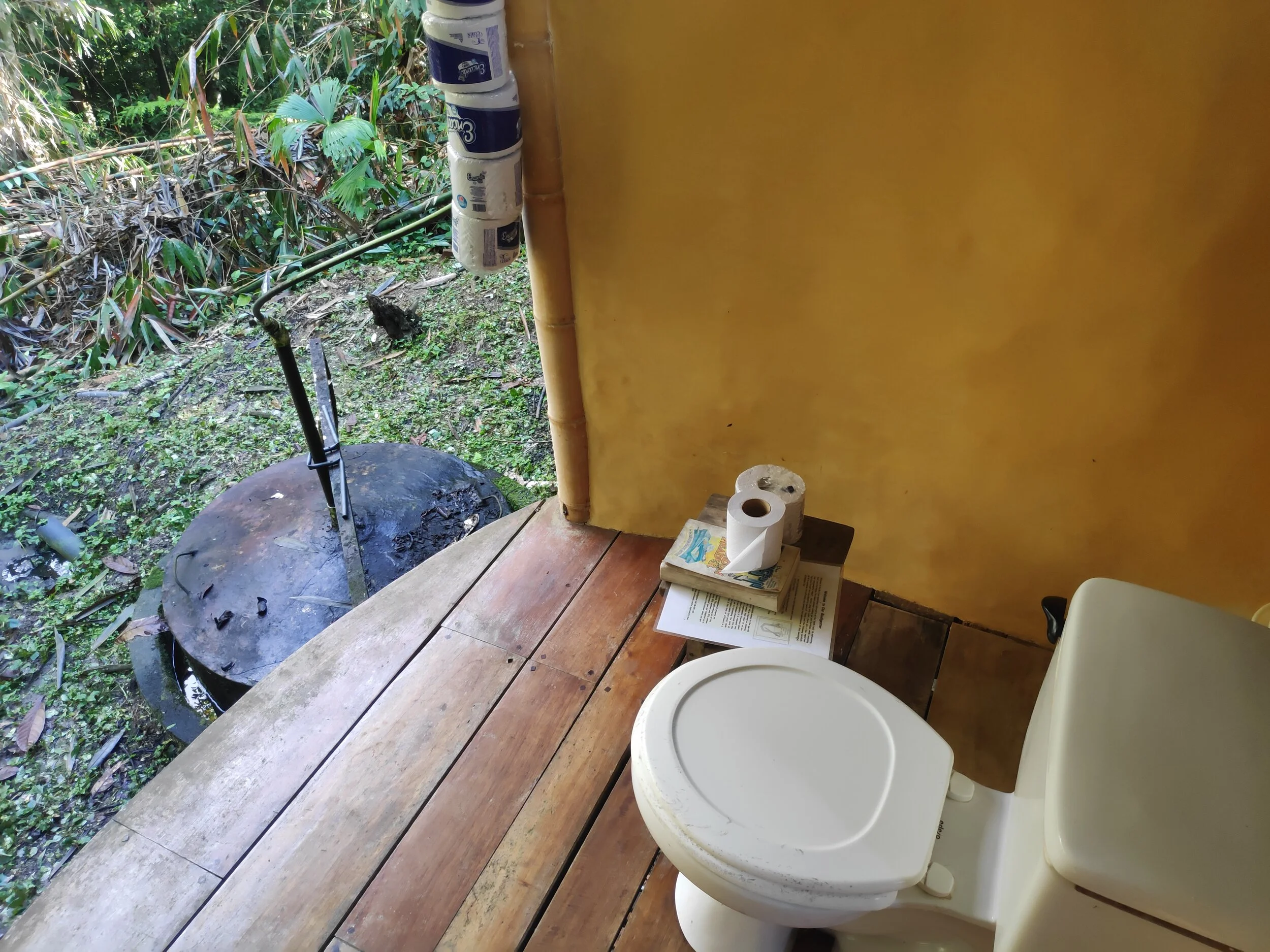
Some people are apprehensive about the idea of having to use a composting toilet ( even though they shouldn’t be, see article by Moanna on Composting Toilets to discover all the wonders of using a composting toilet, a wonderful low tech and off the grid system). By connecting your greywater system to a biodigestor, you will keep the comfort of doing your doodies in a water system while doing your duties for our wonderful Earth. As a matter of fact, our biodigster’s toilet was voted the Best Compost Loo In The World Award in 2012 by the readers of Permaculture Magazine, Inspiration for Sustainable Living.
Why else are Biodigestors Great!
The list doesn’t stop here. A biodigester helps reduce landfill and water-polluting effluents, and eradicates odors and pathogens. It allows small scale farming to create a renewable energy source while allowing them to better control the breaking down of their animal manure into fertilizer, being more self-sufficient and less dependent upon other chemicals. In a world where it has become increasingly urgent to find simple solutions to step towards sustainability, implementing low tech and easy to manage solutions like this one seems more relevant than ever.
The Project Drawdown, a comprehensive plan to combating climate change, puts Biodigestors in the top 100 things we can do.
Hope you feel inspired to think about and make changes to the current system of waste management.
Check out Moanna’s latest article on why composting toilets are another great way to make a sustainable change in the system.
The Biodigester
It's 5.30 am in the dewy morning rainforest of Mastatal – the cacophony of squawks and birdsong remind us that the winged beings have begun their daily business of foraging for themselves and their young, the toads have tucked themselves into the nook of a tree or within a pile of leaves to avoid the relentless heat of the new day, and one by one the guests at Rancho Mastatal stretch and yawn their way out of their abodes and ease their way towards their first cup of coffee.
By Mike Paladino, 2019 Rancho Mastatal Apprentice
It's 5.30 am in the dewy morning rainforest of Mastatal – the cacophony of squawks and birdsong remind us that the winged beings have begun their daily business of foraging for themselves and their young, the toads have tucked themselves into the nook of a tree or within a pile of leaves to avoid the relentless heat of the new day, and one by one the guests at Rancho Mastatal stretch and yawn their way out of their abodes and ease their way towards their first cup of coffee. Within moments of a couple of team members arriving, one opens a valve on a stove and WHOOSH! sparks the flame upon which we will cook our breakfast. But the source for this gas isn't of your average origin. This fuel comes from one of the most potentially troublesome yet profoundly utile resources on Earth: poo.

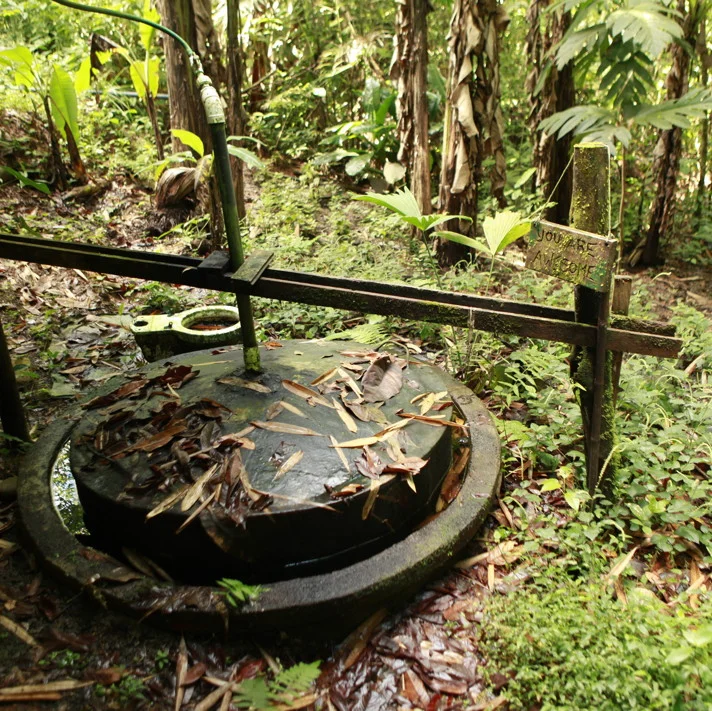
Here at the Ranch we are utilizing two means of generating alternative energy known as “biodigesters.” A biodigester houses various bacterial species to break down organic matter and capture biogas (namely, methane) released by the bacteria in a process called anaerobic fermentation – i.e. the organic matter is digested by the microbes in the absence of oxygen. In the particular case of Rancho Mastatal and many other sustainability centres around the globe, the common organic matter for these microscopic busybodies is excrement, primarily bovine with a smaller source coming from yours truly. There are several kinds of microbes at work here. Some break the matter into simpler molecules of sugars and acids. Other microbes, which find oxygen toxic, are able to break down the simple organic matter to form gases. The ultimate end result of this process is both energy for heat and electricity as well as valuable soil amendments which we disperse throughout our gardens. Essentially all of our breakfasts (roughly 30% of all food cooked here) are prepared solely with the captured methane gas from the combined two mechanism. It is estimated that reliance upon propane as our major cooking gas was cut by roughly 50% percent after the installation of the biodigester systems.
The human waste system is (and should remain) an ultimately hands-off process. A six-foot deep brick tank surrounded by an air seal was installed seven years ago and inoculated with bacteria to jump start the production of biogas. As the two toilets are flushed, they drain into the tank where the material broken down by the bacteria and transformed into methane which is piped directly to our stove top. The system involving cow manure demands daily attention, but can usually be tended within thirty minutes or less. It requires adding fresh cow patties (one and a half recycled rice bags for us) to a 55-gallon barrel and filling it up with water. It is necessary to pulverize the material so that it becomes water soluble – roughly 15 liters for every kilogram of organic matter. Here it is left to sit for a twenty four hour period prior to being pumped into the four barrels below. As the solids settle to the top, the liquid is moved through the series of tanks below before finally arriving in a PVC bag. The gas is captured and then join the same pipe before reaching the kitchen. The solids are tossed into a 14-day compost rotation before they arrive to the gardens to be sifted and applied to our beds.

Any technology that enables us to transform abandoned “waste” into usable energy shows much promise for small-scale homesteads striving for self-sufficiency as well as society at large. And that's not just another hippie talking s&%t.
Categories
Topics
- Agriculture 6
- Agroforestry 21
- Animals 2
- Apprenticeship 19
- Appropriate Technology 6
- Backpacking 1
- Bananas 1
- Basic Pantry 4
- Biochar 1
- Books 3
- Build Your Own Home 1
- Central America 5
- Chiles 1
- Cinnamon 1
- Clay Carving 1
- Climate 2
- Climate Change 1
- Cob oven 1
- Communication 5
- Community 24
- Compost 2
- Composting Toilets 2
- Condiments 1
- Conservation 2
- Cooking 4
- Costa Rica 18
- Design 10
- Earthen Construction 10
- Eat Local 2
- Ecohome 1
- Education 9
- Environment 3
- Ethics 4
- Farm to Table 12
- Fasting 1
- Fermentation 14
- Food 22
- Food Choices 8
- Food Forest 8
- Food Processing 15
- Food Systems 12
- Gap Year 1
- Gardening 5
- Ginger Beer 1
- Harvest 2
- Health 12
- Healthy living 5
- Homemade 2
- Homestead 8
- Internet 2