

BLOG
Stories, articles, and updates from the Ranch community.

Lime Plasters Are In
Lime plastering as a craft form has endured the test of time due to its versatility and the accessibility of limestone as a building material. When produced and applied with care and experience, lime plasters yield an elegant finished product.
By Anthony, Apprentice 2020
Plastering is an ancient tradition in the building trades that continues to hold cultural importance in modern times. Amongst the typical plasters that can be found in the building world include clay, gypsum, portland cement, and the focus of today’s blog, lime. The rich history of the use of lime in the plastering trades can be traced back to all continents. Of particular note are the styles that have emerged from Italy and Morocco, as well as the beautiful examples that are found in Japan and the ancient Mayan temples of Mexico. This craft is experiencing a resurgence through the increased global interest in natural building.

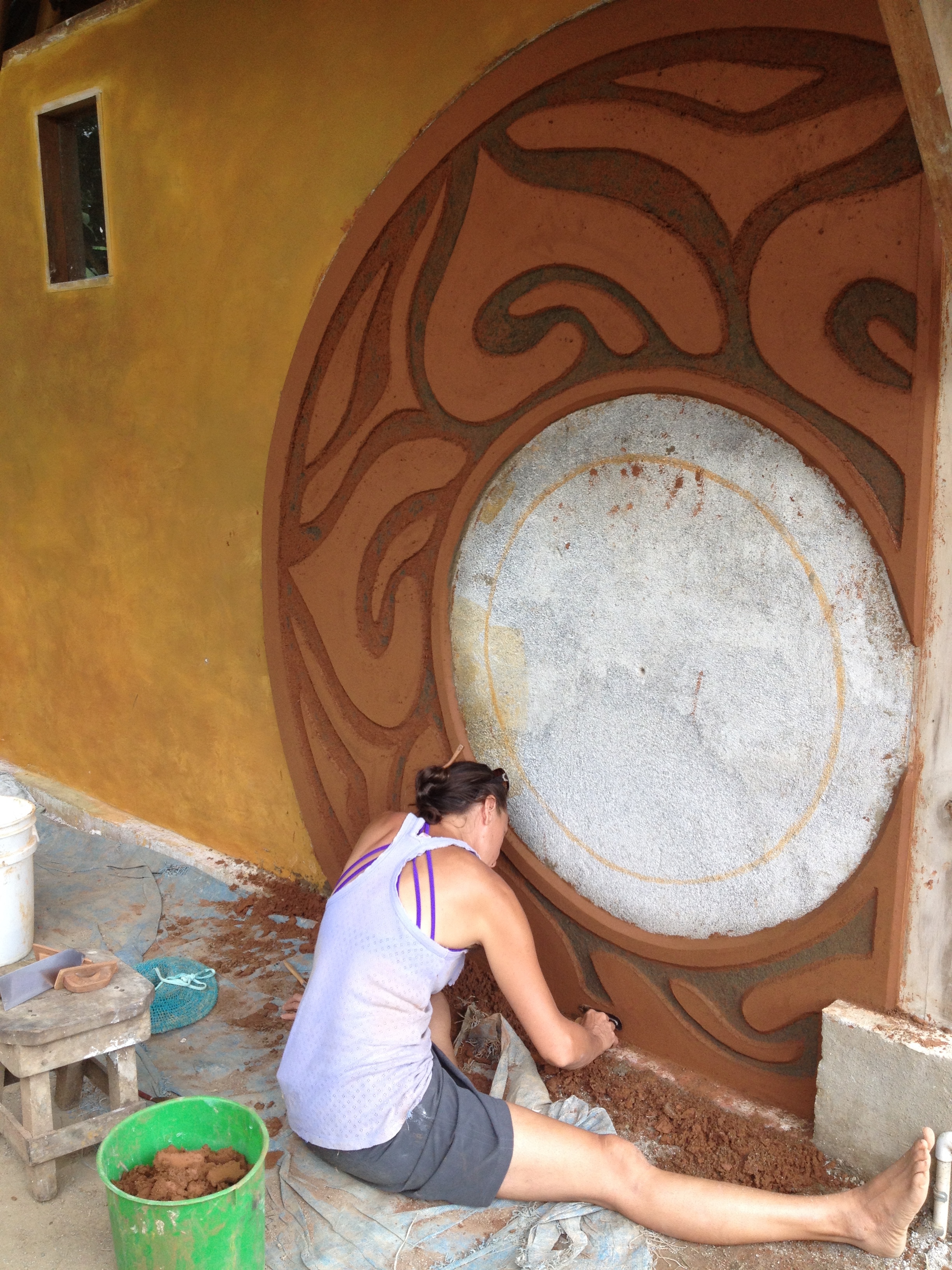
A clay carving with a lime fresco background

Tadelakt (water resistant lime plaster) shower- Read our blog about how to make an earthen/tadelakt shower
Why people love Lime Plasters
Lime plastering as a craft form has endured the test of time due to its versatility and the accessibility of limestone as a building material. When produced and applied with care and experience, lime plasters yield an elegant finished product. Some of the many benefits of using lime include high vapor permeability (‘breathability’), flexibility, autogenous healing, stickiness, and durability. Perhaps of greatest interest is the ‘breathability’ factor, which contributes to drying interior spaces and the general avoidance of condensation inside buildings. Additionally, where other stiffer plasters, such as cement, might fail due to the formation of large cracks, flexible lime plasters have the unique characteristic of self-healing (‘autogenous healing’) with which micro-cracks are naturally filled with ‘free lime’. This contributes greatly to the durability of ancient structures, particularly in seismic zones.
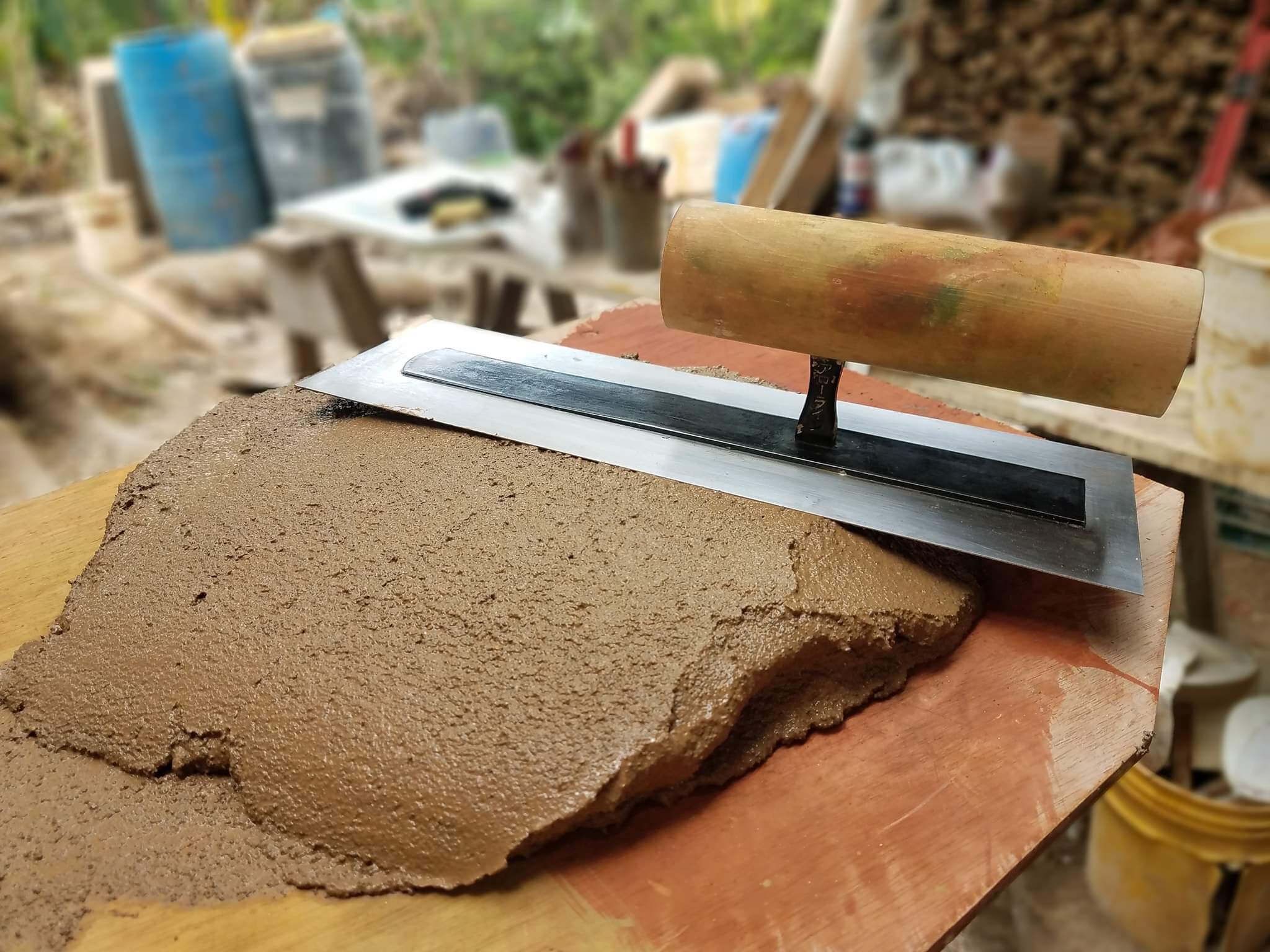
Hawk and trowel
Overview of the Lime Cycle
Understanding the benefits of using lime in our buildings, let’s review the source of these plasters by exploring the lime cycle. Our desired binder begins as calcium carbonate in the form of limestone, coral rocks, or sea shells. This base material is heated to around 900°C (a ‘cherry-red heat’) where it undergoes a chemical change by giving off carbon dioxide gas and forming calcium oxide (quick lime), a highly reactive, dangerous compound. Don’t mess with it. From here, quick lime is hydrated by combining it with water and calcium hydroxide is formed. At this point, our hydrated lime is being prepared for final application by slaking it, that is, to be stored in water. Once we are ready to use this hydrated lime, it is prepared in a mix with aggregate and fiber, according to our desired use of the plaster. Generally, multiple coats are applied with each successive layer receiving a thinner application. The final layer, or our finish coat, can be applied as thin as 1/16th of an inch, or even less.

Lime Plaster Finishes
There are many ways that lime plasters can be applied to create different visual and textural effects. This is where the magic happens. Some of the well-known finishes include frescos, venetian plasters, lime wash paints, and tadelakt. All require a detailed attention to the timing and moisture levels during their application.

Benito Steen stoning our tadelakt shower

Fresco design
Learn Lime Plastering in Natural Building Workshops in Costa Rica
The annual Natural Building Workshop at Rancho Mastatal in Costa Rica is focused on developing simple and elegant wall systems for sustainable homes using readily available natural materials. The course focuses on Natural Building techniques, such as wattle and daub, adobe bricks, cob, earthen floors, and the mixing and application of multiple kinds of plasters, including clay and lime. Workshop attendees have the opportunity to learn from some of the most experienced natural builders in Costa Rica, and to develop their skills in creating elegant lime plaster finishes such as tadelakt, fresco, and venetian plaster. This year’s course was attended by people from more than 10 countries, and was just as diverse in its variety of natural building techniques demonstrated.
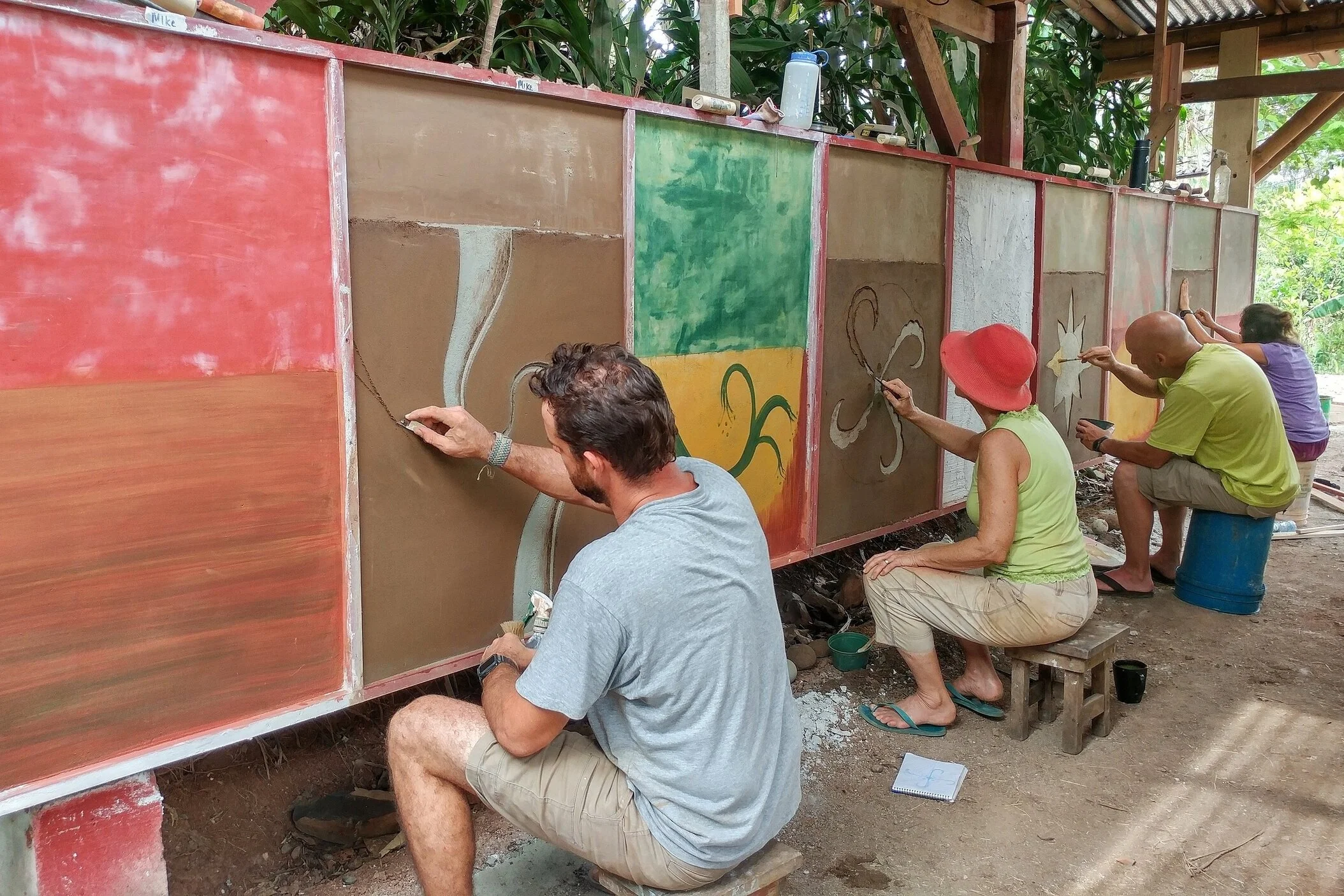
Students practicing different plasters and techniques during our annual workshop

Pigments, fibers, sands, and more
Want to learn more?
Hope you feel inspired to begin learning the ancient art of lime plastering. You can really beautify and add special touches to your home and spaces with a variety of different lime plastering techniques.
If you want some hands on practice and instruction, sign up for our annual Natural Building Workshop.
Also check out Benito Steen’s YouTube channel all about natural building techniques.
Stay tuned for the wide array of upcoming courses conducted at Rancho Mastatal in Costa Rica.
Check out these past blog articles about natural building techniques we practice and teach:
How to Make an Earthen Floor for Your Sustainable Home
Natural Building & Clay Carving: Add Artistic Expression to Your Home
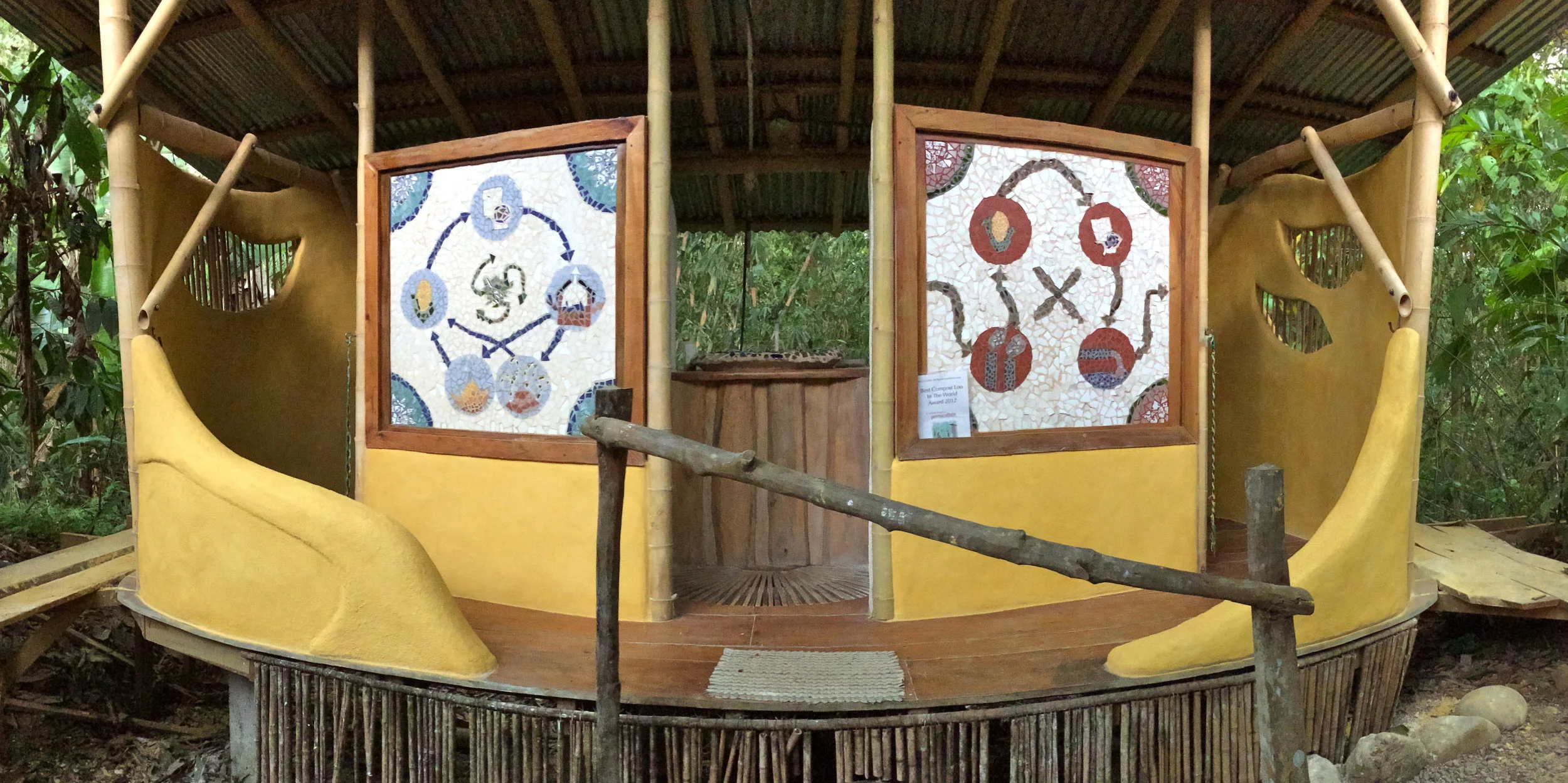
Design Ideas for a Sustainable Home in the Tropics
At Rancho Mastatal we have been building sustainable homes from natural materials in the tropics for over 15 years. In this time we have tried many different styles, building materials, and designs. We would like to share with you our opinion for the best natural and sustainable home design for the tropics.
By Nic & Ali,
At Rancho Mastatal we have been building sustainable homes from natural materials in the tropics for over 15 years. In this time we have tried many different styles, building materials, and designs. We would like to share with you our opinion for the best natural and sustainable home design for the tropics.
For examples and inspiration view our structures here.
We have found that the quickest, cheapest, and most aesthetically pleasing building style consists of a reinforced concrete stem wall foundation, with a timber framed structure, a Dutch gable roof, wattle and daub walls, natural plasters, and an earthen floor. These are the reasons why we chose these methods:

· Reinforced concrete stem wall: resistant to earth quakes and provides good access around the entire house to spot any invading termites.
· Timber framed structure: beautiful and utilizes an abundant and quick growing resource in the tropics.
· Dutch gable roof: provides good protection to your earthen walls on all sides, and allows good ventilation of the roof.
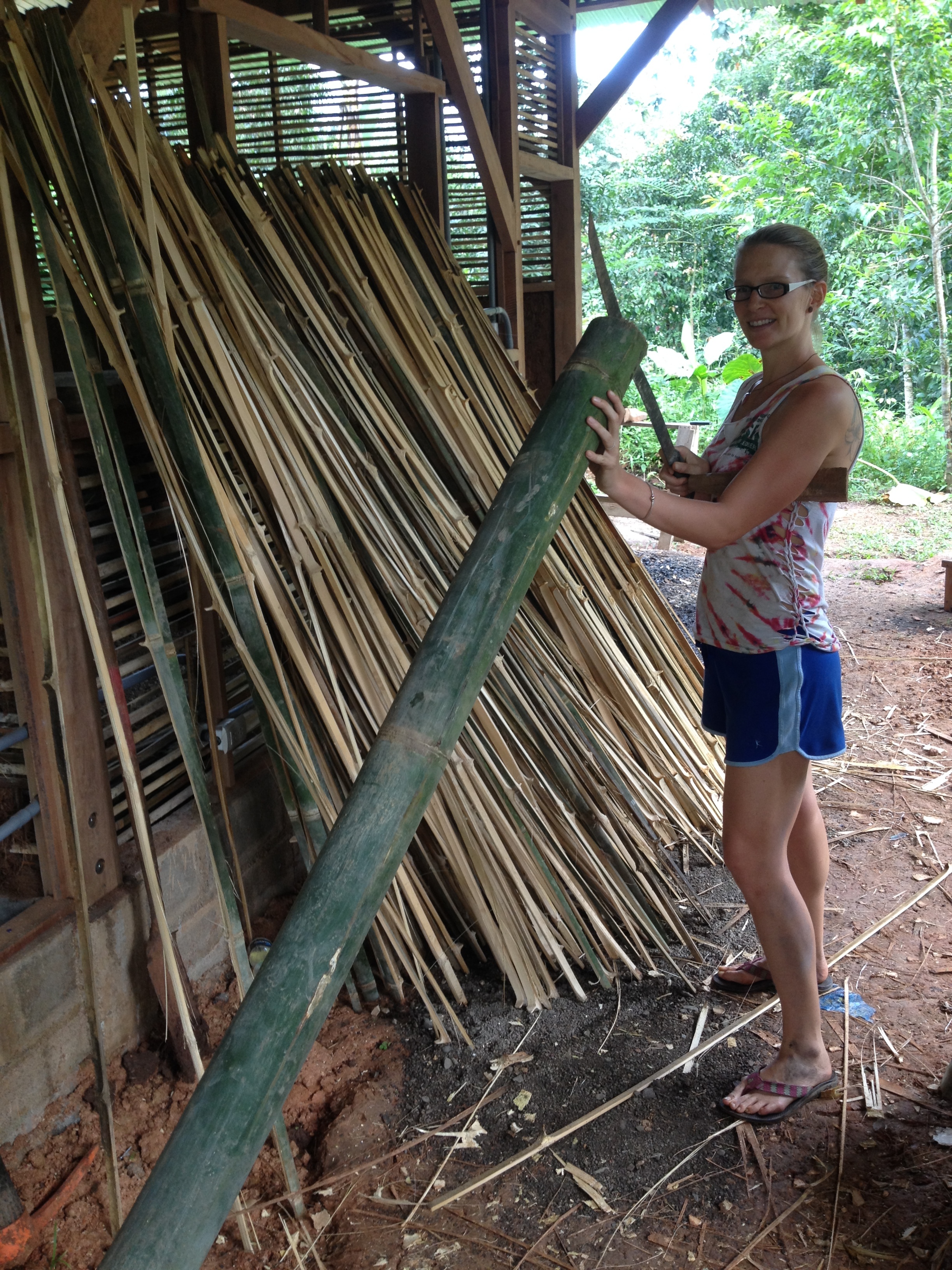
· Wattle and daub: utilizes an abundant resource of bamboo as the wattle, and the thin walls of daub are fast, efficient, and cheap to install. Provides privacy, security, and protection for your home.
· Natural plasters: a logical plaster to put on top of an earthen wall.
· Earthen floor: a perfect combination with a stem wall. Utilizes natural and abundant materials. Far cheaper than concrete or wood floors.
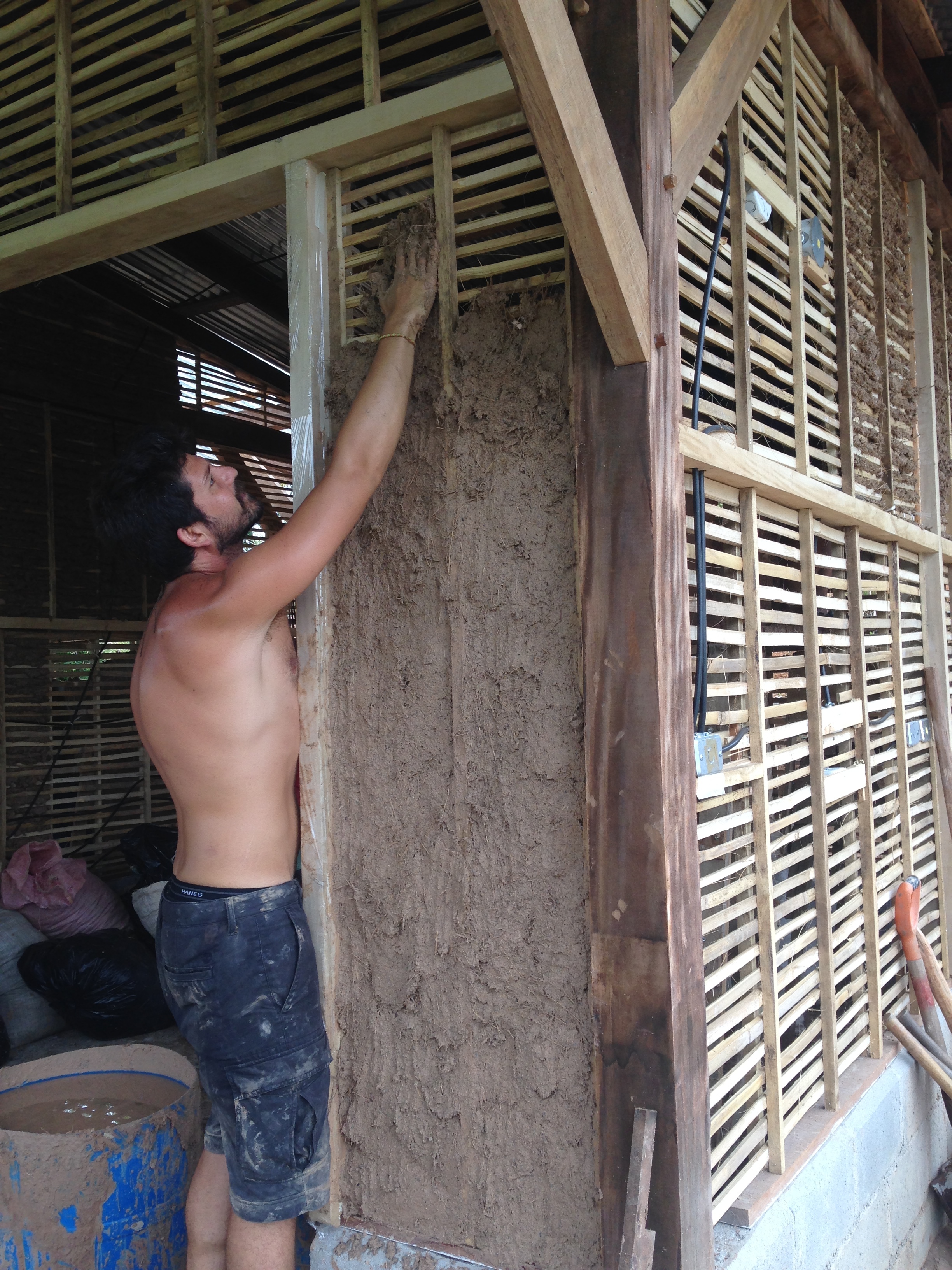
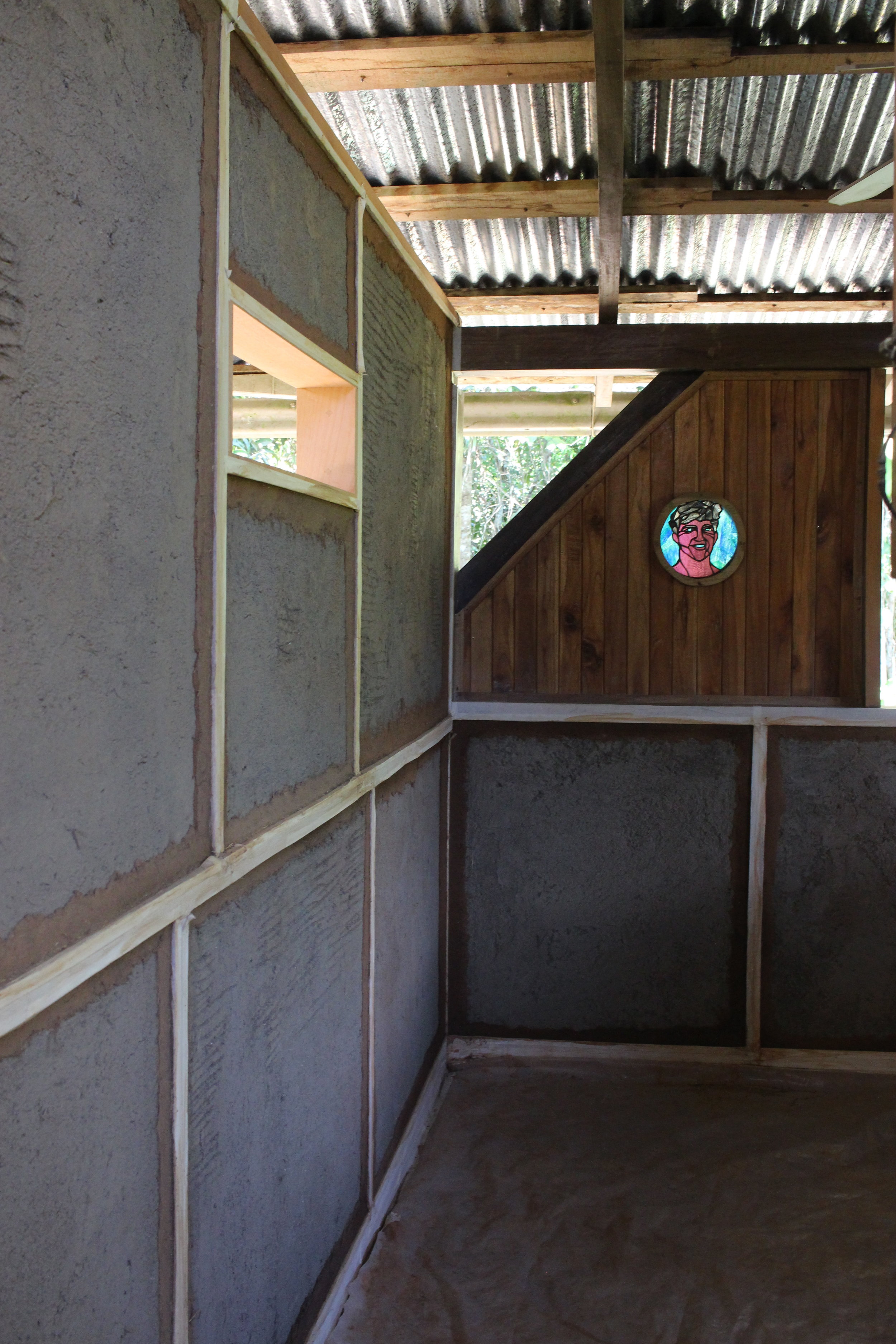
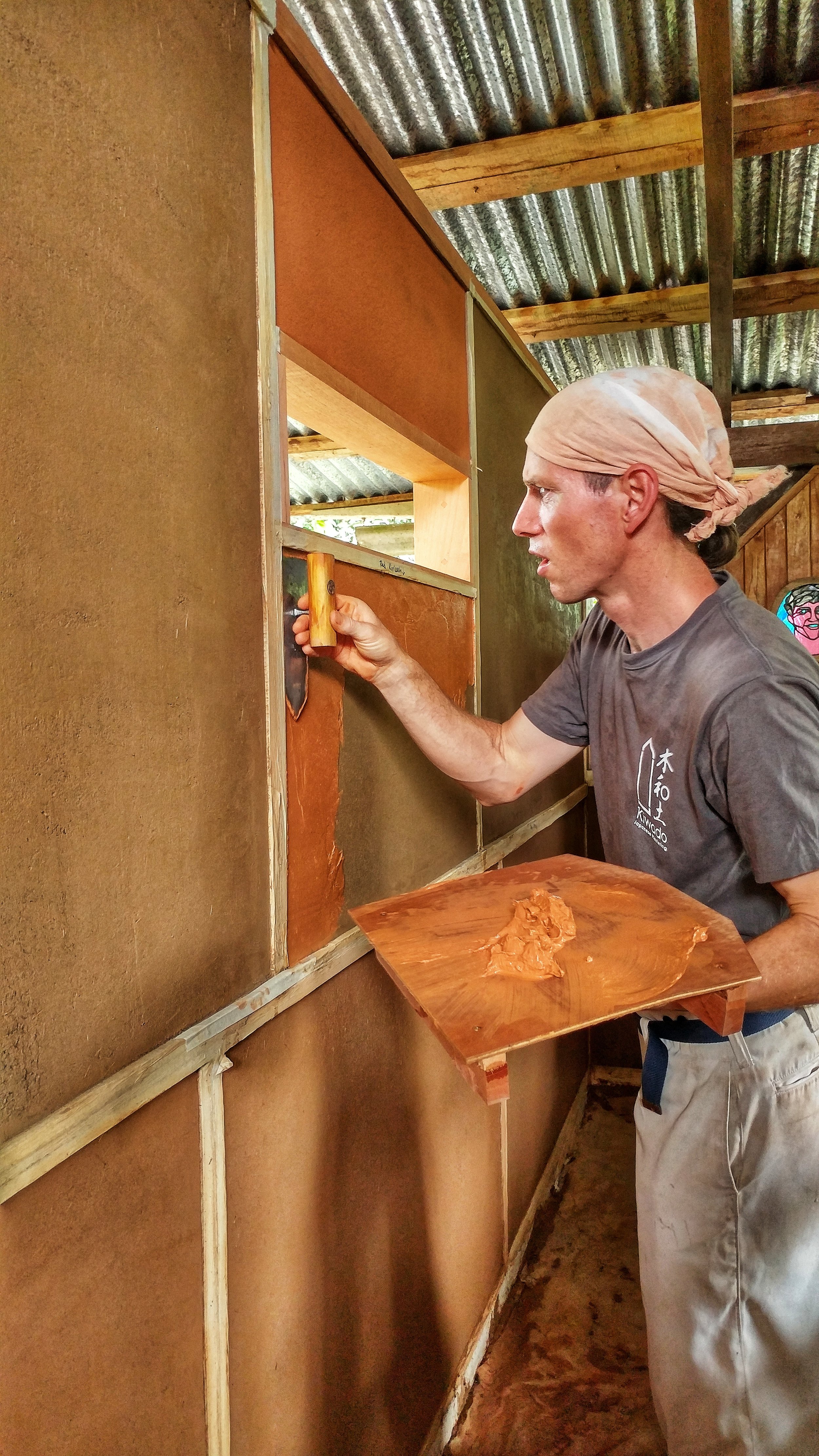
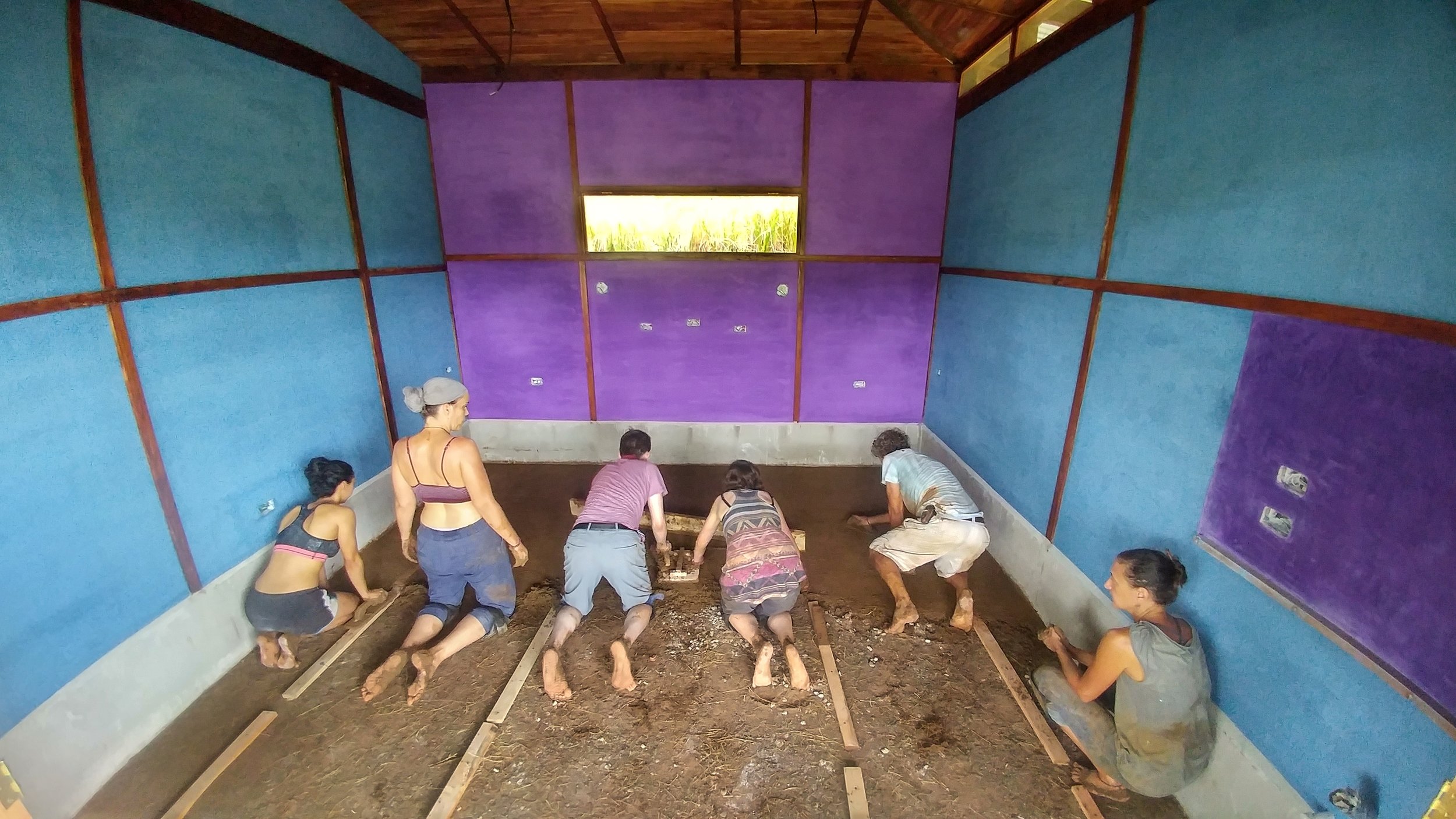
Other design considerations to include in your sustainable home are the following:
· Trees near building site: this is a double edge sword when it comes to building. You want the shade provided by trees, but the risk of them falling on your building is worth considering too. And their root systems can damage your foundations.
· High and insulated ceilings: increases construction cost slightly, but the extra space in your building creates a more comfortable temperature.
· Large overhangs: provides additional covered space around your building, protects areas from the sun, and is essential to protecting your earthen walls from the rain.
· Air flow and fans: depending on exactly where you are, even with a well-designed house you may need the addition of a ceiling fan.
· Covered drying space: always a benefit when it’s raining!
· Outdoor and indoor spaces and screens: it is nice to have spaces that are screened off and those that aren’t so that they can be taken advantage of at different times of the day and year depending on the heat, bugs, rain, etc.
· Orientation: think about where you spend most of your time and orientate those spaces to the best views. Also consider where the sun rises and sets and how that will influence the temperature in your house.

· Water run-off and drainage: make sure to have gutters on your roof and move water run-off away from your foundations.
· Road access: pretty essential to getting anything to your house! Examples: building materials, groceries, etc.
These are some great pointers to start generating ideas of what you would like your house to look like. At the Ranch we are interested in empowering individuals to develop the skills to build their own dream home. If there are some things that we have forgotten please let us know in the comments section!
want to learn more?
If you think this is an interesting article and you are interested in green living and designing your own sustainable home consider joining us for one of our annual workshops. Generally we host a Timber Frame Construction and Natural Building & Plasters Intensive . We will also have lots of other amazing workshops focused on the subjects of sustainable living. See our website for more info!
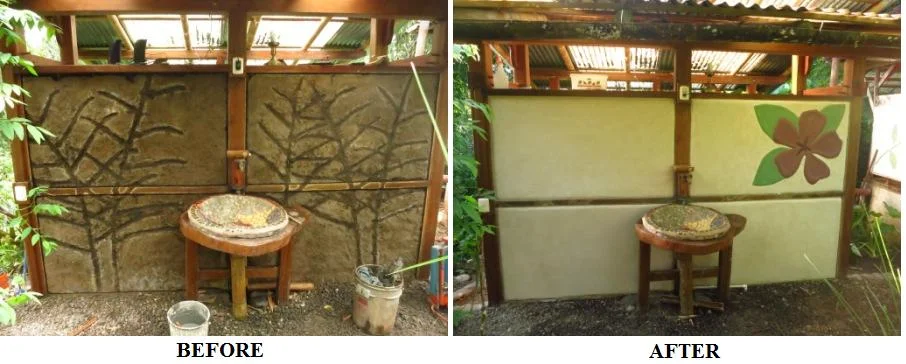
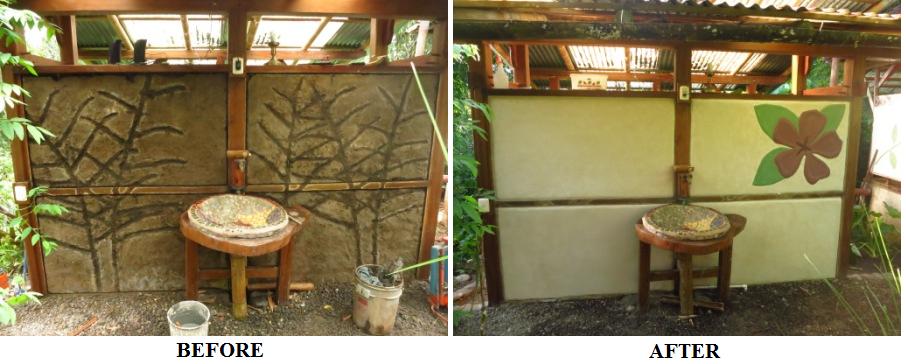
Re-plastering: What will be unveiled?
On the building list one of our goals is to correctly re-plaster old structures to enhance their look and highlight our unique architecture. Over the last couple years we have slowly been giving our old structures new face lifts. Using lime plaster techniques that we have been learning, practicing and perfecting we have transformed various run down plasters into beautiful canvases of art.

On the building list, one of our goals is to correctly re-plaster old structures to enhance their look and highlight our unique architecture. Over the last couple years we have slowly been giving our old structures new face lifts. Using lime plaster techniques that we have been learning, practicing and perfecting, we have transformed various run down plasters into beautiful canvases of art.
This process of remodeling never fails to reveal a variety of problems and headaches. We have learned that you never know what will be exposed once you start to take apart a wall for re-plastering and patching. So, as we have been going back to old structures to prepare for a face-lift we have encountered many different troubles due to past techniques.
In order to apply a new lime plaster you must remove all material from the wall that seems loose or may not allow the lime to adhere well. This is done by chiseling off old plaster materials, which can lead to more of the wall falling apart than planned. Once you’ve taken off the old materials you must go back and fill in the gaps created in this process; which can be a lot of gaps! The quality of the original wall is a big determining factor in how quickly (or not so quickly) this whole process will take. Therefore determining the amount of time a project will take is extremely difficult; you can make an estimated guess, but depending on what you uncover the estimate can change drastically. As in any remodeling job you just never know.
You can tell the difference between the walls that were built patiently with skill to those hurried by the physical amount of material falling off. There are a variety of reasons why there is so much variation in the quality of our walls, but we believe it is mostly due to the transient workforce that was utilised to build many of these structures. High school groups, short term volunteers, and so forth have built much of our campus. Lessons learned during one construction project were not always carried over to the next due to this lack of consistency. It resulted in a huge variety of quality and decisions were made that in reflection were not the best.

During our long evolution we have tried many different earth building methods, mixtures, materials, and tricks with varied success. For example, our previous wattle and daub methods used little bamboo wattle support meaning that the earth mixture didn’t have enough support and the walls ended up being a little wobbly. Now we have moved to weaving many bamboo strips between the uprights, spacing them about one half inch apart rather than a few inches. Our earth mixture has changed through the years as well, experimenting with the ratios of clay to sand, the additions of manure, different straws, and other materials that we were told would make the mix better. We went through a phase of adding manure to our earth mixes and applying a “poo schmer” as a plaster. Looking back the additions of manure possibly led to a weaker final mix and the schmer although an effective plaster was not ultimately what we wanted aesthetically. It has since proven difficult to remove in order to apply a finish that we actually want. We didn’t realize the importance of compressing the edges of your walls, which have resulted in cracks around the edges of our wattle and daub panels; or the importance of bridging between two different materials (eg. wood to be covered by earth).
Over the years there have been many different techniques used and we believe for the moment that we have developed the mixes, techniques, and materials that get the job done efficiently and create great looking walls and structures. Among other plastering projects the main one for this year is to re-plaster the Casucha inside and out, using a method called “poor man's” tadelakt on the inside and a sponge floated exterior. Stay tuned for pictures of the finish!
Categories
Topics
- Agriculture 6
- Agroforestry 21
- Animals 2
- Apprenticeship 19
- Appropriate Technology 6
- Backpacking 1
- Bananas 1
- Basic Pantry 4
- Biochar 1
- Books 3
- Build Your Own Home 1
- Central America 5
- Chiles 1
- Cinnamon 1
- Clay Carving 1
- Climate 2
- Climate Change 1
- Cob oven 1
- Communication 5
- Community 24
- Compost 2
- Composting Toilets 2
- Condiments 1
- Conservation 2
- Cooking 4
- Costa Rica 18
- Design 10
- Earthen Construction 10
- Eat Local 2
- Ecohome 1
- Education 9
- Environment 3
- Ethics 4
- Farm to Table 12
- Fasting 1
- Fermentation 14
- Food 22
- Food Choices 8
- Food Forest 8
- Food Processing 15
- Food Systems 12
- Gap Year 1
- Gardening 5
- Ginger Beer 1
- Harvest 2
- Health 12
- Healthy living 5
- Homemade 2
- Homestead 8
- Internet 2