

BLOG
Stories, articles, and updates from the Ranch community.

Our Natural Building World
In the natural building world at Rancho Mastatal there is no lack of projects to be done. I think as a team we have collected a list that will take us past 2020. And we already have been building our infrastructure for the past 16 years. One could say we are natural building addicts!
Our Natural Building World

In the natural building world at Rancho Mastatal there is no lack of projects to be done. I think as a team we have collected a list that will take us past 2020. And we already have been building our infrastructure for the past 16 years. One could say we are natural building addicts!
But as Rancho Mastatal grows as a community, education center, and business our building list keeps getting bigger to accommodate our many needs. Although the upfront cost of building infrastructures is high in the long run the benefits should pay back plenty.
Taking stock of the different building projects that started and finished in the last year amazed me. Up until then I hadn’t thought about all that was accomplished. It is good to step back and look at the full picture, to feel satisfaction for what you have achieved. Especially in those times when you have been working on the same project for what seems like decades.
Here is a brief rundown of what was started or finished in the natural building world at Rancho Mastatal in the past year. With the help and hard work of our core team, apprentice crew, and our local staff we are proud to have accomplished so much!
We began our season with building and completing a timber framed compost toilet for our dorm room. We realized that it was finally time to have two toilets to a house that fits 20! This has definitely paid off!

Then we gave the two bedrooms at the Casucha a face lift. After removing the old plaster, we brightened the place up with a natural lime plaster finish inside and outside. Then we installed a beautiful hardwood floor.
We were honored to have Benito Steen, an amazing natural builder and plasterer, come down to live and work with us for six weeks. In that time, he taught us many new methods for building and plastering. Including a new, lighter earthen mixture for wattle and daub that has revolutionized our wall building; recipes and methods for Japanese clay, lime, tamped earthen floors; a bomber clay, lime, straw plaster; and just his overall skills in the entire building world! Along with all that, Benito helped us finish the floors and walls at the Honey Hut shower.
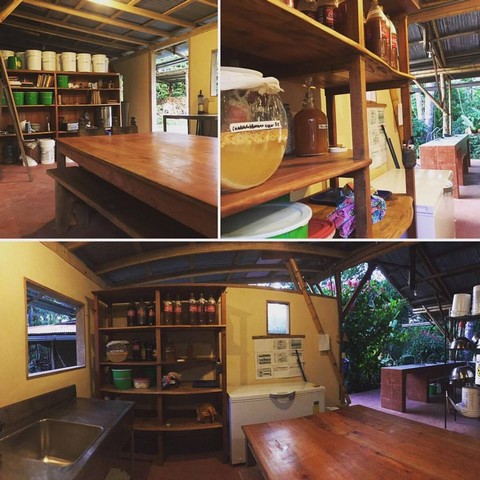
After a year of construction, in which nearly every group that came through our doors contributed to building the walls; we were delighted to finish the food processing kitchen wattle and daub walls and apply a beautiful burnished lime plaster. The entire food processing kitchen is coming together nicely and providing an area to productively accommodate the many needs surrounding food for our community.

Even with all the building we still seem to have a lack of space. With the hope to have 6-7 apprentices each year, and our current apprentice house only fitting 5, we decided to renovate our old goat barn into apprentice quarters. This structure was started in the Natural Building Course, and will be finished by our current year long apprentices. In the course, students learn to build various different walls systems including: wattle and daub, adobe brick, and cob. We are imagining this as a good cabina for a couple or two single apprentices.
While this was all happening, we also started the foundations and timber frame for our new 800 sq. foot guest cabin called Bernie’s Bungalow. By mid-season we raised the timber frame structure and began to frame the walls for the wattle and daub. We started the wattle and daub walls with our apprentices and then pushed them forward with a Natural Building Practicum which proved very successful. We are excited to finally be done with the walls for our guest cabin and beginning the process of plastering, making the earthen floors, furniture, and everything else to make this a cozy tropical space.
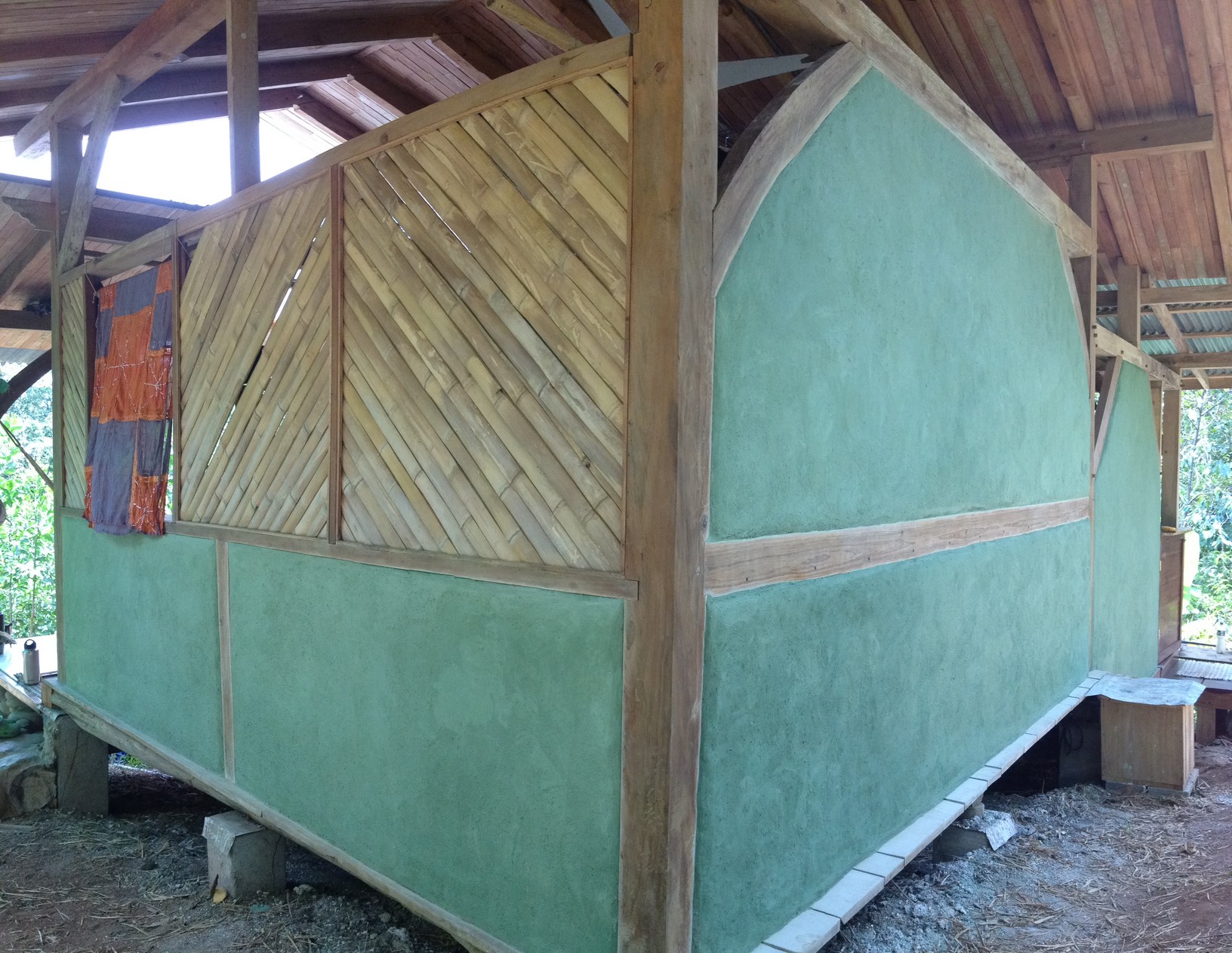
Finally, somewhere in the mix of all this natural building being done throughout the Ranch. We ran a ten-day Timber Framing Course with our good friends Skip and Lizbeth. In this course, we cut and rose the frame for Nic and Ali’s house. We are running a seven-day Natural Building Practicum from May 24th-30th. In this practicum, we hope to be able to start and finish all the wattle and daub walls for this house. It will be a big task, but we think we can make it happen! Participants pay a nominal fee that covers the cost of their food and we spend a focused week long period working on the walls. This allows much faster progress not just because of the focused time but because you can see the walls going up so fast it keeps you motivated, excited and learning. This is a great opportunity for anyone who would like to get some experience of building with earth, work with skilled professionals and come and visit the Ranch for a very affordable “working holiday” or break.
There it is; a recap of our past year's natural building season. Not too shabby of a list. In the process, we have learned a lot, discovered new methods, and bad methods, and everything in between. Even after all these years of natural building at the Ranch there is always something new to learn. We are thankful for all those natural builders that have and will come through Rancho Mastatal.
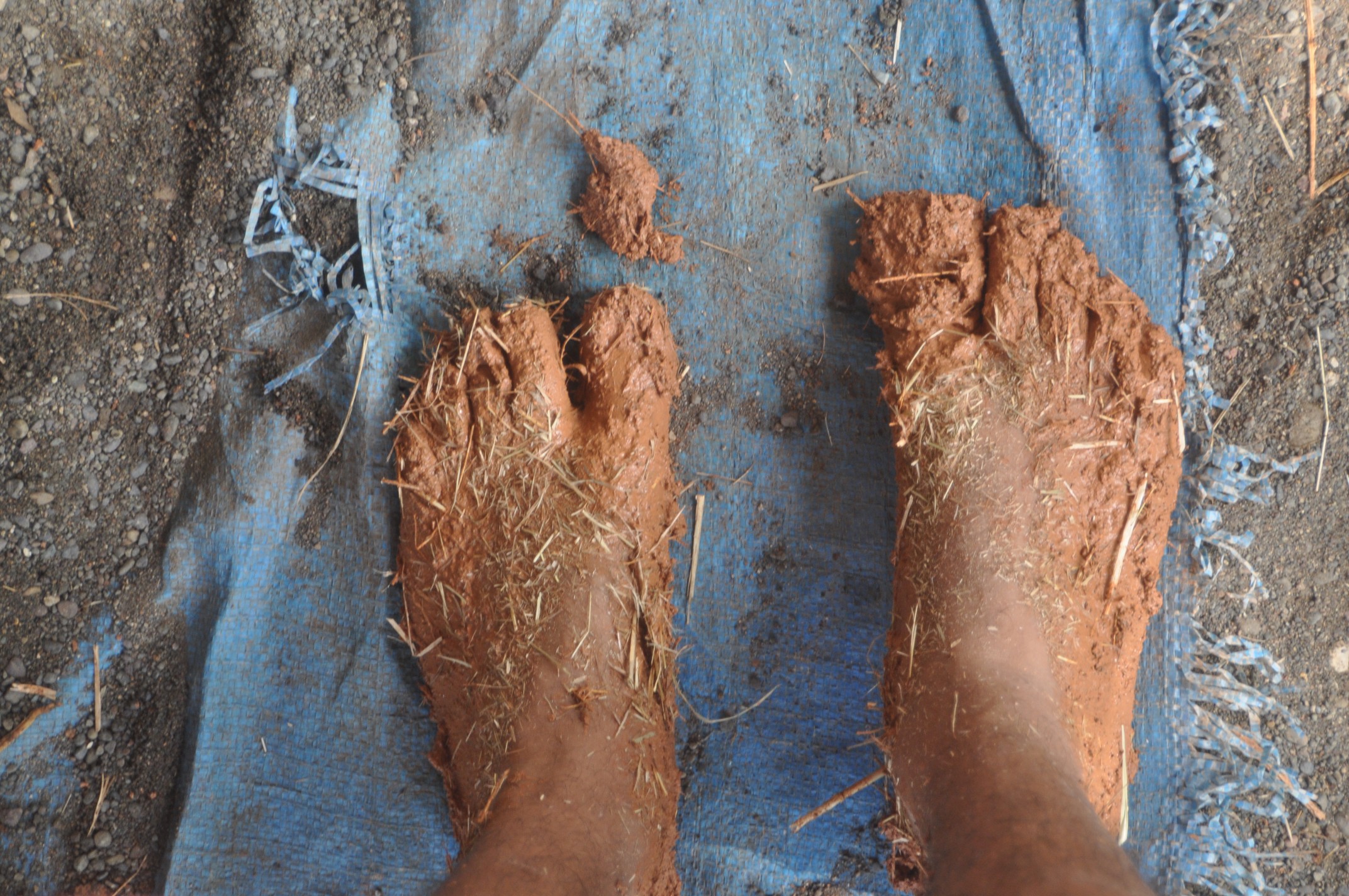
Cheers to muddy feet!
Across the Permaculture Universe
We still have space in a few upcoming workshops:
- The Art and Practice of Live Culture Fermentation
- Plants as Medicine: Reclaiming the Art of the Home Apothecary
- Agroforestry Skills Inspired by the Forest
Help us spread the word and fill them up!
We are also starting to interview and accept 2018 apprentices. If you know anyone who is seeking a life-changing experience please send them our way.
Abrazos
The Ranch Crew

Orienting Oneself to Mastatal
If you’re anything like me, then you will find Rancho Mastatal to be a place of incredible beauty, endless inspiration, and powerful community. Even if we have very little in common, you will certainly find it to be unique. Among ecovillages and permaculture communities, over the years Rancho Mastatal has developed a reputation for its intricate systems, well organized educational programs, and gorgeous natural buildings that sprinkle the 300 + acre Ranch.
Orienting Oneself to Mastatal

This post was first published at the blog Fed by Connor. Connor is one of our year long apprentices.
We are now interviewing applicants for our 2018 apprenticeship program. Help us spread the word by sharing this blog post!
If you’re anything like me, then you will find Rancho Mastatal to be a place of incredible beauty, endless inspiration, and powerful community. Even if we have very little in common, you will certainly find it to be unique. Among ecovillages and permaculture communities, over the years Rancho Mastatal has developed a reputation for its intricate systems, well organized educational programs, and gorgeous natural buildings that sprinkle the 300 + acre Ranch.
Mastatal is a small rural community in central Costa Rica near the Pacific Coast, roughly a three hour drive from the capital, San Jose. In Mastatal things come in singles: there is one dirt road lined by the local bar, one restaurant, a school, community center, convenience store, and a soccer pitch. Although the community center technically provides wifi, it usually doesn’t work, which can add to a sense of isolation that can feel simultaneously liberating and stifling. Despite its size, the Ranch sits in the heart of the community. From the main house you are a stones throw away from the bar, and you can often hear music echoing across the valley as the locals unwind in the evening over one of the two Costa Rican brews.
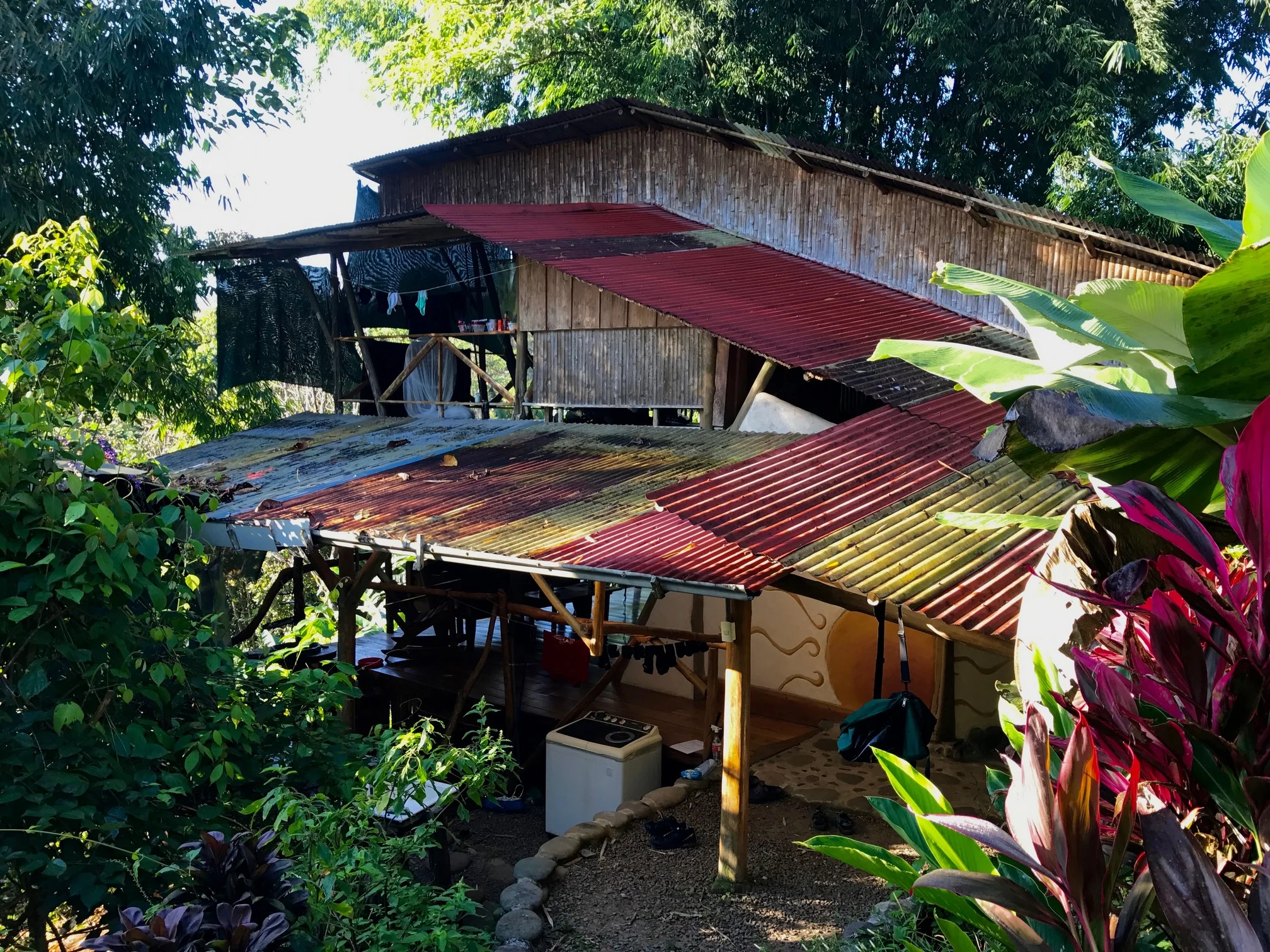
To orient oneself in Mastatal, especially coming from an urban hub like Los Angeles, requires a letting go of one's typical expectations. Many of the core team describe this experience as “losing oneself in a humble task,” or to be more accurate, a series of humble tasks. Fortunately, at the Ranch this is easy. Days here are filled from dawn until well past dusk, leaving precious little time to contemplate how or why someone has arrived in this space. Although often simple, each task requires focus and care in order to do well and avoid personal injury.
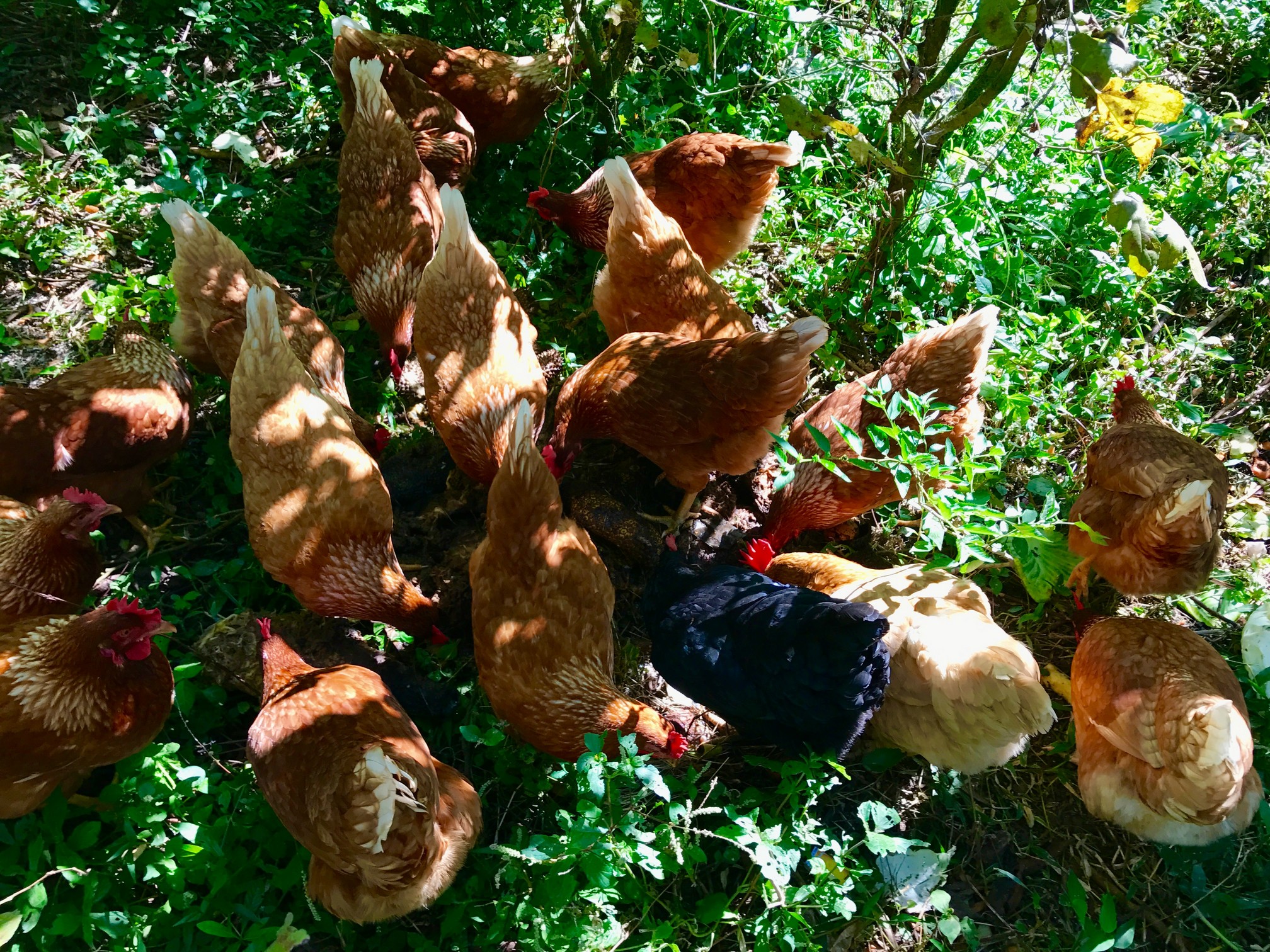
As an apprentice, our mornings begin at 6:00 am with “life skills.” These individual pre-breakfast chores make up the basic activities that are necessary to keep the farm running. These include managing the firewood, bio-digester (more on that later), and chickens; harvesting salad greens, caring for the main house/kitchen, nursery, zone 1 gardens, and orchards. To ensure that we gain experience in each system on the farm, the apprenticeship program is designed for us to rotate among the life skills on a monthly basis.
These tasks need to be completed by 8:00 am when we have a group breakfast, which depending on the number of visitors at the farm can range from 12 to 50 people. Cooking and cleaning shifts are also traded on a rotating schedule. After breakfast, all the apprentices chip in on a “work party” to help complete the larger projects around the Ranch. This can include trail building in the orchards, weeding and prepping new beds in the gardens, harvesting jackfruit or bananas, processing food for the kitchen, or even helping to build a new structure on the property.
At 1 pm everyone breaks for lunch. Nearly every meal served on the Ranch includes rice, beans, and a fresh garden salad prepared each morning. To add a little variety to the meals, each dish also includes something a little special. Whether it’s emplatanados con queso, fresh hand pressed tortillas or homemade dosas, each meal comes with a treat to avoid the monotony that is risked when eating arroz con frijoles three times each day. On the side, fresh salsa and a kefir dressing made from local cows milk and fresh herbs make each dish a true delight. To drink, there is fresh coffee from local shade grown beans, water kefir soda filled with pro-biotics to improve digestion, and a house-made rehydration drink (think homemade Gatorade) that is packed with electrolytes to prevent dehydration during long days working under the sun. In the evenings, there is even country wine or “hooch” as it is called here, that is fermented using yeast, water, local unprocessed sugar, and whatever fruit happens to be in season (jackfruit and passion fruit are two of the local favorites).

Afternoons at el Rancho are more varied. Three days a week this time is reserved for Personal and Practice Time. On the Ranch, one quickly realizes that these are extremely valuable chunks of time and can be used for many things, although jerking off in the apprentice house while a tour goes by (as the orientation packet mentions) is not one of them. It is however a great time for writing, taking a nap, swimming at the local waterfall, calling family, or sharpening one's tools; just to name a few examples. During the rest of the week, the afternoons are reserved for additional work parties, community check-ins, or cooking depending on the day.
Dinner is served every day (except Sunday) at 6:30 and begins with “circle time,” one of the oldest traditions on the Ranch. This time is nothing more, and nothing less than an opportunity each day for the entire community to come together, hold hands, and offer thanks (if one is so inclined) for anything/everything they are currently feeling grateful for. It is a brief yet powerful ritual that allows everyone to slow down, take a deep breath, and appreciate the wonderful space and community everyone here is privileged enough to enjoy. Afterwards dinner is served! The only rule is, be kind and respect those behind. This usually means there is more than enough for everyone, although specialty items (like guacamole) can mysteriously disappear rather quickly. The last person through the line rings the bell, meaning seconds are up for anyone still craving more.

After dinner and clean up, if you’re not ready for bed at 7:30, which is often the case, there are always a plethora of interesting people to chat with over a beer or glass of hooch, and any number of board games to be played until late into the evening (and by late I mean 9:30, because by then you will DEFINITELY be ready for bed). After lying down and becoming one with your mattress, dawn will come suddenly and this routine will repeat itself seemingly on end. At the time of writing this however I have now been here for two weeks. I can already tell that one day soon I will look up, only to realize it’s already December, time to pack my bags and head back to the “real” world. One lesson this experience has already taught me, however, is that for the individuals who make up this community, Mastatal is the real world, not just a temporary excursion. For those who choose to step outside the typical expectations of industrialized society and reconnect with the roots of human civilization, this is an obtainable lifestyle. Whether you want this world or the chaos of our modern cities to be more real, is up to you to decide.
Across the Permaculture Universe
We have a few spots left in our upcoming Fermentation Workshop! Learn the art and science of making microbes your allies.
Many of our core team members are starting to show off their work through some great photos on instagram. Check out Ali, Rachel, Laura, and Scott!
Our friends at ECHO have a new Central American and Caribbean forum, including development notes dedicated to this region. We are hoping to start sharing our work through their publication in the months ahead.
Abrazos
The Ranch Crew

Getting Inspired About Natural Building
Over the years of natural building at Rancho Mastatal my feelings on the process have gone through many stages. From the initial excitement of- wow, how cool you can build a house from the materials on your land, and all it takes is time, practice, and anyone can do this! To over time, after building many walls, an understanding of how long it takes to build a natural home and all the work that it entails.
Getting Inspired About Natural Building

Over the years of natural building at Rancho Mastatal my feelings on the process have gone through many stages. From the initial excitement of- wow, how cool you can build a house from the materials on your land, and all it takes is time, practice, and anyone can do this! To over time, after building many walls, an understanding of how long it takes to build a natural home and all the work that it entails.
The style we use at the Ranch for many buildings is a timber framed structure with wattle and daub walls. This is a faster and more effective method of building a natural home than say a pure cob house, which requires much more materials and time. Although, wattle and daub is a faster method, it still takes a fair amount of time and labor. Over the years my excitement for building wattle and daub walls has decreased as I’ve experienced the long, slow, drawn out process of it. Until this year when my hope for natural building was born again!
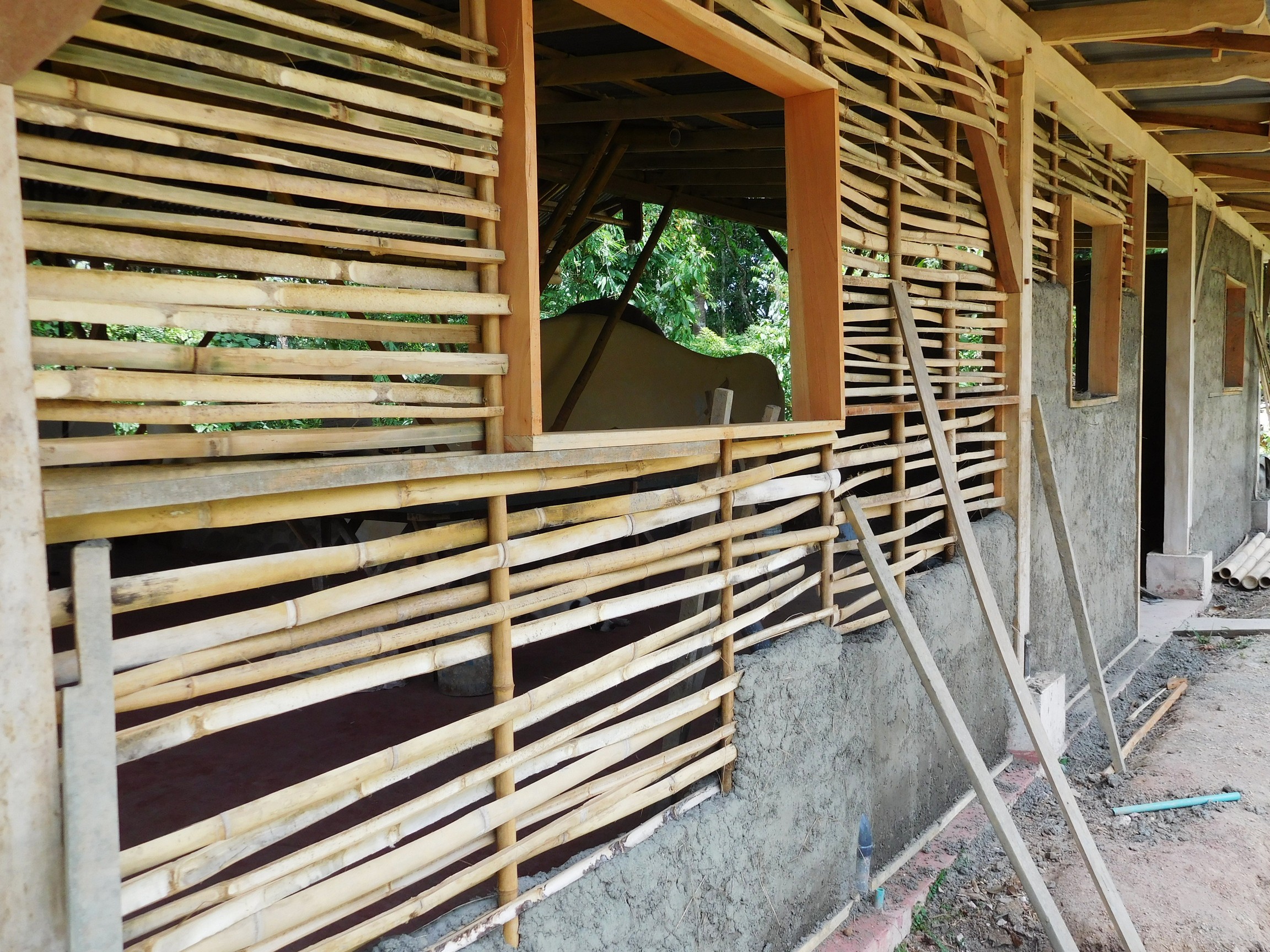
In the past years, we have purposefully left building projects for our educational groups, in order to give them the experience of natural building. Last year it was the walls for the Food Smithery, the year before that was the walls for the Honey Hut shower, the list goes on and on. This year we decided to try a different method in order to move our new guest cabin, Bernie’s Bungalow, forward faster.
Every year we host a Natural Building Course. This course is 10-14 days long and is an intensive break down of many different styles and methods of natural building. This course is more expensive because we bring down well known natural builders from around the world, the students get a diverse exposure to different topics, and hands on experiences with natural building. In these courses the students work on different structures and move projects forward around the Ranch, but finishing a project isn’t the goal for this course because of the wide range of topics covered. So, we decided to trial a Natural Building Practicum. A week-long program that was affordable, but more labor intensive. With the goal of finishing as many wattle and daub walls in the guest cabin as possible.
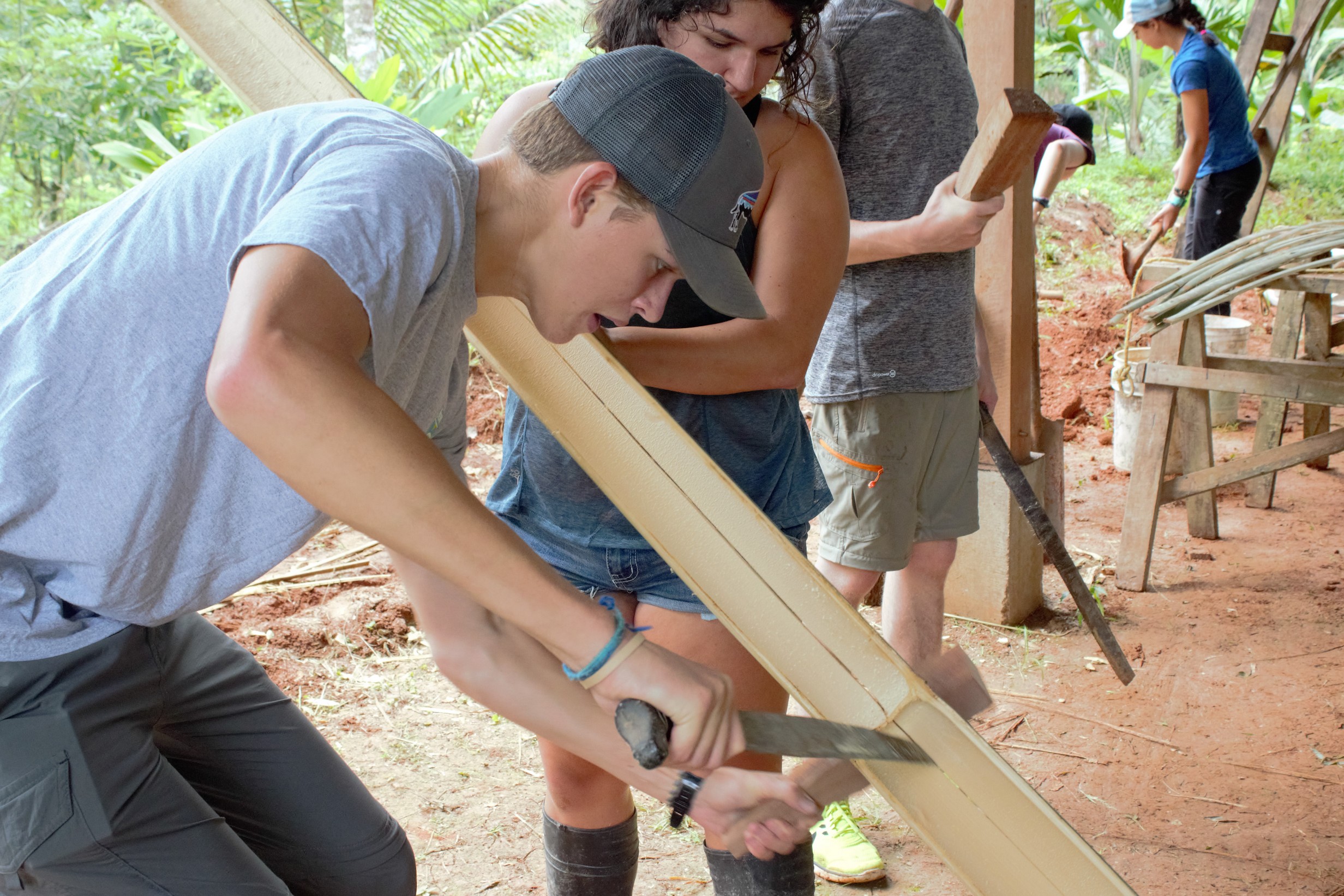
In December we received eleven sign ups, from people from all over the world that wanted to have a hands-on experience with natural building and an affordable way to visit the Ranch. Our first Practicum was under way!
The experience was amazing for myself and I believe the group. We watched every day our progress get better and better and the walls get higher and higher. We worked every day from 9am-5pm for a week. We developed a good system for rotating through the different stages: sifting clay, hauling sand, making mix, and applying to the walls. There were no lectures, power points, or hand outs to this practicum, but there was a general overview of wattle and daub, lots of teachable moments, and many questions from the students as we worked. It was a long and exhausting week, but with that many hands it made the walls fly up!

This made a world of difference to my opinion on natural building. Instead of slowly watching a building get put together over a years’ time, and never really feeling like you accomplished a good amount of wall building in a session. This practicum made it feel like natural building didn’t have to be such a long burden. It gave me satisfaction to see what many hands, working hard for a short period of time can accomplish. I don’t want to sound like natural building is a huge burden and that no one should take on a project, and of course buildings can be built over time with just a few people. But when you have as many buildings on the list as we do it really makes a difference to the moral if they can get pushed forward at a reasonable speed.
We will be offering another Natural Building Practicum from May 24th-30th, 2017 (cost $120 for 7 days). The structure that we will be working on will be much smaller than the guest cabin and we hope to be able to start and finish the entire wall system with the group! So if you’re interested in coming down to stay at the Ranch at a very affordable rate, get a little dirty in the mud, and probably sweat a lot then sign on up and we will see you in May!
Across the Permaculture Universe
Our friends at Black Sheep are promoting a new model of regenerative resource management in Costa Rica. For the last few years they have been finding vulnerable properties in the Puriscal region and bringing together investors to purchase the land and plant timber trees and cash crops. They have once again hired Scott and Rachel to complete the permaculture master plan of a 300 acre property. We are excited to partner up with so many great local change-agents on another great project.
Speaking of permaculture master planning, we want to give a shout out to our friend Zach Weiss of Elemental Ecosystem. Zach is Sepp Holzer's protege and a young permaculture designer you should be paying attention to, especially if you are interested in water management!
And for anyone feeling generous, long time Ranch friend Eileen Richardson is part of the Rocky Mountain Land Library which is on the last leg of a Kickstarter campaign. They are hoping to transform an old cattle ranch into a home for writers and artist. Please support!
Abrazos
The Ranch Crew

Meet our 2017 Apprentices!
Our newest apprentice team has arrived and settled into the Ranch life. They hail from across the United States and Latin America. They come from a diverse set of backgrounds and will undoubtedly shape the Ranch and our community deeply in the year ahead.
Meet our 2017 Apprentices!
Our newest apprentice team has arrived and settled into the Ranch life. They hail from across the United States and Latin America. They come from a diverse set of backgrounds and will undoubtedly shape the Ranch and our community deeply in the year ahead.
Our team is looking forward to working, playing, and feasting with this group for the next many months.
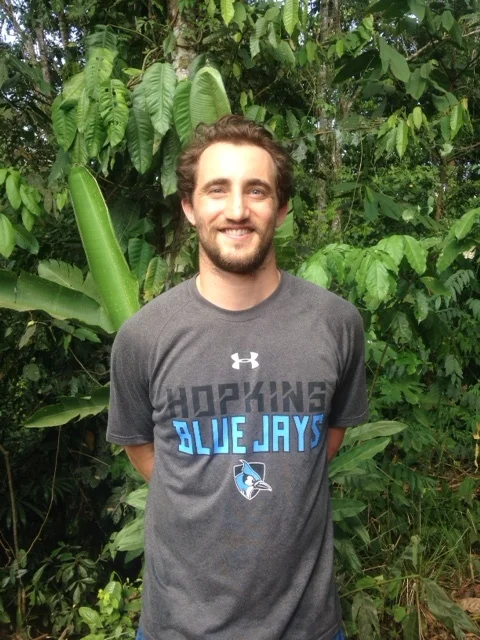
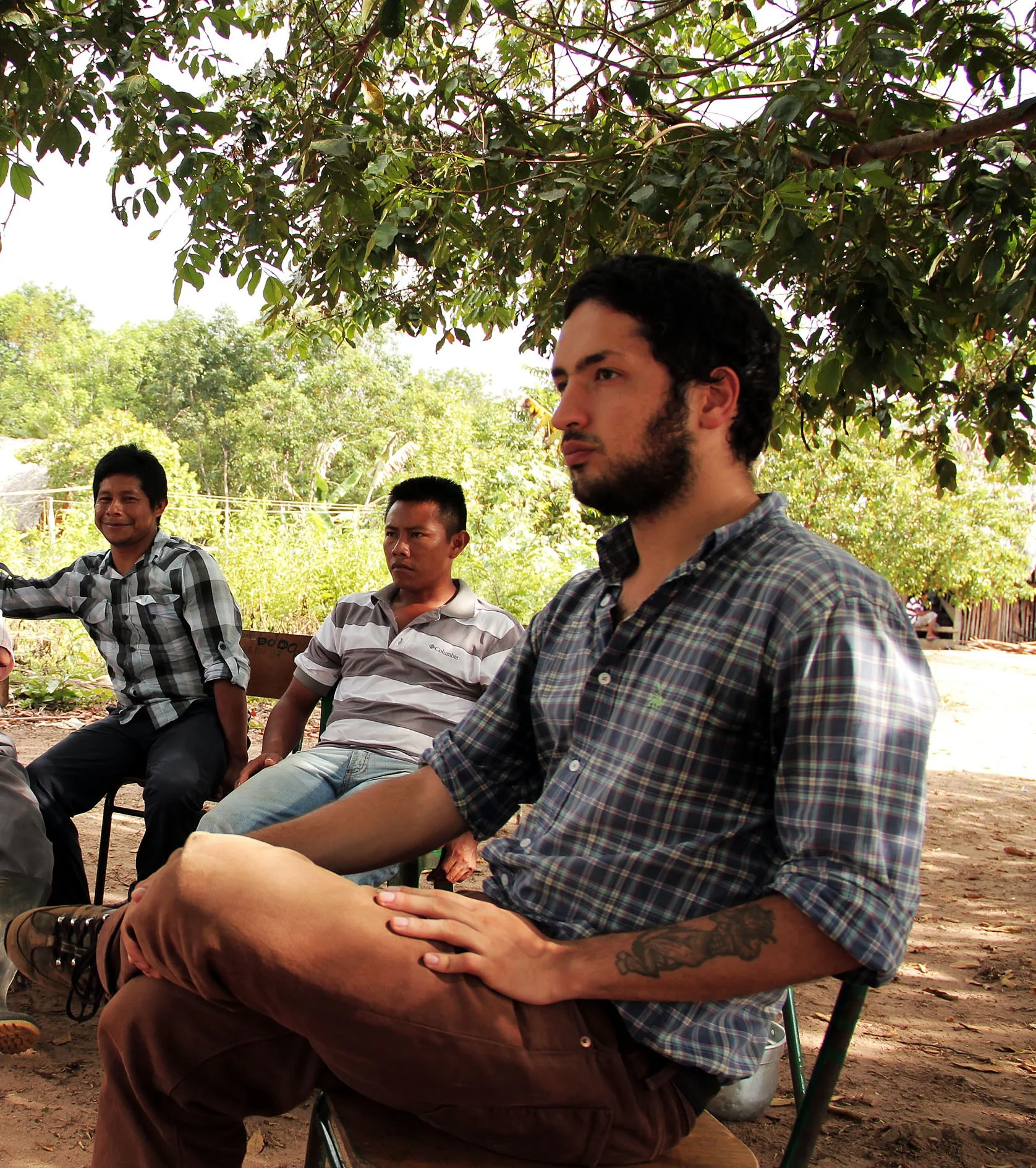


We are now accepting applications for our 2018 program and will begin interviewing in the months ahead. Check out the page here for more information.
Is one year too long? Then consider our Sustainability Primer program, which runs this fall for three months.
Abrazos
The Ranch Crew

Invisible Infrastructure: How We Build Our Lives Together
Developing the physical infrastructure of our campus gets me up every morning. I don't need coffee nor an alarm clock; I'm just excited to keep building. Building the orchards and earthworks, furniture for my home, a better feeder for our chickens; these are the projects that rev my permaculture engine. They are concrete, you can see the results of your physical labor immediately, and they are often the first projects of burgeoning permaculture sites. It requires little effort to dedicate the time, space, resources and money to these projects. Yet their impact on the success of a project, despite all this dedication, pales in comparison to another type of infrastructure; the invisible infrastructure.
Invisible Infrastructure: How We Build Our Lives Together

by former core team member Scott Gallant
Developing the physical infrastructure of our campus gets me up every morning. I don't need coffee nor an alarm clock; I'm just excited to keep building. Building the orchards and earthworks, furniture for my home, a better feeder for our chickens; these are the projects that rev my permaculture engine. They are concrete, you can see the results of your physical labor immediately, and they are often the first projects of burgeoning permaculture sites. It requires little effort to dedicate the time, space, resources and money to these projects. Yet their impact on the success of a project, despite all this dedication, pales in comparison to another type of infrastructure; the invisible infrastructure.
Although much harder to apply, invisible infrastructures are the most crucial aspects of successful design. They are intangible elements which determine:
how we exchange goods and services.
how we transmit knowledge and information.
how we make decisions in groups.
how we take care of ourselves.
They are our economic, legal, and interpersonal arrangements and dynamics. For many of us drawn towards living and working with others in community, it is the invisible social arrangements or infrastructure that we must strive to understand.

Structural Conflict
When working in community, the social structures become our guiding influence. They are the structured relationships which hold us together. They can be deliberately designed into the system--or they can be ignored.
Not choosing a decision making protocol, for example, does not mean there is an absence of decision making. Rather it means a pattern is generated spontaneously through a combination of each individual's personality and position in the group, as well as cultural and social standards. This un-designed protocol may work for the group, but more often than not it defaults to a cultural status quo of how power is carried by different types of people, and eventually becomes what we call a structural conflict.
Just as you can eloquently or poorly design a garden, the same can be done with our social structures. When there is a lack of good design, structural conflict occurs, and usually arises from two major themes of group dynamics: purpose and power.
Purpose
Purpose begets our vision and mission statements: why we are here and what are we doing together to accomplish this vision? Conflict around purpose can be recognized when ordinary issues become unresolvable and when decision making stalemates occur.

A classic example of this structural conflict occurred a few years ago at the Ranch. Our goats had begun to cause discord and stress amongst our team. One side valued their products (milk and cheese) and the opportunity they provided for visitors to experience milking animals for the first time, while the other side was frustrated by the amount of effort needed to generate these products and the goat system's larger lack of replicability and sustainability. Both sides understood each other, but it took many years and lots of conversations before a genuine agreement could be made about whether to keep the goats or not.
This agreement was only possible once our team stepped back to better determine our greater purpose (mission) and how the goats fit into this. We finally asked, as an education center, what type of education did we want to provide? Inspirational? The goats certainly accomplished this, it was often the highlight of short term groups and guests' visits. Or was it a practical skill based education we wanted to provide? At times the goats accomplished this, but it was not the sustainable animal husbandry program that we dreamed of and at times marketed.
While our team all valued the inspirational side of the goats, in the end we decided we wanted to be teaching hard, practical skills, that were transferable outside our gate, and the goats too often failed to align with this purpose. We also realized that we could achieve the goal of inspiration in other areas that were simultaneously more productive.
The stress that this structural conflict caused often felt like a personality clash, but in reality the clash was between the perceived difference of our purpose. This is an important point: structural conflicts often appear to be personal conflicts, but they are rooted in the way our invisible infrastructure is designed.
Power
Power, the other main structural conflict, can be defined as the ability to influence. When there exists an unequal distribution of this influence amongst the group, conflict occurs. Most commonly this is experienced through decision making.
This unmistakable conflict occurred back when our kitchen garden had too many cooks in the kitchen. It was unclear who was in charge and often the loudest voice won out. One long term volunteer in particular, felt very strongly about how the garden was supposed to be managed. If the moon cycle didn't call for weeding then we were told not to weed, despite an abundance of eager labor. Someone would plant something and someone else would pull it up a week later. Volunteers were making important decisions that affected a valuable space, and as they transitioned out our core team was left with the remnants.
Two core team members, Rachel Jackson and Laura Killingbeck, recognized the need for consistency and efficiency. But the situation was complicated because so many people felt strongly about what the space was supposed to be. In order to do their jobs, Rachel and Laura both needed to be able to make decisions in the area, but knew that if they didn't meet everyone's needs the space would ultimately not succeed. The two of them teamed up to lead the rest of the group to set goals for the area. Once they gathered everyone's input, they collated the goals and used them to design different options for the garden. They presented these options to the group, edited them based on group input, divided up the installation work, and carried it out.
Today it is this plan, created by two designers and based on the needs of the entire group, which holds the power over that space. Decision making still occurs with regard to the details, but the primary conflict--who gets to decide-- has evaporated.
Decision Making at the Ranch
There are many different forms of decision making; majority, concentrated power, consensus, and consensus minus one are common examples. At the Ranch, for the past year, we have been practicing consent decision making, adapted from the sociocracy governance framework. Consent is different from consensus.
Consensus decision making requires an affirmative from all group members to pass a proposal, and a single person in that group can also block that proposal. As many have experienced, this often leaves too much power with a single divergent viewpoint, which can stalemate any and all conversations.
Consent, on the other hand, also requires an affirmative from all group members to pass a proposal, but a single person can only block a proposal if they have a reasoned and paramount objection. A paramount objection is one of overriding importance, and means that something about the proposal will inhibit the individual from doing her or his job or from being well.
The philosophy of consent decision making is that the group functions as a single organism with shared goals. Each individual is a part of the organism. Therefore, the group actively asks members to reflect on proposals and express paramount objections when they arise, based on the idea that what is good for the individual will also be good for the group, and vice versa.

Creating Our Lives Together
Perhaps the best book on this topic, originally recommended to us by our friend Nate Sanders, is Creating A Life Together by Diana Leafe Christian. Leafe Christian researched intentional communities and ecovillages around the United States to determine why so many fail and what patterns emerged from the successful examples.
The most prominent lesson from this research is that so many seeking community also find it difficult to work out their invisible infrastructure. Whether it stems from a belief, common in spiritual communities, that one's group is mature beyond the need for these arrangements, or that those of us driven toward community have done so to remove ourselves from the legal and economic bureaucracy; it is apparent that many communities forget the power of these arrangements. They have the power to help us succeed or cause our demise.
For anyone seeking community, hoping to build their own ecovillage or permaculture cooperative farm, the following are the key invisible infrastructure that all successful community examples have in place.
Purpose and vision: Discussed above; are you on the same page about what you are trying to accomplish and how you will do so?
Decision making: Also discussed above as it relates to power. Agree upon a protocol and hold each other accountable.
Ownership structures: Be very clear about who owns what, power often resides here; and be very clear about how you would like to change this in the future.
Entry and exit strategies: How do new members join your groups and how do members leave, all without engendering resentment toward past time/money put in so that everyone is on an even playing field.
Finances: Get your house in order and be clear as day to how money can be spent, earned, and distributed.
Conflict resolution: Have a clear protocol for dealing with conflict. This doesn't have to involve deep, new-age personal reflection but it does need to make everyone feel safe.
Communication: When, why, and how do you meet? Separate meetings for big picture, planning conversations from those of the day-to-day work.
We seek community because we want to live with other people. We want to cultivate deeper relationships. We might believe those relationships are bomb-proof, that the above organizational structures are unnecessary, but above all they do one thing really well; they protect our friendships. And this is why the eloquent design of these structures into our lives is the most important part of permaculture design.
Resources
We the People: Consenting to a Deeper Democracy, A Guide to Sociocratic Principles and Methods by John Buck and Sharon Villines
Creating a Life Together: Practical Tools to Grow Ecovillages and Intentional Communities by Diana Leafe Christian

Permaculture Design Certification Course
Are you interested in learning more about designing invisible infrastructure into your community? Join our community at Rancho Mastatal this April and May 2017 for our annual Permaculture Design Certification course. The course is taught by a diverse team of instructors and is ideal for anyone who wants to:
Experience an established permaculture site in action.
Devote two weeks to an intensive learning process.
Learn from instructors who practice professional design and install work.
Explore rural Costa Rica, swim in breathtaking waterfalls, eat delicious tropical food, drink homemade hooch, play lots of futbol and frisbee, and make lifelong friends!
Abrazos
The Ranch Crew
Top Ten Tips for the New Apprentices
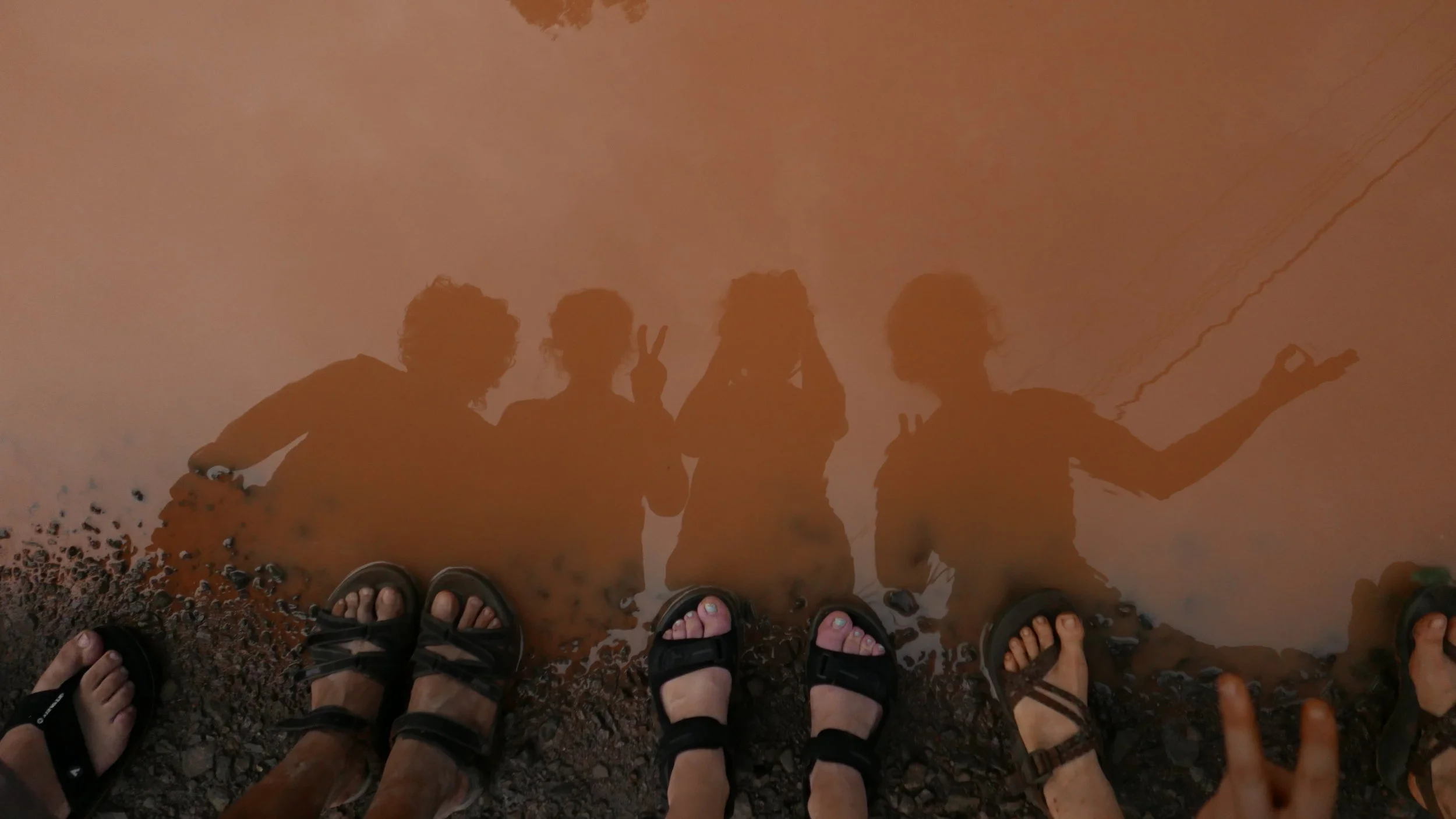
"Everyone is looking at my feet," I say to my dad.
"No they're not," he scoffs back. Sure enough, he glances sideways at a group of teenage girls eying my dirty toes clad in Chacos.
We are not in the jungle any more. It's December in New York City, I am traveling on the subway with a large backpack, and five layers of sweatshirts, never having worn more than one at a time in the tropics. Fresh off the airplane, here I am with my exposed feet and disheveled appearance-- "Is she homeless?" the girls snicker.
Top Ten Tips for the New Apprentices

This post is part of a series of reflections we are asking past apprentices to contribute to our blog. If you would like to share where you stand now and how your time at the Ranch effected your place in the world please write to scott@ranchomastatal.com.
"Everyone is looking at my feet," I say to my dad.
"No they're not," he scoffs back. Sure enough, he glances sideways at a group of teenage girls eying my dirty toes clad in Chacos.
We are not in the jungle any more. It's December in New York City, I am traveling on the subway with a large backpack, and five layers of sweatshirts, never having worn more than one at a time in the tropics. Fresh off the airplane, here I am with my exposed feet and disheveled appearance-- "Is she homeless?" the girls snicker.
I come home and sit under my first hot shower in a year and scrub the dirt from my feet. Goodbye Rancho Mastatal, I'll be seeing you one day. In the meantime, I have a new life to create. Sometimes reverse culture shock can be more cunning than culture shock.
In case you are one of the seven new apprentices and worried about the ensuing change, this article serves as advice come January 2017. Are you ready? To be ready, you must clear your mind. You'll never be ready. Those who don't know speak of it. Those who do know don't speak of it. To stay afloat in the presence that is Rancho Mastatal means just this. This will all make sense soon. Now for ten more pieces of advice in preparation for your apprenticeship.
My fellow apprentice crew enthusiastically chimed in for this article to not bring any white clothing. It is very likely to get stained by any number of hands on tasks. Even if you're not performing physical labor, even if you're just eating lunch, there's a good chance that anything white you wear will be found by a stain. The turmeric in the pickle is a renown dye, as is the achiote in the rice. Whole food diets, with their richly colorful displays, are your wardrobes' worst enemy. Even if your white blouse is hanging on a line miles from the orchards, the wood shop, the kitchen-- virtually every danger zone-- black mold will STILL find it, stain it, and make you regret bringing it. Tip #1: Don't bring white clothes.
Tip #2: If you are prone to stains but want to maintain your public decency, patterned clothing compensates (credit tip to Rachel Jackson).

Stains and patterns aside, there is another debate on the type of clothing appropriate for the tropics. Expect the climate to be humid and hot. Cotton is not your friend. It takes a long time to dry and harbors all sorts of odorous microorganisms. Tip #3: Bring clothing made from synthetic materials that are comfortable to wear.
There are times, however, when you'll want to look sharp. Welcome to the campo of Costa Rica. Ticos take public appearances seriously, so pack accordingly. I recommend bringing something that is clean and modest, not something too out there. This is a small village, after all, and it's more valuable to blend in. A brief study of Costa Rican fashion will reveal that it's not too different from most mainstream, Western cultures. Tip #4: Keep an outfit clean reserved for community celebrations and appearances.
On that note, Tip #5: In Costa Rican culture, if you do not smell good, you smell bad. A good soap and light perfume are recommended for community occasions. The jungle offers delectable scents that can be sourced from plant materials on the Ranch. Tip #6: If you want to dabble in the ancient and romantic art of perfume making, bring a little bit of Everclear, coconut oil, and a spritzer bottle. Creative inspiration soon to follow, but I've had great success with vetiver root, galangal, orange peel, and lemongrass.
This brings us to the toiletry topic. Some people bring a lot of toiletries. In my experience, I learned the unnecessary reality of many of the things that can be purchased from the drug store. With a clean diet, acne can fade, and pesty bugs can be deterred. The humidity keeps your skin moist, and most lotions just sweat off. You may even want to try to go "no poo" (that is, shampoo) method this year.
Tip #7: Abandon shampoo and conditioners. I had personally been avoiding chemical hair soaps for one year before the Ranch, but for other people, this may be a great time to go "no poo". It's usually within the first two months that hair builds up an excess of grease, then soon after, this balances out. Shampoo strips your hair of its natural oils, and conditioner replaces it with a synthetic luster. If you want to keep your hair clean with minimal input, try the baking soda and vinegar method. Use one tablespoon of vinegar for one cup of water. Shake in a bottle with a dispenser cap, pour overhead, and massage deeply into your hair. Rinse with water. Vinegar can also be applied to help balance the pH. Any type of vinegar will work just fine, and the smell dissipates quickly. After the initial grease sweat, your locks will evolve into tropical lusciousness.

You may be concerned about sunscreen. Despite my pale complexion, the sun was never an issue for me. This is because most of the time outside is spent in the shade. Cheers to the benefits of an agroforestry canopy! If you're working in the sun, you'll probably be sweating any sun protection off. Tip #8: Favor sun hats and long, light sleeves for sun protection. Despite covering your skin, you'll actually stay a lot cooler, too.
Bugs can be another nuisance. Mosquito populations are typically non-problematic until the rains hit in April. That's when populations skyrocket. Maybe you don't mind the cloud of deet, or natural sprays that are also available, but the reapplication of sprays can be resource and time intensive. Tip #9: Either you suck it up and evolve some better antibodies, or just cover up with long pants and sleeves, and CERTAINLY bring a bug net for your bed. I've laid on my bed in October, the wettest month of the season, and counted literally dozens of mosquitoes trying to pass the unbreakable seal. Fortunately none of the sensationalized diseases that mosquitoes carry made an epidemic in Mastatal, so don't stress about vaccinations or antibiotics.
If mosquitoes aren't the type to sweeten your inner naturalist's cup of tea, think about the things that do. Maybe it's plants, maybe it's birds. Whatever it is, make a point to recognize those things at home before you leave, because when you come to the jungle, it's all going to change. Tip #10: Recognize the fauna and flora in your new home to develop a sense of place. A sense of awareness and appreciation for your home's native creatures will make rooting a lot easier. The dormilonas, which bow down when you tap or pee on them, and the carpet like moss that grows in the tree nursery, or the sprawling herb with small white flowers with purple stripes inside that attract the black bees with yellow bottoms-- those were some of my favorite Ranch weeds. You'll see patterns, and you'll appreciate the subtle natural life, too.
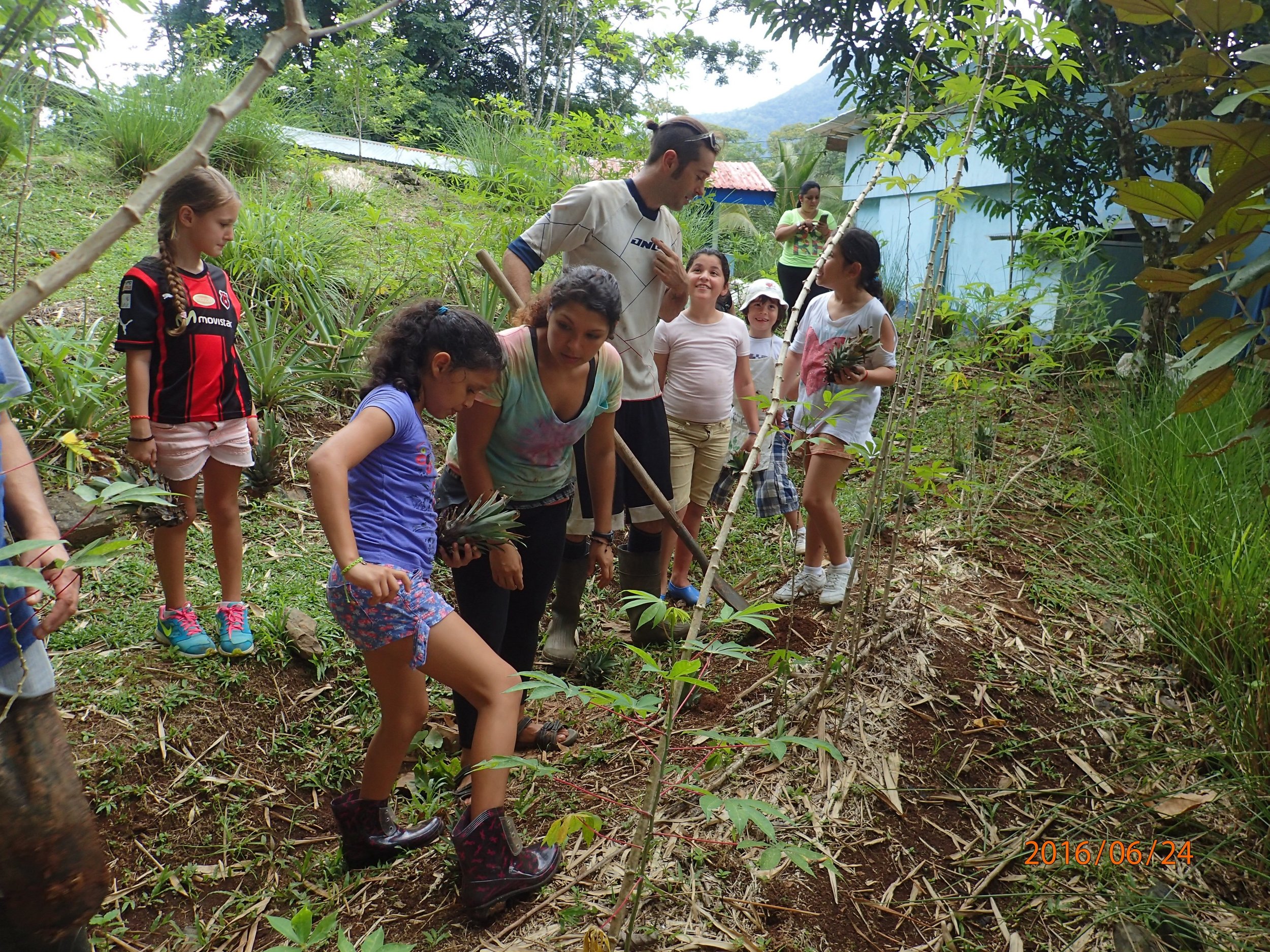
Bonus Tip #11: Appreciate the foods that are locally sourced. Rice and beans are the vehicles of countless cultural traditions and can be transformed in one million ways, but they're delicious served simply too. The Ranch agroforestry system offers biriba, jackfruit, coconuts, bananas, cuadrados, and plantains all year round. Be prepared for the grandeur of seasonality. Lemondrop mangosteens will be one of your first tree harvests in January. Then the acerola, aka Barbados cherries, will ripen. These ferment into an excellent, complexly flavored wine. The Victoriana and arasa will ripen shortly after: Sour, yet delicious, when sweetened for jams. Mango season starts in April and lasts for the month. Pickle as many green mangoes as you can stand, they make the best kimchi, especially when finely shredded. The pejibayes start turning color at the beginning of the rainy season, too, followed by the mamonchinos. The mamonchino tree with the best flavor lies at the bottom of the Banana Bowl, but you have to climb it, then sit in the branches with a huge pole with a basket on the end. This is farm fitness, but the collection process is worth it. Nature really did perfect the art of candy. Come December, the oranges will begin ripening, and you can race Scott in a juice pressing contest. You will experience the cycle of a year as it truly happens, as an ecosystem partitioned it; for each part to be appreciated.
Maybe you're the type to meditate, maybe not. When I left the Ranch, and the data came back to my cellphone, and the advertisements jumped off the walls of the streets, and the drama of the world flooded in like a leaky pipe, that's when I knew what it meant to be able to meditate. I once thought about running away to a monastery, but I found Rancho Mastatal instead. There's no preacher, there's no text, there's just you and your purpose for coming. You come, you work hard, you play hard, and you learn. It might not feel like you're meditating, but, if you allow the experience to envelop you, if you allow yourself to tread lightly on this planet, you too can be a great apprentice. You may not become an expert wood crafter or beekeeper, or even learn how to count, but there you have it: ten pieces of advice from a gal who now walks barefoot in the city.
News and Notes from Around the Permaculture Community
Laura has been busy the last few weeks filming an online fermentation workshop series. She is partnering with Ranch friend Spenser Gabin in the creation of this course. You can see more of Spenser's work at his website here.
We were fortunate enough to host Erle and Suset from Wa Samaki Ecosystems on Trinidad during our Natural Building Practicum. It is always inspiring to meet fellow permaculture teachers, doers, and designers, and now we have the itch to visit their site which has been operating for nearly 20 years!
Our Central American Scholarship Program fundraiser is underway! We've already had over 20 applicants for the few spots in our annual PDC. If the fundraiser is successful though, we hope to have a record number of Ticos in our course. Please give if you are able and share the word!
Abrazos
The Ranch Crew

Help Improve Workshop Access for Central Americans
Workshops, one of many forms of education, are expensive to organize, risky to run, and an immense amount of work to pull off and host well. They can also be transformational and inspirational for the participants and provide them with an amazing educational experience. We have been offering life-changing courses and classes in a vast array of areas related to sustainability for over 15 years
Help Improve Workshop Access for Central Americans
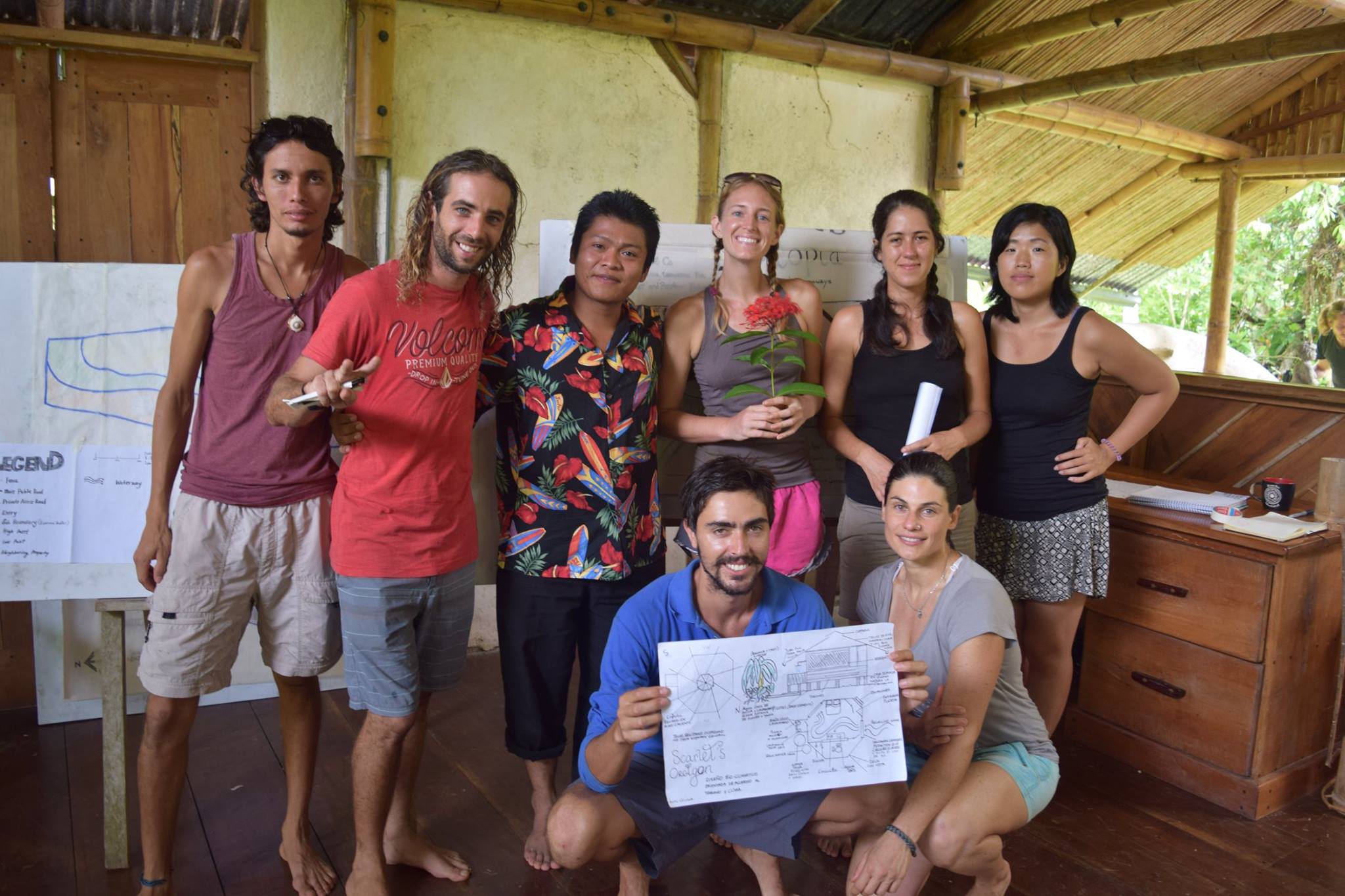
By Tim O'Hara
Workshops, one of many forms of education, are expensive to organize, risky to run, and an immense amount of work to pull off and host well. They can also be transformational and inspirational for the participants and provide them with an amazing educational experience. We have been offering life-changing courses and classes in a vast array of areas related to sustainability for over 15 years. During this time our core team has reflected on how to assure that our offerings are accessible to as many people as possible, especially low-income and future leaders in our region, without running our business into the red. It’s been a fine line to walk and one that we’ve commonly fallen on the wrong side of.
In 2015 we began a discussion about how to provide Central Americans with options to apply for economic assistance to attend permaculture, natural building and other sustainability related courses in our region. It is not uncommon for regional workshops to cost working Central Americans months of pay or more. Moreover, workshop students commonly lose income and make other sacrifices while away from their obligations at home. It’s a difficult situation that leaves these opportunities out of reach to the majority of people that are interested in them. From our observations, there are a growing number of people in our area that have a strong desire to participate in courses which will expand their horizons, expose them to valuable networking opportunities, and provide them with hard skills that they can take back to their communities. With all of this in mind, the idea of a scholarship fund began to emerge and make increasing sense.

Mastate Charitable Foundation (MCF), a small non-profit under the umbrella of the Marion Institute, achieved some important fundraising successes in 2015-16 that allowed them to create a Central American Scholarship Fund Program that provided seven partial scholarships to our Permaculture Design and Wilderness First Responder Certification courses and 2017 Apprenticeship in Sustainable Living.
Based on these favorable developments and the associated positive experiences participants had, we have been encouraged to look for ways to expand this program so as to meet the growing demand for these types of opportunities in the future.
Rancho Mastatal has already received over 20 scholarship applications for classes taking place in 2017. We believe that there are few better investments than supporting meaningful and empowering education for leaders rooted in their communities. In too many cases, populations worldwide have suffered the degradation of their communal structures from years of neglect and shrinking budgets, brain drain, worsening economic situations, and environmental atrocities that make living in certain areas of the world less viable. To rebuild will require courageous leadership, hard work and resources.
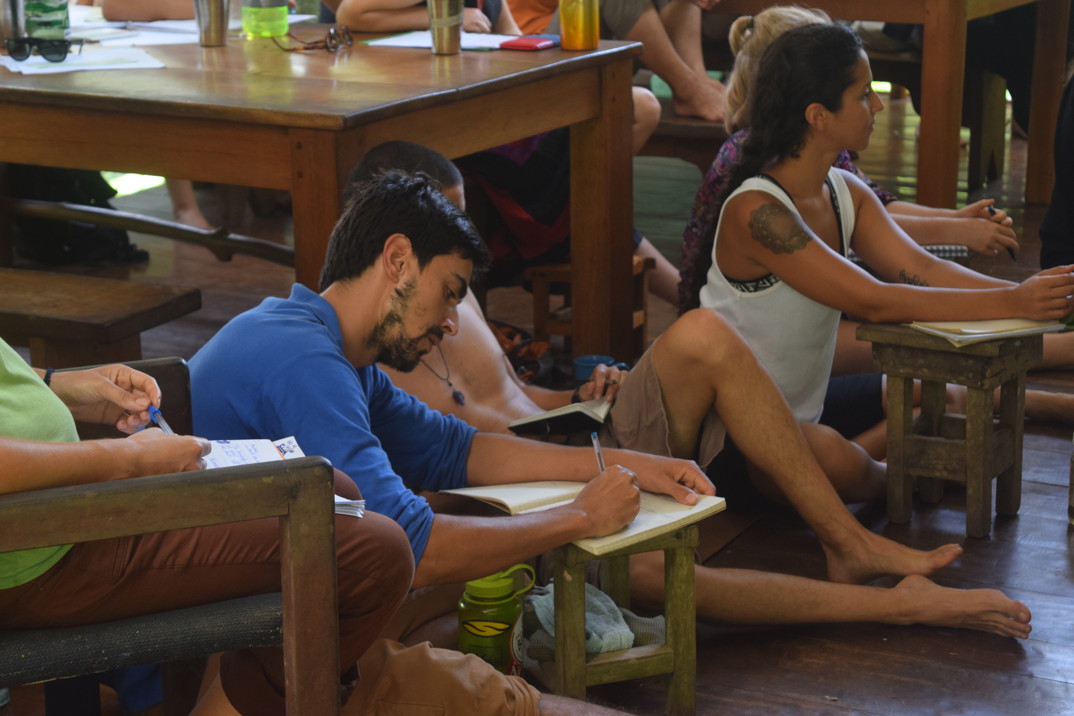
If you or someone you know would like to sponsor one or more scholarships during the upcoming calendar year please learn more about MCFs charitable work here. Tax deductible donations for the Central American Scholarship Fund can be made here. General donations can also be made on the MCF website here. The opportunities provided by your assistance can change the trajectory of not only a scholarship recipient but of their entire community. Help us to support a more sustainable future for Central America.
NEWS FROM AROUND THE PERMACULTURE COMMUNITY
We love food preservation at the Ranch, usually by means of fermentation. One of our challenges is finding good supplies, e.g. food grade, appropriate scale, etc., here in Costa Rica. But for you all in the States, you might check out Pantry Paratus for a great selection of supplies.
As our team at the Ranch looks toward the future, we've found much inspiration in the recent writings on commoning by David Bollier. We highly recommend the article Commoning as a Transformative Social Paradigm. You may also want to check out the workshop Reinventing the Commons: Social Ecosystems for Local Stewardship & Planetary Survival.
Abrazos,
The Ranch Crew

No Pickup, No Problem: Social Capital Trumps a Shitty Situation
My hands are grappling the rumbling, rusty wheelbarrow handles, and as we walk half a mile through the village, everyone can hear the five Rancho apprentices clunk on through. In a village of 120 people, your whereabouts are everybody's business. Don't worry, I want to say, this will all make sense soon. They'll be having a chuckle by the end of the day. For now, we are five warriors defending alternative energy. We are making the best use of our woman power (and Dan power) when the white pickup truck is out of commission. We are going to pick up poop.
No Pickup, No Problem: Social Capital Trumps a Shitty Situation
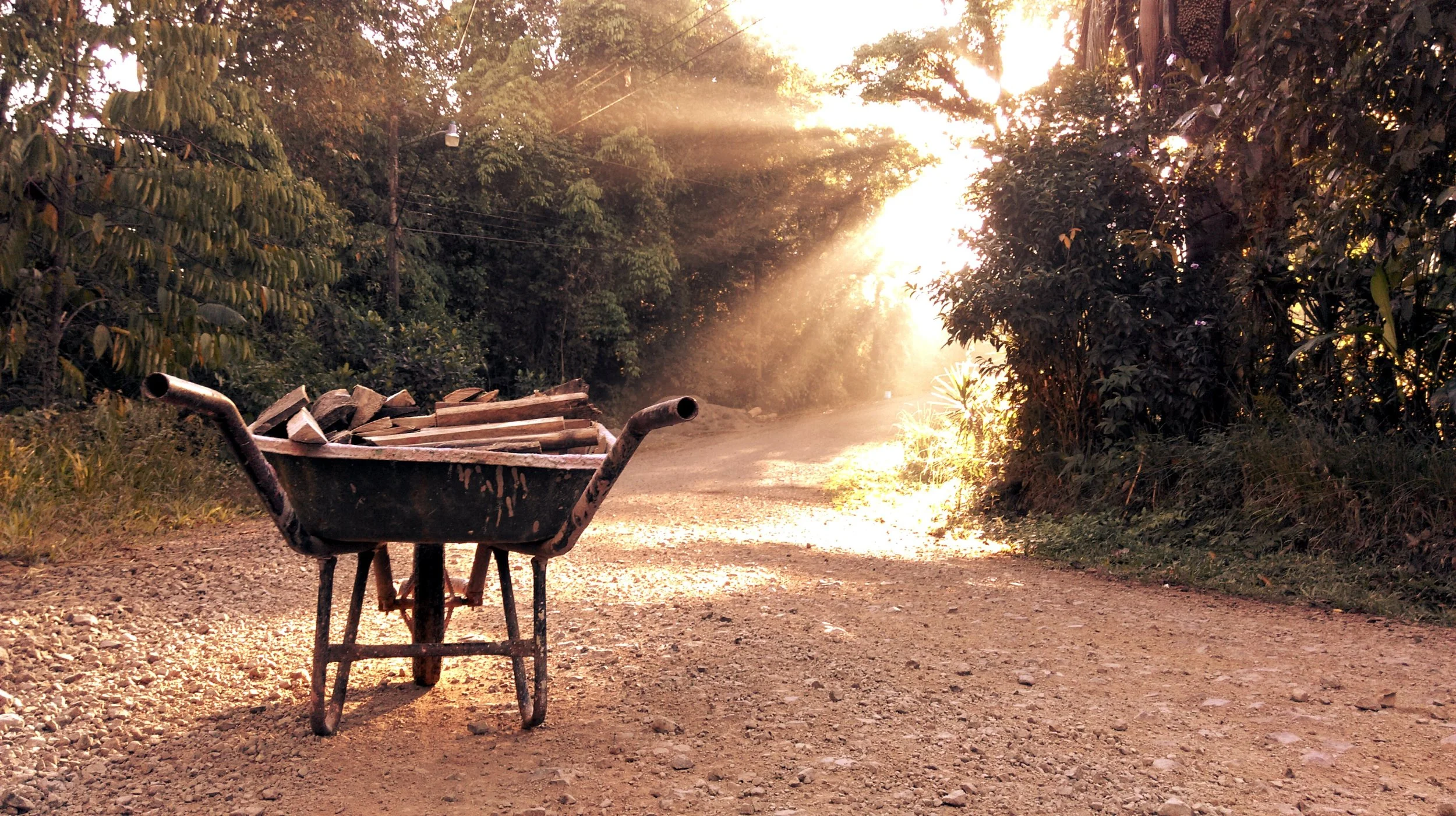
My hands are grappling the rumbling, rusty wheelbarrow handles, and as we walk half a mile through the village, everyone can hear the five Rancho apprentices clunk on through. In a village of 120 people, your whereabouts are everybody's business. Don't worry, I want to say, this will all make sense soon. They'll be having a chuckle by the end of the day. For now, we are five warriors defending alternative energy. We are making the best use of our woman power (and Dan power) when the white pickup truck is out of commission. We are going to pick up poop.
As Timo explained in a blog post last month, poop is the essential ingredient for synthesizing our kitchen's methane gas supply. Once a week, the white pickup truck is driven half a mile up the road to pick up ten sacks of manure. Assuming you have the human labor and the car labor, it's a brilliant system-- until the white truck, which has seen more years than myself, stops working. No truck, no poop, you say. Chuckle chuckle. Four of the baddest chicks and one man are about to prove you wrong. Here are two cents, to boot, on what makes a functional energy system.
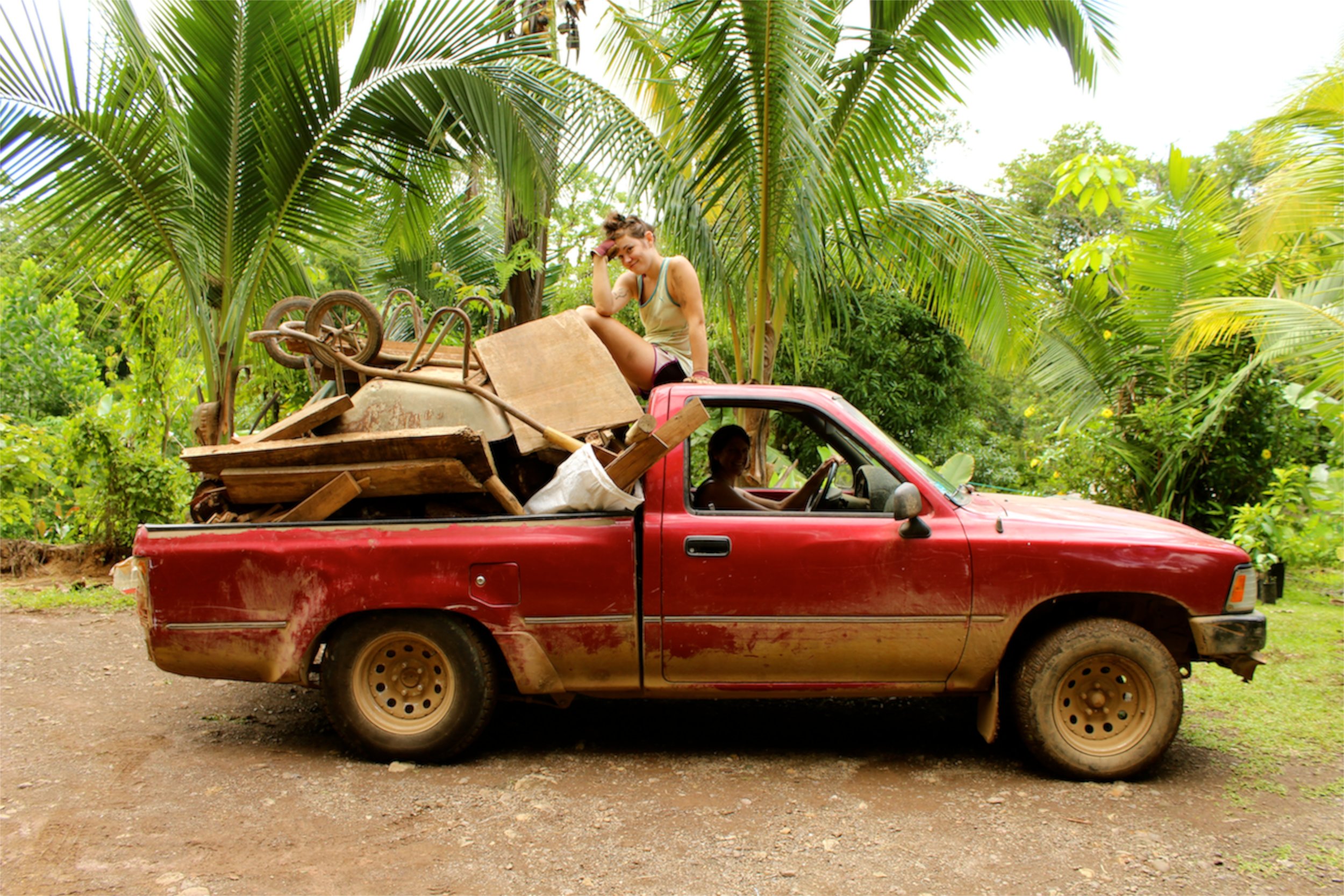
We make it to Finca Siempre Verde dripping in sweat. Chilo, our friendly poop dealer, greets us as we roll five empty wheelbarrows up the driveway hill. Since we're on the theme of biodigestors, he offers to give us a tour through his biodigestor system. It's a work in progress, but here are the pigs. He shows us the pig pen which gets hosed down, and where the poop drains into a pipe. He then shows us a newly built pen that is slightly lower than the kitchen. Here, Chilo explains, will be the new site for the biodigestor. The manure will wash directly into the feeder barrel, no transport necessary.
We are five champions of renewable energy and suddenly I am wondering why my journey to move poop suddenly seems less noble. Here is a system that capitalizes on the fact that the source of manure is located at point zero for the biodigestor intake. If Chilo had a failure in one of his auto parts, there would still be gallo pinto on the table. Is Chilo's biodigestor any different than ours, or am I just about to push 100 pounds of manure half a mile because we built a delicate, un-resilient system?

Biological systems, such as Chilo's pigs, are complex. They are composed of living, breathing organisms whose livelihood is ingrained in the health of the entire system. As long as Chilo (who is also a living component in the system) continues to produce food on his farm, process it in his kitchen, bring the scraps to his pigs, and maintain his system accordingly, then poop will continue to flow through the biodigestor, methane will continue to be produced, food will continue to be produced, and the pigs will continue to be fed.
Now, suppose we swapped out those pigs for one of those nifty new robots on the market. The Porkolator 3000 is equipped with machinery that makes it the most efficient robot in converting biomass to waste product. This technological feat is revolutionary. As it turns out, however, the company that manufactures the Porkulator did not create the machine with the capacity to heal from, say, an erupted engine. So when that breaks down, and Chilo doesn't have a spare engine in the middle of the jungle, how on Earth will the gallo pinto get made?

Pigs are complex; Porkolators are complicated. The difference between a living system and a non-living system is that a living system has numerous connections and survival responses in accordance with the environment, whereas a non-living system cannot respond. A non-living system is complicated because if there are 1000 pieces and the tropics rusts one obsolete, the system will fail to function. A living system has 999 pieces you can name, and 999 to the ninth power of interconnections you cannot even see, that when one piece fails, the show must go on. On that day, our pickup truck proved to be complicated because the inability to start the engine meant that our biodigestor risked starvation.
Pigs are not the only example of complex, living systems. Communities are also complex. In the wake of realizing that our biodigestor may not get fed, we rallied the troops and took action. That's right, our engine may have failed, but our spirit did not. That morning, five apprentices and ten sacks of manure rolled through Mastatal and it didn't matter that my forearms were burning or that my hands were too dirty to wipe the sweat from my eyes. We were resilient, and let warm gallo pinto be proof.

News from around the Permaculture Community
We love books at the Ranch! Our library is constantly growing as each of us pick out a few new books to populate our shelves. Our favorite publisher is Chelsea Green publishing, and the folks over at Permies.com have been busy reviewing many of their best books. Check out the review list to see if any belong on your shelf!
The National Institute of Apprenticeships in Costa Rica is having their annual Agroecological Festival this December 3 & 4 in Cartago. We hope to attend. This will be a great opportunity for anyone interested in connecting with the Costa Rica permaculture and urban farming community!
Abrazos
The Ranch Crew

Farm to Table Tales
Good food takes time. I've heard this phrase many times before, but after nine months at the Ranch, I've truly come to understand what it means to me. The local Costa Ricans are called the Ticos. The Ticos live by the mantra "Pura Vida", which directly translates to pure life. This is indefinitely how they choose to live. "Tico time" is another phrase I've heard and come to understand here. Ticos work at their own pace, never feeling the need to hurry or stress at time. They are the happiest people I've ever met. The western way of life has much to learn from this, no more so than in the world of food. I have three stories to tell that I think shed perfect light on this matter.
Farm to Table Tales
Good food takes time. I've heard this phrase many times before, but after nine months at the Ranch, I've truly come to understand what it means to me. The local Costa Ricans are called the Ticos. The Ticos live by the mantra "Pura Vida", which directly translates to pure life. This is indefinitely how they choose to live. "Tico time" is another phrase I've heard and come to understand here. Ticos work at their own pace, never feeling the need to hurry or stress at time. They are the happiest people I've ever met. The western way of life has much to learn from this, no more so than in the world of food. I have three stories to tell that I think shed perfect light on this matter.
Beans

One day back in April myself and my fellow apprentices were asked by one of the local farmers and Mastatal old timer, Chepo, to help him with his black bean harvest. We were so excited by the opportunity to see and learn how black beans get from the soil to our plates, given the fact that we eat them with almost every meal. We started with a trek from the road through the jungle to the black bean field.
Here, Chepo was harvesting stems of beans that had been cut a week prior and left to dry on the ground. It was a blistering hot day, typical of the dry season and the sun was beating down on the exposed field. We jumped in and helped him collect the many hundreds of black bean vines from the undulating ground. We took them to the side of the field and mounded them up beside the bean bashing station, a big blue tarp strung between four bamboo poles. When the beans were all collected we started piling them onto the blue tarp, then Chepo stood at one end with two heavy wooden poles in both his hands. He started bashing the mounds of dried bean vines to release the beans from their pods. We rotated around, all getting in to have a go. The poles were much heavier than I'd expected and after about five minutes my shoulders started to burn and my sweaty palms started to blister.

Once one pile was done we tossed the bean vines to the side, bagged the loose beans on the tarp then loaded up another mound. It took our group of eight almost two hours to release and bag all of the beans. Once the bags were tied up we each grabbed one, slung it over our shoulders and started our slippery, steep 30 minute hike to the road, each one of us slipping under the weight of the bags and the tough terrain. But this didn't phase us, we all still had big smiles on our faces feeling accomplished and grateful for having this experience. We also all recognized that if we hadn't been there to help Chepo, he would have been doing all this work alone, as I'm sure he and fellow farmers have done many times before.
I will never eat beans the same way again. I have a new appreciation for this humble staple food. When I worked at an organic food store back home, it was regulation that if anything fell onto the floor we would throw it away. We had no compost system at the time so anything that fell onto the ground was destined for the landfill. I can't tell you how many times people struggled with the manual bean dispenser, spilling beans all over the floor. Never did we think twice about throwing them away, it was just what was done. Looking back on this now breaks my heart more than it initially did because I've seen the amount of work and effort that goes into growing and harvesting this food crop. One sweep of our broom and all the time, effort and resources that went into getting those beans into our shop were binned. Something that I never would have learned if I hadn't come here.

Pejibaye
Another story from the ranch is about the pejibaye season that has sadly just ended. Pejibaye is an incredibly nutrient-dense palm fruit. This season, each of our trees produced roughly nine bunches of fruit, each bunch containing about 30-40 fruits. Every golf-ball-sized fruit contains 200 calories! As you can imagine for an aspiring self-sufficient community, this is valuable food crop. But it doesn't come easily.
Pejibaye or peach palm in English is a tall skinny Palm tree. It's trunk is covered with needle-like spikes that will pierce through even the thickest rain boots. To harvest pejibaye we use our home crafted 20 meter long pull saw. It's a very useful tool but rather difficult to maneuver around a spiny trunk. Once the bunches of fruit are released from the tree, they splatter on the ground and we forage around the spine covered slopes to collect every one of these protein packed nature balls.
When these guys arrive in the kitchen they must be processed within two days or they will mold and spoil. So we remove them from their stems and boil them in their skin for 40 minutes. Then we drain them and have a peel party, each one of us delicately peeling and de-seeding around 60 fruits per weekly harvest. Once peeled they're ready to use in puree, soup, burgers, pancakes, torte and an endless number of other delicious recipes. It is a long process but well worthwhile when we enjoy the fruits of our labor for the next week and share this taste of the tropics with our guests.

Jackfruit
Jackfruit is a similar story. Harvesting just two mature jackfruit can feed ten people three meals. Harvesting jackfruit requires you to climb into the tree and up to the fruit, chop the stems with your machete and watch as the 5kg spiky football-shaped fruit catapults to the ground. It's not rare to get a splatter of glue-like sap on your clothes, hands and cheeks at this stage, as well as the canopy company of wasps residing in the trees. Once harvested, we take the fruit back to the kitchen, grabbing a few banana leaves on the way, oil our hands and knives, and get to work.
First we cut it open, separating the flesh from the seeds. To use the flesh we must brine or boil it. Brining takes one to three weeks and boiling takes 45 minutes. Then the flesh is ready to use in another recipe. The seeds must be dried, peeled and boiled. By the end of this process, our hands are covered with latex sap and so are the knives, despite our efforts to oil everything prior to processing. It's just the reality of processing your own food and a rather exciting part of it.
Good food really does take time. And I believe that this time and effort always makes our food taste better. Because we've put our hearts, our sweat, our blood and sometimes even our tears into growing, harvesting and preparing the food. It's an entire new way of eating that gives you a deep sense of appreciation for the food on your plate and on the plates of the people you love and care about.
News from around the permaculture community

The Monteverde Community Fund has a job opening for their Executive Director position. This is a great opportunity for the non-profit sector in Costa Rica.
What's your favorite permaculture present? We got a pack of the Permaculture Playing Cards from our friends at Permies.com this past year. We love the funky artwork and all the permaculture principles, founders, and strategies.
Abrazos
The Ranch Crew

Non-Traditional Education: Reconnecting to our Roots
Modern, conventional education systems do not work for everyone. They cater well enough to many of today’s students but not to a significant portion of the population that might be better served by alternative pedagogical approaches. In most countries, at the age of 4 or 5, or even younger, kids are shuffled into busy classrooms to learn subjects that will reportedly prepare them for a successful future. As our economies become less predictable, politics less appealing, and the environment ever more damaged, current educational models are losing traction with increasing numbers of people who recognize that the one-size-fits all approach to education is not working for our society.
Non-Traditional Education: Reconnecting to our Roots

By Tim O'Hara
Modern, conventional education systems do not work for everyone. They cater well enough to many of today’s students but not to a significant portion of the population that might be better served by alternative pedagogical approaches. In most countries, at the age of 4 or 5, or even younger, kids are shuffled into busy classrooms to learn subjects that will reportedly prepare them for a successful future. As our economies become less predictable, politics less appealing, and the environment ever more damaged, current educational models are losing traction with increasing numbers of people who recognize that the one-size-fits all approach to education is not working for our society.
Terms referring to non-standardized teaching methods and ideas such as homeschooling, unschooling, gap years, Waldorf and BOCES are all becoming more familiar in today’s educational vernacular. Instead of paying an inordinate amount of money to learn how to navigate broken social and economic structures to barely make ends meet as an educated, employed adult, more and more people believe that it’s important that humans begin to train and prepare for meaningful, place-based work that provides a fair wage while better connecting to the elements that we most need to thrive; clean water, clean air, clean soil and clean food.
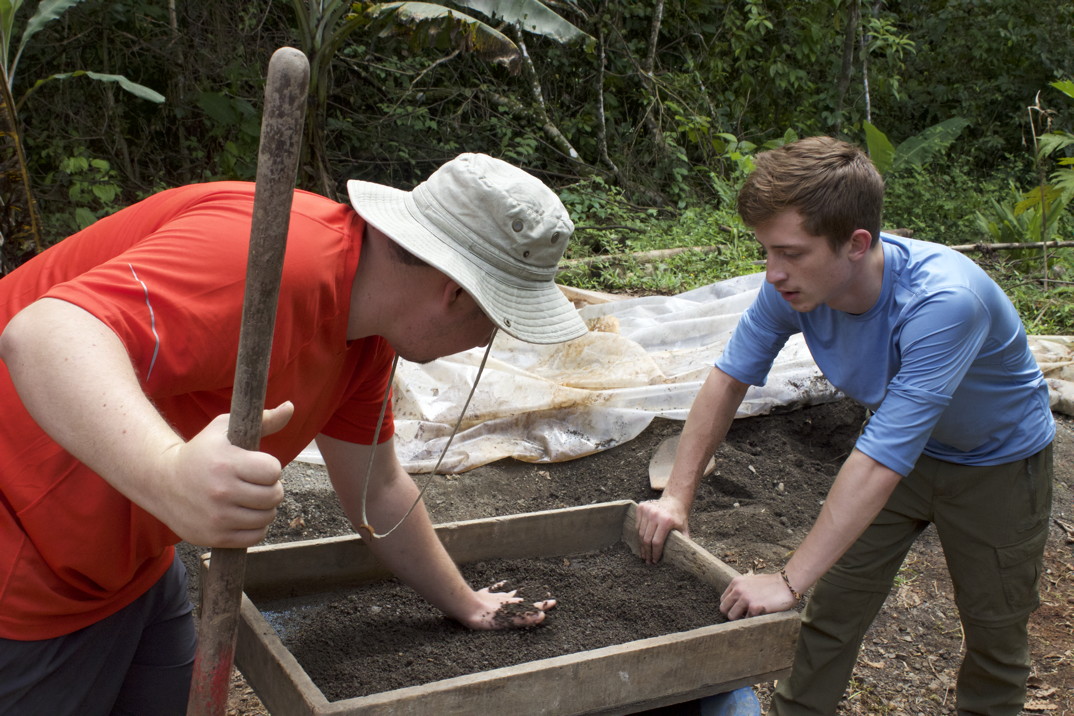
In our specie’s experiment to educate our populations to be good, productive denizens of the planet, we have lost sight of how to responsibly meet our basic needs and in the process have contaminated the resources that are inherent to a healthy life. We’re becoming a society more apt to care for our latest electronic purchase than one another.
Most visitors to the Ranch come to learn in a different setting. Many of these people are attracted to our experiential methods of teaching. As an education center since 2001, we have discovered a great deal about our students and how they develop best. We have also witnessed a trend over the last decade and a half that has students arriving to the Ranch with ever decreasing hands-on skills. It’s not uncommon to host students that have never picked up a shovel, dug their hands into the dirt, or cooked a meal from scratch.
Our education systems today praise computer work more than physical labor. While I think both skill sets are important in today’s economy, I would argue that we’ve let the pendulum swing much too far towards the idea that the solutions to today’s challenges lie only in high-tech devices and multi-billion dollar mega-projects that ignore our historical connection with and dependence on nature.
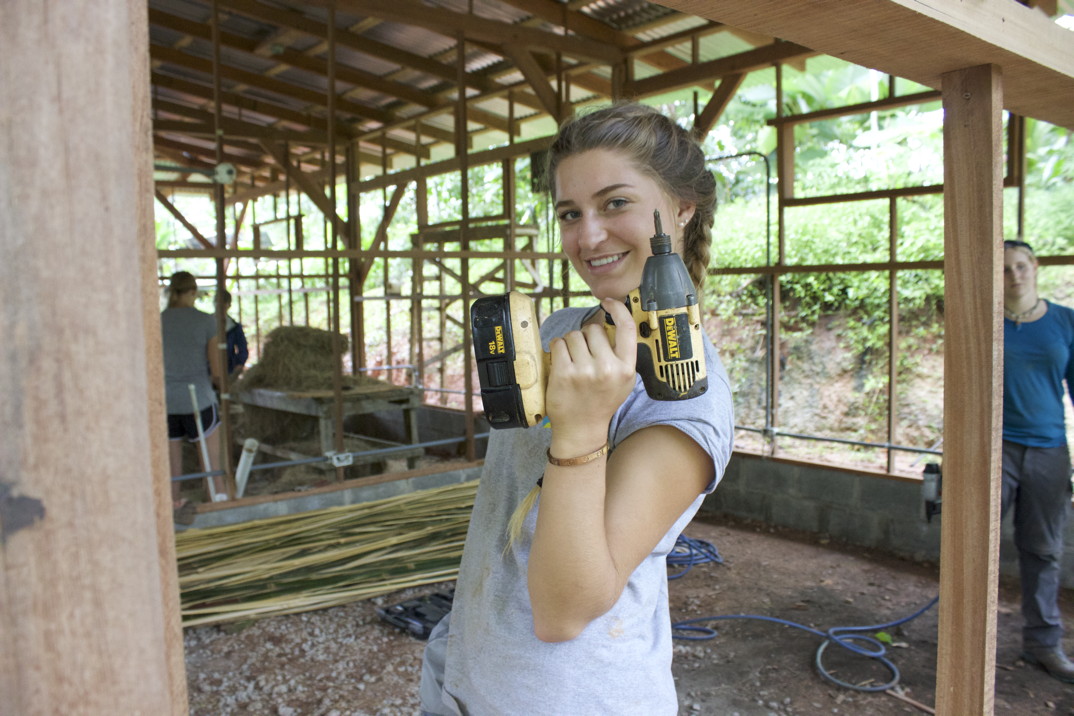
As parents, Robin and I have chosen a hybrid approach that has our daughter enrolled in Mastatal’s local, Spanish-speaking public elementary school and learning from Robin through a Waldorf-style homeschool curriculum during our trips outside of Costa Rica. We hope that this will provide her with a dynamic and solid educational foundation that will prepare her for the global problems that she and others in her generation will inherit and face as adults. We look forward to explore the growing number of non-conventional educational options as she gets older.
Gap year programs like those offered through Winterline provide an alternative to graduating high-school students. They allow students to better refine their interests before investing tens of thousands of dollars in an education that may not provide them with the schooling that they desire or need. Organizations such as Winterline recognize the existing gap in public education and focus on providing students with opportunities to learn hands-on skills. The growing popularity in these programs is a sign that parents are more willing to let go of the rigid ideas and standards that they experienced as students.
We’re proud to be a part of a more common sensible approach to schooling and we believe that well-thought out, inspirational and practical, applied programs can oftentimes provide students with a superior and more relevant learning experience. Some of today’s problems may require large, expensive and highly-engineered approaches, but others demand simplified but intelligent thinking and a genuine connection to the earth. The latter can and should be cultivated in our society’s educational programs.

Paul Stamets, the renowned mycologist, provides inspiration and an example via his mycoremediation work that partners with our fungal brethren to clean up toxic sites using simple, inexpensive and accessible technology as do Vandana Shiva’s efforts promoting food and seed sovereignty in India. Winona LaDuke’s achievement to build and restore community by means of wild rice harvesting and her work with the White Earth Land Recovery Project and Wes Jackson’s advances in perennial grain production in the Midwest of the US with The Land Institute provide us with precedents to learn from. Our hope is that the Ranch too can provide an example and a place for compassionate people in search of a better way to learn, teach, heal and live.
Check out our calendar and consider organizing a group to join our team as we promote a more rational, sensible and connected educational movement.
News from around the Permaculture Community
One of our favorite alternative education programs is Sustainable Summer. Their groups are always one of the highlights of our year and the students who go through the program leave us feeling hopeful for the future. If you are looking for something different to inspire your high- schooler, we can't recommend them enough.
We have two new stellar workshops on the calendar for May 2017:
Agroforestry Skills Inspired by the Forest: Orchard Planning, Propagation, Planting, & Production - May 17 - 18 with Peter Kring
Plant as Medicine: Reclaiming the Art of the Home Apothecary - May 17 - 18 with Ancel Mitchell
Our cob oven will be seven years old this season! We are looking at re-building the oven so that it better fits our kitchens needs. Ovens are great starter projects and these plans for a double chamber cob oven just might give you the confidence to tackle the project in your own backyard!
Abrazos
The Ranch Crew

Making Microbes: Fungal vs Bacterial Soil Life
Organic gardeners and farmers understand the need to cultivate and protect soil microorganism life. The strategies to do this involve mulching, composting, and avoiding soil disturbance as much as possible. We know that these strategies, in addition to many others, encourage a healthy soil-food-web.

Making Microbes: Fungal vs Bacterial Soil Life
Organic gardeners and farmers understand the need to cultivate and protect soil microorganism life. The strategies to do this involve mulching, composting, and avoiding soil disturbance as much as possible. We know that these strategies, in addition to many others, encourage a healthy soil-food-web.
The soil-food-web is the interconnected matrix of invisible (fungi, bacteria, protozoa, nematodes) and visible (earthworms, beetles, arthropods) creatures that have a whole host of functions which create a healthy ecosystem for plant growth. They aerate the soil, decompose organic matter, make nutrients available, prevent nutrient leaching, break down toxins, protect plants from pathogens, fix nitrogen and so forth.
What we can take away from this bit of knowledge is that we want these organisms operating on our garden or farm. The best way to do this is by creating the habitat and food they need in order to thrive. This seems simple, but it quickly becomes complicated when we explore the details.
Each of these organisms does better with different food sources and each of them change their environment in different ways. In addition each species of plant we are growing thrives in different soil environments; apples and arugula have evolved very differently and the more we can support their evolutionary requirements the healthier the plants will be.
That becomes our starting point; where we ask:
What type of soil environment do our crops desire?
How can we then encourage the specific type of microorganisms to create that environment?
Fungal-Bacterial Ratio
Here at the Ranch we are growing tree crops, which as I've written in this blog before, thrive in an environment that mimics the forest ecology surrounding our orchards. One measure we can use to understand this ecology is the fungal to bacteria biomass ratio (F/B).
This is a measure of the portions of the microbial biomass, ie. all the living organisms in the soil, that is fungal vs that which is bacterial. The F/B ratio is primarily used to study the impact of human land disturbance on the soil-food-web. It can therefore also be used to determine what individual plants desire. For example annual grains and vegetables like a ratio of 0:3 to 1:1 and orchard trees thrive in 10:1 to 50:1 soils
Depending on the types of crops we are growing, again in our case tree crops, we may want to alter the dominance of fungi or bacteria in our soil. These microorganism, particularly fungi, are quite sensitive to changes in land usage, therefore we need to understand how different techniques affect this ratio and why we want the ratio to be high or low in the first place.
Ecosystem Mimicry
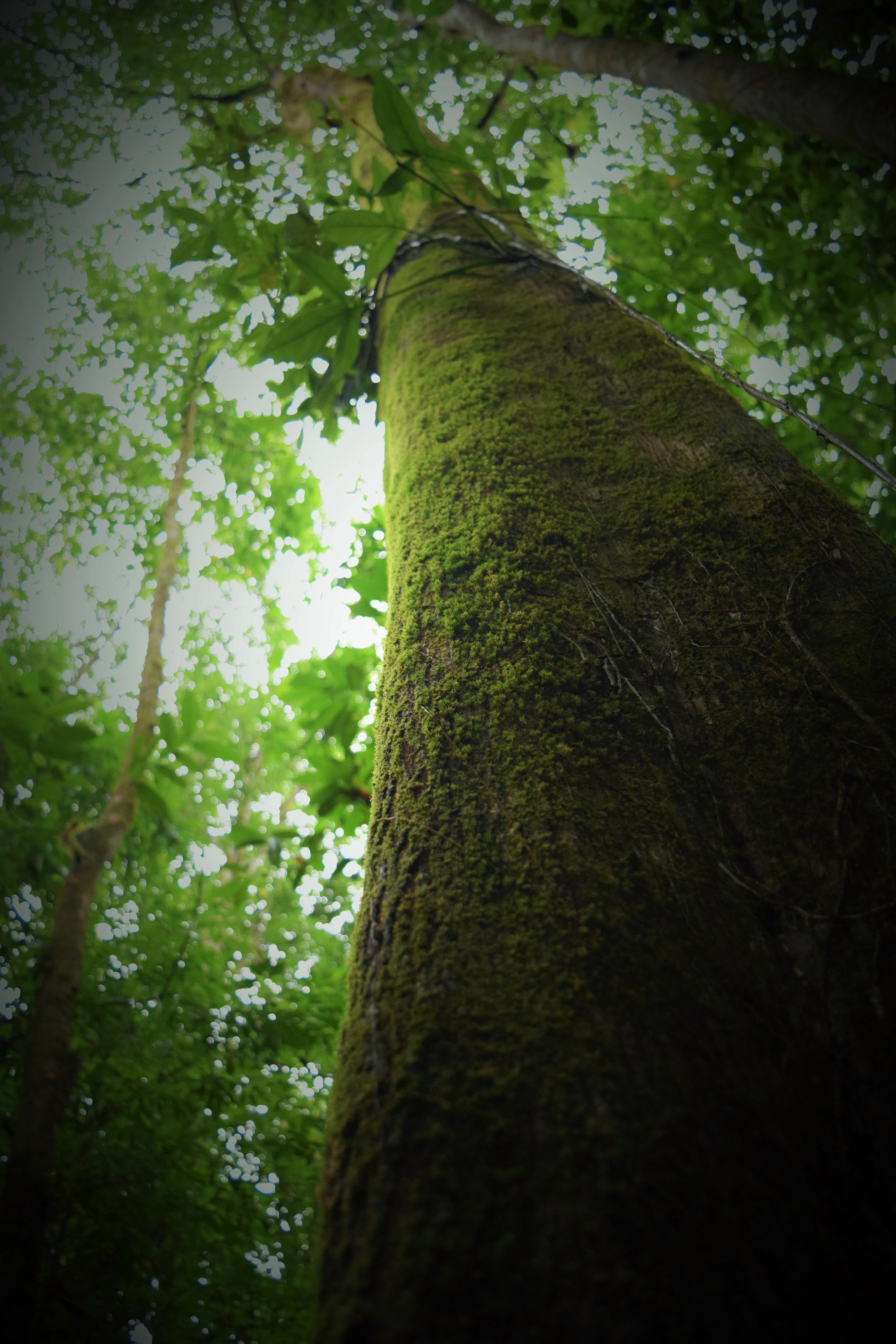
Forest soils have a higher fungi to bacteria ratio. Looking at quantities of each, as measured in a teaspoon of soil, we find that bacteria remain steady in quantities through the spectrum from agricultural soils to prairie soils to forest soils. In one teaspoon of soil there are 100 million to 1 billion individuals. Fungi, measured in yards of hyphae, though increase significantly along this spectrum. In agricultural soils they are measured in several of yards, while in deciduous forest soils hundreds of yards are found, and in coniferous forest this actually increases to miles.
Fungi love high carbon materials, think cellulose and lignin which are the primary building blocks of tree leaves and wood. Most bacteria struggle to break this down. Bacteria instead thrive with high nitrogen food sources, think manure, incorporated cover crops, etc.
We can gather from this how different gardening and farming techniques affect this ratio. Fox example mulching with wood chips encourages fungi, tillage kills fungi and encourages bacteria, and incorporating organic material into different soil horizons shifts the ratio toward bacteria.
Mineralization/Immoblization Balance
This makes it apparent as well that fungi and bacteria have different roles in the soil-food-web. Fungi are better are taking in and retaining nutrients as part of the mineralization/immobilization process. This is the process where microbes consume nutrients, thereby immobilizing them in their bodies and preventing nutrient leaching.
As they live their lives, producing waste and eventually being consumed further up the food chain, these nutrients re-enter the soil-food-web in a form that is soluble to plants. This is called mineralization. Fungi and bacteria are immensely important to different stages of this process and are each most effective depending on what they are being feed.
Knowledge to Practice
In our orchards we want to cultivate an F/B ratio between 10:1 and 50:1. There are many ways for us to work toward this goal, the simplest being understanding the ecology of fungi and providing the necessary shelter and food source. We do this by consistently mulching our trees with woody materials.

We can get more specific in the process by cultivating our own indigenous microorganisms from the forest and inoculating them directly into our orchards. This practice is called Mountain Microorganism (MM). We have been applying MM to our orchards consistently over the past year in order to shift our F/B ratio higher and gain the benefits, such as pathogen control, that these microorganisms provide to the native forests.
Next steps for us in this process is to use our microscope to analyze the biological content of our soil. With the proper training and experience we expect to be able to determine rough F/B ratios in both our soils and the MM we are applying as a foliar drench. We will be sure to let you know what we find.
For anyone interested in making their own microbes, below is the recipe we use. If you would like to learn more about this process you should consider joining us for our upcoming Permaculture Design Certification course in April/May of 2017.
Mountain Microorganisms Recipe
Phase 1: MM Solid

Ingredients
3 sacks microorganisms (duff layer of primary forest)
2 sacks semolina, yuca flour, or green banana flour
1 gallon molasses, cane juice, or fruit juice
1 gallon water
Instructions
Spread a layer of duff on a top and cover with a layer of semolina. Mix well with hands. Dilute the molasses with the water and sprinkle on top as you continue to mix. If you grab a fistful of the mixture it should be lightly damp and fall apart easily after you squeeze it.
Next, have someone stand in a 55 gallon plastic drum (never metal), while you shovel the material inside. As you shovel, the person stamps the mixture down with their feet to compress it and remove any air pockets. Seal the barrel and leave at least one month, stored in the shade.
The mixture should be good for three years. When ready, it should have a strong smell of lactic acid.
Phase 2: Liquid MM

Ingredients
5 kilos MM Solid
1 gallon molasses
55 gallon plastic drum filled with water
Instructions
Mix the molasses into the water. Put the MM into a screen sack and let hang in the water. Seal the drum and let sit 4 days.
Between day 4 and 15 this can be used as a foliar spray (between 10 and 100% ratio to water). After 15 days use the MM as a soil drench and after three weeks the product should be fully used up.
Once you have used the MM Liquid, you can make one more batch with the same sack of microbes. Just add 1 gallon molasses and refill the drum with water.
References
Lowenfels, Jeff, and Wayne Lewis. Teaming with Microbes: The Organic Gardener's Guide to the Soil Food Web. Portland, Or.: Timber, 2010. Print.
"Soil Health." Soil Health. N.p., n.d. Web. 15 Oct. 2016. <http://www.soilhealth.com/>.
News from around the Permaculture Community
Matt Duffy, from our 2015 PDC, wants to capture your story with his new film company No Mad Films. Duffy is an incredible story teller who we hope can come back to the Ranch, bring his cameras and capture our life in action.
Our collection of cast iron kitchen skillets and dutch ovens is extensive. A good cast iron skillet is by far the most basic but essential kitchen item for our team. Over the years we have learned a trick or two about their maintenance. This article, from Permies.com, sums up nicely how to use and clean cast iron.
The many Ranch friends at Round the Bend Farm, located in southeast Massachusetts are hosting a series of Fermentation Workshops with our very our Core Team member Laura Killingbeck. These come highly recommended for anyone in the area.
Abrazos
The Ranch Crew

The Peace in Knowing Yeast: How to Brew Your Own Ginger Beer
I knew there was something wrong when the fraternity brothers put codeine in the keg, when my friends got so sick that they went splat, when thirteen year old me took a sip of every wine bottle in the house when mom and dad weren't looking and I felt like I had done something naughty. European culture is renown for serving alcoholic beverages to children, yet in the USA where I grew up, something about alcohol is taboo. The cultural history reflects just that. Alcohol in Native American early history is absent, contraband could put you behind bars or blind you, prohibition made speakeasies a mischievous and alluring excursion, and even today a cultural lag in how we enjoy alcohol still exists.
The Peace in Knowing Yeast: How to Brew Your Own Ginger Beer
by Doro

I knew there was something wrong when the fraternity brothers put codeine in the keg, when my friends got so sick that they went splat, when thirteen year old me took a sip of every wine bottle in the house when mom and dad weren't looking and I felt like I had done something naughty. European culture is renown for serving alcoholic beverages to children, yet in the USA where I grew up, something about alcohol is taboo. The cultural history reflects just that. Alcohol in Native American early history is absent, contraband could put you behind bars or blind you, prohibition made speakeasies a mischievous and alluring excursion, and even today a cultural lag in how we enjoy alcohol still exists.
It became very apparent to me in college that with alcohol, etiquette falls flat on its face. Why? Japanese tea ceremonies, to draw a stark comparison, dedicate hours to enjoying a tablespoon of liquid in the most refined fashion, yet the common bar pumps out wasted resources, wasted fools, and wasted dreams. People may drink so much as to make themselves sick, both physically and mentally.
The Origins of Homemade Hooch
Alcohol is actually an ancient substance that has been intentionally brewed since the beginning of mankind itself. Some people even go as far to claim that alcohol IS the reason for civilization. One theory suggests that contaminated drinking water in Europe warranted humans to grow grains and ferment them to cleanse the water. In this process, humans needed to orient themselves to the earth's growing cycles, work together to organize and specialize in different tasks, then celebrate communally with a drink because clever Homo sapiens managed to retrofit their pollution problem.
Health is a major benefit to why people drink. Medicinal plants have traditionally been brewed into alcoholic beverages and can prevent or cure illnesses. In the "blue zones"- regions of the world where people have measurably longer lifespans--one of the factors is that residents enjoy moderate alcohol intake. Blue zone residents also benefit from strong social relationships, so community is a major piece of healthy alcohol enjoyment. Sharing drinks with other people also lubricates and warms a gathering. So-- yes! You can have your brew AND drink it too. Alcohol gets the psychological, physiological, and sociological stamp of approval. Where did clever man go astray?
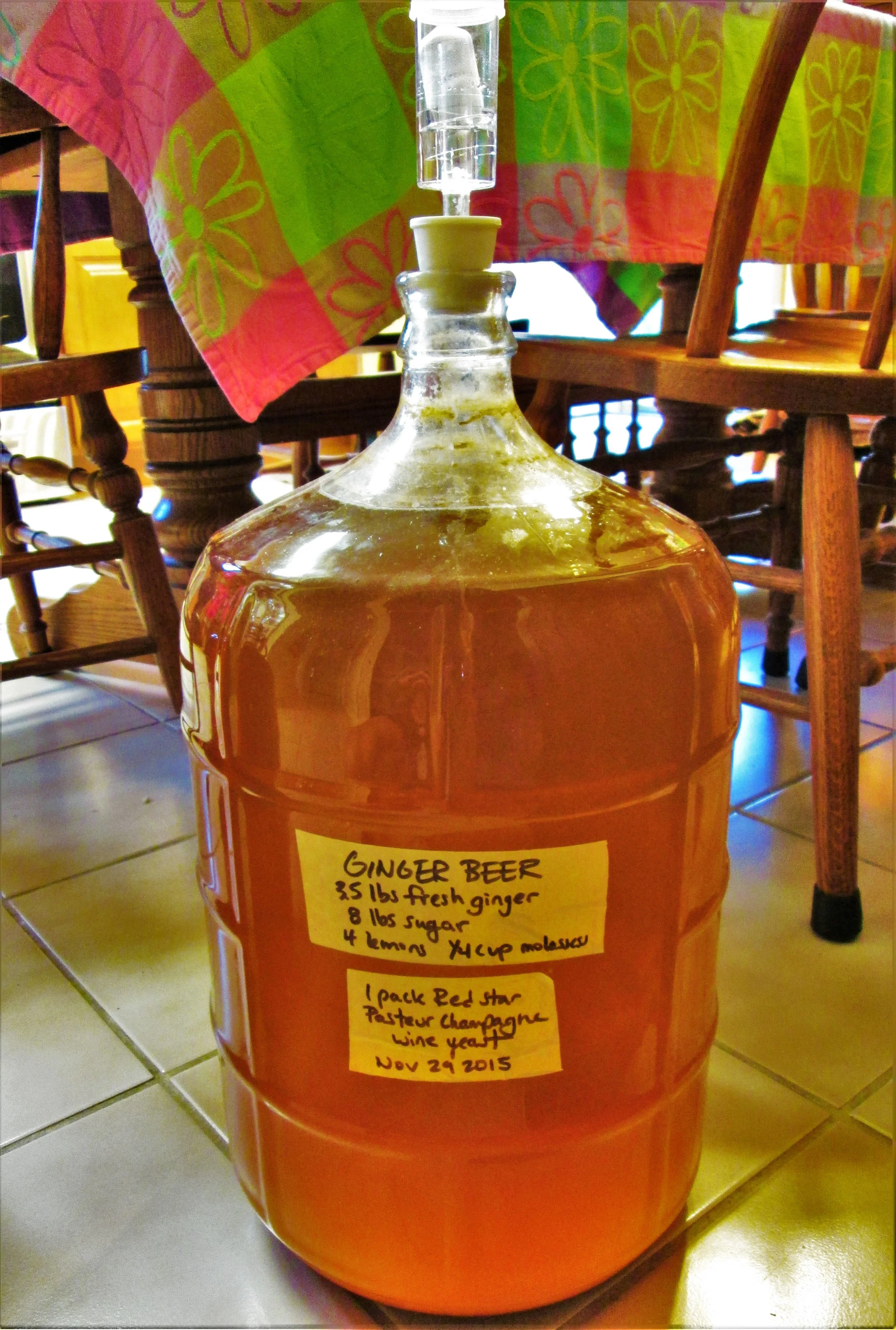
Time is the essential difference in how we relate to a drink we make ourselves and share compared to a drink we buy commercially. Like many good things in life, it takes a lot of time to see a good brew from start to finish-- or in the grand scheme, from seed to chalice. Modern "conveniences" allow people to buy Budlight from the cornerstore, then smash a can to the forehead before thinking twice about going for more. Woah, Nelly! Lack of restrictions on consumption could cost an eye, a tooth, and a frontal lobe if you're not careful, and then what kind of Homo sapiens would that be? Anthropologists suggest that it's our frontal lobes that allows our brains to use foresight and therefore be more aligned with the process of time. My suggestion goes beyond sipping more consciously, more graciously; start from the beginning and make the whole brew yourself.
Meet your Microorganisms
Did you know that one in ten cells of your body share the same human DNA. As for the rest, they are trillions of bacteria and yeasts that live symbiotically with your body. Microorganisms are a great tool for living in your body, or they can be a great tool for brewing the brews that will satisfy your body. There are numerous strands of yeasts that eat sugar and through their metabolic processes, they create alcohol as a waste. What a life! Some of these yeasts are more effective at creating alcohols than others. For example, the yeasts that you can buy in the grocery store were grown in sanitized laboratories to ensure that a very specific strain is repeatedly created. This is an effective means for getting a brew consistency. If you live in the middle of the Costa Rican jungle and cannot access such luxuries, or if you have pride in your local yeasts as San Fransciscans have in their sour dough bread, then you can easily grow your own brewing yeast.
The Ginger Bug

A ginger bug is the first step in brewing your own alcohol. Think of it as a little pet, like a fish in a bowl that you feed everyday. You nurture your ginger bug, and your ginger bug will nurture you. This is how you can deepen your awareness for the beverage that gave rise to humanity, and could propel it forward, or send it tumbling back down to dust.
Step 1: Locate fresh ginger. We happened to dig this rhizome up in our Zone 2 garden. The fresher the better, as it means more active enzymes that ultimately will nourish your bug, and in turn your body.
Step 2: Grate the ginger to increase the surface area. You're going to want about 2 tsp of ginger for 8 oz of water, which will yield a decent size ginger bug.

Step 3: Add 2 tsp of sweetener to your bug. If you can avoid heavily processed and pasteurized sugars, then do so. Honey, maple syrup, and fruit syrups are excellent choices. For this recipe, I used our locally preferred option, tapa dulce, or sugarcane. Bleached white sugars can impose genocide on your microbial populations and are best to be avoided.
Step 4: Stir your water, sugar, and ginger "bug" gently, then cover with a cloth and rubber band. This will allow yeasts in the air to get in, but keep larger creatures out.
Step 5: Carefully observe the nature of your bug. If it starts bubbling, this is a great sign that "it's working". Carbon dioxide, like alcohol, is a process of the yeasts' respiration, and it creates a fizzy bug.
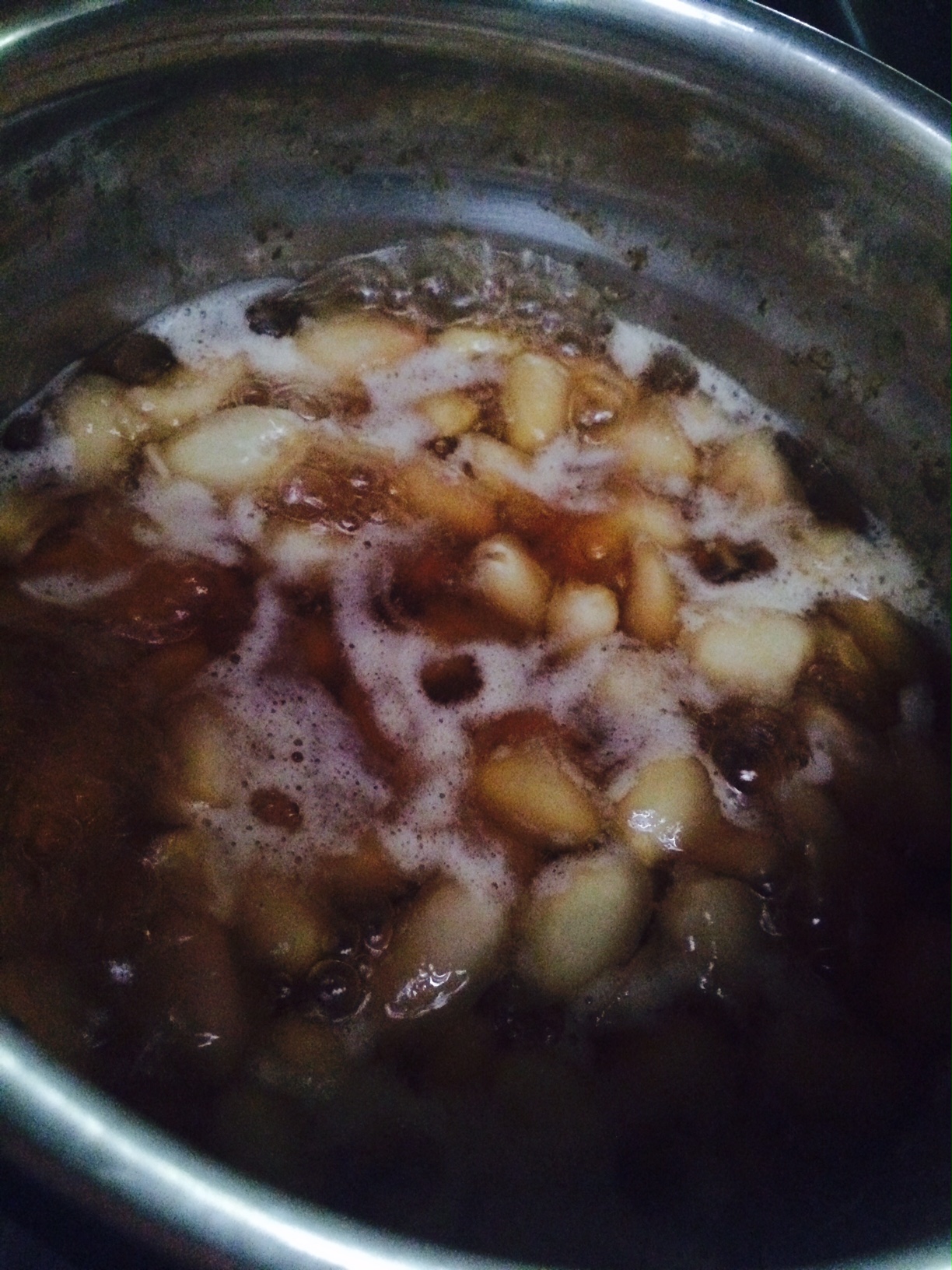
What's happening is that you are creating a mini ecosystem that allows local yeasts from the air a free place to get some lunch (sugar), hang out in a safe environment, maybe meet some cool other microbes; and if all goes well, fall in love, divide, and start a yeasty family. That's right, you are creating a yeast breeding ground, and because ginger tea is the base of the medium, the antibacterial properties of the ginger are keeping the population of "bad" microbes at bay. You can feed your ginger bug once every two days with the same ratios of sugar and ginger as before, but only if necessary. Avoid over feeding your bug and creating a viscous solution. Your bug is your pet. Know it, feed it, and it will reward you with love and affection. If your bug has some fizzy action-- congratulations!-- your pet is ready to use.
Fermentation Experimentation
Ginger bugs are good for inoculating teas with yeasts that will allow them to ferment into alcoholic beverages. The next step in creating a brew is to find a tea recipe or make one up using locally available resources. Fruits and herbs make great tea flavors. I brewed two separate teas for this occasion. The first is a ginger sour guava tea, in which the ingredients were chopped, boiled, and strained. The second is a cacao tea that used the same process except using the fruit that bears the infamous chocolate seed.

Once the tea is prepared, add a sweetener, just as in the ginger bug process. Sugars will continue to feed the microbial populations you are brewing. Like mentioned before, the less processed the sugar the better. Sometimes sugars even carry wild yeast colonies. This will encourage your brew to ferment.
Once you have your ginger bug and sweet tea, you can use the bug's yeast to inoculate the tea. Like a small fish released from bowl to small pond, your ginger bug yeast is off to fend for itself. Ensure that it is going into a safe, clean environment, and that your tea is not too hot. Room temperature to 105 degrees F is a safe range. Since you know that the health of your yeast will ultimately intertwine with the health of your own being, you continue to monitor the brew.
Thus, you have entered the experimental phase. The ultimate flavor and quality of your brew is at fate's discretion. Proceed valiantly! Check your brew at least once a day to ensure nothing is growing inside of it except for good microbes, that the texture is liquid and not thick, and that there is enough sugar.

It may take one day, it may take ten, but you will try your home brewed alcohol and realize that all that time you spent caring for your ginger bug and your brew was very well worth it. "This is delicious!" you'll say one day, "And my gift to humanity." A successful brewer is an artist-- one who reorders the chaos of water, sugar, plants, and airborne yeasts, and transforms them into a product that brings humans together. It turns out that it was never about the buzz, or the story the morning after-- it was always about the process. As humans face the coming challenges of the environment that our culture has shaped, it is important that we remember that each of our actions continues to evolve our relationship with the natural world. Even something as simple as brewing gives proof that the things we provide care for will in turn care for us. Sit back, sip back, and celebrate the pleasure of good brew and good company. Cheers!
News and Notes from around the Permaculture World
We are scheming and dreaming about expanding our chicken program in 2017. More eggs, meat, better breeding strategies, and figuring out how to get the birds to weed our orchards has got us motivated. If any of you are trying to do the same, you should check out the Permaculture Chicken Film from the guys and gals at Permies.com.
One of Scott's past PDC students, Levi Gardner, from a course taught in Nicaragua, is doing some excellent urban farming work in Grand Rapids, Michigan. Check out this article about Urban Roots. Levi states that for him, "a big turning point was going to Nicaragua for a month last year to study permaculture. I left there going, ‘I’m not just a guy that wants to be an urban farmer anymore. I want to build something.'" We are inspired!
As you know we practice agroforestry at the Ranch and love sharing our experiences with others. The USDA Inside Agroforestry publication is full of similar experiences from the states and around the globe which we are hope to contribute to in the future. Considering signing up for their quarterly publication to up your agroforestry skills!
Abrazos
The Ranch Crew
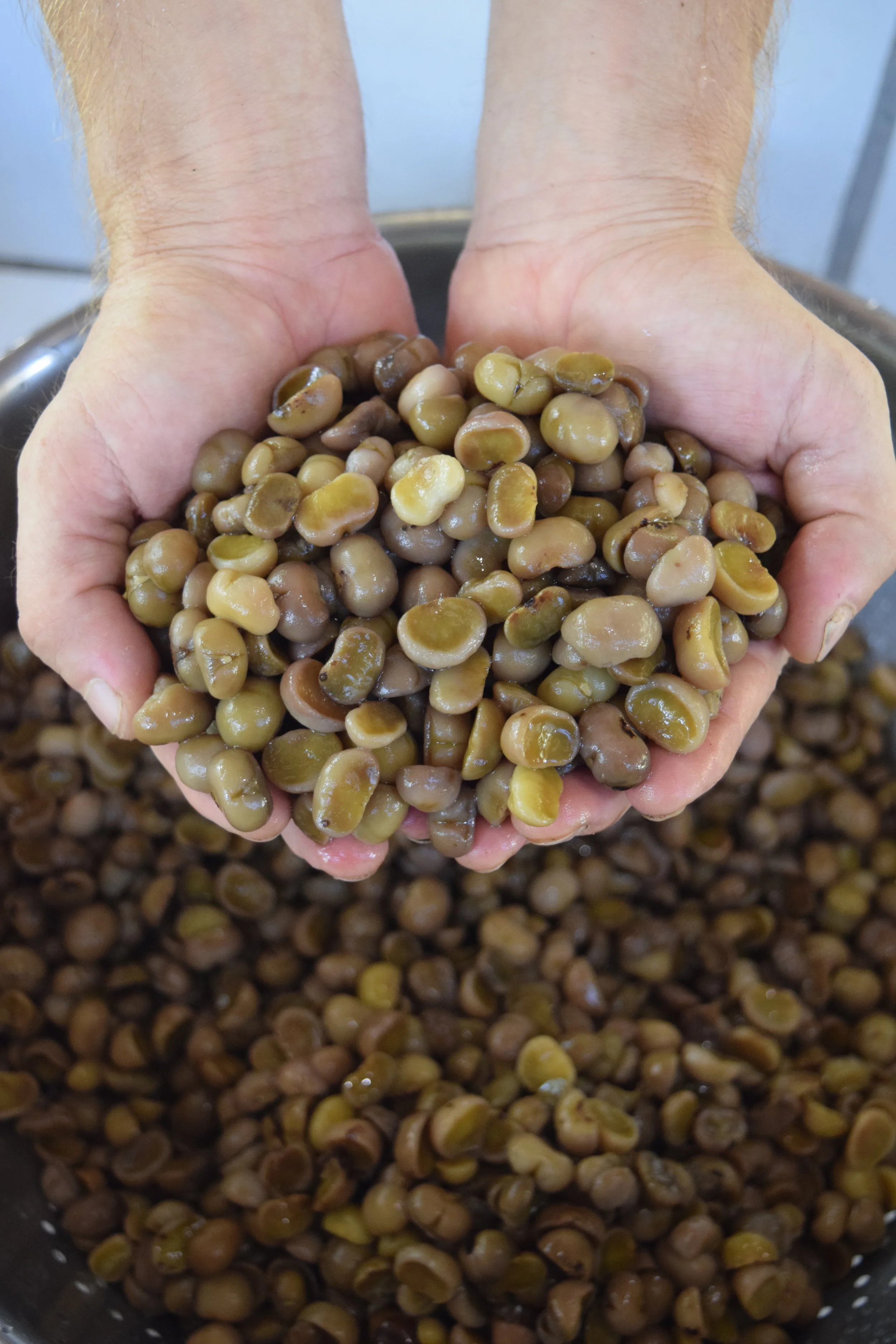
Food, Familiar Stranger
When I was a teenager thumbing rides around Mexico, I quickly realized my vegetarianism would not survive. If my friend Valente and I got in some dusty car with a family that brought us back to a tin-roofed house and gave us chicken soup, we ate that soup. The kindness of strangers humbled my big picture ideas of right and wrong.

When I was a teenager thumbing rides around Mexico, I quickly realized my vegetarianism would not survive. If my friend Valente and I got in some dusty car with a family that brought us back to a tin-roofed house and gave us chicken soup, we ate that soup. The kindness of strangers humbled my big picture ideas of right and wrong.
Wherever food comes from, as soon as it touches human hands, human mouths, it transforms into an intimate thing, a thing we all need, a thing we all want. As soon as it's prepared, or shared, or savored, it carries with it something beyond itself, a new richness. A new complexity.
***
For thousands of years, people and the food they ate grew together in the same place. Bodies—plant, animal, microbe, earth—co-evolved together in direct relationship. Communities of people created food traditions that reminded themselves how to eat, and how to live, in the place they were a part of.

But now, generations of individuals, and entire societies, are born into places dissociated from themselves. The objects of our lives that surround us—shelter, food, clothing, stuff—come from someplace else. Industrialized, machine-scale food systems and globalized food markets (food from everywhere, transported anywhere, warehoused in grocery stores) form the foundation of our new food traditions. They remind us not of a place we are connected with, but of a world we know little about.
Increasingly, the objects of our lives we know the least about are the things we recognize as most familiar. Food, and most other objects we surround ourselves with, are familiar strangers.
Recently I began researching different types of vinegars to incorporate into my fermentation classes. The vinegars I make (pear, apple, and watermelon in Massachusetts, jackfruit, banana and pineapple in Costa Rica) are easy to ferment with whole fruits and indigenous microorganisms, and the history of this type of fermentation goes back thousands of years. But I wanted to know more about the vinegars someone might buy in a grocery store.

Culinary fermentation is a radical transformation and engagement between living things—microbes, people, plants, animals. Industrial scale production cannot really make vinegar in the way an artisan would understand vinegar—it makes a replication. Large, factory scale production simply can't manage the inherent variability of wild life, so it homogenizes, standardizes, and in doing so changes the intrinsic nature of the product.
Most of these products are replications of something that was once made by human hands, from something in nature those hands could access, an original source. But what happens when we forget what the original source was to begin with? White vinegar, for example, is not made of “white”. Sometimes its made of grains, like genetically modified corn, but often its made of petroleum. Most people who buy rice vinegar or apple cider vinegar could probably wager a guess that apple cider vinegar has something to do with apples; rice vinegar something to do with rice. But white vinegar? Would anyone guess it was made from oil? Its a familiar food that has no natural precedent.

And yet, the richness and complexity of eating still exists, and we still identify, very personally, with our strange-familiar foods. As food and objects scatter around the globe, so do people. Many of us will live in or between several places over our lives. This sudden mobility exposes us to more of the world, but in less depth, and breaks the chain of linear trans-generational traditions that once held people, food, and place together. Many food traditions now dissipate and replicate laterally, around and across the world. They travel to us wherever we are, and travel with us wherever we go.
Once, on a bike trip across Colombia, my partner Scott and I stopped in a tiny town in the Andes. We went into a little country store to get some food. The man at the counter answered our Spanish with English, and started pulling things off the shelves to show us. “Look, tuna fish!” He said, waving the can, gleeful. “Peanut butter!”
“Actually, we’re looking for Colombian foods,” we replied, smiling. We had hopes of some fresh-made cheese, vegetables, corn cakes sculpted by little old lady hands. Things from the place we were in, the people we were with.
But the man wanted us to have tuna, desperately. Later he told us why. Though technically born in Colombia, he had lived his entire life in Idaho, until that past year when he was deported back to his little Andean “home town.” But it was no longer his home, or never had been. He missed the foods of the place where he grew up—not foods from the place where he grew up, as tuna fish does not hail from Idaho—but the foods he ate when he grew up in that place. The foods that surely did not come from Idaho, or even necessarily the United States, were now the foods he identified with, the ones that made him feel the nostalgia of home.

People sometimes talk about food traditions as if they were all lost, like socks that didn’t make it back from the laundromat. And its true, countless recipes and food traditions are disappearing, never to return--and it is a loss. Yet we don’t live in an absence of food traditions. People in both industrialized and developing countries increasingly now identify with the flavors, smells, textures of global market and laboratory created foods more than the real thing from the place they live. Global market food may be a stranger, but it's a stranger that we recognize, and feel comfortable around. We relate to something we can’t relate to.
Its important to recognize our personal attachment to globalized food markets, because its real, and I think its a piece of the puzzle that sometimes goes missing in the argument for local food. Only a few generations ago people felt attached to foods embedded in social lineages of cultural heritage and co-evolution. We identified with foods that only the people of the place we lived in could produce and make. But in a globalized food system, we now get attached to pop tarts, nacho flavored frito lays, diet mountain dew—foods that no one, no single person, anywhere, could really produce or make. Most of the foods on the grocery store shelf are conglomerates of ingredients from many places, products of laboratories and mechanization. No one person could make, from start to finish, a pop tart, or chips, or industrial soda, or white vinegar, in its current form, from scratch—there are too many additives, components and processes that can only be done in a factory or laboratory.
Beyond the oft quoted statistics about the vast benefits of local food systems—that local food is more nutritious, more flavorful, better for the environment, better for people, can mitigate climate change, can regenerate local economies, and much more—eating food from the place where we live, cultivated and crafted by the people of that place; be it a home, a community, or a region--connects us deeply to something meaningful, powerful, and comforting. It connects us to a world we can relate to, that we truly are a part of, and reflects something real, and unique about us.
***
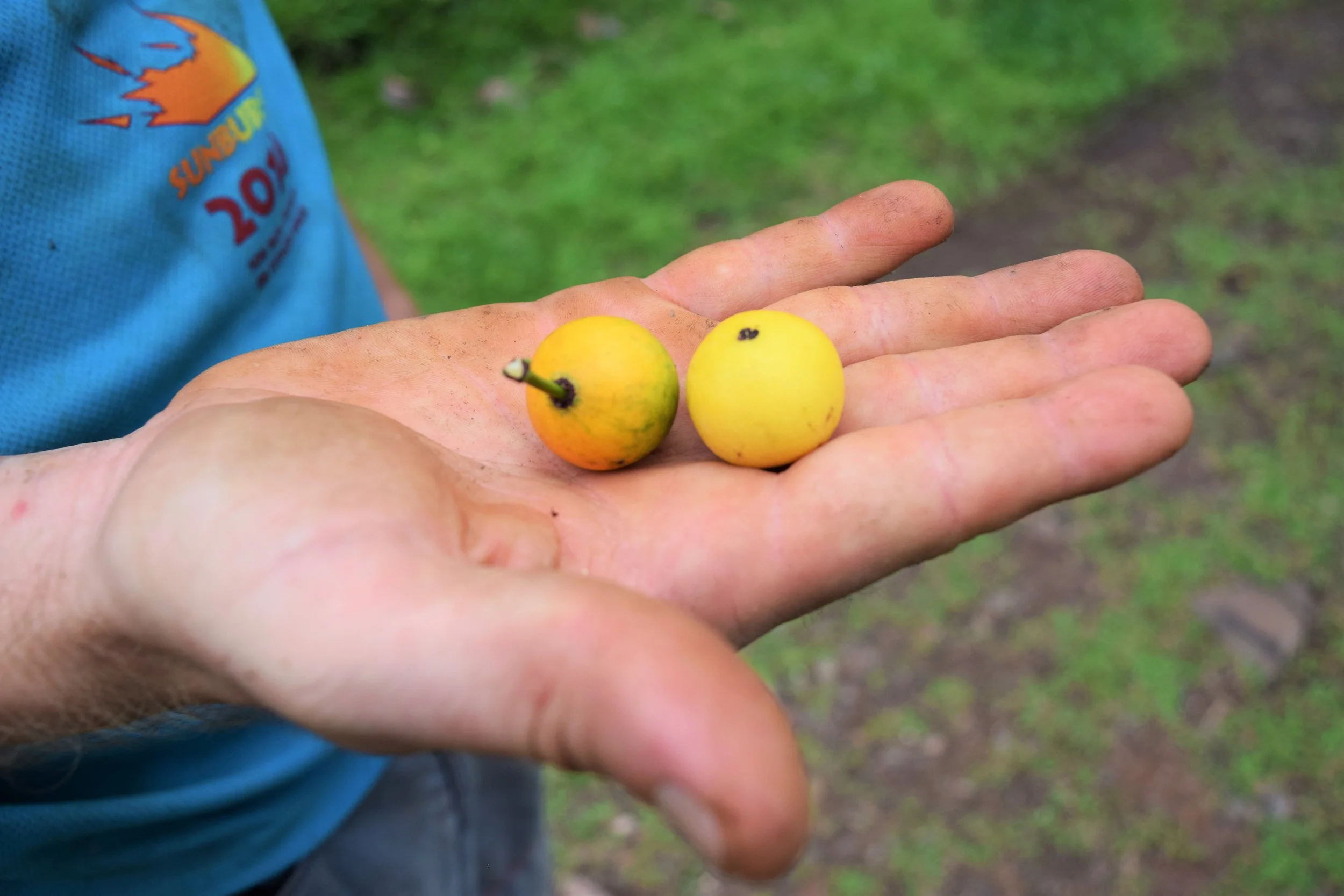
Since my teenage years I’ve changed my perspective on eating animals. My vegetarianism did in fact die, replaced by a combination of opportunitarianism and locavorism. (I’ll still gladly eat any soup you give me, but if I’m giving you the soup, I’ll make it with foods from the place where I live.) But the original ethical dilemmas I chewed on in those years remain. How do we match our values with our reality, in a world so vividly layered in tangled truths? How do we live sustainably in a world that is clearly no longer structured for sustainability? How do we reconcile a felt attachment to the objects of globalization that we grew up with, but don’t represent us?
Of all the complicated steps and solutions we can take, I think the first and most immediate one is simple: we need to engage with actual food from the place where we live. Somehow, some way. We need to “get to know” living things with our senses. To smell tomatoes ripe on the vine; watch living beans swell in water and sprout; listen to farmers talk about the plants and soil they care about; taste the salty crunch of fresh cucumber dills; touch soil, plants, animals—anything, anything real. We need to go to the source of food—the thing itself—and get to know it, remember it. On a farm, in the wild, in the kitchen—we need to engage with real foods, in real life. We need to forge identities and food cultures accessible on a human scale.

Food and our relationship with it is complicated, and to create sustainable food systems I think we need to do lots of complicated things. We need to re-skill ourselves and our communities; re-purpose tools and technologies to work for us in different and better ways; build new networks of tangible and intangible food infrastructures that make local economies easier than they are hard. But this one starting point—engaging with the real thing—is the place we can all begin.
Engage with Your Food: Upcoming Workshops with Laura
In Massachusetts or nearby? Take a class with Laura this Fall at Round the Bend Farm in Dartmouth: Fermentation Fervor: A Vegetable Fermentation Series.
Or travel to the Ranch this May 2017 for Laura's annual The Art and Practice of Live Culture Fermentation workshop.
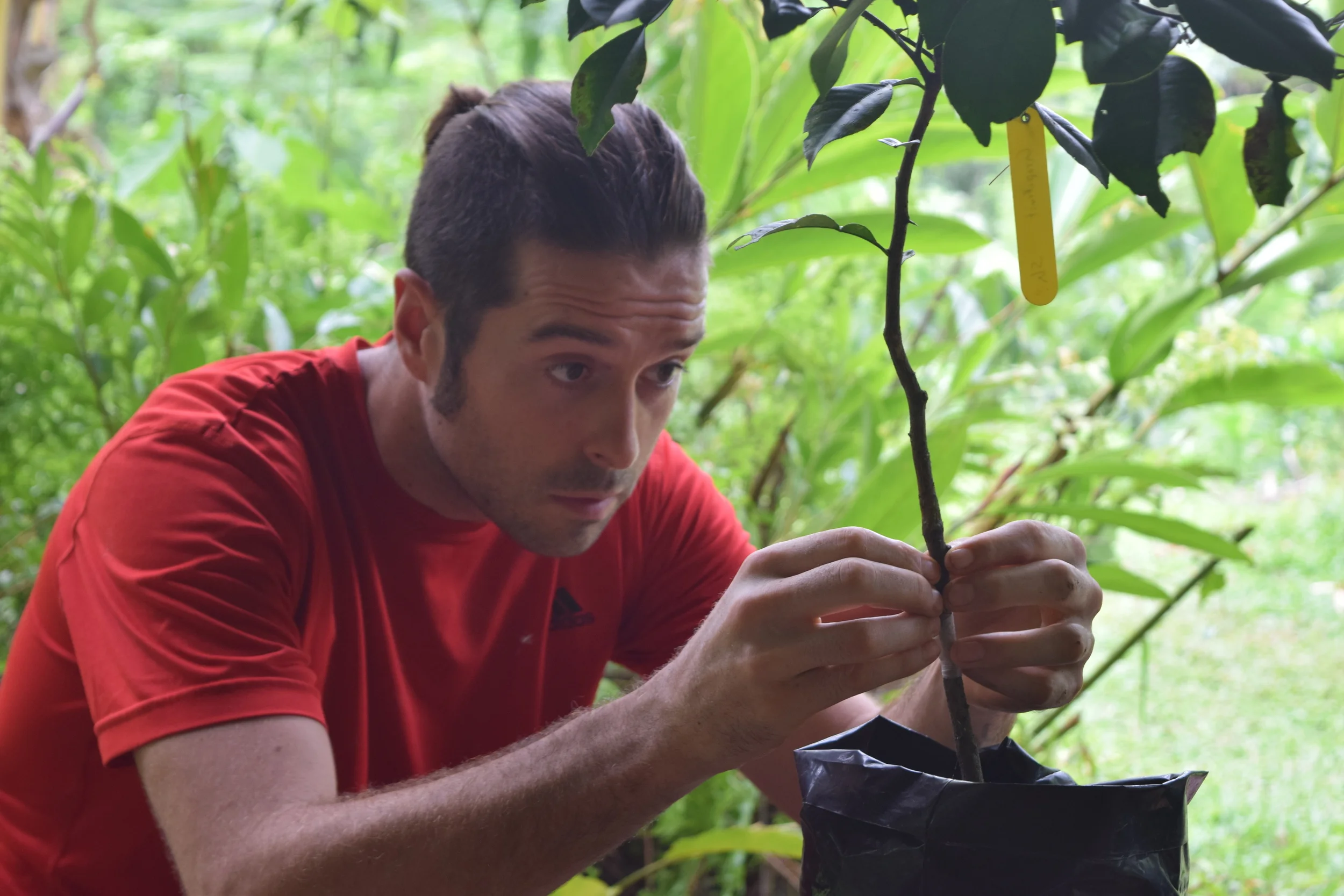
The Art of Stacking Functions
Stacking functions. What does this phrase mean to you? It could mean any number of things depending on what you apply it to. In this case I'm referring to the term as it's used in permaculture. It is one of the primary principles of permaculture design. Here at the Ranch we employ as many of these principles as we can in our work and in our daily lives.

Tulsi or Sacred Basil harvested for tea.
Stacking functions. What does this phrase mean to you? It could mean any number of things depending on what you apply it to. In this case I'm referring to the term as it's used in permaculture. It is one of the primary principles of permaculture design. Here at the Ranch we employ as many of these principles as we can in our work and in our daily lives.
Before delving deeper into this topic, I think it's important to first define what permaculture is. There are thousands of definitions available but I've found it useful to come up with my own because it makes the most sense to me. I encourage anyone with an interest to do the same. Here is my definition: Permaculture is a way of life that empowers you to contribute to the regeneration of the earth on a personal level. Its use is guided by a set of principles that can be applied to any aspect of your life.
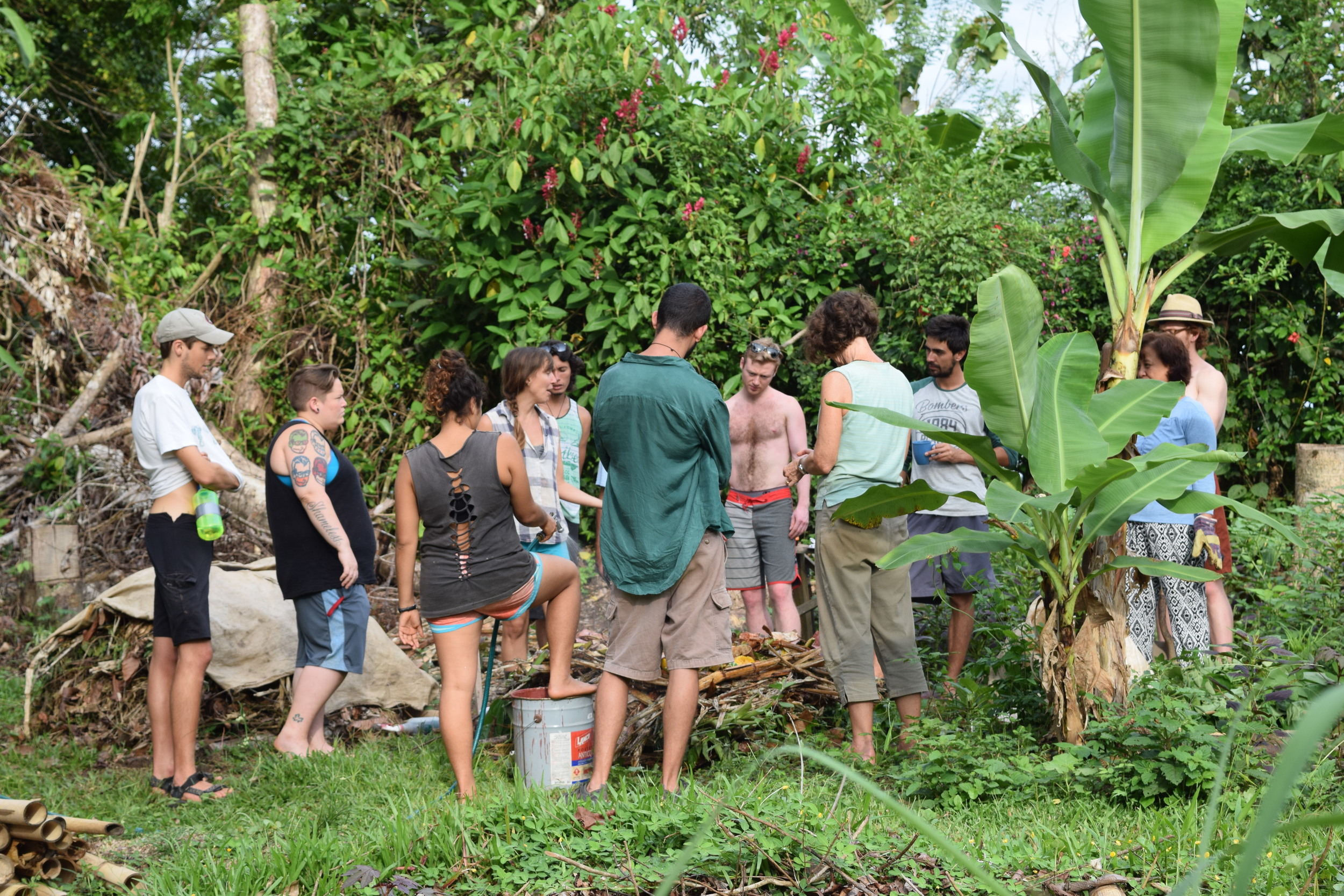
Learning about Compost making in our PDC.
With this in mind let's go back to stacking functions. As first mentioned, stacking functions is a primary principle of permaculture and basically refers to elements in your life having multiple functions, instead of a single function. I will offer a few examples to make the concept easier to grasp. A kitchen table is where food is prepared, where meals are shared and it can also become storage space. A fruit tree provides fruit, offers shade, produces mulch, fire wood and a climbing structure. Try to think of elements in your life and what you use them for. If you can only come up with one use for something, it's probably not necessary to have in your life. Can you think of anything that doesn't have multiple functions?
After taking the permaculture design course (PDC) at the ranch, I started to notice that I was applying these principles everywhere and had been all along, only now I was able to recognize this process. Stacking functions is apart of my everyday life here. My role has taken many forms, but recently I have focused on the farm to table operations. I propagate plants, nurture them and continuously maintain them until they are ready to be harvested and used in the kitchen.
Ready to make pickles.
One morning in the Vivero (plant nursery) and kitchen gardens I realized that everything I was doing actually had multiple functions. I'd set out to clear the paths and Swales from plants too tall to hold themselves up from the relentless rainy season downpours. I was simply cutting and clearing. But it was more than that. The plants I was tending too were edible salad and cooking greens, perfect to use in the kitchen later that day. And this got me thinking, what other functions do these humble garden tasks have? Well, I was pruning and shaping the plants, helping to promote new growth and removing old growth. I was collecting cuttings to propagate in the nursery later that day. And from what was leftover, I was gathering nitrogen rich green cover for our compost pile. When I was done clearing I got onto weeding and again found myself picking out perfectly edible food growing in unintentional places. I wasn't simply weeding, I was improving the aesthetic of the gardens, creating a new intentional herb garden and collecting herbs for use in the kitchen.
Later that week I was in the kitchen processing our farm food and found myself using these ingredients in many different ways. The tulsi or holy basil I'd cut back was used fresh to make a concentrate to flavor our kefir water sodas. Some of it was dried and put on the tea table and some of it was used to flavor a meal. One of my favorite foods to process this year has been mango. When it's ripe we eat it fresh, add it to our hot sauce, use it in smoothies and freeze it to make ice cream. When it's green we pickle it, make green mango kimchi, create green mango salads or simply slice it up and sprinkle with our chili lime salt. It seems simple but I'd bet many of you have set out to do a simple but necessary task in the kitchen or garden without realizing that what you're doing or using actually has many functions.
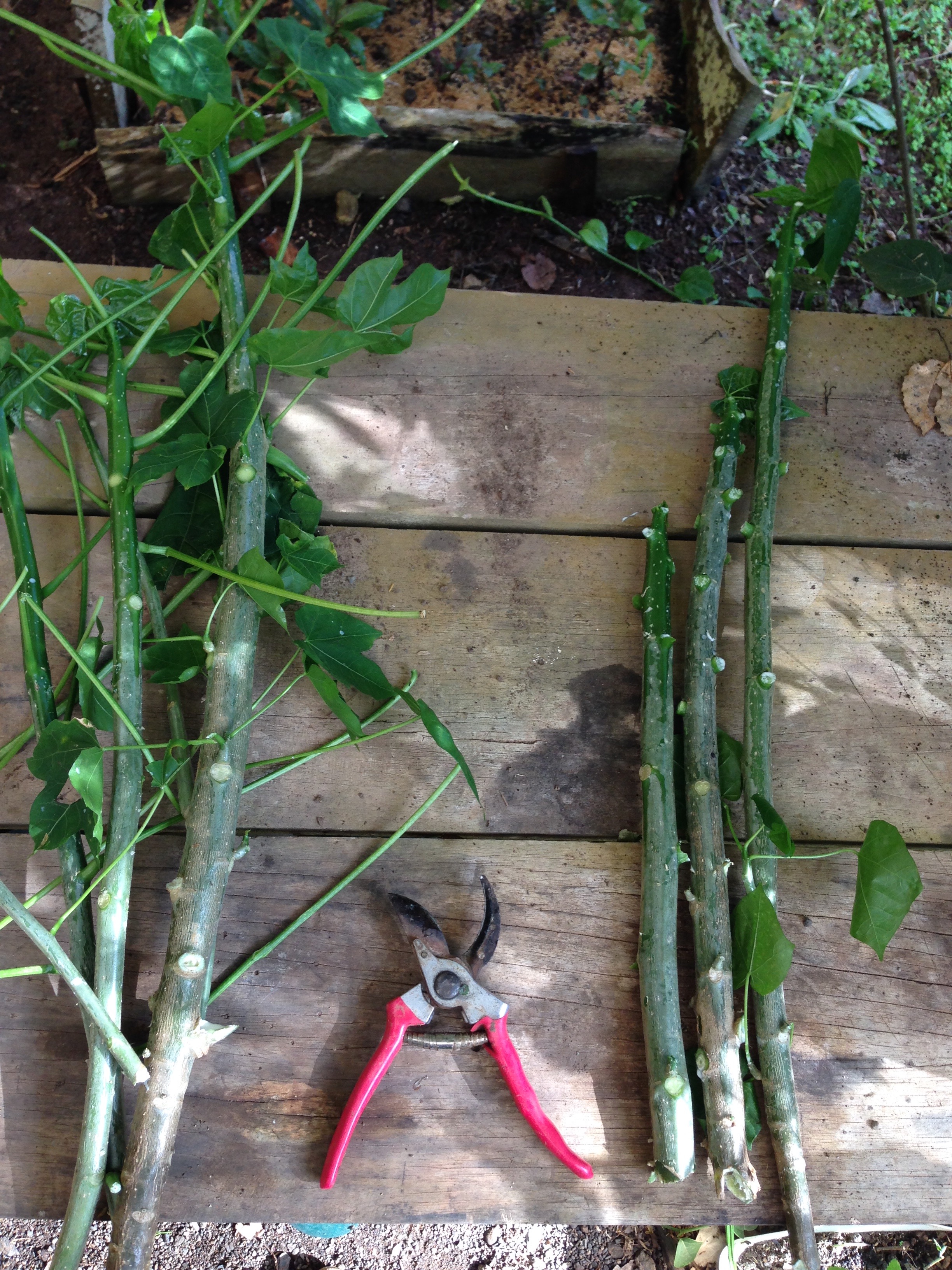
Chaya cuttings from the garden.
I've found this concept a wonderful and useful one to apply to my life here at the ranch. It is an approach I will take with me when I leave. A way of moving and doing that is easily applied to my life back home in the city. I will find myself asking the question, "what functions does this item/task/plant/food have?" over and over again. If I'm able to come up with at least 3 (positive) functions then I'm happy to purchase/do/ plant/use it. If not then I will rethink my choices. Of course there will be some situations where this concept is not applicable but there are many where it is and I believe it's simple enough for everyone to employ. After all it is these small changes in our lives and more specifically, in our thinking that help move the big change in the right direction. It is the decision to question what we are doing and using and actually think about the consequences, it is the decision to think and act consciously.
NEWS AND NOTES
Our Permaculture Design Course is on the schedule for 2017. Course runs from April 25th to May 8th. We are hoping for another great turnout so help us spread the word!
In 2016 we offered over a half dozen full and partial scholarships to students from Costa Rica and around Latin America to participate in our workshops.
We were able to do this through the generous support of the Mastate Charitable Foundation. We hope to continue this pattern in 2017 and are now accepting tax-deductible donations for our Central American Scholarship Program. Help has increase the accessibility of sustainability education to our neighbors and consider making a donation!
Abrazos
The Ranch Crew

Poop: The Secret to Sustainable Solutions
Poop. Shit. Mierda. Caca. Crap. Boñiga. Excrement. Feces. Dung. There are countless ways to say what comes out of an animal’s body as solid waste. As most visitors to the Ranch realize soon after their arrival to Mastatal, we talk about poop more than the average learning center or household, and it’s not uncommon for it to be the center of a meal conversation.

By Tim O'Hara
Poop. Shit. Mierda. Caca. Crap. Boñiga. Excrement. Feces. Dung. There are countless ways to say what comes out of an animal’s body as solid waste. As most visitors to the Ranch realize soon after their arrival to Mastatal, we talk about poop more than the average learning center or household, and it’s not uncommon for it to be the center of a meal conversation.

Human beings’ evolution towards “fecophobia”, or a fear of fecal matter, has been steady and consistent over the past few decades. The reasons behind this observation have at times been warranted, but not always. One of our goals as an organization is to initiate honest and open conversations about controversial topics related to sustainability, including how best to manage animal waste. As a child, I was taught to avoid poop at all costs. Poop was meant to be flushed away to some unknown, unasked about destination far from my house. Pull the lever on the porcelain throne and think no more about it. My closest encounters with poop growing up mostly consisted of scraping dog shit from the bottom of my sneaker with a stick after a game in the yard. This type of experience only increased any justification for not being endeared to this smelly, dangerous, and sticky substance. Nevertheless, most of us spend part of the first years of our life walking around with a load of it in our diapers, which may help to explain why my relationship with poop has oftentimes been defined by confusion. Everybody poops. That’s also the title of a book that a friend gave to our daughter Soledad when she turned 1. This wonderful little read is the author’s effort to encourage listeners and readers to start to develop a more comfortable association with an undertaking that we all partake in every day.
Since the years of my youth, I’ve grown more comfortable with the process of defecating. I have come to see what I used to see as waste and gross as not only a normal part of nature but a potentially valuable resource. As a Peace Corps volunteer in Uruguay in the early nineties working with organic farmers, I saw how animal manures made up an important part of the soil fertility building techniques employed by the food growers that I worked with on a daily basis. Years later upon arriving to Mastatal I was convinced that one of our first projects should be to construct a composting toilet that would turn our and our guests' body waste into usable fertilizer for our orchards. We thought that this would be a good alternative to the infrastructure that I grew up with in New York State that utilized drinking water to transport my family’s poop to some unseen (but not unsmelled) place to be treated with chemicals.

Fifteen years later we have eight composting toilets scattered around our campus. From our forays into natural building we successfully experimented with using manures in the plasters that now protect and beautify our buildings. Around 2005 we learned from a Costa Rican friend, an organic coffee farmer outside of Puriscal, about using animal waste to produce cooking gas. Shortly after hearing about this possibility the Ranch built its first methane digester that has helped us reduce our dependence on imported fossil fuel based cooking fuels. We also learned from a Ranch guest that you could raise a child without diapers and soon before Sole’s birth Robin and I decided to give that “radical” idea a try. Humans today that spend their first years in diapers contribute an average of 2 tons of feces filled diaper garbage to their local dumps. Diapers reportedly make up about 4% of landfill volume. When I read these figures for the first time I had to take a step back and think whether it could possibly make sense to contribute to this reality while allowing my child to walk around with a pile of crap in her drawers. The more I thought about it, and the more I researched the alternatives, the more I decided that diapers were yet another co-opted, environmentally destructive, profit driven invention that has been forced down the throats of almost every developed and many developing world families as the only civil and rational way to raise your baby. The vast majority of diapers are expensive, non-biodegradable, and in many cases, unnecessary. I concede that raising your child diaper free is not for everyone, but I am convinced that it could be an option for many more families if they understood the process and the benefits of this mode of child rearing.

Animal feces, if handled irresponsibly, can and does make people sick. Millions of children in Africa and other parts of the developing world die each year from diarrhea caused by poor sanitation and water contaminated by animal waste. These are serious issues that need to be addressed in responsible ways so that children do not die avoidable deaths. I am not condoning that we we live in a world where crap runs down sidewalks and flows untreated into our rivers. What I’m hoping for is that humans can develop a healthier understanding about both the benefits and shortcomings of animal waste and as a result promote rational and sustainable techniques, policies and ideas that allow us to relate with poop in ways that maximize its advantages and minimize its risks.
At Rancho Mastatal we think and talk a lot about our impact. We look for ways to build using local and natural resources, produce our own energy, improve our community’s health, save money and ameliorate the fertility of our soils. The sustainable solutions to all of these goals are in part hidden in the dark, rich world of animal poop, and when handled responsibly and intelligently provide answers to how humans can start shifting, and shitting, towards a more healthy relationship with our bodies and our planet.
NEWS AND NOTES
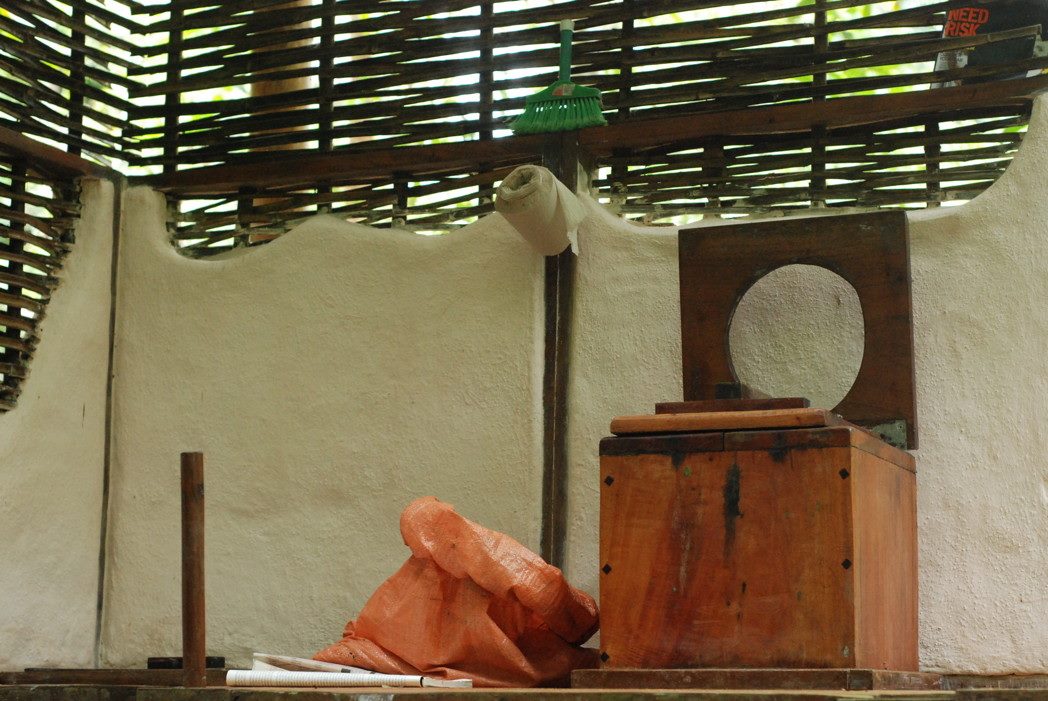
The busy season has come to an end, the last of our groups for the fiscal year have come and gone. Our Apprentice Crew has all but taken over running the Ranch. It is a time for projects, practice, rest, reflection, and beginning to prepare for 2017.
One of our favorite ways to reflect is looking back over old photos. Want to explore the Ranch's past with us? Check us out on Flickr and let us know your favorite pics!
Abrazos
The Ranch Crew
Going Home: The Long Road Leaving Mastatal
The journey starts with a 5am wake up; just as the sunlight is starting to spread through the jungle. I take a couple deep breaths as I admire the beautiful place that I am in.I take a last look around, heave my heavy backpack on, and head down to make a cup of coffee before embarking on what will be a 36+ hour adventure back "home." I have done this journey multiple times now, from California to Costa Rica and back and forth, and each time presents new challenges and exhausting travel times.
Going Home: The Long Road Leaving Mastatal
The journey starts with a 5am wake up; just as the sunlight is starting to spread through the jungle. I take a couple deep breaths as I admire the beautiful place that I am in.I take a last look around, heave my heavy backpack on, and head down to make a cup of coffee before embarking on what will be a 36+ hour adventure back "home." I have done this journey multiple times now, from California to Costa Rica and back and forth, and each time presents new challenges and exhausting travel times.

Every time I go from one place to the other I am overwhelmed with culture shock, but the shock is always greater in my trips back to the States. While leaving the small, tranquil, jungle town of Mastatal and landing in the big, bustling, concrete jungle of Los Angeles I am caught off guard by what is happening in the “real world.”
Fortunately, I do not and have never had to live in a city, especially not one as large as Los Angeles. I grew up in the small mountain town of Bishop, CA; population 4,000. For college I moved to what I considered the city of Durango, CO; population 20,000. Then I moved to Mastatal; population 100. You could say I don’t have much city or masses-of-people experience, and this probably factors into my feelings of shock when I leave the Ranch and get dropped into one of the biggest cities in the world.
After I chug down a delicious cup of local coffee, something I know I won’t enjoy again till I return, I head out to wait for the only bus out of town. The bus arrives and I awkwardly manage to load my bag on, which always seems to be a feat when traveling. So it begins; the first of many hours sitting, waiting, and fidgeting. If any of you have traveled to the Ranch you may feel the same way, but I think the bus ride is much easier on the way out then the way in. Better as the first leg of your journey than the last,.still with a fresh traveling bum.
I enjoy the ride through the jungle, on windy, bumpy, dirt roads, admiring the unique beauty of this place. We arrive in Puriscal and I head straight to get some chicharones. These yummy hunks of meat, an avocado, and bread have become my go to traveling food to fuel me through. I take my time because my flight doesn’t leave for hours and I would rather wander around the streets then wait in the airport.Still there aren’t many exciting activities to keep me in Puriscal so I load onto the next bus to San Jose.
The whole trip gradually eases me into civilization, each stop with an increasing population. The bus stops in the middle of San Jose, I get off onto the busy streets. I have done this journey many times but I have never had to find the next bus station to the airport by myself, so this will be the interesting part. As anxiety starts to come up with the increase of people and hustle, and every other person in a car is yelling “taxi, taxi!” I inhale, exhale, tighten my backpack straps, and start walking in the direction I think is to the next bus station.
After multiple blocks I start to think I may have missed a turn.I spot a group of police officers chatting on the corner and shyly approach to ask for directions. They all jump eagerly on the opportunity to practice their English on this lost, white girl.
I make it to the airport. The Costa Rican airport is so small that everything moves smoothly.This is where I will wait for eight hours before my plane leaves. I find a nice private corner, lay out my yoga mat and start stretching. I’m the wandering, hippy, dirty, traveler that doesn’t mind making herself comfortable and if that means doing some odd yoga moves in the airport then so be it.

On my flight to LAX I sit next to a Costa Rican man that is moving to Alaska to be with his family. I wish him good luck and warn that he better buy a coat! I arrive in LAX, wait in the two hour immigration line, get on the airport shuttle to the opposite side of the airport, find my next gate, find another private corner, and lay out my yoga mat in hopes to get some sleep. By this time it is at least midnight and there is hardly anyone in the airport.
It turns out not many people sleep in the airport; except for those too cheap to get a room. With the lack of body heat the airport feels like a walk in freezer, and this is not just because I am use to the heat of the tropics. I thought I brought enough warm clothes to bare the cold airports, but I can barely feel my toes so I try wrapping myself in my yoga mat. At this point I do look like a homeless person camping in the airport. The late hours of the night are also the time that all the construction and cleaning gets done in the airport, so between the jackhammers, vacuums, and freezing temperatures I don’t get much rest.
The early morning hours come, people slowly start trickling back into the airport. I continue to wait for my flight to Mammoth, the town an hour away from my home where I will get picked up by my parents. I have had this flight canceled on me multiple times due to not enough passengers, so I worry until I'm on the flight, if it will take off or not. If this flight doesn’t run that means one of my parents will need to drive the five hours to LAX to pick me up. That for lack of a better word, sucks. Finally, the time has arrived for the last leg of my trip; I board the Mammoth flight, an hour long beautiful trip over the Sierra Nevada Mountains. I land. My dad is there to pick me up and we drive home. It has been at least 35 hours now since I left Mastatal; I am exhausted.
I am in a totally different place now. It always amazes me how one day you can be living in the tropics and the next you are in the high desert mountains. I went from a landscape of complete green, to one of different shades of browns and speckles of green. On the drive home my dad comments “it’s been raining a lot, things are looking really green here.” Ha! I think, a lot of rain, really green, you should see the jungle.
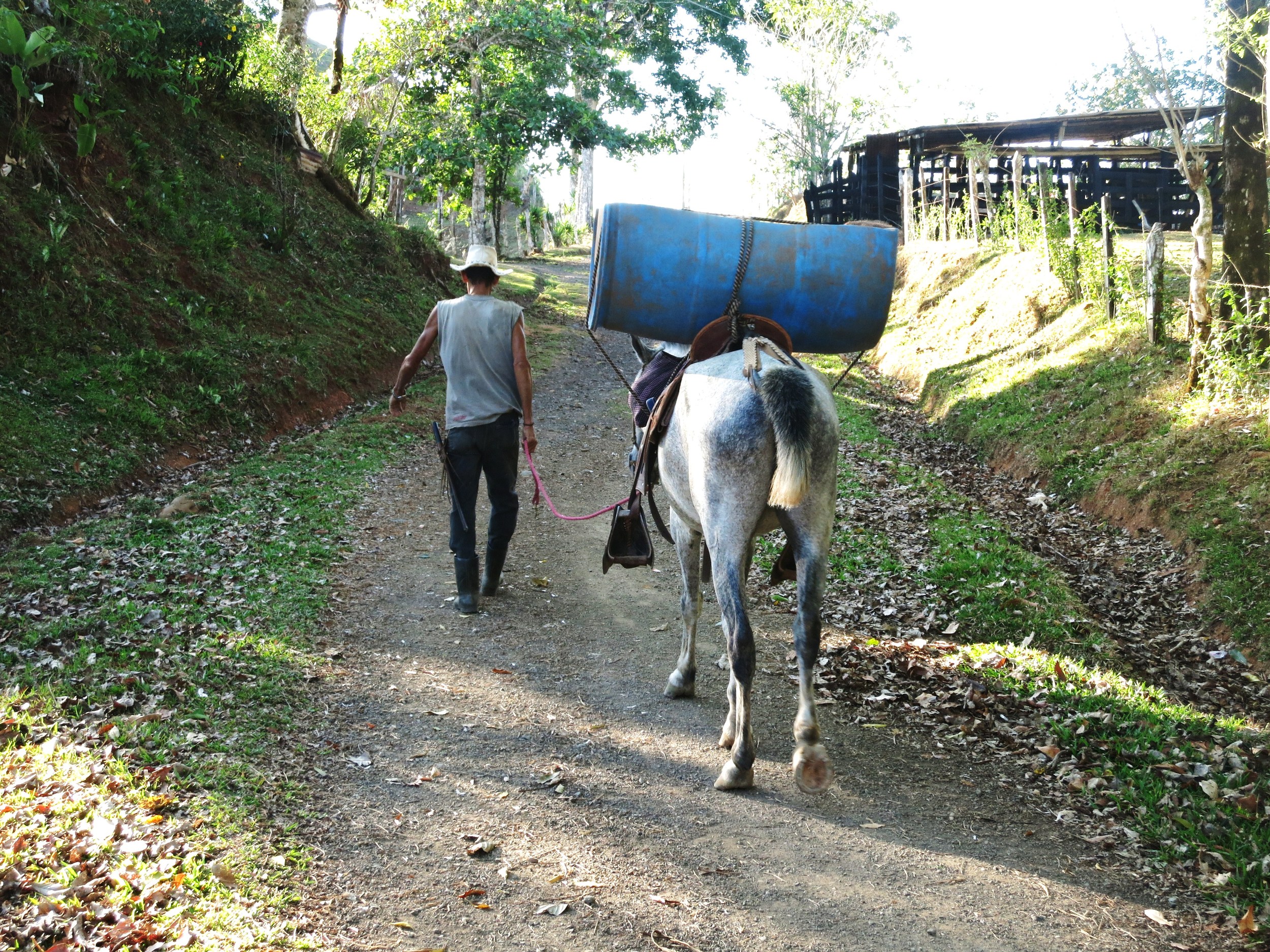
Usually my transition back into life in the States is cushioned by the comfort of being in Bishop, a town so small you almost know everyone. But unknowingly, I arrive back home during memorial day weekend. Which in Bishop is when the town holds its annual Mule Days event, a well known event that attracts 20,000+ people and their 20,000+ mules. All flooding into Bishop for a week of mule fun! It is as ridiculous as it sounds. Not having been to Mule Days in many years, a long time friend and I decide why not? So we put on the good ol’ blue jeans, cowboy boots, and plaid shirts and go down to watch the rodeo! I feel like I have walked into a costume party, what happened to the raggedy t-shirts, sweaty shorts, and old crocs of the jungle? I ain’t in Mastatal no more!
NEWS AND NOTES
Did you know the Ranch is on Instagram? Follow us here!
Have you ever wanted to build your own home? Just bought a piece of land in Costa Rica and want to create a jungle paradise? Well in 2017 we have the classes you need to re-skill and build your place in this world.
Abrazos
The Ranch Crew
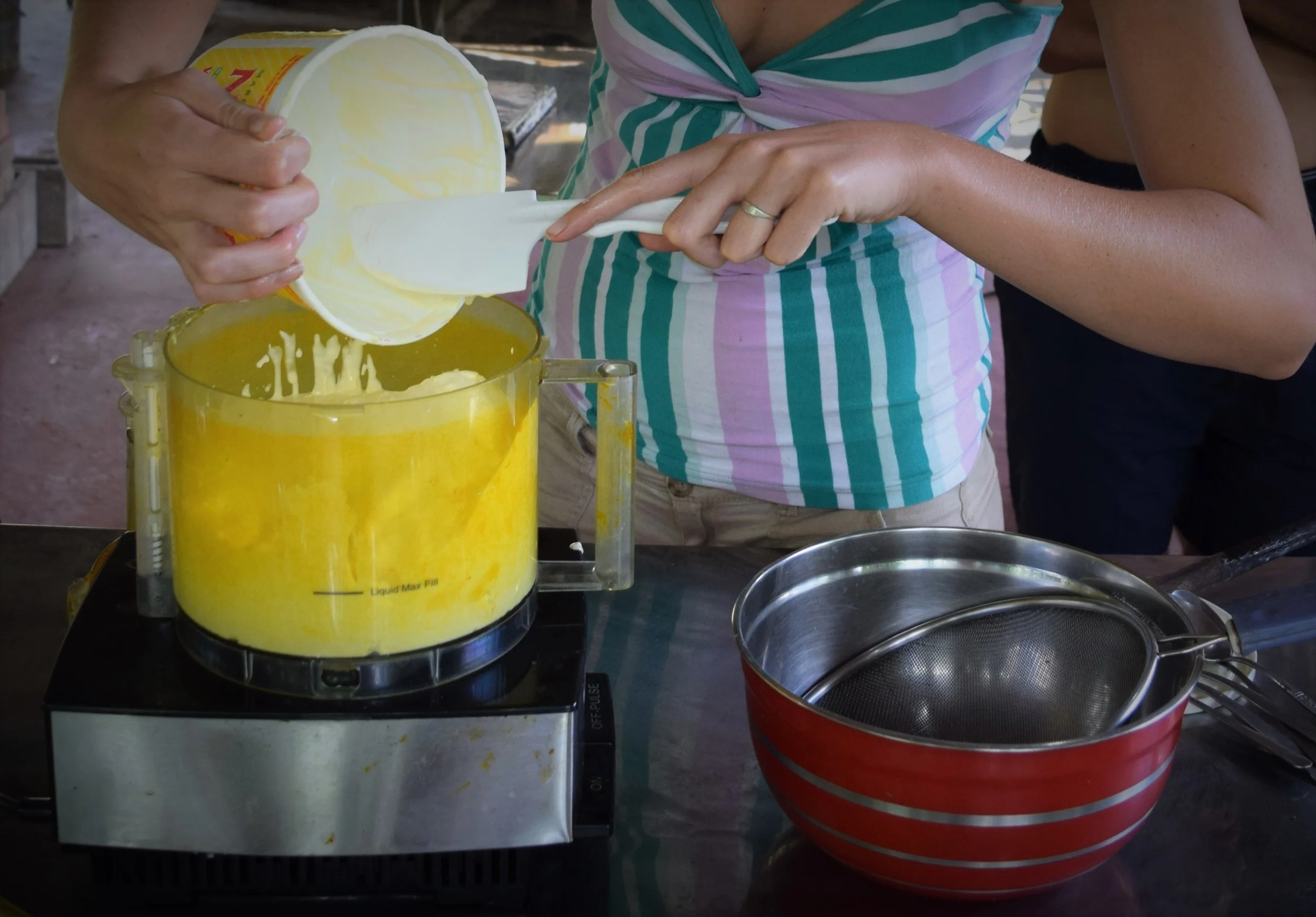
Cultured Butter & the Culture of Butter
When my dad was in third grade, his class followed the cirriculum laid out in a workbook. In times of boredom and monoteny, he would flip ahead and learn new material the class was soon to arrive at. One day he came across a particularly interesting bit: a tongue twister. My dad spent the next six weeks practicing the tongue twister in secrecy of his classmates until, finally, the class caught up to that point in the workbook. The teacher gave each student the opportunity to recite the tongue twister from the book, and each student who attempted this tongue twister stumbled through a slew of "Betty botta buddhas," until it was my dad's opportunity.
Cultured Butter & the Culture of Butter

When my dad was in third grade, his class followed the curriculum laid out in a workbook. In times of boredom and monotony, he would flip ahead and learn new material the class was soon to arrive at. One day he came across a particularly interesting bit: a tongue twister. My dad spent the next six weeks practicing the tongue twister in secrecy of his classmates until, finally, the class caught up to that point in the workbook. The teacher gave each student the opportunity to recite the tongue twister from the book, and each student who attempted this tongue twister stumbled through a slew of "Betty botta buddhas," until it was my dad's opportunity. Without even glancing at the page, he busted out the tongue twister:
"Betty bought a bit of butter for the batter, but said she, 'This butter is bitter. If I'd bought a bit of better butter it would have made the butter better.'"
With impeccable clarity and speed, my dad enunciated each syllable with the swiftness of an engine. Every kid's jaw in the class dropped.
My dad told me this story when I was a kid, and at that time, it was just a funny story. Now having spent some time at the Ranch where foresight, accountability, and sustainability are key, the story has adopted some unique and colorful undertones.
We prepare a lot of our own food at the Ranch. Dark, leafy and salad greens are grown and processed right around our kitchens. Jackfruits, soncoyas, and mamonchinos are fruits grown in our orchards and slipped into our diets. We grow many of the ingredients processed into red curries, our chickens lay a portion of our own eggs and we even grate and make coconut milk. A lot of time and intention goes behind the scenes of preparing one of the 22,000 meals the Ranch serves on a yearly basis. The latest ingredient to pass through our team's newly established food processing kitchen is cultured butter.

Although butter whipping is a simple business, conventional agricultural processes have complicated matters. Imagery of sprawling fields with shady orange trees and golden sunsets are merely a misleading, commercial scheme that draws in consumers. If the same Betty from my dad's tongue twister had seen a butter package of a concentrated animal feeding operation, she may have consulted her local dairy neighbor instead.
In the campo of Costa Rica, we are fortunate enough to have two neighbors that milk their cows and preserve the cream with a microbial culture. Those two neighbors are Daisy, and coincidentally enough, Betty, who does not make bitter butter at all, but rather fresh butter. When we walk down the road, we can see that their land is integrated in Costa Rica's biological reserves, or protected forest lands that weave through the countryside's agricultural sites. A low intensive dairy system means that farmers can give more attention to the quality of the ambient environment. The flavor of the ecology shines through in four simple steps of processing sour creme into butter.
Step 1: Buy sour cream from your local dairy neighbor.
Step 2: Whip the creme with the keystone appliance, the food processor, until it has thickened.
Step 3: Pour the product through a food strainer. This separates a rich, cultured butter from the liquid, buttermilk.
Step 4: Add salt to the butter and use a spoon to press out any excess buttermilk and drain. Once this process is complete, you'll be left with your very own cultured butter product.

Freshly sourced cultured butter has revealed some illuminating assets to Ranch food culture. Like everything else served from our kitchens, the butter is delicious. It's a medium for live microbes that actually form symbiotic relationships with the microbes present in your gut. It's produced by our neighbors, so we are able to see the land and the cows and ensure we are sourcing responsibly. A simple price comparison even reveals that our homemade, cultured butter is less expensive than supermarket butter by about $1 per stick.
These are all great reasons to process your own butter, but the most important relates to reading and learning from patterns. When my dad was in third grade, he predicted the pattern laid out by the structure of his class. Each day, the class moved forward in the workbook, all of the information having been laid out before him. Patterns similarly exist in the ways cultures are interacting with their foods. We can read these patterns and change our behavior to make sure we are eating foods that are healthy for both our bodies and our land.
In 1963, maybe Betty going to the store to buy butter was the growing custom because social norms suggested that this is how the batter comes out best. As proof of the tongue twister, the only butter bought was an obviously unsatisfactory product. Global patterns in the vast mechanization of agriculture without cultural or environmental conscientiousness has contributed to their degradation. Industrializing a simple process such as butter-making means that the vitality in microbial life is significantly decreased, land ethics are overlooked, and the wheels of economic engine and government subsidies can keep the price of this process competitively low. Plus, the taste is never fresh, never pure.
Patterns are not just ways of reading into the past, they are tools for looking ahead to the future. As people make more conscience decisions about where they source their foods, they regain their food sovereignty. They can be a part of a cultural and environmental shift that heals their bodies, waterways, soils, and communities. The pattern of regeneration is exciting enough that reintroducing skills like simple butter making become more appealing. When we sit down together for a Ranch meal, we recognize a labor of love that goes into every ingredient.
In questions surrounding the ethics of sustainability, answers are never obvious. As we navigate these territories, we are met with the awesome challenge of reconstructing a culture that respects land and people. Sometimes that means we just want our butter to taste better! Whether that culture come from your food processing practices or your live microbes, it's a robust tool in assuring that nobody be left with bitter butter.
NEWS AND NOTES
Have you ever wanted to build your own home? Just bought a piece of land in Costa Rica and want to create a jungle paradise? Well in 2017 we have the classes you need to re-skill and build your place in this world.
We also have a few spots left in our Sustainability Primer program. If you know anyone interested in joining us please spread the word!
Abrazos,
The Ranch Crew

Lard, the new Super Food?
Everything we eat at the Ranch is homemade or made from scratch as we'd say on the east coast of the United States. It takes a lot of time, and is made with a lot of love, which makes it taste even better. Since I am someone who cares a lot about what is going into my body, I became very interested in how our food is grown, where it is coming from, and how it is being cooked.
Lard, the new Super Food?
Hola! My name is Jessica, and I am one of the five apprentices of the 2016 crew. Health and food are two very important topics I hold dear to my heart and are in my everyday thoughts. Essentially these are some of the main reasons why I decided to come to Costa Rica and apply for the 11 month apprenticeship at Rancho Mastatal. Some of my many roles here as an apprentice are harvesting, processing, and creating the delicious food we serve here at the ranch.
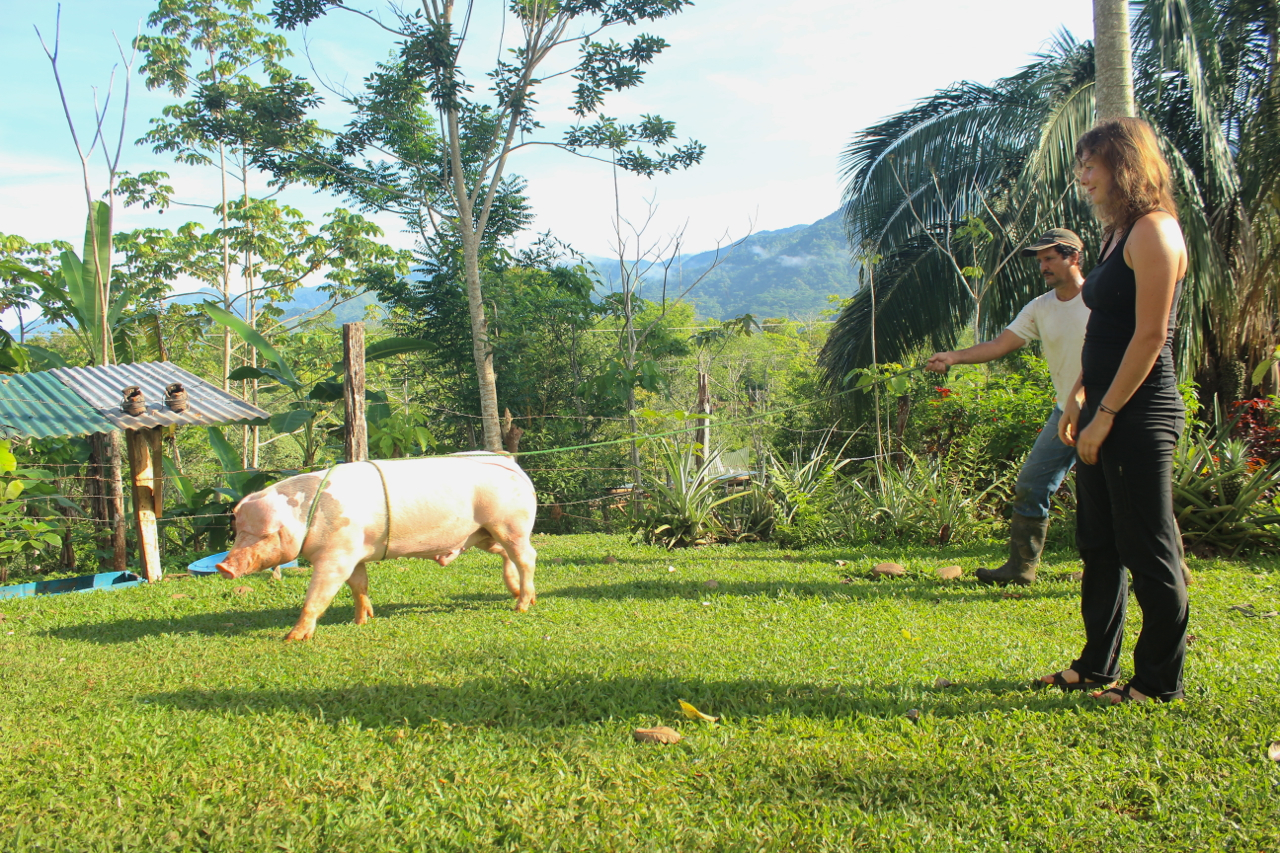
Everything we eat at the Ranch is homemade or made from scratch as we'd say on the east coast of the United States. It takes a lot of time, and is made with a lot of love, which makes it taste even better. Since I am someone who cares a lot about what is going into my body, I became very interested in how our food is grown, where it is coming from, and how it is being cooked.
During my first interview with Tim and Robin in the summer of 2014, they mentioned that the food at the Ranch is cooked in lard within the mix of all the details about the apprenticeship. After our hour long interview, the only thing that left me puzzled was the conversation on lard, and why would a sustainable center that grows such healthy food cook with lard?
What do you think about when you hear the word, Lard? Before coming to Rancho Mastatal I thought of lard as a sludgy, disgusting fat that was seemingly the most unhealthy thing you could put into your body and would make you obese. The name alone sent chills down my spine. All I could think about was a Family Guy episode where Peter chugged a whole barrel of lard and went from fit, skinny Peter back to overweight Peter. I never pictured cooking with or eating lard in my future. Tim assured me that the Ranch did their research on lard and it was the most sustainable and practical option for them. Feeling intrigued to learn more about this mysterious lard, I decided to dive into the research and see for myself. Was lard really unhealthy? Could it be a sustainable cooking oil? How does it compare to other cooking oils? These were some of the questions I set out to answer.
While conducting research using the Ranch's food cookbooks and articles about lard, I learned about the American history of lard. Did you know a hundred years ago lard was found in every household and was a big money maker within the meat packing industry? At the time, animal fats were the main use for all pan frying, until the invention of the light bulb. What does the light bulb have to do with lard?

Well, Procter & Gamble, a candle and soap making company, had all this extra oil from dropping candle sales and they needed to find a way to use the extra cotton seed oil. In 1907 a German chemist, E. C. Kayer came to Procter & Gambles' company with his invention of hydrogenated cotton seed oil. It looked and cooked like lard and it was cheaper than the American household staple. They called it Crisco. With an amazing marketing roll-out including advertisements, demonstrations, and free cookbooks promoting the use and purchase of this hydrogenated vegetable shortening, soon Crisco was all anyone was talking about. To top it off, in the 1950s, scientists claimed saturated fats, such as lard, caused heart disease which made consumers switch to the new vegetable shortening substitute.
Most of America soon ditched lard from their homes and restaurants. Today's health studies now say having a moderate consumption of saturated fat in your diet is not unhealthy. For example, coconut oil is a popular oil to cook with today and it has an 86% saturated fat level.
Given what we know now; why is lard the best choice for Rancho Mastatal and its guests? First, lard is local! We know exactly where it is coming from and it is very fresh. Secondly, we are supporting a small butcher in Puriscal, the closest town to Mastatal. The Ranch does all we can to eat only local and support small businesses. And finally, and most importantly, the taste test. The taste of a homemade falafel or yuca bammie made with pig lard is in no comparison to one cooked in sunflower seed oil. In a normal week, our meals are made with only vegetarian ingredients and the cooked dishes are sauteed in our local pig lard. We have all kinds of guests visiting the ranch for a tour or to take one of our amazing workshops, and between 5-10% of them are vegetarian or vegan. We always ask our guests if they have any dietary restrictions, some decide to opt out of trying our local based diet and instead have their food cooked in a mass produced sunflower seed oil. As a former vegetarian, I understand the reasons to not eat meat products, especially when you don't know where it is coming from.
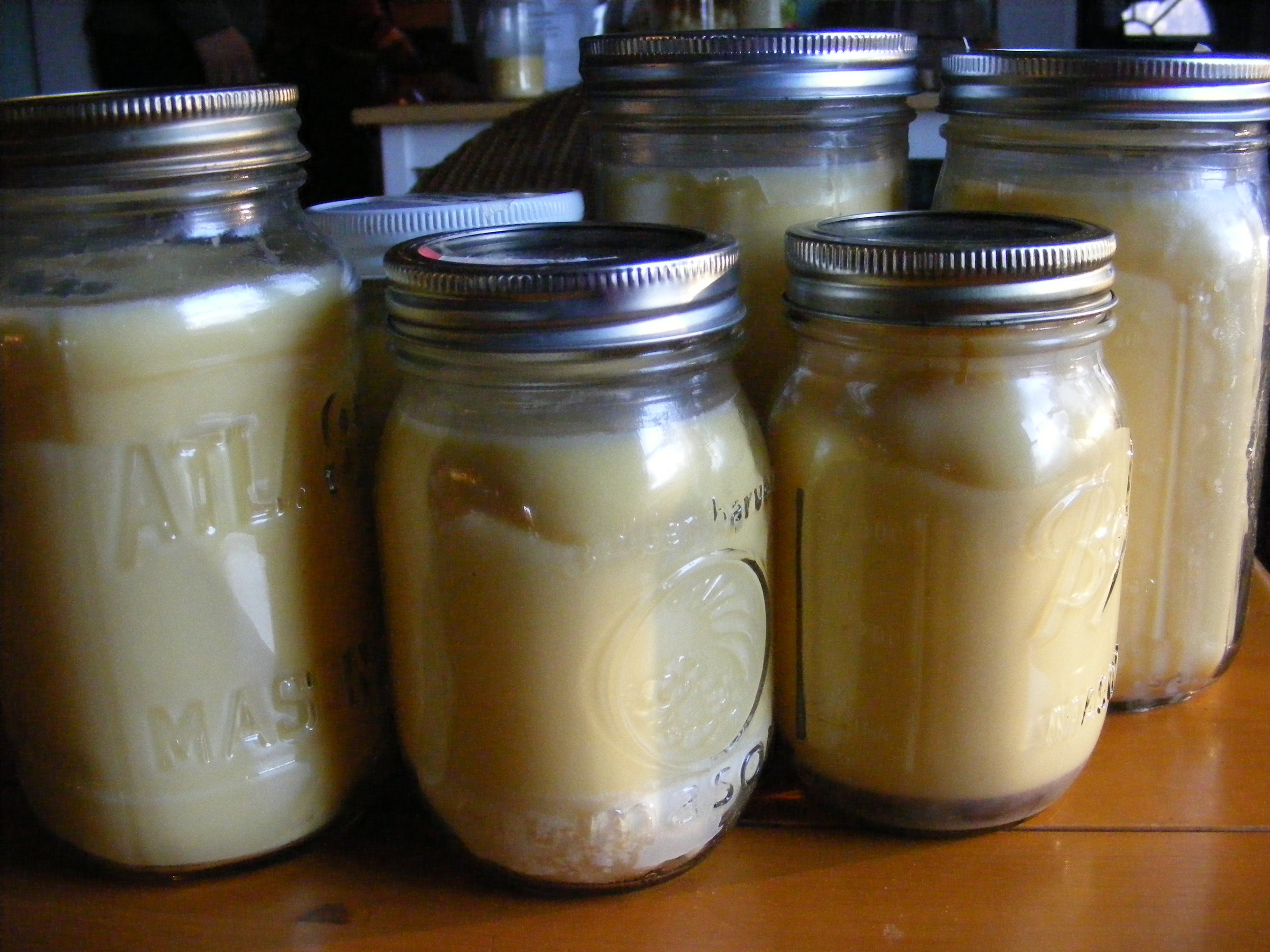
Here at the Ranch we know where everything we eat comes from and it feels good knowing we are eating as sustainable as possible. Pig lard has a respectable 40% saturated fat and 45% unsaturated fat compared to butter which has a 60% saturated fat and 23% unsaturated fat. For our vegetarian and vegan guests, we use non GMO sunflower seed oil which has 13% saturated fat, 24% unsaturated fat, and a not so well known active ingredient TBHQ- 0.02%.
TBHQ is a chemical cleaning agent and stabilizer to keep the oil from going rancid due to the low percentage of saturated fat in the vegetable oil. Most vegetable oils have low saturated fats and need to be chemically altered to preserve the oil, especially oils that are okay to use at higher cooking temperatures. Lard on the other hand can sit at a room temperature without any alterations. With limited knowledge about the mysterious TBHQ and its health risks, the decision to cook with local lard seems to be a no-brain-er.
Since the Ranch takes such pride in what we grow, source, process, cook and eat, I thought it would be only fair to bring awareness to our future guests and reveal the reasoning behind why we cook our meals with pig lard. It feels good knowing our food is always fresh, we know where it's coming from, and have the opportunity to build strong relationships with the people who grow and process the food we put on our plate. With one bite of our homemade corn empanadas cooked to a crispy perfection, you will understand our love for locally sourced lard.
Resources:
http://www.foodandwine.com/articles/lard-the-new-health-food
http://www.npr.org/blogs/money/2012/02/03/146356117/who-killed-lard
On Food and Cooking: The science and Lore of the Kitchen, Pages 799-802, Harold McGee
NEWS AND NOTES
We are planning some exciting new workshops for 2017 on plant propagation, soil re-mineralization, forestry and more. Keep an eye on the calendar for new additions. We still have space in the following workshops.
We also have a few spots left in our Sustainability Primer program. If you know anyone interested in joining us please spread the word!
Abrazos,
The Ranch Crew
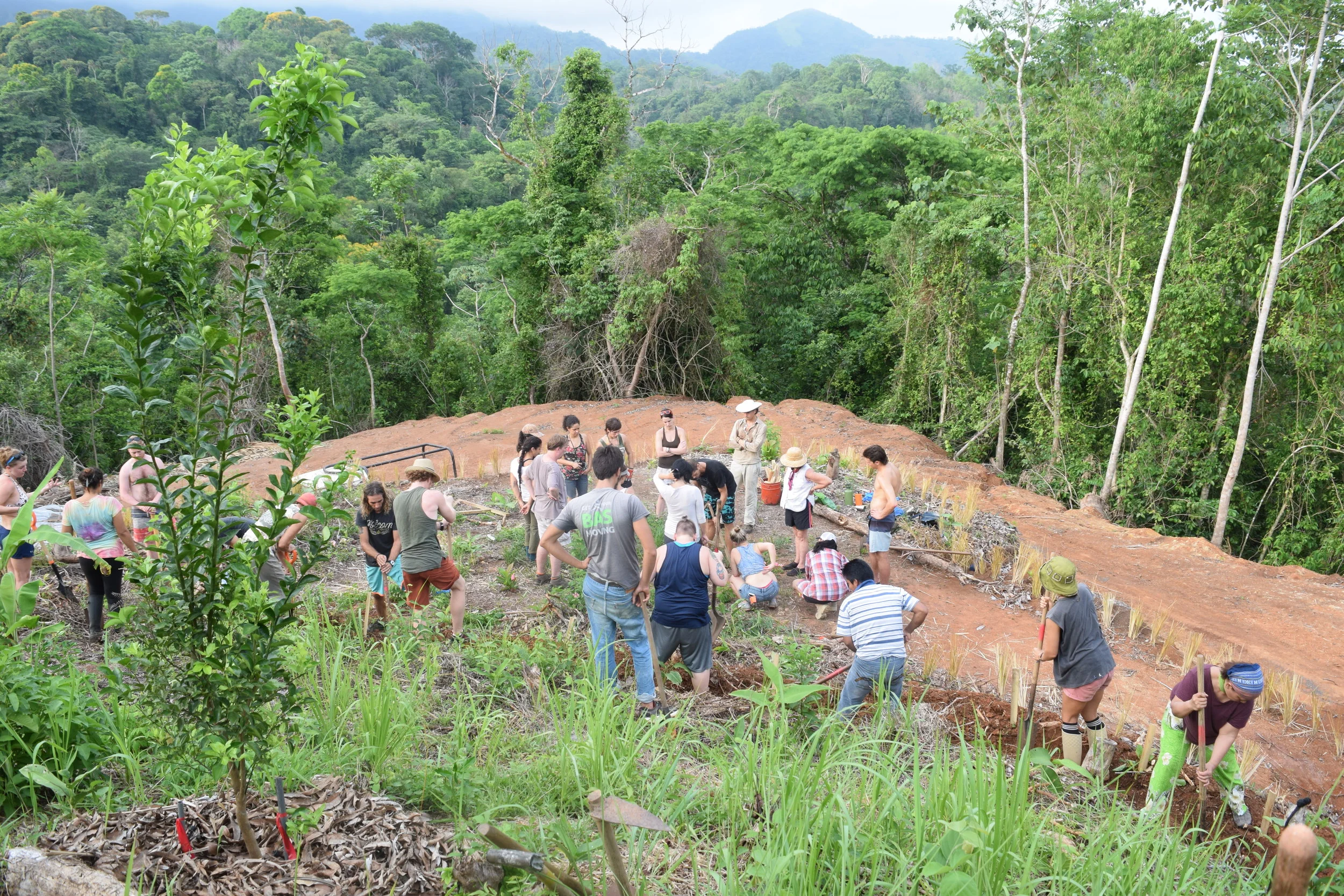
How to Design, Plant, Maintain, and Feast from your Food Forest
When you visit the Ranch you will not find rows of squash, tomatoes and carrots as you might associate with a temperate climate organic farm. You won't find deep layers of topsoil. You won't find tractors and their associated implements. What you will find is an agriculture that blends pleasantly into the forest. To the untrained eye it may even be challenging to tell where the forest begins and the farm ends. This is because our agriculture is based on the ecology of the place we live. And we live in a tropical monsoon forest. Our agricultural practices, often cited as agroforestry or food forests in the permaculture jargon, mimic the forest around us.
How to Design, Plant, Maintain, and Feast from your Food Forest

When you visit the Ranch you will not find rows of squash, tomatoes and carrots as you might associate with a temperate climate organic farm. You won't find deep layers of topsoil. You won't find tractors and their associated implements. What you will find is an agriculture that blends pleasantly into the forest. To the untrained eye it may even be challenging to tell where the forest begins and the farm ends. This is because our agriculture is based on the ecology of the place we live. And we live in a tropical monsoon forest. Our agricultural practices, often cited as agroforestry or food forests in the permaculture jargon, mimic the forest around us.
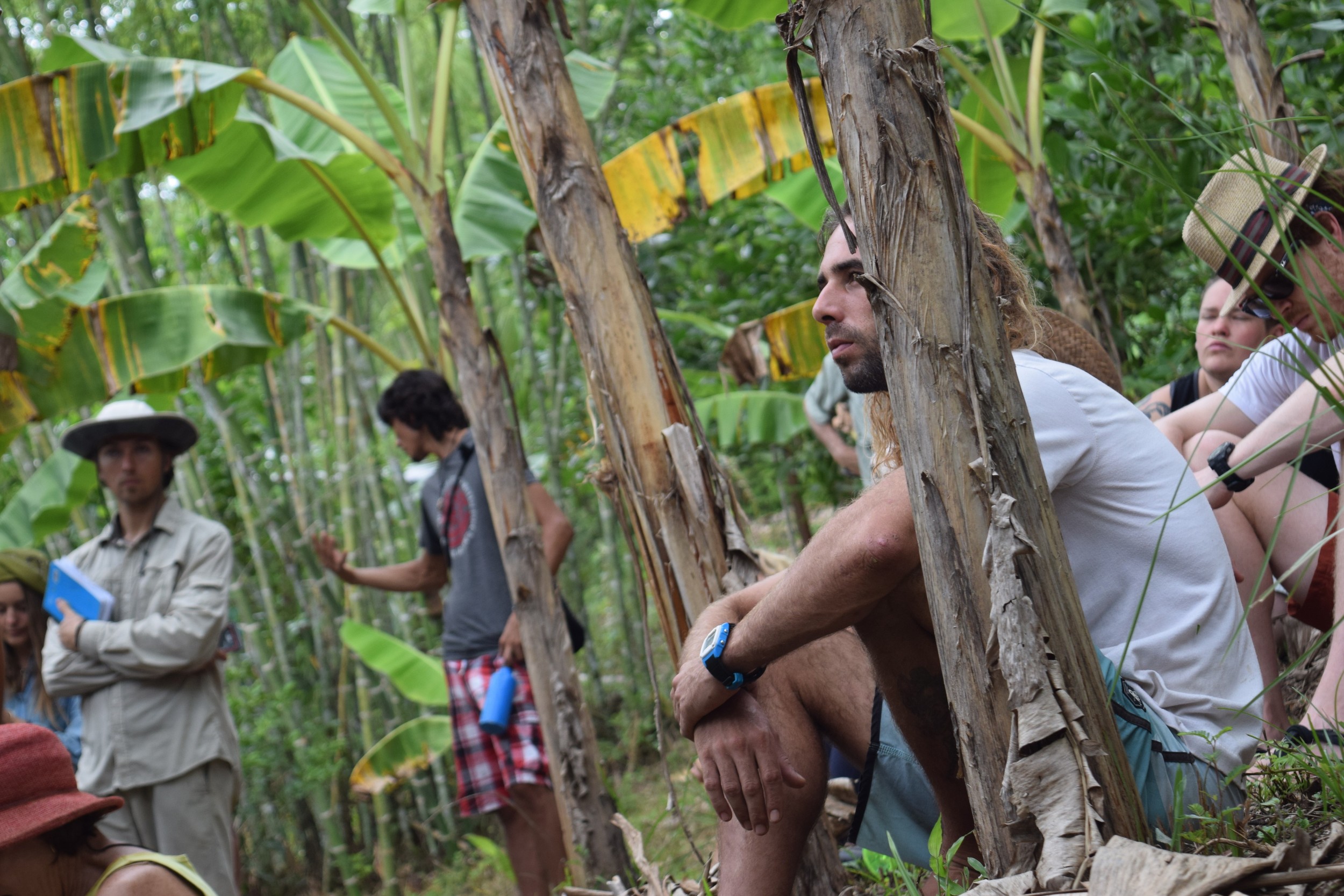
Mimicking this complex ecology and all the associated relationships occurring in this hyper-diverse place is novel, exciting, and challenging work for us new-generation farmers. In order to help others on this same path we are documenting our work more and more. As part of this effort, I recently published a series of in-depth articles on tropical orchard establishment practices and concepts for the Permaculture Research Institute.
For anyone wanting to learn more about how we manage our 15 acres of food forests please explore the following links.
Part 1: Discover our site goals, layout patterns and approach toward water.
Part 2: Explore our soil management strategy.
Part 3: Learn why and how we make certain species selections.
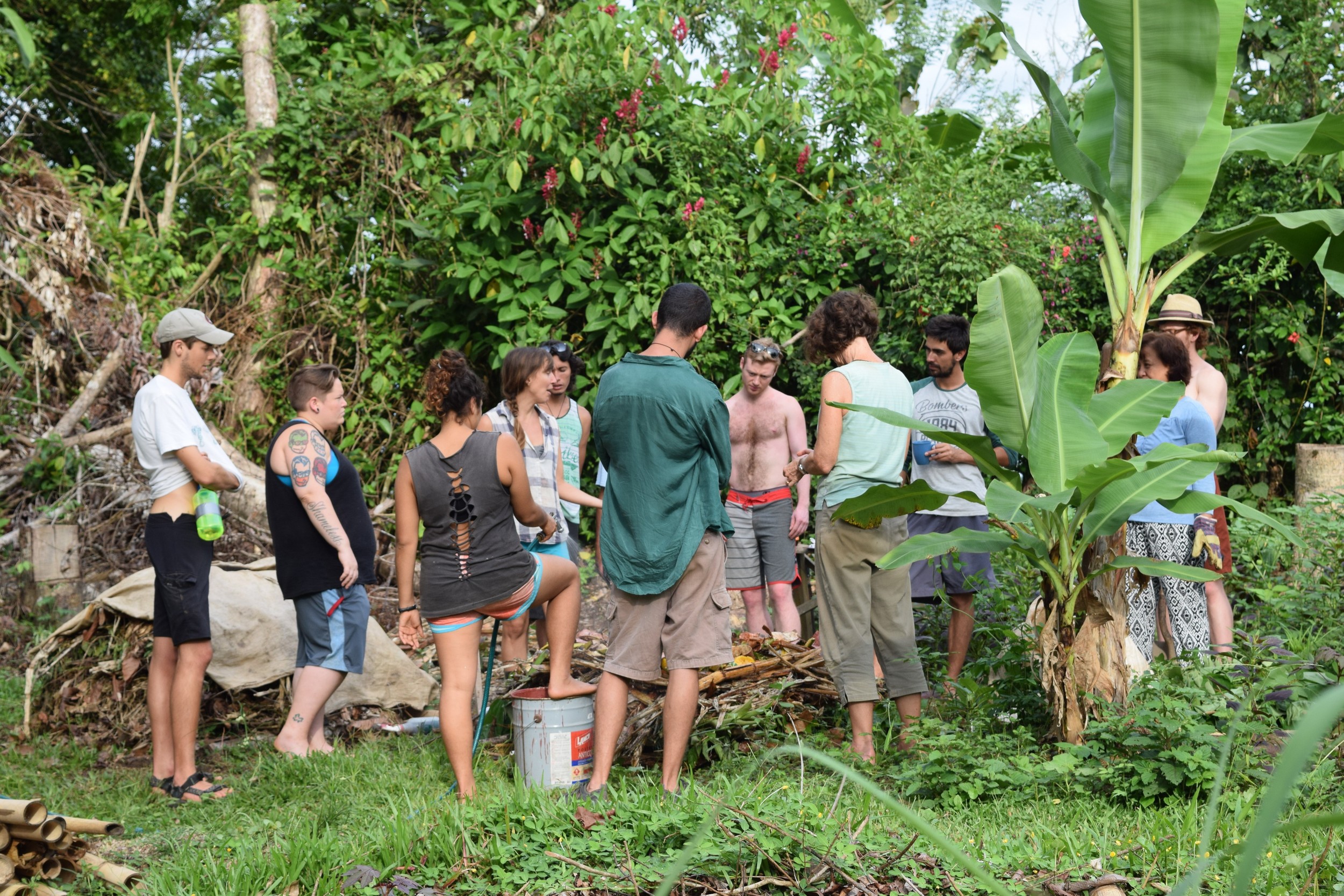
We hope you enjoy these and now have a clearer picture of the agricultural landscape we are creating.
NEWS AND NOTES
We have a number of life changing workshops coming up.
Please share around if you know anyone who is ready for a trip to beautiful Costa Rica, a swim in the waterfalls, nourished with homemade meals, and challenged with an intensive educational experience.
Abrazos,
The Ranch Crew

Life with Limited Communications: How We Thrive with Crappy Internet
I’m unable to answer all of the emails that I receive into my inbox everyday. Even though I do receive my fair share of electronic correspondence, my inability to reply to all messages is not likely a result of the inordinate amount of inquiries that I receive compared to many of you out there. The reason is that I live in a place with shitty Internet.
Life with Limited Communications: How We Thrive with Crappy Internet

I’m unable to answer all of the emails that I receive into my inbox everyday. Even though I do receive my fair share of electronic correspondence, my inability to reply to all messages is not likely a result of the inordinate amount of inquiries that I receive compared to many of you out there. The reason is that I live in a place with shitty Internet.
I have a 2-hour window each morning before most people in town are awake to get into my account and open and answer my emails. After that, people begin to chew up the ever so precious limited bandwidth that serves our community. In my head I envision people in town rolling out of bed to take a peak at their Facebook accounts or watch a video on Youtube before school or work while I struggle to open a reservation request that might result in a booking and some income for the Ranch. Our painfully slow Internet means that I can generally check emails only once a day. If I didn’t respond to an email this morning, it will simply have to wait until tomorrow.

To add to my current communication challenges, I don’t have a cell phone, much less a smart phone. The pressure seems to mount each day to get one. Given my administrative obligations as the director of Rancho Mastatal, all of this results in a daily confrontation that I strive to find balance with continuously. For those of you with poor Internet connections, which may only be a small minority of you reading this, what do you do when you simply can’t open an email that you know you should read and respond to as soon as possible? How do you react when you can’t attach a simple Excel spreadsheet to your email to send to a prospective client? In an age when businesses increasingly rely on the Internet for their survival, how has the Ranch been able to make ends meet for 15 years, the first 8 without even a phone in our town, in a world that today demands email responses in minutes or hours, not days or weeks?
Honestly, I don’t have a great answer or fully know. It’s an interesting dissertation topic for a future graduate student that loves our community. I think mostly it’s been a life-or-death (for the business, not us as humans) need. Somehow, we’ve been able to organize our work and lives to make it work, in spite of the poor odds in Vegas. We’ve persisted and persevered while the communications here have slowly improved. We’ve been forced to depend on our amazing library (with real books) for research and traditional means to build friendships, trust and a dedicated following that have kept us alive and mostly well.
Every 3 weeks, for almost a decade, I drove 2 hours to find a reasonably fast Internet connection. I also relied on a terribly annoying auto response message that asked those emailing to me to please be patient when waiting for a reply. Many of you probably remember (and still receive a watered down version of) the message that states that I’ll get back to you sometime within the next century. This is mainly how I assuaged and bought time with those interested in our project and “stayed on top” of bookings and guest visits early on in our evolution.

In the earliest days, I would wait in line at the public phone in San Miguel, 4 kilometers from Mastatal, to make bookings for our educational groups. If I had to make more than one call, I would have to get back in line to make the second. A third. Back in line. You catch my drift. This little exercise might take me half a day. Setting up homestays for our high school groups would take multiple days. It now takes me an hour by phone.
The current reality, fortunately, is that I’ll probably be able to respond to an email that you send to me within a week, and if it’s high priority, even sooner. But that doesn’t mean it’s always easy. While most of you enjoy life with high-speed wifi and 4g service, we struggle with a 3g network that’s reminiscent of my first email experience with AOL and dial up just out of the Peace Corps in the mid-90s. I haven’t come that far in the past 20 years, but I’ve come somewhere, and all this said, there’s great relief and many benefits in not owning a cell phone and being tied to the Internet 24/7. I am currently avoiding total dependence on modernity’s electronic leashes (or nooses) but also appreciate and recognize the great benefits that the Internet brings to me, my family, and our business. Without it we would struggle even more than we presently do to make financial ends meet and stay in touch with our families. My weekly drive to the highest point in the region to check phone messages has evolved to a predawn wakeup and email session in my cozy cob home, and I’ll take the latter any day of the week.

Visitors to the Ranch almost universally, eventually feel relief when they spend many days, weeks or months with us and are unable to stay uber connected to their digital lives back home. The Internet and cell phones are yet other additions to a continuous string of technologies that we have to learn to find a happy medium with and balance. Like so many of life’s conveniences, too much has proven over and over to destroy our mental and physical health in the long-run, and just like coffee, hooch and phone access, a little can and should go a long way.
NEWS AND NOTES
We have a number of life changing workshops coming up.
Please share around if you know anyone who is ready for a trip to beautiful Costa Rica, a swim in the waterfalls, nourished with homemade meals, and challenged with an intensive educational experience.
Abrazos,
The Ranch Crew
Categories
Topics
- Agriculture 6
- Agroforestry 21
- Animals 2
- Apprenticeship 19
- Appropriate Technology 6
- Backpacking 1
- Bananas 1
- Basic Pantry 4
- Biochar 1
- Books 3
- Build Your Own Home 1
- Central America 5
- Chiles 1
- Cinnamon 1
- Clay Carving 1
- Climate 2
- Climate Change 1
- Cob oven 1
- Communication 5
- Community 24
- Compost 2
- Composting Toilets 2
- Condiments 1
- Conservation 2
- Cooking 4
- Costa Rica 18
- Design 10
- Earthen Construction 10
- Eat Local 2
- Ecohome 1
- Education 9
- Environment 3
- Ethics 4
- Farm to Table 12
- Fasting 1
- Fermentation 14
- Food 22
- Food Choices 8
- Food Forest 8
- Food Processing 15
- Food Systems 12
- Gap Year 1
- Gardening 5
- Ginger Beer 1
- Harvest 2
- Health 12
- Healthy living 5
- Homemade 2
- Homestead 8
- Internet 2